Retail News CRM

Tag: Kering

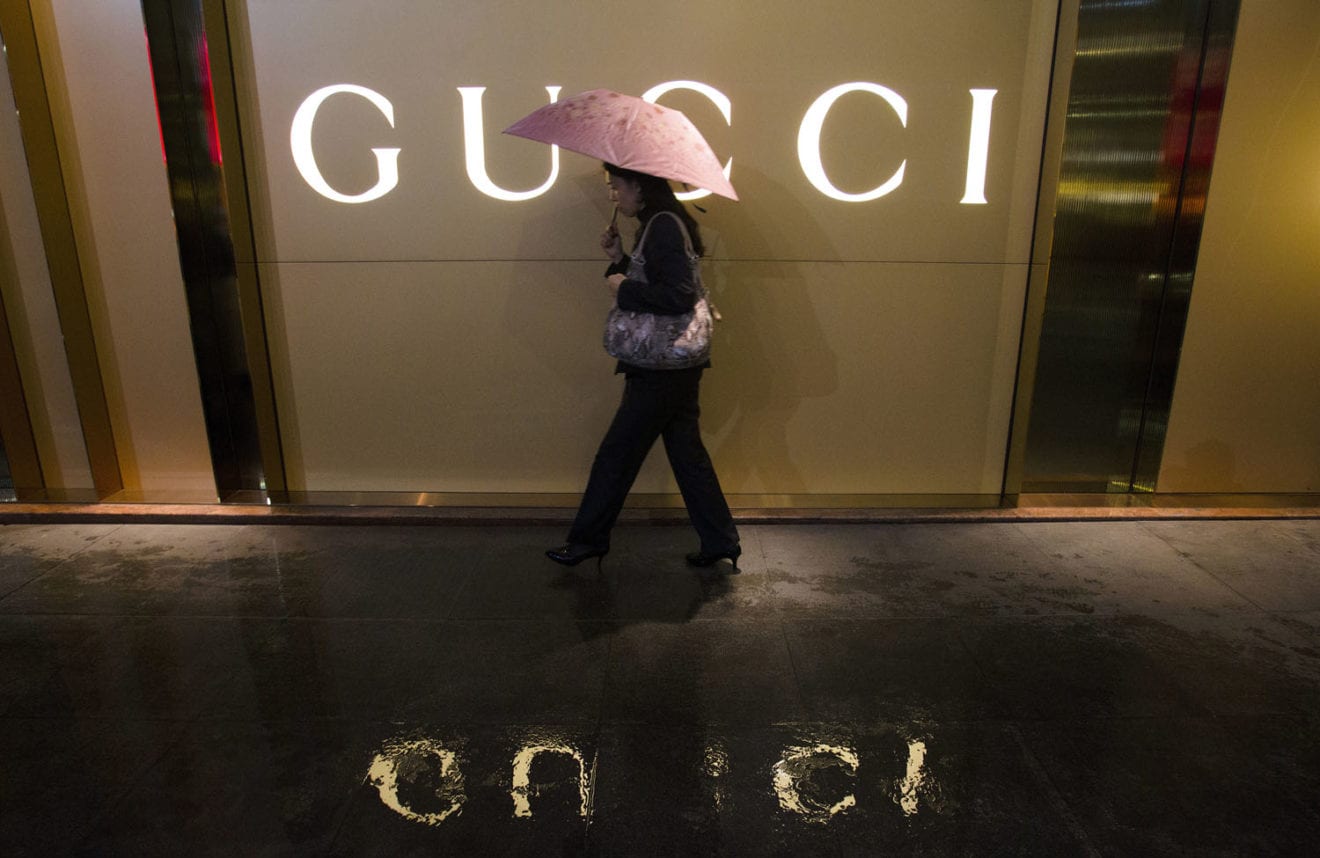
  • Gucci powers Kering third quarter sales

    Gucci powers Kering third quarter sales

    Kering sales growth significantly outpaced its rivals during the third quarter, up 27.6 per cent as reported and 27.5 per cent on a comparable basis, to €3.402 billion. In Kering-operated stores, Asia Pacific sales rose 33.3 per cent on a comparable basis, bettered only by North America’s 36.1 per cent increase. Growth in online sales exceeded 80 per cent and wholesale sales rose 27 per cent.

    “We are extraordinarily proud of the remarkable performances Kering delivers quarter after quarter,” said chairman and CEO Francois-Henri Pinault. “Our growth, whose pace is unprecedented in the luxury sector, is sound, well balanced and sustained across all regions and distribution channels.”

    Pinault said the company’s enduring success comes down to the talent of each of its brands in “creating strong emotional ties with its customers, conceiving a bold, generous creative universe, and reinventing its codes”.

    “Beyond short-term developments, we know that the secular growth of the luxury market, but particularly our solid fundamentals and the discipline with which we implement our strategy, will continue to support our operating and financial outperformance.”

    Gucci led Kering sales growth during the quarter, with sales up 35.1 percent and strong performance across all distribution channels, regions and product categories. Gucci Asia-Pacific sales soared 41.9 per cent.

    Yves Saint Laurent sales rose 16.1 per cent, driven by the strong performance of iconic lines and the success of new collections.

    While Bottega Veneta sales were down 8.4 per cent on a comparable basis, the label is in a transitional phase led by recently appointed creative director Daniel Lee (ex Celine). His first full collection will go on sale early next year.

    Kering’s other houses (labels) achieved a 32.3 per cent increase in sales, driven by  “exceptional momentum” at Balenciaga and ongoing growth at Alexander McQueen. New collections and extended iconic lines from Boucheron, Pomellato and Qeelin were “very well received”.

    The watches and jewellery categories delivered what the company described as “solid performances”.

  • Jinqing Cai, President of Kering Greater China

    Jinqing Cai, President of Kering Greater China

    Kering is reinforcing its corporate team in Greater China in order to adapt to the fast-changing business environment in this market, which has been continuously growing in importance for the luxury industry since Gucci opened its first store in China in 1997.

    This new management set-up will strengthen the existing corporate structure specifically dedicated to supporting the long-term development of Kering’s luxury Houses in Greater China.

    Ms. Jinqing Cai has been appointed President of Kering Greater China, starting from September 10, 2018.

    Her mission will be to reinforce the visibility of Kering in Greater China and to strengthen the links between the Group and its local partners. She will be based in Kering’s Shanghai office and will report to Jean-François Palus, Group Managing Director of Kering.

    François-Henri Pinault, Chairman and CEO of Kering, said: “Kering started to invest in Greater China some time ago and had built the foundations of a long-lasting and successful business, while continuously reinforcing our relationships with local partners. I am very pleased with the appointment of Jinqing Cai, which is a further testament to our long-term commitment in Greater China.”

    With this new organization, Kering will be best positioned to further support the rapid development of its luxury Houses in Greater China and to seize business opportunities in the Asia-Pacific region.

    Jinqing Cai started her career in 1993 in New York as an associate in a strategic consulting company. She then moved to Hong Kong to work for private equity fund management companies, k1 Ventures and Lark International Entertainment Limited, focusing on the media and entertainment industries.

    In 2002, she co-founded the PR firm New Alliance Consulting International in Beijing and managed the highly successful inaugural annual conference of Boao Forum for Asia.

    In 2005, Ms. Cai became the founding partner of Brunswick Beijing, playing a central role in the PR firm’s high profile cross-border transactions.

    In 2012, Ms. Cai joined the leading auction house Christie’s as the first Managing Director of Christie’s China. She was appointed President of Christie’s China in 2014 and then Chairman in 2016.

    Ms. Cai received her bachelor’s degree from Wellesley College in Massachusetts and a Master’s in Public Affairs from Woodrow Wilson School of International and Public Affairs, Princeton University.

    She was born and raised in Beijing and was an undergraduate student at Beijing University between 1986-1989, before pursuing her education overseas.

    Ms. Cai is on the international advisory board of the New York Philharmonic Orchestra, and serves as a board member of Teach for China, a non-profit organization focusing on education inequality in China

    In parallel with her new role at Kering Greater China, Ms. Cai will retain a consulting role at Christie’s, serving as Deputy Chairman of the company’s Asia Advisory Board.

  • Luxury group Kering reports positive numbers

    Luxury group Kering reports positive numbers

    Fashion giant Kering’s decision to focus the business on luxury appears to be paying off.

    In what chairman and CEO Francois-Henri Pinault termed “dazzling top-line and earnings performances” during the first half year, total revenue rose 33.9 per cent on a comparable basis and operating margin rose above 30 per cent for the first time in the company’s history.

    Kering sales in Asia rose by 37.6 per cent, excluding Japan, where sales rose by 30.7 per cent. That growth rate lagged the US, (up 45.4 per cent) but was well ahead of Kering’s home European market’s 25.1 per cent. Online sales more than doubled.

    While the growth occurred across most of the company’s brand portfolio, Gucci clearly led the way with sales up 44.1 per cent on a comp basis and margin from recurring operations reaching 38.2 per cent. Yves Saint Laurent sales rose 19.7 per cent.

    Revenue from Bottega Veneta was stagnant, up just 0.9 per cent, but all the other houses collectively rose by 36.5 per cent, led by Balenciaga and Alexander McQueen.

    First-half year consolidated revenue was €6.432 billion, up by 26.8 per cent before taking into account exchange rate influences and changes to the group structure. A year earlier, Kering’s portfolio included sportswear label Puma, a majority stake of which has since been spun off.

    Net income rose 185.7 per cent to €2.36 billion, although just over half of that was a capital gain resulting from the sell-down of Kering’s Puma stake.

    Pinault said Kering’s growth was “grounded in the exclusivity and desirability of our brands”.

    “The development model we implement across our houses paves the way for increased value creation as well as profitable, sustained and consistent organic growth. While facing increasingly demanding comps and an uncertain global environment, we will once again substantially enhance our financial and operating performances in 2018.”

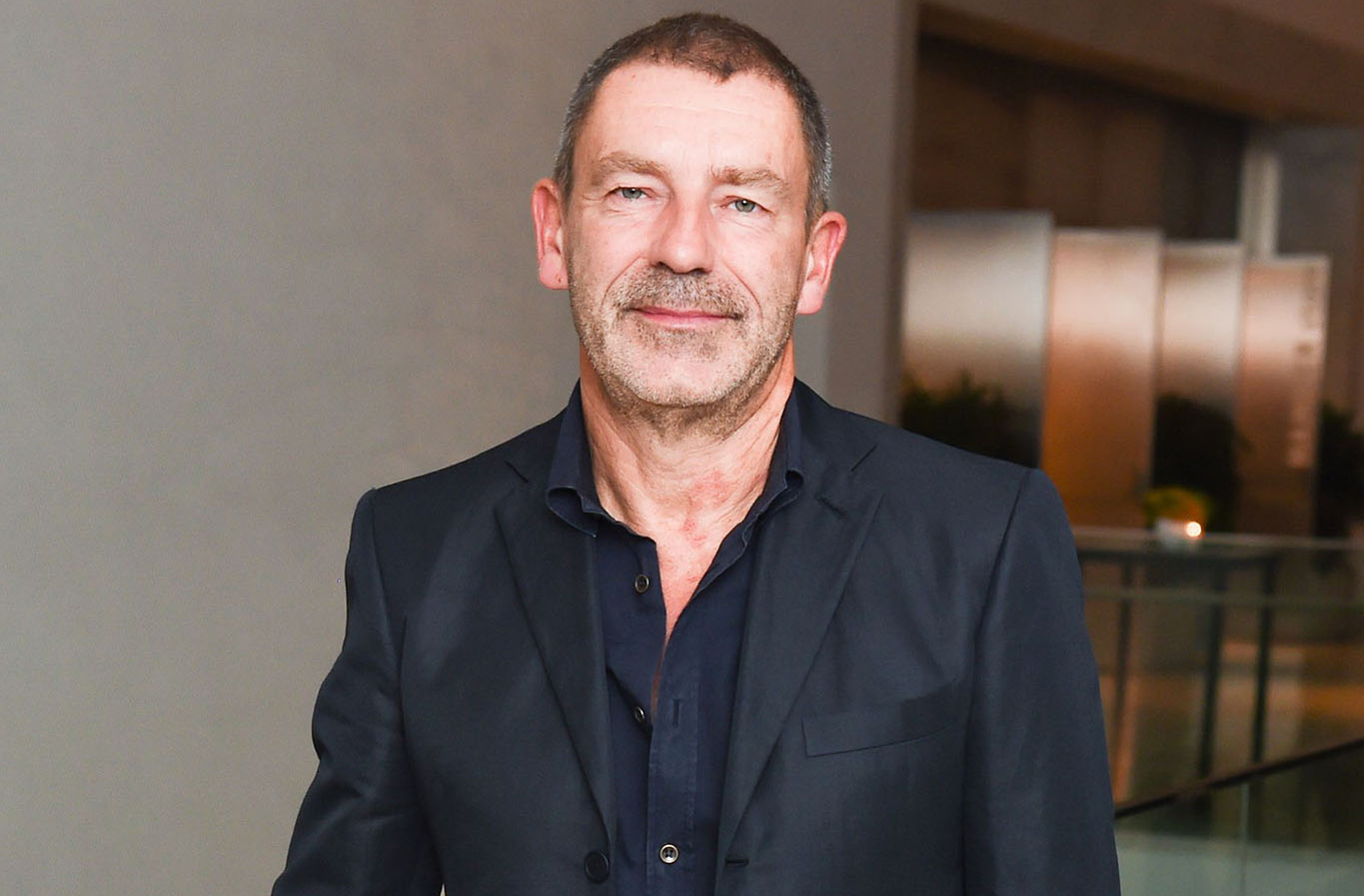
  • Tomas Maier to close down

    Tomas Maier to close down

    After more than twenty years of operation, Tomas Maier is no more. The luxury fashion label, founded in 1997 by the German designer of the same name, will cease operations by year-end.

    French luxury conglomerate Kering, which acquired the women’s wear brand in 2013 via a jointly owned company of which it was a major shareholder, confirmed this week it “is ending its partnership with the label, which is ceasing operations.”

    The label has between 20 and 30 employees, and “in the next few months, [Kering] will make every effort to protect their jobs, coordinating with the label’s local employee representatives,” read a press release.

    Furthermore, writing appointments for the resort 2018 and men’s spring 2019 collections have been cancelled and it is understood the next collection probably will not be produced.

    Earlier in the month, Tomas Maier resigned from his role as creative director of Bottega Veneta, which is also part of Kering.

    With a resume that reads Guy Laroche, Sonia Rykiel and Hermès, Maier was pivotal in making Bottega Veneta’s sales go from €50 million to €1 billion in 17 years.

    However, the brand lost momentum in recent years, and Kering changed its creative leadership. Daniel Lee, most recently director of ready-to-wear at Céline, succeeds Maier from 1 July.

    Parent of luxury brands including Gucci, Balenciaga, Saint Laurent and Boucheron, Kering has been selling-off its stake in less profitable fashion brands. It recently disclosed it is in talks to sell its shares in Christopher Kane back to the namesake designer and bid adieu to sports brand Puma earlier in the year.

  • Christopher Kane in talks with Kering to take back his brand

    Christopher Kane in talks with Kering to take back his brand

    Kering is announcing that discussions are underway with Mr. Christopher Kane about the conditions in which the British designer could take back full control of the eponymous brand.

    In 2013, Kering had acquired 51% of the brand created by Christopher Kane in 2006.

    Christopher Kane, the label, launched in 2006 and began almost immediately upon Kane’s graduation from Central Saint Martins, capitalizing on the success of his award winning MA collection that had already garnered much media attention.

    The designer has always been acknowledged as both a precocious and truly gifted talent. Christopher Kane has quickly matured and grown to become one of the powerhouse labels of British fashion with one of the biggest International profiles.

    The catwalk shows, held during London Fashion Week, are a widely acknowledged highlight of the International fashion calendar.

    Developing his playful signatures of constant innovation, rebellious femininity and extraordinary skill, his clothes continue to surprise and seduce with their ineffable sense of chic.

    Christopher Kane and Kering wish to continue to collaborate with the aim of achieving a gradual and harmonious transition.

    As an accounting consequence of the talks underway, the Group will apply IFRS 5, Non-current Assets Held for Sale and Discontinued Operations to this asset in its half-yearly accounts to 30 June 2018, which will be published 26 July.

    The brand is currently consolidated according to the full consolidation method.

  • Gucci unveils Gucci Equilibrium

    Gucci unveils Gucci Equilibrium

    Gucci has its finger right on the pulse of the fashion industry, as its latest initiative, Gucci Equilibrium, solidifies its position as a sustainable, responsible as well as highly-desirable luxury fashion house.

    Today, on World Environment Day, the Italian fashion house launches its new online destination at Equilibrium.gucci.com, “designed to connect people, planet, and purpose,” as ideas surrounding what it means to be luxury continue to evolve.

    The initiative is part of Gucci’s mission to balance the creation of luxury fashion with a radical sustainability agenda, as its parent company Kering continues strives to offer the best products, made in the best way out of the best materials while taking the best care of the planet and its inhabitants.

    “Gucci is not a company where you must leave your values at the door, but one where they are enhanced, challenged and amplified,” said Marco Bizzarri, Gucci President and CEO in a statement. “Gucci Equilibrium is about us spreading that energy and that positive intent to everyone who loves our brand.”

    The new platform shares curated content which showcases the stories, ideas and the science behind Gucci’s environment and social impact change, all while highlighting the luxury fashion house’s perspective on some of the key issues within the industry.

    The launch is part of Gucci’s wider 10-year plan to embed a comprehensive sustainability strategy into its brand, one which will be governed by a Culture of Purpose.

    In turn, this Culture of Purpose dictates Gucci’s operations on a daily basis, which are held in place by three pillars that include the environment, people and new models of sustainable innovation. Under the first pillar, Environment Gucci highlights its commitment to reduce its environmental impacts by setting targets to develop a new standard in luxury.

    For example, on the new platform readers can learn more about Gucci’s aim to guarantee the traceability of 100 percent of its raw materials by 2025 – a tall order for any brand.

    People, the second pillar, sees Gucci recognizing the value of its employees and working to enhance the lives of the individuals who make its products by supporting local communities. For example, Gucci is committed to fighting gender inequality through its Chimes for Change for Girls’ and Women’s Empowerment campaign.

    Gucci Equilibrium also shines a light on I was a Sari, a social enterprise which works with women from marginalised communities in Mumbai, teaching them new skills to bring in recurring income.

    At the same time, Gucci also underlines its use of technical innovation to improve efficiency in its production and logistics under its third pillar, New Models. For example, its newly opened Gucci ArtLab, offers a start-up environment for innovation, craftsmanship and experimentation.

    “These are critical times when we can all play our part in helping to deliver on the UN Global Goals and the Paris Climate Agreement,” added Bizzarri. “The only way to do that is by bringing people together, sharing ideas, innovation, and experiences. This is the objective we have set for Gucci Equilibrium.”

  • Gucci succesfull for Kering sales

    Gucci succesfull for Kering sales

    “Kering maintained its outstanding sales momentum in the first quarter,” said Kering chairman and CEO Francois-Henri Pinault. “Under its new luxury pure-player profile, the group clearly outperformed a market that remains well oriented,” he said.

    After including discontinued operations – Puma, Volcom and Stella McCartney, which Kering has divested its interests in – sales growth was still up 27.1 per cent.

    Gucci’s “spectacular growth” included a 49.4 per cent leap in Asia Pacific and 64.4 per cent in North America. Gucci sales for the quarter totalled €1.866 billion.

    “Gucci, Saint Laurent and Balenciaga set a high mark within a group that delivered sharp growth as a whole,” said Pinault. “In the balance of the year, we face a high base of comparison and a tough currency environment, but we are confident in the ability of our Houses to continue doing better than their peers, leveraging their innovativeness and creative audacity.”

    Yves Saint Laurent sales rose 19.6 per cent (including 23.6 per cent in Asia Pacific) while the combined contribution of Alexander McQueen, jewellery and watches recorded a 37.9 per cent improvement. Even troubled Bottega Veneta improved by 0.7 per cent (including a 5.8 per cent lift in Asia Pacific), the first visible impact of a restructuring plan. New lines were “well received,” according to Kering, and ready-to-wear fared well, but wholesale slipped “slightly” in the quarter.

    “The House is continuing to optimise its store network and strengthen its visibility through a communications strategy designed largely for digital media.”

    Balenciaga led a 37.9 per cent improvement from ‘Other Houses’, Kering’s smaller luxury brands.

    “Watches and jewellery performed very well this quarter. The strengthened positioning of Boucheron, Pomellato and Qeelin are paying off, thanks to new collections, extended iconic lines and investments in communications and store networks. Watches also turned in a good performance this quarter,” said Kering.

  • Stella McCartney buys Kering’s 50% stake in her fashion label

    Stella McCartney buys Kering’s 50% stake in her fashion label

    Kering is selling its 50 per cent stake in fashion label Stella McCartney back to the namesake designer after a 17-year partnership.

    The news follows a report last month revealing that a formal transition process was already in motion with an announcement imminent.

    “It is the right moment to acquire full control of the company bearing my name,” says McCartney.

    “This opportunity represents a crucial patrimonial decision for me. I am extremely grateful to Francois-Henri Pinault and his family and everyone at the Kering group for everything we have built together in the past 17 years. I look forward to the next chapter of my life and what this brand and our team can achieve in the future.”

    Kering chairman/chief executive Pinault says it is the right time for McCartney to move to the next stage. “Kering is a luxury group that empowers creative minds and helps disruptive ideas become reality. I am extremely proud of what Kering and Stella McCartney have accomplished together.”

    McCartney had the option, expiring on Saturday, to buy back Kering’s shares in the label, according to the terms of their JV. Kering and Stella McCartney have previously acknowledged separation talks on more than one occasion over the course of their partnership.

    McCartney’s father, musician Paul McCartney, is said to have played a role in helping to finance the buyback, but this cannot be independently confirmed. A spokesperson for McCartney previously said that her father has never been involved with the business.

    The disposal of Stella McCartney comes at a time when Kering is streamlining its portfolio. It announced in January it would spin off German sportswear brand Puma to its own shareholders.

    The split comes after Kering announced its most profitable year on record, with group net profits soaring 120 per cent last year driven by “spectacular” growth at Gucci and Yves Saint Laurent as well as a strong performance by Balenciaga, the group’s fastest-growing brand in the fourth quarter.

    The conglomerate posted sales of €15.5 billion (about US$19.2 billion), up 27.2 per cent year on year. Revenues topped €10 billion for the first time, with Gucci crossing the €6 billion mark in sales.

    McCartney first made her mark at Richemont-owned fashion label Chloe, before launching her eponymous brand in partnership with Gucci Group (once a subsidiary of what is now Kering).

  • Stella McCartney-Kering ready to separate

    Stella McCartney-Kering ready to separate

    After a 17-year partnership, French luxury group Kering is selling its 50 percent share of Stella McCartney back to the namesake designer. The public announcement, originally slated for early January 2018, is imminent, according to a source with first-hand knowledge of the discussions.

    According to the source, the Stella McCartney HR team is preparing a booklet outlining the details of the separation to answer outstanding questions and ease employee concerns. However, both parties issued a joint statement saying nothing has been confirmed.

    “Kering and Ms Stella McCartney have been operating and growing the Stella McCartney brand since 2001 as a 50/50 joint venture. As already stated, as it is customary between stakeholders, there are regular discussions about the future of the partnership,” Kering and Stella McCartney said. “Any significant change to the current relationship would be made public at the appropriate time. Any piece of information circulating to this respect can only be considered as speculation.”

    To be sure, unravelling the partnership will be a time consuming, expensive process.

    According the source, Kering’s brands will be forbidden from hiring Stella McCartney employees during the transition process, which could take as long as two years.London-based retail strategy consulting firm Javelin, part of global advisory firm Accenture, is working with Stella McCartney to reorganise during the transition period, creating a blueprint for the newly independent Stella McCartney business.

    While Kering and Stella McCartney have acknowledged that there have been separation talks on more than one occasion over their 17-year partnership, the exact reasons for the break, and why it’s happening now, are not yet known. The reported split does come at a time when Kering is streamlining its portfolio and focusing its attention on blockbuster brands including Gucci, Saint Laurent and Balenciaga.

    In early January 2018, the group announced that it would spin off German sportswear brand Puma, inching the parent company further toward becoming a pure luxury player. In the fiscal year ending December 31, 2017, consolidated revenues were €15.5 billion, up 27.6 percent on a reported basis. Sales within the luxury group, which excludes Puma, Cobra and skate brand Volcom, were up 27.5 percent on a reported basis.

    Stella McCartney first launched as a joint venture with the Gucci Group in 2001. At the time, the Gucci Group was run by chief executive Domenico De Sole and Tom Ford, who designed both Gucci and Yves Saint Laurent. Alexander McQueen joined the group in 2000.

    Over the next two decades, McCartney and Kering built a global brand, driven not only by the designer’s exuberant sportswear but also by her commitment to animal-free fashion. McCartney’s faux-fur and faux-leather apparel and accessories helped to elevate the materials in the eyes of the consumer, serving as an example for other brands and a resource for Kering’s entire portfolio, which now also includes Balenciaga, Christopher Kane and Brioni. In 2016, Stella McCartney published its first environmental profit-and-loss account.

    Kering does not break out the revenues of its smaller houses, although in 2015 market sources estimated that Stella McCartney’s annual global sales were somewhere between $150 million and $200 million. However, the annual retail value of Stella McCartney products is likely significantly more thanks to branded collaborations with Procter & Gamble for beauty, Adidas for activewear and Bendon for lingerie. Her collection with Adidas, first launched in 2004, has become a brand in itself. McCartney then launched menswear in 2016.

    As for how Stella McCartney may transform under the founder’s absolute rule, a push to drive more direct sales could be in the cards.

    In May 2017, the company announced that it would open four new store locations, including a second store in Paris, one in Florence, in one Costa Mesa, California, and a second location in New York City.

    A year earlier, it also assumed control of store operations of its three Hong Kong stores, which were previously managed by a local partner. The brand’s retail store portfolio currently includes 52 locations, with another store on London’s Bond Street on the way.
  • Kering to celebrate new sales record

    Kering to celebrate new sales record

    In a “phenomenal” result, global luxury group Kering had record operating revenue last year, driven in large part by the popularity of Gucci.

    Kering’s income totalled €15.4 billion (US$19 billion), up 25 per cent as reported or 27.2 per cent on a comparable basis. Revenue from luxury activities was up 27.5 per cent as reported, or 29.9 per cent on a comparable basis, while for sport and lifestyle activities, revenue was up 12.8 per cent as reported or 14.7 per cent on a comparable basis.

    Describing it as a phenomenal year, chairman/CEO François-Henri Pinault says the group created more than €3 billion in extra revenues in a single year, and generated more than €1 billion in additional EBIT.

    In a performance “nothing short of spectacular”, Gucci was amplifying its desirability across all markets.

    “Saint Laurent is on a rapid growth track, while Bottega Veneta pursues its redeployment. Balenciaga is charting an impressive development trajectory, and our other luxury brands are experiencing positive momentum,” says Pinault.

    Revenue for luxury activities topped €10 billion last year, up 29.9 per cent year on year based on comparable data. Comparable growth was up 44.6 per cent for Gucci and 25.3 per cent for Yves Saint Laurent.

    Other luxury brands saw accelerated revenue growth (up 14.1 per cent on a comparable basis), especially Balenciaga, which delivered the fastest growth rate of all group brands in the second half.
    Puma’s revenue topped €4 billion for the first time, a rise of 15.8 per cent on a comparable basis, while recurring operating income for the brand jumped 92.7 per cent.

  • Puma Parents Announces Plan To Sell 70% Of Its Stake

    Puma Parents Announces Plan To Sell 70% Of Its Stake

    Luxury fashion brand owner Kering says it will sell off the majority of its Puma stake.

    Under the plan, Kering will reduce its 86 per cent holding in the German athletics-wear label to 16 per cent, the remaining 70 per cent of stock distributed proportionally to Kering shareholders.

    While Puma has proven successful under Kering’s ownership, the Paris-headquartered company wants to shift its focus to what it sees as its core business – luxury brands like Gucci, Balenciaga and Stella McCartney, and a growing focus on watches and jewellery.

    “With Puma’s unique DNA, heritage of innovation and creativity, the ongoing successful implementation of its “Forever Faster” transformation plan has started to deliver results,” said Kering in a statement.

    “The brand is enjoying strong revenue growth momentum and achieving an improvement in its profitability. Furthermore, Puma’s management team is fully committed to pursue its successful strategy, and continue to deliver the growth and profitability potential of the brand.”

    “We are very pleased that Kering has proposed this way to reduce its stake in Puma, said Bjørn Gulden, CEO of Puma. “It would allow us to continue with our current business strategy that has started to show good results. We would be able to carry on to invest in becoming the Fastest Sports Brand in the world, create value for retailers, improve performance for athletes and excite consumers.

    “Puma would become much more attractive for investors as our shares would have a substantially higher free float and larger trading volumes. Kering and [Kering’s largest shareholder] Artémis, however, would remain strong partners and shareholders, which proves that they believe in our strategy and Puma’s future success,” said Gulden.

    The Puma stake divestment will be voted on by Kering shareholders on April 26.

  • Kering Eyewear, Cartier launch collection

    Kering Eyewear, Cartier launch collection

    Jewellery retailer Cartier has teamed with Kering Eyewear for its latest eyewear collection.

    Presented at the Silmo International Optics and Eyewear Exhibition in Paris, it marks the official start of the companies’ licensing agreement.

    Described as “timeless”, the collection has three main components, Santos de Cartier, C de Cartier and Panthere de Cartier, and introduces new shapes that aim to “redefine the art of eyewear”.

    Effective from January 2, the licensing partnership will see the two luxury groups co-operate to to create a platform for product development, manufacturing and worldwide distribution of Cartier Eyewear.

    Under the terms of the agreement, Cartier owner Richemont has acquired a minority stake in Kering Eyewear, which has also integrated the Manufacture Cartier Lunettes entity in France.

    In June, a lawsuit was filed against Kering, accusing it of false advertising, unfair competition and fraud for claiming its China-produced eyewear had been made in Italy. Kering has denied all charges.

  • Kering revenues soar 28 per cent, fuelled by Asia-Pacific

    Kering revenues soar 28 per cent, fuelled by Asia-Pacific

    Luxury brand and sportswear retailer Kering has reported first-half consolidated revenue up 28.2 per cent to €7.296 billion.

    Kering revenues in Asia-Pacific, (excluding Japan), soared 34.4 per cent and that market now accounts for 28 per cent of the group’s total sales. Japanese sales rose 20.7 per cent.

    Sales in its luxury division rose 29.7 per cent (28.3 per cent on a comparable basis) and in the sports and lifestyle arm – largely Puma – by 16.1 per cent (14.3 per cent).

    Recurring operating income of €1.27 billion was up 57.1 per cent.

    “Thanks to the execution of our strategy, we achieved outstanding revenue growth in the first half, clearly outperforming the sector, and delivered record profits and operating margins,” said chairman and CEO François-Henri Pinault.

    “These remarkable performances in all regions of the world and across all of our activities underscore Kering’s ability to innovate, create value, and gain market share. Our vision of luxury, grounded in creative audacity and in the sincerity of our brands’ values, is more relevant than ever.”

    A global luxury group, Kering owns a diverse portfoilo of luxury brands, including Gucci, Bottega Veneta, Saint Laurent, Alexander McQueen, Balenciaga, Brioni, Christopher Kane, McQ, Stella McCartney, Tomas Maier, Boucheron, Dodo, Girard-Perregaux, Pomellato, Qeelin and Ulysse Nardin. In the sports and lifestyle sector, it owns Puma, Volcom and Cobra.

  • Record US$1.1 billion profit for Hermes

    Record US$1.1 billion profit for Hermes

    French luxury goods brand Hermes made a record net profit last year of €1.1 billion (US$1.19 billion), doing “better than we expected”, according to CEO Axel Dumas.

    “We are entering this year on a solid base, but remain cautious in view of an uncertain environment.”
    Known for its $10,000 Birkin bags and $400 printed silk scarves, Hermes says its net profits rose by 13 per cent while its operating margin hit an historic high of 32.6 per cent of sales against 31.8 per cent in 2015.

    Its sales growth mainly stemmed from the strong performance of its leather goods, which accounts for half of group sales. Other divisions also performed well with the exception of its watches unit.

    Hermes joined other luxury companies such as Kering and LVMH in reporting an improvement in the luxury goods sector, which has been hit by slowing demand in China as well as terrorist attacks in France deterring tourism in Europe.

  • Hermes results show luxury rebound

    Hermes results show luxury rebound

    Rebounding luxury goods sales in Mainland China and improvements in Hong Kong have boosted third-quarter Hermes results.

    Analysts are pointing to these and last week’s strong Kering numbers in tipping the worst may now be over for both luxury markets.

    Hermes reported overnight that sales climbed to 1.26 billion euros (US$1.4 billion) in the last quarter, ahead of estimates.  Sales growth was strongest in Asia-Pacific, up 14 per cent and fuelling a global increase of 8.8 per cent excluding currency fluctuations. That’s the fastest growth rate in two years in the region.

    “The driving trend is that the Chinese customer is slowly coming back,” Makiko Zuercher, who manages the Dynapartners Luxury Brands Fund, told Reuters.

    Chinese customers are the most prolific buyers of luxury goods globally, accounting for about one third of demand. Luxury brands say their return to stores has been driven by government policies encouraging domestic consumption.

    “China is growing at a better pace, mainly because the economy is strengthening and because of domestic consumption,” Hermes CEO Axel Dumas told journalists in a conference call. “In our case, I’m not talking about a rebound, because we always had growth.”

    Hermes’ sales of leather goods rose 16 per cent, with the $9000 Constance purse and $5000 Halzan shoulder bag leading the way.

    After reporting growth of 7.7 per cent for the first nine months of the year, Hermes is predicting full-year growth of just under 8 per cent, a target analysts expect it will exceed.

    LVMH and Richemont have also reported improvements in Asian sales in recent weeks.