Retail News CRM

Tag: l’oreal

  • Richemont joins Alibaba’s IP alliance on brand protection

    Richemont joins Alibaba’s IP alliance on brand protection

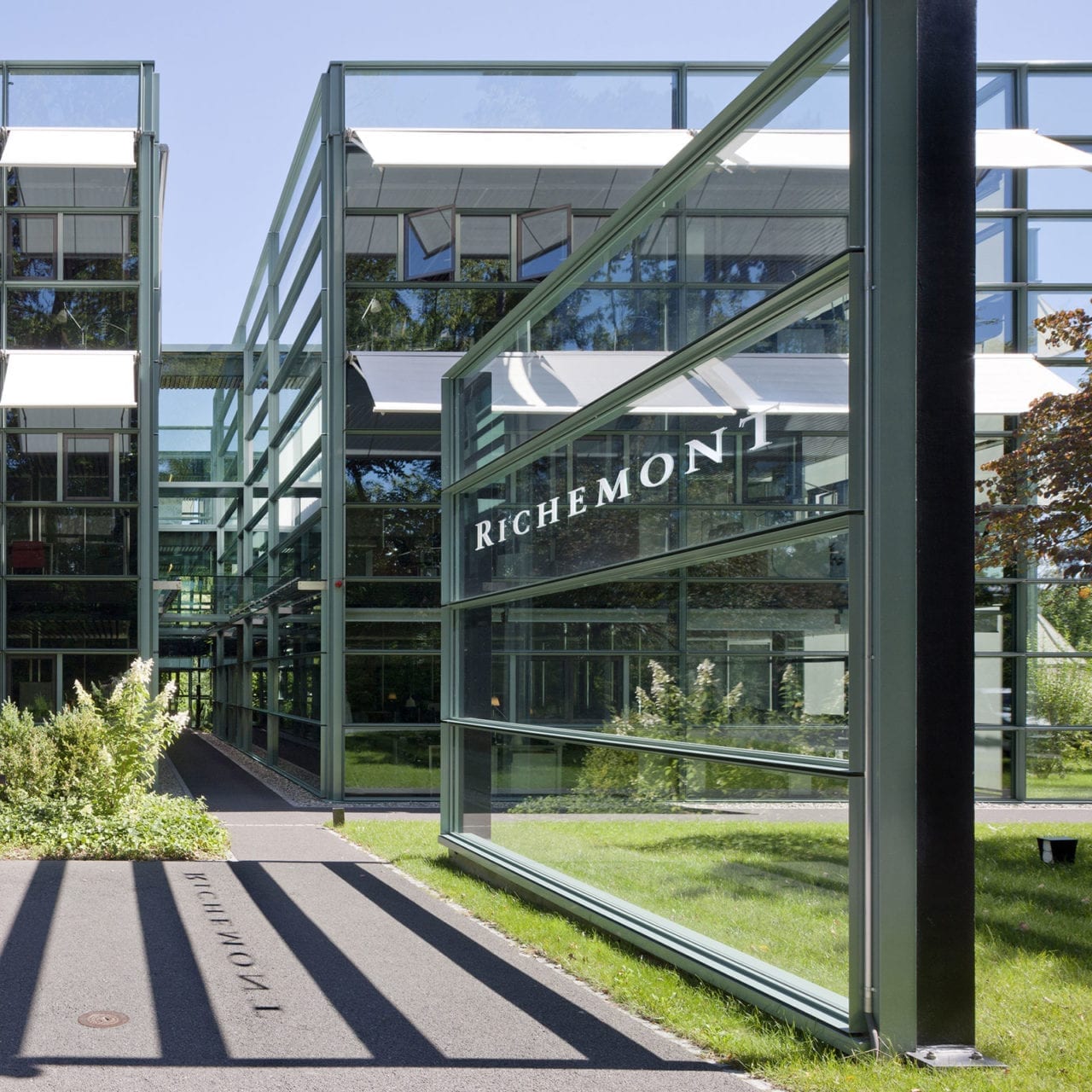
    Global luxury group Richemont has joined the Alibaba Anti-Counterfeiting Alliance, a partnership between the e-commerce giant and brands that works to protect intellectual property rights on Alibaba’s platforms. Geneva, Switzerland-based Richemont is now among the 115 members from 16 countries and regions that are a part of the IP alliance, as well as the latest from the luxury sector to partner with the e-commerce giant on brand protection. Richemont said it would share its technology, expertise and other information to support the Alliance’s efforts.

    Richemont owns 17 luxury brands, including Cartier, Montblanc, Piaget, Van Cleef & Arpels, Watchfinder & Co and Chloe, in addition to Yoox Net-A-Porter Group, the online retail platform. YNAP runs four different websites — Net-A-Porter, Mr Porter, lifestyle-goods destination YOOX and affordable-fashion seller The Outnet — as well as online flagship stores for leading fashion brands, such as Armani, Moncler and Valentino.

    The announcement comes a month after Alibaba and YNAP partnered to bring the site’s high-end goods to Chinese consumers. A joint venture between Alibaba and YNAP will launch a mobile app for the Net-A-Porter platform and menswear site Mr Porter, in addition to opening flagship stores for Net-A-Porter and Mr Porter on Tmall Luxury Pavilion, a channel that connects premier brands with China’s digital-first consumers.

    Richemont, along with New Balance, General Motors and McDonald’s, were the latest global brands to join the AACA. The alliance’s membership has more than tripled from the original 30 founding brands at its launch last year, and now includes  names, such as Bose, Canada Goose, Honda, Samsung, Mars, Adobe, Danone, Hasbro and L’Oreal, in 12 industry categories. They work with Alibaba in six key areas — proactive online monitoring and protection, a product test-buy program, offline investigations and enforcement actions, industry-law enforcement workshops, litigation tactics and public awareness campaigns — in the fight against IP infringement.

    In September last year, the AACA established an advisory board so that brands could provide feedback to Alibaba in areas related to IP enforcement. Alibaba has since upgraded its Intellectual Property Protection Portal as well, delivering faster navigation and a better user experience on the site, where rights holders report suspected infringing listing and share information with Alibaba. In addition, Alibaba’s Good Faith program, which is open to brands with a track record of accurate notice and takedown filings, has streamlined the reporting process.

    The IP alliance does not restrict its brand-protection efforts to the online space. Alibaba and its brand partners also work to find and eliminate fakes at their source. In the luxury sector, Alibaba and Louis Vuitton – one of the first members of AACA – conducted an offline investigation that resulted in the seizure in May of approximately RMB 100 million ($14.4 million) worth of counterfeit goods.

    “The protection of intellectual property rights requires all stakeholders to work closely together and share their expertise. The AACA will continue its efforts to establish industry best practices for IP protection by creating effective collaboration among brands, platforms and law enforcement,” said Michael Yao, Alibaba’s senior VP and head of Brand Protection and Cooperation.
  • Apple store to sell wearable skincare product

    Apple store to sell wearable skincare product

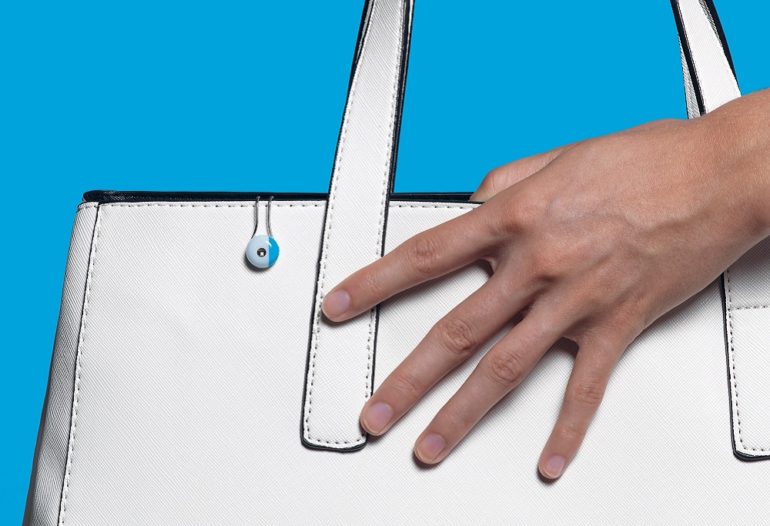
    Apple is now selling L’Oreal’s newest tool called the My Skin Track UV, made by the La Roche-Posay brand. The company first unveiled this product at the 2018 Consumer Electronics Show in January 2018 and it is now ready for consumers.

    This is the first time that Apple is venturing into the world of beauty and skincare in its store.

    My Skin Track UV is a small wearable device to attach on the customer’s clothes to measures their individual exposure to UVA and UVB rays; a companion app tracks their exposure to pollution, pollen, and humidity.

    The device is cleverly designed to be battery free–its sensor is activated by the sun, and is then powered by the user’s smartphone using near field communication.

    The product was designed in collaboration with Yves Behar, and relied on research gathered by Northwestern University’s John Rogers, who has developed a range of stretchable electronic devices.

    It is designed to motivate wearers to engage in safer outdoor behavior.

    While most people are aware about the sun’s impact on the skin, this knowledge often doesn’t actually prompt them to change their behavior.

    L’Oreal’s research found that when consumers had regular, accurate updates about their sun exposure, 34% applied sunscreen more often, and 37% sought shade more frequently

  • Kiehl’s Loves immersive celebrity driven campaign hits big

    Kiehl’s Loves immersive celebrity driven campaign hits big

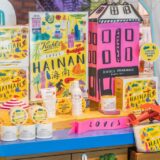
    L’Oréal-owned skincare brand Kiehl’s is leveraging star power and immersive digital technologies for the third edition of its annual ‘Kiehl’s Loves’ campaign, titled ‘Kiehl’s Loves Around the World 2018’. The campaign was officially launched in Hainan last month with an influencer-driven mega event and an immersive pop-up featuring augmented reality (AR) technology and digital retailtainment – a first for the brand.

    In another first, Kiehl’s has appointed some of the region’s top celebrities to front the campaign, which will run in nine locations across Asia Pacific travel retail: Hainan, Bangkok, Jeju, Seoul, Beijing, Shanghai, Hong Kong, Macau and Taiwan.

    These celebrities will serve as “adventurers” in the travel-themed campaign, each representing a specific location.

    South Korean singer Hwang Chi-Yeul has been chosen as the campaign’s “global explorer”, representing Kiehl’s home city of New York.

    Joining him as local “city hosts” are Chinese singer Wang Ziyi (representing Hainan), Chinese actor Dong Zijian (Beijing), Chinese fencing athlete turned singer and actor Dong Li (Shanghai), Taiwanese singer and actress Emma Wu Ying-chieh (Taiwan), and Hong Kong Cantopop singer and songwriter Pakho Chau (Hong Kong).

    Kiehl’s Loves is a global campaign that celebrates the countries and cities served by Kiehl’s worldwide.

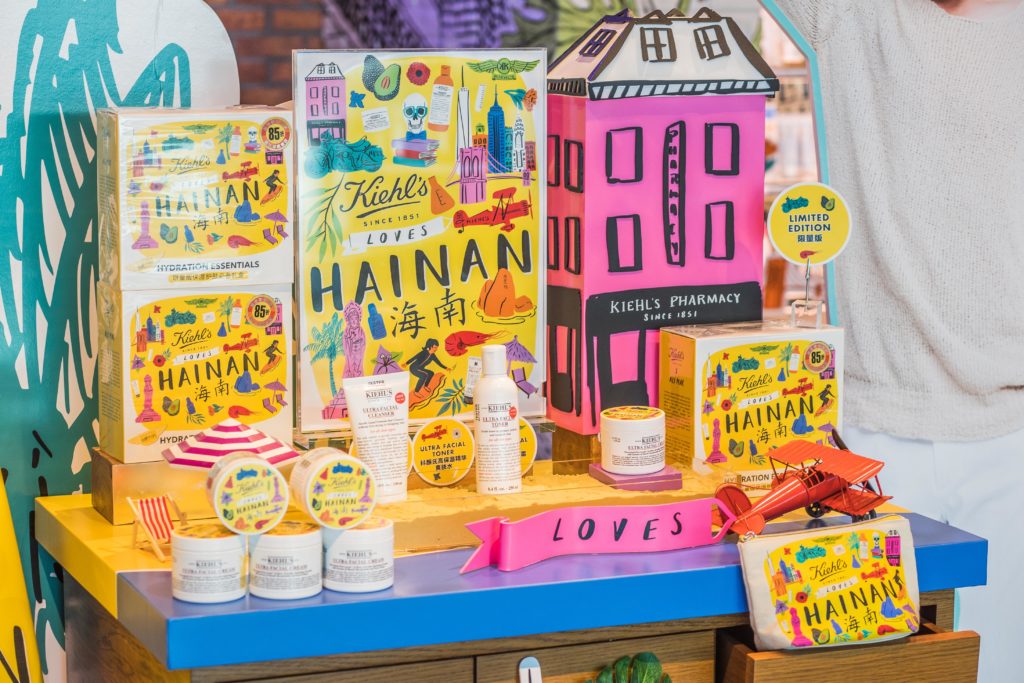
    Following in its annual tradition of working with internationally acclaimed artists, this year Kiehl’s has teamed up with New York-based graphic designer and illustrator Ali Mac to create limited-edition packaging for Kiehl’s products.

    Ali Mac has designed artwork for more than 50 international Kiehl’s locations, combining symbols of the brand’s heritage with visual icons that are characteristic to each city’s local culture and DNA.

    Besides product packaging, the fun and colourful artwork will also be featured on travel-themed items such as totes bags, pouches and luggage tags.

    Kiehl’s Loves Around the World 2018 kicked off in Hainan, China, with an immersive pop-up store that ran from 1–29 September at China Duty Free Group’s Sanya International Duty Free Shopping Complex.

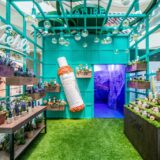
    Located at the level 1 concourse, the pop-up was designed to highlight Kiehl’s bestselling products using AR technology to create a disruptive, engaging experience.

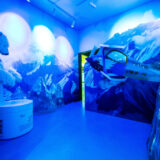
    It comprised a number of themed areas – a nature room, an adventure room and a Kiehl’s 1851 apothecary – with digital touchpoints to engage shoppers.

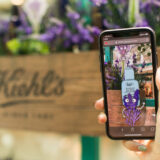
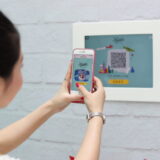
    Scanning the QR code on WeChat called up AR features that illustrated product information and directed users to the Kiehl’s e-commerce site and the Kiehl’s store on level 2 of the shopping complex, driving O2O (offline-to-online/online-to-offline) conversion.

    A digital photo booth also provided photo opportunities and encouraged sharing on social media. Thanks to AR technology, shoppers could find out more about the products via WeChat.

    On 22 September, L’Oréal Travel Retail Asia Pacific and China Duty Free Group (CDFG) celebrated the campaign launch with a high-profile promotional event, attended by key opinion leaders (KOLs) and media from China.

    Global campaign ambassador Hwang Chi-Yeul and Hainan ambassador Wang Ziyi made special appearances at the event, where they played games and interacted with their fans.

    Thanks to their participation in Chinese reality shows, both singers have amassed a significant following in China, with more than five million Weibo fans each.

    Terry Chua, CDFG-Sunrise Group Merchandising Director of Perfumes & Cosmetics, commented: “Kiehl’s Loves Around the World is a 360 campaign. It has targeted communications on WeChat, and they have invited celebrities and KOLs which appeal to the younger generation – the Millennials and Generation Z. On top of that, it’s important that we have sufficient stocks to cater to demand and are well prepared in terms of design and safety, so that customers can have an enjoyable experience when they come to the Kiehl’s pop-up and leave with nice memories. This kind of continuous investment in brand building will continue to keep Kiehl’s at the top of the consumers’ minds.”

    Following Hainan, the Kiehl’s Loves Around the World 2018 campaign will continue its travel retail roll-out this month in Seoul.

    A similar consumer engagement event will take place downtown, with another appearance by global ambassador Hwang Chi-Yeul.

    L’Oréal Travel Retail Asia Pacific General Manager of Kiehl’s Adele Zhang told The Moodie Davitt Report that China and Korea were natural choices when it came to selecting the locations for hosting events as they both have very good travel retail shopping environments and are very advanced in engaging millennial consumers.

    “We believe that travel retail is a great showcase to promote the brand and to engage customers. Of course, we have some constraints in the airports with space etc., but with downtown duty free shops we have more flexibility.” she said.

    The Kiehl’s Loves campaign taps into the demand for exclusive gifts in travel retail and creates a Sense of Place, a trend that has been pioneered by Kiehl’s for years, Zhang said.

    The digitalisation of the campaign, through e-commerce and digital/social media, allows Kiehl’s to reach out to millennials and better engage them, she added.

    The use of AR technology to highlight the brand heritage also helps to create memorable experiences.

    Looking ahead, Zhang is looking to continue the strong growth of Kiehl’s and make it a leading skincare brand.

    “Kiehl’s is not a media-driven brand, and we don’t invest heavily in above-the-line. The brand relies on two things: word-of-mouth and high-quality, effective products. Kiehl’s can be categorised as a lifestyle brand, and it originates from New York so it’s perceived as a fun and hot brand, so I think we can do something different from other brands.

    “We hope to make Kiehl’s a brand that is desired by young people. When they think about brands with high-quality products and 100% natural ingredients, we want Kiehl’s to be at the top of their minds,” she said.

    View the gallery below for photos of the event (8 images) :

  • Tmall and L’Oréal China Deepen Partnership

    Tmall and L’Oréal China Deepen Partnership

    Alibaba Group’s Tmall, and L’Oréal China said today they’ll work closely together to find new ways for the beauty group to tap into the Chinese market, leveraging data-driven consumer analytics and a new value chain that better connects consumers, products and channels.

    Tmall Innovation Center (TMIC), the retail innovation arm of Tmall, will work closely with L’Oréal China to catalyze the consumer-to-business (C2B) approach, based on insights and trends generated from the 600 million-plus customer base across Alibaba’s marketplaces.

    “We have been very happy to ride the wave of the digital transformation together with Alibaba Group’s Tmall. As the number-one beauty company in the China market, L’Oréal China will continue to deepen collaboration with innovation partners locally to unleash the value of data insights and create value for our consumers,” said Stéphane Rinderknech, CEO of L’Oréal China. “With our ‘Beauty for All’ mission and consumer centric strategy, our ultimate goal is to bring personalized products, services and experiences to each and every Chinese consumer.”

    The partnership’s first initiative will focus on China’s male-grooming industry. According to a white paper co-developed by TMIC and L’Oréal China Consumer Intelligence Team, online sales of men’s grooming products have increased by more than 50% in each of the past two years. In the past year, 62% of the male consumer pool between the ages of 15 and 50 said they used male-specific facial skincare products, showing a massive addressable market for male grooming products.

    “With Tmall’s unparalleled customer insight, we are committed to helping L’Oréal China offer its customers best-in-class personalized product experiences. Tmall has transformed product development in every area, from product innovation and brand building to consumer assets and channel management. We help brands discover new demand and markets as well as offer completely new customer experiences,” said Jet Jing, President of Tmall.

    TMIC and L’Oréal China precisely identify five profile groups of customers with specific preferences, such as those who go for men-only personal care products; those who need a full range of products and those only seeking face, hair and basic products.

    Based on the findings of the white paper, L’Oréal China and Tmall will co-host a consumer-oriented marketing campaign, “Super U Carnival,” both online and offline from September 25-30. Male consumers will be able to discover suitable grooming products with the help of data insights. At a pop-up store in Hangzhou, five immersive show rooms are tailored to customers’ unique styles and preferences.

    L’Oreal China is one of the international groups that has benefited from these consumer insights generated by TMIC. Established in April 2017, TMIC’s mission is to

    help brands explore new ways to tap into the Chinese market by using precise market analysis, real-time consumer insights and test models. Including L’Oreal China, TMIC has already collaborated with 62 companies.

    Earlier this week, L’Oréal China launched House99 flagship store on Tmall, together with David Beckham, the founder of House99. A full range of high-end male grooming products, including skin and body care, hair and shaving products, are now available on House 99’s Tmall store.

  • Tmall and L’Oréal China strengthen partnership

    Tmall and L’Oréal China strengthen partnership

    Alibaba Group’s Tmall, and L’Oréal China said today they’ll work closely together to find new ways for the beauty group to tap into the Chinese market, leveraging data-driven consumer analytics and a new value chain that better connects consumers, products and channels.

    Tmall Innovation Center (TMIC), the retail innovation arm of Tmall, will work closely with L’Oréal China to catalyze the consumer-to-business (C2B) approach, based on insights and trends generated from the 600 million-plus customer base across Alibaba’s marketplaces.

    The partnership’s first initiative will focus on China’s male-grooming industry. According to a white paper co-developed by TMIC and L’Oréal China Consumer Intelligence Team, online sales of men’s grooming products have increased by more than 50% in each of the past two years. In the past year, 62% of the male consumer pool between the ages of 15 and 50 said they used male-specific facial skincare products, showing a massive addressable market for male grooming products.

    “With Tmall’s unparalleled customer insight, we are committed to helping L’Oréal China offer its customers best-in-class personalized product experiences. Tmall has transformed product development in every area, from product innovation and brand building to consumer assets and channel management. We help brands discover new demand and markets as well as offer completely new customer experiences,” said Jet Jing, President of Tmall.

  • L’Oreal China get fuel from Colorlab by Watsons

    L’Oreal China get fuel from Colorlab by Watsons

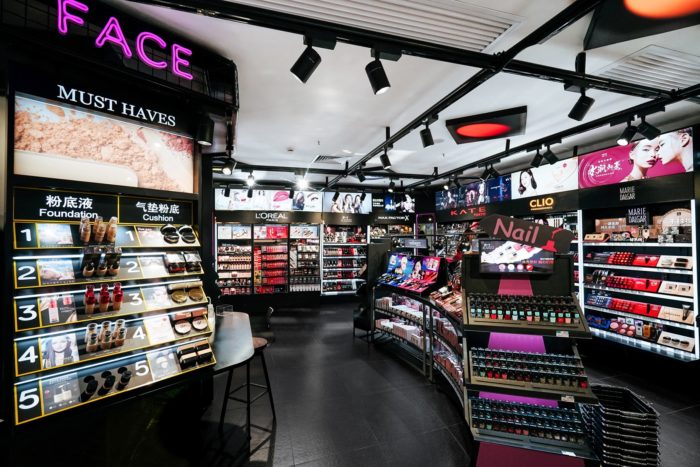
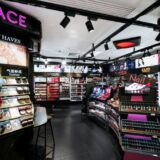
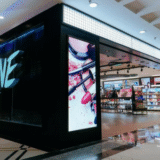
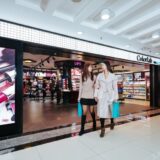
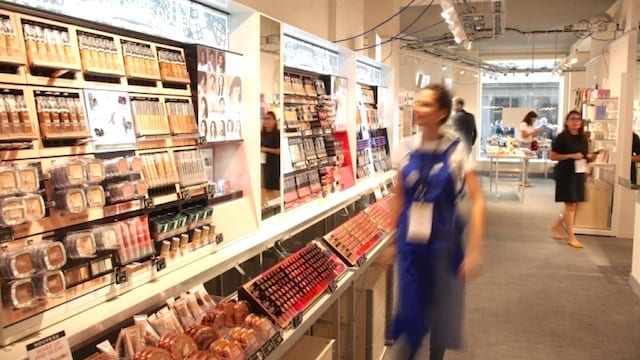
    International health and beauty retailer AS Watson has teamed up with L’Oreal to launch Colorlab by Watsons, a new concept makeup store in China.

    The first Colorlab launched in Shenzhen early this year as a trial, followed by more openings in Guangzhou and Shanghai. Now the company has revealed plans to roll out a further 50 stores across China by the end of this year. The stores feature modern black interiors to convey a fashionable and trendy experience-led makeup space, with access to on-hand makeup artists.

    L’Oreal brands occupy more than 30 per cent of retail space, and such an arrangement is exclusive to Colorlab only.

    With the rise of online shopping and changing shopping behaviours of younger customers, it is expected that the focus on innovative physical spaces and refreshing shopping experiences will help attract younger buyers.

    AS Watson Group COO Malina Ngai said: “Makeup was identified as a huge growth area for Watsons, and working with L’Oreal on the development of this new store concept meant that we had the expertise of an established makeup supplier at the forefront. Colorlab stores put the customers experience first and rather than just purchasing makeup, we wanted to give customers access to advice and expertise from skilled makeup artists, as well as the opportunity to try out different looks and play about with new products.”

  • China boosts L’Oreal high growth rate

    China boosts L’Oreal high growth rate

    Chinese consumers are powering massive sales growth for beauty products giant L’Oreal in Asia Pacific.

    During the first half of this year, like-for-like sales in the region soared 22 per cent and it is now on the brink of surpassing North America as L’Oreal’s second largest geographic region in sales, behind Europe.

    “This strong growth is being boosted by Chinese consumers, as reflected in the growth in China and Hong Kong across all divisions, especially for premium brands,” said L’Oreal in a statement. “E-commerce and travel retail accelerated in the first half. Southern Asia is extremely dynamic, with market share gains particularly in India and Malaysia.”

    Globally, L’Oreal achieved sales of €13.39 billion, with €3.54 coming from Asia, €3.56 billion from North America and €4.13 billion from Western Europe. Across all markets, like-for-like sales rose by 6.6 per cent. But in Western Europe, sales slipped 2 per cent in the second quarter and 0.8 per cent over the first half.

    Chairman and CEO Jean-Paul Agon said the beauty market is becoming more premium.

    “The good sales growth and the quality of the first-half results reinforce our confidence in our ability to once again outperform the cosmetics market in 2018, and to achieve significant like-for-like sales growth and an increase in our profitability.”

  • L’Oreal China and Alibaba team up on green packaging

    L’Oreal China and Alibaba team up on green packaging

    L’Oréal China and Alibaba Group signed an agreement committing to using environmentally packaging in order to reduce waste in China.

    The agreement, which will be rolled out over the next five months, includes a pledge from L’Oréal to switch to FSC-certified sustainable paper, zipper paper, zipper paper cartons, or paper adhesives to decrease the use of plastic materials for its brand portfolio, according to the joint announcement.

    For Chinese multinational retailer Alibaba, the move highlights their strategy called new retail. As entrepreneur and author Ashley Galina Dudarenok explained, Alibaba seeks to redefine commerce by enabling seamless engagement between the online and offline world. Alibaba’s consumer-facing marketplace Tmall formed a partnership last month with the Marine Stewardship Council. Tmall’s goal is to have 20% of their sales carry the MSC label by 2020.

    The new partnership with L’Oréal China provides customers with high quality products and helps create “green, healthy, and sustainable social values,” said Jet Jing, the head of Tmall. “The upgrade of consumption is both an upgrade in quality of life as well as consumer awareness.”

    In May, Alibaba’s smart logistics arm Cainiao formed an alliance with 13 L’Oréal brands where participants commit to sustainable measures such as the use of biodegradable packaging materials. That same month, L’Oréal and sustainability consulting firm Quantis co-founded the Sustainable Packaging Initiative for Cosmetics (SPICE), aiming to reduce the environmental footprint of cosmetics products.

    Also in May, Cainiao announced plans to replace traditional paper stickers on 40 billion parcels by 2020 through the use of e-shipping labels, a measure that could save more than 3 million trees.

    Last year, as L’Oréal China celebrated its 20th anniversary, the company said they had made progress in several areas of sustainable development. “Substantial efforts have been made to reduce packaging weight,” the company reported. That meant a reduction in plastic used, changes in the composition of plastics used, the use of refillable glass containers as well as the elimination of paper instruction leaflets.

  • Casino teams with L’Oréal to launch Paris wellbeing stores

    Casino teams with L’Oréal to launch Paris wellbeing stores

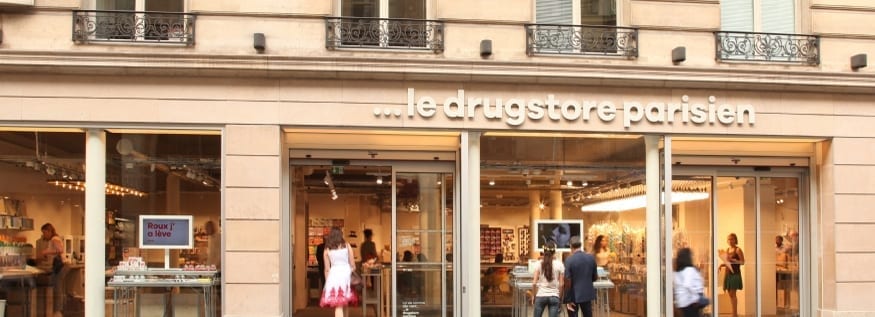
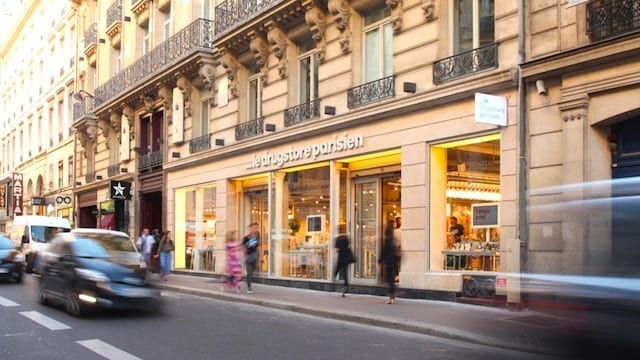
    French retailer Casino Group has teamed with cosmetics company L’Oreal France to launch Le drugstore Parisien, a new retail concept targeting city-dwellers in the heart of Paris.

    The two companies boldly claim the concept will “revolutionise the beauty and well-being shopping experience in the French capital”.

    Operated under Casino Group’s Franprix banner, Le Drugstore Parisien is positioned as “the urban store for beauty from within, practical treats and serendipity [the art of making unexpected discoveries].”

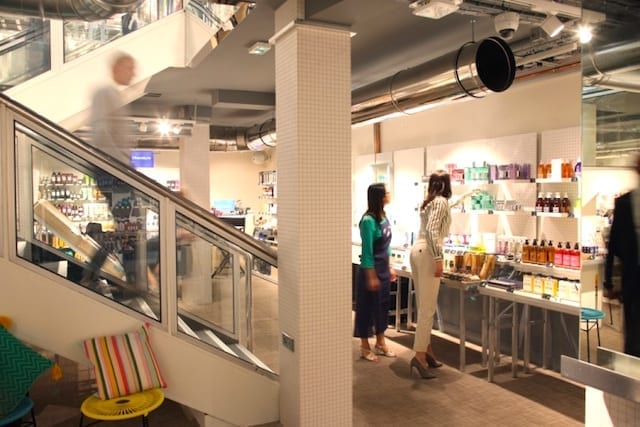
    The store will offer beauty and well-being products alongside over-the-counter pharmaceutical products, sewing kits, accessories and healthy snacks and treats.

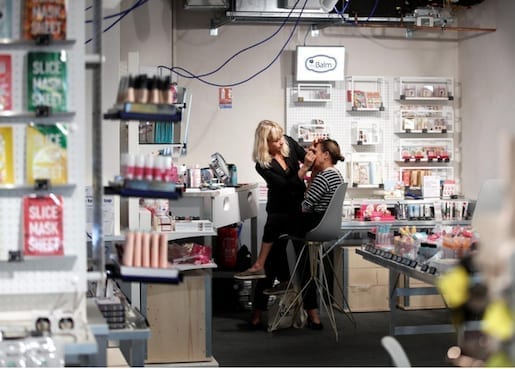
    A number of L’Oreal brands will be available, including L’Oreal Paris, Maybelline, Garnier, NYX Professional Makeup, Essie and Sanoflore, as well as exclusive, expert brands so that shoppers can discover something new with every visit.

    Amenities designed specifically for urban consumers will also be on hand, such as free Wi-Fi, mobile-phone charging points, water fountains, shoe-shining machines, sinks and dressing tables, dry cleaning, parcel pick-up points, light therapy areas, key exchange, and one-hour delivery for certain products.

    Jean Paul Mochet, CEO of convenience banners at Casino Group, said the company has for several years been working to find ways of helping convenience stores connect better with customers.

    “In cities, we have been paying particular attention to the new ways space and time are used, which are radically changing consumer behaviour. The lines between work, culture and fun are being blurred, creating a new way of living. So city-dwellers need tailored products and services to make their lives easier. This goal was exactly what we had in mind when designing Le Drugstore Parisien – a unique, laid-back place that celebrates joy, pleasure and well-being amidst the hustle and bustle of Paris life.”

    The first two Le Drugstore Parisien sites opened last weekend at 66, Rue de la Chaussee d’Antin and 122, Rue du Bac in districts 9 and 6, respectively. They will be trade seven days a week, from 10am to midnight Monday to Saturday and from 11am to 8pm on Sundays. One day a month, they will open for 24 hours to offer Parisians exclusive events and well-being services.

  • L’Oréal completes its Stylenanda takeover

    L’Oréal completes its Stylenanda takeover

    French cosmetics giant L’Oréal has completed its takeover of Korean fashion and makeup company Stylenanda just 50 days after it first announced that it would acquire 100 percent of the company.

    L’Oreal said on June 19 that it will operate Stylenanda separately from L’Oreal Korea’s four existing divisions.

    L’Oreal explained that it intends to encourage the creativity of Stylenanda’s fashion business and its makeup brand 3CE.

    Stylenanda’s new CEO will be Shin Ji-eun, 37, a general manager at L’Oreal Korea. Shin joined L’Oreal Korea in 2004, has worked various positions within the company in both Korea and France, and most recently worked as the general manager of marketing operations in Indonesia, one of the key emerging markets to the company.

    Kim So-hee, 35, the founder and former CEO of Stylenanda, will serve as its chief creative executive. “Kim will continue to contribute to the success of Stylenanda by providing major input in both the fashion and makeup divisions of the brand, “ said a L’Oreal official.

    L’Oréal did not disclose the exact amount it paid to take over 100 percent of the fashion brand, but considering that Stylenanda originally planned to sell 70 percent of its shares for 400 billion won (US$361 million), industry sources estimate the company was sold for between 570 billion won and 600 billion won.

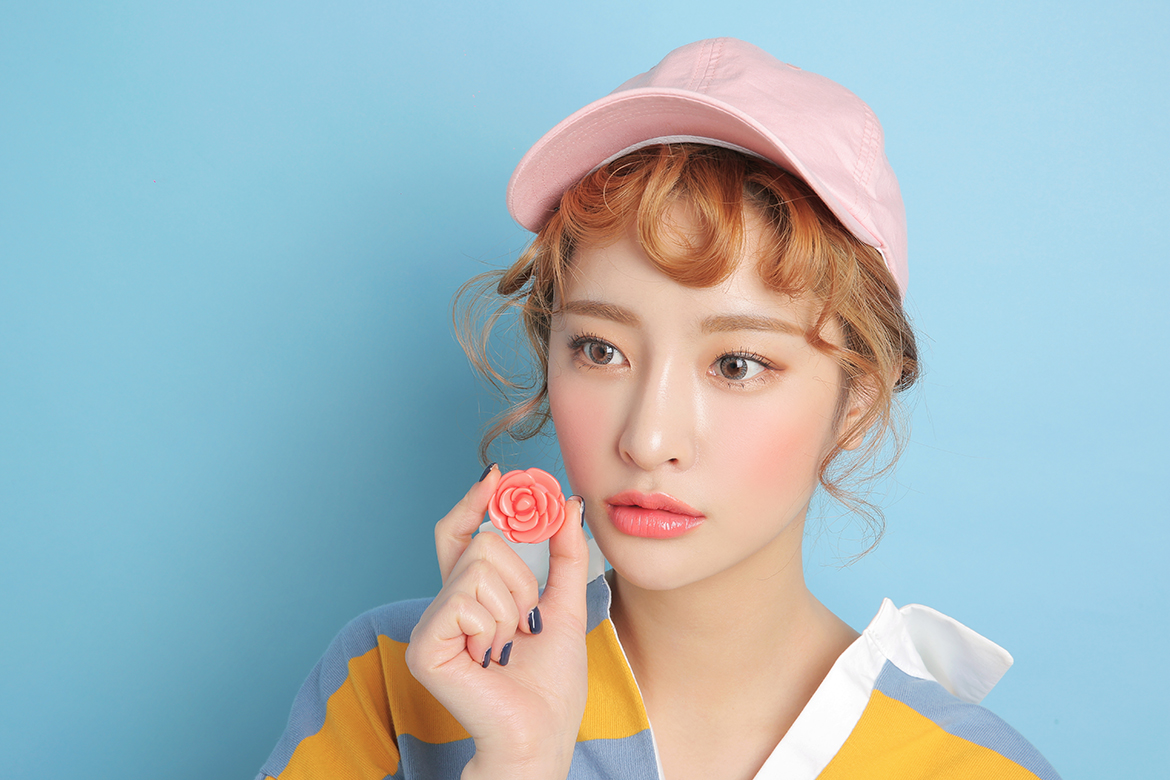
    L’Oréal’s focus in acquiring Stylenanda was its makeup brand 3CE. Although Stylenanda started out as a clothing business in 2004, ever since it launched 3CE in 2009, makeup has propelled the brand’s growth. 3CE is popular both domestically and in China and Southeast Asia, and makeup products now account for 70 percent of Stylenanda’s total sales. L’Oréal believes that it can effectively target Asian markets, including China, using 3CE.

    Unilever bought Carver Korea, which owns the Korean cosmetics brand AHC, for 3 trillion won last year for a similar reason. L’Oreal, which has been criticized for its relatively poor competitiveness in makeup relative to skincare, is planning to solidify its position in color cosmetics through 3CE.

    The beauty industry has high expectations for growth in the Asian cosmetics market. The Asian makeup market is expected to account for more than 30 percent of the global makeup market in the future, and the Chinese market, particularly, has huge growth potential.

    According to Euromonitor, a global market research provider, the Chinese color cosmetics market is expected to reach 6.6 billion dollars in 2020. Between 2013 and 2016, its average annual growth was 11.3 percent, higher than the global color cosmetics market average of 6 percent.

    L’Oréal anticipates that if it sells 3CE products through its current distribution networks, it will be able to increase its influence in Asia as well as the North American and European markets.

    L’Oréal’s also hopes the acquisition will help boost its brand image, as 3CE’s main customer base is Asian millennials.

  • L’Oréal and Valentino announce a worldwide license agreement for fine fragrances and luxury beauty

    L’Oréal and Valentino announce a worldwide license agreement for fine fragrances and luxury beauty

    L’Oréal and Valentino announce the signature of a worldwide long-term license agreement for the creation,  development and distribution of fine fragrances and luxury beauty under the Valentino brand.

    Founded in 1960 in Rome, Maison Valentino holds a unique role in the luxury universe thanks to its long standing tradition in Haute Couture and the innovative contemporary vision of Creative Director Pierpaolo Piccioli. Under the successful direction of CEO Stefano Sassi and Creative Director Pierpaolo Piccioli, Valentino today embodies the image of beauty, of the extraordinary and of modernity, and as such, provides a strong inspiration for fragrance and beauty creation. The top three most popular fragrances today are Valentino Donna, Valentino Uomo and Valentina.

    The agreement will be effective as of 1 January 2019, after customary regulatory approvals, if any.

    Nicolas Hieronimus, Deputy CEO of L’Oréal, said “We are thrilled to have been granted the license of Maison Valentino. With its unique combination of prestige and modernity, Valentino definitely will appeal to millennial consumers around the globe and ideally complements our brand portfolio.”

    Stefano Sassi, CEO of Valentino, said “We are very excited to start this new venture together with L’Oréal to further develop our beauty business. We believe Valentino has great potential within the category and that with L’Oréal’s unparalleled expertise in the sector, we will be able to realize that potential.”

  • What’s behind Style Nanda’s success?

    What’s behind Style Nanda’s success?

    When Style Nanda announced last month that French beauty giant L’Oreal will be snapping up a majority stake, it sent shockwaves across the industry.

    Sure, the company was doing fabulously well and had created quite a stir with its success, but then it was soon forgotten — although not by investors — before being lurched back into the spotlight with the latest news.

    Style Nanda was established in 2005 amid a boom of boutique-sized internet fashion businesses. Out of the throng of budget fashion shopping websites — most of whom sold products they bought wholesale from Dongdaemun fashion market — Style Nanda stood out. Below are the three reasons why.

    1. My way or the highway 

    Style Nanda founder Kim So-hee had a nickname in Korea: Bold Lady. She earned it due to her preference for bold colors and styles. Kim is also famous for her brutal honesty, which became evident when she refused to remove the tags off her Dongdaemun goods to hide their origin. She said she didn’t mind because she was confident about her merchandising choice. She also didn’t want to lie to her customers.

    A spokesperson for cafe24, which first provided a sales platform for Style Nanda, put it this way: “Style Nanda successfully formed its own unique style appealing to younger customers. That’s Style Nanda’s core competitiveness.”

    2. Bravo Hallyu 

    Style Nanda also benefited from the popularity of K-pop and Korean dramas when celebrities began to don Style Nanda items on air.

    “It was a trickle-down effect, and Style Nanda definitely benefited from it,” Seo Yong-ku, a professor of business management at Seoul’s Sookmyung University said.

    Whenever anyone famous appeared wearing Style Nanda items, it was cheap, instant promotion. Later on, Style Nanda paid celebrities on popular dramas to promote stuff to an even wider audience.

    3. She stayed hungry, stayed stupid 

    Style Nanda never settled, and the present was never enough.

    After successfully launching the company’s cosmetics brand 3CE, it launched Speak Undervoice, a new brand selling limited products personally selected by the founder.

    Style Nanda was also constantly trying out new marketing styles. For instance, it recently used a so-called “product truck” to promote its 3CE brand. Employees handed out free makeup products to university students from a vehicle resembling an ice-cream truck — the first for a cosmetics firm.

    Despite these recipes of success, some industry watchers believe Style Nanda should spend more money on research and development. They say more experts should get onboard to grow the brands, especially those like 3CE — currently designed by Style Nanda and produced by ODM companies like Korea Kolmar and Cosmax.


  • Asia fastens L’Oreal first-quarter sales

    Asia fastens L’Oreal first-quarter sales

    With dynamic markets in China and Hong Kong, Asia has driven L’Oreal first-quarter sales.

    Asia Pacific also shone among new markets for the French cosmetics company, where sales grew by 14.9 per cent overall.

    Chairman/CEO Jean-Paul Agon describes the return to strong growth in new markets, especially Asia Pacific, as the highlight of the first quarter.

    He says consumer aspirations for iconic brands remains just as strong in China, which again delivered an outstanding performance in the brand’s consumer products division.

    “Growth is being driven by northern Asia, thanks to the strong dynamism in China and Hong Kong where all the divisions are growing, with a strong performance by the major brands such as Lancome, Yves Saint Laurent and L’Oreal Paris, the number-one beauty brand in China.”

    In southern Asia, particularly India, the active cosmetics division’s skincare brands have been performing well.

    Asia Pacific posted growth of 21.1 per cent like-for-like and 10 per cent based on reported figures, with first-quarter sales reaching €1.8 billion.

    Again, the region drove acceleration for L’Oreal Luxe and active cosmetics with new markets seeing 14.9 per cent growth.

    Rapid increase

    E-commerce sales continue to increase rapidly, says L’Oreal, with 33.8 per cent growth to now account for 8.8 per cent of sales.

    Overall, the group’s sales grew 6.8 per cent like-for-like, or 7.4 per cent at constant exchange rates.

    Based on reported figures, sales reached €6.78 billion, down 1 per cent, excluding The Body Shop. The disposal of The Body Shop was completed in September. The group’s reported sales for the first quarter of last year included The Body Shop sales amounting to €197.2 million.

    For the first quarter, the consumer products division had growth of 2.6 per cent like-for-like but dropped 4.9 per cent based on reported figures. L’Oreal Paris has good momentum in China and India while maintaining strong growth in e-commerce.

    At the end of March, L’Oreal Luxe achieved growth of 14 per cent like-for-like and 4.4 per cent based on reported figures, driven strongly by Asia, especially China and Hong Kong, as well as by travel retail.

    The active cosmetics division began the year strongly with growth of 10.2 per cent like-for-like and 9.1 per cent based on reported figures. All zones contributed to growth, with “striking acceleration” in Asia.

    SkinCeuticals sales posted “outstanding” growth figures with sales doubling in Asia.

  • Nanda sells shares to L’Oreal

    Nanda sells shares to L’Oreal

    Korean fashion and cosmetics company Nanda has chosen L’Oreal as the preferred bidder for a 70 per cent stake, with the balance of shares staying in the hands of Nanda founder Kim So-hee.

    The French cosmetics giant is reportedly paying KRW400 billion (US$375 million) for the deal with the hopes of strengthening its presence in the Asian cosmetics market, especially China.

    Nanda late last year decided to sell the stake so it could expand further internationally.

    Founded in 2005 as an online retailer, Nanda now has physical stores in Korea, Hong Kong, Indonesia, Thailand and Tokyo with its clothing line StyleNanda and cosmetics line 3CE.

  • Asia boosts growth for L’Oreal

    Asia boosts growth for L’Oreal

    French cosmetics giant L’Oreal reports “spectacular” growth for last year, particularly in Asia.

    It had growth acceleration of 5.5 per cent in the fourth quarter with sales exceeding €10 billion (US$12.2 billion) in the ‘new markets’, which include Asia Pacific.

    Operating margin reached a record 18 per cent.

    Sales were €26 billion, up 4.8 per cent like-for-like, 2 per cent at constant exchange rates and 0.7 per cent on reported figures.

    Representing a record 18 per cent of sales, the operating profit was €4.68 billion.

    “L’Oreal had a good year with sustained sales growth momentum and robust profits,” says chairman/CEO Jean-Paul Agon.

    The second half accelerated compared with the first, particularly in the fourth quarter.

    Sales grew in all divisions, especially L’Oreal Luxe in Asia. The Active Cosmetics Division achieved more than €2 billion of sales for the first time.

    The new markets exceeded more than €10 billion in sales for the first time ever. The Asia Pacific zone had growth of 12.3 per cent like-for-like and 9.2 per cent reported. In Northern Asia, Chinese consumers are driving growth, particularly for the L’Oreal Luxe Division in China and Hong Kong. China’s growth was fuelled by strong e-commerce results. In Southern Asia, India is proving dynamic, while Malaysia and Thailand are also growing strongly.

    Overall, operating profit, at €4.6 billion, has grown by 3 per cent and amounts to 18 per cent of sales, representing an increase of 40 basis points. Excluding exchange rates, operating profit grew by 4.4 per cent.