Retail News CRM

Tag: l’oreal

  • L’Oreal Launches New Shampoo Brand In China

    L’Oreal Launches New Shampoo Brand In China

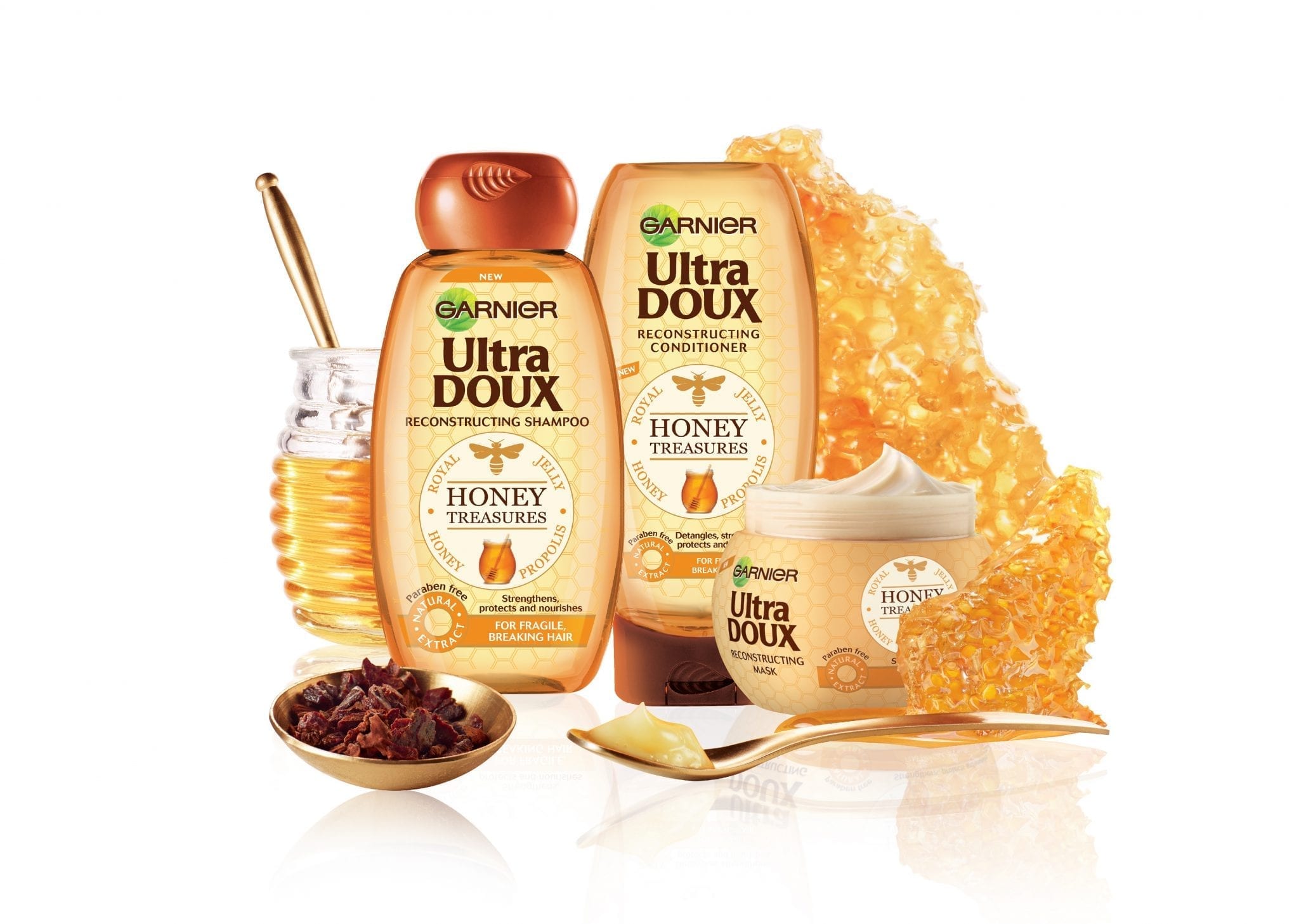
    The world’s leading cosmetics group L’Oreal launched a new shampoo brand in the Chinese market called Ultra Doux, which is now available in Wal-Mart stores across the country.

    Targeting the Chinese market, Ultra Doux offers a total of 43 products within five series, with a price range from CNY20 to CNY80. Its positioning eyes the medium-end market. In regards to marketing appeal, Ultra Doux features natural and organic characteristics.

    Ultra Doux is a brand under Garnier and its products are sold in markets like France, U.K., Russia, and Germany. Garnier was acquired by L’Oreal in 1985.

    L’Oreal’s market share expectation for Ultra Doux is 2.8% after 12-month operation in China. This is a little higher than the market share of L’Oreal Paris in 2014, which was 2.5%.

    According to information from L’Oreal, the Ultra Doux products will be sold in supermarkets, cosmetics specialty stores, and e-commerce platforms in China.

  • Sour note for Lancome-sponsored concert

    Sour note for Lancome-sponsored concert

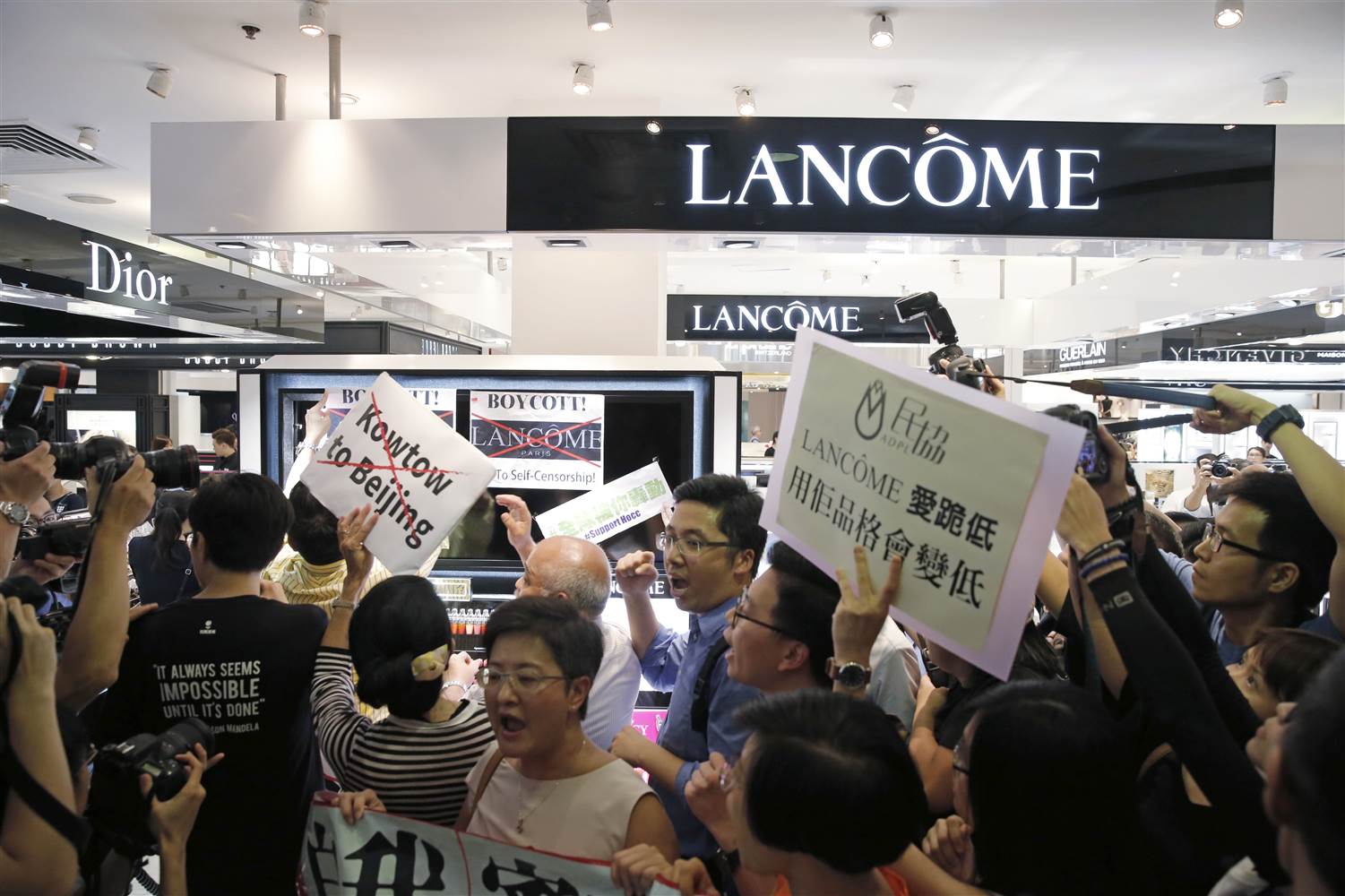
    Make-up brand Lancome, along with other stores owned by French cosmetics giant L’Oreal, closed in Hong Kong yesterday in the face of protests over the cancelling of a Lancome-sponsored concert featuring a pro-democracy singer.

    As well as Lancome’s booth at Lane Crawford, Times Square, Yves Saint Laurent Beaute and Helena Rubinstein’s booths, as well as Shu Uemura’s store, were all closed. Lancome’s office at Times Square was also shuttered. In Causeway Bay, Lancome counters in Sogo and Hysan Place were both closed, while those for other brands under L’Oreal, such as Shu Uemura, were open.

    Dozens of protesters earlier crowded the Lane Crawford store in Times Square accusing Lancome of bowing to China by cancelling the concert, starring cantopop singer Denise Ho Wan-sze.

    Carrying yellow umbrellas – a symbol of Hong Kong’s democracy movement, which is supported by Ho – and banners in Chinese, English and French, the protesters were shouting: “L’Oreal! No self-censorship.”

    Hong Kong internet users and political activists have also vowed to boycott all brands under the L’Oreal banner, including Lancome, Kiehl’s, Shu Uemura and The Body Shopimes, a tabloid published by the Chinese Communist Party’s People’s Daily newspaper, criticised Lancome for working with Ho. This sparked calls online in China to shun Lancome’s business on the mainland.

    “Tough times”

    Ho says she was saddened by the cancellation of her concert.

    “I am quite shocked that a global brand such as Lancome … would succumb to the pressure from Chinese tabloid news or the Chinese market,” says the 39-year-old singer.

    “In Hong Kong we have been going through really rough times,” she says. “Most of we celebrities wouldn’t dare to speak out for ourselves because we know that self-censorship is really serious right now in Hong Kong. But I wouldn’t think that worldwide brands such as Lancome or L’Oreal would succumb to this kind of pressure.”

    L’Oreal, which counts China as its second strongest market for sales behind the US, says it cancelled the concert because of safety concerns.

    Booked to perform on June 19, Ho wrote on her Facebook page that Lancome’s decision was self-censorship. “When a brand like Lancome has to kneel down to a bullying hegemony… the world’s values have been seriously twisted.”

    Meanwhile, the controversy has escalated on the mainland, with internet users threatening to boycott a host of Hong Kong companies tied to billionaire Richard Li Tzar-kai, whose company PCCW owns the Moov fitness app, which suggested on Monday that it would “employ Denise Ho permanently”.

    Li’s family is also involved with such companies as Johnson and Johnson, Listerine and Watsons. Ho is a spokesperson for Listerine.

    PCCW says that while Richard Li and Moov respect freedom of expression and staunchly oppose Hong Kong independence, Moov has no intention to engage in political matters, and the expression “permanent employment” was used before online comments linked the message to political discussions.

    Meanwhile, Ho says Lancome should stand firm on its core values and moral standards. The singer was  among more than 200 people arrested as the pro-democracy protests ended in December 2014. She was blacklisted by mainland media along with singer Anthony Wong Yiu-ming.

  • How big brands can make online marketplaces work

    How big brands can make online marketplaces work

    Online marketplaces, those giant shopping sites like eBay and Amazon Marketplace, can be a mixed blessing for brands and merchants.

    Marketplaces offer retailers broad exposure to millions of consumers, as well as delivery, payment and other solutions. Still, most marketplaces leave merchants wanting in one very important aspect: brand control. While the platforms provide virtual shelf space for listing products, merchants are generally limited to one-size-fits-all templates for their online storefronts—thus restricting their ability to set themselves apart from rivals with brand-building presentations and content.

    Not all marketplaces are created equal, however. In China, where marketplaces are overwhelmingly favored by online shoppers, e-commerce leader Alibaba Group has been returning branding power to merchants through the company’s Tmall.com B2C marketplace.

    Tmall, which positions itself as China’s top online destination for domestic and foreign branded merchandise, has developed a suite of tools that allows merchants to customize their Tmall.com storefronts with the logos, fonts and colors for which they’re known the world over, as well as with videos, interactive features and other content. Moreover, merchants can combine these tools with Alibaba’s trove of data on shopping behavior to tailor their storefronts to individual consumers visiting their e-shops at any given moment.

    This approach gives merchants far more than a place on the internet to list and sell products. It offers them the ability to present their brands as effectively as they do on their company-run websites, boosting their opportunity to reach consumers among Alibaba’s 400-million-plus active buyers and build lasting customer relationships. Merchants “have total control,” said Paul Fu, the San Mateo, California-based head of Alibaba’s User Experience Design team.

    This is a significant departure from the “one webpage to serve them all” marketplace model. Tmall offers as many as 55,000 different storefront templates across about 30 different business sectors for merchants to choose from. Another 3,000 templates exist for product pages, and there are a thousand designs for marketing material such as e-mails and SMS alerts, according to Fu. If these packaged solutions don’t satisfy certain merchants, they can design their own right down to the page breaks and <p> tags, and then upload the code to Tmall.

    Major international brands have used this enhanced flexibility to build unique and engaging Tmall storefronts. For example, GoPro, the U.S.-based maker of wearable video cameras, produced a series of videos that appear on its storefront showing GoPro cameras being used in extreme situations, such as geologists staring into the mouth of a volcano or snowboarders doing double backflips as they race down a mountain.

    The Tmall storefronts of other household names such as Starbucks, L’Oreal, Maserati and Zara also offer fully branded experiences that experiences that mirror the look and feel of their corporate e-commerce sites, including multipage navigation according to product category and even full brand histories. Still others take the experience a step further in an attempt to boost the time consumers spend on their pages. Case in point: L’Oreal in the past has given consumers easy-to-follow guides and tips for using its beauty products.

    L’Oreal engaged consumers with hair-coloring tips posted on the company’s Tmall storefront.

    Fu says that Tmall storefronts are based on so-called “responsive” design, which means they look as good on mobile devices as they do on the web. But customization options for Tmall storefronts go even deeper.

    Using consumer data collected by Tmall, merchants can present not just personalized product recommendations based on shopping history to storefront visitors, they can also offer different homepages tailored to particular types of shoppers. For example, German personal-care brand Nivea displays three different storefronts on Tmall depending on whether a shopper is a first-time visitor, new buyer or loyal fan. First-time visitors are shown low-cost products that may tempt them to experiment with the brand. Fans, meanwhile, see sets of higher-value products bundled together as a way to boost their total purchase.

    Three different customers, three different mobile presentations. First-time visitors, new buyers and loyal fans all see products tailored specifically to them when they visit Nivea’s Tmall site.

    By making it possible for merchants to tag and manage their customers by attributes and personalize storefronts for each visitor, individual customers are exposed to highly relevant content, which drives higher conversion rates. Fu said after Nivea implemented personalized storefronts, “the data showed that the browsing conversion rate was improved by 70 percent and transactions increased by 150 percent—more than double the previous number of purchases,” he said. Browsing conversion is the rate at which shoppers click through to find out more about a product.

    Fu says Alibaba analyzes buyers based on five different behaviors: attention, interest, decision, action and sharing, all of which are part of the Tmall shopping cycle. A certain product may draw the attention of a shopper, which prompts him or her to click through to the seller’s store where they can learn more about the item. Then they decide whether or not to bookmark it or add it to their shopping cart; a purchase constitutes action. Sharing comes after, once a consumer tells a friend about their purchase or leaves a review on a merchant’s Tmall store.

    “We provide this capability for the seller to do these kinds of very sophisticated analyses,” Fu said. “Later, because we opened up this technology and data [to merchants], the seller can come up with their own model to do the analysis.”

    Still more tools are to come. Merchants currently log into a content-management system of sorts that lets them set up and manage their storefronts, including text, photos and slide show placement. They can also choose the products they want displayed as recommendations when a shopper is viewing, say, hand cream or razors or a sweater. Up next is a tool that will allow merchants to create banner advertisements on the fly, rather than turning to a designer to handle what is often a time-consuming task. That’s expected this quarter.

    Tmall also helps merchants synch their online stores with their bricks-and-mortar outlets. Fu said the goal is to make sure all points of sale are linked up, including mobile, desktop and offline. One key advantage for merchants to this so-called “omnichannel” approach is the ability to manage inventory across physical and virtual sales channels. Another is the ability to know a buyer’s location so that the nearest warehouse is used for shipping, which speeds up delivery.

    “All areas of the ecosystem are working together for merchants,” Fu said. “Before they had to figure this out on their own. But now we’ve come up with a system, and built the right tools to help them.”

    * Originally published by Alizila.com – the independent, but Alibaba Group-funded website of news about the Chinese eCommerce giant.

  • Cosmetics retailers will like the look of China’s online import tax rules

    Cosmetics retailers will like the look of China’s online import tax rules

    China is changing tax rules for imported goods that are sold online in a move that will make beauty products such as eye creams and moisturizing gels from L’Oreal SA’s Lancome and Korea’s Amorepacific Corp. become cheaper for Chinese consumers.

    The government will remove a special tax, or so-called parcel tax, previously levied on imports sold online. Instead, it will charge value-added and consumption duties that are currently imposed on most products sold in China but with a 30% discount, according to a Thursday statement posted on the website of the Ministry of Finance.

    The move came after China in January broadened a pilot program in which a port district in the eastern city of Hangzhou was allowed to trade imported goods at lower taxes. As the world’s second-largest economy pushes its online retail industry and promotes cross-border e-commerce, the country has expanded the program to 13 cities. China’s State Council approved the latest changes which will come into effect on April 8, according to the Thursday statement.

    “Cosmetics will be the biggest beneficiary after the tax adjustment,” said Catherine Tsang, a Hong Kong-based tax partner at PricewaterhouseCoopers LLP. As beauty and personal care is one of the most popular category among imports bought by China’s Internet shoppers, any price cuts will further boost the market, Tsang said in an interview.

    Riding on a wave of popularity from South Korea’s TV dramas and music, Amorepacific’s Etude House and other brands from the country are in demand among Chinese customers. For Korean products, cross border e-commerce has become a more direct and cheaper way to expand in China compared with setting up store networks, Tsang said.

    Online sales of imported goods have grown at a compounded rate of 63% in the five years to 2015, reaching 638 billion yuan ($98 billion) and accounting for 17% of China’s total online retail sales, according to data from Mintel Group Ltd.

    The most popular categories of products being purchased online in China are consumer electronics, clothing and shoes, appliances, food and beverage, and beauty products, according to research firm Euromonitor International.

    Previous changes to promote cross-border e-commerce include:

    • China started pilot program with a zone in Hangzhou in March 2015
    • Trial expanded Jan. 2016 to Tianjin, Shanghai, Chongqing, Hefei, Zhengzhou, Guangzhou, Chengdu, Dalian, Ningbo, Qingdao, Shenzhen, Suzhou
    • Parcel tax in zones set at 10% (food, infant items), 20% (electronics, apparel), 30% (high-end watches), 50% (cosmetics, alcohol)
    • Tariffs waived for items that incur taxes below 50 yuan

    While food and baby items such as diapers may cost more after the April adjustments because of their current lower tax rates, those imports may remain attractive as China’s growing middle-class are becoming more concerned about health and are willing to pay more for quality, daily necessities, PwC’s Tsang said.

    “That’s why the demand for imported goods is increasing so fast,” she said. ”China’s consumer now are less price-sensitive especially to products they eat or use on their skins.”

  • New L’Oreal Thailand boss goes for the top

    New L’Oreal Thailand boss goes for the top

    Keraudy will take over from Umesh Phadke as the first female managing director of L’Oreal Thailand on April 1. She is currently general manager of L’Oreal Thailand’s consumer products division, and will come to the top position with significant experience in L’Oreal across multiple countries.

    “My second priority will be to continue growing our people and ensure we are doing business in a sustainable way. We want to make sure L’Oreal Thailand is the best place to work for all employees and grow our business in a manner that will have a positive impact on both society and the environment,” she said.

    L’Oreal Thailand has 21 brands, ranging from mass market brands to luxury, offering consumers a wide range of beauty products and price points. Last year alone, it sold 87 million product items across all categories.

    L’Oreal (Thailand) Co, a subsidiary of the world’s leading beauty company, has announced impressive 2015 performance, especially in the facial skincare segment, the largest in the Thai beauty market, as well as accelerated growth in the makeup sector.

    L’Oreal’s business is ranked No 1 in the Asean countries where it operates.

    The value of Thailand’s skincare market last year was estimated at Bt26 billion, up 5 per cent over 2014. Facial skincare accounted for 68 per cent of the market, with makeup, which posted the fastest growth of 6.5 per cent, valued at about Bt14 billion.

    Outgoing managing director Umesh Phadke said L’Oreal Thailand had performed strongly performance and remained the fastest-growing beauty company in the country.

    “Our leadership in the highly competitive facial-skincare market, our fast growth in the makeup market, and our adherence to the very highest standards of trust and innovation in our operations [are] at the heart of this great achievement for our company. I would like to thank every L’Oreal employee for their contribution to this great success,” he said.

    In order to accelerate further in 2016, the company will focus on five key areas: introducing new brands, strong product innovation, effective communication, both online and offline, expanded distribution channels and increased concentration on sustainability.

    Digital innovation will also be key strategy for L’Oreal Thailand in a highly mobile and connected market. Thailand has nearly 82 million mobile connections, and more than 37 million people use Facebook every month.

    Average social-media use is almost three hours a day.

    “We are focusing more on digital media, and have invested 130 per cent more in digital media compared [with] last year. Our Garnier Sakura White campaign with ‘selfie sticks’ used as a means of relating to Thai consumers who love taking selfies had almost 3 million views on YouTube and was recognised as the best campaign worldwide,” Phadke said.

    E-commerce is another growing trend, with overall Internet retail increasing by 30 per cent in 2015 to Bt47 billion in total value, according to Euromonitor. DHL reports that the Thai e-commerce market is growing rapidly, and is expected to more than triple in size to Bt138 billion by 2020.

    “Thai people aspire to beauty,” Phadke said. “It is a consistent part of Thai life, and this can be seen prominently in the culture, arts, architecture, and the way one expresses oneself here.

    “The Thai quest for beauty has facilitated the growth of the Thai beauty market, and fills the future with great opportunity. With exciting new brands, strong product innovations, innovative digital communications, e-commerce growth and high-quality in-store services and experiences, we are confident that we will take our place at the top of the makeup market in the near future, while continuing our strong leadership of the facial-skincare market.”

    The company says Nathalie Gerschtein Keraudy has strong understanding of the Thai beauty market, with three years of success in the country’s business results.

    Phakde will move to a new role as country manager of L’Oreal Indonesia.

  • Tmall driving more than sales for top beauty brands

    Tmall driving more than sales for top beauty brands

    Scores of high-end cosmetics companies are setting up shop on Alibaba Group’s Tmall.com online marketplace as eCommerce continues to gain ground as a critical marketing and sales channel for reaching China’s increasingly sophisticated consumers.

    At the recent Tmall Beauty Awards ceremony in Shanghai, which celebrated the top cosmetics brands operating on the eCommerce platform, Alibaba announced that 29 well-known Western brands and 37 from Japan and Korea had storefronts on Tmall at the end of 2015, including more than 10 joining the platform last year alone such as Lancôme, Bobbi Brown, La Mer, Anessa and Avene. Another 20 cosmetics companies are planning to launch their own presence on Tmall this year.

    Alibaba also announced a cooperation agreement with Korean cosmetics maker AmorePacific Group to expand the latter’s Tmall presence. AmorePacific will add two more storefronts exclusively on Tmall for the Sulwhasoo and IOPE beauty brands in the following months. AmorePacific already operates the Laneige, Innisfree, Mamonde and Etude House e-shops on Tmall, and about 800,000 Chinese consumers have purchased goods from Laneige’s shop over the past three years, according to Alibaba. The brand also sold about 45,000 BB creams, or blemish balms, during Alibaba’s 11.11 Shopping Festival, bringing in US$1.4 million from that product alone.

    Alibaba has similar cooperation agreements with Procter & Gamble, Estée Lauder, L’Oréal and domestic retailer Shanghai Jahwa Corp.

    The eCommerce push by cosmetics companies comes amid strong growth in high-end cosmetics purchases by Chinese consumers. A report from Chinese research firm CBNData, released in conjunction with the awards, noted that total sales of cosmetics products in China climbed nearly 20 per cent to $74.1 billion last year from 2014. Citing independent researchers, CBNData’s report also said that online channels accounted for 36 per cent of that, or $27 billion, with Tmall controlling about a 70 per cent share of the B2C market. Alibaba Group is an investor in CBNData parent China Business Network.

    Tmall Cosmetics GM Mike Hu said total sales generated on all business-to-consumer retail websites in China currently account for 12 to 15 per cent of the entire cosmetics market, and he predicts those channels will grow by another 30 per cent to 50 per cent over the next two to three years.

    Hu stressed that Tmall offers more than just another sales channel to brands. It’s also a platform to promote new products, build a connection with customers and increase business both online and off. According to Hu, over 20 brands have introduced about 160 versions of products that were exclusive to Tmall shoppers, and the brands have launched more than 100 new products via the website in 2015.

    “Two or three years ago, eCommerce played as a sales channel since its significance grew and it helped enhance business,” said Gary Chu, online general manager at Estée Lauder China, said at the awards ceremony. “Now what we are thinking about is how to integrate brand property, content and products into our presence in Alibaba’s ecosystem to meet the needs and demands of the brand.”

    To that end, Estée Lauder has been engaging customers via its so-called Fans communities within the Tmall mobile app. One brand, Bobbi Brown, opened its Fans page last November and now has more than 640,000 followers. It offers make-up tips and sample trials, among other initiatives, to tackle customers’ most common inquiries in order to educate and interact with shoppers, while serving as a bridge to the Bobbi Brown storefront. In addition to the Fans page, the company also used Instagram-like photo sharing on Tmall to generate buzz about Bobbi Brown lipstick ahead of Chinese New Year earlier this month, and Estée Lauder regularly uses the Tmall mobile app to help launch new products.

    Alibaba Group CEO Daniel Zhang said Estée Lauder’s efforts are prime examples of ways brands can engage shoppers with content and convert interactions into business opportunities.

    “All the brands and merchants are the best content producers, and merchants should incorporate products into content that consumers are willing to read and eager to buy,” he said.

    Brands are also using their Tmall storefronts to boost their online-to-offline (O2O) business. So far 54 of them, including Estée Lauder, La Mer and Laneige, have integrated their online and offline membership programs and now allow users to make appointments for skin care treatments in brick-and-mortar stores online.

    Tmall will continue to promote O2O retail to “achieve the goal of same product, same service and same membership” online and offline, Hu said.

    Here are the winners from some of the biggest award categories from last Friday’s ceremony. The winners were chosen based on search popularity, interaction with shoppers, customer reviews, trial reports, sales and services among millions of customers and thousands of brands on Tmall in 2015.

    Most popular brands online: Laneige, Lancôme, Innisfree, Maybelline

    Hot search brands: Bobbi Brown, Avene, Sulwhasoo (which launched on March 1)

    Favorite brands among customers born in the 1990s:Sekkisei, The Face Shop, Hanhoo (Chinese domestic brand)

    Favorite brands among customers holding Alibaba Passport (shoppers spending more than RMB 100,000 ($15,270) annually on Alibaba’s platforms): Shiseido, Whoo, L’Oréal, Clarins, Innisfree

    Favorite brands among male shoppers: JVR (Chinese domestic brand), L’Oréal, NIVEA

    Best-selling brand: Pechoin (Chinese domestic brand)

    Outstanding and popular group: Estée Lauder Group

  • Global duty free retailing to hit US$98 billion

    Global duty free retailing to hit US$98 billion

    Global duty-free retailing is expected to reach nearly US$98 billion in revenue by 2019, according to a new study by global technology research and advisory company Technavio.

    With the expansion of low-cost airlines, many middle-class travellers are taking inexpensive holidays, a trend that has helped the Asia Pacific and Middle East emerge as the fastest-growing regions for duty-free retail marketing, says Technavio analyst Vijay Sarathi.

    He says China, India, Indonesia, South Korea and Sri Lanka were among some of the most-desired inexpensive destinations in 2014.

    “During the same period, it is estimated that international tourist inflow in APAC increased to almost 263 million travellers, and it has largely helped the market grow until 2019.”

    Just released in London, Technavio’s report, Global Duty-Free Retailing Market 2015-2019, provides an in-depth analysis of market growth in terms of revenue and emerging market trends.

    By products, the global duty-free retailing market for 2014 comprised fashion accessories and hard luxury (32.1 per cent), perfume and cosmetics (29.21 per cent), wines and spirits (16.02 per cent), tobacco (12.43 cent), and confectionery and fine food (10.25 per cent), says the report.
    It says the fashion, accessories and hard luxury segment was valued at close to $20.81 billion, with the most in-demand products including precious jewellery, briefcases, handbags and shoes. The more popular brands include Armani, Burberry, Fossil, Gucci and Michael Kors.
    Technavio researchers say Chinese travellers emerged as the largest consumers of luxury brands last year, contributing nearly 25 per cent of global revenue.
    The perfumes and cosmetics segment is one of the fastest-growing categories in the global duty-free retailing market. APAC and the Middle East are the key regions for this category, with some of the top-selling brands including Chanel, Christian Dior, Estee Lauder and Guerlain.

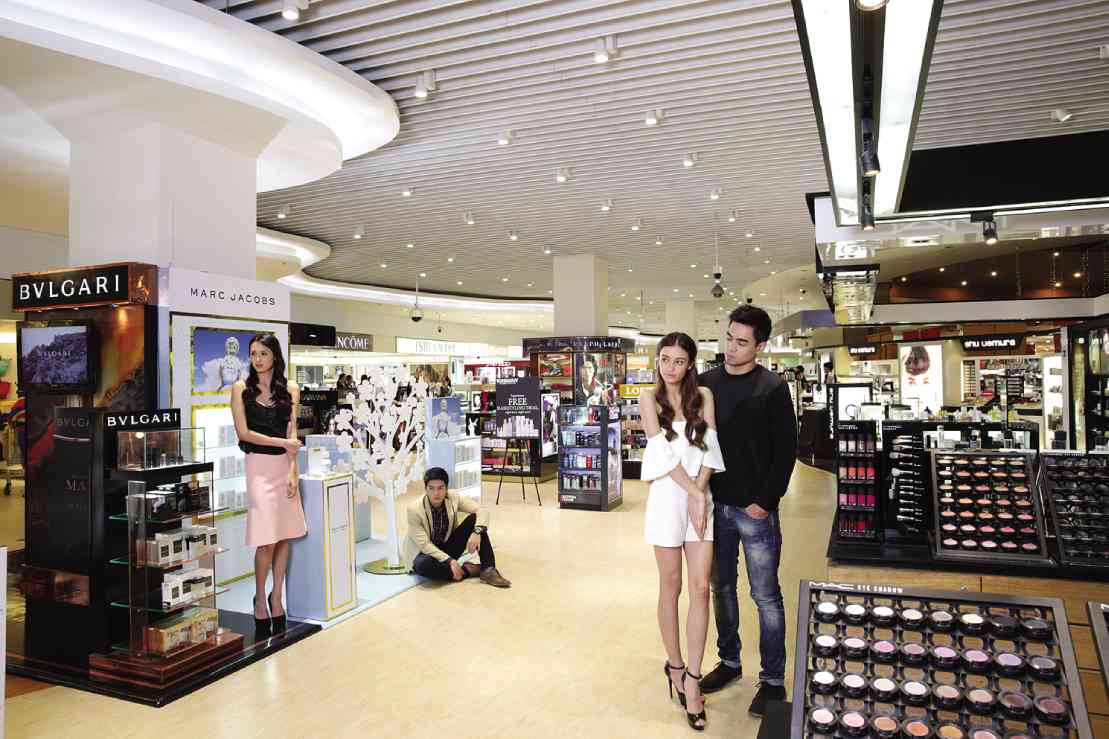
    With close to 21.5 per cent of revenue share in the category, L’Oreal created a division especially for duty-free stores in 2013, describing the division as “the sixth continent”. In 2014, L’Oréal launched theVichy and Kerastase brands in the duty-free retail segment in Asia, and also launched the Three-Minute Beauty program to engage with potential luxury product buyers at airports.
    The liquor category is expected to grow to $13.47 billion in 2019. In 2014, Diageo opened two Johnnie Walker Houses in duty-free shops in India and Taiwan.

  • Asia driving L’Oreal growth despite market turbulence

    Asia driving L’Oreal growth despite market turbulence

    Asia is driving huge growth for cosmetics giant L’Oreal, despite a slowdown in Hong Kong.

    At the end of September, L’Oréal posted growth of 4.4 per cent on a like-for-like basis – and 21.9 per cent based on reported figures as the company expands its retail network and wholesale operations in the region.

    Kiehl’s, Yves Saint Laurent and Giorgio Armani contributed to dynamic growth of the L’Oreal Luxe division, despite the context of slower third-quarter growth in Hong Kong and Travel Retail Asia.

    The Consumer Products Division is performing well in India, Australia and Thailand. In China, growth at L’Oreal Paris is accelerating, while Magic is undergoing a transitional period. The Active Cosmetics Division is growing strongly, thanks to the success of La Roche-Posay, L’Oreal reported in its quarterly filing.

    Jean-Paul Agon, chairman and CEO, said at the end of September, the group’s reported growth is strong, at 13.2 per cent, still supported by a positive currency effect.

    “Despite a global context that is still volatile, we are confident for the year end. The beauty market remains dynamic. In each Division, our brands are pushing forward with successes such as Maybelline and NYX in the Consumer Products Division, Yves Saint Laurent, Kiehl’s and Urban Decay at L’Oréal Luxe, Redken in the Professional Products Division and La Roche-Posay at Active Cosmetics,” he said.

    “Finally, the acceleration of our digital transformation is making us stronger, in particular with the rapid increase (40 per cent) of our eCommerce sales which should significantly exceed 1 billion euros this year.

    “We are confirming our ambition to outperform once again the beauty market in 2015 and to achieve significant growth in both sales and profits.”

  • L’Oréal CEO says Q3 slowdown in Asia is ‘temporary’

    L’Oréal CEO says Q3 slowdown in Asia is ‘temporary’

    The L’Oréal chairman has stated that despite a market that slowed in the third quarter in Asia and in Travel Retail, L’Oréal Luxe has “strengthened its worldwide position with significant gains in Western Europe, in Asia, Pacific, in the Middle East and in Latin America.”

    His statement accompanies the release of the firm’s nine-months sales results which reveal a temporary third quarter slowdown for L’Oréal Luxe in Asia; strong e-commerce sales (projected at +€1bn in 2015); a slowdown in travel retail; and ‘significant’ sales and profit growth.

    According to Agon, despite these results, the ‘Consumer Products Division’ is performing well in India, Australia and Thailand. In China, growth at L’Oréal Paris is reportedly accelerating, while Magic is undergoing a transitional period.

    Market ‘turbulence’ in Asia

    The active cosmetics division is also said to be ‘growing strongly’, thanks to the success of La Roche-Posay.

    Kiehl’s, Yves Saint Laurent and Giorgio Armani are contributing to the dynamism of L’Oréal Luxe, in a context of slower third-quarter growth in Hong Kong and Travel Retail Asia.

    Roche-Posay is renewing its expert franchise for oily skin with the launch of Effaclar K(+). The company adds that the brand is continuing to post double-digit growth in all geographic Zones, with ‘outstanding performances’ in France, Brazil and China. The successful international roll-out of SkinCeuticals is continuing.

    L’Oréal Luxe experienced a temporary slowdown as a result of market turbulence over the summer in Asia, in Hong Kong and in Travel Retail. By geographic zone, North America’s growth is gradually increasing and Western Europe confirms its positive trend. In the third quarter, the New Markets have been hampered by the difficult Brazilian market, market turbulence in Asia and the taking over of agents’ contracts in the Middle East. In China, sales growth is in line with earlier quarters,” says Agon.

    Finally, the chairman said that currency fluctuations actually had a positive impact of +8.3% and if September-end exchange rates (€1 at $1.12) are extrapolated up to December 31, then the impact of currency fluctuations would be +6.7% for the whole of 2015.

  • L’Oreal sales soar 13.2% to $20.4bn in first 9 months

    L’Oreal sales soar 13.2% to $20.4bn in first 9 months

    L’Oréal has released its nine-months sales results pointing to strengthened growth in the North American Consumer Products Division; maintained growth in Western Europe; a temporary third quarter slowdown for L’Oréal Luxe in Asia; strong e-commerce sales (projected at +€1bn in 2015); a slowdown in travel retail; and ‘significant’ sales and profit growth.

    Commenting on the figures – including the top line €18.76bn ($20.4bn) in total 9-month sales – Jean-Paul Agon, Chairman and CEO of L’Oréal, said: “At the end of September, the Group’s reported growth is strong, at +13.2%, still supported by a very positive currency effect.

    “In the third quarter, the Consumer Products Division is confirming the gradual strengthening of its growth, notably through strong momentum in make-up with its three brands: Maybelline, L’Oréal Paris and NYX. The Active Cosmetics Division continues to forge ahead and the Professional Products Division keeps outperforming a lacklustre market.

    “L’Oréal Luxe experienced a temporary slowdown as a result of market turbulence over the summer in Asia, in Hong Kong and in Travel Retail. By geographic zone, North America’s growth is gradually increasing and Western Europe confirms its positive trend. In the third quarter, the New Markets have been hampered by the difficult Brazilian market, market turbulence in Asia and the taking over of agents’ contracts in the Middle East. In China, sales growth is in line with earlier quarters.”

    Loreal 9m sales 2015

    Agon, added that ‘despite a global context that is still volatile’ the company remains confident for the year as a whole. He said: “The beauty market remains dynamic. In each Division, our brands are pushing forward with successes such as Maybelline and NYX in the Consumer Products Division, Yves Saint Laurent, Kiehl’s and Urban Decay at L’Oréal Luxe, Redken in the Professional Products Division and La Roche-Posay at Active Cosmetics.

    “Finally, the acceleration of our digital transformation is making us stronger, in particular with the rapid increase (+40%) of our e-commerce sales which should significantly exceed one billion euros this year. We are confirming our ambition to outperform once again the beauty market in 2015 and to achieve significant growth in both sales and profits.”

    Looking at the first nine-months sales to September 30, the company said that on a like-for-like basis and based on a comparable structure and identical exchange rates, sales growth of the L’Oréal group would have been +3.7%. It adds that the net impact of changes in scope of consolidation was +1.2%, while growth at constant exchange rates registered +4.9%.

    The company said that currency fluctuations actually had a positive impact of +8.3% and if September-end exchange rates (€1 at $1.12) are extrapolated up to December 31, then the impact of currency fluctuations would be +6.7% for the whole of 2015.
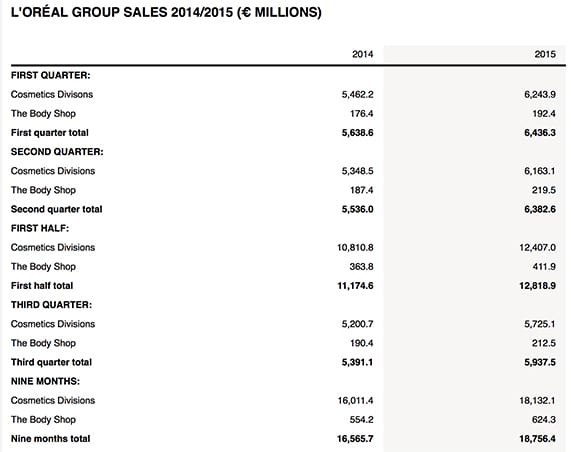
    L'Oreal 2014 2015 sales

    Turning to the product divisions, L’Oréal said that at the end of September, the Professional Products Division posted growth of +3.2% like-for-like and +13.4% based on reported figures.

    The company said: “Hair care is the largest contributor to growth, powerfully driven by the latest innovations, such as Thérapiste by Kérastase, Pro Fiber by L’Oréal Professionnel, and Frizz Dismiss by Redken. The dynamic trend in hair colour is continuing across all brands.

    “Professional skincare with Carita is expanding rapidly in Western Europe. All the geographic Zones are growing. Eastern Europe is accelerating, while Brazil is slowing the growth rate in Latin America.”

    L’Oréal Consumer Division

    As for the Consumer Products division, the beauty giant recorded a rise of +2.3% like-for-like and +11.2% based on reported figures. The company commented that gradual improvement growth trend continues and thanks to the new momentum of Maybelline, the strong expansion of NYX, and the success of L’Oréal Paris, this division is strengthening its leadership in the make-up market.

    L’Oréal also notes that hair care is winning market share, thanks notably to L’Oréal Paris. For Garnier, the Ultimate Blends’ successful launch process has continued in many European countries. At the same time, the division is outperforming the markets in Eastern Europe, Asia, Pacific, Africa and the Middle East, while the ‘strong make-up dynamic’ is said to be accelerating the division’s growth in the US, while e-commerce is growing fast across all Zones.

    Meanwhile, L’Oréal Luxe posted growth of +5.8% like-for-like and +17.9% based on reported figures. Within the more detailed picture, Yves Saint Laurent grew strongly, driven by make-up, men’s fragrances with L’Homme and women’s fragrances with Black Opium. L’Oréal added that Giorgio Armani remained dynamic across all geographic Zones.

    The company added: “Urban Decay is accelerating worldwide with the high-profile launch of the Naked Smoky palette and is building a global beauty offering with initiatives in foundations and lipstick. Kiehl’s is launching Daily Reviving Oil Concentrate and continuing its double-digit growth.

    “Growth at Lancôme is being driven by market share gains in Europe, the success of the fragrances La vie est belle, Miracle and the newly released La Nuit Trésor; Grandiôse and Hypnôse Volume à Porter mascaras; and the acceleration of its Génifique facial skincare.”

    L’Oréal adds that despite a market that slowed in the third quarter in Asia and in Travel Retail, L’Oréal Luxe has strengthened its worldwide position with significant gains in Western Europe, in Asia, Pacific, in the Middle East and in Latin America.

    Active Cosmetics division

    The company’s Active Cosmetics division also improved its performance further with strong growth of +7.3% like-for-like and +9.7% based on reported figures. L’Oréal reported that Vichy is innovating with Neovadiol Substitutive Complex Serum, a formula that acts on skin changes linked to menopause.

    At the same time, Roche-Posay is renewing its expert franchise for oily skin with the launch of Effaclar K(+). The company adds that the brand is continuing to post double-digit growth in all geographic Zones, with ‘outstanding performances’ in France, Brazil and China. The successful international roll-out of SkinCeuticals is continuing.

    The beauty company also reported that all geographic zones continue to contribute to growth, with sales accelerating in the third quarter and new markets maintaining growth at more than 10%.

    Western Europe recorded growth of +2.1% like-for-like and +4.5% based on reported figures, with L’Oréal Luxe is continuing to act as a growth driver. Garnier is also said to be winning market share in hair care and skincare, while L’Oréal is continuing to outperform the market in Germany and the UK thanks to L’Oréal Luxe.

    In North America L’Oréal posted growth of +3.0% like-for-like and +25.4% based on reported figures. Both the Active Cosmetics and Professional Products Divisions drove growth and notably thanks to the La Roche-Posay and Redken brands.

    Kiehl’s and Urban Decay also contributed to the development of L’Oréal Luxe, while the Consumer Products Division also grew with good make-up contributions from L’Oréal Paris, Maybelline and above all NYX, which is described as ‘growing at a remarkable pace’. Meanwhile, the Body Shop recorded growth of +2.0% like-for-like and +12.6% based on reported figures.

    Commenting on other markets, the company reported a mixed picture, beginning with the Asia and Pacific territories: “At the end of September, L’Oréal posted growth of +4.4% like-for-like and +21.9% based on reported figures. Kiehl’s, Yves Saint Laurent and Giorgio Armani are contributing to the dynamism of L’Oréal Luxe, in a context of slower third-quarter growth in Hong Kong and Travel Retail Asia.

    “The Consumer Products Division is performing well in India, Australia and Thailand. In China, growth at L’Oréal Paris is accelerating, while Magic is undergoing a transitional period. The Active Cosmetics Division is growing strongly, thanks to the success of La Roche-Posay.”

    Tough Brazilian market

    By contrast, in Latin America sales grew by +5.5% like-for-like and by +4.7% based on reported figures. Excluding Brazil, sales achieved double-digit growth, thanks to L’Oréal Paris, Maybelline and Lancôme, although the company says that the Brazilian market is being held back by a very difficult economic environment and by the reform of the IPI (Tax on Industrialised Products).

    Looking at Eastern Europe, L’Oréal said that the zone posted figures of +9.5% like-for-like and -4.1% based on reported figures. The Consumer Products and Professional Products Divisions recorded double-digit growth, boosted by Russia, Turkey and Ukraine.

    As for Africa and the Middle East, sales growth amounted to +9.8% like-for-like and +28.1% based on reported figures. L’Oréal said: “The reorganisation of part of our distribution network in the Gulf States caused a temporary growth slowdown in the third quarter. The Group is strengthening its positions at a time when most markets in the Zone are seeing their growth rates decelerate.

    “Egypt and Saudi Arabia are still posting strong performances. L’Oréal Paris and Garnier are gaining market share. Yves Saint Laurent, Giorgio Armani, Kérastase and La Roche-Posay are also recording solid growth rates.”
  • L’Oreal expands Dermacenter concept in Asia

    L’Oreal expands Dermacenter concept in Asia

    With growing concerns of the effects of pollution on the skin in Asia, personalized routines are in demand now more than ever.

    International players like L’Oréal are looking to cater to this trend by developing even more specialized formulations that preserve, heal and improve the health of skin as well as offering services that allow consumers to interact with dermatologists on the go.

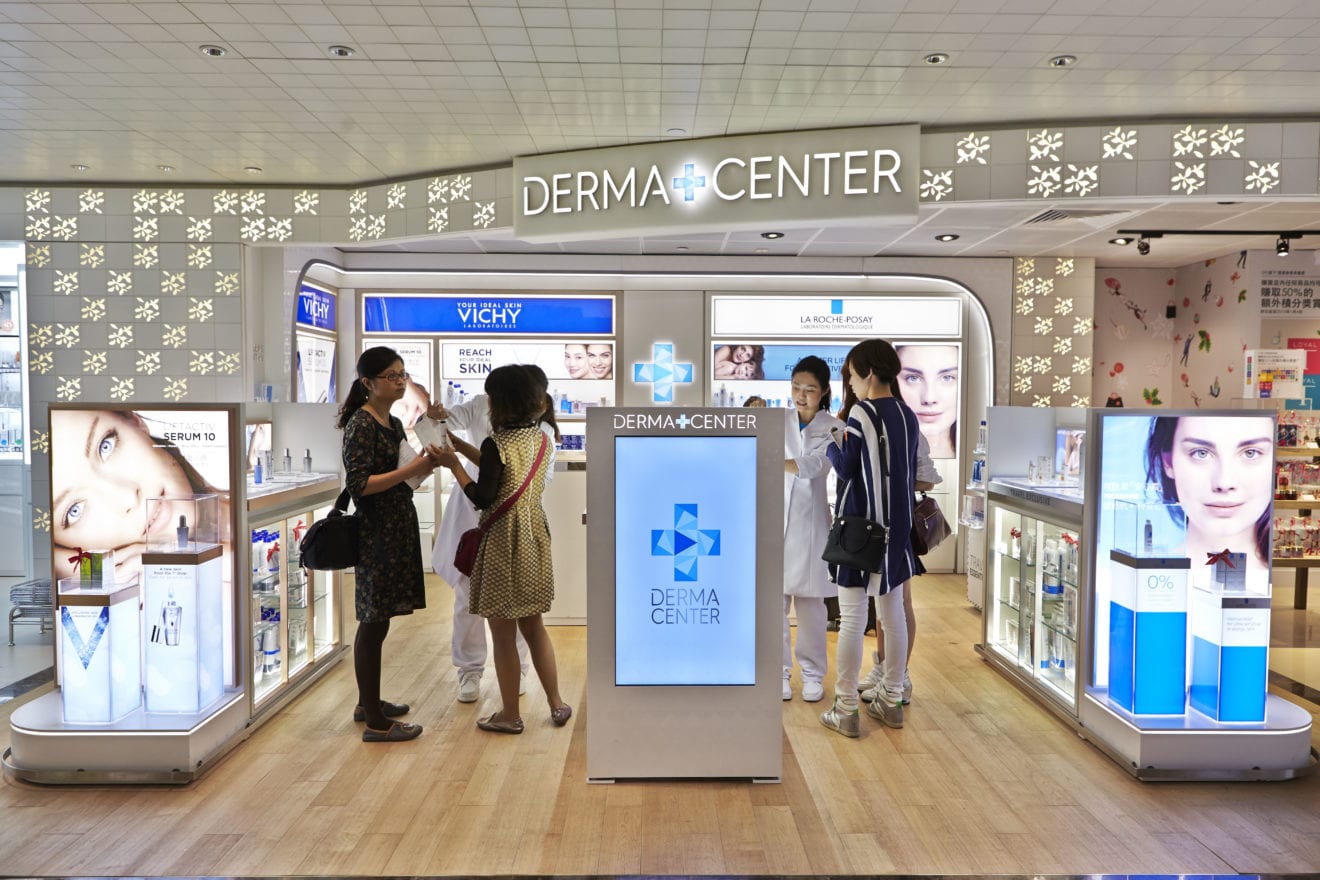
    The global cosmetics player’s first Asia based Dermacenter opened in Hong Kong in 2014 which has led to the launch of several others including; Haitang Bay, Iguazu downtown with London Supply, Bangkok (two stores), Hong Kong-Hysan and Seoul with Lotte Duty Free.

    According to L’Oréal, these stores provide a good opportunity for travelling consumers to gain access to brands like Vichy, Aqualia Thermal and LiftActiv, and La Roche-Posay, Tolériane and Effaclar.

    The Travel Retail Division was expanded in 2013 with company CEO Jean-Paul Agon commenting: “Travel retail is a key channel for winning over one billion new consumers. This market, present around the world, could be considered a ‘sixth continent.’”

    Travel Retail

    L’Oréal has been present in the travel retail market since the 1960s with L’Oréal Luxe, positioning L’Oréal Paris in the space in the last decade, and The Body Shop in the last few few years.

    Travel Retail, which represents all products sold in the travel distribution channel caters to over 2.4 billion international travellers every year, with Beauty occupying the one category in the market, where L’Oreal is seen as a leader in the field, holding a 21.3% market share in 2013.

    “By meeting consumers’ beauty aspirations, whatever their nationalities, beauty rituals or purchasing power, L’Oréal Travel Retail plays a strategic role in conquering new consumers who will pursue their experience with our brands in their home countries,”  Nicolas Hieronimus, president Selective Divisions said in 2014.

    “The launch of Vichy, La Roche-Posay and Kérastase in Travel Retail demonstrates our confidence in the huge potential of this channel. From now on, all of the Group’s major brands will have the opportunity to develop on this ‘sixth continent’.”

  • L’Oreal China to chop costs

    L’Oreal China to chop costs

    L’Oreal China turned the primary worldwide cosmetics model to verify a minimize in its retail costs within the wake of the mainland authorities’s affirmation of a tariff reduce this week.

    The federal government stated it might reduce the tariff on imported skincare merchandise from 5 per cent to 2 per cent on June 1, together with slicing different tariffs on imported items by a mean of 50 per cent.

    “We have now determined to actively reply to this choice by decreasing the costs of most of our imported merchandise, as we consider it can encourage home consumption,” L’Oreal stated in a media assertion issued on Tuesday.

    China’s authorities introduced the cuts in an effort to encourage home consumption and scale back the sum of money spent outdoors the mainland – by travellers buying obligation free offshore, and by crossborder merchants via Hong Kong.

    In the meantime, analysts predict on-line dealer JD.com will profit from the obligation cuts as a result of its enterprise is essentially based mostly on the sale of brand name identify merchandise.

  • L’Oréal ‘Brandstorm’ national award goes to Indonesia’s ‘Absolute Jetset’ concept

    L’Oréal ‘Brandstorm’ national award goes to Indonesia’s ‘Absolute Jetset’ concept

    L’Oréal has named ‘Bisnis.com’, a team from the University of Indonesia as the national winner of its’ Brandstorm competition for their ‘Absolute Jetset’ concept for the Lancôme brand.

    Brandstorm is L’Oréal’s business competition for students to unleash their creativity and apply ground-breaking ideas to one of the cosmetics giant’s international brands and distribution channels.

    This Indonesia team consists of three students in their twenties; Daviantri Apsariputri, Rangga Husnaprawira and Nabila Izza Dhia whose concept is a new service for Lancôme’s travel retail stores that replicates first class treatment on planes.

    The goal is to increase the brand’s sales by 60 per cent by developing the travel retail market business unit for travelers at every stage of their journey – from the airport, to duty free stores and aboard the plane.

    The group will represent Indonesia at the international level of the competition in Paris in June, where 45 winning teams will compete for the top three prizes.

    Searching for new talent in the beauty arena..

    L’Oréal’s program has been running over 23 years and was introduced in Indonesia in 2009. 

    Coached by top executives, competing teams also get to work with global advertising agencies in designing a marketing strategy in the area of travel retail.

    According to Restu Widiati, director of human resources, L’Oréal Indonesia; “It is the company’s strategy to identify the best talent to become actively involved in promoting the company and to contribute to the beauty industry in Indonesia. “

    In 2011, Widiati says the national winner of the competition in Indonesia went on to win third place in the international competition in Paris, beating teams from more than 40 countries.

    The HR director says the competition has been unique this year in that students were not given the task of creating new products, but to promote the travel retail business unit.

    “The students were challenged to act as international marketing director for L’Oréal travel retail to design a new experience for one of the iconic beauty brands, namely Lancôme,” he reveals.

  • L’Oreal posts slower growth in China

    L’Oreal posts slower growth in China

    L’OREAL, the world’s largest cosmetics group, said growth in China slowed to 7.7 percent last year from that of 10.2 percent in 2013, as consumption growth slowed in China and globally.

    The French company’s total sales in China were 14.3 billion yuan (US$2.28 billion) last year, as the country remained its the third-largest market.

    Globally, like-for-like sales was up 3.7 percent under fixed exchange rate to 22.5 billion euros.

    “Moderate growth in the fast moving consumer goods sector is becoming a normal situation under China’s new economic scenario,” said Jason Yu, general manager of Kantar Worldpanel China.

    “Beauty market growth is boosted by trading up from a more sophisticated group of consumers, and we’ve seen high-end product lines growing at a much faster pace than mass market products,” he added.

    Alexis Perakis-Valat, L’Oreal Group Executive vice president for Asia Pacific and CEO of L’Oreal China, said future growth would come from more tailor-made products for local consumers and geographical expansion into lower tier cities, especially for luxury product division.