Retail News CRM

Tag: l’oreal

  • L’Oreal reports healthy 2017: notes “strong potential” of travel retail

    L’Oreal reports healthy 2017: notes “strong potential” of travel retail

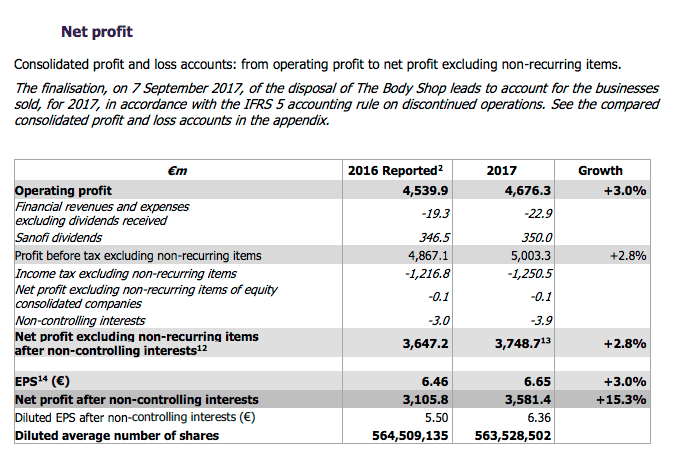
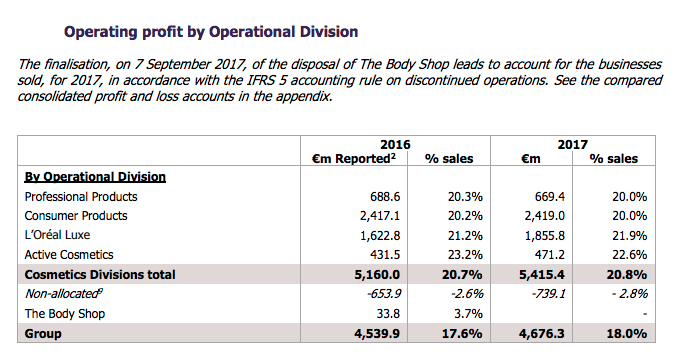
    L’Oréal’s 2017 sales climbed +2% year-on-year (at constant exchange rates) to €26 billion. Like-for-like sales were up +4.8% and net profit (excluding non-recurring items) increased +2.8% to €3.7 billion.

    The company noted the “strong potential” of its travel retail business, which celebrated its 40th anniversary last year.

    Group revenue growth was buoyed by e-commerce sales, which rose +33%.

    L’Oréal Luxe sales grew by +10.6% on a reported basis with Asia Pacific delivering a double-digit increase. China and travel retail both achieved “particularly good figures”.

    Sales in the Active Cosmetics division rose by +11.9%, with sales breaking €2 billion.
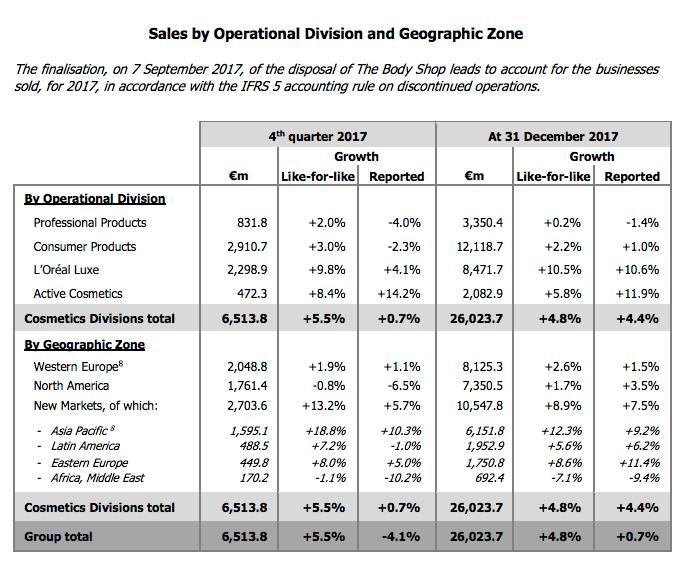
    The Consumer Products division posted +1% growth while Professional Products sales decreased -1.4%.

    L’Oréal Chairman and CEO Jean-Paul Agon said: “In a beauty market that pursued its steady growth in 2017, L’Oréal had a good year with sustained sales growth momentum, and robust profits. As announced, the second half accelerated compared with the first, particularly in the fourth quarter with +5.5% like-for-like growth. All the divisions recorded sales growth, especially L’Oréal Luxe which is delivering spectacular growth, particularly in Asia. The Active Cosmetics division achieved more than €2 billion in sales for the first time.

    “Growth in the Consumer Products division is being slowed by the continuing difficulties of the American and French markets, while sales in the Professional Products division improved at the end of the year. Today more than ever, L’Oréal can rely on its unique portfolio of powerful and complementary brands, eight of which now have sales above €1 billion.

    “As for the geographic zones, the New Markets exceeded more than €10 billion of sales for the first time ever, thanks especially to the dynamism of Asia Pacific. Performance in Western Europe remained solid.
    “2017 was especially notable for the accentuation of our digital edge and the strengthening of our positions in two strategic channels. Firstly in e-commerce, where our sales accelerated to reach €2 billion, an increase of +33.6%. Secondly in travel retail, a channel with strong potential, in which L’Oréal celebrated 40 years of presence by strengthening its number one position.

    “In terms of results, as announced, operating margin has reached the record level of 18% of sales, while increasing research expenses and business drivers. There were improvements in all our operating parameters; the quality of the results is also reflected in the record cash flow.

    “And finally, in 2017, L’Oréal was recognised for its leadership in corporate social responsibility with, for the second year running, the best score awarded by the CDP, three ‘A’s, and L’Oréal has been ranked number 1 in all sectors by Vigeo Eiris. L’Oréal has also obtained first place in the world ranking by Equileap for gender equality.

    “As for 2018, in a market that should remain dynamic and contrasted, L’Oréal more than ever before has the best advantages in terms of innovation, brand power, digital prowess, and the quality of its teams all over the world, to win market share and strengthen its beauty leadership. We are therefore confident that, this year once again, we will outperform the market and achieve significant growth in like-for-like sales and an increase in profitability.”

    RESULTS BY REGION

    Western Europe

    In 2017, Western Europe posted growth of +2.6% like-for-like and +1.5% reported. Growth was particularly robust in Great Britain, Spain and Germany, fuelled by the make-up and skincare categories. Sales in France continued to be held back by a slightly contracting market. The two main divisions, Consumer Products and L’Oréal Luxe, outperformed their respective markets, and the Active Cosmetics division’s growth accelerated in the second part of the year.
    North America

    North America posted growth of +1.7% like-for-like and +3.5% reported. Make-up sales were driven by NYX Professional Makeup and L’Oréal Paris. Haircare is “proving less dynamic”, L’Oréal said. The strong performance of Active Cosmetics was bolstered by the recent acquisition of CeraVe and the SkinCeuticals and La Roche-Posay brands.

    New markets

    Asia Pacific recorded growth of +12.3% like-for-like and +9.2% reported. China’s strong growth was fuelled by ‘very good’ e-commerce results across all divisions. India, Thailand and Malaysia all posted strong gains.

    Latin America sales increased +5.6% like-for-like and +6.2% reported. Mexico and Argentina recorded double-digit growth, while the economic environment remains difficult in Brazil. The L’Oréal Luxe and Active Cosmetics divisions achieved double-digit rises, driven by Lancôme and La Roche-Posay. Make-up turned in a solid performance for Consumer Products, reflecting the expansion of NYX and the continued growth of Maybelline.

    Eastern Europe was up +8.6% like-for-like and +11.4% reported. Turkey and Central Europe were the growth drivers, while sales in Russia were ‘satisfactory’. E-commerce now accounts for more than 5% of sales in this region.

    Sales growth in Africa and the Middle East was -7.1% like-for-like and -9.4% reported, with a “clear improvement” in the second half. Despite substantial declines in markets, the situation is stabilising in the Gulf states, said L’Oréal. Sales in Egypt were “dynamic”.
  • Affinity Equity to bid on Stylenanda

    Affinity Equity to bid on Stylenanda

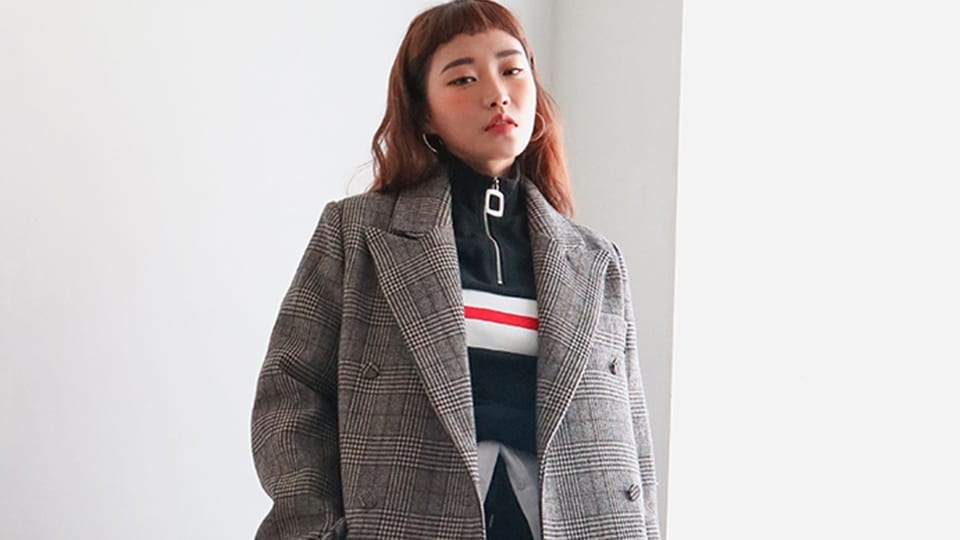
    Hong Kong’s Affinity Equity Partners has joined a bidding scramble for Korean budget fashion and cosmetics brand Stylenanda.

    Also in the race are LVMH-backed L Catterton, L’Oreal and Shiseido, with the bid worth up to KW500 billion (US$467 million), insiders say.

    Parent company Nanda has received letters of intent from potential bidders, including a local department-store chain, to sell a stake of up to 70 per cent.

    Launched in 2005, Stylenanda saw its sales soar to KW170 billion last year. While it started as a fashion brand, it has lately been focusing more on its cosmetics business. Now more than half of its sales come from its budget cosmetics brand 3CE.

    For its fashion business, the firm is focusing more on upscale boutique shops.

    CEO Kim So-hee, who owns the company outright, in 2016 sought to sell a sizeable portion along with management rights. There were negotiations with such candidates as Hyundai Department Store and TPG, but these collapsed.

    Meanwhile, L Catterton has been buying stakes in Korean companies in recent years, including US$80 million in YG Entertainment, $50 million in cosmetics maker Clio, and US$230 million in eyewear brand Gentle Monster.

    Affinity has also been buying into Korean firms. In August it bought plastic container company Lock&Lock for KW629.3 billion.

  • JD.com surprises with first profitable quarter

    JD.com surprises with first profitable quarter

    JD.com profit soared 50 per cent after a 39 per cent increase in sales during the Chinese online retailer’s latest quarter.

    Its unaudited results for the three months to the end of September show revenue of RMB83.7 billion (US$12.6 billion), with a record 50.3 per cent surge in gross profit to RMB13 billion. Non-GAAP gross profit was RMB12.8 billion, up 51.9 per cent.

    Active customer accounts increased by 34 per cent to 266.3 million in the 12 months to September 30.

    Chairman/CEO Richard Lio says the company is building robust product content and enhancing user engagement with innovative tools that enable brands to launch highly targeted online marketing programs.

    “The scale economies of our model are becoming clearer with every quarter,” says CFO Sidney Huang. “Looking ahead, we will continue to prioritise investments in technology and leading R&D talent as we execute on our vision to revolutionise China’s retail industry.”

    While releasing its third-quarter figures, JD.com also listed its latest business developments…

    In October, JD and Tencent expanded their partnership with the launch of a marketing initiative that integrates insights on consumer behaviour from Tencent’s social-media platforms with online and offline shopping data from JD and its brand partners. As well as enabling more precise target marketing, the move benefits consumers by offering them wider access to sales promotions and preferred discounts.

    Strategic partnerships

    During the past three months, JD.com also formed strategic partnerships with Baidu, iQIYI, NetEase, Sogou and Qihoo 360 with their big-data resources, massive user bases and AI algorithm technologies.

    JD also continued to strengthen its position among top-tier international brands, expanding its partnership with high-fashion brand Armani with the opening of official online stores for Armani Exchange and Emporio Armani.

    JD Worldwide also launched flagship stores for such companies as Reckitt Benckiser, Spectrum Brands and Tiger, while its new Toplife platform attracted marquee brands like Dyson, La Perla, Rimowa (LVMH) and Trussardi.

    During the quarter, JD Logistics test-launched an unmanned sorting centre, the first of its kind in the logistics industry. JD also signed agreements to lay the groundwork for the rollout of China’s largest drone network.

    In September, JD Logistics expanded its environmentally friendly logistics and packaging campaign, working with brands including  Johnson & Johnson, Kimberly-Clark, Lego, L’Oreal, P&G, Nestle, Unilever, Watsons and Wrigley. The aim is to minimise environmental impact by cutting back on packaging materials.

    Customer demand

    JD also enhanced its fresh product offerings during the quarter to meet customer demand. In July, it launched the Canadian Fresh Food Pavilion, the first country pavilion for fresh products on the JD.com platform. Live lobsters from Canada can now be delivered to customers’ doorsteps in China in as little as 48 hours. During JD’s Super Canadian Day, 140,000 lobsters were sold within 24 hours.

    In September, JD.com, JD Finance, Central Group and Provident Capital announced agreements to establish two JVs in Thailand covering e-commerce and fintech services, with an aggregate investment of $500 million. JD.com is providing its expertise in technology, e-commerce and logistics while Central Group is drawing on its retail store network, brand and merchant relationships, and retail behaviour insights from its loyalty program.

    In October, JD and Sam’s Club launched a promotion offering customers discounted bundled memberships for Sam’s Club and the JD Plus paid-for membership service.

    By the end of October, JD.com JV New Dada had partnered with 146 Walmart stores and 301 Yonghui stores, as well as many other supermarkets and grocery stores, to provide online fresh grocery shopping with one-hour home delivery.

    At the end of September, JD.com had 405 warehouses and provided scheduled delivery services in 250 Chinese cities. It had about 160,000 merchants on its online marketplace, and 137,975 full-time employees.

  • Asia drives significant L’Oreal growth

    Asia drives significant L’Oreal growth

    Asia-Pacific led global growth for beauty giant L’Oreal in the latest quarter, with sales rising 14.7 per cent on a like-for-like basis.

    The region capped off a solid quarter of L’Oreal growth, with the company reporting global sales of euro 19.5 billion, up 5.1 per cent, like-for-like on the same quarter last year.

    “In Northern Asia, China is achieving sustained growth, driven by L’Oreal Luxe, and by the strong vitality of e-commerce sales,” the company said in a statement. “Hong Kong is also growing strongly, with Chinese tourists continuing to return.”

    In Southern Asia, growth was spurred by Thailand, Malaysia and Indonesia, “thanks to the strength of our make-up brand portfolio in the consumer products division”.

    “Overall, the group outperformed the market and strengthened its position,” said chairman and CEO Jean-Paul Ago of the results for the three months to September 30.

    L’Oreal Luxe delivered a strong performance with double-digit growth, driven by the robust health of its four key brands: Lancome, Yves Saint Laurent, Giorgio Armani and Kiehl’s, and the momentum of its recent acquisition, IT Cosmetics.

    “The active cosmetics division is growing significantly, reflecting the quality of its launches and the good performance of CeraVe,” he said. “The consumer products division is reinforcing its positions in several major zones, but is still being slowed down by continuing difficulties in the American and French markets.”

    Ago described the acceleration of sales in its so-called “New Markets” as the highlight of the quarter. He referred to “strong performances” in Asia-Pacific, particularly in China, but also in Latin America and Eastern Europe.

  • L’Oreal adds Paris to digital start-ups

    L’Oreal adds Paris to digital start-ups

    L’Oreal, the world’s biggest cosmetics company wants to see more beauty tech like sensory hair brushes that tell you how to care for your hair, and skin patches that let you know how much sun you are getting.

    So, it plans to launch a program of start-up collaborations in Paris as it ramps up digital investments and seeks out new beauty products like its “smart” hairbrushes.

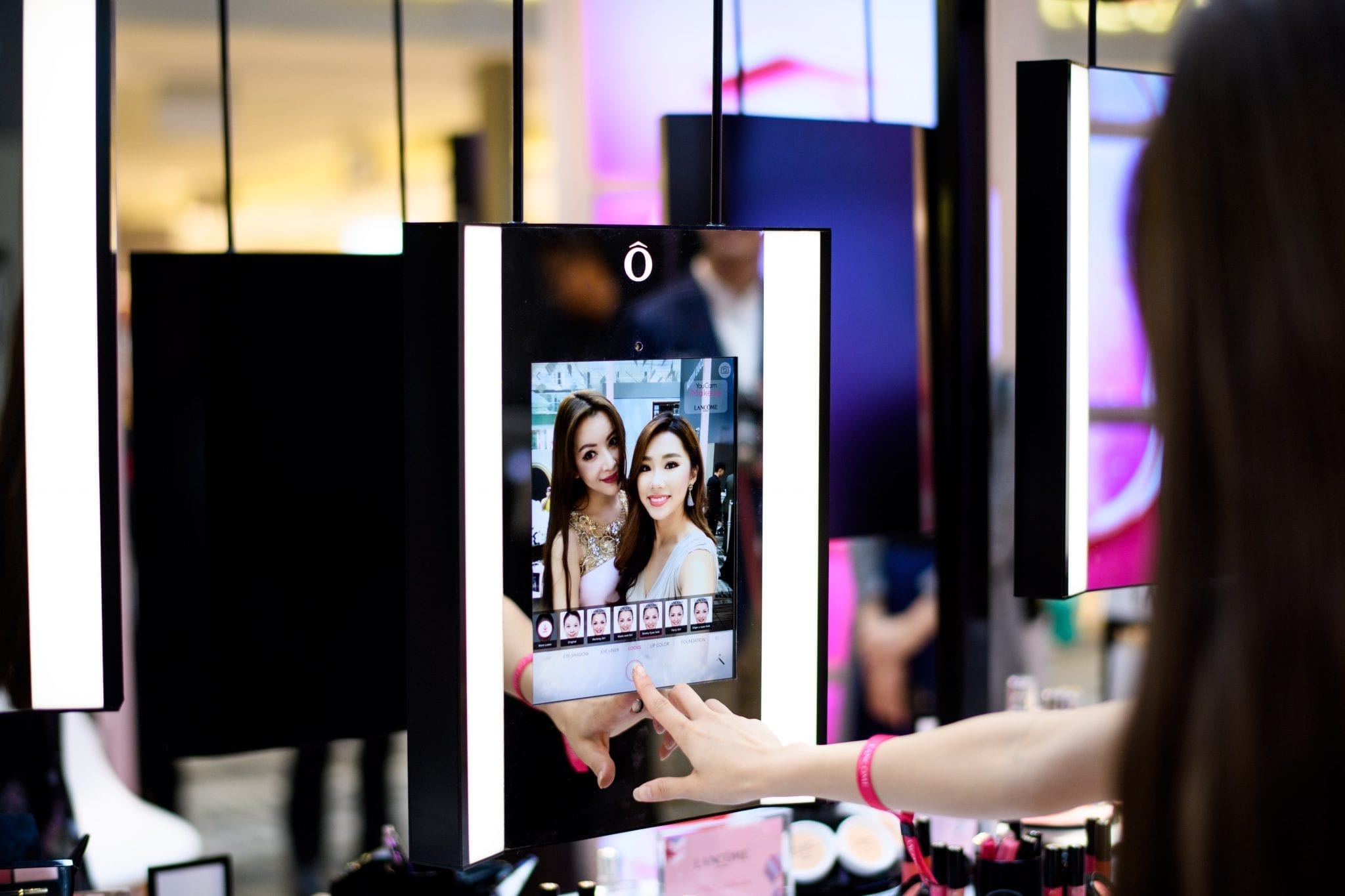
    L’Oreal makes an ever greater slice of sales online and has rolled out services and items for tech-savvy consumers, such as a phone app for virtual make-up tests.

    The French group says it is looking to develop more inventions at a site for start-up companies in Paris, where 10 to 12 firms will work on projects with L’Oreal every year.

    “The world of beauty has already become very digitalised…this will allow us go even further than what we do today,” L’Oreal chairman and chief executive Jean-Paul Agon said, at a reconverted 1920s railway depot in Paris that now houses a start-up campus.

    Known as “Station F” and launched by billionaire businessman Xavier Niel, it will now have a L’Oreal workshop.

    Agon did not say how much L’Oreal had invested so far in start-up ventures and online development, but did say the group’s budget for all things digital was growing fast.

    L’Oreal now spends 35 per cent of its media budget on digital campaigns and had recruited 1,700 people to work in this area, he said. Five years ago staffing in this section was closer to 150.

    L’Oreal derives about seven per cent of its revenues – which totalled 13.4 billion euros ($A20.2 billion) in the first half of the year – from online sales, up from just over five per cent in 2015. It has not disclosed online growth targets.

    The company has already invested in London’s Founders Factory, a so-called start-up incubator, in 2016, and it has its own innovation program in San Francisco.

    Products developed there include an electronic UV skin patch that measures exposure to the sun.

    Aside from seeking new technology, such as developments in artificial intelligence or voice recognition software, L’Oreal will also work with start-ups developing new beauty products, be it creams or make-up, the company said.

    L’Oreal’s push comes as Paris seeks to overtake London as a leading European tech centre for investors and inventors, in a “start-up nation” championed by France’s pro-business President Emmanuel Macron.

    “We’re also happy to be contributing to that project,” Agon said. L’Oreal is France’s fourth-largest listed company.

  • L’Oréal unveils new-look YSL boutique in Haitang Bay

    L’Oréal unveils new-look YSL boutique in Haitang Bay

    An astounding 35 million people engaged via social media with the opening of a revamped Yves Saint Laurent boutique at China Duty Free Group’s Haitang Bay International Shopping Complex, according to L’Oréal Travel Retail Asia Pacific.

    When it first opened in 2014, the Haitang Bay  Shopping Complex, was described as an extraordinary vision by the attendees of the Grand Opening.

    Today, it is one of the top points of sales for Yves Saint Laurent in Asia Pacific travel retail.

    The building is magnificent, the range of brands and stores dazzling, the execution consistently excellent and the level of consumer excitement unprecedented in travel retail history.

    The French beauty group held a three-day pop-up party, themed #MYLIPVIBES, in August to celebrate the new-look 55sq m boutique.

    An estimated 5,000 travellers attended the event in person.

    The event highlighted Vernis à Lèvres products via a podium which included celebrity make-up shows and performances by internationally-renowned DJs.

    Vernis à Lèvres is said to offer an “innovative lip product” by combining the texture and shine of a lip gloss with the long-wear of a stain. The applicator’s slanted tip and short soft bristles allow for easy, precise application, stated L’Oréal.

    Travellers were encouraged to shoot personalised Vernis à Lèvres music videos using L’Oréal Travel Retail Asia’s first digitalised video booth.

    The event was designed to merge offline and online customer experience and make sure that #MYLIPVIBES would populate the cyberspace.

  • L’Oréal targets middle class Chinese travellers with Bangkok upgrade

    L’Oréal targets middle class Chinese travellers with Bangkok upgrade

    L’Oréal Paris has revamped and upgraded its Bangkok Downtown duty free store and is particularly aiming to appeal to the Chinese middle class traveller. It describes the segment as “the driver of today’s growth in travel retail”.

    The refit is in line with L’Oréal’s travel retail strategy “to enhance desirability by increasing retail effectiveness in travel retail shops”.

    Based on the idea of making a premium product accessible, the new store offers a showcase of  L’Oréal Paris’ key products for the market including its anti-ageing and moisturising ranges, an expanded make-up area and a focus on global best-sellers Revitalift and Men Expert.

    Described by the brand as the number one men’s grooming brand in China, Men Expert was given a prominent display featuring Hydra Energetic, the campaign for which stars celebrity Daniel Wu, alongside Pure & Matte and Hydra Sensitive.

    A spokesperson for King Power explained: “The overall look is now more attractive with multi-colour impact. The make-up zone is magnificent and delivers a better shopping experience. Traffic flow inside the shop is improved and customers have better access to their favourite products. Customers are given more insight to the products with a product box display provided for each travel retail exclusive best-seller.”

  • The Body Shop rolls out £10m digital transformation strategy

    The Body Shop rolls out £10m digital transformation strategy

    L’Oréal-owned cosmetics brand The Body Shop has launched a £10m, three-year digital transformation strategy in a bid to revamp its online appeal and boost the e-commerce channel.

    As part of the strategy, the British retailer has launched in 11 countries a new mobile-first e-commerce site which integrates content and commerce. The countries where the site is now live include the UK, US, Canada, France, Germany, Brazil and Indonesia, with 20 further countries expected to be added throughout the year.

    Given the scale of the business, The Body Shop has given regional variations to its new platform, which means its presence will be adapted to each relevant market according to consumer preferences for merchandising, payment and delivery fulfillment.

    The new website has a live appointment booking service for in-store consultations and a personalised skincare diagnostic tool. A click & collect functionality is also expected to launch later in the year.

    The Body Shop was founded in 1976 and quickly became a retail favourite with its colourful range of body butters, but in recent years it has struggled to remain relevant in a highly competitive market.

    The £10m investment to expand its global e-commerce footprint comes after the retailer saw a 19% increase in online sales in 2016 – double than the prior year’s figure. The share is expected to reach 20% this year.

    “With the successful launch of a responsive, content-rich digital platform, we have established a strong foundation to support our future innovation agenda and global rollout,” said chief digital officer Harriet Williams.

    “The Body Shop is a big business, operating in a large number of countries with both franchise and non-franchise markets. The platform needed to strike the right balance between global brand consistency and local relevance, being flexible enough to meet the needs of each individual market.”

    The Body Shop sells its nature-inspired products in more than 3,000 stores in 66 countries.

  • Goldman Sachs linked to The Body Shop bid

    Goldman Sachs linked to The Body Shop bid

    Investment bank Goldman Sachs is reportedly preparing a £600 million bid for The Body Shop.

    Owner L’Oreal decided to put the ethical cosmetics brand on the market last month, apparently unwilling to invest in arresting falling sales and market share.

    The Body Shop bid price would fall considerably short of the £850 million L’Oreal is said to be seeking – a figure roundly considered as highly optimistic in the investment community.

    Private equity companies Carlyle, CVC Capital Partners, Advent International and Apax Partners have all been reported to have shown an interest in the business. L’Oreal paid £650 million for the business in 2006.

    Founded by Dame Anita Roddick and her husband Gordon in 1976, The Body Shop has grown to more than 3000 stores in 66 countries. The original concept was to create an ethical approach to cosmetics with fewer chemicals and no animal testing.

    Sales fell 3.2 per cent in the first half of 2016 and by 2.8 per cent in the third quarter. Another decline is expected to be reported when L’Oreal releases its results this month.

    Charlotte Pearce, an analyst with GlobalData, warns The Body Shop needs to freshen its offer or face its eventual demise.

    “The brand has become outdated and has failed to provide an innovative offer with exciting new products to entice customers into stores, causing the retailer to lose out to brands with more relevant beauty and skincare ranges,” said Pearce.

  • L’Oréal named 2017 World’s Most Ethical Company by the Ethisphere Institute

    L’Oréal named 2017 World’s Most Ethical Company by the Ethisphere Institute

    L’Oréal, the world’s leading beauty company, has been recognized as 2017 World’s Most Ethical Company by the Ethisphere Institute, a global leader in defining and advancing the standards of ethical business practices.

    L’Oréal has been recognized for the 8th time and is one of only 2 in the Health and Beauty industry, underscoring their commitment to leading ethical business standards and practices. 

    “Culture is the foundation of a high performing, innovative and sustainable company” said Jean-Paul Agon, Chairman and Chief Executive Officer of L’Oréal. “I am proud that ethics is the key pillar of our culture and leadership, requiring our teams throughout the world to always include ethics in the decisions they make”.

    “Receiving this recognition from Ethisphere for the 8th time is a source of pride for everyone at L’Oréal. Ethics is the new decision-making framework and we are convinced that a strong culture of integrity is an essential component for long-term success” said Emmanuel Lulin, Senior Vice-President and Chief Ethics Officer.

    Twenty-seventeen is the eleventh year that Ethisphere has honored those companies who recognize their role in society to influence and drive positive change, consider the impact of their actions on their employees, investors, customers and other key stakeholders and use their values and culture as an underpinning to the decisions they make every day. 

    “Over the last eleven years we have seen the shift in societal expectations, constant redefinition of laws and regulations and the geo-political climate. We have also seen how companies honored as the World’s Most Ethical respond to these challenges. They invest in their local communities around the world, embrace strategies of diversity and inclusion, and focus on long term-ism as a sustainable business advantage,” explained Ethisphere’s Chief Executive Officer, Timothy Erblich. “Congratulations to everyone at L’Oréal for being recognized as a World’s Most Ethical Company.” 

    Methodology & scoring

    The World’s Most Ethical Company assessment is based upon the Ethisphere Institute’s Ethics Quotient® (EQ) framework which offers a quantitative way to assess a company’s performance in an objective, consistent and standardized way. The information collected provides a comprehensive sampling of definitive criteria of core competencies, rather than all aspects of corporate governance, risk, sustainability, compliance and ethics.

     Scores are generated in five key categories: ethics and compliance program (35%), corporate citizenship and responsibility (20%), culture of ethics (20%), governance (15%) and leadership, innovation and reputation (10%) and provided to all companies who participate in the process.

    ­­

    Honorees

    The full list of the 2017 World’s Most Ethical Companies can be found at: https://worldsmostethicalcompanies.ethisphere.com/honorees/.

    Best practices and insights from the 2017 honorees will be released in a series of infographics and research throughout the year. Organizations interested in how they compare to the World’s Most Ethical Companies are invited to participate in the Ethics Quotient.

  • Shu Uemura withdrawing from Philippines

    Shu Uemura withdrawing from Philippines

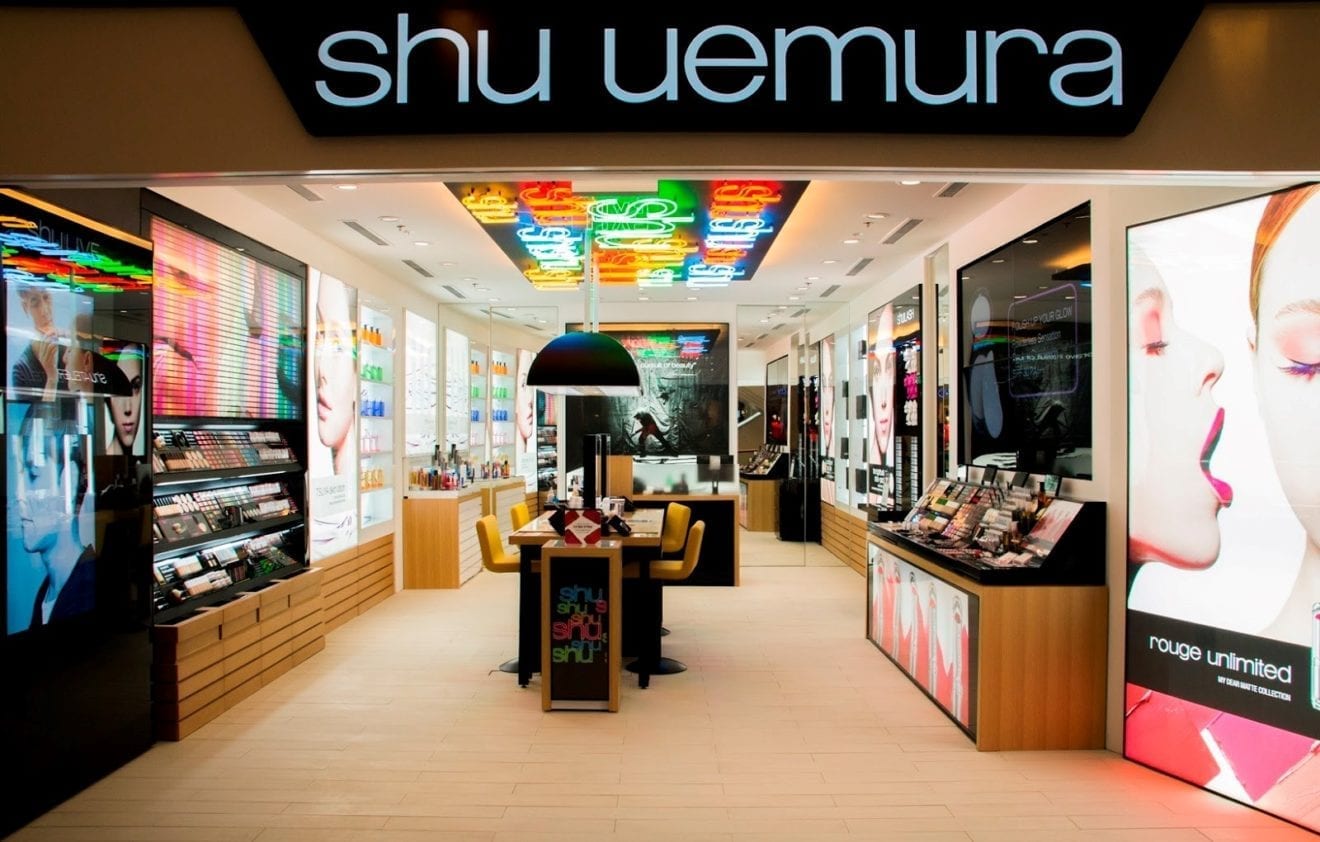
    Japanese cosmetic brand Shu Uemura is withdrawing from the Philippines.

    L’Oreal Philippines has confirmed that all branches and counters of the make-up line will be shut down by the end of April.

    While officially distributed by L’Oreal Philippines, the brand believes the closing of its Philippines outlets will be beneficial in the long term.

    Shu Uemura is known for its quirky collaborations and neon-filled palettes. One of its most famous collaborations was with iconic designer Karl Lagerfeld.

    Brand founder Shu Uemura went to Hollywood in the 1950s and started working as a makeup artist, becoming in demand after working on the Paramount movie My Geisha in 1962 with actress Shirley MacLaine.

  • David Beckham shares Story of his life with Biotherm & L’Oreal

    David Beckham shares Story of his life with Biotherm & L’Oreal

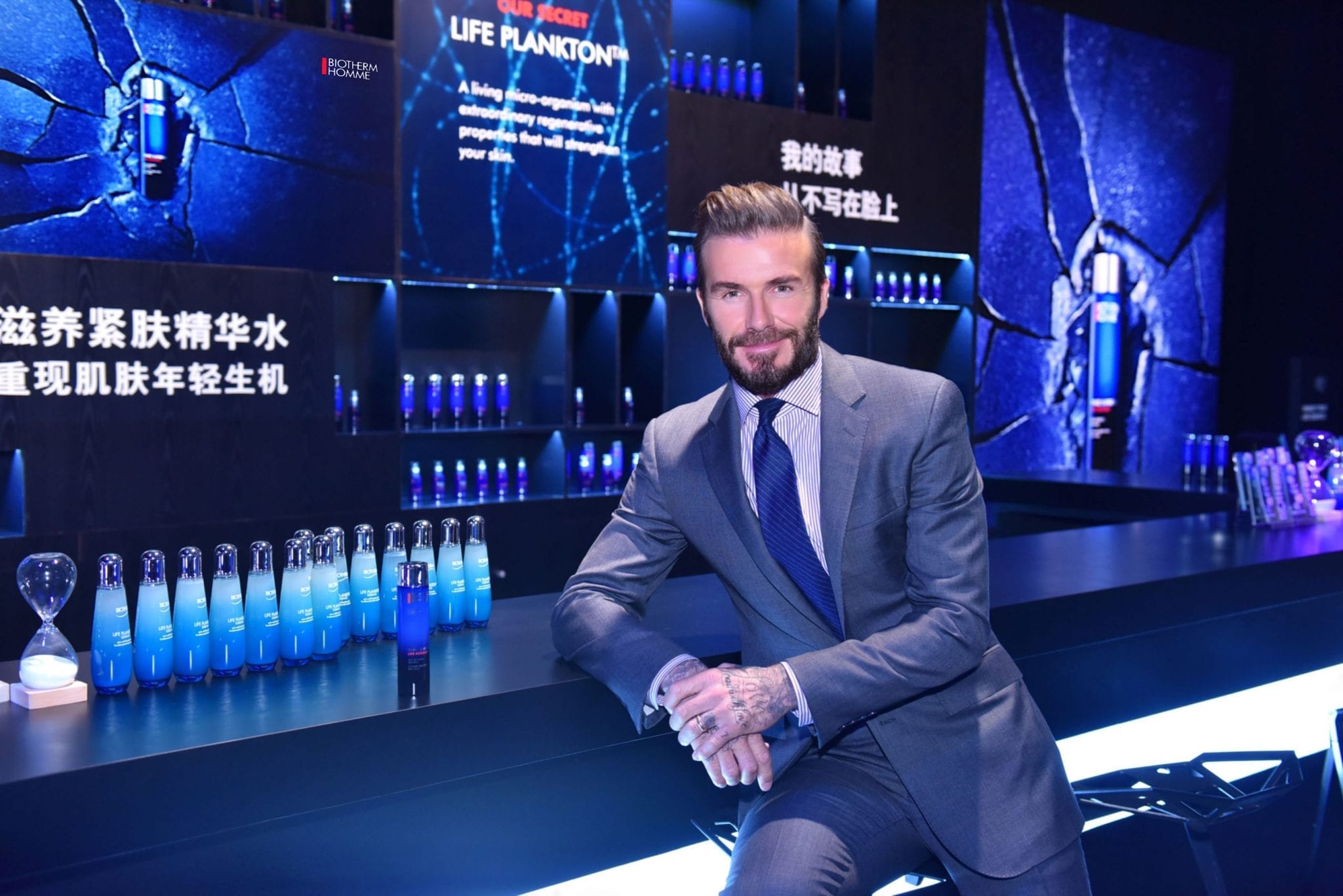
    On 9 November, two days before the ‘Chinese Double 11’ or ‘Singles’ Day’ shopping holiday, Biotherm Homme invited David Beckham to Shanghai to launch the brand’s #StoryOfMyLife campaign in tandem with the New Force Supreme Life Essence; a ‘revolution in men’s skincare, which responds to the multiple needs of men’s aging skin’.

    The L’Oréal Travel Retail Asia Pacific Biotherm team invited two Duty Free retailers, Sunrise Duty Free represented by Mrs Wiling Yang, and Korea’s Lotte Duty Free, represented by Mr Jeffrey Davis to attend the event.

    Journalists and ‘influencers’ were also invited to the Waterhouse hotel in Shanghai to create and share their experiences with the L’Oréal-owned men’s skincare brand.

    “Continuing a shared heritage of disruption in men’s grooming, the #StoryOfMyLife campaign film, starring Beckham, turns skincare into a life celebration, powering the message: ‘The story of my life is written on my skin. But don’t expect to read it on my face’,” says L’Oréal.

    The event was linked with the new ‘Force Supreme Life Essence’ from Biotherm Homme which is said to offer ‘every active and successful man a daily solution not to show the signs of time on their face’.

    Joining the campaign’s leading man, who revealed some of his skincare and life stories on-stage, guests shared theirs inside a private animation box.

    In a celebration of the campaign’s ink element, a Tattoo Bar invited them to interpret a life-altering experience in ink, having sneakers, iPhone cases, or even skin temporarily, customized on the spot by four leading artists in China.

    “We’re bringing the height of skincare tech together with digital-goes-real experience, to turn around the age-old concept that your life story is written on your face,” commented David Fridlevski, Biotherm General Manager.

    On 9 November, two days before the ‘Chinese Double 11’ or ‘Singles’ Day’ shopping holiday, Biotherm Homme invited David Beckham to Shanghai to launch the brand’s #StoryOfMyLife campaign.

    Life Plankton Essence, now made for men, is Biotherm Homme’s ‘most intensely concentrated treatment in skin-coach Life Plankton’ in a liquid essence for aging skin.

    “I recently discovered the new Force Supreme Life Essence which is really a booster in the morning. I feel like my skin is transformed,” said David Beckham.

  • Internet Retailing Expo Indonesia Gears Up to Connect Indonesia’s Stakeholders

    Internet Retailing Expo Indonesia Gears Up to Connect Indonesia’s Stakeholders

    The Internet Retailing Expo (IRX) Indonesia, is gearing up to return with a loud bang. The 2ndedition of IRX Indonesia, to be held from 18 to 19 January next year at the Pullman Jakarta Central Park, will once again become the meeting place for marketplaces, multi-channel retailers and online retailers to meet their key suppliers and learn through peer knowledge sharing and best practice implementation case studies.

    IRX Indonesia was launched due to the huge potential of the internet retailing market, as it has started to grow significantly within Indonesia in the recent years.

    In 2017, IRX Indonesia is expected to attract 2000 visitors to an even more diverse exhibition with plenty of value-packed on-floor sessions and 75 leading solution providers in the areas of digital infrastructure and innovation, digital payments, last mile fulfilment and many others. More than 80 multichannel and ecommerce retailers will be sharing knowledge and experience during the six conferences sessions, workshops and clinics at IRX Indonesia 2017. All these under the themes of Connected Store of the Future, Payments & Security, Insight & Experience, Digital Sales & Marketing, Digital Merchandising, Multichannel Operations & Fulfilment.

    “IRX is the leading multichannel event in the retail calendar and takes place every March at the NEC Birmingham, United Kingdom. The UK is the most sophisticated internet retailing market globally. With over 200 exhibitors and 5000 visitors to the show, IRX welcomes retailers and technology providers from across the multichannel landscape,” said Richard Ireland, Managing Director, Asia, Clarion Events Pte Ltd. “Following its great success in 2016, IRX will be running its second show in Jakarta, Indonesia in January 2017 and plans to bring some of the expertise gained from the UK to Indonesia. Our event plans to help retailers looking to establish, along their journey to grow their online retail strategies.”

    Visitors to the event can expect industry tracks featuring a distinguished speaker panel of local and international industry who’s who, including, among others, Roy N. Mandey, Chairman, APRINDO; Ravi Kumar, COO, PT. MAP; Catherine Sutjahyo, CEO, Alfacart.com; Adrian Suherman, CEO, Lippo Digital Group; Aruni Therese Abeyesundere, Chief Marketing Officer, Pizza Hut;; Simon Torring, Regional Head of Merchandising (Digital), Sephora Digital SEA, Ankit Porwal, Business Director, L’Oreal Paris Indonesia; Ashley Amanna, Head of ECommerce, L’Oreal Indonesia; Pankaj Khushani, Head of Media Technology Solutions – SEA, India & Korea, Google; Rizkie Maulana Putra, Head of ECommerce Development, Samsung Electronics Indonesia; Tabah Yudhananto, Marketing Technologist, Digital Marketing, CRM Senior Manager, Blibli.com; and Cam Walker, CEO Indonesia, iflix.

    The conference will feature 6 streams alongside e-Commerce clinics and workshops on the exhibition floor. Special highlights for the event include SME Forum: “Building capabilities in a digital age”; CMO Forum: “The way marketers engage customers”; CEO Panel Discussion: “Omni Channel retailing: Digital Transformation, Customer First”; E-Commerce University; E-Commerce Clinics; Start-up & Innovation Zone: “Enabling Business value with Digital Transformation”; Indonesia – China Cross-Border Ecommerce Pavilion; and 3D VR Shopping Experience.

    IRX Indonesia will feature 50+ exhibitors including 8Commerce, Asian Delker Logistics, ATEX, Cashlez, Detrack, E2Pay, Egentic, ICUBE, Innovecto, Midtrans, MooCommerce, PaketID, Priceza, PT Kam and Kam, PT Kioson Komersial Indonesia, and SAP, and sponsors including BCA, Accenture, Telkom Indonesia, PT Pos Logistics Indonesia, Akamai, Anchanto, Go-Jek, Magento, Manhattan Associates, At Internet, aCommerce, Alto, FedEx, Gift Card Indonesia, Intramega Global, netCORE, Sprooki, and JNE.

  • Lazada stays online

    Lazada stays online

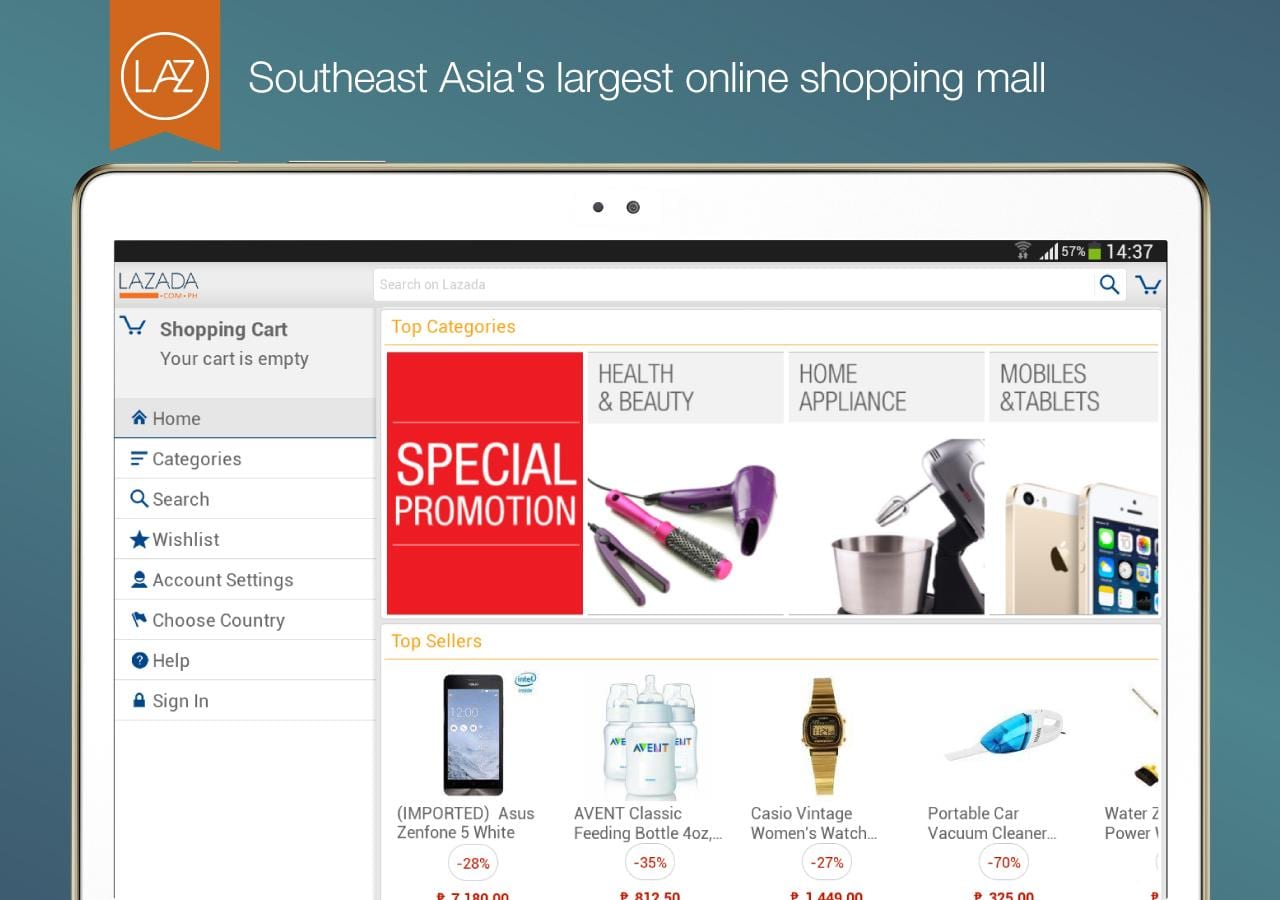
    While some global e-commerce giants, including Amazon Inc, are planning to build brick-and-mortar convenience stores, Lazada Malaysia will focus on things it does best — selling inventory to customers from its warehouses through its online platform.

    Its chief executive officer (CEO) Hans-Peter Ressel said Lazada Malaysia will concentrate on strengthening its online shopping business, rather than building physical stores to complement its online services.

    “We can’t comment on their (Amazon’s) strategy because we focus only on our products,” Ressel said in an interview last week. “We have decided to go this way, and if other players are doing other things, I’m happy to learn and observe how this works for them, but it doesn’t change our strategy.”

    Citing unnamed sources, The Wall Street Journal last week reported that Amazon stores will sell perishable goods, including milk and meats. The Seattle-based retail giant will also build drive-in locations for consumers in a rush where online grocery orders will be brought to the car, the newspaper said.

    Lazada Malaysia, which has achieved more than five million app downloads, is part of the Lazada Group which operates online shopping platforms in Indonesia, the Philippines, Singapore, Thailand and Vietnam. Its product offering covers diverse categories, including electronics, fashion, health & beauty, sports & travel, and groceries.

    Vienna-born Ressel, who is of Austrian and Filipino descent, had served as Lazada Malaysia chief commercial officer and chief operations officer since August 2012, before he became its CEO in March 2015.

    Lazada Malaysia, he said, would continue to collaborate with brand retailers, hypermarkets and offline flagship stores to sell their products.

    “If you want [to operate your own] store, how many stores do you need? What do you want to put on these stores? We don’t believe in doing everything by ourselves. We have partners; we have brands, and it is crucial to have their collaboration, that’s our focus,” he said.

    Notably, Lazada Malaysia this year brought in top brands such as L’oreal, Levi’s and Samsung. It also formed partnerships with giant retailers such as Tesco, Watsons and Senheng.

    Ressel believes e-commerce is the way forward, considering that two-thirds of Malaysians have Internet access, with most of them spending more than four hours a day online.

    “If we didn’t believe in the future growth of e-commerce, we won’t be here. Today, 20 million out of 30 million Malaysians are online. The [Malaysian] e-commerce market will definitely grow towards a size that is similar to Western countries, China and Korea. It’s just a matter of time,” he said.

    According to an estimate by statistics portal Statista, total revenue for the Malaysian e-commerce market this year will hit US$894 million (RM3.75 billion) and revenue is expected to see an annual growth rate of 23.7% in the next five years, to reach US$2.58 billion by 2021.

    Currently, the market’s largest segment is electronics and media, with a market volume of US$380 million. User penetration is at 61.7% this year and is expected to hit 76.8% in 2021.

  • Shiseido perfume ambition revealed

    Shiseido perfume ambition revealed

    Japanese cosmetics group Shiseido is aiming to become one of the world’s top five perfume makers in five years, up from its current seventh spot.

    New acquisitions will help Shiseido perfume market share grow – along with a step-up in marketing, especially online.

    Shiseido has beaten Spain’s Puig to win Procter & Gamble‘s Dolce & Gabbana perfume (D&G) licence, which generates 400 million euros ($445 million) in annual revenue. It aims to grow this to 1 billion euros in 10 years.
    Shiseido group chief executive for Europe, Middle East and Africa Louis Desazars, who was previously US head of Shiseido’s Nars make-up brand, says there is a new mindset and energy in the group.

    The D&G licence business will compensate for Shiseido’s loss this year of the Jean-Paul Gaultier perfume licence as part of an agreement with Puig when it bought the French brand in 2011.

    Shiseido says the D&G perfume business helped it more than double its market share instantly to 5.8 per cent from 2.2 per cent. It is aiming to reach 9 per cent in five years.

    On top of its own skincare lines, Shiseido makes perfume under licence for fashion brands Azzedine Alaia, Elie Saab, Issey Miyake and Narciso Rodriguez. The group has created a separate branch for niche brands it has acquired such as Serge Lutens last year, and the skincare and cosmetics brands Laura Mercier and ReVive in July.

    The global perfume market grew 2.9 per cent last year, while niche perfume brands saw their sales surge 15 per cent.

    Estee Lauder has also placed niche perfume brands it has bought, such as Editions de Parfums Frederic Malle and Le Labo, in a separate division.
    Including perfume, skincare and makeup, Shiseido ranks fifth globally behind L’Oreal, Coty, LVMH and Chanel, and is bigger than Clarins. In skincare alone, Shiseido says it aims to join the top three globally, up from its current fifth spot.