Retail News CRM

Tag: News

  • VinFast rolls out its first made-in-Vietnam car

    VinFast rolls out its first made-in-Vietnam car

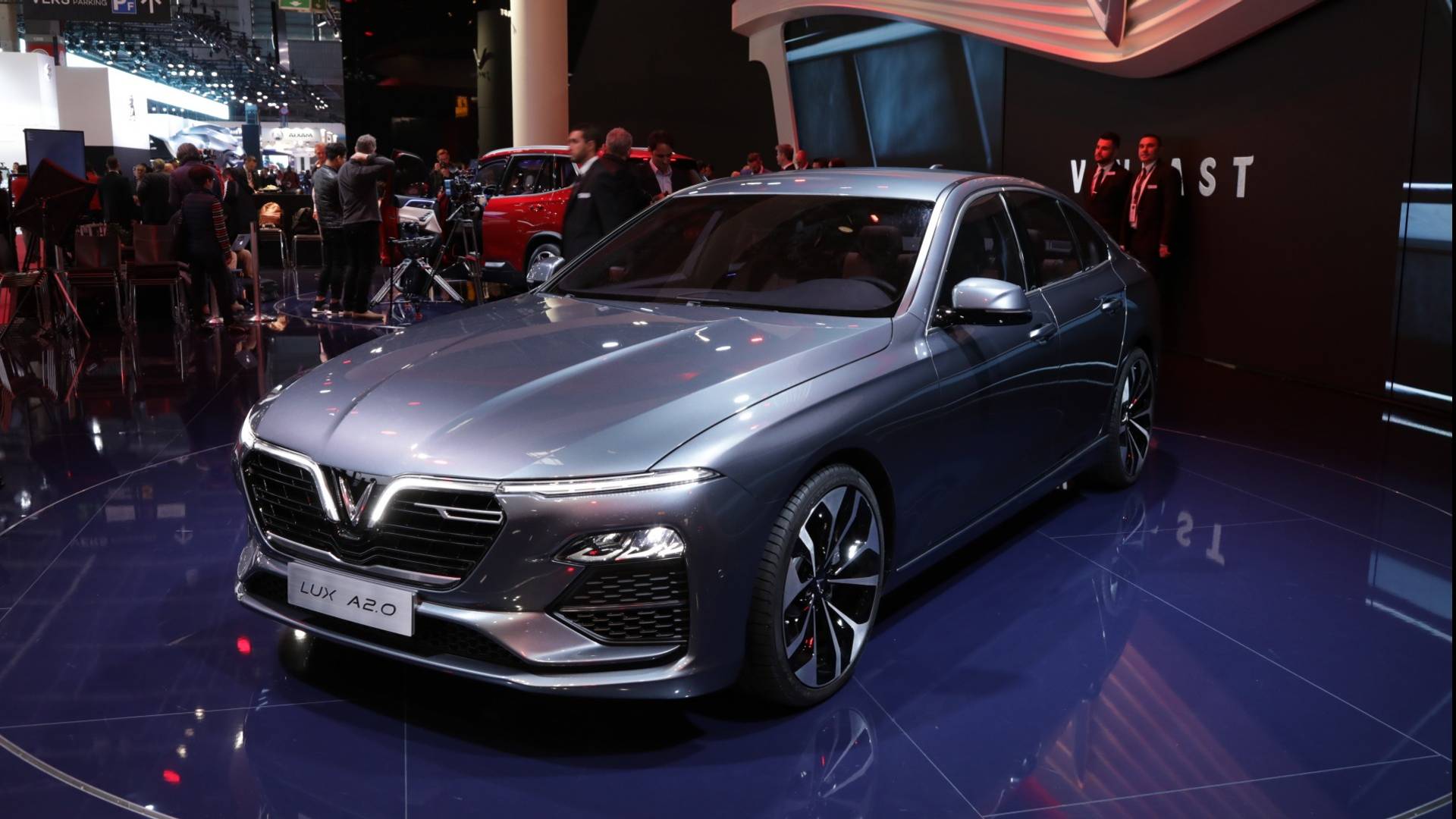
    Vietnam’s first full-fledged carmaker has started trial runs in its Hai Phong factory, preparing to deliver preordered vehicles later this year. The Lux SA 2.0 SUV, which has a 228 horsepower engine and an 8-gear automatic transmission, started its first run Wednesday at VinFast’s factory in the northern port city of Hai Phong.

    Commercial versions of both the SUV and a sedan will be delivered in the second and third quarter this year to customers who have pre-ordered.

    VinFast, a unit of Vietnam’s largest private conglomerate Vingroup, claims to be the first auto manufacturer in Vietnam with a closed, synchronous and complete cycle of production.

    The first cars will be tested in several countries including Australia, Austria and South Korea to make them European standards. They will also be tested in Vietnam for endurance in various climates and conditions.

    VinFast showed off prototypes of its first two car models at the Paris Motor Show in France last October, just a year after the company’s incorporation.

    A limited edition of its Lux SA 2.0, called the Lux V8 with a 455 horsepower V8 engine, is being displayed at the Geneva Motor Show 2019 this week.

  • Porsche to hike Taycan output

    Porsche to hike Taycan output

    Porsche AG will increase production of the Taycan after more than 20,000 potential buyers registered to purchase the brand’s first electric car, matching the entire annual output initially earmarked for the four-door sedan.

    “The overwhelming interest in the Taycan shows us that our customers and fans are just as excited about the first Porsche electric athlete as we are,” Porsche sales chief Detlev von Platen said Friday in a statement. “We’ve therefore increased our production capacities.”

    The Taycan will be unveiled in September with a price range between the 74,800-euro ($83,866) Cayenne SUV and the 97,800-euro Panamera coupe to compete with Tesla Inc.’s Model S. The car is part of a wave of new models from Jaguar, Mercedes-Benz and Audi that’ll challenge Tesla’s electric-car leadership.

    Porsche is parent Volkswagen AG’s most profitable brand and its success is vital for the group to pull off the industry’s most aggressive push into electric vehicles. VW has allocated some 40 billion euros for electric and connected cars and targets 50 battery-powered models by 2025. To help drive uptake, Porsche is installing fast chargers at its dealerships in the U.S. and Europe that’ll get the Taycan’s battery up to 100 kilometers (62 miles) in four minutes. The car’s overall range on a single charge stands at 500 kilometers.

    The model’s planned production of 20,000 vehicles per year is based on a two-shift system at Porsche’s main site in Stuttgart, Germany, and can be expanded if needed, production chief Albrecht Reimold told reporters last year. Porsche also confirmed recently it will offer a fully-electric version of its best-selling Macan SUV.

    Interested Taycan buyers are required to make a down payment of 2,500 euros in Europe to register.

  • Tesla’s Supercharger network is the Footprint for the hydrogen era

    Tesla’s Supercharger network is the Footprint for the hydrogen era

    Elon Musk has taken his share of hits in the media for his Twitter rants and behavior that is just plain weird for a CEO. We don’t know how Tesla Inc. is going to fare now that competition from Jaguar, Audi and Mercedes is here or soon will be. If Tesla doesn’t make it because of mismanagement and misbehavior by Musk, and if the company goes down in flames like DeLorean, Bricklin and Tucker, there is at least one Musk legacy that is undeniably brilliant: Tesla’s nationwide network of Supercharger charging stations. Tesla’s Supercharger network, I think, is the template for automakers gearing up to launch fuel cell vehicles. Toyota, Honda, Hyundai and General Motors are on the cutting edge of fuel cell technology, with some vehicles already available for lease and new, more efficient fuel cell stacks — the component that creates electricity from gaseous hydrogen — on the way.

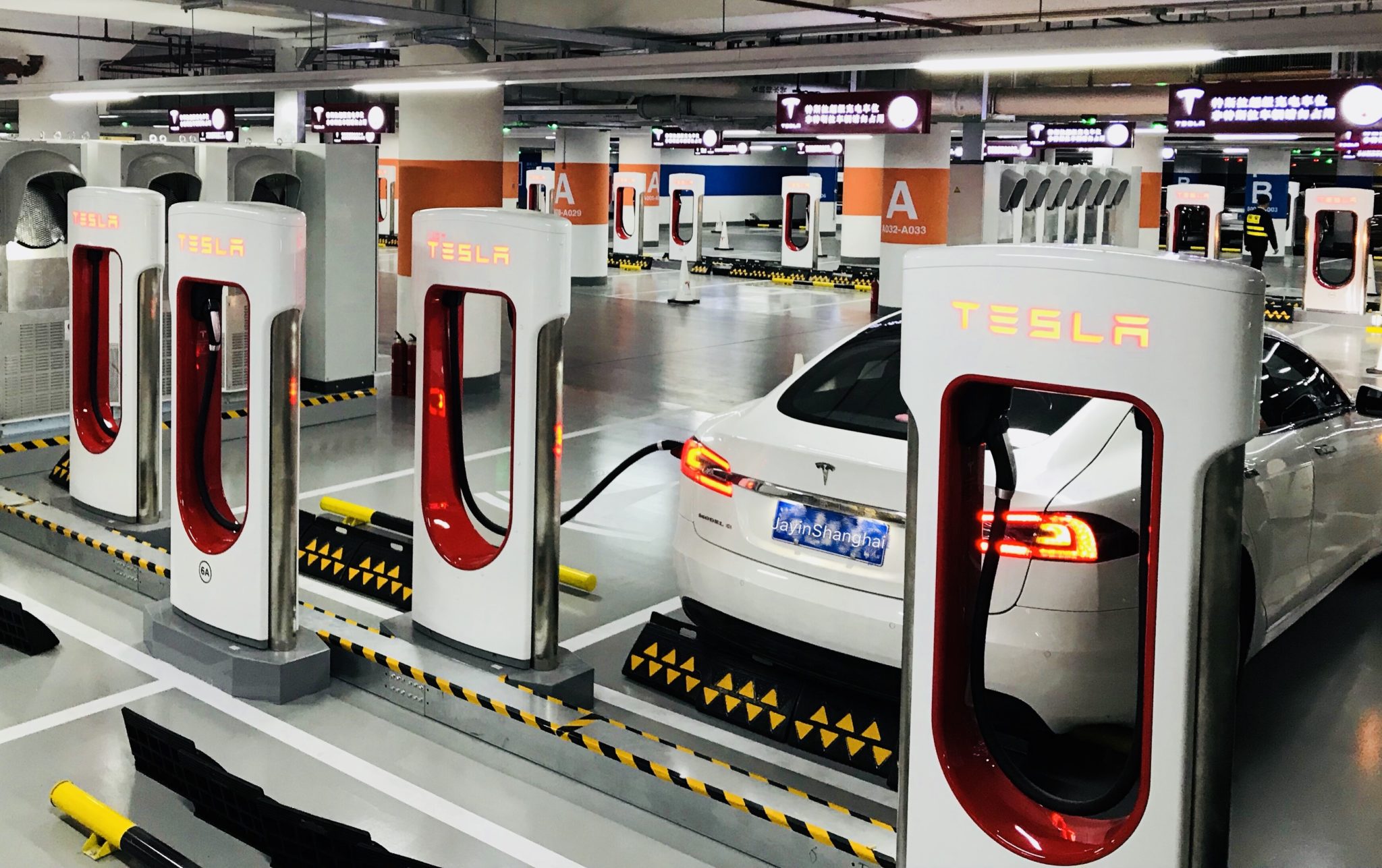
    Musk answered the chicken-and-egg question with electric vehicles by investing more than $1 billion in a nationwide charging network specifically for Tesla cars. He short-circuited drivers’ biggest fear of owning an EV: range anxiety.

    That same strategy will be necessary for fuel cell vehicles to have wide appeal. Fuel cells, you’ll recall, are EVs. But instead of storing electricity in a battery pack that weighs hundreds of pounds, electricity is produced from gaseous hydrogen stored on the vehicle under high pressure. A hydrogen fuel cell vehicle can be refilled in minutes, just like a gasoline- or diesel-powered vehicle — and the short time to refill the hydrogen tank is one of the key advantages fuel cell vehicles have over battery-powered EVs.

    California leads the nation in the number of fuel cell filling stations, many built by FirstElement Fuel Inc., a company headed by auto industry veteran Joel Ewanick. He agrees a Tesla-like nationwide network of hydrogen fueling stations could help reduce the time it will take for fuel cell vehicles to become economically viable to manufacture.

    “All the car companies are trying to find a path to [production of] 30,000 cars. That’s where you start to see real efficiencies in your production, parts and suppliers. Anything below that, it’s a challenge to make these cars at a reasonable price. We are getting to that tipping point in 2020 and 2021,” Ewanick said.

    Beijing city authority has allotted 11 more roads in Fangshan district for the testing of autonomous vehicles to push the speedy development of self-driving technology.

    But he also recognizes that automakers want to build cars, not the fueling infrastructure. And yet they may have no choice if they want to sell hydrogen fuel cell vehicles nationwide. Toyota and Honda have chipped in more than $20 million so far, helping FirstElement build 19 of 31 planned hydrogen fuel stations in California.

    Ewanick says costs are coming down — from between $2.2 million and $2.5 million per station — while the number of vehicles each station can handle is increasing. He sees the company eventually expanding beyond California, perhaps by building a hydrogen fuel filling station “bridge” across the country.

    “We don’t need the network that we have with gasoline stations,” he said. “We just need to make sure they (hydrogen filling stations) are in convenient locations to serve our customers.”

    The federal government under the Trump administration likely isn’t going to do much to help create a nationwide hydrogen fuel network, so it may be a project for automakers and refiners such as Shell — which is installing hydrogen pumps at some California stations — and GM.

    GM should take the lead here by creating an entity that brings together suppliers of hydrogen fueling equipment, companies such as FirstElement that build the stations, refiners that produce hydrogen and other car companies to fund and quickly roll out hydrogen stations in every major market.

    GM and Honda have reduced the size and cost of the fuel cell stack, and the electronics are proven. Hydrogen fuel cars will be part of the mix. The question now is what will automakers be willing to do to seed the technology and overcome customers’ doubt and fear over range. For that answer, all they need to do is look at Tesla’s Supercharger network. That’s how you introduce alternative fuel vehicles in a market.

    “As I have heard my entire career, automakers make cars and they don’t do infrastructure,” said Ewanick. “They don’t want to be in the business of building gas stations and roads and bridges. Their job is make cars and do a really good job of that.”

    If that doesn’t change, fuel cells might just remain in the tiniest of niches.

  • Hyundai group under pressure from U.S. activist hedge fund with $1 billion stake

    Hyundai group under pressure from U.S. activist hedge fund with $1 billion stake

    A unit of U.S. activist hedge fund Elliott Management revealed on Wednesday that it holds more than $1 billion worth of shares in key affiliates of South Korea’s Hyundai Motor Group and called for more rapid reform of the auto giant’s governance.

    It is Elliott’s latest challenge to South Korea’s family-run conglomerates after it forced Samsung Electronics to increase shareholder returns in 2017, and comes amid a government campaign to boost investors’ power in a country where shareholder activism is rare.

    Elliott Advisors called for a “more detailed roadmap” as to how Hyundai Motor Group will “improve corporate governance, optimize balance sheets, and enhance capital returns” at Hyundai Mobis, Hyundai Motor and Kia Motors.

    The fund did not provide a breakdown of its stakes in Hyundai’s three affiliates but its over $1 billion worth of shares account for around 1.5 percent of the total market value of the three firms.

    Hyundai Mobis shares jumped as much as 6.1 percent to their highest since Jan. 25 in the wake of the announcement. Hyundai Motor rose 4.9 percent, its highest in three weeks, while Kia Motors gained 3.8 percent in morning trade in Seoul. Hyundai Glovis shares rose as much as 4.8 percent.

    “I see Elliott’s call as positive, as it should enhance shareholder value,” said Kim Sung-soo, a fund manager at LS Asset Management.

    “Elliott has declared war against Hyundai but it has not made detailed demands, so further discussions need to be seen.”

    Auto-to-steel giant Hyundai Motor Group announced a plan last week to streamline its complex ownership structure as it responds to calls from the government and investors for greater transparency and better governance at family-controlled conglomerates.

    But worries that the plan would benefit the parent group’s controlling family ahead of investors have hit the share prices of group companies such as parts supplier Hyundai Mobis.

    While Elliott said it was pleased that Hyundai Motor Group had taken a first step toward reform, it added in a statement that “more needs to be done to benefit the companies and stakeholders”.

    “Elliott looks forward to engaging with management and other stakeholders directly on these issues, and to offering recommendations regarding the proposed plan,” the hedge fund said.

    Hyundai Motor Group responded that it was “confident” its restructuring plan would enhance shareholder value, and promised to communicate with investors at home and abroad.

    Last year, South Korea’s new antitrust chief told Reuters he had been in talks with Hyundai Motor Group about unwinding its circular shareholdings, which critics say give too much power to the controlling family at the expense of shareholders.

    Under Hyundai’s plan, Hyundai Mobis is to spin off its domestic module and after-service parts businesses and merge them with logistics affiliate Hyundai Glovis, which is personally backed by Hyundai’s controlling Chung family.

    But some investors complained that Mobis could be giving away the most profitable part of its business too cheaply.

    The plan is yet to be approved by shareholders.

    After the merger, Group Chairman Chung Mong-koo and his son Chung Eui-sun, who is vice-chairman, will buy stakes in Mobis held by other affiliates Kia Motors, Glovis and Hyundai Steel .

    The group has not announced when the family members would buy the Mobis stakes.

    Elliott’s intervention is another headache for Hyundai, which is already struggling with slowing sales in China and the United States and Seoul’s diplomatic row with Beijing last year.

  • Retail News Asia Honoured with the “Best Global Retail News Platform 2018” Award

    Retail News Asia Honoured with the “Best Global Retail News Platform 2018” Award

    Retail News announced today that it has been named the Best Global Retail News Platform 2018 in the AI Business Excellence Awards. Hailed as the “Internet’s highest honor” by KPMG, EY, PwC and Deloitte, The Business Excellence Awards, is the leading international awards organization honoring excellence on the Internet. The judging panel is compromised of the three directors here at AI Global, they have a combined total of 40 years of work within this industry and know it very well.

    The reason why AI uses an in-house judging panel is because they fully understand the process and also know what our standards are in terms of award winners.  They have been judging the award programs for the past 8 years. AI’s judging panel works very closely with a research team which is comprised of 4 researchers who are in charge of gathering information for each case study and presenting each case file to the judges. This is the 6th year of the Business Excellence Awards, hosted by Acquisition International, and you can view all the details of last year’s awards on their homepage.

    Launched over 8 years ago, AI has rapidly risen to and now has a circulation of 108,000 people in over 170 countries and regularly attracts editorial submissions from some of the biggest players on the global corporate landscape.

    AI is a monthly magazine that seeks to inform, entertain, influence, and shape the global corporate conversation through a combination of high quality editorial, rigorous research and an experienced and dedicated worldwide network of advisors, experts and contributors.

    Alongside the monthly issue AI hosts annual award programs which aim to highlight and provide recognition to the companies and individuals who have worked hard to get where they are today. The AI awards are only given 100% based on merit and not based on the judgment of a number of votes received.

    RetailNews is committed to providing both local and global retailers with the latest breaking retail news throughout the Asian market. This on a daily base. We have resources for everyone from the independently owned business owners, online-only retailers, and major chains expanding their reach throughout the Asian market, says Sven – founder of Retail News.

    We Are Stronger Together

    You can quickly and easily search for the latest breaking retail news by country, or come here to keep an eye on the latest local, global and seasonal trends.

    On Retail News you can network, engage, and share invaluable information with other retailers. Our retailers come from a wide range of industries and expertise, meaning that whatever the question may be—we have you covered!

    We are extremely honored with this recognition and my team has been working extremely hard the last 3 years to bring us to a level where we are operating now, Sven added. With nearly 8 million visitors a month, 23 daily retail updates, Retail News is believed to be the Retail industry leader.

  • Retail News Asia makes it to Final with a Selection in the Top Asia Pacific Best News Websites

    Retail News Asia makes it to Final with a Selection in the Top Asia Pacific Best News Websites

    Retail News Asia is selected as one of the winners of the Top Asia-Pacific News websites list! This is the most comprehensive list of best Asia-Pacific News websites on the internet and we’re honoured to be there! Retail News Asia is the leading Retail News portal in Asia Pacific since many years and we show deep respect and bow for being selected as one of the most influencing medias in Asia Pacific.

    RetailNews.asia has always been committed to providing both local and global retailers with the latest breaking retail news throughout the Asian market on a daily base since many years. With over 20 post per day with relevant Retail News, we can proudly say that we’re the leading media in the Retail industry.

    We have resources for everyone from the independently owned business owners, online-only retailers, and major chains expanding their reach throughout the Asian market.

    We Are Stronger Together

    You can quickly and easily search for the latest breaking retail news by country, or come here to keep an eye on the latest local, global and seasonal trends on our portal, watch video’s and/or follow uw with both local and international Retail Events.

    You can network, engage, and share invaluable information with other retailers. Our retailers come from a wide range of industries and expertise, meaning that whatever the question may be—we have you covered!

    We keep you apprised of the upcoming retail events, and even provide coverage and updates during many retail events.

    Thank You

    Retail News Asia wishes to congratulate all the team members, editorial and advertising departments for all hard work, overtime and sweat. We did it together says Sven, Founder of Retail News Asia

  • Net giants ‘must pay for news’ from which they make billions

    Net giants ‘must pay for news’ from which they make billions

    Nine European press agencies, including AFP, called Wednesday on internet giants to be forced to pay copyright for using news content on which they make vast profits.

    The call comes as the EU is debating a directive to make Facebook, Google, Twitter and other major players pay for the millions of news articles they use or link to.

    “Facebook has become the biggest media in the world,” the agencies said in a plea published in the French daily Le Monde.

    “Yet neither Facebook nor Google have a newsroom… They do not have journalists in Syria risking their lives, nor a bureau in Zimbabwe investigating Mugabe’s departure, nor editors to check and verify information sent in by reporters on the ground.”

    “Access to free information is supposedly one of the great victories of the internet. But it is a myth,” the agencies argued.

    “At the end of the chain, informing the public costs a lot of money.”

    News, the declaration added, is the second reason after catching up on family and friends for people to log onto Facebook, which tripled its profits to $10 billion (8.5 billion) last year.

    Yet it is the giants of the net who are reaping vast profits “from other people’s work” by soaking up between 60 and 70 percent of advertising revenue, with Google’s jumping by a fifth in a year.

    Meanwhile, ad revenue for news media fell nine percent in France alone last year, “a disaster for the industry”.

    ‘Pillar of democracy at risk’ 

    “Years have passed (without anything being done) and free and reliable newsgathering is now threatened because the media will simply no longer be able to pay for it,” the news agencies added.

    “Diverse and reliable news sources, a pillar of democracy, risk being undermined.”

    Attempts by news outlets in France, Germany and Spain to force internet giants to pay have only resulted in them coughing up a “few symbolic crumbs”, they added.

    The press agencies insisted that some of the vast imbalance could be rectified if the EU gives them and other media “related rights” copyright to their work.

    However, some European Parliament members were worried that the proposed directive would threaten free access to news for internet users.

    But that would not be the case, the agencies insisted.

    “Internet users would not be touched… simply those who now pocket a disproportionate part of advertising revenue would have to share a significant part of it with those who actually produce the information” on which the money is made.

    The appeal was signed by AFP; the German agency DPA; Britain’s Press Association; the Spanish agency EFE; Italy’s Ansa; the Swedish agency TT; Belga of Belgium, Austria’s APA, and the Dutch agency ANP.

  • Tesla cranks up big battery in Australia

    Tesla cranks up big battery in Australia

    Tesla has completed construction of the world’s largest lithium ion battery in Australia, putting it on track to meet a 100-day deadline for switching the battery packs on, the South Australian government said on Thursday.

    Tesla won a bid in July to build the 129 megawatt hour battery for South Australia, the country’s most wind power-dependent state, with a vow from Chief Executive Elon Musk to install it within 100 days of signing a grid connection agreement or give it to the state for free.

    When the grid connection deal was signed on Sept 29, Tesla was already half way through installing the battery packs.

    The Tesla Powerpacks have now been fully installed at a wind farm run by France’s Neoen, and testing is set to begin to provide grid security services in South Australia.

    “While others are just talking, we are delivering our energy plan, making South Australia more self-sufficient, and providing back up power and more affordable energy for South Australians this summer,” state Premier Jay Weatherill said in a statement.

    The state has yet to say how much it would pay for the battery, which is part of a AUS$510 million (US$390 million) plan that includes diesel-fired generators to help keep the lights on following a string of blackouts over the past 18 months.

    Australia’s energy market operator has warned that power supply will be tight this summer, particularly in South Australia and neighboring Victoria, where one of the market’s biggest coal-fired power plants was shut in March.
  • Facebook joins effort to boost newspaper subscriptions

    Facebook joins effort to boost newspaper subscriptions

    Facebook aimed at fostering ‘a healthy news ecosystem’ and curbing the spread of fake news. Facebook announced Thursday initiatives to help struggling news organizations gain paid subscribers, following a similar move unveiled earlier this month by Google.

    The social network giant said it will test “premium news models” for organizations that deliver their content on Facebook, to enable the publishers to have more control over pricing, subscriber relationships and revenue.

    “Earlier this year, many publishers identified subscriptions as a top priority, so we worked with a diverse group of partners to design, refine, and develop a test suited for a variety of premium news model,” said a blog post by Facebook executives Campbell Brown, Alex Hardiman and Sameera Salari.

    Facebook said it would soon roll out the test to support new subscription models in Instant Articles in partnership with a news organizations in the U.S. and Europe, starting with the Android application.

    The leading social network said it would allow for “paywalls” in its Instant Articles feature, aiming to encourage users to sign up and pay news organizations whose content is linked through Facebook.

    If a person subscribes after prompting, the publisher will handle the payment directly and keep 100 percent of the revenue, Facebook said.

    Facebook said it would allow for various paywalls including a “metered” system with a fixed number of articles as well as a “freemium model” where certain content is locked at the discretion of the publisher.

    Included in the test will be Germany’s Bild and Spiegel, France’s Le Parisien, Italy’s La Republicca, the Telegraph and the Economist of Britain and the U.S.-based Boston Globe, Washington Post, and news groups Hearst and Tronc, which includes the Baltimore Sun, Los Angeles Times, and San Diego Union-Tribune.

    Facebook said the changes are part of its Journalism Project created this year aimed at fostering “a healthy news ecosystem” and curbing the spread of fake news.

    The moves by Facebook and Google come with many news organizations blaming the internet giants for encouraging free content, while getting most of the ad revenues from news articles appearing on their platforms.

    Earlier this month, Google announced similar actions, ending a “first click free” policy that required news organizations to provide at least three free articles to be indexed in a Google search.

    This will be replaced by a “flexible sampling” model that will allow publishers to require a subscription at any time they choose, according to Google.

  • Facebook to reject ads from pages touting ‘fake news’

    Facebook to reject ads from pages touting ‘fake news’

    The move is the latest shot fired by Facebook in its war against ‘fake news’ used to deceive instead of enlighten.

    Facebook said that pages that make a habit of linking to bogus news stories will no longer be able to advertise at the world’s leading online social network.

    The move is the latest shot fired by Facebook in its war against ‘fake news’ used to deceive instead of enlighten.

    “If Pages repeatedly share stories marked as false, these repeat offenders will no longer be allowed to advertise on Facebook,” product managers Tessa Lyons and Satwik Shukla said in a blog post.

    “This update will help to reduce the distribution of false news which will keep Pages that spread false news from making money.”

    The social network already didn’t allow ads that link stories determined to be false by third-party fact-checkers.

    “False news is harmful to our community,” Lyons and Shukla said.

    “It makes the world less informed and erodes trust.”

    Fake news became a serious issue in last year’s US election campaign, when clearly fraudulent stories circulated on social media, potentially swaying some voters.

    Concerns have been raised since then about hoaxes and misinformation affecting elections in Europe this year, with investigations showing how “click farms” generate revenue from online advertising using made-up news stories.

    “We’ve found instances of Pages using Facebook ads to build their audiences in order to distribute false news more broadly,” Lyons and Shukla said.

    Facebook and Google have been working to curtail, or at least flag, stories crafted to deceive instead of enlighten.

    Google earlier this year added a fact-checking tag to search results globally, its latest initiative to help curb the spread of misinformation and “fake news.”

    The new tags, to be used in all languages for users worldwide, use third-party fact-checkers to indicate whether news items are true, false or somewhere in-between.

    The feature debuted about the same time Facebook added a new tool in news feeds to help users determine whether shared stories are real or bogus.

  • Mercedes-Benz ditches E220d in favour of E350e in Thailand

    Mercedes-Benz ditches E220d in favour of E350e in Thailand

    Sales of the diesel-powered executive saloon cease as the German automaker wants plug-in hybrids to account for 30% of total annual sales.

    Mercedes-Benz (Thailand) has launched its fourth plug-in hybrid vehicle: the E350e which follows the C350e, S500e and GLE500e.

    Like the C350e, the E350e uses a 2.0-litre petrol-turbo engine in conjunction with an electric motor, whose power from the lithium-ion battery can also be revitalised from the wall socket. The S500e and GLE500e employ a bigger 3.0-litre V6 petrol motor.

    Combined outputs in the E350e are rated at 286hp and 550Nm, while the maximum all-electric driving range is claimed at 33km. As the E350e spews out 44g/km of CO2 on the combined cycle, it is eligible for the new 5% excise tax imposed on locally made plug-in hybrids producing no more than 50g/km.

    There are three trims for the E350e: Avantgarde 3.49 million baht, Exclusive 3.79 million baht and AMG Dynamic 4.09 million baht.

    The similarly priced E220d has been dropped from the Thai E-class model lineup as Mercedes-Benz wants to promote plug-in hybrids in the country.

    Mercedes-Benz hopes that plug-in hybrids will account for 30% of total annual sales which is why diesel versions and other pure petrol derivatives aren’t available anymore. The same has happened in the C, S and GLE model ranges.

    BMW, meanwhile, is gearing up to launch the 530e in Thailand at the end of this year to rival the E350e. Volvo is also said to be preparing the introduction of the S90 T8.

    Unlike Mercedes-Benz, BMW is still selling diesel versions of the X5, 3 and 7-series as it wants to offer Thai customers with two distinct types of propulsion. BMW hopes that plug-in hybrids will account for 15% of annual sales this year.

  • Tianjin FAW Xiali Auto expects Q1 net loss to widen

    Tianjin FAW Xiali Auto expects Q1 net loss to widen

    Tianjin Faw Xiali Automobile Says it expects Q1 net loss to widen to 240-290 million yuan from 166.9 million yuan ($24.24 million) year ago.

  • VW trucks division targets strong profitability gain in 2017

    VW trucks division targets strong profitability gain in 2017

    Volkswagen’s truck division aims to significantly increase its profitability this year as deepening cooperation between the MAN and Scania brands and improving overseas markets spur business, it said on Monday.

    Volkswagen, which launched a new truck & bus division in 2015 to challenge global rivals Daimler and Volvo, is targeting a long-term operating margin target of 9 percent, up from 6.1 percent last year.

    “We are not striving to become a volume champion, we want to be the most profitable ones,” chief executive Andreas Renschler told journalists, referring to improving markets in Western Europe, Russia and China.

    But finance chief Matthias Gruendler made clear a significant improvement in financial results requires a rebound in the key Brazilian market where the VW division commands a 37-percent share of the country’s commercial-vehicles market.

    Overall truck and bus sales in Brazil have been falling for four years but demand is expected to rebound slightly in the second half of the year amid the improving economy with a chance for stronger growth in 2018, Gruendler said.

    “Brazil has always been an important market and is characterized by a high degree of cyclicality,” chief executive Andreas Renschler said.

    Under Renschler, who ran Daimler Trucks before joining VW in February 2015, Europe’s largest automotive group has also been seeking to expand its footprint in international truck markets.

    Last year, VW announced a stake purchase in U.S. truck maker Navistar International which may earn the German group access to the vast North American truck market, and is also in talks about finding a new partner in China.

    “We are currently in discussions about different opportunities,” Renschler said. “All options are open” including a possible increase in MAN’s stake in China’s Sinotruk and finding a new partner.

  • Car industry players diverge on timescale for self-driving cars

    Car industry players diverge on timescale for self-driving cars

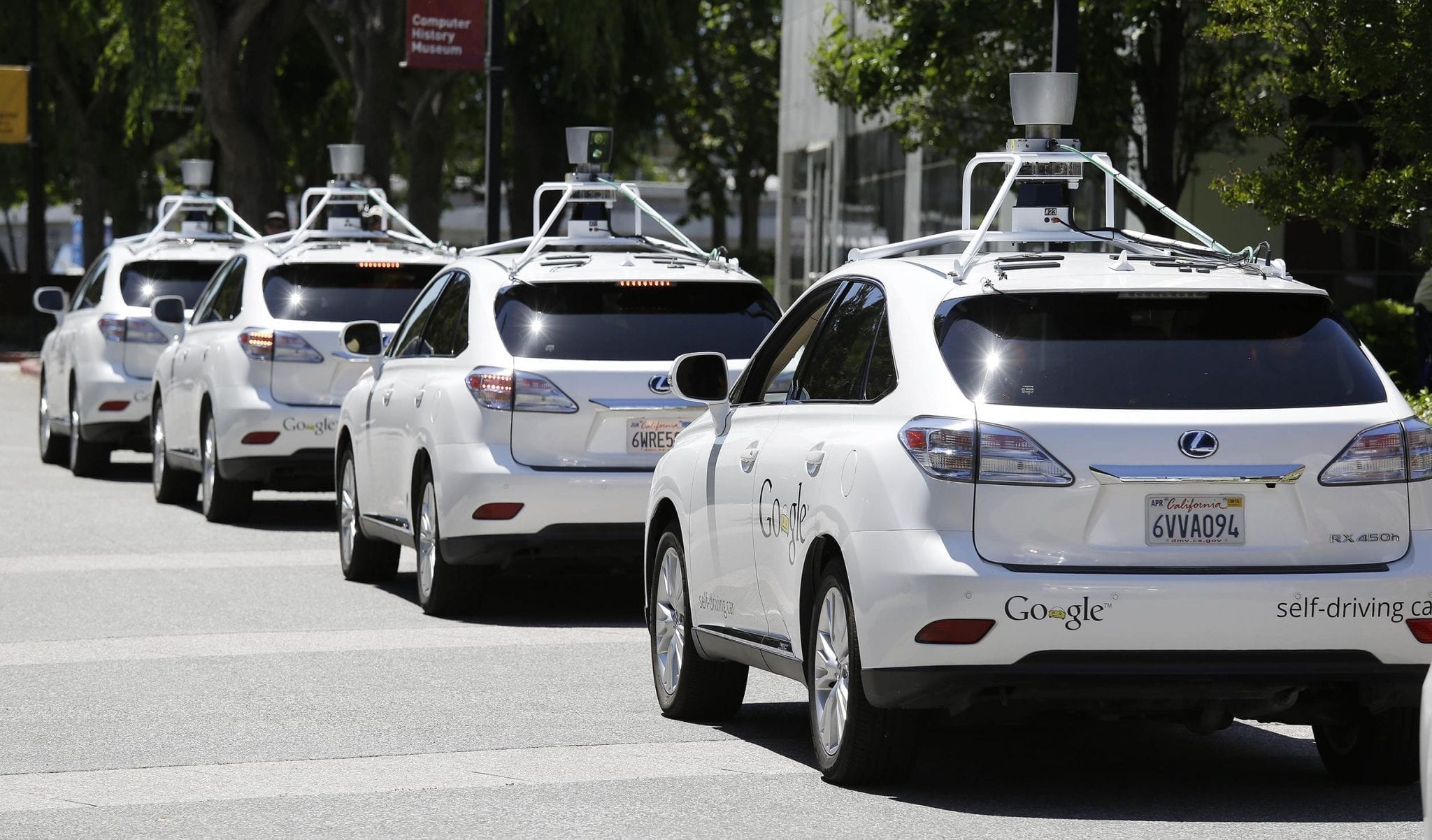
    Carmakers and suppliers gave widely differing timelines for the introduction of self-driving vehicles on Thursday, showing the uncertainties surrounding the technology as well as a split between cautious established players and bullish new entrants.

    Chipmaker Nvidia, facing direct competition with the world’s top chipmaker after Intel’s (INTC.O) $15 billion deal to buy autonomous driving technology firm Mobileye this week, gave the most optimistic predictions.

    Chief Executive Jen-Hsun Huang forecast carmakers may speed up their plans in the light of technological advances and that fully self-driving cars could be on the road by 2025.

    “Because of deep learning, because of AI (artificial intelligence) computing, we’ve really supercharged our roadmap to autonomous vehicles,” he said in a keynote speech to the Bosch Connected World conference in Berlin.

    Germany’s Bosch, however, the world’s biggest automotive supplier, gave a timetable as much as six years longer to get to the final stage before fully autonomous vehicles, and declined even to forecast when a totally self-driving car might take to the streets.

    Progress is fraught by issues including who is liable when a self-driving car has an accident, bringing down the costs of sensor technology and guarding against hacking.

    “Of course, we still have to prove that an autonomous car does better in driving and has less accidents than a human being,” Bosch CEO Volkmar Denner told a news conference.

    Nvidia has applied its market-leading expertise in high-end computer graphics to the intense visualization and simulation needs of autonomous cars, and has been working on artificial intelligence – teaching computers to learn to write their own software code – for a decade.

    “No human could write enough code to capture the vast diversity and complexity that we do so easily, called driving,” said Huang.

    Together with Bosch executives, Huang presented a prototype AI on-board computer that is expected to go into production by the beginning of the next decade. The computer will use Nvidia’s processing power to interpret data gathered by Bosch sensors.

    DEGREES OF AUTONOMY

    On the way to fully self-driving cars, levels of autonomy have been defined, with most cars on the road today at level two and Tesla (TSLA.O) ready to switch from level four to five – full autonomy – as soon as it is permitted to do so.

    Level three means drivers can turn away in well-understood environments such as motorway driving but must be ready to take back control, while level four means the automated system can control the vehicle in most environments.

    Independent technology analyst Richard Windsor wrote in a note this week he doubted automakers would have autonomous vehicles leaving factories by a typical self-imposed deadline of 2020, mainly because the liability issue was unresolved.

    “This is good news for the automotive industry which is notoriously slow to adapt to and implement new technology as it will have more time to defend its position against the new entrants,” he wrote.

    But Nvidia’s Huang said he expected to have chips available for level three automated driving by the end of this year and in customers’ cars on the road by the end of 2018, with level four chips following the same pattern a year later.

    That is at least a year ahead of the plans of most carmakers that have an autonomous-driving strategy.

    The head of autonomous driving at BMW told the conference the luxury carmaker was on its way to deliver a level three autonomous car in 2021, but could produce level four or five autonomous cars in the same year.

    “We believe we have the chance to make level three, level four and level five doable,” he said. He told Reuters the decision on which levels to release would depend in part on the market, and that cars with more autonomy might first be produced in small batches for single fleets.

    Bosch said it saw level three vehicles being released with its on-board computer at the end of the decade, and level four driving not before 2025.

    Uber , Baidu and Google spin-off Waymo are testing self-driving taxis, while carmakers including Volvo, Audi and Ford expect to have level four cars on the road by 2020 or 2021.

    Nvidia’s Huang predicted those plans would speed up: “In the near future, you’re going to see these schedules pull in.”
  • BMW to invest RM126mil to build PHEVs in Thailand

    BMW to invest RM126mil to build PHEVs in Thailand

    It appears that the production of BMW plug-in hybrid models in the region is set to increase, with BMW Group Manufacturing Thailand set to invest 1 billion baht (RM126.2 million) in the production of petrol-electric vehicles at its plant in the Amata City Industrial Estate, Rayong.

    The investment has been earmarked for the improvement of line operations there, in order to facilitate the increase of plug-in hybrid production. Of that amount, 488 million baht (RM61.6 million) has already been spent to kick off production of these vehicles last November. The company has spent 3.7 billion baht (RM467 million) on the plant from 2000 to 2015.

    The rest of the investment will be used to double the production capacity in Thailand this year; the company currently builds 20,000 BMW and MINI cars and 10,000 BMW Motorrad motorcycles a year. President of BMW Group Thailand Stafan Teuchert said that the two-year investment is meant to prepare for future demand both domestically and abroad, with Munich seeking any opportunity to export vehicles from Thailand.

    The company has exported a limited amount of cars to Malaysia since 2006 and around 1,000 motorcycles to Malaysia and China since 2015, but began shipping large amounts of completely built up (CBU) X3s and X5s to China last year. It aims to export 10,000 units of those models in 2017 – mostly to China – and is also eyeing other markets in ASEAN for opportunities.

    Locally, BMW plans to bring in more advanced technology to build plug-in hybrid batteries in Rayong by mid-2018, further reducing retail prices in Thailand. The company currently imports the batteries from Europe.

    Existing Thai-built BMW plug-in hybrids include the 330e Luxury and X5 xDrive40e M Sport, priced at 2.59 million baht (RM326,900) and 4.69 million baht (RM592,000) respectively – around 490,000 baht (RM61,800) and 690,000 baht (RM87,100) lower than if they were imported. Teuchert said that the company plans to produce the 740e this year and the 530e in 2018.

    In order to support the increase in the number of plug-in hybrid vehicles in Thailand, BMW plans to increase the number of charging stations in Bangkok to 12 this year, up from the current five. It expects sales of electric cars, mainly PHEVs, to rise from 5% of total car sales to 15% in 2017.

    Meanwhile, BMW currently assembles the 330e Sport, 330e M Sport and X5 xDrive40e in Malaysia, priced at RM248,800, RM258,800 and RM388,800 respectively, on-the-road without insurance. It also expects to export the 3 Series, 5 Series and 7 Series from Malaysia to Vietnam and the Philippines from next year.