Retail News CRM

Tag: Samsonite

  • Samsonite’s First-half Revenue Declines Amid Reduced Travel Demand In Key Markets

    Samsonite’s First-half Revenue Declines Amid Reduced Travel Demand In Key Markets

    In the first half of the fiscal year 2025, the globally renowned luggage behemoth, Samsonite Group, saw a decrease in net sales and profits. This decline was attributed to a reduced demand for travel within their most significant markets.

    Financial Details

    The firm announced an adjusted net income of US$123.4 million, reflecting a drop of 29.1 per cent from the corresponding period the previous year. Net sales for the period ending 30th June saw a decrease of 6 per cent year-over-year, amounting to US$1.66 billion on a constant currency basis. The decrease was most prominent in the Asian and North American markets.

    The CEO of Samsonite Group, Kyle Gendreau, commented on the situation. He expressed the belief that while consumers continue to value travel and experiences, there was a noticeable drop in travel demand in the first half of 2025. Gendreau attributed this to factors such as macroeconomic uncertainties, changing trade policies, and weakening consumer sentiment. He also forecasted that these trends would likely persist in the second half of the year, negatively impacting the short-term demand. Despite this, he maintained confidence in the long-term demand for travel aiding the business.

    Performance by Region and Brand

    The company’s flagship brand, Samsonite, saw a sales drop of 4.7 per cent. Even though there was robust growth in Europe (+0.6 per cent) and Latin America (+0.2 per cent), there was a visible weakness in Asia (-8.8 per cent) and North America (-5.7 per cent).

    In contrast, the Group’s premium brand, Tumi, demonstrated resilience with a minor sales decrease of 2.5 per cent overall. This was propelled by strong double-digit growth in Latin America (+18.6 per cent) and Europe (+6.2 per cent). However, it also witnessed sales decline in North America (-4.7 per cent) and Asia (-2.5 per cent).

    The value-oriented American Tourister brand encountered a sharper sales decline of 12.7 per cent, especially in North America and Asia. This happened despite a moderate increase in Europe.

    Non-Travel Category and Market Expansion

    Even with the downward trend, the company noted a steady performance in non-travel categories such as backpacks and accessories, which experienced a modest growth of 0.1 per cent. These sectors made up 36.2 per cent of total sales, led by a significant 14.7 per cent increase in Gregory.

    In a bid for market expansion, Samsonite opened 21 new company-operated retail stores in the first half of the year, and continued to invest in product innovation.

    In conclusion, Samsonite Group continues to concentrate on brand elevation and geographical growth, while also considering a potential US listing, dependent on market conditions.

    Questions & Answers

    What are the main factors contributing to Samsonite Group’s sales decline?
    The primary factors are macroeconomic uncertainties, shifting trade policies, and weakening consumer sentiment.

    How has their premium brand, Tumi, performed in comparison to the flagship Samsonite brand?
    Tumi has shown resilience with a smaller overall sales decline, driven by strong growth in Latin America and Europe.

    How have non-travel categories performed?
    Non-travel categories such as backpacks and accessories have shown steady performance, with a slight growth of 0.1 per cent, accounting for 36.2 per cent of total sales.
  • Samsonite reopens at Hong Kong’s IFC mall with pop-up cafe concept

    Samsonite reopens at Hong Kong’s IFC mall with pop-up cafe concept

    Samsonite has reopened its flagship store at Hong Kong’s IFC Mall with the launch of a limited-time pop-up cafe.

    Running until April 20, the Samsonite Cafe offers visitors a curated space to explore the brand’s sustainability initiatives in a lifestyle-driven setting.

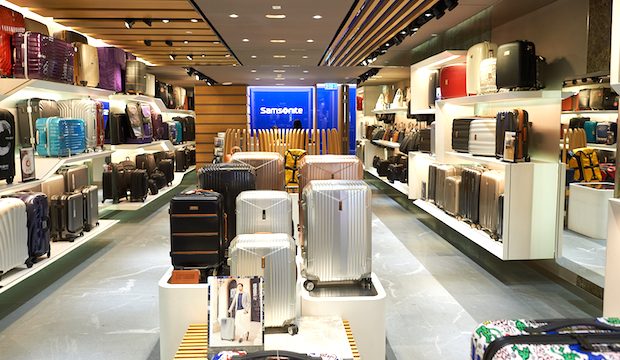
    The cafe aims to complement the newly renovated outlet, which showcases the brand’s first dedicated sustainability-led design.

    As part of the activation, customers can enjoy complimentary coffee by registering as a Samsonite member at the pop-up store, or with any purchase made at the Samsonite IFC Mall store upon registering. Lifetime, Black, Platinum, and Gold Club members are eligible for complimentary coffee without any purchase.

    Constructed using FSC-certified plywood and low-emission gypsum board, the store features display podiums and wall panels made from repurposed luggage shell edges and leftover backpack fabric.

    To further lower its carbon footprint, more than 75 per cent of the renovation waste was sorted for recycling and processed by certified partners.

    The store also incorporates motion-sensor LED lighting and enhanced air quality systems in line with global retail standards.

    “Our inaugural sustainability concept at IFC Mall underscores our commitment to eco-friendly practices,” the company said.

    “This approach exemplifies our belief that sustainability can redefine the retail experience and transform the lifestyle bag and luggage industry.”

  • Samsonite pivots more backpack

    Samsonite pivots more backpack

    Samsonite International SA said it’s speeding up its shift toward the emerging non-travel segment as the coronavirus pandemic devastates the global luggage business.

    With expectations that travel won’t return to normal levels for more than a year, the world’s top luggage maker is relying on backpacks, business cases and women’s bags to cushion the blow. The segment now makes up close to half of the company’s sales, up from 40% a year ago.

    “What has Covid done? It has accelerated our portion of ‘Beyond Travel,’” Paul Melkebeke, the company’s newly appointed president for APAC & Middle East, said in an interview Monday. “These were old trends that were already underlying, but with Covid it just has gone a lot faster.”

    Samsonite, based in Mansfield, Massachusetts, is facing its worst year since listing on the Hong Kong exchange in 2011, as the pandemic has hit retailers and the airline industry particularly hard. The owner of brands ranging from Tumi to American Tourister saw revenue drop 58% for the first nine months of the year. Its shares have tumbled 28% in 2020.

    Samsonite has taken aggressive steps to streamline the organization. It has closed more than 10% of its company-owned stores this year through September, according to its quarterly statement.

    “We have been obliged to say goodbye to some of our people,” Melkebeke said. “But everything was there to focus on our management and make sure that we are strong enough to bring it to the other side.”

    While he remains “bullish” on the future of travel, Melkebeke said he’s “100% certain” the industry can’t return to normal levels by the end of next year. That will likely need to wait for the widespread deployment of vaccines to bring Covid-19 under control.

    In the quarter ended September, Samsonite’s core travel brands were down 67% compared with the previous year, while its non-travel brands such as Gregory, Speck, and eBags fell a more moderate 27%.

    With the social distancing restrictions in place, people are turning to more outdoor activities, benefiting Samsonite’s backpacking brands such as Gregory and High Sierra, Melkebeke said. Samsonite is also developing antiviral technologies for its products to address consumers’ concerns about the virus.

    “Don’t forget when you travel with the plane, there’s a moment when you give your luggage away, you collect it on the other side, and you have no idea what has happened with that,” said Melkebeke. “The hygiene factor might be something that will be there forever.”

  • Samsonite sales down with 80 percent as travel all but halts

    Samsonite sales down with 80 percent as travel all but halts

    With global travel now all but shut down, luggage-retailing goliath Samsonite is facing unprecedented challenges, with net global sales plunging by 80 percent last month.

    But its CEO Kyle Gendreau remains resolutely positive about its future fortunes when the impact of Covid-19 lessens.

    The group recorded year-on-year net sales decreases of 8.2 percent, 14.9 percent, and 55 percent respectively in January, February, and March as all around the world airlines grounded fleets and countries closed their borders to contain the spread of the coronavirus. Then came April’s 80-per-cent fall.

    The company has secured a US$600 million term loan this month, which it expects when added to its existing cash reserves of $1.2 billion, will help it ride out the “near-complete halt in travel and tourism worldwide,” said Gendreau.

    “This substantial liquidity position, along with the aggressive cost-reduction initiatives as well as other actions to preserve cash that we have implemented and will continue to pursue, will provide us with sufficient capacity to navigate the current headwinds from the Covid-19 pandemic as well as a prolonged downturn,” said Gendreau.

    “While our company-operated retail stores in certain markets in Asia and throughout Europe, North America and Latin America remain temporarily closed, daily activities have begun to slowly return to normal in some markets, most notably China, and we are hopeful that other markets will follow in the coming months.”

    Samsonite sales globally decreased by US$230.8 million, or 26.1 percent year-on-year during the first three months of this calendar year, to US$601.2 million. Sales across Asia fell by 32.7 percent. But the impact worsened substantially in April, the first month of the group’s final reporting quarter.

    While distribution costs fell along with falling sales, the company has been forced to lay off staff and is also seeking rent reductions from landlords.

    “We have aggressively implemented cost-reduction initiatives across all regions and all levels of our business, including headcount reductions, salary reductions and furloughs, temporary and permanent store closures, elimination of discretionary spending, and significant reductions in capital expenditures and marketing spend,” he said.

    “Historically, travel and tourism have recovered quickly from past downturns, and with people around the world placing a high value on life experiences, we are optimistic about the long-term growth prospects for travel and tourism and by extension the bags and luggage industry.

    “We are confident Samsonite will emerge from the current challenges in a strong position to capitalize on future growth opportunities, as we continue our journey to become the most sustainable lifestyle bag and travel luggage company in the world.”

  • Asian sales hold up for Samsonite International

    Asian sales hold up for Samsonite International

    A soft North American market saw global sales for luggage maker and retailer Samsonite International slip 1.8 percent in the December year – but the company is expecting a tough first half with the advent of coronavirus.

    CEO Kyle Gendreau said the global health emergency has caused travel disruptions worldwide.

    “While the extent and duration of the COVID-19 outbreak remain uncertain, we are reassured by actions taken by governments and health authorities around the world. Nonetheless, the outbreak will have a negative impact on our performance in the first half of 2020.”

    But he said the company is well placed to withstand the upheaval, with more than US$1.2 billion in liquidity and “a strong record of managing through past travel disruptions”.

    Last year’s sales reached US$3.64 billion, with all areas outside North America – where sales fell 8 percent – achieving growth. Sales in Asia rose 1.5 percent, in Europe by 3.2 percent and in Latin America by 2.8 percent.

    “These encouraging results … were achieved notwithstanding headwinds in four key markets, including the US, which was affected by increased tariffs on products sourced from China, and lower foreign tourist traffic, the Hong Kong domestic market, South Korea and Chile.”

    In Asia, the group’s business was impacted by a planned reduction in B2B sales during the first half of the year in China, challenging market conditions in the Hong Kong domestic market and weak consumer sentiment in South Korea. Excluding these impacts, the Group’s net sales for the Asia region increased by 6.8 percent, year-on-year.

    Samsonite International’s adjusted pre-tax earnings fell by 16.9 percent, or $100.1 million, to $492.2 million, primarily due to the effect of lower net sales and a decrease in gross profit margin, which was in part due to the incremental tariffs imposed by the US on products sourced from China.

    Gendreau says the company made steady progress in repositioning Samsonite for sustained growth and improved profitability last year while navigating sales and margin pressures in some of its key markets.

    “We are pleased with the improvements we achieved in controlling costs, managing working capital, generating cash flow and deleveraging our balance sheet. These improvements, along with our dedicated teams, strong brands, global scale and diversified sourcing base and supply chain strengthen Samsonite’s resilience in the face of challenging headwinds and provide us with the capacity to continue investing in the business to deliver sustainable growth and long-term shareholder value,” he said.

  • Samsonite marks 110th anniversary with sustainability pledge

    Samsonite marks 110th anniversary with sustainability pledge

    Luggage retailer Samsonite is marking its 110th anniversary with a sustainability pledge.

    The new “Our Responsible Journey” strategy “focuses on Samsonite’s legacy of designing products that last; its commitment to reducing its impact on the planet; and how it engages its people, partners and communities in this progress,” the company said in a statement.

    The strategy – which includes commitments by Samsonite brands Tumi, American Tourister and Gregory – aims to increase the use of sustainable materials and packaging; continue to develop solutions towards product durability, improve access to repairs and end-of-life solutions; and use 100-per-cent renewable energy while becoming carbon neutral within five years.

    “While we’ve been focused on sustainability for several years, ‘Our Responsible Journey’ is how we will accelerate the implementation of sustainable business practices globally to meet our goals,” said Samsonite International CEO Kyle Gendreau. “This strategy will touch every aspect of our business to help us further our long-standing leadership in the industry.”

    The brand has launched more than 50 collections including sustainable materials to reduce waste. It has reportedly diverted roughly 52 million 500 ml PET bottles from landfills.

  • Samsonite sees third-quarter sales

    Samsonite sees third-quarter sales

    Luggage company Samsonite’s net sales fell by 0.7 percent in the third quarter, as the US-China tariff war put pressure on the US market and increased distribution expenses affected the company’s gross profit margin.

    In its latest financial report, Samsonite said net sales in the three months to September 30 decreased to US$921.5 million while operating profit declined by 13.4 percent to US$104.9 million.

    Its performance in the nine months to September 30 also declined net sales down by 1.2 percent to US$2.677 billion and operating profit down 28 percent to US$229 million.

    CEO Kyle Gendreau says the decline was partly related to the increased expenses from expanding the brick-and-mortar retail network which took place in 2017 and the first half of last year, particularly in Europe.

    While its overall financial performance was weak, the company was pleased with its performance in Asia with net sales in the region increasing 4 percent to US$333.1 million during the third quarter. The increase was driven by robust constant-currency net-sales gains in China, Japan and India.

    Looking ahead, the company expects “continued uncertainty in the global outlook for the remainder of this year and into 2020 due to a number of geopolitical and macroeconomic factors, including the ongoing trade negotiations between the US and China, Brexit, economic growth slowing in parts of Europe and the recent events in Hong Kong”.

    Though it has expressed uncertainty in its outlook, the company is determined to continue to invest in the business to position itself for long-term growth and improved profitability while maintaining its focus on controlling costs, managing working capital, generating cash and further strengthening the balance sheet.

    The company plans to improve its financial performance by increasing its brick-and-mortar retail profitability, maintaining tight control on non-advertising administration expenses, and enhancing working capital efficiency.

  • Tumi set fire to Samsonite’s Asian growth

    Tumi set fire to Samsonite’s Asian growth

    High-performing travel lifestyle Tumi drove Samsonite Asia sales in the first half of this year, compensating for an unusual decline in the core Samsonite brand’s business regionally.

    For the six months to June 30, net sales of the Tumi brand increased by 11.9 per cent in Asia, as the brand continued to make inroads in key markets across the region. Net sales of the Samsonite brand decreased by 1.3 per cent year-on-year, primarily due to challenging trading conditions in China and South Korea, while net sales of the American Tourister brand fell by 3 per cent.

    Samsonite Asia achieved a 4.8 per cent net sales gain in Japan and 9.2 per cent in India. The group continued to experience challenging market conditions in South Korea, where net sales decreased by 8.7 per cent. Excluding net sales in South Korea and B2B sales in China, Samsonite Asia recorded a net sales increase of 4.6 per cent during the first half.

    Globally, Samsonite had a tough half, impacted by increased tariffs on products imported from China and sold in the US and lower tourist traffic. First-half adjusted net income fell 12.8 per cent year on year to $97 million on sales of $1.756 billion, down 5 per cent.

    CEO Kyle Gendreau said the company’s fortunes improved in the second quarter with most markets showing signs of stability.

    In China, wholesale turnover reduced as the group continued to pursue a direct-to-consumer business model through its own stores and online. Net sales in China increased by 5.1 per cent year-on-year, (and by 11.2 per cent excluding B2B) in the second quarter, compared to an 8.3-per-cent decline in the first quarter.

    Gendreau said the global outlook remains uncertain entering the second half of the year, with US-China trade tensions rising, Brexit still unresolved, economic growth slowing in parts of the EU, the recent events in Hong Kong, and a general increase in political volatility and economic uncertainty impacting consumer sentiment worldwide.

    “Considering these ongoing challenges, we will continue to invest in the business to position ourselves for long-term growth while maintaining our focus on controlling costs, managing working capital, generating cash and strengthening the balance sheet.

    “We will continue to diversify our sourcing base and to renegotiate pricing with vendors to address the recent US tariff increases. In addition, we intend to temporarily reduce advertising spend for the second half of the year to help offset the pressure on our profitability caused by current headwinds.”

    The advertising scale back will spare the fast-growing Tumi brand and direct-to-consumer e-commerce initiatives.

  • Glory Days of Samsonite Sales Ending

    Glory Days of Samsonite Sales Ending

    “Economic headwinds” in the latest quarter have brought an end to the stellar run of Samsonite sales growth.

    For the March quarter, the world’s largest luggage retailer has reported a fall in sales of 2.4 per cent and 6.3 per cent when reported in US dollars. Profit attributable to shareholders slumped by 48.2 per cent to US$22.8 million.

    In Asia, overall sales fell 2.1 per cent, but the group continued to achieve net sales gains in both Japan (up 4.1 per cent) and Hong Kong (up 5.5 per cent) during the quarter.

    Last full year, net Samsonite sales were up 8.4 per cent on a constant-currency basis to US$3.797 billion in the year to December 31. Profit attributable to shareholders rose by 23.9 per cent before extraordinary items.

    The company has consistently reported quarter-on-quarter sales growth during the last several years, although this was heavily influenced by the acquisition of Tumi and other businesses over the same period.

    Commenting on the results, CEO Kyle Gendreau said economic headwinds have continued to impact a number of the company’s key markets during the first quarter, particularly the US, South Korea, Chile and the business-to-business market segment in China.

    “Excluding these four markets, our net sales grew by a healthy 3.4 per cent, driven by a 4.4 per cent increase in Asia (excluding South Korea and business-to-business sales in China) and a 2.3 per cent growth in Europe.”

    In China, a sharp decline in business-to-business orders caused net sales to decrease by 8.3 per cent year on year. Excluding business-to-business orders for both periods, net sales in China increased by 5.9 per cent, driven by a 15.1 per cent rise in direct-to-consumer sales, despite weak consumer sentiment amid concerns about trade relations with the US.

    By brand, Tumi sales in Asia soared 17 per cent and in Europe by 22.5 per cent.

    Net sales of the Samsonite brand were down by 4.2 per cent year-on-year to $373 million during the quarter, primarily due to declines in the US, China and South Korea.

  • First Asian Samsonite Premium store Coming to The Jewel

    First Asian Samsonite Premium store Coming to The Jewel

    The first Samsonite ultra-premium store in Asia is to open at Jewel Changi.

    The luggage brand is also planning one more outlet at Changi, raising its store network at the airport to five.

    “Every time we come up with something new, something big, we launch it first in Singapore,” Subrata Dutta, president and CEO of Samsonite Asia-Pacific told.

    “This is a new retail concept that further elevates the look and feel of the brand to something more luxurious. At Jewel, we get travel traffic from around the world. When you do something in Singapore, you get noticed by the right people.”

    Samsonite has also opened an American Tourister outlet at Jewel Changi, and will open a store at the revamped Funan mall, scheduled to open in the second half of this year.

  • Tumi powers solid Samsonite sales growth, focus in Asia

    Tumi powers solid Samsonite sales growth, focus in Asia

    Hong Kong-listed luggage giant Samsonite International has achieved its seventh consecutive year of sales growth following its listing in 2011.

    Net Samsonite sales were up 8.4 per cent on a constant-currency basis to US$3.797 billion in the year to December 31. Profit attributable to shareholders rose by 23.9 per cent before extraordinary items saw that figure reversed into a 29.2 per cent decline to $236.7 million.

    Net sales in Asia increased by 10.2 per cent year on year to $1.324 billion, driven by the Tumi, American Tourister, Samsonite and Kamiliant brands. Tumi’s sales increased by 29.5 per cent, due in part to the full-year contribution from having taken direct control of Tumi distribution in certain Asian markets during 2017, as well as increased brand penetration in key Asian markets.

    A boost in marketing saw American Tourister’s net sales increase by 8.9 per cent in Asia, while Samsonite sales rose by a more modest 2.1 per cent. The group’s entry-level brand Kamiliant achieved a 44.1 per cent increase in sales in Asia as it continued to take market share from other entry-level brands across the region.

    Overall, Asia recorded second-half net sales growth of 6.5 per cent and full-year growth of 10.2 per cent.

    CEO Kyle Gendreau said sales in Japan rose by 14.1 per cent and in India by 28.5 per cent, in the second half, but these gains were partially offset by slower growth in China, which recorded just 3.2 per cent growth as consumer sentiment weakened amid concerns about trade relations with the US; and in South Korea where net sales decreased by 1.5 per cent in the second half.

    “Our growth was underpinned by positive performances from our core brands,” said Gendreau. “Tumi continued to perform ahead of expectations, making great strides in enhancing its international presence, with strong growth in Asia and Europe.”

  • Samsonite to support global fight against plastic bottles

    Samsonite to support global fight against plastic bottles

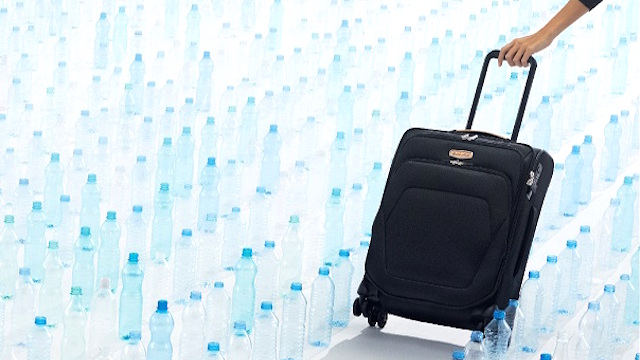
    Samsonite has launched an eco luggage collection for Asia made of Recyclex, a material comprising 100 per cent post-consumer recycled plastic (PET) bottles. As part of its public-facing environmental program, Samsonite has been working with one of its suppliers to create sustainable materials suitable for travel and lifestyle products. The company claims its new innovation Recyclex is as durable and reliable as Samsonite’s polyester fabric made from virgin materials, with the added benefit of reducing plastic waste.

    Subrata Dutta, president of Samsonite Asia Pacific said sustainability is a priority that runs through Samsonite’s products.

    “We recognise that travellers are increasingly aware of environmental protection and looking for ways to reduce their environmental footprint … We expect to generate stronger awareness of environmental protection in the market, and will continue to seek opportunities to maximise the use of recycled and recyclable materials in our products and packaging.”

    The products consumed more than 400,000 recycled plastic bottles in Asia. On some items, cork serves as an alternative for the polyurethane trim on the carry handles, logo, ID tag and back protection.

    Over the next two years, Samsonite will launch at least 30 product lines worldwide made from recycled materials such as rPET and recycled polypropylene.

  • Tumi boosts Samsonite sales growth

    Tumi boosts Samsonite sales growth

    Rapid Tumi expansion is powering solid sales growth for Hong Kong-listed luggage specialist Samsonite International. Group sales rose 5.2 per cent in the third quarter to US$945.2 million, with sales in Asia up 7.2 per cent to $324.2 million. Global sales for the first nine months were up 10.1 per cent.

    The company says the Asian sales growth was primarily driven by the Tumi, American Tourister, Kamiliant and High Sierra brands. Tumi sales in Asia surged 27.7 per cent year-on-year, driven by expansion in key Asian markets. Kamiliant, the group’s value-conscious, entry level brand, saw net sales increase by 31.8 per cent as the brand continued to gain market share, while the High Sierra and American Tourister brands grew by 22.2 per cent and 3.6 per cent respectively.

    In Japan, sales grew 12.5 per cent in the third quarter, driven by the Tumi and Samsonite brands.

    Net sales in Hong Kong increased by 23.5 per cent, driven by increased net sales from the Tumi and American Tourister brands, however Mainland China net sales decreased by 3.2 per cent due to weak consumer sentiment amid concerns about trade relations and a decrease in business-to-business orders. Excluding business-to-business orders for both periods, net sales in China increased by 4.1 per cent.

    The Samsonite, American Tourister and Kamiliant brands drove a net sales increase of 28.6 per cent in India. Sales in South Korea decreased by 4.1 per cent due to “continued challenging domestic market conditions”.

    CEO Kyle Gendreau said the group was pleased with the third quarter results and especially its continued progress in Asia.

    Sales in Europe rose 10 per cent and in Latin America by 13.4 per cent.

    Profit attributable to shareholders during the third quarter rose by $18.9 million, or 33.3 per cent, to $75.5 million, driven by a reduction in the group’s income tax expenses. For the nine months ended September 30, profit attributable to shareholders, excluding a non-cash charge to write-off the $53.3 million of deferred financing costs, increased by $42.9 million, or 30.6 per cent.

    Gendreau said the company is excited about the opportunities ahead, despite global concerns about the US-Sino trade war and subdued consumer sentiment in many markets.

    “With consumers still showing a strong propensity for travel, our industry continues to enjoy favorable long-term growth prospects. We will continue to invest in marketing, product innovation and development of our distribution channels, including direct to consumer. We are confident that we can continue to leverage our strong, diversified portfolio of brands to expand our global presence.”

  • Samsonite Asia sales experiences positive growth

    Samsonite Asia sales experiences positive growth

    Strong performances throughout Asia helped Samsonite International lift sales by 12.9 per cent in the first half of this year, to US$1.849 billion.

    Samsonite Asia sales across the group’s entire brand portfolio grew 14.4 per cent year on year, behind Latin America’s 17 per cent, but ahead of Europe’s 11.4 per cent.

    Tumi sales rose 16.6 per cent, with Asia the fastest-growing market where sales rose 39.4 per cent. American Tourister sales rose 24.2 per cent.

    Globally, Samsonite’s namesake brand achieved a stunning 50 per cent increase.

    Chairman Tim Parker said the first half of 2018 saw generally better trading conditions and more favourable foreign currency effects globally, which helped the group achieve what was another new record in total sales.

    In Asia, net sales of the American Tourister brand rose by 17.7 per cent during the first half, largely driven by the Cristiano Ronaldo marketing campaign, while the group’s value-conscious, entry-level Kamiliant brand achieved the fastest growth of all of its brands, up 57.5 per cent.

    In Hong Kong, where the company is listed, net sales increased by 28.3 per cent, driven by net sales of the Tumi brand (which included sales to Tumi distributors in some other Asian markets) and by the Samsonite and American Tourister brands. Those brands also drove an 11 per cent increase in sales in Mainland China.

    Sales in Japan, driven by Tumi, American Tourister and Samsonite, grew 18.5 per cent. India was up 17.8 per cent, South Korea by 2 per cent and Australia by 8.7 per cent.

    Group operating profit grew by 24.5 per cent year on year to $201.8 million and adjusted net income by 19.5 per cent to $119.8 million.

    Parker concluded: “This solid performance is not only a testament to the resilience of our multi-brand, multi-category and multi-channel business model and our devolved management structure, it is above all a reflection of the strength of our people. Our business enjoys strong team management at the top, but we also rely on a community of managers around the world and in different functions to ensure prompt and effective execution in response to changes in the marketplace. This collective effort by the experienced people within our company remains one of the keys to our success.”

  • Samsonite for Her opens First Store in Singapore

    Samsonite for Her opens First Store in Singapore

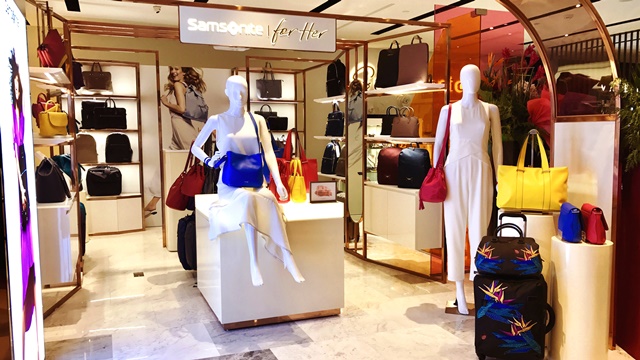
    Travel luggage firm Samsonite has launched its first-ever concept store for ladies, Samsonite for Her, now open in Orchard Road’s Paragon shopping mall.

    The space has been designed to showcase curated product lines under the Samsonite, Samsonite Red, and Lipault Paris brands that each target specific demographics of women shopping for bags, accessories and luggage.

    The new store also serves to kick off Samsonite’s inaugural omnichannel retail platform, allowing customers to shop for options beyond the collections available on shelves. The initiative is designed to direct visitors to the brand’s entire digital catalogue online using an interactive tablet in store. The service offers free delivery of purchased goods regardless of sale size, leaving purchasers at ease to continue shopping without needing to carry their items around the mall.

    The move represents a new direction for the firm in the wake of recent accusations made against Samsonite by activist investment firm Blue Orca Capital, in a report that called the company a “mid-level brand masquerading as a premium luxury player”. The accusation resulted in the resignation of CEO Ramesh Dungarmal just weeks after Samsonite had reported first-quarter double-digit growth across all regions, which Dungarmal had attributed in part to its acquisition of eBags.