Retail News CRM

Tag: Samsonite

  • Bag maker Samsonite’s CEO resigns after short-seller report

    Bag maker Samsonite’s CEO resigns after short-seller report

    Samsonite CEO Ramesh Tainwala has resigned with immediate effect “in the best interests of the company” as the fallout from a short-seller report on the company’s reputation and share price continues.

    Tainwala will be replaced immediately by CFO Kyle Gendreau.

    Hong Kong-listed Samsonite’s stock value plummeted more than 20 per cent during two days last week, before trading was suspended, leaving it with a valuation of about US$4.8 billion.

    That followed the release of a report by Blue Orca accusing the world’s largest luggage maker and retailer of questionable accounting practices and questioning its engagement in third-party related transactions with entities owned by Tainwala.

    But in a statement issued overnight, chairman Timothy Parker said the Samsonite CEO was stepping down due to issues with his academic qualifications.

    “While the board notes that since the company’s IPO in 2011, its disclosure of Ramesh’s educational background has been accurate, the board also takes seriously the allegation that has been made about his academic credentials. Ramesh tendered his resignation, citing personal reasons. In considering such resignation, the board thoroughly reviewed the facts related to this allegation and has determined that accepting Ramesh’s resignation is in the best interests of the company and its shareholders.”

    Tainwala has overseen solid growth of Samsonite in recent years, including the acquisition of luxury travel brand Tumi.

    Parker paid tribute to Tainwala’s “dedication and many contributions to the success of Samsonite” over the years. “During his tenure the company has continued to achieve strong revenue and earnings growth.”

    Gendreau takes over

    Kyle Gendreau has served as an executive director of Samsonite since March 2011, previously serving as CFO and an executive director of the consolidated group since January 2009.

    “Having served as a senior executive of Samsonite for many years, Kyle possesses a strong understanding of our industry, significant financial management experience across retail and consumer products, as well as deep institutional knowledge of Samsonite,” said Parker.

    “Samsonite has a proven record of solid growth and value creation since its initial public offering in 2011, and Kyle has played an instrumental part in achieving these results. The board is confident that under Kyle’s leadership, the company remains well-positioned to continue executing on its multi-brand, multi-category and multi-channel global strategy to capitalise on the growth opportunities ahead and to enhance long-term value for shareholders.”

    Gendreau’s appointment can be interpreted as the ultimate endorsement of its position on the Blue Orca report, given his long tenure overseeing Samsonite’s financials.

    “One-sided and misleading”

    In a separate statement overnight, Samsonite formally responded to the damaging report, opening with a warning to shareholders that Blue Orca is “a self-proclaimed activist investment fund that is focused on short selling”.

    “In the short-seller report, Blue Orca cautions investors that it has a “short interest in Samsonite’s stock and therefore stands to realise significant gains in the event that the price of Samsonite stock declines”.” It has declined by 20 per cent since the report’s release.

    The luggage giant’s board said it had thoroughly reviewed the allegations in the report and determined that they are “one-sided and misleading” and that conclusions drawn regarding its financial results are incorrect.

    On the allegations of irregular third-party related transactions, Samsonite’s board said continuing connected transactions are entered into in the ordinary and usual course of business of the group and are either on normal commercial terms or on terms that are no less favorable than available with any other third party.

    “The company has robust internal procedures to ensure that all continuing connected transactions have been identified, and appropriately reviewed and disclosed, in accordance with the Stock Exchange’s listing rules. Those transactions have been subject to annual review and approval by the company’s disinterested directors and independent non-executive directors in compliance with the requirements of the listing rules, and review by the company’s internal audit department. This process, which is performed in connection with the publication of the company’s financial results, helps to ensure that all continuing connected transactions have been identified and properly disclosed. In addition, the company’s external auditors, KPMG, perform annual limited assurance procedures related to continuing connected transactions.”
  • Samsonite doubles growth

    Samsonite doubles growth

    Double-digit growth in all regions was recorded for its first quarter by travel luggage company Samsonite International.

    Ffor the three months to the end of March, net sales in Asia increased by 13.4 per cent to US$324.8 million in constant currency. Net sales for the Tumi brand jumped 50.3 per cent, driven in part by the impact of the group assuming direct control of the distribution of the brand in Hong Kong, Macau and China on April 1 last year, and in Indonesia and Thailand on May 1.

    Net sales in Japan grew 17.2 per cent during the quarter, while China’s net sales grew 14.3 per cent, again boosted by the group taking control of distribution for the Tumi brand.

    There was a 30.8 per cent jump in Hong Kong/Macau net sales, again attributed to direct control being assumed of the Tumi brand.

    India’s net sales grew by 4.9 per cent while for South Korea the increase was 1.5 per cent.

    Net sales in the direct-to-consumer channel increased by 33.7 per cent, while there was a 128.2 per cent jump in net sales in the direct-to-consumer e-commerce channel.

    Gross profit grew by 23.7 per cent year-on-year to $501.6 million, while gross profit margin rose to 56.5 per cent from 55.3 per cent.

    Operating profit was up 18.8 per cent to $86.5 million, adjusted net income increased by 15.6 per cent to $50.1 million, while adjusted EBITDA increased by 11.4 per cent to $122.9 The group’s net sales grew by 15.5 per cent on a constant currency basis, while net sales increased by 21.1 per cent to $888.2 million.

    CEO Ramesh Tainwala says the company’s strong performance was driven in part by the acquisition of eBags.

  • Tumi acquisition lead Samsonite to good numbers

    Tumi acquisition lead Samsonite to good numbers

    Samsonite Asia sales lept 16 per cent last year, a rate slower than the Hong Kong-listed company’s global growth, and predominantly driven by the acquisition of Tumi.

    The world’s largest travel luggage company achieved global sales of US$3.49 billion, up 23.3 per cent, with Asia accounting for $1.19 billion of that. Samsonite Asia sales excluding the Tumi effect grew by a much more modest 4.8 per cent, while sales in Japan grew by 32 per cent, or 12 per cent excluding the Tumi business, driven by the Gregory, American Tourister and Samsonite brands.

    In the first half of last year, Samsonite assumed direct control of the wholesale and retail distribution of Tumi products in South Korea, Hong Kong, Macau, China, Indonesia and Thailand.  Net sales in China increased by 11.9 per cent year-on-year, (7.2 per cent excluding Tumi), due to increased sales of the Samsonite and American Tourister brands. Net sales in South Korea increased by 15.7 per cent, but fell 2.5 per cent excluding Tumi, due to fewer shoppers visiting from China and weak consumer sentiment.

    Net sales in Hong Kong increased by 34 per cent year-on-year, driven by the addition of Tumi, but by just 1.5 per cent excluding Tumi.

    Net sales in India increased by 4.6 per cent, despite a temporary disruption during the year due to the Indian government’s introduction of a goods and services tax that took effect in the third quarter of last year.

    Strong direct-to-consumer growth

    Samsonite showed solid progress on its move towards increasing its direct-to-consumer sales, aided by the acquisition of online luggage retailer eBags last May.

    Net sales rose 57.4 per cent overall, by 32.1 per cent excluding Tumi and by 12.2 per cent after 1 further excluding eBags.

    Dollar reported profit attributable to the equity holders increased by US$24.1 million, or 12.1 per cent.

    “We saw very satisfying growth last year, further driven by a strong performance from the Tumi and eBags businesses following their integration into the group,” said chairman Tim Parker.

    “In particular, we made solid strides in improving Tumi’s performance and as a result it was accretive to earnings in its first full year post acquisition. Now that we have strategically expanded into the highly attractive premium segment, and established a firm foothold in e-commerce, we look forward to more aggressively expanding our presence in the direct-to-consumer channel worldwide, especially direct-to-consumer e-commerce, where we see strong growth opportunities.”

    CEO Ramesh Tainwala said that while the company continued to benefit from the buoyant growth in travel and tourism worldwide, its strong performance was also driven by continued investment in brands, especially in the form of increased marketing support, as well as the expansion of direct-to-consumer e-commerce and brick-and-mortar retail operations.

    “Looking ahead, we will continue to implement our multi-brand, multi-category and multi-channel strategy, while leveraging our decentralised management structure and investment in marketing, in order to capitalise on the many exciting opportunities ahead of the group,” he said.

  • Protest arise after JD.com launches house brand Jing Zao

    Protest arise after JD.com launches house brand Jing Zao

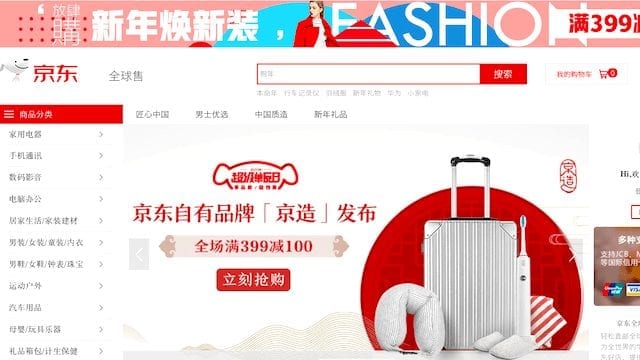
    Clashing head-on with manufacturers who sell through its platform, China’s JD.com has introduced its own brand, Jing Zao.

    Its initial 38 products range from towels to suitcases in similar style to Japan’s Muji or US luggage maker Samsonite, but at a lower price. Both companies sell their wares through JD.com.
    JD.com knows which products are popular with customers and can tailor its offerings accordingly, plus it has its own logistics service for deliveries.

    Its house brand follows its venture into physical retail stores. This month it introduced its first fresh-food supermarket in Beijing.

    Meanwhile, JD.com has confirmed it is a co-investor in Vietnam’s Tiki e-commerce platform, becoming one of its largest shareholders.

  • Cristiano Ronaldo Is American Tourister 2018 Brand Ambassador

    Cristiano Ronaldo Is American Tourister 2018 Brand Ambassador


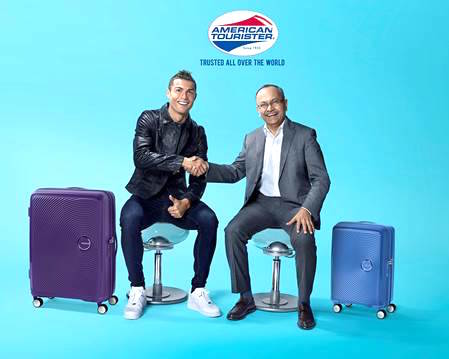
    Football superstar and fashion icon Cristiano Ronaldo has been appointed American Tourister brand ambassador.

    Ronaldo is the holder of the FIFA Ballon d’Or Award for a record fifth time. The former Manchester United and now Real Madrid record goal-scorer has won 24 trophies, including four UEFA Champions League titles. He also captained Portugal to victory in the 2016 UEFA European Championship.

    He has a global following of more than 230 million fans across Facebook and Instagram, and his appointment comes as Moscow prepares to host the FIFA World Cup in June.

    “There couldn’t be a better time to bring Cristiano on board,” says Asia Pacific president Subrata Dutta of Samsonite, which owns the American Tourister luggage brand.

    Ronaldo says that as a frequent traveller he appreciates the need for high-quality luggage that “still allows you to express your personality”.

  • Record first-half sales for Samsonite International

    Record first-half sales for Samsonite International

    Luggage company Samsonite International had record half-year net sales of US$1.5 billion, a year-on-year increase of 31.8 per cent.

    Its acquisition of the Tumi brand had “significant” positive impact on its performance in Asia, reports the company, announcing its interim results.

    Samsonite assumed direct control of Tumi distribution in China, Hong Kong, Indonesia, Macau, South Korea and Thailand. It also added 37 Tumi stores worldwide. As a result, the brand had net sales of $296.9 million for the six months.
    Excluding amounts attributable to the Tumi business, the group posted 7.5 per cent net sales growth. Net sales of the Samsonite brand grew by 7 per cent, and for American Tourister by 1.3 per cent.

    “Further down the price pyramid, our Kamiliant brand performed exceptionally well, validating our belief in the vast untapped potential of the entry-price segment,” says Samsonite International CEO Ramesh Tainwala. “We will further expand Kamiliant distribution across Asia.”

    E-commerce acquisition

    Also acquired, in May, was eBags, for a cash consideration of $105 million. The company says this significantly strengthens its platform to accelerate the growth of its direct-to-consumer e-commerce business.

    Already this grew 89 per cent during the first half (20.2 per cent excluding Tumi), driven by a 126.7 per cent increase in net sales, partly as a result of acquiring eBags.

    Net sales in Asia reached $563.3 million for the group, an increase of 19.8 per cent. Excluding Tumi, the increase was 3.8 per cent.

    Japan had 53.4 per cent net sales growth. Excluding Tumi, this was a 12.8 per cent increase, driven by the American Tourister, Gregory and Samsonite brands.

    China’s net sales grew 11.2  per cent, or 8.8 per cent with Tumi excluded. This was attributed to a strong performance from the Samsonite brand.

    Net sales in South Korea were up 18.1 per cent, but would have been down 1.6 per cent without Tumi. This was because of fewer shoppers from China and weak consumer sentiment.

    Hong Kong’s net sales soared 97 per cent, driven by the addition of Tumi. Otherwise there would have been a 1.7 per cent decrease because of fewer Mainland China visitors. This compares with the 7.4 per cent decline in the second half of last year and the 15.6 per cent drop in the first half.

    Driven by the Kamiliant and Samsonite brands, net sales in India grew by 1.9 per cent. However, there was a temporary disruption in the second quarter because of a goods-and-services tax taking effect.

  • Samsonite International paying $105m for eBags

    Samsonite International paying $105m for eBags

    Hong Kong-headquartered luggage company Samsonite International is to buy online retailer eBags for US$105 million cash.

    The deal is part of Samsonite’s strategy to accelerate the growth of its e-commerce business.

    “With eBags’ immediate resources and digital expertise, we are able to expand our online retail capabilities in a meaningful way, driving stronger sales growth across all the brands in Samsonite’s portfolio,” says Samsonite CEO Ramesh Tainwala. “E-commerce is fast becoming a vital part of our business, and will continue to be central in our strategy.”

    EBags president/CEO Mike Edwards describes the move as “a perfect match”.

    Founded in 1998, eBags offers travel bags and accessories including backpacks, handbags, business bags, travel accessories and apparel from a range of travel and fashion brands. It had net sales of US$158.5 million last year, up 23.5 per cent from the previous year.

    The acquisition is expected to be completed within a couple of months.

  • Samsonite sales grow despite Asia slow sales

    Samsonite sales grow despite Asia slow sales

    A soft Asian market failed to take the gloss off a stellar performance for Hong Kong-listed luggage giant Samsonite International.

    Buoyed by the addition of the Tumi business it acquired last August, Samsonite sales grew 17.3 per cent to US$2.81 billion in the year to December 31. Excluding Tumi, sales rose by a more modest 6 per cent.

    Gross profit for year increased by $242 million, or 18.9 per cent, to US$1.52 billion. Gross profit margin increased from 52.6 per cent to 54.1 per cent, partly due to the addition of the Tumi brand which enjoys higher margins. Excluding Tumi, gross profit margin increased to 53 per cent.

    In Asia, Samsonite sales rose 9.9 per cent year-on-year, including Tumi, but by just 4 per cent excluding Tumi.

    Globally, sales rose 26.8 per cent in North America (4 per cent excluding Tumi), 16.1 per cent in Europe (10.3per cent); and 17.4 per cent in Latin America (17.4 per cent).

    CEO Ramesh Tainwala described 2016 as Samsonite’s most momentous year since its IPO in 2011.

    “The acquisition of Tumi fulfilled a long-held ambition for Samsonite, and establishes a strong multi-brand platform to drive long-term growth across a broad range of price points and product categories. All of our regions delivered solid constant currency net sales growth in 2016, and looking ahead, we will continue to focus on implementing our multi-brand, multi-category and multi-channel strategy,” said Tainwala.

    “We continue to focus on growing e-commerce as a channel, and net sales in the group’s total e-commerce business increased by 19.7 per cent year-on-year in 2016, excluding Tumi. We believe that the group has the potential to become a significant player in the bags and luggage e-commerce channel.”

  • Samsonite eyes global traveler in China

    Samsonite eyes global traveler in China

    One of the world’s largest luggage makers Samsonite International SA is banking on e-commerce to fuel its China business, which is set to record 12 to 14 percent growth in the coming years.

    The company hopes to have one-third of its sales generated online by 2022 against 20 percent in 2016, said chief executive officer Ramesh Tainwala.

    With the explosion of online shopping and a wealthier population eager to travel, China may overtake the United States as its largest market in the short run, with sales likely to double in three to five years, Tainwala said at a media briefing in Shanghai.

    He said: “At the beginning of the e-commerce, the Chinese were buying online because it was cheaper. But now consumers are maturing, it’s all about convenience.”

    China is the world’s largest online retail market, with 36 percent of the population shopping online at least once a week, far outstripping peer buyers, according to a study by the International Post Corporation, a Brussels-based group that provides business-critical intelligence to its members who are part of the postal industry.

    To harness that growth, Samsonite has launched a “three-pillar” strategy for digital retail. One is to team up with Chinese business-to-customer sites like Tmall and JD. According to Tainwala, the two platforms combined claim 60 percent of Samsonite’s online sales. Another channel is the digital stores of shopping malls and department stores.

    The third step Samsonite is taking this year is to open its indigenous direct online shopping portal, attracting sophisticated buyers who wish to purchase bigger-ticket items via the brand rather than a third party.

    It has also utilized social media to guide traffic to brick-and-mortar stores. For instance, followers of Samsonite’s official WeChat account can sign up for a promotion event in a shopping center and get a discount coupon. Online marketing has helped woo customers and add another 5 percent of their offline sales, according to Frank Ma, a senior Samsonite executive.

    Seven of Samsonite’s nine brands have been introduced to China, ranging from entry-level American Tourister, namesake and contemporary luxury Samsonite, to the newly acquired Tumi, which targets up-market business travelers.

    The multi-brand approach has made online a critical battlefield to win buyers, especially those in lower-tier cities who have fewer opportunities to access physical stores and are taking outbound trips for the first time.

    Ma said: “Globalization has made travelling a lot easier. With simplified visa procedures, we see more first-time travelers from China going beyond borders. To this end, we have designed products tailored to their needs.”

    For instance, American Tourister and Kamiliant are the two affordable brands for these first-time travelers. A typical 20-inch Kamiliant case sells from 199 yuan ($28.9) on Tmall.

    Meanwhile, it has added new features to its most iconic business assortment, including a new hero backpack with three volumes, two check-in-sized spinners, and a brand-new spinner rolling tote.

  • Samsonite Asia heightens focus on China

    Samsonite Asia heightens focus on China

    Branded luggage-maker Samsonite Asia aims to make China its biggest market within five years, pinning its hopes on eCommerce and social media to fuel growth.

    While sales in China now account for more than 10 per cent of its total revenue, Samsonite CEO Ramesh Tainwala says they are likely to double by 2022, thanks to the explosion in online shopping and a wealthier population keen to travel.

    “Now that 20 per cent of our Chinese businesses come from online, we expect the number to grow by about a third in a couple of years,” he says.

    Global net sales in 2015 reached US$2.43 billion for the Indian company.

    Virtual stores on B2C sites JD and Tmall have claimed 60 per cent of Samsonite’s online business in China. Its luggage is also sold through the digital outlets of shopping malls and department stores.

    Samsonite will open its own direct online shopping portal this year aimed at more sophisticated buyers who want bigger-ticket items via the brand rather than a third party.

    First-half sales last year remained flat for Samsonite, according to its interim report, partly because of sluggish performance in China as consumers forsake department stores for online retail.

    Samsonite president for China and the Philippines Frank Ma says the company spares no effort in using social media campaigns to guide traffic to brick-and-mortar stores. For example, followers of Samsonite’s official WeChat account are given a discount coupon when they sign up for promotional events in shopping centres.

    Ma says content marketing helps attracts customers and adds to another 5 per cent to its offline sales.

    Seven of Samsonite’s nine brands have been introduced to China, ranging from the entry-level American Tourister to the newly acquired Tumi, which targets high-end business travellers.

  • Good time for Samsonite

    Good time for Samsonite

    Buoyed by its Tumi acquisition, Samsonite sales soared in the last quarter in every market, even in its weakest link, Asia.

    The world’s largest luggage maker and retailer achieved a net sales boost of 22.8 per cent in the three months to September 30. Its strongest performance was the US where net sales increased by 22.7 per cent to US$765.3 million.

    In Asia, sales rose 13.4 per cent – although excluding figures for Tumi, acquired on August 1 and contributing to two months of sales, only by 3.7 per cent.

    North America sales rose 39.1 per cent, or by 9.8 per cent excluding Tumi, and in Europe by 16.5 per cent, or 9.4 per cent excluding Tumi. And in Latin America it was ahead by 26.2 per cent including and excluding Tumi.

    CEO Ramesh Tainwala said there is no doubt that the global trading environment continued to be challenging, yet despite the headwinds, all of Samsonite’s regions delivered positive constant currency net sales growth during the third quarter of 2016.

    “It is especially encouraging to see organic sales growth picking up in both the US and China, our two largest markets, while Europe and Latin America have maintained their growth momentum.”

    Gross profit increased by 26.5 per cent year-on-year to $419.8 million and gross profit margin increased to 54.9 per cent, from 53.2 per cent.

    On the negative side, operating profit decreased by 16.4 per cent year-on-year to US$71.7 million for the quarter, largely due to acquisition costs. Excluding those, operating profit increased by 23.7 per cent.

    Asia performance

    After a relatively lacklustre first half, both China and India saw net sales growth improve to 8.1 per cent year-on-year in the third quarter of 2016. Net sales in Hong Kong (including Macau) increased by 73.6 per cent, driven primarily by the addition of the Tumi brand. Excluding Tumi, net sales in Hong Kong (including Macau) decreased by 11.5 per cent. The decline was driven primarily by fewer Chinese shoppers visiting from the mainland.

    Japan and Australia continued to record strong year-on-year net sales growth of 29.7 per cent and 13 per cent, respectively. Excluding Tumi, net sales in Japan increased by 7.4 per cent. Also, the group continued to penetrate the emerging markets within the region with notable net sales growth in Thailand and Indonesia of 7.6 per cent and 3.1 per cent, respectively, year-on-year. Net sales in South Korea were up slightly year-on-year on a constant currency basis due to weak consumer sentiment.

    Growth by brand

    Globally, excluding Tumi, sales were driven by the Samsonite (up 10.2 per cent) and Kamiliant (up 576.1 per cent). Other brands including Hartmann (up 58.8 per cent), Lipault (up 342.8 per cent) and Gregory (up 20.4 per cent) also experienced solid net sales growth. The increase was partially offset by an 11.3 per cent decrease in net sales of the American Tourister brand.

  • Penang outlet mall Design Village about to launch

    Penang outlet mall Design Village about to launch

    Penang will gain its first premium outlet mall, Design Village, next month.

    In Batu Kawan in mainland Penang, it will be the biggest outlet mall in Malaysia. It was developed by PE Land, which owns and runs The Spring shopping mall in Kuching.

    The outlet mall is on a mixed-use site that will include a hotel and high-end condominiums. The single-storey mall has a net leasable space of 400,000 sqft (37,161 sqm) for 150 stores.

    There are more than 80 brands already committed to the mall, which is aiming for up to 100, says Savills Malaysia MD Allan Soo. The company is the international leasing and retail development adviser for Design Village.

    Design Village Malaysia 1

    The mall’s retail mix will be 20 per cent large-format stores, 15 per cent F&B, 7 per cent sports outlets and 5 per cent children’s stores, with 25 per cent new tenants and 28 per cent others.

    It will include the biggest Adidas outlet in Malaysia, plus the first outlet stores for Aldo and Bata. Other retailers include Banana Republic, Guess, Padini Concept Store, Sacoor Brothers, Samsonite and Starbucks.

    The mall will provide daily shuttle services to and from hotels and the airport.

    Design Village GM Aileen Tay says the mall is also working with tour companies to bring in tourists who will be offered rebates through tax-free shopping network Global Blue.

    PE Land is the retail and property development arm of Borneo-based conglomerate Pan Sarawak Holdings.

  • Samsonite profits up in 2015 but outlook ‘uncertain’

    Samsonite profits up in 2015 but outlook ‘uncertain’

    Luggage giant Samsonite on Thursday warned its outlook for this year was “uncertain” owing to the growth slowdown in key market China and a stronger US dollar.

    The firm said in a filing with the Hong Kong Stock Exchange that despite a tough trading year, it saw net profit rise 6.1 percent to $197.6 million last year thanks to record revenues of $2.43 billion.

    “Our business has emerged stronger from 2015… despite various headwinds around the globe,” chairman Timothy Charles Parker said in the statement.

    However, chief executive Ramesh Dungarmal Tainwala said the outlook for 2016 “remains uncertain, with challenging trading conditions expected in a number of our key markets including China, and the negative currency translation impacts from the strong US dollar expected to continue affecting our business”.

    The world’s second-largest economy expanded 6.9 percent in 2015, the worst performance in a quarter century and a far cry from the years of double-digit increases. The country’s luxury market also took a hit from a years-long corruption crackdown.

    “It is undoubtedly the case that the days of 20-30 percent growth in China are over,” Parker said.

    Shares in the company ended the morning session 1.54 percent up at HK$26.30 Thursday.

    The warning comes after Samsonite earlier this month said it would buy US luxury bag maker Tumi in a deal worth $1.8 billion, which analysts said would provide a foothold in the still-lucrative high-end market in China.

    The move follows the purchase last year of airport retailer Rolling Luggage and Italian accessories seller Chic Accent.

    Parker said the Tumi deal is expected to close in the second half of the year subject to shareholder and regulatory approval.

    “Tumi is a perfect complement for our business… We believe we are buying a strong, profitable and well-run business, with considerable flair and success behind it in the American market,” he said.

    Samsonite raised $1.25 billion in an initial public offering in Hong Kong in June 2011, one of several Western brands — including Prada and Esprit — seeking to use the city to boost their presence in fast-growing Asian markets, particularly China.

  • Samsonite to pay US$1.8 bn for Tumi

    Samsonite to pay US$1.8 bn for Tumi

    Luggage giant Samsonite is to pay US$1.8 billion for US-based Tumi, the luggage and travel accessories brand.

    In a joint statement, the two companies said they have entered into a definitive agreement whereby Samsonite will acquire Tumi for US$26.75 per share in an all cash transaction.

    “This is a transformational acquisition for Samsonite. It will meaningfully expand our presence in the highly attractive premium segment of the global business bags, travel luggage and accessories market,” said Ramesh Tainwala, Samsonite CEO.

    “Tumi is a perfect strategic fit for our business. The brand is beloved by millions of loyal customers for its high quality and durable premium business and luggage products. We are excited about the tremendous opportunities this combination provides us to further diversify our product and customer portfolios.

    “In particular, we will expand Tumi’s presence in Asia and Europe, while strengthening its business in North America, by leveraging our expertise in global distribution, sourcing, product design and technical innovation, especially in the area of lightweight hardside luggage.”

    Tumi CEO Jerome Griffith described the announcement as “an exciting day for Tumi and all the travellers around the world who count on us”.

    “The team at Samsonite has a long and successful track record when it comes to acquisitions and we know they will be excellent stewards of the Tumi brand. Samsonite will bring Tumi to new and growing markets, while still maintaining the high quality Tumi is known for.

    “This is a compelling transaction that delivers substantial and immediate cash value to our shareholders. Further, we are excited for our employees to benefit from opportunities presented by being part of a larger and more diversified global company. Samsonite has successfully grown many unique brands and we look forward to the next chapter in Tumi’s great history as part of the Samsonite family.”

    The two companies believe Tumi is an “ideal and complementary fit” with Samsonite.

    “With approximately 2000 points of distribution across 75 countries, Tumi’s leading market position in the premium business and luggage segment is a perfect complement to Samsonite’s strong and diverse portfolio of brands and products, with limited overlap in market positioning, price point and distribution. The addition of Tumi builds on Samsonite’s proven track record of successful acquisitions across multiple product categories and price points to broaden its portfolio,” the companies’ statement said.

    “It enables Samsonite to strategically expand into the highly attractive premium segment of the global business bags, travel luggage and accessories market with a business and travel brand that is recognised worldwide as being “best-in-class” in the premium segment.”

    Tumi was founded in 1975. Its products range from iconic ‘black ballistic business cases’ and travel luggage targeting business travellers, to  travel accessories, women’s bags and outdoor apparel.

    In the year to December 31, Tumi’s net sales were US$548 million, representing a year on year increase of 4 per cent.

    Post takeover, Samsonite will continue to be listed on the Hong Kong Stock Exchange.

  • Samsonite Singapore plans more stores

    Samsonite Singapore plans more stores

    Samsonite Singapore plans at least two new stores in the city this year. Speaking in an interview with the Straits Times, Samsonite CEO Ramesh Tainwala acknowledged his business faces high operating costs and slower economic growth in Singapore, compared to other Asian markets. But he said the company’s strategy was dependent on more than economic growth.

    “Our market share in Singapore does not exceed 22 per cent… If I grow my business here… to 25 per cent of market share, without the market growing I can still deliver around 10 to 11 per cent growth in my business.”

    The travel goods retailer will end the year with more than 20 stores in Singapore with three new ones already trading and two more planned.