Retail News CRM

Tag: Singles Day

  • Alibaba smashes Singles’ Day records, so why did shares dip?

    Alibaba smashes Singles’ Day records, so why did shares dip?

    November 11 is a day of sombre reflection across much of the West, with Commonwealth nations observing Remembrance Day while Veterans’ Day is an official public holiday in the US.

    It’s a world away in China, though, where it’s Singles’ Day – an idea begun in 1993 by four lonely Chinese students who reckoned the 11th day of the 11th month (note the four single ‘one’ digits) would make a great day to celebrate being unattached.

    It became a sort of anti-Valentine event, where those without partners bought themselves gifts and – as you do in China – enjoyed lots of karaoke.

    Enter e-commerce giant Alibaba – owned by Jack Ma, up until February China’s richest man – which swooped on the event to offer discounts on its goods.

    November 11 in China has since morphed into an orgy of online spending. More and more firms have jumped on the bandwagon to make it the world’s biggest day of internet shopping.

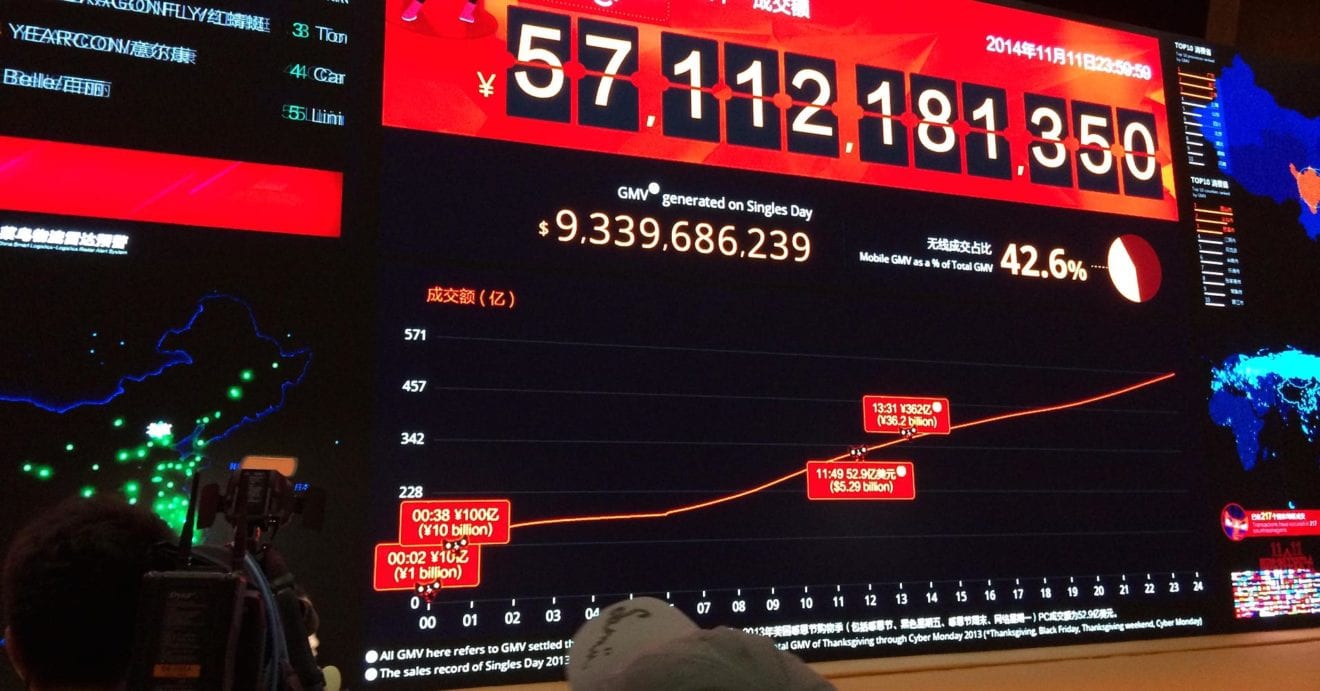
    On Wednesday, Singles’ Day smashed sales records by midday. Shoppers were out in droves, racking up $5 billion of sales in the first 90 minutes on Alibaba, roughly double last year’s haul in the same period, reports the Financial Times. Alibaba also netted nearly twice the entire take of last year’s Cyber Monday – the day the US, fresh from feasting on Thanksgiving turkey, feasts on shopping deals – itself a record.

    Alibaba’s sales on the day rose 60% from last year to $14.3 billion. Another online retailer, JD.com, reported record transactions of more than 20 million.

    But despite beating records, Alibaba shares dipped nearly 2%. Why weren’t investors impressed?

    It’s because those concerns about China’s slowing growth still won’t go away – a point that Jack Ma himself highlighted on Thursday. Although he believes the government’s 7% GDP target for this year is achievable, he told CNBC: “I believe the next five to 15 months will be a tough time for China for various reasons, of course, one, the anti-corruption will definitely have some effect.”

    Jasper Lawler, a market analyst at CMC Markets, adds that Alibaba continues to be used as a US proxy for Chinese economic health “so shares dropped alongside industrial production figures”.

    Another batch of mixed data from China on Wednesday did little to allay concerns that the world’s second largest economy is slowing.

    “Industrial production growth matches its weakest since 2008, although retail sales improved,” wrote Mike van Dulken and Augustin Eden at Accendo Markets. Coupled with Alibaba’s new Singles’ Day record “we have further evidence of the nation’s shift from export-led to consumer economy”.

    Michael Hewson, chief market analyst at CMC Markets UK, remains concerned about retail sales in China.

    “The latest October retail sales numbers did improve to 11%, from 10.9% in September, which is still below the levels we were seeing at the end of last year of 11.8%,” he writes.

    “Furthermore this modest improvement doesn’t really chime with the stories circulating out of China at the beginning of October during Golden Week about surging sales in the restaurant, cinema and travel sales sector.

    “According to some reports, turnover at restaurants and retailers totalled more than one trillion yuan during the seven days, which equates to over $156 billion, so for retail sales to only improve 0.1% does seem rather at odds with the early October optimism.”

    Alibaba shares closed on the New York Stock Exchange at $79.85 on Wednesday, down more than 20% in the year to date. However, they’ve recovered from a yearly low on September 28 of $57.39 to trade currently at $80.00.
  • Singles Day set to shatter records

    Singles Day set to shatter records

    Singles Day spending tomorrow will undoubtedly shatter last year’s record spend of US$9.3 billion, predicts KPMG.

    November 11 is known in China as Singles’ Day, an annual one day event which sees online retailers slash prices of products and China’s shoppers treat themselves to a wealth of discounted goods. Popularised by eCommerce giant Alibaba in 2009, Singles’ Day in China has now become the world’s biggest online retail sales day, eclipsing all other promotions days including Black Friday and Cyber Monday.

    Last year’s sales fell just short of $10 billion, but Jessie Qian, partner in charge, consumer markets with KPMG China, says that barrier will surely be broken tomorrow

    “We expect that China Singles’ Day spend this year will be bigger than ever, illustrating the buying power of the Chinese consumer and the increasing prominence of the date in the Chinese retail calendar.”

    KPMG recently survey 10,000 online Chinese luxury consumers – China’s Connected Consumers – also revealed that the maximum amount Chinese consumers felt comfortable paying online for a single item was RMB 4200 – more than double the RMB 1900 found in 2014.

    The study also found that Chinese luxury shoppers are increasingly open to buying luxury products online. For most categories, from jewellery to cosmetics, and wine to leather goods, respondents reported a willingness of 75-95 per cent to buy online.

    “Not only did we see a higher amount spent on average for popular categories such as bags, women’s apparel and cosmetics, but we also noted a significant increase in spending on watches and jewellery,” said Qian.

    “All these illustrate that online luxury shopping is set to grow as Chinese consumers are growing increasingly more comfortable with online purchasing.”

    Qian concluded: “With the speed of change around new channels in China, companies must develop the right strategies to survive and thrive in an increasingly disruptive environment. Formulating an effective online to offline (O2O) strategy will be essential for retailers to remain competitive in the digital age with the increasing smartphone technologies and the need to harness social media platform.

    “Meanwhile, using analytics to turn the transactional data into insights to improve products and user experience, as well as to unlock new opportunities, will be crucial for e-retailers to stand out in the increasingly competitive market.”

  • Worldpay processes over 1000 payments per second during China Singles Day

    Worldpay processes over 1000 payments per second during China Singles Day

    Worldpay processed on average over 9,000 transactions per minute globally during China Singles Day 2015 with        transactions peaking at 1,111 transactions per second during the day’s busiest sales period.

    The number of transactions Worldpay processed on Singles Day more than doubled between 2014 and 2015, rising 146%. The total value of Singles Day transactions rose 320% between 2014 and 2015.

    In the UK the total value of China Singles Day transactions made on cards in the UK grew 251% and the volume of transactions was up 307%.

    Shane Happach, chief commercial officer, Global e-commerce at Worldpay, said: “We’ve been tracking the rise of China Singles Day for a few years now, and it’s incredible to see just how quickly the event has risen to prominence. Alibaba just revealed that Singles Day was the biggest ecommerce day in history, and our global transaction figures only reinforce just how relevant this event has become for online shoppers everywhere. It will be interesting to see how this year’s BlackFriday sales stack up, particularly with many major retailers announcing they’re opting out.”

  • 11.11.2015: A new twist to Asian retailing’s biggest day

    11.11.2015: A new twist to Asian retailing’s biggest day

    China’s Singles Day – 11.11.2015 –  the biggest shopping festival in the world, will no doubt once again break international eCommerce records this Wednesday.

    But while watching numbers tick astronomically higher is exciting, retailers should be paying attention to what Alibaba is doing differently this year: omnichannel.

    For the first time, Alibaba is bringing part of Singles Day (also known as Double 11, or Guangun Jie) offline. It has promised that more than 1000 retail brands encompassing over 180,000 stores across 330 cities in China will join the 11.11 Festival.

    Customers will be able to price match in-store goods with TMall discounts. Some areas will be able to deliver products within two hours, essentially turning stores into distribution centres.

    Much like Alibaba’s 2014 mobile shopping push made mCommerce a “new normal,” you can expect 2015 to begin a boom in omnichannel. Retailers will do well to begin strategising through a smart integration of their physical stores and digital commerce now.

    Here are two guidelines to consider when reassessing how your physical and digital presences can complement each other in this new omnichannel world:

    Make the store a customer solution

    The consumer does not make a distinction between a brand offline and online – and neither should retailers. Physical stores create interesting opportunities to reduce customer friction points or quickly resolve customer problems. Extend in-store services to add incremental customer value or create a good atmosphere.

    We recently helped GrandVision, the world’s largest eyewear conglomerate, create a retail experience centered around eye care. They wanted to emphasize their medical-grade professionalism and commitment to demystifying eye care for consumers.

    Design points such as having an eye-testing facility placed in the middle of each store emphasises their dedication to this cause, and informational content placed across all digital channels means customers could empower and inform themselves across desktop, mobile or in-store digital panels.

    By consolidating all consumer interactions with GrandVision into one platform, everything from booking an eye exam to buying lenses have been made seamless both offline and on. The one view of consumers helps give store associates the tools they need to better understand customer motivations, provide support and make the store an integral part of customer interactions with the brand.

    Make your store experiential

    Retail used to be rooted in the transaction, but now that technology has decoupled transactions from physical spaces, retailers have tremendous freedom to build a memorable experience in stores.

    We helped Audi design an interactive experience for its flagship showroom in Beijing, using screens and responsive content to let customers cycle through endless customisations of their ideal Audi cars. The Audi City showroom cut down on costly retail rents while allowing Audi to showcase all inventory and imprint its brand message of “Vorsprung durch Technik (advancement through technology).”

    Physical store experiences properly integrated with digital are part of the equation for brand differentiation and continued relevance. Consumers go seamlessly from online to offline and back. Retailers need to learn to do the same.

  • 11.11.2015: Here’s what to expect on Wednesday

    11.11.2015: Here’s what to expect on Wednesday

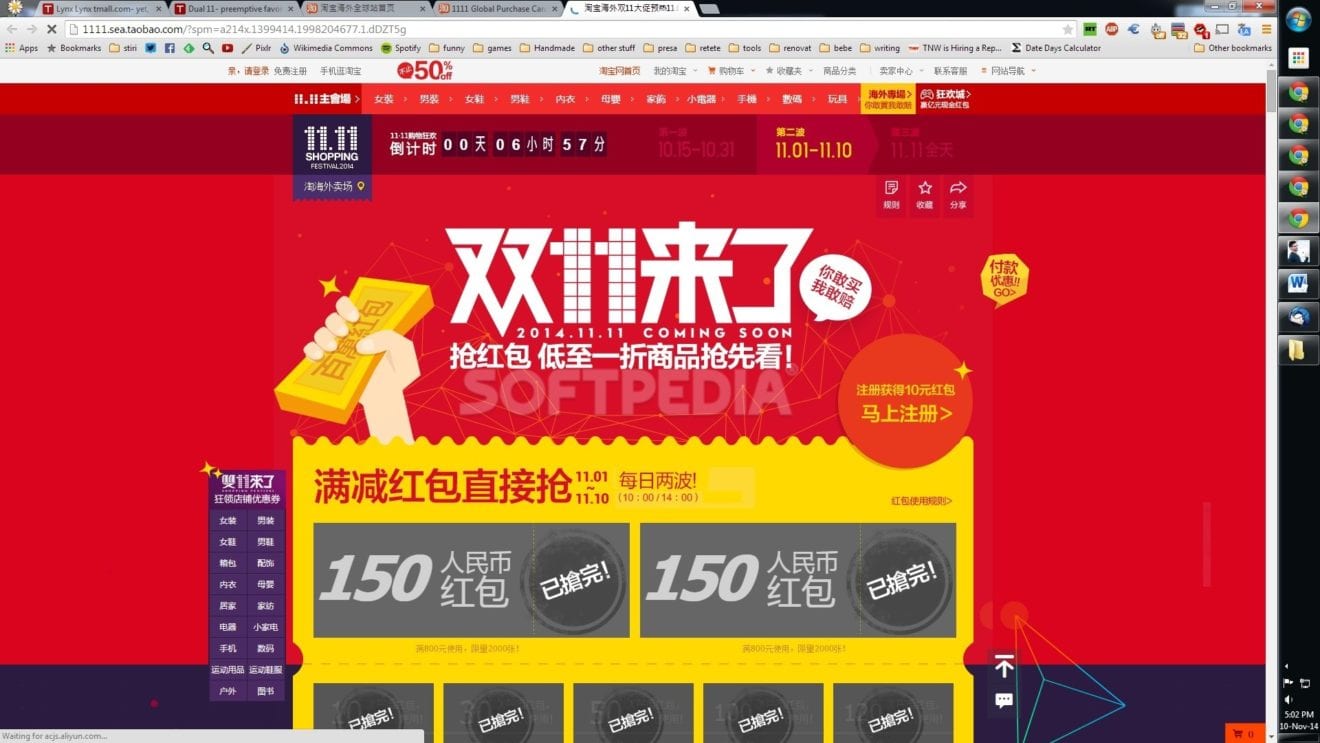
    There are just days to go before Alibaba Group holds its 11.11 Global Shopping Festival. Merchants are laying on stock and pre-packing popular products to ready them for shipment. Delivery companies are training hundreds of thousands of temporary workers hired to help deliver the massive volume of parcels generated during the November 11 online sale, held on China’s Singles Day holiday.

    Consumers are gathering digital discount coupons for use during the 24-hour shopping frenzy, locking in deals in pre-sales events, and limbering up their clicking fingers. For members of China’s young and tech-savvy spending class, the 11.11 sale is a race against time as they log on at midnight to vie to complete web purchases for limited stocks of coveted products while millions of others are jamming the Internet trying to do the same. Last year, the total value of purchases on Alibaba’s websites blew past RMB 1 billion (US$157 million) in GMV just three minutes after the sale began. Twenty-four hours later, the total was $9.3 billion – enough to set a Guinness World Record.

    Will this feat be surpassed this year? China Post, the PRC’s postal service, estimates that 760 million packages will be generated by Singles Day sales held by all Chinese online-shopping websites on Nov. 11. That’s up significantly from 540 million packages produced last year, according to the post office.

    For its part, Alibaba Group – which started the sale in 2009 are runs China’s largest online marketplaces – isn’t making predictions. If past is prologue, though, then last year’s results might be indicative. Check out the infographic at the end of this story to see the 2014 sale highlights.

    This year, Alibaba is pushing its 11.11 festival in new directions by involving more international merchants and shoppers. The event will feature more than 6 million products from over 40,000 merchants and more than 30,000 brands from 25 countries, including the US, China, Japan, South Korea and European nations. Participating international brands include P&G, Unilever, Burberry, Estee Lauder, Zara, Huggies, Macy’s, Costco, Apple, Nike, Friso, Topshop, and Uniqlo, to name a few.

    Through Alibaba’s China and international marketplaces including AliExpress, its global B2C website, merchants will be selling directly to consumers in more than 200 countries and regions, according to Alibaba. Still, the company expects the majority of transactions to occur In China, where key product categories for the sale include baby and maternity, fashion and apparel, cosmetics, electronics and home appliances, health and nutrition, grocery, and fresh foods.

    Alibaba is also pushing several other initiatives for 11.11.

    The company has lined up brick-and-mortar retailers to participate through mobile and omnichannel commerce. More than 1,000 retail brands, with 180,000 brick-and-mortar stores in 330 cities across China, have joined the event. They’ll be offering smartphone-enabled shoppers a more integrated and interactive shopping experience whether shopping online or in participating stores. Omnichannel will also give merchants greater insights into customer demographics and shopping habits, according to Alibaba.

    Underscoring the trend in China toward shopping by smartphone instead of PC, nearly 43 per cent of sales took place on mobile phones during the 11.11 sale last year. mCommerce is expected to play an even bigger part this year. The sale will feature marketing campaigns for mobile shoppers, such as rewards of discount e-coupons to consumers who shake their phones while using the Taobao or Tmall mobile applications during promotional periods.

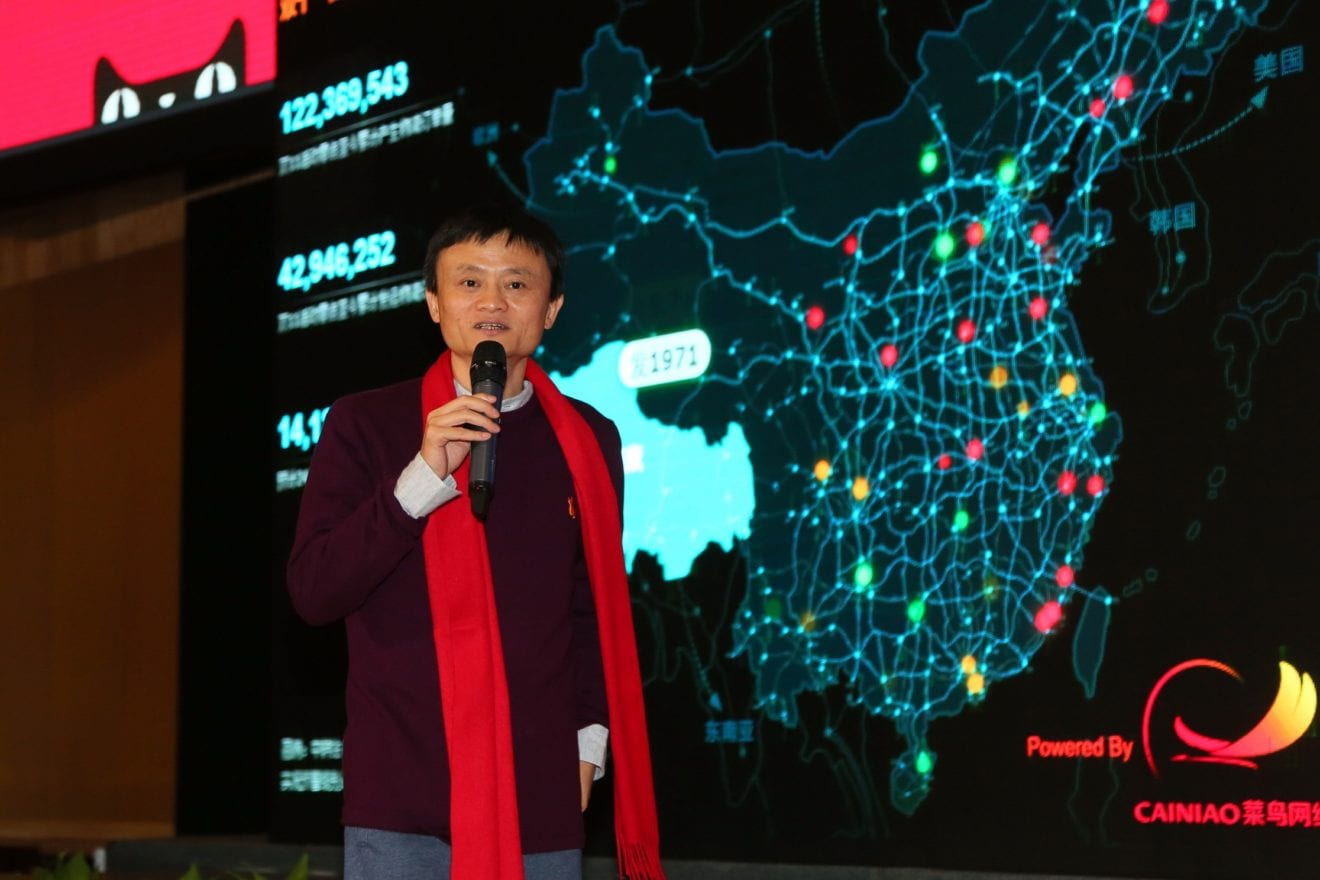
    Ordering the goods is one thing. Delivering them quickly is another. Alibaba’s logistics affiliate, Cainiao Logistics, is bolstering domestic and international shipping capabilities for the sale to ensure faster deliveries to consumers.

    Cainiao, the backbone of a network of 3000 logistics companies linked by centralised information platform, estimates that its partners will deploy more than 1.7 million delivery personnel, 400,000 vehicles, 5000 warehouses and 200 airplanes to handle deliveries for the sale. Cainiao has also launched a “Hassle-Free Logistics Service” consisting of 49 international delivery partners and 74 warehouses that can support 4 million cross-border package deliveries per day, the company says.

    This formidable infrastructure will soon be tested. The countdown to 11.11 has begun.

  • FedEx prepares for eCommerce boom

    FedEx prepares for eCommerce boom

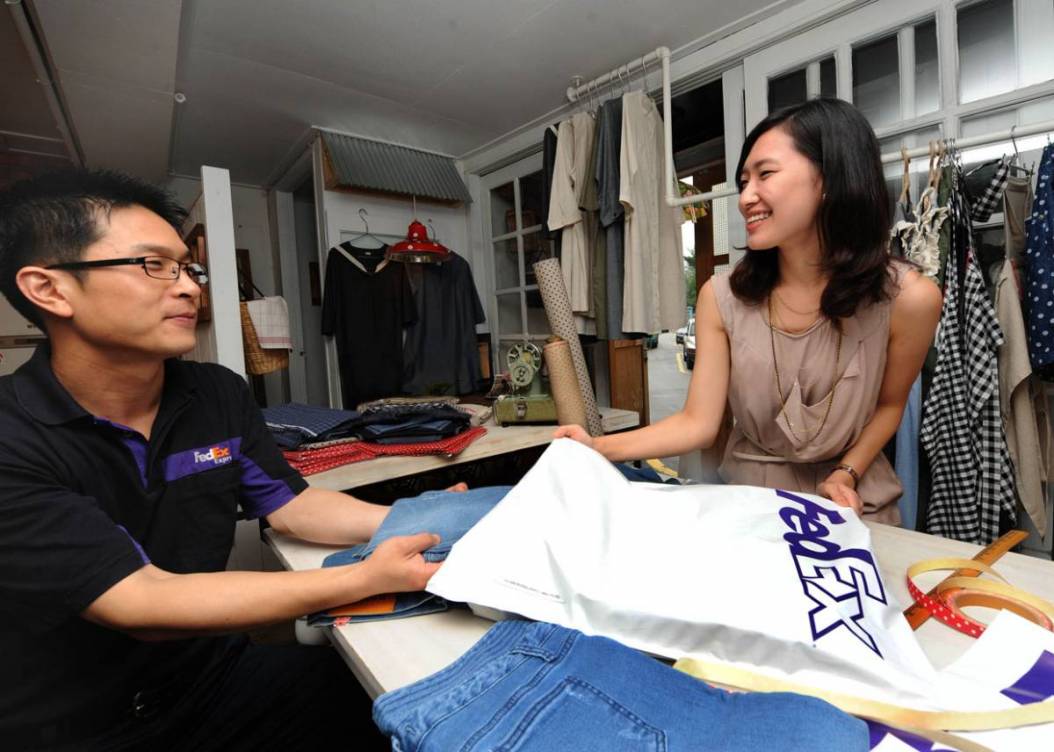
    FedEx Asia Pacific is predicting a record breaking Singles Day in Asia this November 11.

    “Due to the huge popularity of the occasion in recent years, China’s State Post Bureau anticipates that this year will see a maximum of 140 million packages being handled per day on the days immediately following Singles’ Day – an increase of 40 per cent compared to the same period last year,” said FedEx in a statement.

    “The rise of eCommerce is particularly pronounced in our region, and this translates into ever-increasing volumes of shipments at this time of year,” said Karen Reddington, president, FedEx Express Asia Pacific.

    “Our strategic investments, operational strength of our network, and more than 17,000 dedicated team members across the region – backed by more than 300,000 of their colleagues worldwide – are poised to deliver a holiday season to remember.”

    Globally, FedEx is also expecting record volumes on the US’ Cyber Monday (November 30) and the first two Mondays in December, when the company expects to move more than double its average daily volume.

    It expects a record-breaking 317 million shipments between Black Friday (November 27) and Christmas Eve – a 12.4 per cent increase over last year’s peak seasonal volume.

    FedEx says it has added 7000 delivery vehicles to its fleet and added 30 aircraft to its fleet over the last year. Across its network 55,000 package handlers, drivers and other support positions have been added to help meet the peak demand.

    FedEx Express is the world’s largest express transportation company, covering more than 220 countries and territories.a

  • Alibaba in Singles Day sales clash

    Alibaba in Singles Day sales clash

    China’s two largest internet retailers have clashed in the run-up to Singles Day, the world’s biggest online sales day, on 11 November.

    Alibaba has been accused by its smaller rival JD.com of “forcing retailers” to promote their sales exclusively with its own outlet, Tmall.

    JD.com has lodged a complaint with the Chinese industry and commerce watchdog but Alibaba denies the allegation.

    The retail giant claims its rival is “panicking because they’re losing”.

    “They simply can’t match our customer and merchant experience and logistical scale because Alibaba wins with customers and merchants as we provide a superior experience for users on our platforms,” said Jim Wilkinson, Alibaba’s senior vice president of international corporate affairs.

    The Wall Street Journal reported that a shoe retailer called Mulinsen had declined to promote JD’s Singles Day event.

    Singles Day began in the early 1990s as a day for people not in relationships to treat themselves, in the spirit of Valentines Day.

    The Chinese State Administration for Industry and Commerce (SAIC) has accepted the complaint and warned retailers “not to use malicious marketing methods to engage in competition” ahead of the event, according to the Xinhua news agency.

    A recent change in legislation bans online retailers limiting promotional activity by their merchants on other platforms.

    Last year, Alibaba recorded $9.3bn (£5.9bn) sales during the annual event, which it adopted in 2009.

  • How Chinese language store on-line

    How Chinese language store on-line

    Spend a while with Chinese language shoppers and also you shortly realise how totally different their purchasing habits are in contrast with these of Westerners.

    As an American who has been dwelling in China for greater than 10 years, I’ve come to understand simply how important eCommerce has turn into to my fellow Shanghainese. I ask my buddies the place they discovered these cute footwear, or that imported ingredient, and the reply is all the time the identical: “I discovered it on-line”.

    Whereas in America and different nations eCommerce is primarily a way to an finish, for a rising variety of Chinese language individuals, on-line purchasing has develop into a part of a life-style that defines how they see themselves. And for me, browsing Taobao, China’s largest C2C market, has grow to be a routine exercise that permits me to refill on necessities, in addition to hard-to-find reminders of house for my rising household. Listed here are 4 of my private observations on why individuals have adopted Taobao as a part of their day by day lives:

    Personalisation.

    It’s not simply the altering graphics on Taobao’s entrance web page, harking back to Google Doodles. Frequent Taobao customers discover that their buying experiences appear to be tailor-made to their wants. That’s no coincidence. Ding Xi, director of Taobao Market’s consumer expertise division, says that cultivating a “character” is a vital function of Taobao’s platform.

    With so many extra customers on Taobao than on websites like Amazon, Ding says his division “can analyse shopper conduct and perceive its clients in a way more in depth method,” which permits the location to configure itself to go well with particular person buyers. From login, the location makes use of in depth knowledge to pick advertisements, merchandise and Taobao outlets in accordance with profiles developed for customers so that every finds what they’re in search of quicker.

    Cellular Commerce.  

    Some 300 million cellular purchasing customers (that’s virtually your complete inhabitants of the US) spent greater than US$1.6 trillion on on-line purchases in China final yr, in line with China eCommerce market analyst Enfodesk.

    At present almost one out of each two on-line purchasing transactions are finished on cellular units in China and that quantity is rising quick because it turns into more and more handy to browse and pay for items utilizing smartphones.

    Jessie Chen, a younger Shanghai skilled, says she makes use of Taobao on each pc and cellular, however provides that the cellular platform is properly suited to her wants when she’s away from her desk.

    “Once I verify my package deal supply standing, or once I’m out, I often verify on cellular,” Chen says.

    Partnerships between offline retailers like Walmart and e-payments supplier Alipay is even making it attainable to make use of telephones to pay for purchases in bodily shops.

    Individual to Individual.

    Chinese language tradition locations a excessive worth on guanxi, or private connections, and you may expertise that firsthand on Taobao.

    The location’s Aliwangwang prompt messenger is a closely used function that permits consumers and sellers to speak by way of actual time chats earlier than and after purchases. Due to cellular integration, response time is quick and conversations can transcend the constraints of 9-5 enterprise hours. Current college graduate Yashan Zhao says Aliwangwang is as a lot a social software as it’s a enterprise software.

    “Chatting or flirting with the sellers and clients service is nice enjoyable,” she says. Interactions may be unusually intimate. Many sellers tackle their potential clients as “pricey” which contributes to a extra private environment. And to ensure each buyer and vendor are glad, cost is made by means of Alipay, which ensures that no cash modifications palms until each events are completely satisfied.

    Taobao consumers take it a step additional, crowdsourcing info by way of purchaser critiques. Evaluations often function detailed feedback that embrace a number of pictures and details about how the package deal arrived, how properly the product matched the photographs within the product description, and whether or not sizes match nicely.

    “I’ll often verify the consumers’ feedback first earlier than I purchase something on Taobao,” says 20-something on-line shopper Pan Hu. “My pal’s opinion will probably be a key cause for me to purchase it or not.” 

    Window Purchasing.

    Browsing round on Taobao can reveal gadgets on the market that you simply’d by no means see on websites like Amazon or eBay. With services obtainable from automobiles and airplanes to canine walkers to farm recent produce, buying on Taobao might be pure leisure.

    “In addition to the issues I want, there are a number of issues in Taobao which are artistic,” says Pan. “It’s all the time enjoyable to dig round. There is perhaps surprises.”

    Many Chinese language internet buyers wish to browse to see what’s fashionable as an alternative of simply looking for the merchandise they need. Due to the depth of product choices, consumers additionally use Taobao and sister buying website Tmall.com to match costs with retail outlets. The websites’ vertical integration features like an enormous on-line mall, with consumers capable of effectively select between discount items and brand-name merchandise.