Retail News CRM

Tag: sony

  • PlayStation 4 Pro is now officially available in Malaysia

    PlayStation 4 Pro is now officially available in Malaysia

    Malaysian gamers and fans, you can finally head out and purchase the Sony PlayStation 4 Pro now as it’s been officially released in the country according to an announcement that was made via the official Playstation Asia Facebook page.

    We reported on the announcement of the PlayStation 4 Pro previously, and it was scheduled for an initial release in certain markets on 10 November. Although the retail price for most countries, including Malaysia was revealed (RM1799), an actual release date was not confirmed.

    It seems now that fans in Malaysia won’t have an agonisingly long wait to get their hands on the new console as Malaysia is also releasing the console today (10 November 2016).

    According to the Sony Playstation Asia Facebook page, you can head to Sony Centres around the country to get the console. There are limited units available at the moment and according to the Facebook page, customers are advised to contact the Sony Centres to confirm availability of stock. You can get a list of Malaysia Sony Centres here.


    As for customers who have pre-ordered the Sony PlayStation 4 Pro beforehand, you should be getting your units pretty soon as well. We managed to get in touch with Sony and they said that pre-order batches are expected to reach retailers today (10 November 2016).

    We, however, could not ascertain which particular retailers these were and whether they included online e-commerce sites like Lazada, 11thStreet and GemFive. It has been advised that customers who made their orders via those channels to check with the sites themselves for confirmation.

    Do tell us if you managed to get your pre-ordered PlayStation 4 Pro or purchase it at an authorised retailer. We’re guessing there are pretty limited stocks available for Malaysia so although it may be officially released here, there might be a bit of a wait till customers will actually be able to get their hands on one. We’re currently reaching out to Sony on the stock availability and restocking schedule, so stay tuned!

    And if you don’t mind waiting and still want to get your hands on a PlayStation 4 Pro, you could still pre-order a unit below.

  • Sony’s GEM expands into SE Asia

    Sony’s GEM expands into SE Asia

    GEM, the joint venture entertainment channel between Sony Pictures Television (SPT) Networks and Nippon Television Network (Nippon TV), is expanding into new Asian markets.

    The channel will launch in Indonesia, the Philippines and Singapore, making it available to viewers on over 10 pay-TV platforms across six markets in Asia.

    From August 1, it will roll out on Indovision, MyRepublic, Nexmedia, Skynindo and Transvision in Indonesia, ACCION’s distribution network of provincial cable affiliates in the Philippines, and Singtel TV in Singapore.

    GEM is already available on PPCTV in Cambodia, nowTV in Hong Kong and TrueVisions in Thailand.

    Since its launch in 2015, GEM has carved a niche in the premium Asian entertainment space offering first-run and exclusive dramas, comedies and variety entertainment shows from Japan and other northeast Asian markets.

    “We’re focused on taking GEM beyond the screen and into the lives of fans across the region via talent tours, local filming and fan meets. Our new series, ‘We are Asia – Dean Fujioka & Friends,’ marks the first original series for GEM, and will pave the way for more localized content in the future,” said Ang Hui Keng, SVP and GM of Sony Pictures Television Networks in Asia.

    In addition to the channel’s first original production, viewers can look forward to Nippon TV’s “The Music Day 2016 – Beginning of Summer”, which brings together Japan’s top artists in a festival that celebrates the very best of J-pop.

  • Massive O2O plan by Alibaba and Suning

    Massive O2O plan by Alibaba and Suning

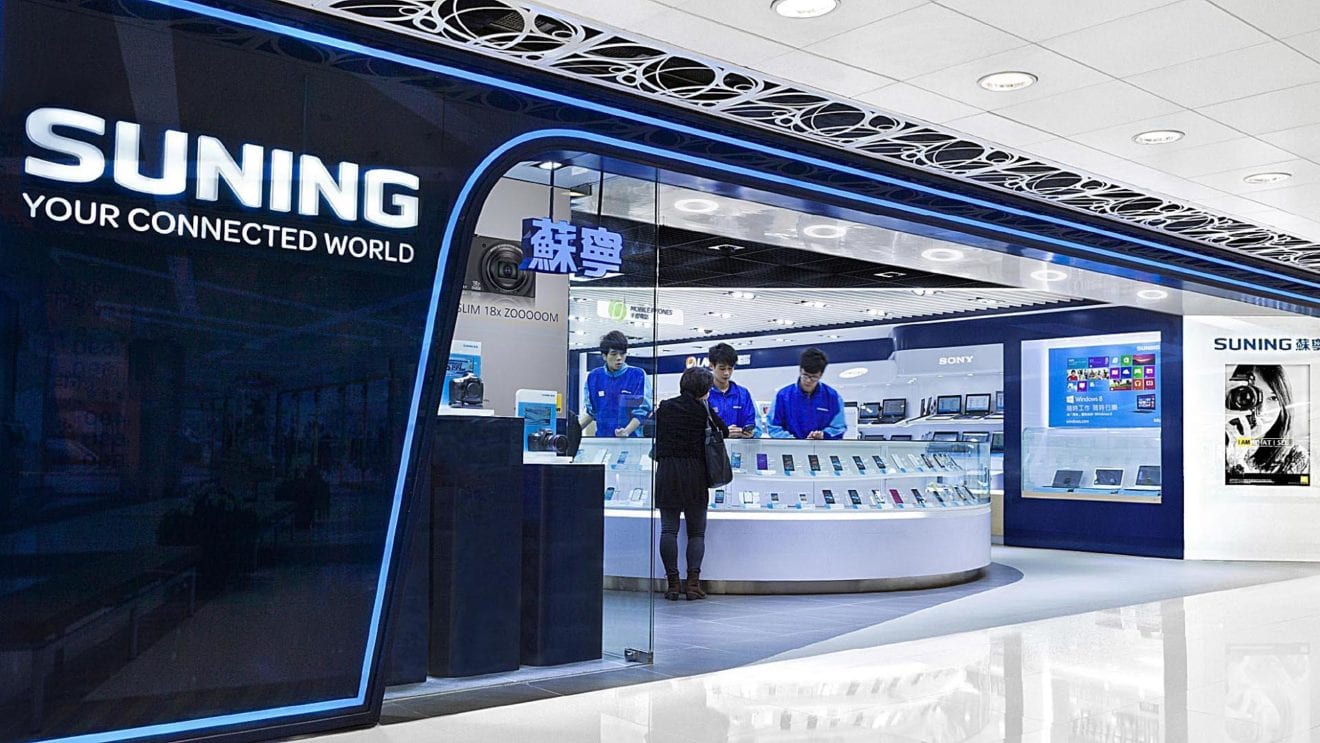
    Alibaba and Suning, one of China’s largest electronics retailers, plan to fuel Chinese and international consumer electronics brands sales over the next three years by investing in an online-to-offline (O2O) retail initiative.

    The pair will work together to build out an O2O, or “omni-channel,” network combining the former’s online retailing assets with the latter’s physical stores and distribution facilities to make purchasing of consumer electronics and home appliances easier for consumers, officials for the companies said at a press conference in Beijing.

    The two companies expect to quadruple sales of major electronics brands – including Haier, Samsung, Xiaomi and Lenovo – over the next three years, using big data from both businesses, said Alibaba Group CEO Daniel Zhang.

    “This can be achieved by integrating the online and offline sales channels under a digitalisation process,” Zhang said.

    Alibaba and Suning began working together on omni-channel retailing last year after Alibaba agreed to invest RMB 28.3 billion (US$4.63 billion) for a near 20 per cent stake in the bricks-and-mortar retailer. Suning’s network of 1600 stores and 5500 after-sales service centers are linked with Alibaba’s online platforms, and Suning’s distribution network, which includes 4.55 million sqm of warehouse space, is used to deliver products purchased online by consumers via Alibaba’s Taobao Marketplace and Tmall.com shopping sites.

    Working with Alibaba’s logistics affiliate Cainiao, Suning and Alibaba currently offer 12-hour delivery of appliances and consumer electronics in Beijing, Shanghai, Guangzhou, Hangzhou, Shenzhen and Nanjing.

    Alibaba and Suning said they will also support electronics brands by allowing them to leverage consumer data on Alibaba’s 423 million annual active buyers and Suning’s 250 million members. Big data technology can enable more targeted sales and marketing campaigns and even provide insights that allow electronics manufacturers to make products that better meet consumer needs, the companies said. Using consumer data, German electronics company Siemens launched a refrigerator customised for Tmall users in March and Chinese appliance maker Midea in May began selling a rice cooker that was designed partly based on Tmall data.

    “We build a bridge between brands and consumers by leveraging data,” Zhang said.

    International and domestic brands joining the Alibaba-Suning support program, called the Super Brand Alliance, include Midea, Haier, Samsung, Hisense, Huawei, Xiaomi, Lenovo, Siemens, Sony, Skyworth and Canon.

  • Retail’s new reality

    Retail’s new reality

    The reality of retail is shifting. Retailers now operate in an environment of big data, new technologies, blooming online marketplaces, hybrid consumption patterns and fragmented needs. Shoppers are more empowered and increasingly demanding when it comes to retail expectations.

    At last month’s Marketing’s full-day conference, Retail Marketing Hong Kong 2016, marketers and delegates were together to explore how technologies could really help drive their business forward and convert single transactions into loyal consumers.

    WCH_0909

    Online shopping is one obvious area and big moves are underway. But the online world moves fast and traditional Hong Kong retailers do not.

    Simois Ng, head of marketing communications at Sony Corporation of Hong Kong, shared some of the local people’s online purchase patterns: Only 13% of them buy electronics online, while 75% of the shoppers buy air tickets.

    She said in the electronics industry, there are so many dealers and physical stores in the city, it’s natural for customers to try out and then finish the transaction at the brick-and-mortar shop.

    DSC09412

    She added that even though customers shop at its official online store, almost 90% of them select to pick up at the physical store.

    E-commerce and new mobile payment solutions were basically non-existent just a decade ago. Innovation today is everywhere. New delivery methods, showrooming, connected retail, access to real-time customer data and purchase history … today’s retail market is exciting.

    By just clicking a mouse or touching a screen, shoppers can buy nearly any product online – from groceries to cars, from travel insurance to air tickets.

    At the panel discussion, PRIZM’s director Jeffrey Hau pointed out that while online payment seemed to be the last thing retailers assumed they needed to worry about when it comes to e-commerce, he said it was an issue because many stores can’t process transactions properly from one in every three customers due to some poorly designed payment gateway.

    WCH_0938

    Edmund Wong, director of MyDress.com, echoed the point and said many brands still treated e-commerce as part of their marketing project as if it were just another sales channel to the mix.

    Wong said e-shop deserves a seat at the table; Hau agreed with him and said online shopping is indeed an added value activity to brands.

    In addition to offering mobile and online services, many argue that “an experience” has to evolve alongside the digital world. Making sure people have the right experience is critical.

    In the past, HMV was just a shop selling CDs and DVDs, but in the 21st century, Robert Esser, CEO of HMV Media & Entertainment, said the company had decided to inject new concepts into the 100-year-old brand.

    At its Central flagship store, it has seen the two-floor outlet revamped with a warmer interior design, adding a modern F&B area, expanding the vinyl area and also adding a lifestyle section to offer headphones, figurines, books, magazines, stationery, backpacks and accessories to enhance the customer’s experience.

    Earlier this year, the household name kept pushing forward and opened another flagship store in Causeway Bay that reinvented itself from the “supermarket-style” CD stores to the modern “place to dwell” of the new generation store in Hong Kong.

    HMV2

    While traditional marketing was all about pushing a brand’s message to consumers, in the era of the consumer, as Dane Fisher, managing director at Infiniti Motor Asia and Oceania, said at his keynote presentation, marketers need to add value to the relationship with their consumers.

    Fisher stated that auto shoppers are doing more research than ever before. On average, each potential customer will go to 24 different touch-points while researching their car purchase – from customer review sites to videos and third-party sites.

    “It’s a double-edged sword: the greater the number of touch-points, the harder it is to be useful and engaging at each interaction. The plus side is it has given us more opportunities to make a meaningful connection,” Fisher said.

    infiniti-nest-accelerator-2-01-800

    That’s why the carmaker recently launched an accelerator programme for start-up companies to add value to the ecosystem its customers inhabit.

    One of the programme finalists, Precision Services, produced a smart electric bike, which is light and foldable. It won the backing of Infiniti so the bike will now be an Infiniti-branded product.

    Alongside these innovations, start-ups are bringing new ideas and new energy into the space and traditional retailers are realising how they also must innovate at levels they had never imagined. And it’s not just innovation for innovation’s sake.

    Mobile is a key resource for customers when it comes to researching and making purchase decisions, therefore some retailers tap technology, such as collecting users’ locations, accessing their photo albums or even analysing their emails to gain more consumer insights.

    Ayaz Akhtar, country manager of Survey Sampling International Hong Kong, reminded the audience that corporations needed to be careful not to cross the line because if consumers’ shared data was not used properly, “a connected world can turn against you very quickly”.

    He cited a study by SSI that indicated 65% of Hong Kong respondents found it “extremely/very creepy” for businesses to analyse their emails.

    He explained there is no benefit to the consumer when a business is analysing their email, especially when emails can contain very confidential or sensitive information so people will not feel comfortable sharing emails that have personal information.

    He added if brands could provide benefits to consumers’ daily lives, those means of technologies are rated as being less creepy.

    As social media has disrupted the balance of power between brands and customers, more and more companies are reaching out to influencers in the hopes of raising product awareness or even boosting sales.

    No stranger to social media, last year Hong Kong Airlines utilised the popular black bear mascot Kumamon to promote its first flight service to Kumamoto Prefecture in Japan.

    Ming Chan, general manager of brand centre at Hong Kong Airlines, said with the “meet and greet with Kumamon” street event, it attracted more than 6,000 participants which enhanced the airline’s brand image.

    Kumamon

    Chan added that at the end of the day, staff members were the best brand ambassadors and influencers because “they endorse your company spontaneously”.

    The airline offers nine free quotas in the nomination list for discounted tickets, covering staff’s family and friends. She said this can nurture the word of mouth to influence better business results.

    In the past, a little differentiation in a brand’s strategy would go a long way, but today’s brands need to navigate through a complex maze of information and multiple touch-points as technology has made the journey less linear and more social.

    Dennis Chung, assistant vice-president of product marketing and solutions consulting at HKT, said for a successful digital marketing campaign, it depended on how well you understand the target audiences.

    When we think of the complexities of retail and digital commerce today, Daniel Hagos, client success director at Emarsys, said it was vital for retailers to take the step and go beyond the limits of human knowledge and begin to adopt a more progressive perspective on customer intelligence.

    WCH_0495

    He said a customer’s data can power actionable intelligence, building messages that reach the consumer when the moment is right, on the device they prefer, and with a promotion that will get them to buy.

    He added automation, for example, uses data from online and in-store interactions to target first-time shoppers who may be ready to make their second purchase.

    Hagos explained this period between a first and second purchase is a huge opportunity for retailers to lay the foundation for a positive customer experience and long-term loyalty.

  • Lippo Group expands into online wholesaling

    Lippo Group expands into online wholesaling

    After launching its Matahari Mall online shop in October, Indonesia’s Lippo Group is expanding its eCommerce activity into wholesale services.

    It is set to launch Mbiz.co.id next month, targetting businesses and government institutions. It digitises the procurement process, which Lippo Digital Group CEO Adrian Suherman says translates into efficiency.

    To offer its customers more choice, Mbiz is hoping to attract a wide range of vendors to join its platform as suppliers. The aim is to offer an easy alternative to cumbersome conventional procurement, where a business has to find vendors and compare them one by one, negotiate prices and record transactions manually. Mbiz wants to expedite procurement by making vendor information easily available, comparable and transparent, as well as offering flexible payments.

    Meanwhile, the eCommerce site has been selling products from 12 main categories, including electronics, furniture, office supplies and packaging. Its vendors include Asus, HP, Philips, Samsung, Sony and other blue-chip companies.

    Mbiz intends to start selling heavy machinery and agricultural goods as well as maintenance, repair and overhaul items for businesses and government institutions.

    “If we talk about fashion in B2C business, it is going to be the clothing itself, but in B2B or B2G business, the items are yarn, loom, sewing machines, embroidery machines and fabrics,” says Mbiz co-founder Ryn Hermawan.

    As many businesses have their own particular procurement systems, Mbiz uses a direct-selling strategy, giving individual presentations to companies and organising events to introduce its services. A follow-up team is available to train businesses and help them evaluate their performance.

    Mbiz can also offer clients product recommendations and input on when they need to buy goods based on their historical data.

    For the largely untapped government institution market, Mbiz will play the role of vendor by providing its e-catalogue to the Government Procurement Regulatory Body (LKPP). Co-founder Andrew Mawikere says the potential for the procurement of government goods and services in Indonesia last year was Rp31 trillion (US$2.36 billion) without e-tendering.

    Mbiz has fewer than 100 employees and is funded by Lippo, but says it is open to foreign investment in the future. The unit is run by Brilliant E-Commerce, part of the Lippo group. Matahari Mall is run by Global Ecommerce Indonesia, in which Investama Digital Ventura holds a majority stake.

  • Virtual reality in retail stores

    Virtual reality in retail stores

    Virtual Reality, as a concept, has been around for over 50 years.

    In the beginning, it was literally the stuff of science fiction.  Then in the early 90’s it actually became reality, when physical prototypes were developed, using the modern technology of the era.  The results were underwhelming – imagine pixelated graphics and heavy, nausea inducing headsets. The concept lay dormant for 20 years before anyone thought to revisit its feasibility.

    That person was Palmer Luckey, the young inventor and founder of Oculus VR. What he discovered is that without anyone realising it, technology had quietly caught up with the requirements of VR. There were now low-latency head orientation sensors and small, high-refresh rate OLED displays which didn’t exist just five years ago.

    Using these off the shelf parts, he constructed a rudimentary hardware proof-of-concept which delivered an immersive experience far beyond what had been seen before.

    From this initial prototype, Oculus was founded, bringing on board many high profile experts in the field of computer graphics, alongside millions of dollars in funding. Their inaugural consumer VR product is about to be released to the public, and many smart people consider this to be a watershed moment.

    Will this be the event that introduces practical VR to the masses?

    Oculus (now owned by Facebook) is leading the way, but Apple, Google, Microsoft and Sony are all working on their own implementations of VR. There’s a full-on VR technology arms race happening, with the usual suspects involved.  They recognise the huge potential of the medium, and the unique ways it can complement their existing product offerings.

    VR 2.0

    This new generation of VR technology is in its infancy, and as with any nascent platform, pundits try to predict the types of experiences it will enable. Stereotypically, new mediums are often projected (interpreted) through the lens of the incumbent platforms which precede it.

    The first automobile was considered a “horseless carriage”. The first motion picture content was essentially just televised theatre. Simply re-imagining the experience of an old medium through a new one may be the path of least of resistance, but it ignores the unique elements of the new.

    So the theory goes, in order to fulfill its true potential, a new medium needs to abandon previous biases and embrace the characteristics and constraints which are unique to it.

    But does this calculus apply to VR? Perhaps not. Unlike all previous mediums, it is has no baked-in constraints. It is not simply a proxy for storytelling or communication. Its ambition is to replicate the reality we natively experience. It is, by design, the last medium.

    The obvious question becomes, what are the scenarios for which diving into an alternate reality becomes preferable to the “real” reality someone is experiencing. As mature as the underlying technology becomes, VR, for the foreseeable future, will forever be chasing the tail of “real life”.

    So what is the individual incentive to temporarily replace what we already (if we’re so lucky) get for free? Understanding the motivations that drive these virtual experiences can uncover the opportunities and jobs to be done of the medium.

    Applications

    In the context of VR, the virtual “reality” is simply “content”. As with all previous mediums, the success of this one will be intrinsically tied to the abundance and quality of content created for it. In this respect, authors and the tools they use to create with will be just as important as the technology that audiences use to consume with.

    These creation tools are also nascent, and consist of both hardware and software solutions.  Let’s explore a potential use-case for this technology within the realm of current domains.

    Virtual reality in retail: eCommerce and virtual stores

    A common current trend in the eCommerce space is the realisation that an online presence alone is not enough to deliver the ideal consumer experience. Even Amazon, the largest pure-play online commerce company has recently opened a “bricks and mortar” physical presence near its headquarters in Seattle.

    What is the impetus for taking this step “backwards” into the 20th century? Well, these companies have discovered that even with an (essentially) limitless online catalogue, the experience of browsing their catalogues online doesn’t compare to the act of literally walking down the aisles of a physical store. It is no substitute for the physical discovery process we take for granted.

    This applies not only to the type of merchandise that Amazon became famous for, like books, but especially so for more visual products like clothing and fashion. There is no substitute for the tactile experience of wandering through a curated store.

    But providing a physical presence requires sacrificing one of the key advantages of online commerce; having an effectively infinite reach, with the ability to target any consumer, wherever they are, independent of their physical location. Reaching global penetration at this physical scale is beyond the reach of all but the largest retailers.

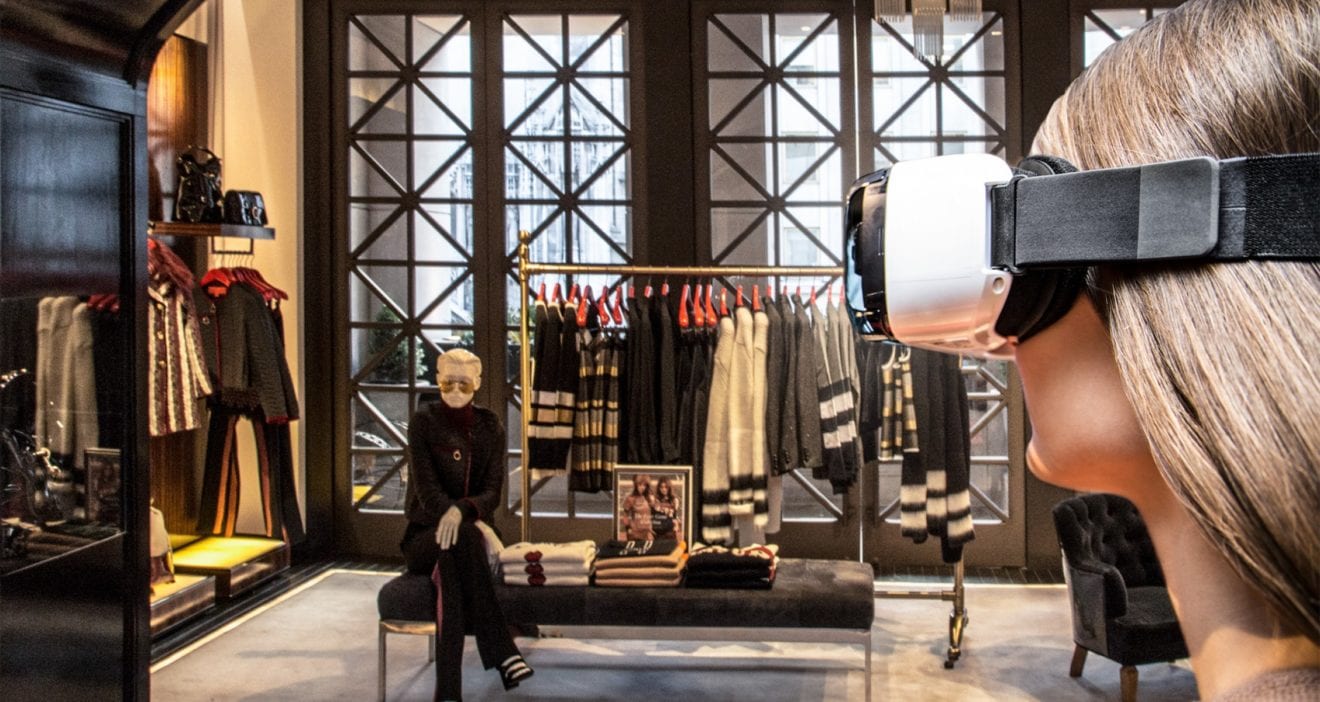
    Imagine consumers using VR to browse a virtual physical store, representing the catalogue (or a subset of) the online inventory. Even brands that have an existing physical retail footprint would benefit from the ability to amplify this bricks-and-mortar experience across markets they don’t have the scale or reach to address.

    Sizing has been an eternal struggle for online clothing retailers and consumers alike. How to know if the shirt you’re purchasing online will actually fit properly when it arrives?  Sizing charts are not standardised, and even if they were, there is no single reference body type to target a perfect fit.

    So how do you try before you buy? A virtual fitting room could come very close to replicating the experience of trying on clothes in a real physical fitting room. Imagine associating detailed physical dimensions of your body with your online shopping persona.

    Using this information, alongside similarly detailed sizing information for the individual clothing items could let you try on pieces of clothing in a virtual mirror. As you raise your arms or tilt your hips, you could see the fabric as it contours and hangs off your virtual body.

    Future opportunities

    This is just one creative application of VR hardware and virtual environments. The potential is almost limitless, and there isn’t a field or industry that won’t be touched in some way by this technology.

    While the incumbent hardware/software companies have all planted their stakes in the ground, there will be massive opportunities for all players in the ecosystem, especially content creators who understand how to create experiences on this new canvas.

    Once again, this illustrates the competitive advantage which exists for companies who can master the intersection of design and technology. Organisations who successfully combine these two disciplines will be in a unique position to benefit from the enormous future demand for virtual experiences.

    written by Marc Lamothe, Technical Director at Start Hong Kong

  • Heavy Rain To Release On March 1st For PS4, Retail Version Confirmed In EU And Asia

    Heavy Rain To Release On March 1st For PS4, Retail Version Confirmed In EU And Asia

    Quantic Dreams has announced the release date of Heavy Rain for the PlayStation 4. According to a press release, the game will launch on March 1st for the PlayStation 4 in North America and March 2nd for Europe and Asia.

    Heavy Rain was originally released for the PlayStation 3 and it was confirmed for the PlayStation 4 along with Beyond Two Souls last year. These games will be released in a bundle for retail in Asia and Europe but will be sold digitally in North Ameirca.

    If you were interested in picking up a copy of Heavy Rain in North America, you can get it on March 1st, although it is digital only release there. For Asia, Quantic Dream is releasing the game with Beyond Two Souls in a bundle on March 2nd. Europe and UK will also get similar bundle on March 2nd and 4th respectively.

    Heavy Rain is a mystery thriller that was released to critical acclaim exclusively for the PlayStation 3 back in 2010. The game was developed by Quantic Dream, who followed it with their next game: Beyond Two Souls. Both of these are finally getting released for the PS4.

    If you already own Beyond Two Souls digitally, you can get Heavy Rain for a discounted price once it launches on March 1st.

    Quantic Dream are currently working on a brand new project for PS4 called Detroit: Become Human. It was revealed at Gamescom 2015 and will be released exclusively for the PS4 sometime in future.

  • Pay by watch in Singapore NFC trial

    Pay by watch in Singapore NFC trial

    Sony, Singtel and the Land Transport Authority have teamed up in a Singapore NFC technology trial allowing commuters to ‘pay by watch’ on public transport.

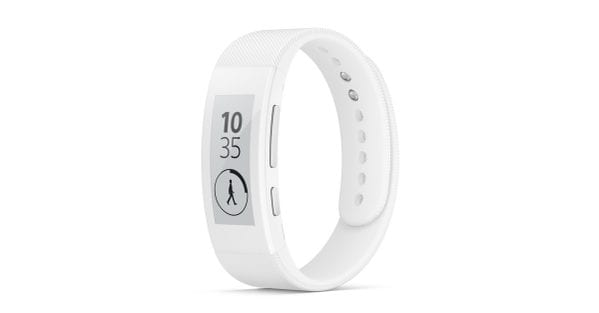
    Commuters wearing Sony SG50 SmartBands with Near Field Communication (NFC) technology will be able to make mobile payments on public transport in the future if the trial goes to plan.

    The trial involves EZ-Link, NETS and TransitLink – and the LTA says it’s part of an on-going effort to leverage technology to bring greater convenience to commuters through new, innovative and convenient ways to pay for travel.

    In addition to public transit, some 200 commuters in the trial will be able to use their SG50 SmartBand at a myriad of retail and merchant outlets including food and beverage outlets and libraries. They can also track their daily activities and sleep quality, and synchronise the measurements into their smartphones via Bluetooth for visual tracking and display.

    LTA CEO Chew Men Leong said the combination of wearable technology that enables faster, easier and more convenient transit transactions, with mobile retail payment services and lifestyle/wellness tracking, is an exciting development for commuters.

    “Insights provided by the trial will help LTA assess the performance of fare transactions using the smart band and gather feedback in assessing the potential use of wearable technology in public transit.”

    Some 200 commuters will participate in the trial which ends on February 29 next year. During the trial, participants will wear the Sony SG50 SmartBand encoded with a digital CEPAS card designed for fast, convenient and reliable contactless payments on public transit.

    The participants will only need to hold up their wrists to the fare card reader on buses and at MRT/LRT stations to pay for their journeys, making the travel experience faster and more convenient. To top-up the stored value in the band, participants simply need to place the band on the card reader of a top-up device, just as they would a transit card. For greater convenience, they can also opt to register for automatic top-up services.

    For greater mobility, participants can establish a Bluetooth connection with the Singtel mWallet app to check their band’s stored value balance and transactions while on the move. In future, the wearable may also be topped up through the app, at a later stage.

  • Sony Talks Digital Distribution And The Shift Away from Physical Retail

    Sony Talks Digital Distribution And The Shift Away from Physical Retail

    SCE President Andrew House talks digital distribution and the shift away from physical retail occurring this generation.

    At Sony’s Investor Relations Day 2015 presentation, House spoke about the improved network features of the PS4 over the PS3 and believes that it’s one of the drivers for the shift. He also pointed out that having earlier and more accessible access of digital releases are contributing elements now that download versions arrive on the same day with retail copies and can often be pre-loaded.

    House also talked about the impact on profit, noting that regions will be affected differently based on technology and user preference.

    “Anecdotally the new console generation has certainly marked a shift to digital distribution in my opinion. Pre-loading, more competitive pricing and day and date access are the big factors for me, plus the requirement of retail releases to install and often download day one patches negates the speed factor of retail purchases.”

    In recent times, both Sony and Microsoft have embraced flash sales and discounting of online products.

  • Sony US exits direct retail

    Sony US exits direct retail

    Sony US is to close down its direct retail business, closing the 10 remaining stores this year.

    The decision follows the failure of a new Sony store concept which superseded its Sony Style format about four years ago. It has run its own retail stores for more than a decade in the US, but never achieved the sales or awareness of Apple which set a global standard in electronics retailing.

    Instead, the Japanese electronics giant will focus on partnering with specialist retail chains to boost sales in the US market, where it has struggled to achieve profitability for years, against tough competition from Korean and Chinese rivals.

    Sony Electronics, now renamed Sony North America and managing sales, marketing, distribution and customer service throughout the US, Canada and Puerto Rico, will maintain a brand-building flagship in New York and another showcase near its motion picture studio in California.

    Mike Fasulo, president of Sony North America, confirmed this week that 20 stores were closed last year and the remaining 10 will be closed as leases expire or are renegotiated.

    It would now focus on stores-within-multi-brand-stores like Best Buy, a strategy which has worked well for Samsung.

    Most of the Sony US stores were in shopping centres with high rents and were not selling sufficient volume to justify their continued trading.

    Mike Fasulo, president of Sony North America, said Sony US now has concessions in about 400 Best Buys across the US and aims to boost that to 500 this year in that and other chains.

  • Sony to launch training headset for runners

    Sony to launch training headset for runners

    Sony Corp. said on Thursday it plans to launch a training headset for runners called Smart B-Trainer that uses music to help runners adjust their pace.

    The 43-gram device monitors heart rate, calorie consumption and running pace, and even selects songs for adjusting the pace, from a databank that can store up to 3,900 songs.

    The device is expected to sell for around JPY30,000 (USD250) when it hits store shelves on 7 March.