Retail News CRM

Tag: Tata

  • Tesco, Tata invest US$9 million in Indian JV

    Tesco, Tata invest US$9 million in Indian JV

    British grocery retailer Tesco and Indian conglomerate Tata have invested another US$8.9 million into their joint venture Trent Hypermarket.

    The move marks the first major capital investment in the business by the partners in two years, and comes on the heels of the appointment of new CEO Martin Bailie.

    While revenues expanded 22.5 percent to $164 million in the previous financial year, the business’s losses have also grown. According to IGD Retail Analysis head of insight – Asia Pacific Nick Miles, Tata has been in talks with Walmart for renewed investment, following concerns over Trent’s relatively modest expansion in the territory.

    “The renewed investment from both parties should put talks on any new investors on hold for a while,” said Miles.

    “Having exited – or in the process of selling its operations in – China, Thailand, Malaysia and Poland in the past 12 months, perhaps Tata was nervous of Tesco’s commitment to the market. However, the investment signals that it remains committed to the JV.”

  • Tata mulls AirAsia India, Air India Express merger

    Tata mulls AirAsia India, Air India Express merger

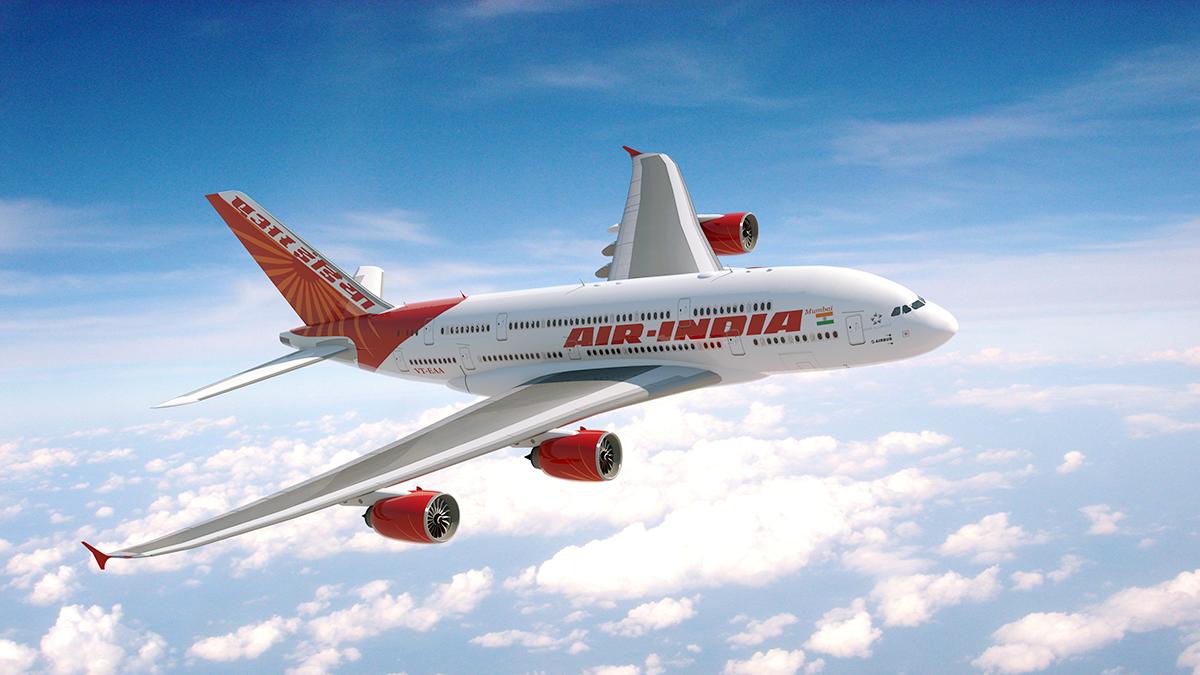
    Tata Sons may partner Singapore Airlines (SQ, Singapore Changi) in bidding for Air India, amid hopes it will merge its AirAsia India subsidiary with the flag carrier’s low-cost unit Air India Express, local media reported on February 4.

    The Indian conglomerate already operates Vistara as a 51/49 venture with Singapore Airlines. A combination of Air India and Vistara would give Tata Sons a monopoly in the country’s full-service market. The two partners have started working on a possible structure for such an acquisition, according to the reports.

    Tata also holds 51% of AirAsia India. It has approached Tony Fernandes of AirAsia Group, which holds the remaining 49% of AirAsia India, to gain his approval to acquire Air India Express, sources told the Times of India. This is because the two companies’ shareholders’ agreement stipulates that Tata cannot invest more than 10% in another budget carrier without Fernandes’ approval.

    “The merger would give Fernandes a bigger play in Indian aviation, so it’s a win-win for both partners,” a source said.

    A Tata-Singapore Airlines bid would be based on the understanding that the low-cost business would be run by Tata and Fernandes, another unnamed source told the Times of India, while the arrangement with SIA would only be for the full-service carrier.

    Tata Sons board member Natarajan Chandrasekaran recently told the newspaper that the group “will not run a third airline unless we merge”. However, on February 5, he told the Press Trust of India that it was still “too early” to make a decision about any kind of bid for Air India.

    Fernandes is currently the subject of an ongoing investigation by India’s law enforcement and economic intelligence agency, the Enforcement Directorate, for allegedly lobbying the government to secure overseas flight permits. Moreover, he resigned from his role as AirAsia Group CEO on February 3, ostensibly for two months, while the group conducts an “independent investigation” into the Airbus bribery scandal that erupted this week. Sources said that the cases against him could give Tata Sons second thoughts about any future deals.

    The final date to submit an expression of interest for Air India is March 17.

  • Tata Motors Group’s Global Wholesales Declined By 3% In December 2019

    Tata Motors Group’s Global Wholesales Declined By 3% In December 2019

    Global wholesales for JaguarLand Rover along stood at 50,001 vehicles, which included the 5,492 vehicles wholesaled by CJLR, the joint venture between JLR and Chery Automobiles. As for the total wholesales from the Jaguar brand alone, for the month, it stood at 12,742 vehicles, while Land Rover’s contribution to the total wholesales for December 2019 was 37,259 vehicles.

    On the other hand, global wholesales of all Tata Motors’ commercial vehicles and Tata Daewoo range in December 2019 were at 34,526 units, lower by 15 percent, as against the 40,619 units wholesaled in December 2018.

    In December 2019, Tata Motors’ domestic sales stood at 44,254 units (PV + CV), a decline of 12 percent in volumes as compared to 50,440 units sold in December 2018. As for year-to-date sales, Tata’s volumes for FY2020 (April-December) stood at 347,796 units, down by 30 percent over 497,972 units sold during the same period the fiscal.

  • Tata subsidiary sells two giant Indian malls

    Tata subsidiary sells two giant Indian malls

    Two giant Indian malls, in Nagpur and Amritsar, have been snapped up by Virtuous Retail South Asia for US$100 million.

    The 1 million sqft Amritsar centre and 700,000 sqft Nagpur property were bought from Tata Realty and Infrastructure’s Trilium shopping mall portfolio, according to a report on Livemint. Virtuous, which is building a portfolio of Indian malls, is the retail development subsidiary of investment company The Xander Group. The company also recently acquired a 20-acre site from Raymond Limited in Thane, near Mumbai, where it plans to develop a mall.

    “This has been a year of active investments for us to broaden our shopping centre portfolio,” said Sid Yog, VRSA’s founder and chairman told Livemint. “Going forward, we would also explore acquisition opportunities in Kolkata and Hyderabad and add properties to the cities we are already present in.

    “We believe even gateway regional cities like Nagpur and Amritsar have significant population and retail consumption to make them attractive for us.”.

    VRSA now has more than 13 million sqft of Indian malls operating or under development across Delhi-National Capital Region(NCR), Mumbai, Bengaluru and Chennai along with smaller cities such as Surat, Mohali, Amritsar and Nagpur.

    The company says it plans to renovate and rebrand the newly acquired Indian malls.

    Meanwhile, Sanjay Dutt, MD and CEO of Trilium says the sale reflects the company’s strategy of exiting tier 2 and 3 cities.

  • Tata Nexon EV Official Unveiling Date Announced

    Tata Nexon EV Official Unveiling Date Announced

    Tata Motors has postponed the unveiling of its first electric SUV, the Tata Nexon EV, to December 19, 2019. Initially, the fully electric Tata Nexon was slated to make its global debut in India on December 17. While the company hasn’t revealed the reason for the rescheduling, we are glad that it’s differed by just a couple of days. The launch, however, is slated for some time in the Q4 of the financial year 2019-2020 (January-March 2020), and it will be the first car to be built on the company’s new electric powertrain technology – Ziptron.

    While detailed specifications of the car will be announced at the time of its unveiling, the new Tata Nexon EV will come with a permanent magnet AC motor powered by a Lithium-Ion battery, which will be liquid-cooled and IP67 certified for water and dust resistance. The electric Nexon will come with a range of 250 to 300 km on a single charge and will also get fast charging support, and the motor will also get regenerative braking which charges the battery on the drive. Tata Motors has also announced that it will be offering 8-years warranty on the battery.

    The Tata Nexon EV will also come with a dedicated Battery Management System (BMS) with the Ziptron powertrain, which is designed for an extended battery life of up to eight years and will offer consistent performance. The powertrain also gets a dedicated cooling circuit in a bid to provide consistent performance in hot weather conditions.

    Visually, the Nexon EV will borrow most of its design and styling cues from the regular Nexon SUV. Having said that, Tata Motors is also working on a facelift for the ICE-powered Tata Nexon, which is also expected to break cover early next year. So, it is likely that the electric car will be based on the facelift of the Nexon. Based on some previous teasers, the cabin and the seating layout is identical to the regular Tata Nexon, however, the car will get a fully-digital instrument cluster offering information like battery level, range, and more.

  • Tata Motors Ranked 31 In Forbes’ World’s Best Regarded Companies 2019 List

    Tata Motors Ranked 31 In Forbes’ World’s Best Regarded Companies 2019 List

    Tata Motors has recently bagged the 31st spot on Forbes’ World’s Best Regarded Companies 2019 list. The home-grown automaker has been ranked 31 out of the 2000 companies from across the globe, taking a major leap from its 70th position from last year’s list. Furthermore, out of the 16 other Indian Companies in Forbes’ global list, Tata Motors has also emerged amongst the top five ranked global automobile manufacturers. In fact, in addition to Tata Motors, other companies from Tata Group that have been featured on the Forbes list include Tata Consulting Services and Tata Steel.

    The selection process for the Best Regarded Companies involve evaluating over 15,000 survey participants from more than 50 countries. These global companies are then assessed based on several parameters like – trustworthiness, social conduct, company as an employer and performance of the product or service.

    Commenting on being features in the Forbes’ list, Guenter Butschek, CEO & MD, Tata Motors Limited said, “We are delighted to have been featured on the Forbes World’s Best Regarded Companies 2019 List. Being in the top 50, from a total of 2000 and raising the India flag high with 5th rank across the global automobile industry is indeed a great feeling. It is a testament to the aspirational work that Tata Motors has been consistently doing on the business front while holding up the Tata Group’s ethos. We are very happy to have our efforts validated and we are further encouraged to keep the momentum going and create new benchmarks.”

  • Tata Motors Showcases New Ultra Trucks In South Africa

    Tata Motors Showcases New Ultra Trucks In South Africa

    Tata Motors has showcased two new variants of its Ultra truck range- Ultra Plus 1418 and Ultra 814 AMT in South Africa at the Futuroad Expo 2019 in Johannesburg. While the Ultra AMT 814 is from the existing range, the Ultra Plus 1418 is an entirely new vehicle in the Heavy Commercial Vehicle (HCV) range. Powered by the 5.0-litre diesel engine, Ultra Plus 1418 is a multipurpose offering and is available in the wheelbase options of 4900 mm and 5300 mm. The vehicle will offer a payload capacity of seven to eight tonnes.

    The Ultra platform is modular architecture with five deck lengths, five wheelbases and payloads ranging from four to eight tonnes. The Tata Ultra is designed and tested for South African conditions and according to the company it is versatile enough to suit the needs of a large customer base, be it for large fleet, captive users, fleet rental companies or logistics companies. The Ultra range is inspired by the Prima range which is based on an Italian cab design, with engine technology and gearbox expertise from the U.S. and Germany. The chassis frame has been designed in Mexico and sheet metal dies from Japan and Korea, combined with Swedish precision on a robotic weld line.

  • Tata Motors Group Global Wholesale Down

    Tata Motors Group Global Wholesale Down

    Tata Motors group global wholesale has gone down by 32 percent at 72,464 units in August 2019 including the Jaguar Land Rover Business. In the same month, global wholesale of Tata Motors commercial vehicle (CV) division was down by 45 percent at 25,366 units while global wholesale of passenger vehicle (PV) division was down by 22 percent at 47,098 units. Global Wholesale of Jaguar Land Rover stood at 39,615 units which include 4680 units of the CJLR business, JLR’s China joint venture with Chery Automobiles. In August 2019, Jaguar sold 10,097 units while Land Rover sold 29,518 units of SUVs.

    The overall de-growth in Tata Motors business is due to the slowdown in the Indian auto business which has adversely affected its domestic business while JLR sales in global markets aren’t adding up substantially. Tata Motors PV sales were down by 58 percent in August 2019 at 7316 units as compared to 18,420 units which were sold a year ago. The company has announced attractive discounts ahead of the festive season in a bid to cash is the demand and recover its lost market share. In the April – August 2019 period, its market share went down by 1.39 percent at 5.41 percent.

  • Tata launches steel store for consumers

    Tata launches steel store for consumers

    Indian steel manufacturer Tata Steel has launched a steel retail store called Steeljunction in an attempt to create new paradigms in the industry for B2C consumers.

    The outlet will provide a “one-stop destination” for consumers intending to shop for the metal. It will showcase steel products catering to four consumer segments – Home Decor & Gifting, Home Building, Home Making, and Tools & Implements.

    The 6000sqft store promises a comprehensive product range, services, and in-store facilities. The firm’s investment is part of its strategy to build stronger customer relationships, distribution networks and brands that focus on value-added segments such as retail and help to strengthen the revenue profile.

    Apart from showcasing its own branded products, Tata Steel has also collaborated with its vendor partners to feature their premium branded products in the home-making space at this store. While the Steeljunction store will promote the look and feel of the products, customers can easily purchase them online through the Company’s e-selling platform Aashiyana, which made more than ₹100 crore (US$14.1 million) within one year of its launch.

    “Steeljunction is integral to our strategic focus on the retail segment,” said Tata Steel CEO & MD T V Narendran. “It is aimed at providing a differentiated steel purchase experience to discerning customers. Steel is the most sustainable metal and has diverse applications. This initiative will give a fillip to the consumption of steel, as products will be made available from more accessible locations.”

    The Company has a large retail business that leverages an extensive network of more than 200 distributors and 12,000+ dealers, as well as a strong portfolio of brands to sell branded steel across the country. This segment is relatively insulated from international cycles and provides strong cash flows.

    “The core purpose of Steeljunction has remained the same since 2005,” said Tata Steel VP steel marketing & sales Peeyush Gupta. “It is to provide a touch-and-feel experience to its consumers, including consultation on the right choice of product for their home building and home making needs.”

    Tata Steel’s branded products, retails and solutions business grew by 30 per cent YOY during the last fiscal year. Since inception, 1 million units of Tata Pravesh steel have been installed and more than 10,000 consumers have been served.

  • Tata Motors To Introduce Its Next Electric Car By End Of FY2020

    Tata Motors To Introduce Its Next Electric Car By End Of FY2020

    Tata Motors will be introducing its next electric vehicle for the Indian market by the end of the financial year 2019-20. The carmaker recently announced its partnership with Tata Power to set up 300 fast chargers across 5 metros in India. Speaking to carandbike.com on the sidelines, Shailesh Chandra, President Electric Mobility Business & Corporate Strategy, Tata Motors, said that the company is currently working on electric vehicles focused towards private buyers, and will introduce a higher range Tigor EV a new model by end of this fiscal year.

    Talking about the upcoming electric vehicle, Chandra said, “We will come out with a very private focused product within this financial year, and we are doing a host of activities around it. That is the reason why we have started the charging infrastructure work now so that when we have to launch that product, in a certain number of cities that we have targeting, charging infrastructure should be visible.” Chandra further added, “We are also planning to come with a higher range version for Tigor which we will be bringing out in the market very shortly. That is the time when we intend to open it to the private buyers also.”

    Recently at the company Annual General Meeting, N Chandrasekaran, Chairman Tata Motors announced that the company aims to launch four electric models in India in the next 18 months. Chandrasekaran also confirmed that the electric version of the Tata Nexon will be one of the four new electric models. The other three will be – the Tata Altroz EV showcased at the Geneva Motor Show, the more powerful Tigor EV for private buyers, and a fourth undisclosed model.

    Talking about these upcoming electric cars, Shailesh Chandra said, “These are the products which are focused towards the private segment and there might be some more products which might come, but we are gearing up towards their development and we’ll see what the right time to launch them is. So, these two (Nexon EV and Altroz EV) special products are definitely the private buyer-focused products,” When asked whether the upcoming EV could either be the Nexon EV or the Altroz EV, he said, “Hopefully, yes”.

  • Tata Harrier To Get Dual-Tone Colours

    Tata Harrier To Get Dual-Tone Colours

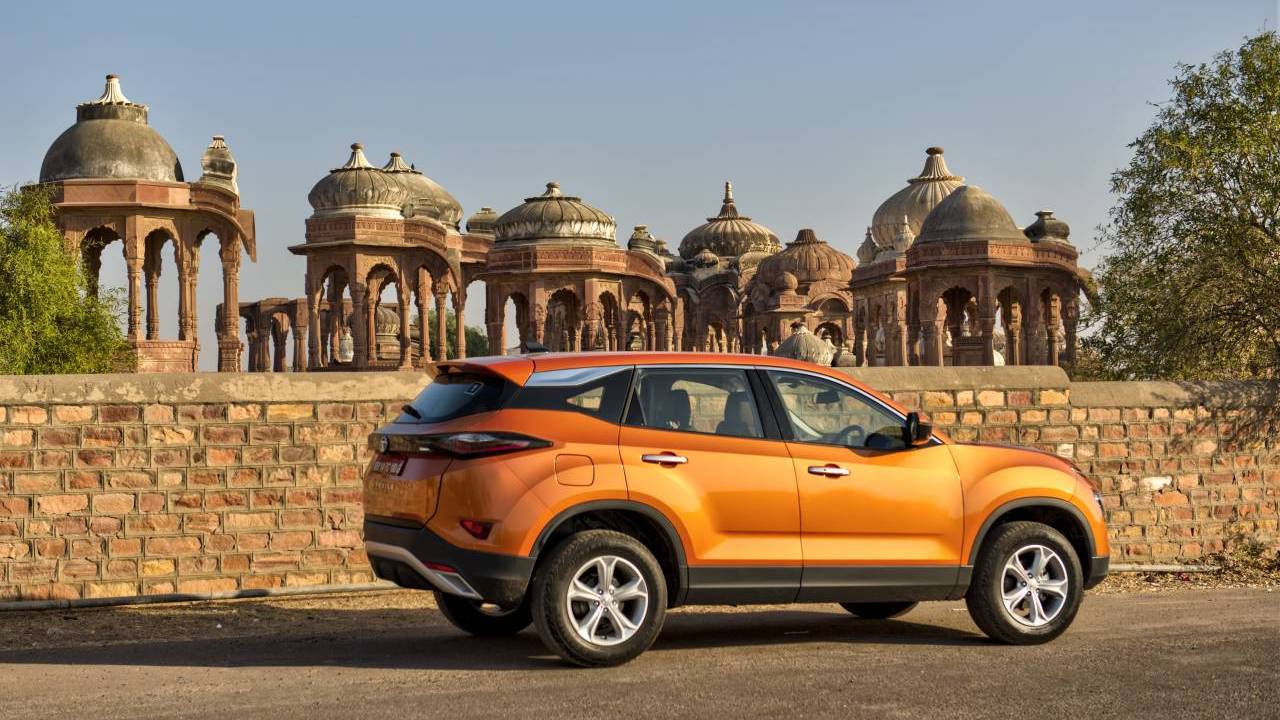
    The Tata Harrier is all set to get the option of dual-tone colors soon. Tata Motors has released a teaser of the compact SUV with the new black with orange and black with silver color schemes, and it is the roof as well as pillars that get the black treatment. The update comes about six months into the launch of the Harrier in India, and will also keep the model relevant amidst new competitors including the newly launched MG Hector, Jeep Compass Trailhawk and the upcoming Kia Seltos.

    Since its launch, the Tata Harrier was available only in mono-color tones, while the dual tone was made available at the dealer level with several showrooms providing the option of a roof wrap. The Harrier dual-tone version though will come from the factory and is likely to be offered on the range-topping XZ trim. Expect prices to see a marginal increase by about ₹ 30,000, up from the current asking price of ₹ 16.55 lakh (ex-showroom, Delhi) for the XZ trim. The Harrier is currently offered in five colors – Calisto Copper, Ariel Silver, Thermisto Gold, Telesto Grey and Orcus White.

    Dual-tone color options have been really popular amidst new and young car buyers, and Tata Motors has already been offered the same on its other vehicles including the Tiago, Nexon and the Hexa. Other manufacturers offer the dual-tone color option as well in the segment. It’s unclear if the Tata Harrier will get any other changes apart from the dual-tone paint scheme. Since its launch in January this year, the SUV has remained largely unchanged barring the addition of Apple CarPlay connectivity to its infotainment system. The SUV did receive its first price hike last month with it costing more by ₹ 31,000.

    With respect to power, the Tata Harrier uses a Fiat-sourced 2.0-liter turbo diesel engine that develops 138 bhp and 350 Nm of peak torque. The motor is paired with a 6-speed manual gearbox. Tata is developing the BS6 version of the Harrier that is likely to go on sale by the end of this year. Tata will also introduce the Hyundai-sourced 6-speed torque converter on the Harrier later, while a 1.6-litre turbo petrol version is also lined up. The seven-seater version – Tata Buzzard – will hit the showrooms in 2020, after making its India debut at the Auto Expo next year.

  • Tata Tigor Subcompact Sedan Gets Two New AMT Variants

    Tata Tigor Subcompact Sedan Gets Two New AMT Variants

    Tata Motors today announced introducing two new AMT (automated manual transmission) variants for its popular subcompact sedan, Tata Tigor. So, in addition to the existing XZA, now the Tigor sedan will also come with a mid-level automatic XMA option and a top-of-the-line XZA+ variant. With this, save for the base model XE, all the variants of the Tata Tigor now come with the option of an automatic (AMT) variant. The XMA and XZA+ variants are priced at ₹ 6.39 Lakhs and ₹ 7.24 Lakhs, (ex-showroom Delhi), respectively.

    Commenting on the launch of the new variants, S N Barman, VP, Sales, Marketing & Customer Support, Passenger Vehicles Business Unit (PVBU), Tata Motors, said “In a constant effort to maintain our growth momentum, we continuously introduce advanced technologies in our products, fill white spaces and offer exciting product interventions to meet the growing aspirations of our customers. This strategy also includes continuously expanding and strengthening our automatic portfolio. We are confident that our customers will appreciate the perfect combination of practicality and convenience these new additions have to offer.”

    Both the Tata Tigor XMA and XZA+ variants will be available only in petrol options, powered by Tata’s tried and tested 1.2-litre Revotron engine. The 1199 cc, three-cylinder petrol engine is tuned to churn out 84 bhp and develop 114 Nm of peak torque and comes mated to a 5-speed manual gearbox, in addition to the optional AMT unit. The diesel variants, of course, get the 1.05-litre Revotorq 3-cylinder oil burner, making 69 bhp and 140 Nm torque, with the 5-speed manual unit as standard. However, Tata Motors has already confirmed that the engine will not make the shift to BS6, the more stringent emission norms that are set to kick in from April 1, 2020.

    As for features, being based on the XZ+ variants, the new XZA+ will come with all the bells and whistles like – the 7-inch touchscreen infotainment system with Apple CarPlay, Android Auto, along with an 8 speaker sound system by Harman, 15-inch diamond cut alloy wheels and auto-fold ORVMs with integrated LEDs. This is in addition to the dual chamber projector headlamps with chrome finish. The new Tata Tigor XMA variant will share its features-list with the mid-level XM trim, and features common to both variants include – driving modes, a Harman tuned music system with Bluetooth connectivity, reverse parking sensors, and foldable rear armrest with cupholders. Safety features like Dual Airbags, Anti-lock brakes, Electronic brake-force distribution, Corner Stability Control, reverse parking sensors, speed-dependent automatic door locking and engine immobilizer are also on offer.

  • Tata Motors Posts 26 Per Cent Drop In Sales In May

    Tata Motors Posts 26 Per Cent Drop In Sales In May

    The Indian auto sector has been reporting a slump in new car sales over the past months and the month of May 2019 has been no different. Tata Motors announced its sales for the previous month and the company has registered a drop of 26 per cent in overall sales. The company sold a total of 40,155 units in May this year, as opposed to 54,290 units sold during the same month last year. The automaker’s year-to-date sales were also on a drop after back-to-back declining numbers, with 82,684 units sold between April-May 2019, a de-growth of 23 per cent as compared to 107,758 units sold during the same period in 2018.

    Mayank Pareek, President, Passenger Vehicles Business Unit, Tata Motors said, ” In view of higher vehicle stocks in network our strategy was to focus on retails. While the market sentiments continued to be muted, our exciting products and micro segmenting strategy helped in improving retails. In May 2019, our retail sales have shown a growth of 11% over May’18. Despite this challenging environment, our UV segment continues to grow at 13% on the back of a strong UV portfolio. We expect that post- election industry will start improving gradually. In the months to come, we are positive to bounce back with our robust product lineup and strive towards driving volumes and increasing our market share as part of our on-going turnaround journey.”

    With respect to passenger vehicle sales, Tata registered 10,900 units in May 2019, witnessing a hefty drop of 38 per cent over 17,489 units sold in May last year. That said, the automaker stated that retail sales recorded an 11 per cent growth last month, backed by new and updated products as well as micro-segmenting strategy. The UV segment sales too grew by 13 per cent in May 2019. Cumulative sales growth between April-May 2019 for passenger vehicles in the domestic market stood at 23,594 units, a decline of 32 per cent over 34,724 units sold during the same period last year.

    The commercial vehicle (CV) business also a 20 per cent drop in volumes with 29,329 units sold last month, as against 36,806 units sold in May 2018. Tata Motors attributed the declining sales to weak market sentiments due to depressed freight rates and underutilisation of trucks. The year-to-date CV sales in the domestic market also saw a decline of 19 per cent with 59,212 units, as compared to 73,082 units sold during the same months (April-May) in 2018.

    The M&HCV sales dropped by 38 per cent at 7,683 units in May this year, as compared to 12,424 units sold in May 2018. The revised axle load norms still pose a challenge for the heavy vehicle segment to grow, according to the manufacturer. Tipper sales too dropped by 22 per cent with 2539 units sold in May this year, as against 3261 units sold during the same month last year. The I&LCV truck sales in May 2019 declined by 2 per cent at 4043 units over 4106 units sold in May 2018. This segment has been relatively less affected by the revised axle load norms. E-commerce and discretionary consumption have been the two main drivers of I&LCV volume. Tata did say that new products in the 15-16 tonne segment and CNG products were well accepted in the makret and contribute over 10 per cent to the volumes.

    The SCV Cargo and Pickup segment witnessed a drop of 18 per cent with 12,695 units sold in May 2019, as compared to 15,558 units sold in May 2018. The slow consumption in rural areas was attributed as the main reason in the drop of volumes, which is likely to improve with a normal monsoon. The commercial passenger carrier segment sales stood at 4908 units in May this year and grew by 4 per cent. The Company is gearing up for the supply as per the new regulations, AIS 153, backed by strong demand for the Winger series.

    Girish Wagh, President, Commercial Vehicles Business Unit, Tata Motors said, “Tata Motors Commercial Vehicles (CV) Business sales in the domestic market in May registered a drop of 20% . The M&HCV sales has taken the maximum hit in the domestic market, declining by 38%, at 7,683 units, essentially due to higher capacity post increased axle load, not yet matched by commensurate freight growth. I&LCV truck sales were least affected, with a decline of 2% at 4,043 units as discretionary consumption has been witnessing a slowdown in recent months. The SCV Cargo and Pickup segment also lower by 18% as distress in the agriculture sector brought down rural consumption. The commercial passenger carrier segment sales was higher by 4% over last May. The school season has pushed up demand and is expected to be positive in the next month too. We are expecting an improvement in the economic conditions in the coming months and look forward to an improved buying sentiment.”

    Tata Motors reported a cumulative export of 1563 units in May 2019, witnessing a massive drop of 58 per cent over last year. The drop in retail sales in Bangladesh, Nepal and high stocks in the SAARC region, along with the slump in the Middle East, affected the automaker’s export volumes.

  • Tata Communications launches IoT marketplace

    Tata Communications launches IoT marketplace

    India’s Tata Communications has announced the launch of an IoT marketplace aimed at strengthening and accelerating India’s growing IoT ecosystem.

    The new marketplace is designed to link enterprise customers with IoT service providers to enable customers to easily develop tailored IoT solutions.

    Partners including device manufacturers, software developers to start-ups and system integrators will use the platform to market, deploy and manage IoT solutions for customers ranging from government to enterprises to startups.

    Customers will be able to select from the available offerings and deploy them on a plug and play basis.

    India’s enterprise IoT market is on track to grow at a CAGR of 35% through 2023, Frost & Sullivan predicts. But a lack of standardization, interoperability and connectivity in the IoT market is inhibiting further adoption.

    “We believe that this first-of-its kind initiative provides a missing link that will make a difference to how disparate IoT components are brought together to create a unified experience in designing a solution or ultimately purchasing one; thereby enabling customers to deploy these solutions with ease and achieve their strategic goals using IoT,” Tata Communications head of IoT Alok Bardiya said.

    In support of India’s IoT ecosystem, Tata Communications is also deploying an LPWAN network that has so far been rolled out in 45 cities India-wide.

  • Tata Intra Compact Truck Launched

    Tata Intra Compact Truck Launched

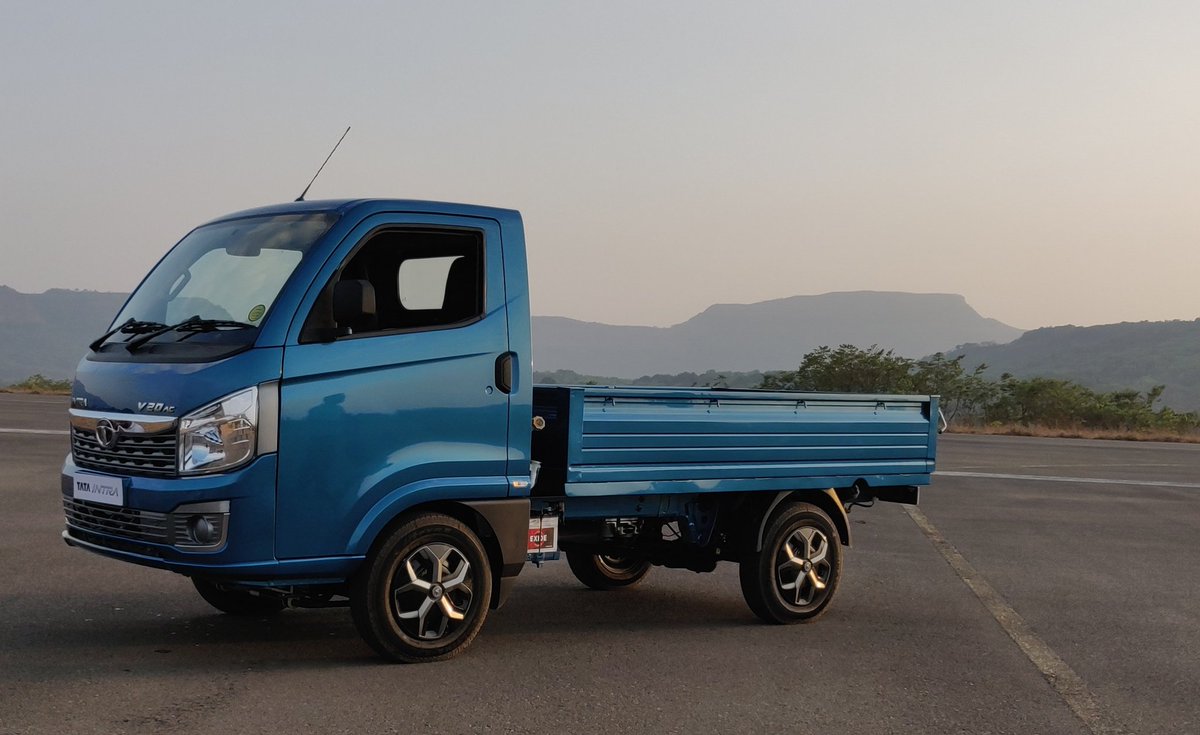
    Tata Intra, the all-new small commercial vehicle (SCV) from Tata Motors today officially went on sale in India. The new compact trucks will be available in two variants – V10 and V20, priced at ₹ 5.35 lakh and  ₹ 5.85 lakh (ex-showroom India) respectively. The new Tata Intra compact truck is a premium offering and will be positioned in India above the company’s existing range of Ace mini trucks, which will also continue to be on sale. Compared to the Tata Ace, the new Intra SCV comes with a host of first-in-segment features to justify the premium price tag.

    Tata says that the new Intra is targeted towards customers who are looking for a commercial vehicle that can be both, a workhorse as well as a stylish and comfortable personal vehicle. Someone who is looking to upgrade from the Tata Ace. Thus, you’ll see that the new Tata Intra comes with a bunch of passenger car-like elements both outside as well as inside. The exterior bit includes – a large front grille with a chrome slat flanked by a set of nice-looking clear glass headlamps with halogen lights and integrated turn indicators. The Intra also gets a bold and busy-looking bumper with a wide central air dam and provision to install fog lamps. The new compact truck runs on a set of 14-inch steel wheels with the option of smart-looking dual tone wheel covers, which are truly good-looking and well-designed. The vehicle also gets large manually operable ORVMs and dual wipers, which in addition to these subtle character lines, add to the style quotient of the Intra.

    The Tata Intra also comes with a well-laid-out cabin, featuring a neat dashboard that comes with contrast bezels around the center console and air-con vents. Furthermore, because the gear lever is positioned on the dashboard, resulting in a flat walk-through-floor. Other features include a charging socket, lockable glovebox, a standard music system with Radio, AUX-IN and USB connectivity, and a fully digital instrument cluster, offering read-outs for speedometer, odometer, time, fuel gauge, and a segment-first gear shift indicator, or as Tata calls it Gear Shift Advisor (GSA).

    In terms of dimensions, the new Tata Intra is at par with the larger Tata Ace on offer, the Ace Mega XL, with a total length of 4316 mm, a width of 1639 mm and a height of 1918 mm. Having said that, the Intra does come with one of the largest loading bay areas in the segment, with a 2512 mm long load deck that is 1602 mm wide and comes with a standard depth of 463 mm. In fact, the Intra also comes with a segment-best payload capacity of 1100 kg, 100 kg more than what the Ace Mega XL offers. In fact, the vehicle also offers best-in-class gradeability of 45 percent for easily negotiating steep hilly roads & flyovers, compared to the Ace’s 30 percent gradeability. Furthermore, the Intra also gets semi-elliptical leaf spring suspension setup with 6 leaves at front and 7 leaves at the rear, offering heavy duty performance.

    The new Tata Intra V20 is powered by a brand new 1.4-litre Direct Injection (DI) diesel engine. The new 1396 cc engine is tuned to churn out 69 bhp at 4000 rpm and develop a peak torque of 140 Nm at 1800-3000 rpm. The engine comes mated to a 5-speed manual gearbox with cable shift mechanism. The Tata Intra V10 is powered by an 800 cc, two-cylinder motor which develops 39 bhp at 3750 rpm and 90 Nm at 1750 – 2500 rpm and is mated to a four-speed gearbox. In terms of rivals, the new Tata Intra has been designed to compete with both, the LCVs like the Piaggio Porter 1000 and Mahindra Supro, and the pickup trucks like the Mahindra Bolero Pickup.