Retail News CRM

Tag: tiktok

  • Young Vietnamese risk health with late-night work, entertainment

    Young Vietnamese risk health with late-night work, entertainment

    Young people are increasingly trading their health for late-night work and entertainment and ending up with consequences like sleep disorders, reduced productivity and long-term health risks.

    Nam, a programmer for a multinational technology company, works from 10 p.m. to 4 a.m. due to time zone differences.

    To synchronize his work with colleagues and clients in the U.S., the 27-year-old from Ho Chi Minh City stays up at night.

    His day typically starts at 10 a.m. and his work begins in the evening. He participates in online meetings, writes code, fixes bugs, and deploys projects, often working until 3 a.m.

    Then he winds down by browsing social media, watching movies or listening to music before going to bed at 4 a.m.

    The subversion of his circadian rhythm results in memory loss, difficulty concentrating and lethargy during the day. He has also gained weight, and his skin has darkened and developed acne.

    He says: “It was not until now that I realized the harm of staying up late; I might need to consider changing my job if I don’t want my health to deteriorate further.”

    Mai Anh, 22, admits she is a “TikTok addict.”

    The bright phone screen at night has become a familiar sight for her. From 10 p.m. every day she immerses herself in short videos, from funny clips to trendy dances and life hacks.

    It is often 3 a.m. by the time she turns off her phone.

    She sleeps only three to five hours a night, always waking up tired, sluggish and unable to focus on work. Though she is fully aware of the negative effects of staying up late, the allure of TikTok makes it hard for her to stop.

    “I know it is not good, but just a little scroll each night turns into a habit,” she says.

    In Vietnam, the “night owl” lifestyle is becoming increasingly popular, especially among young people.

    The development of technology, work and study pressures and the appeal of nighttime entertainment are causing many young people to stay up late.

    This is not happening only in large cities but also in rural areas, where young people now have easier access to the internet and online entertainment, according to Dang Nhat Tam, deputy head of the general internal medicine department at HCMC’s Nguyen Tri Phuong Hospital.

    Scientists refer to those who prefer staying up late and sleeping in as “night owls” for obvious reasons.

    Studies show that night owls tend to feel very energetic at night but sluggish in the morning.

    Due to disruption of their natural rhythms, their biological clocks are completely reversed, leading to deterioration of health, a weakened immune system and frequent illnesses.

    One of the main consequences is sleep disorders, which cause memory problems, difficulty concentrating and reduced work efficiency. This prolonged issue also increases the risk of diseases such as cancer, stomach disorders, asthma, chronic obstructive pulmonary disease (COPD), kidney, liver, and musculoskeletal conditions, and immune system-related diseases.

    Associate Professor Dr. Nguyen Anh Tuan, head of the digestive surgery department at the 108 Military Central Hospital, says sleeping late is a major cause of obesity, hormonal imbalances, slowed metabolism, increased appetite and impaired blood sugar balance.

    Staying up late causes the body to use blood sugar inefficiently, leading to fat accumulation and an increased risk of type 2 diabetes.

    Lack of sleep not only causes dark circles under the eyes but also damages the skin due to lack of moisture and reduced pH levels.

    Poor sleep quality limits the production of growth hormones and inhibits collagen production, causing the skin to lose its firmness and become prone to acne and irritation.

    Scientific evidence also shows that circadian rhythm disorders are linked to moodiness, anxiety and depression. While most people feel refreshed and energetic in the morning, “night owls” experience a poor mental state in the morning, which only improves by evening.

    Their sleep-wake cycles are disrupted, with sleep often being too long or too short.

    Sleeping less than seven hours or more than nine hours a day also increases the risk of stroke, particularly brain hemorrhages.

    A proper sleep cycle allows the body organs to rest, recharge and prepare for the next cycle.

    To improve sleep, experts suggest balancing work and rest, maintaining a regular sleep schedule, relaxing with books or music, choosing a comfortable and quiet place to sleep, and adjusting the temperature and lighting.

    It is important to limit phone and electronic device use before bedtime, avoiding screen time at least 30 minutes before sleep, and refraining from work-related stress and keeping a relaxed mind.

    A healthy, balanced diet with nutritious foods, avoiding overeating at night or consuming stimulants that disrupt sleep, can also help.

    Regular physical activity promotes better sleep quality. Regular health checks help detect any underlying issues early.

    If sleep disorders occur, it is essential to consult a doctor or sleep specialist for diagnosis and treatment.

    Self-medication should be avoided, as it can lead to dependence and complications.

    In some cases patients may not need medication, and just adjusting habits and reorganizing life can significantly improve sleep.

    If sleep disorders stem from underlying conditions, treating the root cause is crucial, doctors advised.

  • New Instagram feature to entice TikTok users also compromises privacy

    New Instagram feature to entice TikTok users also compromises privacy

    It is highly likely that within a few hours TikTok will cease operations in the U.S. In an effort to capitalize on this golden opportunity Instagram is adding a new feature to the app to entice TikTok users to switch platforms. However this new feature also compromises your privacy and may be something that you wish to turn off.

    Adam Mosseri — head of Instagram — announced in a video that the app will be rolling out a new feed where you will see reels that your friends have liked or commented on. The idea is that you can quickly start a conversation with your friends about content they’ve watched. While the concept definitely encourages more interaction over Instagram it also means that your history is being shared openly.

    I quite like that I can watch whatever I want on Instagram — mainly cat videos — and not announce it to the world. This new feature is one that I will turn off immediately once it arrives in my country. Meta is only releasing the update in certain regions for now and will expand coverage once the company has studied how it is received by users.

    The whole TikTok debacle has sent multiple platforms racing to replace it. Instagram is already quite similar to TikTok and is trying everything it can to win over people looking for a new short-form video sharing app. However this hasn’t gone exactly to plan as TikTok users are migrating to another Chinese app instead: RedNote.

    While Instagram would have welcomed the influx of new users with open arms, RedNote is not as thrilled. The company is already considering isolating foreign IP addresses from Chinese ones so “American influence” can be minimized. This transition from TikTok to RedNote is also profiting an unsuspecting third app

    Instagram has taken some very welcome steps in recent years to protect user privacy on the platform, especially for minors. This is why I’m hopeful that the new dedicated feed will be optional as well. The app had a similar feature years ago that it discontinued and I wouldn’t be surprised if this new addition eventually meets the same fate.

    Instagram can still play its cards right and snag some former TikTok users as RedNote hands out bans for “inappropriate” content.

  • TikTok confirms that it will shut down unless the Supreme Court blocks or delays the ban

    TikTok confirms that it will shut down unless the Supreme Court blocks or delays the ban

    It’s been a wild ride for the TikTok social media platform, as it faces a potential shutdown in the U.S. due to a law requiring its sale by its Chinese parent company, ByteDance. This legal battle has reached the Supreme Court, where arguments are being heard about the law’s impact on free speech and national security. Today, TikTok confirmed that it will indeed shut down its operations in the U.S. unless the Supreme Court blocks or delay the ban.

    The law, which passed with bipartisan support in Congress and was signed by President Biden, aims to address concerns about the Chinese government’s potential influence over TikTok. U.S. officials argue that Chinese authorities could compel ByteDance to share user data or manipulate content on the platform. However, TikTok maintains that there is no evidence of such actions and that the law infringes on free speech rights.

    The Supreme Court’s decision in this case could have significant implications for the millions of Americans who use TikTok for entertainment, information, and even their livelihoods. Content creators, in particular, are anxious about the potential disruption to their audience and income.

    According to a new report, TikTok has now said that unless the Supreme Court strikes down or delays the date this law is supposed to take effect, which is January 19th, the company will be forced to effectively shut down its site in the U.S. by the deadline. Keep in mind that an interruption of even a just month would cost the app one third of its daily U.S. users, not to mention a significant amount of advertising dollars.
    This case is not the first time the Supreme Court has been asked to rule on matters related to new media technologies. The justices have acknowledged their limited familiarity with these platforms, even as they grapple with complex issues of speech restrictions in the digital age.
    Adding to the urgency of the situation, the law is scheduled to take effect on January 19th, just days after the Supreme Court hears the arguments and a day before President-elect Donald Trump takes office. Trump has also asked for a delay in the case so that he could be involved in seeking a political resolution, but it remains to be seen if the judges will agree to that. The court’s decision could come down to the wire, leaving TikTok users and content creators in a state of uncertainty.

    This situation highlights the challenges of balancing national security concerns with the principles of free speech. The Supreme Court’s ruling will also undoubtedly set a precedent for how similar cases are handled in the future, so this case is definitely one for the ages.

    Create a free account and
  • Can TikTok survive under Trump?

    Can TikTok survive under Trump?

    Whatever happens in the end – I mean, if TikTok gets banned in the US or not – many people will be disappointed. If TikTok gets banned in the Land of the free and the home of the brave, some will be concerned about the freedom of speech issue (and rightly so); but many will just mourn the loss of the 5-second funny cat videos.

    If TikTok does not get banned, many people will also be annoyed; they consider TikTok to be a soul-sucking Dementor’s Kiss, a kryptonite for the mind (I can relate to a certain degree).

    So, which one will it be? For the moment, it appears that TikTok is about to survive under Trump in the US. Well, well, well.

    TikTok’s outlook in the US has significantly brightened following Donald Trump’s re-election, according to industry experts and insiders, The South China Morning Post reports.

    Cameron Johnson, a senior partner at consultancy TidalWave Solutions, noted that the situation for TikTok now appears much more favorable.

    He believes that while the new Trump administration might still push for concessions like localizing data storage and management, an outright ban on the platform seems unlikely. Johnson suggested that TikTok’s role in shaping public sentiment may have played a part in Trump’s election success, which could discourage any drastic regulatory moves against the app.

    Johnson also pointed out that the decision to preserve TikTok could serve as a strategic asset for Trump in future negotiations with the Chinese government, potentially giving the US a stronger bargaining position.

    The valuation of ByteDance, the app’s Chinese parent company, has surged as a result.

    ByteDance recently valued itself at around $300 billion, marking one of its highest valuations despite the possibility of the looming US ban. The valuation was revealed in a new share buyback offer, suggesting that ByteDance expects continued growth even amid regulatory threats.

    The company’s valuation has been increasing over the past year. In October 2023, ByteDance valued itself at nearly $225 billion.

  • iPhone sales on TikTok quadruples to $3.3M

    iPhone sales on TikTok quadruples to $3.3M

    iPhone sales on TikTok Shop in Vietnam quadrupled between April and May to VND84.8 billion (US$3.33 million) before Apple shut down the distribution channel without explanation.

    According to YouNet ECI, a Ho Chi Minh City-based e-commerce data provider, FPT Shop had led in sales on TikTok until the shutdown, followed by Viettel Store and Di Dong Viet.

    The three accounted for nearly 87% of all iPhone sales on the platform. FPT, Viettel and Di Dong Viet sold 1,922, 576 and 453.

    YouNet ECI head of market research analysis Nguyen Phuong Lam said many iPhones were sold through livestreaming, which has proven to be an effective sales method on TikTok.

    According to data provider Metric, revenues from Apple products on TikTok Shop reached VND203 billion in the first five months, up 955% year over year.

    But on May 31 many authorized Apple retailers in Vietnam removed their products from it.

    A Di Dong Viet spokesperson told VnExpress that Apple requested the retailers to go off TikTok without any explanation.

    Lam conjectured that Apple was concerned that sales on TikTok Shop could cause conflict with offline distribution channels.

    Metric analysts said the fact that iPhone was sold together with many other products and used to attract buyers has caused severe damage to the brand.

    On many livestream sessions iPhones were sold along with clothes, diapers and other products, many of unknown origin.

  • TikTok’s legal battle against the U.S. ban heats up this September

    TikTok’s legal battle against the U.S. ban heats up this September

    The popular social media platform TikTok is gearing up for a major legal battle this fall that could determine its future in the United States. The US Court of Appeals for the District of Columbia has set a September date for oral arguments in two cases challenging a law that could potentially lead to a ban of the app.

    The legal challenges were triggered by a law that mandates ByteDance, TikTok’s parent company, to sell the app or face a ban due to national security concerns. TikTok, however, has been vocal in its opposition to this law, arguing that divesting from ByteDance is not feasible and that it has already taken steps to address the government’s concerns.

    Earlier this month, TikTok filed a lawsuit asserting that the law is unconstitutional. This move was echoed by a group of TikTok creators who are also challenging the law because it infringes upon their First Amendment rights, as a ban would prevent them from communicating on the platform. Engadget reported that TikTok is reportedly covering the legal fees for the creators in this case.

    Recognizing the urgency of the matter, the appeals court has decided to consolidate both cases and will hear the challenges in September, aligning with TikTok’s request for an expedited schedule. The outcome of this legal battle carries immense weight, as it will not only determine TikTok’s fate in the US but also set a precedent for future cases involving technology, national security, and freedom of speech. This could even lead to a review by the Supreme Court.

    The September showdown is shaping up to be a pivotal moment for TikTok, as the court’s decision will determine whether the app can continue to operate in the US under its current ownership structure. The case has attracted widespread attention due to the platform’s immense popularity and the potential impact a ban would have on its vast user base.

  • The TikTok ban could hurt small businesses that prosper thanks to mobile users

    The TikTok ban could hurt small businesses that prosper thanks to mobile users

    The Bill that would Kill TikTok is signed by the POTUS (President of the United States), so ByteDance, TikTok’s parent company, has only several months before it decides whether to sell or face a ban in the US.

    So far, the smoke signals coming from ByteDance’s yard rule out a possible divestiture. They don’t want anybody else to get a hold of their magical algorithm that gets hundreds of millions of users hooked.

    Reuters reports that a lawsuit filed by a group of TikTok creators has ignited a contentious legal battle against the bill. The law, aimed at addressing national security concerns, has left millions of users and small business owners in distress, fearing the loss of a platform that has become integral to their livelihoods.

    The creators, hailing from diverse backgrounds and professions, argue that TikTok provides them with a unique avenue for self-expression and community building. Represented by Davis Wright Tremaine LLP, they contend that the law infringes upon their First Amendment rights and poses a threat to free speech by attempting to shutter a vital medium of communication.

    In response, the White House has defended the law, asserting that it aligns with constitutional limitations and addresses critical national security concerns. The Justice Department has vowed to defend the legislation in court, emphasizing its importance in safeguarding sensitive data and protecting American interests.

    This legal showdown is not the first time TikTok has faced regulatory challenges. Under the Trump administration, similar attempts to ban the app were met with resistance and legal action. Now, with a new administration in power, the battle rages on, with TikTok and its creators fighting to preserve their presence in the American digital landscape.

    For small business owners like Paul Tran and his wife Lynda, TikTok has been a game-changer. Their skincare brand gained widespread recognition after going viral on the platform, propelling their business to new heights.

    Tran’s sentiments are echoed by many small business owners who have found success on TikTok. The platform’s algorithm-driven approach has leveled the playing field, allowing creators to reach a broader audience and drive sales. With the introduction of TikTok Shop, which enables direct sales within the app, businesses have seen unprecedented growth and opportunity.

    The impact of TikTok extends beyond just business success; it has become a cultural phenomenon, shaping trends and influencing consumer behavior. For creators like Summer Lucille and Felicia Jackson, TikTok has provided a platform to showcase their products and connect with customers in ways that traditional social media platforms could not replicate.

    As the legal battle unfolds, the fate of TikTok hangs in the balance. While concerns about national security are paramount, the implications of a TikTok ban extend far beyond just data protection. For millions of users and small business owners, TikTok represents not just a social media platform, but a lifeline to opportunity and community.

  • TikTok, Facebook, and other foreign service providers pay $575M in taxes

    TikTok, Facebook, and other foreign service providers pay $575M in taxes

    According to the General Department of Taxation, foreign service providers, including Google, Facebook, and TikTok, have paid VND14.572 trillion (US$575 million) in taxes.

    Data from the General Department of Taxation indicates that currently, 94 foreign service providers are registered to pay taxes through the electronic portal, and the cumulative tax amount from March 2022—when the electronic portal for foreign providers became operational—totaled VND14.572 trillion, an increase of more than VND3.5 trillion compared to the end of last year.

    The list of foreign service providers who have declared and paid taxes includes Google, Meta, Microsoft, TikTok, Netflix, and Apple.

    Authorities are implementing a variety of short- and long-term strategies to enhance tax management for domestic and cross-border e-commerce. Furthermore, tax agencies are continuing to review, audit, inspect, and address violations that fail to comply with regulations.

    The department said another approach is for tax agencies to work with various ministries and sectors to prevent tax revenue losses and ensure financial security.

    Data released last week indicates that the tax sector now has access to bank data for 121 million personal accounts, approximately two-thirds of the 183 million personal payment accounts registered by the end of 2023, and over 9 million corporate accounts across 96 commercial banks.

    Using this data, the tax authority will identify online businesses that have not declared and paid taxes for further action. Recently, many online sellers have been mandated to pay additional tax.

    The tax authority plans to collaborate with the Ministry of Public Security to hasten the adoption of citizen identification documents as tax identification numbers, in accordance with the Tax Administration Law.

    The agency is also exploring the use of electronic identification for organizations and individuals engaged in tax declaration and payment transactions, aimed at preventing tax evasion in e-commerce.

    In 2023, the e-commerce channel paid VND97 trillion in taxes, marking a 14% increase from 2022.

  • TikTok plans to take on Instagram with new app for sharing photos

    TikTok plans to take on Instagram with new app for sharing photos

    TikTok users have started getting pop-up notifications about a new app that the social network company plans to launch soon. The app is called Notes and allows users to share photos like Instagram.

    TechCrunch reports that TikTok has already confirmed the Notes app was in development, but the company didn’t offer any timeframes for releasing the photo sharing app.

    As part of our continued commitment to innovating the TikTok experience, we’re exploring ways to empower our community to create and share their creativity with photos and text in a dedicated space for those formats.

    The notification that many TikTok users have been getting in the last couple of weeks mentions that Notes is “a new app for photo posts.” Also, TikTok explains that “your existing and future public TikTok photo posts will be shown on TikTok Notes.”

    Thankfully, TikTok will offer the option to opt-out from the app: “if you prefer not to show your public TikTok photo posts on TikTok Notes, turn this off now.”

    The upcoming Notes app is not the only project that TikTok is currently working on. The company is also experimenting with different formats such as text posts and longer videos.

  • TikTok is among the things Biden and Xi discussed on the phone

    TikTok is among the things Biden and Xi discussed on the phone

    During a phone call on Tuesday, President Joe Biden and Chinese leader Xi Jinping discussed the push for TikTok Inc.’s divestment in the US.

    Following the call, the first direct discussion between the two leaders since November, White House spokesperson John Kirby confirmed that TikTok was indeed a topic of conversation.

    Biden reiterated to Xi his concerns about Chinese ownership of the popular video-sharing app.
    “This was not about a ban of the application, but rather our interest in divestiture, so that the national security interests and the data security of the American people can be protected,” Kirby explained.

    Last month, the US House approved legislation that would prohibit the operation of the video-sharing platform if ByteDance, its Chinese parent company, fails to sell its interest. President Biden has indicated he would ratify the bill, though its prospects in the US Senate remain uncertain.

    ByteDance aims to sell its interests in the viral short video app, or face a ban in the US. If everything goes to plan (the bill passes and Joe Biden signs it), ByteDance will have a 165-day deadline to divest from TikTok. Should it not pass the control of TikTok to an American-based company, US app stores (like Apple’s, Google’s and Samsung’s) would be prohibited from offering TikTok in the country.

    It all started when the Energy and Commerce Committee cast a unanimous 50-0 vote (highly unusual) in favor of the TikTok/ByteDance measure.

    Prior to that, members of Congress were flooded with calls and emails (some of which containing no-no words) from angry TikTok users who were scared that TikTok is coming to an end.

  • TikTok launches Youth Council to advise on safety issues surrounding teens

    TikTok launches Youth Council to advise on safety issues surrounding teens

    TikTok, the beloved and sometimes controversial short-form video app, is caught in a political crossfire. Facing a potential US ban due to Chinese ownership concerns, TikTok is scrambling to defend its place in the hearts of its most loyal users – teens.

    One of TikTok’s latest moves is the creation of a “Youth Council”. This group of 15 teens from around the world will advise TikTok on how to make the platform safer for young people. It’s a smart play as concerns swirl around issues like child protection, misinformation, and the app’s impact on mental health.

    The council seems like a well-intentioned way for TikTok to demonstrate its commitment to the safety of its younger users. The teens even collaborate with Praesidio Safeguarding, a UK-based organization focused on online safety. But is this enough to sway regulators?

    TikTok’s influence on teens is undeniable. The app has even encouraged its teen audience to take political action against a potential ban. Some worry that these efforts, while focused on the app’s survival, might draw even more attention to TikTok’s reach among young people. The success of this initiative will likely hinge on a few factors:

    • Real Impact: How much actual power will the Youth Council have to influence changes on the app?
    • Teen Trust: Will teens see the council as a genuine attempt at improvement or a public relations ploy?
    • Policy Sway: Will US policymakers see this council and its efforts as an honest commitment to user safety?

    TikTok is playing a high-stakes game here. Appealing to its teen users makes sense strategically, but whether it can save TikTok from political pressures remains to be seen. Ultimately, the effectiveness of the Youth Council will depend on how much influence they are given within the company and how they are perceived by both teens and policymakers.

  • TikToking increasingly a full-time job for young people

    TikToking increasingly a full-time job for young people

    Tran Manh Duc, 30, decided to quit his office job to pursue a career as a TikToker four years ago despite opposition and skepticism among family and friends.

    At first he used TikTok only as a tool to advertise his company’s products, but when his first restaurant review video unexpectedly went viral, he started Saigon food review channel Anh Bung Mo. It managed to attract over 100,000 followers in the very first month.

    “At the time they did not comprehend that TikToking could be a job,” he says.

    “Most people only told me I would fail and feel embarrassed and disappointed. For months my family and friends constantly advised me against pursuing such a career.”

    Within a year his income increased nearly 10-fold, and it was at this time he decided to quit his job and dedicate all his time to developing his TikTok channel.

    “As a TikToker, my daily income is as much as my earlier monthly salary.”

    Duc then employed a few dozen staff to help him put out content on TikTok.

    “TikTok changed the lives of many people, including mine.”

    Duc is hardly alone in making a living off TikTok and other online platforms, and considering it a career.

    Le Phuong Oanh, a TikToker with nearly 900,000 followers, has made it her profession for the past two years.

    When she was unemployed during the Covid-19 outbreak, she turned to TikTok as a lifeline.

    After garnering 100,000 followers in just three months she decided to recruit a team to professionalize her content.

    “I have always viewed it as a profession,” Oanh says.

    “My 14 employees have always worked professionally and are divided into separate units like quality control, accounting, video shooting, and script writing.

    “We work on a clear schedule and have specific strategies for each aspect of the TikTok channel.

    Tran Thi Thu Phuong, senior recruitment manager at headhunting firm 40HRS Vietnam, said creative content creation for social media has become a new career option in recent years.

    According to software firm Adobe’s Future of Creativity study, 77% of non-professional content creators said they started monetizing their online content in the past year, with 48% of them saying these earnings accounted for more than half their total income.

    In 2022 nearly 20,000 Vietnamese earned a total of VND1.5 trillion (US$60.8 million) from social media platforms, according to a report presented at a conference last March.

    Professional TikTok training facilities report a rise in the number of young people enrolling for their courses.

    At CMT Academy in HCMC’s District 3, the number of students doubled since the Lunar New Year holidays in mid-February, with many reportedly planning to quit their jobs in the next six to 12 months to pursue it as a career.

    Nguyen Cong Minh Tri, who teaches livestream hosting there, says the desire to quit boring office jobs and the recent rise in unemployment have caused many young people to take up TikToking as a career.

    “These people are usually office workers, students, fresh marketing graduates, or new mothers who are looking for a flexible job without the eight-hour work schedule, attendance check or KPIs.”

    But with the rush comes competition.

    Several professional TikTokers, even those with millions of followers, speak about their unstable income and immense pressure and negative impacts on their health.

    The job is highly stressful because TikTok changes very often, Duc explains.

    “A friend of mine had a channel that made billions of VND, but it declined as soon as he became complacent.”

    Oanh says: “This job has unstable income. Some months are great while some are bad. Because the work is all about creativity, when you run out of ideas or hit a creative block, you cannot produce any content to earn money.”

    Having seen many people quitting their jobs but failing to make it on TikTok, Duc says young people who come to this profession should first get training from specialists or have a secondary job alongside their channel.

    To have a successful career on the platform requires serious dedication and should not be thought of as a fun project, he stresses.

    He says new TikTokers should put more effort into their camerawork, script and background.

    To be able to work with large brands, content creators have to learn about marketing, writing and working through email, English, and several other skills, he adds.

    Oanh says the job requires a lot of brainstorming and efforts by all team members and not the TikToker alone.

  • GoTo, TikTok will be wholly compliant with Indonesia’s trade regulation

    GoTo, TikTok will be wholly compliant with Indonesia’s trade regulation

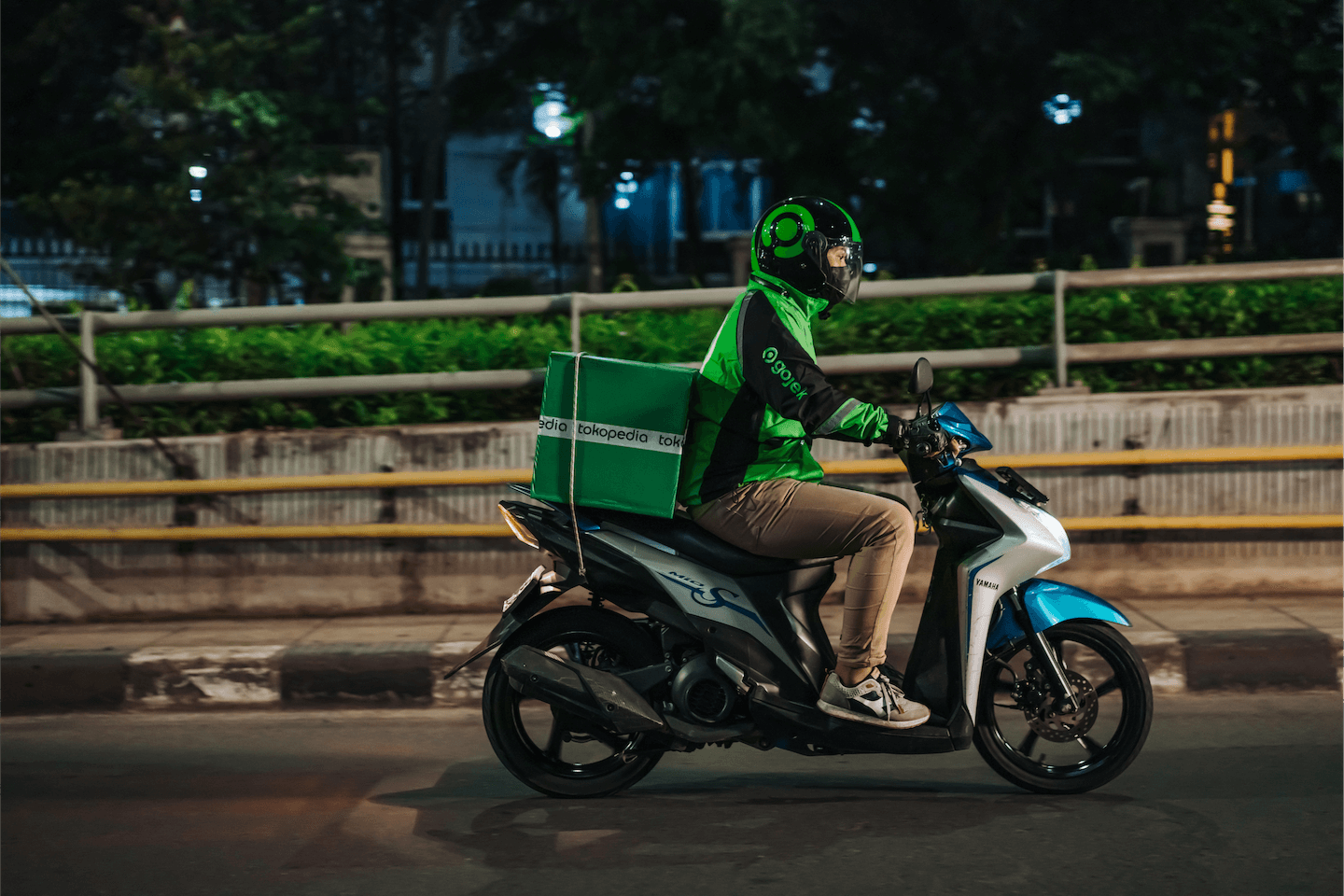
    Indonesian tech firm GoTo and Chinese-owned partner TikTok will be wholly compliant in a month and a half with the Southeast Asian nation’s regulation that bans in-app transactions on social media, GoTo’s CEO said on Wednesday.

    Short video app TikTok acquired in December majority shares in GoTo’s e-commerce unit Tokopedia after the Indonesian trade ministry banned transactions on its TikTok Shop e-commerce unit.

    “Integration process is going well. All parties continue to communicate with the related ministries and as far as we know the process is nearing completion,” CEO Patrick Walujo said in an online briefing.

    Indonesian minister for small and medium enterprises Teten Masduki said last week TikTok had yet to comply with the regulation.

    TikTok, owned by Chinese company ByteDance, did not immediately respond to a request for comment. Following December’s deal, TikTok has reopened its e-commerce services, which are now facilitated by Tokopedia.

    GoTo’s management said in the briefing that it will receive a quarterly e-commerce fee from Tokopedia, with the sum being dependent on Tokopedia’s gross merchandise value.

    Based on a GMV of $2.9 billion recorded in the third quarter of last year, the e-commerce service fee for GoTo will be $11.4 million, GoTo said.

    GoTo also expects its partnership with TikTok will benefit not only its e-commerce business but also its financial services segment as it will be able to offer digital payments and “buy now, pay later” credit schemes on TikTok.

  • TikTok starts to rub out Universal Music Group content, no new deal has been reached

    TikTok starts to rub out Universal Music Group content, no new deal has been reached

    TikTok starts to remove Universal Music Publishing Group content from the pest-like short video app, as no new licensing agreement with the music label has been reached, the social media firm said.

    TikTok has also started to mute videos on its platform that feature songs written by any songwriter signed on to UMPG (Universal Music Publishing Group), after removing the songs from Universal Music Group (UMG), as the licensing deal expired on January 31.

    The report cites a person familiar with the matter, who says TikTok is likely to remove “all the UMPG content before the end of February”, considering the legality of the matter. TikTok, however, has reached out to UMG and is still open to negotiate a new deal, the source added.

    Back in the end of January 2024, Universal Music Group stated that it couldn’t reach new deal terms with TikTok. The disagreements were mainly about how artists are paid and how TikTok uses AI. Universal Music accused TikTok of trying to push for a deal that was less favorable than before.

    UMG is the parent company of UMPG that represents an expansive roster of artists such as Taylor Swift, Bad Bunny, Sting, The Weeknd, Alicia Keys, Steve Lacy, Drake, Billie Eilish, Kendrick Lamar, Rosalía, Harry Styles, Ariana Grande, Justin Bieber, Adele, U2, Elton John, Brandi Carlile, Coldplay, Pearl Jam, and Bob Dylan. Although I can’t recall any TikTok videos with Bob Dylan…

    The music label had reached a deal with TikTok in February 2021, which allowed users on the video app to add clips from UMG’s catalog to their videos.

    UMG, the world’s largest music company, had said TikTok accounts for only about 1% of its total revenue.
    TikTok said UMG and UMPG catalog represents around 20% to 30% of popular songs, that vary depending on the region

  • Indonesia’s GoTo in talks with TikTok over potential e-commerce partnership

    Indonesia’s GoTo in talks with TikTok over potential e-commerce partnership

    Indonesia’s biggest tech firm GoTo Gojek Tokopedia said on Friday it was in talks with short video app TikTok over a potential e-commerce partnership in the Southeast Asian country.

    No final deal has been reached, GoTo added in a statement. The company also said the discussions did not include a takeover plan or any sale of more than 50 per cent of its shares to any party.

    Indonesia in October banned online shopping on social media platforms to protect smaller merchants and users’ data, after which TikTok had to close its e-commerce service TikTok Shop. TikTok has 125 million users in the country.

    Indonesia’s small and medium enterprises minister Teten Masduki told Reuters in November that TikTok had spoken to five companies including GoTo, Bukalapak.com and Blibli about possible partnership.

    Bloomberg earlier this week said TikTok had struck an agreement to invest in a unit of GoTo, citing people familiar with the matter.

    Indonesia’s e-commerce market is expected to grow to around $160 billion by 2030 from $62 billion this year, according to a report on Southeast Asia’s internet economy by Google, Singapore state investor Temasek Holdings and consultancy Bain & Co.