Retail News CRM

Tag: Tumi

  • Samsonite Asia sales experiences positive growth

    Samsonite Asia sales experiences positive growth

    Strong performances throughout Asia helped Samsonite International lift sales by 12.9 per cent in the first half of this year, to US$1.849 billion.

    Samsonite Asia sales across the group’s entire brand portfolio grew 14.4 per cent year on year, behind Latin America’s 17 per cent, but ahead of Europe’s 11.4 per cent.

    Tumi sales rose 16.6 per cent, with Asia the fastest-growing market where sales rose 39.4 per cent. American Tourister sales rose 24.2 per cent.

    Globally, Samsonite’s namesake brand achieved a stunning 50 per cent increase.

    Chairman Tim Parker said the first half of 2018 saw generally better trading conditions and more favourable foreign currency effects globally, which helped the group achieve what was another new record in total sales.

    In Asia, net sales of the American Tourister brand rose by 17.7 per cent during the first half, largely driven by the Cristiano Ronaldo marketing campaign, while the group’s value-conscious, entry-level Kamiliant brand achieved the fastest growth of all of its brands, up 57.5 per cent.

    In Hong Kong, where the company is listed, net sales increased by 28.3 per cent, driven by net sales of the Tumi brand (which included sales to Tumi distributors in some other Asian markets) and by the Samsonite and American Tourister brands. Those brands also drove an 11 per cent increase in sales in Mainland China.

    Sales in Japan, driven by Tumi, American Tourister and Samsonite, grew 18.5 per cent. India was up 17.8 per cent, South Korea by 2 per cent and Australia by 8.7 per cent.

    Group operating profit grew by 24.5 per cent year on year to $201.8 million and adjusted net income by 19.5 per cent to $119.8 million.

    Parker concluded: “This solid performance is not only a testament to the resilience of our multi-brand, multi-category and multi-channel business model and our devolved management structure, it is above all a reflection of the strength of our people. Our business enjoys strong team management at the top, but we also rely on a community of managers around the world and in different functions to ensure prompt and effective execution in response to changes in the marketplace. This collective effort by the experienced people within our company remains one of the keys to our success.”

  • TUMI reopens at Harbour City in HK

    TUMI reopens at Harbour City in HK

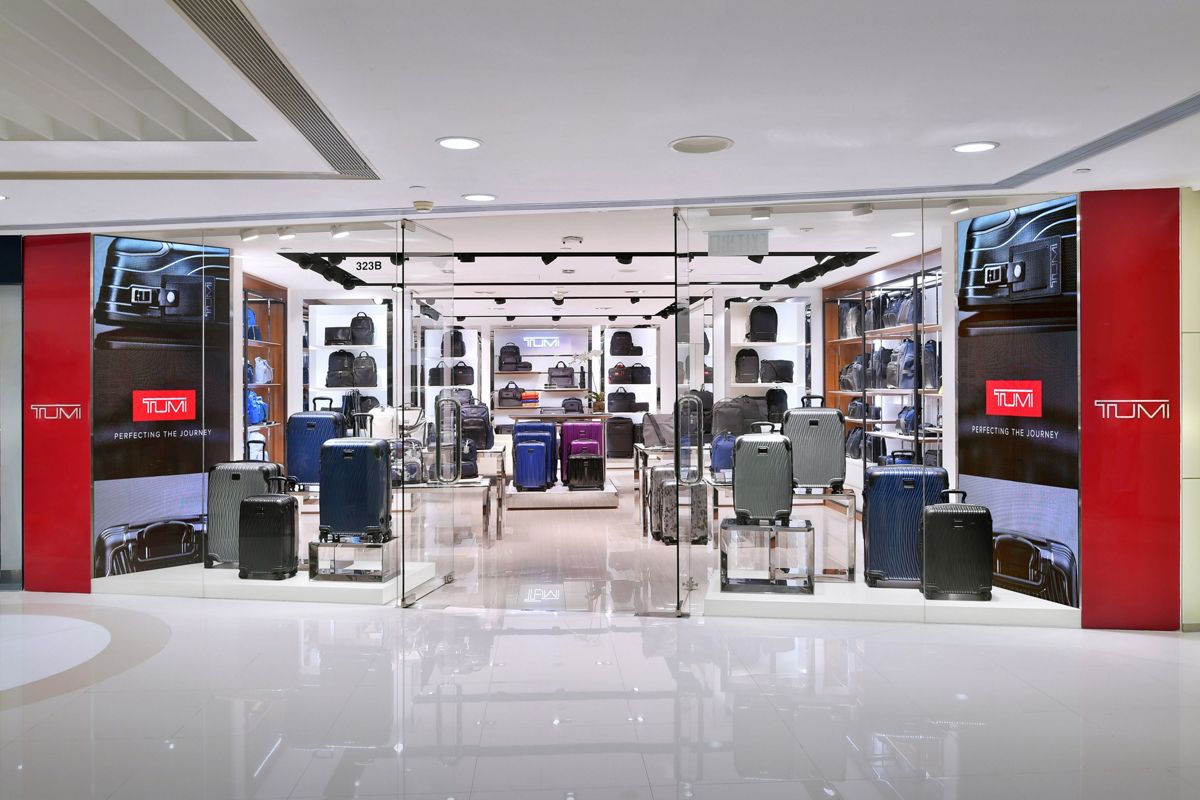
    TUMI, the leading name in premium travel, business and lifestyle accessories, re-opens its Harbour City store in Tsim Sha Tsui to unveil a new store redesign.

    The recently refurbished 990 square feet space features multiple enhancements including a new seating area and upgraded digital touchpoints for customers to enjoy.

    To celebrate the TUMI store re-opening at this iconic retail destination, TUMI is also pleased to announce the prelaunch of two highly-anticipated assortments at Harbour City for a limited time only.

    Earlier this year, we had met Adam Hershman, TUMI Mainland China, Hong Kong & Macau General Manager to aks him about his plans to enhance offline customer experience.

    We have recently done some big things in Hong Kong to offer customers an exceptional TUMI experience. We renovated two stores in ifc mall and Pacific Place and opened a new boutique at Elements in September 2017. All of these stores have been upgraded with our Madison Store concept. This concept was developed by award-winning designer and architect Dror Benshetrit for TUMI’s flagship store on Madison Avenue in New York and has now been rolled out at select locations worldwide,” he explained.

    “The concept helps make our stores the right canvas to tell the TUMI story with a premium, sophisticated environment. The stores are brightened up so that the products really stand out on their displays. The store also seamlessly incorporates digital technologies, like touchscreen and video displays. With our monogram booth, we can also customize products on the spot for another interactive touchpoint,” he continued.

  • Bag maker Samsonite’s CEO resigns after short-seller report

    Bag maker Samsonite’s CEO resigns after short-seller report

    Samsonite CEO Ramesh Tainwala has resigned with immediate effect “in the best interests of the company” as the fallout from a short-seller report on the company’s reputation and share price continues.

    Tainwala will be replaced immediately by CFO Kyle Gendreau.

    Hong Kong-listed Samsonite’s stock value plummeted more than 20 per cent during two days last week, before trading was suspended, leaving it with a valuation of about US$4.8 billion.

    That followed the release of a report by Blue Orca accusing the world’s largest luggage maker and retailer of questionable accounting practices and questioning its engagement in third-party related transactions with entities owned by Tainwala.

    But in a statement issued overnight, chairman Timothy Parker said the Samsonite CEO was stepping down due to issues with his academic qualifications.

    “While the board notes that since the company’s IPO in 2011, its disclosure of Ramesh’s educational background has been accurate, the board also takes seriously the allegation that has been made about his academic credentials. Ramesh tendered his resignation, citing personal reasons. In considering such resignation, the board thoroughly reviewed the facts related to this allegation and has determined that accepting Ramesh’s resignation is in the best interests of the company and its shareholders.”

    Tainwala has overseen solid growth of Samsonite in recent years, including the acquisition of luxury travel brand Tumi.

    Parker paid tribute to Tainwala’s “dedication and many contributions to the success of Samsonite” over the years. “During his tenure the company has continued to achieve strong revenue and earnings growth.”

    Gendreau takes over

    Kyle Gendreau has served as an executive director of Samsonite since March 2011, previously serving as CFO and an executive director of the consolidated group since January 2009.

    “Having served as a senior executive of Samsonite for many years, Kyle possesses a strong understanding of our industry, significant financial management experience across retail and consumer products, as well as deep institutional knowledge of Samsonite,” said Parker.

    “Samsonite has a proven record of solid growth and value creation since its initial public offering in 2011, and Kyle has played an instrumental part in achieving these results. The board is confident that under Kyle’s leadership, the company remains well-positioned to continue executing on its multi-brand, multi-category and multi-channel global strategy to capitalise on the growth opportunities ahead and to enhance long-term value for shareholders.”

    Gendreau’s appointment can be interpreted as the ultimate endorsement of its position on the Blue Orca report, given his long tenure overseeing Samsonite’s financials.

    “One-sided and misleading”

    In a separate statement overnight, Samsonite formally responded to the damaging report, opening with a warning to shareholders that Blue Orca is “a self-proclaimed activist investment fund that is focused on short selling”.

    “In the short-seller report, Blue Orca cautions investors that it has a “short interest in Samsonite’s stock and therefore stands to realise significant gains in the event that the price of Samsonite stock declines”.” It has declined by 20 per cent since the report’s release.

    The luggage giant’s board said it had thoroughly reviewed the allegations in the report and determined that they are “one-sided and misleading” and that conclusions drawn regarding its financial results are incorrect.

    On the allegations of irregular third-party related transactions, Samsonite’s board said continuing connected transactions are entered into in the ordinary and usual course of business of the group and are either on normal commercial terms or on terms that are no less favorable than available with any other third party.

    “The company has robust internal procedures to ensure that all continuing connected transactions have been identified, and appropriately reviewed and disclosed, in accordance with the Stock Exchange’s listing rules. Those transactions have been subject to annual review and approval by the company’s disinterested directors and independent non-executive directors in compliance with the requirements of the listing rules, and review by the company’s internal audit department. This process, which is performed in connection with the publication of the company’s financial results, helps to ensure that all continuing connected transactions have been identified and properly disclosed. In addition, the company’s external auditors, KPMG, perform annual limited assurance procedures related to continuing connected transactions.”

  • Tumi Opens a New Travel and Lifestyle Shop

    Tumi Opens a New Travel and Lifestyle Shop

    TUMI, purveyors of premium luggage and travel, business and lifestyle essentials, has opened its third London boutique

    Calling all fans of luxury travel, TUMI has opened a new boutique in London’s Covent Garden. Visit the store to browse the range of high-end bags, luggage, travel, business and lifestyle essentials.

    The stylish, 103sqm store showcases the latest TUMI products, including the new Latitude range of premium luggage.

    The design of the premier retail space is line with the chic aesthetic that TUMI is famous for.

    Sophie Ellis Bexter performed in-store at an event to celebrate TUMI’s third London opening – and fourth standalone store in the UK.

    Damien Mignot, TUMI’s General Manager Europe, hosted the party, during which guests enjoyed a menu inspired by first-class travel.

    Guests on the night included Lorraine Pascale, Pietro Boselli, Oliver Proudlock, AJ Pritchard, Neil Jones and Annaliese Dayes.

  • Tumi acquisition lead Samsonite to good numbers

    Tumi acquisition lead Samsonite to good numbers

    Samsonite Asia sales lept 16 per cent last year, a rate slower than the Hong Kong-listed company’s global growth, and predominantly driven by the acquisition of Tumi.

    The world’s largest travel luggage company achieved global sales of US$3.49 billion, up 23.3 per cent, with Asia accounting for $1.19 billion of that. Samsonite Asia sales excluding the Tumi effect grew by a much more modest 4.8 per cent, while sales in Japan grew by 32 per cent, or 12 per cent excluding the Tumi business, driven by the Gregory, American Tourister and Samsonite brands.

    In the first half of last year, Samsonite assumed direct control of the wholesale and retail distribution of Tumi products in South Korea, Hong Kong, Macau, China, Indonesia and Thailand.  Net sales in China increased by 11.9 per cent year-on-year, (7.2 per cent excluding Tumi), due to increased sales of the Samsonite and American Tourister brands. Net sales in South Korea increased by 15.7 per cent, but fell 2.5 per cent excluding Tumi, due to fewer shoppers visiting from China and weak consumer sentiment.

    Net sales in Hong Kong increased by 34 per cent year-on-year, driven by the addition of Tumi, but by just 1.5 per cent excluding Tumi.

    Net sales in India increased by 4.6 per cent, despite a temporary disruption during the year due to the Indian government’s introduction of a goods and services tax that took effect in the third quarter of last year.

    Strong direct-to-consumer growth

    Samsonite showed solid progress on its move towards increasing its direct-to-consumer sales, aided by the acquisition of online luggage retailer eBags last May.

    Net sales rose 57.4 per cent overall, by 32.1 per cent excluding Tumi and by 12.2 per cent after 1 further excluding eBags.

    Dollar reported profit attributable to the equity holders increased by US$24.1 million, or 12.1 per cent.

    “We saw very satisfying growth last year, further driven by a strong performance from the Tumi and eBags businesses following their integration into the group,” said chairman Tim Parker.

    “In particular, we made solid strides in improving Tumi’s performance and as a result it was accretive to earnings in its first full year post acquisition. Now that we have strategically expanded into the highly attractive premium segment, and established a firm foothold in e-commerce, we look forward to more aggressively expanding our presence in the direct-to-consumer channel worldwide, especially direct-to-consumer e-commerce, where we see strong growth opportunities.”

    CEO Ramesh Tainwala said that while the company continued to benefit from the buoyant growth in travel and tourism worldwide, its strong performance was also driven by continued investment in brands, especially in the form of increased marketing support, as well as the expansion of direct-to-consumer e-commerce and brick-and-mortar retail operations.

    “Looking ahead, we will continue to implement our multi-brand, multi-category and multi-channel strategy, while leveraging our decentralised management structure and investment in marketing, in order to capitalise on the many exciting opportunities ahead of the group,” he said.

  • Tumi Hong Kong expands

    Tumi Hong Kong expands

    Travel essentials brand Tumi Hong Kong has opened a boutique store at Elements Mall in Tsim Sha Tsui and unveiled a new look for its IFC outlet in Central.

    On Hong Kong Island, Samsonite-owned Tumi has introduced its new “Madison Concept” store design, originally created by award-winning designer/architect Dror Benshetrit for the brand’s New York City flagship. It features clean lines, light-coloured furnishings and custom shelving to display Tumi’s travel, men’s and women’s everyday bags, business bags and accessories. Angled display bays offer a 360deg view of the bags while ensuring they are more accessible to customers.

    Other features are polished metal fixtures, walnut-finished wood detailing and a flat-screen video wall sharing Tumi videos. There are such details as mirror-polished steel door handles in the shape of the brand’s “T” logo, and tone-on-tone glass panels that subtly reproduce the logo in miniature inside and outside the store.

    As with all other Tumi stores in Hong Kong, there is a monogramming station where shoppers can customise their purchases at no extra charge.

    To mark the Elements opening, the store introduced the new limited-edition 19 Degree travel case in matte black aluminium with rose gold. Exclusive to the store until the end of this month, the case comes in three sizes and features internal dividers and organisational pockets, a patented telescoping handle system and dual recessed wheels.

  • Tumi announces travel retail exclusives to mark Singapore Airline’s 70th anniversary

    Tumi announces travel retail exclusives to mark Singapore Airline’s 70th anniversary

    Travel, business and lifestyle accessories brand Tumi is offering two travel exclusive ranges on Singapore Airlines flights.

    Passengers can purchase the Alpha 2 International Expandable 4 Wheeled Carry-On case and a Just In Case Travel Duffel bag onboard the carrier, for home delivery. Tumi created the new designs especially for the airline’s 70th anniversary.

    The wheeled case comes with an Atlantic Blue embossed luggage tag as well as a matching blue zipper with a monogram patch. A unique insert card and story patch are also integrated to share the heritage of the limited edition item, according to the brand.

    “The Just In Case is truly versatile, whether it’s accompanying you on a shopping trip, a day out exploring your destination or wherever your journey may take you”

    Describing the duffel bag’s features, Tumi added: “This fashionable, practical and ultra-lightweight duffel bag features lightweight nylon with leather trim and a top zip closure while folding flat in an instant to be completely packable.

    “Often used with an adjustable removable Add-a-Bag sleeve, the Just In Case is truly versatile, whether it’s accompanying you on a shopping trip, a day out exploring your destination or wherever your journey may take you.”

    The bag’s features are displayed in the image to the right. Along with the wheeled case, the item has been available on Singapore Airlines flights since the end of March.

  • Samsonite sales grow despite Asia slow sales

    Samsonite sales grow despite Asia slow sales

    A soft Asian market failed to take the gloss off a stellar performance for Hong Kong-listed luggage giant Samsonite International.

    Buoyed by the addition of the Tumi business it acquired last August, Samsonite sales grew 17.3 per cent to US$2.81 billion in the year to December 31. Excluding Tumi, sales rose by a more modest 6 per cent.

    Gross profit for year increased by $242 million, or 18.9 per cent, to US$1.52 billion. Gross profit margin increased from 52.6 per cent to 54.1 per cent, partly due to the addition of the Tumi brand which enjoys higher margins. Excluding Tumi, gross profit margin increased to 53 per cent.

    In Asia, Samsonite sales rose 9.9 per cent year-on-year, including Tumi, but by just 4 per cent excluding Tumi.

    Globally, sales rose 26.8 per cent in North America (4 per cent excluding Tumi), 16.1 per cent in Europe (10.3per cent); and 17.4 per cent in Latin America (17.4 per cent).

    CEO Ramesh Tainwala described 2016 as Samsonite’s most momentous year since its IPO in 2011.

    “The acquisition of Tumi fulfilled a long-held ambition for Samsonite, and establishes a strong multi-brand platform to drive long-term growth across a broad range of price points and product categories. All of our regions delivered solid constant currency net sales growth in 2016, and looking ahead, we will continue to focus on implementing our multi-brand, multi-category and multi-channel strategy,” said Tainwala.

    “We continue to focus on growing e-commerce as a channel, and net sales in the group’s total e-commerce business increased by 19.7 per cent year-on-year in 2016, excluding Tumi. We believe that the group has the potential to become a significant player in the bags and luggage e-commerce channel.”

  • Closing shop on China’s e-commerce platforms

    Closing shop on China’s e-commerce platforms

    The closures of a number of retail and luxury brand giants on China’s e-commerce platforms indicate that retail competition is no less fierce online than offline.

    It is old news that the Chinese market is highly competitive and unlike any other market in the world. What may sell on the high street in London is not guaranteed to sell in China. The rainbow-lensed promises of e-commerce seem to be an easy way to access China’s 770.4 million working population, 0.2 per cent or over 1.5 million of which have an average income of US$500,000.

    Political concerns and falling sales: Lotte

    In 2015, Lotte Group Retail opened a Tmall store, hoping to widen its reach in China, where over 60 per cent of its overseas stores are located. The large South Korean multinational conglomerate has had a presence in China for over 20 years, with 115 supermarkets and five shopping malls.

    But on January 12 this year, Lotte closed its Tmall store – along with three brick-and-mortar stores in Beijing – after rising political tension between China and South Korea. In December, Lotte’s China headquarters admitted that the company was facing investigations for tax, fire control and safety issues. However, the closure of its Tmall store seems to have stemmed also from the fact that China is Lotte’s only international market where growth is stymying. Sales fell during the last three months of 2016, year-on-year.

    While Lotte remains in the market through its physical shopping malls and supermarkets, and on the JD.com website, the company has not announced whether it will be reopening its Tmall store at any future date.

    Heavy local competition: Asos

    Asos, the UK’s largest online fashion retailer, entered China in 2013 with high expectations. The company announced it was investing RMB 100 million (US$14.5 million) towards the market, importing British styles and developing a sales force. Its business model relied exclusively on e-commerce, with its own website, as well as a Tmall store.

    However, Asos failed to attract enough customers and was running a loss of GBP 4 million (US$5 million) by April of 2016, when it announced that it was shutting down its China operations.

    Asos faced a number of problems in the Chinese market, from operations to marketing. When it first started, the company encountered issues with shipping though China Post, with customers paying import taxes on clothes. Eventually, Asos obtained a local warehouse, but then it encountered complex clothing trade regulations in China, particularly in regards to correct labelling. As a result, Asos had to spend additional funds on restitching to comply with local code, contributing to higher than expected start-up costs.

    Effective marketing was also a major issue for Asos, with the company failing to distinguish itself from local, more affordable brands. While it may be a major player in the US and Europe, Asos was relatively unknown to Chinese millennials, its target consumer base.

    Tmall concerns for luxury brands: Coach

    Coach was one of the first US luxury handbag brands to launch a Tmall store, creating a pop-up store from December 2011 to January 2012, and then an official one in 2015. However, citing a shifting operational strategy, Coach announced that it was leaving the platform just one year later in September 2016.

    China is a critical market for luxury goods, as sales in the US and Europe steadily decline. Many brands see e-commerce as a way to directly access customers and receive greater exposure, which is why many have moved onto online platforms en masse. Despite this, online platforms have always been a concern for luxury brands, who fear appearing too mass market. Moreover, Alibaba has been criticised by brands for not doing enough to remove fake goods, despite a counterfeit removal program. In 2016, Gucci and Michael Kors quit the anti-counterfeit coalition as protest against the program’s inefficacy.

    Coach still remains in the Chinese market through its WeChat account, an avenue that is growing in popularity amongst luxury brands. Cartier, Longchamp, and Montblanc all have WeChat shops with WePay functions. Some companies believe that WeChat offers a more personalised shopping experience, as well as greater control over its brand.

    For many luxury brands, online platforms are more for marketing and building brand image, rather than sales. However, official Tmall flagship stores do not receive priority listing on searches. In fact, according to a 2016 study by L2, only 12 per cent of first page Tmall search results were through the official Coach shop. The only luxury brands that controlled more than 80 per cent of first page search results were Ports 1961, Burberry, Tommy Hilfiger, Calvin Klein, and Tumi.

    Key Takeaways

    E-commerce is a high-growth sector, with online retail sales totaling US$581.61 billion in 2015, and it is estimated to grow 20 per cent annually by 2020. China is now the biggest online retail market in the world, and Chinese consumers make up almost half of all online sales globally.

    Companies looking to take advantage of China’s market size and sell to Chinese consumers often mistakenly believe that e-commerce offers a shortcut to success. While a misconception, this idea is understandable. There are fewer licensing requirements to operate through e-commerce, and customs clearance is faster.

    However, as has been demonstrated through high-profile store closures in 2016, e-commerce requires extensive pre-entry knowledge of current regulations, a realistic logistics plan, and a local marketing strategy. Those who enter the market blindly do so at the risk of expensive learning curves and wasted efforts.

    • This article was first published on dezshira.com.  Since its establishment in 1992, Dezan Shira & Associates has been guiding foreign clients through Asia’s complex regulatory environment and assisting them with all aspects of legal, accounting, tax, internal control, HR, payroll, and audit matters. For inquiries, email [email protected].
  • Samsonite Asia heightens focus on China

    Samsonite Asia heightens focus on China

    Branded luggage-maker Samsonite Asia aims to make China its biggest market within five years, pinning its hopes on eCommerce and social media to fuel growth.

    While sales in China now account for more than 10 per cent of its total revenue, Samsonite CEO Ramesh Tainwala says they are likely to double by 2022, thanks to the explosion in online shopping and a wealthier population keen to travel.

    “Now that 20 per cent of our Chinese businesses come from online, we expect the number to grow by about a third in a couple of years,” he says.

    Global net sales in 2015 reached US$2.43 billion for the Indian company.

    Virtual stores on B2C sites JD and Tmall have claimed 60 per cent of Samsonite’s online business in China. Its luggage is also sold through the digital outlets of shopping malls and department stores.

    Samsonite will open its own direct online shopping portal this year aimed at more sophisticated buyers who want bigger-ticket items via the brand rather than a third party.

    First-half sales last year remained flat for Samsonite, according to its interim report, partly because of sluggish performance in China as consumers forsake department stores for online retail.

    Samsonite president for China and the Philippines Frank Ma says the company spares no effort in using social media campaigns to guide traffic to brick-and-mortar stores. For example, followers of Samsonite’s official WeChat account are given a discount coupon when they sign up for promotional events in shopping centres.

    Ma says content marketing helps attracts customers and adds to another 5 per cent to its offline sales.

    Seven of Samsonite’s nine brands have been introduced to China, ranging from the entry-level American Tourister to the newly acquired Tumi, which targets high-end business travellers.

  • Lotte Duty Free re-launches at Gimhae airport

    Lotte Duty Free re-launches at Gimhae airport

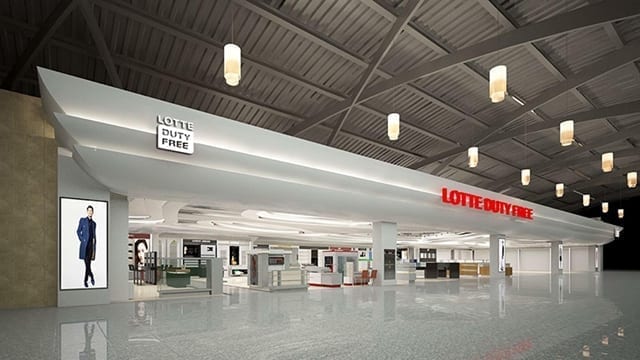
    After winning a Korea Airports Corporation (KAC) tender, Lotte Duty Free has officially re-launched at Gimhae airport.

    The retailer now has 980.44 sqm of space, an increase of 329.2 sqm over its area last year. Lotte Duty Free had a 158.34 sqm presence at the terminal when it opened in 2007 until early 2014.

    Fellow Korean retailer Shinsegae, which was at the airport until last month, is believed to have terminated its contract to focus on the city – it plans to open a 13,350 sqm store in the city centre – and its Incheon airport outlets.

    Meanwhile, Lotte is targeting sales of W120 billion ($US99.2 million) at the airport this year with daily sales of W200 million.

    Following an analysis of consumer shopping trends at Gimhae airport, the cosmetics area has been expanded by 40 percent with the introduction of such brands as Giorgio Armani, Jo Malone and Tumi.

    In its entirety, the Lotte offers more than 120 food, electronics and accessories brands at the airport, along with fragrances and cosmetics labels such as Chanel, Dior and Sulwhasoo.

    A special promotion to commemorate the grand opening at the airport offers as a grand prize for each of 30 Korean nationals and their partners a trip to Okinawa to watch the Lotte Giants baseball team train.

    Other customers can win pre-paid shopping cards, movie tickets, drinks coupons and gift certificates.

    Dufry Group also runs a duty-free concession at the airport.

  • Good time for Samsonite

    Good time for Samsonite

    Buoyed by its Tumi acquisition, Samsonite sales soared in the last quarter in every market, even in its weakest link, Asia.

    The world’s largest luggage maker and retailer achieved a net sales boost of 22.8 per cent in the three months to September 30. Its strongest performance was the US where net sales increased by 22.7 per cent to US$765.3 million.

    In Asia, sales rose 13.4 per cent – although excluding figures for Tumi, acquired on August 1 and contributing to two months of sales, only by 3.7 per cent.

    North America sales rose 39.1 per cent, or by 9.8 per cent excluding Tumi, and in Europe by 16.5 per cent, or 9.4 per cent excluding Tumi. And in Latin America it was ahead by 26.2 per cent including and excluding Tumi.

    CEO Ramesh Tainwala said there is no doubt that the global trading environment continued to be challenging, yet despite the headwinds, all of Samsonite’s regions delivered positive constant currency net sales growth during the third quarter of 2016.

    “It is especially encouraging to see organic sales growth picking up in both the US and China, our two largest markets, while Europe and Latin America have maintained their growth momentum.”

    Gross profit increased by 26.5 per cent year-on-year to $419.8 million and gross profit margin increased to 54.9 per cent, from 53.2 per cent.

    On the negative side, operating profit decreased by 16.4 per cent year-on-year to US$71.7 million for the quarter, largely due to acquisition costs. Excluding those, operating profit increased by 23.7 per cent.

    Asia performance

    After a relatively lacklustre first half, both China and India saw net sales growth improve to 8.1 per cent year-on-year in the third quarter of 2016. Net sales in Hong Kong (including Macau) increased by 73.6 per cent, driven primarily by the addition of the Tumi brand. Excluding Tumi, net sales in Hong Kong (including Macau) decreased by 11.5 per cent. The decline was driven primarily by fewer Chinese shoppers visiting from the mainland.

    Japan and Australia continued to record strong year-on-year net sales growth of 29.7 per cent and 13 per cent, respectively. Excluding Tumi, net sales in Japan increased by 7.4 per cent. Also, the group continued to penetrate the emerging markets within the region with notable net sales growth in Thailand and Indonesia of 7.6 per cent and 3.1 per cent, respectively, year-on-year. Net sales in South Korea were up slightly year-on-year on a constant currency basis due to weak consumer sentiment.

    Growth by brand

    Globally, excluding Tumi, sales were driven by the Samsonite (up 10.2 per cent) and Kamiliant (up 576.1 per cent). Other brands including Hartmann (up 58.8 per cent), Lipault (up 342.8 per cent) and Gregory (up 20.4 per cent) also experienced solid net sales growth. The increase was partially offset by an 11.3 per cent decrease in net sales of the American Tourister brand.

  • CDFG opened 3000sqm Duty Free in Phnom Penh

    CDFG opened 3000sqm Duty Free in Phnom Penh

    Phnom Penh Duty Free is located inside the integrated entertainment destination of Naga City at Naga City Walk which connects Naga World to ‘Naga 2’. It offers approximately 4,000sq m of retail space with all the main DF&TR and luxury categories available: cosmetics, perfume, jewellery, sunglasses, watches, fashion, beverages, tobacco, travel goods and confectionery as well as “famous local products”.

    The end of September will see the arrival of a slew of further brands: Estée Lauder, Kiehl’s, La Mer, SK-II, Lancôme, MK, Rimowa, and Tumi.

    CDFG Phnom Penh beauty cambodia

    The beauty area in the new store.

    State-owned CDFG, which operates a brand company in Cambodia, comments: “We are the top luxury retail store in Phnom Penh providing a high-end shopping destination to tourists and business travellers. Customers can choose from more than 200 brands from around the world.”

    On opening, branded boutiques will include Longines, Tissot, Swarovski, Samsonite and Prada, with further boutiques from Armani, Coach and Furla to be unveiled at the end of this year.

    SILK ROAD TARGET

    The Phnom Penh development is part of an international expansion policy targeting the so-called ‘Silk Road Economic Belt’ to which CDFG parent, China Travel Group, is committed.

    Cambodia is a key market within the plan: CDFG has already opened its Angkor duty free store in December 2014 (where it competes with DFS), followed a year later by the Shihanoukville duty free store in December 2015. CDFG says it has “the full support at all levels of government in Cambodia”.

    CDFG – which claims to be China’s largest retailer of luxury merchandise – says that with its three stores in place it “will write a new chapter in the tourism industry in Cambodia”.

    To celebrate today’s soft opening, promotions are in place with a 15% discount on all shopping; a chance to experiencing the VIP shopping service; and a gift on purchases over $100. Scanning the company’s official WeChat account, or clicking ‘like’ on the company’s official Facebook, also qualifies for a surprise gift.

  • Samsonite to pay US$1.8 bn for Tumi

    Samsonite to pay US$1.8 bn for Tumi

    Luggage giant Samsonite is to pay US$1.8 billion for US-based Tumi, the luggage and travel accessories brand.

    In a joint statement, the two companies said they have entered into a definitive agreement whereby Samsonite will acquire Tumi for US$26.75 per share in an all cash transaction.

    “This is a transformational acquisition for Samsonite. It will meaningfully expand our presence in the highly attractive premium segment of the global business bags, travel luggage and accessories market,” said Ramesh Tainwala, Samsonite CEO.

    “Tumi is a perfect strategic fit for our business. The brand is beloved by millions of loyal customers for its high quality and durable premium business and luggage products. We are excited about the tremendous opportunities this combination provides us to further diversify our product and customer portfolios.

    “In particular, we will expand Tumi’s presence in Asia and Europe, while strengthening its business in North America, by leveraging our expertise in global distribution, sourcing, product design and technical innovation, especially in the area of lightweight hardside luggage.”

    Tumi CEO Jerome Griffith described the announcement as “an exciting day for Tumi and all the travellers around the world who count on us”.

    “The team at Samsonite has a long and successful track record when it comes to acquisitions and we know they will be excellent stewards of the Tumi brand. Samsonite will bring Tumi to new and growing markets, while still maintaining the high quality Tumi is known for.

    “This is a compelling transaction that delivers substantial and immediate cash value to our shareholders. Further, we are excited for our employees to benefit from opportunities presented by being part of a larger and more diversified global company. Samsonite has successfully grown many unique brands and we look forward to the next chapter in Tumi’s great history as part of the Samsonite family.”

    The two companies believe Tumi is an “ideal and complementary fit” with Samsonite.

    “With approximately 2000 points of distribution across 75 countries, Tumi’s leading market position in the premium business and luggage segment is a perfect complement to Samsonite’s strong and diverse portfolio of brands and products, with limited overlap in market positioning, price point and distribution. The addition of Tumi builds on Samsonite’s proven track record of successful acquisitions across multiple product categories and price points to broaden its portfolio,” the companies’ statement said.

    “It enables Samsonite to strategically expand into the highly attractive premium segment of the global business bags, travel luggage and accessories market with a business and travel brand that is recognised worldwide as being “best-in-class” in the premium segment.”

    Tumi was founded in 1975. Its products range from iconic ‘black ballistic business cases’ and travel luggage targeting business travellers, to  travel accessories, women’s bags and outdoor apparel.

    In the year to December 31, Tumi’s net sales were US$548 million, representing a year on year increase of 4 per cent.

    Post takeover, Samsonite will continue to be listed on the Hong Kong Stock Exchange.

  • Tumi plans more stores globally

    Tumi plans more stores globally

    US luggage retailer Tumi plans more stores internationally this year after a solid 2015.

    The company reported a net sales increase of 3.9 per cent to US$547.7 million in the year to December 31, or 6.7 per cent on a constant currency basis. Gross profit increased 6.8 per cent to $326.9 million, gross margin rose from 58 per cent to 59.7 per cent and net income was $63 million

    CEO and president Jerome Griffith said the company expects sales to increase a further 4 per cent to 6 per cent in the current year, assuming a constant exchange rate.

    “We are committed to growing our direct-to-consumer distribution worldwide through store openings, particularly in the international markets, as well as through the expansion of our global eCommerce platform. In 2015, we opened 27 new stores, and expanded our eCommerce platform to 18 countries globally.”

    This calendar year, the company expects to open between 15 and 20 stores, with an increasing focus on international markets.

    “Finally, we will focus our marketing programs and brand building initiatives on creating a deeper connection with our core customers and on extending our global reach,” said Griffith.