Retail News CRM

Category: Finance

Retail News Asia is committed to providing both local and global retailers with the latest Finance news throughout the Asian market. This on a daily base.

  • Bank of America Unveils New Leadership for Global Payments Solutions across APAC Region

    Bank of America Unveils New Leadership for Global Payments Solutions across APAC Region

    Bank of America’s (BofA) Global Payments Solutions (GPS) is ramping up its game in the Asia Pacific region with the recent appointment of three key leaders. Lin Guo has taken the reins as the head of GPS China, while Kitty Yen has been designated head of GPS Taiwan.

    In addition to her new position, Lin will continue her oversight of GPS corporate sales for China and Hong Kong, along with her role as deputy branch manager in Beijing. With a career at BofA that began in 2013, Lin boasts over 20 years of comprehensive experience in the financial services sector, including sales, client coverage, and management.

    Meanwhile, Kitty Yen, who joined BofA in 2012, will maintain her leadership of GPS corporate sales for Taiwan. Her impressive nearly 30 years of experience spans treasury sales and corporate banking, reinforcing her capacity to steer the firm’s ambitions in her new role.

    Both Lin and Kitty will report to Aziz Parvez, head of GPS Asia Pacific Corporate Sales, as well as to Winnie Chen, head of GPS APAC. They will also connect with their respective local management teams as they join the GPS Asia Pacific Senior Leadership Team.

    In another significant move, Olivia Anceau has been appointed the head of GPS Asia Pacific Specialized Product Sales (SPS). Based in Singapore, Anceau is expected to shape BofA’s strategy across various pivotal domains, including trade, card, core cash, sales readiness, bid management, and advisory services.

    With over 20 years in the financial services arena, Anceau previously held a position at Citi Commercial Bank, where he focused on cash and trade, as well as corporate and commercial banking. He will report to Galen Robbins and Tracy Stover, co-heads of GPS Specialized Product Sales, and to Winnie Chen.

    As the old adage goes, “A smooth sea never made a skilled sailor”—and with these appointments, it appears BofA is ready to navigate the fluctuating waters of Asia’s financial markets.

    Questions & Answers

    What roles have Lin Guo and Kitty Yen been appointed to at BofA?
    Lin Guo has been named head of GPS China, while Kitty Yen has been appointed head of GPS Taiwan.

    What experience do Lin Guo and Kitty Yen bring to their new positions?
    Lin Guo has over 20 years of experience in financial services, including roles in sales and management, while Kitty Yen brings nearly 30 years of experience in treasury sales and corporate banking.

    Who did Olivia Anceau replace at BofA, and what will his focus be?
    Olivia Anceau has been appointed head of GPS Asia Pacific Specialized Product Sales, where he will concentrate on strategy across trade, core cash, and advisory services.

  • Vietnam Gold Prices Dip as Global Markets Shine Brightly

    Vietnam Gold Prices Dip as Global Markets Shine Brightly

    Vietnam’s gold bar prices experienced a decline on Wednesday morning, even as global bullion rates showed an uptick.

    Local Prices Dip Despite Global Gains

    In Vietnam, the price for gold bars from the Saigon Jewelry Company fell by 0.41%, settling at VND120.6 million (approximately US$4,609.21) per tael. Meanwhile, the price of gold rings also decreased by 0.34%, now priced at VND116.7 million per tael. For context, one tael equals 37.5 grams or 1.2 ounces, a measurement that continues to hold significance in the Asian market.

    Global Market Trends Spark Local Fluctuations

    Across the globe, gold prices saw gains, driven by the latest U.S. consumer price data and mounting anticipation around U.S. President Donald Trump’s trade policies. Spot gold was recorded at an increase of 0.4%, reaching $3,334.12 per ounce, while U.S. gold futures climbed 0.1% to $3,340.90.

    “Gold at this moment is consolidating with a slight downward bias, particularly due to a stronger dollar,” commented Brian Lan, managing director at GoldSilver Central in Singapore. The ongoing negotiations concerning tariffs have injected further uncertainty into the market, leading many investors to seek refuge in traditional safe havens, like gold.

    Gold’s Role in an Uncertain Economy

    Gold’s longstanding appeal as a safe haven in economically turbulent times is expected to persist, especially in low-interest-rate environments. It seems investors are willing to dance with volatility while keeping a close eye on market cues—because in the world of gold, just like in the casino, fortune favors the bold, or perhaps it favors those who are careful!

    Questions & Answers

    What caused the decline in Vietnam’s gold prices despite global increases?
    Local gold prices in Vietnam fell as investors reacted to domestic market fluctuations, even though global prices rose due to changes in U.S. consumer data and trade policy expectations.

    How much did spot gold increase globally on the same day?
    On Wednesday, spot gold rose by 0.4% to reach $3,334.12 per ounce, reflecting broader trends in the international market.

    Why do investors consider gold a safe haven?
    Gold tends to perform well during economic uncertainties and low-interest-rate conditions, making it a preferred asset for those looking to safeguard their investments from market volatility.

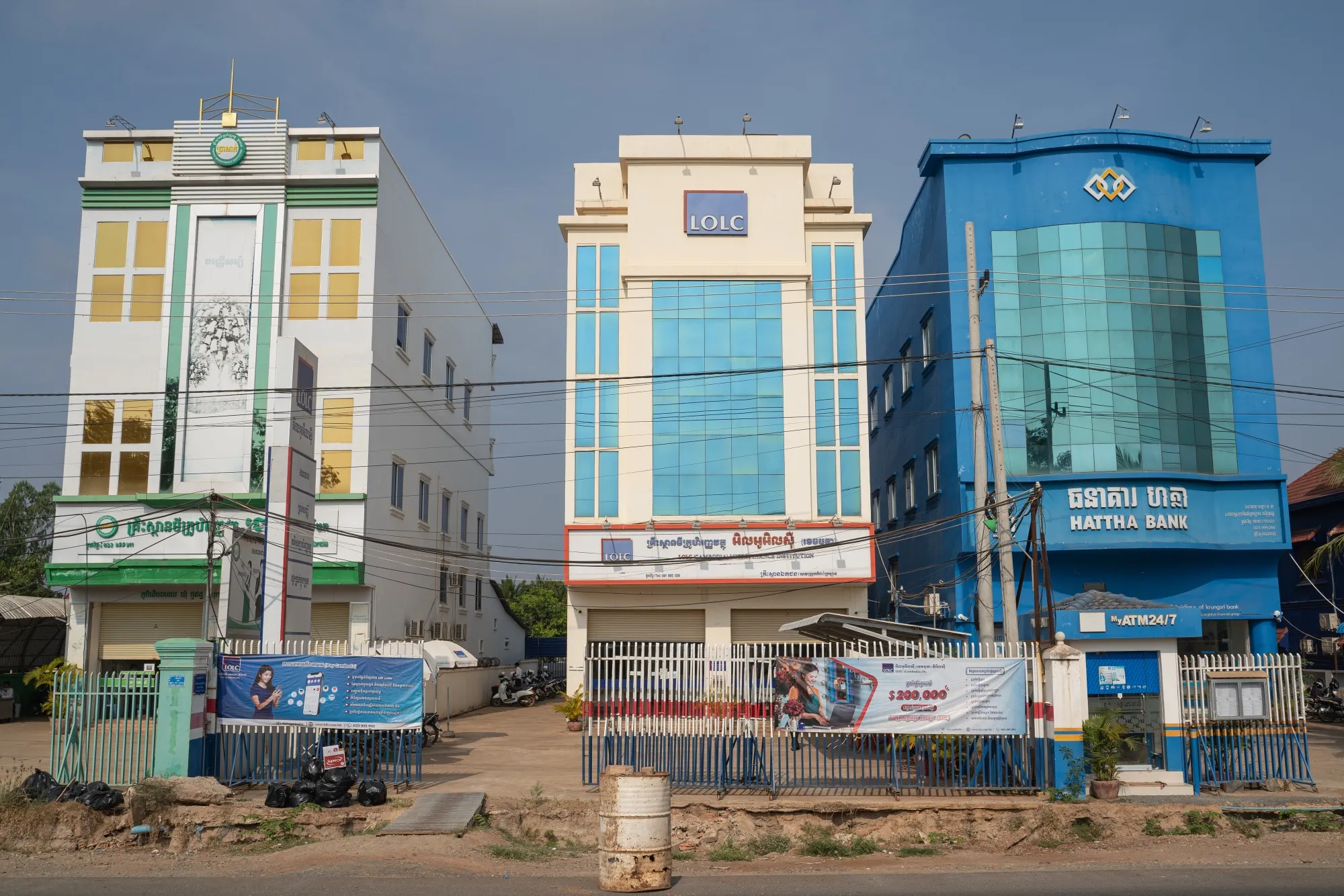
  • Cambodian Banks Struggle Amid Real Estate Challenges and Sluggish Tourism Recovery

    Cambodian Banks Struggle Amid Real Estate Challenges and Sluggish Tourism Recovery

    Cambodia’s banking sector faces a challenging landscape as non-performing loans (NPLs) are projected to surge to between 9.5% and 10% of outstanding loans by 2026. S&P Global Ratings highlights a sluggish recovery in tourism and ongoing pressures in the real estate market as major contributors to this downturn.

    Struggling Profitability Amid Growing NPLs

    As NPLs climb, banks will be required to increase their provisioning levels, keeping profitability grim, according to Ruchika Malhotra, a primary credit analyst at S&P Global Ratings. She estimates that profitability will stagnate at around 0.3% in 2025 and 2026—just a slight improvement over an already dismal 2024. It’s a bit like trying to put a shiny coat of paint on a rickety old house; the underlying issues are hard to miss.

    External Pressures Complicate Recovery

    Additionally, the banking sector is grappling with the fallout of tariffs and significant exposure to the construction and real estate industries, which have been under severe stress. “Cambodia’s sizeable manufacturing exports to the U.S.—accounting for one-third of total exports—could face steep tariff hikes. This uncertainty inevitably casts a shadow on the economy,” Malhotra explained.

    A Stubborn Property Market

    Malhotra anticipates continued pressure on property prices and sales, attributing this to a persistent mismatch between supply and demand. With banks heavily invested in the construction and real estate sector—representing one-fifth of their total loans—banks could find themselves in a precarious position. “The absence of swift court settlement processes means banks may be left with substantial real estate collateral after foreclosures, which constitutes a considerable portion of their loan collateral,” she noted.

    Regulatory Relief on the Horizon?

    Given the dismal profit margins, regulatory bodies may be inclined to extend support measures. Malhotra suggests that this could involve prolonging the current restructuring schemes for distressed borrowers, especially if NPL levels continue to rise. The central bank might even consider delaying the normalization of prudential measures to provide banks with a much-needed lifeline.

    Questions & Answers

    What are the predicted levels of non-performing loans in Cambodia’s banking sector by 2026?
    Non-performing loans are expected to rise to between 9.5% and 10% of outstanding loans by 2026, according to S&P Global Ratings.

    How is the Cambodian banking sector’s profitability projected to change over the next few years?
    Profits are expected to remain bleak, with estimates at only 0.3% in 2025 and 2026, indicating a minor improvement over 2024.

    What measures might regulators consider in response to the rising non-performing loans?
    Regulators may extend restructuring schemes for distressed borrowers and delay the implementation of new prudential measures to help banks manage their challenges.

  • Hyundai Card Leverages Data Insights to Propel Global Expansion Plans

    Hyundai Card Leverages Data Insights to Propel Global Expansion Plans

    Hyundai Card Co. Ltd., a pioneer in the South Korean fintech space, is steering its global ambitions with a sharp focus on data science, dedicating over 30% of its annual operating income to enhance its capabilities in this arena. The company is not just crunching numbers; it’s transforming them into actionable insights that predict and analyze customer spending patterns through advanced data structuring and artificial intelligence (AI).

    UNIVERSE: The Engine Behind Global Expansion

    At the heart of Hyundai Card’s international strategy is its innovative AI platform, UNIVERSE, which the company considers pivotal for its future growth. This powerful tool recently made waves in Japan by partnering with Sumitomo Mitsui Card Co. Ltd., a leading credit card issuer, following a six-month proof-of-concept trial that proved UNIVERSE’s mettle in a demanding market.

    UNIVERSE excels at tagging data into structured formats and employing AI to forecast consumer behavior — a function Sumitomo Mitsui Card plans to utilize across various operations, from credit assessments to fraud detection and merchant promotions. “Navigating the rigorous Japanese market has not only validated UNIVERSE but also paved the way for its expansion into additional territories,” commented Hyundai Card, emphasizing the platform’s potential to significantly bolster its global enterprise.

    Strategic Investments and Global Aspirations

    In a bid to fuel its global expansion, Hyundai Card is also pursuing credit ratings from major agencies including Fitch Ratings, S&P Global, and Moody’s Investors Service. Over the past decade, the company has poured more than $724 million (KRW1 trillion) into AI and data science initiatives, leading to a substantial increase in its workforce dedicated to these areas — from just 20 employees in 2015 to around 500 today, constituting a notable 25% of the overall staff.

    In 2023, Hyundai Card became the first in South Korea to launch Apple Pay, reaffirming its strong position in the mobile payments landscape alongside established giants like Europay, Mastercard, and Visa. It has also recently expanded its mobile payment services to Taiwan through a partnership with Line Pay.

    Dominance in South Korea’s Private Label Credit Market

    The company holds a commanding 78% share in South Korea’s private label credit card (PLCC) market, thanks to strategic alliances that enable it to offer co-branded services with major retailers such as Costco, Korean Air, Emart, and Olive Young. These partnerships have not just enhanced customer benefits but have also cemented Hyundai Card’s position as a leader in data utilization and collaborative marketing.

    With over 12 million cardholders, Hyundai Card is making significant strides in international markets. Its annual credit sales are projected to hit $120 billion in 2024, and overseas payment transactions have witnessed an impressive 32.6% year-on-year increase, reaching $2.4 billion.

    Questions & Answers

    What is Hyundai Card’s main strategy for global expansion?
    Hyundai Card is focusing on data science, allocating over 30% of its annual operating income to enhance its capabilities, particularly through its AI platform, UNIVERSE.

    How has Hyundai Card’s UNIVERSE platform been received in Japan?
    The UNIVERSE platform has been successfully adopted by Sumitomo Mitsui Card, one of Japan’s largest credit card companies, after passing a rigorous six-month proof-of-concept trial.

    What is Hyundai Card’s market position in South Korea’s private label credit card sector?
    Hyundai Card commands an impressive 78% share of the private label credit card market in South Korea, supported by strategic partnerships with major retailers.

  • India’s Banks Thrive Amid Infrastructure Boost and Rising Demand

    India’s Banks Thrive Amid Infrastructure Boost and Rising Demand

    Weak loans in India’s banking sector are projected to climb to 3.1% by March 2026, a trend that S&P Global Ratings attributes to both ongoing economic pressures and specific vulnerabilities within certain retail lending segments. Nonetheless, the overall outlook for India’s financial institutions remains optimistic, buoyed by substantial infrastructure investments and a steady rise in private consumption.

    Economic Outlook Despite Challenges

    According to Deepali V Seth Chhabria, a primary credit analyst at S&P Global Ratings, India is well-positioned to navigate upcoming challenges in the global market. The country’s limited exposure to U.S. trade significantly lessens potential tariff risks, a point that instills confidence in the financial landscape over the next few years. However, areas such as steel and chemicals may face setbacks if trade relations deteriorate, as highlighted in S&P’s midyear outlook for 2025.

    Retail Loans Show Signs of Stress

    While the banking sector may face headwinds, Seth Chhabria notes that certain segments, particularly unsecured loans and microfinance, are under pressure. She highlights that the quality of underwriting for secured retail loans remains robust, keeping delinquencies in a manageable range. The anticipated rise in weak loans is largely a reflection of these vulnerable areas.

    Mitigating Risks with Stronger Regulations

    In response to these challenges, tightening regulations and enhanced underwriting standards in microfinance are expected to help stabilize asset quality. “India’s sound growth prospects, alongside decreasing interest rates, will also play a crucial role in supporting the banks’ asset quality,” Seth Chhabria stated, shedding light on the financial system’s resilience.

    Proactive Measures for the Future

    To further bolster stability, strengthening internal controls and risk management practices in sectors like unsecured personal loans is essential. Addressing the risks associated with low-income borrowers will be pivotal, especially as the growth of household leverage continues to slow. Seth Chhabria predicts that non-performing loans (NPLs) will likely peak in fiscal 2026, presenting both a challenge and an opportunity for lenders to recalibrate their approaches.

    Questions & Answers

    What are the projected weak loan rates for India’s banking sector by March 2026?
    Weak loans are expected to reach 3.1% in March 2026, reflecting pressures in specific retail segments.

    Which sectors might be impacted by potential trade reductions?
    Sectors such as steel and chemicals could face significant challenges if trade relations deteriorate.

    What strategies are being implemented to mitigate risks in unsecured loans?
    Strengthened regulations and improved risk management practices are key strategies to address the accumulation of risks in unsecured personal and microfinance loans.

  • Citi Singapore Sees Wealth Transactions Skyrocket After Innovative Digital Transformation

    Citi Singapore Sees Wealth Transactions Skyrocket After Innovative Digital Transformation

    Citibank Singapore has seen a remarkable uptick in digital wealth management transactions, surging by an impressive 165% over the past two years. This surge is largely attributed to the bank’s significant overhaul of its mobile app and website, which now boasts over a hundred new features designed to enhance users’ wealth management experiences. According to Gourab Kundu, head of digital growth for Asia South at Citi Wealth, the initiative was motivated by a clear goal: to ensure that Citi’s digital ecosystem communicates effectively in the language of wealth.

    Revamping the Digital Landscape

    “We recognized the need to completely revamp the way we engage with our clients through our digital platforms,” Kundu shared during a recent Zoom call. This insightful overhaul seems to be paying off; four out of five clients now use Citi’s mobile app on a regular basis, indicating a widespread embrace of the bank’s digital offerings.

    Streamlined Investment Processes

    Among the standout changes to Citi’s digital interface is the introduction of an auto top-up feature, specifically for brokerage clients who wish to invest in US dollars. This innovative feature allows real-time currency conversion, effectively eliminating a previous hurdle where clients had to convert Singapore dollars into US dollars before initiating transactions. “Seventy percent of our brokerage transactions occur in the US markets, according to our Singapore data,” Kundu noted, highlighting a pivotal shift in user experience. Now, over 90% of brokerage transactions are executed digitally, signaling a clear move towards more efficient trading.

    Engaging with Wealth Management

    Citi’s efforts also extended to the mutual fund sector, where the bank doubled transaction volumes by simplifying the investment process and introducing a visualizer that allows clients to easily track the performance of their portfolios. Kundu described wealth management at Citi as entering a hybrid era, where clients enjoy the convenience of digital platforms while still having the option to consult with relationship managers.

    Digital Meets Human Touch

    To stay ahead in an increasingly competitive market, Citi has embraced a dual approach that blends digital access with human interaction. Clients can now swiftly authorize transactions without needing to speak face-to-face with an advisor. “Our platform sends alerts to clients about products, allowing them to review and authorize transactions seamlessly within the app,” Kundu explained.

    Furthermore, a secure WhatsApp channel has been established for relationship managers to communicate with clients, emphasizing Citi’s commitment to maintaining personal connections, even in a digital-first environment.

    Looking Ahead: Real-Time Payment Solutions

    As the bank sets its sights on the future, real-time payment processing looms large on CIS’s agenda. “One of Citi’s biggest advantages is our global reach,” Kundu emphasized, noting that the availability of payment corridors in real time is particularly beneficial. Recently, the company successfully launched real-time payments in India, the UK, and Thailand, unveiling new opportunities for cross-border transactions. “We’re excited to see solid improvements in the uptake of this cross-border payment facility,” he concluded, hinting at a bright future for Citi’s digital wealth management services.

    Questions & Answers

    What recent changes has Citibank Singapore made to its digital platforms?
    Citibank Singapore revamped its mobile app and website, launching over a hundred new features, which contributed to a 165% increase in digital wealth management transactions over the past two years.

    How has Citi improved the brokerage client experience?
    Citi introduced an auto top-up feature that enables real-time currency conversion for US dollar investments, simplifying the transaction process and allowing over 90% of brokerage transactions to be completed digitally.

    What is on the horizon for Citi’s wealth management services?
    Citi is focusing on implementing real-time payment processing, leveraging its global presence to facilitate efficient cross-border transactions, with successful launches in countries like India, the UK, and Thailand.

  • Vietnam’s Gold Prices Soar to Two-Month High: What This Means for Retail Investors

    Vietnam’s Gold Prices Soar to Two-Month High: What This Means for Retail Investors

    Gold prices in Vietnam have soared to a two-month high following a surge in global rates prompted by new import tariffs announced by the U.S. government.

    On Saturday morning, gold bars from the Saigon Jewelry Company increased by 0.41% to reach VND121.5 million per tael (approximately US$4,652.59), marking the highest price since May 10. Meanwhile, gold rings saw a modest rise of 0.25%, ending the day at VND118.2 million per tael. Since the start of the year, gold prices have surged by an impressive 44%.

    This recent climb is largely attributed to a global uptrend in gold prices, which rose over 1% on Friday. Investors are flocking to safe-haven assets in response to U.S. President Donald Trump’s announcement of new tariffs, prompting silver to reach its highest price in more than 13 years, according to Reuters.

    Spot gold saw an increase of 1% to $3,356.93 per ounce, peaking earlier in the session at its highest level since June 24. U.S. gold futures closed at $3,371.20, up 1.4%.

    The global equities market took a hit as President Trump intensified his tariff offensive against Canada, declaring a staggering 35% tariff on imports set to commence next month, with plans to apply blanket tariffs of 15% to 20% on most other trading partners.

    “We are witnessing the return of the uncertainty premium to the market, leading to increased interest in gold as a safe haven,” explained Aakash Doshi, global head of gold strategy at State Street Global Advisors. He anticipates that gold prices will likely range between $3,100 and $3,500 in the third quarter, stating, “It’s been a remarkable first half of the year, and now we seem to be entering a phase of consolidation,” as reported by Reuters.

    Questions & Answers

    What factors are contributing to the rise in gold prices in Vietnam?
    The surge in gold prices is primarily due to increased global rates following the announcement of new U.S. tariffs, which have led investors to seek safe-haven assets.

    How much have gold prices increased since the beginning of the year?
    Gold prices in Vietnam have risen by an astonishing 44% since the start of the year, reflecting a strong demand amid market uncertainty.

    What are experts predicting for gold prices in the near future?
    Analysts, including Aakash Doshi from State Street Global Advisors, suggest that gold prices are likely to range between $3,100 and $3,500 in the third quarter, indicating a phase of consolidation after a robust first half.

  • Dollar Sees Slight Dip Against Dong in Black Market Exchange Rates

    Dollar Sees Slight Dip Against Dong in Black Market Exchange Rates

    In a curious twist of the foreign exchange market, the U.S. dollar has lost a bit of its footing against the Vietnamese dong on the black market this past Saturday morning. The greenback slipped 0.04% to VND26,490 at unofficial exchange points, while Vietcombank held its rate steady at VND26,290. The State Bank of Vietnam maintained its reference rate at VND25,128, keeping a steady course amid fluctuating markets.

    On a global scale, however, the U.S. dollar appeared to regain strength against other major currencies, bolstered by renewed trade frictions as President Donald Trump announced new tariffs aimed at Canada and other nations. This development reignited fears among traders that might ripple through international relations and global trade patterns.

    The dollar made a notable gain of 0.79%, reaching 147.4 against the Japanese yen—setting it on a trajectory for nearly a 2% rise for the week, marking its largest weekly gain since early December. And while it remained flat against the Swiss franc, trading at 0.79695 franc, the situation was more dynamic elsewhere.

    In Europe, the euro fell by 0.1% to $1.1688 as Trump’s tariff threats cast a long shadow over trade discussions between the European Union and Washington, potentially threatening the delicate balance of ongoing negotiations. Against the yen, the dollar edged up by 0.6% to 147.05 yen.

    The Canadian dollar also felt the pinch, dropping 0.11% to C$1.3672 after a sharp decline of over 0.5% in the wake of Trump’s tariff announcement. The Brazilian real followed suit, depreciating by 0.26% against the dollar, illustrating the sweeping influence of the U.S. currency market.

    Questions & Answers

    How is the U.S. dollar performing against the Vietnamese dong?
    The U.S. dollar has declined slightly, slipping 0.04% to VND26,490 on the black market, while official rates remained unchanged at VND26,290 for Vietcombank and VND25,128 for the State Bank of Vietnam.

    What recent events are influencing the U.S. dollar’s value globally?
    The U.S. dollar has gained strength against major currencies due to President Donald Trump’s announcement of new tariffs on Canada and other trading partners, which revived trade tensions and uncertainty.

    What are the implications of rising tariffs for investors?
    Rising tariffs can lead to increased volatility in the currency markets, creating opportunities but also risks for investors as trade relations shift and economic forecasts become more uncertain.

  • DCS Launches Innovative Web3 Payment Platform, Revolutionizing the Retail Experience

    DCS Launches Innovative Web3 Payment Platform, Revolutionizing the Retail Experience

    DCS Card Centre is on the fast track to redefine its role in the financial landscape, transitioning from a traditional card issuer to a comprehensive global payments enabler. This transformation underscores a larger ambition to seamlessly connect the realms of Web2 and Web3 finance.

    Milestone Moments in Embedded Finance

    The company will showcase this evolution as the official payment provider for GastroBeats 2025. Dayna Leng, Chief Marketing Officer at DCS, stated, “This year, DCS has evolved into a global payments enabler, leading innovations that breach traditional finance and Web3 economies to facilitate everyday spending.”

    Once primarily identified with the Diners Club brand, this Singapore-based institution has significantly broadened its partnerships to include major players like Visa, MasterCard, and UPI. DCS’s evolution mirrors a broader regional trend, with embedded finance across the Asia Pacific projected to soar to US$255 billion by 2029.

    Redefining Payments for a New Era

    For DCS, the strategy now transcends simply issuing cards; it includes merchant acquisition and advanced payment services. “Card payments have undergone significant evolution,” Leng noted. “We’ve transitioned from debit to credit, to mobile and digital, moving from the confines of traditional finance to enabling real-time transactions across both physical and Web3 ecosystems.”

    Today’s consumers demand instant gratification, expecting payment solutions to be agnostic, borderless, and unhindered by limitations. This heightened expectation is prompting businesses to adopt innovative tools like virtual cards. These tools streamline accounting processes by consolidating expenses across teams, vendors, and merchants while also enabling multi-currency transactions, ultimately reducing foreign exchange costs.

    The Future is Regulated Yet Flexible

    “At the core of everything is the need for regulatory compliance,” Leng emphasized. She foresees a rapidly evolving digital payments landscape shaped by significant institutional involvement aimed at fostering a responsible digital lifestyle. One might say that while the future of finance is fast-paced and flexible, it must also tread carefully in regulatory waters — a balancing act reminiscent of walking a tightrope culinary experts skillfully navigate at a fine dining restaurant.

    Questions & Answers

    What is DCS Card Centre’s new role in the payments landscape?
    DCS Card Centre is shifting from a traditional card issuer to a global payments enabler, bridging traditional finance and Web3 ecosystems.

    How crucial is regulatory compliance in DCS’s strategy?
    Regulatory compliance is foundational for DCS, as the evolving digital payments landscape will require responsible frameworks to support new technologies.

    What is the significance of DCS’s partnership with GastroBeats 2025?
    DCS’s role as the official payment provider for GastroBeats 2025 marks a significant milestone in its ambition to integrate innovative payment solutions into everyday spending.

  • OCBC Bank Hong Kong Launches Dedicated Team to Empower Local Entrepreneurs

    OCBC Bank Hong Kong Launches Dedicated Team to Empower Local Entrepreneurs

    OCBC Bank (Hong Kong) has embarked on an ambitious journey, establishing a new department dedicated to providing loans for serial entrepreneurs in the bustling city. This strategic move aims to bolster support for the thriving entrepreneurial ecosystem in Hong Kong, with expectations to launch a comprehensive financing proposition by the end of 2025.

    A Holistic Approach to Entrepreneurial Lending

    In a bold departure from traditional banking practices, OCBC Hong Kong plans to assess potential borrowers through a holistic lens, considering their entire portfolio, including operating experience, track record, and strategic vision. This not only highlights the importance of individual entrepreneurial journeys but also allows the bank to tailor its offerings to meet diverse needs.

    Comprehensive Support Network for Entrepreneurs

    Entrepreneurs who secure financing from OCBC will find themselves supported by an integrated network that features a dedicated relationship manager and specialists in areas like cash management, corporate advisory, and wealth management. This multifaceted support is designed to empower entrepreneurs to navigate the complexities of business growth seamlessly.

    Sector-Specific Solutions on Offer

    OCBC’s offerings extend beyond standard loans, encompassing working capital loans, venture loans, cross-border expansion assistance, sustainable finance options, and corporate finance advisory services, particularly for mergers and acquisitions. It’s a buffet of financial solutions that aims to cater to the unique challenges faced by entrepreneurs, proving that financing can be as nuanced as the ventures themselves.

    Ambitions for the Future

    This initiative is part of OCBC’s broader goal to lend S$5 billion to the serial entrepreneur segment across Singapore, Hong Kong, Malaysia, and Indonesia by 2028. To date, since 2019, the bank has successfully financed 1,800 entrepreneurs in Singapore and Malaysia, disbursing S$1.5 billion. Looking ahead, an impressive S$3.5 billion in loans is expected to be extended between 2025 and 2028.

    A Commitment to Fostering Entrepreneurial Growth

    Ruby Yiu, head of emerging business at OCBC Hong Kong, articulated the bank’s commitment to facilitating entrepreneurs in navigating their journeys: “This new banking initiative showcases our dedication to enabling founders to expand and manage their ventures with ease.” Yiu further emphasized that the newly established department, created in July, is focused on providing tailored support necessary for the ongoing success of serial entrepreneurs.

    “Through this initiative, we hope to set a new standard in the market and gain widespread recognition for our efforts in fostering entrepreneurial growth,” she added, hinting at OCBC’s ambition to not just be a lender but a key player in enhancing the entrepreneurial landscape.

    Questions & Answers

    What is the main focus of OCBC Bank’s new department in Hong Kong?
    The new department is dedicated to providing tailored financial support to serial entrepreneurs, evaluating their entire portfolio to tailor solutions effectively.

    How much does OCBC aim to disburse in loans by 2028?
    OCBC aims to lend S$5 billion to serial entrepreneurs across Singapore, Hong Kong, Malaysia, and Indonesia by 2028.

    What kinds of financing options are available for entrepreneurs?
    Entrepreneurs can access working capital loans, venture loans, cross-border expansion support, sustainable finance, and corporate finance advisory services through OCBC.

  • Natixis CIB Strengthens APAC Investment Banking Team with Notable New Additions

    Natixis CIB Strengthens APAC Investment Banking Team with Notable New Additions

    The bustling streets of Seoul are set to witness an unprecedented surge in foot traffic, all thanks to a new partnership between Shinsegae Department Store and technology giant LG. This collaboration aims to redefine the shopping experience, blending the charm of in-person retail with innovative digital solutions. With nearly 130 years of retail expertise, Shinsegae has long been a staple in the South Korean shopping landscape, and now it is stepping into the digital age with gusto.

    Shinsegae’s Ambitious Vision Comes to Life

    The unveiling of Shinsegae’s flagship store in the heart of Gangnam promises to be a game changer. This new retail haven will not only house luxury boutiques and high-end fashion but will also feature interactive displays powered by LG’s cutting-edge technology. Picture this: as customers stroll through the store, they’ll engage with AI-driven kiosks that personalize their shopping journey. It’s a bit like having a virtual shopping assistant, minus the awkward small talk.

    Furthermore, Shinsegae plans to integrate augmented reality (AR) experiences within the store. Shoppers will have the chance to visualize products in their intended settings, making decision-making easier and more entertaining than ever. As if shopping in a virtual wonderland wasn’t enough, the department store will also offer exclusive workshops and events that make it a community hub, enriching the overall consumer experience.

    The Tech Revolution in Retail

    This partnership with LG is not just about sleek displays and cool tech; it represents a strategic shift in how traditional retailers can leverage digital tools to enhance customer engagement. The marriage of Shinsegae’s retail expertise with LG’s technological prowess sets a new benchmark for what consumers can expect in retail spaces across Asia.

    As the retail sector continues to evolve, particularly in urban centers where competition is fierce, Shinsegae’s initiatives signal a crucial step toward sustaining relevance in a digital-first world. These transformations reflect a growing recognition that today’s shoppers not only demand quality products but also experiences that resonate on a personal level.

    Consumer Engagement: The Future of Retail?

    Shinsegae’s move aligns perfectly with broader trends in consumer behavior. Recent studies reveal that shoppers are increasingly drawn to brands that offer interactive and engaging experiences. By prioritizing technology-driven interaction, Shinsegae is poised to attract a new demographic of tech-savvy consumers who favor convenience alongside high-quality offerings. It’s a smart pivot that marries nostalgia with modernity, ensuring that every shopping trip feels like an adventure.

    This transformation could not come at a better time. With global retail struggling in the wake of pandemic disruptions, innovative approaches like Shinsegae’s are needed to reinvigorate the shopping landscape, making it not just a chore but a delightful outing that consumers look forward to.

    Questions & Answers

    What can shoppers expect from the new Shinsegae Department Store?
    Shoppers can look forward to luxurious product offerings coupled with interactive displays and AR experiences designed to enhance the shopping journey, making it both personal and engaging.

    How does the partnership between Shinsegae and LG benefit consumers?
    This collaboration allows Shinsegae to leverage LG’s advanced technology, offering personalized experiences that meet the modern consumer’s expectations for interaction and engagement in retail.

    What trends in consumer behavior is Shinsegae responding to with these changes?
    Shinsegae is adapting to a growing preference among consumers for brands that provide interactive experiences, recognizing that modern shoppers value convenience and personalized service alongside product quality.

  • Gold Prices Edge Up Slightly Amid Market Fluctuations: What’s Next for Investors?

    Gold Prices Edge Up Slightly Amid Market Fluctuations: What’s Next for Investors?

    In a market marked by subtle shifts, Vietnam’s gold prices crept upward on Thursday morning, reflecting a slight rise in global rates. The Saigon Jewelry Company saw its gold bars increase by 0.17%, bringing the price to VND120.8 million (approximately US$4,626.58) per tael. In a similar vein, gold rings rose by 0.18%, now priced at VND117.2 million per tael.

    So far this year, gold prices in Vietnam have soared by an impressive 43.5%, showcasing the metal’s resilience amidst economic fluctuations.

    On a global scale, gold prices dipped into positive territory on Thursday. This uptick was bolstered by a mild retreat in the dollar and bond yields, as investors remained vigilant following U.S. President Donald Trump’s expansion of tariff measures, according to reports from Reuters.

    Spot gold prices increased by 0.3%, reaching $3,322.46 per ounce, while U.S. gold futures mirrored this rise, also climbing 0.3% to $3,331.

    As market analyst Matt Simpson from City Index aptly noted, “The market impact of tariffs seems to lessen with each new headline. Tariff fatigue is here, and traders need a new catalyst to awaken volatility from its lull.”

    Lower bond yields diminish the appeal of holding non-yielding bullion, and a weaker dollar further makes gold an attractive purchase for investors using alternative currencies.

    Questions & Answers

    How have gold prices performed in Vietnam this year?
    Vietnam has seen a remarkable 43.5% increase in gold prices in 2023, highlighting the metal’s growing allure amid economic uncertainties.

    What factors are influencing the rise in global gold prices?
    Global gold prices are currently benefitting from a slight decline in the dollar and bond yields, which makes the metal more appealing to investors.

    What did market analyst Matt Simpson suggest about current market conditions?
    Simpson indicated that traders are experiencing “tariff fatigue,” expressing a need for a new catalyst to reignite volatility within the market.

  • Krungthai Bank Announces Upcoming ATM System Maintenance: What You Need to Know

    Krungthai Bank Announces Upcoming ATM System Maintenance: What You Need to Know

    As Asia continues to be a global retail powerhouse, new strategies and trends are emerging that are reshaping the landscape. One of the most talked-about phenomena in the region is the rise of omnichannel retail, which has transformed how businesses engage with consumers. Retailers are increasingly blending online and offline experiences, recognizing that today’s shoppers crave flexibility, convenience, and a seamless journey from browsing to purchasing.

    Unlocking the Power of Omnichannel Retailing

    In major Asian markets, brands are embracing technology to fortify their omnichannel strategies. Retailers are deploying innovative solutions like mobile apps, augmented reality, and personalized marketing to capture the ever-elusive, tech-savvy consumer. In China, for example, businesses are taking advantage of super apps that combine shopping, social media, and payment systems all in one platform, making it easier than ever for consumers to navigate their buying decisions.

    The pandemic has accelerated this shift. Consumers, now accustomed to the convenience of digital shopping, are less loyal to brands that fail to meet their expectations. As a result, retailers are rethinking their strategies, finding ways to integrate their physical stores with digital platforms to create a more engaging shopping experience. This shift is not without its challenges; inventory management, consistent branding, and rapid order fulfillment are just a few of the hurdles that retailers must overcome in this new digital age.

    The Growing Importance of Sustainability

    Sustainability is no longer just a buzzword in retail; it’s becoming a critical factor influencing consumer choices across Asia. As awareness around environmental issues grows, brands are finding that adopting sustainable practices can significantly enhance their appeal. Companies are now looking at everything from ethically sourced materials to eco-friendly packaging, which resonates particularly well with younger consumers.

    In Japan, for instance, retailers are focusing on recycling initiatives and reducing plastic waste, showcasing their commitment to sustainability as a core aspect of their business identity. This trend is more than just ethical; it’s financially savvy, as studies indicate that consumers are willing to pay a premium for products they perceive as environmentally friendly.

    Surprising Retail Innovations on the Horizon

    The future of retail in Asia is not just about adapting to current trends; it’s also about anticipating the next big thing. One surprising innovation gaining traction is the rise of social commerce, where platforms like TikTok are turning into virtual marketplaces. Imagine scrolling through a feed filled with videos and discovering you can buy that stylish jacket or trendy gadget without ever leaving the app—it’s an exciting prospect that could redefine shopping.

    Retailers are also exploring the potential of artificial intelligence and machine learning to predict consumer behavior, manage supply chains, and personalize marketing efforts. This technologically driven approach not only streamlines operations but also fosters deeper connections with customers by offering tailored experiences.

    As the retail landscape evolves, one thing is clear: adaptability is key. Brands that are willing to embrace change and innovate will not only survive but thrive in the dynamic Asian retail market.

    Questions & Answers

    What is omnichannel retailing, and why is it important in Asia?
    Omnichannel retailing refers to the seamless integration of online and offline shopping experiences. It’s crucial in Asia due to the region’s tech-savvy consumers who expect a flexible and convenient shopping journey.

    How are brands in Asia addressing sustainability?
    Many Asian retailers are adopting sustainable practices, such as using eco-friendly materials and reducing plastic waste, to appeal to environmentally conscious consumers, especially younger shoppers who prioritize sustainability.

    What are some innovative trends shaping the future of retail?
    Trends like social commerce, where platforms like TikTok facilitate shopping, and the use of AI to personalize shopping experiences are at the forefront of innovation, promising to transform how consumers interact with brands.

  • South Korean Banks See Growth in Deposits and Household Loans in June

    South Korean Banks See Growth in Deposits and Household Loans in June

    In a striking shift within South Korea’s banking landscape, deposits and household loans surged in June 2025, surpassing previous month’s figures, according to the latest data released by the Bank of Korea (BOK). This trend reflects an increasing consumer confidence amid dynamic housing market activities.

    Deposits Take the Lead

    June saw South Korean banks enjoy a robust increase in transferable deposits, which rose by $19.88 billion (KRW 27.3 trillion). This marks a notable jump from the $14.7 billion (KRW 20.2 trillion) expansion observed in May. Such a significant uptick suggests that households are not just saving — they are preparing for something big.

    Household Lending on the Rise

    When it comes to lending, banks extended an additional $4.5 billion (KRW 6.2 trillion) to the household sector in June, continuing from a healthy increase of $3.78 billion (KRW 5.2 trillion) in the prior month. This momentum indicates a thriving demand for loans, particularly in the mortgage market, which has been buoyed by a recent wave of housing transactions.

    Corporate Lending Struggles

    Yet, not all areas of the banking sector are flourishing. In a somewhat ironic twist, corporate lending took a downturn, with banks issuing $2.62 billion (KRW 3.6 trillion) less in loans to businesses. While large corporations faced a setback, small and medium enterprises (SMEs) managed to hold their ground with a slight increase in funding.

    Asset Management Funds Take a Hit

    Adding to the mixed signals, funds managed by asset management companies experienced a decline of $946 million (KRW 1.3 trillion). This drop underscores a cautious outlook among investors, perhaps reflecting a general uncertainty in market conditions.

    As South Korean banks navigate this uneven landscape, the growing consumer deposits and household loans inject a sense of optimism, even as corporate sectors reel from decreased lending. In this balancing act, only time will tell how these trends evolve.

    Questions & Answers

    What drove the significant increase in household loans in June 2025?
    The increase in household loans can be attributed to the rising demand for mortgages amidst an uptick in housing transactions across the market.

    How did corporate lending perform in June 2025?
    Corporate lending saw a decline of $2.62 billion (KRW 3.6 trillion), indicating challenges within the business sector, particularly for large corporations.

    What does the decline in asset management funds suggest?
    The reduction of $946 million (KRW 1.3 trillion) in asset management company funds may point to a cautious investment sentiment among consumers, reflecting broader market uncertainties.

  • NEC ANZ Welcomes Keith Morrison as Its New CEO, Marking a Fresh Chapter for the Company

    NEC ANZ Welcomes Keith Morrison as Its New CEO, Marking a Fresh Chapter for the Company

    NEC Australia & New Zealand (ANZ) is set to undergo a leadership change as President and CEO Jason Price announces his resignation effective at the end of July 2025. After nearly three years at the helm, he will hand over the reins to Keith Morrison, whose appointment as CEO will take effect on August 1, 2025.

    Leadership Through Transformation

    During his tenure, Price has been a guiding force in steering NEC ANZ through substantial transformation, enhancing operational efficiencies, emphasizing customer engagement, and laying a strong groundwork for future growth. His leadership has ushered in modernization, setting the stage for the company’s next chapter.

    The Incoming CEO’s Vision

    Morrison joined NEC in 2024 as Senior Vice President and played a key role in developing the organization’s strategy for fiscal years 2025 to 2027. With over 25 years of experience in telecommunications, IT services, and business transformation, he has held senior positions at Datacom and Kinetic IT. His rich background positions him well to lead NEC into a promising future.

    Continuity and Change in Leadership

    Morrison’s promotion signals a commitment to delivering value to customers, strengthening strategic partnerships, and expanding NEC’s footprint across Australia and New Zealand. The transition promises continuity in leadership, facilitated by a collaborative handover process backed by Price and NEC’s regional and global stakeholders.

    A Solid Foundation for Growth

    Reflecting on his time, Price remarked, “It’s been a privilege to lead NEC through a defining period. I’m proud of the progress we’ve made—reshaping the business, strengthening our culture, and setting a clear path for the future. I am confident that Keith is the best person to guide the business through its next phase. He brings the right mix of deep experience, energy, clear vision, and a strong understanding of NEC’s strategy and values.”

    Morrison’s Exciting Challenge

    Morrison is optimistic about the company’s prospects in the region. “This is an exciting time for the business. We’ve laid the groundwork for something significant,” he said, eager to lead NEC’s next chapter. His focus will be on accelerating growth, enhancing value, and building upon the solid foundation established by Price and the team.

    Based in Perth, Western Australia, Morrison’s ascent to CEO emphasizes NEC’s commitment to investing in and growing within this strategically vital region. The company expressed heartfelt gratitude for Price’s leadership and contributions while wishing him every success in his future endeavors. After all, leading a company through transformation can sometimes feel like juggling flaming torches—daring, indeed, but captivating for those who know how to handle it.

    Questions & Answers

    What were some key accomplishments during Jason Price’s tenure?
    During his time as President and CEO, Jason Price guided NEC ANZ through significant transformational changes that improved operations, enhanced customer focus, and set the company up for sustainable growth.

    What experience does Keith Morrison bring to his new role as CEO?
    Keith Morrison has over 25 years of experience in telecommunications, IT services, and business transformation, training his sights on expanding NEC’s presence in Australia and New Zealand since joining the organization as Senior Vice President in 2024.

    How does NEC view the transition in leadership?
    The transition ensures continuity and is supported by both outgoing and incoming leaders, with a shared vision for accelerating growth and enhancing customer value in the region.