Category: Logistics

Retail News Asia is committed to providing both local and global retailers with the latest Logistics news throughout the Asian market. This on a daily base.

  • The art of temperature-controlled logistics

    The art of temperature-controlled logistics

    The average life sciences and healthcare supply chain involves some 25 different parties – companies separately responsible for preparing, moving, holding, or checking the integrity of a shipment. Now imagine that the transiting pharmaceutical products or medical devices must be maintained within a temperature range of 2 to 8°C (36 to 46°F). Understandably, this requires robust systems and meticulous choreography.

    Demand is increasing for the unbroken cold chain – an uninterrupted set of processes from manufacturing and storage to distribution and delivery undertaken in refrigerated conditions. We find that our customers are paying greater attention to the specifics of how their products are being shipped and want to provide more direct input. We therefore work closely with them to identify where we can establish more control mechanisms, enabling customers to track their shipments at all touch points, particularly through global air cargo facilities.

    Today, technology enables us to gather data on any parameter of the supply chain – for example, not just temperature but also humidity, energy consumption, and even whether a door has been opened or closed. By transmitting this data via mobile devices, key processes can be monitored in real time from anywhere in the world. And throughout time, this is generating additional data – current and historical – as shipments move through the supply chain.

    Ensuring cold chain integrity requires using rich analytics algorithms to turn raw data into actionable recommendations and warnings. These can improve storage and handover processes, guide business decisions, and prevent cold chain failures before they occur.

    With temperature-controlled logistics, we use data to mitigate and predict risk. For example, we would start by looking at the validation performance of our packaging. Then, at the next level of our analysis, we would examine our process control around this packaging. We would be asking questions such as “How well can we control the process?” and “What’s the impact if we experience a deviation?”. It is essential that we take a scientific approach to the evaluation of risk through data – this is how we anticipate which process elements could go wrong and which ways any packaging might fail.

    Cold chain logistics is constantly evolving – active and passive packaging solutions, new services provided by the airlines, and more. One of our customer surveys showed that 40% of our life sciences and healthcare customers consider maintaining temperature control to be a major issue. That is why many of our discussions with customers concern harnessing the power of big data and analytics. These highly targeted activities reduce risk and enable better decision making, ensuring we succeed in delivering temperature-controlled healthcare to the world.

  • Digitalisation of supply chains in India

    Digitalisation of supply chains in India

    The digital B2B marketplace for warehousing, Log-hub AG from Switzerland, and the Indian Supply Chain specialist 3SC are now collaborating on the Indian market. Both companies are technology based and offer advanced analytics based transportation and warehousing solutions. Log-hub and 3SC have agreed to combine their capabilities to provide seamless service offerings for those companies who want to identify and implement the savings potential of the new Indian tax regime.

    Log-hub AG and 3SC Solutions Ltd provide complete supply chain management services in terms of planning and execution throughout entire India. Their transportation and warehouse network is rendered by a control tower set up of more than 200 experts and the digital marketplace for warehousing space.

  • A community approach in maintaining pharma shipments

    A community approach in maintaining pharma shipments

    In recent years, the demand for reliable end-to-end transport for pharmaceutical cargo has seen a tremendous rise, bringing to light the lack of reliability and data sharing, that affects the entire supply chain. As with every growing industry, the need for improvements and quality checks becomes ever more apparent with the growing demand. The solution: Pharma.Aero, an independent membership driven association comprised of members from airport communities, pharmaceutical shippers and other cargo logistics stakeholders from around the world.

    In 2016, Brussels Airport (BRU) and Miami International Airport (MIA), the first and second International Air Transport Association (IATA) designated pharma hub airports in the world, took on the initiative to create Pharma.Aero – an organisation that would be focused on improving pharma handling and quality in the air cargo industry worldwide.

    The worldwide Pharma.Aero platform will enable its members – consisting of airport communities, airline carriers, pharma shippers, and other logistics stakeholders – to foster strong collaboration amongst themselves. By jointly working on innovative regional initiatives, with an emphasis on the IATA CEIV Program, airports and their operators will achieve excellence in reliable end to end transportation for the shippers and patients.

    The organisation will bring its visions to life by fostering route certification and development of pharmaceutical trade lanes. Therefore, members of the organisation will be able to share expertise, market knowledge and implement best practices within the entire supply chain (from end-to-end). Furthermore, the association will help organise events, projects, workshops, as well as local and regional shipper forums, that connect CEIV airport communities to the end customers: pharmaceutical manufacturers.

    Early adopters

    At the launch of the initiative which was held in Paris, Nathan De Valck, Cargo Product Development manager at Brussels Airport and Chairman of Pharma.Aero reiterated, “with the vision to achieve a reliable end-to-end air transport for pharmaceutical cargo, Pharma.Aero will focus on pharmaceutical shippers and all industry stakeholders who embrace the IATA CEIV program. Members of the organisation will foster route certification/development of pharmaceutical trade lanes, implementation of best practices and sharing of market knowledge and expertise”.

  • DHL, FC Bayern expands cooperation in gaming market

    DHL, FC Bayern expands cooperation in gaming market

    DHL and Germany’s FC Bayern Munich yesterday announced the expansion of their cooperation with innovative activations within the video gaming market, specifically in the FIFA 18 game set to launch in September 2017.

    This is DHL’s bid to tap on the massive potential of the computer games market, which analysts predict will grow its revenue from US$493m in 2016 to US$1.1b in 2019.

    In 2015, DHL helped the club to launch its online flagship store on Tmall Global. As the team’s official logistics partner and e-commerce full service provider, DHL plays a key role in delivering official merchandise to FC Bayern fans in China.

    During the team’s 2017 Audi Summer Tour to Shanghai, Shenzhen and Singapore, the Bavarian club confirmed its desire to further engage with its fan base in China, providing fans with the latest club merchandise, such as jerseys and other FC Bayern products.

    FC Bayern is one of the world’s biggest football club with over 280,000 members and one of the most successful, having won five UEFA Champions League titles, three Club World Cup trophies as well as 27 German national league championships.

  • Kuehne + Nagel acquires two perishables specialists

    Kuehne + Nagel acquires two perishables specialists

    With the acquisition of CFI, Commodity Forwarders Inc., an airfreight forwarder of perishables products in the USA, and Trillvane Ltd, one of the largest perishables specialists in Kenya, Kuehne + Nagel expands its global perishables network by adding more than 150,000 tons of perishables and further strengthens its position in providing end-to-end international and domestic fresh chain solutions.

    CFI, 1974 established by Alfred Kuehlewind as one-man office in Los Angeles shipping strawberries to Europe, today operates 14 locations throughout the United States including Alaska and Hawaii with more than 700 employees. The company is specialised in airfreight export and import as well as distribution of seafood, all kinds of agricultural products, flowers and greens. As a leader in the US perishable forwarding industry, CFI differentiates itself through its expertise, ability to provide high-end visibility and delivering unprecedented product quality for its customers’ fresh chains.

    Alfred Kuehlewind, Founder and CEO of CFI: “We are looking forward to become part of the Kuehne + Nagel Group. The planned transaction will offer us new growth perspectives and access to a global logistics network. Both companies’ customers will benefit from an extended service scope.”

  • Maritime industry experts to discuss cyber security

    Maritime industry experts to discuss cyber security

    IT protection and cyber security will take center stage at the biennial Seatrade Offshore Marine and Workboats Middle East (SOMWME) exhibition and conference, taking place at the Abu Dhabi National Exhibition Centre (ADNEC) from 25 – 27 September 2017.

    The focus on IT systems at sea follows the recent global WannaCry attack, which shut down computers used by Spanish ISP Telefonica, FedEX and the UK’s National Health Service, among others, affecting some 200,000 computers in 150 countries. This was followed later in May with the British Airways outage, which saw hundreds of flights cancelled over a holiday weekend and £500 million wiped of parent company IAG’s value.

    Peter Broadhurst, Senior Vice President Safety & Security Services, Inmarsat, the mobile satellite company, will deliver the keynote presentation in the Knowledge Theatre, “Cyber Security: Protecting the Industry”, assessing the new risk factors of an increasingly connected shipping industry and how industry players can protect themselves against cyber security threats.

    “Hacking, ransomware and system outages have long been a concern for the shipping industry, particularly with the advent of the Internet of Things (IoT) and the connected ship. These risks are heightened due to the significant growth in networks of physical objects accessed through the internet,” said Broadhurst.

    According to a 2016 global analysis report by the Ponemon Institute, which surveyed data collected from 383 companies in 12 countries, the average total cost of a data breach stands at US$4 million, a figure that has increased 29% since 2013. The average cost per lost or stolen record is $158, with a 15% average price increase since 2013. In total, the number of security incidents reported in 2015 stood 63% higher than in 2014.

    Emma Howell, Group Marketing Manager, Seatrade portfolio commented, “Over recent weeks and months, we have seen huge organisations crippled by ransomware attacks and IT meltdowns – compromising systems and costing some businesses many millions of dollars. The need for the shipping industry to tackle this growing menace head-on is greater than ever before and we look forward to welcoming decision makers and industry leaders to debate these important issues.”

    However, compounding the issue, insurance providers are yet to close all of the gaps in their policies, leaving shipping companies at even greater risk and facing huge financial losses.

    “Most insurance policies have Cyberattack exclusion clauses, for property damage and business interruption and this exposes shipping companies and ship owners to huge risks. We have seen some response from the insurance industry but until comprehensive products are rolled out the responsibility of backing up systems, protecting data and ensuring a network is robust and secure, very much remains with the shipping company and ship owner,” added Howell.

  • Shippers reluctant to embrace digital solutions risk losing money

    Shippers reluctant to embrace digital solutions risk losing money

    Forwarders and shippers unwilling to implement digital solutions will increasingly be left behind by rivals able to generate cost savings and service improvements through new technologies, according to Alex Ruf, a 25-year logistics veteran and CEO of logistics marketplace book-cargo.com, one of the world’s largest freight rate search platforms.

    “It’s not about choosing whether or not to adopt new technology and working practices,” he said. “It is about when you do so – change is inevitable.”

    Ruf insisted all supply chain stakeholders – whether procuring or providing air, land or ocean forwarding services – could now reduce costs and improve supply chain transparency by deploying new technological solutions.

    “And, of course, customers also want lower quotes and improved transparency so it’s win-win,” he added.

    “Whether now or in the near future, failing to embrace digitisation and the automation of supply chains and freight bookings will have an impact on profits and customer relations.”

    Mr Ruf also claimed it was wrong to frame the discussion about new technologies entering the logistics space as a battle between incumbents and disruptors.

    “New technology does not have to be negatively disruptive to the traditional ways that forwarders and shippers conduct business,” he said. “Certainly, book-cargo.com is designed to enhance the businesses of our users, not detract from them. The feedback we get from forwarders and shippers is very positive.”

    book-cargo.com was soft launched in October last year and already has some 6,000 registered shipper and forwarder users making it one of the world’s largest freight rate search marketplaces. The system provides a fast and easy way to request and compare freight rates for global FCL, LCL, Air and Road shipments online, with comparisons possible based on price and transit time.

    book-cargo.com offers easy-to-use tariff management and rate upload functions as well as analytical tools which enable strategic planning across variables including reply times, hit ratios and most requested lanes. Online bookings can be made by forwarders, shippers or agents with just a few clicks.

    “book-cargo.com brings the freight forwarding and logistics industry into the digital age,” said Mr Ruf. “It’s already one of the world’s largest freight rate searching platforms and we are attracting more users every week.

    “Forwarders like it because they can upload their rates. Counter-parties like it because they can get an immediate response.

    “As well as shippers using it to procure rate and routing options by all modes, freight forwarders are also reaching out to other forwarders. And book-cargo.com also helps forwarders who do not have partners or agents in specific countries to find them.”

    Using book-cargo.com, Electronic Data Interchange (EDI) connections can be established to share booking details and/or shipping instructions with other users. Chat functionality has been built in to allow information and communication at the request/shipment stage. Once a booking is made, book-cargo.com provides a tailored control tower to ensure end-to-end supply chain visibility.

    “An information revolution is taking place and companies are demanding greater visibility, more sophisticated analytics and the ability to make better and faster decisions,” said Mr Ruf. “book-cargo.com facilitates this. It is open 24/7. It enables searches, comparisons and bookings to be made in just a few clicks by forwarders and shippers. And it vastly reduces the time and resources required to effectively manage supply chains for both buyers and sellers of air, ocean and land freight services.”

  • Vietnam and Singapore firms set up logistics joint venture

    Vietnam and Singapore firms set up logistics joint venture

    The new company is expected to improve logistics services at Vietnam’s northern port city of Hai Phong. Quang Binh Import and Export Joint Stock Company has inked a joint venture deal with Transworld GLS Vietnam Ltd, a unit of Transworld Singapore Group, to establish Transworld QBV ICD.

    The joint venture will specialize in providing warehouse, loading and unloading, packing and customs clearance services and other services related to road, rail and waterway transportation at Quang Binh – Dinh Vu ICD (Inland Container Depot) in Hai Phong.

    In its first phase, the company will invest in transport and customs clearance services on an area of 10 hectares at the ICD.

    Quang Binh Import and Export is a producer and distributor of fertilizer, chemicals, agro-aqua products, food and beverages, bonded warehouse and yard service, and import-export and import & re-export service.

    Ranked among the top 500 largest firms in Vietnam by the Vietnam Report Company (VNR) last year, it is also a leading provider of warehousing and logistics services in Hai Phong.

    Understanding the importance of ICDs in the interntional logistics and supply chain, the company decided to invest in the Quang Binh – Dinh Vu ICD last year.

    The Quang Binh-Dinh Vu ICD will be developed in three phases, with the first phase including a warehouse capable of handling 100,000 tons of goods per year and yard’s capacity of 250,000 TEU per year. Once completed, Quang Binh-Dinh Vu will be one of the biggest ICDs in northern Vietnam.

    ICDs are inland customs clearance points used by importers and exporters. A combination of customs departments, carriers, freight forwarders and customs brokers allow exporters and importers to save time and money.

    The joint venture with Transworld GLS Vietnam aims to make the operation of the Quang Binh-Dinh Vu ICD more effective.

    Transworld Singapore is one of the fastest growing companies in Asia and owns nearly 40 container ships and more than 30,000 containers, particularly well-known for its refrigerated container.

    Transworld QBV ICD JSC is looking to develop Quang Binh – Dinh Vu ICD to be an enclosed logistics chain service that entails depot, yard, warehouse, transportation, LOLO equipment and auxiliary infrastructure, serving as the biggest transit and customs clearance point in Northern Vietnam.

    Speaking at the signing ceremony, Mahesh Sivaswamy, chairman of Transworld Singapore, said: “Starting operation, the Transworld QBV ICD will contribute to cost reduction for enterprises by speeding up and improving efficient clearance service at the port. We engage that the volume of import and export cargo going through our depot is going to significantly increase, making a positive contribution to the budget of Hai Phong City.”

  • s.Oliver selects Manhattan Associates to expedite order fulfilment

    s.Oliver selects Manhattan Associates to expedite order fulfilment

    Not only do today’s consumers demand a seamless shopping experience across channels, they want orders to be fulfilled in ever-shorter timeframes. Iconic global fashion brand s.Oliver Group has selected Manhattan Associates to meet these service expectations and to execute the next phase of its omni-channel growth strategy.

    The Germany-based company is deploying Manhattan’s distributed order management and store dulfilment solutions to orchestrate orders and to provide customers with more reliability and convenience in terms of how they take delivery of goods. s.Oliver Group will use the software to pool and govern the availability of inventory across its ecommerce and store distribution channels. The new approach will better leverage the brand’s entire supply chain, driving product availability improvements and delivering a more fulfilling customer experience. The ability to accelerate goods flows will also improve stock turns, reducing capital tied up in excess inventory.

    Ansgar Weber, digital operations & IT director at s.Oliver Group, commented, “Operating complex omni-channel services such as ship-from-store is impossible without having a streamlined and reliable IT infrastructure across all channels. An Order Management System, which fulfills orders against network inventory based on an optimized routing logic, is critical to success. The Manhattan solutions will provide our store associates with a consolidated view of inventory and orders and will better leverage our stores to increase speed to the customer. New click-and-collect and ship-from-store fulfillment options will allow us to get goods into the hands of customers quicker whilst the latter will also complement our distribution center during peak selling events, such as Black Friday.”

    Pieter Van den Broecke, Managing Director Benelux and Germany at Manhattan Associates, commented: “It is imperative that retailers are able to effortlessly handle omni-channel transactions and be able to make the buying and fulfillment experience as convenient as possible for the customer. Those that do will be able to deliver an outstanding customer experience and earn brand loyalty amongst their customers. Forward-thinking fashion brand s.Oliver Group is committed to delivering these service capabilities and we are excited to play a key role in its omni-channel transformation.”

  • Kale Logistics collaborates with Celebi Delhi cargo terminal

    Kale Logistics collaborates with Celebi Delhi cargo terminal

    Celebi Delhi Cargo terminal went live with Kale’s Galaxy (Domestic module) Cargo Management system as part of the phase wise implementation of the entire suite of Galaxy Air Cargo management software system comprising of EXIM operations, Warehouse Management, UD, Invoice and Accounts and Domestic Operations. The new age domestic module incorporates next generation features like Mobile App, Customer Portal, Hand-held based app and EDI with Airlines.

    Celebi Delhi Cargo Terminal Management India Pvt. Ltd., is a Joint Venture between Delhi International Airport Private Ltd (DIAL) and Celebi Ground Handling Turkey which along with domestic operations also provides cargo handling and warehousing services to approximately fifty international schedule carriers. Celebi Delhi is the largest operations in Air Cargo for Celebi worldwide. In order to keep pace with the ever-increasing domestic cargo demands, Celebi Delhi has partnered with Kale Logistics Solutions to automate their Air Cargo and terminal operations.

    Air Cargo industry has reached a crucial point where a fast-track approach to digitalization is required to keep pace with competitive modes of transport. It is undergoing a tremendous transformation – moving from legacy systems to agile technologies in order to streamline its operations, reduce costs and optimize efficiencies.

    Ramesh Mamidala, CEO of Celebi Delhi Cargo Terminal Management quoted, “Modern day freight challenges need technology to enable innovative practices to move businesses forward. With our domestic operations going live on Galaxy, we look forward to greater automation of our operational processes and getting quick and comprehensive information on consignment and cargo tracking. This significant development will help to speed up shipment times, improve efficiency and reduce costs.”

    Being the capital of the country, Delhi has maximum number of flight operations and Celebi – Delhi operates one of the largest volume of domestic cargo movement out of Delhi airport. Topographically, Delhi is surrounded by many states and with a boom in e-commerce business, there is additional domestic freight movement which makes Delhi a top e-commerce hub of India.

    Speaking more on this scenario, Mamidala added, “Celebi – Delhi’s current domestic handling system was challenged by an increased load of cargo and connectivity issues. Hence we decided to move forward with the latest technology solution to cater to this demand. Kale’s Galaxy is the perfect solution, which, with minor customizations fulfilled all our requirements. We would soon be going live on our international operations”.

    Amar More, CEO, Kale Logistics Solutions says, “We are delighted to partner with Celebi and are extremely confident that our system will address all their concerns and realize the benefits of GALAXY in near future. Galaxy is a global application that is being used by worldwide airports that incorporate global best practices and prepare the industry to manage the demands of e-commerce”.

  • Vietnam’s e-commerce acceleration to gain a boost from DHL eCommerce

    Vietnam’s e-commerce acceleration to gain a boost from DHL eCommerce

    DHL eCommerce, a division of the world’s leading logistics company, Deutsche Post DHL Group, has launched its nationwide domestic delivery operations in Vietnam. The domestic delivery network will offer a high quality delivery service across Vietnam and a range of services tailored for the booming e-commerce industry, helping small, medium and large e-tailers and marketplaces increase their share amidst the rapidly growing Vietnam e-commerce segment.

    “The Vietnamese e-commerce market represents a huge and relatively untapped potential for local retailers, e-tailers and marketplaces: in 2016, total e-commerce spending hit US$1 billion despite barely over 50% of the population being online, ” said Charles Brewer, CEO, DHL eCommerce. “With e-commerce spending expected to grow at around 23% per year between now and 2020, local e-tailers need scalable, high-quality logistics solutions with nationwide coverage more than ever before.”

    DHL eCommerce Vietnam offers domestic delivery nationwide across the country, managed by hubs and depots strategically located throughout the country. DHL eCommerce’s fleet of vans and motorbikes, coupled with regular air and road connections between its hubs, will support next-day delivery in Ho Chi Minh, Hanoi and other primary markets.

    “Our new domestic delivery service brings to Vietnam DHL’s extensive experience in designing comprehensive logistics networks, coupled with tailored e-commerce solutions to tackle some of the most pressing roadblocks to e-commerce growth,” added Brewer, “With e-commerce, consumers are increasingly expecting greater choice, convenience and control in their delivery experience and we aim to deliver a smile in the last mile by providing an amazing and customer-centric delivery solution.”

    When using the network, local e-tailers can easily assign shipments requiring cash on delivery service through DHL eCommerce’s online portal, allowing for faster remittance and simpler management of shipment information. Consumers will also be able to open, check and return goods at the point of receipt thanks to DHL’s Open Box Delivery service, better aligning the online shopping experience with their preferred purchasing habits.

    “Only 15% of Vietnam’s e-commerce shoppers paid online in 2016, making cash on delivery a must-have feature for e-commerce to succeed. That, combined with concerns about the hassle of returns and refunds, has made growth an uphill battle for many local e-tailers,” said Thomas Harris, Managing Director, DHL eCommerce Vietnam. “We recognize that having a fast and reliable delivery service won’t solve these issues alone, which is why we’ve tailored our nationwide network to seamlessly handle cash payments with next day cash remittance and returns to take the burden off local e-tailers so they can fully focus on growth and customer experience.”

  • Crown Equipment Opens New Facility In South Korea

    Crown Equipment Opens New Facility In South Korea

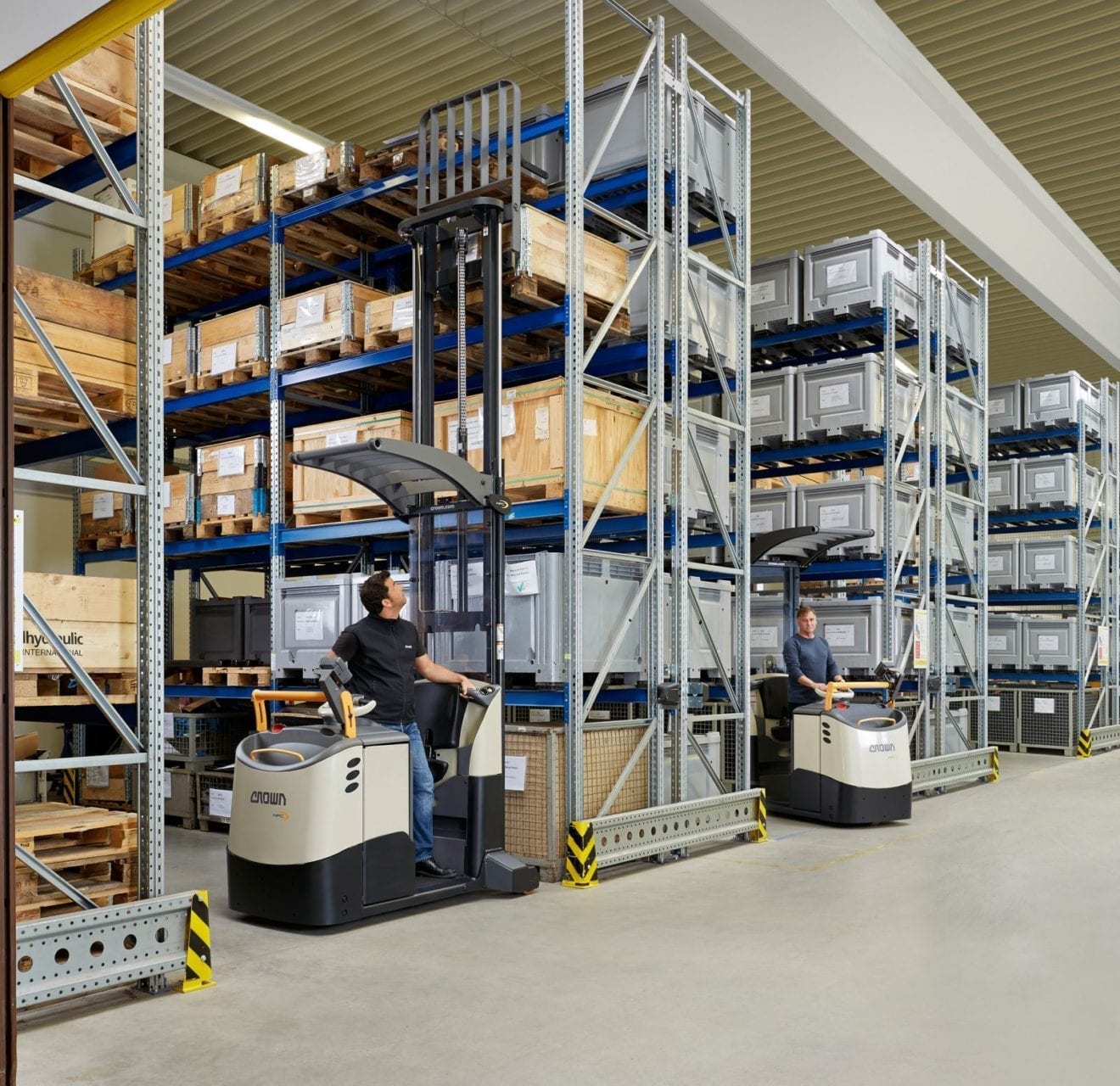
    To continue to meet growing demand for its lift trucks and fleet management technology, Crown Equipment to upgrade its South Korean operations with a move to a larger facility in one of the country’s fastest growing logistics hubs.

    Located in Icheon, Gyeonggi-do, the new facility supports Crown Korea’s experienced, factory-trained team of material handling specialists including the sales and service technicians and support staff who assist customers countrywide.

    The new branch is located for greater convenience and features larger sales and rental forklift fleets, better stock capacity and improved inventory management for faster parts turnaround.

    The Icheon facility is the third major demand-driven expansion in Asia for Crown in the last 12 months, following recently completed facilities in Johor, Malaysia and Rayong in Thailand.

    Crown Equipment managing director for Asia Pacific, Steven Hill, said the new facility was required due to steadily increasing customer numbers and geographical spread of demand for Crown’s innovative products and services.

    “The new branch is another example of Crown’s commitment to our growing number of South Korean customers in manufacturing, industrial, warehousing and logistics,” Mr Hill said.

    “It also demonstrates Crown’s ability to improve the customer experience through ongoing infrastructure development in the Asian market, which is bringing global technology to local business in Asia whilst expanding the customer support network.

    “Since we began operating in South Korea, Crown has delivered genuine cost savings, operational improvements and operator safety improvements to its customers, as well as growing employment opportunities.

    “The new facility also enables Crown to extend its already strong environmental credentials, which is in harmony with the sustainability focus of the Icheon area.

    Located in the region’s commercial Busan-Jeonju-Icheon ‘growth triangle’, Icheon is home to the port of Tanjug Pelepas, South Korea’s largest logistics complex, which supports the majority of the country’s resource refineries.

    The area is also at the junction of three major expressways servicing Jungbu, Gyeongbu and Yeongdong, for easy vehicle access.

  • Cross-border e-commerce: the 21st century spice trade

    Cross-border e-commerce: the 21st century spice trade

    Amidst recent uncertainties around the themes of globalization and international trade, one thing remains absolutely certain: cross-border trade is here to stay. People have been engaged in international trade for more than five millenniums. According to some of the earliest records of civilization, the exchange of goods was already supported by trading posts established in South Asia and Middle East.

    One of the main commodities was spices, which were highly prized. Traders in the Middle East offered cinnamon and cassia, embellishing their sales pitches with tales about their mysterious origins and properties. And customers loved it: The spice trade flourished and continued through to modern times, on the back of demand for these high value commodities, and the ingenuity of those who worked to source and sell them around the world. It built bridges between different cultures and gave rise to major shipping routes between continents, many of which endure till this day.

    Fundamentally, consumers have not changed over the last 5,000 years. As consumers, they still crave exclusive, high quality and exotic goods. They are willing to invest a certain amount of time and effort to seek out what they want at the best price. Merchants are constantly looking for enterprising, creative ways of taking their goods across borders to new markets. All these have set the stage for cross-border e-commerce – the new ‘spice trade’ phenomenon that will help to shape international trade, transform the world’s supply chains and build new shipping routes in the future.

    E-commerce is not a particularly new phenomenon. And neither is cross-border e-commerce. People have been able to order – particularly from major online retailers – around the world for years now, and this has helped the cross-border market grow to USD 300 billion up till 2015.

    Research insights published recently by DHL Express – in partnership with a leading global management consultancy, has indicated that this business will continue to flourish for years to come. According to the report, this market offers superior growth rates to those available in just about any other retail segment today. Cross-border e-commerce is expected to grow, on average, at nearly twice the rate of domestic online retail by 2020. The market will be three times bigger than what it was in 2015 by then.

    Outside of today’s biggest spice route supply markets—US, UK and China—new spice trade routes have emerged in Singapore, Hong Kong and India, spurred by rising consumer education and e-tailer awareness of opportunity. According to Google’s Consumer Barometer, consumers are motivated to purchase from abroad because of better product availability, more attractive offerings and trust in the brands. And consumers in Singapore (being ranked top alongside Japan, Germany and the UK) also cited better availability as a principal reason for cross-border online purchases.

  • Chain.io unveils supply chain open access integration platform

    Chain.io unveils supply chain open access integration platform

    Chain.io, a cloud-based supply chain integration provider, announces the exclusive beta release of their open access Chain.io Platform. The technology is a cloud-native supply chain integration and intelligence service that helps shippers, logistics service providers and logistics software providers share data more efficiently and dramatically reduce the cost of connectivity.

    “We’re really excited to bring the supply chain community a platform that will be able to make so many people’s jobs easier and more effective,” said Brian Glick, CEO of Chain.io. “This platform is the culmination of decades of combined work across the team. Leveraging open APIs, a collaborative data model, a pay-for-what-you-use pricing structure, Chain.io will transform the way that the logistics industry collaborates.”

    Chain.io fills the gap in the industry where one-on-one software integration has become too complex and costly. Via the company’s technology, clients will be able to develop a one-time connection to the platform and instantly be connected to other partners in the supply chain. Unlike legacy VANs, the cloud native platform allows for self-service and a significantly lower total cost of ownership.

    “Connectivity began with a bi-directional, costly, EDI integration between only two trading partners. Each new partner came with the same costly, bi-directional connectivity,” Glick continues. “Today, we reduce the development time and expense by allowing a company to create a single connection to Chain.io. From here, any other company can do the same, allowing for a nexus of interconnected parties as the platform continues to grow and add users.”

    While Chain.io was officially launched earlier this year by a group of industry experts, its technology has been in the works for some time already. The company leverages modern, cloud-based technologies like Functions as a Service, NoSQL, and Data Streams which allows the platform to deliver lightning fast performance while maintaining the highest levels of scalability, reliability and security.

  • Yusen Logistics opens new logistics centre in Myanmar

    Yusen Logistics opens new logistics centre in Myanmar

    On July 12, Yusen Logistics held an opening ceremony for Thilawa Logistics Centre in the Thilawa Special Economic Zone (SEZ) in Myanmar.

    The event was attended by Thilawa SEZ Management Committee Vice Chairman Cho Cho Win; Ambassador Extraordinary and Plenipotentiary Embassy of Japan in Myanmar Tateshi Higuchi; Myanmar Japan Thilawa Development Limited (MJTD) Chairman Thein Han; Mitsubishi Corporation Chief Representative for Myanmar Mitsuo Ido, Yusen Logistics Co., Ltd.; Kenji Mizushima; Yusen Logistics (Myanmar) Co., Ltd. President Yasuhiko Nojima; and Yusen Logistics (Thilawa) Co., Ltd. President Tatsuhiko Saeki.