Retail News CRM

Category: Startups

Retail News Asia is committed to providing both local and global retailers with the latest Startup news throughout the Asian market. This on a daily base.

  • Habitat by Honestbee stores planned for more Asian locations

    Habitat by Honestbee stores planned for more Asian locations

    The futuristic Habitat by Honestbee grocery retail format is set for expansion across Asia provided Honestbee can secure court protection from its creditors.

    Honestbee, which has debts estimated in the range of US$180 million, is awaiting a court decision on an application for a six-month reprieve from enforcement actions and legal proceedings from creditors.

    In an interview with Yahoo Finance Singapore, incoming CEO Ong Lay Ann says if the decision goes in the company’s favor a core plank of the restructuring program will be focusing on the high-tech Habitat by Honestbee concept, which has one outlet trading in suburban Singapore. The concept merges cashless grocery store with a restaurant and a testbed for new retail technologies. Customers can shop for groceries and have them home delivered, dine in-store or order food to go.

    “Once we do the restructuring and clean up, the prognosis for the business is actually good, and parts of the business have tremendous potential, like Habitat” Ong Lay Ann told Yahoo Finance.

    “There are plans to open Habitat around the region and we have partners that are working with us to develop in other countries.”

    Ong said the company is in “advanced discussions” with prospective partners in South Korea, Taiwan, and Malaysia and expects stores to begin trading there “within a couple of months”.

    “We will adopt a partnership model, so we will collaborate with potential operators and work with them to develop Habitat in its current form or Habitat 2.0.”

    The 5000sqm Habitat by Honestbee store opened last November in an industrial building in Pasir Panjang.

    “The Singapore store is a proof of concept. It is where we will actually test the technology and make sure the kinks are ironed out before we roll out in other countries,” Ong said.

    Future locations are more likely to be in shopping complexes rather than industrial estates.

  • PayPal-Backed Korean Fintech Raises $64 Million

    PayPal-Backed Korean Fintech Raises $64 Million

    South Korean fintech unicorn, Viva Republica, raised $64 million for its financial service platform Toss pushing the firm’s total value to $2.2 billion.

    The Seoul-based fintech has raised a total of $250 million, including $80 million in the December round, and new funding joins prominent existing investors such Singapore’s GIC and Sequoia Capital.

    Viva Republic was founded in 2013 and launched Toss in 2015 as a P2P money transfer service. It has since grown the platform to include various other financial services including banker, money transfer, credit score management and more. It currently boasts 13 million registered users with more than $42 billion of translation processed.

    This funding round was led by newly established Aspex Management (founded in 2018) which specializes in Asian equity investments in industries and firms with long-term structural tailwinds.

    We like the large addressable market financial services offer and the unique leading position Toss occupies amongst mobile consumers, said Hermes Li, founder and CIO of Aspex Management.

  • Honestbee seeks court protection in order to survive

    Honestbee seeks court protection in order to survive

    Sinking in debts of around US$180 million, Singapore grocery retailer Honestbee is seeking court protection from creditors to allow it to restructure.

    The company has applied to the High Court to commence a process which reportedly would give it six months protection from creditors lodging winding up procedures or other legal attempts to recover what they are owed.

    News of the move surfaced late Friday at the same time the company confirmed it was laying off 38 staff in Singapore.

    “As a result of our reduced operations globally, the company has made a decision to rightsize the company in order to cut costs and streamline its business,” a spokesman said in a  statement to the Straits Times.

    “The move is necessary to ensure that the company has the right structure in place for long-term stability and success.”

    Friday’s news came one week after the company announced the appointment of a new CEO, Ong Lay Ann, who has actually been in the role since July 15, atkin over from interim CEO and investor Brian Koo, who remains chairman. That followed the resignation of CTO and co-founder Jonathan Low four days earlier.

    Koo is also a founding partner in Formation Group, one of Honestbee’s largest creditors. Koo is part of the family which owns South Korean industrial giant LG. Parties associated with the Koo family are said to be owed as much as $50 million by Honestbee.

    In a statement, Honestbee said a court-supervised restructuring would allow management to focus on re-evaluating the business free from interference, to streamline operations, improve efficiencies and reduce overheads.

    “As part of the restructuring process, Honestbee will work closely with their advisers, creditors and stakeholders to achieve the best possible outcome for all interested parties,” the company said.

  • Fashion tech startup MadThread raised US$500,000

    Fashion tech startup MadThread raised US$500,000

    Singapore fashion tech startup MadThread has raised US$500,000 in seed funding. The deal was managed by AngelCentral, an angel investment community that supports startups in Southeast Asia, and Phey Teck Moh. Eleven other investors also participated.

    Founded in 2018, MadThread offers rental fashion via a subscription model. It aims to build a one-stop online platform for consumers to experience and experiment with various fashion brands on demand.

    “We’re on a mission to curate and partner with the very best of emerging and established fashion labels to give our customers access to an unlimited ‘closet in the cloud’ at a monthly flat fee,” said Nicole Hu, founder and CEO of MadThread.

    Before the seeding round, Madthread had received a six-figure investment.

  • Honestbee back on track with new CEO

    Honestbee back on track with new CEO

    Struggling grocery delivery company and grocer Honestbee has won another new lease on life with the appointment of a new CEO who has promised to revive the business with the support of investors.

    Details of the additional investment were not immediately clear.

    Ong Lay Ann took up the role without fanfare on July 15 from interim CEO and investor Brian Koo, who remains chairman. That followed the resignation of CTO and co-founder Jonathan Low four days earlier.

    Koo had taken over from Honestbee former CEO and cofounder Joel Sng in early May, clearing the way for fresh funding to be injected into the company by Koo’s investment vehicle.

    New appointee Ong has almost 20 years experience in IT, infrastructure, commodities and real estate. He has experience turning around failing companies, including Perth Precast in Australia which he rebuilt and listed via a reverse takeover.

    Low cofounded Honestbee in 2015 with partners Sng and Isaac Tay.

    “It is my privilege to have worked with some of the best talents during my time here,” he said in a statement confirming his departure.

    “The decision to leave Honestbee was made before Lay Ann had come on board. However, I have full confidence that Lay Ann will help Honestbee enter its next phase and recover from its recent setbacks,” Low said.

    So far this year, Honestbee has curtailed services, suspended operations or exited altogether markets including Thailand, Hong Kong, Japan, Indonesia, Taiwan and the Philippines.

  • Singapore startup Tuzo wants to help retailers hyper-personalise stores

    Singapore startup Tuzo wants to help retailers hyper-personalise stores

    Singaporean tech startup Tuzo is using AI to help retailers hyper personalize stores.

    The firm is focused on harnessing artificial intelligence and machine learning to help retailers tailor shopping experiences to their shoppers’ preferences, using real-time web browsing and shopping data. The hyper-personalized experiences are designed not only to help increase revenues for retailers, but also to generate data and shopper insights to help plan demand.

    “We have seen conversions go up by up to 50 percent, and basket size up by up to 40 percent in a large department store while the customer satisfaction with our BraFit solution was as high as 90 percent,” said Tuzo CEO Mohit Agrawal.

    Tuzo has solutions for apparel, lingerie, beauty, bags, footwear and jewelry – and is targeting department stores, offline fashion retailers and online stores. Tuzo also helps retailers digitize their inventory by tagging the products automatically for catalog creation using computer visuals. It also offers a visual search product, which allows shoppers to search for an item just by taking or uploading a picture, and a style advisor that engages with shoppers at a personal level by advising a complete look based on shopper preferences, retailer inventory and fashion trends.

    “Tuzo leverages algorithms developed using AI and machine learning to bring together the shopper preference, fit and global/regional fashion trends,” said company co-founder Sudhir Jha. “Tuzo solutions drive the omnichannel efforts of retailers. Tuzo will continue to invest in the development of cutting-edge technologies for the retail industry.”

    In its next phase of growth, Tuzo is planning to help hyper personalize stores in other Southeast Asian countries.

  • Starbucks buys stake in retail-technology startup Brightloom

    Starbucks buys stake in retail-technology startup Brightloom

    Starbucks Coffee Company has announced a deal with Brightloom (formerly Eatsa), a San Francisco and Seattle tech company that is working to create a best-in-class end-to-end digital customer experience platform for the restaurant industry.

    Starbucks is granting Brightloom a software license to select components of Starbucks’ proprietary digital flywheel software. In connection with the licensing agreement, Starbucks will take an equity stake in Brightloom and receive a seat on the company’s board of directors.

    Brightloom will combine its existing technology assets with software licensed from Starbucks’ digital flywheel. The combination will lead to the development of a cloud-based software solution for the restaurant industry that will connect customers to their favorite restaurant brands – particularly valuable given the recent hypergrowth of mobile ordering and third-party delivery platforms.

    Brightloom plans on making the software solutions available to Starbucks’ global license partners and will open this platform up to the entire restaurant industry of merchants. Starbucks will continue to drive software development of the Starbucks digital flywheel for all its company-operated markets.

    “We’re delighted to partner with Brightloom and drive a broad innovation agenda that extends relevant customer experiences from brick-and-mortar to a digital-mobile customer connection,” said Starbucks CEO Kevin Johnson.

    “At Starbucks, we have experienced first-hand the power that comes through digital customer connections that are relevant to the customer. The results we’ve seen in customer loyalty and frequency within our digital ecosystem speak for themselves, and we’re excited to apply these innovations toward an industry solution that elevates the customer experience across the restaurant industry.”

  • Country Manager, Levi Aron leaving Deliveroo

    Country Manager, Levi Aron leaving Deliveroo

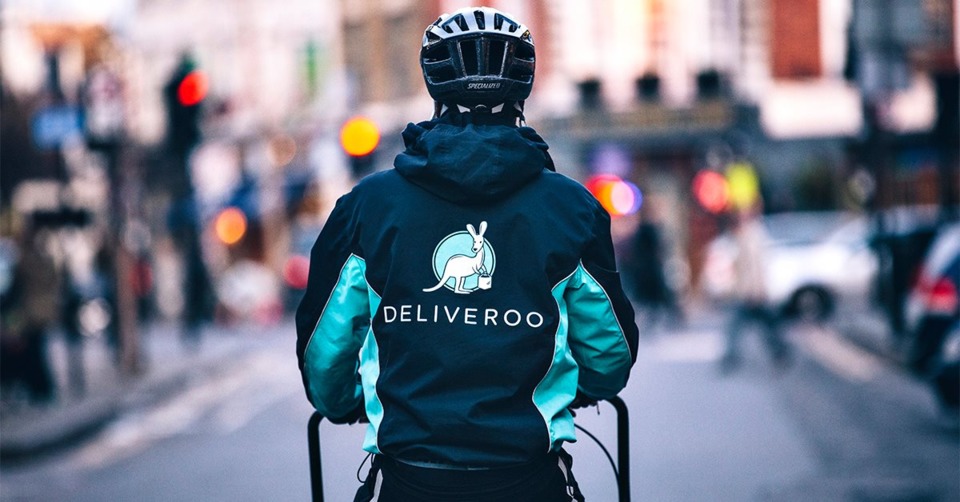
    Deliveroo’s country manager in Australia, Levi Aron, is leaving the food delivery company after nearly four years at the helm of the business Down Under.

    Merten Wulfert, managing director of APAC and the Middle East, will take over the day-to-day management of the food delivery service in Australia, while the company looks for a new country manager.

    Greg Ellis, former CEO of REA Group and Scout24, will also become senior adviser to Deliveroo Australia, and is expected to aid the company’s next phase of growth and expansion.

    Aron joined Deliveroo in August 2015 as country manager for Australia, and launched Deliveroo in the market in November of the same year. Under his leadership, the food delivery platform has grown to work with 11,000 restaurants across 13 Australian cities. It has 8000 riders and reaches 11 million Australians.

    Deliveroo plans to take the company’s growth to the next level by focusing on increasing restaurant selection, rolling out more virtual brands for restaurants to increase selection for customers and sales for restaurants and providing the best service to customers and riders.

    In a statement announcing his departure on Friday, July 19, Aron said he plans to pursue external opportunities.

  • Visa takes stake in startup Go-Jek

    Visa takes stake in startup Go-Jek

    Digital-payments company Visa has invested an undisclosed amount into Southeast Asian ride-sharing and services startup Go-Jek giving it a foothold in the company’s payments platform.

    The two companies say they will work together to provide greater options for cashless payments and more seamless experiences for consumers across Indonesia and Southeast Asia.

    Indonesian-based Go-Jek, which has since launched in Vietnam and Thailand, has created Go-Pay which is one of the leading digital-payment providers in Indonesia and established itself as a regional rival to GrabPay

    “The partnership will see Go-Jek and Visa collaborating on innovative payment solutions for digital-first consumers and Southeast Asia’s unbanked and underserved population,” the two companies said in a statement.

    “Financial inclusion in Southeast Asia continues to be an urgent and important issue. The vast majority of Indonesia’s transactions are still cash-based and the adoption of digital payment services is as low as one-in-four users in markets like Vietnam. Addressing this opportunity could increase Gross Domestic Product levels by between 9 per cent and 14 per cent, even in relatively large Southeast Asian economies,” the statement said.

    Visa regional president Asia Pacific, Chris Clark said Visa and Go-Jek share common objectives. “We both want to make everyday life more convenient, whether it’s how people move around town in Southeast Asia’s fast-growing urban areas, or making it easier for people to pay and be paid all over the world. We also have a shared goal to bring formal financial services to the unbanked and underserved, including micro, small and medium businesses. Through this partnership, we will explore ways to leverage the power of Go-Jek and Visa’s networks to expand financial access in Southeast Asia.”

    Go-Jek president Andre Soelistyo said Visa’s investment in the company is an endorsement of its business model.

  • Thai bank invests in Go-Jek to take on Grab

    Thai bank invests in Go-Jek to take on Grab

    Siam Commercial Bank has made a “significant investment” in Indonesian ride-hailing app Go-Jek.

    Go-Jek, which has an estimated valuation of around US$10 billion, will be offering financial services in partnership with the bank as well as expand its food delivery services in Thailand following the funding. It is expected to add SCB’s products in payments, digital lending and insurance to the available offerings on its app within the coming months.

    “Our products will be connected, SCB will oversee finance while Go-Jek and Get will look at digital and logistics,” said SCB president Arak Sutivong.

    Go-Jek has operated in Thailand under the brand name Get since earlier this year, where it is in competition with Singaporean ride-hailing app Grab.

    “We have more then 20 services, in Indonesia,” said Go-Jek’s head of international, Andrew Lee. “We will pick and choose the best playbook for Thailand and carefully curate that.”

  • Mr Jeff plans more outlet in Singapore and Philippines

    Mr Jeff plans more outlet in Singapore and Philippines

    Spanish on-demand laundry startup Mr Jeff plans Singapore and the Philippines expansion. The company aims to open more than 75 franchises in the Philippines, and 30 in Singapore by the end of this year.

    A Mr Jeff app allows users to book laundry services on-demand and through a subscription model. By using the app, website, or the company’s physical store network, customers can choose the exact location, time and day for their laundry to be collected and delivered. A driver visits the user’s home or office, collects the garments and delivers them back later, cleaned and ironed.

    According to Mr Jeff’s research, laundry services are popular among the younger generation, and considered by 78 per cent as the most-disliked domestic chore.

    “With our digital approach and our subscriptions plans, we intend to change the traditional function of the dry cleaning sector,” said Luis Eduardo Quintero, of Mr Jeff Philippines.

    “Singapore and the Philippines are two of the countries in which maximum revenue is expected.”

    Founded in 2015, Mr Jeff is currently operating 370 laundry points in more than 10 countries, mostly in Central and Southern America.

  • Apple Buys Self-Driving Car Startup Drive.ai

    Apple Buys Self-Driving Car Startup Drive.ai

    Apple Inc on Tuesday confirmed that it has acquired self-driving shuttle firm Drive.ai.

    Technology news website The Information reported earlier this month that the iPhone maker was considering acquiring the firm as a move to bring aboard some of its engineering talent to boost Apple’s own self-driving efforts.

    One of hundreds of startups pursuing autonomous vehicles, Drive.ai had been running a small fleet of test shuttles in Texas, The Information reported. But the startup told California regulators that it plans to lay off 90 people in a permanent closure. The San Francisco Chronicle earlier reported the closure.

    In Silicon Valley, it is common for larger companies to acquire struggling startups primarily to hire their engineers, a move known in the industry as an “acqui-hire.”

    Apple is vying against rivals such as Alphabet Inc’s Waymo to develop self-driving vehicles. In the past year, Apple has revamped its efforts, bringing former Tesla Inc engineering chief Doug Field to oversee the operation, which includes more than 5,000 workers.

    Apple is also working on key components such as sensors in addition to holding talks with potential suppliers.

  • Vietnamese e-commerce platform Tiki set to raise US$100 million

    Vietnamese e-commerce platform Tiki set to raise US$100 million

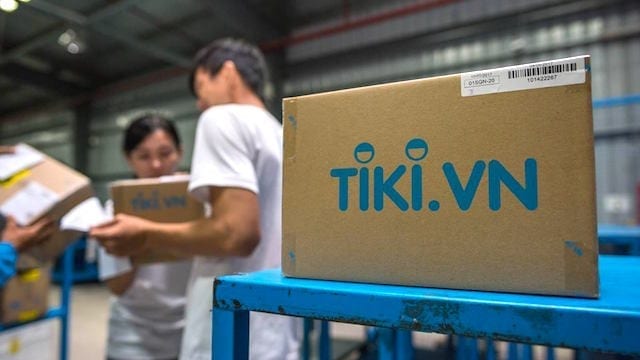
    Vietnamese e-commerce platform Tiki is raising another US$100 million from a Northstar Group-led funding round.

    The deal, was initially aiming for $75 million, but has been scaled up with support from Tiki’s current Korean backers, and may pull in as much as $150 million if certain KPIs are met.

    Tiki, which acquired competing platform Lazada last year, is now Vietnam’s second-largest e-commerce player after Shopee. It attracted a $44 million investment from Chinese industry partner JD early last year, and recently extended its national logistics operations in partnership with Vietnamese firm Unidepot.

    “Supply chain is a billion-dollar industry in Vietnam with surprisingly rapid growth,” said Tiki CEO Tran Thai Son. “However, Vietnam’s supply chain has not achieved its peak efficiency. For example, for an order worth 100,000 dong, logistics costs can be up to [25,000] dong.”

    Tiki’s infrastructural investments have seen the firm accumulate losses of around VND1 trillion ($43.3 million) over recent years.

  • NEXEA Launches Startup-Corporate Pilot Program

    NEXEA Launches Startup-Corporate Pilot Program

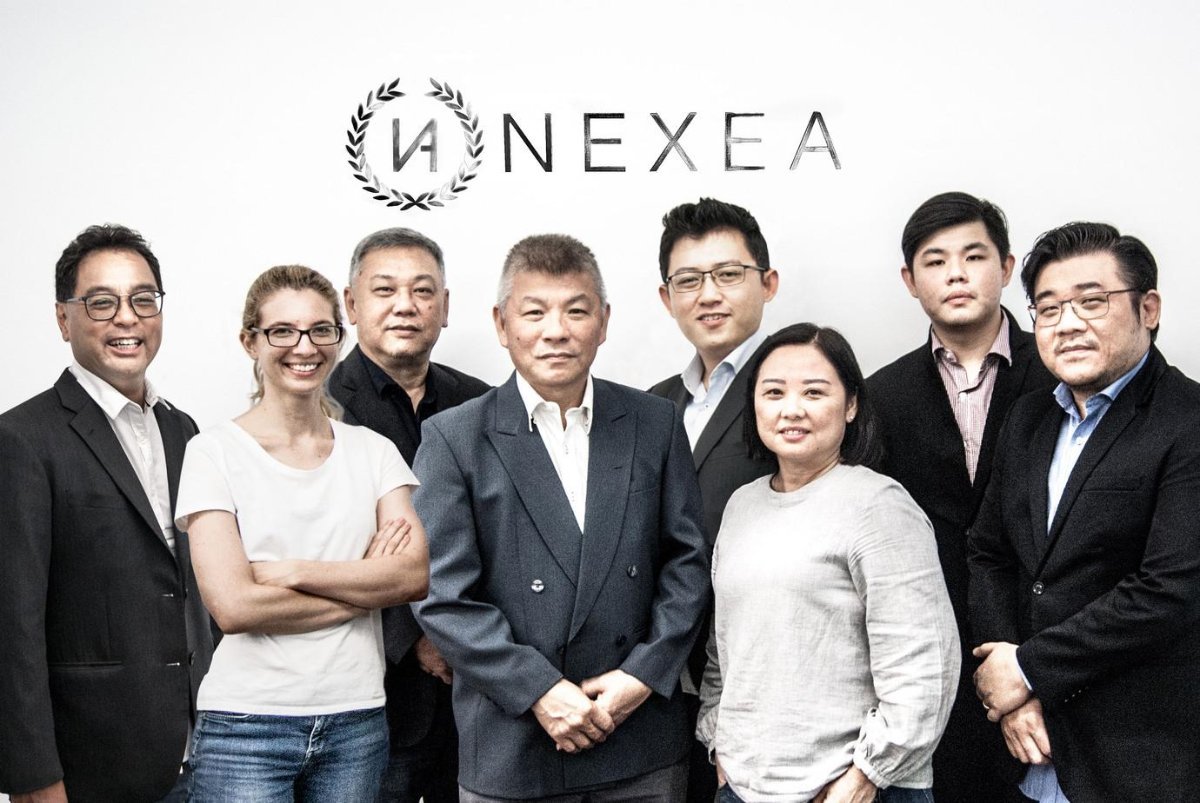
     NEXEA Angels Sdn. Bhd. (“NEXEA”), a leading startup investment firm today announced the launch of its Startup-Corporate Pilot Program that aims at bringing together local technology startups and corporations for the purposes of identifying and exploring potential collaborations among them. The program is held in partnership major organizations namely Digi, HELP University, Rhombus Connexion and Spritzer. Through the program, startups will get an opportunity to explore pilot projects with these organizations, validate business with feedback from them, explore real-world product testing and build up traction by having these organizations as potential customers. In addition, startups will also get support from mentors from NEXEA and have an opportunity to get funded by NEXEA and its co-investment partners. Startup-Corporate Pilot Program will start in July and run in parallel with NEXEA’s startup accelerator program.

    The Startup-Corporate Pilot Program is open to Malaysia-based startups ranging from ideation stage all the way to pre-series A. Applications to join are now open and will be closed on 24 June 2019. NEXEA is looking to enroll startups in the areas of connectivity, fintech, Internet of Things, SME solutions, F&B’s, education, healthcare and home services.

    Ben Lim, Managing Partner of NEXEA said, “Startup-Corporate Pilot Program is bridging the gap between startups and industry players. Many startups desire a working relationship with corporate entities but many too are unable to attain it due to various reasons. So, this year, besides running our regular Startup Accelerator Program we are bringing something different to the ecosystem – a platform where startups have direct access to corporations so they can explore potential collaborations. We are delighted that Digi, HELP University, Rhombus Connexion and Spritzer join in on our mission to help provide expert insights and opportunities for startups in our program.”

    Experienced entrepreneurs, CEOs and heads of innovation from the participating organizations will get involved in the program. With this approach to collaborations, NEXEA hopes to accelerate corporate innovation and the Fourth Industrial Revolution (IR 4.0).

    NEXEA has, in its team, experienced mentors where most of them are entrepreneurs, half of them have held C-level positions like CEO and some of them have successfully brought companies to initial public offering (IPO).

    Alex Foo, Head of Strategy and Transformation at Digi said, “We share a common belief with NEXEA that Corporates and Startups have a big role to play to foster the growth of innovation and innovators in Malaysia. By partnering with NEXEA’s Startup-Corporate Pilot Program, we hope to play a role in building the local startup ecosystem by sharing our knowledge and expertise in building businesses, while exploring collaborative opportunities with startups and jointly bring new innovations to market.”

    Adam Chan, Executive Director of HELP International Corporation Bhd. stated, “As HELP University embarks on its transformation plan to become an analytics-driven institution and one that provides our students with the opportunity to test their entrepreneurial acumen, working with NEXEA provides the platform for our students and graduates to embark on this journey. NEXEA has a strong program in this area and we are confident that the resources of both parties could potentially provide the catalyst to unearth the next unicorn.”

    Kent Chua, Co-Founder of Rhombus Connexion said, “In the era of disruption we face today, it is an “innovate or die” situation for corporates. Thus what better way than to work closely with brilliant young minds via NEXEA to tap on to their wild ideas and play a role in shaping and supporting the world’s future today.”

    Meanwhile, Kenny Lim, CEO of Spritzer Bhd., said, “The market is moving into AI, robotic technology, digitalization and etc., whether you like it or not, but indeed the spirit of entrepreneurship is always the first step on how an idea can be turned into conglomerate. Spritzer is a home grown brand, the entrepreneurship spirit is one of the factors that makes us to be where we are at today. One of our roles here is to share what we have learned, so others can shine.”

  • Indonesian Start-Up Seeks Swiss Listing

    Indonesian Start-Up Seeks Swiss Listing

    Jakarta-based Achiko wants to list 100 million shares on SIX, the Swiss stock exchange, it said on Wednesday. The shares were valued at $0.70 during its last fundraising, which would make for proceeds of $70 million.

    Its seven-year-old subsidiary Mimopay offers payment services for consumers without bank accounts – thus far, the company has won 2 million clients. Mimopay’s offering includes services to pay via smartphone, at ATMs, or directly at vendors. The company said its service has potential among the 1.7 billion people with no bank account.

    From Indonesia, the fintech led by president Allen Wu and CEO Kenneth Ting wants to expand to Myanmar, Vietnam and the Philippinen. To do so, Achiko plans to seek strategic partnerships with local firms.