Retail News CRM

Category: Startups

Retail News Asia is committed to providing both local and global retailers with the latest Startup news throughout the Asian market. This on a daily base.

  • Grocery e-commerce startup Kurly raises Millions

    Grocery e-commerce startup Kurly raises Millions

    Korean grocery delivery service Kurly has closed an upsized Series D round that hit US$113 million.

    The round was announced last April at $88 million, but has since attracted an additional $25 million funding from China’s Hillhouse Capital.

    Kurly delivers all orders placed by 11 pm before 7 am the following morning, prioritising convenience over cost savings and focusing closely on self-branded produce and groceries. This distinguishes its service from competing retail giant Coupang’s moves in the sector, which uses a marketplace platform to connect retailers and consumers.

    “The latest round of investment is a major endorsement of the progress we’ve made differentiating ourselves in the market through our cold-chain fulfillment infrastructure and unique offering of premium, curated products,” said company founder Sophie Kim. “Our focus is on further strengthening our relationships with our suppliers, developing our fulfillment infrastructure and continually improving our customer experience.”

    Kurly’s revenue tripled year-on-year to hit $131 million last year, although the firm did not release its profit-and-loss figures.

    Hillhouse Capital has offices in Hong Kong, Beijing, Singapore and New York. It focuses on investments in Asia.

  • Fave buys startups CutQ and FoodTime at once

    Fave buys startups CutQ and FoodTime at once

    Southeast Asian mobile payment and reward platform Fave has acquired CutQ and FoodTime, two startups specializing in F&B table ordering and takeaway pre-ordering for an undisclosed figure.

    The acquisition and integration of both firms present Fave with an opportunity to significantly accelerate its growth in the region.

    “I’m very pleased to welcome both CutQ and FoodTime into the Fave family,” said founder of Fave Group Joel Neoh. “As the cost to operate restaurants increases and business owners face challenges to hire staff and increase productivity, we wanted to provide table ordering and takeaway pre-ordering solutions which will reduce these hurdles.

    “We saw an opportunity to leverage on the knowledge and technology that CutQ in Singapore and FoodTime in Malaysia have developed and are delighted to officially introduce their services as our next value-added service for our merchants and users. At Fave, we believe every business should be able to partake in the digital economy, and no one should be left behind because the cost is too high or the technology is too complex.”

    “One of the biggest problems facing Singapore’s and Malaysia’s F&B and retail industry is an acute labour shortage,” said Fave Singapore MD Ng Aik Phong. “The lack of skilled labour, coupled with new government restrictions on foreign workers, poses one of the biggest growth challenges for both countries. With Fave, merchants have experienced an impressive 70-per-cent increase in loyalty-return rates from their customers as compared to the industry average of around 20 per cent. Adding table ordering solutions is a step towards addressing what merchants in F&B need.”

  • KVision Organises hackathon to Envision Vietnamese startups

    KVision Organises hackathon to Envision Vietnamese startups

    KasikornBank’s Kasikorn Vision has joined hands with VIISA, a leading accelerator in Vietnam, and UP Co-Working Space to hold a three-day hackathon. The event, from June 28-30, 2019, will offer startups the opportunity to gain financial backing from Vietnamese and overseas investors and fast-track their entry into a range of other startup programs.

    It will target startups with products or ideas to tackle finance and business challenges facing Vietnamese and ASEAN economies. Bringing together KBank’s expertise in regional banking, KVision’s $245 million worth of funding, VIISA’s local know-how, and innovative ideas from local startups, the aim is to drive synergy that will spur cutting-edge solutions and create value and drive growth in Vietnam and the wider region.

    Chat Luangarpa, first senior vice president of Thailand’s KBank, said Vietnam has emerged as one of ASEAN’s most vibrant startup markets and active venture capital markets. With a fast-growing economy, a pool of youthful tech talent, and strong government support, it has all the key ingredients for rapid innovation growth, he said.

    “The country’s young, change-oriented consumer market makes Vietnam a perfect place for startups to thrive.”

    KVision, aiming to drive innovative growth in the region, sees the potential for Vietnamese startups to not only grow in the local market but also capture opportunities across ASEAN.

    Supported by KBank’s presence in the region, the hackathon is aimed at equipping Vietnamese startups with the right tools to take them to the next level on the regional stage.

    The program will bring seasoned mentors from the local and global startup communities, including Akamai, Sendo, and other leading accelerators, and business veterans such as UniBrands. Through a series of mentoring and sharing sessions, startups will receive real-world advice, hands-on supervision and invaluable networking to help them step up their game in all aspects.

    From design thinking to pitching, the end goal is to inspire and drive startups to come up with real solutions to materialize their business, and form real connections to make their business happen. Startups with potential will have the opportunity to gain financial backing from investors in Vietnam and overseas and fast-track entry into a range of other startup programs.

    At the heart of this program lies the idea of co-innovation. Duc Tran, CEO of VIISA, said the time for partnerships is now. Gone is the time when brick-and-mortar corporations and startups could simply view each other as competitors, he said. Partnerships between the two could bring a synergy and combination of various strengths to accelerate growth, allowing startups to expand at a time of increasing competition while also allowing corporations to transform in the digital age.

    Luangarpa said this is now one of KBank’s key strategies too. The establishment of KVision in Vietnam, as well as other countries with outstanding technology sectors like China, Israel, and Indonesia, is to scout for innovative startups to co-launch new services in the region’s underserved and quickly evolving markets.

    KVision will hold the three-day “KVision x VIISA Hackathon: Building Co-Innovation” event at UP Co-Working Space, Ho Chi Minh City, from June 28 to 30. The program is open to both startups with business ideas and those with existing products. Prizes include $2,000 for the ideation track winner, $5,000 for the acceleration track winner and fast-track guarantees to various startup programs and perks from hackathon partners. Applications are open until June 15.

    KVision looks to play an active role in linking startup ecosystems in ASEAN. Earlier this month the Thai company signed an agreement with the Vietnamese government’s Business Startup Support Centre to support Thai startups’ entry into the Vietnamese market.

    KBank first entered Vietnam in 2015 with representative offices in Hanoi and Ho Chi Minh City. To continue its focus on Vietnam, KBank plans to upgrade its Ho Chi Minh City representative office to its first branch in Vietnam once the license is granted.

    Alongside setting up branches, KBank also looks to bring in digital solutions, including partnerships with startups to address financial service gaps and drive disruption in the region.

  • Singapore Payments Startup InstaReM Partners Thai Banking Group

    Singapore Payments Startup InstaReM Partners Thai Banking Group

    Digital remittance company InstaReM has partnered Thai banking group Kasikornbank in an agreement that would see the Singapore startup power cross-border payments for the bank’s clients in select markets, it announced in a press release on Thursday.

    This relationship further cements InstaReM’s position as a leading provider for cross-border transactions. With InstaReM, KBank clients will be able to realize faster turnarounds, while providing certainty on delivery times and payout amounts, Prajit Nanu, co-founder and CEO of InstaReM, said.

    “This is an important partnership for KBank at an exciting stage in our evolution. We are continuing to expand our cross-border payment capabilities into key markets across the world, as we are witnessing increasing demand from our customers.

    Kasikornbank is Thailand’s second-largest and Southeast Asia’s eighth-largest bank in terms of total assets, at $96.9 billion, according to data from Forbes. At $14.5 billion, it is also the country’s largest bank in terms of market capitalization.

    InstaReM, which has a presence in 40+ countries in Asia-Pacific, North America and Europe enables low-cost cross-border payments to 55+ countries. It has enhanced its payments capabilities by partnering global payments leaders like Ripple, Visa and First Data.

    In March, the firm announced the close of its $41-million Series C funding round, which will be used to support growth and expansion to new markets, including opening a regional headquarters in Latin America and expanding its teams in London and Seattle, the firm said. This brings the total funding InstaReM has raised to $59.5 million since it started operations in 2015.

    It is expected to receive licenses for Japan and Indonesia later this year, and continues to prepare for an initial public offering, planned for 2021.

  • Homestay startup raises $4.5 million

    Homestay startup raises $4.5 million

    Luxstay has raised $4.5 million from South Korean retailer GS Shop and venture capitalist Bon Angels in its bridge round. A Luxstay representative said Wednesday that receiving funding from reputable international investors in this round is an important stepping stone for the enterprise to expand to other areas in the future.

    GS Shop is a South Korean multimedia retailer as well as a global leader in TV home shopping. It also established a retail chain called GS25 in Vietnam in 2018.

    Bon Angels Venture Partners is a South Korean venture capital firm investing in early-stage startups. It has invested in well known South Korean startups like Woowa Brothers, Daily Hotels, and My Real Trip.

    Luxstay has targeted an annual turnover of over $300 million and 30 percent of Vietnam’s home-rental market share by 2023, the representative said.

    It is also working with financial investors and strategic partners for the next funding round, a Series A round, which is expected to close in 2019, aiming to raise $15-20 million.

    Prior to this investment, Luxstay had raised a total of around $6 million from CyberAgent Ventures (Japan), Genesia Ventures (Japan), ESP Capital (Vietnam), Founders Capital (Vietnam) and Nextrans (South Korea).

    Launched in late 2016, Luxstay has a network of nearly 10,000 properties across the country. This is a short-term rental booking platform for apartments, villas and other homestay accommodations positioned in the mid and high-end segments of Vietnam’s real estate market.

    It also offers property management and maintenance solutions to assist and save time for homeowners who want to participate in the home-sharing market through its system.

    “In developed countries, home-sharing accounts for 10-20 percent of the home-rental market. This shows a huge opportunity for this industry in Vietnam, which is expected to reach $2-4 billion in 2025,” Luxstay said.

  • Peer-to-peer rental marketplace MyRent launched in Singapore

    Peer-to-peer rental marketplace MyRent launched in Singapore

    Singapore’s first peer-to-peer on-demand rental marketplace MyRent has launched.

    The site allows Singaporeans to rent items including photographic and sporting equipment, seasonal apparel and video games. After a beta trial, it already has more than 2000 registered users with 800 active listings.

    “The idea behind MyRent is to allow users to own experiences instead of things,” said

    Ishwar Dhanuka, MyRent co-founder and CEO.

    “We want to decentralize ownership, and create a win-win for both listers and renters — where the former can earn money by renting what they own and rarely use, while the latter can rent a product without actually having to pay the full amount to use it.”

    With MyRent, customers can rent a piece of equipment without any deposit.

    The platform has built its own app, available for both iOS and Android users.

    According to a study jointly published by Google and Temasek, Singapore’s e-commerce market is valued at more than US$1 billion but is projected to soar to $5.4 billion by 2025.

    Peer-to-peer retail platforms have gained popularity in the industry, with platforms such as MyRent shifting focus towards providing consumers with experience versus the traditional ownership of goods.

    After Singapore, MyRent is eyeing expansion into Malaysia by the end of this year. It is also exploring merchant partnerships to help stores rent out unused inventory and ecosystem partnerships – such as in insurance and logistics.

  • YouTrip raises $25.5m for SEA expansion

    YouTrip raises $25.5m for SEA expansion

    Hong Kong developed multi-currency mobile wallet YouTrip has raised $25.5 million in a pre-Series A funding round to help pursue expansion in Southeast Asia.

    YouTrip was developed in Hong Kong to be Singapore’s first multi-currency mobile wallet with a prepaid Mastercard. It was developed in partnership with Mastercard and Singapore’s largest public transport card issuer EZ-Link.

    Designed with travelers in mind, YouTrip allows users to pay in over 150 currencies and to exchange and store 10 selected currencies through an in-app exchange feature.

    YouTrip’s $25.5 million funding round was the largest pre Series A funding round for a Hong Kong founded a startup,and attracted participating investors including major Asian family offices and venture capital firm Insignia Ventures Partners.

    YouTrip plans to use the proceeds to invest heavily in growing its team and technology infrastructure to bolster its engineering hub based in Hong Kong, further enhance its payment infrastructure, roll out new product features, and expand into more Southeast Asian markets.

    “As a frequent traveler, I was surprised with how much banks mark up on overseas transactions – this was among the many reasons why I started YouTrip with Arthur Mak, who is also chairman of YouTrip,” the company’s co-founder and CEO Caecilia Chu said.

    “As the regional travel industry continues to post robust growth, YouTrip recognizes the pain points of travelers and equally, the immense opportunity to better serve their financial needs. We are dedicated to creating the best mobile financial services for travelers by simplifying overseas spending and creating a fuss-free travel experience.”

  • Rapyd Hires Senior Execs From PayPal Singapore

    Rapyd Hires Senior Execs From PayPal Singapore

    Strategic hires follow the digital payments firm’s $40-million series B funding round in February. Silicon Valley-based fintech-as-a-service platform Rapyd has hired Richard Oh as its APAC Senior Director of Network Management and Larry Lee as Senior Director of Network Growth and Optimization, the firm announced in a statement.

    Oh and Lee, who have four decades of experience in the industry between them, join from PayPal. Both will be based in Singapore, where they will support the firm’s strategy to expand operations and infrastructure in Asia Pacific.

    Richard and Larry join Rapyd at an inflection point of our global growth, and their expertise will be essential as we build out the Rapyd Global Payment Network,» said Joel Yarbrough, Rapyd’s VP, Asia Pacific.

    Rapyd bundles a range of digital payments-related services for businesses, including funds collection, funds payouts, currency transfers, ID verification and card issuing.

    The hires come some three months after the announcement of the firm’s successful $40-million series B funding round led by payments giant Stripe and General Catalyst, one of Stripe’s biggest backers. This brings the total amount raised by Rapyd, which was founded by Arik Shtilman in 2015 and started business in 2017, to $60 million.

    In Wednesday’s statement, Rapyd said it plans to significantly expand its network capabilities and use cases in 2019 and 2020, extending its disbursement, compliance, foreign exchange management, and issuing solutions.

    Oh was responsible for building the backbone of the payment of PayPal’s business, expanding its payment and disbursement capabilities across Asia Pacific, Latin America, and the emerging markets. He also worked for eBay, where he was part of the company’s core payments and partnerships team.

    Lee also joins Rapyd after working at PayPal and eBay, where he held key responsibilities including geographic expansion, cross border trade, partnerships, regulatory licensing, financial operations, and corporate structure and governance. He was most recently director of International Licensing at PayPal, where he helped develop market entry strategies and was responsible for a portfolio of payments and e-money licenses for the international business.

    In Singapore, Rapyd has partnered OCBC Bank to enable real-time bank payments for local consumers and online retailers. The partnership leverages PayNow, Singapore’s national peer-to-peer funds transfer service, to allow the bank’s customers to make real-time bank transfers using the OCBC Pay Anyone app.

  • Singapore’s First On-Demand Rental Marketplace ‘MyRent’ Launches

    Singapore’s First On-Demand Rental Marketplace ‘MyRent’ Launches

    MyRent, Singapore’s first peer-to-peer on-demand rental marketplace, has formally launched. MyRent allows Singaporeans to rent items including photography and sporting equipment to seasonal apparel and video games. For Singaporean consumers, you can now, for the first time, rent a Canon EOS 550D for as low as S$5 / day; a DJI Spark Drone for S$6 / day; a Nintendo Switch for S$8 / day and Ski Jackets for as low as $5 / day — these are just some of the current listings on MyRent. Meanwhile, Singaporeans can now avail of a safe rental platform and build up a community of sharing with the security of Lender Protection Guarantee.

    MyRent has been developed to address a shift in consumer behaviour, with an increasing number of people opting to rent items and engage in a sharing economy — rather than purchasing products for their own use. Since its soft launch in December 2018, MyRent now has more than 2,000 registered users in Singapore alone, with over 800 active listings.

    Ishwar Dhanuka, CEO and Co-founder of MyRent said: “The idea behind MyRent is to primarily allow users to own experiences instead of things. We want to decentralize ownership, and create a win-win for both listers and renters — where the former can earn money by renting what they own and rarely use, while the latter can rent a product without actually having to pay the full amount to use it. Simply put, why buy something when you can rent it?”

    According to a study jointly published by Google and Temasek, Singapore’s e-commerce market is valued at over US$1 billion. Of this, online shopping comprised 2.1 percent of all retail sales in 2015, but is projected to soar to US$5.4 billion by 2025. Meanwhile, peer-to-peer retail platforms have gained popularity in the industry, with platforms like MyRent shifting focus towards providing consumers with experience versus the traditional ownership of goods. With evolving consumer spending habits and increasing awareness of sustainability, Singaporeans are less likely to purchase seasonal one-off items for a quick getaway or a new hobby. MyRent has a good opportunity to capitalize on the Singapore market, with over 4 million people using e-commerce to purchase products.

    “Imagine being able to get the latest GoPro for all your vacations without being dragged down by huge upfront costs,” said Ishwar. “By purchasing an item, you’re essentially signing a long-term contract for using it. With short-term rentals, you get the flexibility of using the latest technologies and paying only per use!”

    “MyRent is currently the most affordable and efficient platform for me. Before I joined, customers would only come across my website by using search engines, so partnering with this rental platform has afforded me increased exposure,” said Maureen Knight, who rents out winter wear on MyRent.

    Sean Eng, a merchant who uses the rental platform, said: “Before our partnership with MyRent, customers had to pay a deposit to rent one of our GoPros for their holidays — which they were hesitant to do. With MyRent, we’ve now been able to get rid of the deposit requirement, so customers are happier and more than willing to rent with us via this platform.”

    “Tennis rackets usually retail for more than $200, so I worry about losing these items when I rent them out,” said Wayne Ko, who used to rent his items from a consumer marketplace. “I’m glad I switched to MyRent, because with their Lender Protection Guarantee, I know that I’m covered in case something happens to one of my rackets.”

    To be a mobile-first marketplace that gives both listers and renters convenience and on-the-go accessibility, MyRent is focused on being accessible everywhere — either via their web portal, or through a dedicated app that is available for both iOS and Android users. To further add to a seamless experience, MyRent is working on reducing the time it takes to list items on their platform, to less than a minute. It is the brainchild of three co-founders, each with their own experiences of growing and working in a variety of startups, including companies such as Funding Societies, and PropertyGuru.

    MyRent plans to make its peer-to-peer rental platform available in more markets, with a Malaysian release date slated for end-2019. It is also exploring merchant partnerships to help stores rent out unused inventory, and ecosystem partnerships (insurance, logistics sector), and is looking into the possibility of adding a delivery option in the future.


  • Chinese baby products website Beidian gets Funding

    Chinese baby products website Beidian gets Funding

    Chinese maternal and child-care social-shopping site Beidian has attracted RMB860 million (US$126 million) in funding from leading investment firms.

    Hillhouse, Xiang He and Sequoia Capital are among the high-profile funders backing the social commerce enterprise. The online retailer focuses primarily on trading in mother and infant goods as well as other daily-use products.

    Any user can trade on the Beidian platform to sell and receive commissions from sales, with the opportunity to connect directly with suppliers and receive support for their marketing and distribution.

    The site has more than 50 million registered users, predominantly housewives, 20 per cent of whom are active on a monthly basis. More than 100 million purchases are processed on the site per business quarter.

  • Omnichannel startup CitiXsys Opening Offices

    Omnichannel startup CitiXsys Opening Offices

    Fresh from a US$20 million funding injection, omnichannel-solutions startup CitiXsys plans to open six offices across Asia, eyeing region-wide expansion. CitiXsys’ new offices will be located in Singapore, Jakarta, Ho Chi Minh City, Manila, Bangkok, and Kuala Lumpur.

    “Southeast Asia offers an ideal business climate today, with massive opportunity in this important region,” said Kamal Karmakar, CitiXsys CEO.

    “Purchasing a retail-management solution is one of the most important decisions a retailer can make since the future of the entire business hangs on its success.”

    Southeast Asia is the world’s fastest-growing internet region with the e-commerce market expected to reach US$53 billion by 2023.

    “By opening up more local offices and bringing on local product expertise we will be able to better support the needs of our fast-growing client, partner, and distributor base in Southeast Asia,” added Paula Da Silva, executive VP of global partnerships and alliances at CitiXsys.

    “Already this year, the CitiXsys channel partner ecosystem in this region has grown by 30 percent, signaling a need for solutions designed to complement the way retail works in Asia today.”

  • Indian startup RealTell launches gamification for Retailers

    Indian startup RealTell launches gamification for Retailers

    Offline retail is here to stay,” says founder of in-store experiential service.

    Retail tech startup RealTell is launching its flagship product “Realtell Retail” for fashion and lifestyle brands.

    “Offline retail is here to stay,” said Ashish Mittal, chief mentor at Turning Ideas Ventures (which incubated RealTell) “and this startup helps retailers, primarily the fashion and apparel brands, to drive footfall and increase basket size by gamifying the offline shopping experience.”

    The company was started by two young college entrepreneurs from Shri Ram College of Commerce (SRCC) Delhi University, Sanyam Gupta and Shivendra Misra.

    In a statement, the company said its kiosk solutions will help shoppers to discover new combo prices for the fashion and other retails products every day, based on artificial intelligence and machine learning, driving footfall to stores and turning the buying experience into a game.

    Press materials released by the brand observed that while online retailers have detailed information about shoppers – because every click can be tracked – offline retail stores lose out on valuable shopper insights due to the lack of proper infrastructure and technology.

    With its patented technology, RealTell Retail gamifies the shopping experience by letting shoppers discover a dynamic price for products of their choice.

    “Imagine walking into a store, scanning your items at a kiosk and saving money at each visit,” said Misra.

    “What’s exciting is that the prices and the offers change every day. That’s what no one has been able to do. The industry has relied for long on the rule of thumb and guesswork but never before has it been able to make data-driven decisions at scale to make the experience of the end-customer so good that they want to come back again.”

    Cofounder Sanyam Gupta added: “It is about making the customer the king and having a compelling value proposition to drive footfall that offline retailers will not experience with the traditional systems that they use.”

    The startup has deployed its solution in more than 900 stores under lifestyle manufacturer Crimsoune Club pan India.

    “Mobility is clearly the future of retail and lifestyle brands will have to stay on top of the wave to continue to grow and innovate,” said Crimsoune Club director Piyush Mangla.

    “RealTell has already helped Crimsoune Club manage the business at the click of a button and now, drive more footfall to stores, something which offline retail stores have struggled for long.”

  • Honestbee CEO Departing to get more Funding

    Honestbee CEO Departing to get more Funding

    Interim replacement from cornerstone investor, suggesting much-needed funds will soon be injected to save the startup.

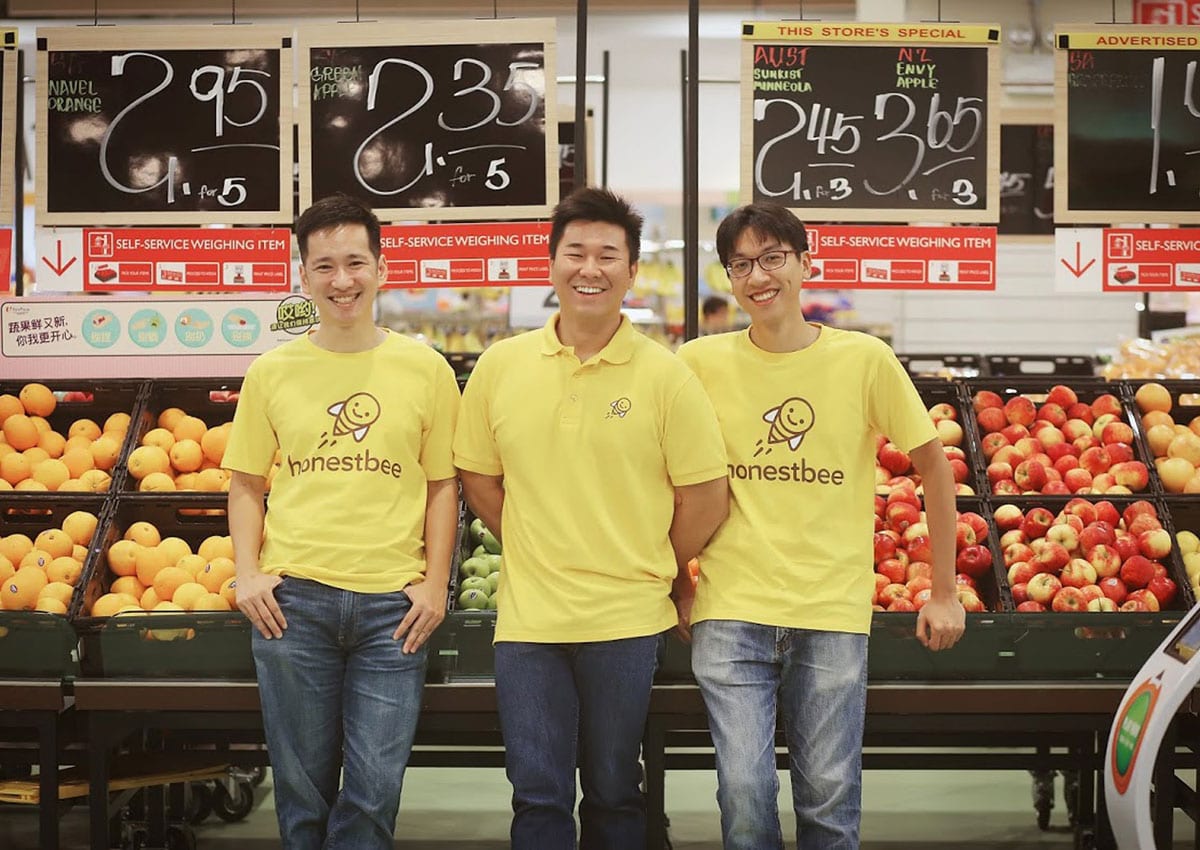
    Honestbee CEO and cofounder Joel Sng has stepped away from the business, clearing the way for a fresh round of investment which would ensure the startup’s survival.

    His place has been taken by Brian Koo, the grandson of the founder of South Korean industrial giant LG and who oversees US-headquartered investment fund Formation Group, one of the key investors and shareholders in Honestbee. Koo’s role has been termed “interim CEO”.

    While Honestbee in an unattributed statement said Sng was “stepping down” as Honestbee CEO the exact circumstances of his departure are less clear.

    The Straits Times reported early yesterday that Sng had sent an email to staff signalling his intention to leave the role, while TechCrunch, which has been reporting extensively on Honestbee’s challenges in recent weeks and is well connected with inside sources, said Sng had been fired and had vacated his desk on Tuesday.

    DealStreetAsia quoted an email from Sng which it had seen, in which Sng apologised to the Honestbee team: “Over the past year, our business has grown significantly, and operating and scaling across eight countries is not without its challenges. We acknowledge that the board could have provided the company more guidance and we apologise for not doing more.

    “…All of you have given blood, tears and sweat to get us this far. These are the moments when we have to be strong. I want all of you to know that I am in this with you, fighting every day beside you. We might be judged by our mistakes, but we will be remembered by our success in the future,” he said.

    Earlier reports had suggested concerns about financial decisions and management of the business had proved a major barrier to attracting urgently needed funds to keep the business running, in particular a scheduled funding round in January from a Japanese investor.

    Brian Koo took over the role yesterday in a move at least one observer is seeing as a precursor to Formation Group injecting more capital.

    Earlier this week, Honestbee confirmed it was shutting its operations in five markets – Thailand, Hong Kong, Japan, Indonesia and the Philippines. However a spokesperson in an emailasked to clarify that the company had not decided to exit those markets, rather it had “halted or temporarily suspended operations” in them.

    Regardless of the exact circumstances of Sng’s departure, Koo was magnanimous in recognising the cofounder’s role in establishing the business.

    “I would like to express my appreciation for Joel, as he steps away from his current role, for taking Honestbee from zero to one,” he said in a statement.

    “I will be working with the executive team to conduct an in-depth review of our business to focus and align our strategic interests across our various geographies and verticals, and take the opportunity to articulate a clear vision for the future of honestbee.”

    In the same statement Sng said Koo had been Honestbee’s earliest supporter and a key investor.

    “He was also instrumental in helping us define Honestbee’s purpose and mission from day one. I am confident that he would (sic) be able to bring the company to the next level, supported by the newly appointed executive team comprising key leaders of our organisation.”

    “We will continue to innovate and improve our business to stay relevant in today’s rapidly changing business environment. We remain committed to making great food experiences accessible to customers across Asia.”

  • Honestbee Shutting Down in Several Countries

    Honestbee Shutting Down in Several Countries

    Singapore grocery-picking startup puts a positive spin on its predicament as it seeks investors.

    Honestbee has shut down or suspended operations in five countries as it seeks funding to continue to trade in its core markets, including home base Singapore.

    As previously reported by Inside Retail Asia, Honestbee has suspended operations in Hong Kong and Thailand. Yesterday, the company clarified that it had “halted services” in Indonesia and Hong Kong and its food vertical in Thailand. Services in Japan and the Philippines have been suspended.

    The grocery-delivery startup founded in 2015 has run out of cash but is putting a positive spin on its predicament.

    “Over the past four years, we have demonstrated commitment to our staff, partners and customers, and continue to innovate and improve our business to stay relevant in today’s rapidly-changing business environment,” the company said in a statement.

    “The launch of Habitat by Honestbee in Singapore last October marks the next phase in our evolution as a food company.”

    Honestbee said 10 per cent of its staff had been laid off. It did not refer to the number of resignations over recent months, which have included senior management, such as the head of the Philippines operation. One media outlet reported that between 50 and 70 staff had voluntarily resigned.

    The company said the curtailment of operations in five markets was necessary “to help us focus and align our regional business, and more importantly, to enable us to better meet our customers’ needs”.

    “The status of Honestbee’s business in the remaining markets stands unchanged.”

    Honestbee said media reports regarding a delay in employees being paid were untrue.

    “We will ensure that all employees across all markets, including Singapore, are paid in a timely manner. In addition, we are also committed to fulfilling our financial obligations to all Bees (store pickers), partners and vendors.”

    Meanwhile, the hunt for new investors continues. According to DealStreetAsia, Grab has been approached, but declined to be involved, as it is a shareholder in Honestbee’s rival HappyFresh.

  • Honestbee running out of Funds

    Honestbee running out of Funds

    Innovative startup runs out of cash; suspends Hong Kong and Thai operations. Honestbee is freezing operations in Hong Kong and Thailand and laying off staff as it urgently seeks investment to stave off collapse.

    According to an in-depth, citing multiple industry sources, the Singapore-headquartered food-delivery business turned innovative food-and-grocery retailer has nearly run out of money and is unlikely to be able to pay staff this month.

    “From talking to several former and current staff, Honestbee is laying off employees, it has a range of suppliers who are owed money, it has “paused” its business in the Philippines, it has closed R&D centers in Vietnam and India, it isn’t going to make payroll in some markets and a range of executives have quit the firm in recent months,”.

    However, the potential for the sale or rescue of the business is high. The company has held talks with Grab and its rival GoJek over the potential acquisition of all or part of the business.

    Honestbee was founded four years ago. Its core business concept is using store pickers to shop for groceries at various food retailers, with orders completed on apps and shipped by delivery staff to consumers. It operates in Hong Kong, Taiwan, Thailand, Indonesia, the Philippines, Malaysia and Japan, as well as its home market. In suburban Singapore it has opened a technology-run physical retail store listed this month as one of the world’s ‘must-see’ stores.

    Honestbee’s dire predicament is the result of high marketing costs faced by most online startups in Asia: building critical mass takes massive investment in digital marketing, discounting and – especially in the case of delivery apps – recruitment.

    We have been shown financials for the company from last December which showed revenue of S$2.5 million (US$1.8 million) and a loss of $6.5 million on transactions totalling $12.5 million.

    About 80 per cent of the company’s revenue comes from Singapore, Taiwan and the Philippines.

    Honestbee issued a statement earlier this month attempting to put a positive spin on its perils, saying the decision to “temporarily” suspend its food verticals in Hong Kong and Thailand followed a strategic review of the company’s business, so it could “simplify what we do and how we do it to better meet what our consumers want”.

    The company said 6 per cent of its global staff would be laid off.

    “The status of Honestbee in the remaining markets remain unchanged as we evaluate and we will continue to operate and contribute to Honestbee Pte Ltd.”

    In addition to the layoffs announced, senior management have already left the company in the Philippines, Japan and Indonesia.