Retail News CRM

Blog

  • Matahari expands to “Chinatown” of Indonesia’s Kalimantan

    Matahari expands to “Chinatown” of Indonesia’s Kalimantan

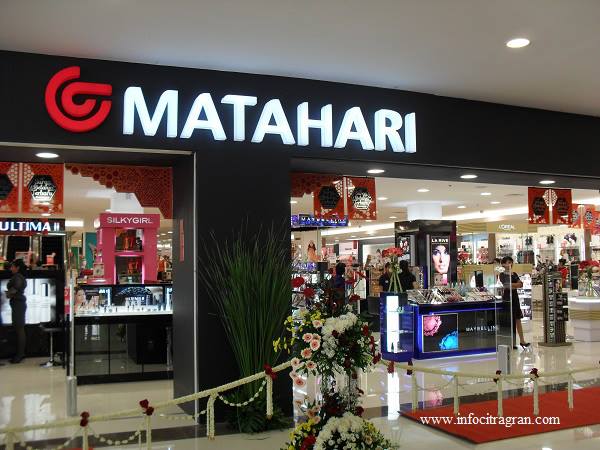
    Matahari Department Store (MDS) opened a new store in Indonesia’s Singkawang, West Kalimantan, to tap the economy prospects in the region, the publicly-listed company said in a statement on Thursday.

    The store, called Matahari Singkawang Grand Mall – MDS’s 13th store in Kalimantan – has a total area of 6,300 square metres. The store is the first new location MDS has opened this year.

    “The presence of Matahari at Singkawang Grand Mall is expected to benefit citizens in its surrounding area, hiring 322 employees, the majority of whom are locals,” Matahari human resources director Andre Rumantir said.

  • Supermarket giants’ push into healthfood gets boost

    Supermarket giants’ push into healthfood gets boost

    Coles’ and Woolworths’ push into the healthfoods category has been bolstered by a global survey underlining the strength of consumer demand for healthier packaged and fresh foods.

    According to research firm Nielsen, about 71 percent of consumers in the Asia-Pacific region are changing their diets to lose weight and 25 to 40 percent are more than willing to pay a premium for foods that are free from artificial colours, flavours and gluten, low in fat and salt, and higher in protein and fibre. In Australia, more than half (56 percent) of consumers believe they are overweight and 78 percent believe changing their diet is more important than exercising.

    This behaviour is underpinning strong growth in the healthfoods category and prompting Coles and Woolworths to boost their offers by creating health food “destinations” within stores – increasing shelf space, expanding the number of products, and building private label brands.

  • Apple ranks No. 1 in luxury gift giving in China on hot streak

    Apple ranks No. 1 in luxury gift giving in China on hot streak

    Apple Inc has taken the number one luxury gifting spot in China from designer goods maker Hermes International SCA, according to a Hurun luxury report on Thursday, reflecting the iPhone maker’s recent hot streak in the country.

    The US tech firm’s focus on glitzy stores and high prices helped it post a 70 percent rise in sales in China in the last three months of 2014 and powered the company to the largest profit in corporate history.

    Spending on gift giving overall fell 5 percent in 2014, after a 25 percent drop the year before, according to the Hurun Chinese Luxury Consumer Survey. Beijing has been cracking down on corruption and luxury spending among public officials, weighing down sales of premium liquor to handbags.

  • Malaysian cable TV enters retail JV

    Malaysian cable TV enters retail JV

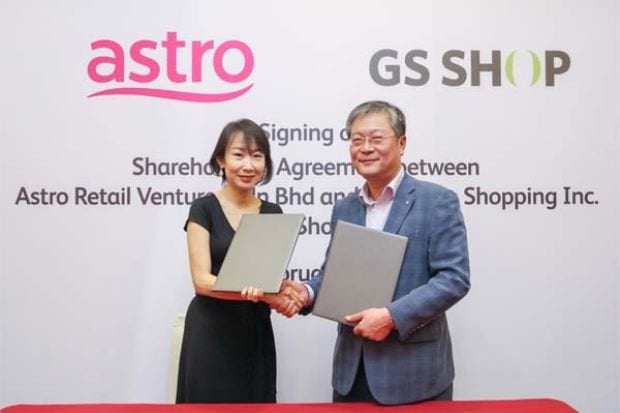
    Malaysian cable TV operator Astro has entered a joint venture with South Korean multimedia retailer GS Home Shopping.

    And Astro is projecting sales of RM500 million (US$143 million) annually by 2019 after the service has gained critical mass.

    Astro will own 60 per cent of the joint venture, Go Shop, which will operate 24-seven on TV and online. The service was soft launched in a trial last November.

    Datuk Rozalila Abdul Rahman, CEO of the JV, said the key to the concept’s success will be its presence across multiple platforms – Go Shop’s competitive edge was that it was available on various platforms. On Astro’s service it is on Channel 118 and it is also accessible online and on smartphones.

    Astro CEO Datuk Rohana Rozhan said the company reaches 4.3 million homes in Malaysia, with a reach of 17 million consumers. By nature, these will be largely middle class families or individuals with relatively high disposable incomes.

    Since the soft launch, Go Shop has sold more than 110,000 products, the majority household items.

    While just 60 products are available currently, the offer will double within the year.

    “To-date, the new 24-hour shopping service has over 72,000 customers with 800 new customers daily,” Rohana told a media briefing.

    She predicts the Malaysian retail market will grow from RM110 billion now to more than 160 billion by 2020.

  • CapitaLand China mall sales soar

    CapitaLand China mall sales soar

    CEO of CapitaRetail China Trust Management Limited (CRCT), Tony Tan said the growth was underpinned by the new contribution from CapitaMall Grand Canyon and rental growth from the other multi-tenanted malls.

    “Rental reversion was a robust 20.6 per cent, and portfolio occupancy as at December 31 was a healthy 95.9 per cent. Tenants’ sales and shopper traffic for 2014 increased year-on year by 16.2 per cent and 3.9 per cent respectively.”

    Singapore-based CRCT has 10 income-producing CapitaMall-branded shopping malls in greater China: Xizhimen, Wangjing, Grand Canyon, Shuangjing and Anzhen in Beijing; Qibao in Shanghai; Erqi in Zhengzhou, Henan Province; Saihan in Huhhot, Inner Mongolia; Wuhu in Wuhu, Anhui Province; and Minzhongleyuan in Wuhan, Hubei Province. Total assets are valued at about S$2.4 billion.

    All the malls are positioned as one-stop family-oriented shopping, dining and entertainment destinations for the sizeable population catchment areas in which they are located, and are accessible via major transportation routes or access points. A significant portion of the properties’ tenancies consists of major international and domestic retailers such as Beijing Hualian Group and Carrefour under master leases or long-term leases, which provide unitholders with stable and sustainable returns. Other tenants include KFC, Paris Baguette, Pizza Hut, Sephora, Uniqlo, Vero Moda, Watsons and Zara.

    “For 2014, CapitaMall Xizhimen and CapitaMall Wangjing – our largest revenue contributors – recorded growth of 16.4 per cent and 13.7 per cent in their net property income (NPI) respectively, after a series of tenant mix adjustments,” said Tan.

    “Over at CapitaMall Grand Canyon, new tenants such as Nanjing Impressions opened to strong sales, and plans for further reconfiguration of the mall’s layout to add more retail units are progressing well. CapitaMall Qibao, which achieved 17.5 per cent growth in NPI, strengthened its education and children-related trade offerings on its Level 4 with the introduction of C&S – an enrichment centre which offers baking classes to both adults and children and held well-received thematic marketing activities such as the Shanghai Animation Film Studio Exhibition.

    “The upgrading of the tenant mix at CapitaMall Saihan also showed positive results, with its NPI increasing by 19 per cent in 2014.”

    Tan said CapitaMall Wuhu is also currently undergoing tenant mix adjustments to achieve a stronger positioning and better trade mix.

    “In the short term, CapitaMall Minzhongleyuan’s NPI has been impacted by the road closure for subway construction works, but the mall will stand to benefit from increased shopper traffic when subway Line 6 linking Hankou and Hanyang becomes operational by end-2016. With the financial flexibility provided by our robust balance sheet, we continue to be on the lookout for acquisition opportunities to grow our portfolio further.”

    The trust achieved distributable income of S$20.5 million for the quarter, an increase of 15.6 per cent over the S$17.7 million for the fourth quarter of 2013.

    Chairman Victor Liew said China’s economy expanded by 7.4 per cent in 2014 and retail sales grew 12 per cent to RMB26.2 trillion.

    “The Chinese government has continued to place a strong emphasis on quality and sustainable growth, and we have seen an overall stability in the economy and the labour market in the past year. The country’s efforts at economic restructuring are seeing progress, and the services sector has developed into the largest pillar of China’s economy.

    “Moving forward, with the government’s focus on driving domestic consumption and maintaining long term stability, CRCT remains upbeat about China’s retail growth prospects,” said Liew.
  • Changi retail again tops $2 billion

    Changi retail again tops $2 billion

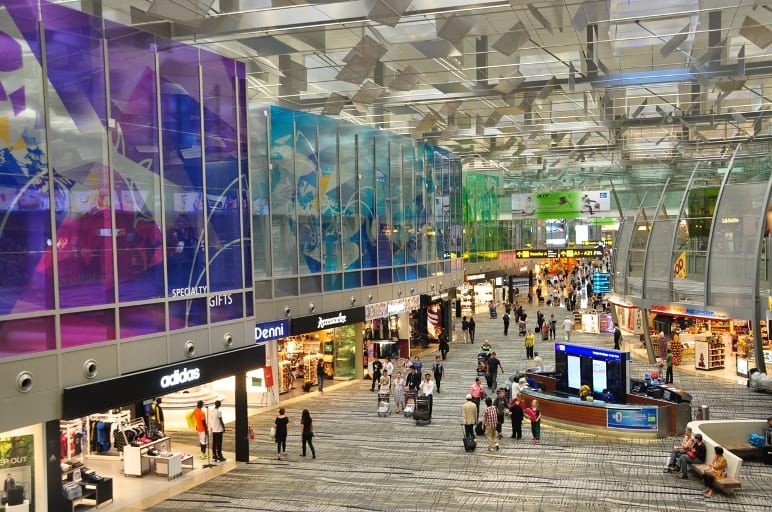
    Singapore’s Changi Airport says sales at retail outlets across its terminals topped S$2 billion in 2014, despite a slump in passenger numbers inbound from China.

    It’s the second year in a row the $2 billion barrier was breached – Its 2013 growth represented a nine per cent increase on 2012, but the percentage growth was not revealed this year, suggesting a stable result.

    The strength of the airport’s retail business – in part a consequence of the airport’s careful positioning as a transit hub, delivering a captive market of thousands of potential shoppers every day – underlines its decision to invest in the massive Jewel retail experience in partnership with CapitaMalls. The complex – already under construction and scheduled for completion by end of 2018 – will have five storeys above ground and five basement storeys, covering a total gross floor area of about 134,000sqm.

    Last year, Changi hosted 54.1 million passenger movements, the highest number yet, representing an average of 148,219 every day, the most in its 33-year history.

    What’ significant about Changi’s 2014 figures is that the retail sales held up despite a significant downturn in spending by Chinese passengers. China has been a key market for retailers in the airport, but fewer visited, or transited, in Singapore last year and those who did were coming from less affluent population centres, thus with more restricted budgets. It’s the same challenge retailers in the high streets and malls of Hong Kong and Singapore bemoaned all last year.

    Changi Airport Group (CAG) said that – just like in 2013 – the biggest customer groups by nationality were China, Singapore, Indonesia, India and Australia.

    The most-purchased retail categories were, perhaps predictably, cosmetics and perfumes, chocolates and candy, electronics, luxury goods, liquor and tobacco.

  • Google shopping fest debuts in Singapore

    Google shopping fest debuts in Singapore

    Google is expanding its Great Online Shopping Festival from India to Singapore, from today through Wednesday.

    The online event, loosely modelled on the famous US Cyber Monday, allows global apparel brands such as adidas and Uniqlo and travel retailers like Agoda, Hotels.com and Airbnb to make the most of Singapore’s high penetration of broadband internet.

    Just like Cyber Monday or Singles Day in China, the Google project encourages companies to offer discounts for products and services ahead of the retail-friendly Chinese New Year, later in the month.

    Google launched Cyber Monday in India in 2012, teaming up with well known fashion brands. It has grown year by year and the US based company “would love to do this everywhere” according to Singapore country manager Joanna Flint, who denied there are concrete plans for that just yet.

    The deals went live today, February 2, although previews of the promotions have been online for several days.

  • New Horizons eyes ASEAN

    New Horizons eyes ASEAN

    New Horizons, the world’s largest independent computer training company is planning expansion into ASEAN.

    The company, which offers a broad range of technical and desktop application training and certification courses, has signed an exclusive franchise consultancy agreement with VF Franchise Consulting with the aim of expanding to Thailand, the Philippines and Vietnam.

    Scott McDaniel, director of international development of New Horizons, says that with successful training centers already open in Singapore and Malaysia, New Horizons’ expansion into the remaining countries of the Association of Southeast Asian Nation (ASEAN) will service the existing high demand for professional IT training and certification.

    “We are happy to partner with VF Franchise Consulting to bring our world-class IT training and certification centers to the rest of ASEAN.”

    Headquartered in the US, New Horizons has been embarking upon an aggressive international expansion campaign that has seen it grow successfully in over 60 countries and over 300 locations.

    “Through our extensive research, further expansion into ASEAN is desirable due to the significant growth of the IT sector in Thailand, the Philippines and Vietnam,” McDaniel said.

    New Horizons Computer Learning Centers is one of the most successful franchises in the training industry. Over the last 30 years, the company has successfully trained over 30 million people. New Horizons offers instant recognition for franchisees as the clear market leader in IT training.

    Added Sean T. Ngo, CEO of VF Franchise Consulting: “New Horizons offers global recognition for franchisees as the clear market leader in IT training. The brand’s huge brand name and international success in the IT training industry gives its franchisees the ultimate competitive advantage.”

  • Tokyo, Taipei: 2015’s Asian retail hotspots

    Tokyo, Taipei: 2015’s Asian retail hotspots

    Asia Pacific retail rent growth will continue in 2015 – but at a slower pace, according to the latest research from CBRE Asia.

    Rental growth is projected to ease to 2.4 per cent region wide, compared with 5.4 per cent in 2014.

    The hottest markets: Tokyo, where rentals are expected to rise by about 10 per cent, followed by Taiwan’s Taipei, Sydney and Melbourne which will post more modest growth, according to CBRE.

    Prime rental growth in China will be less than five per cent in 2015, with key city retail markets performing differently. “Growth will being driven by Beijing and Shanghai but dragged by Shenzhen and Guangzhou.”

    In the report – titled 2015 Outlook: Key Retail Trends – CBRE expects new retail supply in Asia Pacific to reach 89 million sqft this year, a significant jump from the 53 million sqft in 2014. “However, much of this new supply will be in decentralised locations. A lack of high quality stock in prime locations -in cities such as Tokyo, Beijing and Shanghai – will lead to rental growth. Increasing competition among retailers and rising operational costs will see retailers focus on leasing prime space in key growth markets in 2015.”

    “The market will become more challenging for landlords in 2015 as they will have to deal with more budget conscious retailers entering into lengthier negotiation processes,” explained Sebastian Skiff, executive director, retail services, CBRE Asia.

    “Occupiers, meanwhile, will benefit from being more patient and taking time to formulate a proper strategy. In light of increasing vacancy pressure, increasing competition and the rise of e-commerce, landlords should have the willingness to embrace ‘retail-tainment’, and have the ability to proactively collaborate with tenants to ensure stronger retailer retention and consumer engagement.”

    Skiff says landlords who invest more resources into conducting consumer surveys, market research and benchmarking exercises in order to better understand consumers’ and retailers’ requirements will be among the more successful this year.”

    In other trends:

    • Chinese tourists should not be overlooked despite last year’s slowed spending. CBRE says Driven by the growing number of arrivals from mainland Chinese visitors, retail sales growth is expected to increase across the region, particularly in Tokyo, Seoul and Taipei. China and New Zealand markets are slowing whilst Hong Kong and Singapore will see a marginal rebound.
    • Despite retail sales volume growth, leasing sentiment will be dampened due to high operational costs, increasing competition and retailers’ more cautious attitude. Activity level in Asia is likely to stay flat but the Pacific will be more upbeat, as both Australia and New Zealand will continue to attract new entrants from overseas.
    • Leasing demand will be driven by mass market food and beverage and fashion retailers. Leveraging on the huge pipeline of new supply in suburban areas, mass market fashion brands will continue to expand in China’s tier 3 and tier 4 cities, while fast fashion retailers will target Taiwan, Australia, and Southeast Asia. Luxury brands will focus more on consolidation and reviewing their portfolio strategy – expansionary demand will be limited, but focused on developed markets, particularly in Japan and within Australia where luxury brands have a strong focus for growth.
    • Vacancy pressures in suburban areas will continue to intensify, especially in mainland China as many of their shopping centers are developed by inexperienced developers. Singapore will also experience supply pressure.
    • Prime retail prices will diverge in 2015 with Greater China experiencing the biggest downward pressure on price growth. The retail capital value growth in APAC will slow notably, dropping from 6.5 per cent in 2014 to 1.6 per cent in 2015.

    “CBRE sees that demographic growth, urbanisation and increasing household incomes will continue to support continuous growth in the region, with all markets projecting that retail sales volume will increase,” said Jonathan Hsu, director, research, CBRE Asia Pacific.

    “Japan will continue to be a top performer due to the fast growing tourism market and the weaker yen spurring tourist spending. Retail sales growth in Japan is expected to rebound as the market recovers from the consumption tax hike in April 2014,” said Hsu.

    “We expect consumption to also grow steadily after the government delayed the second phase of the sales tax increase.

    “Elsewhere, the market will be quite challenging – in China due to the anti-corruption campaign continuing to affect the sector, with luxury retailers taking a more cautious approach to expanding in this market. In the lower tier cities, or suburban areas, there will be a strong downward pressure in rents due to the huge supply pipeline, weaker sentiment from retailers, and lack of experienced mall management.”

  • Aeon teams with two Vietnamese major retailers, to have 200 stores across the country

    Aeon teams with two Vietnamese major retailers, to have 200 stores across the country

    Japanese retail giant Aeon Co. said on Tuesday that it has reached an agreement on a business tie-up with two of Vietnam’s major retailers Fivimart Co. and Citimart Co. in a bid to develop supermarket business in Vietnam.

    Fivimart Co. is the largest supermarket company in Hanoi, operating 20 stores in the capital city. Citimart Co. is the largest supermarket operator in southern Vietnam, operating 27 stores mainly in Ho Chi Minh City, the largest city in the region.

    Aeon Co. has been promoting a “Shift to Asian Markets” strategy, working together with the group companies in China and countries of the ASEAN region. It’s one of the group’s strategies under its medium-term management plan.

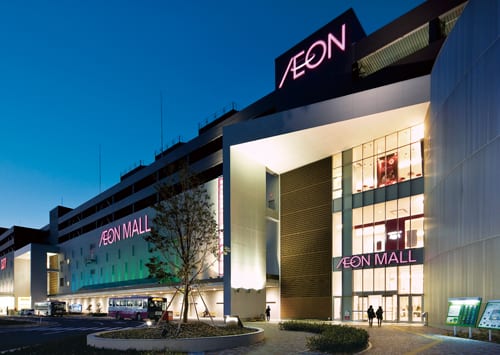
    In Vietnam, the company launched Aeon Financial Service Co. in 2008 which made it the first Japanese company to engage in instalment sales in the country. Two years later, Ministop launched its CVS convenience store business in 2011. In January 2014, Aeon opened its first shopping mall in Vietnam, Aeon Mall Tan Phu Celadon, in Ho Chi Minh City, becoming one of the country’s largest shopping mall. This was followed by the second mall, the Aeon Mall Binh Duong Canary, opened in Binh Duong province in November 2014. With the plan to open its third mall in Hanoi this year and other proactive initiatives ahead, Aeon continue to broaden its business in the country.

    “Toward the launch of the ASEAN Economic Community planned at the end of 2015, the ASEAN countries began integrating and further economic growth is expected in the area. Vietnam, in particular is making prominent growth in its market, backed by a population in excess of 90 million and a high economic growth rate that has contributed to an expanding middle class,” the company said in a statement on Tuesday.

    “In order to achieve rapid growth in Vietnamese market as such, we believe the partnerships with Fivimart Co. and Citimart Co.; the companies with strong business foundations in two of the largest cities in north and south of the country as well as knowledge about the varying regionally oriented customer needs, are of great significance,” it added.

    Aeon sees Vietnam as its second most important market in Southeast Asia after Malaysia and plans to have 200 stores across the country eventually and to grow sales to JPY100 billion (USD848 million), according to The Japan Times Online.

  • Starhill weathers storm

    Starhill weathers storm

    Starhill Group, the mall-owner REIT, says improving returns from its Singapore property Wisma Atria cushioned the impact of foreign exchange fluctuations and a sluggish retail environment in China and Hong Kong.

    While shopper footfall in Wisma Atria was down 3.1 per cent and combined sales of retail tenants fell 5.6 per cent year-on-year in the fourth quarter to S$139 per sqft, lease renewal rates are running high.

    SHREIT said the figures reflected “headwinds in the retail sector” but asserted that assets strategically located in prime areas will continue to be a draw for international retailers.

    Wisma Atria is in the heart of Singapore’s prime Orchard Rd shopping precinct.

    OCBC reports the REIT’s sales slipped 0.4 per cent year-on-year to S$48.90 due to a weaker contribution from its China and Japan assets. This is turn was partly due to foreign exchange changes.

    New lease rates were on average up 17 per cent on previous revisions, largely due to renewals and new leases for prime street-front units, highly sought after by international retail brands.

    Management says it remains positive regarding rental reversions at Wisma Atria over the next six months.

  • Singapore online discounter launches

    Singapore online discounter launches

    Singapore’s newest eCommerce player SavingMart.sg believes it will complement existing online merchants.

    SavingMart.sg will offer value-conscious shoppers access to coupons and deals from the growing list of existing online businesses.

    “Whether the goal is to prove savvy fashionistas can surely find their favorite products in Singapore or to shatter the misconception that there aren’t good deals to be found online, SavingMart.sg spans the fashion, beauty and lifestyle sectors with online retailers offering great products and deals, free or cheap shipping and more,” the company said.

    SavingMart has already partnered with several high profile e-tailers.

    Sunnanz has become a popular online store for fans of cult skincare brand Dermalogica. Operated by a local Singaporean couple, Sunnanz offers prices reportedly the lowest in Singapore and Malaysia. It also stocks discounted SK-II, Etude House, Skin Food and other well-known beauty brands from Korea and Taiwan.

    At the other end of the scale is multinational Zalora, which stocks affordable fashion, grooming and hardware products. The site features many recognised brands in addition to stocking local Asian labels.

    And Style Tribute, launched in 2013, where shoppers can buy and sell discounted and factory second designer goods. They can also browse clothing, bags and accessories from the likes of Louis Vuitton, Dior, Gucci, Prada and more, all at up to 90 per cent off the original retail price, according to Style Tribute representatives.

    “With online fashion stores, there are no limits of time or space with regard to shopping activities,” said a SavingMart.sg spokesperson.

    “With the best online fashion stores, shopping is taken to a whole new level where convenience complements product quality perfectly along with buyers’ tastes and the number of fashion collections. To this end, we believe SavingMart.sg will succeed – whether for the ladies looking to turn some heads in a sexy ensemble when they hit the nightclubs, or for the style-centric professional woman seeking that perfect business suit.”

  • A seriously repellent flagship concept

    A seriously repellent flagship concept

    Could this be the most bizarre retail concept yet? An entire retail store devoted to natural mosquito repellents, located in the world’s busiest airports?

    But it makes a lot of sense…

    MosquitNo is a Dutch business has pioneered a natural means of protecting humans from mosquitos, a major vector of tropical diseases throughout Asia and in other regions with warmer climates.

    MosquitNo has just signed space in Hong Kong for its regional headquarters. From there it will commence a roll-out of standalone stores in 60 per cent of the world’s international airports. It plans 10 flagship stores within five years, and aims to open in every airport which has 5 million or more passenger movements annually.

    “This new venture will enhance growth of our business and enable us to present our full assortment to consumers,” MosquitNo said in a statement.

    “As anti-mosquito products are amongst the top 10 most forgotten products when traveling we will help the consumer at large to help them protect themselves.”

    MosquitNo is more than just a cream or spray. The company has created a whole range of merchandise to support the brand – and thus ensure it can actually stock a small retail store.

    To date, there has been no indication of typical store size, but the brand has adopted vivid green livery for its marketing and promotional materials, cosmetics and even a clothing range.

    MosquitNo’s website says the company was launched in 2009. “Our product range has become a distinctive concept with a new look at products that offer protection against mosquitoes and other insects – this is applicable for our polo and placemats.” For regulatory reasons it cannot make claims for its bracelets and adhesive ‘spotzzz’.

    “Protecting our skin from biting mosquitoes previously meant using sticky lubricants including the toxic substance Deet. MosquitNo thought ‘this can be done with more fun and functionality’. Our concept and products are a new way of trendy, fashionable and comfortable protection against mosquitoes and other insects.” Ten per cent of its net profits are donated to Unicef.

    In Hong Kong, it will open a warehouse to supply Asian stores and a growing online business.

  • Alibaba sales soar 40%

    Alibaba sales soar 40%

    Chinese eCommerce giant Alibabahas reported a 40 per cent increase in sales in the quarter to December.

    But its net profit for the period plunged 28 per cent to $US964 million impacted by a one off charge and higher taxes.

    Based in Hangzhou, Alibaba owns China’s most popular online trading platform, Taobao.

    Alibaba Group’s total sales for the quarter reached $US4.219 billion, and earnings per share rose 13 per cent to 81 US cents.

    The company executed the world’s biggest IPO when it listed on the New York Stock Exchange last September.

  • Wings chain lands in Philippines

    Wings chain lands in Philippines

    US-based Buffalo Wild Wings opened its first restaurant in the Philippines on Thursday, (January 29).

    The new restaurant at Capitol Commons in Pasig City is the first of several to open in the Southeast Asian country, joining more than 1070 Buffalo Wild Wings restaurants in North America.

    “Between our fresh, diverse menu and sports centric dining experience, we are confident that Filipinos will enjoy this new option for watching their favorite sporting events,” said Sally Smith, CEO and president.

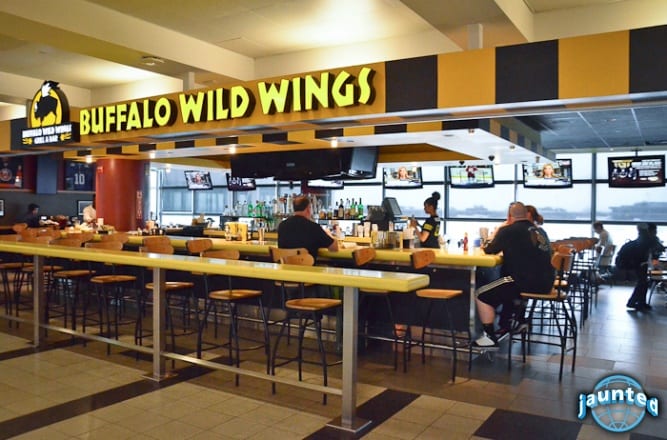
    Aside from delivering on its mantra of ‘Wings. Beer. Sports.’ Buffalo Wild Wings locations will feature the company’s new restaurant design, which provides the ultimate sports viewing experience while bringing the look and feel of the stadium experience into the restaurant.

    The Philippines is the third overseas market the chain is expanding into, after Canada and Mexico.

    “What we’ve found through our international expansion is that true passion for sports and the camaraderie that comes with watching a big game with family and friends is a universal phenomenon,” said Smith.

    Buffalo Wild Wings serves Buffalo, New York-style chicken wings, available in 21 signature sauces and seasonings, ranging from Sweet BBQ to Blazin’. It also offers a full menu of burgers, appetisers and thin-crust flatbreads, all designed to be shared with friends, and a wide selection of beers.

    Each restaurant has an extensive multi-media system that features large wall-to-wall high-definition televisions for excellent sports viewing.

    The Pasig City restaurant is operated by The Bistro Group, which currently owns and operates 10 restaurant concepts, a culinary centre (The Bistro Academy) comprised of international franchises, as well as homegrown brands. The franchise group expects to open multiple Buffalo Wild Wings restaurants in the Philippines over the coming years.

    Buffalo Wild Wings will soon expand into Dubai and Saudi Arabia later in 2015 and is eyeing other international market opportunities.

    “As we explore new markets, we take the time to learn about the countries, cultures and potential partners,” said Smith. “We’re pleased to be working with a franchise partner in the Philippines who understands the needs and interests of this dynamic, evolving market, as well as our target guest, and shares our philosophy of bringing people together through great food and sports.”