Tag: 7-Eleven

  • Convenience stores tapping into overseas market with PB products

    Convenience stores tapping into overseas market with PB products

    Amid a stagnant domestic economy, Korea’s convenience store chains are tapping into markets abroad to sell private brand products, industry sources said Tuesday.

    Major convenience store chain CU is exporting its self-branded cheese-flavored and red pepper-flavored instant noodles to Jumei, a Chinese online retailer.

    GS25, meanwhile, has been selling its own Chinese-style instant noodle product Gonghwachun in Australia and New Zealand. The product was made in partnership with a Chinese cuisine franchise.

    Last year, 7-Eleven Korea was the first Korean retailer to sell dried laver and low-price, self-branded snacks produced in cooperation with small and medium-sized manufacturers.

    Shinsegae’s convenience store unit With Me began selling hangover-cure ice cream Gyeondyeo Bar in Russia in May, according to a company source.

    “Private brand goods’ sales abroad will not just find a way out for retail giants. This will be an opportunity for small and medium-sized enterprises to develop inroads into overseas markets,” a source said.


  • Pizza Hut Malaysia parent to relist

    Pizza Hut Malaysia parent to relist

    QSR Brands, parent of Pizza Hut Malaysia, plans to relist, raising more than US$400 million.

    The company is Malaysia’s largest fast food operator with more than 450 Pizza Hut restaurants in Singapore and Malaysia. It has the sole KFC franchise rights for Malaysia, Singapore, Cambodia, and Brunei.

    The Wall Street Journal reports the company will prepare to accept bids this month (September), but the exact size of the offer has yet to be finalised. Majority shareholder, state government-owned Johor Corp, with a 51 per cent slice of the business, may hold onto its investment for the time being.

    ASR Brands was taken private for $1.3 billion by a consortium led by private equity firm CVC Capital Partners in 2012. The other significant investor is Malaysia’s Employees Provident Fund.

    The most recent major Malaysian IPO in the consumer sector was 7-Eleven Malaysia Holdings, which raised $225 million in 2014.

  • Silver consumers driving convenience push

    Silver consumers driving convenience push

    Look for more, but smaller, neighborhood stores, an increase in local delivery trucks and changing store layouts as retailers accommodate aging populations, says The Silver Series IV: Retail Reconfiguration for Seniors.

    The report is the latest in a series of analyses from Fung Global Retail & Technology on the impact of the growing 65-and-over population  – silver consumers – on global economies, industries and retail.

    With smaller households and appetites, seniors shop more frequently, but make smaller purchases, favoring the convenience store sector, the report says. The trend is already being seen in Europe, where large-format retailers such as Tesco and Carrefour are opening smaller stores. While this has yet to take place in the US, ignoring this population segment is unwise, as silvers are growing in number and driving a disproportionate amount of consumer spending.

    “The era of the silver generation has arrived,” writes Deborah Weinswig, MD of Fung Global Retail & Technology.

    The global population silver consumers – aged 65 and older – will account for over one-third of population growth through 2035, according to the United Nations, and will comprise more than 20 per cent of the population overall in Japan, South Korea, Western Europe, North America and China. These households tend to be wealthier, and in the US, senior households spend well above the national average on household supplies and books, though less on apparel and footwear, which could be due to limited choice.

    Long thought to be the province of the young and tech savvy, eCommerce also is a growth market for seniors, who will enjoy or require the convenience of home delivery.

    Not all stores and product manufacturers are accommodating silvers’ changing needs. Seniors can find large-format stores and regional malls overwhelming, and product packaging may need to be redesigned in order to make it easier for seniors to read and open, Weinswig notes.

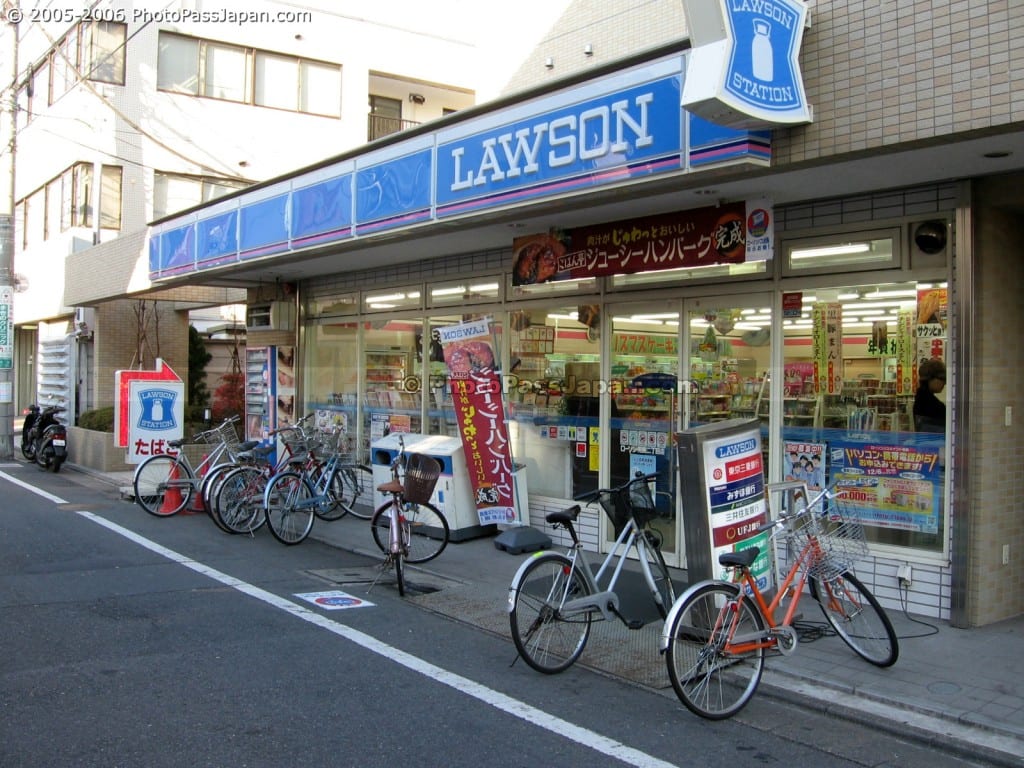
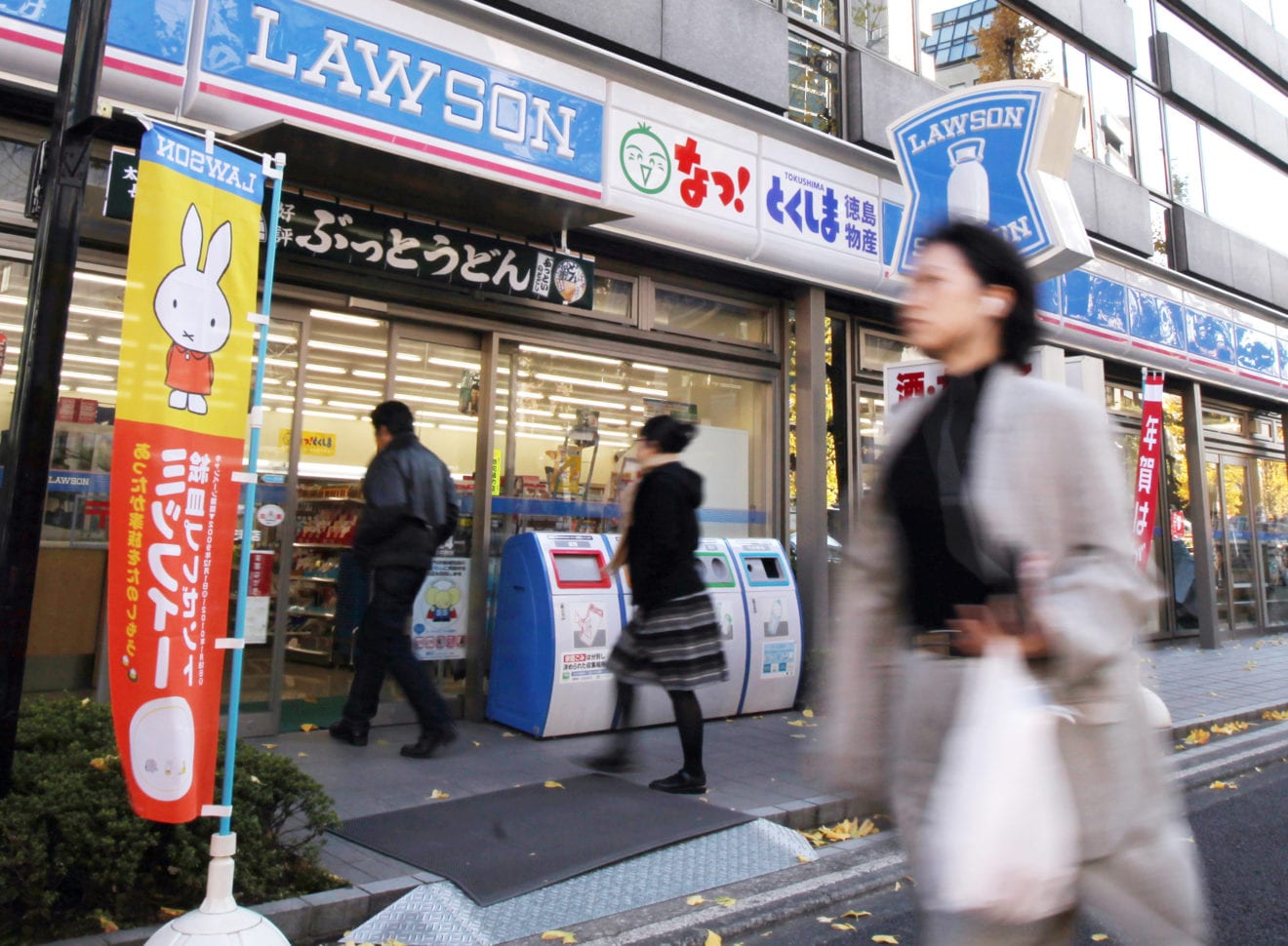
    But some retailers around the globe are adapting. Japan’s Lawson convenience store chain has renovated units in areas with a high concentration of silvers, widening aisles, lowering shelves and stocking more products that appeal to older shoppers. The 7-Eleven chain in Japan offers a meal delivery service to seniors, while the Aeon Mall offers medical facilities, leisure activities, a concierge and other services for its senior shoppers. Supermarket chains in Germany and Austria have widened aisles, provided customised shopping carts and added nonskid flooring, while in the US, drugstores CVS and Walgreens are adapting store layouts to minimise high- and low-shelving, and have carpeted floors in some stores and even added magnifying lenses to shelves so shoppers can read labels with small print more easily.

    “It is no coincidence that Japan, which is well ahead of most countries in terms of the aging of its population, has a major convenience store sector,” Weinswig writes. “We are now seeing other markets follow Japan in a convenience boom: in France and the UK, for instance, major retailers are pushing into the format as the segment outpaces the wider grocery market.”

    The full report can be found here.

  • Robust profit for 7-Eleven Malaysia

    Robust profit for 7-Eleven Malaysia

    Despite a sluggish retail market, 7-Eleven Malaysia had robust after tax profit, growing 40.3 per cent, in its second quarter compared with the same period last year.

    Gross profit margin continued to improve, and the average customer spend edged up 4 per cent.

    A milestone was the opening of the 2000th 7-Eleven store in Malaysia.

    CEO Gary Brown says the net profit growth was achieved in a tough market in which the introduction of GST on April 1 last year dampened consumer FMCG spending.

    “We remain confident that continuous store expansion, refurbishment, promotional activity, improved merchandise mix and expanded in-store services will continue to deliver positive results despite the challenging headwinds.”

    Revenue for the second quarter, ended June 3, grew by 4.8 per cent to RM505.7 million (US$125.7 million). This was driven by store expansion, improved merchandise mix and promotional activity.

    Gross profit was up 6.8 per cent to RM156.7 million, mainly because of the revenue growth and gross profit margin expansion of 0.6 per cent.

    Profit before tax of RM21 million surged by 38.1 per cent, driven mainly by the revenue growth, gross profit margin expansion, other income growth and cost control.

    For the six months ended June 30, the group’s revenue grew 4.5 per cent to RM1.03 billion, driven by expansion (at the period end, the group had 2001 stores). Gross profit improved by RM18.9 million, or 6.3 per cent, thanks to the revenue growth plus gross profit margin edging up 0.5 per cent.

    Profit before tax was RM43.3 million, up 22 per cent.

  • Foreign convenience stores in China to face lower-tier challenge

    Foreign convenience stores in China to face lower-tier challenge

    • Convenience store growth is surging, bucking the trend of weakening physical retail store sales. 7-Eleven is the market leader, though FT Confidential Research’s latest consumer brands survey found that other foreign chains were increasingly popular.
    • This is, however, a highly fragmented market and foreign chains will struggle to expand into lower-tier cities, where domestic operators offer greater competition, sometimes supported by local governments.
    • International operators are also coming under pressure from other big foreign retailers in China, while domestic newcomers are expanding aggressively in the belief that online-to-offline (O2O) services will help them seize market share and overcome short-term profitability issues.

    Convenience stores continue to eat into the retail market share of larger formats. In a second-quarter FT Confidential Research survey, 83.4 per cent of urban consumers described themselves as regular convenience store patrons, 0.9 percentage points up on our previous survey in the fourth quarter of last year, while the proportion regularly frequenting supermarkets or hypermarkets fell 1.2 percentage points (see chart).

    The convenience store format has been a standout in an otherwise gloomy market for bricks-and-mortar retailers. Though nationwide sales of fast-moving consumer goods rose 13.2 per cent last year, according to Kantar Retail, a consultancy, hypermarket sales slipped 0.2 per cent and sales at traditional, independent grocery stores fell 10.4 per cent.

    Convenience store chains are stealing market share, with store count growing an average 10 per cent each year from 2010 to 2015. Our survey found that 88.6 per cent of younger shoppers, aged 24-29, frequently go to convenience stores, up 3.4 percentage points from our survey six months ago. In contrast, the proportion of this cohort regularly going to supermarkets or hypermarkets fell 0.8 percentage points in that time.

    Despite growing demand, the convenience store market remains fragmented, with no national leader. The most popular chain was different in 10 of the 11 major markets in China, according to our survey (see chart).

    Beyond Shanghai

    Growth is concentrated in first-tier cities such Beijing and Shenzhen and certain second-tier cities. Shanghai, the biggest market by far, is now saturated, with store count increasing just 2.9 per cent in 2015, having shrunk in 2013, according to the China Chain Store & Franchise Association. Shanghai had one convenience store for every 3,466 residents, a far greater concentration than in Beijing (7,185 people per store) and Chongqing (28,846 people per store). Second-tier Harbin, Wuhan and Changsha were the three cities with the fastest-growing store count in 2015, while Beijing came in seventh (see chart).

    Foreign chains out in front

    Our survey found that foreign brands remain more popular than their domestic peers. Japanese brand 7-Eleven was the most popular, with 20.4 per cent of respondents saying they frequently shopped at its stores, up 1.1 percentage points from the fourth quarter of last year (see chart). The popularity of two other Japanese chains, FamilyMart and Lawson, also rose, up 0.8 and 1.2 percentage points, respectively.

    After years of losses, foreign brands may finally have found ways to consistently turn profits in China. Shanghai FamilyMart, a joint venture between FamilyMart Japan and Ting Hsin Group formed in 2004, turned a profit for the first time in 2013. This ¥745m ($7.4m) profit expanded to ¥1.5bn last year.

    FamilyMart’s clean, reliably stocked outlets appeal to white-collar workers, but it is the prepared fresh food options that have really proved popular. The company now has four factories preparing ready-made food in or around Shanghai and reportedly sells about 300,000 bento boxes each day in the city. Prepared fresh food makes up roughly half of the total sales of each FamilyMart store, according to Ting Hsin vice-president Wei Yingxing.

    Bottlenecks to expansion

    The nature of convenience stores makes brand loyalty tough to engender: is a Shanghai urbanite going to walk further to their favourite chain for something as basic as a bottle of water?

    This is helps explain why the expansion of foreign brands into lower-tier cities has been harder than they anticipated. In 2010, FamilyMart set a goal of opening 4,500 stores in China, but had only reached one-third of that by February 2016. Three years ago, Lawson targeted 1,500 stores in Shanghai and 500 in Chongqing by 2015. As of May 2016 it had opened just 506 and 111, respectively. Among the top 10 chains nationally, the market share of domestic chains has actually rebounded slightly since 2012, while the rapid growth of foreign chains has slowed, according to Kantar (see chart).

    Domestic competition tough to overcome

    Shanghai has provided domestic companies with a case study in how to compete against foreign entrants. Almost all big domestic convenience store chains have beefed up their offerings of ready-to-eat food products, mimicking FamilyMart’s success in Shanghai. Many are now accelerating store openings in areas dominated by foreign chains, while some have managed to poach middle managers from international companies.

    This competition from domestic chains is dragging on store count growth for the multinationals: the number of 7-Eleven stores in Chengdu dropped to just 56 by May this year from 87 in February 2013 (see chart). FamilyMart has also expanded only slowly in Chengdu. In contrast, local leader Hongqi has 1,543 outlets in the city, and reported a 15.2 per cent increase in operating revenue and a 5.3 per cent rise in net profits to Rmb170m ($26m) in 2015.

    The target demographic of foreign convenience stores is much smaller in second-tier cities than in the major coastal hubs, given lower incomes and different consumption patterns. In Beijing in 2015, the daily revenue of each 7-Eleven outlet was, on average, more than Rmb16,000. The equivalent figure in Tianjin and Chengdu rarely breaks Rmb10,000. This has forced foreign companies to be more strategic about where they open outlets in these cities.

    Government policy may also limit expansion. Since 2009, the Chinese government has banned retailers with foreign backgrounds from selling cigarettes nationwide, a business we estimate could account for a third of convenience store sales. In Shanghai, the municipal government also offers subsidies to state-owned firms, and in second-tier cities the relationship between local companies and local government is usually even closer.

    In response, Lawson has signed a franchise contract with Wuhan Zhongbai, authorising Hubei’s leading retailer to open Lawson convenience stores in the province — even though Zhongbai has its own convenience store chain, named Haobang. These sorts of tie-ups may be a solution for foreign chains to expand in the provinces, but maintaining service quality will prove a challenge.

    Here come the newcomers

    Furthermore, the market’s rapid growth is luring in new players. Large, established foreign retailers are looking to leverage their brand popularity and existing infrastructure. Carrefour, for example, has already opened 13 Carrefour Easy convenience stores in Shanghai. Germany’s Metro also recently opened its first two My Mart convenience stores in the city.

    Domestic entrants are even more aggressive. Quanshi has opened 270 stores in Beijing since it was established in 2011. In comparison, 7-Eleven had 192 stores in Beijing as of May 2016, having entered the market in 2004.

    Quanshi’s ampm brand (not to be confused with BP’s chain of service stations) is one of a swath of Chinese operations, across numerous industries, banking on O2O services to drive growth. The chain claims that short-term profitability issues from its model can be overcome once economies of scale are achieved. Companies like Quanshi see O2O services, including package storage but also delivery, as the future of the convenience store business.

    The commercial viability of this strategy is so far unproven. A deal between JD.com and Taiyuan Tangjiu, a Shanxi chain, in which the online mall hosts the convenience store’s online presence while its couriers provide one-hour delivery, has not been a success.

    Given such intense competition, we believe the convenience store market will remain fragmented and locally focused. For now, it is unclear that a national leader will emerge, as 7-Eleven has in Japan. In second- and third-tier cities, lower incomes and local protectionism mean that foreign chains may take over bustling, high-rent street corners, but will struggle to establish a dominant position.


  • 7-Eleven Hits Milestone of 60000 Stores in 17 Countries

    7-Eleven Hits Milestone of 60000 Stores in 17 Countries

    7-Eleven Inc., the largest convenience retail chain in the world, keeps getting bigger with the opening of its 60,000th global store.

    The Irving-based company traces its roots to the 1927 opening of Southland Ice Co. in Oak Cliff, Texas. In 1946, with stores open from 7 a.m. to 11 p.m., the name was changed to 7-Eleven. Stores started staying open around the clock in 1971.

    7-Eleven moved into Canada in 1969 and into Mexico in 1971 as part of joint ventures. In 1974, the retail chain expanded into Japan with Seven-Eleven Japan, which became the parent company in November 2005.

    7-Eleven now has stores in Thailand, Taiwan, South Korea, China, Malaysia, Singapore, Philippines, Australia, Sweden, Norway, Denmark, Hong Kong, Macau, Indonesia and UAE through area license and master franchise agreements.

    The first 7-Eleven store in Vietnam is expected to open next spring, which will extend the retailer’s operations to 18 countries.

    “The 7-Eleven story is amazing and inspiring; we started as a small local ice house and have grown over the years store by store, community by community, and country by country into an iconic global brand,” said Joe DePinto, 7-Eleven Inc. president and CEO. “We will continue to grow by staying focused on the constantly changing convenience needs of our customers and by staying committed to the communities we serve.”

    Last year, 7-Eleven opened one store every 2.5 hours, for approximately 4,000 stores.

    The company currently has the most stores in Japan (18,860), followed by Thailand (9,278), the United States (8,378), South Korea (8,238) and Taiwan (5,057).

    Other milestones in 7-Eleven’s history include:

    • 1927: First store
    • 1952: 100th store
    • 1963: 1,000th store
    • 1984: 10,000th store
    • 2003: 25,000th store
    • 2010: 40,000th store
  • 7-Eleven, Amazon UK test drone deliveries

    7-Eleven, Amazon UK test drone deliveries

    On opposite sides of the Atlantic, two major global retailers are testing delivery by drone.

    In the UK, eCommerce giant Amazon has partnered with the government to test some aspects of its drone delivery parameters.

    And in the US, 7-Eleven has partnered with Flirtey, an independent drone delivery service, to complete the first fully autonomous delivery to a customer’s residence to advance research toward integrating drones into the US national airspace system.

    The Amazon tests include piloting the machines beyond the line of sight of its operators, testing sensor performance to make sure the drones can identify and avoid obstacles and flights where one person operates multiple highly-automated drones are to begin immediately with the support of the UK Civil Aviation Authority.

    Amazon drone

    “The UK is a leader in enabling drone innovation; we’ve been investing in Prime Air research and development here for quite some time,” said Paul Misener, Amazon’s VP of Global Innovation Policy and Communications.

    “This announcement strengthens our partnership with the UK and brings Amazon closer to our goal of using drones to safely deliver parcels in 30 minutes to customers in the UK and elsewhere around the world.”

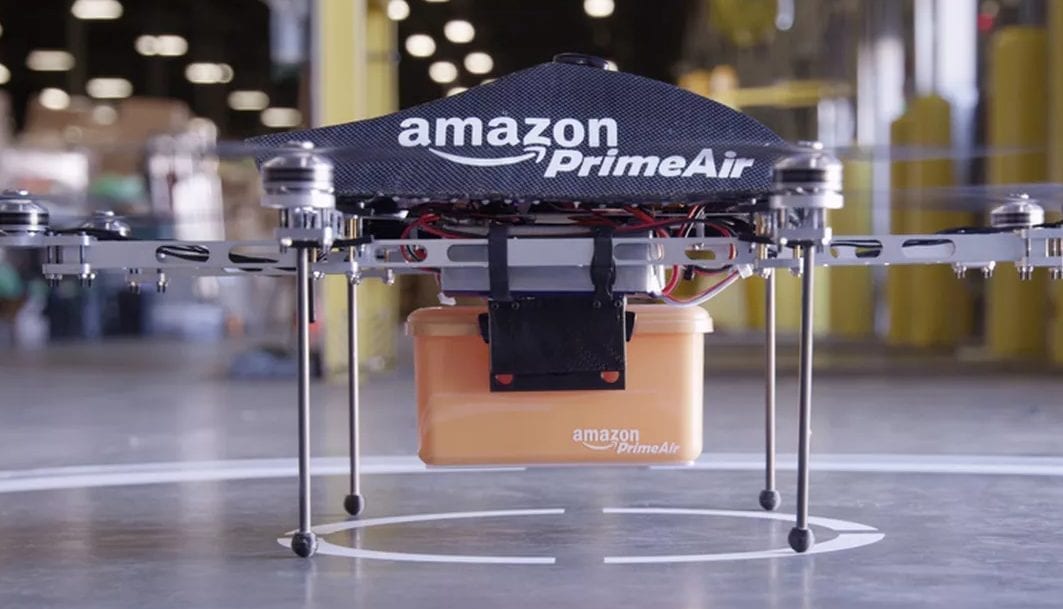
    Amazon’s Prime Air is a future delivery system designed to safely get packages up to 2.5kg to customers in 30 minutes or less using small drones.

    Amazon and the UK government said the partnership will enable them to understand how drones can be used safely and reliably in the logistics industry. It will also help identify what operating rules and safety regulations will be needed to help move the drone industry forward.

    “Using small drones for the delivery of parcels will improve customer experience, create new jobs in a rapidly growing industry, and pioneer new sustainable delivery methods to meet future demand,” said Misener.

    “The UK is charting a path forward for drone technology that will benefit consumers, industry and society.”

    Meanwhile, in Reno

    Meanwhile, at a Reno, Nevada 7‑Eleven store, two deliveries were successfully completed.

    The 7-Eleven drone delivery is the first time a US customer has received a package in their home via drone. The delivery coincides with the celebration of the convenience store chain’s 89th birthday.

    https://www.youtube.com/watch?v=_sysBQ5-tZA


    “This delivery required special flight planning, risk analysis, and detailed flight procedures ensuring residential safety and privacy were equally integrated,” said Chris Walach, director of operations for Nevada Institute for Autonomous Systems (NIAS).

    7‑Eleven merchandise – including hot and cold food items – were loaded into a unique Flirtey drone delivery container and flown autonomously using precision GPS to a local customer’s house. Once at the family’s backyard, the Flirtey drone hovered in place and gently lowered each package.

    The purchases were delivered to the family in the span of a few minutes. Products included Slurpee drinks, a chicken sandwich, donuts, hot coffee and 7-Select candy.

    In the future, both companies expect drone packages to include “everyday essentials” such as batteries and sunscreen.

    The deliveries also mark Flirtey’s largest commercial relationship to date and bring the drone delivery startup even closer to its vision of reinventing the delivery process for humanitarian, online retail and food delivery industries.

    Building on this initial collaboration, the two companies have plans to expand drone delivery tests and work closely together, according to 7‑Eleven EVP and chief merchandising officer Jesus Delgado-Jenkins.

    “Drone delivery is the ultimate convenience for our customers and these efforts create enormous opportunities to redefine convenience. This delivery marks the first time a retailer has worked with a drone delivery company to transport immediate consumables from store to home. In the future, we plan to make the entire assortment in our stores available for delivery to customers in minutes,” he said.

  • 7-Eleven Malaysia Opens Historic 2000th Store in Malaysia

    7-Eleven Malaysia Opens Historic 2000th Store in Malaysia

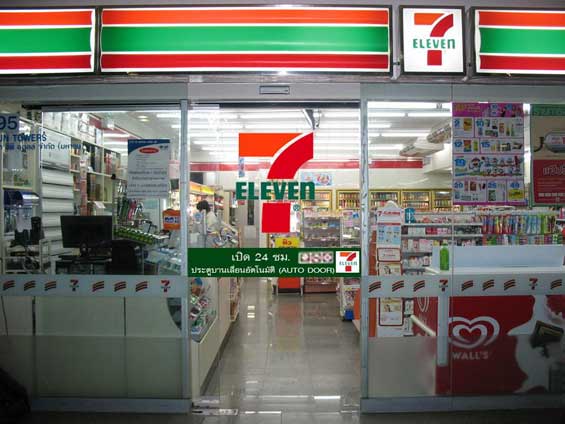
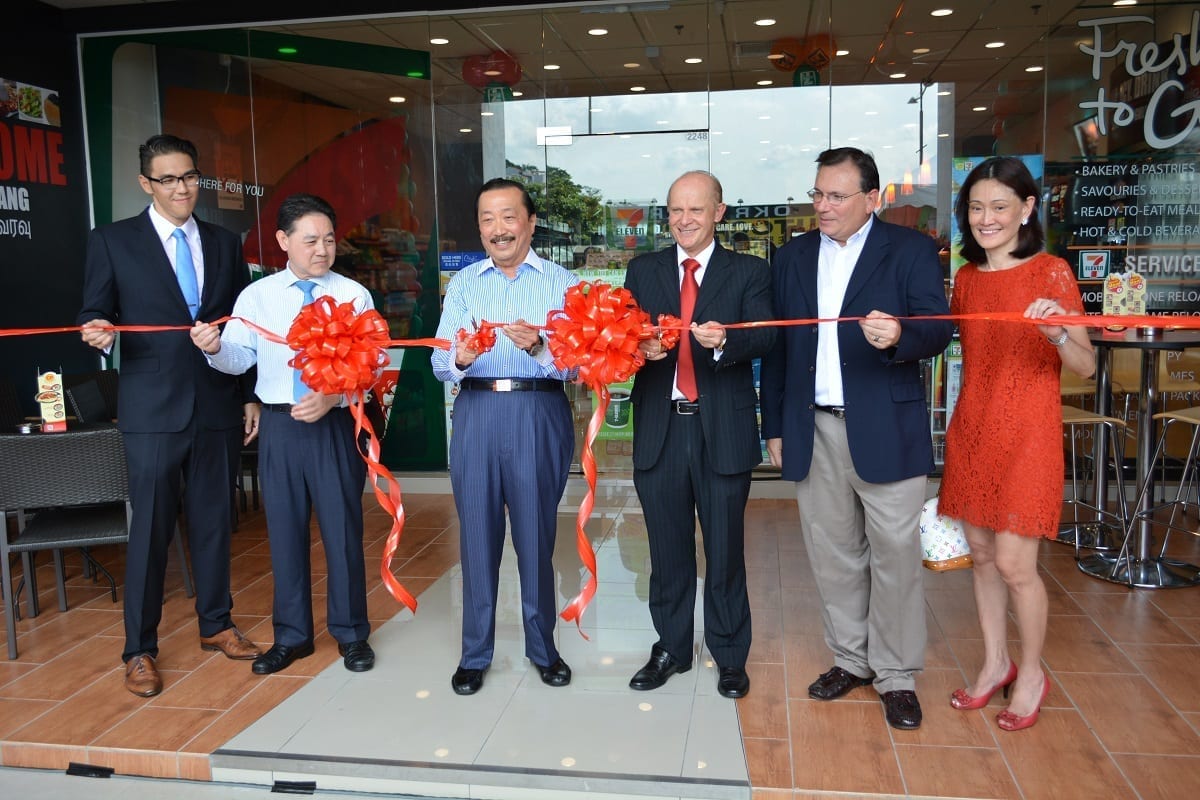
    7-Eleven Malaysia, a wholly owned subsidiary of 7-Eleven Malaysia Holdings Berhad, the No.1 standalone convenience store chain in the country, is proud to announce that it has launched its 2000th store in Malaysia at an opening ceremony held at The Scott Garden in Old Klang Road. This landmark store reflects the current 7-Eleven convenience store format, which is being rolled out across Malaysia via a programme of store refurbishments and new stores since late 2013.

    Speaking at the ceremony, Mr. Gary Brown, CEO of 7-Eleven Malaysia Sdn. Bhd. commented, “At our listing in 2014, we discussed our expansion plans and our intention to increase our number of new stores by 600 over the next three years from 2014 to 2016. We are very pleased to have reached this historic milestone of 2000 stores but it’ll be business as usual as we have no intention of stopping here and will continue with our rapid store expansion. We are also pleased to be able to showcase here today our latest product and service innovations which sets us apart from other convenience stores in Malaysia with a strong emphasis on best in class fresh food and beverage such as our well-received RM2 Fresh to Go hot beverages.”

    During the opening ceremony, there was a tour and brief on the current innovation of the stores. The current generation 7-Eleven convenience stores is to encourage customers to see 7-Eleven as a lifestyle concept, where they can enjoy the range of products on offer by spending time at the store, similar to a neighborhood café. In addition to this, 7-Eleven Malaysia has increased its range of product and services to customers by providing Touch ‘n Go reload services, bill payment for utility providers, online purchases payment through MOLPay, point-of-sales activated (“POSA”) gift cards and parcel locker services in partnership with BoxIt.

    Mr. Brown continued, “It is important to us to continue to innovate on not only our product offering, but to also play more of a role in the daily lives of our customers. By offering these services, we can offer a whole new level of convenience in Malaysia and we continue to be the leader for the convenience sector. We are enthusiastic about the future and will continue to deliver the best possible product, services and promotional offerings at our stores based on what our consumers want.”

    7-Eleven Malaysia is the largest stand-alone convenience store-chain nationwide, with 2000 outlets across the country and continuously aspires to elevate customers’ shopping experiences and to scale greater heights as the largest stand-alone convenience store operator in Malaysia. To meet today’s expectations in providing convenience to customers; 7-Eleven Malaysia opts to stay close to its customer’s heart by staying true to its motto, Always There for You.

  • Vietnam retail on brink of  convenience store boom

    Vietnam retail on brink of convenience store boom

    Vietnam retail is on the brink of a convenience store boom as multinationals muscle up against fast-expanding local players.

    The increasing pace of life in urban Vietnamese cities is fuelling demand for convenience stores which, until three to four years ago, seemed few and far between on the streets of Ho Chi Minh City and Hanoi.

    Since then, numerous c-stores have been opened by foreign retailers, such as Japan’s Family Mart, Thailand’s B’smart and US-founded Circle K, competing against local ones, such as C-Express, VinMart, and Co.op Food. According to a Nielsen survey, six out of 10 Vietnamese buyers shop at c-stores because of their advantageous location and five out of 10 because of good design and displays. Local students are the main customers during lunchtime, attracted by comfortable dining spaces, cool temperature and free wifi.

    Pham Ngoc Hung, VP of HCMC Business Association, said the HCMC market is attractive to Thai retailers with 98 B’smart stores and 10 C-Express by Big C stores already trading. In the meantime, local chain VinMart by VinGroup, is approaching 700 stores and is reportedly opening an average of two new stores nationwide each day.

    The fastest-growing chain in the HCMC is Circle K, the local rights owned by Vong Tron Do company. It has 150 stores and promises for further expansion. Today, in every residential quarter, there are two or three Circle K  stores, usually less than 600m apart.

    But the c-store boom is only just beginning. Last year, Japanese c-store giant 7 Eleven signed a master franchise agreement with Seven System Vietnam to expand across the country. The first stores are scheduled to open in 2017, and the target is 1000 within 10 years. CP All, which operates more than 8000 7-Eleven stores in Thailand, is a partner in the Vietnam venture and says it plans for 40 per cent of its stock to be locally sourced, with the balance from Thailand and elsewhere.

    Existing operators are waiting to see what type of stores 7-Eleven will roll out in the Vietnam market – given the considerable difference in sizes of its Thai stores – and the morphing of the format by Circle K in Vietnam to include dining area and fast food focus.

  • Apple Pay Launched in Hong Kong With American Express, Mastercard Support

    Apple Pay Launched in Hong Kong With American Express, Mastercard Support

    Apple Pay has arrived in Hong Kong, allowing the Apple users to use the company’s mobile payment system.

    Apple’s payment system has been rolled out to American Express, Visa and MasterCard cardholders in Hong Kong. Other participating banks are Standard Chartered, DBS, Hang Seng Bank, HSBC, Bank of East Asia, and BOC Credit Card, a subsidiary of Bank of China (Hong Kong). Apple’s website notes that the system would be compatibile with BEA and HKT touchless payment network Tap & Go in the future, as reported.

    Apple users can add their cards to Apple Pay by just tapping “Add Credit or Debit Card” option in the Wallet app on devices running the iOS 8.1 or higher. Hong Kong’s Apple Pay works fine with the iPhone 6, iPhone 6s, iPhone 6 Plus, iPhone 6s Plus, and iPhone SE. It is also available on the iPad Air 2, iPad mini 3, iPad mini 4, and both iPad Pro models. However, iPhone 5, 5c, and 5s users need an Apple Watch to make Apple Pay work.

    Greg Hingston, the head of retail banking and wealth management at HSBC in Hong Kong, said the number of HSBC’s active mobile banking customers has increased by almost 50 percent over the past three years, according to the South China Morning Post.

    “We expect this to rise as customers continue to migrate to digital banking and as we roll out innovative offerings such as Apple Pay. Digital is an integral part of our strategy as technology and mobility are changing the way our customers access information, products and services,” Hingston said.

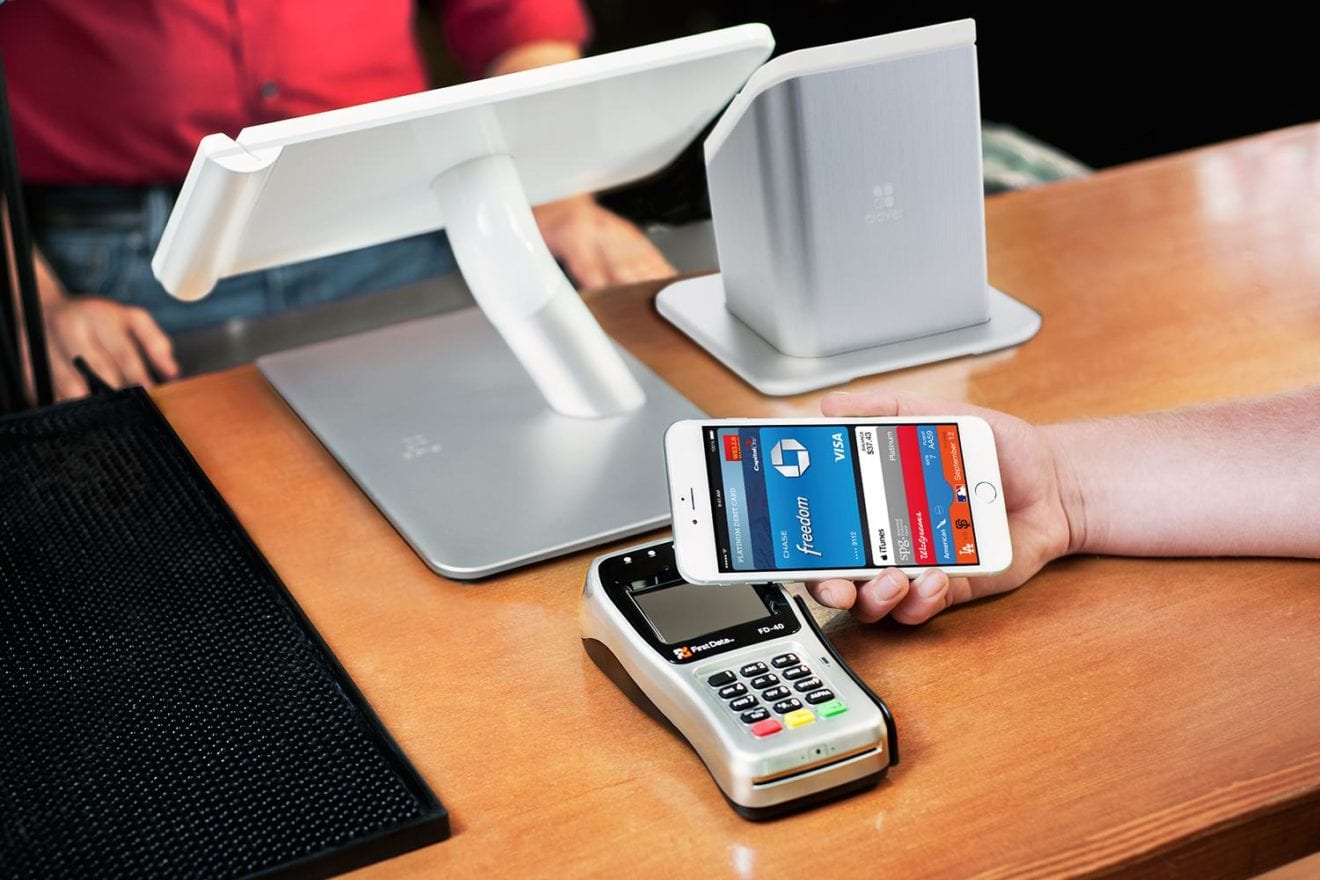
    In Hong Kong, Apple Pay can be used where contactless payment is accepted and at a wide range of retail partners, including 7-Eleven, KFC, McDonald’s, Pizza Hut, Pacific Coffee, Su-Pa-De-Pa, Taste, ThreeSixty, Uny, and more.

    The Cupertino-based company’s payment system has also debuted in France, which is compatible with Mastercard and Visa credit and debit cards issued by Carrefour Banque and Ticket Restaurant as well as Banque Populaire and Caisse d’Epargne, an assemblage that includes France’s second largest banking group.

    Apple Pay is now available in nine countries including the United States, the United Kingdom, China, Australia, Canada, Switzerland, and Singapore. In addition, Apple plans to launch Apple Pay to Spain through a partnership with American Express later this year.

  • 7-Eleven Malaysia launches 2000th store

    7-Eleven Malaysia launches 2000th store

    7-Eleven Malaysia Holdings Bhd’s wholly owned subsidiary has launched its 2000th store in Malaysia.

    7-Eleven said the store at The Scott Garden in Old Klang Road reflected the current 7-Eleven convenience store format, which was being rolled out across Malaysia via a programme of store refurbishments and new stores since late 2013.

    “At our listing in 2014, we discussed our expansion plans and our intention to increase our number of new stores by 600 over the next three years from 2014 to 2016.

    “We are very pleased to have reached this historic milestone of 2000 stores but it’ll be business as usual as we have no intention of stopping here and will continue with our rapid store expansion,” 7-Eleven Malaysia Sdn Bhd CEO Gary Brown said in a statement.

    “We are also pleased to be able to showcase here today our latest product and service innovations which sets us apart from other convenience stores in Malaysia with a strong emphasis on best in class fresh food and beverage such as our well-received RM2 Fresh to Go hot beverages,” he added.

    2000th store opening image

    In the statement, 7-Eleven said during the opening ceremony, there was a tour and brief on the current innovation of the stores.

    It noted that the current generation 7-Eleven convenience stores was to encourage customers to see 7-Eleven as a lifestyle concept, where they can enjoy the range of products on offer by spending time at the store, similar to a neighborhood café.

    In addition to this, 7-Eleven Malaysia has increased its range of product and services to customers by providing Touch ‘n Go reload services, bill payment for utility providers, online purchases payment through MOLPay, point-of-sales activated (POSA) gift cards and parcel locker services in partnership with BoxIt.

    “It is important to us to continue to innovate on not only our product offering, but to also play more of a role in the daily lives of our customers. By offering these services, we can offer a whole new level of convenience in Malaysia and we continue to be the leader for the convenience sector.

    “We are enthusiastic about the future and will continue to deliver the best possible product, services and promotional offerings at our stores based on what our consumers want,” Brown said.

  • Thailand retail growth predicted at 6%

    Thailand retail growth predicted at 6%

    Thailand’s retail market is expected to grow at a compound annual growth rate (CAGR) of more than 6 per cent from now until 2020.

    This was revealed in the latest market study by global technology research and advisory company Technavio.

    Its research report, Thailand Retail Market 2016-2020, offers an analysis of the market in terms of revenue and emerging trends, as well as forecasts for six major product segments – grocery, apparel and footwear, beauty and personal care, personal accessories, home and garden, and consumer electronics.

    Grocery

    Valued at US$103 billion last year, the grocery market in Thailand is forecast to reach $145 billion by 2020, growing at a CAGR of 6.92 per cent. The segment is largely driven by the modern retail sector, while increasing urbanisation and changing consumer lifestyles are playing a significant role in the market’s development.

    Supermarkets and convenience stores have shown the fastest year-on-year growth rates with 9.5 and 10.5 per cent respectively last year.

    “Even though hypermarkets offer attractive prices, consumers are increasingly preferring supermarkets for the convenience factor and the availability of a wide product range,” says Technavio lead retail goods expert Poonam Saini. “Unlike supermarkets, which are in urban zones, hypermarkets are generally in bordering areas, catering almost exclusively to nearby consumers.”

    Apparel and footwear

    The second-largest market segment last year, apparel and footwear is expected to reach $9.19 billion by 2020, growing at a CAGR of more than 3 per cent.

    Several foreign companies are competing with local companies in the segment, says the report. International brands have fair penetration rates, offering stylish designs and a wide product range through modern retail stores. Local brands have also been successful with their long-established presence along with customer loyalty and trust.

    “The popularity of the online channel is growing, and players are actively using social media sites such as Facebook and Instagram for promotional campaigns and marketing activities,” says Poonam.

    “Websites such as Zalora.com are becoming popular for apparel and footwear products, as these sites offer promotions and discounts.”

    Beauty and personal care

    One of the fastest-growing segments, beauty and personal care (BPC) is having more than 3 per cent CAGR and is expected to reach $5.53 billion by 2020. A continuous exposure to western beauty and grooming trends has helped maintain the growth of the market over the past few years.

    International BPC companies have a nearly 50 per cent share of the market, with comprehensive product portfolios and innovative products. Thai retailers are expanding and attracting new consumers, says the report, citing cosmetics brand Sephora, which opened two new stores in 2014 after entering the market late the previous year.

    Top vendors

    Technavio’s research analysts name five top vendors for Thailand in the report.

    Topping the list are supermarket Big C and retail conglomerate Central Group. Then follow CP All, which has a chain of 7-Eleven stores, and homewares stores Global House and Home.

    Other prominent vendors in the market are Adidas, Aeon, Isetan Mitsukoshi Holdings, Lazada, Nike, Sephora, Seven & I Holdings, Tesco, The Mall Group and WearYouWant.

    Technavio develops more than 2000 reports every year, covering more than 500 technologies across 80 countries. It has about 300 analysts globally.

  • Tokopedia deal lets online shoppers pay in store

    Tokopedia deal lets online shoppers pay in store

    Indonesian online platform Tokopedia has signed an agreement with retailer Alfamart allowing online shoppers to pay at their nearest convenience store branch.

    Customers do not need a special account to complete a transaction in an Alfamart store.

    “The payment will be automatically verified and the order will pass directly to the seller,” says Tokopedia VP Melissa Siska Juminto.

    “The partnership will benefit not only customers but also sellers as order processing will be faster and will boost the seller’s reputation.”

    Tokopedia has previously partnered with several other retailers such as 7-Eleven and Indomaret, and also launched the Mitra Toppers program that helps merchants access capital loans.

    Tokopedia raised US$147 million in April, bringing its total disclosed funding to $247 million, the largest so far in Indonesia.

    It now has more than 7.5 million transactions a month, with a 10-20 per cent monthly growth rate. About 69 per cent of users access the company’s site using mobile phones.

  • Convenience stores: Staying relevant in harsh times

    Convenience stores: Staying relevant in harsh times

    For Malaysian consumers, the last couple of years have been a mercurial ride with the implementation of the Goods and Services Tax (GST) and the subsequent effects of it as well as other global and domestic events which have rippled through prices of goods and services.

    As cost of goods and services gradually increases, most consumers have cut down their spending, to save on essentials.

    Softening consumer confidence have also taken a toll on businesses. In particular, the retail sector was affected more significantly by lower consumer confidence.

    Nevertheless, at the start of 2016, statistics and reports have shown that consumer confidence in Malaysia are slowly recovering and there are signs of of it stabilising.

    According to Nielsen Global Survey of Consumer Confidence and Spending Intentions, the Malaysian consumer confidence remain stable at the start of the first quarter of 2016 with 79 percentage points (pp), dipping one point from previous quarter).

    Globally, the report showed that Malaysia held on to its ranking as 36 most confident country in the first quarter (1Q) 2016 (unchanged from last quarter). Of note, the average global consumer confidence is 98 pp (one pp from previous quarter). Consumer confidence levels above and below a baseline of 100 indicate degrees of optimism and pessimism.

    However, while there are signs pointing towards improvements in consumer sentiments in Malaysia, analysts and industry observers are still cautiously optimistic on consumer trends.

    SOURCE: Nielsen Global Survey of Consumer Confidence and Spending Intentions 1Q16

    SOURCE: Nielsen Global Survey of Consumer Confidence and Spending Intentions 1Q16

    Richard Hall, country manager of Nielsen Malaysia, pointed out in a statement, “With no real changes in the economic outlook, Malaysians’ confidence remains low and we see that this trend will continue to be the case until the pressure on the ringgit ease.

    “Only when the pressure of the ringgit improves, can consumers start to feel the burden of their day-to-day spending lessen.”

    Nielsen noted that while the nation’s fiscal status (52 per cent compared to 50 per cent in prior quarter) continues to top the list of major concerns among Malaysian consumers, nearly a quarter of the respondents have cited that job security is now their second top worry (22 per cent).

    “Recessionary sentiments among Malaysians continue to remain high (84 per cent, unchanged from last quarter) with only one in five respondents feeling positive that the country will be out of an economic recession in the coming 12 months (22 per cent, unchanged from prior quarter),” the survey reported.

    The survey also revealed that consumers in Malaysia would continue to reduce household spending even when economic conditions would improve with nearly nine in 10 Malaysian consumers changing their spending habits in the past year to improve saving (88 per cent).

    It said, the top three areas where consumers in Malaysia would continue to cut back even when economic conditions do improve are spending less on new clothes (65 per cent), reducing out of home  entertainment (56 per cent) and switching to cheaper grocery brands (51 per cent).

    “Despite the fact that none of the economic key performance indexes (KPI) indicate that the country is in a recession, consumers continue to believe that the current situation and the future for the country is not positive.

    “To change this attitude will require a step change in the current environment,” Hall observed.

    Affin Hwang Investment Bank Bhd’s research arm (Affin Hwang Capital) in a recent report highlighted  the main themes affecting consumerism include the implementation of GST and the weakened ringgit against the US dollar.

    “While the consumer sentiment is at its all-time low with consumers mainly worried about the higher costs of living, income levels and the economy, several macroeconomic indicators are pointing towards an improvement,” it pointed out.

    “Consumers have been hit by higher costs of living, with headline inflation spiking to a high of 4.2 per cent year-on-year (y-o-y) as of February 2016.

    “Both Malaysian Institute of Economic Research (MIER) and Nielsen surveys highlight job security and income worries as key concerns among consumers, in addition to the current state of the economy,” it said.

    In a separate report, the research arm of TA Securities Holdings Bhd (TA Securities) expected consumer sentiment to remain weak in 2Q and continue to remain flattish throughout the year.

    However, it pointed out that consumer sentiment level, according to MIER, have rebounded by 9.1 points, suggesting that consumers have adjusted their spending pattern to take into account the impact of GST their purchasing activities.

    “Coupled with financial aids given by the government through BR1M, reduction in employees’ EPF contribution, and increase in minimum wage for private and public sectors workers that will be implemented on July 1 this year, could lessen the impact of demand slowdown,” it added.


    Grocery retail retains growth despite headwinds

    A closer look into the consumer sector shows that while consumer sentiments is expected to remain subdued in the near-term, Malaysian consumers’ purchasing power is improving in certain categories.

    According to Nielsen, consumer purchasing power in the Fast Moving Consumer Goods (FMCG) category gained traction in 1Q of 2016 versus the same quarter in the prior year (4.7 per cent).

    It added, all FMCG super categories registered a healthier growth lead by beverage (8.8 per cent), grocery (4.3 per cent), household (3.9 per cent), health & wellness (2.7 per cent), snack & confectionary (two per cent) and personal care (1.7 per cent).

    “In spite of the FMCG industry having a strong start to last year due to the GST introduction in April 2015, we have been pleasantly surprised to see the majority of categories still in growth, with the modern trade leading the way.

    “While there has negative sentiments surrounding the increasing cost of living, consumers still need to buy groceries and it looks like they are not necessarily down trading their purchasing decisions,” Hall noted.

    In Malaysia, while hypermarkets still dominate the general FMCG or grocery markets, there are growth opportunities for convenience stores given that demand still remains strong for FMCG or grocery goods.

    In a report, the research arm of DBS Bank Ltd (DBS Group Research) pointed out, “There is room for Malaysia to grow its convenience stores as the number of convenience stores per one million total population lags behind Indonesia, Singapore and Thailand.

    “However, it leads Asean-5 in supermarket and hypermarket outlets-to-population ratio. Among the three main modern grocery retail formats, convenience stores registered the fastest growth from 2009 to 2014 at 17 per cent compounded annual growth rate (CAGR),” it said.

    It also noted that convenient stores offer products and services that are within reach of consumers compared to supermarkets and hypermarkets.

    “The layout of many Malaysia towns tends to be spaced out and it is common for people to commute in cars. As such, there are many big box hypermarket developments in Malaysia.

    “Hypermarkets are seen as a convenient place with a wide selection of products for consumers to visit. Supermarkets in suburban neighbourhoods play the role of supplementing hypermarkets, while convenience stores offer 24-hour service.

    It also pointed out that generally, purchasing habits for consumers in Asia have also shifted with convenience as a key factor in their purchasing habits.

    “Formats penetrate Asean food consumption in different manners. Supermarkets will always be a key feature in malls located in densely populated cities.

    “Convenience stores are strong in penetrating every corner of cities and in obscure locations outside them. Hypermarkets are capable of capturing consumption in more spaced-out locations with high automobile accessibility.

    “With modern and traditional grocery retailers situated in cities and neighbourhoods, it is convenient for consumers to pick up grocery items physically and even on the move,” it said.

    Convenience store retailers are likely to sustain growth, given their aggressive outlet expansion to meet demand for convenience, DBS Group Research observed.

    With that, BizHive takes a look at some of Malaysia’s top convenience store retailers.


    7-Eleven the ‘go-to’ convenience store

    Since its listing on Bursa Malaysia in 2014, 7-Eleven Malaysia Bhd (SEM) has grown by leaps and bound across the nation.

    With a market share of 82 per cent of the standalone convenience store segment as of March 2014, SEM, which manages the 7-Eleven convenience store chain in Malaysia, is the largest convenience store operator in the nation.

    TA03438

    As of Dec 31, 2015, SEM has a total of 1,944 stores serving more than 900,000 customers per day. According to its 2015 Annual Report, 1,793 or 92.2 per cent of its stores are corporate-owned while 7.8 per cent are operated by franchises.

    “Sales and profits both delievered impressive results despite the difficult retail market environment which was significantly impacted by the introduction of GST for the first time on April 1, 2015.

    “On top of this, consumer confidence was measured at a 10-year low level in 3Q15 which also subsequently impact consumers spending behaviour,” said Shalet Marian, independent none-executive/chairman of SEM, in her chairman’s statement from its 2015 Annual Report.

    “Despite the earlier mentioned headwinds in the the total FMCG retail market in 2015, the company has recorded a strong six per cent growth rate in total sales compared to the previous year.

    “Total sales amounted to RM2.006 billion although our same store sales showed marginal decline of 3.6 per cent as a result of the GST impact on sales values.”

    This year, according to previous news report, SEM expects to spend between RM85 million and RM90 million as part of its expansion plan which includes the opening of 200 new stores this year.

    SEM chief executive officer Gary Brown was quoted as saying that this expansion would see more outlets in Klang Valley, the east coast, as well as Penang, Johor and Melaka.

    “We will continue to invest in new stores and building our network. The investment also included refurbishment of our existing 200 stores this year,” he said to reporters after the group’s AGM.

    He was quoted as saying that the company had also set aside major capital expenditure to continue to upgrade its new information technology (IT) system.

    “The new IT system project which started in 2014 costing RM66 million is expected for completion by the middle of this year,” said Brown.

    Marian added, “Our plan is to continue to bring 7-Eleven true convenience to more and more customers in Malaysia and as such we expect to expand our store network by approximately 200 new stores in 2016.”

    In 2015, SEM had opened 199 new stores nationwide. As at December 31, 2015, the group has total cash reserves of RM126 million.

    Meanwhile, on SEM’s performance in 1Q16, the research arm of Maybank Investment Bank Bhd (Maybank IB Research) noted that its results were in line with expectations but the research house remains cautious of its earnings outlook.

    “We continue to expect new store openings and better contribution from its refurbished stores to help drive growth.

    “As a recap, for 2016 and beyond, we understand that SEM targets to open 200 stores per annum. Nonetheless, we remain cautious on its near term earnings as it will be facing some near term headwinds such as the minimum wage hike come July 1, 2016.

    “In the longer term however, we expect SEM to eventually pass the higher cost through to consumers via higher merchandise prices,” it opined.

    Aside from that, recently, SEM had signed a memorandum of understanding with Brahim’s SATS Food Services Sdn Bhd (BSFS), a 51 per cent owned subsidiary of Brahim’s Holdings Bhd (BHB).

    This will expose Brahim’s to a wider market via SEM’s close to 2,000 stores network all across Malaysia, which is in line with the objective of the strategic partnership between BHB and SATS Ltd (SATS) to venture into non-airline business in Malaysia.

    Analysts believe that this is a synergistic partnership as it could benefit both parties which are currently faced but headwinds in the consumer sector.

    “We understand that some convenience store players domestically has been facing some supply chain issues (such as product quality, consistency and choices) mainly due to dependence on multiple fresh food suppliers and scale and reach of the existing food suppliers.

    “Therefore, collaboration with a sizeable party could benefit SEM in the longer term in terms of cost efficiencies and consistency of product quality/choices while not having to move away from its core competence of managing convenience stores.

    “To note that fresh food and services as a percentage of merchandise sales has been fairly stable, at est. 10 per cent,” Maybank IB Research opined.

    Under this MoU, BSFS is expected to provide packaged ready to eat (RTE) meals such as panini sandwiches, the ever popular nasi lemak and fried rice that would be branded under 7-Eleven’s proprietary food service brand of  ‘Fresh to Go’.

    Looking ahead, Marian said, “Despite the current uncertainty and consumer confidence issues which impact our customers and their spending behaviour, I am confident about the growth prospects of our company as we are resilient and have positioned ourselves to maintain our market leadership position not just in 2016 but for the years beyond.”

    Bison: Malaysia’s largest home-grown retailer

    Incorporated in 2013 as Prempac Sdn Bhd and converted into a public limited company in 2015, Bison Consolidated Sdn Bhd (Bison) was successfully listed on Bursa Malaysia earlier this year in March.

    The research arm of CIMB Investment Bank Bhd (CIMB Research) cited Bison as Malaysia’s largest home-grown convenience store operator and has an estimated total market share of 8.6 per cent in 2015, with up to 255 outlets (including eight, WHSmith outlets).

    TA03439

    Through its subsidiaries, the group provides unique offerings under its main trade name ‘myNews.com’ a press and convenience retailing business.

    According to its initial public offering (IPO) prospectus, Bison also operates other outlets under the trade names of ‘newsplus’ ‘MAGBiT’, and THE FRONT PAGE’ as well as under the trade name of ‘WHSmith’ through its join venture with WH Smith Travel, an indirect wholly-owned subsidiary of UK-based WH Smith Plc.

    While it was incorporated in 2013, Bison’s conception can be tracked back to 1996 with the establishment of Bison’s first newsstand outlet under the brand name ‘MAGBiT’.

    CIMB Research highlighted that over the last few years, Bison has been registering positive and consistent revenue and core net profit growth, with a two-year compounded annual growth rate (CAGR) of 17.4 per cent and 7.5 per cent, respectively.

    “The double-digit revenue growth was mainly driven by higher merchandise sales, consumer services and advertising and promotion, which were boosted by the growth in the number of stores for the group,” it added.

    The research team also noted that for the past three years, Bison?s gross profit margin has expanded from 33.3 per cent in FY13 to 34.2 per cent in FY15.

    “The consistently better margins can be attributed to the increase in revenue from its consumer services as well as its advertising and promotion revenue, which carry no cost components due to its nature as fee income,” it said.

    In Malaysia, the retail convenience store sector has been viewed as largely underpenetrated.

    According to a study by Smith Zander, Malaysia’s retail convenience store penetration rate is 135 stores per million people, far below that of more developed countries in the Asian region, such as Singapore (162 stores/million people), Hong Kong (190 stores/million people), Japan (407 stores/million people), Taiwan (419 stores/million people) and South Korea (485 stores/million people).

    As such, CIMB Research believes that this industry still has plenty of potential to play catch-up.

    “Given Bison’s established and well-known presence in the domestic retail convenience store industry, management believes that the group is well positioned to capture the significant growth opportunities available,” it added.

    “With an estimated market share of 8.6 per cent (in terms of total number of outlets in 2015), Bison is the second-largest retail convenience store industry player in Malaysia.

    “Even though the retail convenience store scene remains highly competitive, we are not overly concerned as Bison has an extensive and strategic store network compared to the smaller players, which mostly hold less than one per cent of the market share (based on the latest publicly-available data collated by Smith Zander),” it commented.

    While Bison, like every other retailer, faces headwinds such as weak consumer sentiments, the research team said the group would be able to withstand these challenges as most of its earnings are derived from its merchandise sales which are mostly generated from food and beverages and small ticket items.

    It also noted that the group could benefit from its commission-based income from consumer services and advertising and promotions.

    It further pointed out that despite the overall weaker market conditions, Bison had managed to generate a healthy net profit growth of 7.4 and 7.5 per cent y-o-y in FY14 and FY15, respectively.

    Overall, CIMB Research forecast Bison to deliver a two-year profit CAGR of 31.1 per cent against 25.5 per cent revenue CAGR, based on the group’s net profit of RM13.5 million recorded in FY15.

    “We are forecasting for turnover to be fuelled by a conservative SSSG of 1.4 per cent over the next two years (in line with the historical three-year SSSG CAGR of 1.4 per cent) on the back of the group’s expansion plans for its outlets and increased income from its advertising and promotion as well as consumer services.

    “Our SSSG assumption has also factored in the potentially softer consumer spending backdrop amid concerns of mounting prices and a gloomier job outlook.

    “We highlight that despite the implementation of GST in April 2015 and rising living costs, the group still managed to chalk up commendable 19.3 per cent y-o-y growth for its FY15 revenue.”


    FamilyMart enters the fray

    The FamilyMart brand of convenience store, owned and founded by Japanese-based FamilyMart Co Ltd, has over 17,540 stores in seven countries worldwide, as at March 31, 2016.

    Ranked as the second largest convenience store chain in the world, the convenience store focuses on retailing convenience products, with emphasis on ‘nakashoku’ or ready-to-eat/take-out food and beverages.

    Earlier this year, FamilyMart as well as QL Resources Bhd’s (QL Resources) wholly owned subsidiary, Maxincome Resources Sdn Bhd have announced earlier this year that they will be bringing in the popular brand into Malaysia to serve the rising demand of consumers here.

    To note, Maxincome Resources has signed an area franchise agreement with FamilyMart which grants QL Resources via Maxincome Resources, the exclusive master franchisee rights to develop and operate FamilyMart convenience stores in Malaysia for 20 years, renewable for subsequent periods at the option of the Master Franchisee.

    With this agreement, QL Resources anticipates to open the first FamilyMart in Malaysia by December 2016.

    “FamilyMart Co Ltd’s philosophy and values resonate with QL Resources’ mission of providing nourishing agro-based products for the benefit of all. Their emphasis of delivering quality food is also a value that QL Resources, as a food company values and sees synergy in.

    “In addition to this synergistic effect, this expansion is a long-term investment which also opens up bigger growth opportunities in the consumer market for the group. It fits into our strategy of strengthening and expanding integration of the group’s value chain,” said QL Resources.

    Basing their target on the track record of FamilyMart stores in other countries, QL Resources aims to have 300 FamilyMart stores in Malaysia in five years.

    This development came as a surprise for analysts as the convenience store market in Malaysia has thriving competition with the presence of the dominant 7-Eleven chain as well as Bison’s retail convenience stores.

    However, analysts believe QL Resources’ foray into the convenience store sector as well as its experience as a food producer makes this franchise beneficial for the company.

    AllianceDBS Research Sdn Bhd (AllianceDBS) in a recent report, highlighted that the focus on read-to-eat food and beverage might bring synergistic benefits to QL Resources’ surimi-based products, snack foods, and processed poultry product businesses.

    “The strong FamilyMart brand name is also a positive factor – it already has a strong presence in neighbouring country Thailand with circa 1,200 stores. This venture will lengthen the value chain of QL Resources’ agro-food operations, and offers the chance to deliver another steady cash generation business if QL Resources manages to secure strategic locations for its outlets,” it opined.

    The research arm of Public Investment Bank Bhd (PublicInvest Research) also believed that through this convenience store concept, QL Resources would have the direct channel to consumers versus its current reach mainly to distributors.

    “With its manufacturing capabilities to support the food service industry coupled with product development, we believe QL Resources’ food brands can grow further on the platform of FamilyMart and potentially to other markets with FamilyMart’s presence,” it commented.

    The research team also pointed out that through reviews, the hroup had identified key factors that reveal more emphasis on lifestyle and quality preferences whilst having the convenience factor.

    These include consumer trends which sees rising importance in product quality and convenience, the rise in urbanisation to 80 to 85 per cent by 2027, young demographics with the median age at 27 to 28 years, Malaysia’s target of a GNI per capita of US$15,690 by 2020 and the 11th Malaysia Plan which aims to strengthen infrastructure thus the expenditure on public transport would serve only to create convenient store business opportunities.

    Overall, it said, “The FamilyMart contributions will only begin to bear fruit in the longer-term due to its initial expected six to seven year gestation period. In the medium term however, this move would only serve to enhance its branding recognition which could boost sales for its products.”

    AllianceDBS Research also believed that the earnings impact on FY16 to FY17F would likely be negligible given the expected number of store openings in the near term and the necessary gestation period.

    All in, there is a global drive towards convenience channels in Asia with more consumers opting for an easier and more convenient way to shop for their groceries.

    As the consumer sector slowly begins to stabilise from the support of the government and Malaysia’s recovering economy, the retail convenience store sector would likely see more room for growth in the country.
     

  • Lawson Japan eyes US for expansion

    Lawson Japan eyes US for expansion

    Convenience store owner Lawson Japan is seeking to buy chains in the US with the aim of boosting its number of overseas outlets by about a quarter within a year.

    “In the US, where the market is mature, mergers and acquisitions are a simple and straightforward way for us to expand, which would also allow us to buy time to boost the number of shops,” says Sadanobu Takemasu, who became Lawson president and COO this week.

    He says the group will also focus on expanding in Southeast Asia.

    Lawson has about 12,500 stores in Japan and 793 outside the country, and is targeting a 26 per cent increase to 1000 overseas outlets by February.

    Lawson joins other chains such as Seven & I Holdings’ 7-Eleven and FamilyMart in seeking overseas expansion while competing to displace conventional grocery shops and restaurants domestically amid Japan’s economic malaise and falling population.

    Lawson has a 5.3 per cent market share of Japan’s grocery retail sales, second only to 7-Eleven’s 12.2 per cent share, according to data from Euromonitor International. The situation is the same in the fast-food market, with 7-Eleven holding a  33.8 per cent share followed by Lawson with 12.4 per cent.

    Prime Minister Shinzo Abe says he is postponing an increase in sales tax until October 2019 as the government seeks to avoid depressing private consumption.

    But Takemasu says any changes in sales tax timing would have had only a temporary impact on Lawson’s business.

    “In Japan, I want to focus resources on the existing businesses to strengthen them, so I’m not considering adding new businesses through mergers and acquisitions for now.”

    Trading conglomerate Mitsubishi Corporation, where Takemasu was an aide to the president before joining Lawson, is Lawson’s top shareholder with a 33 per cent stake.

    Lawson bought the Seijo Ishii supermarket group in 2014, and the United Cinema chain the same year.

    While Lawson has outlets in China, Indonesia and the Philippines, Seven & I has about 40,000 shops outside Japan while FamilyMart has about 6000.