Retail News CRM

Tag: 7-Eleven

  • New CEO boosted 7-Eleven Malaysia profit

    New CEO boosted 7-Eleven Malaysia profit

    7-Eleven Malaysia says its net profit surged 29.4 per cent in the latest quarter as internal reorganisation began to pay off. Net sales inched up by just 0.4 per cent during the same time.

    Incoming CEO Colin Harvey – into the role just two weeks – said while the result was satisfying there is still room for improvement on key metrics.

    “I am confident that a strategy roadmap focussed on strengthening the key areas of assortment, supply chain, operational excellence, store base, and digitally enabling the organisation will bear fruit in terms of financial performance, and overall customer shopping experience,” he said.

    Revenue for the quarter reached RM557.6 million (US$135 million) on the back of new stores and improved consumer promotion strategies. Post-tax profit reached RM13.1 million, up (US$3.17 million).

    Revenue for the first half reached RM1.09 billion, 1.4 per cent against the same time last year, while post-tax profit was up 21.6 per cent to RM3.9 million.

    The company’s board expects trading conditions during the next quarter to improve, with anticipated heightened consumer sentiment. “We expect to see further improvements in the next quarter by pursuing our core strategy pillars of operations excellence, cost management and commercial innovation.”

    At the end of the second half, 7-Eleven Malaysia operated 2241 stores.

  • 7-Eleven Malaysia Q2 net profit up 29.4%

    7-Eleven Malaysia Q2 net profit up 29.4%

    7-Eleven Malaysia Holdings Bhd reported a 29.4% rise in net profit to RM13.13 million for the second quarter ended June 30 compared with RM10.15 million in the previous corresponding period, driven by higher gross profit margin.

    Its revenue rose marginally by 0.4% to RM557.63 million from RM555.21 million, thanks to growth in new stores and better consumer promotion activity.

    Gross profit improved by 2.2% or RM4 million to RM183 million compared with the corresponding quarter in the previous year, mainly attributed to the rise in revenue and improvement in gross margin by 0.6% points.

    Most categories saw higher gross profit margins.

    “I am personally excited to have joined the business just over two weeks ago, and I am confident that a strategy roadmap focused on strengthening the key areas of assortment, supply chain, operational excellence, store base, and digitally enabling the organisation will bear fruit in terms of financial performance, and overall customer shopping experience. I look forward to the challenges ahead in ensuring that 7-Eleven Malaysia remains the customers first choice convenience store”, CEO Colin Harvey said in a statement today.

    For the first half of 2018, 7-Eleven’s net profit expanded 21.5% to RM22.07 million from RM18.16 million on the back of a 1.4% increase in revenue to RM1.09 billion from RM1.08 billion.

    The group said in a filing with the stock exchange that it foresees the trading conditions for the next quarter to improve with anticipated heightened consumer sentiment.

    “We expect to see further improvements in the next quarter by pursuing our core strategy pillars of operations excellence, cost management and commercial innovation.”

  • Japanese convenience store ready to fight new challenge

    Japanese convenience store ready to fight new challenge

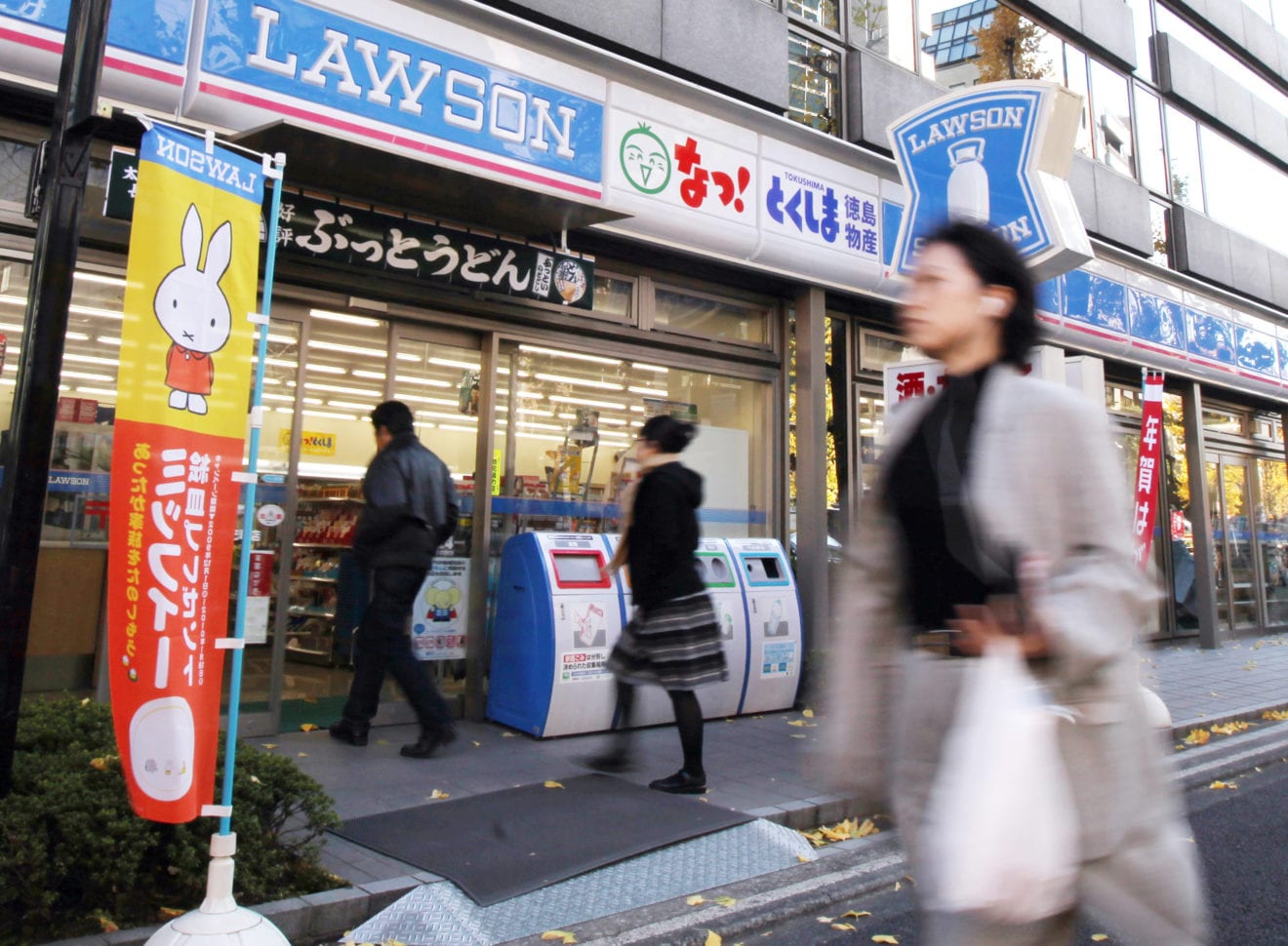
    Healthcare is becoming a staple category for Japanese convenience store chains as they seek to counter the encroachment of pharmacies on their traditional product ranges.

    According reports, while Japanese drugstores are increasingly offering snacks and quick meals, convenience stores are now selling medicines and even setting up health consultation stations in stores.

    Lawson-branded stores have launched 17 in-store consultation corners and plans to expand this number to 100 locations.

    Lawson president Sadanobu Takemasu said the company wants to resolve the community issues that arise “in an age where many people live to be 100”. The service is intended to attract more families and elderly people.

    FamilyMart and Seven-Eleven convenience chains in Japan have also been found to be selling medicines, with some also offering pharmacy-style advice.

    Japanese drugstores have been increasingly expanding beyond medical products in recent years, which has paid off. The value of pharmacy industry sales has gone up five per cent in the past two years, as opposed to two per cent on convenience store sales over the same period.

    The number of pharmaceutical outlets increased 11 per cent since 2015, during which time convenience store expansion was limited to just three per cent.

  • Thai 7-Eleven number goes down

    Thai 7-Eleven number goes down

    Thai 7-Eleven operator CP All has reported slowing profit growth, despite increased revenue.

    Net profit growth of 2.8 per cent was its weakest quarterly result in years, according to Thomson Reuters. Its net surplus was 4.78 billion baht (US$144.2 million). In the same period a year ago, growth reached 10.8 per cent.

    The company’s gross margin slipped a half percentage point to 27.7 per cent due to higher sales of alcohol, cigarettes and game cards, which have low margins.

    Total sales across the 10,000-strong Thai 7-Eleven store network was 129.7 billion baht, up 7.5 per cent, but the company was impacted by an increase in the minimum wage, rising power prices and higher supply chain costs.

    CP All expects to have 13,000 stores by 2021.

  • Dairy Farm restructures after recent result

    Dairy Farm restructures after recent result

    “Underperforming” subsidiaries and rising rent and labour costs are disturbing the chairman of Hong Kong-listed multinational retailer Dairy Farm International – but those factors failed to prevent a solid second-half year performance.

    Dairy Farm’s total sales rose 17 per cent to US$12.215 billion in the six months to June 30 and profit attributable to shareholders was $215 million, up 6 per cent. The increased sales came largely from the Yonghui supermarket operation and Maxim’s which owns food retail channels and the Starbucks business in Hong Kong, Singapore, Vietnam and Cambodia.

    Chairman Ben Keswick said the health and beauty business in Hong Kong and Macau drove strong results in North Asia, but the Southeast Asian food businesses continued to face challenges producing a weaker overall performance.

    “While the outlook for the remainder of the year is expected to remain challenging for the Food businesses, particularly in Southeast Asia, the group’s other businesses should continue to make steady progress. Significant management and structural changes have been made to address the issues the group faces in a number of areas, but time will be needed to deliver sustainable improvement.”

    The company has consolidated its trading operations into a more centralised structure with two main trading divisions: North Asia and Southeast Asia, in addition to the standalone business of Home Furnishings (essentially Ikea) and Maxim’s.

    Keswick says five strategic priorities have been identified: building capability, growing presence in Mainland China, protecting the group’s Hong Kong business, revitalising the Southeast Asia operations and driving digital innovation. “A series of programs are underway to support these priorities across all of the group’s businesses,” he said in the earnings statement.

    In North Asia, overall sales within the food businesses were ahead of prior year, but profits declined, mainly due to higher rent and labour costs in Hong Kong. “The health and beauty business in Hong Kong and Macau delivered very strong sales and profit growth, driven by a significant increase in business from higher numbers of mainland Chinese tourists.”

    Southeast Asia challenges

    However, in Southeast Asia, challenging trading conditions continued for Dairy Farm’s food businesses.

    “The group saw lower sales and profits in Singapore, Malaysia and Indonesia, while in the Philippines, sales were higher but profits lower, due to increased operating costs resulting from more store openings. Generally, these businesses have suffered from a lack of investment in infrastructure, range and competitive pricing for some time, while competition in each market has been increasing.

    “Turning these food businesses around and becoming more relevant to the changing demands of customers will take significant effort. Appropriate plans are now being put in place following the strategic review, but will require time to take effect,” said Keswick.

    He said the improving performance of the majority of the group’s health and beauty businesses in Southeast Asia is encouraging, with Malaysia, Indonesia and Vietnam reporting better underlying results.

    Dairy Farm’s convenience store operations (7-Eleven) performed well, with Hong Kong and Macau trading in line with last year.

    “In Singapore, overall convenience store sales were slightly lower than last year due to the termination of a multi-site agreement, but profitability improved following the closure of some underperforming stores. Like-for-like sales increases and store expansion in Mainland China continued to underpin growth in this sector.

    “In Home Furnishings, Ikea performed ahead of last year in Taiwan and Indonesia, with sales and profits growth. Hong Kong reported higher sales, helped by a contribution from the new store which opened in October last year, but associated higher operating costs resulted in reduced reduction in profits. Progress continues to be made on new store development in both Taiwan and Indonesia, with several sites under development. Meanwhile, e-commerce activities are showing increased results in all markets but from a small base.

    Keswick said Maxim’s delivered another good performance and is continuing to expand its presence across Mainland China and Southeast Asia. In Hong Kong, Maxim’s opened its first Shake Shack in May with “encouraging initial results”.

    Supermarket chain Yonghui reported strong sales growth and underlying profits from the core food business remained strong, but total profits were behind prior year due to the investment in new technology formats and the introduction of an employee incentive scheme announced earlier this year.

    Philippines restructure

    Meanwhile, back in March, the group announced it had agreed to partner with Robinsons Retail Holdings Inc. (‘RRHI’), the third largest retailer in the Philippines, to build a leading food retail business in that market. Dairy Farm will combine its Rustan Supercenters operations with RRHI to build on the combined strengths of both businesses, creating a new platform for growth. Following completion of the transaction, Dairy Farm would own 18.25 per cent of RRHI. The transaction, which is subject to certain regulatory approvals, is expected to be completed in the fourth quarter.

    As at June 30, Dairy Farm, including associates and joint ventures, operated more than 7400 outlets across all formats, compared with 7181 at the end of last year.
  • 7-Eleven open second unstaffed X-store in Taiwan

    7-Eleven open second unstaffed X-store in Taiwan

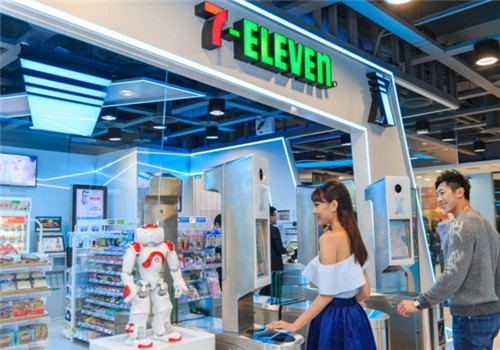
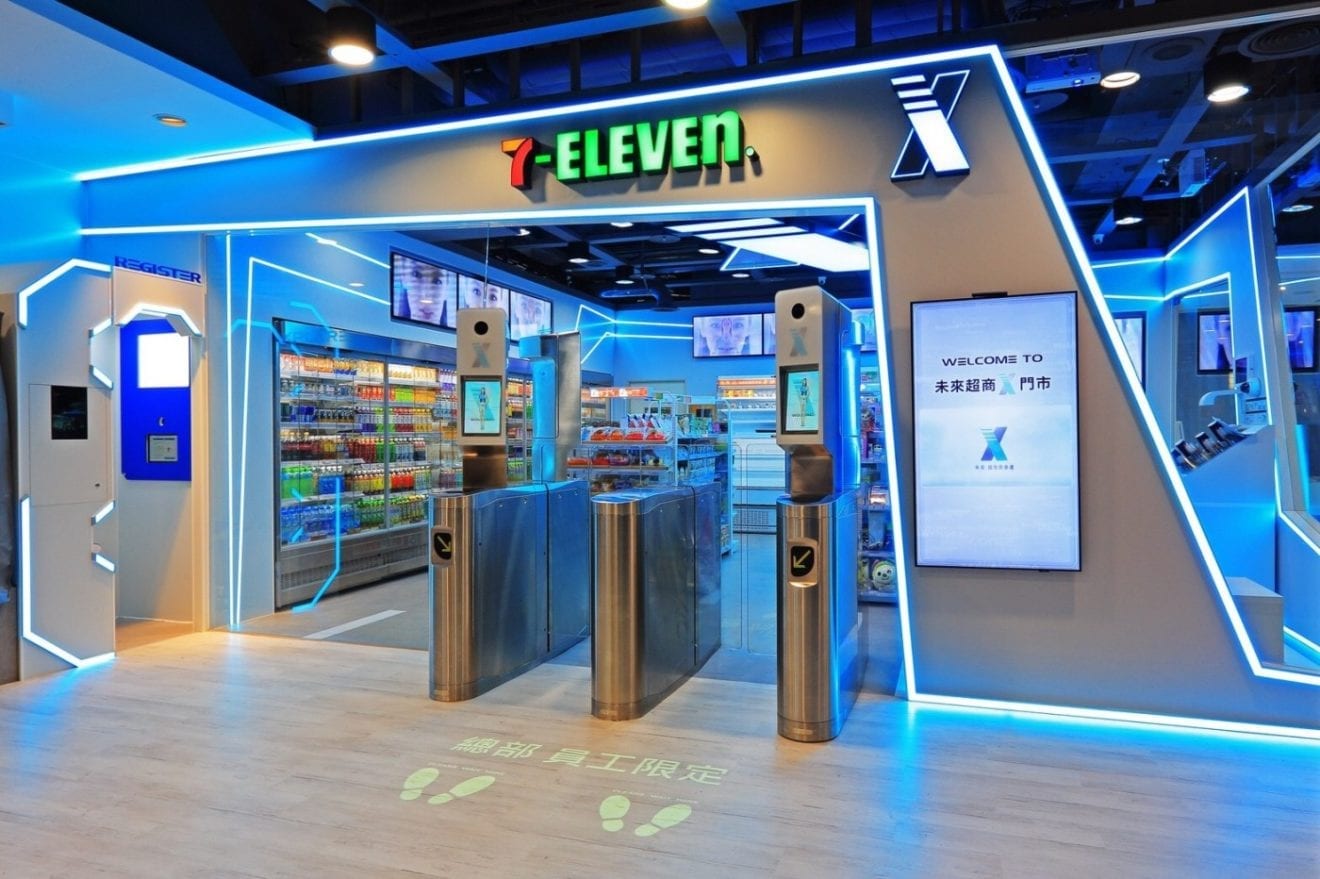
    7-Eleven Taiwan operator President Chain Store Corporation has opened its second unstaffed X-store in Taipei.

    Located in Xinyi District, the store recognises customers by facial-recognition card or iCash 2.0 card.

    There is also an intelligent ATM machine using fingerprint and facial recognition technologies, allowing customers to deposit small change and withdraw foreign currencies, project management department chief Hsu Yi-hsiung said.

    The first X-Store opened on the first floor of the company’s headquarters in January, targeting the large crowds of white-collar workers and students in the area.

    The number of customers at the first X-Store increased 50 per cent over six months, Hsu said.

    With the growing convergence of online and offline, automated shops such as the X-Store enhance customer expectations, while improving in-store service and automating supply chain and real-time inventory management.

  • Japan’s Inagora inks agreement with Thailand’s CP

    Japan’s Inagora inks agreement with Thailand’s CP

    Japan-based e-commerce platform Inagora is teaming with Thailand’s CP (Charoen Pokphand) Group to boost its China business.

    The joint venture is also researching expansion into Southeast Asia.

    Inagora targets Chinese shoppers seeking Japanese goods. It boasts 4 million registered users and an inventory of about 40,000 SKUs, ranging from food and household goods through to more luxury items. Last year, its turnover totalled about US$98 million.

    Inagora opened a brick-and-mortar store in Zhengzhou this month as it broadens its market reach and eyes new markets. Japanese trading house Itochu and others invested about $68 million into the business last year to help fund expansion.

    By teaming with CP, whose operations include the 10,500-strong 7-Eleven convenience-store network in Thailand, Inagora hopes to start offering Chinese shoppers products from other markets. It may also look to sell Japanese and other Asian products to people living in Southeast Asia.

  • South Korean convenience stores to sell more own brand

    South Korean convenience stores to sell more own brand

    More South Korean c-stores are set to launch in-house products as local retailers move to attract more consumers with price competitiveness.

    E-Mart24, the convenience-store arm of South Korean retail giant Shinsegae, said it is planning to unveil its own private-label product within this year. Ministop Korea, operator of Ministop, is set to launch its own branded products in September.

    The moves are part of the companies’ broader efforts to find a breakthrough in the saturated South Korean c-store landscape. The size of South Korean convenience stores private-label product market is estimated at around 3.5 trillion won (US$3.15 billion).

    CU, South Korea’s largest convenience-store chain, operated by BGF Retail, released its own brand, Heyroo, in 2015, and GS25, another major convenience-store chain, joined the move with You Us in 2016.

    BGF Retail said sales of its private-label products rose 35.3 per cent year-on-year in 2016. Last year’s revenue was up 19.1 per cent from 2016.

    GS Retail, operator of GS25, said sales of its private-brand items accounted for 36.6 per cent of its total revenue in the first half of this year, excluding revenue generated from cigarettes and services. The company has around 2000 products under private label.

    Another major convenience store chain, 7-Eleven, said sales of its in-house products accounted for 35.9 per cent of this year’s total revenue as of Sunday. It currently has some 1500 products under its private brand.

    “The companies will be able to survive in this saturated market only if they manage to secure consumers who are highly loyal to their private label products,” an industry source said.

    The market size for convenience stores in South Korea surpassed 20 trillion won in 2016, up 18.6 per cent from the previous year, according to industry data.

  • 7-Eleven boosts parents profit growth

    7-Eleven boosts parents profit growth

    Overseas growth in the 7-Eleven convenience store business drove a modest increase in profit for Japanese retail group Seven & I Holdings in the first quarter.

    While the challenges of a shrinking population, falling household spending and corresponding lacklustre economy in its home market subdued local performance, offshore growth continues to underpin the company’s results.

    Operating profit of 86.4 billion yen (US$781.2 million) was 2.7 per cent higher year-on-year in the three months to May.

    While 7-Eleven Japan is the nation’s largest convenience store chain, with more than 20,000 stores, the c-store sector is struggling to make headway amid growing competition from drugstores, and Seven & I Holdings’ Ito-Yokado supermarket chain, and its department stores are essentially standing still.

    That makes overseas growth critical for Seven & I Holdings. While 7-Eleven Japan operating profit fell 6.9 per cent to 55.4 billion yen, overseas 7-Eleven profits surged 33 per cent. In Thailand, the chain has about 11,000 stores operated by local partner CP All. It has another 9500 stores in the US and more still under franchise agreements in markets including Malaysia, Australia and, more recently, Vietnam.

  • China, India, Myanmar can be the next countries for CP All

    China, India, Myanmar can be the next countries for CP All

    CP All is assessing expansion opportunities in China and India for its Siam Makro cash-and-carry retail concept.

    It is also evaluating opening a store in Myanmar after experiencing success in nearby Cambodia.

    “Siam Makro is on a new journey of expanding in overseas markets,” CP All’s CFO Kriengchai Boonpoapichart said in an interview.

    “It will be a tough and challenging road, but it’s a good opportunity with large populations to tap, compared with Thailand’s mature market.”

    Siam Makro set up Lots Wholesale Solutions in India earlier this year with plans to invest as much as US$145 million over five years. The first store is on track to open within a few months along with a second store in Cambodia.

    CP All is the listed retail business of Thai billionaire Dhanin Chearavanont. It paid more than $6 billion to buy Siam Makro five years ago, adding to its 7-Eleven convenience-store chain which now numbers about 11,000 across Thailand, with plans to open a further 700 annually.

  • Seven-Eleven to use Toyota fuel cell trucks for deliveries next year

    Seven-Eleven to use Toyota fuel cell trucks for deliveries next year

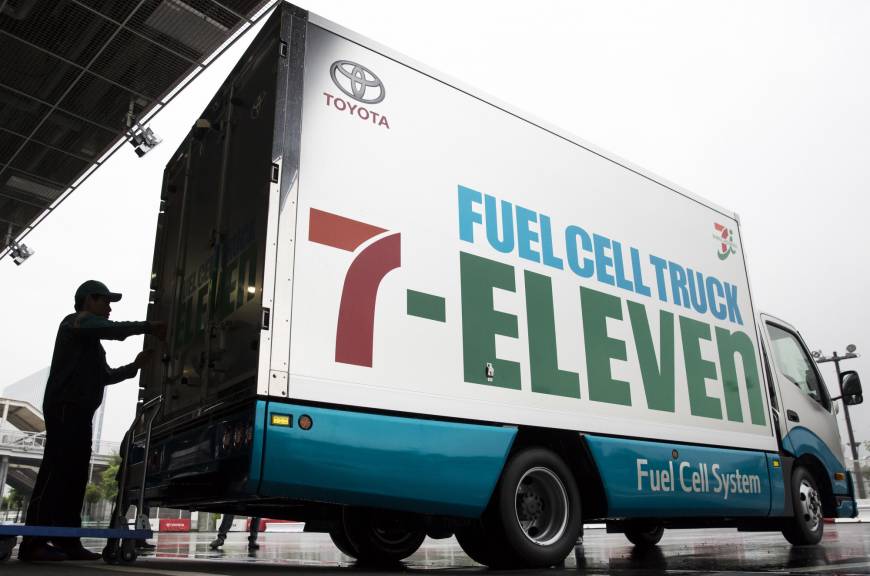
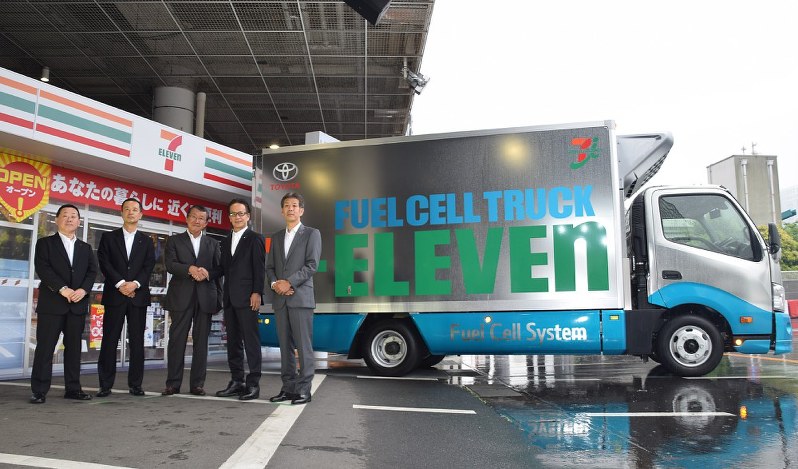
    7-Eleven Japan and Toyota Motor Corporation have agreed on a joint project to reduce CO2 emissions.

    The idea is to conserve energy and reduce carbon dioxide emissions in the store’s distribution and business activities.

    Toyota has been investigating the use of newly developed fuel-cell trucks and fuel-cell generators, and the project will be implemented in stages starting next year. It aims to introduce technologies and systems developed by Toyota for 7-Eleven store activities. Stationary fuel-cell generators (FC generators) and rechargeable batteries will be introduced at stores, managed centrally by building energy-management systems (BEMS), raising the proportion of renewable energy and electric power derived from hydrogen used. A newly developed small-fuel-cell truck will join the distribution process, aiming to achieve zero emissions of substances of concern, including CO2.

    The Seven & I Group is addressing five key issues: Regarding non-wasteful use of products, ingredients and energy, the group seeks to expand renewable energy use in line with the objectives of the Sustainable Development Goals (SDGs) adopted by the UN in 2015. Specifically, the group plans to increase renewable energy use in stores to 20 per cent and reduce CO2 emissions by 27 per cent. 7-Eleven is taking measures to reduce CO2 emissions throughout its entire supply chain to meet its goals, focusing on renewable energy.

    In December, 7-Eleven opened the environmentally, user-friendly 7-Eleven Chiyoda Nibancho store as a flagship of these initiatives. The second such store, the 7-Eleven Sagamihara Hashimotodai Itchome, opened last month with renewable energy accounting for 46 per cent of its electric power use.

    Toyota technologies and systems that use hydrogen will be introduced in stores and distribution sites, with next-generation stores further using renewable energy. Two small-fuel-cell trucks are intended to be introduced in Tokyo next year.

  • Q1 sales growth quarter for 7-Eleven Malaysia

    Q1 sales growth quarter for 7-Eleven Malaysia

    In a first quarter marked by expansion and sales growth, 7-Eleven Malaysia saw its net profit soar 11.6 per cent from the same period a year ago.

    Total sales growth for the quarter was 2.5 per cent, while the gross profit margin continued to improve, says the company.

    Driven by store openings, higher customer counts and improved consumer promotions, the group’s revenue for the quarter grew by 2.5 per cent to RM535.7 million (US$134.4 million).

    Gross profit of RM171 million improved by 7 per cent, and this was mainly attributed to the increase in revenue and improvement in gross margin by 1.3 points.

    Profit after tax was RM8.9 million, up 11.6 per cent.

    One2Pay mobile wallet launched in January, with payments and top-ups enabled in all stores, while continued store expansion took the total network to 2235 outlets.

  • 7-Eleven delivers in 2 hours in Japan

    7-Eleven delivers in 2 hours in Japan

    A two-hour delivery service for smartphone orders is about to be launched by 7-Eleven Japan, the country’s biggest convenience-store chain.

    “Net Konbini” (using the commonly shortened form of “convenience store” in Japanese) plans to cover 7-Eleven’s entire Japanese network of around 20,000 stores, following a soft launch at 25 stores in Hokkaido in October. It plans to expand the network to 1000 stores in Hokkaido by August next year.

    Users will be able to place orders 24 hours a day, nominating a delivery address and store. A range of 2800 products will be available including Japanese convenience-store staples such as rice balls and bento lunch boxes.

    “Using 20,000 stores to immediately deliver any of 2800 products is a service only 7-Eleven can provide,” says company president Kazuki Furuya.

    Delivery trucks en route through 7-Eleven outlet areas will pick up orders and drop off purchases to customers, in a tie-up between 7-Eleven and a subsidiary of logistics company Seino Holdings finalised last year.

  • 7-Eleven fights back with new format stores

    7-Eleven fights back with new format stores

    Convenience chain 7-Eleven is investing in innovation to ensure its network of franchised and corporate stores stays ahead of the game, according to its CEO Angus McKay. Describing the retail landscape as “brutal”, McKay said agility is an essential element of today’s retail scene.

    “We’re investing in becoming better retailers,” he told.

    “We want people to have a business that’s healthy and makes money.

    “You have to be patient and really be on your game and know what the customer wants, and be prepared for them to change their minds.”

    A try and fail attitude is now central to the brand’s development, said McKay.

    Actions include turbo-charging the food on the go offer, doubling its coffee output to an average 500 cups a day per store under the Coffee 500 project banner, adding daily fresh bakery items, introducing a parcels locker service, trialling digital payment options and providing a fuel value proposition.

    This equates to giving customers choice with a range of fuels, quick access to pumps with a well-maintained forecourt, the fuel app to lock in low prices when they are available,being able to redeem the savings offer, and the ability to grab a coffee or meal on the go.

    “We have a huge opportunity to lift our fuel game,” McKay said.

    “Our vision comes back to what makes life easier for customers and easier for store operators,” reiterates McKay.

    A different retail experience

    According to McKay, consumers today want a different retail experience from the traditional convenience purchase.

    With 32.1 per cent market share on the eastern seaboard, up 2.1 per cent from 2017, 7-Eleven claims to be the fastest growing convenience store chain in Australia.

    Fuel retail has accounted for more market share, up 8.5 per cent, with like for like year to date up 2.3 per cent.

    Merchandise has risen 10 per cent with like for like sales up 5 per cent.

    Strong customer growth has seen transactions rise by 5 per cent.

    But there are challenges ahead. McKay pointed out the categories likely to cause the chain some future challenges: tobacco, sugar and fuel.

    “We need to be faster and thinking further ahead. As much as I value confectionery in stores it’s not now all the customer wants. Whether it’s healthy or a treat you have to offer a range.

    “It isn’t about price. We need to offer good value and good service.”

    New compact store model

    In stark contrast to the white, bright decor of a traditional 7-Eleven store, a new-look fit-out is being rolled-out with a much darker hue for a more upmarket feel and, according to general manager retail operations, Braedon Lord.

    “It’s about the customer sensory experience,” said Lord. Typical sites to be refurbished will include those non-fuel outlets in high transit areas such as universities and transport hubs.

    The convenience chain aims to provide the value for money options that today’s customers are seeking and to infill these smaller footprint stores in areas not serviced by 7-Eleven.

    There are now eight of these refurbished stores and the plan is to transform all similar outlets by the end of the fiscal year 2019. The chain expects to have about 110 CBD style outlets.

    The traditional offer in larger stores will remain, perhaps with the space-greedy parcel locker service adding income opportunities. A nearby small 7-Eleven outlet will take on the new mantle and offer a pared-down merchandise selection of 900 SKUs rather than the traditional 1600 SKUs.

    Network expansion

    Lord says the transformation has been successful, with stores picking up an extra 300 shoppers from their base of 700 customers.

    The transformed stores have reinvigorated franchisees he adds and the cost of refurbishment has been covered by the franchisor.

    Across the network there are about 90 corporate stores. “We want every one of our stores to be profitable. There’s nothing that we do not share from corporate stores to franchisees , to make lives easier and more profitable.”

    There are 42 new stores opening bringing the total Australian 7-Eleven network to 685 outlets by June 2018.

    The business is moving further into regions and into Western Australia, which McKay admits will be a test of the company’s supply chain.

    McKay highlighted the innovations the chain has invested in now but added a call-out to suppliers for more fresh ideas.

  • Cafe Decoral now operating under 7-Eleven

    Cafe Decoral now operating under 7-Eleven

    Convenience Shopping, a fully owned subsidiary of 7-Eleven Malaysia Holdings (SEMH), has agreed to acquire a 60 per cent stake in Cafe Decoral, a ready-to-eat food supplier, for RM600,000.

    A Bursa Malaysia filing says the deal should be completed within the next few months. The move will enable SEMH to venture directly into the production of ready-to-eat fresh food for 7-Eleven stores.

    A share-sale agreement has been signed with Cafe Decoral founders Ng Kin Chen and Ng Lee Chin and Public Yong Tow Foo, a manufacturer and dealer of food products. Following the acquisition, Ng Lee Chin and Ng Kin Chen will hold 27.56 per cent and 10 per cent stakes respectively, down from 48.78 per cent and 29.27 per cent earlier.

    Furthermore, Public Yong Tow Foo’s ownership of 19.51 per cent will be fully liquidated while another shareholder, Ng Ming Kiat, will continue to own a 2.44 per cent stake.

    Pursuant to the acquisition, a three-storey shop house of Cafe Decoral in Selangor will be acquired for RM250,000. The value of the property is marked at RM108,543 as of the end of this month.

    Since 1984 Cafe Decoral has been supplying fast food such as fried fish balls, fried rice, fried mee hoon and sandwiches to about 300 7-Eleven stores in the Klang Valley in Malaysia.