Retail News CRM

Tag: 7-Eleven

  • Is e-commerce taking over sales in Indonesia?

    Is e-commerce taking over sales in Indonesia?

    The growth rate for retail stores is now at single-digit levels, falling from above 10% in recent years. Online shopping is shouldering part of the blame, but the main culprit is a slowdown in overall consumer spending — long the driver of Indonesia’s economy — due to sluggish wage growth.

    Since the busy Ramadan shopping season ended in the summer, Indonesian consumers apparently have tucked away their wallets, at least at brick-and-mortar establishments. Retail store sales in October 2017 grew by an anemic 1.3% from a year earlier, according to preliminary data released by Bank Indonesia, the country’s central bank.

    This is causing store closures across the country, where the modern retail business model had entrenched itself over the years. At the end of June, all Indonesian 7-Eleven convenience stores closed their doors. In September 2017, Matahari Department Store, the nation’s largest department store chain, shuttered two southern Jakarta stores.

    Same-store sales of the chain over the first nine months of the year fell 2.7% from the same period last year.

    The recent lack of foot traffic at a major Jakarta department store typified the trend. As some 40 clerks stood idly chatting away, a nearby supermarket swarmed with shoppers.

    Many of the vacant store fronts in the country’s commercial centers are due to the increase in e-commerce. According to one survey, online sales surged 22% in 2017 from the previous year to around $7 billion.

    A bevy of powerful e-commerce sites — among them Tokopedia, one of Indonesia’s largest online marketplaces, and Alibaba Group Holding’s Lazada — are siphoning shoppers away from stores, a trend that shows no sign of abating. Online sales are projected to keep climbing at a brisk annual rate of around 20% for the foreseeable future.

    The growth in smartphone usage has also spurred online shopping, especially in rural areas where modern retail shops are still few and far between.

    But the rise in online shopping tells only part of the story. The main reason for tepid consumer spending is weak wage growth. The minimum wage growth rate will slow to 8.71% in 2018, the lowest in recent years, according to the government, noting that relatively low-income earners will be hit particularly hard.

    As recently as 2013, minimum wages had soared more than 40%, fueling the country’s free-spending ways. Now, consumers are being forced to cut back in order to save for future outlays, such as on housing and education. This has put a crimp on spending for even daily products.

    With a population of over 250 million, Indonesia is the largest consumer market in Southeast Asia. Many economists say the country’s consumption will continue to rise over the long term.

    There is little doubt, however, that Indonesian’s retail industry is facing a crisis of sorts, and the government is not helping with the situation.

    If this trend continues, the ensuing shock waves may hit other sectors of the economy, possibly dampening foreign direct investment in the country’s consumer market.
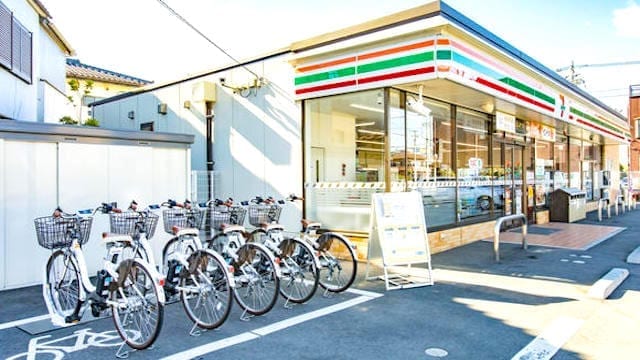
  • Hello Cycling now can be found in 7-eleven

    Hello Cycling now can be found in 7-eleven

    Bicycle hubs are being rolled out at 7-Eleven Japan outlets in a partnership with the Hello Cycling bike-sharing business.

    The convenience store parent Seven & I Holdings has partnered with Hello Cycling, launched last year by tech company SoftBank Group and its subsidiary OpenStreet. Customers can rent and return bikes at the special 7-Eleven parking lots.

    So far the service is available at nine 7-Eleven locations in Saitama, north of Tokyo, with plans to have 5000 bicycles available at 1000 stores in the Tokyo metropolitan area and other cities by the end next year. There are about 20,000 7-Eleven stores throughout Japan.

    Hello Cycling members can search for bike-share stations and reserve bicycles via smartphone. If they register a transportation smart card, they can pick up bikes on the spot without a reservation. Payment can be made by credit card without entering the store, and bikes can be returned at any participating location.

    In February, 7-Eleven partnered with the Docomo Bike Share service, run by wireless carrier NTT Docomo, making about 150 bicycles available at 32 stores in Tokyo and elsewhere. The partnership will continue alongside the SoftBank service, which follows the Japanese debut of China’s Beijing Mobike Technology in August, with rival Ofo preparing to follow suit.

    Mercari, a Tokyo-based flea-market app company, also plans to break into bike-sharing early next year.

  • Dairy Farm sales stagnate

    Dairy Farm sales stagnate

    Dairy Farm sales were described as “flat” in the third quarter to September 30.

    The Hong Kong-headquartered company said improved performances in health and beauty, Ikea, restaurants and Yonghui were offset by lower sales in the food and grocery division.

    “The lower food division sales, together with new store pre-opening costs in home furnishings, (Ikea) led to underlying profits being marginally below the same period in the prior year,” the company said in a statement issued in London, where it has a secondary listing. “Similar trading conditions are expected to continue for the remainder of the year.”

    Dairy Farm said the weakness seen in food and grocery sales was principally driven by difficult trading for the hypermarket and supermarket operations in Southeast Asia, where it operates Giant hypermarkets and Cold Storage supermarkets. It says reviews of “a number of the businesses” are being undertaken.

    The results from greater China (including its Hong Kong Wellcome supermarkets) showed improvement over the same period last year. Convenience store operations (including 7-Eleven stores in Hong Kong and Singapore) produced improved sales and profitability.

    Yonghui reported a strong 20 per cent  growth in revenue and 131 per cent increase in profit in the quarter.

    Improved sales in the health and beauty division (Manning’s, Guardian and Rose Pharmacy) were driven principally by a strong performance in Hong Kong and Macau. Home Furnishings (Dairy Farm has the Ikea franchises in Hong Kong and Taiwan) traded well, although profitability was reduced due to pre-opening expenses for the new store in Hong Kong.

    Maxim’s (which also includes Starbucks operations in Hong Kong, Vietnam and Cambodia) had a seasonally strong quarter in both sales and profit, benefiting from record mooncake sales during the Mid-Autumn Festival period. In September, Maxim’s acquired the existing business and exclusive rights to operate and develop Starbucks franchise stores in Singapore.

    In August, the group completed the acquisition of the remaining 34 per cent interest in Rustan’s in the Philippines from its joint venture partner.

  • Giants’ retail partnership points to Asia’s future

    Giants’ retail partnership points to Asia’s future

    JD.com brings to the partnership its competitive edge in logistics and technologies such as artificial intelligence, cloud computing, drones and robots, while Central offers retail expertise including knowledge of Southeast Asian markets, brand relationships, customer base, physical store network and loyalty programmes.

    E-commerce has enormous growth potential in Thailand, which the partnership hopes to tap into. For example, only 1-2 per cent of Central’s sales are online; by working with JD.com, Central aims to increase this to 15 per cent by 2021.

    A major benefit for Central is better access to the Chinese market. JD.com has an alliance with Tencent, owner of the popular messaging app WeChat that averages 902 million daily logged-in users (as of September 2017). JD.com customers who make their purchases with WeChat have their goods delivered using an advanced logistics system which increasingly features drones. JD.com’s 150 or so drones make more deliveries than any other drone user globally. The company is also testing drones that can carry up to a tonne, and using robots in its warehouses.

    JD.com’s drone-delivery model is different from that being tested by US retailers such as Amazon and 7-Eleven. Instead of delivering packages direct to individual homes, local distributors receive and distribute them. In the US, a stricter regulatory environment and privacy concerns mean drone deliveries are not advancing as rapidly as in China and are still in the testing phase.

    JD.com founder and chairman Richard Liu believes drone deliveries would save massively on costs, especially in rural areas. He estimates that drone deliveries are at least 70 per cent cheaper than delivery by truck and take a fraction of the time.

    Unlike China’s other e-commerce giant Alibaba, JD.com is focused on building a complementary bricks-and mortar-business through strategic alliances with strong retail brands such as Walmart, and selling luxury goods through its partnership with the online luxury-brand marketplace Farfetch.

    According to Liu, JD.com is attracted to Thailand because of its large population, developed infrastructure and strong logistics network. The plan is to make Thailand a major hub for e-commerce expansion across Southeast Asia.

    Many North American retail stores are closing – Sears and Macy’s among them – so it is encouraging to see the confidence reflected in this partnership. Given the Chinese love of shopping, Thailand’s experience in developing luxury malls and the rapid development of technology in this part of the world, this points to a prosperous future for retailing in Asia.

  • 7-Eleven opens 500th fuel store

    7-Eleven opens 500th fuel store

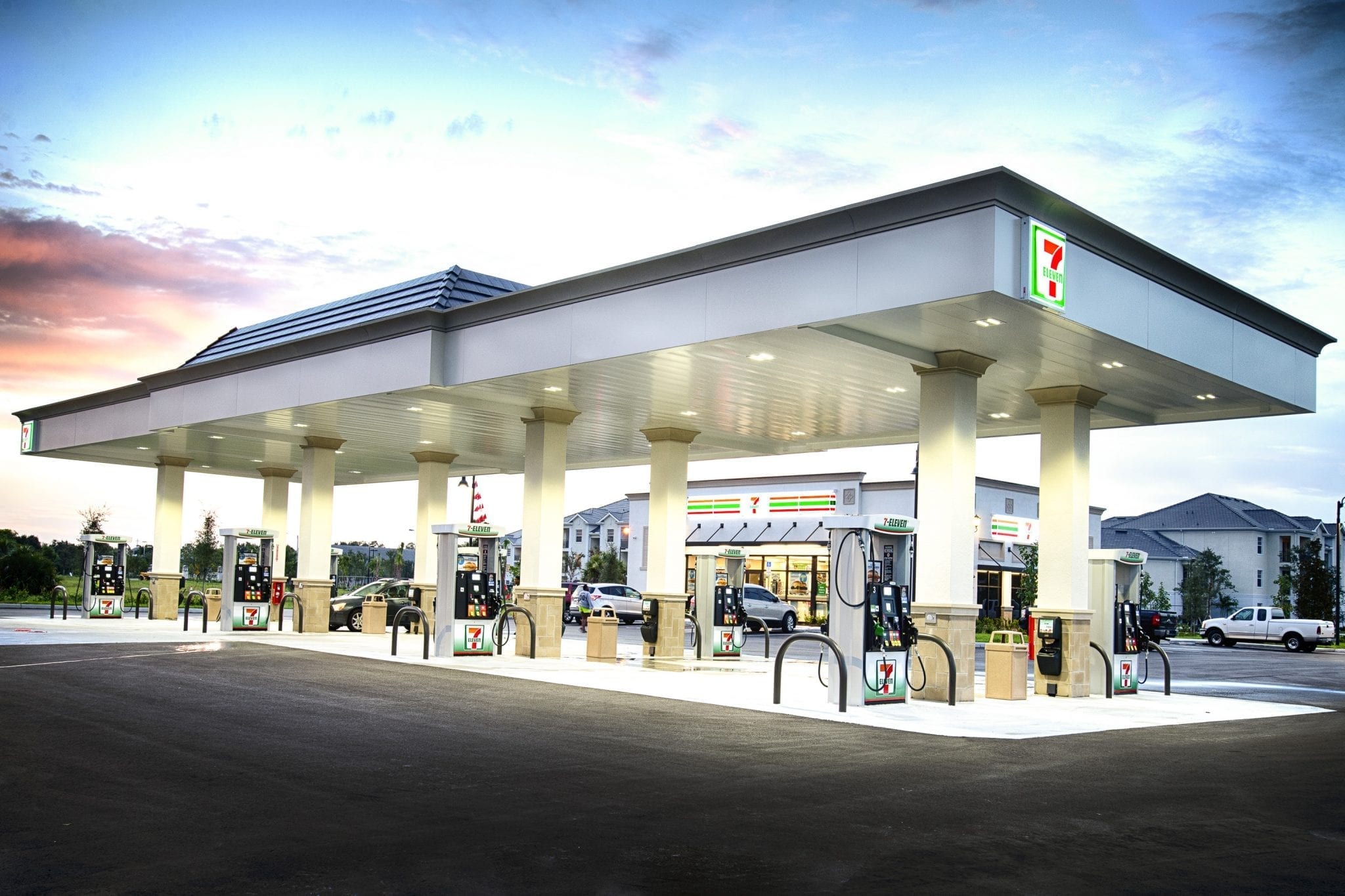
    Convenience store chain, 7-Eleven, has opened its 500th fuel store at Burpengary in Queensland on Thursday, bringing its total network size to more than 670stores across Victoria, New South Wales, Australian Capital Territory, Queensland and Western Australia.

    Braeden Lord, 7-Eleven’s general manager retail operations, said that the new store was one of 40 new stores the company planned to open before the end of 2017, including 20 in Queensland.

    “We are experiencing solid growth in our network with 40 stores opening this calendar year, about half of those in Queensland,” Lord said.

    “We have another approximately 40 stores planned for 2018. The combination of our customer focused convenience offer, quality Mobil brand fuels, and the wonderful team members in our stores, positions us well to continue to grow our network.”

    Lord said the company continues to innovate to ensure it meets the needs of its customers and giving consumers choice was critical to achieving that.

    “As a business we are investing to develop new products and services, and we also look for opportunities to work with our suppliers to bring new offers and innovations to the channel,” he said. “It’s a real focus for us to not only offer the products and services consumers expect from us today, such as snacks, drinks and quality fuels, but also to be looking to what they might want from us in the future, such as food on the go including healthy options, and in-store services such as parcel lockers and digital products.”

    The new Burpengary store’s offer includes the 7-Eleven Iced Coffee which lets customers make their own drink with freshly ground coffee and fresh cold milk, and the new 7-Eleven sushi range.

    Customers will also be able to take advantage of the company’s fuel app to save when they fill up with Mobil brand fuels. The fully additised fuels include Supreme Plus 98, Extra 95, Special E10, Special Unleaded 91 and Special Diesel.

    Approximately 700,000 consumers have downloaded the 7-Eleven Fuel App and in the 18 months since its launch have saved more than $2 million.

  • 7-Eleven pays out $150 million to staff

    7-Eleven pays out $150 million to staff

    About 3600 7-Eleven workers have been paid out $150 million since revelations of under-payments and poor record-keeping.

    A Senate committee heard on Wednesday the “compliance partnership” between the Fair Work Ombudsman and 7-Eleven was yielding results.

    Ombudsman Natalie James said 10 matters were before the courts.

    An agreement struck in 2016 also included installing and overseeing biometric shift-scanning systems and the introduction of 7-Eleven-owned CCTV at all outlets to allow head office to monitor employee hours and make sure workers were paid correctly.

    The Ombudsman has also written to pizza chain Domino’s about underpayments.

    “We have some outstanding issues around information we have requested,” James said.

    Last week, 7-Eleven said it supported the Ombudsman’s investigation into a Brisbane franchisee.

    The franchisee allegedly sought repayment of accrued annual leave that had been paid to the employee, then dismissed the employee when these requests were refused.

    7-Eleven conducted its own investigation into the allegations, which was unable to find a level of evidence required for the company to take its own action under the industry codes.

  • FamilyMart Philippines chain up for auction

    FamilyMart Philippines chain up for auction

    FamilyMart Philippines convenience-store chain, partly owned by the Ayala and Tantoco groups, is up for auction.

    With about 70 stores, the Japanese chain has been offered to prospective investors in the past few months.

    Ayala Land and the Rustan’s group, via their equally owned JV firm Sial CVS Retailers, in 2012 signed a deal with FamilyMart and Itochu Corporation to develop and run FamilyMart convenience stores in the Philippines.
    FamilyMart has been closing unprofitable stores over the past 12 months.

    In the convenience store market in past six years, new brands have been challenging 7-Eleven and MiniStop, respectively run by Philippine Seven Corporation (PSC) and Robinsons Retail Holdings.

    Aside from FamilyMart, the Puregold group also brought Japan’s Lawson into the market while the SM group introduced Indonesian brand Alfamart. Meanwhile, real-estate magnate Manuel Villar has also built his own convenience-store network, All Day.

    To date, the two original brands still lead the market, with 7-Eleven surpassing 2000 outlets while Mini-Stop has at least 500 stores.

  • Shell starting to edge out 7-Eleven Singapore

    Shell starting to edge out 7-Eleven Singapore

    Convenience store chain 7-Eleven Singapore is about to divorce from oil company Shell after an 11-year partnership.

    Shell Singapore has started rebranding its petrol station convenience offer to align with its “long-term business strategy”. Retail general manager Aarti Nagarajan says this started with the launch of its Tampines Avenue 2 station in June.

    “A national revamp will take place in phases with the introduction of Shell Select and Deli by Shell”.

    Saying the move would allow it to focus on more profitable activities, Shell engaged 7-Eleven in 2006 to run its petrol station network in Singapore. It had nearly 70 stations then, but the number has dropped to 57.

    “We are committed to invest and grow our retail business in Singapore, which remains a strategic country for Shell,” says Nagarajan.

  • 7-Eleven Thailand passes 10,000 milestone

    7-Eleven Thailand passes 10,000 milestone

    Expansion by 7-Eleven Thailand has outpaced Japan, with the convenience store network reaching 10,007 by the end of June.

    It took CP All, under Thai conglomerate Charoen Pokphand Group, 28 years to reach the 10,000 mark since its first outlet for the Japanese brand opened.

    CP All plans to add about 700 outlets this year, hoping to reach 13,000 within the next four years. The company says it is poised to allocate 60 per cent of its planned capital expenditure of THB9.5 billion (US$286.3 million) to THB10 billion this year for store expansion and renovation.

    The franchise outpaces other Japanese convenience-store brands in Thailand, FamilyMart having 1136 stores at the end of July and Lawson 85 at the end of February.

    Regionally, 7-Eleven stores had grown to 14,699 by the end of June, accounting for nearly a quarter of the global total. Locations include Malaysia, the Philippines, Singapore and Vietnam. Japan had 19,588 stores.

  • Thai 7-Eleven parent CP All reports sales, profit gains

    Thai 7-Eleven parent CP All reports sales, profit gains

    Same-store sales shrank 1 per cent for CP All, which runs Thailand’s 7-Eleven stores, during its second quarter despite gains in both consolidated revenue and net profit.

    Net profit was up 10 per cent year-on-year to reach THB4.647 billion (US$139 million) while revenue grew 5.3 per cent to THB120.6 billion. Convenience store sales grew 5.7 per cent to THB69.3 billion, boosted by Siam Makro’s THB6.1 million contribution.

    Gross profit rose 7.7 per cent to THB25.8 million, largely because of increased sales of higher-margin products. This advanced gross margin to 22.2 per cent from 21.8 per cent for the same period last year.

    For the first half, revenues rose 6.6 per cent to total THB2.3 billion, mainly driven by 6.7 per cent growth in sales revenue and services income. Net profit was THB9.4 billion, up by 13.9 per cent.
    Of total revenue, Siam Makro contributed 36 per cent, similar to the figures for the same period last year.

    Convenience stores accounted for 77 per cent of profit before tax, down from 78 per cent for last year’s first half, while membership-based trade accounted for 23 per cent, up from 22 per cent. Average spending per ticket was THB67 and there were 1194 customer visits per store each day.

    With 700 outlets added over the past year, the total reached 10,007 at the end of June – the world’s second-largest network of 7-Eleven stores after Japan. CP’s long-term goal is 13,000 stores by 2021, and it says expansion has been on track.

    Most stores (86 per cent) are stand-alone while the others are in PTT gas stations.

  • Philippine 7-Eleven stores to expand food, services offer

    Philippine 7-Eleven stores to expand food, services offer

    Philippine 7-Eleven stores will be adding new concepts and initiatives over coming months to help differentiate from rival c-store chains.

    Parent Philippine Seven Corporation, revealing its trading figures for the first six months which included a decline in net profit from P472.3 million to P446.4 million year-on-year, said higher sales in the second half reduced the rate of decline from 13.3 per cent in the first quarter to 5.5 per cent in the second quarter. Same-store sales rose by 1.2 per cent in the second quarter, compared with a 2.5 per cent decline in the first.

    Total retail sales rose 16.9 per cent due to network growth to P18.1 billion. The company added 347 stores during the six months, taking the total to 2087.

    While revealing few details of the planned new initiatives, Philippine Seven said it would be launching new food and beverage options to stand out from other fast-food options consumers had.

    The company also plans to expand its merchandise assortment and add new services reflecting growing customer demand for  innovation and convenience in many categories.

    Meanwhile, the company continues to pursue opportunities to expand  its network.

    “The company… continues to invest in opening new stores in existing and new markets even if competition had slowed down,” it said in its results statement.

  • Sultan boosts stake in 7-Eleven Malaysia

    Sultan boosts stake in 7-Eleven Malaysia

    Giving 7-Eleven Malaysia Holdings a royal edge, Sultan Ibrahim of Johor has become its second-largest individual shareholder.

    He has an 8.44 per cent stake after acquiring 93.7 million shares in the convenience-store chain in the past month.

    His shareholding comes as the company is expanding its retail footprint, says 7-Eleven Malaysia chairman Abdull Hamid. “We believe that with a shareholder of His Royal Highness’ stature, 7-Eleven’s position in the retail industry will be further strengthened.”

    The group’s largest shareholder, Vincent Tan, says the increased stake by the sultan is good sign in that he is known to be “an astute investor with a keen eye for companies and businesses with strong fundamentals and good growth potential”.

    7-Eleven Malaysia had revenue of RM2.10 billion (US$490 million) with a pre-tax profit of RM70.82 million last year. Incorporated in 1984, the group has more than 2100 outlets that serve 900,000-plus customers daily.

  • 7-Eleven Singapore offers medicine service

    7-Eleven Singapore offers medicine service

    Instead of visiting a polyclinic, select patients are now collecting their medicine at a 7-Eleven Singapore store.

    Available at 34 outlets, the service is being offered to chronic disease patients under the National Healthcare Group’s (NHG) chain of nine polyclinics, which pack the drugs for delivery to lockers in the patient’s preferred store.

    Patients receive a text message when their medicine has arrived, and access the lockers at any suitable time with a one-time code delivered to their mobile phones.

    Medicine is packed in tamper-proof bags, and if not picked up within 48 hours is sent back to the polyclinic.

    The 7-Eleven Singapore network is operated by Hong Kong-headquartered Dairy Farm International.

  • Data marketing for Philippines 7-Eleven

    Data marketing for Philippines 7-Eleven

    Philippines Seven Corporation (7-Eleven) has engaged Big Data For Humans to develop and support its customer marketing.

    The customer-insights company will use automated data science to enhance campaigns across the retailer’s 2000-store network.

    Founded in Scotland three years ago, Big Data for Humans launched its Asia Pacific office in Singapore last year as part of its expansion into the Asian market, where clients include Air Asia. Internationally, its clients include Selfridges, Tesco and Swiss department store Jelmoli.

    “We want to generate more customer insights from our data stream and use these effectively to improve our marketing,” says Philippine Seven Corporation president Victor Paterno.

    Big Data For Humans offers the Customer Graph, a platform that empowers business users at all levels to use automated customer insights to power their marketing. The company was founded by a group of retailers and has a 40-strong team across its offices in Glasgow, London and Singapore.

  • Why did all 7-Elevens in Jakarta suddenly disappear?

    Why did all 7-Elevens in Jakarta suddenly disappear?

    The closure of global convenience chain ­7-Eleven in Indonesia underlines the tough economic and regulatory landscape that could deter future investors from taking over the iconic brand’s franchise in Southeast Asia’s biggest economy.

    The publicly listed PT Modern Internasional, ­7-Eleven’s franchise holder in the country, said in its statement to Jakarta’s bourse that a lack of resources was the main reason it ceased operations at all 7-Eleven outlets permanently as of June 30. The company also cited its failed deal to sell the franchise and other assets to Charoen Pokphand Indonesia, an affiliate of Thai conglomerate Charoen Pokphand Group, for 1 trillion rupiah (HK$585 million).

    But the debate over why 7-Eleven, widely known as “sevel” in Indonesia, closed down its stores continues to swirl. Analysts and industry watchers said that a combination of strong competition, an economic downturn and regulatory hurdles, including a 2015 nationwide ban on the sale of alcoholic drinks in mini markets, led to the brand’s closure.

    The termination of 7 eleven’s franchise agreement affects approximately 110 stores in and around Jakarta, and both parties are in talks to wind down the 7-Eleven business in all of Indonesia, including the de-branding of 7-Eleven stores, the American franchiser said.

    7-Eleven also had a role in developing Indonesia’s digital payment ecosystem by facilitating online transactions and utilities payments through clerks. Competitors, such as the country’s biggest mini market operators Indomaret and Alfamart, eventually followed 7-Eleven’s business concept by providing hot meals and small seating areas at some stores.

    They also now accept payment for utilities and an array of digital services, including e-commerce. Combined, Indomaret and Alfamart had nearly 90 per cent of the nation’s convenience store market last year, while 7-Eleven only had a 0.7 per cent share, according to researcher Euromonitor International.

    The chain’s glory days in the country didn’t last long. In the past two years, industry players noted Indonesians got thriftier as a sluggish economy and an oversupply of low-wage labourers lessened purchasing power.

    “The consumers’ behavioural change affected the overall retail industry. Many customers no longer stock up on groceries and only buy goods when they need them,” Mandey said. Indonesian shoppers also increasingly rely on online delivery services, reducing the chances of in-store impulse buying, he added.

    Modern Internasional shut down 45 stores over the past two years due to dwindling sales. According to its annual report, the struggling company recorded more than 630 billion rupiah in net losses last year, an increase from around 58 billion rupiah in 2015. Net sales for 7-Eleven, which contributed 75 per cent of the company’s total revenue, was 675 billion rupiah last year, a nearly 24 per cent drop year on year.

    “The problem was exacerbated by the lack of clear differentiation between the 7-Elevenconvenience stores and fast-food and medium-sized restaurants in Indonesia,” Olly Prayudi, associate director at credit ratings agency Fitch in Indonesia, said in a recent research note.

    Unfavourable regulations also added to the company’s woes. In 2015, a ban on the sale of alcoholic drinks in mini markets and convenience stores across Indonesia was a blow to company performance, as alcoholic drinks made up about 15 per cent of Modern Internasional’s sales, according to Fitch.

    Japan’s Seven & i Holdings, the global parent of the 7-Eleven chain, told it would search for another partner to revive the franchise in Indonesia.