Retail News CRM

Tag: alcohol

  • Almost three in four people are drinking less alcohol in APAC

    Almost three in four people are drinking less alcohol in APAC

    More people are shying away from alcoholic drinks in Asia-Pacific, according to new research from GlobalData.

    Approximately three out of four people in the region said they were drinking less alcohol in August 2020, GlobalData said, and a third are likely to replace them with products that claimed to have a positive health impact.

    “APAC consumers are turning away from alcohol-driven by concerns around physical and mental health,” GlobalData consumer analyst Carmen Bryan said.

    “While general health concerns take precedence, back by almost half (49 percent) of the region’s population, weight management, fitness, physical appearance, and emotional wellbeing are all considerable factors driving low or no-alcohol innovations.”

    Around 20 percent of people in the region have stopped drinking alcohol altogether. Much of these changes have been driven by the ongoing Covid-19 pandemic, according to Bryan, as pubs and bars were shut down and people were forced to reassess their own priorities and lifestyles while in lockdown.

    “Trends are shaping new home-bound leisure and social occasions where consumers seek the same taste and feel of mature drinks without the negative implications,” Bryan said.

    “It will be crucial for brands to blur these lines further, emphasizing the positive health credentials that will help reassure consumers, both mentally and physically, to tap into multiple consumption occasions and justify a potentially higher price mark up.”
  • Thai government bans online liquor purchase

    Thai government bans online liquor purchase

    Thailand is to ban the sale of alcohol online because the government says it is too difficult to ensure broader liquor sales are being respected.

    The decision has been signed off by Thai Prime Minister Prayut Chan-o-cha, who said that alcoholic drinks have become a popular item traded via e-commerce, creating difficulties in oversight.

    Thailand’s Alcoholic Beverage Control Act BE 2551 sets legal limits for the sale of alcohol that have proved impossible to adequately enforce on digital trading, which has presented problems in controlling the date, time, venue, and target groups buying alcohol.

    Thai law prohibits the sale of alcohol in retail stores before 11 am, between 2 pm and 5 pm and after midnight. The kingdom also has numerous full-day bans throughout the year including Buddhist holidays and days in which elections are scheduled.

    According to the Prime Minister’s announcement, prohibited activities include the direct sale of alcohol online, as well as persuasion, introducing alcoholic products or related services via electronic channels that allow for retail transactions for alcohol to occur without physically meeting.

    It does not include in-person electronic transactions such as purchases made by digital means in restaurants and stores.

    The ban will be put into place within 90 days of being published in the Royal Gazette.

  • Government to sell its shares in Vietnam’s largest brewer

    Government to sell its shares in Vietnam’s largest brewer

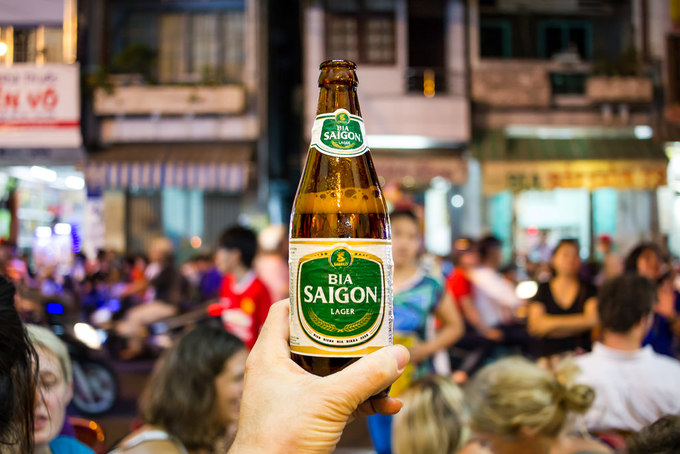
    The government plans to sell its 36 percent stake in the country’s largest brewer, Sabeco, this year. The Saigon Beer Alcohol Beverage Corp (Sabeco) is one of 139 enterprises in a new list in which the government’s stakes will be sold by sovereign fund State Capital Investment Corporation.

    The Ministry of Industry and Trade (MoIT) has been instructed to transfer the government’s stakes in these enterprises to the SCIC by August 31. The government had sold a 53.59 percent stake in Sabeco to ThaiBev for over $5 billion in 2017.

    The news puts paid to speculative claims made by some media outlets in early June that MoIT was seeking to reacquire Sabeco shares from ThaiBev due to “unexpected pandemic effects.”

    At the end of 2019 the maker of Saigon Beer had assets estimated at VND 26.96 trillion ($1.2 billion) and owner’s equity of VND20.07 trillion ($870 million).Sabeco recently scaled down its revenue target for this year by 37 percent to VND23.8 trillion ($1 billion) and post-tax profit target by 39 percent to VND3.2 trillion ($138 million), the lowest in six years.

  • Vietnam says no more drinking scenes in movies

    Vietnam says no more drinking scenes in movies

    Scenes of actors drinking alcohol in films will be restricted under a new decree guiding the alcohol law.

    Cinemas will only show actors drinking if they are playing historical characters or acting in scenes that criticize alcohol addiction, Decree 24, which took effect on Monday to guide several provisions of the Law on Preventing Alcohol’s Harmful Effects, lays down.

    Movies are not allowed to admire or praise individuals and organizations achieving success by producing alcohol or doing any business related to alcohol.

    In June last year lawmakers approved time restrictions for advertising liquor on television and radio. According to the decree, advertisements for alcoholic drinks will be banned from 6 p.m. to 9 p.m. and immediately before and after and during children’s programs.

    Decree 24 relaxes it slightly and permits beverages with an alcohol content of under 5.5 percent and made by sponsors of regional, continental or global sporting events held in Vietnam to be advertised between 6 p.m. to 9 p.m.

    Producers of drinks with less than 15 percent alcohol must add warnings saying drinking alcohol can lead to traffic accidents, affect the fetus and those under 18 are not allowed to drink under the law.

    If an advertisement appears on TV or radio, the warning must be read out aloud at a speed equivalent to that of other content.

    If it is advertised on a website, social media or print publications, the warning must make up at least 10 percent of the advertisement’s content and be in a color that makes it easy to read.

    A ban on advertising hard liquor has been in place for long.

    The new drunk driving law, which came into effect on January 1, doubled existing fines and revokes driving licenses for up to two years.

    There are fines for the first time for cyclists and electric bicycle riders, and anyone caught driving under the influence will have to pay VND400,000-600,000 ($17-26).

    Motorcyclists and car drivers could be fined VND6-8 million and VND30-40 million (VND1,730) and lose their licenses for 22-24 months.

    The country consumed some 4.6 billion liters of beer in 2019 after rising 10 percent from 2018, but growth could fall to 6-7 percent this year due to the tough new penalties, top brokerage SSI Securities Corporation (SSI) said last month.

  • Chivas Celebrates Blended is Better with Manchester United Team at ICC 2019 Tournament

    Chivas Celebrates Blended is Better with Manchester United Team at ICC 2019 Tournament

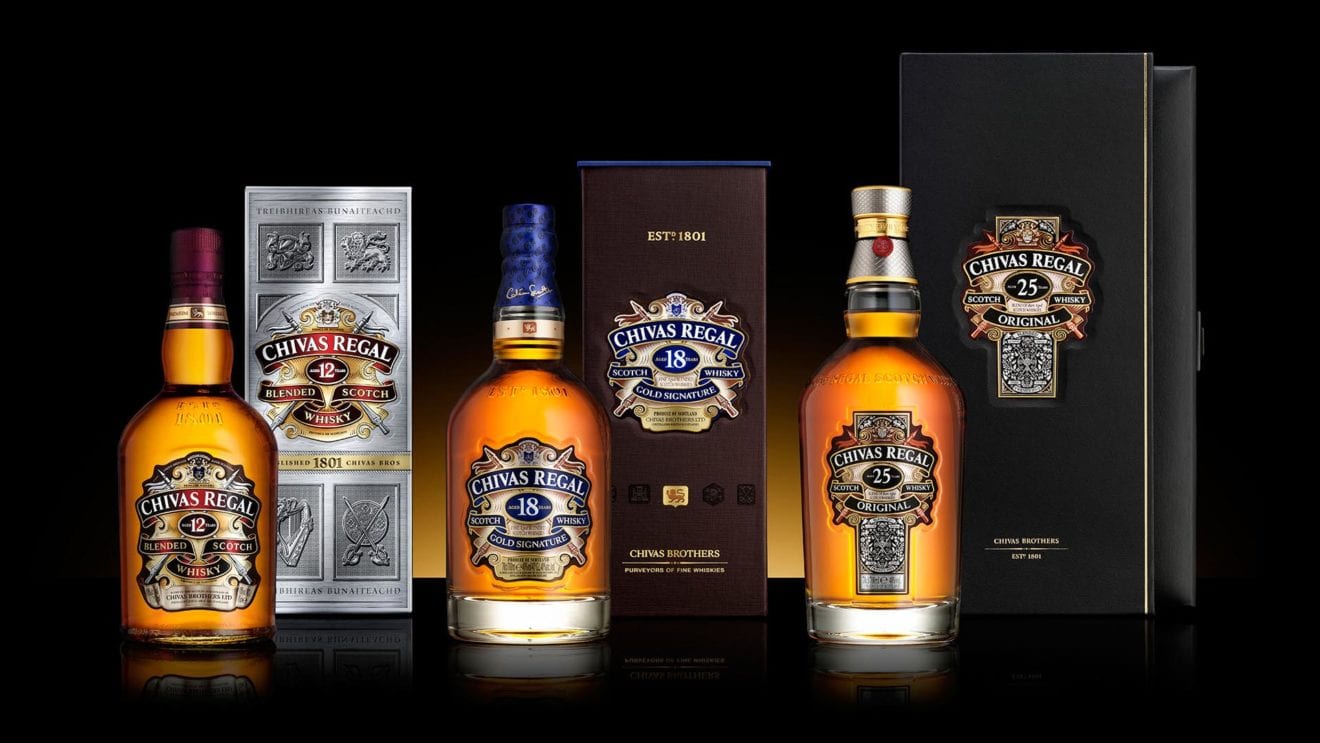
    Original luxury blended Scotch whisky, Chivas will welcome one of the world’s biggest football clubs, Manchester United to Singapore, when the team arrives to participate in the International Champions Cup (ICC) from 20th-21st 2019. Fans of premium blended whisky and Manchester United will be hosted a special Chivas Party at one of the Singapore’s premium music clubs, where guests will be treated to a special meet-and-greet with selected first team players as well as Manchester United Ambassador, Denis Irwin.

    “We are excited to present to our Asian football fans the football extravagance from Chivas with the ICC 2019 Tournament showcasing one of the world’s greatest football teams, Manchester United. The collaboration between Chivas and Manchester United reinforces the collective belief that great things can be achieved when we come together – blended is better – in life, football and Scotch. From balancing the perfect blend of malt and grain whiskies that go into our Scotch, to using the perfect combination of players’ on the pitch.. We look forward to using our spirit to help showcase the spirit of the Club and its fans in the Asian region.” Janelle Tong, Marketing Director for Pernod Ricard Singapore commented.

    To demonstrate that blended is better, Chivas hopes to encourage fans to celebrate the blend that makes them unique. Chivas football supporters from around the region will be treated to the best seats to watch the ICC 2019 football match between Manchester United team and Inter Milan. The match will be held on 20 July 2019, 7.30pm at the Singapore National Stadium.

    Chivas guests can also anticipate an exciting exclusive after-match party, lined-up at Singapore’ renowned music club. Party-goers can expect a unique experience featuring a dazzling 3D light showcase, a delectable treat of unique Chivas cocktails, and dance to non-stop to the beats of a renowned DJ to celebrate the special occasion.

    Closing the exciting weekend on a high, die-hard fans are invited to spend the Sunday afternoon off-pitch, with three of the club’s first team players, at a post-game Meet-and-Greet session hosted by Chivas. The exclusive by-invite only session will be on 21 July 2019. Attendees can also look forward to exclusive limited edition autographed mementos to commemorate this special occasion.

    As a lead-up to the exciting ICC 2019 weekend, Chivas will bring to life the message that ‘Blended is better’ through a campaign activated across all local bars and partners from now till 12 July 2019. Chivas will be giving away five (5) pairs of VIP tickets for Manchester United fans to have a chance to watch their favourite players on pitch, off-pitch as well as a chance to enjoy the Chivas party.  Chivas branding will also be displayed on digital perimeter boards at Singapore Stadium as well as throughout the stadium during the showcase game on Saturday.

  • Changi Airport liquor & tobacco concession Open

    Changi Airport liquor & tobacco concession Open

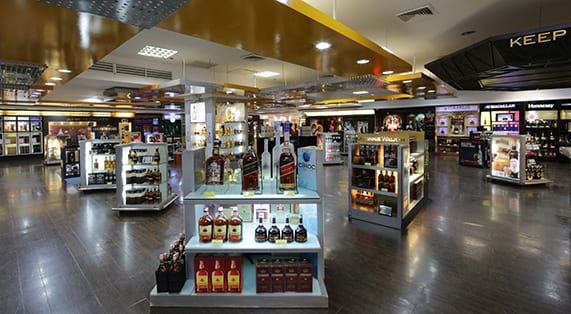
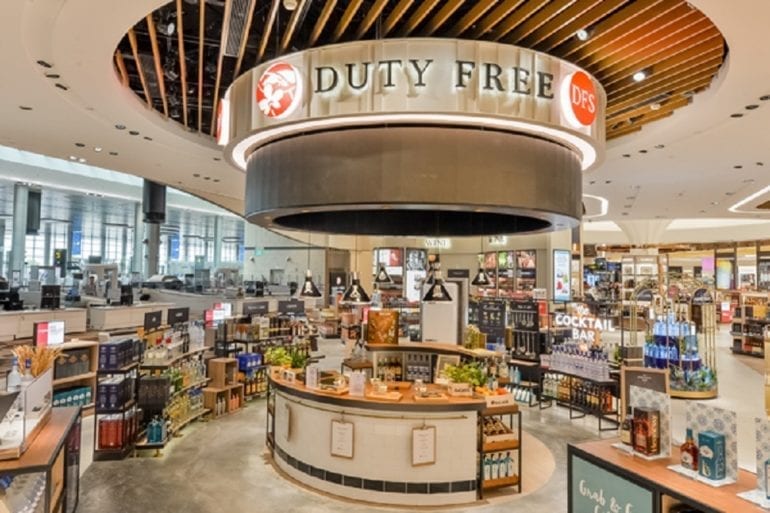
    The Changi Airport liquor & tobacco concession is up for grabs after DFS Venture opted not to proceed with a two-year extension.

    Changi Airport Group (CAG) will launch a tender for the concession on June 4, covering 18 stores, spanning more than 8000sqm of retail space across the airport’s four terminals. It will run for six years from June 9 next year.

    CAG is seeking a strong partner with retail concepts to augment the passenger experience for the liquor and tobacco concession.

    From store design and product range, to in-store activations and e-commerce strategy, the retailer should put forth a robust and compelling proposal, leveraging new technologies and innovations, to elevate travel retail at Changi, CAG said.

    The Changi Airport liquor & tobacco concession will serve more than 66 million international travellers who pass through Changi Airport annually.

    “We look forward to new retail concepts to take the liquor & tobacco concession to new heights,” said CAG VP for commercial, Lim Peck Hoon.

    “Changi is fully committed to growing with our concession partners through impactful innovation and effective collaboration. There will be a wealth of opportunities for the liquor & tobacco partner to showcase its offerings to Changi’s global audience, delivering revolutionary best-in-class retail experiences, to build and grow its business.”

    Interested retailers will be required to attend a compulsory tender briefing and site visit scheduled on June 25. The deadline for submissions is August 5.

  • Emart24 ups the booze to capture solo drinker market

    Emart24 ups the booze to capture solo drinker market

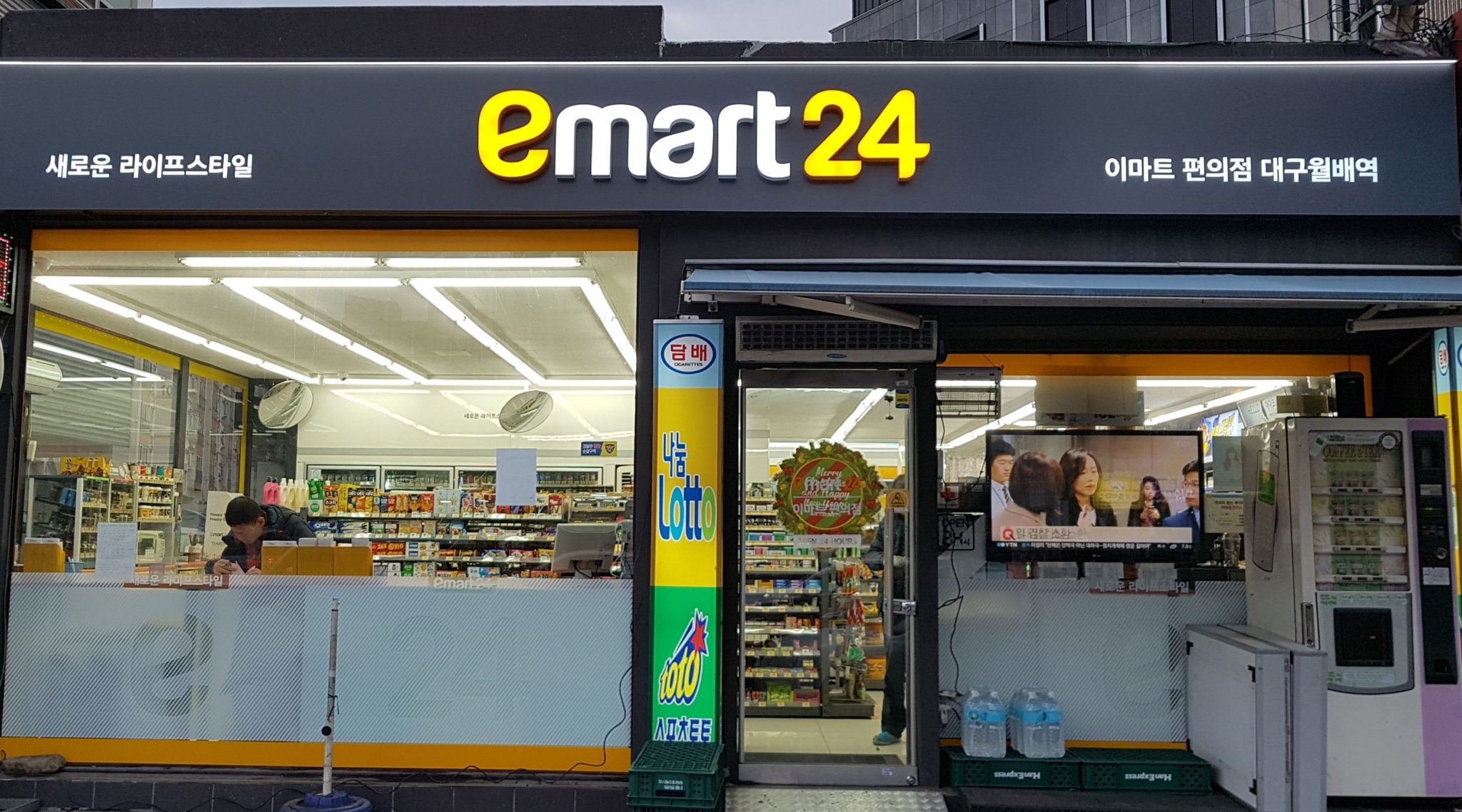
    Convenience store chain Emart24 will expand its alcohol selection tenfold at around 500 branches this year, the brand said Wednesday. The products will be offered using the shop-in-shop model with 120 products, including wine, whiskey and micro-beers, displayed in a dedicated corner. Three to six racks will be added at each outlet to hold the products.

    The company explained the efforts are motivated by the rise of solo drinkers, those who enjoy a few drinks after work as opposed to drinking in larger groups.

    The reduction of the workweek to 52 hours and changing lifestyles, which prioritize work-life balance, have further driven up the number of solo drinkers. Before the announcement, the convenience store tested the shop-in-shop model at 19 branches for two months from November. Sales of wine, craft beer and whiskey increased 20-fold. Overall sales at these 19 branches doubled.

    Emart24 said it plans to expand the shop-in-shop concept to products other than alcohol in the future. It is considering fresh food and imported snacks.

  • Heineken Malaysia 2018 net profit up 4.6%

    Heineken Malaysia 2018 net profit up 4.6%

    Heineken Malaysia Bhd, which posted a 4.6% jump in its net profit for the financial year ended Dec 31, 2018 (FY18), remains cautious about its outlook given the challenging environment due to intense competition, implementation of the sales & service tax (SST), and the continued presence of contraband beer in the market. In line with rising global commodity prices, the group also expects an increase in cost of operations including raw materials and packaging.

    Finance director Szilard Voros said how the group will perform in FY19 also depend on the market, adding that it will benefit if consumers remain optimistic and if efforts to curb illicit trade are stepped up.

    “But we remain cautious because SST was just introduced in September so that also comes with a lag… we also need to see how things settle down after Chinese New Year and see what is the normalised performance and if there’s a growth continuation,” he told reporters at a media and analyst briefing today after announcing the group’s financial results.

    Managing director Roland Bala (pix) said the external environment remains challenging. Amidst slowing global growth rates, currency volatility and uncertainty in the commodity markets, he said the group will need to adopt a cautious approach in cost management.

    “Moving forward, we will continue to invest in our core brands and leverage on our portfolio. As consumer taste profile changes, we will make bets on brands that we believe will have scale,” he added.

    Heineken’s net profit for the fourth quarter ended Dec 31, 2018 grew 6.8% to RM100 million compared with RM93.64 million in the same quarter last year due to higher revenue as well as efficient and effective management of commercial spend and overheads.

    Group revenue grew 12.3% to RM662.28 million as compared to RM589.96 million in the same quarter in 2017 mainly due to increase in sales volume driven by the flagship Tiger brand.

    For the full year period, net profit grew 4.6% to RM282.2 million from RM270.06 million a year ago, while revenue rose 8.3% to RM2.03 billion from RM1.87 billion.

    It has proposed a final dividend of 54 sen per share for the quarter under review, bringing the full-year dividend payout to 94 sen.

  • Smaller duty-free alcohol allowance and GST relief for overseas shopping

    Smaller duty-free alcohol allowance and GST relief for overseas shopping

    From midnight tonight, Singapore duty-free allowances will be cut by about a third for returning travellers. Other allowances have also been reduced. Travellers staying outside of Singapore for fewer than 48 hours will be liable for 7 per cent GST on items bought overseas worth more than SG$100 – down from the previous threshold of $150. For travellers outside the country for a period longer than 48 hours, the $600 threshold will similarly be lowered, to $500.

    The changes were announced yesterday by Finance Minister Heng Swee Keat as part of the nation’s new Budget. From April 1, the alcohol concession will also be lowered from three litres of wine or beer to two litres. The spirits cap remains at one litre.

    According to the Inland Revenue Authority of Singapore and Singapore Customs, the cuts to Singapore duty-free allowances are designed to support the city state’s existing tax intake in the face of increasing international travel.

    Returning travellers are required to declare taxable items on arrival, and have been advised to keep purchase receipts to assist in calculating any taxes due. Advance declaration and payment is available via the Customs @ SG mobile app or web portal. Failure to declare or a false declaration can incur a fine of $10,000 as well as up to a year in prison.

  • The Macallan releases the first annual limited edition

    The Macallan releases the first annual limited edition

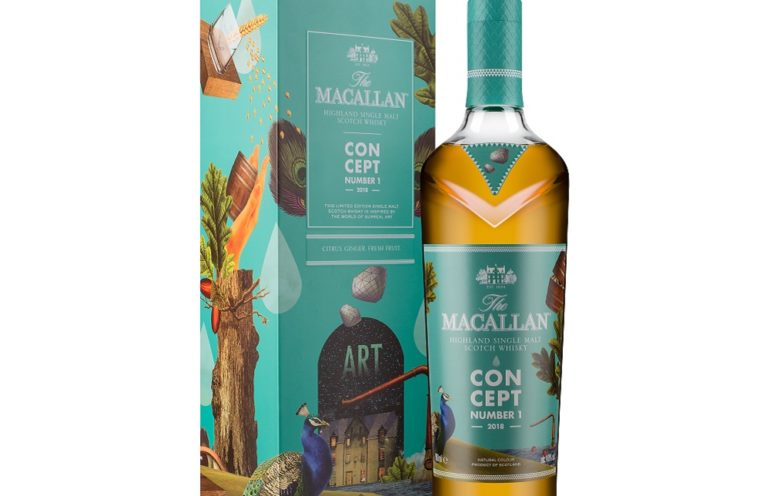
    The first in an annual, limited edition series, The Macallan Concept Number 1 was inspired by the whimsical world of surreal art, and celebrates world’s visionaries by daring to disrupt the whiskey making process. Following its Asia debut on 1st January 2019 in Singapore’s Changi International Airport, The Macallan Concept Number 1 will be made available in Hong Kong Hong Kong International Airport starting from 1st February 2019. Bringing together imagination and idealism to create a fantastical, sensorial world of whisky where anything and everything is possible, the label and packaging of The Macallan Concept Number 1 features a surrealistic interpretation of The Macallan’s Six Pillars -– the spiritual home, curiously small stills, the finest cut, exceptional oak casks, natural colour and peerless spirit.

    Created from whiskies matured first in sherry-seasoned oak casks and subsequently for an equal amount of time in ex-bourbon casks, The Macallan Concept Number 1 is a whisky crafted to explore maturation more imaginatively. Displaying characteristic notes of citrus fruits and ginger, it is a spirit that combines an unwavering passion for whisky with an unfailing mastery driven by bold and brave choices.

    Commenting on the uniqueness of this series, Macallan Master Distiller, Nick Savage says, “The Macallan Concept Number 1 is whisky reimagined, offering a compelling new sensory experience that rewards with every sip. The innovative process developed to produce this remarkable single malt pays tribute to the visionaries of the surreal art world and reflects our continuous search for excellence.”

    Adding further, Igor Boyadjian, Edrington Global Travel Retail Director, emphasises, “We’re proud to unveil the first release in The Macallan’s latest innovative travel retail-exclusive product range. By “breaking the norm”, The Macallan Concept Number 1 reinforces our commitment to offering exciting products to travellers and we’re confident this fresh innovation will prove attractive to travellers and collectors alike.”

    The Macallan Concept Number 1 is now available exclusively in Hong Kong, via duty free stores in Hong Kong International Airport, and in selected airports throughout Asia Pacific from February 2019 onwards.

  • Habeco Vietnam reports another year of falling profits

    Habeco Vietnam reports another year of falling profits

    Habeco’s profits fell by 23 percent last year to VND667 billion ($28.71 million), the fourth straight year of decline. Hanoi Beer Alcohol and Beverage Corp, as it is formally known, one of Vietnam’s biggest brewers, also reported a 5 percent fall in revenues to VND9.4 trillion ($404.67 million). There was a sharp increase in operating expenses, especially cost of sales.

    After falling for four years profits are now less than half of the 2014 figure of VND1.44 trillion ($62.12 million).

    Habeco’s decline is contrary to the general growth trend as Vietnam remains one of Asia’s biggest beer consumers. According to Euromonitor statistics, while global beer consumption volume remains unchanged last year, the figure for Vietnam soared.

    According to data from the Vietnamese Beer, Alcohol and Beverages Association, on average a Vietnamese person drank nearly 45 liters of beer in 2017, an almost 50 percent jump in two years.

    Many securities firms believe that though Habeco still leads the beer market in the north, it faces challenges like changing consumer tastes and competitive pressure from foreign brands. It has only been able to maintain market share in the low-priced segment, ceding ground in the premium segment to brands such as Heineken, Saigon Beer (now a subsidiary of ThaiBev) and other foreign brands.

    Ban Viet Securities Company’s latest data shows Habeco’s share in the beer market has fallen continuously in the last six years, from nearly 20 percent in 2010 to 18 percent by the end of 2017.

    The reason for this is that the low-cost segment, its strength, is shrinking, said the securities company. The cheap beer segment now makes up of only 8 percent of the market compared to 14 percent seven years ago.

    Vietnam is famous for its beer drinking culture, and it is widely believed that business deals go more smoothly over a few drinks.

    The country is the biggest beer market in Southeast Asia, consuming nearly four billion liters in 2017. It spends on average $3.4 billion on alcohol each year, or $300 per capita, while spending on health averages $113 per person, according to the Ministry of Health.

  • Vietnam’s largest brewery, foreign-owned, refuses to humor taxman

    Vietnam’s largest brewery, foreign-owned, refuses to humor taxman

    While Sabeco is still at loggerheads with the taxman over alleged back taxes of $135.73 million, it has not provisioned for it. Its 2018 accounts make no mention of the amount in dispute though the HCMC Tax Department has claimed it owes that in taxes and fines and even tried to seize the money from the company’s bank account. Vietnam’s largest brewer, Saigon Beer Alcohol Beverage Corporation (Sabeco), claims it has accurately declared and paid taxes based on guidance from the Ministry of Finance and tax authorities.

    A month ago the department said it would seize VND3.1 trillion ($135.73 million) from the brewery’s bank account for overdue special consumption tax payable between 2007 and 2015 and penalties for administrative violations. But there was reportedly no money in the account.

    Le Duy Minh, deputy head of the tax department, said the account has been temporarily blocked.

    “We have asked Sabeco to provide details of other bank accounts, but it has not fulfilled that request.”

    Sabeco general director Neo Gim Siong Bennett said in a statement on December 30 that Sabeco had not violated any tax regulations.

    Thus, the enforcement action by the tax department was a violation of Vietnamese laws since it was taken “without a valid administrative decision” and “contradicts the written guidance issued by the finance ministry, General Department of Taxation and the city department itself.”

    Speaking about the dispute, Prime Minister Nguyen Xuan Phuc earlier this month asked the tax authorities to desist from action and wait for related ministries and other agencies to come to a decision.

    Mai Tien Dung, Chairman of the Prime Minister’s Office said that government agencies are scrutinizing the case as it involves “foreign elements.”

    Sabeco’s revenues last year rose 5 percent to more than VND36 trillion ($1.56 billion) but higher expenses and falling profits at its joint venture and affiliate companies caused its profit after tax to fall by 11 percent to VND4.4 trillion ($191 million).

    In December 2017 Thai Beverage acquired a 53.59 percent stake in Sabeco from the Ministry of Industry and Trade for $4.84 billion through a local entity, Viet Beverage (VietBev).

    Sabeco now has a 42.8 percent of the beer market, according to the Ho Chi Minh City Securities Corporation. It produced nearly 1.85 billion liters of beer last year.

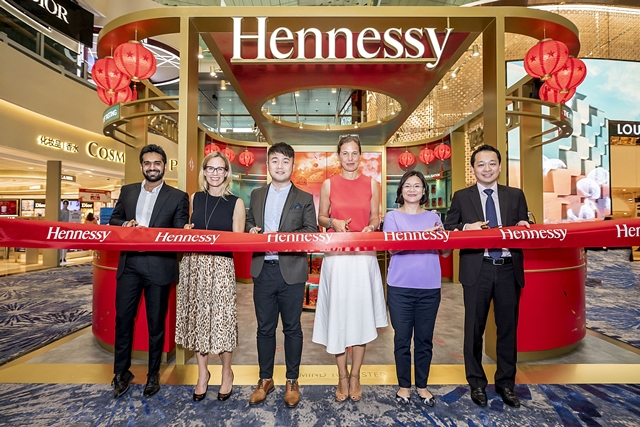
  • Hennessy celebrates Chinese New Year by opening pop up store at Changi

    Hennessy celebrates Chinese New Year by opening pop up store at Changi

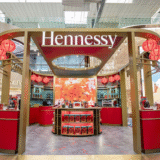
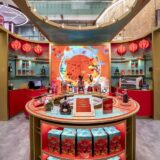
    Moet Hennessy is partnering with DFS Group in Hennessy pop-up store a Changi Airport celebrate Chinese New Year. The store, a Travel Retail Concept Exclusive, features interactive consumer experiences and will remain open until February 19. Located at the Terminal 3 Departure Hall, the pop-up experience, the only one of its kind globally. It invites travellers to “engage in a joyous reunion through experiences such as interactive digital games, Hennessy’s bottle engraving service, limited edition offers, as well as exclusive gifts with purchase,” the companies said in a statement.

    Travellers are also welcomed to test the Firecracker, a unique Hennessy cocktail, which will be available exclusively at the pop up.

    Hennessy collaborated with contemporary artist Guang-Yu Zhang to create an art piece centrestage in the pop up. The design, A Joyous Reunion, celebrates the love for nature, mastery of savoir-faire and spirit of conquest.

    Gallery of the pop up stores (6 images) :

    “Hennessy shares the dream of Harmony, from vine to grape to distillation to glass, from nature to people, Hennessy takes the best of nature and offers it to the Chinese people to celebrate this special moment,” said Guang-Yu Zhang.

    The also features on the limited-edition packaging that has been created for Hennessy XO, Hennessy VSOP and James Hennessy products.

    After purchase, customers at Changi are invited to use Hennessy’s first-ever engraving station at the pop-up store to add a personalised messages to their bottles.

    “At Hennessy, we are honoured to have collaborated with a world-class artist to deliver these beautiful, one-of-a-kind Chinese New Year limited-editions for our travellers,” said Moet Hennessy MD travel retail Asia Pacific, Vanessa Widmann.

    A rising star in the international art world, Guang-Yu Zhang grew up in Shanghai and graduated from Central Saint Martins College in London in 2012. In 2014, he was selected for the International Emerging Artists Exhibition at the Saatchi Gallery in London; that year, he also exhibited his work at the Tate Britain Museum in London. He is known for his unique fusion of Eastern and Western cultures and traditional and contemporary techniques.

  • Vietnam’s largest brewer is now a foreign owned business

    Vietnam’s largest brewer is now a foreign owned business

    After a $4.78 million debt restructuring, Vietnam’s largest brewer Sabeco is now owned by a Thai company. In December 2017, Thai Beverage (ThaiBev) acquired a 53.59 percent stake in Sabeco from Vietnam’s Ministry of Industry and Trade for $4.78 billion through a local entity, Viet Beverage (VietBev). VietBev, which had 100-percent Vietnamese ownership at the time with VND682 billion ($29.33 million) in charter capital, was loaned VND111.21 trillion ($4.78 billion) by ThaiBev to complete the transaction.

    VietBev was used as a financial vehicle to get around a 49 percent foreign ownership cap in place at the time.

    The $4.78 billion loan was then converted to shares under a debt-to-equity conversion agreement between VietBev and ThaiBev. As a result, VietBev now has a chartered capital of VND111.89 trillion ($4.81 billion), increasing ThaiBev’s ownership in VietBev to 99.39 percent.

    The adjustment in capital was approved by local authorities, and made possible after authorities raised Sabeco’s foreign ownership cap to 100 percent at the end of 2018. The conversion was completed a few days ago.

    ThaiBev has since announced it is committed to ensuring shareholders’ benefits on share prices and annual dividends after this restructure.

    With a charter capital of VND111.89 trillion, VietBev is among a few businesses in the country with chartered capital of hundreds of trillions of dongs, along with state-run oil & gas giant PVN (VND285 trillion or about $12.26 billion); Vietnam’s sole power distributor and biggest producer EVN (VND163.8 trillion or $7.04 billion); and telecoms provider Viettel (VND121.52 trillion or $5.23 billion).

    Recently, Sabeco was caught up in legal trouble with tax authorities, who blocked its bank accounts in order to withdraw VND3.1 trillion ($135.73 million) to collect overdue special sales tax from 2007 to 2015 and penalties for administrative violations. However, this enforcement action proved futile as accounts handed over to the tax authorities were empty.

    After the recent share conversion, the Prime Minister has directed the tax agencies to suspend their enforcement, in order to carefully consider regulations as it involves “foreign factors.”

  • Knows more : Rahul Singh, Founder & CEO, The Beer Café India

    Knows more : Rahul Singh, Founder & CEO, The Beer Café India

    With multiple awards like; Images Coca Cola Golden Spoon Award, India Restaurant Congress Award, Times Nightlife Award and ET Now Business and Service Excellence Award, the consumer and industry has recognized this startup as a blockbuster. Singh is the recipient of the TiECON 2010 Entrepreneurial Award for Excellence and holds the position of the Honorary Secretary for the NRAI (National Restaurant Association of India). He was also bestowed with the Prestigious Entrepreneur India 2015 Award in F&B services.

    Before he started The Beer Café, Singh was CEO, Greg Norman Collection India from 2007-09. In that role he spearheaded the brand’s operations involving sales, marketing and manufacturing.

    Prior to 2007, he was the Executive Director at Reebok India for 8 years and was a part of their leadership team, also setup a robust sourcing base for exports from South Asia.

    As a textile engineer, he brings in an analytical approach to each line of enterprise that he gets into. He has undergone training in draught beer technology at Micromatic Institute in Florida, USA.