Retail News CRM

Tag: blockchain

  • Blockchain becoming the rage at US business schools

    Blockchain becoming the rage at US business schools

    U.S. business schools are beefing up training in the software that underlies digital currency bitcoin, a technology expected to be a game changer in many industries.

    The move makes sense as more students seek careers in financial technology, or “fintech,” which has captivated leading Wall Street banks and been called “the most important technology since the internet.”

    In January, the Haas School of Business at the University of California at Berkeley will offer its first ever course in blockchain software.

    The Haas school, which is near San Francisco and Silicon Valley, will handpick 60 students from the departments of business, engineering and law and split them into groups of six to explore possible applications of the technology.

    “When people think about blockchain they think about cryptocurrencies,” said Haas school lecturer Greg LaBlanc, who sees the technology as potentially disrupting many sectors.

    “We believe it will have the biggest impact on contracting, logistics and supply chains, healthcare, public administration, assets clearing, property, transactions,” he said.

    “Pretty much every function of businesses are going to be affected by this.”

    ‘Very transformational’

    Blockchain runs by recording transactions as “blocks” that are updated in real time on a digitized ledger that can be read from anywhere and does not have a central recordkeeper.

    It was originally developed as the accounting method for bitcoin. But while that cryptocurrency remains controversial with some players in finance, bankers increasingly see exposure blockchain as a must.

    Blockchain is “something we are very optimistic about,” JPMorgan Chase chief financial officer Marianne Lake said on a conference call last month.

    Newer technologies could be “very transformational for the financial services industry and we are forward-leaning and optimistic about that,” Lake added.

    The technology, which lets users trace items back through their supply chains, also could offer a means to limit tainted food problems, or to guard against “blood diamonds” that come from a war-ravaged area.

    In finance, blockchain could be used to permit parties to check the solvency of counterparties, significantly reducing costs.

    Training students for that function and other evolving roles in finance is altering curricula at universities and shifting how students structure their programs.

    Students who wish to work in trading must learn how to code, while bankers need to understand algorithms and big data to be able to attract new clients and devise strategies for fast-changing markets.

    Traditional skills still required 

    “Anyone who is coming into the financial industry is expected to have some skills in technology,” said Stephen Daffron, a founder of Motive Partners, a private equity firm specializing in fintech investment.

    “If they don’t understand how to evaluate a company that tries to employs blockchain, then they won’t probably be a good fit for us,” said Daffron, who lectures at the Yale School of Management.

    Barbara Hewitt, senior associate director in the career services office at the University of Pennsylvania, home to the Wharton School, also noted the rising interest in new skills and technology.

    “I increasingly see students opting to explore technical minors, such as in computer science, to be well prepared for the growing use of technology in many fields,” she said.

    But if exposure to fintech has become more important to hireability, traditional skills such as accounting, mathematics and understanding of economics remain the top criteria for recruiters, the schools say.

    Companies “want people with strong technical skills, people with management skills,” said Abigail Kies, assistant dean of career development at Yale.

    At Yale, about 20 percent of 2016 graduates found jobs in finance, according to figures supplied by the university.

    Fritz Foley, a finance professor at Harvard Business School said jobs in this sector still “require strong analytical abilities, an understanding of institutional details, and good judgment.”

    “These requirements have not changed as innovations have occurred.”
  • Blockchain technology impact stretches way beyond Bitcoin

    Blockchain technology impact stretches way beyond Bitcoin

    Blockchain technology – the foundation beneath Bitcoin – has “immense potential to disrupt and transform the world of money, business, and society” in the years ahead.

    The technology tops a new list of IT projections from Dimension Data, which also cites artificial intelligence, machine learning, robotics, and virtual and augmented reality as having the greatest potential to deliver disruptive outcomes and reshape digital business next year.

    “Companies that have not started the digital investment cycle are at high risk of being disrupted,” says Dimension Data Group CTO, Ettienne Reinecke.

    Blockchain, he says, has gone from strength to strength.

    “Last year, when we looked at the top digital business trends for 2017, we predicted that centralised transaction models would come under attack. We were spot on. In the financial services sector, we’ve seen the US and European capital markets moving onto Blockchain platforms, and similar activity in markets such as Japan. Considering how conservative and compliance-focused this sector is, that’s quite remarkable.

    “It’s ironic that the cybercriminals who perpetrated the recent WannaCry ransomware attack could hold a federal government to ransom and demand to be paid in Bitcoin. Bitcoin might be a crypto-currency, but it’s based on Blockchain, and if cybercriminals are confident that Bitcoin provides a safe mechanism for the payment of ransoms, it indicates just how secure the distributed ledger approach is. I believe that Blockchain has the potential to totally re-engineer cybersecurity, but the industry has yet to come to terms with it,” says Reinecke.

    He predicts Blockchain will also deliver on the promise of Internet of Things (IoT) in the year ahead.  “In the world of IoT you’re generating millions of small transactions that are being collected from a distributed set of sensors. It’s not feasible to operate these systems using a centralised transactional model: it’s too slow, expensive, and exclusive. To extract the true value from IoT technology you have to be able to operate in real time. Once a sensor alert is received from a control system you must react to it, meter it, and bill for it instantly – all of which negates the viability of a centralised transactional authority. The cost of the transaction has to be near-zero or free, and the cost elements of a centralised model simply don’t support the potential business model in IoT,” he explains.

    In 2018, some interesting applications of Blockchain and IoT in the area of cybersecurity will emerge. Significant attacks have recently been launched from low-cost IoT endpoints, and there’s very little incentive for manufacturers of these devices to incur the cost of a security stack, which leaves them extremely vulnerable. Blockchain can play a fundamental role in securing these environments.

    Wireless feeds IoT

    Another exciting trend to look forward to is the boom in new wireless technologies that will enable IoT and bring us a step closer to the dream of pervasive connectivity. Some of these advancements will include 5G and Gbps Wi-Fi, new controls, virtual beacon technology, and low power, long distance radio frequency.

    There’s also a “digital fight-back” coming on the part of certain incumbent players. Established businesses that have proactively transformed into digital businesses, modernised their architectures, and embedded high levels of automation into their operations have a window of opportunity to claw back market share in the year ahead. That’s because there’s been an increase in the number of cloud-born start-ups themselves starting to be disrupted in certain industries.

    “I predict that a number of digitally transformed incumbents will successfully start reclaiming their markets because they have more credibility, longer histories, an established customer base, and assets that can stand the test of time,” says Reinecke.

    Andy Cocks, CTO for Dimension Data Asia Pacific, concurs with Reinecke and adds: “Blockchain has immense potential to disrupt and transform the world of money, business, and society. But, it is the companies that have not started the digital investment cycle which are at the highest risk of being disrupted.”

  • Blockchain: Revolution in supply chain?

    Blockchain: Revolution in supply chain?

    Supply chains revolutionized how our society runs, now supply chains are being revolutionized. The name of the NEW game: blockchain! Supply chains can lack transparency and traceability. Two things at which blockchain is great at.

    Systems work based on transactions. They are built on a distributed blockchain ledger can record the transfer of goods as transactions. This transparency can ensure the cost of goods will more accurately reflect the actual cost of manufacturing them. Issues such as use of forced labor and illegal sourcing of materials can potentially disappear. But despite the hype and its potential, it could take a decade or more before the technology achieves its full potential.

    We have a few interesting examples. Provenance, a UK-based startup, works with clients so they can use its blockchain-based technology to “share your product’s journey and your business impact on environment and society.” Mining giant BHP Billiton is using the technology to track mineral analysis done by outside vendors. The startup Everledger has uploaded unique identifying data on a million individual diamonds to a blockchain ledger system to build quality assurances and help jewelers comply with regulations barring “blood diamond” products.

    Walmart is working with IBM and Tsinghua University, in Beijing. They want to follow the movement of pork in China with a blockchain.

    Long term what we should have in mind:

    Potential to disrupt many industries
    There are parallels between this global-scale distributed technology and previous technology-driven transformative waves, such as the web and the internet. Early technology adoption of blockchain will progress over the next three to seven years, but mainstream adoption across the supply chain and at scale is likely 10 or more years away. Similar to RFID in its early days, business processes and standards must be resolved before blockchain can reach its potential.

    It is not a replacement for database tech
    Many believe, but they are wrong, that blockchain is a replacement for traditional database technologies — it lacks the ability to create, read, update and delete information. For the immediate future, traditional database management tools and platforms will continue to prevail in supply chain, where data is created, maintained and consumed largely internally. Database capabilities, however, will increasingly need to scale and integrate across a broader number of supply chain network partners and ultimately customers. There is where blockchain is best.

    You can’t just buy a solution!
    There is no blockchain solutions to buy for supply chain use at the moment. There continues to be a lot of hype, with few even partially deployed and very limited prototypes, for which firmer results or tangible uses cases are still be reported. Only organizations that are especially risk-tolerant and early adopters of technologies should consider supply chain management blockchain initiatives over the next two to five years.

    Stormy waters ahead
    There are more challenges than we can mention here. Blockchain technologies and associated supply chain best practices bring adoption challenges, including a lack of standards, robust platforms, scalable distributed consensus systems and interoperability mechanisms.Scalability across supply chains will need to be carefully planned.

    Laws and regulations — which vary from country to country — also pose a challenge to global scaling of blockchain. Before governments can be convinced to support this effort, industry must agree on best practices and standards of technology.

    Adoption too late or too early as part of an extended supply chain and supply chain maturity progression may do damage to the entire organisation.

    Also there’s the need to overcome embedded corporate thinking. Business leaders and organizations need to open up to the sharing of information with mainly unseen network partners.

    In conclusion
    Blockchain is presently at the peak of Gartner’s Hype Cycle, which means the next stop is the Trough of Disillusionment. In supply chain circles the technology is suddenly drawing serious interest, in part because of IBM’s recent push to go public with pilots including one with Maersk and another with Walmart.

    As RFID promised to do, blockchain could one day provide certainty on the exact source of every ingredient in every jar, in every case, on every shelf and at all times. Was your palm oil sustainably sourced? Are the cherries in your ice cream organic? Are the avocados in your salad imported from Mexico? Also reminiscent of RFID, however, is a decent amount of uncertainty about the timing of the business case.

    Envisioning a digitally enabled supply chain strategy is a must-do activity for everyone. Fitting blockchain into that strategy now means listening more than talking. Listen to your colleagues in corporate IT who are likely ahead of you since they’ve often faced this topic already with financial transactions. Also, listen also to vendors like IBM who are invested in establishing a market for this technology and can afford to find and foster pioneering users like Walmart and Maersk.

    Blockchain may still be down the road, but its potential demands your attention now.

  • Everex debuts mobile blockchain microcredit platform

    Everex debuts mobile blockchain microcredit platform

    Everex, a developer of applications based on the Ethereum blockchain, is expanding its operations towards global, blockchain-enabled mobile microcredit and fiat remittance services.

    In a blog post announcing the new service, the company stated that it seeks to connect two billion un- and underbanked individuals to the global financial system, by allowing them to access affordable instant micro-credit and global fiat transaction services from mobile devices.

    Everex mobile fiat transactions are based on the company’s already existing Cryptocash service and its mobile Ethereum wallet. Cryptocash is an Ethereum ERC20 token family, pegged to fiat currencies and tradable on the Everex Wallet, as well as on third-party applications and exchanges.

    With the new product launch, Cryptocash will be redeemable against its fiat counterpart at ATMs, currency exchangers, and mobile service providers worldwide, allowing users to instantaneously transfer fiat money anywhere at extremely low costs.

    The Everex remittance system was already tested last year, allowing hundreds of migrant workers to transfer an aggregate amount of 850,000 baht ($25,000) from Myanmar back home to Thailand.

    The new service will also allow users to request micro-loans in any currency from their mobile phones. The credit scores, necessary to assess interest rates, loan periods and risk, will be automatically generated on the spot, based on user behavior, social data, and spending patterns, which Everex collects through the company’s mobile wallet application.

    “Generating credit scores on the basis of mobile data will allow us to serve the microfinancing needs of many un- and underbanked individuals which, due to the often deficient documentation and track records in the developing world, had until now no access to affordable credit, ” Everex CEO and co-founder Alexi Lane said.

    The seed capital to launch Everex’s micro-lending operation will be raised in an Initial Coin Offering (ICO) this summer. The company will use profits, not directly reinvested in growth, to buy its tokens (EVX) back from the market – insuring that the company’s success is shared with token holders.

  • OCBC Trials Blockchain for Interbank Payments

    OCBC Trials Blockchain for Interbank Payments

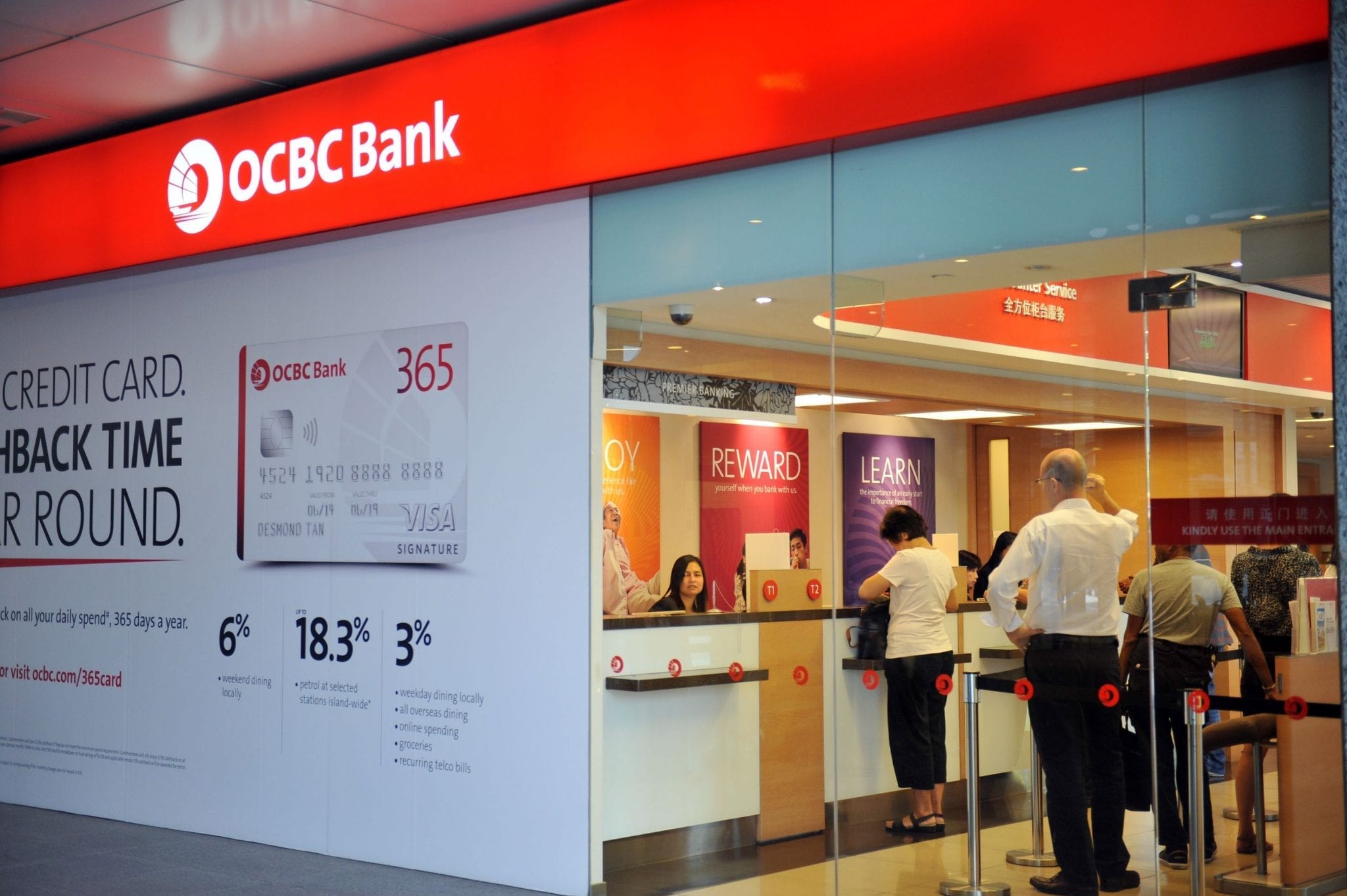
    One of the five largest banks in Singapore has tested a blockchain-based payment service, with an eye to develop commercial products around the tech.

    OCBC Bank used the tech to send funds between its operations in Singapore and Malaysia, as well as transmit money to the Bank of Singapore, a private banking business it owns. The bank said it worked with BCS Information Services, a local payments firm, to develop the prototype.

    The test is the latest for Asia’s banking sector, the members of which have spent much of the past two years investigating use cases, investing in startups and pursuing commercial applications.

    Praveen Raina, OCBC senior vice president, was quoted as saying:

    “We hope this will be a catalyst for more banks to adopt the blockchain technology so that, together, we can achieve efficiency and cost effectiveness while delivering more high-value financial services to our consumers.”

    Though the bank announced its move on its official group website, the details of that announcement appear to have been removed at press time.

    The move comes as the Monetary Authority of Singapore (MAS), the city-state’s central bank, has moved to create a pro-fintech environment within the domestic finance sector. Earlier this month, MAS has forged relationships with regional interests on the tech, coming more than a year after the institution began developing and investing in projects of its own.

  • Thai Kasikornbank, IBM join forces on blockchain network

    Thai Kasikornbank, IBM join forces on blockchain network

    Thailand’s Kasikornbank Pcl has joined with the Thai unit of International Business Machines Corp to develop blockchain services in a bid to save costs and speed up transaction process, the companies said on Thursday.

    Kasikornbank will be the first Thai bank to apply the blockchain technology and aims to start the services in the first half of 2017, Somkid Jiranuntarat, vice chairman of Kasikornbank’s technology group, told reporters.

    Kasikornbank is also in talks with other Thai banks to share the blockchain network, he said.

    Blockchain is a web-based transaction-processing and settlement system whose efficiency banks say could slash costs. It creates a “golden record” of any given set of data that is automatically replicated for all parties in a secure network, eliminating any need for third-party verification.

    Financial services companies around the world have been focusing on developing blockchain technology, with advocates saying it has the potential to save billions of dollars in costs and speed up transaction times.

    The technology will be used to certify original documents by using IBM’s Hyperledger infrastructure. At the initial stage, a system called OriginCert API is used to certify letters of guarantee (LG), which helps simplify and speed up the LG issuance process for customers, according to a joint statement.

    Kasikornbank, Thailand’s fourth-largest lender by assets, is the leader in digital banking with a market share of almost 40 percent. It aimed to spend 5 billion baht ($143 million) to develop information technology, it said in April.

  • Singapore’s Central Bank to Test Blockchain-Backed Digital Currency

    Singapore’s Central Bank to Test Blockchain-Backed Digital Currency

    The Monetary Authority of Singapore (MAS) will soon test how it could issue digital currency using a v-based interbank payment system.

    The planned proof-of-concept will be supported by blockchain consortium R3CEV, as well as eight banks and an unnamed local stock exchange. The Development Bank of Singapore, HSBC, Bank of America, JPMorgan, Credit Suisse and Bank of Tokyo-Mitsubishi are all said to be participating.

    In a speech on Wednesday, MAS managing director Ravi Menon said the test could come to include other central banks. Further, he credited the bank’s desire to remove cost and friction from traditional bank transactions as the motivation for the effort.

    Menon said:

    “Today, banks have to go through correspondent banks to intermediate these payments. It takes time and adds to cost. This project marks the first step in MAS’s exploration of ways to harness the potential of central bank-issued digital currency.”

    The trial would find banks depositing cash as collateral with MAS, which would then issue a digital currency to participants. The digital currency could then be exchanged among participants in the system and later redeemed for cash.

    The forthcoming trial bears similarities to a previously announced effort from UBS, Deutsche Bank, Banco Santander and startup Clearmatics in August.

    Called Utility Settlement Coin, the project envisioned how a central bank could issue digital currency that could then be redeemed for cash held by a central bank.

  • AI, Gamification and Blockchain at DBS Hong Kong Accelerator

    AI, Gamification and Blockchain at DBS Hong Kong Accelerator

    Showcasing innovative fintech solutions that leverage artificial intelligence, blockchain technology, gamification and more, the founders of seven startups from Hong Kong and around the world met with hundreds of potential investors at DBS Accelerator Demo Day, the finale of the second DBS Accelerator programme in Hong Kong.

    Accelerators play a vital role in the Asian startup ecosystem and in supporting innovation. Providing vast resources, mentor support and dedicated work and office space, DBS Accelerator aims to create opportunities for innovators from across Asia and globally.

    Financial Innovation Evolving Rapidly

    The seven startups in this year’s programme are Flowcast, FOMO Pay, Hampen Technology, Mindlayer.io, NetGuardians, Playbasis and XinGuo Technology. They were selected from more than 150 applicants from around the world, including Hong Kong, Singapore, China, Thailand and the U.S.

    «We believe FinTech has the ability to go beyond mere disruption and make a tangible difference to the experiences customers have in using financial products and services,» said Lawrence Morgan, CEO of Nest.

  • Blockchain comes to Myanmar microfinance

    Blockchain comes to Myanmar microfinance

    Infoteria Corporation and Tech Bureau Corporation (hereinafter “Tech Bureau”) have successfully transferred loan and deposit account data in the main system of BC Finance, one of the largest microfinance institutions in Myanmar, to mijin, the private blockchain placed on Microsoft Azure using ASTERIA WARP and mijin adapters.

    We hereby announce that this verifies that ASTERIA WARP and the private blockchain mijin are applicable in the operational process of microfinance and the private blockchain technology is applicable to account data recording. This is the world’s first demonstration experiment that used a private blockchain in microfinance.

    Process overview

    We recorded all transaction history (account data) of active accounts at a branch of BC Finance (which operates a total of 19 branches in eight states) in the private blockchain mijin using ASTERIA WARP and mijin adapter. BC Finance assigned a total of three accounts, including one loan account and two savings accounts, to one customer.

    Future plan

    (1) Plan to carry out an experiment for concurrent and consecutive operations over a certain period of time. This is scheduled to begin in the first half of July and continue for approximately six weeks.

    (2) Will consider developing an application that enables data writing and viewing from clients (terminals at each branch) to mijin.

    Upcoming developments

    The number of bank accounts in Myanmar is still limited to approximately two million for a population of more than 50 million, and bank services are available only to the affluent, who represent only a small portion of the population. Microfinance provides financial services such as loans and deposits to a broader segment of the population, and as such plays an important role in supporting Myanmar’s economic growth. Myanmar has achieved 7-8 percent economic growth since its democratization in the spring of 2011, and in the spring of 2016, the military government came to an end, encouraging the lifting of economic sanctions imposed by the U.S. Such factors are expected to facilitate further growth, and a significant increase in the number of BC Finance customers is expected.

    While the current system means rising costs of data management as the number of users grows, the introduction of the blockchain technology enables the safe and low-cost operation of account data. We expect that this will facilitate the growth of the microfinance business.

    Infoteria and Tech Bureau are focusing on the promotion and penetration of blockchain technology not only in Japan, but also overseas. The two companies plan to develop this alliance on a global scale by applying the results of this experiment to other countries.