Retail News CRM

Tag: blockchain

  • Blockchain, AI the next big thing for advertisers

    Blockchain, AI the next big thing for advertisers

    The integration of analytical and data-driven technologies with AI and Blockchain can help businesses better understand customers’ behaviors, habits, interests, and needs. Thus, direct advertisements are easy to access consumers at the right time and the right situation, experts say.

    “Blockchain can be a game changer when it comes to marketing. The technology will create transparency, reliability, and positive values,” said blockchain consultant David Lang.

    “While users can better manage their personal information, blockchain can help brands not only reach the right customers more effectively but also more accurately measure the performance of each advertising campaign,” he added.

    At present, certain weaknesses have become apparent in the advertising industry. Studies have shown that fraud in digital advertising costs $1 for every $3 in advertisement expenditure. Online advertisers estimate that total losses from fraudulent activities in the industry will reach $19 billion in 2018.

    Bigbom, an online advertising solution built on the blockchain platform, has clearly identified three major issues that the advertising industry needs to address.

    Second, manual advertisement management takes too much time and is inefficient.First is the building of trust between the advertisers and ad platforms or publishers. It takes a huge amount of time for advertisers to find and establish a partnership with absolute strangers.

    Third, the budget for advertisement campaigns is still poorly allocated.

    Bigbom, a Singapore company has rolled out Bigbom Ads, Bigbom Contract and Bigbom Marketplace as the promising solution to soothe the mentioned sore of this industry. The first one is a tool which helps advertisers optimize their ads in such an efficient and simple manner. Through their innovative algorithm, this is the flagship product in the journey to change the conversation of digital advertising and make the one-click optimization come true. Bigbom Marketplace powered by Bigbom Contract creates a transparent economy for advertising community to join by harnessing the power of blockchain technology.

    Those are Bigbom’s trinity force to revolutionize the online advertising industry. Currently, their products have been launched with the very first attributes and received positive feedback from the interested audience. According to their plan, these services will be up and running in the first two quarters of 2019 with more advanced features.

    More information regarding the project is available at bigbom.com as well as their whitepaper.

  • Country Heights plans to issue own crypto called “Horse Currency”

    Country Heights plans to issue own crypto called “Horse Currency”

    Country Heights Holdings Bhd (CHHB) is looking to issue its own asset-backed cryptocurrency (ABC) known as “Horse Currency” through an initial coin offering (ICO).

    The group told Bursa Malaysia that it will seek the support and endorsement from the shareholders at its EGM scheduled to be held on November 8.

    Citing blockchain technology as the way forward, CHHB highlighted that the main and defining difference of the “Horse Currency” and other cryptocurrencies available in the Malaysian market is that it is backed by the group’s existing assets worth of RM2 billion.

    “When launched, the ‘Horse Currency’ will mainly be used as a utility token, a reward token and royalty program with the businesses, products and services under the company’s new business strategies such as stays at the Palace of the Golden Horses, restaurants, golf memberships, private jet trips, Car City Centre, medical treatments and checks at the Golden Horses Health Sanctuary and many others.”

    CHHB said the group is also looking at allowing the “Horse Currency” to be used as legal tender in purchasing and leasing its unique properties scheme, especially the resort properties.

    Founder and chairman Tan Sri Lee Kim Yew proposes to issue 1 billion units, of which an intial 300 million units will be made available to the public.

    CHHB said its assets will be placed in a trust held by a reputable legal firm and a prominent technology partner and other external consultants (if necessary) will be appointed to give back-end support to this exercise.

    “We seek the shareholders to approve the appointment of these external consultants. In the fast moving digital age, the company intends to ride this wave of popularity of blockchain technology and assetbacked cryptocurrencies, in finding new and creative means to raise capital for the expansion of the company.”

    “We seek the shareholders’ support especially on this ABC, which the company will match minimum RM2 worth of assets eventually for 1 ‘Horse Currency’, across all ICO phases.”

    CHHB’s share price fell 1 sen or 0.8% to close at RM1.28 on 5,000 shares done.

  • How blockchain is disrupting fashion

    How blockchain is disrupting fashion

    One of the most cutting-edge development is the incorporation of blockchain technology. Blockchain is a global online database that anyone with an internet connection can use, but it doesn’t belong to anyone.

    Block What?

    A blockchain is a distributed database maintaining a constantly-growing list of data records secured from tampering and revision. The data are recorded in a blocks structure, with each block holding batches of individual transactions. Meaning the database is secure, open, auditable and what makes it unique is that it runs without a single centralized operator. The defining feature of a blockchain is that it cannot be modified by any party, it is coded in the way that prevents fudging the data, whether that data is bitcoin quantities or the origin of a piece of clothing. That means information can be transmitted through huge networks, such as supply chains, and can be added to by users on those networks without compromising on security.

    Conceived in 2008, it is mostly used in the banking sector for the moment, because the technology easily helps tracing transactions and it happens to be the main technical innovation of the bitcoin. The idea was to create a decentralized digital property that keeps track of who owns what. Today it is not bitcoin, but blockchain that everyone is buzzing about.

    Blockchain Meets Fashion

    A few months ago, blockchain made its fashion debut during Shanghai Fashion Week. Babyghost, a young Chinese-New York label, teamed up with BitSE, a company specialized in blockchain, and VeChain, an anti-counterfeiting application to showcase its Spring and Summer 2017 collection. VeChain is a cloud product management solution integrated with blockchain technology that puts unique IDs on the blockchain and can verify if an item is genuine or not. So the collection could be verified on the blockchain to fulfill a bunch of possibilities: anti-counterfeiting, supply chain management, asset management and client experiences. The result of this union is called FashTech, where a clothing collection canbe verified on the blockchain through Near field communication or by scanning the QR code on the label. A person’s phone communicates with the small VeChain chip embedded inside the clothing which then tells its ‘story’ to the consumer. VeChain can be programmed with photographs, videos and even personalized information such as to whom it was purchased for and why.

    Blockchain Is Use At Shanghai Fashion Week

    Blockchain is based on a simple idea, but built upon a complex technological framework. Its goal is to establish trust, accountability and transparency while streamlining business processes. Blockchain relates to fashion in different ways.

    Intellectual Property

    The most immediate and obvious use of blockchain in fashion is to verify the originality of a garment. Microchips utilizing blockchain can tell a customer with complete certainty whether a piece of cloth is genuine or an imitation, whether it was stolen, where it was made, and the item’s general history. All this information is accessible via smartphone. With revenues around US$ 600 billion per year, counterfeiting hurts brands and consumers alike.

    Supply Chain and Transparency

    Blockchain could conceivably tell a customer not only where an item was made, but who it was made by, the conditions they worked in, and how much they were paid. Shoppers could have immediate access to information such as composition of an item’s fabric, where the cotton was grown, which polyester compounds are used, what chemicals have been used for bleaching and so on. Blockchain technology has the ability to garner greater trust and brand loyalty throughout the product lifecycle.

    Especially in the fashion community, supply transparency has been a major concern. The Fashion Revolution began a campaign to show ‘who made my clothes’. The movement is humanizing a manufacturing process that we forget is still controlled by human hands. Blockchains can bring transparency to supply chains and on the governmental level, let them request information from
    even distant suppliers.

    History has shown that centralizing data into the hands of one single party doesn’t work for transparency: having a single party able to control what is seen creates bias, even when it is a third party, and cannot be totally disinterested whilst being incentivized enough to maintain the system, without being vulnerable to bribery, social engineering or targeted hacking. Even without mentioning if the party is the brand itself, or the biggest actor in the supply chain, making a major conflict of interest. Blockchains will entirely change the game for certifying, tracking and tracing the origin of goods.

    Customer Experience

    It’s the dawn of a new era in fashion, in which customers interact with their clothes on a profound and meaningful way. Blockchain therefore is storytelling and brands can do that actually fairly easily and merge it with Social Media.

    By looking beyond sustainability to production, and getting consumers to understand the layers of complexity involved in bringing a product to market, the blockchain can help move the mentality away from throwing products into landfill and instead appreciating the value of items. Over a third of garments purchased find their way into landfill sites or are otherwise disposed of within just one year. The Internet is the digital medium of information, and blockchain is the digital medium of value. We cannot predict the future, but undoubtedly, blockchain is a technology that is worth getting to know, as it may very well spark a revolution across various industries. It is estimated that until 2025 up to 70 percent of all global markets will depend on blockchain, directly or indirectly. A huge potential will be the so called ‘Smart Contracts’, these are automatically executed agreements, with no human intervention. As one of the unfolding technologies, blockchain is empowering fashion brands to take a lead towards greater transparency. By educating consumers via the product journey, it is going to redefine the meaning of fashion by including elements like honesty and real transparency.

  • Collectivize, industrialize, Vietnam farmers urged

    Collectivize, industrialize, Vietnam farmers urged

    Instead of working individually, Vietnamese farmers should band together and become “industrial workers,” an expert says.

    Dang Kim Son, former director of research with the Ministry of Agriculture and Rural Development, said at the Vietnam Economic Forum on Tuesday that farmers need to join forces to take Vietnamese agriculture to the next level, applying advanced technology and engaging in large scale production.

    He said farmers need to work together under a co-operative system where their combined produce is sold by one representative organization, which will give them greater control over both input and output, Son said.

    Vietnam also needs to establish a research institute that provides data helping farmers to focus on cultivating the most productive fruits, he added.

    One of the downsides of Vietnamese agriculture is that produce quality is not guaranteed, said Tran Thanh Hai, deputy director of the Import-Export Department under the Ministry of Industry and Trade.

    “When farmers industrialize agriculture, manufacturing costs will be lower and produce quality higher,” Hai said.

    Technology, especially blockchain technology, should be applied in farming, said Vu Truong Ca, CEO of Lina Network.

    He said a standardized supply chain should be applied in growing fruits to yield higher value, Ca added.

    Other experts at the forum reiterated what they’ve been saying for many years now, that Vietnam needs to reduce export of raw produce and focus more on processing produce after harvest.

    With 90 percent of exports being raw material, the country’s produce value will continue to be low, said Nguyen Quoc Toan, acting director of the Department of Processing and Market Development of Agricultural Products.

    “Produce like lychee have short cycles, so we need to improve processing before exporting,” Toan said.

    Vietnam’s agriculture export-import turnover reached $17.5 billion last year, an increase of 16 percent from 2016. Vegetable, fruits and cashew each account for 20 percent of total agriculture produce exports, while coffee makes up 19 percent, according to Vietnam Customs.

  • Tug-of-War: Will Blockchain Bring Data Ownership Back to Users?

    Tug-of-War: Will Blockchain Bring Data Ownership Back to Users?

    Since the advent of the internet, users have marvelled at the ability to create a persona of themselves online – be it in the first virtual communities, social networks, retail sites and multi-player games. Increasingly, a greater proportion of our personal lives and information can now be found on digital platforms.

    Coupled with a plethora of emerging technologies such as the Internet of Things (IoT), 5G and Artificial Intelligence (AI), we can only expect that generated data, particularly of the individual, will increase exponentially. In fact, the global datasphere is projected to hit a staggering 163 Zettabytes (163 trillion GB) in 2025, according to a recent IDC-Seagate study.

    Even as data continues its exponential increase, recent cyber breaches and incidents around the misuse of user data have also cast the spotlight on the ownership of user data and how blockchain is disrupting this.

    Growing concern over data ownership

    The notion of one’s identity in the online world has evolved over time – once solely defined by a username and password, the increased integration of social media profiles, shopping history and other personal data has meant that our digital identity is fast becoming a reflection of our physical lives.

    Such data can be beneficial for businesses to better understand their customers and provide tailored services and offerings for an improved overall customer experience, particularly in e-commerce.

    However, the issue arises when individuals no longer have control over how their data is used and collected, particularly in the scenarios where organisations monetise user data without the user’s knowledge or request for more personal information than required.

    It’s unsurprising that consumers are increasingly becoming concerned about how their data is used and shared, and policies such as the European Union’s recent General Data Protection Regulation (GDPR) are also a reflection of the growing demand for greater ownership over personal data.

    Gaining a foothold on one’s data

    Blockchain, a technology that has seen success in cryptocurrency and beyond through its security, efficiency and non-centralised control, has been seen as a way of democratising data and putting ownership back into the hands of users.

    As compared to the current practices where ownership of user data is held by the enterprise, blockchain would enable the creation of a self-sovereign identity, where individuals control their own identities and personal data and are able to decide who to share it with, and to what extent.

    In addition, blockchain offers the possibility of micro-incentivising people to share data at their own will, which can significantly disrupt current ways of working for industries such as advertising and content.

    Organisations will need to come to terms with this new reality and be aligned with the changing mindsets and desires of their users when it comes to management of personal data. While a selfsovereign identity that is enabled by blockchain could revolutionise how personal data is managed, it does not come about without hurdles.

    For starters, the burden of managing and allocating access would have to be borne by the individual. Education would be crucial to familiarise users themselves with treating and managing data as assets that they now control and use to their benefit. Additionally, users themselves should be aware of the pros and cons of self-managing their data, rather than having organisations manage these on their behalf.

    At the broader level, this new approach also requires organisations to evaluate and adapt existing systems to ensure compatibility and that they continue to deliver the same user-friendly experience for their users.

    Despite the hurdles, blockchain will undoubtedly bring about changes with regard to personal data and digital identities as barriers to adoption gradually decrease for both enterprises and individual consumers. Given the rallying call for organisations to be more open about the data they collect about their users and how it is used, organisations will need to be prepared for the possibility of a future of acquiring data on the conditions of their users.

    Blockchain may pave the road to a future where large scale cyber breaches involving millions of stolen personal identities could be a thing of the past. Organisations too will need to evolve accordingly and bear responsibility for the just use and management of user data. After all, personal data belongs solely to the individual, and blockchain might well enable users to regain that control.


  • More wholesale operators join blockchain trial

    More wholesale operators join blockchain trial

    More operators have joined the joint blockchain trial being conducted by HKT’s PCCW Global and telecoms and data center services company Colt.

    Members of the ITW Global Leaders’ Forum (GLF), including Australia’s Telstra, Hong Kong based HGC Global Communications, Spain’s Telefónica and the UK’s BT, are now getting involved in the initiative.

    The trial involves the use of blockchain to automate the inter-carrier settlement of wholesale international services.

    During a proof of concept trial in March, conducted with blockchain startup Clear, the companies demonstrated how blockchain can reduce the labor-intensive process of inter-carrier settlements from hours to mere minutes.

    Now the solution developed for the trial is being utilized in real time, with PCCW Global and Colt now using live data to settle and verify traffic, PCCW Global said.

    The companies aim to expand the bilateral testing to encompass multilateral relationships within the wholesale telecommunications industry.

    “We are very pleased that this PoC is expanding to include more carriers. A lot of the conversations at the GLF have been around how innovative technologies such as blockchain can be used to improve the overall efficiency of the industry,” PCCW Global CEO and GLF chairman Marc Halbfinger said.

    “With the PoC expanding to include more carriers, it is clear that the industry is seeing the benefit of becoming further aligned. Industry cooperation in this area will be incredibly powerful for the whole sector.”

  • Blockchain-based ride-hailing app to arrive in Vietnam

    Blockchain-based ride-hailing app to arrive in Vietnam

    MVL says drivers will not have to pay commission, and the company will make a profit from selling data. A blockchain-powered ride-hailing app which requires no commission fee from drivers will be arriving in Vietnam this July in the wake of Uber’s departure last month following Grab’s acquisition of the firm’s Southeast Asian operations.

    MVL from the Singapore-based startup MVLchain is going to recruit its first batch of drivers in Vietnam this month.

    The upcoming app utilizes blockchain technology, and is the first ride-hailing app in Vietnam to do so, said CEO Kay Woo during a conference held in Ho Chi Minh City last Saturday.

    Blockchain technology utilizes a growing list of digital records which are linked and secured using cryptography. That means a blockchain system can act as a secure, open and transparent distribution ledger to record transactions between two parties efficiently and verifiably. Blockchain technology can be applied to manage assets, contracts and global payments.

    “Our data is stored using blockchain technology. That means all data belong to all suppliers in the system, which provides transparency,” said Woo. Fellow ride-hailing apps Grab and Uber instead store all their data in servers, said Woo.

    MVL will also not require its drivers to pay a commission. Instead, the firm will sell data generated from its daily operations to insurance and market survey companies to make a profit.

    The firm hopes to attract more drivers this way, aiming to eventually acquire 25 percent of all four-wheel and two-wheel vehicles currently operating in Vietnam.

    MVL will have to compete with Grab, the largest ride-hailing app currently operating in Vietnam. Once all the legal procedures are completed, MVL is expected to go live in Vietnam this July.

    Grab has raised suspicions about creating a monopoly in Vietnam now that its biggest rival Uber is gone, despite an official from the Ministry of Transport saying Grab is unlikely to do so, considering how there are other apps competing with Grab, including ViVu, Mai Linh Bike and Go-Jek.

    MVLchain was founded in 2012 by a group of Korean investors. It currently operates in South Korea, Taiwan, Hong Kong and Singapore.

  • Blockchain Startup Nuggets Selected to  Join Prestigious Access India Programme

    Blockchain Startup Nuggets Selected to Join Prestigious Access India Programme

    E-commerce payments and ID platform Nuggets has been selected to join the Access India Programme (AIP) – a prestigious initiative providing support to high-potential UK businesses seeking to establish a presence in India.

    In partnership with the UK India Business Council, the High Commission of India in London launched the AIP programme in 2017. It identifies high-potential UK SMEs using innovative technologies, and helps them establish themselves within the fast-growing Indian economy. Selected companies receive a range of invaluable services, from mentorship to networking and market-entry support.

    Nuggets offers compelling potential for the Indian economy. The country has only recently moved away from making 80% of payments in cash, with 60% of the population unbanked. Even so, India’s GDP is forecast to grow by 7.4% in 2018, and the economy is set to overtake both the UK and France in size over the next few years.  A consumer product like Nuggets, which enables simple, secure e-commerce payments, has obvious value in accelerating India’s move towards a cashless society.

    That move is already under way. IndiaStack, for example, is an ambitious program aiming to combine APIs and software on a single platform, and use bleeding-edge technology to bootstrap a new cashless infrastructure. It already boasts protocols such as eKYC and UPI, and could soon add Nuggets to its ranks.

    Seema Khinda Johnson, COO and co-founder of Nuggets, said: “Nuggets is a global payments and identity platform. Having support like this from the Indian High Commission will help our expansion efforts immeasurably.

    “We’re proud to have been selected for this programme. We’ve always believed in the power of our technology to empower consumers and boost economies. That’s especially true in such a vibrant, tech-focused environment as contemporary India.”

    Manish Singh, Economic Minister with the High Commision of India in London, said: “We are delighted to welcome Nuggets to our flagship AIP programme. Nuggets is exactly the sort of product we look for: exceptionally innovative, delivered in a way that can empower an entire population.

    This latest international victory for Nuggets comes soon after similar success in China. On 13th April 2018, the UK Government and the Mayor of London announced Nuggets would lead the UK Tech Mission in China. The company also took part in the recent launch of ‘Regulatory Sandbox for FinTech: UK-China Collaboration to Promote Financial Innovation’.

    Government support has played a critical role in Nuggets’ development. In its early days, the startup was selected by the UK Financial Conduct Authority (FCA) for its Project Innovate, enabling Nuggets to test its revolutionary product with consumers in the regulatory sandbox.

    Using blockchain technology, Nuggets enables people to make payments without having to share their personal data. That protects them from fraud, and eliminates the need for a username, password and payment details to be shared.

  • Blockchain might beat crooked contractors

    Blockchain might beat crooked contractors

    Brothers Frideric and Alexandre Prandecki’s journey to success in the home repair business started with a simple problem – their air conditioner broke in the Las Vegas heat.

    Rather than scan the local yellow pages, the brothers called in a repairman with a five-star rating through the Google for Work platform.

    “A guy comes in, big company, with his gadget and says, ‘Your AC unit is down, shot broken, you can’t even fix it, don’t repair it,” Frideric Prandecki said in an interview in Seoul. “I can give you a call, it’s $5,500 for a small unit.”

    The evaluation sounded fishy to Prandecki. He called another independent repairman named Nicu, who had a license but wasn’t well-known on the contractor listing sites. But Nicu turned out to be just the guy for the job.

    “He came to the house, he checked this, checked that and looked at the air filter, which is stupid by the way, and our air filter was dirty,” Prandecki said. “He changed the air filter and cold air started blowing.”

    The brothers realized that they had stumbled upon a business opportunity – connecting honest repairmen to customers.

    The Prandeckis’ business, Bob’s Repair, which introduces honest, skilled contractors with affordable rates to customers, grew steadily since they founded it.

    Since then, Bob’s Repair has handled over $1 million in transactions and facilitated more than 50,000 service calls.

    One of the barriers to solving the problem of overcharging customers is the nature of popular contracting platforms such as Angie’s List, Home Advisor or Google for Work. Because contractors are the main fee-paying customers of those sites, reviews posted on those platforms often can’t be trusted.

    “Home Advisor or Angie’s List will take down bad reviews if there’s a big complaint,” Prandecki said. “The only contractor that’s good is the person that pays [the most].”

    The company is adopting blockchain technology to further improve transparency for customers, who are often taken advantage of by unscrupulous contractors.

    “There’s a big issue where there’s a lot of fraud,” Prandecki said. “They’re overpaying for a simple repair or a toilet installment or an AC unit.”

    Prandecki believes the solution to this problem is blockchain. In a blockchain-based system, once a transaction is made and the review for the service is posted, the review will remain visible and can’t be removed or altered.

    “Someone said my business plan would never work because contractors won’t want anyone to know how much they’re charging,” Prandecki said. “That’s a lie.”

    Prandecki believes that successful blockchain services will combine blockchain with traditional businesses. That way, customers can directly experience the advantages of blockchain in their daily life – like when they need to call a handyman.

  • Blockchain experts imagine a new economy

    Blockchain experts imagine a new economy

    Tech-savvy Koreans in their 20s and 30s are increasingly turning to blockchain to bypass the privacy and financial restrictions they regularly encounter online.

    International blockchain pioneers now frequent the country to give presentations at conferences in Seoul.

    “Every time I come to Korea, I can sense there are more developers leaping into the world of blockchain,” remarked Loi Luu, CEO of Singaporean-based cryptocurrency exchange Kyber Network, who hosted one such seminar in Gangnam district on Jan. 20.

    “Sharing security information through collective intelligence and rewarding these activities with coins in a blockchain ecosystem is more efficient in facing digital security threats,” said Patrick Kim, co-founder of the Uppsala Foundation. Kim, who previously worked for a British security tech company, launched the start-up in Singapore to develop a security solution for cryptocurrency assets.

    Besides attending conferences, programmers interested in blockchain also try to form lasting connections with each other by participating in common-interest groups and researching the new technology together. Yonsei University engineering students got in the game early in February, when they formed YBL, or Yonsei Blockchain Lab.

    “Research [on blockchain] among university students is active in the United States and China, but we are just beginning now,” explained the group’s founder Lee Hyun-jae, a 23-year-old sophomore majoring in electrical engineering. “We plan to debate the future of blockchain by meeting up with world-famous founders of blockchain companies who visit Seoul.”

    Blockchain enthusiasts argue that blockchain-based cryptocurrencies are the way to overcome the limits of the digital economy. These young advocates bemoan how the openness that characterized the early Internet age is now gone, replaced by closed markets of information and technology monopolization by tech giants like Google, Facebook and Amazon.

    “Google and Naver have become so big that they monopolize each country’s market,” said CEO Charles Pyo of Chain Partners, a blockchain company builder that nurtures new start-ups. Pyo is skeptical of the current digital economy where institutional middlemen like banks and portals pocket large service charges.

    “There is a saying that even smart people become fools once they enter Google,” said Uppsala co-founder Park Hae-min. “A blockchain system where individuals are rewarded with cryptocurrency or crypto assets for their skills will last longer than the current digital economy.”

    They are counting on blockchain to succeed shareholder capitalism as the leading model of investment.

    “The current model does not reward consumers who used a business’ products and services in their early days,” explained Kim Seo-joon, who founded the blockchain investment fund Hashed last year. “The lives of Uber taxi drivers remain the same even if the value of Uber reaches trillions of won. Also, not a single CD is given to fans who cheered a K-pop singer in his or her obscurity, with most of the profits going to entertainment agencies.”

    He continued, “A fair model is one which gives early adopters the opportunity to become shareholders and rewards them for demonstrating confidence in new products.”

    Initial Coin Offerings, or ICOs, are the new form of fund procurement that aims to achieve just this.

    New cryptocurrency ventures use ICOs to raise capital by issuing their own coins instead of issuing stocks or obtaining seed money.

    ICOs are regarded as a refreshing method of crowdsourcing where companies can get financed by anyone in the world, as opposed to conventional forms of fund procurement which requires conducting protracted negotiations and giving up large shares to venture capitalists.

    To the frustration of Korean blockchain supporters, ICOs have been technically banned in Korea since September 2017, when the country’s Financial Services Commission prohibited all forms of blockchain funding “regardless of their technical terminology.” While the practice is not outlawed in the United States, some states heavily regulate the process by requiring ICO issuers to register with the Securities and Exchange Commission.

    To date, hundreds of millions of dollars have been procured through ICOs worldwide, showing great potential. Protocol Labs, an American blockchain company, put their self-developed cryptocurrency Filecoin up for sale and amassed $257 million last year, the most funds procured by a company via an IOC in 2017. Protocol Labs is pushing for a decentralized storage network project that allows users to trade leftover storage on their personal computers for legal tender or cryptocurrency.

    “Young people who don’t want to rely on the good will of data-monopolizing IT giants and the impartiality of the government as the middleman sympathize with blockchain,” explained Choi Bae-geun, an economics professor at Konkuk University.

    As ICOs gain more publicity, scams are on the rise as well. Tech-savvy swindlers only have to make websites to lure investors to fund their fictional projects, promising them that the coins and tokens they issue will jump in value a couple of months later.

    Given the high risks and potential of ICOs, industry experts are pushing for their legalization. Don Tapscott, the best-selling Canadian author of “Blockchain Revolution” and “Wikinomics,” visited Seoul for a blockchain conference at the start of the year.

    “ICOs are a great way to procure funds for start-ups,” Tapscott told the audience in Korea. “Though some ICOs may be scams and fail, companies that receive investments from venture capitalists can also fail.”

    Some critics are still concerned about ICOs given the volatility of cryptocurrencies. “If the value of funds amassed through ICOs fluctuate wildly,” assessed Kim Young-sik, an economics professor at Seoul National University, “it may not be a sustainable way of raising funds.”


  • JD.com launches new accelerator to develop AI and blockchain technologies

    JD.com launches new accelerator to develop AI and blockchain technologies

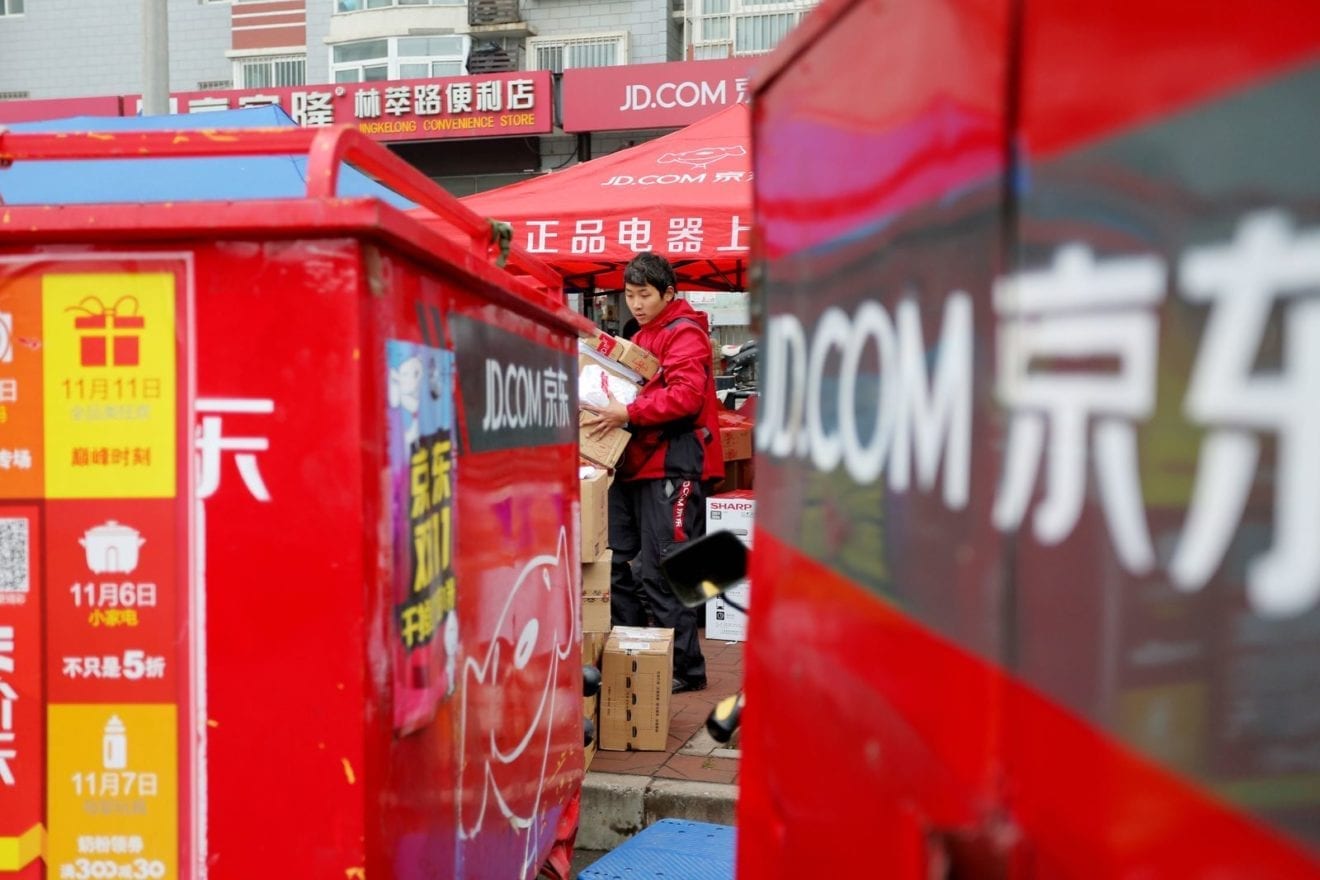
    JD.com, one of China’s largest e-commerce companies, has launched a new accelerator program called AI Catapult that focuses on blockchain and artificial intelligence startups.

    Based in Beijing, AI Catapult will start with an inaugural roster of companies that include Bluzelle, a blockchain startup based in Singapore providing database services, Bankorus, a leading Chinese robo-advisory provider, CanYa, an Australian cryptocurrency startup, Nuggets, a London-based e-commerce payments and ID platform built on blockchain technology, Republic Protocol, an open source decentralized dark pool exchange, and Devery, a blockchain-powered product verification protocol.

    JD.com said the purpose of the program is to partner with innovation startups to build new businesses and create real-world applications of their technologies at scale.

    Uri Ferruccio, the director of strategy and investment for JD.com’s AI Platform and Research Division, said AI Catapult “will support JD.com as it explores how AI can improve the scalability, security, privacy and efficiency of blockchain, and enable novel and improved applications in areas such as distributed AI.”

    Bowen Zhou, vice president of JD.com’s AI Platform and Research Division, added, “We are excited to work with some of the world’s most innovative startups to explore ways we can scale these cutting edge technologies for the future of retail and other industries, as well.”

    The program will begin in March and will provide selected startups with the opportunity to cooperate with business units throughout JD.com’s retail business and implement their technologies.

    The firm also plans to invest in the growth of the AI and blockchain ecosystem through future commercial, strategic and research partnerships.

    JD.com already uses blockchain technology in its supply chain to track products and AI to control its logistics drones and automated package sorting centers. The firm joined the Blockchain in Transport Alliance earlier this month to explore the use of blockchain for global freight and logistics. It is also working with Walmart, IBM and Tsinghua University National Engineering Laboratory for E-Commerce Technologies on blockchain applications for food tracking, traceability and safety in China.

    JD.com has over 266 million customers and recorded 658.2 billion RMB, or about US$100 billion, in gross merchandise value in 2016.

  • The Bitcoin Party is Over. The Blockchain Party has just Begun.

    The Bitcoin Party is Over. The Blockchain Party has just Begun.

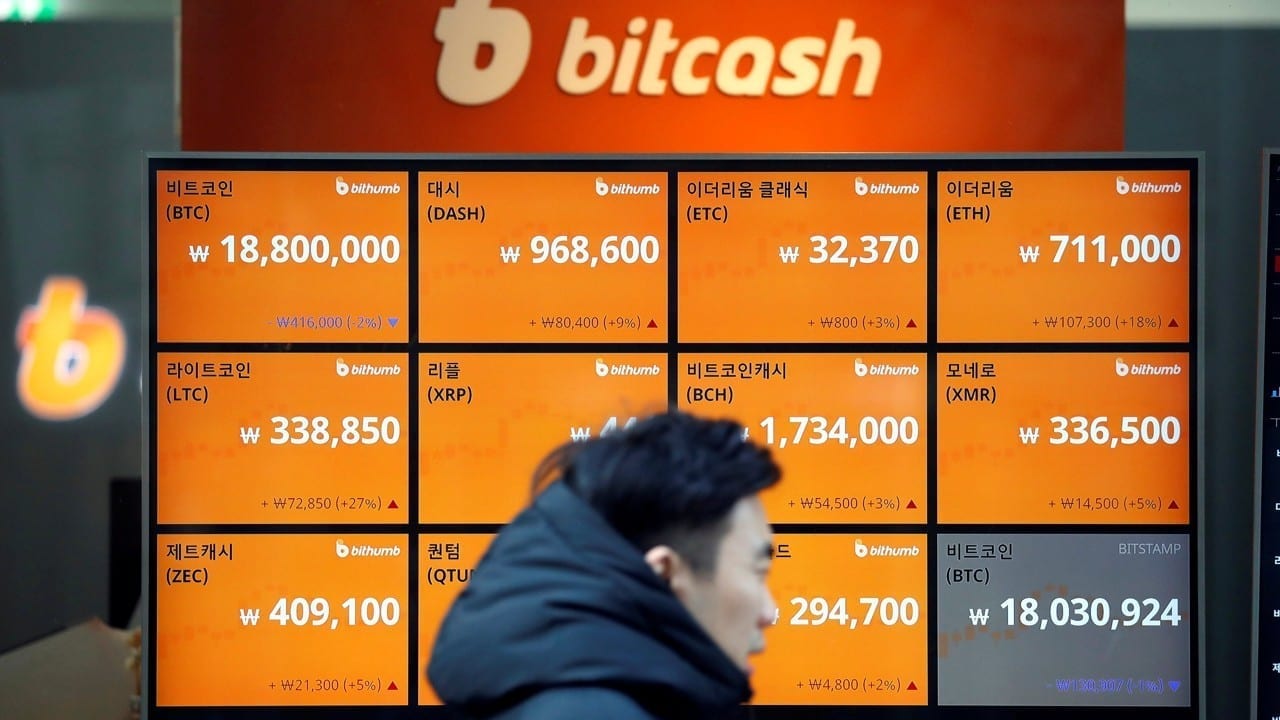
    Confidence in cryptocurrency markets may have taken a major hit in recent weeks, but the same cannot be said of the value of the technology it relies on – the blockchain. Bitcoin’s price plunged this week to less than US$11,000, from almost US$20,000 in mid-December, after South Korea announced that all anonymous accounts, foreigners without local banking services and minors would be banned from trading on exchanges from January 30.

    But, particularly in Southeast Asia, much confidence remains that the blockchain technology underlying bitcoin can be adapted to drive development in everything from bank remittances to electoral rolls and health care records.

    Essentially, a blockchain is a digital ledger – a continuously growing list of records, called blocks, that are designed to be resistant to modification. Blockchains enable information to be shared in peer-to-peer networks, and because the data in any given block cannot be altered without altering all subsequent blocks, they are secure against fraud.

    It’s this quality that has raised hopes it can be adapted for a wide range of uses beyond the financial sector. In Singapore, the monetary authority has launched extensive blockchain research efforts, while its members have formed a blockchain-based trading network with Hong Kong, to be rolled out early next year.

    Indonesia’s Central Bank is following Singapore’s lead with its own research programmes, according to Eni Panggabean, head of payment system policy and the oversight department.

    “There is nothing wrong with the blockchain technology and it can be utilised in various sectors,” she said, adding that research was still in its early stages.

    Malaysia, meanwhile, is seeking to develop global blockchain standards with industry groups predicting the technology will be in widespread use by 2025. In Australia, the government has invested A$8.6 million (US$6.9 million) into a blockchain project by Perth company Power Ledger, in which energy is exchanged between households during periods of excess or shortage.

    And even in the midst of South Korea’s clampdown on bitcoin, the science and technology minister Yoo Young-min has gone on record as saying that blockchain should be considered quite separately from the volatile trading scene.

    Rob Hanson, senior research consultant at Australia’s Commonwealth Scientific and Industrial Research Organisation (CSIRO), said blockchain’s potential was “fundamentally as an anti-fraud tool”.

    “Blockchain is a term charged with excitement and confusion,” Hanson said. “It is a technology that lets anyone record transactions in a way everyone can see and trust … For governments, the obvious areas to focus blockchain research on are those where it would produce the greatest public good.”

    Southeast Asia is ripe for such innovations.

    “In Vietnam, health care records are a key area that blockchain could disrupt in public services,” said Nicole Nguyen, head of corporate marketing at Infinity Blockchain Labs in Ho Chi Minh City. “Regulation technology is also an area that government is very excited about.”

    Blockchain technology could also be used to host government registries, improve supply chain visibility and efficiency – especially in archipelago countries like Indonesia and the Philippines – and speed up international remittance payments, according to a CSIRO research paper.

    And Steven Suhadi, chief executive of Jakarta-based blockchain start-up Blocktech, said it could boost traceability and transparency across governmental agencies, potentially helping with anti-corruption efforts.

    Even so, multiple challenges remain before blockchain can achieve widespread adoption.

    On a government level, Hanson said more research was needed to develop adequate regulation that ensured the technology was efficient and did not “erode trust and confidence in the democratic process – which ironically is what a blockchain would be trying to strengthen”.

    “Blockchain uses a lot of computer power in order to create the trust we value. These costs are hidden in systems like bitcoin because of the cryptocurrency reward paid to the people who provide their computers for this purpose,” he said.

    Hanson said authorities needed to decide whether they were going to use a public network of computers to support their blockchains, or run all the computers themselves.

    He urged governments not to act too hastily to adopt the technology.

    “The problem with the amount of excitement around blockchain is that people are treating it like a silver bullet and are more interested in finding a use for blockchain than in finding the best way to solve the problems they face,” he said. “There should be a good reason for using a blockchain, and that reason should not be because other people are using it and you don’t want to miss out.”

    For Nguyen, blockchain’s supporters must also overcome the uncertainty generated by the recent cryptocurrency trading frenzy – and the heavy-handed reaction from countries such as South Korea.

    The adoption of cryptocurrency, that would affect the blockchain industry,” she said. “But on the other hand, it could make more people intrigued by the ecosystem itself and deploy this tech for other applications. That’s where the magic of blockchain would kick in.”

  • Blockchain revolution comes to world of humanitarian aid

    Blockchain revolution comes to world of humanitarian aid

    Blockchain, the technology behind the cryptocurrency Bitcoin, is taking root in a sector far from finance: the world of humanitarian aid.

    By offering refugees a virtual identity, reassuring donors that their money is being well spent, or rushing funds where they are needed most, aid charities are experimenting with the technology in the hope that it can improve their work.

    “We are at the very beginning. There is a lot of hype,” said Christopher Fabian, leader of Unicef’s Ventures Fund, which invests in open source technology solutions.

    At the end of 2017, Unicef – the UN agency dedicated to protecting children – brought together Russian-speaking blockchain experts in a meeting in Kazakhstan.

    The goal? To develop a “smart contract” that would facilitate transactions between the organisation and its numerous partners for deliveries and payments, if certain conditions were met.

    “It totally failed, but we learned a lot from that and will do the same challenge this year in Mexico,” Fabian admitted, adding that he could envision a host of future projects using blockchain for the “social good” – even if most of them will fail.

    But the UN gency is thirsty for innovation.

    Its French office has also launched an operation dubbed “Game Chaingers” (for blockchain), which challenges tech geeks and gaming enthusiasts to install on their computers software aimed at creating Ethereum, a virtual currency, to help Syrian children.

    Blockchain allows users to create and spread information across a large network of computers, which its proponents say lends it both transparency and security. And the applications for the technology are multiplying quickly.

    For aid and development groups, blockchain can come in all shapes and sizes.

    Aid donors could, for example, trace their contributions as they spread across an organisation. The platform Disberse, supported by a network of 42 humanitarian groups, already road-tested this application by tracking money sent by a British association to four schools in Swaziland.

    In theory, the technique can reduce transaction costs, fight corruption by making everything transparent, and allow a better record of where food aid is directed, or make sure that medicines are not counterfeited.

    Those in charge of programmes that directly send money to people in need also see it as a way of more easily controlling the disbursement of funds or avoiding use of financial intermediaries such as banks, which might also take a cut.

    “In the old days, we were delivering aid at the back of the truck,” said Alex Sloan, a consultant at the World Food Programme’s Innovation Accelerator, which works with startups and others to help fight hunger.

    “Now, we are moving towards distributing cash to our beneficiaries, in the form of actual cash, through vouchers, e-cards, etc.”

  • South Korea is banning foreigners from trading cryptocurrency

    South Korea is banning foreigners from trading cryptocurrency

    South Korea’s financial regulators set the pace for sweeping cryptocurrency regulations to curb speculative overheating and illegal activity, including banning foreigners and minors from opening new cryptocurrency accounts.

    Financial Services Commission Vice Chairman Kim Yong-beom announced measures to ban anonymous trading on domestic exchanges, while foreigners and minors would be completely banned from trading through cryptocurrency accounts. Both measures go into effect 30 January.

    They are the first concrete measures to be implemented since the government began observing overheating in the market in September. The system aims to tackle money laundering and related crimes, along with speculation-driven overheating in the market, Kang Young-soo, head of the FSC’s cryptocurrency response team said after the announcement.

    “The government is concerned about manipulation of market conditions and injection of illegal funds while market funds are leaked into speculative investments,” he added. “We view that foreigners’ and minors’ investments contribute to our areas of concern.”

    All foreigners, including residents, nonresidents and “kyopo” ethnic Koreans with foreign citizenship, will be banned from trading cryptocurrencies in Korea, the FSC’s foreign media department said by email. Minors are banned after Prime Minister Lee Nak-yeon earlier claimed the cryptocurrency craze could lead the youth toward crime.

    “If they’re not Korean citizens, then they can invest in exchanges provided in their countries. Why do they have to invest in ours?” Kang quipped.

    The government has been under mounting pressure to deliver on impending regulations over the country’s cryptocurrency market, one of the world’s largest for Bitcoin, Ethereum and Ripple, as the uncertainties have thrown global prices into turmoil. Cryptocurrency trade has gone largely unregulated as South Korea neither recognizes digital coins as financial products or currency.

    But for the past few months, financial authorities and prosecutors have been mulling comprehensive regulations on anti-money laundering, tax evasion, fraud and other illegal activity, including a proposed ban on all initial coin offerings.

    Justice Minister Park Sang-ki threw fuel on the speculative market when he claimed all crypto exchanges would be shut down. The government later clarified that it was one option being considered, along with only shutting down exchanges that were acting illegally. Since then, citizens have railed against the government with over 220,000 signing a petition to demand a response from the presidential Blue House.

    “The government is creating boundaries for instances of foreigners injecting in coins into the country and a phenomenon of more Bitcoins and other cryptocurrency circulating within the Korean market,” says Kim Jin-hwa, corepresentative of the Korea Blockchain Association, which has about 30 member companies including several exchanges. “With the current conditions of our market, higher supply would equate to higher speculation.”

    The targets of the latest regulation, says blockchain startup BlockchainOS Choi Yong-kwan, are Chinese investors who have flooded the cryptocurrency market since their country banned cryptocurrency trade last year. Digital coins from China enter Korean exchanges, then are illegally changed into foreign currencies, which are sent back to China, he explained.

    Under the new rules, foreigners who have already have cryptocurrency trading accounts will be allowed to withdraw their assets, even after the new rules come into force, the FSC explained. But they will be banned from making new deposits through the accounts.

    Meanwhile, all cryptocurrency investors need to establish an account under their legal name at one of six banks rather than anonymous cryptocurrency accounts to trade on a domestic cryptocurrency exchange. The so-called real-name system is part of efforts to establish measures similar to the Know Your Customer (KYC) verification system in the U.S. The Korea Blockchain Association’s member exchanges had already self-imposed an ID verification system for users who create new accounts as of Jan. 1, but this will be replaced by the government’s regulation.

    Results of an investigation found that some companies handling cryptocurrency had been registered as “shopping malls,” but subject banks did not have customer verification procedures or internal systems to recognize this, the FSC said.

    Also, funds deposited into cryptocurrency-handling companies have been deposited to accounts of the company’s major shareholders or its employees, and there have also been cases of deposits to cryptocurrency handling companies from corporate names.

    These transactions are irregular managements of funds, the FSC said, as they can be identified as suspicious transactions because banks have not practiced faithful reporting of suspicious transactions.

    Financial regulators are struggling to keep their own in line, as an investigation found that at least one official, aware of upcoming government announcements, used internal information to profit off cryptocurrency sales. In response, Prime Minister Lee has called for stronger codes of conduct for public servants, while Hong Nam-ki, Minister of the Office for Government Policy Coordination, urged civil servants not to trade during work hours.

    Meanwhile, blockchain insiders say regulators still have little understanding of the technology behind cryptocurrency, even as other government agencies such as the Ministry of ICT are promoting blockchain as part of the country’s “fourth industrial revolution” push.

    The government must walk a fine line to foster the potential of blockchain technologies – which include cryptocurrency – while reining in dangerous behavior such as hacking and fraud. But uncertainty and strict regulations may risk an outflow of assets and innovation.

  • All about blockchain in 2018

    All about blockchain in 2018

    The potential for blockchain technology to bring about widespread change has been predicted since 2011 and the emergence of Bitcoin. But in 2017 when the concept really started to capture people’s attention.

    Blockchain-focused financial services startups raised $240 million in venture funding during the first half of the year. However, its potential was beginning to be recognized across other sectors and industries.

    2018 is likely to see a continuation of this trend of innovation and disruption. Here, are the five key ways this is likely to happen.

    1.More use outside of finance

    While it’s implications for the financial sector might seem most apparent, any industry or organization in which recording and oversight of transactions is necessary could benefit. Healthcare, HR, and legal work have already piloted few applications.

    Meanwhile in manufacturing and industry, the Blockchain Research Institute, the founders of which include IBM, Pepsi Co and FedEx, say it expects blockchain to become the “second generation” of the digital revolution following the development of the internet. It has highlighted work by electronics manufacturer Foxconn to use blockchain to track transactions in its supply chain.

    2. Blockchain meets the Internet of Things

    Security is one reason they are a good fit – blockchain’s encrypted and trustless nature makes it a viable option when it comes to keeping the ever-growing number of connected devices in our homes and offices safe. Research envisages that blockchain compute power that is used to “mine” Bitcoin could be put to use safeguarding our smart homes from a new generation of cyber-burglars looking to break in and steal our data.

    Another proposed use is that the cryptocurrencies built on blockchains would prove ideal for automated micro-transactions made between machines. As well as recording machine activity on the ledger for record-keeping and analytical purposes, machines could effectively “pay” each other when smart machines operated by one organization interact and transact with those owned by others. This is likely to be further down the road, but it is likely we will see research and breakthroughs in this area in 2018.

    3. Smart contracts will come into their own

    “Smart contracts” are another possibility brought about by blockchain – the idea is that contracts will execute automatically when conditions are filled, meaning payments will be made, or deliveries dispatched, or anything else in business which is typically defined by a contract.

    Blockchains make smart contracts possible because of their consensus-driven nature. Once agreed-on conditions are met, then the contract is filled. This could mean paying bonuses when targets are hit, or despatching an order once a payment has hit your account.

    4. State-Sanctioned Crypto Currencies?

    Putin was the first – with the recent announcement of the “Crypto Rouble” – but it was inevitable that politicians would at some point start to consider the advantages of blockchain-derived currencies. In the wake of Bitcoin, it has often seemed that nation states have been lacking in their enthusiasm for this particular application – and probably with good cause. Bitcoin was after all envisaged as a way of creating a tradeable currency which couldn’t be manipulated by governments.

    Some such as China have been outright hostile – refusing to allow exchanges to operate in their borders and issuing warnings about the high risk of investing in cryptocurrencies. 2018 however could be the year that governments finally get on board the blockchain bandwagon – as its potential for creating efficiencies in both financial and public services become more apparent.

    5. A large number of blockchain initiatives will fail.

    Blockchain undoubtedly has the potential to be revolutionary. But like anything revolutionary it can be dangerous – in this case, mainly because rushing in without clear expectations of what you want to achieve is likely to be a costly waste of time.