Retail News CRM

Tag: blockchain

  • Alameda Research invests in Vietnamese blockchain technology startup

    Alameda Research invests in Vietnamese blockchain technology startup

    U.S. quantitative cryptocurrency trading firm Alameda Research has invested $4 million in Coin98 Finance, a Vietnamese startup and developer of decentralized finance protocols and applications.

    Decentralized finance (DeFi) refers to the financial applications that are built on top of blockchain networks.

    According to Forbes, the deal demonstrates the growth of DeFi across Asia as Vietnam, South Korea and Japan see signs of rising demand for it and an increase in the number of active and experienced teams building crucial infrastructure around it.

    In 2019 Coin98 Finance developed a crypto wallet, Coin98 Wallet, which supports coins and tokens on many blockchains including Bitcoin, Ethereum, Solana, and Binance Smart Chain.

    It saw around $20 million traded in March.

    Thanh Le, the CEO of Coin98 Finance, said the interest from top venture capital firms and investors like Alameda mostly stem from its large existing user base.

    “Before we started doing a raise, we already built Coin98 Wallet and quickly acquired over 200,000 users in Asia. The product is quite established and captured a decent market share in Southeast Asia markets.

    “Compared with thousands of blockchain projects who only come up with only an idea, we already ship the product out and are being used by hundreds of thousands of people.”

  • Singapore-Based Blockchain Platform Zilliqa Launches Investment Hub

    Singapore-Based Blockchain Platform Zilliqa Launches Investment Hub

    Zilliqa Capital aims to invest in decentralized and fintech solutions in Southeast Asia and India, across investing, wealth management, insurance, lending, payments, and remittances, as well as critical infrastructures that will enable Web 3.0.

    Zilliqa Capital will be led by financial services veteran Michael H. Conn, the firm’s chairman, CEO, and co-chief investment officer, while Zilliqa co-founder, president, and chief scientific officer, Amrit Kumar, will serve as Zilliqa Capital’s co-chief investment officer and director, the company said in an announcement.

    The goal of Zilliqa Capital is to operate as a permanent capital, ecosystem-focused investment company, the announcement said. It will invest in Zilliqa’s native utility token «ZIL» as a strategic asset, and selectively invest in Zilliqa and relevant non-Zilliqa based businesses.

    Zilliqa, headquartered in London and Singapore, is a public blockchain platform known for use of sharding as an on-chain solution to preserve decentralization and enable greater scalability.

    Conn is the co-founder and former CEO of Ether Capital. His career spans the traditional financial services and digital assets space, with senior leadership positions at AllianceBernstein, Société Générale, Trust Company of the West, AsiaVest, and Quail Creek Ventures.

    We aim to be pragmatic and not dogmatic in seeking and delivering solutions that broaden access to financial services and products that are both accretive to our investors, as well as to the people served by the companies we support. We believe Singapore to be the ideal hub for the development and growth of our innovative approach to investing in the fintech and digital asset space, Conn said.

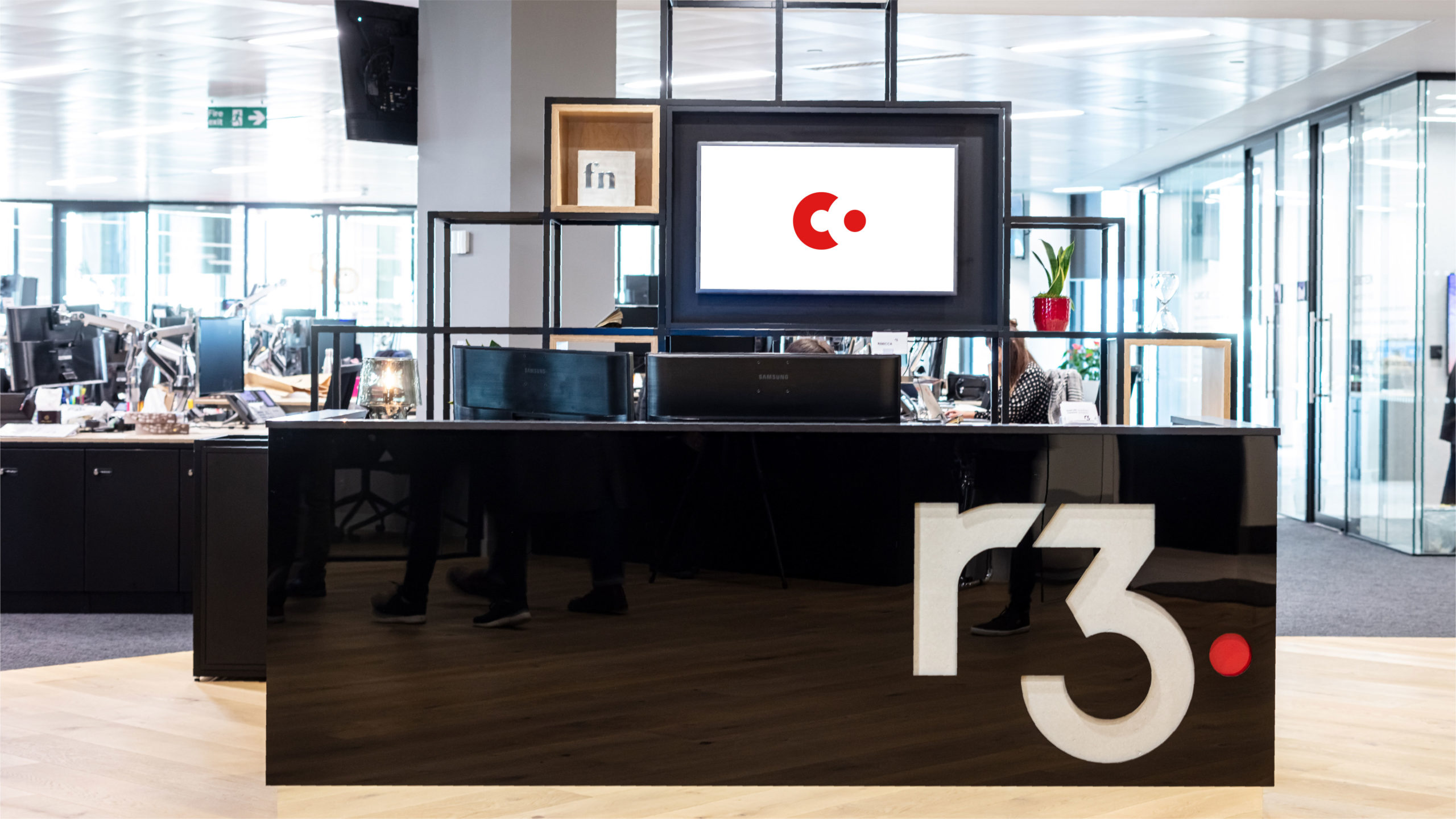
  • R3, Enterprise Blockchain Provider Announces Expansion in Thailand with Bangkok Bank

    R3, Enterprise Blockchain Provider Announces Expansion in Thailand with Bangkok Bank

    R3, the enterprise blockchain software firm, will expand its presence in Thailand following the renewal of its partnership with Bangkok Bank. The expansion will see an increase in R3’s workforce in Thailand, underscoring R3’s commitment to the Thai market and its local partners. 

    “Thai enterprises are at the forefront of innovation, digital transformation and blockchain adoption and R3 is proud to support the nation’s digital industry transformation,” said Amit Ghosh, Head of APAC, R3. “We’ve had a long standing relationship with Bangkok Bank and collaborated with various large-scale blockchain projects, including Project Inthanon-Lionrock and Contour—as such, we are excited to continue our partnership with Bangkok Bank and to support their ongoing commitment to improving their service offering through the use of emerging technologies.”

    Highlighting R3’s commitment to the Thai market and local partners, the partnership renewal with Bangkok Bank coincides with R3’s recent expansion of its local workforce—consisting of in-market sales and pre-sales roles in Thailand. 

    “As we see new opportunities and innovations coming from Thailand, and as we continue to work with some of the Thai ecosystem’s largest actors—we want to ensure that we have the appropriate resources in place to continue providing our partners with transformative tools to meaningfully improve their business. The partnership renewal with Bangkok Bank, together with our recent in-market hires, demonstrates R3’s commitment to support our current and future partners in Thailand,” Ghosh added.

    Through its partnership with R3, Bangkok Bank will have the ability to leverage R3’s flagship enterprise blockchain platform, Corda Enterprise, to streamline business operations across its trade finance, capital markets, and supply chain businesses. Bangkok Bank is also planning to ramp up Corda training for their internal teams and is exploring new Corda-based solutions within the trade, payments and supply chain space. 

    “It is almost five years since we first met with Dave Rutter and his leadership team in New York. At that time we were impressed by their open minded and collaborative approach to developing the potential of distributed ledger technologies. The decision to develop Corda as a DLT solution to meet the requirements of financial services was visionary. In 2021 we are seeing growing interest from our corporate clients in deploying enterprise blockchain solutions tailored to their industry-specific needs,” said Ian Guy Gillard, Senior Executive Vice President at Bangkok Bank and R3 board advisor. “Consequently, we have renewed our annual subscription of Corda Enterprise for the full licensing plan. We are also delighted that R3 has shown their confidence in the Thai market by adding presence on the ground with the local office. This is even more important in uncertain times such as this when travel is restricted,” Gillard added.

    Bangkok Bank has cemented itself as a leader in blockchain innovation and is a founding member of Contour, a blockchain-based open industry platform to create, exchange, approve, and issue Letters of Credit L/C on Corda. In September 2020, Bangkok Bank used Contour to facilitate an L/C transaction between a subsidiary of Thailand-based PTT Group and a Vietnam-based trading partner in September 2020, greatly reducing L/C issuance time by over 95%. The most recent success extends the bank’s collaboration with leading local and global partners in the ecosystem. The bank collaborated with SCG Chemicals, a manufacturer of petrochemical products and GC Marketing Solutions Limited, the chemical flagship of PTT Group under GC Group, to facilitate their L/C transactions with their partners via leading local banks in Vietnam. The bank also joined with Pacific Containerbag Co., Ltd. to facilitate the company’s transactions with corporate partners in Oman, opening and receiving L/C, supporting both import and export customers. Bangkok Bank has plans to go-live with Contour and implement L/C transactions under the Contour network within its ecosystem.

  • KardiaChain CEO aims to popularize blockchain in Vietnam

    KardiaChain CEO aims to popularize blockchain in Vietnam

    The KardiaChain platform founded by Pham Minh Tri has attracted Vietnamese experts globally to join the local blockchain sector.

    After graduating with a master’s degree in science from the University of East Anglia, famous for practical research, in London in 2013, Tri is now focusing on location-based messaging, text-speech processing, computer vision, and augmented reality.

    During his tumultuous years outside Vietnam, blockchain attracted Tri’s attention. He first approached this technology in 2012, after learning about the core peer-to-peer network of decentralized systems.

    Five years later, Tri had the opportunity to delve into and invest in new blockchain projects in London. In 2018, he and Huy Nguyen, currently senior technical manager at Google, Silicon Valley, founded KardiaChain, which rapidly researched blockchain interoperability.

    This breakthrough technology has helped solve the problem of communication between networks, allowing the transfer of data and assets from one blockchain to another. Important applications of cross-chain blockchain include decentralized exchanges.

    Today, only a few companies have successfully built cross-chain infrastructures like Polkadot and Cosmos, all worth billions of dollars, according to the KardiaChain CEO.

    Studying the potential market, Tri considered Vietnam one of the most promising environments for blockchain development due to its legacy system, golden population, and open regulatory environment.

    Unlike the U.K. or U.S., blockchain in Vietnam enjoys less competition with existing systems according to centralized design. Digital conversion and digitization of data are still in the early stages, so if combined with blockchain nation, our country would be able to take a shortcut, said Tri. Besides, its young population, rapid increase in education, and strong development of the middle class are all suitable for newly introduced and well-received technology products.

    More importantly, the Vietnamese government supports the startup movement, especially industries in the 4.0 revolution like blockchain and AI. Besides, the legal corridor for Fintech that is gradually being improved is also a great driving force for blockchain users.

    Returning to Vietnam in 2018, he and his partner founded KardiaChain, specializing in developing blockchain platforms. One of its most outstanding inventions is its non-invasive cross-chain technology Dual Node, pending patent. This technology helps blockchains communicate with each other despite algorithmic differences.

    KardiaChain’s decentralized platform allows any business to build transparent, secure applications with open functionality. According to business representatives, this makes blockchain infrastructure invisible, like electricity and the Internet, through mobile applications to benefit end-users.

    One of the most successful application units of KardiaChain is Youth Union in District 5, Ho Chi Minh City. The solution called TuoiTre Q5 helps the unit manage 10,000 youth union members, update daily news, support online assignments, and recognize emulation and rewards.

    With the above advantages, the app has received nearly 8,000 good reviews in recent surveys. The product initially asserted that the blockchain platform, when properly applied, is a useful tool to transform traditional models to suit contemporary society.

    From initial research and application, in April this year, KardiaChain raised $19.2 million from 2,500 investors through the Gate.io platform. KardiaChain then successfully signed a strategic cooperation with LG CNS – a subsidiary specializing in providing technology solutions of LG Group to develop blockchain infrastructure in Vietnam.

    According to Tri, the process of popularizing blockchain in Vietnam is a long journey, requiring a combination of technology, people, law and timing. But with careful preparation, we believe we will achieve this goal, inspiring people with the same passion and understanding of blockchain, he said.


  • Blockchain Ecosystem Report Lanuched

    Blockchain Ecosystem Report Lanuched

    The Singapore Blockchain Ecosystem Report 2020, launched at this year’s Singapore FinTech Festival x Singapore Week of Innovation and TeCHnology, highlights impactful developments and trends in Singapore’s blockchain ecosystem over the last year.

    The report is co-presented by OpenNodes, Temasek, IBM, PwC Singapore, EY, and SGTech, and supported by the Infocomm Media Development Authority and the Monetary Authority of Singapore. It highlights Singapore’s lively blockchain research landscape due to active contributions from both academic institutions and the private sector.

    The report also showcases how COVID-19 has accelerated the application of blockchain technology, which is being used to verify health credentials amid the pandemic.

    It features a bibliometric analysis of blockchain-related scientific publications, showcasing Singapore’s pioneering progress in driving both high quality and quantity research in the field of blockchain technology. It concludes that Singapore has produced the highest number of research publications on the subject in ASEAN, and the third-highest in the world.

    PwC Singapore conducted a survey for the Singapore Blockchain Ecosystem Report 2020 to assess the developments of blockchain-related activities in Singapore. Results showed that blockchain emerged as one of the top three technology trends in Singapore for 2021, with 70 percent of the respondents showing support for the technology. The survey also ranked Si

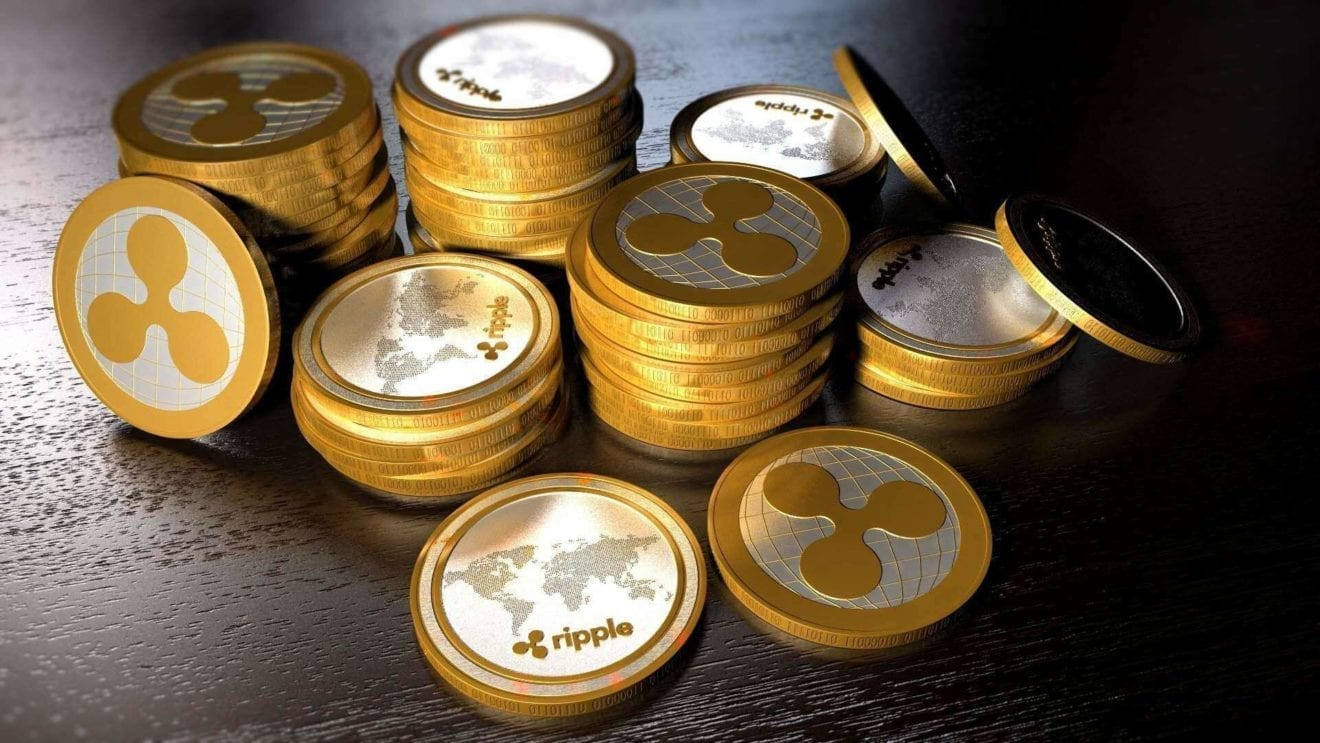
  • Ripple Shortlists Singapore for Move

    Ripple Shortlists Singapore for Move

    The blockchain payments company could leave the U.S. over lack of regulatory clarity. San Francisco-based Ripple is considering a move out of the U.S. as authorities there remain divided on whether to treat cryptocurrencies as a commodity, currency, property or security, according to a report on Thursday.

    The firm has shortlisted Japan and Singapore as potential destinations, along with Switzerland, Britain and the United Arab Emirates. The common denominator between all of them is that their governments have created a clarity about how they would regulate different digital assets, different cryptocurrencies, chief executive Brad Garlinghouse said.

    Ripple operates a blockchain-powered real-time gross settlement system, currency exchange, and remittance network. Japan is one of its fastest-growing markets, and works with Japanese financial conglomerate SBI Holdings in a joint venture offering global payment services driven by blockchain technology.

    Southeast Asia, however, is also an important market for the firm, driven by the advent and growth of digital banking in the region. Among the firm’s customers in the region are Siam Commercial Bank in Thailand, CIMB in Malaysia, and Nium, formerly known as InstaReM, in Singapore.

    In March, the company appointed a senior executive as head of Southeast Asia operations to oversee Ripple’s expansion in the region, and spearhead efforts to drive the growth of its customer base.

    In 2019, Ripple and the National University of Singapore opened the FinTech Lab, part of the company’s $50 million University Blockchain Research Initiative.

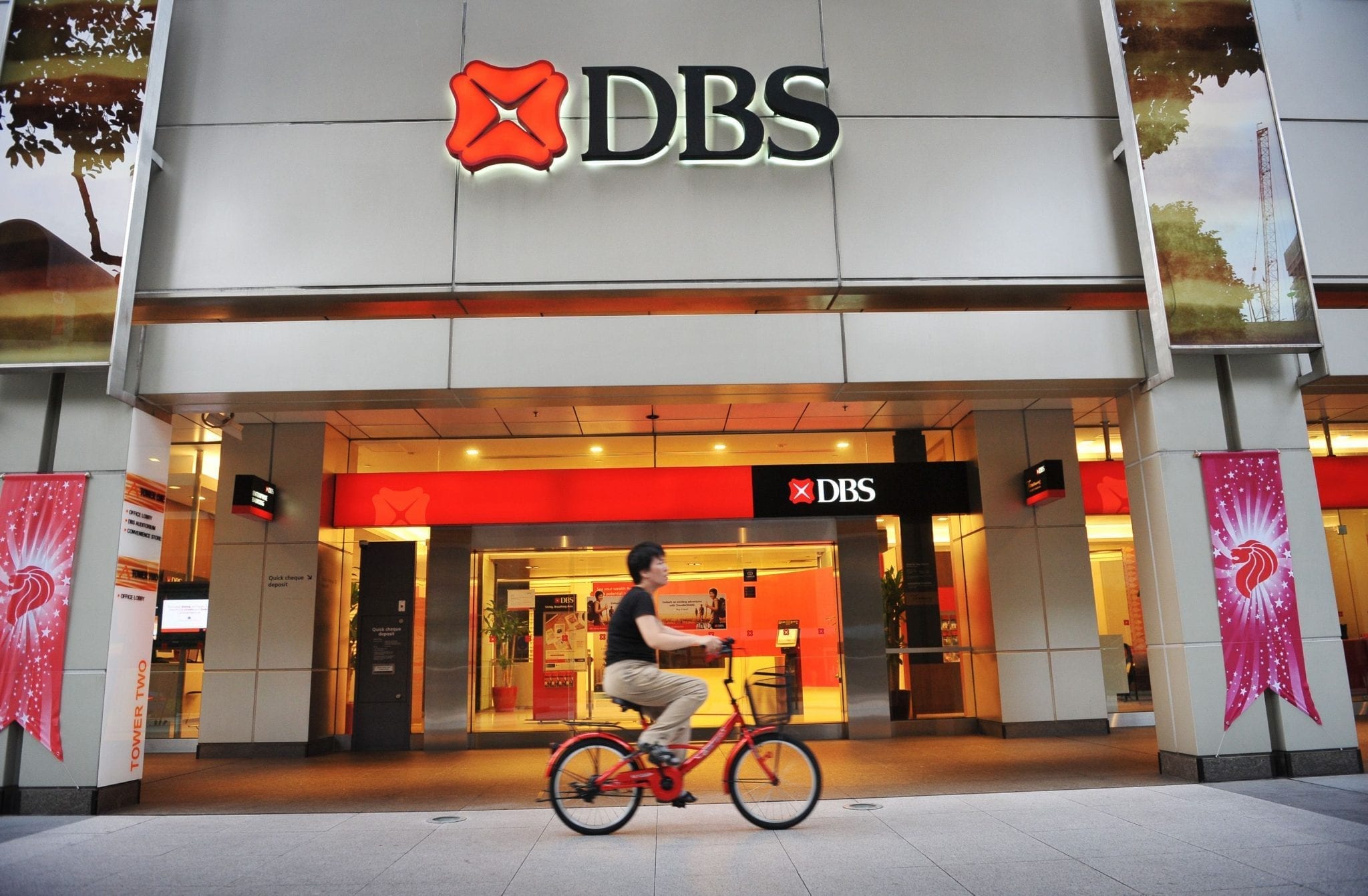
  • DBS Joins Blockchain Trade Finance Network

    DBS Joins Blockchain Trade Finance Network

    DBS joins blockchain network Countour to tap into the platform’s digitalized trade finance capabilities.

    DBS becomes Singapore’s first lender to join blockchain firm R3’s Corda to provide end-to-end letter of credit (LC) settlement to clients. Via the Corda network, the bank expects shortened settlement time, reduced paperwork and simplified processes.

    In addition, the platform also enables digitalized real-time negotiations, post-endorsement sharing with banks and real-time tracking of transactions with a full audit trail.

    Joining Contour’s growing ecosystem of banks and partners aligns with DBS’s ongoing efforts to drive greater efficiencies in trade and unlock strategic value for its corporate customers, DBS said in a statement.

    In the midst of an ongoing coronavirus pandemic, numerous banking sub-segments have been capitalizing on the opportunity for greater openness to digital solutions and an accelerated rate of adoption. Trade finance is no exception and any solution that can speed up cash flow collection in a secure fashion is likely all the more welcome in the current environment.

    This is more than simply digitizing a historically paper-based service, said John Laurens, DBS’s group head of global transaction services. It’s about transforming the way industries work by providing greater transparency, security and speed to build sustainable trade ecosystems that are able to weather the peaks and troughs of economic cycles and are resilient in times of crisis.

    DBS joins BNP Paribas, Bangkok Bank, ING, HSBC, Standard Chartered and Citi Ventures as other members of Singapore-based Countour’s blockchain trade finance network.

  • Blockchain Payment Network Terra Expands to Singapore

    Blockchain Payment Network Terra Expands to Singapore

    Blockchain payment network Terra has set up its South-east Asia hub in Singapore. The South Korea-headquartered firm has plans to expand in the region.

    Terra intends to grow its on-the-ground network in Asia through strategic partnerships with local businesses, building upon existing collaborations with 25 partners across Asia, including Singapore-based e-commerce platforms Carousell and Qoo10.

    Beyond attracting local talent, we also plan to acquire the applicable license from the Monetary Authority of Singapore under the Payment Services Act, said Rahul Abrol, Terra’s new head of international business and strategy. The Act is a framework for the regulation of payment systems and service providers in Singapore.

    Abrol, formerly Uber’s Asia-Pacific head of strategy, has joined Terra at the new Singapore office as head of international business and strategy. The startup, which has launched in Mongolia, aims to set up operations in at least five other markets next year, including Taiwan and Thailand.

    Besides its regional expansion plans, the firm plans to launch its stablecoin-powered mobile payment app in Singapore early next year. A stablecoin is a type of cryptocurrency that is price-stable and pegged to real-world assets such as the South Korean won or Singapore dollar.

    The launch of Terra’s Singapore office comes about seven months after the startup secured a strategic investment from LuneX Ventures, the blockchain and crypto-focused arm of Singapore’s Golden Gate Ventures.

  • Fashion industry ‘waking up’ to benefits of blockchain technology, robotics

    Fashion industry ‘waking up’ to benefits of blockchain technology, robotics

    Blockchain and robotics are becoming increasingly popular in the global fashion industry as brands look to increase transparency and improve efficiencies, according to GlobalData.

    While it is still in its infancy, blockchain technology has the potential to transform the global supply chain, says Michelle Russell, apparel correspondent at GlobalData. She says that during the last few years, the adoption of blockchain technology amongst apparel and textile companies has grown substantially as the pressure to have more visibility in the supply chain ramps up.

    “Its uses are varied as companies use the ledger to address problems in unethical behavior, excess waste, the origin of goods, and counterfeiting.”

    German start-up Retraced recently launched a blockchain-based transparency solution that it is trialing with a number of fashion brands. Other examples include OpenSC which received US$4 million in seed funding for its platform that aims to build transparency around commodities known to have significant environmental or human rights risks within their supply chain and Waste2Wear’s launch of the world’s first ocean plastic-based fabrics collection that is fully traceable using blockchain technology.

    “Blockchain is undoubtedly helping the apparel and textile industry overcome many of its problems,” continues Russell.

    “While still in its infancy there are undoubtedly many bumps to be ironed out, such as the need for common standards and regulations. However, despite the challenges, the increased adoption of blockchain shows there is a need for this type of technology in the industry and its potential is substantial.”

    Integrating robotics

    Meanwhile, apparel brands are beginning to realize the benefits of integrating robotics in their supply chains as a way of improving their speed-to-market, says Hannah Abdulla, also an apparel correspondent at GlobalData.

    “To meet consumer demand for accessing the latest trends more quickly, we’re seeing brands using robotics, which allows faster and greater output, as well as higher efficiencies in warehouse operations.

    “Of course, critics may argue such technology could lead to a reduction in manpower but, if the appetite for apparel and footwear continues to grow and demand for the latest trends continues to intensify, brands will be left with no choice, but to harness robotics.”

    Adidas recently announced it was deploying Speedfactory technologies at two Asian suppliers, enabling accelerated speed-to-market, and quicker response time to trends, a shift to mass personalization, efficiency, and greater sustainability. In a similar move, the Japanese owner of Uniqlo, Fast Retailing, has employed two robotic start-ups to help improve efficiencies in warehousing and distribution.

    “In today’s world, speed is everything,” adds Abdulla. “Consumers want access to the latest trends and they aren’t willing to wait. Employing robotic technologies in

  • China Accelerates Blockchain Growth

    China Accelerates Blockchain Growth

    China’s national parliament has passed a new law on cryptography aimed to facilitate development concurrently with the country’s central banking efforts to launch its own digital currency.

    The newly adopted law, effective as of January 1, 2020, «was necessary for regulating the utilization and management of cryptography, facilitating the development of the cryptography business and ensuring the security of cyberspace and information», the National People’s Congress Constitution and Law Committee.

    The new law distinguishes cryptography into three classifications: core, common and commercial. Core and common cryptography will be strictly managed by Chinese authorities and used to protect confidential national information.

    If cryptography is deemed as commercial, which assumes no risk to state security or the public interest, cryptography management departments and other relevant personnel are unable to ask for disclosure of «exclusive information related to the cryptography such as source codes and must keep the business secrets and privacy they get in their duties strictly confidential.

    The new law marks a further acceleration of China’s blockchain-related policy which is likely to pave the way to various initiatives including the nation’s efforts to launch its own digital currency which its central bank claims is almost ready.

    The law was also enacted one day after President Xi Jinping called for more research and investments into blockchain technology, stressing competition from other major countries and the need for China to obtain first-mover to increase «influence and rule-making power in the global arena».

  • Singapore’s First Blockchain Trade Financing Platform Launched

    Singapore’s First Blockchain Trade Financing Platform Launched

    CIMB Bank’s Singapore Branch and iTrust have launched Singapore’s First Blockchain Trade Financing Platform, and successfully completed their first structured trade financing transaction on the platform.

    The milestone transaction involves the financing of dairy products imported into China and is expected to generate transaction flows of up to $100 million a year, CIMB Bank said in a media statement on Thursday. iTrust provides secured real-time visibility of the cargo in transit and in the warehouse using blockchain-based IoT.

    Given the rapid technology shifts in the market today, we will continue to focus on digitalization and customer experience to transform the way we finance our corporate customers, thus adding value to our services. This blockchain trade financing with iTrust mitigates fraud risk, and alerts us of any unauthorized movement of the financed cargo, said Mak Lye Mun, CEO of CIMB Bank Singapore.

    All data and documents from the transaction are blockchain in a distributed ledger for provenance and immutability, the bank said. The technology provides all stakeholders with a secured operational dimension of the transaction, which was absent in the past. With iTrust’s security, transparency and visibility for the documents and cargo, CIMB hopes to mitigate risks associated with commodity trade financing and facilitate credit extension for their customers.

    Digitalization is gradually transforming financing. With iTrust, we have used blockchain-based IoT to provide insight into the physical world into a blockchain digital platform. We believe that the day will come whereby all lenders and borrowers would demand to have a secured real-time view of their cargo under financing on a secure and immutable blockchain platform like iTrust,» said Lim Chee Kean, CEO and co-founder of iTrust.

    As much as 80 percent of global flows of merchandise – worth about $9 trillion – is financed by some form of credit, guarantee or insurance, according to a global survey by the International Chamber of Commerce. Trade finance revenues were $39 billion in 2017. Yet, this $9 trillion business of financing global trade has only started to transact digitally.

    While some processes are already being digitalized and banks and commodity traders are experimenting with blockchain technology, paper documentation remains widespread and the risk of fraud elevated. In fact, forgers have become so adept at faking documents used by banks that going digital has become a necessity for the industry, according to OCBC, Southeast Asia’s second-biggest lender.

  • First Blockchain-Based Remittance in Philippines Completed

    First Blockchain-Based Remittance in Philippines Completed

    Major Philippines lender Union Bank has completed the first-ever blockchain-based remittance in the nation from OCBC in Singapore.

    The bank reportedly used an Ethereum-powered liquidity management system alongside its own proprietary i2i platform to complete the transaction from OCBC as a pilot. The funds were remitted to an account holder at Cantilan Bank in Surigao del Sur, a southeastern province.

    Chief fintech officer of the Monetary Authority of Singapore Sopnendu Mohantynoted that the city-state’s regulator had been exploring blockchain-based payments since 2016.

    We are excited to see this potential being realized, with cross-border payments that are cheaper, faster, and safer through the i2i network, he said.

    Rural banks have limited access to financial networks and a lag for remittances to be credited—five to seven days. Non-bank remittance counters offer faster execution but at a higher and sometimes unbearable cost for the relevant market segment.

    On the other hand, the crypto-based platform which the aforementioned banks used, Adhara, allows users to settle real-time payments at low cost and high efficiency by tokenizing assets and smart contracts on an Ethereum-based ledger.

  • Blockchain Platform Zilliqa Partners Singapore Payments Startup

    Blockchain Platform Zilliqa Partners Singapore Payments Startup

    The partnership will enable Xfers to use Zilliqa’s smart contract functionalities and bring about new innovations to its suite of enterprise solutions.

    Blockchain technology firm Zilliqa is partnering Singapore-based fintech startup Xfers to explore the use of payment solutions powered by distributed ledger technology, the company announced at its Zilliqa Day event on Tuesday, which marked its second anniversary.

    The partnership will allow Xfers to benefit from Zilliqa’s SmartContracts infrastructure, bringing efficiencies in cost, transparency and scalability to its platform, which has over 500,000 users in Southeast Asia, the firm said. Working with Zilliqa will bring about new innovations to Xfers’ suite of enterprise solutions, which includes support for payments, disbursements, regulatory compliance, a built-in digital wallet, and more, the firm added.

    Xfers received an e-wallet license from the Monetary Authority of Singapore (MAS) in March, joining EZ-Link Card, Nets CashCard, Nets FlashPay, and CapitaVoucher as MAS-approved Widely Accepted Stored Value Facility (WASVF) providers.

    The license allows Xfers to hold money on behalf of its users, and gives it an edge over other fintech startups, as user deposits are backed by a bank, which guarantees each dollar it holds.

    Launched in 2015, Xfers processed over $260 million in payments in 2018. It is backed by 500 Startups, Golden Gate Ventures and Facebook co-founder Eduardo Saverin.

    Zilliqa, headquartered in London and Singapore, is a public blockchain platform known for use of sharding as an on-chain solution to preserve decentralization and enable greater scalability. Its blockchain is able to process 2,828 transactions per second.

  • The HTC Exodus 1 blockchain phone is getting a second generation

    The HTC Exodus 1 blockchain phone is getting a second generation

    If you don’t remember the HTC Exodus 1 don’t worry, you’re probably not alone. The $699 flagship-level device was announced last October and represents HTC’s first attempt at a so-called blockchain-powered smartphone.

    This unique focus undoubtedly limits the product’s appeal quite heavily. In fact, for the first few months the smartphone could only be purchased using cryptocurrencies. HTC, nevertheless, still seems pretty pleased with how it performed – the smartphone has already met the company’s sales target – and has now confirmed that a second-generation device is indeed on the way.

    According to the person leading HTC’s blockchain efforts, Chief Decentralized Officer Phil Chen, the Exodus 2 will be released before the end of 2019 in the hope of boosting both the brand’s blockchain ecosystem and smartphone sales. Specifics about the design or specs weren’t provided, but it seems likely that it’ll be based on the company’s next-gen flagship.

    Regarding features, the current-gen Exodus 1 focuses primarily on the management of cryptocurrencies and virtualized personal electronics wallets. But with the new phone, blockchain support will be extended to include other areas such as browsing, messaging, and even social media.

  • NEXT BLOCK ASIA + Fabulous Bangkok After-Party

    NEXT BLOCK ASIA + Fabulous Bangkok After-Party

    Bangkok, Thailand will host the 2-day NEXT BLOCK ASIA “Beyond Crypto” by Krypton Events and CoinAdvice on 25-26 June 2019 at the W Hotel. The conference will bring together experts from CRYPTO and BEYOND, combining the best of Blockchain, CFD and Affiliates with the next generation of traditional finance.

    Bringing together 750+ participants and 45+ distinguished speakers, investors & startups, the Conference will be devoted to shared fields and common grounds of the crypto universe and traditional finance. With the umbrella topic of the conference “Beyond Crypto” the participants will discuss the best of both worlds and how to move the industries from denial and antagonism to cooperation and mutually beneficial coexistence. As a good tradition, the event will be celebrated by a luxurious After-Party by NEXT BLOCK ASIA.

    June 27 take a unique opportunity to explore different faces of Bangkok while building connections and enjoying an award-winning 5-hour bicycle & boat tour joining NEXT BLOCK ASIA Cultural Day with an award-winning Co van Kessel!

    On top, we will host a Private Investors Pre-Party a day before the event, where investors will be able to network, discuss, find co-investors, meet best startups – all while enjoying refined drinks and buffet.

    • A sneak-peak of the confirmed speakers:
    • Giacomo Arcaro, №1 European ICO Growth Hacker, ICO STO Advisor, University Professor,
    • Herbert R. Sim, TheBitcoinMan, Broctagon FinTech Group,
    • Tal Itzhak Ron, Chairman and CEO – Tal Ron, Drihem & Co. with the presentation “Emergency Briefing regarding Visa and Mastercard new legal opinion requirements and solutions (Crypto, CFD, FX)”,
    • Stefania Barbaglio, Disruptor, Entrepreneur, Investor, PR Marketing Guru, Blockchain Strategist and Advisor,Dato Steve Cheah, President at Global Entrepreneurship Network (Thailand),
    • Topp Jirayut Srupsrisopa, Co-founder & CEO at Bitkub Capital Group Holdings Co., Ltd Board of Director at Thai Fintech Association,
    • Neha Mehta, Founder of FemTech Partners,
    • Chris Ziomkowski, Founder at XTend Online,
    • Ralph Liu, Founder and CEO, MuleChain, Inc.
    • Eran Tirer, Founder & CEO, Ledgertech AG

    Check next-block.org for the event’s agenda and attending speakers. If you want to know what to expect, take a look at our highlights from recent events in Sofia, Tel Aviv and Kiev.

    Present your company in the EXPO ZONE and/or from the main stage – we facilitate promising ventures in getting a great audience.

    To get a ticket, sign up for presenting your project, becoming a sponsored or a media partner, visit our site at next-block.org.

    To follow the conversation and deepen engagement with us and participants please join our Facebook event.

    Media contacts: Heena Gupta [email protected], +91 965 439 47 97
    Svitlana Kokarieva [email protected], +38 063 213 12 12