Retail News CRM

Tag: blockchain

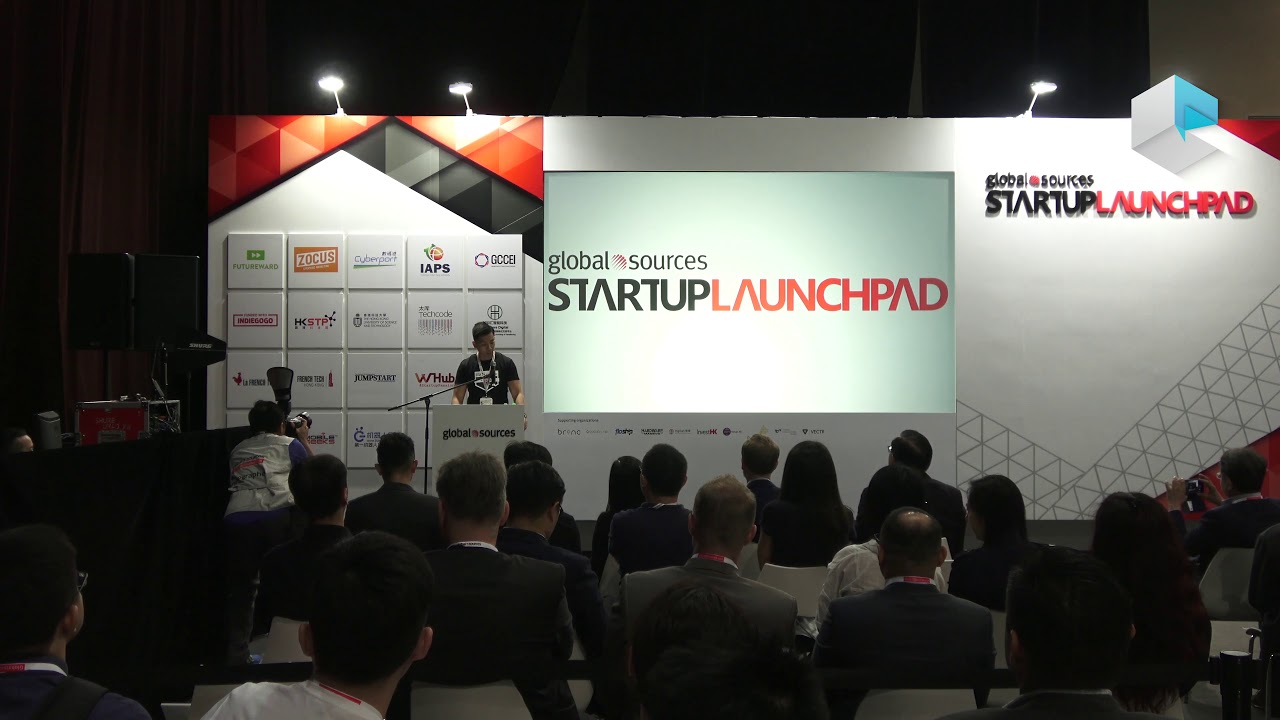
  • Startup Launchpad Spring event focuses on blockchain

    Startup Launchpad Spring event focuses on blockchain

    Ahead of the next edition, we sat down with Minesh Pore the head of Startup Launchpad, to talk us through this April’s event at Asia World Expo.

    Mishesh, tell us about yourself

    Thanks StartupsHK. I’m a highly regarded global trade expert with more than 18 years experience leading multinational organisations in corporate transformation, Intra-prenuership, innovation, international business development and strategic planning. I would say I am a well-connected and respected globally for my experience, network and knowledge of the Greater Bay area startup ecosystem, mentoring startup founders, helping startups scale up and expand international.

    What is Startup Launchpad?

    Startup Launchpad is hosted in Hong Kong every April and October. The show focuses on helping hardware and retail solutions startups scale up by meeting buyers, retailers and wholesalers from more than 140 countries. We will also be hosting a one-day conference, with a focus on blockchain as a transparency tool for supply chain. We will have two-day workshops, the focus of which is to educate startup founders on every step from initiating a business plan to working with distributors globally. We will also have pitches from the top 10 startups that will be pitching for more than HK$500,000 in prizes.

    Why should startups attend?

    Startups who want to sell their products and solutions should attend the trade shows. Startup ecosystem players who want to connect with others in blockchain for supply-chain sector and learn what the latest trends are in this arena should attend. All those who have considered launching a startup or who are at any stage of their startup journey, should attend the workshops. Also: come and listen to the pitch-competition winners, who this time come from Hong Kong, China, India, Austria and Spain.

    What are some of the standout events we should look out for?

    The must sees at the show will be:

    • AR/ VR game demos by Ubisoft and Ninebot will be on display, demonstrating the latest in eVehicle technology.
    • 200 Startups from Austria, India, Spain, China, Taiwan, the US, Singapore and Hong Kong wll be showcasing various IOT products, connected devices, eVehicles, health-tech devices, edu tech, AR / VR products and retail solutions.
      • Conference: Future of Retail – SCM Innovation (April 19 in Hall 2 at Asia World Expo). This conference will be talking about potential in automating the complicated supply-chain management, using tech innovations such as blockchain. Insights will be shared by the industry’s top practitioners. Also, we will be discussing the investment outlook in the new retail sector.
    • Workshop: Start. Make. Sell! Workshop Series for Startups. April 20-21 in Hall 2 at Asia World Expo). These workshops are designed for early-stage startups, entrepreneurs or anyone thinking about hardware projects. The workshop will guide participants through the right way to start their business in the Greater Bay area, including finding the right partners, incubation programs and leveraging free trade-zone advantages; tips and advice on prototyping products; and how to validate, market and sell the product.
  • 4 Reasons Why Crypto Transactions Could Dominate the Payment Markets in the Future

    4 Reasons Why Crypto Transactions Could Dominate the Payment Markets in the Future

    Over time, the position of the payment markets in the global economy has been invariably shaped and defined by the traditional payment systems. However, as with all technologies, it is not without its pitfalls.
    While these payment systems are equipped to handle the level of transactions well enough, they still have several faults. Thus, in the bid to survive the rapid pace at which revolution is taking place globally, the payments market had to accept the innovative power wielded by cryptocurrencies.

    As a result, these traditional payment systems have to compete with cryptocurrencies for dominance. However, given the pace at which crypto adoption is going, experts believe that crypto transactions could dominate the payments market at some point in the future.
    Let’s see why.

    Crypto Transactions have Blockchain Technology as their Backbone

    With blockchain technology being the primary backbone of crypto transactions, the payments market get to experience innovations in various ways. One such way is decentralization. No one wants to wake up to find their accounts frozen for something they are not aware of. Centralized services do this to people — with central authorities in control, there is limited freedom for flexibility in transactions. PayPal, for instance, imposes daily transaction limits on users and sometimes suffers from delayed services due to many glitches.

    Blockchain technology, on the other hand, is glitch-free. Furthermore, there are no limits as users get to transfer as much money as they want to anyone they want. This, of course, is a recipe for a high influx of people into the payments market.

    Let’s Talk About Scalability

    No one wants to wait for several hours or days before getting their transactions confirmed. A slow system can be really frustrating. This is where crypto transactions stand out. Created as an electronic cash system, they are better equipped to deal with the high demand for services.

    Cyber Security

    The evolution of technology means that keeping one’s transactions and accounts protected from prying eyes is quite difficult. This is particularly true of traditional online transactions.
    With the immutable force of tamper-proof ledger system offered by blockchain, crypto transactions are safe from these threats. Blockchain technology works in such a way that transactions and data can only be added to it but cannot be altered afterward.
    Thus, with crypto transactions, chances of intercepting transfers or installing malicious software are curtailed. This is particularly the case with crypto transactions performed through cold wallets and decentralized exchanges.

    The Future is Going Cashless

    The world is increasingly adopting digital economy which means that soon fiat currencies could be ditched and replaced with different forms of electronic cash systems. The fact that cryptocurrencies were introduced to the world as digital money means they could one day be the way to go. Even though the possibility of crypto transactions being used with different businesses is limited at the moment, the future appears to be bright. In fact, cryptocurrencies like Ripple and Stellar are gradually making the cut in larger circles.
    IBM, for example, recently announced that it was adopting Stellar as its native currency. This is definitely a move in the right direction for all cryptocurrencies.

    Learn more about crypto transactions and related subjects by checking out the infographic originally published at Bitcoinfy.net.

  • Ooredoo launches global blockchain initiative

    Ooredoo launches global blockchain initiative

    Blockchain is a fast-growing digital enabler, with safe, secure, and reliable “distributed ledger” technology providing a permanent digital record of ownership that allows every part of a transaction to be verified.

    While many organizations may know blockchain powering cryptocurrency, there are wider applications of blockchain empowering solutions that can save time and money, and can enhance information security and privacy.

    According to a recent report by IDC, global blockchain spend will grow over 10-fold from $1.5 billion in 2018 to $11.7 billion by 2022.

    As a digital enabler, Ooredoo Group already works closely with public, private and academic sectors in its global footprint to develop blockchain solutions that can create new value in the digital space and enrich people’s digital lives.

    Ooredoo Group’s new blockchain initiative is an open call for innovators to develop blockchain partnerships, solutions, and protocols across business-to-business and business-to-consumer sectors.

    Sheikh Saud Bin Nasser Al-Thani, group chief executive officer, Ooredoo, said: “Blockchain will facilitate new digital business models and revenue in the next five years – helping organisations to run better and to transform people’s daily lives. Using blockchain, organisations and their customers can optimise costs, find new levels of efficiency, transparency, and trust, and enable secure digital payments.”

    For example, property developers can provide smart contracts for ensuring titles, deeds, and facilities management are accurate and secure. Banks can better track cross-border payments, and logistics companies can track and trace products. Healthcare providers can enable digital patient records to optimise treatment. Mega-event organizers can introduce virtual digital payment tokens for merchandise and food and beverage. Sports teams can have real-time athlete health and performance metrics and also manage fan loyalty programs.

    With Ooredoo Group’s Blockchain Initiative, Ooredoo aims to leverage its experience and industry-leading solutions in blockchain combined with 5G, cloud, and the Internet of Things to deliver the biggest benefits to organisations and to customers.

    The Initiative is also bringing together subject matter experts from across the company’s global footprint and business units, including small- and medium-sized businesses, commercial, digital, and legal.

    Sheikh Saud said: “Our Blockchain Initiative aims to open the blockchain floodgates, leveraging global best practices to deliver localised innovation across many of the world’s fastest-growing markets. Our open call to blockchain innovators will also explore integrating blockchain with artificial intelligence and machine learning, cloud, and the Internet of Things.”

  • Blockchain in the business of fashion

    Blockchain in the business of fashion

    Fashion brands are finally beginning to take note of the rising consumer awareness on traceability and sustainability particularly driven by the millenniums. These evolving consumers are deep diving into knowing the history of the apparels before they buy – the story behind each garment and where and how are they manufactured.

    Moreover, mere claims or information is not enough to be trustworthy unless backed by detailed sequence of data on the complete value chain necessitated in wake of some or other global brand getting exposed of unethical sourcing or not being sustainable.

    This is making fashion companies to attempt towards transforming their business models focused on delivering transparency of data – both in backend and frontend by employing the emerging technologies.

    There has been a global buzz around new technologies like Artificial Intelligence, Augmented Reality, Virtual Reality and Blockchain for some time now and the global Fashion industry has also moved in the last few years to adopt some of these in ways it firmly resisted for a long time. However, blockchain applications haven’t really seen much adoption by fashion organisations.

    So, What is Blockchain?

    According to Digital Trends, blockchain is a database that’s validated by a wider community, rather than a central authority. It’s a collection of records that a crowd oversees and maintains, rather than relying on a single entity, like a bank or government, which most likely hosts data on a particular server.

    Each ‘block’ represents a number of transactional records, and the ‘chain’ component links them all together with a hash function. As records are created, they are confirmed by a distributed network of computers and paired up with the previous entry in the chain, thereby creating a chain of blocks, or a blockchain.

    Blockchain is the technology behind digital currencies like Bitcoin and involve cryptography while in a usability sense they are just shared database or digital ledgers that publicly show a record of transactions having happened. Every time a product changes hands, that information on change in custody is recorded by the user in the ledger and entry becomes linked to every other entry (or Block) and every other copy of the ledger is automatically synchronised via internet. The interconnection among all the blocks forms a chain and the complete application becomes the blockchain. The chain of custody on blockchain provides a record of the last party to gain custody of the product. So, blockchain means decentralised structure that provides security and transparency and thus making data trustworthy.

    In broader sense, blockchain is not just technology, its impact goes beyond the industry or the society for creating a fair, safe and more transparent fashion industry.

    Applicability into Fashion Business

    Blockchain applications are not only for tracking virtual payments and financial transactions but have wider applications in securely distributing other product and supply chain information including complete database at SKU level. In other words, blockchains may be understood as indexes of standardised information or in simple sense, these are community generated data maps by brand and product.

    Most promising application of blockchain in fashion industry could be in supply chain and inventory management. What blockchain technology can enable in the fashion business is uniform real-time access to updated product information supplied by brands, a universal pathway for retailers to immediately report back to suppliers on aspects like stock levels and customer feedback, the final consumer details and many more might come along once something like this new basic building block structure is in play. Distributed nature of blockchain technology makes it superior to other tracking technologies as here the records can’t be altered, destroyed or lost.

    Blockchains have merely begun transforming apparel supply chains through technology such as track-and trace and inventory management. But as other technologies like 3D printing and AI continue to advance, the fashion apparel industry may very well see much more dramatic changes in years to come.

    Greater transparency in fashion supply chains will create new incentives for companies to change the way they do business and even how they view themselves as an organisation. If so, adoption of blockchain is only the beginning as the fashion industry may be entering a new era with vastly different forms of production and consumption.

    Advantages of Blockchain in Fashion

    • Nowadays, one of the major trends in the fashion industry is sustainability and circular economy. Today’s consumers believe in fair trade practices and hence increasingly demanding transparency and want to know where the product is coming from not only in food but also in fashion.
    • Blockchain enables fashion companies to securely communicate to the public the complete product story (DNA) for each and every fashion garment. This includes comprehensive details on all stages of product life cycle starting from design inspiration, raw materials, manufacturing and distribution to the stores and also providing visibility of all stakeholders involved in the value chain to create traceability and transparency in true sense.
    • Blockchain applications allow customers to scan the tag and discover the history of every garment and thus help in improving the customer experience.
    • Global companies like Patagonia and Everlane have been successfully betting on sustainability and supply chain transparency as a distinct selling proposition enabling customers to identify their suppliers.
    • Authenticity of branded products can be verified by both retailers and consumers since branded garments pass through the blockchain steps and hence can be tracked. This could help reducing the counterfeiting and diverting out of authentic products. Every time a fashion item moves from one place to other, its tag or code gets scanned thus recording its location with the time stamp. Consumers would be able to scanthe item and trace its journey from raw material stage to their home and would be able to ascertain if the product is real or a counterfeit. Blockchain applications can help provide protection against the counterfeiting.
    • Blockchain applications also can help fashion companies who license their trademarks or designs in tracking the sales and working out the royalty payments. Similarly, it enables design houses to document design process steps and thus having the organic evidence of ownership on the designs.

    Blockchain helps create peer-to-peer and decentralised network that connects all stakeholders in the value chain (design houses, farmers, raw material suppliers, manufacturers, transporters, distributors, retail outlets, banks, consumers and other parties of the complete supply chain). Using decentralised system, all communication between these parties will be direct and will not pass through a specific central entity. Due to its decentralised nature, the blockchain platform will not have any single point of failure and will not rely on any single entity.

    Through this technology, there could be a possibility wherein everyone from the farmer to the textile mill to the garmenting factory can communicate directly with the brand that buys from them. And, even the consumer can interact directly with the brand/design house for co-creation or customisation of the garments, influencing pricing and even co-investing in the concept.

    Given all the advantages, blockchain clearly seems to be the future for fashion, however, to speed up the application, a single and comprehensive blockchain standard adopted by the fashion industry has to come in fast.

  • Vietnamese startup launches platform for hiring blockchain talents

    Vietnamese startup launches platform for hiring blockchain talents

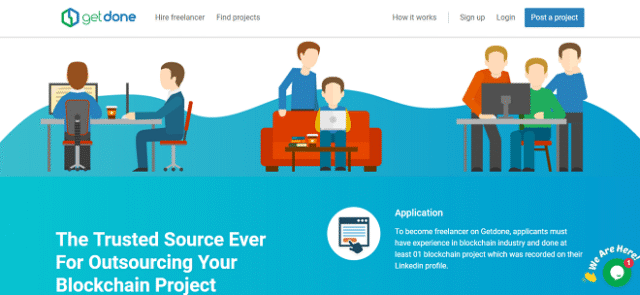
    Getdone is a platform that connects blockchain talents, who can work as full-time employees or freelancers, to global clients in blockchain industry. This platform is the universal version of freelancerviet.vn, a leading freelancer platform in Vietnam. It lists 300,000 freelancers in various categories, with a focus on blockchain and AI technology. Getdone provides innovative solutions based on a combination of the two emerging technologies to improve security and payment speed, transaction fees and reliability of talent profiles and overcome the language barrier.

    In Vietnam, the number of job searches related to cryptocurrency and blockchain doubled in 2018. However, blockchain engineers and developers currently account for only 2-5 percent of the IT workforce, according to TopDev’s annual report last August.

    Upwork’s newest quarterly index of the hottest skills in the U.S. freelance job market ranks blockchain first out of 20.

    For this reason, Getdone entered the market with the mission to be a part of the solution of hiring blockchain talent including engineers, developers, and others.The shortage of blockchain developers continued in the fourth quarter of last year even as blockchain products doubled. The demand for employees in blockchain is so high that employers and clients need to find ways to work around a shortage.

    The smart contract on the Getdone platform cuts off third parties’ intermediary role to reduce commissions and ensure security and quick payment.

    Besides, AI technology with self-recommendation function based on automatic data analysis will help connect clients and qualified job seekers.

    AI also proposes an average budget for a project to help clients understand reference budgets when they need to hire blockchain talents, and an average rate per hour of work based on a candidate’s profile.

    It will create a standard framework for the freelance job market, avoid devaluation and protect the benefits of both blockchain talents and clients.

    The new-user-support tool will help new applicants find jobs more easily through the test system. A new talent who joins the site and gets a high-test score will still get a job despite having no previous work history on Getdone.

    Getdone will provide a live language translation tool to break the language barrier and help talents work across the world. Getdone accepts payments in more than 20 cryptocurrencies and foreign currencies.

    A hedging mechanism helps stabilize the value of cryptocurrencies used at Getdone. When choosing a talent, the company deposits a sum of money with the crypto token by the time talents complete their work within a few days to several months.

    In 2018 freelancerviet won Ho Chi Minh City’s Best Innovation Project award and the Asian Rice Bowl Startup Award in the Best AI and Machine Learning Application category from NEF (New Enterprises Foundation) and MaGIC (Malaysian Global Innovation & Creativity Center).

    Getdone is also one of three Vietnamese representatives to beat thousands of competitors from across the world to qualify for the Elevator Pitch Competition, a global contest organized by the Hongkong Science and Technology Center.

  • Strategies that will differentiate leaders in Indian retail in 2019

    Strategies that will differentiate leaders in Indian retail in 2019

    Indian retail industry has seen tremendous transformation and growth in the last few years and has become one of the most favourable market for global investment. The vibrant industry, hugely shaped by changing policies and consumer behaviour is adopting technology not only to understand changing consumer preferences but also to enhance shopping experiences. Innovations have defined a gradual shift in how companies approach retail altogether.

    Technology disruptions have taken all industries in its stride and the cash and carry business is no exception, despite it dealing with B2B customers. Technology has been a pivot for the creation of personalised, ‘instant’ buyer experiences. The players who leverage technology well will be industry leaders of the next decade.

    As we have stepped in 2019, here are some retail trends that will make news this year.

    Integrated Omnichannel presence for retail analytics – Omnichannel in retail has been a high talk point and some retailers have successfully expanded their presence across platforms. However, integration is the key to success in this game. Unless the platforms are integrated, they will present an inconsistent experience to the customers, creating confusion about the product, pricing and promotions.

    Besides ensuring an unswerving experience, a bigger advantage of an integrated Omnichannel approach would be to share and cross-leverage customer behaviour data. For instance, if a customer has a specific purchasing pattern for a product offline, the retailer can use these insights for targeted marketing on various digital platforms. It will not only help the shopper find what they need but also help the retailer generate higher sales through relevant product suggestions and repeat business.

    Shaping in-store experience through proximity marketing – Internet of Things has transformed many industries and has the potential to enable real-time interaction between retailers and consumers, providing them with a truly connected experience. It not only brings about a seamless experience but also enable guided discovery and shopping, using a network of beacons in store. These beacons can help retailers in marketing, mapping the consumer movement patterns and time spent at various sites, in-store messaging, building consumer loyalty etc. This will offer the opportunity to revolutionise in-store experience for consumers.

    Increasing focus towards sustainability – The consumer dynamics have evolved considerably over the last few years. They feel connected to a company or a brand that helps them contribute to social and environmental issues. The inclination of Indian consumers towards building a sustainable future will provide an edge to brands operating sustainably.

    The dynamic regulatory environment and shifting consumer preferences are making it imperative for retailers to decrease the social and environmental impact of their operations. Companies will be seen instituting practices and initiatives to address this need, and, the players who will ace this, will be the most preferred brands for consumers in the future.

    Decreasing wastage, promoting recycling and energy conservation will be certain immediate outcomes of bringing sustainable practices within business operations. Over a longer period, the impact of sustainability will run much deeper, with local community engagement and expected economic benefits.

    Employing Blockchain to enhance credibility through responsible and ethical sourcing –Blockchain technology helps retailers with core functions including supply chain management, inventory management, authenticity verification, auto-renewal and subscription services, customer data and loyalty programmes. However, the key benefits that the technology is delivering to retailers are to ensure authenticity and improve accuracy in tracing the origin of any product swiftly.

    Incorporating blockchain technology will enable retailers to track data right from sourcing stage to customer purchase while ensuring authenticity for their customers. It will also help establish sustainable sourcing practices being followed by the company, making a stronger connect with the millennial consumer.

  • SimplyBrand blockchain platform launches token pre-sale

    SimplyBrand blockchain platform launches token pre-sale

    SimplyBrand, the world’s first blockchain-based e-commerce verification platform, launched a token pre-sale this week with strategic partner Cobinhood, a cryptocurrency service platform. By integrating blockchain, AI and crowdsourcing, SimplyBrand aims to end online counterfeiting through a safe and trustworthy digital commerce ecosystem.

    With the expansion of e-commerce, brands are finding it more difficult to trace counterfeit goods and prove authenticity in the highly fragmented internet space, leading to massive revenue losses and often damaging brand reputation. In addition, consumers continue to suffer from fraudulent traders of copied products.

    “For the past years, SimplyBrand has used data intelligence to successfully protect brand image and drive business results for Fortune 500 and renowned clients, including Asus and popular luxury brands,” said Shanghai-based Kaufman Chang, the founder and CEO of SimplyBrand.

    “As we usher in a new era powered by blockchain and AI technology, we believe the whole retail economy will benefit from this organic platform, which truly makes every purchase matter.”

    Chang says SimplyBrand is already a well-established company with a proven business model and trusted customers using big-data anti-counterfeiting services. Now it is expanding its expertise in machine learning and AI to a more innovative, comprehensive solution.

    “We are able to identify and verify products sold on all the major e-commerce platforms with high efficiency based on data including images, prices, locations, product description, etc. An immutable “blacklist” of counterfeit product will then be created on the blockchain for public reference.”

    Chang says this allows brands to remove offending product pages responsively and continuously help to improve AI accuracy. Within this ecosystem, crowdsourced participants who report fake products through the SimplyBrand app can earn token rewards to purchase brand privileged items or sell them on exchange, while brands can buy tokens from the exchange and use them to buy brand-protection services.

    “As a result, a virtuous cycle of loyal consumers, companies and other enforcement agencies will be created to eradicate the online scourge of counterfeit products for good.”

    SimplyBrand was co-founded by Chang and Ronnie Ng, both alumni of University of Chicago Booth School of Business. Chang is a startup entrepreneur with ventures in cloud computing software and big data security software and Ng is an entrepreneur and marketing specialist.

  • First Binance Blockchain Week Set for Singapore Next Month

    First Binance Blockchain Week Set for Singapore Next Month

    About 2,000 people from around the world are expected to attend the inaugural Binance Blockchain Week in Singapore on Jan. 19-22. The conference, which will take place at the Sands Expo and Convention Centre in Marina Bay Sands, is presented by Binance, the world’s leading cryptocurrency exchange.

    The high-profile event will serve as a platform to bring together regulators, investors, academics, entrepreneurs and technologists to discuss the current blockchain ecosystem and encourage sustainable growth in the industry.

    Binance Blockchain Week will feature more than 70 speakers, including thought leaders, top executives, academics and heads of state in a productive, yet exciting program filled with keynote speeches, panel discussions, fireside chats and exclusive networking events.

    Confirmed speakers include Changpeng Zhao, the founder and chief executive of Binance; Genping Liu, partner at Vertex Ventures; Justin Chow, head of business development, Asia at Cumberland; and Sonia Bashir Kabir, managing director of Microsoft Bangladesh, Myanmar, Nepal, Bhutan and Laos.

    “We are thrilled to host the first ever Binance Blockchain Week in Singapore, the finance and technology hub of Asia. Gathering the most notable players and thought leaders in blockchain, this will be a defining event. We look forward to many thought-provoking discussions and debates on how we can further work together to move the industry forward,” Zhao said.

    There will also be an expo featuring more than 50 booths for sponsors to showcase the best blockchain and cryptocurrency technologies.

    Secure Asset Funds for Users Hackathon

    The inaugural Binance SAFU Hackathon, which aims to seek innovative blockchain solutions to secure crypto assets, will take place at the offices of PricewaterhouseCoopers Singapore in Marina One East Tower on Jan. 19-20.

    The panel of judges includes PwC, blockchain accelerator program Tribe Accelerator and Binance Labs. Participants will have the opportunity to receive mentorships from senior leaders at companies such as the Ethereum Foundation, Primitive Ventures, Earn.com, Binance Labs and IDEO CoLab.

    Individuals and teams interested in participating in the event can submit their applications between Dec. 10 and Jan. 6.

    Twenty developer teams will be selected via pre-hackathons and direct registration on the event website. Pre-hackathons will be held around the world between December and early January.

    Only winning teams will qualify for free passes to the final SAFU Hackathon in Singapore.

    The teams winning the final will share a prize pool of $100,000 in Binance Coin (BNB) courtesy of Binance.

    For more information, check out the Binance Blockchain Week Facebook page or the cryptocurrency exchange’s Twitter profile.

  • Naver Labs, Qualcomm to team up on future tech

    Naver Labs, Qualcomm to team up on future tech

    Naver Labs and Qualcomm will work together on future technology like robotics and self-driving vehicles, the local IT company said on Tuesday. The two companies signed an agreement on Monday to combine their knowledge and expertise.

    U.S.-based Qualcomm is a well-known manufacturer of semiconductors and telecommunications solutions. Naver Labs is an affiliate of Korea’s largest portal site and is currently working on a wide array of location-based technology solutions like autonomous driving, mapping and navigation using augmented reality.

    Naver Labs said it hopes to apply Qualcomm’s latest chips and solutions to its high-tech products. The first products developed by the two companies will be unveiled at next year’s Consumer Electronics Show in Las Vegas in January.

    “We plan to offer full technology support for the successful development of Naver Labs’ products and services,” said Jim Cathey, Qualcomm’s president for the Asia Pacific and India regions.

  • Blockchain used for inter-carrier settlements in PoC trial

    Blockchain used for inter-carrier settlements in PoC trial

    Members of the International Telecoms Week (ITW) Global Leaders’ Forum (GLF), including PCCW Global and Telstra, have completed a proof of concept trial demonstrating how blockchain technology can transform inter-carrier settlement by streamlining complex transactions.

    The two operators as well as Colt Technology ServicesBTOrange and Telefonica, demonstrated the viability of a platform capable of settling voice transactions between operators within minutes rather than hours.

    The demonstration represents the first proof of concept blockchain trial to involve a multi-lateral series of relationships within the wholesale telecoms sector. It was the latest in a series of trials carried out by CLF members in collaboration with technology partner Clear, a blockchain specialist.

    The proof of concept was able to demonstrate that live data feeds could be successfully input into a distributed ledger, enabling traffic to be automatically verified and settled between two carriers.

    In a statement, the GLF said it is now reviewing its options over a potential governance structure to further develop the technology and implement a solution for the entire industry.

    “This latest PoC signals nothing less than the future of telecoms, whereby intensive manual practices can be securely automated across the wholesale ecosystem,” Colt Technology Services CEO Carl Grivner said.

    “This is a major step forward by Colt and its partners, meaning we can now invest further resources into driving both our and our customers’ businesses forward using the power of blockchain.”

  • Kakao’s blockchain gets 9 development partners

    Kakao’s blockchain gets 9 development partners

    Nine companies have agreed to develop apps for Kakao’s new Klaytn blockchain system. The public platform was developed by Ground X, Kakao’s blockchain subsidiary. It was offered on Oct. 8 on a test basis, or testnet. Kakao, Korea’s largest messenger app company, announced the introduction on Monday.

    The companies building the apps are from a wide range of industries from gaming to health care. They are planning to use Klaytn for the development and operation of dApps, or decentralized applications.

    Service operators are attracted to dApps because of their decentralized nature, transparency and ability to incentivize users through in-app rewards.

    Wemade Tree, a subsidiary of game developer Wemade Entertainment, is one of the Klatyn partners. Wemade said it wants to use blockchain because it allows for smooth and speedy operations. Wemade’s games, including its popular Legend of Mir massively multiplayer online role-playing games (Mmorpg) series, have over 200 million accumulated users.

    Piction Network, which helps web comic and novel creators retain ownership over their works while making them available for users, has also partnered with Klaytn. Piction Network plans to provide its Klaytn-powered network to webtoon platform Battle Comics, which currently has over a million active users.

    A blockchain-based food data project called Hint Chain, operated by Vital Hint, has also announced a plan to utilize Klaytn. Vital Hint first gained popularity for providing recipe recommendations through apps like Foodiest. Hint Chain goes one step further and analyzes individual tastes and eating habits. Hint Chain plans to use Klaytn to help consumers manage their eating and purchasing habits, and make this information available to restaurants, convenience stores, supermarkets and hospitals.

    Other notable industry partners include Nabu Studio, a sports simulation game developer, Airbloc, a data marketplace for businesses interested in gathering personal information for research and advertising, and Humanscape, a data marketplace specifically dealing with health information related to rare and incurable illnesses.

    Cosmochain, another partner, is a beauty information platform that incentivizes users to provide feedback on cosmetics products.

    VETTA is a crowdfunding platform for games selected by GTR, a game accelerator. Rayon connects borrowers and lenders.

    “It’s important to prove the value and utility of blockchain in order for the technology to commercialize,” said Han Jae-sun, chief executive of Ground X. “We will soon gradually begin presenting high-quality services that we worked on together with partners.”

    After the selected partners complete a test run, Klaytn plans to launch in the first quarter of 2019. Until the official release, Klaytn will continue forming new partnerships with qualified companies.

    “Service providers and developers interested in using Klaytn’s testnet can still register on the official Klaytn homepage,” said a Kakao spokesperson.

  • Samsung works with Dutch on blockchain

    Samsung works with Dutch on blockchain

    Samsung SDS said on Sunday it signed a partnership with two Dutch entities, ABN AMRO and the Port of Rotterdam, to use blockchain technologies for logistics. The IT solutions and logistics arm of Samsung will link its Nexledger blockchain product with ABN AMRO’s Corda platform by February. In doing so, it will verify whether the system is compatible with other blockchain systems.

    ABN AMRO’s system is designed mainly for financial transactions.

    Blockchain technologies, which allow for the validation of data without central management, will be used for the paperless administration of container financing and logistics, the Samsung SDS pilot project integrating container payments, administration and physical transportation.

    At present, the various processes in the handling of containers utilize separate circuits.

    “The project came after Europe took note of Korean marine logistics blockchain services,” said Kim Hyung-tae, vice president and general manager of the smart logistics unit at Samsung SDS. “It will help our global blockchain business expand and improve our competitiveness.”

    Last year, Samsung SDS led a consortium to conduct tests on blockchain-powered storage in marine transport. The consortium included companies and government bodies.

    “The ultimate goal is to reach an open, independent and global platform that operates from the perspective of shippers,” said Daphne de Kluis, ABN AMRO’s CEO of commercial banking. “This will make the logistics chain more transparent and efficient, and millions of euros can be saved in the long term.”

    According to the bank, the hope is to create an entirely new industry standard.

    “The transportation, monitoring and financing of freight and services should be just as easy as ordering a book online,” said Port of Rotterdam in a release.

    The pilot with the Dutch companies starts in January, and the results will be announced in February.

    The cooperative network will become open to other parties, according to ABN Amro and Port of Rotterdam.

  • KBank-Visa to pilot blockchain based B2B payments

    KBank-Visa to pilot blockchain based B2B payments

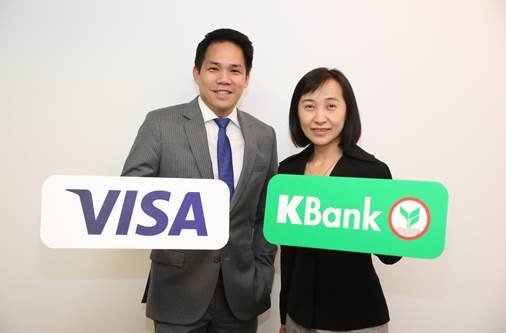
    Visa announced Kasikornbank is the first Thai financial institution to join the Visa B2B Connect pilot program. Visa B2B Connect is a new platform that Visa is developing to give financial institutions a simple, fast and secure way to process cross-border business-to-business payments.  The pilot is currently in the Bank of Thailand Regulatory Sandbox.

    Kasikornbank is the first Thai bank to be included in the pilot designed to simplify the cross-border payments.  Globally, Visa has partnered with several other financial institutions on the pilot.

    Suripong Tantiyanon, Country Manager, Visa Thailand said, “Visa is proud that we have a representation from a Thai financial institution in the pilot program.  Building on the enterprise blockchain technology, Visa B2B Connect is a new transaction platform designed for the exchange of high-value international payments between participating banks on behalf of their corporate clients. Managed by Visa end-to-end, Visa B2B Connect combines Visa’s core capabilities in security, governance and distributed ledger technology.”

    Siriporn Wongtriphop, First Senior Vice President, Kasikornbank said, “Kasikornbank is dedicated to delivering new and innovative solutions for our customers. Through our relationship with Visa, we are excited to be participating in the Visa B2B Connect pilot which is the first step of new paradigm in                               reimagining cross-border payment transactions. As the first mover in Thailand, we believe that KBank will be a leader in the industry which benefits for KBank’s enterprise clients in terms of more secured payment.”

    “Visa’s focus is to provide our financial institution partner with access to our products, tools and expertise that will enable their growth and success.  With our technological capability and network, we are pleased to partner with Kasikornbank to create a more efficient, transparent way for business-to-business payments to be made across the world,” Mr. Suripong added.

    With Visa B2B Connect, Visa aims to significantly improve the way international B2B payments are made by offering improved processing time and visibility into the transaction process – ultimately reducing the investment and resources required by banks and their corporate clients to send and receive business payments around the world.

  • Bitcoin Cash Wallet Cointext Expands to Asia via Hong Kong

    Bitcoin Cash Wallet Cointext Expands to Asia via Hong Kong

    Hong Kong is the primary city in Asia to formally be associated by Cointext, an administration which empowers anybody to send cash to mobile numbers or Bitcoin Cash addresses without Internet, applications, or records. Notwithstanding inhabitants of the Chinese independent domain, Israelis and Palestinians likewise now approach the administration.

    Cointext, an administration which empowers digital money clients to execute transactions straightforwardly over mobile  SMS, has declared that it released bolster for its Bitcoin Cash (BCH) wallet to Hong Kong, and additionally Israel and the Palestinian regions. It is private and secure for casual use.

    “These are important regions for us to connect because they’re financial centers, and Cointext gives them a simple alternative to physical cash,” said founder and lead developer Vin Armani.

    Cointext clients get to their wallets by sending SMS directions like BALANCE, RECEIVE, and SEND to a local number. It never holds funds. Another wallet is in a split second set up the minute the beneficiary gets a message through the administration.  The system does not write data to disk and stores no information about phone numbers, keypairs, or transactions pushed through the system. There’s no database layer. All transactions are settled immediately on-chain. Citizens in the new nations get a Cointext wallet by messaging the word START to their separate numbers: 85257456744 for Hong Kong and 972526230418 for Israel.

    Propelled back in March of this year in the US, Canada, South Africa, Switzerland, Sweden, Netherlands, and the UK, Cointext is a full-highlighted wallet that doesn’t require applications, records, passwords, or even access to the Internet. The administration offers an entrance ramp to the digital money community for anybody with an SMS-empowered phone.  In order to be viable, the CoinText application requires a cryptocurrency that is committed to 0-confirmation speed and on-chain scaling to keep network fees low.

    Not long ago, it was revealed that Cointext has extended its support of six more European nations. On Oct. 1, the organization reported that individuals would now be able to utilize the application to send BCH over SMS in Portugal, Estonia, Germany, France, Austria, and Czech Republic. CoinText collects a fee of 10 Satoshi (.0000001 BCH) per byte to broadcast a SEND message through its API.  In US Dollars, the fee is about $.05 (five cents). This cost is fixed no matter how much perceived value of BCH is moved on the network. This fee may differ by region due to varying costs of SMS gateways.

    Both the Hong Kong and Israel discharges have the default information in English. However, Hebrew and Chinese dialects are in progress of development, the organization said. With this most recent extension to East Asia and in the Middle East, Cointext currently caters to over 25 nations and backings of 15 dialects.

  • Blockchain Yet to Prove Its Use to the World according to Jack Ma

    Blockchain Yet to Prove Its Use to the World according to Jack Ma

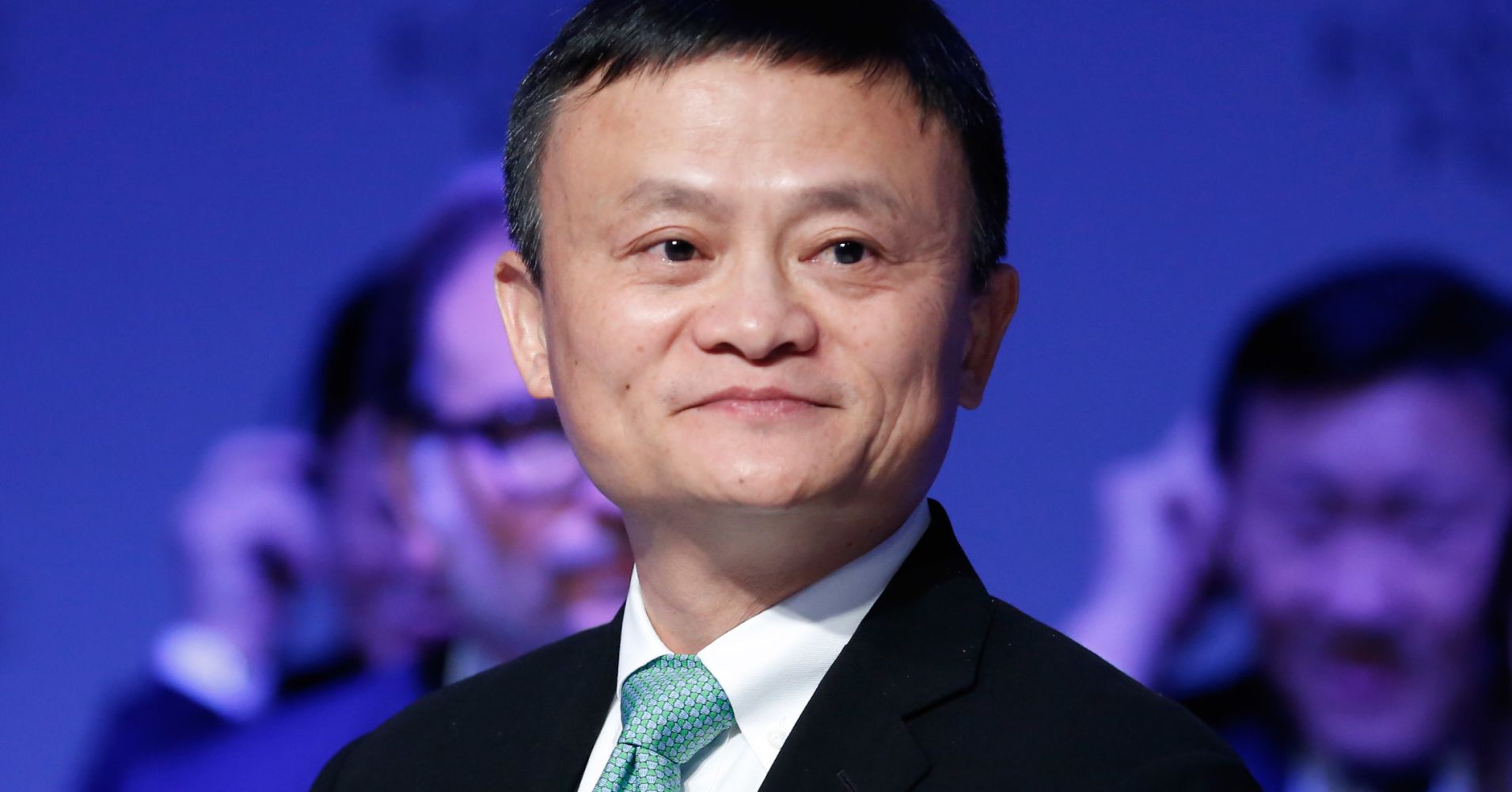
    Alibaba chief Jack Ma thinks blockchain tech is pretty meaningless – unless it helps us transform the manufacturing industry and protect the environment.

    In a keynote at World Artificial Intelligence Conference in China, the star entrepreneur shared his beliefs that budding technologies like blockchain, artificial intelligence (AI), and the Internet of Things (IoT) have yet to prove their utility to the world.

    For the record, while he did touch on blockchain, Ma focused his speech on some common misconceptions about AI and what role the technology can play in the future.

    Although the entrepreneur stopped short of revealing whether and how Alibaba intends to integrate blockchain into its services, it appears the company is no stranger to distributed ledger tech (DLT). Indeed, reports suggest Alibaba and IBM hold 90 percent of all DLT-related patents worldwide.

    “The data age is major opportunity for manufacturers to reform the industry,” Ma said at the conference. “But blockchain and IoT will be meaningless tech unless they can promote the transformation of the manufacturing industry, and the evolution of the society towards a greener and more inclusive direction.”

    Still, it turns out that wasn’t enough to stop Alibaba – and fellow Chinese tech giants Baidu and Tencent – from banning all cryptocurrency-related activities from its platform. A search for the two forums named “Digital Currency Bar” and “Virtual Currency Bar” shows that they have been temporarily closed in accordance with relevant laws, regulations, and policies.

    On the other hand, Alibaba and Tencent are cracking down on cryptocurrency transactions on their mobile payment services.

    WeChat, Tencent’s social media, messenger services, and mobile payments app, banned a series of cryptocurrency media outlets for spreading hype in violation of Chinese law.

    Now, Tencent has said in a statement that the company will also ban cryptocurrency trading on WeChat. The company will monitor daily transactions in real-time and block any cryptocurrency trading related activity.

    Alibaba Group’s Ant Financial said that it will take similar measures on its mobile payments app Alipay. The company will restrict or block all accounts that indulge in cryptocurrency trading.