Retail News CRM

Tag: cars

  • China’s Automaker Great Wall Aims To Sell 4 Million Cars In 2025

    China’s Automaker Great Wall Aims To Sell 4 Million Cars In 2025

    Great Wall Motor is targeting an annual sales of 4 million vehicles in 2025, Chairman Wei Jianjun said on Monday, as China’s top pickup truck maker sees an increase in the demand for leisure use.

    Great Wall’s revenue is expected to reach 600 billion yuan ($92.86 billion) in 2025, Wei said in a briefing on the company’s strategy at its headquarters.

    Great Wall, which sold 1.1 million cars last year, aims for 80 percent of its annual sales in 2025 to be new energy vehicles, including battery-electric, plug-in hybrid, and hydrogen fuel cell vehicles.

    It targets to sell 2.8 million cars in 2023 with a product lineup of more than 60 models, Meng Xiangjun, a senior executive at Great Wall said.

    China, the world’s largest auto market, rolled out supportive policies for hydrogen fuel-cell vehicles last year, which require local governments and companies to build a more mature supply chain and business model for the industry.

    Baoding-based Great Wall is building a car plant in China with BMW for electric vehicles. The company plans to be carbon-neutral in 2045, earlier than China’s overall target of 2060.

    Great Wall, which competes with Geely and BYD, is also planning to manufacture cars in Russia and Thailand.

  • Volvo Cars India To Set Up Digital Technology Hub In Bengaluru

    Volvo Cars India To Set Up Digital Technology Hub In Bengaluru

    Volvo Car India announced that it is expanding its Digital Technology Hub at Bangalore which will help strengthen its digital presence in India. The company has appointed Jonas Olsson as the Head of Digital Technology Hub with effect from June, 1 2021. Olsson comes from Volvo Group India, where he was HR Director Region APAC, and was part of the Group IT Leadership Team. His experience with Volvo Group IT spans over 20 years, with the past 15 years in India, and he has played an instrumental role in leading the set-up of Volvo Group’s IT-delivery center in Bengaluru.

    Volvo Cars India seeks to leverage on the talent available in the country, by being an attractive and inclusive employer and offering the value proposition to contribute to the organization’s journey of creating the cars of tomorrow.

    Jyoti Malhotra, Managing Director, Volvo Car India said, “Olsson’s rich experience will value add and strengthen Volvo Car India’s core strategy of going digital in all its customer offerings in the future. We welcome him in his new assignment and are confident that he will play a key role in strengthening our digital footprint in India”

  • Ford Boosts EV Spending, Aims To Have 40% Of Volume All-Electric By 2030

    Ford Boosts EV Spending, Aims To Have 40% Of Volume All-Electric By 2030

    Ford Motor Co on Wednesday outlined plans to boost spending on its electrification efforts by more than a third and said it aims to have 40% of its global volume be all-electric by 2030 in a move to have investors value it more like a technology company.

    Under a plan dubbed “Ford+,” the No. 2 U.S. automaker said it now expects to spend more than $30 billion on electrification, including battery development, by 2030, up from its prior target of $22 billion. It has launched the all-electric Mustang Mach-E crossover and plans to introduce electric versions of the Transit van and F-150 pickup.

    In premarket trading, Ford shares were up about 2%.

    “This is our biggest opportunity for growth and value creation since Henry Ford started to scale the Model T,” Ford Chief Executive Jim Farley said in a statement.

    Ford plans to develop two dedicated EV platforms, one for full-size trucks and SUVs, the other for cars and smaller SUVs.

    Ford and other global automakers are racing to shift their gasoline-powered lineups to all-electric power under pressure from regions like Europe and China to cut vehicle emissions. U.S. President Joe Biden has called for $174 billion to boost U.S. EV production, sales and infrastructure.

    Ford rival General Motors Co has said it aspires to halt U.S. sales of gasoline-powered passenger vehicles by 2035. The Detroit automaker said last year it was investing $27 billion in electric and autonomous vehicles over the next five years.

    Some analysts see Ford as trailing its rivals in the electrification race, but Ford officials disagree with that view, pointing to the Mach-E rollout and its other plans.

    Ahead of an investor meeting, Ford said it expects to deliver an 8% operating margin in 2023.

    The Dearborn, Michigan-based company also said it is forming a new unit, called Ford Pro, to focus exclusively on commercial and government customers, a segment Farley sees as a huge growth opportunity for the company.

    The company is targeting increasing revenue for the commercial market for hardware and related services addressable by Ford to $45 billion by 2025, up from $27 billion in 2019.

    Ford said it will also aim to develop EV batteries, from lithium-ion versions to lithium-ion phosphate for commercial vehicles and eventually low-cost solid-state batteries in partnership with startup Solid Power, in which the automaker has invested.

    Last week, the automaker announced a memorandum of understanding to form a battery joint venture with South Korea’s SK Innovation, to make battery cells at two U.S. plants.

    Ford also said it expects to have 1 million vehicles capable of receiving over-the-air software updates on the road by the end of the year, and scaling that to 33 million by 2028.

    It sees the overall market for connected functions like driver-assist technologies, new features and upgraded software content, and EV charging hitting a projected $20 billion by 2030.

    Sources previously told Reuters Ford plans to develop two dedicated EV platforms, one for full-size trucks and SUVs, the other for cars and smaller SUVs.

    The sources said Ford is planning to launch at least nine all-electric cars and car-based SUVs and at least three electric trucks, vans and larger SUVs, including second-generation editions of the Ford F-150 Lightning and Mach-E at mid-decade.

  • Android Automotive Will Be In 10 Cars By End Of 2021

    Android Automotive Will Be In 10 Cars By End Of 2021

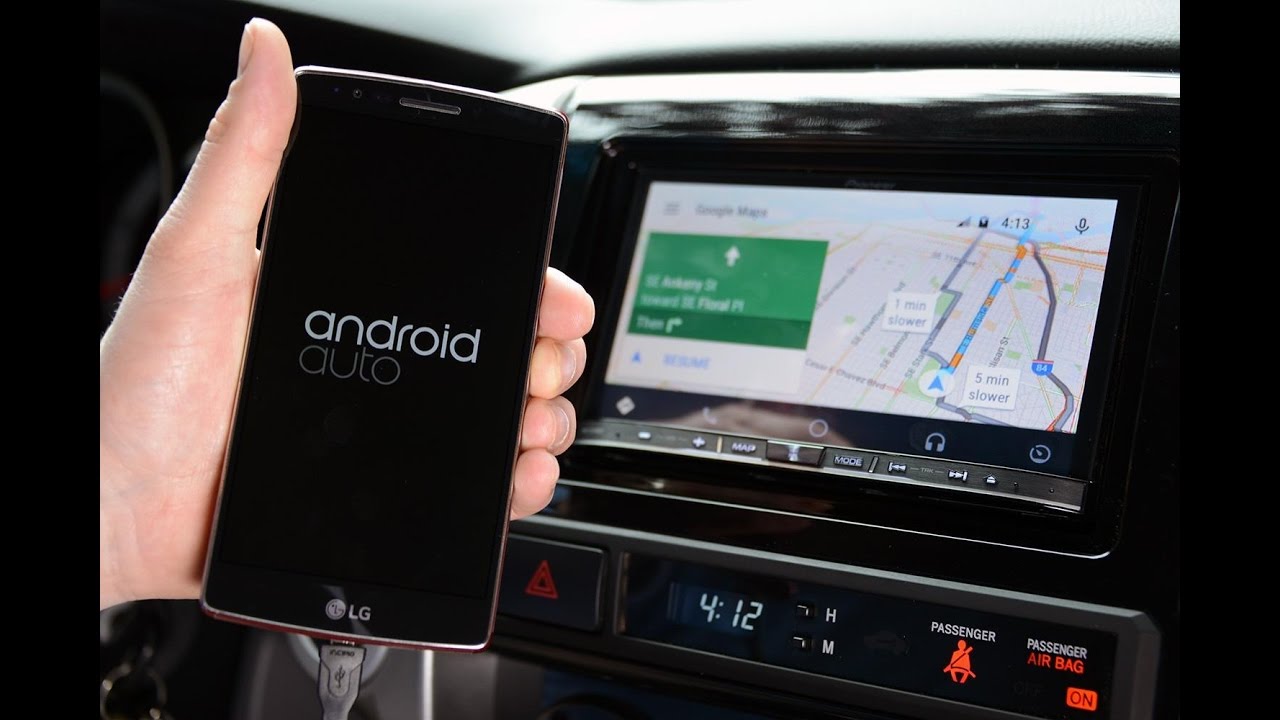
    Google has already announced at wireless Android Auto is soon going to be going to a legion of cars by mainstream manufacturers. At Google IO 2021, it also announced a new digital car key feature that works via NFC and ultra-wideband. It is also saying that we will see 10 new models based on its Android Automotive operating system by the end of the year. Android Auto and Automotive are different. Android Auto is a technology that basically allows the user to beam and mirror the smartphone interface and features using the infotainment system onto the car, while Android Automotive is a full car operating system based on Android.

    Google has partnered with GM and Renault in addition to its existing partnership with Volvo and its electric subsidiary Polestar. It has also added Nissan and Ford to the list. Overall there will be more than 10 car models. This means the new GM Hummer EV — yes, it will be based on Google’s new car operating system.

    After facing a strict fine in Italy, Google is also making it easier for third-party app developers to bring their navigation, EV charging, parking and media apps directly to the car interface. Android for Cars App Library is being extended to support the Automotive OS. This way developers can make one app that works both with the core Android OS for gadgets like phones and tablets and Android Auto. It also means that one app can work across different makes and models. This wasn’t possible earlier which added friction to the process of bringing new apps to Android Automotive.

    Google is working with a bunch of  Early Access Partners — Parkwhiz, Plugshare, Sygic, Chargepoint, Flitsmeister, SpotHero and many more to bring their apps to Android Automotive. Already third-party apps like Spotify support Cars App Library for Android Auto, now with that being extended to Automotive, that app should be presumably coming to cars using Android Automotive.

    Android itself is based on Linux and 2 years ago, Google modified it further to work on cars as an alternative and more scalable option to Android Auto which was running on the phone but the interface of the phone was being beamed on to the car using a USB connection or a combination of wifi and Bluetooth. This mean core Google features like Maps, and Assistant were embedded inside the car on a system level.

    The first cars based on this system were the Polestar 2 and the Volvo XC40 Recharge which is also coming to India later this year.

  • CEO Mary Barra Bets General Motors Can Grow Beyond Cars And Trucks

    CEO Mary Barra Bets General Motors Can Grow Beyond Cars And Trucks

    Pam Fletcher wants to change the way General Motors Co makes money. The veteran GM engineer’s Global Innovation team is looking for new enterprises to expand the automaker’s sources of revenue well beyond vehicle sales and is incubating ventures from commercial delivery services to vehicle insurance, to address future markets worth an estimated $1.3 trillion. That doesn’t include flying cars, a market sector that alone could be worth $1.3 trillion, Fletcher told Reuters.

    On a recent video chat, Fletcher counted silently before answering how many ventures her team is shepherding. “Just under 20,” she said.

    The fact that GM is now incubating its own startups – with its corporate venture arm investing in dozens more- underscores Chief Executive Mary Barra’s sweeping effort to remake the largest U.S. carmaker. The goal is to become a diversified purveyor of mobility services – the automotive equivalent of Apple, with revenue that rolls in monthly or quarterly from software and services long after the initial product is sold.

    For legacy automakers such as GM, Volkswagen and others attempting to overhaul and transform their businesses, that task is daunting, according to Evangelos Simoudis, author and adviser on corporate innovation strategy.

    “The technologies incorporated in the software-defined vehicle will require areas of expertise that one routinely finds in technology companies rather than in automakers,” he said.

    Barra’s push to transform GM’s century-old business model is already having a significant impact – even though the first of a new generation of electric vehicles she has promised is still months from launch. GM returned $24 billion to shareholders in dividends and stock buybacks between 2014, when Barra took over, and early 2020. But those buybacks were suspended indefinitely when the pandemic hit last spring. Now, Barra told Reuters, the company has more productive uses for its money: Investing in electric vehicles and expansion of business lines that promise recurring revenue streams.

    GM’s new ventures could add tens of billions to the future revenue, Barra said, and push operating profit margins above the current 8% it achieved in 2020, and the 10% it has targeted long term. “We have very significant growth opportunities and different margin opportunity initiatives to invest in,” she said in a video interview. Barra’s shift from stock buybacks to investing in recurring revenue services, coupled with a drive to make GM an all-EV company by 2035, has achieved in one year what a decade of cost cuts and cash returns to shareholders could not.

    GM’s share price over the past six months has broken out of the range it was stuck in since the company’s post-bankruptcy IPO in 2010. GM shares hit a post-2010 high of $62.23 on March 18 and are up nearly 50% for the year. Still, GM’s $90 billion market cap lags Tesla Inc’s $600 billion valuation by a wide margin, reflecting doubts among investors that a 113-year-old Detroit manufacturer can keep up with an 18-year-old Silicon Valley company that has no technology or workforce legacy burdens to slog through.

    “I understand why people may be skeptical (of GM) because this is a company where we have seen revolutions being announced over the last half century and for some reasons it wasn’t authentic,” says Jeffrey Sonnenfeld, a dean of leadership programs at the Yale School of Management.

    Barra, he said, “has the authenticity and legitimacy to pull it off in a way that a lot of other people wouldn’t.”

    Barra’s effort to remake GM’s business relies on an executive corps that mixes long-time GM managers like herself – Barra has worked at the company for 40 years – and recent recruits from outside the auto industry.

    “We’re marrying people who really understand the auto business with people who understand these other businesses that we think are growth opportunities,” Barra said.

    A new venture that combines several aspects of GM’s approach is BrightDrop, a unit that will provide electric vans and related hardware to commercial delivery firms, starting with FedEx, along with support services from fleet management to predictive analytics.

    GM rival Ford Motor Co is introducing its own electric delivery van and expanding support services to defend its leading share of the U.S. commercial vehicle market of more than 40%.

    BrightDrop, one of the first “graduates” of Fletcher’s innovation incubator, started life less than two years ago as an idea initially dubbed Smart Cargo.

    Fletcher’s team started incubating Smart Cargo in September 2019, about the same time another GM group was working on the company’s future electric vehicle portfolio. The “big idea” – marrying an electric van with the software- and data-driven delivery services business – was hatched in February 2020.

    The enterprise gained additional traction in late 2020, when GM recruited longtime tech entrepreneur Travis Katz to become BrightDrop’s president and CEO.

    Ultimately, GM’s leadership wants BrightDrop to operate independently and cultivate “outside ideas and new ways of thinking,” Katz told Reuters.

    “We expect BrightDrop to be a very big and very profitable business,” he added. Eventually, “there will be a lot of learnings from the BrightDrop experience that will flow back into GM.”

    Barra also is building GM’s long-standing OnStar telematics business into a platform for selling insurance and other services that can be delivered over the air.

    Santiago Chamorro, head of global connected services, has expanded OnStar’s safety and security portfolio with new products and services incubated in-house, including OnStar Insurance, mobile safety app Guardian and Vehicle Insights, a data analytics platform for commercial fleet managers.

    Insurance, a new arena for GM, is led by outside hire Andrew Rose, who previously worked for auto insurance powers Progressive and Britain’s Admiral Group.

    Rose says GM dealers could offer policies to owners when they buy or lease a vehicle. OnStar could offer discounts to better drivers, as well as quicker claims service after an accident, and eventually could offer home insurance as part of the package.

    GM has never broken out OnStar’s financial results, and Barra won’t say if or when the company will do so.

    “OnStar is already a very significant business,” she said. “We think there are opportunities to grow it even out beyond our vehicles.”
  • Samsung To Develop Autonomous Driving Chip For Google’s Waymo

    Samsung To Develop Autonomous Driving Chip For Google’s Waymo

    Samsung Electronics recently won a project for Google parent Alphabet’s autonomous driving unit Waymo to develop chips for next-generation self-driving cars, South Korean media reported on Monday.

    Samsung will develop a chip that computes data collected from various sensors installed in autonomous vehicles or centrally controls functions by exchanging information with Google data centers in real-time, South Korean newspaper Herald Business reported, citing an unnamed industry source.

    The project is expected to be carried out by Samsung’s logic chip development division System LSI’s Custom SOC Business Team, it added.

    Samsung Electronics declined to comment regarding client company matters. Alphabet did not have an immediate comment.

  • VinFast eyes global market, to open car plant in US

    VinFast eyes global market, to open car plant in US

    VinFast plans to set up an automobile plant in the U.S. as part of its strategy to start selling there in 2022, Bloomberg reported on Tuesday.

    The company, a subsidiary of conglomerate Vingroup, did not provide details about when it will be set up or where.

    Bloomberg quoted its CEO Thai Thanh Hai as saying: “VinFast’s vision is to become a global smart electric car company and the U.S. is one of the first international markets that we will focus on.

    “We will initially develop high-end models for the U.S.”

    The company also plans to open 35 showrooms and service centers this year in California state where it has received a license to test autonomous vehicles on public streets.

    Malaysian newspaper The Star quoted Hai as saying VinFast believes it can win over American and other overseas customers leery of buying an automobile from a Vietnamese company they know little or nothing about by offering top-quality vehicles with high safety standards and advanced technology.

    The company has R&D centers in Australia, Germany and the U.S.

    VinFast, founded by Vietnam’s first billionaire Pham Nhat Vuong, began selling cars with BMW-licensed engines in 2019.

    Last year it sold 31,500 units, all in Vietnam, where 296,634 cars were sold in all.

  • Hyundai No Longer In Talks With Apple On Autonomous Electric Cars

    Hyundai No Longer In Talks With Apple On Autonomous Electric Cars

    South Korea’s Hyundai Motor Co said on Monday it is not now in talks with Apple Inc on autonomous electric cars, just a month after it confirmed early-stage talks with the tech giant, sending the automaker’s shares skidding. Wiping $2.1 billion off its market value, Hyundai’s stock slumped 4.2% by 0330 GMT. Shares in its affiliate Kia Corp, which had been tipped in local media reports as the likely operational partner for Apple, tumbled 12% – a $4.3 billion hit.

    The announcement brings the curtain down on weeks of internal divisions within Hyundai Motor Co Group – parent to both automakers – about the potential tie-up, with some executives raising concerns about becoming a contract manufacturer for the U.S. tech giant.

    “We are receiving requests for cooperation in the joint development of autonomous electric vehicles from various companies, but they are at an early stage and nothing has been decided,” the automakers said on Monday, in compliance with stock market rules requiring regular updates to investors regarding market rumors.

    Apple, known to keep product plans under tight wraps, has never acknowledged talks with the automaker about building vehicles
    “We are not having talks with Apple on developing autonomous vehicles.”

    Kia shares had jumped 61% after Hyundai appeared to confirm a local media report early in January that Apple and Hyundai were in discussions to develop self-driving electric vehicles by 2027 and develop batteries at U.S. factories operated by either Hyundai or Kia.

    “Apple and Hyundai are in discussion, but as it is at an early stage, nothing has been decided,” Hyundai said, before releasing subsequent statements that removed all mentions of Apple but said Hyundai was receiving electric car cooperation requests from parties it didn’t identify.

    Reuters reported in December that Apple was moving forward with autonomous car technology and aimed to produce a passenger vehicle that could include its own breakthrough battery technology as early as 2024.

    Apple, known to keep product plans under tight wraps, has never acknowledged talks with the automaker about building vehicles and wasn’t immediately available for comment outside business hours in the United States.

    Analysts said talks might have collapsed over leaks of the partnership plan to media, or over possible insistence by Apple that Hyundai’s role in any tieup would be that of an equipment manufacturer, rather than a strategic partner.

    “With numerous news reports over discussions between the two companies, which should have been held to non-disclosure agreements, it would have been uncomfortable,” said Kwon Soon-woo, an analyst at SK Securities.

    Kevin Yoo, an analyst at eBEST Investment & Securities, said, “It seems clear that Hyundai Motor Group has not been too happy with dealing with Apple. They made it clear that they do not want to be treated just as Apple’s supplier or manufacturer.”

  • Tesla To Recall 135,000 U.S. Vehicles Under Pressure From Auto Safety Regulators

    Tesla To Recall 135,000 U.S. Vehicles Under Pressure From Auto Safety Regulators

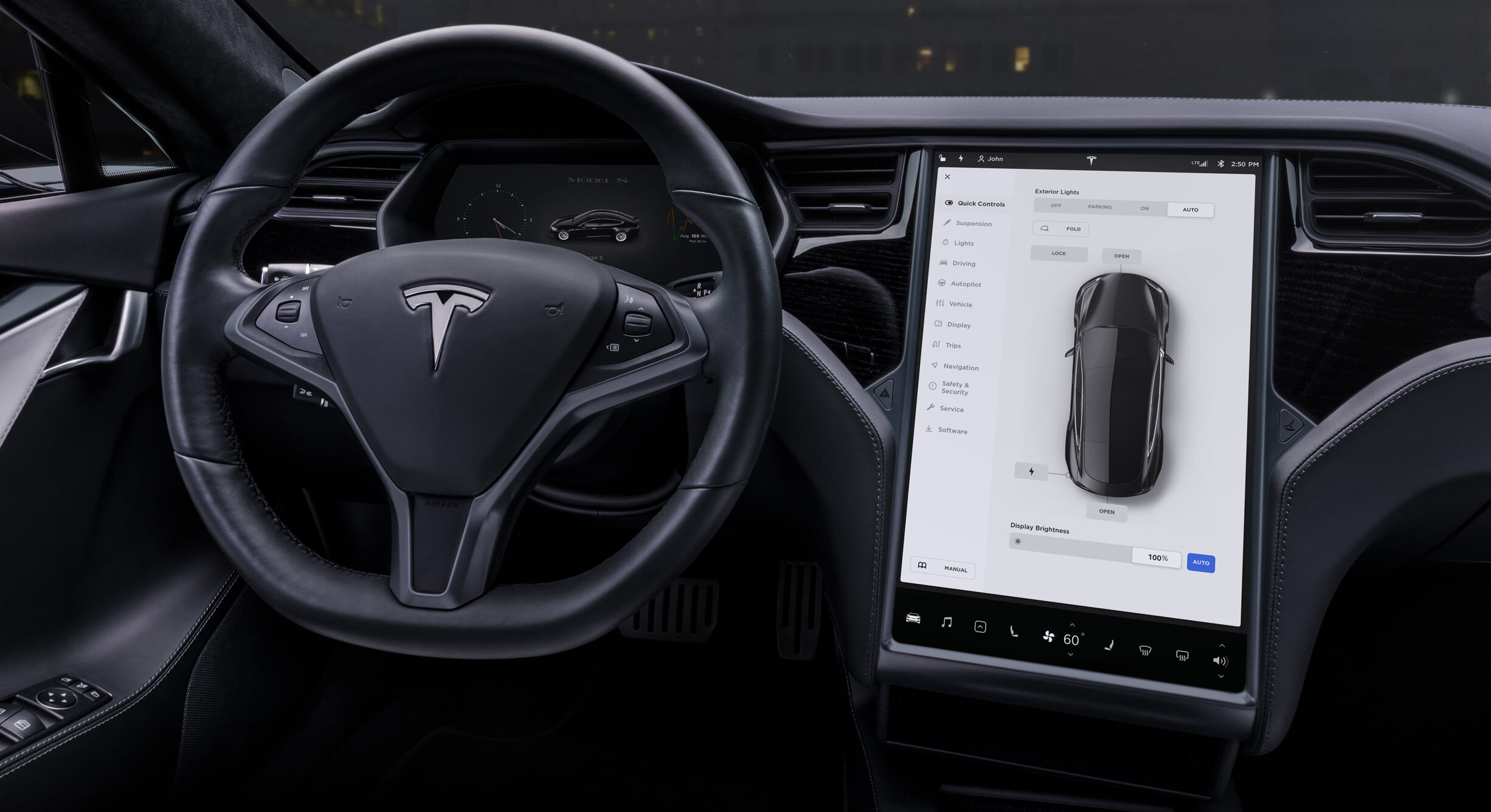
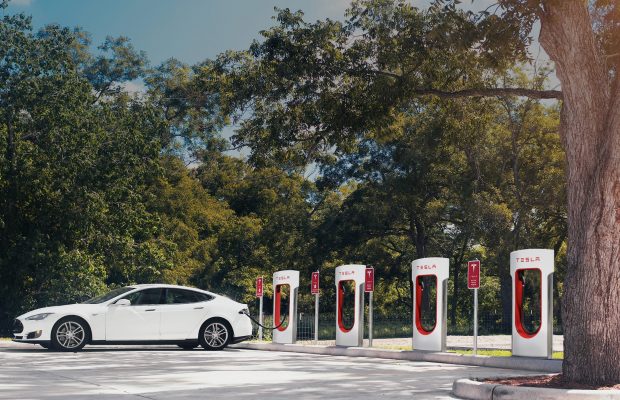
    Tesla Inc has agreed to recall 134,951 Model S and Model X vehicles with touchscreen displays that could fail and raise the risk of a crash after U.S. auto safety regulators sought the recall last month, according to a recall posted on a government website Tuesday.

    The National Highway Traffic Safety Administration (NHTSA) made the unusual recall request in a formal Jan. 13 letter to Tesla, saying it had tentatively concluded the 2012-2018 Model S and 2016-2018 Model X vehicles pose a safety issue. Automakers usually agree to voluntary fixes before the auto safety agency formally seeks a recall.

    The agency said touchscreen failures posed significant safety issues, including the loss of rearview or backup camera images, exterior turn-signal lighting, and windshield defogging and defrosting systems that “may decrease the driver’s visibility in inclement weather.”

    Tesla said in its filing with NHTSA that “in the interest of bringing administrative closure to the investigation and to ensure the best ownership experience for our customers” it agreed to a voluntary recall.

    NHTSA opened a probe in June 2020 into complaints that media control unit (MCU) failures led to touchscreen displays not working.

    The agency said other automakers issued numerous recalls for similar safety issues stemming from the touchscreen failure.

    NHTSA said in November when it upgraded its probe that it reviewed 12,523 claims and complaints about the issue.

    NHTSA said last month that “during our review of the data, Tesla provided confirmation that all units will inevitably fail given the memory device’s finite storage capacity.”

  • Cars, phones deliver one-fifth of Vingroup revenues

    Cars, phones deliver one-fifth of Vingroup revenues

    Automobiles and smartphones accounted for 19 percent of private conglomerate Vingroup’s revenues in the last quarter of 2020.

    This marked a 40 percent year-on-year increase to VND6.9 trillion ($299.45 million).

    The largest private conglomerate in Vietnam sold 31,500 cars last year, with its VinFast sedan and SUV models among the bestsellers in their respective segments.

    The group’s VinSmart phones were also among the bestsellers in Q4, 2020.

    The company saw revenues from real estate in the quarter rising 47 percent year-on-year to over VND22.2 trillion after handing over three major Vinhomes projects.

    Revenue from tourism and entertainment, however, fell 40 percent to VND1 trillion because of the Covid-19 pandemic.

    For the whole year, Vingroup’s pre-tax profit fell 11 percent to VND13.96 trillion, while revenue fell 15 percent to VND110.46 trillion.

  • Tesla To Set-up Operations In Bengaluru, Registers Indian Subsidiary

    Tesla To Set-up Operations In Bengaluru, Registers Indian Subsidiary

    The wait is nearly over as American electric carmaker Tesla is all set to set-up operations in India and zeroed down on Karnataka, as its preferred state to set-up its headquarters. The electric auto giant has registered its Indian subsidiary under the name ‘Tesla India Motors and Energy Private Ltd’, which was incorporated in Bengaluru on January 8, 2021. The company is expected to commence operations by June this year and the first product to be made available will be the Model 3 sedan, according to reports.

    According to the document filed with the Ministry of Corporate Affairs, Vaibhav Taneja, Venkatrangam Sreeram, and David Jon Feinstein have been named as directors. The company has been registered as a private unlisted company with an authorized capital of ₹ 15,00,000 and a paid-up capital of ₹ 100,000. The document also reiterates Tesla co-founder and CEO, Elon Musk’s tweet last year that said the automaker would enter India “next year for sure.

    India has been on Tesla’s radar since 2016 but plans did not materialize despite a number of speculations. It was also reported recently that state governments including Maharashtra, Andhra Pradesh, Tamil Nadu, and Karnataka had talks with the automaker to set-up operations in their region, while the company is also considering local partnerships. Reportedly, the Karnataka government has already offered a land parcel to Tesla in Tumkur, on the outskirts of Bengaluru, to set-up a manufacturing facility.

  • Maserati Grows Presence In APAC and Enters Cambodia

    Maserati Grows Presence In APAC and Enters Cambodia

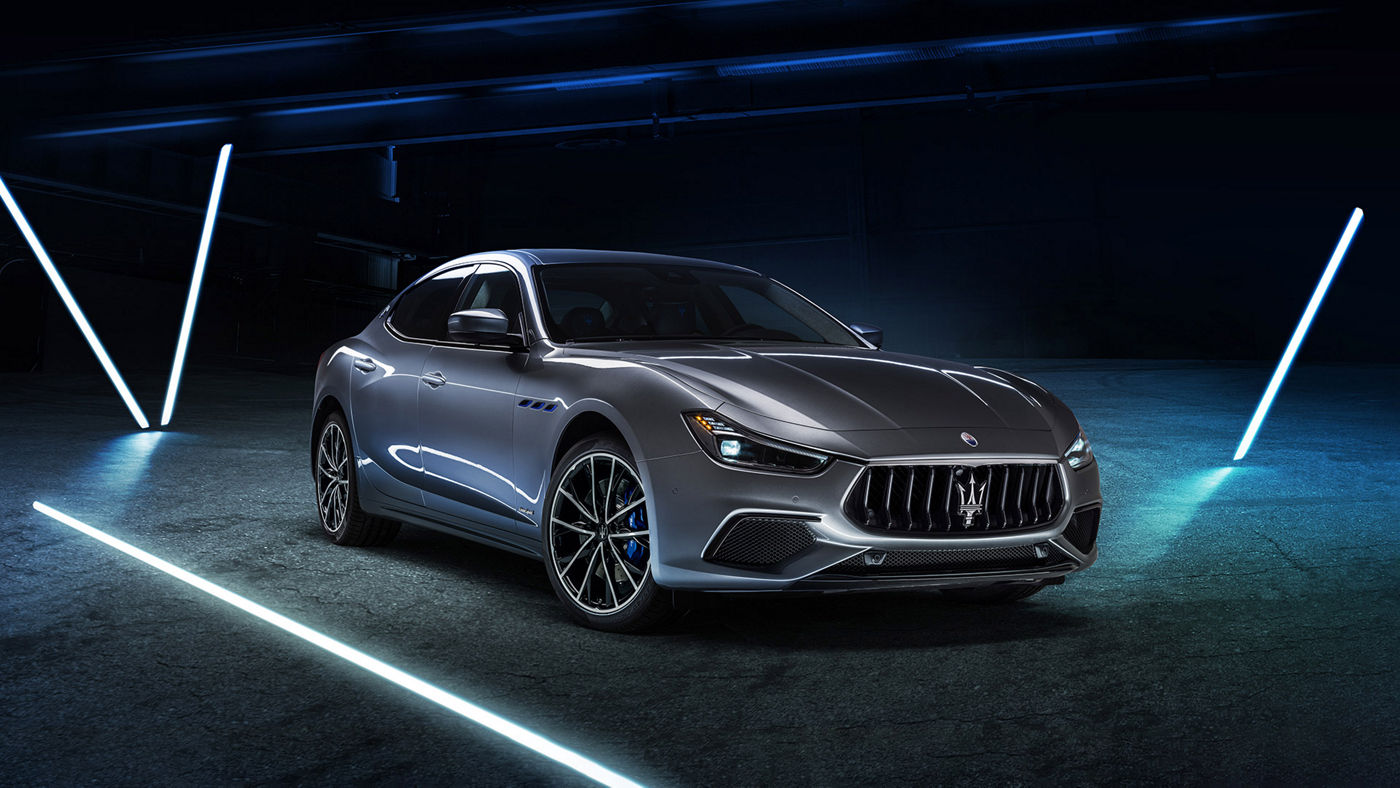
    Maserati has announced the opening of a new market in Asia Pacific as the brand enters Cambodia. Maserati is represented in Cambodia by HGB Group. The showroom is situated in Cambodia’s capital Phnom Penh. The facility includes a showroom of 610 sqm displaying the Maserati product line-up and a workshop of 1.760 sqm equipped with 3 work bays.

    Bernard Loire, Chief Commercial Officer Maserati, said, “Selecting the right partner and having great products are the foundations for success across the region. Maserati is entering in a period of intense changes with revolutionary new cars, innovations, and projects. Now for us, the focus is strongly on the future, including hybrid and electric models.”

    Maserati’s complete range will now be available in Cambodia in addition to more than seventy markets internationally. The company already has partners in Singapore, Malaysia, Thailand, Vietnam, and Indonesia in the South Asian market.

    Cambodia is a very promising market for Maserati as the luxury car market is estimated to grow at a Compound Annual Growth Rate of 14 percent from 2017 to 2020.

  • Southeast Asia’s largest used car platform unveils experience centre

    Southeast Asia’s largest used car platform unveils experience centre

    Southeast Asian online used car trading platform Carsome has launched its new Carsome Experience Centre in Kuala Lumpur.

    The move signals the opening of the firm’s B2C segment, introducing a highly digitized and transparent car-purchasing process, aimed at addressing consumer distrust when buying second-hand cars. The firm works to enhance trust and assurance throughout the industry’s supply chain in the areas of sourcing, financing, retailing, and after-sales services.

    “We want to create an end-to-end trusted experience for consumers when it comes to buying used cars,” said Carsome co-founder and CEO Eric Cheng.

    “Our Car Purchase Preference Survey showed that 70 percent of car buyers want detailed information on car condition; 60 percent appreciate an extended warranty; and 40 percent value test drive experience and money-back guarantee.”

    The firm offers a one-year warranty and five-day money-back guarantee on selected vehicles. The service also features a home-delivery option. Test drives take place in a controlled setting from the Experience Centre.

    “Carsome’s B2B business has solved a persistent issue for used-car dealers when it comes to sourcing inventory,” said Cheng. “With the launch of our B2C segment, we are now creating a new customer-acquisition channel for our partner dealers to remarket and sell more cars through our extensive marketing reach. This is an exclusive, value-added service to our partner dealers, who can now list their cars on Carsome website for free.”

  • Volvo Cars On Recovery Path But Merger With Geely On Hold For Now

    Volvo Cars On Recovery Path But Merger With Geely On Hold For Now

    Volvo Cars said it expects its business to recover in the second half of the year after reporting on Tuesday an operating loss for the first six months as coronavirus lockdowns strained supply chains and forced plant closures.

    The Swedish-based carmaker also said that its planned merger with Geely Automobile Holdings Ltd had been temporarily put on hold due to Geely Auto’s plans to list in China. The companies will resume talks in the autumn.

    “If the market recovers as we expect, we anticipate sales volumes to return to the levels we saw in the second half of 2019 and it is also our ambition to return to similar profit levels and cash flow,” CEO Hakan Samuelsson said in a statement.

    Market recovery has allowed the company to resume production in all factories, except the Charleston plant in Ridgeville, South Carolina, Volvo said.

    Volvo Cars, which was bought by China’s Zhejiang Geely Holding Group Co Ltd from Ford Motor Co in 2010, plans to merge with Geely Automobile and list in Hong Kong and possibly Stockholm – as well as on a stock market in mainland China.

    Luxury EV brand Polestar is gearing up to take on Tesla in China, while Alibaba-backed Xpeng also has its sights set on the U.S. brand.

    Geely Automobile said last month that its board had approved a preliminary proposal to list new renminbi shares on Shanghai’s Nasdaq-like STAR board.

    “In connection with this (the Shanghai listing) Geely Auto cannot discuss a potential combination of the companies,” a Volvo Cars spokeswoman said about the merger. Talks would resume as soon as Geely Auto had “ended its activities related to that”, she said.

    The Gothenburg-based carmaker reported an operating loss of 989 million Swedish crowns ($110 million) for January-June, versus a 5.52 billion profit in the first half of last year, as revenues fell 14% to 111.8 billion crowns.

    Volvo had warned in March that sales, earnings and cash flow in the first half of 2020 would decline from a year ago as the coronavirus pandemic weighed on its business. In April it announced plans to make 1,300 white-collar workers in Sweden redundant.

  • Drivers more geared towards luxury cars

    Drivers more geared towards luxury cars

    Sales of luxury cars in Vietnam surged in 2019 with the rich showing greater preference for premium vehicles in a fast-growing economy. Mercedes-Benz sold the highest number of luxury cars at 6,800 units, up 8 percent from 2018.

    The imported crossover SUV Mercedes-Benz GLC 300, priced at VND2.56 billion ($110,600), was the best-seller, accounting for 40 percent of the number of units sold by the German brand.

    With 20 models, many assembled in Vietnam, Mercedes-Benz created sales gap with the rest of the luxury market.

    Toyota’s luxury brand Lexus recorded a sales surge of 157 percent year-on-year to 1,511 units in 2019.

    Sales of the only Asian luxury brand rose after plummeting in 2018 due to a government decree limiting car imports.

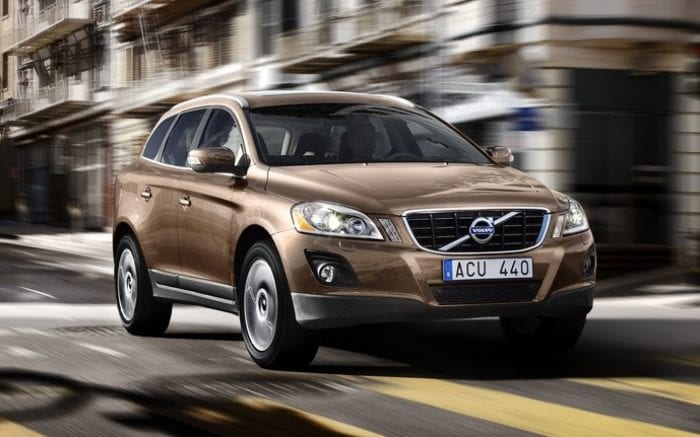
    Swedish brand Volvo recorded sales of 500 units last year, up 250 percent from 2018, with the most in-demand model being the compact crossover SUV Volvo XC60 priced at VND2.85 billion ($123,200).

    Sources said most other German brands like Porsche and BMW recorded increasing sales. Audi was the only brand with decreasing sales due to import challenges, a representative confirmed.

    Insiders say Vietnam’s fast-growing economy and expanding middle class, along with rising car discounts led to the sales surge last year.

    Manufacturers plan to export new models this year to Vietnam, giving customers even more luxury options.

    Auto sales in Vietnam last year rose 11.6 percent from 2018 to 322,322 units, with 58.8 percent of them locally-assembled, according to Vietnam Automobile Manufacturers Association.