Retail News CRM

Tag: China

  • Walmart launches Hypermarket O2O platform “Walmart To Go” in China

    Walmart launches Hypermarket O2O platform “Walmart To Go” in China

    Walmart launched its hypermarket O2O platform “Walmart To Go” within the Chinese language metropolis of Shenzhen on Tuesday. The platform consists of the newly launched “Walmart” cellular purchasing APP, To Go Service Centre, in shops for self-pickup and a number of on-line & offline e-payment choices.

    Walmart will pilot “Walmart To Go” in Shenzhen (besides Yantian and Dapeng) and supply high quality e-commerce expertise to clients with its community of 23 shops. “Walmart To Go” can be adjusted and upgraded based on clients’ feedbacks and steadily increase its service nationwide.

    By looking for key phrase “Walmart” in each iOS and Android APP shops, clients can simply obtain the APP onto their telephones. Presently the APP presents greater than 10,000 gadgets, with 1000 recent/dairy/frozen SKUs in addition to merchandise overlaying grocery, well being and wonder merchandise and family chemical compounds. Extra gadgets bought in bodily shops can be added to the APP steadily.

    “Walmart To Go” is aimed to offer high quality purchasing expertise to clients. From ordering on the APP, choosing merchandise from the shelf, to residence supply or in retailer self-pick-up, clients will expertise a considerate service by Walmart devoted groups.

    “‘Walmart To Go’ is a vital milestone as it’s an enhancement and extension to our brick and mortar enterprise. We’re uniquely positioned to combine bodily and digital retail seamlessly. Walmart needs to be an actual O2O firm. We’ll proceed to innovate each on-line and offline to satisfy the altering calls for of our clients, and would be the most trusted omni-channel retailer in China,” Sean Clarke, President and CEO of Walmart China spoke on the “Walmart To Go” launch ceremony.

    To offer one of the best supply providers to Chinese language shoppers, Walmart leveraged its expertise within the US, UK, and different comparably more experienced E-Commerce markets. Each bodily retailer acts as an unbiased customer support and operation centre with a devoted group of Walmart employees liable for APP orders. These educated specialists will cowl the order preparation course of from product choosing, packaging, to delivering or handing the merchandise to clients in retailer. For recent meals that require a sure storage temperature, the Walmart supply staff will use particular insulated luggage to ensure the identical off-the-shelf freshness a buyer expects in a Walmart retailer.

    In the meantime, Walmart works with logistics firm to construct supply group solely liable for Walmart orders.

    If clients select home-delivery providers and full an order earlier than 11 am, the merchandise might be delivered on the identical day. Supply charge might be freed from cost if the acquisition is over CNY188. Clients may also determine to select up their order in any retailer they need. The assigned retailer will put together the gadgets inside about four hours in accordance with buyer choice of the pick-up time. After clients obtain the reminder message on their cell phone, they might go to the “To Go Centre” to select up the order by order quantity.

    Merchandise bought on the APP are the identical as those bought in bodily shops. APP customers additionally take pleasure in the identical worth and after gross sales providers as in bodily shops. Walmart’s 100 % Fear Free Recent Assure additionally applies on APP. If APP customers usually are not glad with the recent merchandise they purchased, they might refund inside 14 days of buy.

    Walmart APP offers versatile cost choices for patrons reminiscent of Union Pay, Alipay and E present playing cards. Walmart bodily shops may even have particular e-payment checkouts to simply accept Alipay and different cellular cost strategies. The retail big stated it should add extra e-payments within the shops and on the APP sooner or later to offer extra handy cost providers.
  • 50% tariff reduce to spice up consumption

    50% tariff reduce to spice up consumption

    China will minimize import tariffs by about 50 % for some shopper items in June to spice up home consumption.

    Tariffs for imported skin-care merchandise will probably be slashed from 5 % to 2 %, diapers from 7.5 % to 2 %, leather-based boots from 24 % to 12 %, and woolen fits from 17.5 % to 10 %, the Ministry of Finance stated in a press release yesterday.

    Tariffs for fur clothes, cashmere jumpers and sneakers have additionally been halved to between 7 and 12 %.

    “Chinese language shoppers are very taken with shopping for clothes, footwear, cosmetics and diapers from abroad,” the ministry stated. “Decrease tariffs for such merchandise will assist increase imports, improve home consumption, and meet numerous wants of shoppers.”

    The State Council, China’s Cupboard, determined in late April to chop import tariffs because the nation seeks to spice up home consumption as extra rich Chinese language vacationers store overseas.

    However Zhang Junwei, a researcher with the Improvement Analysis Middle of the State Council, famous that slicing import tariffs alone might solely have restricted impact in bringing consumption house because the tariffs comprise a small half within the remaining costs of merchandise.

    Worth-added tax, consumption tax, distribution prices and the model’s pricing technique play a larger position in costs of imported items, specialists stated.

    China has up to now minimize import tariffs for some toddler meals, drugs and digital camera lens.

  • Consumer confidence dips in Q1: Nielsen

    Consumer confidence in the first quarter dipped one point from a quarter ago with sentiment about employment and personal finance both lowered, a latest study shows.

    The Chinese Consumer Confidence index stood at 106 in the first quarter this year, down from that of 111 points in the same period a year ago, Nielsen China said in a research report today.

    Despite dip in sentiment about employment and personal finance, the willingness to spend showed an overall increase of 2 points to 44 percent.

    “Chinese consumers’ willingness to spend is seeing a recovery especially in lower tier cities and the increasing disposable income, the low inflation level as well as the booming e-commerce development all suggest huge growth potential for consumer spending,” Oliver Rust, Managing Director of Nielsen China, said in a statement.

    Following a historic high of 118 points in the fourth quarter last year, consumer confidence index in first tier cities dropped five points to 113 points this quarter, and Nielsen suggested these are just normal fluctuations.

    The survey covers a total of 3,500 respondents in China. Consumer confidence levels above and below a baseline of 100 indicates degrees of optimism and pessimism, respectively.

    The immediate spending intention in the following 12-month period jumped 8 points to 50 percent among tier four cities’ consumers, as these smaller cities are leading the momentum of overall consumer goods growth in China.

  • Retailers in China have to adapt to thrive within the “new regular”

    Conventional retailers and shopper items corporations want to vary the enterprise methods shortly within the realities of a “new normaI” in China. Worldwide shopper companies, particularly, have to be extra versatile and complicated with their offline and on-line propositions to be aggressive, in line with a brand new report by OC&C Technique Consultants.

    The New Regular: Time to cease making excuses and adapt as an alternativeunits out a roadmap for retail companies responding to the change in progress dynamic in China. The report reveals that offline targeted companies who used to see the retail progress of nearer 13-14 % earlier than at the moment are seeing nearer to 7-Eight % if they’re nationally distributed and even as little as Three-Four % if they’re extremely targeted on tier one and two cities. Equally, these companies which might be under-exposed to well-performing areas of the market, reminiscent of on-line and decrease tier cities, have seen their progress charges halved up to now two years.

    A number of the largest offline operators reminiscent of grocers, malls and electrical shops, have skilled particularly troublesome occasions as they’ve been depending on additional area to drive progress. Many overseas shopper items corporations additionally suffered because of the emergence of home on-line gamers with their very own shops hosted by Tmall, inflicting many shoppers to shift away from established, worldwide manufacturers as they transfer on-line.

    “There’s nonetheless loads of progress to be present in China, nevertheless corporations must be nimble to profit from it. Accepting this new regular actuality, understanding the right way to faucet into these areas of market progress, after which planning and investing appropriately for the longer term will put retail and shopper items companies on a stronger footing,” says Richard McKenzie, Companion, OC&C Technique Consultants.

    Regardless of considerations over slower, and even destructive progress for some retailers, China continues to increase far faster than most different world markets. With ranges of private disposable revenue remaining excessive and shopper confidence nonetheless robust, the fast problem for retailers and shopper items corporations is to turn out to be profitable on-line, because it now accounts for over half of retail market progress.

    There are 4 key actions that shopper companies in China have to be contemplating as a part of coping with this modification in progress dynamic:

    1. Be practical about underlying market and price range appropriately: So as to carry out like the general market, multi-nationals particularly have to undertake a extra balanced strategy that provides applicable consideration to the expansion pillars of on-line and decrease tier cities.

    2. Offline is way from lifeless however does deserve much less focus: Though nonetheless the most important channel for many retailers, an excessive amount of of a spotlight might maintain again the enterprise for embracing the quicker shifting on-line market.

    Three. Look to decrease tier cities: Extra engaging than ever as a supply of progress, companies want to make sure they’ve entry to those shoppers in decrease tier cities, though the size of alternative might be very totally different for every enterprise and any strategy will must be tailor-made.

    Four. Constructing the correct proposition for progress in every channel: The expansion and pricing dynamics of every channel are radically totally different and must be assessed individually, relative to each a enterprise’s personal efficiency and people of its rivals.

  • Metro China upgrades e-commerce platform to offer seamless buyer expertise

    Metro China upgrades e-commerce platform to offer seamless buyer expertise

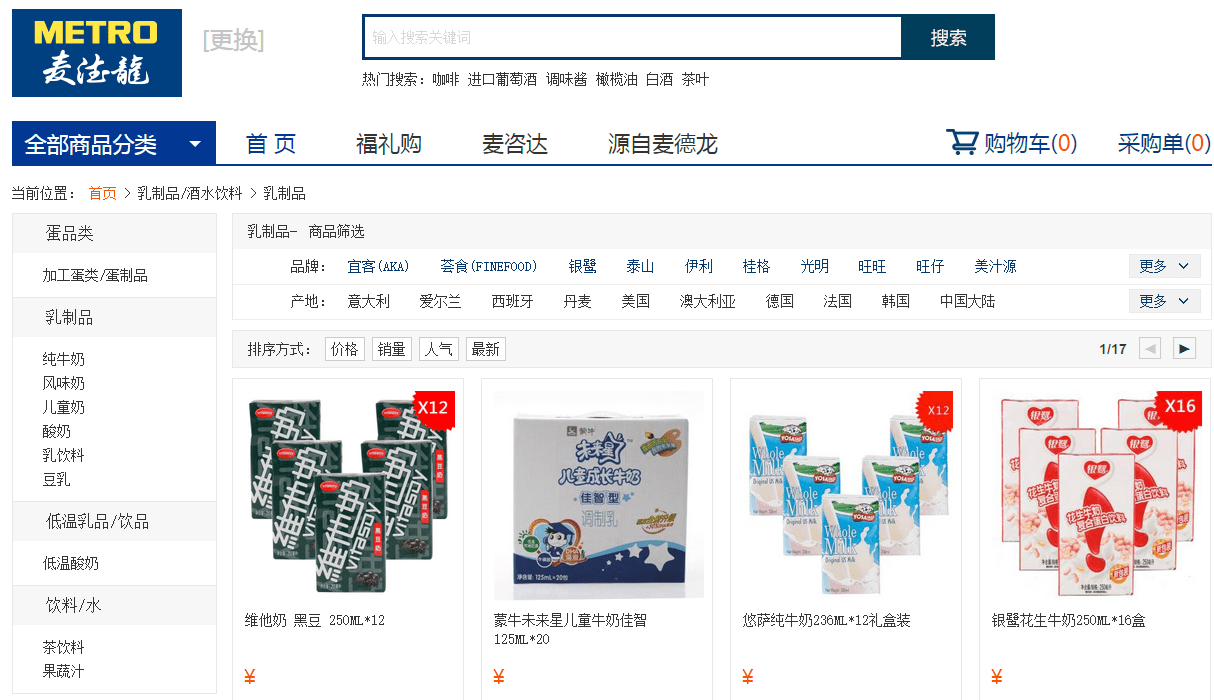
    Metro China has improve its e-commerce platform metromall.cn – which integrates on-line, offline and cellular channels for a seamless buyer expertise, the wholesaler stated on Tuesday.

    With an optimized consumer interface and location-based providers, Metromall synchronizes with the wholesaler’s offline shops, overlaying over 20,000 merchandise. Metro delivers all on-line orders instantly from native wholesale shops, not solely shortening supply time but in addition making certain product high quality. The platform gives clients handy and environment friendly decisions of products receiving, similar to residence supply or in-store pick-up.

    Ever since Metro entered China market in 1996, the wholesaler has adopted a membership system, and picked up knowledge from over four million shopping for clients with a purpose to present custom-made options and providers. By tapping into this wealthy database, the upgraded e-commerce platform will additional strengthen Metro’s buyer relationship administration.

    The Metro e-commerce platform at present covers 39 shops in 21 cities in China, and can unroll throughout all Metro shops in China by the top of 2015.

    “E-commerce is certainly one of our strategic channels to drive for progress in China market. We’re decided to reinforce buyer expertise and additional broaden enterprise by means of leveraging the facility of e-commerce,” stated Jeroen de Groot, President of METRO China.

    “Our Metromall not solely integrates online-to-offline, but in addition incorporates an revolutionary cellular perform. We’re assured this platform will allow us to offer extra thrilling options and seamless buying expertise to our core goal skilled clients, serving to them to be extra profitable out there.”

    The cellular app for Metromall permits clients to scan barcodes and determine product options, construct purchasing carts, place orders, and check-out. The app’s highly effective database consists of product barcodes of all articles in offline shops apart from recent and ultra-fresh merchandise. Clients also can comply with Metro’s WeChat to acquire promotional info of Metromall and place orders on their cell telephones.

    Leveraging its international procurement community, Metro Group is about to enter the free-trade zone this yr, partnering with China’s famend cross-border e-commerce platforms, to offer shoppers with a broader vary of high-quality imported items.

    Metro China is dedicated to offering protected and high-quality merchandise, and is the one wholesaler in China with all shops to function in accordance with Hazard Evaluation and Essential Management Factors requirements to make sure that the processes of receiving, processing, storing and promoting items are hazard-free.

    Additional illustrating the wholesaler’s dedication to meals security, Metro has developed an business main traceability system, which data all course of particulars from farm to market. Just by scanning product barcodes, clients can view the whole product lifecycle, together with the place it was grown, the way it was licensed, and the logistics concerned.

    The newly-upgraded e-commerce platform has enabled Metro to create a closed, online-to-offline loop for protected and traceable meals.

    Metro opened its first wholesale retailer in Shanghai in 1996. It was among the many first to realize permission from the China to arrange chain operations in all main cities within the nation. During the last decade, the corporate has set its foot in 56 cities with 80 retailers in operation in China. With a headcount of over 12,000 staff, the wholesaler is serving greater than three.eight million shopping for clients throughout the nation.

  • China duty cuts details released

    China’s mainland government will halve duties on imported clothing, accessories, skincare products and nappies from Monday June 1.

    The China duty cuts were first flagged early this month as Beijing’s lawmakers sought a way to revive flagging retail sales growth and encourage locals to spend more at home rather abroad.

    The cuts are aimed at incentivising travellers to purchase luxury goods from local retailers rather than abroad, and discourage cross-border trading, especially through Hong Kong.

    The duty cuts average 50 per cent and will go a long way towards addressing an imbalance where mainlanders can pay as much as 40 per cent premium on foreign made goods due to import duties and other taxes.

    While the biggest impact of the duty cuts will be on luxury goods, Hong Kong’s border traders and cosmetics and personal care chains will take a significant hit. The mainland government has already clamped down on cross-border runs, limiting mainlanders to one trip a week to Hong Kong. That has reduced sales of nappies, cosmetics and infant milk formula in Hong Kong, for resale in Shenzhen and beyond.

    Hong Kong General Chamber of Pharmacy committee member Cheung Tak-wing told the South China Morning Post that local pharmacies had seen sales drop by one-fifth in April year-on-year. Drugstores in the northern district were hardest hit by the loss of bulk buyers from across the border.

  • Walmart reduces Li & Fung reliance

    Walmart reduces Li & Fung reliance

    Walmart, the world’s largest retailer, says it can take in-house a few of the inventory sourcing it has beforehand contracted out to Li & Fung subsidiary Direct Sourcing Group.

    It expects by dealing with its personal sourcing, it should scale back prices in its provide chain.

    Wal-Mart stated in a press release: “We have now made a enterprise choice to switch sure sourcing features for Wal-Mart in-house, and as such will work collaboratively with DSG to make sure a clean transition over the subsequent a number of months.”

    DSG retains the enterprise of sourcing merchandise for Walmart’s Sam’s Membership operation, which has 648 shops within the US.

    The US firm has partnered with Li & Fung for nearly 5 years. On the time the contract was introduced in 2010 the 2 corporations estimated the sourced merchandise can be value round US$2 billion a yr. They stated they might type a three way partnership, Direct Sourcing Group.

    However two years later Walmart backed out of that plan, deciding to not take up its shares however to retain Li & Fung as a sourcing provider.

    The Hong Kong firm has declined to touch upon the information, first damaged within the Wall Road Journalnewspaper and subsequently reported by Reuters.

    Reuters quoted a analysis word by UBS analyst Spencer Leung, saying Walmart’s transfer was unlikely to have vital monetary influence on Li & Fung, however “will almost certainly set off different main retailers to evaluation their sourcing preparations (with Li & Fung)”.

    Trend model Kate Spade earlier this month stated it had taken sourcing of equipment in-house, however would proceed to make use of Li & Fung for sourcing clothes provides and different providers.


  • Xiaomi in US, Europe check

    Xiaomi in US, Europe check

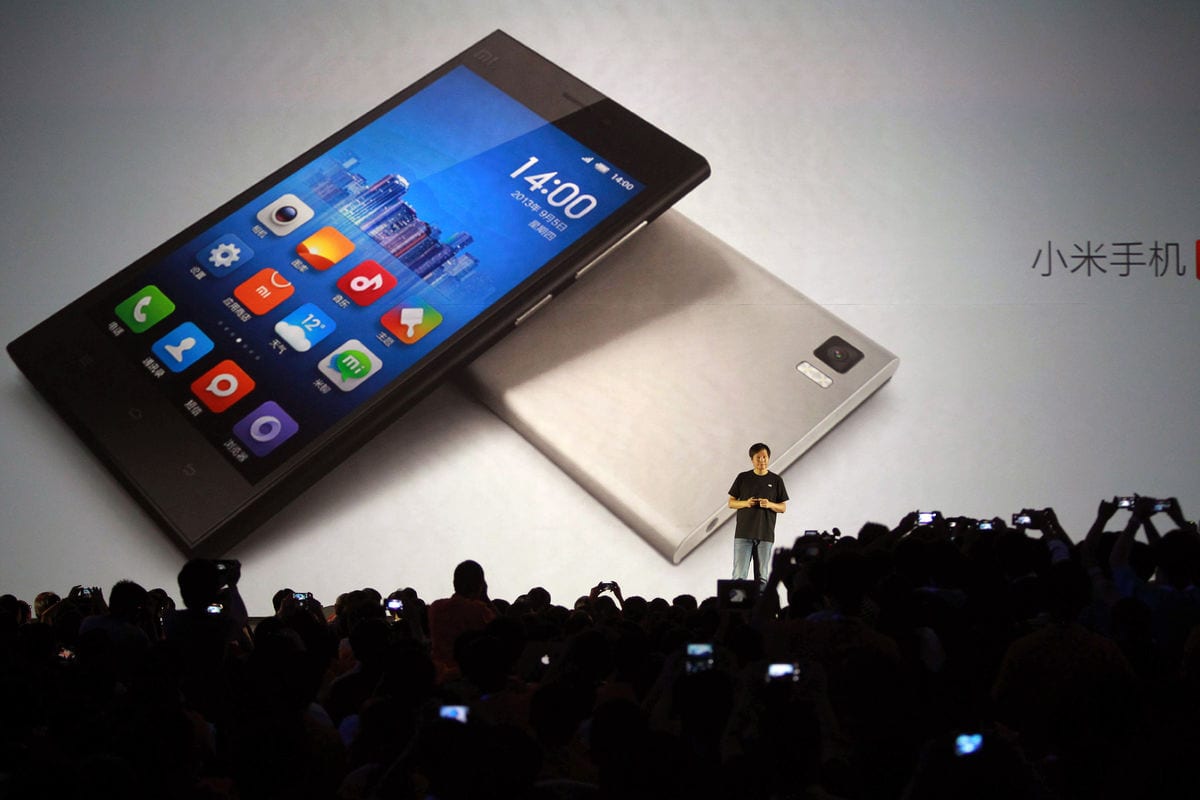
    China’s market main smartphone firm Xiaomi is making what’s being interpreted as a tentative step into the US and Europe.

    The fast-growing younger firm, which sells extra telephones in China than another handset maker has but to open its first retailer outdoors Higher China – however final Friday, it quietly switched on an internet site promoting equipment and electronics – however not telephones – to People and Europeans.

    In line with a report on The Verge https://www.theverge.com stories, Xiaomi opened a website promoting restricted quantaties of simply 4 merchandise in a “beta check sale” to residents of the US, UK, Germany and France.

    This launch line-up of merchandise features a US$14.99 health tracker, a pair of US$79.99 headphones, and two sizes of USB energy packs: a $9.99 5,000mAh mannequin able to two full iPhone expenses and a bigger, 10,400mAh model that bought for $13.99.

    The corporate inspired guests to create their accounts on the location, clearly a way to start out constructing a database of potential clients in every market.

    Xiaomi, an organization now value US$46 billion, is scheduled to open its first retail retailer – dubbed a Mi Retailer – outdoors mainland China, in Hong Kong this week.

    In response to The Verge, Xiaomi’s VP Hugo Barra introduced a transfer into the US and Europe earlier this yr, however wouldn’t say when its low-cost, however feature-packed smartphones may go on sale.

    “On the time, Barra cited causes reminiscent of hardware certification, software program testing, and different logistical challenges as obstacles to entry for smartphones and tablets in US market,” The Verge reported.

    “Nevertheless, the corporate has but to shake the notion that it has additionally copied American corporations’ designs — a criticism that’s troublesome to disregard when taking a look at side-by-side comparisons of Apple’s and Xiaomi’s merchandise. Nonetheless, if the corporate can discover an viewers for its equipment, then its smartphone certainly gained’t be too far behind.”

  • JD.com strikes into gadget making

    JD.com strikes into gadget making

    Chinese language on-line retailer JD.com has chosen CES Asia to unveil two new devices to be bought by its JD Sensible division.

    JD Sensible is a just lately launched ‘sensible gadget platform and enterprise unit’ which has created what it describes as an ‘open ecosystem initiative’, integrating merchandise from a variety of producers seamlessly on a JD.com sensible platform.

    The brand new merchandise are a DingDong Sensible Speaker, developed in partnership with iFlyTech. It’s a voice-controlled gadget that may pull information, climate and round three million songs and four million hours of audio content material instantaneously from third get together sources on the Web and play them by way of the high-quality speaker system.

    The voice interface system may also help in schedule administration by establishing alarms, calendars and comparable planning instruments, all by way of voice instructions. The DingDong Sensible Speaker makes use of the JD+ tremendous app (referred to as “Jingdong Weilian” in Chinese language) to permit full voice management of all merchandise within the JD+ ecosystem, centralising the consumer expertise.

    JD Sensible additionally launched Changhong’s EleCloud Wi-fi Sensible Rechargeable Storage System to its JD+ ecosystem. The gadget, which equally leverages the Weilian app, is an exterior charger for cellular units that integrates the functionalities of wi-fi sharing and a excessive velocity flash drive, permitting customers to share paperwork, music and movies concurrently with as much as greater than 30 individuals.

    JD Sensible president Zhenhui Wang stated the brand new merchandise underscore JD Sensible’s shut relationships with producers and its concentrate on delivering a very built-in open platform for sensible units.

    “Leveraging JD.com’s unrivalled assets, we help our associate corporations all through the event course of, together with massive knowledge evaluation of consumer conduct, sensible cloud computing platform, fairness crowdfunding by means of JD Finance for start-ups, advertising help and entry to our greater than 100 million customers for market-ready sensible merchandise.”

    JD Sensible’s ecosystem supplies customers a handy single level of management over related sensible units from collaborating producers by means of its Weilian cellular tremendous app.

    “We’ve created an ecosystem that permits merchandise from totally different producers to work collectively on a seamless sensible platform, JD Sensible is ready to bypass the ‘ache level’ created when a consumer’s units can’t speak to one another,” stated Leslie Liu, JD Sensible’s CTO.

    “The DingDong Sensible Speaker leverages the Weilian app we now have developed to seamlessly combine into clients’ sensible house networks with a single voice command middle, avoiding the ‘bottleneck’ of closed platforms.”

    By way of its JD+ business companion program, JD Sensible builds partnerships with conventional and early-stage hardware producers across the open JD Sensible platform. Presently JD+ consists of over 100 producers, together with Haier, Hisense, Midea, TCL, Joyoung and Fotile, with a complete of greater than 400 JD Sensible-enabled merchandise. JD Sensible helps its associate corporations by means of a number of improvement levels, together with offering incubators, accelerators, technological help, go-to-market options, provide chain and cloud computing providers, in addition to entry to JD.com’s big base of upwardly cellular shoppers.

  • ​Disney opens its largest store in Shanghai

    ​Disney opens its largest store in Shanghai

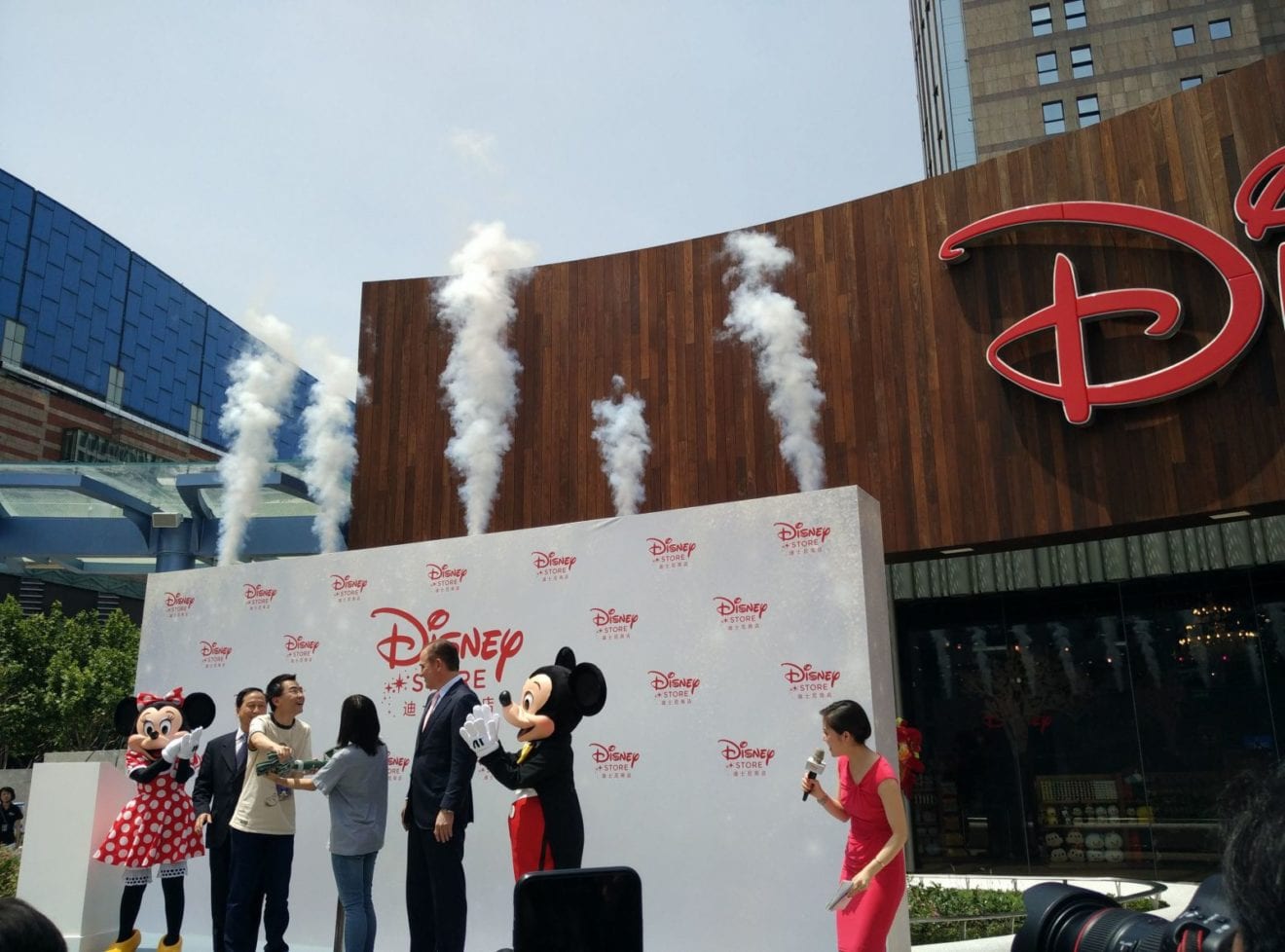
    The Walt Disney Co. has opened its first Disney Store in China, a 9,257-square-feet store in Shanghai that is the company’s largest retail store in the world.

    The new store, opened May 20, comes as Disney strives to tap into China’s growing middle class. The store is in Shanghai’s Pudong district, where Disney plans to open a $5.5 billion theme park next year.

    Disney said an estimated 40 million tourists visit Pudong’s Lujiazui shopping area, where the store is located.

    “We couldn’t be more delighted to open our first Disney Store in China, in Shanghai,” Paul Candland, Disney’s Asia-Pacific region president, said in a statement. “Disney Store plays a critical role in how millions around the world experience our brand and allows kids, young adults and families to have a uniquely fun and immersive experience while shopping for their favorite Disney, Pixar, Marvel and Star Wars products.”

    The new Shanghai store showcases a 19-foot castle at the heart of the store, featuring an hourly musical and projection show, and a Marvel-themed area with hand-sculpted statues of superheroes. Its exterior includes a landscaped plaza and Mickey Mouse-shaped roof sculpted with 8,000 LED lights visible from key tourism points such as the Pearl Tower.

  • Burberry bemoans Larger China problem

    Burberry bemoans Larger China problem

    Higher China has put a dampener on the in any other case stellar success story of revamped luxurious model Burberry.

    The corporate had earlier posted an 11 per cent rise in income to £2.5 billion and a seven per cent improve in pre-tax revenue to £456 million within the yr to March.

    However on Friday is warned that a beneficial fluctuation in foreign money would increase its backside line by £50 million would truly solely in reality ship £10 million, because of an increase in worth of the pound towards the Hong Kong and US dollars.

    Buyers have been spooked, maybe extra by the size of a monetary miscalculation which was by some means out by £40 million in simply 11 days as by any concern over the worth or efficiency of the model as an entire. Shares shed six per cent of their worth within the day’s buying and selling.

    Final yr’s pro-democracy protests in Hong Kong, together with the much-publicised shift within the demographic of mainland Chinese language vacationers hit Burberry arduous, given the territory accounts for 10 per cent of its international gross sales.

    So a gross sales drop in Hong Kong measured within the mid single digits can simply impression the underside line. So, too, wallet-tightening in China’s mainland. So whereas Burberry had anticipated some cushioning from beneficial trade price tendencies, additional evaluation since has apparently revealed much less constructive developments.

    The weakening of the euro has elevated what luxurious manufacturers confer with as ‘gray market gross sales’, the place inventory is purchased from wholesalers or shops in Europe on the market at a revenue in China and Southeast Asian markets. This prompted the model to extend Europe costs, and scale back them in Asia, affecting income at each ends, however defending the integrity of its provide chain.

    One vendor noticed that decreasing the 2016 steerage had harm Burberry, hinting the share worth influence was an unfair judgment.

    “Beneath, the numbers learn nicely and are forward of forecasts and the corporate is doing lots to make the enterprise sustainable,” one London supplier advised UK information media.

  • Jumei gross sales soar

    Jumei gross sales soar

    Jumei Worldwide, the Chinese language on-line retailer of magnificence merchandise, has revealed a 61.eight per cent improve in first quarter gross sales to US$250.6 million.

    Gross merchandise quantity lept 20.three per cent because of a 14.three per cent improve within the variety of lively clients to five.6 million, and an 18.four per cent improve in complete orders.

    Gross revenue was US$78.7 million, a rise of 15.2 per cent from the primary quarter of 2014. However expressed as a proportion of gross sales it decreased from 44.1 per cent to 31.four per cent, largely because of the firm’s shift in technique from pure play magnificence market to a broader merchandise supply.

    Founder and CEO Leo Chen stated the expansion price was stronger than anticipated for the primary quarter.

    “We efficiently accomplished our transition for magnificence merchandise from market gross sales to merchandise gross sales on the finish of 2014, and our new enterprise initiative – Jumei International, took off early this yr and skilled excessive progress when it comes to gross sales quantity. Jumei is at present one of many main gamers in cross-border eCommerce in China.

    “We expanded into cross-border child and maternity class in mid-April, 2015 and shortly achieved market main place on this new class in China. Our goal for 2015 is concentrated on prime line progress and enlargement into different cross-border classes as we glance to broaden our buyer base and considerably develop our order numbers. We’re assured that we will obtain our quarterly and yearly gross sales goal for 2015,” he concluded.

    For the second quarter of 2015, the corporate tasks complete internet revenues to be between US$270.1 million and US$277.eight million, representing a year-over-year progress fee of between 75 per cent and 80 per cent.

  • Carrefour Taiwan, China open shops

    Carrefour Taiwan, China open shops

    French hypermarket operator Carrefour has additional prolonged its footprint in Taiwan and China, with three new shops opening their doorways in current weeks.

    Carrefour Taiwan has opened its 73rd retailer – the Xi Ke retailer in Hsi Chih science park. The only degree retailer has a complete 6864 sqm gross sales space and stands above the Taiwan Railway Xi Ke station by means of which 70,000 commuters move day-after-day.

    Within the Xi Ke retailer, Carrefour makes use of digital units to supply product info and work together with clients. A video wall on the entrance attracts clients in from the exterior mall.

    Carrefour Taiwan additionally launched the primary ‘Pure and Healthful’ merchandising space in its grocery part to supply extra HOPE (Wholesome, Natural, Premium and Eco-Nature) merchandise whereas selling traceability, natural options and high quality recent strains.

    Different retailer options embrace  a sports activities space the place clients can truly shoot basketball hoops and check health or biking gear.

    Carrefour China lately opened two new hypermarkets.

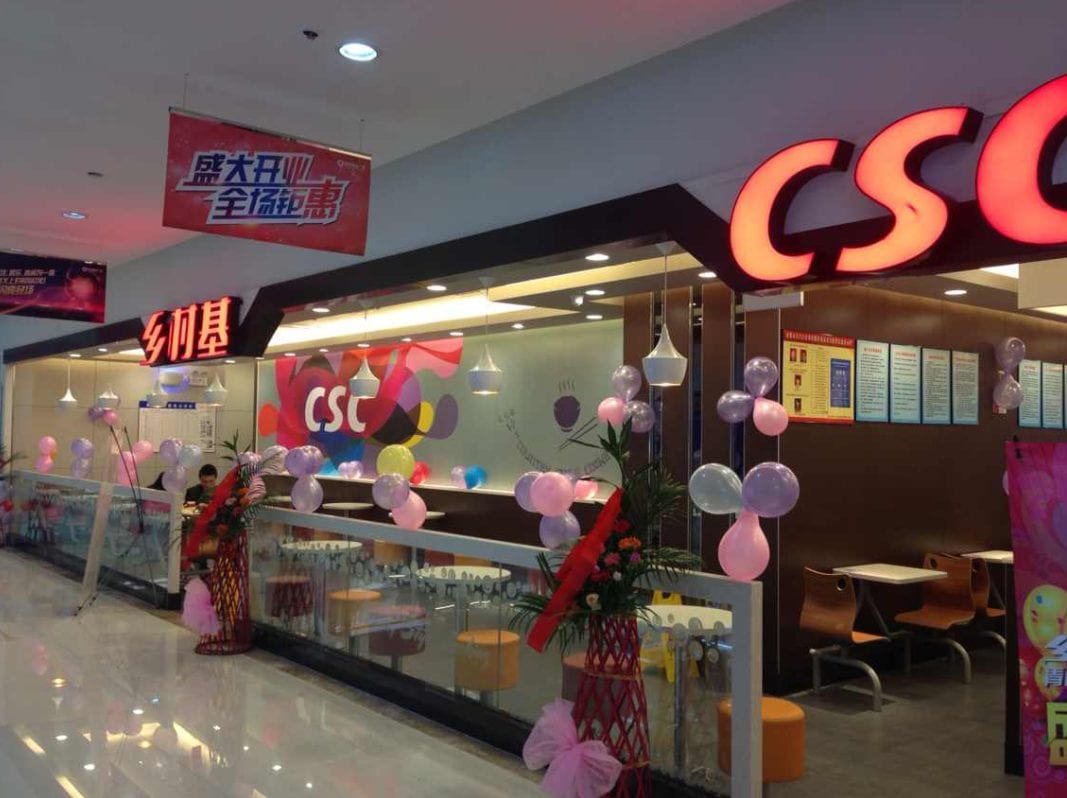
    The primary retailer to be opened within the north-east of China. With a gross sales space of greater than 7000 sqm, it has 22 checkouts and parking for 750 automobiles. This hypermarket anchors a purchasing centre of 25 shops.

    The second retailer – Hefei Mingbang Retailer – has a 7761 sqm gross sales space, 22 check-outs and parking for 780 automobiles. It’s situated in a big buying centre made up of 48 shops.

  • Competitors eats into Nation Fashion gross sales

    Competitors eats into Nation Fashion gross sales

    China QSR operator Nation Type Cooking Restaurant Chain says same-store gross sales slumped 7.three per cent within the first quarter of this yr.

    The corporate, which is on monitor to open 60 new eating places this yr, reported first quarter revenues of RMB353.5 million ($57 million), a rise of 1.9 per cent on the identical quarter in 2014. The corporate had 245 eating places buying and selling in each quarters, however as on the finish of March had 344 buying and selling, in 29 Chinese language cities, 77 beneath the Mr Rice model.

    Its eating places working margin was 12.9 per cent, a lower of 170 foundation factors from the identical quarter of 2014.

    Internet revenue for the quarter was RMB8.three million ($1.three million), in comparison with RMB11.6 million in the identical quarter of 2014.

    Xingqiang Zhang, CEO, stated the corporate was happy with continued income progress and community enlargement within the first quarter.

    “Through the quarter, we targeted on additional enhancing meals security and vitamin through the use of high-quality uncooked supplies like non-GMO oil, sea salt and cage-free chickens to our product choices. We consider these efforts to enhance meals high quality is in keeping with the evolving eating habits of our clients, can higher differentiate CCSC from its rivals and should result in greater per-order spending over time,” he stated.

    “We’re additionally engaged on modifying our picture and the eating setting in our eating places to strengthen buyer notion of CCSC eating places as a perfect location for younger individuals and households who recognize an distinctive buyer expertise and a spot for socialising.”

    The corporate stated growing competitors had led to the discount in gross sales, together with a rise in meals and packaging prices and wages.

    CCSC expects second quarter revenues of between RMB 360-380 million ($58.1-$61.three million), representing a year-over-year progress of between roughly four.four per cent and 10.1 per cent.

  • Futuristic Chengde mall planned

    Futuristic Chengde mall planned

    Sunlay Design Group has created a stunning, futuristic design for the planned Chengde mall in China’s Hebei province.

    The modern shopping center has heavy ties to China’s ancient cultural influences, inspired by classical dragon mythology and the principles of feng shui.

    Named the Chengde Tianshan Retail Center, it will offer the Hebei province a mixed-use shopping experience that fuses contemporary form with traditional methodology. Construction is scheduled to commence within a few months.

    In creating the mall’s exterior design, Sunlay faced a major challenge: such is the mountainous nature of the site, a conventional building would have lacked visibility from the street. Whatever design they settled on, the had to also maximise the centre’s usable area.

    The result is best described as “a fluid form” that defines the site’s perimeter and creates a natural flow from indoor to outdoor food and beverage and retail tenancies.

    Sunlay says that by wrapping the building around the site’s edges, the mall gained elevation necessary for it to become a landmark and focal point for the neighbouring city.

    A tall cantilevered wing rests about 20 meters above the mall.

    Besides a retail tenancy mixing local and international brands, Chengde mall, on a 27,535 sqm site, features a cinema complex, restaurants, a karaoke bar and a hotel.