Retail News CRM

Tag: connectivity

  • Philippine Government Unveils Exciting New Strategy to Boost Connectivity Across the Nation

    Philippine Government Unveils Exciting New Strategy to Boost Connectivity Across the Nation

    The Philippine government is shifting gears in its pursuit of comprehensive nationwide internet access, unveiling a strategic budget reallocation of PHP 6.5 billion (USD 115 million). This plan will bolster both the expansion of free WiFi sites and the distribution of complimentary SIM cards, bringing digital connectivity closer to those in need.

    Transforming the Free Public Internet Access Program

    In a move designed to reduce costs while enhancing internet services in public schools and remote communities, the Department of Information and Communications Technology (DICT) is revamping its Free Public Internet Access Program (FPIAP). Information Undersecretary Paul Mercado explained that the agency can effectively manage 50,000 free WiFi sites with just PHP 3.5 billion, allowing more of the budget to focus on connectivity in underserved areas.

    A Partnership with Starlink

    To expedite the rollout, the DICT is setting its sights on a long-term agreement with satellite provider Starlink to deliver internet services to 30,000 locations, with an expected annual cost of PHP 1.5 billion. To streamline funding, the agency is also pursuing multi-year contractual authority from the Department of Budget and Management (DBM).

    Boosting Connectivity

    An added PHP 2 billion (USD 35 million) will ensure connectivity in the remaining regions served by other providers. Mercado emphasized that this budget restructuring is critical to sustaining the FPIAP without needing ongoing requests for higher annual funding from the DBM.

    Empowering Communities with SIM Cards

    In tandem, the DICT is earmarking PHP 3 billion (USD 53 million) for its Bayanihan SIM initiative, which will distribute one million SIM cards to teachers and students in underserved communities. With a generous 25 GB of monthly data per beneficiary, the project will run until 2028, making internet access more reachable than ever.

    Setting Standards for Telecommunications

    Mercado highlighted an important aspect of the program: it aims to urge telecommunications companies to establish cellular towers in key locations. Providers who fall short will find themselves excluded from future SIM-related opportunities. Furthermore, telecom firms must adhere to minimum service standards or risk penalties, creating a competitive environment that benefits the end users.

    Expanding Internet Access

    As of now, the FPIAP has successfully provided internet connectivity to 18,849 sites across 9,769 locations, positively impacting over 11.2 million Filipinos. The administration is determined to expand this initiative to 50,000 sites by 2028, in alignment with the Philippine Development Plan’s goal of elevating internet penetration to 60%.

    Future Budgets and Funding Sources

    Looking ahead, the DICT’s FPIAP budget aims to reach PHP 7.5 billion (USD 132 million) by 2025, a significant increase from just PHP 2.5 billion (USD 44 million) in previous years. This program will largely be sustained by spectrum user fees paid by telecommunications companies, averaging PHP 5 billion (USD 88 million) annually. The DICT is diligently exploring cost-effective measures to ensure the program’s sustainability amidst fluctuating resources.

    Support from Telecommunications Operators

    The Philippine Chamber of Telecommunication Operators (PCTO) has expressed robust support for the DICT’s recalibration efforts. PCTO Vice President Roy Ibay remarked that the Private Sector Advisory Council (PSAC), directly reporting to President Marcos, has long championed this initiative.

    Crafting Future Connections

    PSAC is also advocating for a public-private partnership to build new cell towers, aiming to connect an estimated 25 million Filipinos across 7,063 geographically isolated and disadvantaged barangays. Who needs a magic wand when you have strategic collaborations?

    Questions & Answers

    What is the goal of the Philippine government’s budget reallocation?
    The goal is to enhance nationwide internet access by funding the expansion of free WiFi sites and distributing free SIM cards across underserved areas.

    How many free WiFi sites does the DICT aim to establish by 2028?
    The DICT aims to expand its internet connectivity platforms to 50,000 sites by 2028, significantly increasing internet penetration in the Philippines.

    What role do telecommunications companies play in this initiative?
    Telecommunications companies are required to meet certain service standards and expand their infrastructure, ensuring that underserved areas receive adequate connectivity as part of the initiative.


  • Singapore and Airbus Team Up to Revolutionize Hybrid Satellite-Terrestrial Network Technology

    Singapore and Airbus Team Up to Revolutionize Hybrid Satellite-Terrestrial Network Technology

    Singapore is making exciting strides in communications by embarking on a groundbreaking initiative to develop hybrid satellite-terrestrial networks. This ambitious project aims to ensure uninterrupted connectivity across land, sea, and air. The Infocomm Media Development Authority (IMDA) and the Office for Space Technology and Industry (OSTIn) have joined forces with Airbus through a recent memorandum of understanding (MoU) to spearhead the evolution of non-terrestrial network (NTN) technologies.

    Connecting Satellites and 5G

    This partnership underscores Singapore’s strategic intent to seamlessly integrate satellite communication into its 5G and future 6G infrastructure. IMDA and OSTIn aim to collaborate with Airbus to create a national innovation consortium that will include leading research institutions and industry players. It’s a collective effort to turn the Lion City into a hub for cutting-edge communications technology.

    Expanding Connectivity Horizons

    Non-terrestrial networks, which are pivotal to the 3GPP standards for 5G and 6G, utilize non-terrestrial assets such as low-Earth orbit (LEO) satellites, geostationary satellites, and high-altitude platforms, like drones and balloons. By leveraging these advanced technologies, Singapore plans to extend its network coverage beyond the traditional terrestrial limits, ensuring resilient, wide-area connectivity even in the most remote locations.

    Vision for the Future

    Ong Chen Hui, Assistant Chief Executive of IMDA’s BizTech Group, highlighted the vital role that satellite communications play within the digital connectivity landscape. She remarked, “By partnering with Airbus and OSTIn, we aim to propel the advancement of NTN technologies and foster deeper research collaborations within Singapore’s innovation ecosystem.”

    A notable aspect of this initiative is Airbus’s commitment, bringing its global technical expertise into play. This marks its first 5G/NTN collaboration outside of Europe, paving the way for a new chapter in connectivity.

    Anand Stanley, President of Airbus Asia Pacific, expressed enthusiasm about the project, stating, “Singapore is an ideal environment to explore cutting-edge connectivity solutions that will define the future of resilient, wide-area communications. This MoU lays the foundation for Airbus to work closely with IMDA, OSTIn, and other partners in developing a robust 5G/NTN ecosystem that supports both industry growth and national innovation goals.”

    As Singapore charts its course toward a hyper-connected future, who knew that the skies could become such an integral part of the conversation?

    Questions & Answers

    What is Singapore’s goal with the new hybrid satellite-terrestrial networks?
    Singapore aims to deliver uninterrupted connectivity across land, sea, and air as part of its digital infrastructure.

    Who are the key players involved in this initiative?
    The key players include the Infocomm Media Development Authority (IMDA), Office for Space Technology and Industry (OSTIn), and Airbus.

    What are some technologies that non-terrestrial networks utilize?
    NTNs leverage non-terrestrial assets such as low-Earth orbit satellites, geostationary satellites, drones, and balloons to expand network coverage.

  • India Strengthens Digital Infrastructure and Connectivity Commitment, Boosting Space Collaboration Efforts

    India Strengthens Digital Infrastructure and Connectivity Commitment, Boosting Space Collaboration Efforts

    India is reaffirming its dedication to forging long-lasting partnerships with BRICS nations, placing a spotlight on digital infrastructure, space sustainability, and connectivity. This commitment is not just about building technology; it’s about crafting a resilient future together.

    Connecting the Nation

    During a recent address, Minister of State for Communications, Chandra Sekhar Pemmasani, painted a vibrant picture of India’s progress in digital governance. He emphasized that this advancement marries the rich tapestry of cultural heritage with cutting-edge technological innovations.

    BharatNet, a standout initiative, has successfully hooked up over 218,000 village councils to high-speed optical fiber. On the mobile front, indigenous 4G technology now reaches an impressive 95% of the country’s population, with India boasting one of the swiftest 5G rollouts globally—more than 470,000 base stations deployed in just two years. Talk about connecting the dots!

    Meet the Challenges of Space

    But it’s not all about the ground; the skies pose challenges too. Pemmasani raised awareness of increasing satellite traffic in low-Earth orbit (LEO) and urged for structured collaboration among BRICS members. The goal? To tackle orbital congestion, prevent spectrum monopolization, and ensure that space remains sustainable for future generations. After all, who wouldn’t want a clean and clutter-free cosmos?

    He also spotlighted India’s recent regulatory strides, including the 2023 Telecommunications Act and the Digital Personal Data Protection Act, showcasing a governance model that prioritizes user rights and data sovereignty amid a rapidly evolving digital landscape.

    As the Minister lays the groundwork for India’s technological future, one can’t help but wonder if we’re on the verge of a digital renaissance!

    Questions & Answers

    What initiatives is India undertaking to improve digital connectivity?
    One significant initiative is BharatNet, which has successfully connected over 218,000 village councils through high-speed optical fiber.

    How fast is India rolling out 5G technology?
    India has achieved one of the world’s fastest 5G rollouts, deploying more than 470,000 base stations within just two years.

    What challenges in space are being addressed?
    The rising satellite traffic in low-Earth orbit (LEO) is a primary concern, and India is calling for BRICS nations to collaborate in managing orbital congestion and ensuring sustainable space practices.

  • China Telecom Launches Asia Direct Cable Capacity Ahead of Schedule

    China Telecom Launches Asia Direct Cable Capacity Ahead of Schedule

    This milestone was achieved two months earlier than planned, following the completion of the ADC wet segment last November. In the past eight years, no new submarine cables have been operationalized in the Asia Pacific. This has led to a shortage of resources and created challenges in the market.

    The launch of the ADC’s capacity has been eagerly anticipated by the industry. China Telecom Global Limited, acting as the Co-chair of the ADC consortium, has worked closely with all consortium members and suppliers to overcome unexpected challenges and bring the ADC’s capacity into service ahead of schedule. This has helped to ease the strain on submarine cable resources.

    The availability of capacity will support the growth of artificial intelligence (AI), cloud computing, and big data, as well as facilitate digital transformation across various industries. Looking forward, China Telecom plans to expand its presence into international markets and enhance its global network resources to further contribute to the advancement of the global digital economy.

  • Meta to Bring World’s Longest Undersea Cable to India

    Meta to Bring World’s Longest Undersea Cable to India

    The announcement, made in accordance with the recent U.S.-India joint leaders’ statement, highlights Meta’s focus on India’s expanding digital ecosystem. The undersea network will play a crucial role in global internet connectivity, linking countries and supporting local telecom operators in delivering services.

    “Meta is investing in India—one of its largest markets—bringing the world’s longest, highest capacity, and most technologically advanced subsea cable project to connect India, the U.S., and other locations,” a Meta spokesperson said.

    This investment comes amid growing calls from telecom operators for major tech firms, including Meta, to contribute to network infrastructure development and alleviate data traffic congestion.

    According to Meta, Project Waterworth will utilize advanced routing techniques and innovative cable burial strategies to safeguard the cable system against damage, particularly in high-risk coastal regions. The cable will reach depths of up to 7,000 meters in deep-sea areas.

    A Meta spokesperson said the investment reflects the company’s commitment to economic growth, resilient infrastructure, and digital inclusion, driven by India’s increasing demand for digital services.

    The U.S.-India joint statement, released following Prime Minister Shri Narendra Modi’s visit to the U.S., also emphasized India’s plans to invest in undersea cable maintenance and financing in the Indian Ocean using trusted vendors.

    “This project will enable greater economic cooperation, facilitate digital inclusion, and open opportunities for technological development in these regions,” Meta noted. “In India, where we’ve already seen significant growth and investment, Waterworth will help accelerate progress and support the country’s digital economy ambitions.”

  • Smartphone sales tumble in Vietnam

    Smartphone sales tumble in Vietnam

    Smartphone sales in Vietnam have plunged in the first two months of 2023 as tightened spending amid rising inflation prompts the sector’s first decline in years of recent growth.

    According to an industry report, less than 2.5 million smartphones were sold in Vietnam this January and February, down 30% year-on-year.

    “This year consumers have tightened their spending, even during the Tet holiday, which has been peak shopping season for years,” said Nguyen Lac Huy, a media representative at CellphoneS, referring to the Lunar New Year holiday which fell at the end of January this year.

    Industry insiders estimate that sales since the beginning of this year have dropped to levels not seen in at least two or three years. In recent years, growth over the same period has often been within the 5-15% range.

    This decline is in line with global trends.

    Smartphone sales worldwide in the last quarter of 2022 plunged 18.3% year-on-year, according to the International Data Corporation (IDC).

    It was the steepest decline in a quarter since 2013, IDC reported. Total smartphone sales in 2022 dropped by 11.3% from 2021.

    In Vietnam, the biggest drops were recorded in the middle and affordable segments. Last year, sales of smartphones under VND5 million dropped 60% from 2021.

    “Economic difficulties have had a large impact on the low-income population, including workers,” said Hong Quan, an industry observer.

    Tightened credit policies have also prompted some retail chains to cancel their zero-interest installment payment campaigns.

    The high-end segment is also struggling. The iPhone 14 Pro Max, one of the most expensive smartphones on the market, has seen prices plunge by 25% to VND27.4 million over the last five months.

    Phan Thi Kim Quyen, a media representative of retail chain Minh Tuan Mobile, said that this year Apple lowered its latest smartphone price earlier than in previous years (in which the drop has come as late as June).

    Other retail chain representatives have said they are now lowering prices because they misinterpreted market demand trends and imported more than they should have. iPhone prices in Vietnam are now among the lowest in the world.

    FPT Shop anticipates that there will be no growth in smartphone and computer sales this year, while other chains expect a recovery in demand by early next year, or the end of this year at the earliest.

    CellphoneS is cutting business hours and staff sizes at low-revenue shops. It is also seeking rent discounts from property owners.

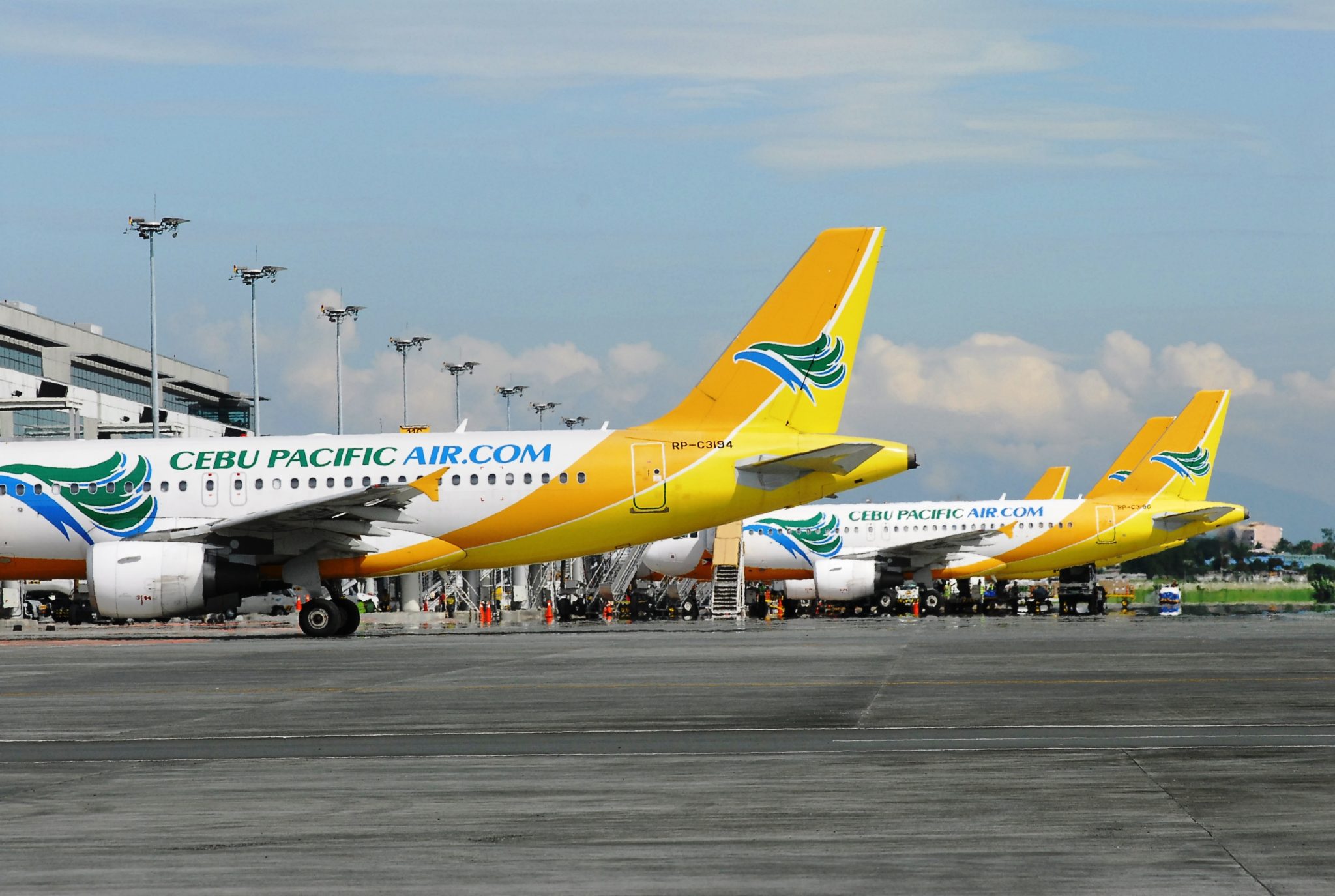
  • Cebu Pacific Equips Airbus A330neo fleet with SITA Swiftbroadband Cockpit Connectivity

    Cebu Pacific Equips Airbus A330neo fleet with SITA Swiftbroadband Cockpit Connectivity

    Cebu Pacific Air, the Manila, Philippines-based low cost airline, will equip its fleet of Airbus A330neo aircraft with an upgraded form of SITA for Aircraft’s AIRCOM cockpit connectivity technology with Swiftbroadband-Safety (SB-S).

    The AIRCOM connectivity is being factory-installed on a fleet of 16 new A330neos from an Airbus order first placed by Cebu Pacific in 2019, that now also includes a Flight Hour Services (FHS) materials management contract signed by the two companies during the 2022 Singapore Air Show last month. SITA first signed a global connectivity services distribution agreement with Inmarsat in 2017 to start leveraging Swiftbroadband-Safety within its suite of cockpit communication applications that it now brands as AIRCOM Cockpit Services.

    SB-S is Inmarsat’s Aircraft Communication, Addressing and Reporting System (ACARS) over Internet Protocol (IP) networking technology that permits previous aircraft data transmissions solely done over the legacy ACARS network to be done faster and cheaper using IP as a gateway for air-to-ground and aircraft-to-controller data transmissions and messaging.

    Sumesh Patel, President of Asia Pacific, SITA, said in a statement that “Cebu Pacific is the first airline to take advantage of these capabilities to boost safety and deliver greater operational efficiencies on their new fleet.”

    Three specific connection types are provided over SB-S, including character-based ACARS data services for Automatic Dependent Surveillance – Contract (ADS-C) and Controller Pilot Data Link Communications (CPDLC). ADS-C, CPDLC, real-time prison reporting, and flight data streaming along with aircraft performance data downloads can also be provided over the SB-S prioritized IP channel. Additionally, the regular IP channel can be used as a voice and data communication channel for Airline Administrative Control (AAC) and Airline Operations Center (AOC) applications.

    According to SITA, some of the specific applications Cebu Pacific can use on AIRCOM with SB-S that are not enabled without Swiftbroadband include real-time updates for flight optimization tools and graphical weather applications.

    The SITA cockpit connectivity agreement for Cebu Pacific comes following the airline’s announcement earlier this month that it will begin expanding its domestic network, including re-starting flights to Siargao, Surigao, and Calbayog after closing those and many other routes due to COVID-19 related travel restrictions.

    Cebu Pacific received its first A330neo in December and now has two of the 459-seat aircraft in its fleet. Mike Szucs, Chief Executive Adviser at Cebu Pacific, expects every Airbus model aircraft in its fleet to feature the new engine option variant by 2027.

    “We turned to SITA given their expertise in the aircraft domain to help us navigate the challenges and complexities of the aircraft communications landscape, and prepare us for that future,” Javier Massot, Chief Operations Adviser, Cebu Pacific Air, said in a statement. “Having high-speed connectivity and greater capacity is essential to access more advanced digital applications that support decision-making onboard. It will enable our pilots and operational staff to access information in real-time and deliver a better service for our passengers.”

  • Google VPN now available on iPhone

    Google VPN now available on iPhone

    Google’s VPN feature, part of the Google One service, just received three new features on Android. The new features are:

    • Safe Disconnect enables you to use the internet only when the VPN is active.
    • App Bypass allows you to choose specific apps to use a standard connection rather than the VPN.
    • Snooze allows you to disable your VPN temporarily.

    In addition to these new features, Google has also made its VPN service available on iOS, which means that users can now use Google’s VPN on an iPhone as well. But sadly, the new features mentioned above may not be accessible on an iPhone at this time.

    According to Google’s blog post, privacy and security are ‘always core to everything’ Google makes. In this regard, Google’s VPN utilizes ‘advanced’ built-in security, which prevents anybody from linking you to your browsing activity.

    Google also stated that its VPN service has a ‘full certification’ from the Internet of Secure Things Alliance, and because it is an open-source service, it has been audited by an independent party. So, if you have any doubts about whether you can trust Google with your “private” internet browsing, you can even see the report from the audit.

    Google’s VPN service is available only in 18 countries. Some of them are the US, Canada, the UK, Germany, Spain, Italy, France.

    You can use Google’s VPN on your Android phone or your iPhone by subscribing to Google One’s Premium subscription plan, which costs $9.99 per month or $99.99 per year.

  • Inmarsat launches new customer experience platform for airlines to monetise inflight connectivity

    Inmarsat launches new customer experience platform for airlines to monetise inflight connectivity

    Inmarsat announced the launch of its innovative new OneFi customer experience platform (CXP) for airlines. The first-of-its-kind solution will serve as a catalyst to monetise inflight connectivity by bringing a host of onboard services together within a single portal interface, which passengers can easily access using their own personal devices.

    OneFi delivers a rich airline-branded digital platform to enhance the passenger experience onboard flights. It allows passengers to order food and beverages, purchase seat upgrades, receive the latest flight and destination information, and sign-up to the airline’s frequent flyer programmes, all in real-time from the comfort of their seat. In addition, passengers can browse the internet, stream videos and audio, shop online and enjoy other ecommerce offerings, using high-speed inflight broadband that airlines could choose to offer free-of-charge, funded through OneFi’s sponsorship and advertising features.

    The launch of OneFi comes at a critical time for airlines, with the global pandemic having accelerated passenger demand for digital inflight experiences. Inmarsat’s recent 2021 Passenger Confidence Tracker, the largest and most comprehensive global survey of its kind since the pandemic began, found that digital solutions that keep passengers connected and minimise their contact with cabin crew and fellow passengers can go a long way in boosting confidence. In addition, out of the 10,000 respondents worldwide, 41% believed inflight Wi-Fi had increased in importance after the pandemic.

    Philip Balaam, President of Inmarsat Aviation, said: “For many years, Inmarsat has advocated the vast commercial opportunities of inflight connectivity. However, until now, airlines have struggled to realise the full potential of the business model. OneFi is a step change for those looking to monetise their Wi-Fi services and ensure they keep pace with evolving passenger needs. It will empower a digital transformation in the cabin, which is especially important at this critical time for the aviation industry.

    “OneFi allows airlines to improve their brand experience and secure passenger loyalty, with the flexibility to incorporate their own services and use existing and new partners, such as content providers, advertisers and retailers. We are in advanced discussions with leading airlines about adopting this innovative new platform and expect to see a rollout with our first OneFi customer by the end of this year.”

    In recent years, airlines have continued to increase their focus on unlocking new revenue streams through broadband-enabled ancillary services. The market for digital inflight advertising alone is forecast to grow from $266 million today to $3.3 billion by 2030, representing a 10-year compound annual growth rate (CAGR) of 42.9% between 2020 and 2030, according to Valour Consulting.

    The launch of OneFi is a significant step in turning that untapped commercial opportunity into a reality. OneFi promises industry grade targeting features, media inventory and calls-to-action that are made available to the airline and its partners. These ensure that content is contextual and relevant to the individual passenger. It also enables partners to engage in more meaningful ways with passengers and boost sales lead generation rates. The platform’s intuitive, user-friendly interface will enable airlines to boost passenger take-up rates and create a frictionless funnel to purchase.

    In addition, OneFi is network agnostic and uses open architecture, meaning it can integrate with any technology infrastructure and Internet Service Providers (ISPs) used by airlines, ensuring a uniform experience across mixed aircraft fleets. The platform is also scalable, giving airline customers the flexibility to add new third-party services over time and helping to future proof their onboard offering.

    Inmarsat is transforming global aviation by bringing complete connectivity to aircraft and flight paths across the world. It recently unveiled plans for ORCHESTRA to bring existing geosynchronous (GEO) satellites together with low earth orbit satellites (LEO) and terrestrial 5G to form an integrated, high-performance solution, unmatched by any existing or planned competitor offering. ORCHESTRA allows capacity to be boosted in high-density areas such as at airports, eliminating congested network ‘hot spots’ and ensuring the connectivity needs of aviation customers are met well into the future, with capacity scaled directly to match their requirements.

  • Inmarsat launches ELERA to power IoT and critical connectivity

    Inmarsat launches ELERA to power IoT and critical connectivity

    Inmarsat has unveiled Inmarsat ELERA; a global narrowband network that is ideally suited to the rapidly evolving world of the Internet of Things (IoT) and for global mobility customers, including aviation, maritime, governments and select enterprises.

    “ELERA is perfectly suited to the needs of the connected IoT world,” said Rajeev Suri, CEO, Inmarsat. “Global reach, extraordinary resilience, faster speeds, smaller and lower cost terminals are all part of ensuring that we remain ahead of others in meeting the needs of our customers.”

    “ELERA is a further sign of a company with true momentum and one that is delivering new innovations and strong performance,” continued Suri. “I expect that Inmarsat will grow strongly in 2021 compared to the previous year, and that growth will span most of our business units. Our progress was evident in the first half, where we saw strong growth in revenue and EBITDA and robust cash flow. We have sharpened our strategy to focus on driving growth, accelerate decision making, launch new innovations, and are creating a more commercially focused, customer-centric culture.”

    ELERA builds on Inmarsat’s #1 position in Mobile Satellite Services (MSS) and will be a springboard for innovation, unlocking, accelerating and scaling pioneering use cases on land, at sea and in the air. Its foundation is Inmarsat’s world-class L-band network and incorporates new innovations ranging from higher speeds to smaller, low-cost terminals and [the previously announced] Inmarsat-6 satellites, the first of which (I-6 F1) is scheduled to launch before the end of the year.

    Coming just 14 days after Inmarsat announced ORCHESTRA, the world’s first network to combine GEO, LEO and 5G into one harmonious global communications solution, ELERA underlines Inmarsat’s strategic focus on the global mobility segment of satellite communications. It is also a signal of a company with momentum, delivering major technological innovations and growth.

    The unique capabilities of ELERA, combined with Inmarsat’s superior spectrum and the ideally suited orbital position of its satellite networks, will make it the essential catalyst for new IoT use cases, across everything from autonomous transport and unmanned aerial vehicles (UAV) to industrial and agricultural IoT applications.

    ELERA is built on Inmarsat’s market-leading L-band network, which already delivers the world’s most reliable and flexible global connectivity service with unique resilience in all conditions and full global redundancy. It supports everything from worldwide maritime and aviation safety services and humanitarian missions to IoT applications across agritech, transportation and utilities, among many others.

    The new innovations that the company is investing in to bring to market in the near future include spectrum management technology to deliver L-band speeds up to 1.7Mbps, the smallest footprint, low cost L-band terminal and two new L-band satellites, which are the largest and most sophisticated commercial communication satellites ever created.

    The new spectrum management capabilities (known as Carrier Aggregation) being incorporated into the ELERA network will deliver the fastest speeds globally available to L-band customers, far outstripping the capabilities of any other worldwide L-band network.

    Live customer trials in commercial aviation are scheduled to start during the course of 2022 and this technology will be rolled out across a range of sector specific applications for Inmarsat’s mobility, government and IoT customers over the coming few years.

    ELERA will also see the creation of the smallest footprint, low cost terminal for L-band users, delivering the ideal framework for satcom IoT at scale, with supporting cloud-based management, for vertical sectors such as infrastructure, rail, logistics, mining, agriculture, government, maritime and aviation.

    Inmarsat is launching two new satellites to enhance the ELERA network. The I-6 satellites, the first of which is scheduled to launch at the end of 2021, are the largest and most sophisticated commercial communications satellites ever built.

    The L-band capacity on each I-6 satellite will be substantially greater than Inmarsat’s 4th generation spacecraft and, among other enhancements, they will deliver 50% more capacity per beam; meaning that much more data can be carried over the same geographical area, in addition to unlimited beam routing flexibility.

    ELERA will also deliver a major extension to Inmarsat’s portfolio of voice-enabled devices, bringing new capabilities and innovations to hundreds of thousands of customers. This initiative represents our commitment to voice service innovation and underlines the company’s long-term commitment to the handheld voice services over satellite market.

    “ELERA is the exciting vision of how Inmarsat is planning to transform the capabilities offered to IoT and mobility customers for years to come and confirms our long-term commitment to L-band services. We will be sharing further detail on these innovations with our partner community in the coming months and continue our programme of announcements as we achieve major milestones.” said Rajeev Suri, CEO, Inmarsat.

  • Facebook’s First transpacific subsea cable Echo and Bifrost

    Facebook’s First transpacific subsea cable Echo and Bifrost

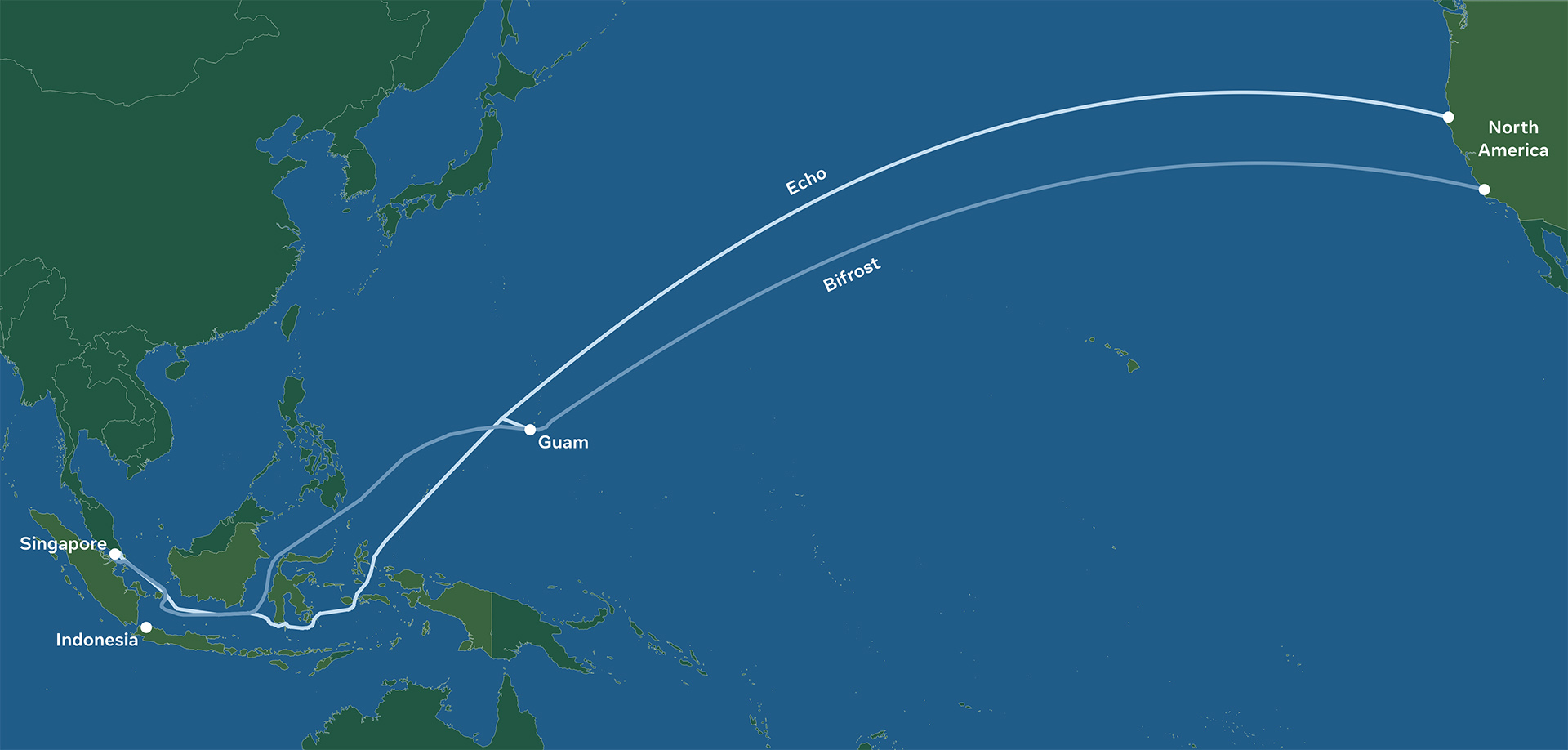
    Advancing connectivity between the Asia-Pacific and North America regions, Facebook is set to build two new subsea cables — Echo and Bifrost — with leading regional and global partners.

    These subsea cables will connect Singapore, Indonesia, and North America, making it the first transpacific cables through a new diverse route crossing the Java Sea. Moreover, it will increase the overall transpacific capacity by 70 percent and deliver increased internet capacity as well as network redundancy and reliability.

    The demand for 4G, 5G, and broadband access is rapidly increasing within the Asia-Pacific region. Thus, Echo and Bifrost will support further growth by ensuring a widely accessible internet for people and businesses.

    According to Facebook Vice President of Network Investments, Kevin Salvadori, Echo is being built in partnership with Alphabet’s Google and Indonesian telecommunications’ company XL Axiata while Bifrost is being done in collaboration with Telin, a subsidiary of Indonesia’s Telkom, and Singaporean conglomerate Keppel. These two are set to be completed between 2023-2024.

    “These new projects add to our foundational regional investments in infrastructure and partnerships to improve connectivity to help close the digital divide and strengthen economies,” the American technology conglomerate declared on its statement.

    As of the moment, the two new ventures are still subject to regulatory approvals.

  • AirAsia sees in-flight Wi-Fi as next income source

    AirAsia sees in-flight Wi-Fi as next income source

    AirAsia has been exemplary in using digital and disruptive technologies in increasing its ancillary income, including the introduction of in-flight Wi-Fi, which is expected to create a US$130 billion global market by 2035, according to London School of Economics research.

    AirAsia is the pioneer of low-cost airline in-flight Wi-Fi in the region.

    “Currently, we have about slightly over 50% of our aircraft (in Malaysia) Wi-Fi-enabled. We expect AirAsia Wi-Fi to be installed fleetwide in all AirAsia Malaysia in 2020,” chief executive officer Riad Asmat said.

    The other AirAsia companies are expected to follow suit, he said.

    “Wi-Fi these days is like oxygen. The moment you sit in a place the first thing we ask is if it has Wi-Fi and it is slowly gaining traction in the aviation sector,” he told Bernama when asked on the growing sector.

    For the Malaysian operation, the flights are all within the one-to four-hour range.

    “Within the AirAsia Wi-Fi ecosystem, the airline has entertainment, we have our e-shop, digital in-flight magazine and some level of entertainment, especially for kids. Besides enhancing the experience of passengers, the service also enables them to connect with their loved ones on air,” said Riad.

    “Hooking up to the AirAsia” Wi-Fi ecosystem is free (browsing kids entertainment, e-shop and magazine) but if you want to use your social media or do real work, then you’ve got to pay and I believe our rates are competitive as compared with other airlines around the region,” he said.

    A check on the service revealed that the Wi-Fi plans range from RM9 to RM58, with the most basic plan capped at 10MB. There is also a top-of-the-line 200MB plan, which is best for streaming. Riad said more than 30% of its passengers have accessed the AirAsia Wi-Fi services and the figure is expected to hit 50% soon.

    Knowing AirAsia, Riad was also quick to point out that incorporating a lot of its services in the AirAsia Wi-Fi ecosystem would also help them cut costs via fuel-saving.

    “Once the aircraft is Wi-Fi-enabled the in-flight magazine (hardcopy) should not be there. It is fuel-saving,” he said, adding that although the hardcopy uses some of the lightest paper material available, going 100% digital would save kilos for every fleet.

    Hence, Wi-Fi is crucial for AirAsia’s business, he said, noting “it is part and parcel of embracing technology.” Riad, however, said the portion of WiFi contribution now to its overall ancillary income is negligible.

    “But the growth potential is phenomenal because once all the aircraft have the service, people start using dependent on the needs of that day. I am sure you can get business out of it, directly and indirectly, especially when passengers browse and make a purchase via OURSHOP,” he said. OURSHOP is AirAsia’s e-commerce platform.

    However, for the service to have a bigger impact on its ancillary income, Riad said it has to remain attractive, noting the company is constantly on the lookout for more content providers.

    AirAsia currently uses the high-speed Ka-band platform, which claims to provide connectivity beyond basic broadband, supporting real-time video, music streaming and more.

    A recent survey by the International Air Transport Association, which represents some 290 airlines comprising 82 percent of global air traffic, revealed that some 53 percent of surveyed passengers found Wi-Fi important to have.

    The importance is highest in Africa (71 percent), followed by Latin America (68 percent) and the Middle East (67 percent), with the lowest in Europe (44 percent) and North America (49 percent).

    The 2019 Global Passenger Survey was based on 10,877 responses from passengers across 166 countries.

    “With the availability of Wi-Fi connectivity continuing to have a direct impact on the overall travel experience, adopting the latest onboard Wi-Fi technology continues to be an effective way for airlines to distinguish their product offering,” said the association.

    Besides WiFi, Riad said there is also a huge potential to increase ancillary income through its cargo business Teleport, which is the second-largest cargo airline group in Southeast Asia by capacity after Singapore Airlines Cargo as of July 2019, according to the Centre for Aviation.

    “We’re currently utilizing only approximately 15% of the available belly space for cargo, in which approximately 40% of our revenues are generated from connections through our network,” he said.

    It delivered approximately RM206 million in revenue in the financial year 2018 and is on track to deliver approximately RM400 million in financial year 2019.

    “We have invested in technology, with the goal to deliver the same day as standard anywhere within Southeast Asia. Airports are at the heart of this ability to do so,” he noted.

    Riad said AirAsia foresees bigger growth in the small parcel business.

  • Taiwan overtakes Singapore in broadband speed

    Taiwan overtakes Singapore in broadband speed

    The global average in terms of broadband speed is 11.03Mbps since May 2019, compared to it being 9.14 at the same time last year. The data from this new research was gathered by a US-based open-source project called Measurement Lab (M-Lab).

    “With average broadband speeds rising by 20.65% in the last year the global picture looks rosy. But the truth is faster countries are the ones lifting the average, pulling away at speed and leaving the slowest to stagnate. Last year, we measured the slowest five countries at 88 times slower than the five fastest. This year they are 125 times slower,” commented Dan Howdle, consumer telecoms analyst at Cable.co.uk, with regards to the M-Lab research.

    The top 15 in the league tables of 2019 comprise of all European and Asian countries, with the US being number 16 on the list.

    Some of the European countries that made it to the top 15 were Belgium, the Netherlands, Denmark, Norway, Sweden and Switzerland. As for Asian countries, it included Japan and Singapore.

    The league table showed that downloading a movie in HD of around 5GB in size takes 8 minutes and 2 seconds on average in Taiwan while it took 30 hours in Yemen, which was the last-placed country in the league table.

    M-Lab is led by a variety of teams based at Code for Science and Society, Google Princeton University’s PlanetLab, New America’s Open Technology Institute among others.

    “Average speed rankings by country are.. a great starting point for deeper research and statistical analysis of the state of broadband using M-Lab’s global broadband measurement datasets,” said Chris Ritzo, M-Lab’s programme management and community lead.

    The research carried out 276 million speed tests, all on 70 million IP addresses.

  • Spectrum cash grabs could hinder 5G’s potential

    Spectrum cash grabs could hinder 5G’s potential

    Poorly designed 5G spectrum auctions could seriously hamper the potential of the 5G era before it even begins in earnest, the GSMA has warned.

    A new Auction Best Practice by the industry body highlights some key concerns from recent 4G and 5G spectrum allocations, including a trend towards governments artificially inflating spectrum prices.

    This could have the effect of limiting subsequent network investment, thus harming consumers and delaying the potential of 5G from materializing.

    The GSMA has also outlined policy recommendations for governments including ensuring that the top priority for spectrum auctions is supporting affordable, quality mobile services for consumers.

    According to the regulator, spectrum auctions are not always suitable and should not be the only award process considered.

    Where an auction model is used, the auction design should not create unnecessary risk and uncertainty for bidders and should include adequate lot sizes with flexible packages of the spectrum.

    GSMA Intelligence estimates that the socio-economic impact of 5G will be $2.2 trillion over the next 15 years. But these benefits will depend on a favorable regulatory and policy environment for 5G.

    “Auctions can and do fail when poorly designed. We’re seeing a worrying trend of badly run spectrum awards that could seriously impact the potential of 5G before we get started. It’s time for policymakers to work more closely with stakeholders to enable more timely, fair and effective awards,” GSMA head of spectrum Brett Tarnutzer said.

    “This is a crucial time in the development of 5G. Spectrum is an essential to fuel for mobile networks and its ineffective use will only lead to bad consequences for consumers. The most important objective of awarding frequencies should not be about making the most money, but rather about ensuring consumers benefit from the best mobile connectivity.”

  • SP Telecom to build alternative fiber network in Singapore

    SP Telecom to build alternative fiber network in Singapore

    Singapore-based telecommunications joint venture SP Telecom has engaged PCCW Solutions as a consultancy partner to help design and deploy the company’s planned alternative fiber network.

    The company has provided details of its plans to build an alternative to Singapore’s next-generation national broadband network (NG-NBN).

    SP Telecom, a joint venture between ST Engineering and Singapore Power Group, is deploying its network alongside the power lines operated by SP Group to create a separate fiber infrastructure to the NG-NBN.

    SP Telecom’s network will serve as the only rival to the NG-NBN common network infrastructure, offering route diversity and redundancy for enterprise customers.

    The alternative data fiber network will utilize SDN-NFV capabilities in a bid to allow users greater control, visibility and scalability of their network assets, as well as built-in cybersecurity capabilities.

    These capabilities will allow for the deployment of network functions as a service on demand without the need for costly hardware investment.

    SP Telecom plans to offer services including access to an IoT-as-a-Service platform, edge cloud resources, and bandwidth provision on demand.

    “An increasing number of businesses rely on their communications systems for mission-critical applications. They can no longer afford any downtime that can cause major problems and significant losses in terms of costs, productivity and reputation,” SP Telecom CEO Titus Yong said.

    “As SP Telecom forges forward towards providing an advanced solution that supports Smart City developments, we are confident that the consultancy partnership with PCCW Solutions will enable our plans of becoming an advanced network provider to meet fast-evolving digital needs globally.”