Retail News CRM

Tag: connectivity

  • MG Hector’s Connectivity Features Unveiled

    MG Hector’s Connectivity Features Unveiled

    MG Motor India today unveiled the cabin features of its upcoming SUV MG Hector. Touted as the company’s first internet car, the upcoming MG Hector will come with a new advanced connectivity system called i-Smart next-generation system, a complete integrated solution that combines software, hardware, connectivity, services and application. The system has been developed in collaboration with several technological partners like Cisco, Unlimit, and Microsoft among others. The iSmart connectivity system comes with advanced technology, smart application, built-in Apps, Artificial Intelligence (AI), Smart Features, Voice Assist, and Infotainment.

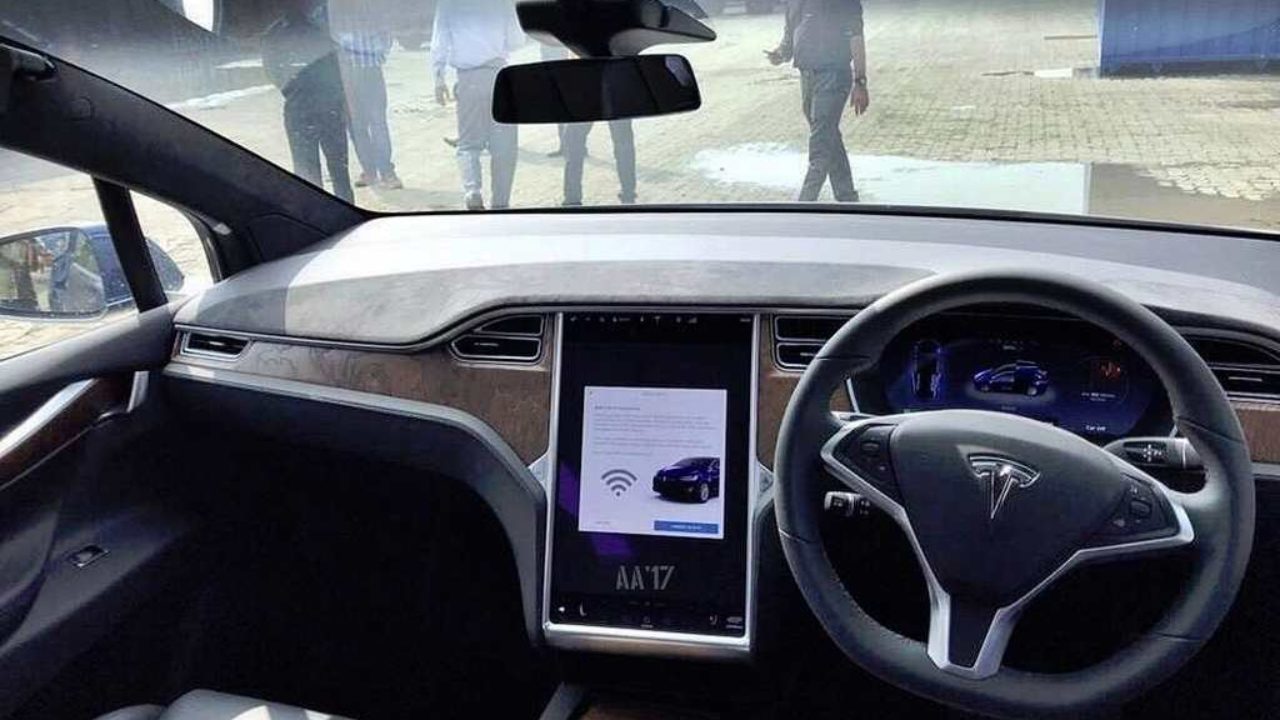
    The command centre of the system is a vertically-mounted 10.4-inch ultra large Full-HD infotainment display that comes with pre-loaded entertainment content and allows you to manage complete vehicle settings. MG says that the display screen can withstand the high temperatures of Indian weather conditions. For full-time connectivity, the system also comes with a first machine to machine embedded sim, along with the SUV Internet Protocol version 6 makes it 5G-ready, making it future-proof. The system offers features like – Real-Time Navigation, Remote Location, Geo-Fencing, Emergency Response and much more.

    Furthermore, with smart connectivity, the MG Hector will also be getting software updates via over-the-air (OTA) downloads, like firmware and features updates much like any smartphone. Also, as mentioned earlier, the car will come with pre-loaded apps like – TomTom IQ Maps, Gaana Premium, and AccuWeather app among others. In fact, MG Motor India will be offering its customer free data too for the first few years. The system itself is well-secured by Microsoft, which will be the Cloud provider for MG Motor.

    One of the key features and most important features offered in the MG Hector is its voice command system. Powered by China’s conversational AI provider Nuance, the system is designed to use voice commands to access multiple in-car functions like close or opening sunroof, control climate control, navigations and more. In fact, the system can even understand the Indian accent to make it suitable for the Indian market. Like Google Assistance, the Voice Assist system can be accessed by saying ‘Hello MG’ and is capable of handling over 100 functions. The Hector also comes with an eCall emergency response system that sends an emergency alert to MG’s customer management centre, called Pulse Hub and any registered phones, in the case of an accident. Also, in the event of the airbags being deployed, the system triggers a series of emergency response actions.

    The iSMART Next Gen is supported by the iSMART mobile App. MG iSMART App is feature-rich like none other in the Indian market. The car gets scanned each time the App is opened, and information includes location of car, tyre pressure, or if the doors are locked or not. Owner can use the remote app to directly lock or unlock doors, turn on ignition and switch on the air-conditioner.

    The all-new MG Hector is slated to be launched in second quarter of 2019. The SUV will come with premium interior and features like – with power adjustable seats, cruise control, electronic parking brake, and 360-degree camera. We also know that the SUV will come with a panoramic sunroof, which the company claims will be the largest in the segment. The SUV will come in both petrol and diesel powertrains – 1.5-litre petrol engine and a 2.0-litre diesel motor.

  • Executives blind to disruptive nature of 5G

    Executives blind to disruptive nature of 5G

    Accenture says business and technology executives underestimate the disruptive potential of 5G technology. Fifty-three percent of respondents in a global survey of 1,800 executives in 10 countries believe there are “very few” things that 5G will enable them to do that they cannot already do with 4G networks. Only 37% expect 5G to bring a “revolutionary” shift in speed and capacity.

    Competitive advantage

    5G is believed to have important competitive implications. Up to 60% of surveyed executives believe 5G will cover nearly all the population by the year 2022, and 70% believe that 5G applications will give them a competitive edge with customers. Speed will be a key advantage according to 46% of respondents while 42% cite its capacity.

    “The reality is that 5G will bring a major wave of connectivity that opens new dimensions for innovation and commercial and economic development,” said George Nazi, Accenture’s Network practice global lead. “Breakthroughs in three-dimensional video, immersive television, autonomous cars, and smart-city infrastructure will unleash opportunities that are difficult to imagine today but will soon be transformative. Telecommunications companies will play a pivotal role in bringing these prospects to light.”

    Role of carriers

    Up to 72% of executives said they need help to imagine future possibilities and use cases of 5G. These see telcos as just the right partner on their 5G journeys, cited by 40% of respondents. Hampering this partnership is the recognition by 60% of respondents who cite telcos’ lack of industry knowledge as a key challenge.

    Other barriers include the need for upfront investment (36%), security (32%) and employee buy-in (29%). While 78% of executives believe that using 5G in the workplace will make their business more secure, 32% have concerns about the security of the new connectivity standard.

    Anders Lindblad, Accenture’s Communications & Media industry lead for Europe, said, “Despite the knowledge gap, there is excitement among business leaders about the value that 5G can bring to enterprises. This value is currently trapped within the perceived risks and uncertainty around 5G, which can be unlocked by organizations that understand customer needs, can overcome barriers to adoption and can drive collaboration among service providers.”

  • Indian telcos call for fiber deployment fund

    Indian telcos call for fiber deployment fund

    Indian operators are calling for the establishment of a fund to help incentivize deployments of fiber across the country ahead of the introduction of 5G.

    The Cellular Operators Association of India (COAI) has urged the government to offer incentives including tax relief, rationalization and reduced red tape on investments in order to encourage the deployment of more fiber.

    The industry body believes a national policy should be established that would include the introduction of uniform and reasonable approval processes and right of way policies.

    As part of the government’s National Digital Communications Policy, the government is considering introducing incentives, and establishing a special purpose vehicle to grant low-interest loans to operators to fund network expansion.

    The policy also calls for the introduction of a new National Fibre Authority to help meet operators’ needs for fiber backhaul. The government aims to increase India’s fiber footprint fivefold by 2022 to around 7.5 million route kilometers. According to the policy, less than a quarter of current telecom towers are connected to a fiber backbone.

  • Operators not ready to exploit 5G opportunities

    Operators not ready to exploit 5G opportunities

    Syniverse’s global survey of service providers reveals that the industry is banking on driving new revenues from enterprise 5G opportunities, and that many have yet to develop the underlying payment, partnership, and interoperability systems that will allow a 5G ecosystem to monetize itself and flourish.

    Enterprise focus

    The survey highlights the degree to which 5G ecosystems are expected and prepared to play a significant part in an operator’s business model. Nearly 60% of respondents say that 5G will swing their organization’s focus to enterprise ecosystems, 77% of respondents expect their organizations to lead 5G ecosystems and offer advanced enterprise services, such as network slicing.

    Confident in recouping their investment in 5G enterprise plays, 90% of service providers surveyed said they have made progress in identifying vertical market opportunities. However, respondents raised significant concerns about the practical challenges of engaging in a new ecosystem that will entail many new partners, payment mechanisms and security challenges.

    Challenges remain

    Seventy-four percent acknowledged that coordinating multiple partners is somewhat or the most difficult challenge, followed by maintaining service quality (70%), and revenue-sharing mechanisms (65%).

    Where multiple partners require billing and charging, as many as 83% of respondents identified security and immutability of ecosystem transactions as a somewhat or most important feature, followed closely by the ability to allocate revenue between all partners (78%).

    Despite the scale of these specific concerns, as many as 51% say they have not yet identified, or are only just beginning to identify, their technical requirements for multi-party billing, reconciliation, and payment solutions.

    “One of 5G’s defining aspirations is that it offers service providers the capability to expand beyond the traditional consumer boundary by supporting enterprise services brought about by the internet of things (IoT), with such innovations as smart cities, self-driving cars, and robotics,” said Bill Hurley, chief marketing officer, Syniverse.

    “The ability to ensure operators can monetize these ecosystems is a particularly important aspect, along with the ability to ensure that every contributor to those ecosystems gets their fair share of revenue. Without monetization and related financial security, ecosystems just won’t grow.”

    Not ready

    The survey highlighted further concerns about the industry’s readiness to effectively monetize 5G, with just 10% of respondents saying their existing systems are suitable for multi-party billing, reconciliation and payment solutions in 5G. Ecosystem complexity also raises specific challenges around invoicing and paying non-operator partners.

    Seventy-seven percent of respondents see fraudulent activity as somewhat or the biggest challenge in this area, closely followed by revenue assurance for billing, and settlement vs. contract data (71%).

    Blockchain future

    Syniverse affirm development effort around the application of emerging technologies like blockchain as a means to transcend industry silos. This technology will ultimately allow universal payment processing and reconciliation among any company or provider across any technology by securely validating and managing transactions.

    It also sees blockchain as allowing companies to efficiently and securely overcome the inherent 5G challenges associated with security, monetization, and connecting partners.

    Anticipating a future dominated by 5G, Syniverse launched a 5G signaling service that supports cross-network connectivity for the IoT, artificial intelligence (AI), and virtual reality (VR), as well as interoperability with 4G and 3G networks.

    It is also partnering on a virtualized network that is already powering 30 million connected cars in Asia that all need globally accessible cellular connectivity. In addition, challenges around security of transactions in 5G ecosystems are being addressed by firewalls and a private global network that protect data from cyberattacks arising from IoT devices being connected to the internet.

  • 5G to change life, drive innovation

    5G to change life, drive innovation

    Korea’s Finance Minister Hong Nam-ki said once the world’s first 5G smartphone is introduced at the end of March and 5G connectivity is in full swing, life will improve significantly.  “Commercialized 5G is a core infrastructure of the fourth industrial revolution as it superconnects everything in real time and transfers massive amounts of data at high speeds,” Finance Minister Hong said during a meeting on innovation-led growth Wednesday. “The 5G smartphone, which is to be launched for the first time in the world in March, and 5G telecommunications services will be used in interactive education and digital health care, which will contribute significantly to the quality of life.”

    He said the government has been working on establishing the foundation for the commercialization of 5G, including distributing the 5G frequency to telecommunication companies in June 2018, expanding R&D investments and even setting a new tax rate – a maximum of 3 percent – for companies building the 5G network.

    “This year, the three telecommunication companies – SK Telecom, KT and LG U+ – are expected to invest more than 3 trillion won [$2.67 billion]” in 5G, Hong said.

    Samsung Electronics is expected to hold an event at the end of March to introduce its first 5G smartphone, dubbed the “Galaxy S10 X.” It will also be celebrating 10 years since the mobile phone manufacturer released its first Galaxy phone.

    In December, the company tested its 5G smartphone as the three Korean mobile telecommunication companies officially switched on 5G-network services for clients in the greater Seoul area and in some of the larger cities in the country.

    Finance Minister Hong said the commercialization of 5G services will spark innovation and convergence in various industries, including manufacturing, logistics, health and medical services, even in disaster prevention and management.

    5G is estimated to have maximum data transmission speeds 20 time faster than 4G.

    According to the government, 5G connectivity will not only increase the access to virtual and augmented reality, including wireless holograms for education or entertainment, but with the help of 5G, autonomous vehicles will roam the streets while traffic control will be managed more efficiently by applying artificial intelligence technologies in real time.

    Smart factories with wireless robots and quality control and delivery by drones will become a reality.

    By 2026, the global 5G equipment and device market is expected to be worth around 344 trillion won, while the telecommunication service market will be worth around 410 trillion won and the 5G-based convergence market about 1,440 trillion won.

    By 2030, the economic effects of 5G will be valued at an estimated 47.8 trillion won in Korea, which is equivalent to 2.5 percent of the country’s economy.

  • Vietjet boosts the business by opening new route

    Vietjet boosts the business by opening new route

    Vietjet continues to solidify its presence in Vietnam this holiday season with the announcement of its newest route connecting Ho Chi Minh City with Van Don (Quang Ninh Province). Bridging the gap between Vietnam’s largest city and the attractive island district in Quang Ninh Province, the new route will serve to meet the growing travel and trade demands of locals and tourists alike.

    Starting 20 January 2019, passengers will be able to travel from Ho Chi Minh City to Van Don (and vice versa) with flights operating every Monday, Wednesday, Friday and Sunday. With a flight time of 2 hours and 15 minutes per leg, the flight will depart from Ho Chi Minh City at 07:00 am and arrive in Van Don at 09:15 am. The return flight takes off from Van Don at 09:50am and lands in Ho Chi Minh City at 12:05 pm.

    In celebration of the new route, Vietjet is currently running a three golden day promotion starting 20 to 22 December 2018. 2.2million tickets priced only from MYR0 (*) will be available for booking during the promotional time between 1.00pm to 3.00pm (Malaysian time) via the website. The promotion is applicable on all domestic flights within Vietnam and the travel period is from 20 January 2019 to 31 December 2019 (excluding public holidays).

    Located in close proximity to Ha Long Bay – a UNESCO World Heritage Site, the Van Don Islands District is an attractive tourist destination comprising of over 600 large and small islands. Van Don has a unique beauty that boasts serenity and wilderness. It is home to many famous destinations such as Bai Tu Long National Park, Dua Islet, Thien Nga Islet, Quan Lan Island, Minh Chau Island, and Ngoc Vung Island.

    Aiming to be a Consumer Airline, Vietjet has continually opened many new routes, added more aircraft, invested in modern technology, while offering more add-on products and services to serve all demands of customers.

    Vietjet has been a pioneering airline, winning the hearts of millions of passengers thanks to its exciting promotions, entertainments, especially during the festive seasons. With high-quality services, diverse ticket classes and reasonable airfares, Vietjet offers its passengers flying experiences on new aircraft with comfy seats and delicious hot meals served by beautiful, dedicated and friendly cabin crews, and many more enticing add-on services.

  • Connectivity is not an asset, MWC told

    Connectivity is not an asset, MWC told

    Serial telecoms entrepreneur Alexey Reznikovich says that building an “enabled gateway” to customers is the key to survival for traditional telecoms players, who need to stop relying on the diminishing returns from connectivity.

    Speaking at a keynote session at Mobile World Congress in Barcelona last week, Rezhikovich outlined how his company VimpelCom, now re-branded at VEON, planned to build that “enabled gateway” as he announced a free downloadable app which was a platform combining payments, entertainment and information services.

    NASDAQ listed but headquartered in Amsterdam, VEON has more than 200 million global customers. VEON is both the new name for VimpelCom and for the “new personal internet platform” which integrates data analytics and artificial intelligence and includes partnerships with brands such as Mastercard, Deezer, and STUDIO+.

    The company claims the app, which is free from data charges on VEON’s mobile networks, “tears down the archaic and inefficient bricks and mortar service model.”

    In his keynote, Reznikovich painted a dark vision of the current state of the telecoms industry, claiming that its “corporate and bureaucratic” culture was scaring away young talented people, who much preferred to work at internet companies such as Google and Amazon.

    “Young people don’t want to work for us,” he said.

    The telecoms industry had worked “very very hard” in the last five years but “nothing has moved the needle.” He likened the industry to a “squirrel in a wheel” that was going as fast as it could, but not getting anywhere and was now exhausted.

    “What are the three big lies of the telecoms industry?” Reznikovich said.

    “The first lie is that data monetisation is coming. Well we are still waiting.

    “The second is that we have billions of customers. Well are they really our customers or are they people who just tolerate us and are really customers of someone else?”

  • Indonesia Island Connectivity Plan

    Indonesia Island Connectivity Plan

    The Indonesian government has invited 33 companies from Norway and Denmark to explore business opportunities as part of plans to enhance inter-island connectivity by upgrading infrastructure and constructing 24 seaports and deep sea ports.

    Both Norway and Denmark are eager to invest in Indonesia’s rapidly growing market, with the Indonesian government proposing investment in its business-to-business and business-to-government schemes focusing on port maritime industry sectors such as management and security.

    Denmark and Norway’s fisheries, shipping, offshore energy and maritime equipment and services make the countries ideal partners, according to Susi Pudjiastuti, Indonesia’s Maritime Affairs and Fisheries Minister.

    Danish energy firm Danfoss A/S, ship maker Odense Maritime Technology, Norwegian shipping company Wilh Wilhelmsen ASA and technology systems and solutions enterprise Kongsberg Digital were among the companies visiting Jakarta.

    According to Stig Traavik, Norwegian Ambassador to Indonesia, Nordic countries will be able to advise Indonesia on technological matters due to the country’s development of energy efficient ships.

    Traavik said: “We have produced ships running on natural gas instead of diesel, basically it’s like a mini power plant in the ship [able to] reduce the consumption of gas by 20% compared to modern ships that use diesel fuel.”

    Indonesia has faced high operational costs from its ports due to facilities being located hundreds of kilometres apart and operated by different ministries in the country. Rini Soemarno , Indonesia’s State-Owned Enterprises Minister, visited Denmark, Finland, Norway and Sweden in September to approach the countries for partnerships in energy and fishery sectors.

    Casper Klynge, Danish Ambassador to Indonesia, said: “Denmark is a very small country, but in the maritime area, Denmark and Norway are global superpowers. Every 15 minutes, somewhere around the world, a Danish-operated ship leaves a port.”

    Klynge highlighted that Denmark transports 10% of the world’s goods despite accounting for 0.1% of the global population.

    “Every 15 minutes, somewhere around the world, a Danish-operated ship leaves a port,” he added.

  • Connectivity and collaboration in the ICT industry: the key to socio-economic development

    Connectivity and collaboration in the ICT industry: the key to socio-economic development

    Why is it so important to ensure that as many people in the world as possible have access to information and communication technologies? And why does collaboration within and across the ICT industry matter so much in driving socio-economic development?

    These questions are at the very heart of ITU Telecom World 2016, the annual platform for governments, corporates and small and medium enterprises (SMEs) within the ICT industry. Organized by ITU, the United Nation’s specialized agency for ICT matters, and taking place this year in Bangkok, Thailand, from 14 – 17 November, ITU Telecom World features an international exhibition of digital solutions, a world-class forum of debates, a programme of targeted networking activities and an Awards programme recognizing the best in innovative ICT solutions with social impact.

    On the agenda in the forum, on the stands and pavilions in the exhibition and amongst the networking leaders of governments and businesses big and small, the focus will be on working together to speed up innovation in ICTs to improve lives everywhere.

    ICTs are the cross-cutting enablers behind sustainable development throughout the world, in emerging and developed markets alike. This means, quite simply, that ICTs are the essential backbone, the infrastructure behind development in economies, businesses, societies and homes everywhere. The transformative potential for ICTs is unprecedented: from e-health to e-education, digital financial services to e-government, agriculture and transport, there is not one vertical sector or field of activity which does not both rely on and benefit from ICTs.

    The Sustainable Development Goals, adopted by the global community in September 2015, set a new international agenda for the period up to 2030 – and recognize the enormous potential of ICTs in improving development outcomes worldwide.  Not just by measuring progress and enhancing the effectiveness of initiatives designed to meet the SDGs, but by providing access to a whole range of new digital products and services which can grow local economies, build on local innovation and strengthen local communities.

    Millions of children currently without access to primary level schooling; millions of deaths from easily-preventable non-communicable diseases; millions of unbanked or underbanked living outside national economies;  those without adequate basic sanitation, without access to water or electricity, let alone to government services – innovative ICT-based solutions can meet all of these challenges.

    Providing connectivity is the key: once everyone is connected, the speed of progress towards attaining the SDGS will be extraordinary, as emerging technologies such as IoT, artificial intelligence, robotics and data-driven innovation truly take off on a global scale.

    Getting everyone connected, however, is not so straightforward. More than half the world’s people are still offline, and the ICT sector’s commitment to connecting an additional 1.5 billion by 2020 is highly ambitious. It calls for innovative approaches to universal connectivity to tackle the multiple barriers of access, affordability, education and relevance.

    Building out networks, whether fixed, fibre, mobile, satellite, wifi, or any combination thereof, is the first step in providing access to the unconnected. The price of handsets, of network access and of products and services must be affordable for local communities.  And to be useful and sustainable both socially and financially, those products and services must be relevant to local needs and practices – in local languages, offering content that is valued and understood by local users. Finally, educating end-users disadvantaged by remote locations, illiteracy, gender or age, and increasing skills and capacity in local communities, are critical to ensure internet take-up and entry into the digital economy.

    The barriers are huge, the challenges significant – but the potential benefits to humanity are enormous. This is why connectivity is so important. It is also why the theme of ITU Telecom World 2016 is so pertinent: “Collaborating in the digital economy”.

    Because no one can do this alone. The private sector building out the networks, providing the equipment, products and services is reliant on government policies, on financial incentives, on supportive regulation. Public private partnerships are often the only solution to increasing access in remote or underserved regions.

    Within the private sector, the ongoing radical transformation of the ICT industry also calls for new partnerships, new business models and new approaches. A complex mix of factors is coming together: the rise of internet companies providing services over operator networks; the growth of SMEs throughout the world working in niche or innovative areas; new markets in the borderless digital global economy; new technologies and customer behaviours, from social media to 5G and IoT; and the collision of markets, ways of doing business, cultures and mindsets as ICTs cross into vertical sectors such as health, agriculture and education.

    Which is why collaboration within and across the global ICT ecosystem is so crucial. Working together in one way or another is the only way to extend connectivity, expand access and drive socio-economic development. It’s the only way to meet the SDGs and improve the lives of the world’s citizens everywhere.

    This is also why events such as ITU Telecom World 2016 are so important. By providing a meeting point and market place for the governments, regulators, international organizations and companies, both corporate and SME, of the world, the event opens the door to partnerships. To exchanging views and perspectives, to understanding challenges and needs, to debating policies, strategies and models. To meeting face-to-face to meet the needs of the world, now and in the future.

    To find out more about ITU Telecom World 2016, its full programme of debates, exhibits and activities, and to register to take part, visit telecomworld.itu.int.

  • In-flight connectivity wants to be free

    In-flight connectivity wants to be free

    In-flight connectivity (IFC) is in high demand from consumers, but depending on where you are in the value chain, it won’t be easy to monetize that demand, especially when many passengers expect it to be free.

    “Right now the satellite operators are the ones making the profit on in-flight connectivity,” says Todd Hill, senior director of GCS Satellite Services at Panasonic.

    Part of the problem has to do with the cost of aircraft antennas, which are hard to install, “although the technology is improving.” Hill says.

    The other issue is the cost of the actually connectivity itself. While HTS satellites and Ka-band are touted for their ability to bring the cost per megabit down, the problem is that Ka-band isn’t an all-purpose solution that will be available everywhere.

    “We’re building a global network, so one size is not going to fit all,” Hill says. “Ka-band doesn’t fit every need. HTS can bring the cost down, but you also get these spikes in supply whenever a new gigabit satellite goes up that affects pricing.”

    Erwin Hudson, VP/GM at ViaSat, says that everyone in the IFC value chain – satellite players, the service providers and the airlines – can make money, but that for the airlines, it’s as much about value creation as literally earning money from in-flight broadband. “For example, enhancing customer satisfaction – there’s great value there for the airlines.”

    Which is as well, because if airlines have learned anything about IFC, it’s that customers generally aren’t willing to pay for it, especially as they become accustomed to Wi-Fi as a complimentary service in hotels, airports and coffee shops.

    “Customers do expect this for free, which is to say they expect it to be included in the ticket price, and that’s the way we’d rather see it go,” Hudson says. “There are different business models out there, such as pay-as-you-go, freemium or free, and we’ll see all three in play. But when you charge money for it, your take-up rate is around 10% to 15%, whereas when it’s free the take-up rate is as high as 100% or even 105%, because we count devices, not people, and many people have more than one device. So we think free is where it’s ultimately going to go.”

    Hudson adds that IFC is a segmented market – commercial airlines, private jets, military/government, etc – with different requirements and business models for each, “so there’s a substantial opportunity there.”