Retail News CRM

Tag: Consumers

  • Strong retail interest in Asia, but very little action

    Strong retail interest in Asia, but very little action

    More than 80 percent of Australian businesses have Asia on their radar, but most are failing to generate significant revenue from Asian markets, a new report from Asialink Business has found.

    Of the businesses surveyed, 83 percent generate less than half of their annual revenue from Asia, and 55 percent generate less than 5 percent of their annual revenue from Asia. This is because they haven’t taken the necessary steps to grow.

    These include hiring staff with the right language skills and experience to operate in Asia, keeping up with Asian customers’ fast-changing preferences and having a presence on the ground – three characteristics that top performers in the Asian market share.

    “The business opportunities that exist in Asia are well known and well versed. But while many Australians businesses are including Asia as part of their strategy, we know that majority of these organizations don’t optimize their operations to maximize revenue streams,” Jonathan Yeung, head of Asian business banking at Commonwealth Bank of Australia, which sponsored the report, said.

    One business that is tapping into the Asian market successfully is Australian health and beauty brand G&M Cosmetics, which was profiled in the report.

    The Sydney-based business, which has been manufacturing and selling to national and global retailers for over 22 years, first started exporting to China in 1998, and now exports 600,000 units of skincare products to the country every week.

    CEO Zvonko Jordanov said it is crucial to understand the customer in each market you sell in.

    For instance, Emu oil-based products are best-sellers in Taiwan and Malaysia, but Lanolin is preferred in China. This changes quickly, though, and Jodanov said avocado, goat’s milk, and manuka honey products are on the rise.

    At its laboratory in Australia, G&M also looks at the suitability of certain skincare products for different markets based on local conditions, including weather and humidity.

    “We’re all humans. The number one thing is that you respect the consumer. Give them a proper product and don’t promise the impossible,” Jordanov said.

    According to the Asialink Business survey, businesses that tailor and adjust their product or service and marketing earn, on average, more than eight times the revenue from Asian markets than those that sell the same offering using the same marketing.

    Businesses that always mention these Asian language skills and experience in the Asian market in job ads earn, on average more than five times the revenue from Asia than those that do not.

    And 33 percent of businesses that earn more than 5 percent of their annual revenue from Asia undertook in-country visits at least once a month – more than double that of businesses earning less than 5 percent of their revenue from Asia.

    The businesses most likely to be doing well in Asia were professional services firms, according to the report, followed by private education and training organizations.

    China was the top Asian market for 44 per cent of respondents, followed by the ASEAN countries, which include Indonesia, Malaysia, Philippines, Singapore, Thailand, Vietnam, Laos, Brunei, Cambodia, and Myanmar, for 32 per cent of respondents.

    Overall business sentiment towards Asia remains positive, despite the ongoing China-US trade tensions, the report found.
  • Huawei Battling for Chinese consumers

    Huawei Battling for Chinese consumers

    When 23-year-old Chinese student Aaron Huang started his hunt for an Android replacement for his Apple iPhone in April this year, it was clear which brand was trying hardest to win him over.

    Promotional campaigns by Huawei Technologies and from local retailers supporting the brand were everywhere, said Huang, adding he was influenced by domestic media coverage that portrayed the US as unfairly targeting the Chinese tech giant in its trade war.

    “I felt like I should choose Huawei,” he said.

    The advertising blitz and grassroots patriotism have proven to be a potent mix, amplifying the brand’s existing broad appeal in its home market – a market it is increasingly dependent on as Washington’s ban on sales of US components and software to Huawei hammers overseas demand.

    Second-quarter China smartphone shipments for Huawei surged by a nearly a third from the same period a year earlier, with its market share rocketing 10.6 percentage points to a record 38 percent, according to research firm Canalys. Shipments for domestic rivals and Apple plummeted.

    Huawei has lifted its China sales target for its consumer business group, said a company source, who was not authorised to speak on the matter and declined to be identified.

    Within Huawei, employees refer to current strategies as ‘Battle Mode’ and it has stepped up the opening of new stores including Experience Centers in the style of Apple shops, other company sources said. One Experience Center near its South China headquarters opened last month while a bigger one in Shenzhen’s tech district of Nanshan will open next month.

    Analysts say Huawei has also been transferring unsold smartphone stock from other regions to China and even offering some rare discounting in its home and overseas markets as it seeks to offset sales declines in Europe and the US.

    Huawei declined to comment on its strategies for marketing and managing inventories, or its China sales target. It reiterated an earlier statement that it was not trying to trade on patriotic fervor.

    Lotteries and bullfrogs

    Sales promotions have included interest-free installment payment plans and lotteries for its premium P30 and Mate series. Analysts add that products from its three brands – Huawei, Nova, and Honor – outnumber those from rivals in every market segment.

    Firms like Chinese electronics retailer Gome and small businesses have been eager to lend a hand, linking Huawei phones with patriotic support.

    Fang Xia, a 38-year-old restaurant owner in Shanghai, said she was motivated by recent coverage of Huawei’s dispute with the US to offer her customers a special deal.

    “Tables that have four or more people with Huawei smartphones will get one free plate of Emperor Bullfrog,” proclaims an advertisement for her restaurant’s signature 88 yuan ($12.50) deep-fried frog dish.

    Huawei’s overseas smartphone sales tumbled 28 percent in the second quarter from the previous quarter, Canalys data showed, but the full impact of the ban is not yet known.

    Warning that Huawei products could be a vehicle for Chinese espionage, the Trump administration now requires that US corporations which conduct business with Huawei gain a special license to do so. US government responses to requests for those licenses could come this week, US Commerce Secretary Wilbur Ross said last Tuesday.

    In other measures to counter the ban which could strip its access to Google’s Android, Huawei is accelerating efforts to develop its own operating system called Hongmeng. It is looking to roll out a low-end smartphone equipped with Hongmeng in the fourth quarter, state-media outlet Global Times reported on Sunday.

    Huawei declined to comment. It has previously said Hongmeng is designed for internet-of-things products and it prefers Android for its smartphones.

    Even before the US ban, Huawei had been making big strides in China, moving upmarket into the $500-800 price range and luring customers away from the likes of Apple with improved camera quality.

    “In any segment, it has several options for consumers, that is more than any other brand has to offer,” said Canalys analyst Mo Jia, describing Huawei’s strategy as one of “bombardment”.

    Rivals are hurting. Xiaomi saw its second-quarter China shipments tumble 20 per cent from the same period a year earlier, Vivo’s slid 19 per cent while Oppo’s dropped 18 per cent. Apple’s shipments fell 14 per cent, and analysts and Chinese consumers say the US firm could be hit further amid an intensifying US-China trade war.

    Xiaomi, Apple, Oppo and Vivo declined to comment.

    While Huawei has managed a huge boost in its home market, analysts said China sales may not always stay unscathed as it could struggle to replace US components and software.

    “Without the original supply chain, we may see its speed of development start to slow down,” said James Yan, research director at Counterpoint Research.

  • Sephora data breach impacts APAC consumers

    Sephora data breach impacts APAC consumers

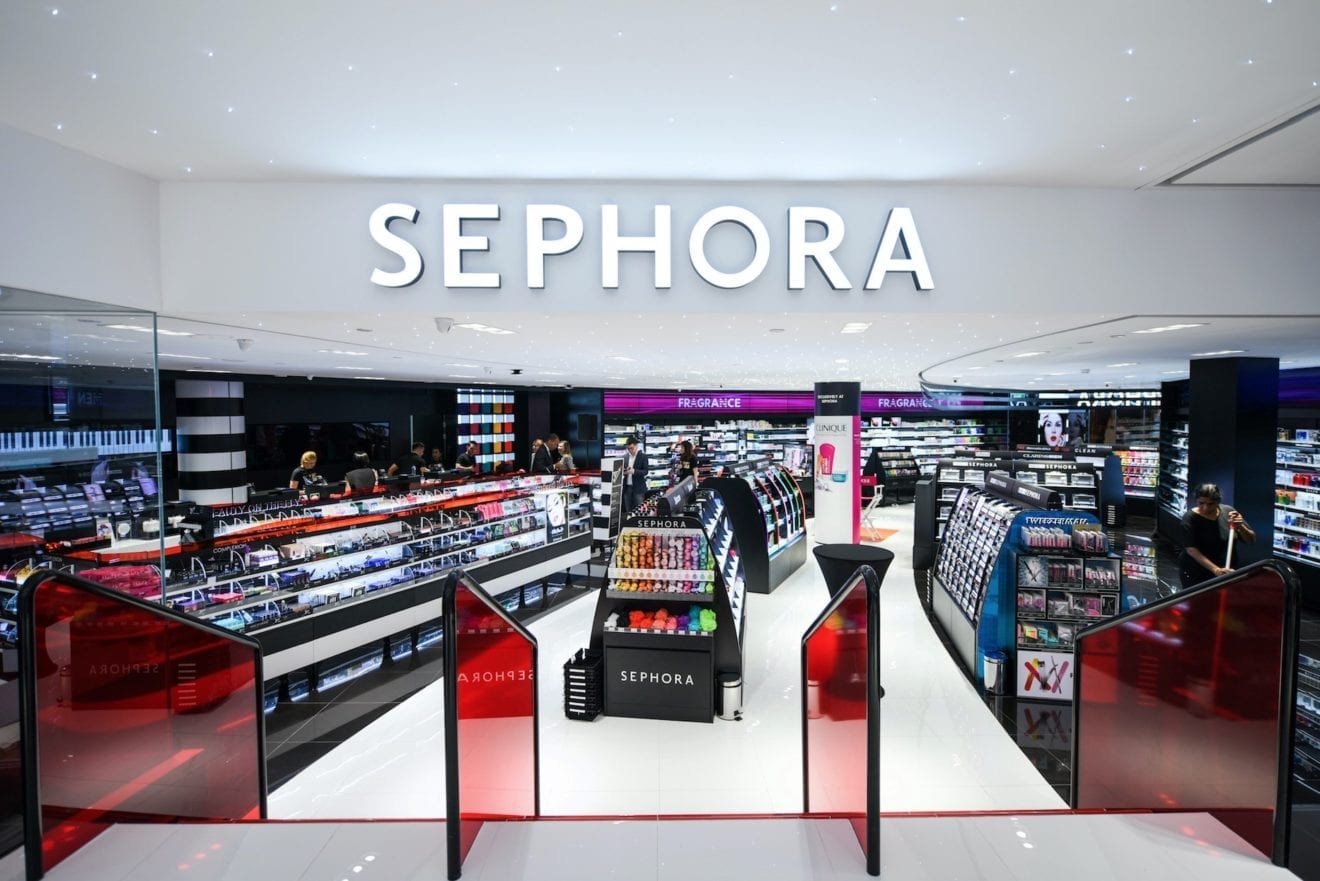
    A Sephora data breach has been confirmed, spanning customers from Hong Kong across Southeast Asia and into Australasia.

    The LVMH-owned company has emailed online customers who may have been affected confirming some of their data may have been accessed and copied.

    The international beauty retailer said an unknown number of customers have been affected in territories including Hong Kong, Singapore, Malaysia, Indonesia, Thailand, the Philippines, New Zealand and Australia. Stores were not affected with the compromised data relating only to people using the brand’s online services in the region.

    The firm sent an email out to its users on Monday explaining that the breach had become apparent over the course of the past fortnight.

    “Some personal information may have been exposed to unauthorized third parties,” said the email signed by Sephora’s MD Southeast Asia Alia Gogi, “including first and last name, date of birth, gender, email address and encrypted password, as well as data related to beauty preferences.”

    The email (pictured above) explaining the Sephora data breach stated that credit card information does not appear to have been accessed and that personal data had not been misused.

    The firm has responded by resetting all existing passwords and conducting a full security review, as well as offering customers a free personal monitoring service, available via a unique code and sign-up link directing users to a third party solutions provider.

  • Apac consumers embracing shopping apps

    Apac consumers embracing shopping apps

    Users of shopping apps users are becoming increasingly purchase-happy in what is poised to be mobile commerce’s biggest year so far, according to a recent study by Liftoff.

    The report by the mobile-app marketing and retargeting platform also uncovers key insights into Asia Pacific (Apac) mobile shopping behaviour, suggesting the rise of “Mobile Window Shopping” in the region, which is underpinned by the low costs of installing shopping apps and acquiring new users.

    Analysing more than 90.9 billion ad impressions across four global zones, 13.6 million installs and 3.9 million registration and purchase events between April 2018 and April this year, the report identified several trends relevant to the Apac region.

    In Apac, users are clearly open to exploring retail apps, with registration rates skyrocketing and acquisition costs dropping year-on-year. But the data points to a surprising new trend – “Mobile Window Shopping”. While users install and register in retail apps with ease, the joint report shows a sizeable drop-off at the all-important purchase stage. Apac’s cost-per-first-purchase comes in at US$31.26 (up 13.3 per cent year-on-year), coupled with a low 10.1 per cent conversion rate.

    This could point to a larger retail trend: the demand for a more user-friendly shopping experience. While price tends to dominate purchasing decisions, factors such as having personal engagements with retailers and concerns on whether the retailers can capably fulfill orders are also seen as crucial by mobile shoppers.

    “For marketers looking to boost purchase rates, the key is to utilise the data they have, understand potential drop-off points and to segment and target properly,” said Adjust co-founder and CEO Christian Henschel. “Brands can then create and deliver the perfect user interaction strategies for their marketing initiatives. This personalisation is key to winning over fickle consumers and building long-term loyalty.”

    Southeast Asia’s largest country – Indonesia – presents a dynamic landscape for marketers operating in APAC; especially in terms of the number of users that can be acquired. However, turning those acquisitions into actual purchases will likely depend on how convenient the mobile app shopping experience is. The cost of an application installment is just US$1.65, but this is paired with somewhat meagre conversion rates. Another concern for marketers and retailers is that retention rates of shopping apps in Indonesia trail behind other markets studied in the region, the prime reasons being consumers having a low learning curve, lack of patience with the app onboarding process and failing to understand the long-term value of installing an app.

    “The shopping app market in Asia is growing dynamically and at an all-time-high, yet based on our findings, the number of purchases made through such apps are not as high as they could be; despite the general trend of consumers moving their browsing from store windows to the phones’ screens,” said, Liftoff VP marketing Dennis Mink.

    “Indonesia is a microcosm of the behaviors and concerns of the region’s shoppers. So, finding the right message and conveying it in the right context to the consumer can help remove these roadblocks, thereby improving retention and interest.”

  • Tmall and VF Corporation Deepen Partnership in China

    Tmall and VF Corporation Deepen Partnership in China

    Tmall, China’s largest B2C platform under Alibaba Group, has formed a strategic partnership with VF Corporation (“VF”) to expand the global leader’s offerings of branded lifestyle apparel, footwear and accessories in China.

    Under the agreement, Tmall Innovation Center (“TMIC”), the dedicated retail innovation arm of Tmall, will provide VF data-driven consumer analytics from the 654 million annual active consumers across Alibaba’s marketplaces, enabling it to tailor products for Chinese consumers. VF is the parent company of apparel brands Vans, The North Face and Timberland and is the first TMIC high-level partner in the apparel category.

    “With Tmall’s unparalleled customer insights, strong technical support and in-depth market knowledge, we are eager to work with the world’s leading companies to help them bring their best products into the China market in the most-effective and efficient way. Through our partnership with VF, we are committed to helping VF create products that can precisely match the appetite of the Chinese consumer,” said Liu Bo, general manager of Alibaba’s Marketing Platform Business.

    The partnership will focus on identifying new consumption trends, pre-launch testing, consumer profiling, and post-launch tracking to optimize product design, range and assortment to uncover unmet needs of Chinese consumers.

  • Farfetch opens flagship on JD.com China

    Farfetch opens flagship on JD.com China

    Farfetch China has opened a flagship store on JD, one of its strategic investors.

    The move follows Farfetch China’s purchase of Toplife announced in February and gives the global luxury-fashion technology platform access to more than 300 million customers in Mainland China.

    According to a statement, Farfetch now has a ‘Level 1’ entry point on the JD app, providing customers with instant access to more than 3000 brands via Farfetch’s network of more than 1000 luxury brand and boutique partners.

    “The partnership builds on the existing successful relationship between Farfetch and JD, started in July 2017,” said Farfetch China MD Judy Liu.

    Since then, the fashion platform has built its China presence by sharing JD’s logistics capabilities and its insights into the behaviour of Chinese luxury consumers.

    “Brands crave ever-better access to the Chinese market, and we are thrilled to deliver this for them,” said Liu.

    “This is an important expansion of our strategic partnership with JD, which strengthens the Farfetch China business as part of our truly global offering. Being able to offer the full suite of Farfetch’s technology and logistics platform to brands wanting to reach high-end Chinese consumers is a major competitive advantage as we seek to continue to grow market share in the rapidly expanding online luxury market.”

  • Hong Kong online retailers ‘ignoring’ Gen Z consumer needs

    Hong Kong online retailers ‘ignoring’ Gen Z consumer needs

    Hong Kong online retailers are ignoring Gen Z consumers, according to a new report on the local payments market by unified commerce platform Tofugear and financial technology firm Wirecard.

    The research found that the territory’s e-commerce sites are not catering to Gen Z consumers when it comes to the payment options they offer.

    In contrast to older millennial and Gen X consumers, credit-card ownership rates among this demographic – those born between 1997 and 2012 – are low. As a result, one in three Gen Z consumers (35 percent) prefer to make online purchases via a cash-on-delivery option.

    The Digital Payments Landscape in Hong Kong 2019 report finds that while Hong Kong online retailers such as Zalora are already catering to this trend, they are in the minority as only around 5 percent of all retailers in the territory offer a cash-on-delivery option for online purchases.

    “Retailers should ignore Gen Z at their own peril,” says Tiffany Lung, retail analyst at Tofugear.  “Much focus has been on millennials, but the consumer behaviors of Gen Z are radically different – particularly when it comes to payment preferences. They think traditional payment methods are as lame as Facebook.”

    Digital wallets such as AlipayHK are also an important means of transaction for this young demographic, with 86 percent using this payment method – typically for purchases of less than HK$500.

    “Rather than passively waiting for years to qualify for a credit card like millennials have done, Gen Z has been much more proactive,” says Lung. “They have turned to digital wallets to solve the barriers they face when it comes to in-store and online payments. I believe this habit will stay with them as they come of age.”

    Based on a survey of 1000 Hongkongers, the report compares the payment habits of Gen Z, millennial and Gen X consumers and finds that while many perceive Hong Kong to be a laggard when it comes to smart payments, there is a genuine willingness to adopt new payment methods such as digital wallets – regardless of the consumer’s age.

    “After years of complacency, the payments ecosystem in Hong Kong is finally waking up to the fact that cash might be knocked off its throne – or at least see its dominance challenged by a plethora of new payment methods,” says Lung.

    Alongside the consumer survey, key players in Hong Kong’s digital payment industry were interviewed including Google Pay, Octopus Card, TNG FinTech Group, BBPOS Merchant Services, as well as online retailers such as Zalora and SkyMart.

  • UOB Launches Comparison Website for Utilities

    UOB Launches Comparison Website for Utilities

    United Overseas Bank on Monday launched Singapore’s first online utility marketplace by a bank, as part of the Open Electricity Market initiative. United Overseas Bank (UOB)’s utility marketplace will add to an existing array of comparison websites under Singapore’s Open Electricity Market initiative by the Energy Market Authority. Featuring 10 utility providers on a single website, customers can now search and sign up for the best deals for electricity, gas, water, broadband and TV services.

    With utility bills making up an average of about 10 percent of monthly household expenses, we want to help people stretch their household budget, said Jacquelyn Tan, UOB’s head of personal financial services Singapore in a media statement.

    With more than 50 different plans offered by electricity retailers under the Open Electricity Market rollout, Singapore consumers could find it time-consuming to find the right electricity plan.

    The UOB Utility Marketplace aims to make it easy for consumers to compare providers and plans through its Electricity Price Plan Recommender. Users simply need to indicate if they prefer a fixed price or discounted price plan, their preferred subscription tenure, and their monthly electricity bill budget.

    A list of suitable electricity plans and potential savings will then be generated based on their selection. Consumers are then directed to the electricity partner’s website to sign up for their plan of choice. In all, the process takes less than 10 minutes to complete, the bank said.

  • Pomelo launches first Beauty Line

    Pomelo launches first Beauty Line

    O2O fashion brand Pomelo has launched its first cosmetics line, Beet, solidifying its identity as a one-stop lifestyle brand.

    Created with women on-the-go in mind, Beet comprises 17 products across four categories – Liquid Blush, Liquid Lipstick, Lip Gloss and Liquid Shimmer.

    All products are priced at S$10 per item and feature paraben-free and cruelty-free formulations.

    “For consumers today, beauty is integral to style,” said David Jou, Pomelo CEO, signalling the company is taking “a step in the right direction”.

    “As a fashion brand that wants to offer women everywhere their best look to become their best selves, we cannot ignore that.”

    With Beet, Pomelo provides another touchpoint for a seamless customer experience that prioritises modern consumers’ demand for convenience.

    Last month, Pomelo launched its second sustainable collection, Purpose.

  • Jio raising $3.89b for tower unit spinoff:

    Jio raising $3.89b for tower unit spinoff:

    The fiber network unit Reliance Jio Infocomm is reportedly planning to raise around 270 billion rupees ($3.89 billion) in syndicated loans to help expand the newly created infrastructure business.

    Jio Digital Fiber plans to use the proceeds to expand its business and allow it to serve external customers from the telecom, ISP, power and other sectors.

    Reliance Jio is spinning off its fiber business as well as its tower business into standalone subsidiaries in an attempt to monetize the assets. The tower business is being spun out into Reliance Jio Infratel.

    Reliance Jio received approval for the demerger plan from the National Company Law Tribunal last month.

    Meanwhile Reliance Jio has reportedly also crossed the 300 million subscriber mark after just two and a half years in operation, putting it close to second-placed rival Bharti Airtel, which has around 340.3 million customers.

    According to Indian media, it took Airtel 19 years to pass the 300 million subscriber mark. If Reliance Jio continues its trajectory, it will knock former market leader Airtel into third place. The 2018 merger between Vodafone India and Idea Cellular created the current market leader Vodafone Idea, which has over 400 million customers.

  • China’s Coffee Consumption Keeps Growing

    China’s Coffee Consumption Keeps Growing

    China’s coffee craze has gained pace with the growth rate in consumption on premise 25 per cent higher last year.

    According to research from Mintel, China’s on-premise coffee market value reached RMB64.7 billion (US$9.6 billion) last year, up 7.5 per cent on the year prior, when the growth rate was 6 per cent. It is predicting growth to resume to 6 per cent annually from this year until 2023.

    However, while sales by value are thriving, Mintel estimates that the number of on-premise coffee house outlets shrank by 2 per cent as fewer new stores opened than closed. But that is half the decline of a year earlier.

    “Like many industries across China, the on-premise coffee market is not immune to the influence of New Retail,” said Belle Wang, associate food and drink research analyst at Mintel.

    “The quick expansion of New Retail coffee businesses across the country has stimulated more coffee consumption among consumers, resulting in strong sales volume. With the growing momentum of New Retail coffee shops, and an increasing number of international and domestic brands entering the market, consumers today have more options when it comes to coffee. As such, the industry will see positive growth rates over the next two years.

    “However, this growth will slow down, largely due to Chinese consumers’ traditional behaviour of drinking tea and the country’s thriving tea shops,” said Wang.

    Mintel expects positive volume growth in the next two years, at 0.6 per cent from last year to this year and a further 1.2 per cent between this year and next, to reach an estimated 74,000 coffee houses by 2020.

    Convenience versus traditional

    When it comes to choosing where to get their caffeine fix, more Chinese consumers today are purchasing coffee from convenience stores than traditional coffee house chains. Mintel’s research reveals that 52 per cent of Chinese consumers (survey sample of 3000) buy coffee at convenience stores compared to just 44 per cent who purchase it from a traditional coffee-house chain.

    About 23 per cent of consumers who drink on-premise coffee at least once a month have done so at new retail coffee houses.

    “Our research shows that more on-premise coffee users get their coffee from convenience stores than from traditional chain coffee houses. This is perhaps due to Chinese consumers associating convenience stores with a full range of breakfast options. Convenience stores are also viewed as easily accessible and more affordable. Given this upward trend, other coffee vendors could introduce unique features, like providing various food and coffee pairings, in order to compete,” said Wang.

    “While New Retail coffee is experiencing a lot of growth at the moment, consumer engagement remains low – partially because they are still relatively new. However, there is an opportunity for New Retail coffee houses to catch up in terms of popularity by offering aggressive discounts and delivery service.”

    That said, big discounts alone will not be sufficient, as discounting is neither the best nor a sustainable strategy for a long-term business plan. There needs to be other merits such as offering healthy mix-and-match meal deals,” Belle added.

    Latte the top choice

    Mintel’s research reveals the favourite coffee beverages consumed in China’s coffee craze. More than half of on-premise coffee consumers order lattes (54 per cent) or cappuccinos (52 per cent). These are followed by mocha (45 per cent), Americano (38 per cent), flavoured coffee (36 per cent), espresso (26 per cent) and cold-brew coffee (23 per cent).

    A relatively new concept in China’s coffee craze is coffee mixed with plant-protein milk, with 22 per cent of on-premise coffee consumers ordering it.

    “Lattes and cappuccinos are the most popular drinks in coffee houses as they are generally very palatable due to their creamy texture and rich dairy flavour. Furthermore, as they are usually widely available, they are often a first step into coffee appreciation,” said Wang.

    “Once consumers fully appreciate these basic beverages, they are more likely to try non-milk based drinks, like an Americano or cold brew coffee. However, only offering basic coffee selections makes it difficult to stand out in the homogenous coffee marketplace and attract more coffee consumers.

    “As such, coffee houses can take inspiration from tea shop drinks by making their offerings more visually appealing and ‘instagramable’ in order to draw attention and pique consumer interest,” Belle concluded.

  • Online reviews are terrible and useless

    Online reviews are terrible and useless

    Online reviews sound good in theory. In practice, however, they don’t work so well. Reviews were initially important as proxies of trust for e-commerce businesses, but they have now well and truly spilled over to bricks-and-mortar businesses, where the weakness of the review system is being amplified as some consumers have figured out how to weaponize it.

    The general idea is that users provide their personal and honest feedback and other users are able to make more informed choices (like avoiding scammers). Even the business owner can use “learnings” to improve the business.

    It just doesn’t work.

    Amazon is plagued by fake reviews and trolls. In the book space, for instance, small groups and even bots target specific authors over spurious disagreements the trolls may have, and downvote their books accordingly so that they never appear in algorithmically-driven searches.

    On AirBnB and Uber, providers and users review each other. Another great idea, but in practice, since no one can afford to be given a 1-star review (the host wouldn’t get guests and the guest wouldn’t get accommodation) – the unspoken rule is that everyone gives each other 5-star reviews all the time. A 4-star review should set alarm bells ringing.

    Reviews are not a fair representation of the business, because reviewers have suspect motives, are unqualified, unreliable and the process is flawed and without proper context.

    The problem with online reviews

    Here are just a few of the drawbacks with online reviews, as they currently exist:

    • The motive of the reviewer is not always apparent, and neither is it always pure. Even positive reviews may have little to do with the actual service experience, and people who are motivated to review, often have an axe to grind.

    • Those who prefer not to review products and services are often bombarded by reminder emails until they relent, only to give a less than well-thought-through review long after the fact.

    • You usually only get one side of the story in a review.

    • Most people doing the reviewing have zero insight into the business’s operations, and criticisms and expectations are often unrealistic. Negative reviews are not merely limited to articulating a personal negative experience, but often are about perceptions of staffing levels, time, production, etc.

    • Compulsive reviewers operate under the misguided belief they are helping other consumers, but they are usually on a power trip.

    • Is ANY consumer really equipped to judge and compare Bunnings to McDonald’s?

    • Is the person’s subjective experience actually useful? Does the fact that a person doesn’t like a burger mean no one else will? Or vice versa?

    • A business would need to have thousands of reviews across different times, different experiences and different contexts for the sample to be considered statistically relevant. I suspect the average small business would rarely reach this sample size. Few real world, independent retail businesses boast sufficient reviews, so the results are invariably skewed. It takes more than a hundred or so reviews for the law of averages to apply, but whether a rating is valid or not does not deter the reviewing platform, with most of them showing reviews after a handful has been received.

    • Different people have different standards – what one reviewer considers value for money, another will consider expensive another to cheap. That is, the reviewer does not necessarily reflect the market that the operator seeks to attract.

    • Generally speaking, our culture – and it is amplified in the online space – has a tendency to reward victimhood.

    • It is impossible for different people with different expectations to apply the same standard. Can you have a 5-star experience at a 3-star motel, and is the average punter equipped to make that distinction?

    Any run-of-the mill establishment gets reviewed as well, whether they like it or not. If you want to exist on Google Maps, you get Google Reviews. TripAdvisor has excellent SEO juice, so any business reviews will come up with your own listing at all times. If you want to keep a recent poor review off the top of your results, it will set you back $70 per month to feature a good review instead.

    What now?

    Review results are statistically and psychologically unreliable, but there is no way of avoiding them. They are here to stay, flawed or not.

    Retailers should learn how to play the reviewing game, and the options are to (a) ignore and (b) embrace or (c) fight.

    Our strategy has been:

    1. Avoid channels where the trolls feed in vast numbers (Facebook: reviews disabled; Twitter: no account; Instagram: no account).

    2. On Google and Tripadvisor, respond to every review positive or negative to at least put both sides of the story out there.

    3. Resist seeking positive reviews or attempt to ‘game’ the reviews and don’t display/promote any reviews, even positive ones.

    4. Learn what you can from a review as objectively as possible – in some instances, reviews are simply the old “world of mouth” now made visible and there is a benefit in knowing what is being said.

    In the early days of e-commerce, when consumers were still sceptical, a 5-star review simply meant the product was as advertised and arrived when promised.

    Any scammer who wanted to take money without sending the goods wouldn’t last long. These trust issues are not as prevalent, and there are different mechanisms to root out the bad apples today.

    Businesses – and the delivery of customer experience – are too complex to be reduced to a simple star system or a subjective comment.

    Maybe that is an opportunity for an entrepreneur.

  • Four in five Thais tries going cashless as confidence in digital payments grows

    Four in five Thais tries going cashless as confidence in digital payments grows

     Four in five Thai consumers (78 percent) have tried going cashless in 2018, compared to only fifty percent in previous year as confidence in digital payments grew, according to the 2018 Visa Consumer Payment Attitudes study (the “Study”). The study tracks payment habits and attitudes as well as exploring emerging topics related to payments among 4,000 consumers across eight Southeast Asian countries, including 500 respondents from Thailand.

    For Thai consumers, digital payment methods, such as cards, in-app mobile payments and QR payments combined together have a larger preference (57 percent) over cash (43 per cent).

    Suripong Tantiyanon, Country Manager for Visa Thailand said: “The higher preference towards using digital payments and the rise of confidence in going cashless are credited to industry players and the government, who have been relentlessly driving the national e-payments agenda.

    “In addition, we believe that the higher preference towards digital payments can be attributed to the proliferation of payment form factors and acceptance points.  More than ever before, Thai consumers can make payments with a wider range of connected devices and payment applications on smartphones, such as wearables and mobile payments.  At the same time, QR code offers merchants in traditionally cash-based segments with a fast, cost-effective and secure digital payments solution.”

    According to the study, two in five Thais (42 percent) said they carried less cash than they did two years ago, compared to 26 percent in 2017.  Top reasons for the decrease in cash in wallet are cash is unsafe (65 percent), higher adoption of digital payments (65 percent) and the hassle of using cash (39 percent).

    The study also showed  that of those who tried going cashless, more than half (60 percent) could manage a day without cash and forty-five percent could last without cash for more than three days.

    Overall, in terms of future expectation, more Thais are confident about the country becoming a cashless society.  Nearly one in three (29 percent) are confident that Thailand can become a cashless society in less than three years, compared to 11 percent in 2017.  Thirty-nine percent believed it will take between four to seven years while only six percent believed it will take longer than 15 years.

    “The findings are encouraging.  We believe that we are on the right track and it is important to help more consumers and merchants understand and embrace the benefits of digital payments.  At the same time, we are committed to innovate and collaborate with all stakeholders in the payment industry and beyond as we continue our journey towards transforming Thailand into a cashless society,” Suripong concluded.

  • Vietnam Retail Steap Climb in Retail Growth

    Vietnam Retail Steap Climb in Retail Growth

    The Vietnam retail sector is forecast to record double-digit growth from 2019 to 2024, according to a report by ResearchAndMarkets.

    While a number of Vietnamese consumers still choose to shop in traditional markets as they can buy ingredients in smaller portions, supermarkets are offering ready-to-cook packages better suited to the daily needs of the average consumer, says the report. Thus, supermarkets and convenience stores are taking an increasing share of the overall food and grocery market.

    Food products, non-food products, and home appliances are also sold in larger supermarkets, offering more range and convenience for local customers under one roof.

    Modern retail outlets also offer private brands/products that can be exclusively purchased in their stores.

    Some newer stores have in-house bakeries and cafes where consumers can hang out and enjoy with family or friends.

    Growth of convenience

    The growing Vietnamese middle and affluent classes and the younger population increasingly value convenience and comfort. That is driving growth in the convenience store market, met by the expansion of companies such as Circle K, which is now expanding across Hanoi after establishing a strong presence in Ho Chi Minh City, FamilyMart, 7-Eleven and GS25, among others.

    The increasing presence of local players, such as Vinmart+, which has nearly 900 stores nationwide, and test stores trading as Bach Hoa Xanh, operated by Mobile World, are helping expand the Vietnam retail market.

    Traditional food-and-beverage retailers still dominate the sector.

    As of last year, traditional retailers accounted for 94 per cent of the retail grocery sales, and the remaining 6 per cent sales were attributed to modern retail.

    According to industry experts, modern retail sales are expected to reach 18 per cent of total food retail sales by 2024.

  • Consumers are in control and searching for Experiences

    Consumers are in control and searching for Experiences

    Retailers must recognise consumers are in control and they are looking for experiences above all else, according to US trend expert Tom Mirabile.

    Speaking at the International Housewares Association’s annual show in Chicago, Mirabile said housewares suppliers and retailers need to focus all their efforts on what the consumer wants, how the consumer sees themselves, and how the industry can help create solutions for them.

    “We need to stop looking at objects and start looking at what those objects deliver,” he said. “People aren’t buying objects, they’re buying experiences.”

    Mirabile began his presentation with an overview of generational distinctions and key “need-to-knows” about each generation right now. Generation Z is on track to be the most well-educated generation (according to Pew Research), with a liberal set of attitudes and openness to emerging social trends. They also may be the first generation where cooking is truly no longer a gendered task, viewing “cooking as a craft or a skill,” according to Mirabile. This generation skews more toward traditional life cycles, with many saying they want to start a family and own a home.

    A much less traditional generation, millennials prefer staying home over going out. But they’re less likely to eat around the kitchen table; many eat in their bedrooms and even bathrooms. They also report replacing one meal a day with snacks.

    Another way of bucking the norms: “Millennials don’t see a brand as religion,” said Mirabile. “Loyalty does exist, but you have to constantly earn it.”

    Generation X is smaller in numbers but is entering its prime earning years. Thirty-one percent of discretionary spending in the US right now is coming from this generation, Mirabile said.

    Gen X is very self-sufficient and does more product research than any other generation. They’re also a true shopping hybrid; they still enjoy a trip in-store but have fully embraced online shopping.

    Many Baby Boomers are retiring, moving or remodeling their homes, which means they will be buying more items for their homes. Many are also in a period of personal reinvention. “Boomers are still looking to Millennials and Generation Z to see what they want to be,” Mirabile said.

    As for seniors, many are still economically active but much of their consumption has shifted to experiences and healthcare. By 2035, one in three US households (versus today’s one in five) will be headed by someone over 65 years old.

    Next up, Mirabile shared some key tenets that are important for housewares suppliers and retailers as they adjust to the quickly-changing marketplace where consumers hold all the control. He tied them to the acronym ‘FASTR’:

    F – Be flexible, be fun, be fearless. Change is constant, but even the most established brands can reinvent themselves. Mirabile cited Ikea and KitchenAid as examples. He also cited recent amusing commercials from Skittles, Wayfair and Geico, “(Brands) who can have fun and make fun of themselves send a message of self-confidence,” Mirabile said. And be fearless – don’t be afraid to take a stand or do something different from the norm. It helps make your brand feel authentic and helps you stand out from the crowd.

    A – Be addictive, be aware, be aspirational. American adults spend more than 11 hours per day listening to, watching, reading or generally interacting with media, according to the Nielsen Total Audience Report. The challenge is in hooking them in. Be aware: there’s a tremendous amount of information out there, but “you’ve got to be self-educated, you’ve got to be a culture vulture,” said Mirabile, and keep up with what consumers want. Be aspirational: “Today’s consumer doesn’t dream of owning, but of becoming,” said Mirabile. “Stop telling the customer who you are and start telling them you know who they are.”

    S – Be surprising, be shareable, be simple. The subscription e-commerce market has grown by more than 100 per cent a year over the past five years, said Mirabile. A reason? They deliver boxes of surprising items a consumer may never had found on their own (or without a lot of time and effort). Be shareable: these days, this doesn’t simply mean sharing an image, though that still does have value. It’s more about inspiring people to physically share something, such as the opportunity for a family to cook and eat a meal together. And be simple: “Instead of big claims, sometimes it’s about the little obsessions,” was a finding shared from PHD Worldwide.

    T – Be true, be transparent, be trustworthy. Consumer trust levels are at an all-time low, whether it comes to government institutions, businesses or media. Be transparent: This is important whether you’re talking about ingredients, labor usage, or product materials. Significant numbers of people across all generations will pay more money for eco-friendly materials, said Mirabile. Be true: this often starts within your own company culture and then rises through the ranks of everything you do.

    R – Be real world, be responsible, be reactive. “To me, this is all about looking at real-world problems people are having, and how you’re going to solve them for them,” said Mirabile. Be responsible: a large part of this has to do with sustainability, a key issue for many generations of consumers these days. Be reactive: getting negative reviews? You must be quick to react, explain and make things right online. eMarketer data finds that roughly two-thirds of US internet users reference product reviews at least often before making a purchase.