Retail News CRM

Tag: customers

  • Banks expand networks to attract more customers

    Banks expand networks to attract more customers

    Along with promotion programmes, banks have been expanding their networks in an aim to reach their annual targets.

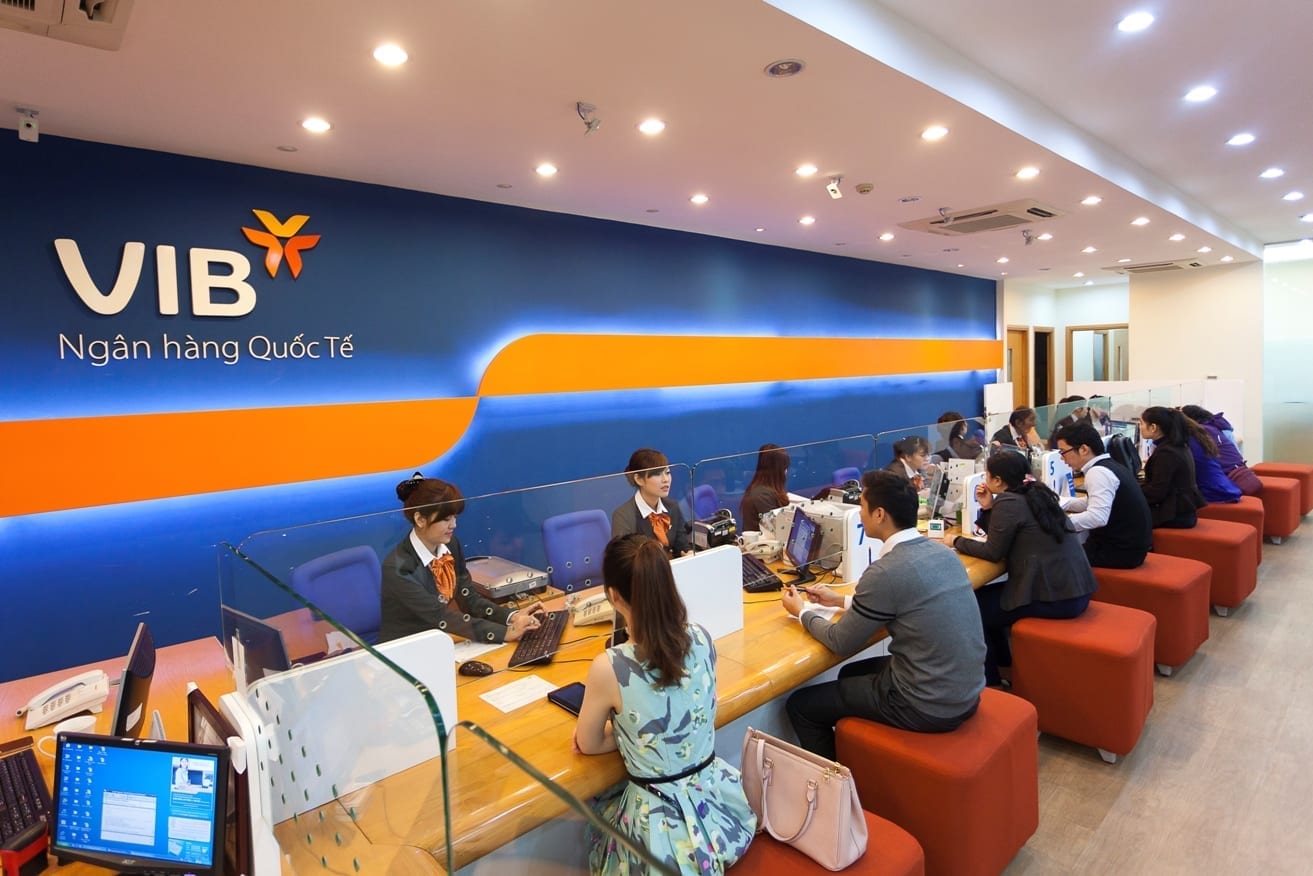
    In recent months, more bank transaction offices and branches have opened to welcome both individuals and enterprises as customers.

    For instance, the An Bình Commercial Joint-Stock Bank has opened 11 branches and transaction offices in Đà Nẵng and the provinces of Lạng Sơn, Nghệ An, Bình Dương and Gia Lai.

    Bắc Á Bank, by the end of last quarter, had expanded to include 100 transaction offices in 20 province and cities. TP Bank also plans to open more offices in provinces and cities nationwide.

    A leader from An Bình was quoted as saying in Người Lao Động (The Labourer) newspaper that expansion was one of the most important steps in becoming a leading bank in the retail market.

    An expert told the newspaper that estimated growth of the national credit market this year would be 17-18 per cent against last year, if growth increases by 3 per cent per month in the last few months.

    He said this was a good time for banks to expand and introduce promotions to reach their year-end targets.

    As the banking system is too small to fully meet demand, expansion would improve service quality at banks, he added.

    The representative from An Bình Bank said there was strong demand for bank expansion, as this is a traditional channel to approach customers in all regions of the country.

    Morever, demand for lending at the end of a year is very high, prompting banks to expand to serve more customers.

    However, with the opening of more branches and transaction offices, risks can increase as customers worry that service quality and technology will be inadequate. Human resources and management skills may not be ensured as well.

    Experts, however, said there was no need for concern as regulations on controlling expansion in the banking sector, in which banks must show profits and have no more than a 3 per cent bad-debt ratio, would lower the risks.

    Bank expansion will help improve quality and competitiveness as well as increase each bank’s market share, according to experts.


  • Cisco sees doubling in digital banking clients

    Cisco sees doubling in digital banking clients

    James Cronk, global director, Financial Services Industry, at US-based Cisco, said the banking and financial-services sectors were now “transferring their legacy environment into digital transformation to support digital payment”.

    Around 4.5 per cent of Thai banking customers currently use digital payment, a proportion that will rise significantly in the next few years, driven by the development of information-technology infrastructure and security, he said.
    Cisco’s comprehensive economic analysis estimates that digital innovation in retail banking will drive US$405 billion (Bt14.4 trillion) in value globally from 2015 to 2017.

    Last year, financial services as a whole captured just 29 per cent or $117 billion of that opportunity. Moreover, more than 90 per cent of the potential value is driven by key digital-use cases, including sales and services transformation, next-generation workers, video-based advice, mobile payment and connected ads, Cronk said.

    Cisco has six platforms and solutions to support digital transformation in financial services – customer experience, workforce experience, agile IT-fast IT, analytics and insights, cyber security and liability, and risk compliance and management – the global director said.

    Having a road map to digital value in retail banking means banks will be positioned “to enable IT agility and operational effectiveness, create differentiation in their business strategies from those of competitors, and define disruptive new digital-enabled business processes”, he explained.

    Vatsun Thirapatarapong, managing director of Cisco in Thailand and Indochina, said the ratio of digital-banking users in Thailand would increase to 10 per cent of all banking users in the next three years, due to the popularity of using e-payment among generation-Z individuals, the usage of mobile first/cloud first, as well as start-ups developing fintech (financial technology) solutions to support digital payment.
    Moreover, IDC has reported that consumers expect banks to deliver highly personalised hi-tech services coupled with the convenience of anytime, anywhere.

    This group of consumers is growing and accounted for about 4.5 per cent of banking customers in the Asia-Pacific last year, according to the global IT market-intelligence firm, which expects the segment to grow to about 15 per cent by 2020.
    Meanwhile, the Bank of Thailand has reported that there are currently around 12.9 million users of mobile banking in the Kingdom. The value of Thailand’s online retail market is expected to reach $10 billion-$15 billion by 2020, up from less than $2 billion last year, the central bank said.

    The mobile penetration rate reached almost 87 per cent of the population, with smart-phone penetration at 50 per cent, while 50 per cent of all online transactions are done via mobile devices, it added. E-payments are expected to surge from Bt68.2 billion last year to Bt143 billion in 2020.

    Moreover, Thailand is entering in the first stage of the government’s national e-payment policy and, when the e-payment system is fully operational next year, the estimated cost savings for banks and businesses will be around Bt75 billion per year, the Bank of Thailand said. The Thai Bankers’ Association’s Payment System Office has agreed on a new fee structure, which will lower the cost of digital banking.

  • Aussie mobile customers’ private data up for sale

    Aussie mobile customers’ private data up for sale

    Private information on Australian mobile subscribers are being sold off by unscrupulous members of offshore call centers, according to an investigative report.

    The private details of customers from the market’s three operators – Optus, Telstra and Vodafone – are being offered for sale by a call center business named AI Solutions, run by Indian businesman Imran Khan.

    Information including home addresses, dates of birth, alternative numbers, billing statements and call history are being offered for between A$350 ($260) and A$1,000, the report states. Prices are higher for VIPs , politicians, police and celebrities.

    Security industry sources spoken to for the report say the practice of call center workers selling off Australian customer details has been long-standing, and potentially involves more than one company.

    In a press statement, a Vodafone Hutchison Australia spokesperson said the company is “aware there are individuals who do attempt to illegally access data through various channels from companies and organisations which hold customer information,” and has “invested millions of dollars over recent years in security systems and processes, and have a number of safeguards in place to prevent unlawful access of customer information.”

    For offshore call centers, security safeguards include paperless offices, a no mobile phone policy, no access to third party websites, email monitoring, role based systems access, continuous agent training and disciplinary process.

    An Optus spokesperson said the company has referred the matter to federal police, and Telstra said the company does everything it can to protect customer data.

  • Porsche Customers Most Satisfied Overall

    Porsche Customers Most Satisfied Overall

    The Porsche brand has ranked highest among all nameplates, according to the latest J.D. Power 2016 U.S. Sales Satisfaction Index (SSI) Study released today. The brand also placed higher than all other luxury manufacturers for the second consecutive year. Porsche improved upon its 2015 standing by 72 points to capture the overall ranking for the second time in the 30-year history of the SSI Study.

    The SSI Study measures satisfaction with the sales experience among new-vehicle buyers and rejecters — those who shop a dealership and purchase elsewhere. Buyer satisfaction is based on four measures: working out the deal (25%); salesperson (19%); delivery process (16%); and facility (15%). Porsche ranked highest among all automotive brands across all four categories. Rejecter satisfaction is based on five measures: salesperson (10%); fairness of price (4%); experience negotiating (4%); facility (3%); and variety of inventory (3%). Porsche improved this year in the areas of price, facility and inventory.

    “Customer satisfaction is our highest priority in our endeavor to deliver a unique and rewarding Porsche experience,” said Klaus Zellmer, President and CEO, Porsche Cars North America, Inc. “We pride ourselves on building exciting and innovative sports cars, but our success is ultimately measured by the approval and appreciation of our customers. I would particularly like to thank our dealer partners who have made it their mission to provide a benchmark experience for their clients who are purchasing a Porsche.”

    The 2016 SSI Study is based on responses from 28,979 buyers who purchased or leased their new vehicle in April or May 2016. The study is a comprehensive analysis of the new-vehicle shopping and purchasing experience and measures customer satisfaction at U.S. dealerships.

  • Privacy is paramount to online consumers

    Privacy is paramount to online consumers

    More than half (55%) of consumers globally have decided against buying something online due to privacy concerns, a recent KPMG International survey indicates.

    The survey also revealed that less than 10% of consumers feel they have control over the way organizations handle and use their personal data. Respondents in most countries say privacy controls are more important than the potential convenience gained from sharing personal data.

    “An executive would be at risk of being fired if half their customer base disappeared after they made a crucial business decision,” said Mark Thompson, Global Privacy Lead at KPMG.

    “Failure to embed privacy into the DNA of their business strategy could ultimately lead to the extinction of a business given how closely consumers and regulators alike are paying attention to how organizations collect, store and use personal data.”

    The survey further revealed that 82% are not comfortable with the sale of their data to third-parties in exchange for the speed, convenience, product range, home delivery and price comparison that online shopping offers.

    Over two-thirds of people are not comfortable with smartphone and tablet apps using their personal data. In all markets but one, at least 75% of respondents said they were uneasy with their online shopping data being sold to third-parties.

    About 55% said a free fitness tracking device that monitors the well-being of users and produces a monthly report for them and their employer is also crossing the line.

  • Governement Aims to Protect Fintech Customers

    Governement Aims to Protect Fintech Customers

    Coordinating Minister for Economic Affairs Darmin Nasution wants to have an agency that protects customers of (financial technology/fintech) companies. The agency will also monitor and supervise fintech businesses to make sure they comply with existing laws and regulations.

    The agency, he said, will work in similar ways to the Central Securities Depository (KSEI) and the Clearing and Guarantee Corporation (KPEI) in supervising capital market transactions.

    “In the case of contract breaches, consumers must not incur losses. There must be an agency that covers the loss, he said at the Indonesia Fintech Festival, Tuesday, August 30.

    He said that the fintech industry offers an opportunity for entrepreneurs and the financial services sector. But fintechs have their negative impacts and risks as well, that’s why the OJK and Bank Indonesia (BI) must regulate the industry for the protection of its customers.

    BI Governor Agus Martowardojo supports the development of fintechs, saying it is an industry that allows faster, more efficient services for the financial industry in terms of payment system.

    Agus said he has three hopes for the fintech industry. First, for international fintechs to register as an Indonesian entity. Second, to have all payments denominated in rupiah, and third is for the industry to save their funds in the national banking system.

    President Joko Widodo, who attended the Fintech Festival, said that the business is a golden opportunity for people living in remote areas. Widodo believes that better access to financial services will crunch income gap.

    “I invite fintech businesses to innovate and spawn new breakthroughs in the use of digital technology that will fast-track financial inclusivity,” he said.

  • Telstra to invest $2.3b to improve the customer experience

    Telstra to invest $2.3b to improve the customer experience

    Australia’s Telstra has revealed plans to invest up to A$3 billion ($2.3 billion) over the next few years on improving the customer experience following a wave of recent network outages.

    The operator has revealed plans to increase its capex to sales ratio to 18%, the highest since the operator was building its 3G network in the 2008-09 financial year.

    Telstra CEO Andrew Penn said the investments include plans for consumers, SMBs, domestic and international enterprise users, governments and wholesale customers, as well as both fixed and mobile networks.

    Short term actions to address frequent customer complaints will be followed by more significant and longer term investments aimed at digitising to improve the customer experience and reducing costs.

    “There are a number of immediate actions that we believe will improve customer experiences. We will simplify products and platforms – we need to retire old technology and systems that slow down and complicate how customers are served,” Penn said.

    He said investments will be aimed at evolving the network with new technologies including virtualization and increased automation. The company aims to develop a flexible, software-defined network architecture.

    The move comes as Telstra seeks to win back customers following a series of hardware-related network outages that were heavily reported in Australian media.

    Telstra had already committed A$50 million towards installing new monitoring equipment and improving the capacity of its mobile network to handle large volumes of simultaneous re-registrations.

  • 3 things you need to know about Hong Kong’s online shoppers

    3 things you need to know about Hong Kong’s online shoppers

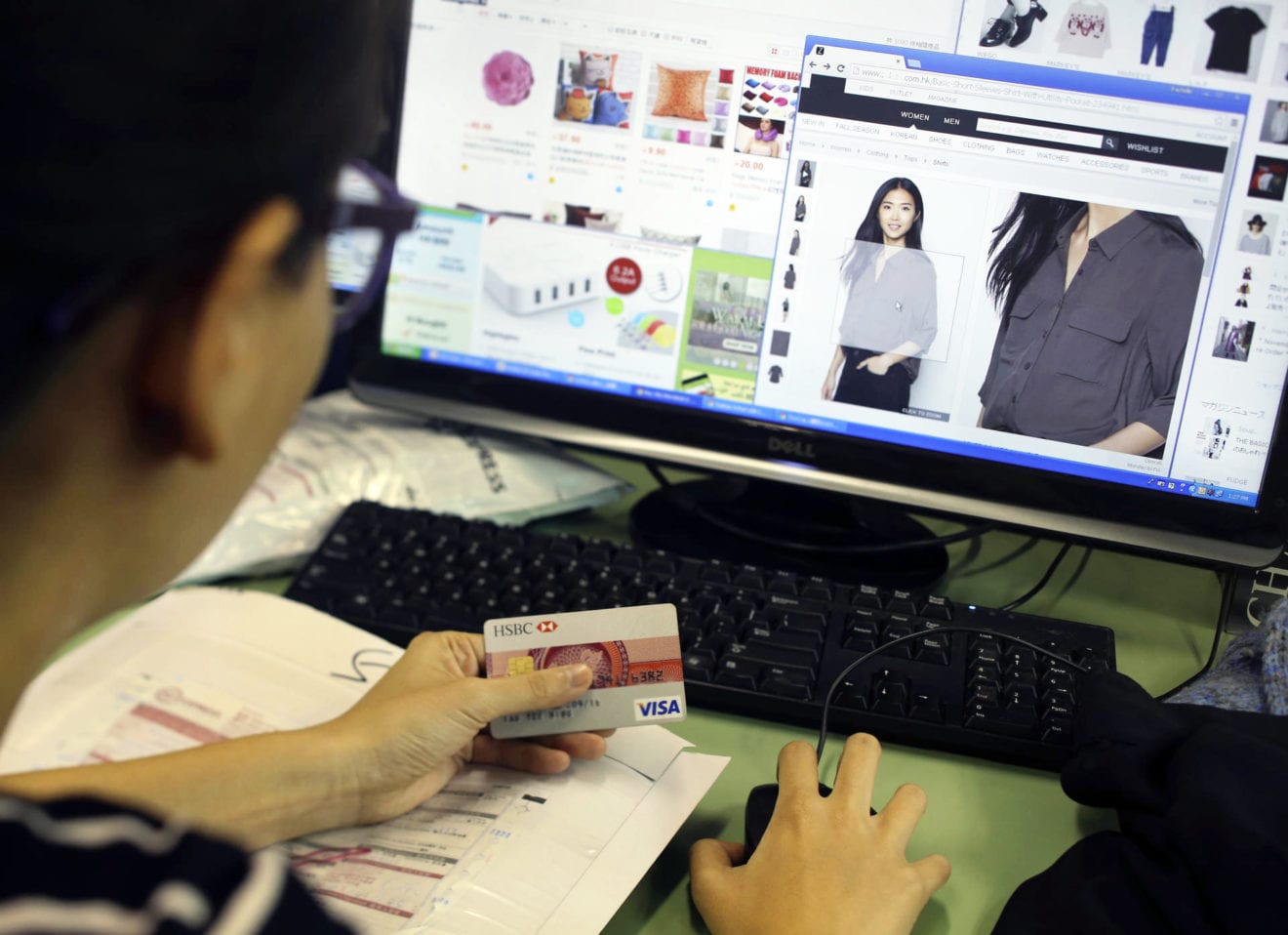
    The line between browsing and buying online and offline in Hong Kong is blurring as technology enables nearly everything to become a digital touch point for consumers. Following the success of e-commerce boom in China, Hong Kong retailers are also keen to leverage the “online shopping fever” these years, and some e-tailers have started organizing similar Online Shopping Festivals in Hong Kong. But the real question is: what are the consumer perceptions toward these shopping events?

    Based on our recent study, here are some highlights you ought to know about Hong Kong e-shoppers:

    LESSON 1: KNOW YOUR CONSUMERS

    Generally speaking, 88% of Hong Kong consumers shopped online in the past 12 months. The young generation (aged below 30) are all active e-shoppers, while one-third of the e-shoppers in Hong Kong purchased online within one week.

    LESSON 2: KNOW YOUR POINT OF SALES

    Over 80% consumer shop online through desktop computers, while two-out-of-five online shoppers choose their smartphone for e-shopping.

    LESSON 3: KNOW YOUR PRODUCT STRATEGIES

    The top three most popular categories for e-shoppers are clothing, travel package/ air tickets/ hotels, and restaurant coupons.

    E-commerce is quickly becoming crucial to growth because creating a relevant, integrated and engaging shopping experience means winning offline as well.