Retail News CRM

Tag: electricity

  • National power utility faces financial crunch

    National power utility faces financial crunch

    Vietnam Electricity (EVN) will face increasing financial difficulties in the coming years as its payment obligations to independent power projects keep rising. National utility EVN’s gross margin fell from 15.1 percent in 2015 to 12.9 percent last year due to rising costs of payment to new coal-fired independent power projects (IPPs), a recent report by the Institute for Energy Economics and Financial Analysis (IEEFA) says.

    As EVN has to pay these projects a fixed price for their power, as more such plants come online, the sole power distributor in the country will experience a financial crunch. Between 2015-2019, EVN’s own generation capacity shrank from 61 percent to 52 percent of the total system, a ratio that IEEFA Vietnam expects to fall even more rapidly in comping years.

    It estimates that in the next three years, there will be on average 4.4GW of capacity addition annually from IPPs, significantly increasing EVN’s payment obligation. Payment for IPPs, which accounted for 42.7 percent of EVN’s total cost of sales last year, will likely rise to 60.1 percent in 2023, it says. This means the drop in EVN’s gross margin “will likely continue as more IPP capacity with fixed capacity payments comes online.”

    The solution is to increase tariffs, but this has become more difficult this year with the Covid-19 pandemic crippling key industries and cutting jobs.

    A plan to increase tariffs by the end of this year has been suspended as the government now focuses on protecting jobs and ensuring economic growth while keeping inflation below 4 percent.

    EVN also had to offer a 10 percent reduction in billings to customers from April to July, resulting in subtraction of VND6.8 trillion ($292 million) from its revenue.

    The national utility now “faces the risk that if tariff increases cannot keep pace, the new debt will be needed to help meet the company’s growing IPP payment obligations,” the report says.

    It cites credit rating firm Fitch as saying that EVN’s financial profile can be significantly affected if tariffs are not adjusted regularly as it faces major hydrology, currency, and demand risks.

    IEEFA forecasts that EVN could report a loss of VND14.5 trillion this year against a post-tax profit of VND9.7 trillion last year.

  • Vietnam advised to restart nuclear energy program

    Vietnam advised to restart nuclear energy program

    With its energy deficit rising every year, several experts are advising Vietnam to reconsider the shelved nuclear power program. Nuclear energy is one of the recommendations made by experts as the Industry and Trade Ministry (MoIT) gathers public inputs for its 2021-2030 National Energy Master Plan.

    Tran Xuan Hoa, Chairman of the Vietnam Mining Technology Association, said that as Vietnam’s net energy imports continue to rise, it is getting harder and harder to find sources that would allow the country to access stable energy sources to meet its socio-economic development goals.

    A restart of the nuclear development program should be included in the national master plan, he said, adding that compared to other types of energy currently available, nuclear energy was “still relatively safer and low-priced”.

    This is the first time that Vietnam is working on a comprehensive national energy master plan. Prior to this, energy plans were made on a piecemeal basis, that is, for each individual energy sector.

    Hoa said Vietnam had in 2016 approved a nuclear power development plan which would build two plants with a designed capacity of 4,000 MW per year in the southern province of Ninh Thuan. Work on the plants was set to start the same year.

    However, in November 2016, the National Assembly decided to suspend all nuclear development until 2030, saying it wanted to allocate capital for coal and gas, modernizing infrastructure to boost socio-economic development and adapting to climate change.

    Nuclear energy is mentioned in the draft master plan released for receiving feedback, but it envisages the development of this energy to begin after 2035. The draft envisages national nuclear power capacity reaching 1,000 MW by 2040 and 5,000 MW by 2045.

    “We have halted nuclear production for many reasons, but a restart should now be considered. Unfortunately, in the short term, the national energy plan has not mentioned anything about nuclear development,” Hoa said.

    Nguyen Anh Duc of the MoIT’s Institute of Petroleum said tapping alternative sources of energy should be a key consideration as coal, oil and gas reserves get depleted.

    Since 2015, Vietnam has shifted from being a net exporter to a net importer of energy. Imports of coal, and oil and gas, two sources of raw materials that account for a major proportion of the country’s primary energy supply, have been rising steadily during this period, an MoIT report has said.

    While Vietnam targets extraction of 50-56 million tons of coal per year, the Vietnam National Coal and Mineral Industries Group (TKV) has only been able to achieve 45 million tons per year as it is having to dig deeper and deeper to access the mineral. The rest is imported to ensure sufficient supply for electricity development, consumption, and production needs.

    Vietnam has spent around $2.6 billion on importing 36.5 million tons of coal in the first seven months of this year, up 50 percent in volume year-on-year, according to Vietnam Customs.

    As for gas, currently most 2020 targets have been met or exceeded, save for liquefied petroleum gas (LPG) production, at only 50 percent; while processing, storage and distribution providers have only been able to meet 25 percent of the country’s petrochemical processing demand this year, Duc said.

    Production is currently at around 9-10 billion cubic meters, but this is expected to decrease after 2023 when output declines at most oil and gas fields being exploited now.

    To resolve this, the government needs to find ways to ease bottlenecks for investment in gas exploitation. “Procedures, legal corridors, and policy mechanisms for the oil and gas sub-sector need to be set out in detail in this comprehensive energy plan to attract investment in exploration in deep and remote waters,” Duc said.

    Vietnam will have to import 1-4 billion cubic meters of liquefied natural gas a year in 2021-2025 to meet growing power demand, the MoIT assessed in a report released last year.

    Hoa said that two years ago, the solar power feed-in-tariff (FIT) was very attractive at a fixed 9.35 cents a kWh. Now, it has decreased to 7.09-8.38 cents per kWh, depending on the type of investment. Given falling renewable energy prices, the national master plan should promote the development of this type of energy over others, he added.

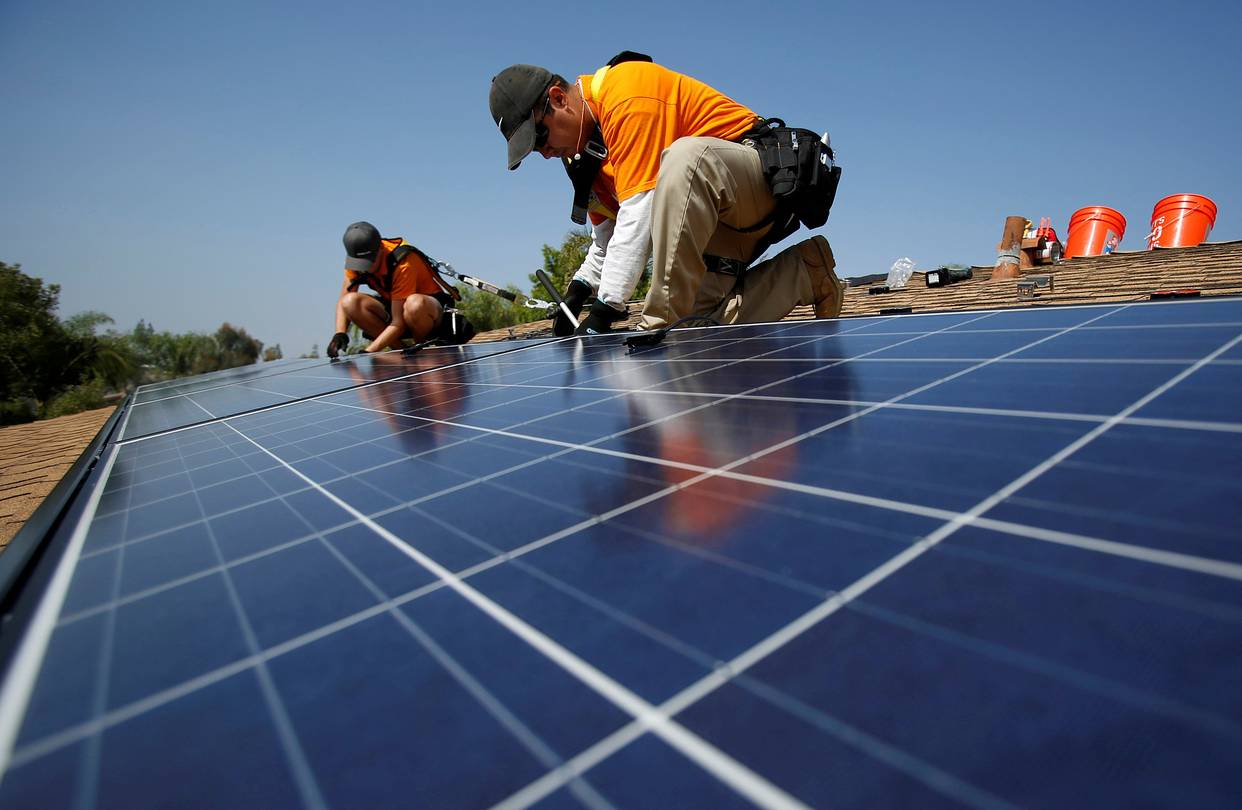
    Data released by national utility Vietnam Electricity (EVN) shows that as of June-end this year, 5,482 MW of solar power capacity had been installed, accounting for 9.5 percent of the country’s power sources. By mid-August, there were nearly 45,300 rooftop solar power projects operating with a total capacity of 1,029 MWp, an output of about 500,692 MWh.

    According to Tai Anh, Deputy General Director of EVN, as long as renewable energy accounts for less than 20 percent of national capacity, the power grid will not need additional investment.

    But if it does, then the system will require many new solutions such as additional storage batteries to maintain balance, and money would have to be set aside to deal with environmental impacts when renewable energy machinery expires, inflating costs, he said.

    “If Vietnam wants to raise its renewable energy capacity, how much we can afford to subsidize and how much the economy can withstand are factors needed to be considered carefully before making an appropriate choice,” he said.

    Dr. Nguyen Ngoc Hung of the MoIT’s Institute of Energy said Vietnam’s new comprehensive national energy plan also needs to set up clear incentivizing mechanisms, especially in terms of energy prices, if the country wants to attract private sector investment.

    “Most businesses dare not invest in coal mines, deeming the risks too great,” he said.

    Nguyen Thuong Lang of the MoIT’s Institute of Commerce said energy prices are set by the Ministry of Finance, and unless businesses are allowed to set prices according to market forces, it would be very difficult to make effective feasibility appraisals of potential energy projects.

    So far, no market price mechanism has been mentioned in the MoIT’s draft energy master plan, he noted. Lang said that the roles of the state and the private sector will have to be redefined and the market allowed to decide prices, which will be more efficient. As Vietnam’s economy transforms rapidly, prices should be allowed to match changes in the country’s economic structure, he added.

    Pointing to the fact that no truly large-scale energy project has been started in the last five years, Hoa said that the reason why businesses do not dare to invest is the lack of a market mechanism, with many energy sectors still having prices set by the Ministry of Finance.

    “Therefore, it is necessary to get the energy sub-sectors to coordinate with the Government, localities and enterprises to resolve this issue,” Hoa said.

    Deputy Prime Minister Trinh Dinh Dung had said at the Vietnam Energy Summit 2020 in July that Vietnam needs another 5,000 MW in power plant capacity by 2025, which will cost it around $7-10 billion each year.

    Vietnam currently relies largely on hydropower and thermal power for its electricity needs, but its hydropower potential is almost fully exploited and oil and gas reserves are running low.

    Coal-powered plants accounted for 36.1 percent of electricity supply last year, followed by hydropower at 30.8 percent, according to the Vietnam Energy Association.

    The MoIT plans to incorporate feedback on the draft National Energy Master Plan and submit its final version to the Government by the end of this year.
  • Vietnam yet to optimize renewable energy utilization as shortages loom

    Vietnam yet to optimize renewable energy utilization as shortages loom

    Vietnam is struggling to fully utilize the potential of renewable energy because of policy roadblocks even though power shortages are expected in upcoming years.

    In the central province of Ninh Thuan, one of the solar power hotspots in the country, nine of 15 operating solar projects are running at just 30-60 percent of their maximum capacity, according to the province’s Department of Industry and Trade.

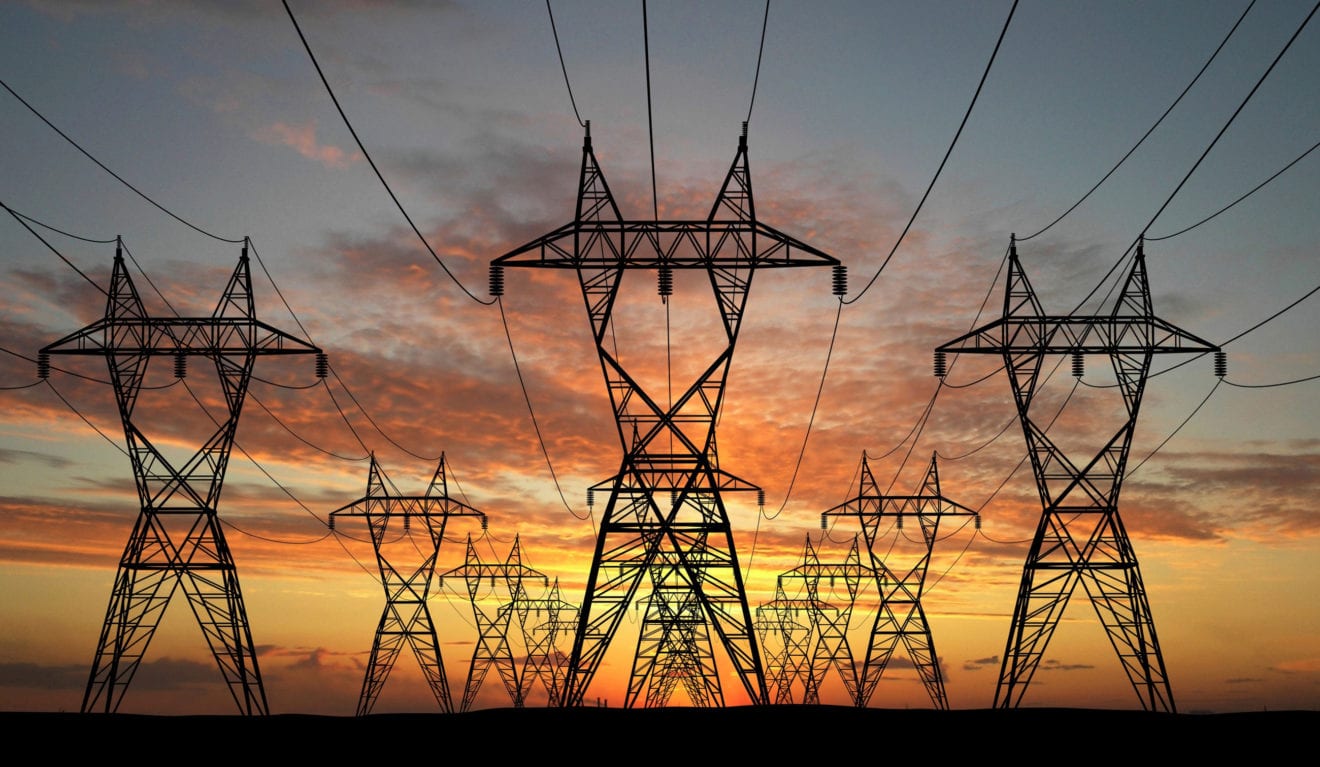
    The reason for this is that Vietnam’s transmission lines are not capable of loading a surge in output from renewable plants. As many as 91 solar farms began operating in the country last year after the government offered an attractive incentive tariff rate, causing some transmission lines to operate at up to 360 percent of their safe capacity limit.

    A transmission infrastructure upgrade is needed, but the government’s monopoly in power distribution has created challenges for private companies in installing transmission lines, Minister of Industry and Trade Tran Tuan Anh had conceded earlier.

    Experts have proposed changes in regulations to allow private investment in this area. Energy expert Nguyen Duy Khiem said that the administrative procedures involved in installing a new transmission line could take national utility Vietnam Electricity (EVN) five to six years to complete.

    The government should allow a build-operate-transfer (BOT) model in transmission lines so the national grid can load the surging output from renewable plants, he said.

    At the same time, national power security can be ensured because companies will hand over control of the line to the government upon completion, he added.

    Another roadblock for renewable energy is administrative hindrance to project implementation, some experts say.

    Currently, only 11 wind power projects are operating in Vietnam with a total capacity of 377 MW; while over 100 projects with a total capacity of over 6,500 MW have been approved, according to the industry ministry.

    Furthermore, 250 projects with a combined capacity of 45,000 MW are still pending approval. The country has a coastline 3,000 kilometers long with strong wind speeds.

    Prime Minister Nguyen Xuan Phuc last month asked the industry ministry to speed up the process of resolving ongoing issues with renewable projects. He also encouraged private investment, including from foreign companies, in this sector.

    The government targets to have an addition of 12,500 MW in solar power capacity and 7,200 MW of wind power by 2025.

    The industry ministry has warned of power shortages between 2021 and 2025, with the most severe shortage of 5 billion kWh in 2023, as construction of new thermal and gas-fired plants fall behind schedule.

    The country needs 21,650 MW of power capacity in the 2016-2020 period, but last year, the actual figure was just two-thirds of this target, the ministry said.

  • Tesla Applies To Become UK’s Electricity Provider

    Tesla Applies To Become UK’s Electricity Provider

    U.S. electric carmaker Tesla Inc has applied for a license to supply the electricity in the United Kingdom, The Telegraph reported on Saturday.

    The purpose of the license from the energy regulator may be to introduce the company’s Autobidder platform, the report said, citing a company source. The application did not make clear why Tesla has applied for the license, The Telegraph reported.

    Autobidder is a platform for automated energy trading and is currently being operated at Tesla’s Hornsdale Power Reserve in South Australia.

    Shares of Tesla tumbled on Friday (May 1) after Chief Executive Officer Elon Musk tweeted that the electric carmaker’s high-flying stock was overly expensive. This report produced by Chris Dignam.

    Having built a significant battery business in recent years, the carmaker is now preparing to enter the British market with its technology, the paper said, citing industry sources.

    The company did not immediately respond to a request for comment.

    In 2017, the carmaker built world’s largest lithium-ion battery to help keep the lights on in South Australia.

    Shares of Tesla fell 9% on Friday after Chief Executive Officer Elon Musk tweeted that the electric carmaker’s high-flying stock was overly expensive. “Tesla stock price is too high,” Musk said on Twitter.

  • Vietnam to buy 1.5 billion kWh of power annually from Laos

    Vietnam to buy 1.5 billion kWh of power annually from Laos

    State power utility EVN will buy around 1.5 billion kWh of electricity a year from Laos for two years starting in 2021.

    Under contracts it signed on Saturday, Vietnam Electricity (EVN) will buy over 596 million kWh a year from two hydropower plants belonging to Phongsubthavy Group and 632 million kWh from two plants belonging to Chealun Sekong Group from 2022.

    From 2021 it will start buying 263 million kWh annually from another plant belonging to the latter company.

    The import was approved by the Vietnamese government to mitigate power shortages predicted to hit the country from this year.

    The Ministry of Industry and Trade estimates shortages of 3.7 billion kWh in 2021 and nearly 10 billion kWh the following year.

    2023 will be the most stressful with the shortage expected to be around 15 billion kWh. From then on it will decrease, with the shortage expected to come down to 7 billion kWh and 3.5 billion kWh in 2024 and 2025 respectively.

    The industry ministry has said not more than 5-8 percent of electricity can be conserved, and the only way out is to import more from Laos and China.

    But buying from neighboring countries is only a band-aid solution, and in the long run it is necessary to speed up work on large power generation projects, it stated.

  • Vietnam urged to stop building new coal-fired power plants

    Vietnam urged to stop building new coal-fired power plants

    A halt to investment in new coal-fired power plants is required to check the trend of increasing coal consumption, a report warns.

    The report, released on Monday by the Ministry of Industry and Trade in collaboration with Denmark’s Energy Agency, said the country needs early action to reduce future coal demand, which could include taxation on the use of coal or limits on new coal-based power generation.

    Vietnam’s coal imports could triple between now and 2030 as demand for power rises in lockstep with a rapidly growing economy, Jakob Stenby Lundsager, an adviser in Vietnam to the Danish Energy Partnership, said at the release of the Vietnam Energy Outlook Report 2019.

    The figure would rise eight times by 2050, meaning three-fourths of Vietnam’s energy needs would depend on imports, he said.

    Renewable energy could account for 10 percent of total supply by 2030 and 20 percent by 2050, but the country needs to invest in expanding its grid and transmission to absorb the new supply, he said.

    The report noted liquefied natural gas could be used instead of coal in the power sector through at a higher cost, but it would cause less pollution.

    Vietnam became a net importer of coal in 2015 and imports have been rising to meet electricity needs.

    Imports cost $2.27 billion last year, up 71.6 percent year-on-year, with coal bought mostly from Indonesia, Australia and Russia, according to the trade ministry.

    Since power shortages are expected from 2021, the country might need to import 3.6 billion kilowatt-hours of power in 2021 and 9 billion kWh in 2023 from Laos and China to meet demand, the ministry had said in July.

    The World Bank has estimated that Vietnam needs $150 billion for energy sector development by 2030, with electricity demand growing by 8 percent a year in the next decade.

  • Kogan gets into energy retail market

    Kogan gets into energy retail market

    Online marketplace Kogan.com has announced it is entering into the energy retail market before the end of this year.

    The move is part of the retailer’s multi-year agreement with Powershop Australia, a part of the Meridian Energy group, to offer competitive power and gas services to Australian households under the brand Kogan Energy.

    David Shafer, Kogan executive director, said the partnership with Powershop will help reduce the cost of power and gas for many Australians and offer customers a seamless digital experience.

    “This partnership will enable Kogan.com to offer Aussies low cost power and gas, and a first-class customer experience using technology that will enable customers to easily track their energy usage at any time,” Shafer said.

    “Meridian Energy Group provides world class generation from some of Australia’s leading wind farms and hydro power stations, and Powershop Australia was ranked Australia’s Greenest Power Company from 2014-2018 by Greenpeace.”

    Kogan has already branched out from its core retail operations into mobile communications, home internet, insurance, super and travel.

  • UOB Launches Comparison Website for Utilities

    UOB Launches Comparison Website for Utilities

    United Overseas Bank on Monday launched Singapore’s first online utility marketplace by a bank, as part of the Open Electricity Market initiative. United Overseas Bank (UOB)’s utility marketplace will add to an existing array of comparison websites under Singapore’s Open Electricity Market initiative by the Energy Market Authority. Featuring 10 utility providers on a single website, customers can now search and sign up for the best deals for electricity, gas, water, broadband and TV services.

    With utility bills making up an average of about 10 percent of monthly household expenses, we want to help people stretch their household budget, said Jacquelyn Tan, UOB’s head of personal financial services Singapore in a media statement.

    With more than 50 different plans offered by electricity retailers under the Open Electricity Market rollout, Singapore consumers could find it time-consuming to find the right electricity plan.

    The UOB Utility Marketplace aims to make it easy for consumers to compare providers and plans through its Electricity Price Plan Recommender. Users simply need to indicate if they prefer a fixed price or discounted price plan, their preferred subscription tenure, and their monthly electricity bill budget.

    A list of suitable electricity plans and potential savings will then be generated based on their selection. Consumers are then directed to the electricity partner’s website to sign up for their plan of choice. In all, the process takes less than 10 minutes to complete, the bank said.

  • Electricity hike hits industry hard

    Electricity hike hits industry hard

    Vietnamese manufacturers are set to increase their selling prices following the 8.36 per cent hike in electricity price that launched from March 20.

    Việt Nam Cement Industry Corporation (VICEM) Bút Sơn announced it would increase the price of its cement by VNĐ30,000 (US$1.29) per tonne immediately after the power price increase.

    Đỗ Tiến Trinh, VICEM Bút Sơn’s general director, said that in addition to the electricity tariff hike of 8.36 per cent, the price of coal sold to cement producers also increased by 2.3 to 5.8 per cent depending on the kind of coals.

    The coal price increase came because electricity accounts for 10 per cent of production cost. In addition, the Việt Nam National Coal and Minerals Industry Holding Group (Vinacomin) has not provided enough coal to cement producers, making them import the product at high prices.

    Trinh said the firm could not afford to offset the rise in input costs and had to increase retail prices to ensure sustainable production.

    VICEM Tam Điệp Company also had the same increase in the selling price.

    According to Phạm Văn Minh, the company’s general director, no business wants to increase retail prices, but electricity and coal make up a big portion of input material costs for cement production.

    Công Thanh Cement Joint Stock Company in the central region did not raise its retail prices but is charging distributors VNĐ30,000 more per tonne.

    Nguyễn Quang Cung, chairman of Việt Nam Cement Association said cement producers were not surprised by the power tariff hike and had been preparing for the change.

    Its calculations showed if the electricity price was increased by 8.36 per cent, cement production cost would rise by VNĐ14,000 to VNĐ15,000 per tonne.

    Steel producers also said they would increase their selling prices.

    SSE Steel Company said it doubled its steel selling price to VNĐ200,000 per tonne, while Thái Nguyên Steel and Iron Corporation (Tisco) increased its selling prices by VNĐ150,000 to VNĐ200,000 per tonnes.

    The Việt Nam Steel Association said it was unavoidable for steel producers to raise their prices as power accounted for 8 to 9 per cent of total production costs. In addition, the import prices of iron ore and steel billets were also rising this year, affecting steel production costs.

    Nguyễn Anh Tuấn, head of the Electricity Regulatory Authority of Việt Nam (ERAV) under the Ministry of Industry and Trade (MoIT) told a press meeting last week that there were about 1.4 million manufacturing businesses in Việt Nam who spend on average VNĐ12.39 million per month on electricity. The average increase in their power bills would be VNĐ870,000 a month.

    While electricity prices have almost doubled in the last decade, the MoIT said Việt Nam’s electricity prices were 8.1 per cent lower than that of China and India, 18 per cent lower than Laos and 26.5 per cent lower than Indonesia. Even with the latest increase, the prices would only be on par with China and India.

    “Việt Nam’s electricity prices are lower than other countries. It is the reason that foreign investors are not interested in investing in electricity projects in the country,” said deputy minister Hoàng Quốc Vượng.

    However, chief economist of the Bank for Investment and Development of Việt Nam (BIDV) Cấn Văn Lực suggested the Government needs to eliminate cross-subsidising mechanisms for units using electricity.

    At present, industrial sectors consuming large amounts of electricity, accounting for 55 per cent of electricity density, such as cement, iron and steel, are being compensated for electricity prices and only subject to the lowest price of 6.8 cents per kWh. Meanwhile, electricity costs households 8.7 cents per kWh.

    “Currently, consumers using electricity for domestic use as well as service enterprises are compensating a certain amount for industrial production enterprises – that is unfair. When there is fairness, people and businesses will agree and are willing to pay more reasonable electricity prices,” Lực said.

    Read more at https://vietnamnews.vn/economy/507842/electricity-hike-hits-industry-hard.html#CEgTqP3b4CrxPzgm.99

  • Vietnam electricity prices go up again after two years

    Vietnam electricity prices go up again after two years

    Vietnam’s power prices went up 8.36 percent Wednesday after remaining unchanged for two years. A senior official of the Ministry of Industry and Trade told that prices have gone up from VND1,720 (7.4 cents) per kWh to VND1,864 (8 cents), exclusive of VAT.

    The ministry had said earlier this month that the Prime Minister had approved an increase in power prices. Vietnam’s power consumption has been increasing by about 10 percent each year, but generation has not kept pace.

    The hike could lower Vietnam’s GDP this year by 0.22 percent and increase its consumer price index (CPI) by 0.29 percent, the ministry said. Vietnam’s CPI increased 3.54 percent in 2018. Vietnam’s electricity prices have almost doubled in the last decade, but the last time they were raised was in 2017.According to Vietnam Electricity (EVN), its overall production costs rose by VND5.48 trillion ($235.46 million) year-on-year in 2018 mainly due to exchange rate differences in electricity purchase contracts and gas price increases.

    The utility expects costs to rise by VND15.25 trillion ($655.34 million) in 2019. This is not to mention other expected increases in costs of production, as well as coal and electricity imports, EVN said. Hoang Quoc Vuong, Deputy Minister of Industry and Trade, had noted earlier that Vietnam’s electricity prices were 8.1 percent lower than that of China and India, 18 percent lower than Laos and 26.5 percent lower than Indonesia. Even with the latest increase, the prices would only be on par with China and India, he said.

    “The fact that Vietnam’s electricity prices are lower than other countries is also why foreign investors are not interested in investing in electricity projects here,” he said. Vietnam, one of Asia’s fastest-growing economies, has been struggling to develop its energy industry. World Bank country director for Vietnam Ousmane Dione said at a recent forum that Vietnam would need to raise up to $150 billion by 2030 to develop its energy sector. Dione added that electricity demand in the country is set to grow by about 8 percent a year for the next decade.

  • Vietnam’s PV Power to list with billion-dollar market cap

    Vietnam’s PV Power to list with billion-dollar market cap

    PV Power, the country’s second largest power producer, will list on the Ho Chi Minh bourse this month with a market capitalization of $1.5 billion. The Ho Chi Minh Stock Exchange (HoSE) has approved that the firm lists 2.34 billion shares (trading code POW) on January 14 at VND14,900 (64 cents) per share. This would bring the market capitalization of PV Power to VND34.9 trillion ($1.5 billion).

    PV Power finished its last transaction on UPCoM, the market for unlisted public companies, on December 27 at VND16,000 (69 cents) per share.

    PV Power was established in 2007 with 100 percent capital from the state. The company finished equitization in the middle of last year with a charter capital of VND23.42 trillion ($1 billion).

    State-owned oil and gas giant PetroVietnam remains PV Power’s largest stakeholder, with 79.94 percent of its charter capital. Foreign investors currently own 14.3 percent. The company is subject to a foreign ownership cap of 49 percent.

    PV Power produces and sells electricity. It also imports and distributes coal and operates five electricity plants. It is the second largest power producer in the country after national utility Vietnam Electricity.

    In the 2016-2018 period, PV Power’s revenues were VND28-30 trillion ($1.2-1.29 billion), 96 percent of which came from selling electricity.

    As of September 30, 2018, its total asset value was VND61.4 trillion ($2.64 billion) and its equity was VND26.55 trillion ($1.14 billion).

    Its dividend rate for last year is expected to be 3 percent and is set at 6 percent this year.

  • Vietnam eyes green power, not to sacrifice environment for growth

    Vietnam eyes green power, not to sacrifice environment for growth

    The government Thursday reaffirmed Vietnam’s desire for a greener energy mix amid the risk of a power deficiency. Environment-friendly coal- and gas-fueled and renewable power plants would make up the mix. While Vietnam faces “obvious risks of an energy shortage in the coming years … it will not sacrifice the environment for economic growth,” Deputy Prime Minister Trinh Dinh Dung said in a meeting with the state-run Vietnam Electricity (EVN), the country’s largest power producer and monopoly distributor.

    Coal-fired power is vital to energy security, but “it must be clean,” he noted. Dung asked EVN to pioneer the use of modern technologies to reduce the environmental footprint of new coal-fired plants and handle the cinder and ash at existing plants.

    The country faces difficulty in increasing power generation since it has decided to put nuclear power on hold, many coal-fired plants are behind schedule and renewables could not be developed on a large scale due to “high costs” and transmission limitations.

    “Hydro power currently meets 40 percent of the country’s demand, but additional supply is almost impossible.

    “Our hydro power plant reservoirs, especially in the central region, are facing a serious water shortage, supply of coal for power development is erratic and gas supply is waning while power station projects for new supplies are being implemented slowly,” the deputy prime minister said.

    Dung said “EVN must also focus on investing in transmission systems to bolster the development of renewables.”

    The inadequate transmission system is now a bottleneck slowing down wind and power projects though a dramatically rising number of investors have shown interest in such projects following the recent increase in feed-in-tariffs (FITs).

    Dung also instructed the Ministry of Industry and Trade to hasten studies for the country’s investment in coal transshipment ports and regasification terminals to support development of gas-fuelled power, and quickly complete negotiations to buy power from overseas.

    He also asked EVN and other investors to speed up the delayed construction of major projects like Nhon Trach 3-4, O Mon 3-4, Tan Phuoc, Long Phuc 2-3, Quang Trach, and Quynh Lap.

    Vietnamese firms lack the resources for major projects while foreign loans are difficult to get due to government guarantee-related issues.

    The regional imbalance in power supply and demand is also a challenge. While the southern region accounts for more than half the demand (the north nearly 40 percent and the central region nearly 10 percent), power is being generated mainly in the north and central region (about 60 percent).

    To make it worse, the installation of transmission lines, both the main grid and branches, has been slow and failed to keep up with the pace of power generation, while negotiations to buy electricity from other countries have been going at a snail’s pace.

    The installed power capacity is around 48,000 MW. Under the revised Power Development Plan VII, a total of 60,000 MW is expected to be generated by 2020, with coal-fired plants accounting for 42.7 percent followed by hydropower (30.1 percent), gas-fired plants (14.9 percent), and renewables (9.9 percent).

    By 2030, the capacity will jump to 129,500 MW, with the ratios of coal and gas-fired power remaining almost unchanged, but renewables doubling to 21 percent.

  • Vietnam solar power investment rush poses an overload risk

    Vietnam solar power investment rush poses an overload risk

    The investment rush in solar energy could end up testing Vietnam’s weak power infrastructure, experts say. They say that both transmission capacity and the ability of grids to absorb the energy produced by new projects are suspect, as of now. The 9.35 U.S. cents per kWh Feed in Tariff (FIT) for solar power in Vietnam has sparked an investment rush.

    The latest project to be completed is the 49MW Krong Pa plant in the Central Highlands province of Gia Lai. It began operations last week.

    The investor, TTC Group, a corporation that invests in real estate, energy and education projects, has 19 other solar power projects underway.

    Other corporations have also been rolling out ambitious plans. The Xuan Cau Group plans to invest in a 2,000MW solar power project in southern Tay Ninh Province, while the Xuan Thien Corporation plans a 3,000MW project in the Central Highlands province of Dak Lak.

    September statistics from the Ministry of Industry and Trade show that 121 solar power projects been approved, which are expected to add 6,100 MW of output by 2020 and another 7,200 MW by 2030.

    Of these, 25 have signed power purchase agreements with Vietnam’s biggest power producer and sole distributor, Vietnam Electricity (EVN).

    In addition, another 221 projects await authorization, with a combined 13,000 MW of potential output.

    At this rate, the combined solar power output would accounts for 60 percent of Vietnam’s total output from all power sources kinds of power. It also far exceeds the country’s plan for solar energy output of 850MW by 2020, and 4,000 MW in the 4 following years.

    “There is an investment boom in solar power projects, but this is not good,” said Toby Couture, an expert of the German Corporation for International Cooperation (GIZ).

    He said authorities should come up with a balanced forecasting framework, rather than letting the market overheat.

    On top of the race to get projects completed before June 30, 2019 to enjoy the preferential FIT, the explosion of investment in solar power is also raising concerns over overloading of the power grid once the projects become operational.

    According to Vu Ngoc Duc of the Energy Institute under the Ministry of Industry and Trade, the fact that most projects are concentrated in central provinces of Ninh Thuan and Binh Thuan, and Dak Lak carries the risk of overloading the current power grid.

    Power plants cannot be plugged in without considering the capacity of each power transmission line, he said.

    Dinh Quang Tri, acting general director of EVN, admitted that 9.5 cents a kWh was still cheaper than electricity from oil, but the main problems the utility faces are infrastructural.

    Central Vietnam has relatively weak electricity infrastructure because of low consumption, but it is where the new renewable energy projects will be concentrated, he said.

    “The lines cannot take thousands of megawatts at the same time,” said Tri, adding that EVN had petitioned the government to plan and approve additional transmission lines.

    However, the procedures for planning, land clearance and construction will take a long time, so the existing grid will not be able to keep up with capacity of new solar plants.

    “This is a huge challenge. If we don’t purchase electricity from these solar plants, there will be a shortage. But if these projects are completed too quickly, the grid will not be able to load it all,” Tri said.

    He said that to avoid overloading the transmission grid, the Government should promote household solar panels, suitable for the low voltage grid, so that no additional investment into the transmission grid is required.

    Deputy Minister of Industry and Trade Dang Hoang An said that the ministry was directing the re-planning of local and national power development. It is assigning grid development units the task of resolving infrastructural bottlenecks to support approved solar power projects, he added.

    Solar power currently accounts for just 0.01 percent of the country’s total power output, but the government plans to increase the ratio to 3.3 percent by 2030 and 20 percent by 2050.

  • Vietnam’s wind power tariffs attractive, but concern rises

    Vietnam’s wind power tariffs attractive, but concern rises

    Vietnam’s new feed-in tariffs are attracting great interest in wind power, but investors are concerned about grid connection and purchase agreements. The new feed-in tariffs (FIT) are expected to be attractive to domestic and foreign investors, Tommaso Rovatti Studihard, South East Asia sales director for wind power developer Vestas Asia Pacific said.

    The government recently approved tariff revisions under Decision 39 on support mechanisms for the development of wind power.

    The decision, effective from November 1 this year, raises the tariffs from 7.8 US cents per kWh to 8.5 US cents for onshore and 9.8 US cents for offshore generation respectively.

    “Electricity demand will grow at an estimated 8 – 10 percent a year from now to 2030. This represents realistic opportunities for investors,” Studihard said.

    Conjecturing that the national plan envisages adding 1,000 MW of wind power by 2020 and 6,000 MW by 2030, he said the targets are achievable.

    “Vestas is excited about the Vietnamese market, probably this is the most promising market in the Asian region with very good wind resources,” he said.

    Vestas has so far put three wind power projects into operation in Vietnam and plans to have another project come online by 2019 and “do a lot more in the future.”

    Studihard noted that over the next three to five years there are huge opportunities in Vietnam to have some gigawatts of wind power, but the bankability of the power purchase agreement (PPA) remains an issue with many investors, especially international investors, and banks finding it a little difficult to be comfortable with.

    There are no clear termination and force majeure clauses in the PPA, which hinders the attraction of foreign investment, especially from banks and credit institutions, he explained.

    “One more problem is Vietnam’s weak grid capacity, which would become a bottleneck for developing wind and other renewables. The grid needs to be upgraded to tap the great potential Vietnam has for offerable, sustainable and reliable wind power.”

    Bui Van Thinh, CEO of the Thuan Binh Wind Power JSC (TBW), said having gained success in developing the 24MW Phu Lac wind power project in the central province of Binh Thuan, TBW is completing procedures to start construction of a 30MW wind power project in neighboring Ninh Thuan Province.

    But the weak grid capacity is the biggest challenge to expanding renewables like wind and solar power, he said.

    The transmission line near Phu Lac site could handle 100MW, compatible with two 50MW wind power projects.

    Overload capacity is imminent once a solar power project connects with the transmission line, Thinh noted, citing the concerning fact that there are eight solar power projects in the locality approved to connect with the grid.

    “The government should instruct the state-run Electricity of Vietnam (EVN) to install transmission lines to cope with the renewable power projects across the country, especially those in Ninh Thuan and Binh Thuan.”

    Ninh Thuan and Binh Thuan are central provinces that have the greatest potential for renewable energy in the country.

    While 2,000 MW of solar power are proposed to be generated in Ninh Thuan, the local transmission line can only handle a few hundred megawatts. Thus, 110 kV or 220 kV transmission lines need to be installed before pushing the power to the 500kV transmission line and sending it to Ho Chi Minh City or Danang City, Thinh added.

    Nguyen Van Thanh, deputy head of the Ministry of Industry and Trade’s Electricity and Renewable Energy Authority, said demand for energy, wind power in particular, has been growing rapidly.

    The need for ensuring energy security but also sustainable development has changed Vietnam from an energy seller to buyer, with the country’s dependence on imported energy sources also rising, he said.

    Vietnam also faces a shortage of primary energy, with coal imports posing many risks related to supply, price and transportation, he noted.

    “Given that, efficient exploitation of new and renewable sources would play a key role in the country’s socio-economic development, energy security and sustainable development.

    “The country is working diligently to draft policies for the efficient and economical use of energy, diversification of energy sources and increasing application of new and eco-friendly technologies,” Thanh added.

    Under the revised Power Development Plan VII, power stations in the country are expected to generate a total of 60,000 MW by 2020. Of these, coal-fired stations would make the largest proportion of 42.7 percent, followed by hydropower (30.1 percent), gas-fired plants (14.9 percent) and renewable energy sources (9.9 percent).

    By 2030, the total capacity would soar to 129,500 MW, with coal and gas-fired plants accounting for 42.6 percent and 14.7 percent respectively, similar to the figures set for 2020. But the ratio of renewable energy sources is set to double to 21 percent by then.

  • Vietnam must avoid power cuts next year: PM

    Vietnam must avoid power cuts next year: PM

    Prime Minister Vietnam Nguyen Xuan Phuc has ordered agencies to ensure that the country won’t suffer power shortages in 2019. The Prime Minister has communicated this to relevant agencies several times, Mai Tien Dung, Minister and Chairman of the Government Office, said at the government’s regular press conference on Monday.

    The communiqués have instructed the agencies to ensure that there’s no electricity shortage for both industrial and domestic uses, emphasizing they would be held responsible for failures, Dung said.

    The PM has also tasked relevant agencies with definitively resolving the ongoing issue of coal shortage for thermal power plants, which Vietnam Electricity (EVN) has warned could lead to power cuts early next year.

    The national power utility said in a recent report to Deputy Prime Minister Trinh Dinh Dung that the country will need over 54 million tons of coal for electricity production next year, of which 43.4 million tons will come from domestic production and 10.68 million tons will be imported.

    But the country’s only two suppliers, Vietnam National Coal-Mineral Industries Corporation (Vinacomin) and the North-Eastern Company (NECO) under the Ministry of Defense, will only be able to produce 37.21 million tons of coal next year, 6.19 million tons lower than estimated demand, EVN said.

    Speaking at the press conference, Deputy Minister of Industry and Trade Do Thang Hai said a total of four different electricity supply plans have been drafted, all of which designed to ensure there would be no power shortages next year.

    However, in certain cases, Vietnam would still need to produce 2-7 billion kWh of electricity from expensive oil-powered generators.

    “If we want to have enough electricity then we must increase the production of electricity by oil, which would be more expensive,” he said, asking consumers to make plans to save electricity.

    Regarding the issue of coal shortage, Hai asserted that Vinacomin and NECO have both supplied enough coal for thermal power plants as committed.

    “The two major coal suppliers have tried their best. If coal from domestic sources is not enough to supply [thermal power plants] then we will import more,” he said.

    The deputy minister also said a scenario for regulating electricity prices next year would be reported to the government later this month.

    “The electricity price for next year is being carefully considered and the scenario is being built in accordance with regulations, including factoring in the effect on inflation,” he said.

    Vietnam currently relies largely on hydropower and thermal power plants for its electricity needs. However, its hydropower potential is almost fully exploited and its oil and gas reserves are running low.

    Thermal energy is expected to account for over 48 percent of the country’s power production next year.

    Vietnam, one of Asia’s fastest-growing economies, has been struggling to develop its energy industry, and its heavy reliance on non renewable sources could prove problematic in the future, experts say.

    World Bank country director for Vietnam Ousmane Dione said at a recent forum that Vietnam will need to raise up $150 billion by 2030 to develop its energy sector; that electricity demand in the country will grow by about 8 percent a year for the next decade.