Retail News CRM

Tag: electricity

  • Vietnam to experience power cuts early 2019

    Vietnam to experience power cuts early 2019

    The ongoing coal shortage could lead to power cuts in Vietnam early next year, Vietnam Electricity (EVN) has warned. The national power utility said in a recent report to Deputy Prime Minister Trinh Dinh Dung that the country will need over 54 million tons of coal for electricity production next year, of which 43.4 million tons will come from domestic production and 10.68 million tons will be imported.

    But the country’s only two suppliers, Vietnam National Coal-Mineral Industries Corporation (Vinacomin) and the North-Eastern Company (NECO) under the Ministry of Defense, will only be able to produce 37.21 million tons of coal next year, 6.19 million tons lower than estimated demand, EVN said.

    “The lack of coal will lead to a shutdown of thermal power plants, seriously affecting the national power grid and EVN might have to cut electricity in the first months of 2019,” it added.

    EVN estimated that power generation will be reduced by 2,300 MW, which is the average electricity consumption of 13 central provinces.

    EVN said that Vinacomin and NECO had promised to provide enough coal for plants this year, but the amount provided by Vinacomin until this month was 690,000 tons lower than contracted.

    The power utility estimates that the country will need 2.55 million tons of coal of electricity in December, but the two coal producers plan to deliver only 2.05 million tons, which is 500,000 tons short.

    Due to the coal shortage, the Quang Ninh Thermal Power Company has shut down two out of four turbines since November 17.

    The Hai Phong Thermal Power Company shut down one turbine on November 22, and the Nghi Son Thermal Power Plant  reduced its two turbines to minimum operation the same day. The Ninh Binh Thermal Power Company is running low on inventory.

    Vietnam currently relies largely on hydropower and thermal power plants for its electricity needs. However, its hydropower potential is almost fully exploited and its oil and gas reserves are running low. Thermal energy is expected to account for over 48 percent of the country’s power production next year.

    Vietnam, one of Asia’s fastest-growing economies, has been struggling to develop its energy industry.

    World Bank country director for Vietnam Ousmane Dione said at a forum Monday that Vietnam will need to raise up $150 billion by 2030 to develop its energy sector.

    Dione added that electricity demand in the country will grow by about 8 percent a year for the next decade, as reported.

  • LG Chem to build China facility

    LG Chem to build China facility

    LG Chem said Tuesday that it will invest 2.1 trillion won ($1.8 billion) by 2023 to build electric vehicle batteries in China in the latest move to meet growing demand for batteries for zero-emissions cars. Korea’s top chemical company said it has broken ground on a three-story plant on the 198,300-square-meter (49 acre) site in Nanjing in southeastern China.

    The plant is set to roll out electric vehicle batteries that can power more than 500,000 electric vehicles. The first phase of production is set to begin late next year.

    An electric vehicle equipped with LG Chem batteries can travel about 320 kilometers (198 miles) on a single charge, according to LG Chem.

    LG Chem Vice Chairman and CEO Park Jin-soo said the second plant in China will allow the company to better meet rapidly growing global demand.

    LG Chem has another electric vehicle battery plant in Nanjing. It also operates electric vehicle battery plants in Korea, the United States and Poland.

    The electric vehicle battery market has been on the rise as automakers around the world race to go electric due to tightened regulations on greenhouse gas emissions, which scientists say are to blame for global warming.

    Currently, LG Chem is a key supplier of batteries to U.S. auto giant General Motors, Volvo and Renault, as well as Korea’s largest carmaker, Hyundai Motor, and its smaller affiliate, Kia Motors.

  • Vietnam to hike power prices in 2019

    Vietnam to hike power prices in 2019

    Deputy Minister of Industry and Trade Do Thang Hai said Friday that national utility Vietnam Electricity (EVN) might need to cover an incurred cost of VND20.73 trillion ($892.18 million) between 2018 and 2019.

    This include incurred costs of VND5.48 trillion ($235.92 million) this year and projected costs of VND15.25 trillion ($668 million) next year, Hai said.

    Incurred cost this year includes exchange rate differences in 2017 of VND3.07 trillion ($132.13 million), payment for water resources exploitation, VND502 billion ($21.6 million) and higher gas prices VND1.91 billion ($82.18 million).

    Projected incurred costs next year are based on exchange rate differences this year of VND3.51 trillion ($151.28 million), exchange rate differences 2015 scheduled to be paid next year, VND734 billion ($31.58 million), payment for water resources exploitation, VND502 billion ($21.6 million), and increase in gas costs, VND10.5 trillion ($451.79 million).

    Hai said EVN would review its electricity production costs last year in collaboration with government bodies to see if it was lower than current prices and would report to authorities for directions on adjusting next year’s prices.

    In July, Prime Minister Nguyen Xuan Phuc had banned any increase in electricity prices and medical fees for the rest of the year, aiming to keep the inflation rate below 4 percent and achieve a GDP growth of 6.7 percent in 2018.

    Inflation was at 3.57 percent in the first nine months of this year.

    The most recent power price increase in Vietnam was last December, when it rose 6.08 percent to VND1,720.65 (currently 7.4 cents) per kWh.

    EVN had a revenue of VND293.18 trillion ($12.61 billion) last year, with VND289.25 ($12.44 billion) from electricity sales, an increase of 8.94 percent from the previous year.

  • Utilities Providers Select SAP Software to Drive Convenience and Personalization for Customers

    Utilities Providers Select SAP Software to Drive Convenience and Personalization for Customers

    SAP today announced that more providers are choosing SAP Hybris solutions for utilities to stay ahead of the industry, support generation of new revenue and increase profits. Integration of the SAP Hybris solution into SAP S/4HANA, utilities billing capabilities and industry-specific capabilities of the SAP Customer Relationship Management application are helping providers deliver expert advice and bundled services with relevant offers.

    SAP Hybris Customers Reimagine Engagement Opportunities

    The utilities industry is experiencing a period of rapid transformation, with competition on the rise and reregulation, decarbonization and decentralization transforming expectations. As a result, utilities need to offer more than their core energy service. According to a recent IDC survey (“Energy End Consumer Survey”), engagement within the utilities industry remains a challenge. The survey found that:

    • 52 percent of consumers contact their energy supplier less than once a year
    • 51 percent note that self-service engagement channels “never” work properly
    • 52 percent of utility consumers do not understand what they are paying for

    With SAP Hybris solutions, utility providers are able to analyze data quickly and create a 360-degree view of their customers so that they can sell innovative, turnkey solutions and services in real time to increase their revenue stream.

    Companies who have recently selected SAP software include the following:

    EneRa in Germany is at the helm of digital transformation, combining new technology with business trends such as the sharing economy. Subsidized by the government as a research project, EneRa implemented the SAP Hybris Revenue Cloud solution and SAP Cloud Platform with machine learning capabilities to build a solution for collecting its customers’ compute power to use in times of overproduction by renewable energy to transform electric power into actual results of machine learning algorithms. Universities and companies can access these CO2-neutral distributed data centers for machine learning, which are similar to supercomputers.

    “With SAP Hybris solutions for utilities we have been able to take advantage of next-generation technology to reduce waste through renewable resources,” said Christian Arnold, managing director, EneRa, EWE. “With machine learning capabilities, we have been able to harness excess energy to deliver an entirely new product and deliver added value through our CO2-neutral data centers.”

    REWAG needed a simple-to-implement, user-friendly solution to structure its customer and sales information in one place. Its sales teams required mobile online and offline access so they could access and enter data on the go at customer sites. After implementing the SAP Hybris Cloud for Customer solution in only 50 days, REWAG was able to get a clearer, more utility-focused view of customers, speeding sales and helping REWAG serve its customers through tight integration with its SAP-based utilities capabilities.

    Jemena owns and operates a diverse portfolio of energy and water transportation assets in Australia supplying millions of households and businesses with essential services every day. Jemena has deployed SAP Hybris Cloud for Customer in just eight weeks to deliver a single customer view to staff in the office and the field.

    TXU Energy is the largest electricity provider in Texas with 1.7 million customers. After introducing new products such as Web-controlled thermostats and home and HVAC system service warranties, TXU integrated SAP Hybris Billing into its existing solution to consolidate billing for all energy- and non-energy-related services.

    Dynamic Offerings to Build New Revenue Streams

    “SAP Hybris solutions are providing a foundation for utilities companies to look at their business through a new lens,” said Matthias Goehler, senior vice president, head of SAP Hybris industries. “By eliminating the guess work from customer data, supporting dynamic pricing models and facilitating omnichannel engagement, we’ve helped companies push the boundaries of what’s possible within the utilities space by building new revenue streams and opening the door to a more competitive marketplace.”

    SAP has been recognized for its industry-leading solution for 12 consecutive years in the Gartner Magic Quadrant for Utilities Customer Information Systems. Additionally, SAP is a Leader in the IDC MarketScape: Worldwide Subscription Relationship Management 2017 Vendor Assessment.

  • Singapore’s electricity markets – trailblazer or flicker of light?

    Singapore’s electricity markets – trailblazer or flicker of light?

    In the industrialized zone of western Singapore some of the only night owls are electricity traders on 24-hour shifts, bidding prices for a commodity traded at half-hour intervals because it cannot be stored and shipped like oil or gold.

    Singapore has come a long way from a government-regulated power supply era. In 2018, it will have a fully liberalized power market where even household consumers can choose to buy the cheapest electricity from a laundry list of suppliers.

    In addition to competitive wholesale and retail electricity markets, Singapore also has a fledgling futures market in the works.

    The question is where does it go from here?

    Can power trading in Singapore rival mature markets in Europe? Or can Singapore become the template for deregulated power markets within Southeast Asia, possibly underpinning the ambitious ASEAN gas and power grids that have been elusive for over two decades?

    Domestically, will associated carbon and gas trading markets develop fast enough to support the power market? Does great power mean great liquidity — can the paper markets generate enough liquidity and trading interest in the longer term?

    HOW A TINY ISLAND PUNCHES ABOVE ITS WEIGHT

    Singapore has gone from a handful of power producers to 14 generators, 17 wholesale market traders and 16 retailers, totaling 47 market players including a small number of solar power producers as of December 2016. This year the number had crossed 50.

    Currently business accounts, which are consumers with an average monthly electricity consumption of at least 2,000 kWh, account for around 80% of Singapore’s total electricity demand, according to the Energy Market Authority. They can already choose their power supplier and by the second half of 2018 around 1.3 million families will also be able to do the same.

    This is estimated to result in savings of S$435 million ($323 million) over five years for consumers through free market competition, according to a 2016 report published by consultancy Sapere Research Group, for the Energy Market Authority.

    The wholesale trading market itself is fairly sophisticated with algorithms using 50,000 mathematical equations to calculate demand, supply and pricing levels, according to the Electricity Market Company. On the Singapore Exchange, independent retailers can buy and hedge their electricity positions using electricity futures.

    But being on a tropical island has its drawbacks.

    Power trading in mature markets like Nord Pool is possible because of variations in demand-supply caused by intraday peaks, summer and winter demand, storms, cross-border trade between countries and multiple fuels like coal, natural gas, renewables and nuclear.

    In Singapore, most of these variations are non-existent, severely limiting trading arbitrage.

    For instance, 95.2% of Singapore’s electricity comes from natural gas, whereas in Europe renewables have proliferated to the point of annoyance, as wind and solar do not provide stable supply.

    In October, Singapore’s deputy Prime Minister Teo Chee Hean said the city-state has an immediate solar power target of 6% by the end of this decade, and potentially as much as 20% in the long term if new technologies are implemented.

    Compared to electricity consumption of 48.6 TWh in 2016, and generation capacity of 13,348.4 MW as of end-March 2017, Singapore’s grid-connected installed solar capacity remains minuscule.

    Cross-border trading is also absent in Singapore.

    In Europe, countries have an interconnectivity target of 10% of installed capacity in the near term and as much as 15% by 2030 has been proposed.

    But in Singapore, regulators are still conducting feasibility studies with Laos, Thailand and Malaysia for cross-border electricity trading, and only a small amount of electricity is actually traded with Malaysia’s southern Johor state.

    Cross-border trading will remain a difficult proposition in Singapore because of energy security considerations that curb dependence on foreign power suppliers, who may also have access to cheaper fuels and lower capital costs.

    SPARKING TRADING INTEREST

    Singapore has also launched its own electricity futures market.

    As of October 1, 2017, total volume traded in the electricity futures market was 4,744 lots or 5,196 GWh since they were launched in early 2015, according to the Energy Market Authority. Comparatively, Singapore’s actual electricity generation rose by 2.6% to 51.6 TWh in 2016.

    This means traded volumes on the paper market are roughly 5% of actual demand. The ratio of paper versus physical trading volumes is a sign of how active the market is.

    For instance, in oil markets, derivatives volumes are 10-15 times of the physical, in the New Zealand electricity market derivatives trade at around 70% of physical, and in the Australian market derivatives volumes are two to three times that of actual consumption.

    There is clearly room for growth there.

    “The development of the Singapore electricity futures market is being modeled on the New Zealand market due to the similarities between the two markets,” William Prajogo, associate director of oil, power and gas derivatives at SGX said.

    He said the electricity futures market is vital for the success of the Full Retail Contestability of the Singapore power market in 2018 as it lowers the barriers to entry for new independent retailers to enter the market, which in turn will create more retail competition.

    “SGX will consider launching more electricity derivatives products in future depending on market demand and growing liquidity levels,” Prajogo said, adding that he expects more market participants such as trading companies, banks and financial institutions to add liquidity to the market.

     NATURAL GAS AND POWER

    There is also a strong correlation between the gas and power markets. It is also vital to have free markets for the primary fuel to facilitate and incentivize free trading of electricity.

    Products like spark spreads, which measures the profitability of a power plant depending on its primary fuel, are common in mature markets where both the fuel and electricity are actively traded and market participants can hedge the spread between electricity prices and fuel costs.

    In Singapore’s case however, primary natural gas supply is still tightly regulated.

    Most of the gas is piped in from Malaysia and Indonesia at prices pegged to high sulfur fuel oil. Less than 25% of the gas burnt is seaborne LNG, and even that is controlled by the two appointed aggregators at oil indexed prices.

    “None of us can predict the future but the common sense point to make would be that for a vigorous futures market in natural gas and electricity to work you need a market designed for a level playing field for everyone to participate in,” Tilak Doshi, managing consultant at Muse, Stancil & Co (Asia) said.

    “The answer lies in promoting contestability in power and gas markets,” he said.

    “Without further liberalizing market design changes, the outlook for full development of the futures market for electricity will be constrained,” Doshi said.
     

  • Largest Chinese firm to invest in power plants in Indonesia

    Largest Chinese firm to invest in power plants in Indonesia

    The largest Chinese power company “China Huadian Corporation” has the opportunity to invest in power plants in Indonesia. “The Chinese firm wants to invest in our power plants. I have suggested that it should find a good local partner,” Energy and Mineral Resources Minister Ignatius Jonan informed us in Beijing on Thursday night.

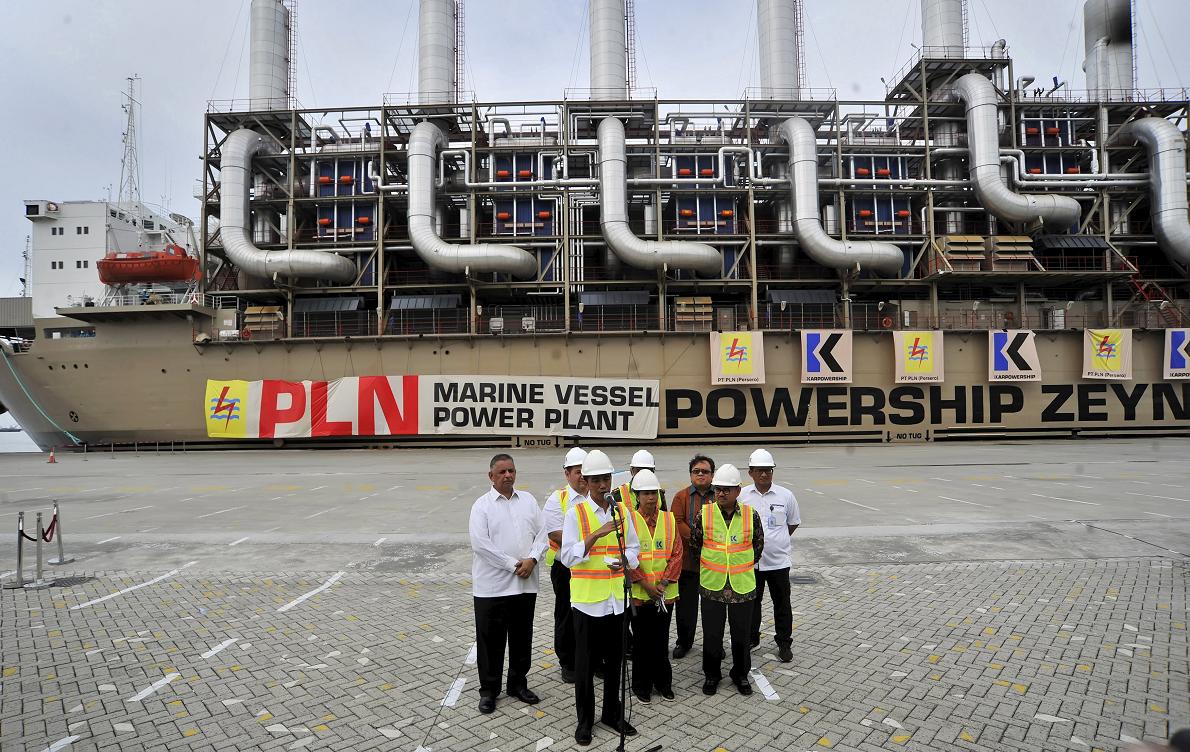
    According to Jonan, China Huadian Corporation is the largest power company in China, and its assets are about twice that of Indonesias state electricity company (PLN). Jonan said that with regard to investment matters, his ministry will not discriminate investors based on certain countries.

    “We do not differentiate, whether it is China, Japan, or any other country. What matters is that we are fit with it; that is all,” he said after the Eighth Ministerial Conference on Clean Energy (CEM8).

    One of the opportunities offered to China Huadian is the construction of power plants in the governments 35 thousand-megawatt power plant program.

    “This is in accordance with the directives of Joko Widodo during the OBOR Conference (One Belt, One Road), which encouraged Chinese investment in Indonesia. I am following up on it,” Jonan, who is a former minister of transportation, stated.

    Jonan made assurance that next year, all residents of the island of Sumba, East Nusa Tenggara, will have access to electricity.

    “Coincidentally, with the development of a steam power plant, Sumba may perhaps get an additional 50 megawatts of electricity,” the minister, who was accompanied by Indonesian Ambassador to China Soegeng Rahardjo, noted.

    The annual CEM event, held in Beijing, was attended by ministers and high-level officials from 24 countries.

    At the eighth CEM, Jonan got the opportunity to hold a bilateral meeting with China, as the host.

    On the occasion, Minister Jonan also encouraged several Chinese companies to increase their investment in the oil and gas sector in Indonesia.

    “Some Chinese oil and gas companies have been investing in Indonesia for the past 15 years, but the number is still small and needs to be increased,” Jonan added.

    He said that unlike Chinese companies, oil and gas companies from the US have been investing in Indonesia for quite a long time.

    “Chevron, which was known as Caltex in the past, and Exxon have been operating in Riau for about 100 years with a very big investment,” Jonan pointed out.

    In addition to working sessions for energy ministers and other high-level policymakers, CEM8 featured a public-private action summit with keynote speakers, thematic panel discussions, and opportunities for high-profile announcements of ambitious clean energy efforts.

    It also included a two-day technology exhibition demonstrating breakthrough clean energy technologies, products, and business models; and an Innovation Theater showcasing potentially game-changing clean energy innovations and inspirations.

  • Power consumption hits record high as Vietnam swelters under heat wave

    Power consumption hits record high as Vietnam swelters under heat wave

    Air conditioners and fans have been going at full blast as locals take cover. Vietnamese people have been draining the national power grid in an effort to keep cool over the past few days as temperatures climb to record highs, especially in the north.

    Nationwide power consumption was measured at 630 million kilowatt-hours (kWh) last Friday, up 11.8 percent over the previous week, according to the country’s power monopoly Vietnam Electricity (EVN).

    In the north, electricity output reached 290 million kWh that day, up 10 percent from last year.

    In Hanoi, the hottest part of the country since early June, local residents used up to 70 million kWh of electricity last Saturday, an increase of 8 million kWh from two days before.

    This is a 163-percent rise compared to the average level for May and a 127-percent rise against the same period last year.

    EVN has made preparations and there will be no power shortages, said Nguyen Duc Ninh, an EVN official.

    “This is just the first heat wave to hit this year, and EVN predicts higher power consumption as the temperature rises,” Ninh added.

    But he also calls on local residents to use electricity efficiently and economically to reduce the pressure on the power sector.

    On Saturday the Ministry of Industry and Trade said the government has no immediate plan to hike power prices.

    The demand for cooling devices has also been growing alongside the temperature over the past few days.

    Data from Google Trends revealed that key words for such devices, including air conditioners and steam cooling fans, surged over the weekend in Vietnam.

    “Sales of air conditioners rose 4-5 times to 120 units per day over the past week,” the owner of a store on Ha Dong District told.

    On Saturday afternoon, the temperature in Hanoi hit 41.5 degrees Celsius, the highest since 1971.

    On Monday morning, a 70-year-old woman fainted while driving a motorbike on Xa Dan Street in Hanoi and died just a few minutes later.

    Doctors at Bach Mai Hospital said the intense heat in the city may have been the cause of her sudden death.

    Meteorologists forecast that the heat wave in Hanoi will last until Tuesday.

  • Vietnam urged to reduce power losses

    Vietnam urged to reduce power losses

    The electricity industry must improve its management and technology to reduce losses in the transmission grid as well as eradicate power stealing, which are very serious in rural and remote areas, delegates heard at a seminar in Con Dao Island in the southern province of Ba Ria – Vung Tau.

    Viet Nam is ranked 88th of 137 nations for power loss, with 8.95 per cent of power lost in the transmission process, according to the International Energy Agency.

    “Upgrading technology for the transmission grid and increasing awareness in rural and remote residents about power stealing are two urgent jobs,” Nguyen Tan Nghiep from the Southern Power Association told the Sai Gon Giai Phong (Liberated Sai Gon) newspaper.

    The Viet Nam Electricity Group (EVN) has set the goal to reduce power loss from 8.95 per cent to 6.5 per cent by 2020 by applying new technical and operational solutions as well as building new electricity plants and transmission grids.

    During 2016-20, EVN has invested in 13 electricity projects with total capacity of 6,989 MW.

    By ensuring electricity supply, power won’t need to be transmitted far distances and it will help reduce losses.

    For the transmission grid, a 500kV and 220kV grid in Ha Noi, HCM City and other big and industrial cities and provinces will be developed with modern technology to limit power loss.

    Lack of supply

    By 2020, hydropower, renewable and thermal power by gas will only provide 48.3 per cent of power demand and fall to 39.9 per cent by 2030, but power demand is expected to increase 9 – 10 per cent each year during 2016 -2030.

    Furthermore, a nuclear power plant in the central province of Ninh Thuan has been stopped by the Government, therefore, coal thermal power must be considered for economic efficiency and environmental pollution.

    “In the context of a 50 per cent shortage of power, proper power supply must be carefully chosen,” Dr Tran Trong Quyet, vice chairman of the Southern Power Association, said.

    He pointed out that renewable power would ensure environmental protection, but it would require a huge initial investment.

    “Coal thermal power will require a lot of land, is a big problem for environmental pollution and is a large expenditure, but it still plays a very important role in ensuring national power security,” he added.

    To limit the impact of coal thermal power, Quyet warned that modern technology to deal with coal slag and ensure coal supply must be done carefully.

  • HCM City start-up launches power management software

    HCM City start-up launches power management software

    The Vietnam High Efficiency Software Corporation (VHES) on Thursday launched its Head End System (HES) software to be used to manage the city’s smart electricity grid.

    The software, which uses Vietnamese-made chips, is intermediate software that VHES developed based on the Integrated Circuit Design Research and Education Center’s research project.

    VHES is the first high-tech start-up developed under the HCM City Integrated Circuit Development Programme.

    Speaking at the launch ceremony, Nguyễn Văn Lý, deputy general director of the HCM City Power Corporation, said the corporation would modernise the city’s grid from now to 2020, including building a smart grid, an automated electrically operating system, and an electrical measurement system with remote data collection.

    Trần Vĩnh Tuyến, deputy chairman of the city’s People’s Committee and head of the steering board of the Integrated Circuit Development Programme, said that smart management would create a safe and stable power supply.

  • South Korea Invests in Infrastructure, Electricity Projects

    South Korea Invests in Infrastructure, Electricity Projects

    The Investment Coordinating Board (BKPM) said that South Korean investors will invest in numerous sectors in Indonesia. BKPM chief Thomas Trikasih Lembong said in this week alone, several project agreements will be signed.

    “I’m expecting for several infrastructure and electricity projects to be signed this week. The value is about US$200 million (approx. Rp2.6 trillion),” Thomas said during the sidelines of the Indonesia-Korea Business Summit at the Shangri La Hotel in Jakarta, Tuesday, March 14, 2017.

    According to Thomas, many South Korean factories have opened in Indonesia, such as textile and footwear factories. The factories’ operation has employed more than 500,000 people.

    At the Indonesia-Korea Business Summit, the BKPM and the Korea Trade Investment Agency (KOTRA) signed a MoU as a way to promote investments between the two nations.

    “We hope this will help both Indonesian and South Korean companies in developing their business,” Thomas said.

    Thomas said that most of the country’s investments are in the manufacturing sector, accounting for 71 percent of their investment value from 2012 to 2016.

    The investments are aimed at both countries’ leading sector, and will cover areas including information exchange, documentation, publication, and others.

    South Korea is Indonesia’s third-biggest investor today after Singapore and Japan. From 2012 to 2016, South Korean companies invested a total of US$7.5 billion for 7,607 projects in Indonesia.

  • New plans serve cheaper power to Singaporeans

    New plans serve cheaper power to Singaporeans

    Shopping for customised electricity plans has been an option for businesses in Singapore for the past year or so, but not many have decided to make the switch away from public power utility SP Services.

    As at the end of the third quarter of last year, only about a third of the 35,000 eligible commercial and industrial consumers had chosen to do so, the latest figures from the Energy Market Authority show.

    Businesses with an average monthly electricity usage of at least 2 megawatt-hours – a monthly power bill of about 450 Singapore dollars (Bt11,100) – could choose an alternative to SP Services from July 2015.

    Before that, only consumers that used more than 4MWh of electricity monthly were eligible.

    On the low take-up rate, Julius Tan, manager of energy retail at Singaporean electricity retailer Sunseap, said some might worry that electricity supply could be less reliable with a different retailer.

    But he said electricity supply would still come from the grid. “The only difference is that they are paying an electricity retailer that can offer them plans customised to their needs,” he said. This is similar to how mobile-phone users choose price plans from various telecommunication companies.

    Customised price plans, for example, will allow consumers to power up their premises with a mix that includes solar energy without the need to install and maintain their own solar panels. This may appeal to eco-conscious consumers and those who want to save money, as electricity generated in part by solar energy is cheaper than the regulated tariff.

    Last month, Sunseap started offering eligible consumers a GoEco price plan, which guarantees that a portion of electricity used will come from the sun. Its website says doing so can cut electricity bills by 20 per cent.

    As a gauge, it costs about 20 cents for 1 kilowatt-hour of electricity from SP Services at the regulated tariff.

    Sun Electric, another Singaporean solar electricity retailer, is also offering a variety of price plans that allow eligible consumers to tap varying amounts of solar energy, resulting in savings of between 15 and 20 per cent.

    “You don’t need a roof … to get solar electricity, and a lot of electricity consumers like to get clean electricity. All of our products are also cheaper than the tariff,” said Dr Matt Peloso, Sun Electric chief executive.

    Logistics firm Ninja Van has made the switch from the regulated tariff. It subscribed to Sunseap’s GoEco plan for one of its two facilities last month. The other facility will also be on the same plan from next month.

    Pang Sing Yang, vice president of strategy at Ninja Van, said of the switch: “We believe in supporting other local start-ups and want to play our part in environmental conservation by using a form of renewable energy. We also enjoy some cost savings.”

    Next year, 1.3 million households can also get to benefit from this flexibility when the electricity retail market is fully open to competition.

    Under the government’s SolarNova scheme, which aggregates solar demand, agencies such as the Housing and Development Board provide rooftop space for firms to install the panels. In return, town councils enjoy discounted electricity rates.

  • President says high electricity prices due to unnecessary costs

    President says high electricity prices due to unnecessary costs

    President Joko Widodo (Jokowi) revealed on Tuesday that the price of electricity in Indonesia was higher compared to other countries because power companies were saddled with unnecessary costs.

    “Our electricity is expensive because players are burdened by too many unnecessary costs,” the president said when inaugurating a geothermal power plant (PLTP) in Tomposo, Minahasa, on Tuesday.

    He was inaugurating Lahendong PLTP, Unit 5 and 6 and Ulubelu PLTP, Unit 3, which is located in Lampung.

    Jokowi said the price of electricity was also high because there were too many brokers involved in one project. “There are too many people who become brokers,” he said.

    He said that in many countries the price of electricity was lower and electricity management was efficient.

    “Why can they do that while we cannot? There must be something wrong,” the president stressed.

    He also expressed concern over the fact that many districts/municipal cities in the country still often face power outages.

    Electricity concerns competitive edge; it has to meet the peoples and industrial needs so that it should not be more expensive than in other countries, he stated.

    “In Serawak, Malaysia, the price of a hydro power plants (PLTPs) electricity is only two cents while in Indonesia it is seven cents.

    “Electricity from a solar power plant in the United Arab Emirates is only 2.9 cents while in Indonesia it is 14 cents although we are rich in abundant water resources and rivers,” he said.

    He said if large rivers such as the Mahakam, the Musi, and the Bengawan Solo can be utilized to produce electricity, which could be offered at 2 cents, then Indonesias competitiveness will rise.

    “Why are there middlemen between state-owned enterprises? Why should there be middlemen between the private company and the state-owned electricity firm PLN? What are they for? Our country needs efficiency in all sectors or else it will be left behind in the competition era,” Jokowi noted.

  • Customised price plans for electricity in the pipeline

    Customised price plans for electricity in the pipeline

    Consumers can look forward to shopping for electricity the way they choose a phone plan. Electricity retailers are preparing a buffet of options for consumers, as the Energy Market Authority (EMA) plans to fully open up the electricity retail market to competition in the second half of 2018.

    For the eco-conscious, there will be plans that guarantee a portion of energy consumed will be linked to renewable energy, such as solar power. And those who work in the day could sign up for options that allow them to take advantage of lower electricity tariffs at night.

    Electricity is cheaper at night as there is lower demand for it.

    Those who are home all day could in turn benefit from schemes that offer varying tariffs for different periods of the day, allowing them to choose to run home appliances when electricity prices are lower.

    There will even be short-term trial packages to entice consumers who are resistant to change.

    “In the initial stage, many consumers will be sceptical about switching for various reasons, like reliability, security and so on,” said electricity retailer iSwitch.

    “iSwitch is planning to roll out price plans, such as short-term trial packages, to increase their confidence in switching,” it said.

    These are just some of the customised price plans that small energy users, such as households and small businesses, could benefit from.

    Currently, only 33,000 commercial and industrial consumers with an average monthly electricity consumption of at least 2MWh – which amounts to a monthly electricity bill of about $450 – are taking advantage of this flexibility. But the remaining 1.3 million consumers, mainly households, will get to benefit with the change, EMA said.

    During this year’s Singapore International Energy Week, which starts today, participants are expected to discuss issues such as green energy and the implications of low energy prices.

    There were just seven electricity retailers in 2013. This has increased to 20, EMA told The Straits Times.

    Industry players say market liberalisation will benefit consumers.

    “Not only will it lead to better value and services (for customers), but it also gives them the opportunity to achieve their other objectives, such as environmental protection in purchasing green energy,” said a spokesman for retailer PacificLight.

    Customers may also enjoy lower tariffs.

    Mr Vijay Sirse, chief executive of Red Dot Power, said: “It is expected that every household will potentially save anything from 10 per cent to 20 per cent of its monthly electricity bill.”

    Associate Professor of Marketing (Education) Seshan Ramaswami, from the Singapore Management University, noted that while it is difficult to say whether prices will definitely go down, customers could benefit in other ways.

    For instance, retailers could try to differentiate themselves by offering bundled or value-added services – such as installing smart home systems or giving discounts on energy-saving appliances.

    Housewife Mastzainah Jalil, 45, likes the idea of being able to time the use of her appliances to when electricity tariffs are the lowest.

    Assistant manager Daniel Govindan, 28, prefers a price plan which incorporates renewable energy and a smart system that sends alerts when energy-intensive appliances are in use when electricity tariffs are high.

    He said: “Renewable energy is the way to go. I think clean air is a public good. So less fossil fuels, more clean air.”

  • Indonesia eyes electricity exports to neighboring countries

    Indonesia eyes electricity exports to neighboring countries

    Indonesia plans to sell electricity to Malaysia, Thailand and Singapore as the government is targeting greater profitability from several coal mine-mouth power plants that are anticipated to soon be completed in Sumatra.

    National Development Planning Board (Bappenas) head Bambang Brodjonegoro said the plan was feasible as the power plants would have excess capacity.

    “We can sell the electricity abroad via underwater cables,” the former finance minister said during the ASEAN G2B Infrastructure Investment Forum in Jakarta on Tuesday.

    Bambang said electricity demands were huge in peninsular Malaysia and southern Thailand, where Indonesia could meet those demands at competitive prices.

    “As long as Sumatra’s electricity needs are fulfilled, we can export the excess capacity,” he added.

    President Joko “Jokowi” Widodo’s administration is targeting to complete its ongoing 35,000 megawatt (MW) electricity procurement program by 2019. Of the target, 7,800 MW will be supplied from mine-mouth power plants.

  • Electricity consumption up 7.85 percent: PLN

    Electricity consumption up 7.85 percent: PLN

    The countries electricity consumption in the first half of 2016 reached 107.2 Terra What hour (TWh), up 7.85 percent from 99.4 TWh in the same period in 2015, state-owned electricity company PLN said.

    Senior Public Relations Manager of PLN Agung Murdifi said in a release here on Sunday that the consumption growth raised electricity sales revenue during the six months of 2016 by Rp3.2 trillion, or 3.15 percent, to Rp104,7 trillion over the same period in 2015 which amounted to Rp101,5 trillion.

    “The Increased consumption is in line with the increase in the number of subscribers to 62.6 million in June 2016 or additional 1.4 million customers from 61.2 million subscribers at the end of 2015,” he said.

    The Increase in the number of customers, he added, also raised the national electrification ratio of 88.3 percent in December 2015 to 89.5 percent in June 2016.

    Agung said operating expenses rose by Rp1.9 trillion (1.66 percent) to Rp119,7 trillion over the same period in 2015 which amounted to Rp117.8 trillion.

    Meanwhile, fuel expenses (BBM) fell by Rp8.4 trillion to Rp10.4 trillion, due to the decline of fuel consumption by 0.6 million kiloliters to 2.2 million kiloliters until June 2016.

    Realization of electricity subsidies in the first half of 2016 reached Rp26.6 trillion, down by Rp891 billion compared to the same period in 2015 amounting to Rp27.5 trillion.

    Agung added that in the first half of 2016 the EBITDA (earnings before interest, taxes, depreciation and amortization) was recorded at Rp30,2 trillion, up 3.3 trillion compared to the same period in 2015 which amounted to Rp26.9 trillion.

    “Net profit in the first half of this year reached Rp7,9 trillion,” he said.

    However, public accounting firm Tanudiredja, Wibisana, Rintis & Partners still awarded the PLN the qualified opinion rating for its June 2016 financial report.