Retail News CRM

Tag: Electronics

  • Samsung to invest in AI, semiconductors in Vietnam

    Samsung to invest in AI, semiconductors in Vietnam

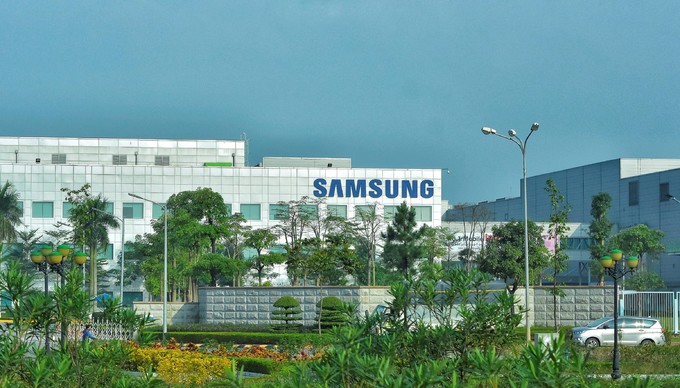
    South Korean electronics giant Samsung is set to expand into new areas in Vietnam such as AI, semiconductors and digital transformation.

    CEO Choi Joo Ho told Prime Minister Pham Minh Chinh at a meeting in Hanoi on Wednesday that the largest foreign direct investor in Vietnam expects support from the government in making investments in these areas.

    Samsung has so far invested $23.2 billion in Vietnam and exported $54.4 billion worth of products last year.

    Chinh promised continued support for the company in investing in efficient and successful businesses in Vietnam.

    Samsung needs to continue to maintain its leading position by developing supporting industries, chips, semiconductors and promoting digital transformation in Vietnam, he added.

    The government targets 8% GDP growth this year and double-digit expansion in the coming years.

    To achieve the goals, it needs to improve the investment environment and foster strategic breakthroughs.

    Chinh urged Samsung to set up training centers at the National Innovation Center, increase its investment in Vietnam and support start-up and innovation activities.

    He also suggested that the company should have more Vietnamese executives and increase the number of local digital technology enterprises in its ecosystem.

  • Apple makes a power play for your subscription dollars

    Apple makes a power play for your subscription dollars

    As previously reported by Mark Gurman, Apple Insider at Bloomberg News, Apple is showing clear signs that it intends to double down on its subscription strategy. From making significant changes to AppleCare and introducing the Apple Invites app for iCloud+ subscribers, these moves signal a clear push towards recurring revenue and a desire to integrate more services into its subscription ecosystem.

    Starting with AppleCare, the company is reportedly streamlining its device protection offerings, but this simplification comes at a cost. Previously, customers could choose between two AppleCare tiers: a standard plan covering typical hardware issues like cracked screens and battery problems, and a more comprehensive plan that also included coverage for theft and loss. If your phone went missing or was stolen, the premium plan would get you a replacement device, albeit with a deductible. Now, Apple is eliminating the basic plan altogether. This means the only option available is the more expensive theft and loss coverage, and that price is going up by 50 cents a month.

    Beyond the price hike, it’s also been reported that Apple will also be changing how you pay for AppleCare. Instead of the option to pay upfront for two years of coverage, customers will now be required to subscribe either monthly or annually. This shift to a subscription model locks users into recurring payments, further emphasizing Apple’s focus on predictable revenue streams. While some may appreciate the flexibility of monthly payments, others may miss the option for a one-time, longer-term payment.

    As you may have seen last week, Apple is also sweetening the deal for its iCloud+ subscribers with a new perk: the app and web service called “Invites.” This new app is Apple’s take on event planning apps like Partiful, aiming to simplify the process of organizing gatherings, from birthday parties to other special occasions. The app integrates with your photo library and music collection, allowing you to easily share memories and create a personalized experience for your guests.

    The iCloud+ tie in lies in that while users without a subscription can still download the Invites app to RSVP to events, the clear intention is to incentivize more people to sign up for a paid iCloud+ plan. By bundling this new app with iCloud+, Apple is hoping to demonstrate the added value of its subscription services and entice users to join the ecosystem. It’s a clever strategy: offer a unique and useful feature exclusively to subscribers, thereby making the subscription more attractive.

    According to Gurman, these latest changes reinforce the company’s commitment to subscriptions and its strategy of offering a range of interconnected services. As a consumer, I am wondering if further changes like these will be coming down the line as well from Apple, as the company looks for more opportunities to strengthen its bottom line.

  • Apple is expanding its presence in the Middle East

    Apple is expanding its presence in the Middle East

    So much is happening in the Middle East right now and the other thing is that Apple is expanding in Saudi Arabia.

    The Cupertino giant is set to launch its first online store in Saudi Arabia in summer 2025, followed by multiple flagship physical stores beginning in 2026. The expansion includes plans for a notable retail location in Diriyah, a UNESCO World Heritage site.

    Apple will also provide customer service and support in Arabic for the first time, offering its full product range through online and physical channels. CEO Tim Cook emphasized the compay’s commitment to supporting local customers, businesses, and innovators.

    This expansion builds on Apple’s existing investments in the country, particularly its Apple Developer Academy in Riyadh, which was established in 2021 through partnerships with local institutions. The all-women academy has trained nearly 2,000 students in programming, enabling them to publish apps on the App Store.

    Apple is also expanding its educational programs, having recently hosted the country’s first coed Apple Foundation Program. The monthlong course focused on coding and app development, with an emphasis on gaming. Future programs are planned for spring 2025.

    Apple says its investment has significantly impacted the local tech ecosystem. Saudi developer earnings have increased by over 1,750% since 2019. Apple has spent more than 10 billion SAR (over $2,6 bln) with local companies over the past five years and continues to support technological innovation.

    Additional technological integrations include Apple Pay’s expansion in Riyadh, where users can now use Express Mode to pay for metro and bus transit by simply holding an iPhone or Apple Watch near a reader. Since its 2019 launch, many Saudi customers have transitioned from traditional payment methods to Apple Pay, the US company notes.

  • Apple plans $1B manufacturing plant investment in Indonesia

    Apple plans $1B manufacturing plant investment in Indonesia

    Tech giant Apple plans to invest $1 billion in a manufacturing plant in Indonesia that produces components for smartphones and other products, Indonesia’s investment minister said on Thursday.

    In October, Indonesia banned sales of the iPhone 16 because it said Apple had not adhered to rules that require phones sold domestically to have at least 40% locally made parts. And this week, the government said it would increase the local content requirement.

    Investment minister Rosan Roeslani told reporters that details of the planned investment were still being ironed out, but when asked confirmed it was the expected $1 billion investment he had flagged earlier this week.

    “We will discuss with them some more … our hope is for everything to be announced in the next week after receiving a written commitment from them,” he said.

    Last week, the government had rejected a $100 million investment proposal from Apple to build an accessory and component plant as not enough to reverse the iPhone 16 ban.

    Apple did not immediately respond to a request for comment.

    Apple currently has no manufacturing facilities in Indonesia, a country of about 280 million people, but since 2018 it has set up application developer academies.

    Indonesia considers that strategy an attempt to meet local content requirements for the sale of older iPhone models.

    Companies typically increase the local composition through local partnerships or by sourcing parts domestically.

  • Indonesia blocks Apple from selling iPhone 16

    Indonesia blocks Apple from selling iPhone 16

    Indonesia has blocked Apple from selling the iPhone 16 in the country but still allows travelers to bring it in for personal use.

    The iPhone 16, released in September, is not permitted for domestic sale because PT Apple Indonesia has yet to meet the country’s requirement of 40% local content for smartphones and tablets, the Ministry of Industry said in a statement on Oct. 25 as reported by Bloomberg.

    Each traveler can bring up to two iPhone 16s into Indonesia, according to the Jakarta Globe.

    Between August and October, around 9,000 iPhone 16 units were brought into Indonesia as personal belongings with taxes paid, data from the ministry shows.

    Industry Minister Agus Gumiwang Kartasasmita mentioned on Oct, 22 that Apple has yet to fulfill its commitment to investing 1.7 trillion rupiah (US$108 million) in Indonesia to secure a license for local sales. So far, Apple has invested 1.5 trillion rupiah.

    Apple’s older products can still be sold in Indonesia.

    Samsung Electronics and Xiaomi have set up factories in Indonesia to comply with the domestic content regulations introduced in 2017. Other ways to boost local content include sourcing materials or hiring workers in the country, according to Bloomberg.

    Apple on Oct 11 said that it was “deeply committed to Indonesia and excited to bring all of our latest products, including the iPhone 16 line-up, to our customers as soon as possible.”

  • Samsung to invest $1.8B more in northern Vietnam

    Samsung to invest $1.8B more in northern Vietnam

    A subsidiary of South Korean electronics giant Samsung that has operations in the northern province of Bac Ninh is set to invest another US$1.8 billion there.

    The memorandum of understanding for investment by Samsung Display Vietnam, which was signed Sunday and witnessed by Prime Minister Pham Minh Chinh, is meant for expansion.

    Samsung Display Vietnam reported profits of $283.6 million on revenues of $6.8 billion in the first half of this year.

    Samsung, the biggest foreign investor in Vietnam, has $22 billion in the country, half of it in Bac Ninh province.

    Four factories in Vietnam contributed around 30% of Samsung’s global revenue in the period.

    Bac Ninh authorities on Sunday announced approvals for $5.5 billion worth of foreign investments in various projects, including by Apple suppliers Foxconn and GoerTek.

    The government seeks to make the province a dynamic economic and cultural hub of the north linked with Hanoi.

    By 2050 Bac Ninh hopes to become among the economic leaders of Vietnam. It also aspires to become one of the top global centers for high-tech industries, research and development and smart manufacturing.

  • Samsung factories in Vietnam back in the black after losing quarter

    Samsung factories in Vietnam back in the black after losing quarter

    Samsung’s four factories in Vietnam made a combined profit of US$1.2 billion last quarter after losing $181 million in the fourth quarter of 2023. Samsung Thai Nguyen (SEVT), the Korean conglomerate’s best-performing plant in Vietnam, accounted for $707 million.

    The two plants in Bac Ninh Province, Samsung Electronics Vietnam (SEV) and Samsung Display Vietnam (SDV), contributed $300 million and $123 million. Samsung Electronics HCMC CE Complex (SEHC) was $40.7 million in the black.

    They accounted for 23% of their parent’s quarterly profit. Their revenues totaled $16.25 billion, up nearly $2 billion from the previous quarter.

    In the final quarter of 2023 SEV, SEVT and SEHC reported combined losses of nearly $221 million, with SDV being the only profitable operation.

    Last quarter Samsung achieved global revenues of 71.92 trillion won ($54 billion), up 13% year-on-year.

    It said revenues increased thanks to the sales of the Galaxy S24 smartphone series and higher semiconductor prices.

    The depreciation of the won against major currencies had a positive impact on profits, it said.

    During a meeting with Prime Minister Pham Minh Chinh last month, the company’s CFO, Park Hark Kyu, said it plans to invest a further $1 billion annually in Vietnam to add to its existing $22 billion.

    It also plans to increase its number of local suppliers and enhance training for its workforce, he said. Since 2014 the number of Vietnamese businesses involved in Samsung’s supply chain has increased 12-fold to 309 now. It is the largest foreign direct investor in Vietnam, where it currently produces over 50% of all its mobile phones.

  • Samsung plans to add $1B to Vietnam investment annually

    Samsung plans to add $1B to Vietnam investment annually

    Samsung plans to add about US$1 billion to its investment in Vietnam annually, Chief Financial Officer (CFO) of Samsung Electronics Park Hark-kyu said as he met with Prime Minister Pham Minh Chinh in Hanoi Thursday.

    PM Chinh applauded Samsung’s efforts and determination while doing business in Vietnam, calling on the firm to view Vietnam as a strategic manufacturing and export base.

    He affirmed that the Vietnamese government always attaches importance to improving the investment climate and pledges to create favourable conditions for long-term operations of foreign enterprises.

    It will continue providing optimal conditions for the projects of Samsung to operate fruitfully and develop sustainably in Vietnam in the spirit of harmonising interests and sharing risks, he said.

    Park noted Samsung has invested $22.4 billion in Vietnam so far and plans to add about $1 billion to its investment in the Southeast Asian country annually.

    Aside from research, development, manufacturing, and export of electronic and high-technology products, the group has also been investing in supporting industries and manpower training for Vietnamese companies, and helping local firms to engage in its production and supply chain, he said.

    Samsung hopes to continue developing to contribute to Vietnam’s foreign trade and economic growth, the CFO added.

    He spoke highly of Vietnam’s investment and business climate as well as the PM’s readiness to listen to and assist enterprises, adding Samsung will continue standing side by side with the country on the development path.

    Appreciating Samsung’s building of an R&D center and participation in manpower training in Vietnam, Chinh asked the group to coordinate closely to effectively run the training centers based at the National Innovation Centre (NIC), step up cooperation to turn digital technology enterprises of Vietnam into partners in its ecosystem, increase investment in and expand the R&D center, and boost assistance for startup, innovation, and manpower training in the country.

    He also welcomed Samsung’s production and business plan, calling on it to continue helping Vietnam further improve domestic companies’ capacity so that they can join in Samsung’s supply chain more effectively.

    Samsung should continue seeing Vietnam as a strategic base for manufacturing and exporting its key products to international markets, particularly when the Comprehensive and Progressive Agreement for Trans-Pacific Partnership (CPTPP), the EU – Vietnam Free Trade Agreement (EVFTA), and the Regional Comprehensive Economic Partnership (RCEP) already took effect, Chinh suggested.

  • Chip Apple developed for the Apple Car reportedly carried a whopping 536 billion transistors

    Chip Apple developed for the Apple Car reportedly carried a whopping 536 billion transistors

    Last month, Apple put an end to the development of the Apple Car after spending ten years and ten billion dollars to create an autonomous vehicle. One of the components that Apple built for the car was a new chip that supposedly had the same performance capabilities as four M2 Ultra chips! Considering that each M2 Ultra chip is equipped with 134 billion transistors, a 24-core CPU, a 76-core GPU, and a 32-core Neural Engine, stitching together four of these components creates an extremely powerful chip.
    Imagine a chip carrying 536 billion transistors with a 96-core CPU and a 304-core GPU. While there is no definitive proof that the chip Apple was planning to use to power the Apple Car was perfectly equivalent to four M2 Ultra chips, consider that the number of transistors inside a chip determines how powerful and/or energy efficient that chip is. Using the “UltraFusion” technology that helped Apple combine two M1 Max chips to become the M1 Ultra, and combine two M2 Max chips to become the M2 Ultra, Apple might have been hoping to create an incredibly powerful silicon component from four M2 Ultra chips.
    Let’s do a simple comparison. The A17 Pro application processor (AP) that powers the iPhone 15 Pro and iPhone 15 Pro Max contains 19 billion transistors, only 3.5% of the number of transistors that might have been placed inside the chip Apple would have used to “drive” the Apple Car. Wccftech says that the new chip that Apple was developing for the Apple Car was “nearly done” before Apple put the kibosh on the project. Could that chip have been the M3 Ultra?
    When Apple introduces the M3 Ultra, it will be interesting to see whether any of that chip’s specs match the rumored powerhouse chip that would have been used on the Apple Car. One thing that we can be sure of, this chip would have been built by TSMC, the world’s largest foundry.
  • New Apple Watch ads replay real-life situations where the timepiece saved the user’s life

    New Apple Watch ads replay real-life situations where the timepiece saved the user’s life

    While the Apple Watch was not originally created to save lives, over the years some of the health-related features on the device have sent out timely warnings allowing users to get to the doctor or the hospital before it was too late. In other situations, the Apple Watch on a person’s wrist notified emergency services or first responders, and a timely rescue was made. If you recall, when Apple was planning to launch the Apple Watch in April 2015, the tech giant was looking at the device as a piece of luxury jewelry.

    Apple was able to get its timepiece on the cover of regional editions of Vogue months before the product was released. In early 2017, Apple started shutting luxury-themed Apple Watch pop-up stores in Europe as it moved away from promoting the Apple Watch as a luxury timepiece as reports started to come in about users having their lives saved thanks to the watch.

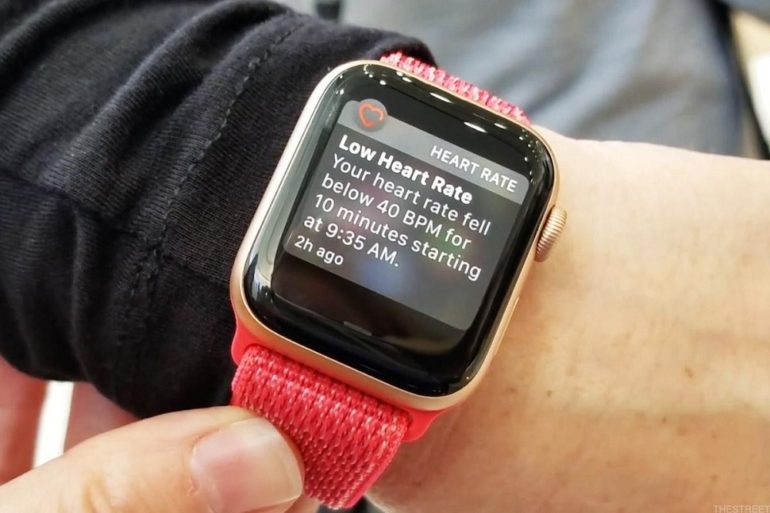
    Apple has released a couple of new television commercials for the Apple Watch, both of which are based on real-life events and focus on a specific health-related feature. The first ad, created by Apple Australia, is called “Lexie’s Heart.” A young woman Lexie Northcott started to get low heart rate notifications on her Apple Watch and after a trip to the hospital, she was diagnosed with a congenital heart block. Doctors operated and gave her a pacemaker and, as Lexie’s mom says later in the ad, “If it wasn’t for that watch, she might not be here right now.” This 30-second ad is focused on “Heart Rate Notifications.”

    The second ad, also 30 seconds in length, also from Apple Australia, and also based on a true story, is called “Bruce and the Roo.” A gentleman named Bruce Mildenhall had been knocked unconscious by…wait for it…a kangaroo while he was biking. Bruce hit the ground hard, activating the Fall Detection feature on his Apple Watch. The device called emergency services and even messaged his wife to alert her.

    When Bruce came to, he heard the sound of someone hitting the back glass of the ambulance he was placed in. He then heard his wife asking, “Have you got Bruce Mildenhall in there? Is he alive?” The first responders told her, “Yes, he’s OK.” As the ad for the Apple Watch’s Automatic Fall Detection comes to an end, Bruce says, “I still wear my watch and I’m still looking for that kangaroo with tire marks.”

    Suppose Apple does run these ads outside of Australia and adds them to its advertising rotation in the U.S.. In that case, you might see one or both appear during this weekend’s big NBA and NHL games, college basketball telecasts, and between innings or during a pitching change on MLB spring training broadcasts.

  • Apple has started designing 2nm chips for future iPhone models

    Apple has started designing 2nm chips for future iPhone models

    An Apple employee on Linked In  is supposedly the source of a new report that claims Apple has started designing chips that will be built using TSMC’s next-gen 2nm process node. Leaked slides published on the Korean website gamma0burst and posted via a tweet on “X” by leaker Revegnus the heavily redacted Apple slide refers to older 5nm chips such as the A15 Bionic, 3nm chips such as the A17 Pro, and a future 2nm chipset.

    As the process node used to build a chip “shrinks” in size, the features of the chip get smaller including the transistors allowing more of them to fit inside a chip. That is important because the higher a chip’s transistor count, the more powerful and/or energy-efficient that chip is. The iPhone 15 Pro and iPhone 15 Pro Max are currently the only smartphones powered by a 3nm chip.

    Later this year, Apple is expected to use 3nm application processors (AP) for all four iPhone 16 models. The iPhone 16 and iPhone 16 Plus could be powered by the 3nm A18 Bionic AP while the iPhone 16 Pro and iPhone 16 Pro Max will sport the more capable A18 Pro AP. Both components will be built using TSMC’s second-generation N3E 3nm node.

    SMC is supposedly planning to start production of 2nm chips during the second half of 2025 with the foundry churning out 1.4nm chips in 2027. Apple is expected to be the first company to obtain 2nm chips. The latter should deliver 10% to 15% performance upgrades at the same power or use 25% to 30% less power running at the same speed when compared to 3nm chips.

    Apple is TSMC’s top customer which is why it is usually able to be the first to receive chips made by TSMC using its latest process node. Apple will need to make some design changes in order to take advantage of TSMC’s 2nm node which will feature Gate-all-around (GAA) transistors instead of the currently used FinFET transistors.

    Using horizontal nanosheets placed vertically, GAA transistors allow the gate to surround the channel on all four sides reducing current leak and increasing the drive current. This results in stronger electrical signals between the transistors improving the performance of the chip. Back in December, TSMC showed off a prototype 2nm chip to both Apple and Nvidia.

  • Samsung family members sell $2B worth of shares to pay inheritance taxes

    Samsung family members sell $2B worth of shares to pay inheritance taxes

    Family members of Samsung Electronics chairman Jay Y. Lee have sold 2.8 trillion won (US$2.12 billion) worth of shares in the company and its affiliates to pay inheritance taxes.

    The sale of about 29.8 million shares, or a 0.5% stake in Samsung Electronics, was at a discount of 1.2% to 2.0% from Samsung shares’ Wednesday closing price of 73,600 won, citing unnamed investment banking sources.

    Shares in affiliates Samsung C&T, Samsung SDS and Samsung Life Insurance were also offered simultaneously in block deals worth around 644 billion won for the same purpose, the report said.

    The shares were sold by Hong Ra-hee, the widow of late Samsung Group chairman Lee Kun-hee, and her children, including Jay Y. Lee.

    Korea’s top inheritance tax rate of 50% is considerably greater than the OECD’s typical rate of 25% and is second only to Japan’s 55%. It is therefore not uncommon for members of Korea’s chaebol families to sell company shares or secure bank loans using those shares as collateral to cover their inheritance tax obligations.

  • iPhone 15 sales top $42M on opening day

    iPhone 15 sales top $42M on opening day

    Sales of the newly released iPhone model surpassed the VND1-trillion (US$42 million) mark for a second year in a row, despite the economic downturn.

    The iPhone 15 came to Vietnam on Sept. 29, the first time the country was included in Apple’s second round of sales a week after starting in markets like the U.S., India, Singapore, Japan, and Thailand.

    Most Vietnamese retailers said sales were “much better than expected” in what has been a gloomy year for the phone market.

    The Gioi Di Dong sold more than 15,000 for worth VND500 billion, accounting for nearly 50% of the market.

    Other retailers such as FPT Shop, CellPhoneS, ShopDunk, and Hoang Ha Mobile reported sales of 2,000-7,000 each.

    In all, according to statistics from an importer, on Sept. 29 alone, 35,000 iPhone 15s worth more than VND1 trillion were delivered to customers. The phones were sold out within hours.

    FPT Shop did not disclose revenues for the full day, but merely said over 5,000 devices worth VND150 billion were delivered just after midnight.

    CellphoneS delivered 1,500 phones in the first two hours.

    The most popular variant, also the most expensive, has been the Pro Max, which accounted for 50-70% of sales.

    But their sales were 10-20% from last year due to the smaller supply but also because consumers have started to pay more attention to the two regular versions with their eye-catching colors and nearly similar features, according to a CellPhoneS executive.

    Most retailers sold out the 15 Pro and 15 Pro Max in natural titanium color.

    Users only have a choice between blue and black for the 1 TB version. Meanwhile, the 15 and 15 Plus had better sales than their predecessors though the most popular color, pink, is also in short supply.

    Overall, sales on the first day were lower than last year, when the iPhone 14 fetched VND1.5 trillion.

    A Hoang Ha Mobile executive said the number of devices allocated to the country by Apple was not as high as last year.

    The color options were also low, leading to the most popular models soon selling out, he said.

    Retailers still have iPhone 15 devices in stock, mostly the regular versions and less popular colors like black.

  • iPhone 15 prices plunge 20% in three days

    iPhone 15 prices plunge 20% in three days

    An iPhone 15 Pro Max brought from overseas is now sold at around VND40 million (US$1,650) in Vietnam, down 20% in three days.

    Smartphone shops in Hanoi and Ho Chi Minh City on September 26 offered the VND40 million price for 256GB storage option. Higher storage options of 512GB and 1TB cost VND45 million and VND58 million, respectively.

    Traders queued up to buy the product at Apple stores in Singapore and Thailand and brought them to Vietnam unofficially.

    The first ones were available on Friday last week, one week before they are sold officially in Vietnam, at prices around VND70 million, or nearly 50% higher than official prices in Vietnam.

    Nguyen Hieu, owner of an unofficial Apple shop in Hanoi, said that he had anticipated the drop in prices this year as the iPhone is sold in Vietnam only one week later than Apple’s tier-1 markets, compared to several weeks in previous years.

    He only bought 20 iPhone 15s to sell in the last three days.

    Retail chains are reporting a shortage of the most expensive option, the iPhone 15 Pro Max, due to high demand from preorders.

    Customers will have to wait until the end of October for more supply, retailers said.

  • Intel gets confidence boost from anonymous customer pre-paying for 18A production

    Intel gets confidence boost from anonymous customer pre-paying for 18A production

    Last week, Intel CEO Pat Gelsinger reiterated his goal for Intel to take foundry leadership from TSMC by 2025. The executive said, “We’re 2.5 years into the transformation. Now, it’s gone the way I would have expected at the time in terms of rebuilding the company. You have to be much less skeptical about our ability to pull this off.” Intel not only had to watch as TSMC took its foundry leadership away, but it also saw TSMC’s largest customer, Apple, replace its Intel chips with M-series chips built by TSMC.
    During last week’s Deutsche Bank conference, Gelsinger stated that the 18A node will return process leadership to Intel. That node would be considered 1.8nm while TSMC and Samsung would be shipping at 2nm during the same time. The CEO also let it be known that Intel has received a large prepayment from a customer for Intel’s 18A capacity. This gives Intel the confidence to believe it is on the right track and will lead the company to speed up the build-out of 18A fabs.
    In the long term, Intel sees the contract foundry business as its biggest opportunity. One interesting comment made by Gelsinger is that Intel knows TSMC’s wafer costs, ASPs, and targets. With this knowledge, he says that Intel wants lower costs than TSMC to win business from the global foundry leader. He says that Intel is trying to get its internal cost structure in line with TSMC. To this end, Intel will study its metrics such as headcount per wafer start, and use more AI/Machine Learning to improve efficiency.
    Intel is still relying on TSMC to build parts of its next-generation ‘Meteor Lake’ chips. While Intel will use its Intel 4 node (7nm) to build the chip’s CPU tile, the GPU tile will use TSMC’s 5nm node. The chip’s SoC tile, an ultra-low-power tile that supports media, imaging, display, and the connection to memory, will be built on TSMC’s 6nm node as will the chip’s I/O Extender tile.
    As Tech journalist Leo Waldock notes in a post on X, “All that could be correct yet it still seems weird to me that Intel is buying tiles from TSMC for its own products while touting foundry services to 3rd parties. Eat your own dog food, no?”
    Will Intel make TSMC and Samsung Foundry squirm? Will Apple stay loyal to TSMC? Will geopolitical rumblings make TSMC customers worried enough to bring their business to another foundry? These are questions that we will have to wait to answer.