Retail News CRM

Tag: factory

  • Hyundai Motor plans to join Gwangju-run factory

    Hyundai Motor plans to join Gwangju-run factory

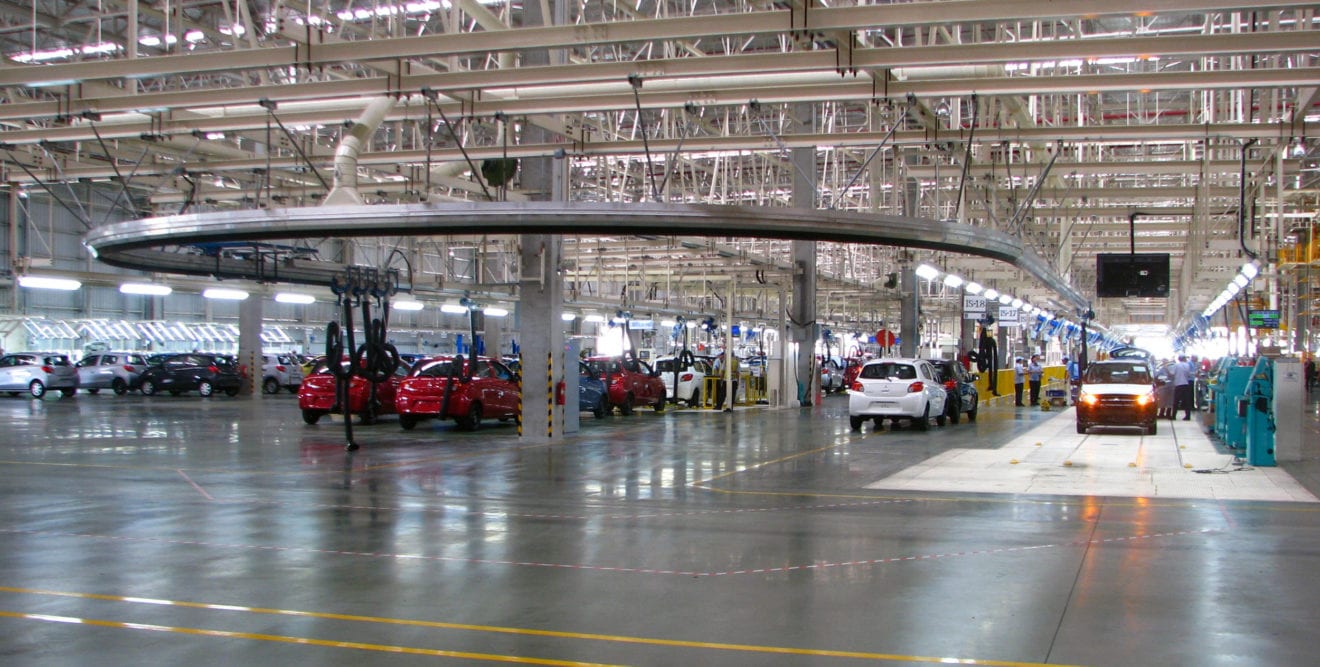
    Hyundai Motor on Friday announced plans to join Gwangju’s city-owned automobile factory project, and the automaker’s labor union is putting up a fight over the plan’s potential effect on employees’ wages.

    Korea’s largest automaker said that it submitted a letter of intent to invest in the construction of the factory, along with other companies, in response to Gwangju’s request.

    “In regard to Gwangju’s business, which will be built inside the Bitgreen National Industrial Complex and aims to foster the local economy and jobs, [Hyundai Motor] proposed a consultation to review the business’ validity and investment possibility,” Hyundai Motor wrote in its letter of intent.

    The carmaker will not participate in the joint venture’s management and will only invest in a certain amount of the project. The workers will be employed by the city of Gwangju.

    The amount of production from the Gwangju plant will depend on the market demand for the car that Hyundai plans to produce there, according to the automaker.

    Gwangju’s auto factory project is slated to be completed by 2020. It is part of the city’s initiative to expand employment, though the salaries at the plant will be half of the Korean auto industry’s average. The plant will be the first automobile factory built in Korea since Renault Samsung Motors’ Busan factory in 1998.

    Hyundai Motor’s participation is likely to send a jolt to the labor market, as employees at the plant will receive an average of 40 million won ($37,233) in annual pay. This is less than half of the wages of unionized Hyundai Motor employees, which are estimated to be around 90 million won a year.

    Hyundai Motor’s labor union on Friday requested the carmaker withdraw the proposal, claiming that its participation in the project would cause a drop in the average wages of Hyundai Motor workers.

    It warned Hyundai Motor that it would stage a protest if the company doesn’t withdraw the letter of intent.

    “The Gwangju employment [project] will standardize full-time workers’ annual salary at around 40 million won,” the labor union said in a statement Friday. “The employees are neither contract workers nor full-time workers, but somewhere in the middle.”

    Although the city government would be employing the workers at the new factory, if Hyundai Motor becomes the biggest shareholder in the joint venture, the lower wages at the Gwangju factory could have an effect on the automaker’s unionized employees.

    Hyundai Motor’s unionized employees’ high wages have been a big headache for the carmaker, which is why the company hasn’t invested much in domestic plants recently and has been steering its capital toward its overseas manufacturing facilities.

    According to industry data, Hyundai Motor and Kia Motors’ Korean production fell to 44 percent of total production in 2017, compared to 73.3 percent in 2006.

    Gwangju’s new auto plant is likely to receive about 500 billion won in investment and will be able to produce about 100,000 cars a year. It will provide jobs to around 12,000 people through direct or indirect employment. Hyundai Motor’s stake in the new factory will likely stay below 20 percent.

    “The plant will not be operated by Hyundai Motor,” an official from the Gwangju city government said.


  • An iPhone’s journey, from the factory floor to the retail store

    An iPhone’s journey, from the factory floor to the retail store

    Apple buys many of the components for iPhones — like the memory chip, the modem, the camera module, the microphone and the touch-screen controller — from more than 200 suppliers around the world. Foxconn, the Taiwanese company that runs the Zhengzhou facility, even produces some smaller parts, such as metal casings.

    Apple orders many of the components from global suppliers and then sells them, en masse, to one of its contract manufacturers in China. In Zhengzhou, that means Foxconn.

    Foxconn’s facilities in Zhengzhou cover 2.2 square miles and can employ up to 350,000 workers, many of whom earn about $1.90 an hour. The operation does final assembly, testing and packaging.

    There are 94 production lines at the Zhengzhou manufacturing site, and it takes about 400 steps to assemble the iPhone, including polishing, soldering, drilling and fitting screws. The facility can produce 500,000 iPhones a day, or roughly 350 a minute. After the iPhone rolls off the assembly line, it is placed in a sleek white fiberboard box, wrapped and put on a wooden pallet, and then wheeled out to waiting trucks.

    The newly assembled iPhone is transported a few hundred yards beyond the factory gate, where China built a large customs facility. The customs operation sits in a bonded zone, which allows Apple to sell the iPhones more easily to Chinese consumers.

    As the final point of assembly for the iPhone, China also serves as a starting point for Apple’s global tax strategy. In Zhengzhou, often in the customs facility, Foxconn sells the completed iPhones to Apple, which in turn resells them to Apple affiliates around the world.

    The process, most of which takes place electronically, allows Apple to assign a portion of its profits to an affiliate in Ireland, a tax-advantageous locale. The system is not unique to China.

    IPhones bound for the United States and other parts of the world leave customs by truck and are transported three miles to the Zhengzhou airport. The airport has been significantly expanded in recent years, as production of the iPhone has increased.

    Some years ago, personal computers that were made in China were transported to the United States by container ship, with a trip lasting about a month. Smartphones are small enough to be shipped by plane in huge quantities — and cost-effectively. A single wide-body Boeing 747 can easily carry 150,000 iPhones tucked into its aluminum canisters.

    From Zhengzhou, UPS, FedEx and other freight carriers typically fly U.S.-bound iPhones to Anchorage, Alaska. There, they refuel, before going on to Louisville, Ky., a major logistics hub, or other points.

    For an iPhone headed for the China market, customs officials use an electronic system to virtually stamp the goods as “exports” and then restamp them as “imports.” In Zhengzhou, the process happens in the same customs facility just outside the factory.

    Once the products are declared an import, customs can collect a 17 percent value-added tax, a kind of national tax, based on the import price. Afterward, the goods are approved for transport around China. Domestic-bound iPhones are typically loaded onto a large truck and taken on an 18-hour drive from Zhengzhou to Shanghai, in eastern China, where Apple has set up its national distribution center. A single tractor-trailer holds up to 36,000 iPhones. Because the vehicles have about $27 million worth of freight on board, they are equipped with cameras and sometimes accompanied by armed security guards.

    After the iPhone leaves the Foxconn factory in Zhengzhou, it takes two days, on average, to get to a store in Shanghai, a 590-mile trip. It takes three days, on average, to get to a store in San Francisco, some 6,300 miles away.

    IPhones can sell for nearly 20 percent more in China than in the United States.

    Chinese customers pay much higher prices, because of currency fluctuations and the country’s hefty value-added tax.

    A 32-gigabyte iPhone 7 sells for about $776 at the Apple Store in Shanghai. In New York, it goes for $649.

  • Japan factory output and retail sales flat in September

    Japan factory output and retail sales flat in September

    Japan’s factory output and retail sales were flat last month, data showed Monday, painting a bleak picture for the world’s number three economy as the central bank kicks off a policy meeting.

    The lukewarm readings come on the heels of disappointing inflation figures last week and point to a tepid expansion in July-September economic growth, analysts said.

    Japan’s third-quarter growth figures are due later this month.

    The government data on Monday showed Japan’s industrial output for September was unchanged from the previous month, weighed by slower production of certain electronic components, according to the ministry of economy, trade and industry.

    That was well short of a market forecast for a 0.9-percent rise after an on-month expansion in August.

    Retail sales were also unchanged, missing forecasts of a 0.2-percent rise.

    The Bank of Japan kicked off a two-day meeting with a policy announcement expected on Tuesday.

    The BOJ has repeatedly pledged to continue monetary easing as needed until inflation reaches a two percent target, a cornerstone of Prime Minister Shinzo Abe’s economic revival policy.

    More than three years on, however, doubts are growing over Abe’s faltering bid to kickstart growth and conquer a long battle against deflation.

    Japan’s economy contracted in the last three months of 2015, before bouncing back in January-March with a 0.5 percent rise on-quarter and then a 0.2 percent expansion in April-June.

  • Honda planning new China car factory for 2019 start

    Honda planning new China car factory for 2019 start

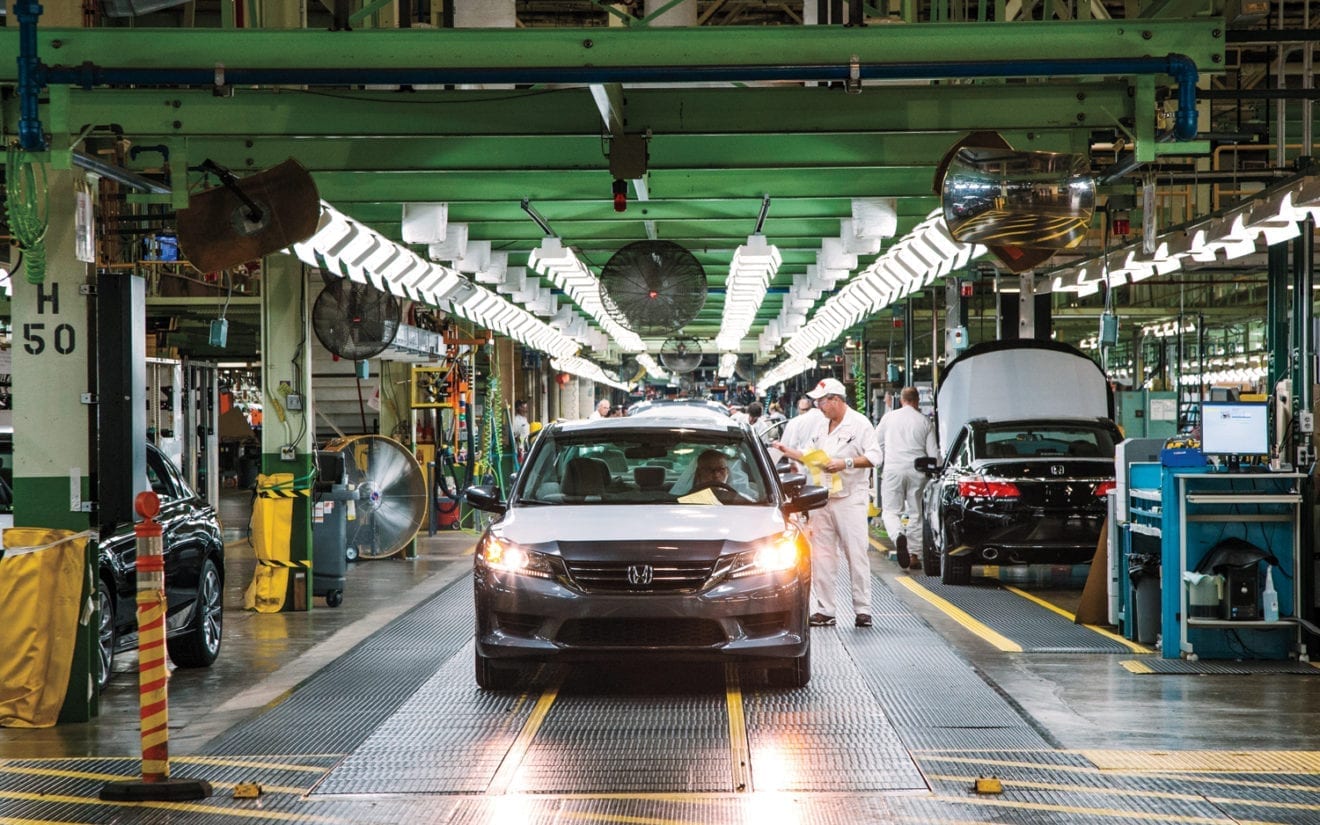
    Honda Motor Co plans to build a new factory in China that will produce passenger cars from 2019, boosting its output capacity in the country by about a fifth, two people familiar with the matter said on Tuesday.

    Honda and partner Dongfeng Motor Group Co (0489.HK) are experiencing explosive growth in China with sales for their joint venture soaring 48 percent for the year to date thanks to the popularity of the XR-V sport-utility vehicle as well as the recently launched Civic sedan.

    At the same time, the venture, Dongfeng Honda, is coming close to its capacity limits at its two factories, targeting sales of 450,000 vehicles for 2016 – not far off current annual capacity of 480,000.

    The new factory will be located in Wuhan, central China, a major auto hub. It will initially produce 120,000 cars a year, with capacity likely to double eventually, the sources said, declining to be identified as there had not been a formal announcement by the companies.

    Honda confirmed that it was discussing the additional plant in Wuhan with Dongfeng, but that it had nothing official to announce now. A Beijing-based spokesman for Honda said the project had yet to be formally approved by the company or the government.

    The plan was initially reported by the Nikkei business daily, which said the venture planned to spend “hundreds of millions of dollars” on the factory.

    The new factory would be Honda’s seventh in China. Honda also has a joint venture with GAC Group (601238.SS)(2238.HK) called Guangqi Honda which has three plants. The Japanese automaker also has a separate plant for exports.

    Honda said in April it was looking to boost car sales in China to 1.07 million cars this year. It sold 1.01 million vehicles in 2015, a 33 percent jump over the previous year.

    Auto sales in China strengthened in September for a consecutive fifth month, rising to a three-and-a-half year high.

  • Barry Callebaut Opens First Chocolate Factory in Indonesia

    Barry Callebaut Opens First Chocolate Factory in Indonesia

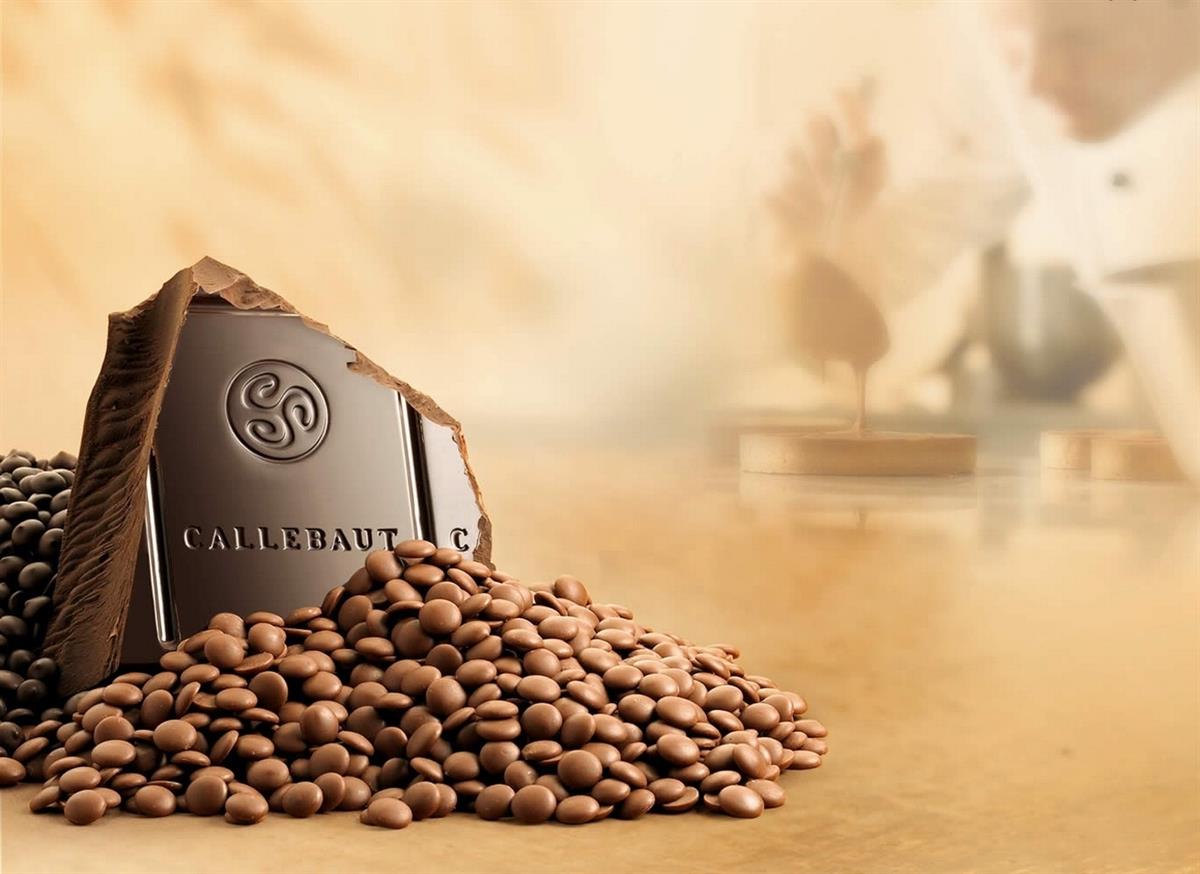
    Swiss chocolate producer Barry Callebaut has expanded its operations in Indonesia with the grand opening of its first chocolate factory in the country.

    Through a long-term outsourcing agreement with GarudaFood Group, one of the largest food and beverage companies in Indonesia, Barry Callebaut built its three-story, 43,000-sq.-ft. factory on the premises of GarudaFood’s biscuit plant in Gresik. Barry Callebaut will also supply GarudaFood with 10,000 tons of chocolate per year.

    Antoine de Saint-Affrique, Barry Callebaut’s ceo, said the new factory, which will employ 50 people, is a “cornerstone” in its strategy to strengthen its position in Asian Pacific markets.

    “It also enables us to grow our already significant presence in Indonesia — an important emerging market with about 260 million people that offers above-average growth opportunities,” he says. “We are truly excited that our strong relationship with GarudaFood and this new factory will provide GarudaFood with the means to differentiate themselves in an increasingly competitive market.”

    GarudaFood CEO Hardianto Atmadja said the partnership will give GarudaFood the opportunity to put emphasis on biscuit production, including its Gery brand.

    “The chocolate production lines at the Barry Callebaut factory allow us to focus our manufacturing facilities in Indonesia on biscuits and strengthen the factory as a key competence center for our biscuits products in Indonesia,” he says. “This move will help us to further develop our successful biscuit brands.”

    Barry Callebaut also operates chocolate grinding facilities in Bandung and Makassar, Indonesia, employing more than 500 people. The company also has chocolate factories in China, India, Japan, Singapore and Malaysia.

  • Indonesia Sees Decline in Number of Cigarette Factories

    Indonesia Sees Decline in Number of Cigarette Factories

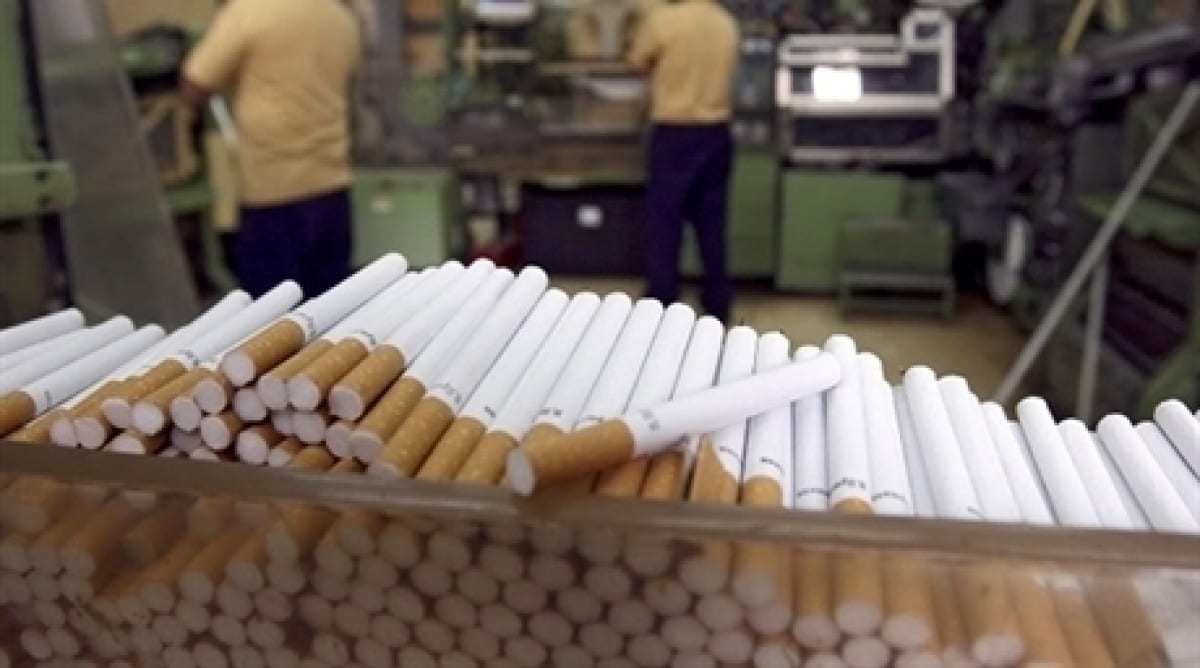
    The Director General of Customs and Excise for the Finance Ministry, Heru Pambudi said the number of cigarette factories in Indonesia continues to fall significantly over the past years. There were 4,669 cigarette factories in 2007, which had fell to 754 by 2016

    According to Heru, the better tobacco control measures taken by the Directorate General of Customs and Excise has resulted in the decline of cigarette factories. “Both through administrative and physical control [measures],” he said in a written statement Wednesday, September 28, 2016.

    Heru said the Directorate General of Customs and Excise has been taking rigorous approach to issuing permit to manufacture tobacco products. In addition, the Directorate General had shut down the non-compliance factories. “Non-compliant factories will be closed,” he said, adding that the measure will be continued.

    The measure, according to Heru, aims to improve compliance of cigarette factories, as well as to supress illicit tobacco trade, which is one of the directorate’s remit which include monitoring tobacco distribution.

    Indonesian Cigarette Manufacturers Association (GAPPRI) chairman Ismanu said strict tobacco control policies by the Directorate General of Customs and Excise have been adequate, “GAPPRI fully supports the measures taken by the government in developing tobacco industry,” he said.

  • Multi Bintang Cancels Factory Expansion

    Multi Bintang Cancels Factory Expansion

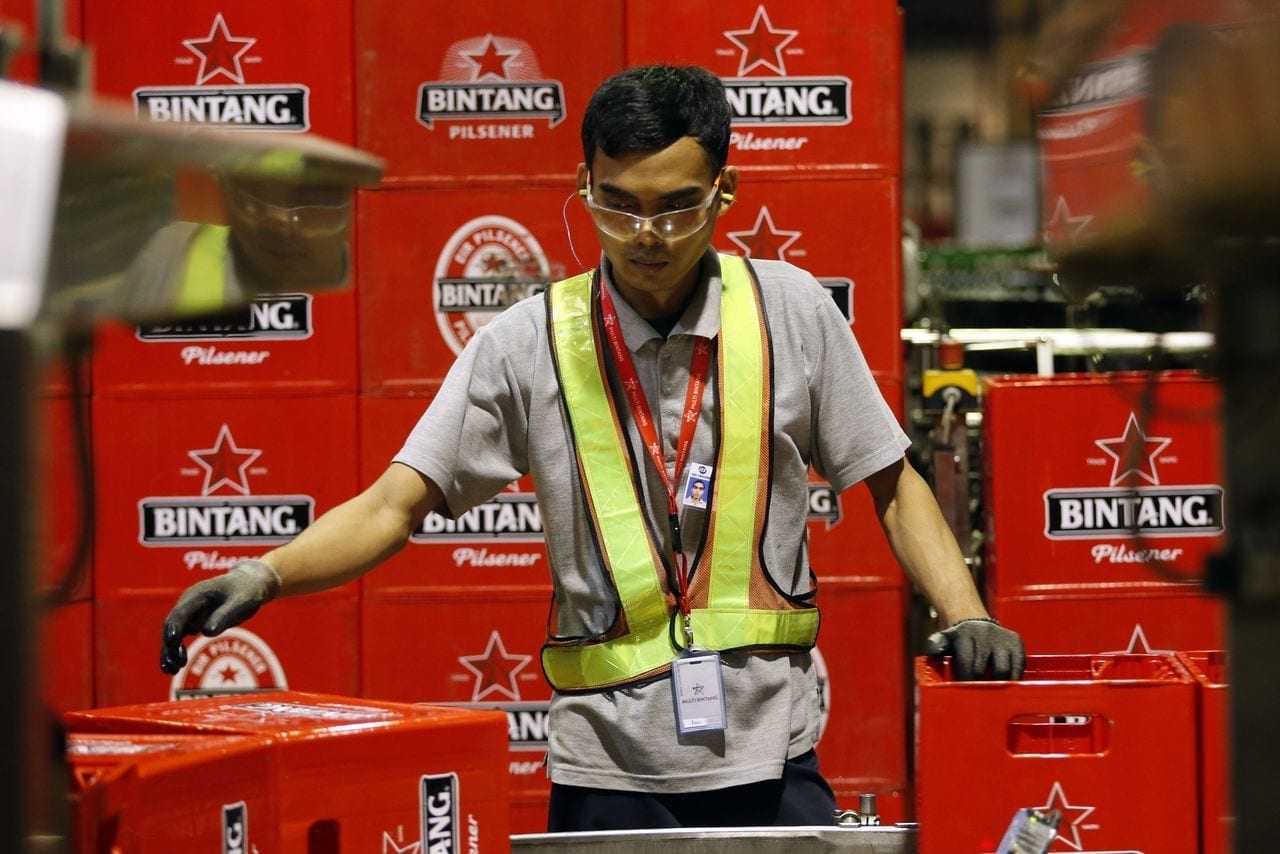
    PT Multi Bintang Indonesia (MLBI) has decided to postpone plans to expand its factory in Mojokerto. The decision was made as the company faced difficulties with Trade Minister Regulation on the distribution of alcoholic beverages and the Draft Bill on alcoholic beverages, which is still being discussed by the House of Representatives.

    Bambang Britono, Director of Corporate Relationship of the company said that the Trade Minister Regulation No. 6/M-DAG/PER/1/2015 on the Control and Supervision on Procurement, Distribution and License for Alcoholic Beverages have forced the company to reschedule its plant to expand production facilities.

    “It is actually depends on time and supply. Previously [our sales] had dropped because of the Trade Minister Regulation. So we have decided to do a reschedule,” Bambang said on Friday, September 23, 2016.

    In addition, the government’s plan to pass the Draft Bill on Alcoholic Beverages, which bans the production, distribution and consumption of alcoholic beverages with an alcohol level of one up to 55 percent have disrupted the company’s distribution activities. Nevertheless, Bambang is certain that the government will be able to come up with a just policy for alcoholic beverages company.

    “Because the [alcoholic beverages] industry has quite large [contribution], not only in terms of levy and taxes revenue, but also multiplier effect on other industries, such as tourism. So the government will consider its own discretion,” Bambang said.

  • UPS to open 3D printing factory in Singapore with Fast Radius

    UPS to open 3D printing factory in Singapore with Fast Radius

    Package delivery company United Parcel Service Inc said on Monday it will expand its 3D printing services to Asia with a new facility in Singapore run by its partner Fast Radius that will open by the end of 2016.

    UPS rolled out a similar service in May in the United States. The company owns an undisclosed stake in Fast Radius, which has a 3D printing factory at the Atlanta-based package delivery company’s hub in Louisville.

    In the United States, UPS customers can have parts printed at the Fast Radius factory or at one of 60 UPS Stores equipped with 3D printers and then shipped to them.

    UPS also plans a 3D printing hub in Europe. The company sees 3D printing as a potential threat to its warehousing business where it stores parts for manufacturers, so its strategy is to embrace the new technology and incorporate it into its business model instead.

    Also known as additive manufacturing, 3D printing works by laying down successive levels of material, mostly plastics at this point, to create an object.

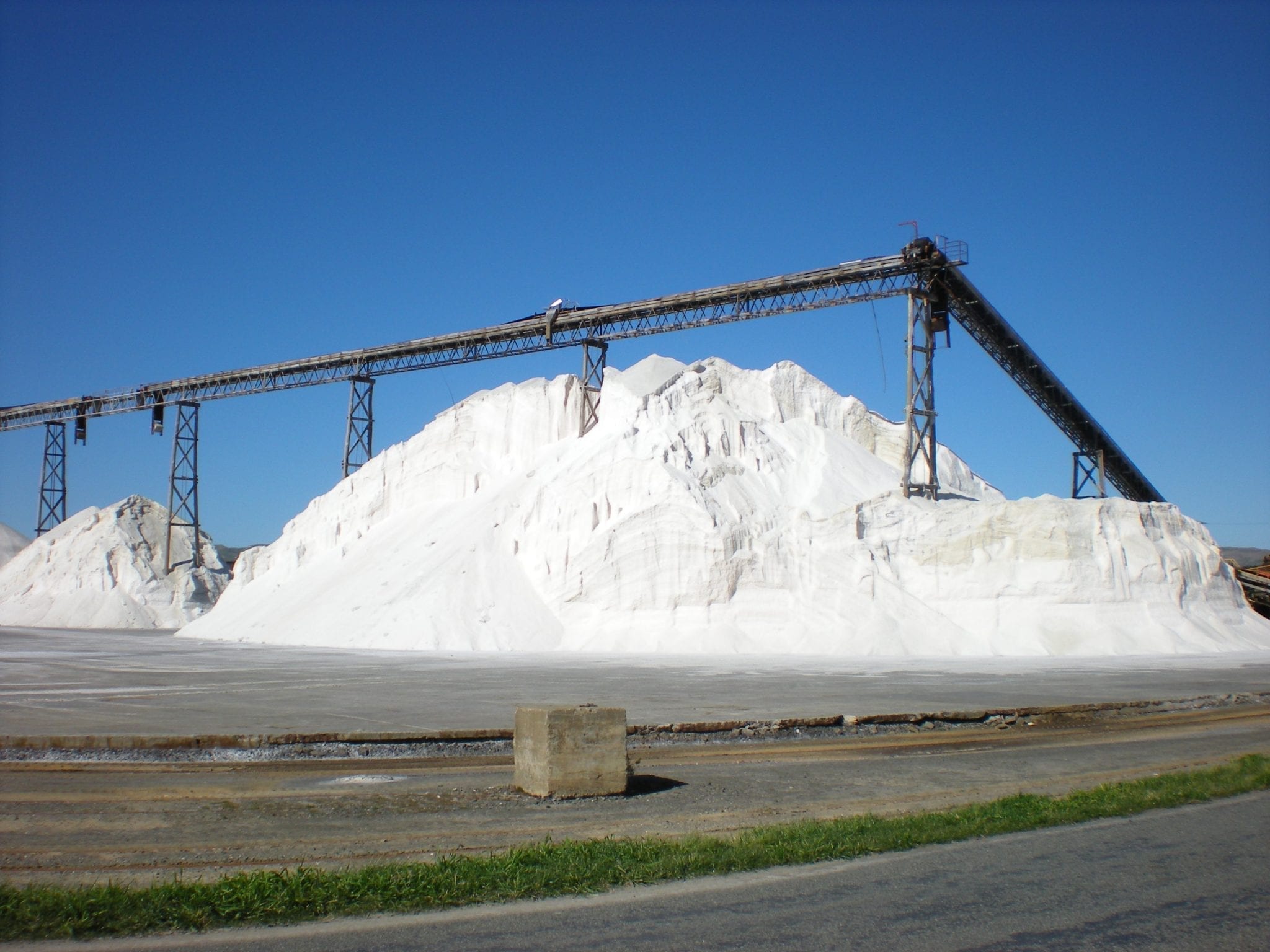
  • Central Java to build high quality salt factory

    Central Java to build high quality salt factory

    The Central Java administration plans to build factories to produce high quality salt to improve the welfare of the local salt farmers.

    “Currently five pilot projects of salt factory are being prepared,” Central Java Governor Ganjar Pranowo said here on Tuesday.

    Ganjar said factories to produce high quality salt need to be built immediately in Central Java as the province is a potential producer of salt especially its northern coastal areas.

    Unfortunately the quality of farmers salt in that area is relatively low that the price is also low, he said.

    The provincial administration has discussed the plan with a number of relevant experts, the governor said.

    “There has been talk on the possibility of producing high quality salt,” he said.

    He said so far the price of farmers salt in northern coastal area of Central Java has been very low at around Rp350 per kilogram.

    With the factories the quality of salt would be improved and the price could rise to an ideal level of Rp650 per kg, he said.

    Deputy chairman of the regional legislative assembly Yudi Sancoyo asked the regional administration to address the condition of the salt farmers in the region.

    “It is feared that the price of farmers salt would drop in this years grand harvest. Instead of gaining from the grand harvest the farmers would likely suffer losses,” he said.

  • Indofood commissions instant noodle factory in Serbia

    Indofood commissions instant noodle factory in Serbia

    PT. Indofood Sukses Makmur, the largest instant noodle producer in Southeast Asia has expanded operation to Europe setting into operation its factory in Serbia.

    Serbian President Tomislav Nikolic officially commissioned the factory in Indjija, around 80 kilometers from Beograd on Friday, the Indonesian embassy in the Serbian capital city said.

    The factory, which produces ready for consumption Indomie noodles, was already operational in August opening hundreds of jobs for the Serbians .

    Construction of the factory in Serbia, would be the first step of the company in market expansion in Europe, an embassy official said.

    The factory, occupying a five hectare plot of lands was built with an investment of 11 million euro. It has a production capacity of 500,000 carton boxes per month for distribution not only in Serbia but also to other countries Europe.

    Free trade adopted by Serbia with various other countries in Europe would facilitate the company in market expansion giving it greater optimism in its ambition to dominate the European market of instant noodle.

    The official commissioning ceremony was attended by other Serbian leaders, members of the diplomatic Corps , business leaders and local journalists.

    Support shown by the Serbian government is a big factor in the success of the Indofood investment in that country.

    President Tomislav Nikolic said he appreciated and supported the Indonesian investment in Serbia as a concrete step to expand economic cooperation between the two countries.

    Indonesian Ambassador Harry R.J. Kandou said the presence of Indofood in Serbia constituted a concrete proof of Indonesian initiative in strengthening economic cooperation between the two countries.

    Anthony Salim, the Executive Director of the Salim Group, which owns Indofood, said he hoped that factory would provide gateway for the Indofood to reach the rest of Europe.

  • Bolloré Logistics Sponsors Honey Factory for Urban Beekeeping in Seoul

    Bolloré Logistics Sponsors Honey Factory for Urban Beekeeping in Seoul

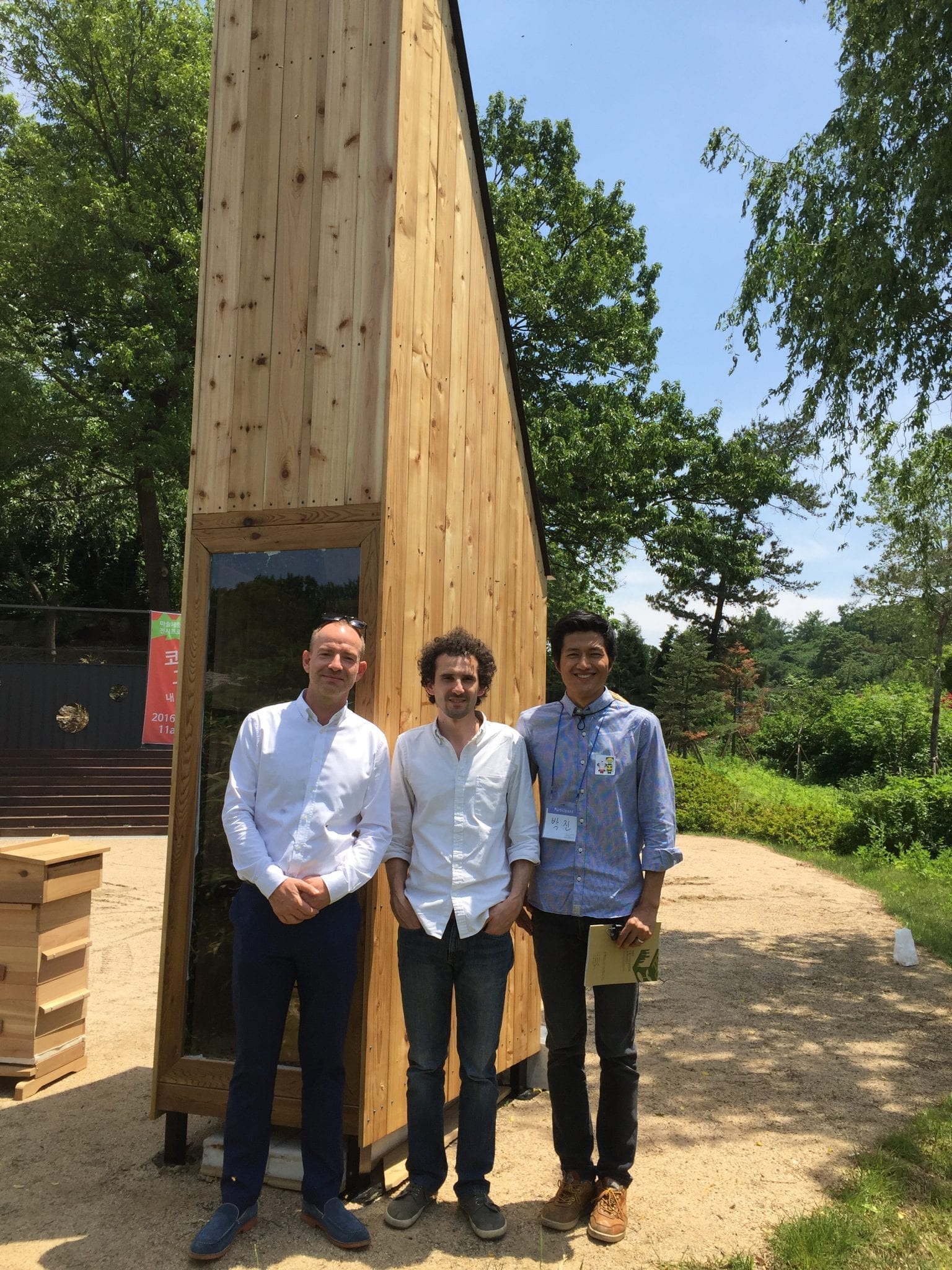
    In an effort to promote the idea of urban beekeeping and to provide information about its environmental benefits, Bolloré Logistics Korea recently sponsored a beehive structure called Honey Factory, in Seoul, South Korea.

    Currently installed in Seoul Children’s Grand Park, it was first introduced in Asia at the 2016 International Conference on Urban Agriculture during The 5th Seoul Urban Agriculture Expo that took place last May 19-22.

    Designed by Italian industrial designer Francesco Faccin, this wooden beehive has a 4.5-meter chimney that keeps curious children safe from the bees. It also protects the bees from harm due to bad weather and helps keeping it at constant temperature with optimal ventilation. Honey Factory is an ideal beehive for city parks as a standard hive can cover a radius of three kilometers.

    The first Honey Factory has also been operating since 2015 installed in the garden of the Triennale Design Museum in Milan, Italy, and carries out educational activities as well as producing great urban honey.

    This action is fully in line with the biodiversity action plan put into effect within the Bolloré Logistics Business Unit. Bolloré Logistics’ biodiversity strategy has three fundamental pillars based on the ARC concept (Avoid / Reduce / Compensate):

    (1) Embracing biodiversity as one of the company’s environmental concerns;

    (2) Working with customers and suppliers on biodiversity issues and the impact of our activities;

    (3) Make our sites models for biodiversity, all over the world.

    By sponsoring the first Honey Factory in Asia, Bolloré Logistics hopes to increase efforts to protect bees, as they play a vital role in maintaining biodiversity.

  • South Korea Industrial Production Gains 2.5% In May

    South Korea Industrial Production Gains 2.5% In May

    Industrial output in South Korea climbed 2.5 percent on month in May, Statistics Korea said on Thursday.

    That beat forecasts for a flat reading following the 0.8 percent decline in April.

    On a yearly basis, industrial production climbed 4.3 percent – topping expectations for a fall of 1.0 percent following the 0.8 percent increase in the previous month.

    The all-industry activity index was up 1.7 percent on month and 4.8 percent on year. The Manufacturing Production Index added 2.6 percent on month and 4.5 percent on year.

    The Producer’s Shipment Index gained 1.0 percent on month and 3.7 percent on year. The Producer’s Inventory Index added 0.3 percent on month and 0.5 percent on year. The Production Capacity Index was flat on month and gained 0.5 percent on year.

    The Index of Capacity Utilization Rate collected 2.1 percent on month in May and 0.7 percent on year. The Manufacturing Average Capacity Utilization Rate was 72.8 percent, up 1.5 percentage point from the previous month. The Index of Services climbed 0.1 percent on month and 3.4 percent on year.

    The Retail Sales Index added 0.6 percent on month in May and 5.1 percent on year. The Equipment Investment Index was flat on month and climbed 2.9 percent on year.

    The Domestic Machinery Shipment Index added 0.2 percent on year. The value of Domestic Machinery Orders Received in May gained 0.6 percent on year. The value of construction completed at constant prices added 2.9 percent on month and 20.2 percent on year. The value of Construction Orders Received at current prices tumbled 25.5 percent on year.

    The Composite Coincident Index added 0.4 percent on month. The Cyclical Component of Composite Coincident Index, which reflects current economic situations, added 0.2 points from the previous month.

    The Composite Leading Index in May added 0.3 percent on month. The Cyclical Component of Composite Leading Index, which predicts the turning point in business cycle, was flat on month.

    Also on Thursday, the bureau said that retail sales added 0.6 percent on month in May and gained 5.1 percent on year.

    That follows the 0.5 percent monthly decline and the 4.2 percent yearly gain in April.

  • Volkswagen considers setting up its own battery factory

    Volkswagen considers setting up its own battery factory

    Volkswagen is considering building a multi-billion-euro battery factory as part of a major expansion of its electric-car portfolio, company sources told the Handelsblatt, a leading German daily.

    The factory will allow Volkswagen to operate independently of Asian firms like Panasonic, LG and Samsung that have dominated the battery market to date, the newspaper added.

    The company’s executive board looks to be in favour of approving the plan, which is also supported in principle by the works council and the state of Lower Saxony, its major shareholder, before the firm’s annual meeting on June 22.
    The company hopes that focusing on battery technology and electric cars can help it make a fresh start and improve its negative image after the “Dieselgate” scandal, the paper said.

  • Hong Kong textile eye India as alternative production base to cut cost

    Hong Kong textile eye India as alternative production base to cut cost

    India is rising, not only as a new choice of relocating labour-intensive industries from China, but also as a retail market of good potential, says a research report by The Hong Kong Trade Development Council (HKTDC).

    In recent years, the sustained rise in production costs on the Chinese mainland has eroded the profit margins of many Hong Kong companies with labour-intensive factories located on the Chinese mainland, prompting them to seek alternative production bases elsewhere.

    While Southeast Asian countries offer many choices, the HKTDC report says India offers many advantages as an alternative production base, along with the added advantage of having a domestic market of great potential.

    According to the report, the majority of Indian garment producers are focused on the domestic market, as their product quality was generally lower than the standards required by overseas importers.

    Despite this, many big Indian exporters have successfully lined up with international buyers, including department stores, retail chains and brands.

    The paper was written after a recent field trip to India that included factory visits and interviews with garment manufacturers.

    In the four years to 2014, India’s garment exports increased at an average annual rate of 12 per cent, surpassing China’s 9 per cent, in line with Bangladesh’s 13 per cent and eclipsed by Vietnam’s 17 per cent.

    With advantages of raw materials and prospects of vertical integration, India is a strong garment exporting country and a location worth considering for factory relocation in relation to labour-intensive manufacturing, such as garment-making.

    The report pointed out that while China is the undisputed world leader in exporting textiles and garment products, many have overlooked India’s position as the world’s second biggest exporter of textile and garment products in 2014, selling a total of $36 billion, during the year, far behind China’s $399 billion.

    For textile exports alone, India was second after China in 2014, with a share of 5.8 per cent of the global market, compared to China’s enormous 35.6 per cent share.

    HKTDC says it is not surprising that the bulk of garment manufacturing in India is for the domestic market, supported by the country’s huge capacity in textiles production.

    India stands out to be a substantial exporter in both garments and textiles. In 2014, India imported textiles worth only $3.8 billion, lagging much behind Vietnam’s $12 billion, Bangladesh’s $6.8 billion, and just ahead of Cambodia’s $3 billion, the report said.

  • Japan interested in auto component factory in Indonesia

    Japan interested in auto component factory in Indonesia

    A company in Japans Okayama Prefecture is interested in the automotive component business in Indonesia, Okaya Prefecture Governor Ryuta Ibaragi said.

    During his visit to the Indonesian Capital Investment Coordinating Board (BKPM) here on Friday, Governor Ibaragi said the automotive component company, which has supplied components for Mitsubishi cars, was interested in developing an auto component factory in Indonesia.

    “There are 422 companies from Okoyama Prefecture that have made investments outside Japan. In Indonesia, we have a number of large companies which made investments,” he said, in a written statement made available in Jakarta on Saturday.

    Meanwhile, Okayama Prefecture’s governor said there is considerable interest among Japanese businessmen to conduct business in Indonesia. However, there are a number of concerns about the investment climate in Indonesia from investors from the Prefecture Okoyama, he said, including the problem of the country’s unpredictable wage system.

    Ibaragi said that during his visit in Indonesia he found Indonesians to be quite open to Japanese companies.

    “Regarding the MRT project, we thank the Indonesian government for its trust in a Japanese company. Of course, we will not ignore it and will maintain that trust,” he said.

    BKPM Chief Franky Sibarani said Japanese companies were given priorities regarding assistance from investment facilities.

    Japanese investment is the main component of the economic growth driver in Indonesia, he said.

    “We are ready to assist investment from Japan. The Marketing Office for the Japan area and the BKPM representative office in Tokyo could be used by investors and companies in Okoyama to plan business activities in Indonesia,” he said.

    He noted that his office was planning to conduct an investment promotion in Yokoyama early next year to win over interest by Japanese investors.

    “One of the major investors is Sumitomo. We will invite a number of companies which have made investments in Indonesia to share their successful experiences with their colleagues in Japan,” Sibarani said.

    In the first half of this year, Japan was ranked third in foreign investments, amounting to US$1.6 billion after Malaysia (US$2.6 billion) and Singapore (US$2.3 billion).

    Coming next were South Korea (US$0.8 billion) and the United States (US$0.6 billion).