Retail News CRM

Tag: flying

  • AirAsia prepares regional routes to spur intra-Asean travel

    AirAsia prepares regional routes to spur intra-Asean travel

    AirAsia aims to spur intra-Asean travel with new regional routes, while Thai AirAsia hopes the Red War football match in July will drive demand from neighbors to Thailand.

    The company is working on new destinations in Thailand, Indonesia, and Malaysia to replace the Chinese market, said Tony Fernandes, chief executive of Capital A, formerly AirAsia Group, which also owns Thai AirAsia via the AirAsia Aviation Group.

    He said he already discussed with Thailand’s ministers regarding new international routes besides well-known destinations, such as Jakarta to Hua-Hin.

    However, the implementation in Thailand will largely depend on Covid-19 tests and other travel regulations which remain the most critical obstacle for the industry.

    Tassapon Bijleveld, executive chairman of Asia Aviation, the majority shareholder of Thai AirAsia (TAA), said the airline is preparing bundle packages for Manchester United and Liverpool football tournaments which combine match tickets and airline tickets.

    The game will attract a number of sports fans, particularly from neighboring countries as the viral situation should have subsided by July.

    He said every country in Southeast Asia has to cooperate to ensure seamless tourism which can help offset the lack of travelers from China, Japan, and South Korea who might resume international travel in the second half.

    TAA plans to operate international flights to Singapore, Malaysia, and Vietnam next month with a target of 70-80% load factor in order to avoid losses.

    He said travel regulations are the main concern for the airline as travel demand could not strongly rebound despite the reopening, so mandatory RT-PCR tests must be removed by the first half.

    “We have to get back to the real world. The government must be brave because the current viral situation is not that severe compared to the previous waves as more Thais are already inoculated,” Mr Tassapon said.

    Capital A also focuses on the growth of airasia Super App, its travel and lifestyle platform, which officially launched in Thailand on Monday.

    Varut Vutipongsatorn, country head of airasia Super App (Thailand), said it has built the foundation for the platform over the past year. This year it will expand business throughout the country, starting with the Northeast.

    The goals in Thailand are to add 1-2 new services each year, increasing air travel bookings as well as bundle packages between air tickets and hotels by 20 times and 40 times, respectively, within 2026.

    This year, food delivery will expand its service nationwide, while door-to-door delivery within each province under airasia Xpress and a ride-hailing taxi service will start from March.

  • Malaysia’s AirAsia eyes air cargo carrier

    Malaysia’s AirAsia eyes air cargo carrier

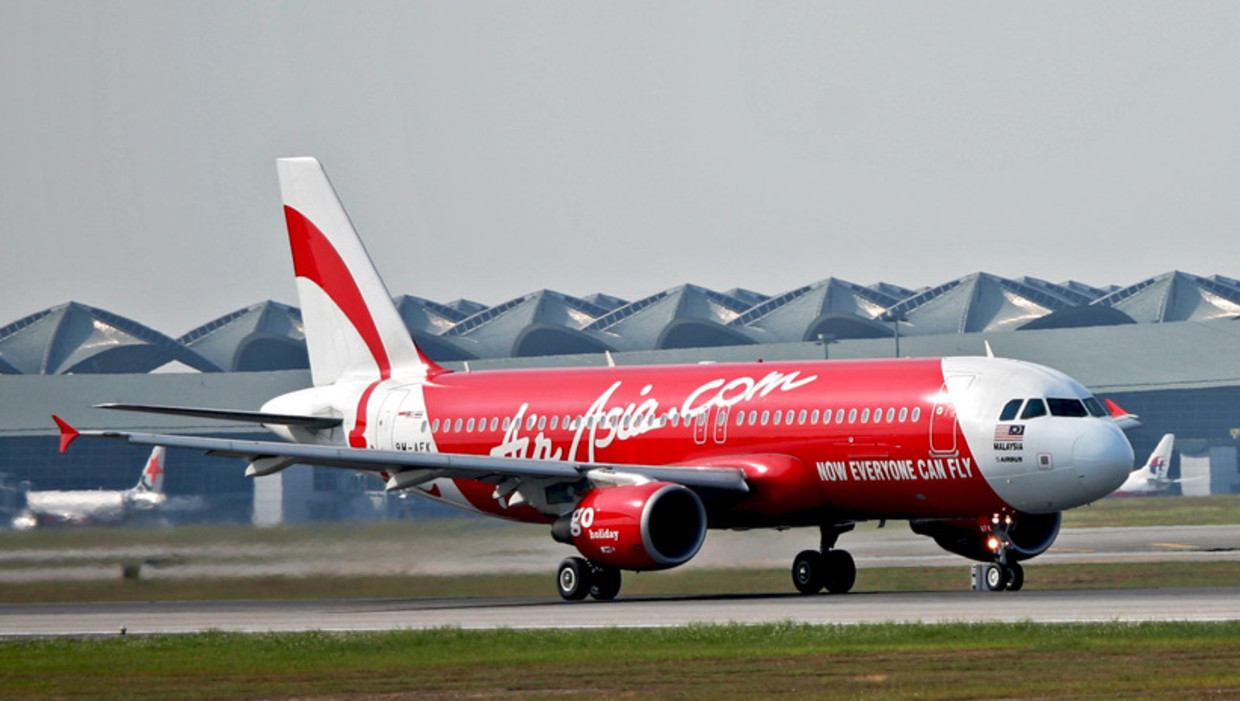
    Malaysia’s flagship budget airline AirAsia Group is in early acquisition discussions for air cargo carrier Raya Airways to beef up its logistics business, The Edge Weekly reported on Saturday (Jan 22) citing sources.

    The business weekly said the airline has approached businessman Ishak Ismail whose family owns Raya Airways, to acquire the carrier, and are in early conversations, according to people familiar with the matter.

    AirAsia and Raya Airways did not immediately respond to requests for comment.

    AirAsia’s logistics unit Teleport said in November it was aiming to expand its fleet of cargo planes and scale up its freight business.

    Top executives at Raya Airways were not keen to sell the carrier, however, as they have plans for an initial public offering, the report said.

    AirAsia was last week classified as a PN17 firm by Malaysia’s stock exchange, a tag given to financially distressed firms. It said it was working on a plan to “regularise its financial condition”.

  • AirAsia Experiences Turbulent Stock Market

    AirAsia Experiences Turbulent Stock Market

    AirAsia Group has announced that stock exchange operator Bursa Malaysia dismissed its application to extend a relief period that prevented it from being classified as a Practice Note 17 (PN17) company, a status that relates to companies that are in financial distress.

    Companies classed as PN17 must submit to the stock exchange a proposal to restructure and revive the company in order to maintain listing status. In a disclosure to the exchange on January 13, the AirAsia (AK, Kuala Lumpur Int’l) parent confirmed that, according to Bursa regulations, with the expiry of the relief period it is now “required to reassess its condition.”

    The PN17 financial distress criteria had been triggered in July 2020 after independent auditors from Ernst & Young highlighted in the group’s annual results that net loss and liabilities at the end of 2019 significantly exceeded assets, flagging material uncertainties that cast doubt on its ability to continue as a going concern.

    In light of the pandemic, Bursa Malaysia gave the group 18 months to take steps to address the issue, and when the relief period expired on January 7, AirAsia filed an appeal to prolong it. This has now been rejected, risking delisting from the exchange.

    The following day, on January 14, Bursa Malaysia issued a statement saying that short selling for AirAsia stock had been suspended for the rest of the day as “the last done price of the approved securities dropped more than 15 sen [cents] from the reference price.” Trading will be reactivated at 0830L (0030Z) on the next trading day, Monday, January 17.

    Meanwhile, in Jakarta, the Indonesia Stock Exchange (IDX) again suspended trading in Indonesia AirAsia (QZ, Jakarta Soekarno-Hatta) on January 12. Trading had only resumed on January 3, nearly two-and-a-half years after its shares were suspended due to its failure to meet the 7.5% threshold for free-floating equity.

    This time, the IDX cited unusual market activity the previous day when the stock closed at 24.4% up. In fact, the bourse said, Indonesia AirAsia’s shares jumped in value by 185% from IDR184 rupiah (USD0.0129) on January 3 to IDR525 (USD0.0367) at the close of trading on January 11. The exchange appealed to investors to pay attention to the performance of listed companies and their disclosures of information before making investment decisions.

    In a statement, Indonesia AirAsia clarified: “There is no material information that has not been submitted by the company to the public; and there is no information about the company circulating as rumours or in the mass media.”

  • AirAsia ramps up flight frequencies

    AirAsia ramps up flight frequencies

    AirAsia Philippines continues to increase flight frequencies to domestic destinations to support the surge of air travel demand during the Christmas season.

    The low-cost carrier said it has restored 30 percent of its pre-pandemic capacity, doubling and tripling its frequencies for most of its domestic destinations.

    The airline has also resumed its flights to Hongkong and Singapore to service overseas Filipino workers and business travelers.

    “We are banking on revenge travel for a very strong 2022 recovery,” AirAsia Philippines spokesperson Steve Dailisan said.

    Dailisan said people now have the confidence to plan for their future trips as reflected in the forward bookings from 31 to 120 days.

    “This booking behavior can be significantly attributed to the continuing downtrend of daily COVID-19 infections and the ongoing progress of the government’s nationwide vaccination program,” he said.

    “While travel restrictions have been significantly eased and simplified, we call on our guests to never allow themselves to be complacent. Strict adherence to health and safety protocols must be observed on the ground and in flight,” Dailisan said.

    AirAsia said travelers can currently avail of the airline’s P20 base fare if they book up to Dec. 20 from Manila to Cebu, Puerto Princesa, Iloilo, Cagayan de Oro, Davao, Kalibo, General Santos, Zamboanga and Bacolod. Travel period is up to Sep. 30 next year.

    “AirAsia has been synonymous with great value through the democratization of air travel with low fares and great service. We are sharing this milestone with our guests who have been very loyal to AirAsia and are now part of the growing Super App ecosystem,” Dailisan said.

    AirAsia Philippines said 100 percent of its flying crew and 99.34 percent of the whole workforce have been fully vaccinated against COVID.

  • AirAsia rebuilds capacity in core Malaysian domestic market

    AirAsia rebuilds capacity in core Malaysian domestic market

    For AirAsia there has been a welcome recovery in Malaysian domestic demand in the last part of 2021 as internal travel restrictions ease in the group’s most important market.

    Third-quarter operating statistics made a fairly grim reading for AirAsia. The effects of the COVID-19 delta variant caused the governments in the group’s major Southeast Asian markets to impose limitations on domestic travel. This was particularly true in Malaysia and Thailand, where the AirAsia units based in those countries had to suspend most of their remaining operations.

    In Malaysia, the number of new daily cases peaked at more than 600 in late Aug-2021, according to the Our World in Data website. However, the daily case count had fallen again to 173 by 24-Nov-2021.

    At the same time, Malaysia’s vaccination rate continues to climb, with 76.3% of the population fully vaccinated as of 25-Nov-2021. The fully vaccinated rate for eligible adults is above 90%.

    These two factors combined – daily case numbers and vaccination rate – prompted the government to lift many of its interstate travel restrictions in the fourth quarter.

    For AirAsia, this means its Malaysian domestic operation can ramp up, which is important, given that the airline’s international operations remain largely halted.

  • AirAsia X shares sink as much as 21% amid going concern doubt

    AirAsia X shares sink as much as 21% amid going concern doubt

    AirAsia X’s shares dived by the most in more than a year after the long-haul budget airline was officially categorized as a financially distressed firm, which gives the company a year to recast its finances or risk losing its Malaysian listing.

    The stock tumbled as much as 21.1 percent to 7.5 sen on Monday (Nov 1), set for the steepest drop since August last year. The shares traded at eight sen at 10:40am amid volume that was six times the average for this time of day.

    On Friday, AirAsia X’s auditor Ernst & Young issued a disclaimer of opinion on the airline’s audited financial results for the 18-month period ended June this year, citing threats that cast “significant doubt” on the firm continuing as a going concern, the airline said in a filing. AirAsia X said it has a year to recast its finances, failing which it will be delisted from Bursa Malaysia.

    “AirAsia X continues to face severe liquidity constraints and all hopes are on successful debt restructuring and new equity funding from existing and new investors to provide sufficient capital to restart operations when international borders reopen,” Public Investment Bank wrote in a note on Monday. The brokerage maintained its stock-target price of one sen.

    “The company is taking the necessary steps to address its Practice Note 17 status,” AirAsia X said on Friday, referring to its categorization as a financially distressed company.

    AirAsia X is one of the many airlines in the Asia-Pacific region to have been hit by travel restrictions imposed to curb the coronavirus pandemic. It has grounded most of its aircraft fleet since March last year and has deferred payment to creditors.

    AirAsia X recently offered to pay creditors only 0.5 percent of the more than US$8 billion (S$10.8 billion) total debt they are owed and terminate all existing contracts as it tries to restructure after it triggered events of default for various agreements.

    AirAsia is set to meet its creditors to vote on its restructuring proposal on Nov 12 and it would require at least 75 percent of each class of scheme creditors in the meeting to vote favorably for its proposed debt restructuring exercise to carry.

  • Thai AirAsia parent to raise $419mn as Thailand reopens

    Thai AirAsia parent to raise $419mn as Thailand reopens

    Asia Aviation PCL (AAV), the parent company of  Thai AirAsia (FD, Bangkok Don Mueang), has said it is seeking to raise THB14 billion baht (USD419.4 million) to fund a restart at the low-cost carrier following the “very negative impact on the company’s business and operating results” thrown up by Covid-19 and the Thai government’s strict travel restrictions.

    Those restrictions are now starting to ease, as Thailand plots a reopening that will allow vaccinated arrivals from ten “low-risk” countries – including the United Kingdom, the United States, Germany, China, and Singapore – to skip quarantine from November. The other five countries have not yet been named, and the government will add more countries to the low-risk list in December.

    In a 70-page report issued after an AAV board of directors’ meeting, filed to the Stock Exchange of Thailand on October 19, the company said it would issue convertible bonds and new shares worth THB14 billion. It also pledged to eventually acquire all of the shares in Thai AirAsia and boost the airline’s liquidity. AAV currently owns 55% of Thai AirAsia, while Malaysia’s AirAsia Group holds the remaining stake.

    The restructuring, expected to conclude in the first quarter of next year, includes new shares worth THB8.8 billion (USD264 million) in a private placement to AirAsia Group and six high net-worth Thai investors. The senior unsecured convertible bonds will be allocated to two private placement investors to raise a total principal amount of THB2.2 billion (USD66 million).

    The company will also increase its registered capital from THB485,000,000 (USD14.5 million) to THB1,285,000,000 (USD38.5 million), issuing 8 billion new ordinary shares to accommodate the conversion of the bonds. The subscription for the newly issued shares will take place from January 10 to January 14, 2022.

    AAV said it would use the proceeds from the capital increase: to repay THB3.9 billion (USD117 million), plus interest, in loans that the company borrowed from financial institutions to acquire the newly issued shares in Thai AirAsia, a move by which its stake will rise from 55% to 69.2%; to purchase all the remaining shares in Thai AirAsia, representing 30.8%, totaling about THB4 billion (USD120 million); and to go towards the working capital of the group, including Thai AirAsia.

  • Vietnam Airlines to resume all domestic flights

    Vietnam Airlines to resume all domestic flights

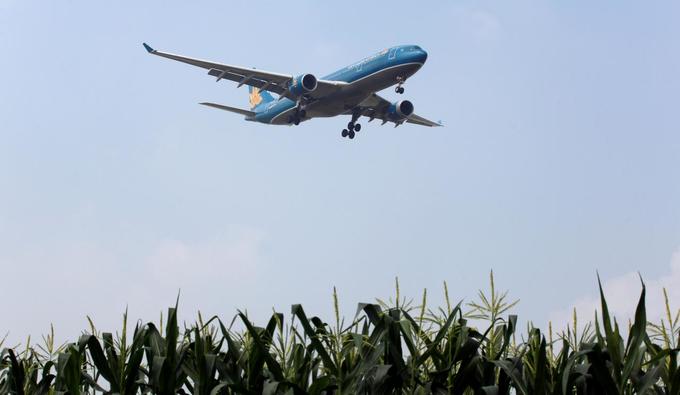
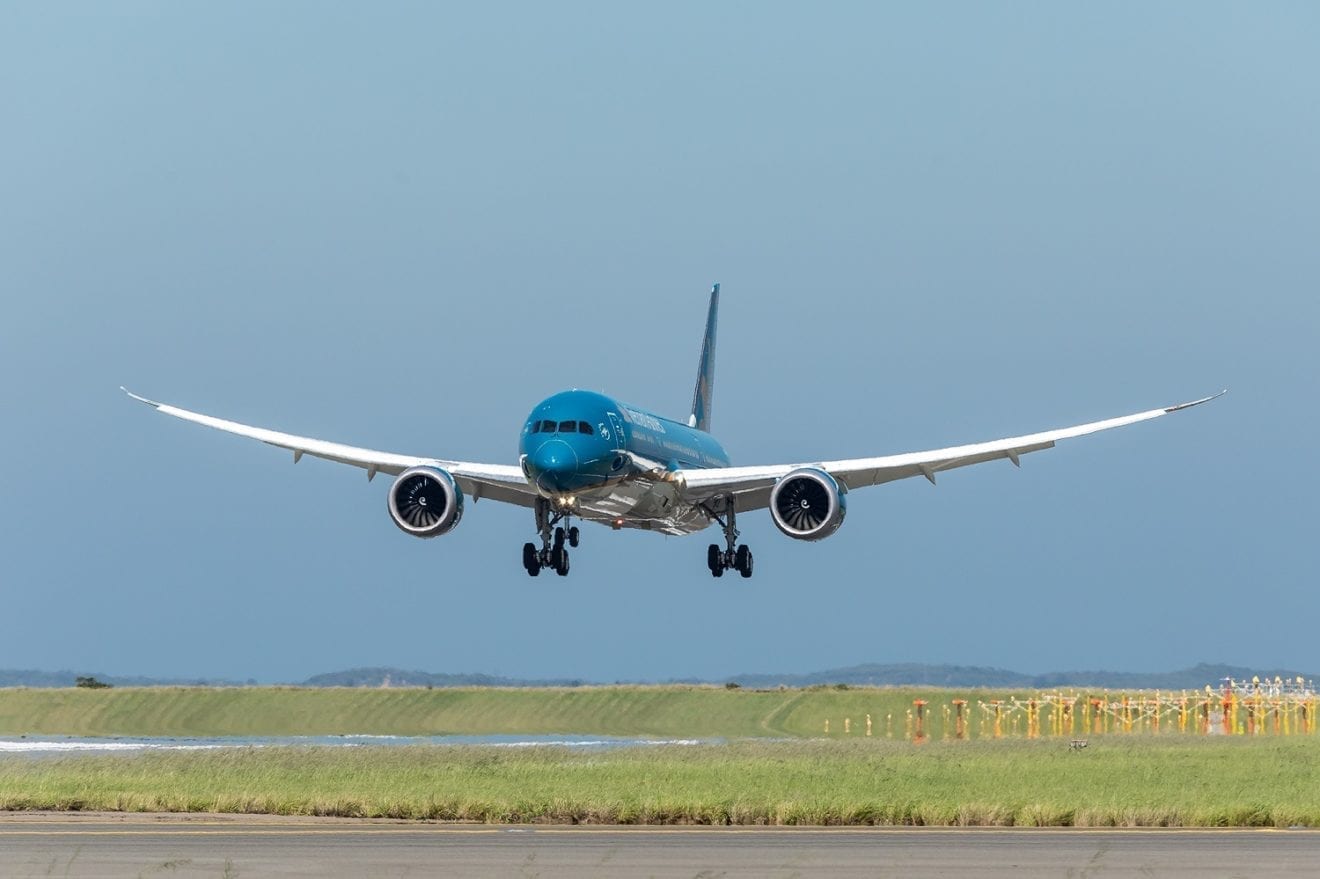
    Vietnam Airlines is set to gradually resume flying on 40 routes, or nearly its entire domestic network, by next month, prioritizing Hanoi, HCMC and Da Nang.

    Several flights are set to be resumed to the southern archipelago Con Dao Island, the central highlands province of Buon Ma Thuot and the northern province of Dien Bien from Thursday to Nov. 30.

    The group, which comprises low-cost carrier Pacific Airlines and Vietnam Air Services Company (VASCO), will start conducting 90 routes a day from Thursday and will increase the figure to 120 from the end of this month.

    There will be three flights a day between Hanoi, HCMC and Da Nang City. For the other locations the group will try to have at least one route a day, which could rise to two depending on demand.

    Passengers can fly if they have been fully vaccinated for at least 14 days, or to have recovered from Covid-19, or to test negative within 72 hours.

    Vietnam Airlines Group started resuming its domestic flights from Oct. 10. As of Tuesday it had conducted around 150 flights carrying nearly 12,000 passengers on 16 flight routes.

  • Thai AirAsia Parent Seeks to Raise $540 Million in Fresh Capital

    Thai AirAsia Parent Seeks to Raise $540 Million in Fresh Capital

    Asia Aviation Pcl, the operator of Thailand’s biggest budget carrier Thai AirAsia Co., plans to raise as much as 17.9 billion baht ($535 million) from new loans, share sales and convertible debt offerings as it attempts to restock coffers depleted by the worst crisis in aviation history.

    A revised financial restructuring plan for the company has been put forward and Asia Aviation is consulting with new investors, shareholders and creditors, Asia Aviation said in an exchange filing late Tuesday.

    The holding company joins a plethora of airlines globally trying to repair their balance sheets after Covid-19 all but put a stop to international air travel in early 2020. While climbing vaccination rates are seeing travel spring back in some parts of the world, in Asia it’s nowhere near pre-pandemic levels. Thai Airways International Pcl and Nok Airlines Pcl are also pursuing financial restructurings.

    Asia Aviation Chief Executive Officer Santisuk Klongchaiya said the fresh funds should allow the airline to increase flights amid an expected recovery in tourism and travel.

    Thailand’s capital Bangkok has administered at least two doses of Covid vaccine to 71% of its adult population, paving the way for the city to welcome back inoculated visitors without mandatory quarantine from Nov. 1., officials said Wednesday.

    Asia Aviation plans to raise a total of 8.8 billion baht from a private share sale to Malaysia’s AirAsia Group Bhd. and an individual investor. That will comprise around 4.5 billion of new shares to AirAsia to raise 7.8 billion baht and another sale to a group of investors led by Pitharn Ongkosit, the chief executive officer of KCE Electronics Pcl, to raise 1 billion baht.

    The company will also raise 2.2 billion baht from sales of convertible bonds and 3 billion baht from a rights offering. Around 3.9 billion baht will come from loans.

    Asia Aviation, which owns a 55% stake in Thai AirAsia, will use most of the proceeds to acquire the shares of Thai AirAsia it doesn’t already control. Other funds will be used to repay debt.

  • Name change for AirAsia Group

    Name change for AirAsia Group

    As AirAsia’s holding company for the airline group has been officially renamed AirAsia Aviation Limited, a move that illustrates the ongoing transformation into a digital travel and lifestyle services group,

    Bo Lingam, who was formerly president (airlines) for the AirAsia Group, takes over as Group CEO of AirAsia Aviation Limited, overseeing the four airlines (AirAsia Malaysia, AirAsia Philippines, AirAsia Thailand, and AirAsia Indonesia).

    AirAsia Group Berhad (AAGB) is the investment holding company for the eight digital portfolio companies that leverage data and technology. AAGB’s portfolio includes AirAsia Aviation, the AirAsia Super App, cargo and logistics venture Teleport, BigPay financial services, the edutech arm AirAsia Academy, engineering company Asia Digital Engineering, ground services division GTR and the restaurant chain and food group called Santan.

    Group CEO of AirAsia Aviation Limited Bo Lingam said: “We have spent the past 18 months reviewing every aspect of the operation to ensure that our airlines will return stronger than ever before. In Malaysia, we already see huge pent-up demand for air travel since the government’s recent announcement of the resumption of interstate travel on 11 October. We are operating over 60 daily flights to 16 key leisure destinations, and more frequencies and routes will continue to be added in response to significant consumer demand.

    “Progress is also underway in our other airlines in Thailand, Indonesia, and the Philippines as services are resuming in line with accelerated vaccination rates and the easing of travel restrictions in our key markets.”

  • AirAsia to reopen all Malaysian routes, push for overseas flights

    AirAsia to reopen all Malaysian routes, push for overseas flights

    AirAsia sees brighter skies ahead after Malaysia lifted interstate travel restrictions, with the low-cost carrier also pushing to restart international flights to Thailand, Sri Lanka and the Maldives as early as next week, its president told Nikkei Asia.

    Bo Lingam, AirAsia Group’s president for airline operations, said in an interview Monday that the company is “very relieved” with the government’s decision to reopen domestic borders as it will benefit both the carrier and its workforce.

    The airline aims to go big on domestic travel by reaching a pre-pandemic capacity of 39 local routes and 169 daily flights by late November, according to Bo.

    “We will open all domestic destinations that we were flying pre-COVID by the end of next month, involving over 45 aircraft,” he said.

    The comments came after the federal government on Monday allowed interstate travel nationwide. The airline was hit hard by the coronavirus pandemic, with hundreds of its employees retrenched and aircraft idled after domestic and international borders were closed and travel limited.

    The government of Prime Minister Ismail Sabri fully reopened state borders in the Southeast Asian country for the first time this year, allowing millions of residents to travel for business and leisure. Fully vaccinated Malaysians can also head overseas without police approval.

    Air travel is indispensable in Malaysia as the country’s states are spread across the Malay Peninsula as well as the island of Borneo to the east across the South China Sea.

    “The resumption of domestic service will be extremely good financially, for the airline as we would be able to pay pending bills from our suppliers who have been very nice to us to date,” Bo said.

    He added that the carrier is also looking to begin commercial international flights to Thailand, Sri Lanka and the Maldives as soon as next week.

    “We have applied for permissions in these countries and expect to receive them next week, after which we can sell tickets and fly passengers,” he said.

    AirAsia’s share price jumped almost 10% on Monday, settling at 1.28 ringgit — the highest since February 2020 and outpacing the Bursa Malaysia index’s gain of almost 1%. On Tuesday, the airline’s shares fell 3% to 1.25 ringgit at midday.

    The airline’s net loss in 2020 ballooned to 5.1 billion ringgit ($1.2 billion) from red ink of 315.8 million ringgit in 2019. Revenue also plunged from 11.9 billion ringgit in 2019 to 3.1 billion ringgit last year.

    For the first half of 2021, the airline reported a net loss of 1.3 billion ringgit from 1.8 billion ringgit net profit during the same period of last year. Revenue, meanwhile, tumbled to 686.8 million ringgit from 2.5 billion ringgit.

    AirAsia was recently granted a federal government-guaranteed 500 million ringgit loan under a framework introduced to assist companies directly affected by the pandemic. The loan was part of the 2 billion ringgit fundraising exercise mooted by the airline’s founder Tony Fernandes last year.

    The airline carried 19 million domestic passengers in 2019 but that plunged to 6.3 million last year. It has flown less than 1 million passengers between January and October this year as controls on movement were strengthened to curb the third and fourth waves of coronavirus infections.

    Bo also said the airline would reinstate some 300 employees currently on furlough to operate the domestic flights. Since last year, the airline has reduced head count by not renewing contract workers, retrenchments and furloughs.

    “We would exhaust employees under furlough first, then look at rehiring those we had laid off as the capacity grows,” he said.

    Experts say that while the return of interstate travel is undoubtedly a plus for AirAsia and competitors including Malaysia Airlines, it is far from a panacea.

    Brendan Sobie, an independent analyst at Sobie Aviation, believes domestic passenger traffic could approach pre-pandemic levels by the end of this year, though heavy competition and overcapacity — similar to the industry situation before the pandemic — will weigh on further growth for the carrier.

    “All airlines in Malaysia were unprofitable in 2019 and while domestic demand may now recover, many of the issues from prior to the pandemic have not been resolved, making a return to profitability difficult,” he said.

    Shukor Yusof, an aviation consultant at Endau Analytics said the surge in domestic travel demand would help AirAsia, though “it won’t be anywhere enough to fix its battered bottom line.”

    While Shukor said the Malaysian travel resumption itself is not an indication of a revival for the airline industry in Southeast Asia, he does view AirAsia as the carrier with the best long-term potential for post-pandemic growth.

    “It’s a critical stage as key countries for tourism — Indonesia, Thailand, the Philippines — are still struggling to control the virus and there’s little coordination amongst ASEAN members to find a solution to allow intraregional air travel,” he said.

    According to Sobie, Malaysian carriers need a recovery in both international and domestic travel to heal financially.

    “There is now light at the end of the tunnel and the overall sentiment is more positive but the road to recovery will be long and filled with twists and turns,” he said. “The darkest days should be behind AirAsia but the outlook remains relatively challenging.”
  • Malaysia’s AirAsia X reports record quarterly loss of $5.9bln

    Malaysia’s AirAsia X reports record quarterly loss of $5.9bln

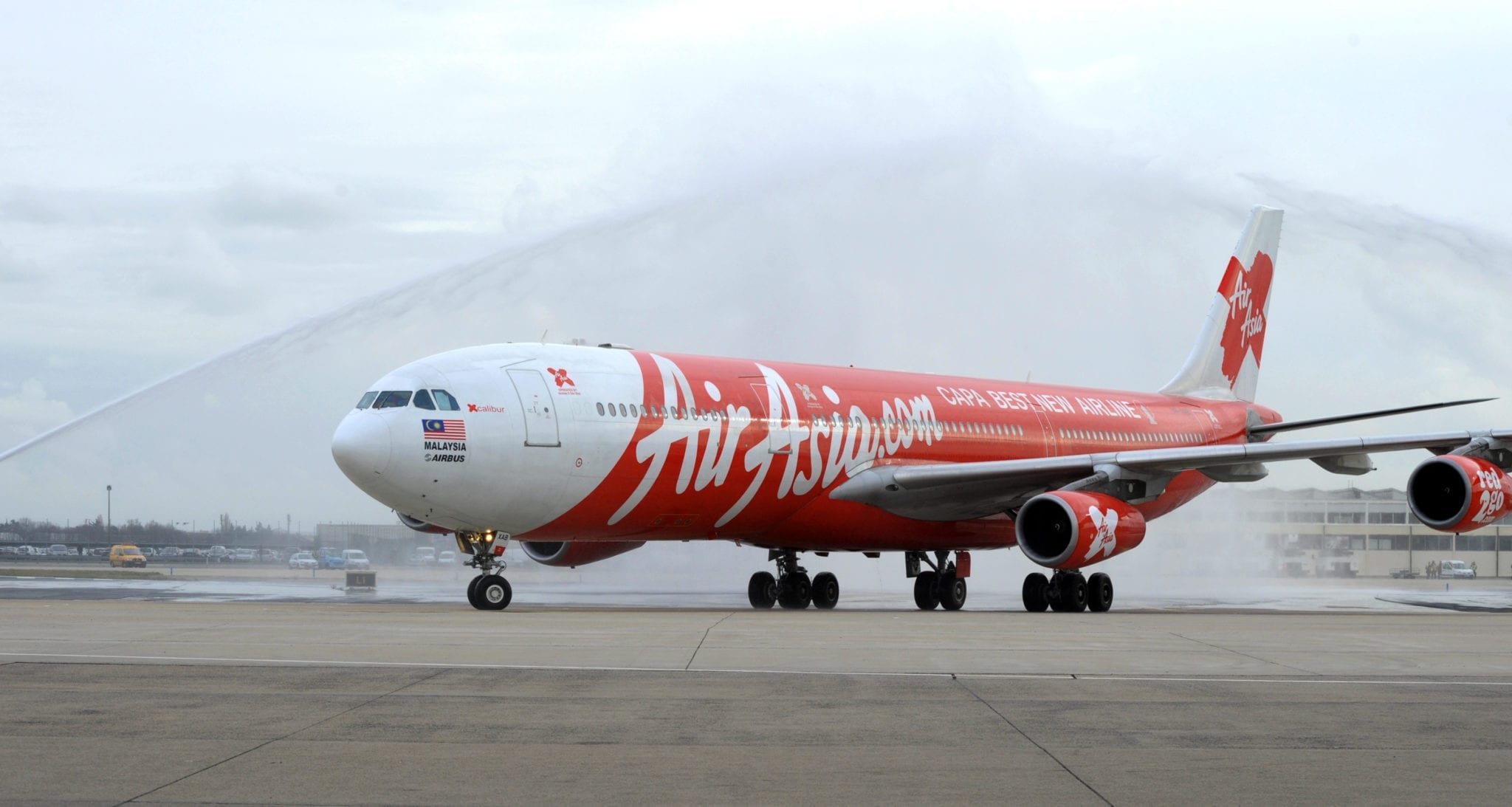
    AirAsia X—the long-haul affiliate of Malaysian tycoon Tony Fernandes’ AirAsia Group—reported its biggest-ever quarterly loss as travel restrictions aimed at curbing the further spread of Covid-19 grounded the budget carrier’s planes.

    The airline posted a net loss of 24.6 billion ringgit ($5.9 billion) in the three months ended June 30 following the suspension of flights since the height of the pandemic in April last year, the company said in a statement to Bursa Malaysia on Monday. That’s the ninth consecutive quarterly loss reported by the airline and compares with the 305 million ringgit net loss posted a year ago.

    The losses were exacerbated by an accounting provision of 23.8 billion ringgit to creditors, with the airline already in default. “The contractual liabilities for which the provision is made will be waived upon the successful completion of the proposed debt restructuring exercise,” AirAsia X said.

    AirAsia X has been negotiating with creditors to restructure its debts amid mounting losses brought on by the pandemic. It has also been discussing returning some of its aircraft to lessors as part of a fleet downsizing exercise aimed at focusing operations on mature routes and terminating flights to unprofitable destinations.

    Airlines and other travel-related industries are among the hardest hit by the pandemic as countries around the world closed their borders to contain the virus. AirAsia Group has been pivoting into digital businesses as Covid-19 travel restrictions drag passenger and cargo traffic lower.

  • Full flight load to Langkawi signals strong rebound for domestic air travel

    Full flight load to Langkawi signals strong rebound for domestic air travel

    AirAsia’s inaugural service from Kuala Lumpur to Langkawi on Thursday (Sept 16) morning under the travel bubble recorded a 100% flight load, the carrier says, signifying a strong rebound for domestic air travel.

    The low-cost carrier said the maiden flight, the first of nine scheduled daily flights from Kuala Lumpur, left KLIA2 at 9.50am utilising an Airbus A321neo.

    “Aside from Kuala Lumpur (63 flights weekly), AirAsia also has flights to Langkawi departing from Penang (14 times weekly), Johor Baru (seven times weekly), Ipoh (three times weekly) and Kota Baru (three times weekly), making a total of 90 weekly flights,” it said in a statement.

    AirAsia Malaysia chief executive officer Riad Asmat said over 200,000 seats to Langkawi were sold in less than a week.

    “To facilitate this movement, we have prepared extensively and implemented robust and comprehensive health and safety protocols to ensure all of our guests can travel safely, with our 100% vaccinated crew and frontliners.

    “After months of preparation, we are thrilled to get the country flying again and are ready to scale up our operations to meet overwhelming demand.

    “We hope more travel bubbles will be established across the country soon in line with the accelerated vaccination roll-out, and eventually across the region when it is safe to do so,” he added.

  • Government fund subscribes to Vietnam Airlines right issue

    Government fund subscribes to Vietnam Airlines right issue

    Vietnam’s sovereign fund has subscribed to Vietnam Airlines’s rights offering amid its accumulating losses due to Covid-19.

    The State Capital Investment Corporation (SCIC) paid VND6.89 trillion ($303.56 million) to acquire 689.5 million shares and kept its ownership rate in the state-owned carrier at 31.08 percent.

    The airline’s HVN ticker rose by the maximum allowed 7 percent Monday, its sixth consecutive day of gain.

    HVN’s issued VND8 trillion worth of stocks to existing shareholders to increase its capital.

    Japan’s ANA Holdings, the operator of All Nippon Airways which owns an 8.77 percent stake in Vietnam Airlines, sold its rights to buy 70 million shares to Vietnam Airlines employees since it is itself facing financial difficulties.

    The carrier estimates its losses for the first half of 2021 at around VND10.79 trillion.

  • AirAsia Group to bring back 4 aircraft by the end of 2021

    AirAsia Group to bring back 4 aircraft by the end of 2021

    AirAsia Group updated its 2021 fleet plans. The parent company of five airlines across Malaysia, Indonesia, Thailand, the Philippines, and India aims to end 2021 with 235 aircraft.

    AirAsia Group forecast that all its airline entities will see a gradual pick up in domestic in Q4 2021, led by the global increase in vaccination rates and relaxation of rules for air travel. The group has already noticed promising trends in its load factor, which reached 68% in Q2, 2021, compared to 59% in the same period of 2020.

    The company predicted that the “robust short-haul business model”, as well as lean operations coupled with “pent-up demand”, should ensure AirAsia Group a “quick recovery upon relaxation of travel restrictions,” the group stated in briefing slides.

    “We expect to see a strong resurgence in the visiting friends and relatives as well as the leisure and spontaneous travel markets first,” AirAsia Group said.

    To meet the forecast demand for air travel, the group decided to update its fleet plan. In May 2021, it estimated it would have 231 aircraft by December 2021, now the company‘s plans have changed. AirAsia Group now aims to bring back 4 aircraft, bringing the total number to 235 jets by the end of 2021.

    According to the company, “two third-party leases” of unspecified type aircraft will rejoin the group’s fleet in Q4 2021. Meanwhile, another two Airbus A320 jets, which were temporarily grounded amid pandemic, will return to active operations in Q1 2022.

    “Our network plans are continuously revised to reflect the latest recovery timeline following the ongoing pandemic impact,“ the group added.

    However, the company will still fly 10 jets fewer than in end-2020.