Retail News CRM

Tag: ford

  • Ford Invests $500 Million In Rivian, a Battery Supplier

    Ford Invests $500 Million In Rivian, a Battery Supplier

    Rivian announced an equity investment of $500 million from Ford Motor Company. In addition to the investment, the companies have agreed to work together to develop an all-new, next-generation battery electric vehicle for Ford’s growing EV portfolio using Rivian’s skateboard platform. Rivian already has developed two clean-sheet vehicles with adventurers at the core of every design and engineering decision. The company’s launch products – the five-passenger R1T pickup and seven-passenger R1S SUV – will deliver up to 644 kilometres of range and provide an unmatched combination of performance, off-road capability and utility, starting in late 2020.

    RJ Scaringe, Rivian founder and CEO said, “Ford has a long-standing commitment to sustainability, with Bill Ford being one of the industry’s earliest advocates, and we are excited to use our technology to get more electric vehicles on the road.”

    Ford intends to develop a new vehicle using Rivian’s flexible skateboard platform. This is in addition to Ford’s existing plans to develop a portfolio of battery electric vehicles. As part of its previously announced $11 billion EV investment, Ford already has confirmed two key fully electric vehicles: a Mustang-inspired crossover coming in 2020 and a zero-emissions version of the best-selling F-150 pickup.

    Rivian remains an independent company. The investment is subject to customary regulatory approval. Following Ford’s investment, Joe Hinrichs, Ford’s president of Automotive, will join Rivian’s seven-member board.

    Bill Ford, Ford’s executive chairman said, “We are excited to invest in and partner with Rivian. I have gotten to know and respect RJ, and we share a common goal to create a sustainable future for our industry through innovation.”

  • Ford Mustang Continues To Be World’s Best-Selling Sports Coupe

    Ford Mustang Continues To Be World’s Best-Selling Sports Coupe

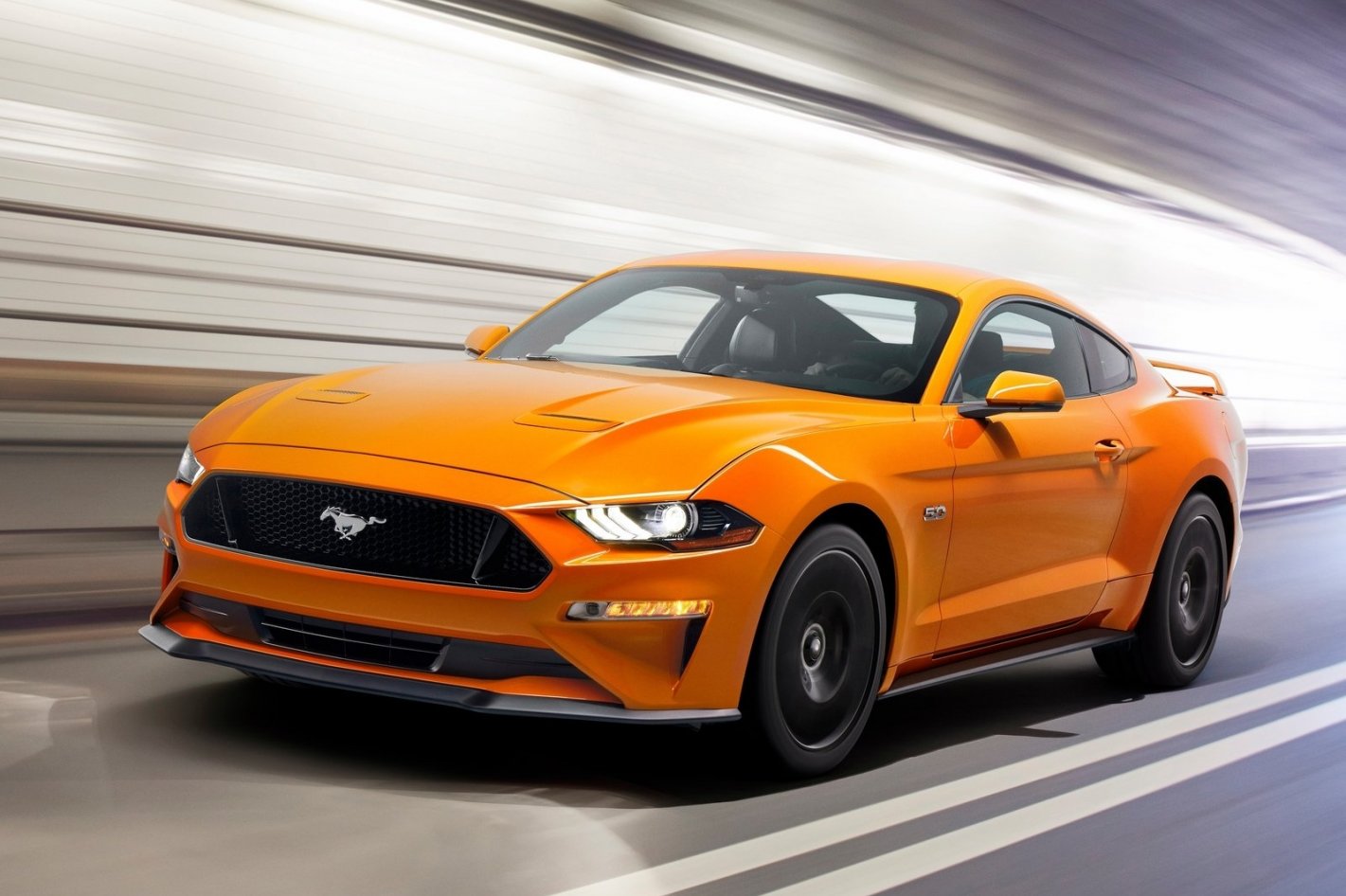
    The iconic Ford Mustang has gained the title of the best-selling Sports Coupe in the world for the fourth year in a row. Ford has sold 113,066 units of the Mustang in 2018 grabbing a market share of 15.4 per cent in the global sports car segment. Sales are partially attributed to the Bullitt limited edition which according to the folks at Ford, is one of the hot-selling models in the range. According to a report published by IHS Markit, the Mustang has also remained the best-seller in the Sports Coupe segment in the United States.

    Speaking about the success of the model, Jim Farley, President- Global Markets, Ford said, “We broke the mold when Ford launched the Mustang 55 years ago. Nothing says freedom, the wind in your hair and the joy of driving like Mustang; it’s an icon. The roar of its V8 on a spring day, there’s nothing better. No wonder it’s the most popular sports coupe in the world.”

    The Ford Mustang has been critically acclaimed as one of the best American muscle cars which also handle well. Ford sells the Mustang in 146 markets across the globe. Since 2015, Ford has sold more than 500,000 units of the sixth-generation Mustang. In the international markets, the Ford Mustang is sold with three engine options- a 2.3-litre Four-Cylinder Ecoboost engine, a 3.7-litre V6 motor and the range-topping 5.0-litre V8 engine. In India, only the top-spec Mustang is sold with the 5.0-litre V8 engine under its hood which develops 396 bhp at 6500 rpm and 515 Nm of peak torque at 4250 rpm.

  • Ford Mustang EcoBoost High Performance Package Unveiled

    Ford Mustang EcoBoost High Performance Package Unveiled

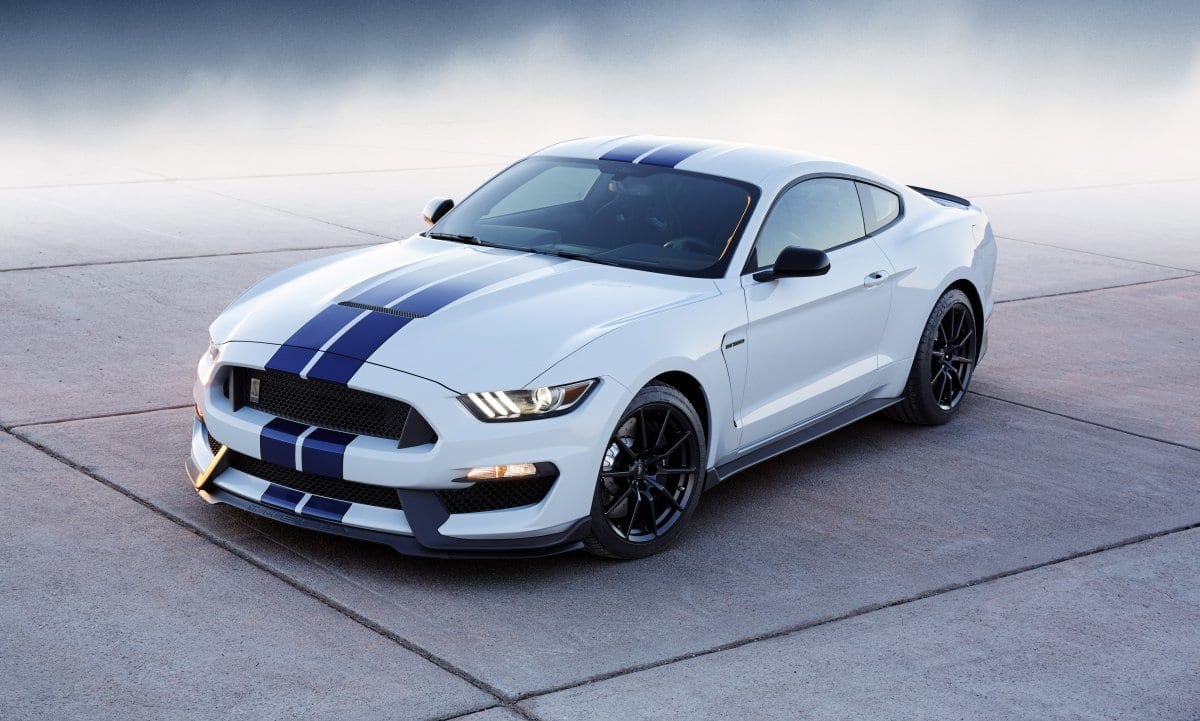
    Think Ford Mustang and the first thing that you associate the muscle car with is a massive 5.0-litre V8 motor. But even though Ford offers only the V8 in India, there exists a variant of the Mustang with four cylinders and this model is a slightly extreme version of the standard EcoBoost Mustang. Under the bonnet, the Mustang gets the same 2.3-litre turbocharged EcoBoost four-cylinder petrol engine as on the standard model but it now makes 330 bhp and 475 Nm, which is just 20 bhp more. There is a 6-speed manual or a 10-speed automatic transmission available as well. The 0-100 kmph sprint is done in less than 5 seconds and the car has a top speed of 250 kmph. The rear axle ratio is now shorter at 3:55, which is also one of the reasons for quicker acceleration.

    The Mustang 2.3-litre high performance package also gets a few more updates such as a variable sports exhaust system, limited slip rear differential, a bigger inter-cooler and updated steering and ABS. The other addition is the active exhaust with quad tips which offer a better aural experience than the regular model. Ford will also be offering an ‘EcoBoost Handling Package’ for the 2.3-Iitre EcoBoost Mustang which includes MagneRide adaptive suspension, semi-metallic brakes and wider 19-inch alloy wheels shod with 265 mm Pirelli P Zero Corza4 tyres and a 24 mm sway bar at the rear for better rigidity.

    As far as exterior design updates go the 2.3 EcoBoost Mustang gets a new front splitter, black grille, grey stripes on the bonnet, retro pony badges and a rear lip spoiler. The 2020 Ford Mustang 2.3-litre High Performance Package will make its debut at the New York Auto show.

  • Ford Unveils Their Puma Crossover

    Ford Unveils Their Puma Crossover

    Ford has revealed the first image of the Puma – an SUV-inspired compact crossover and the company says that it comes with hybrid technology. The Puma will go on sale in the global markets by the end of 2019 and will be manufactured at the company’s Craiova Assembly Plant, Romania, following nearly 1.5 billion Euros investment since 2008.

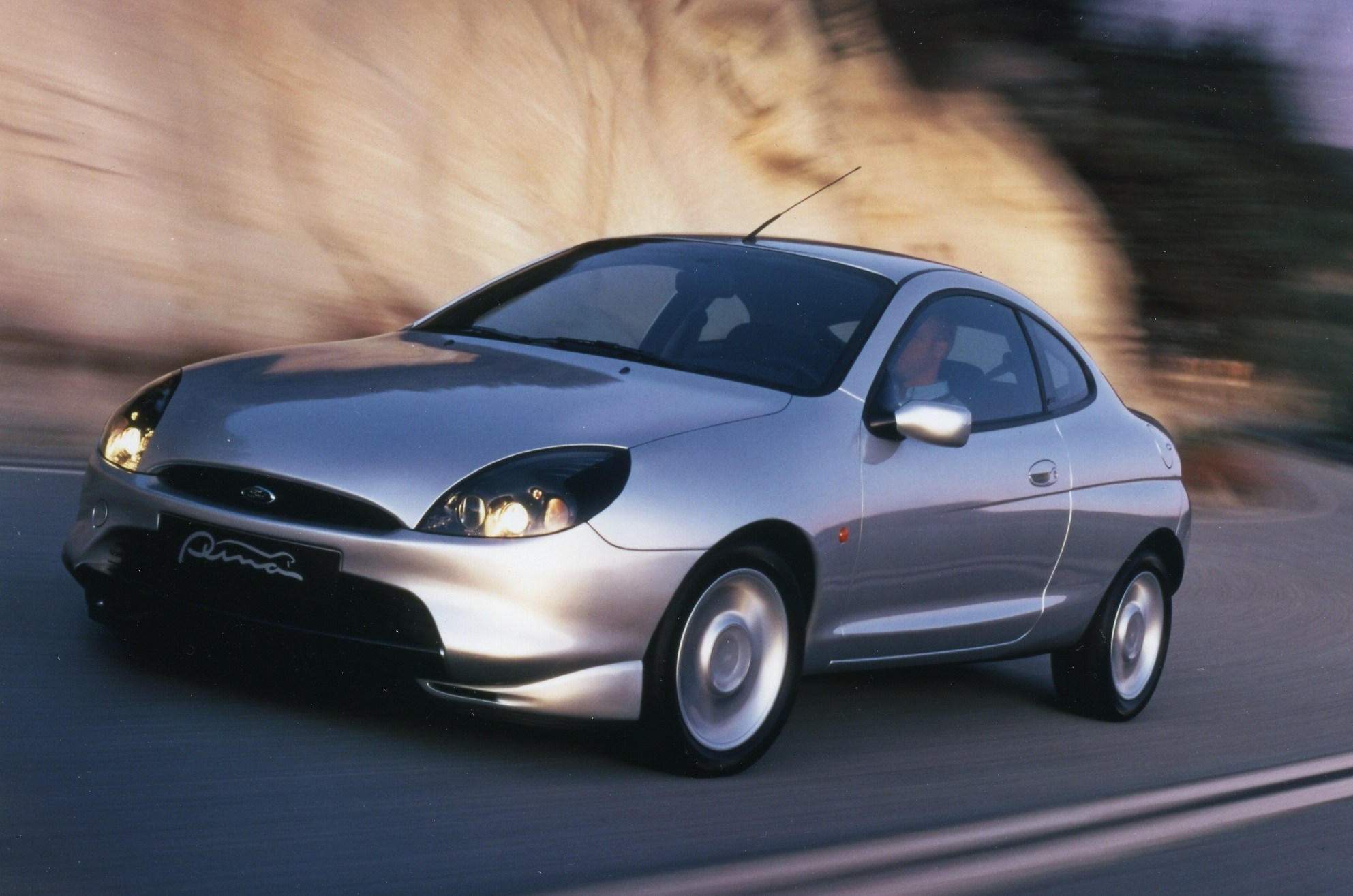
    The first image of the Ford Puma reveals its styling cues and we can see the distinctive wing-top mounted headlamps and the curves on the side of the car which brings out the athletic side of the car and also showcases the aerodynamic ability too. The company has not said much about the ride height but does mention that the luggage capacity is 456 litres.

    The company says that discussions with customers have led to it providing for flexible luggage space. The Puma’s innovative rear stowage can swallow small furniture and the company says that the versatile storage compartment is capable of comfortably accommodating two golf bags in an upright position.

    Under the hood is Ford’s 1-litre, 3 cylinder EcoBoost Hybrid technology which delivers 153 bhp and a belt-driven integrated starter/generator (BISG) enables recovery and storage of energy usually lost during braking and coasting to charge a 48 volt lithium-ion air-cooled battery pack.

    The BISG also integrates with the engine and uses the stored energy to provide torque substitution – which reduces the amount of work required from the petrol engine to maximise fuel savings, and torque supplementation – which increases the total torque available from the powertrain for optimised performance.

    The Puma joins Ford’s expanding line-up of SUV and SUV-inspired crossover models in Europe, including the Fiesta Active, Focus Active, EcoSport, Kuga, Edge, and the all-new Explorer Plug-In Hybrid among others. The SUVs now account for more than one in five Ford vehicles sold in Europe, and sales rose more than 19 per cent in 2018.

  • Ford confirms end of C-Max

    Ford confirms end of C-Max

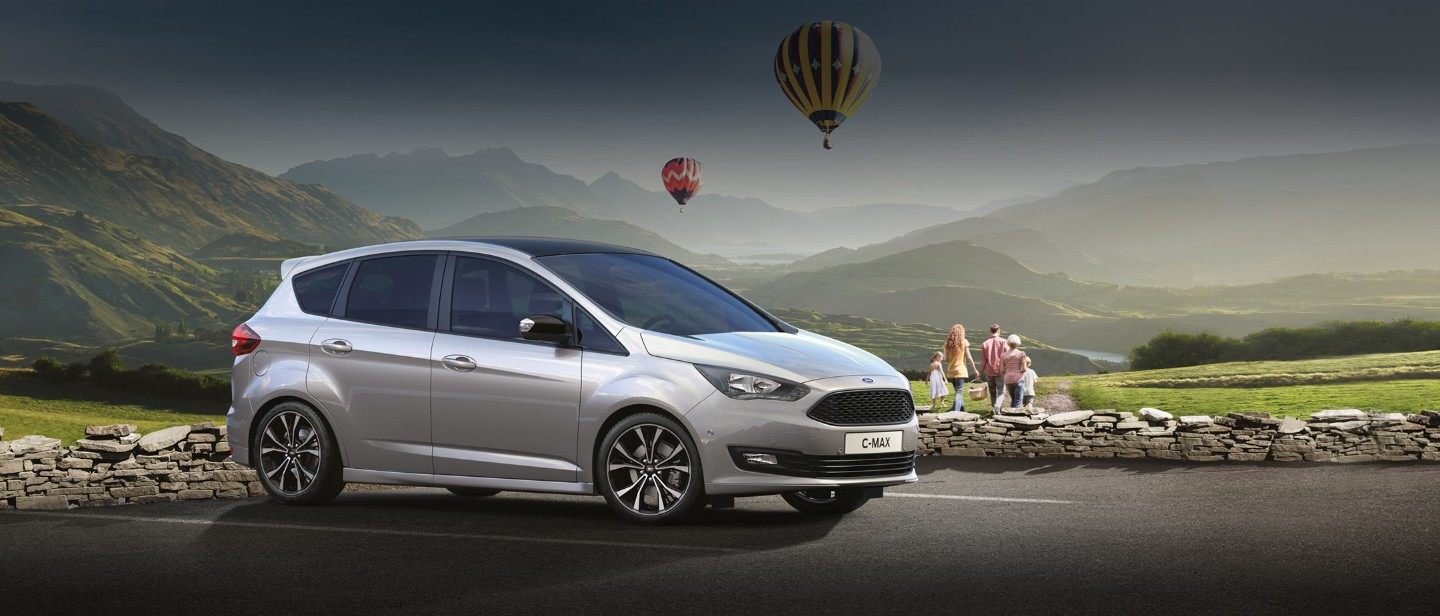
    Ford confirmed it will end production of its C-Max minivan at its factory in Saarlouis, Germany, but said the plant will stay open with further investment in the Focus car that is also built there. Production of the C-Max and Grand C-Max will stop by the end of June, the automaker said on Friday in a news release.

    Ford will also end night-shift production at the factory. The moves will reduce costs as Ford seeks to turn around its money-losing European operations.

    Ford said it will continue to invest in production of the Focus compact car in Saarlouis. There is strong demand for higher margin wagon, Active and ST variants of the Focus, the company said.

    Ford said on March 15 that it plans to cut more than 5,000 jobs in Germany to help return its operations in the region to profit in the near-term. The turnaround plan will involve job cuts, looking at plant closures and discontinuing money-losing vehicle lines, Ford has said.

    The automaker employs about 53,000 people in Europe, with more than 24,000 of them in Germany. It has 18,000 employees in Cologne, the location of its European headquarters and a factory that builds the Fiesta subcompact hatchback. Another 6,000 are employed in Saarlouis and a further 200 staff are based at an engineering center in Aachen.

    Ford is dropping the C-Max and Grand C-Max because of a sharp drop in demand as customers switch to SUVs and crossovers.

    Sales of the C-Max and Grand C-Max fell 21 percent to 53,080 in Europe last year, according to JATO Dynamics. Focus sales dropped 8 percent to 194,097.

  • Ford To Exit Russian Passenger Car Market

    Ford To Exit Russian Passenger Car Market

    Ford Motor Co’s Russian joint venture Ford Sollers will close two assembly plants and an engine factory in Russia, exiting the country’s passenger vehicle market. The move is part of a restructuring that will see Russia’s Sollers assume control of the venture, which is currently led by the U.S. automaker, the companies said in a statement on Wednesday. Industry sources told Reuters this month that Ford was considering closing Russian plants as it was reviewing operations in unprofitable regions.

    The U.S. carmaker said the closures would lead to “significant” job losses, without giving details. A restructured Ford Sollers will focus on commercial vehicles, while passenger vehicle production will cease by the end of June, the companies said.

    “The new Ford Sollers structure supports Ford’s global redesign strategy to expand our leadership in commercial vehicles and to grow the business in Europe in those market segments that offer better returns on invested capital,” Steven Armstrong, president, Ford of Europe, said in the statement.

    Ford was the first international carmaker to launch vehicle assembly in Russia, opening a plant in St Petersburg in 2002. In 2011, it set up a joint venture with Sollers in which Ford and Sollers each hold a 50 percent stake, but Ford has controlled the business since buying up preferred shares.

    Sales of new cars in Russia are expected to rise 3.6 percent this year, marking a slowdown from last year, according to an estimate from the Association of European Businesses lobby group.

    “The Russian passenger vehicle market has been under significant pressure in recent years, with recovery slower than expected and a shift to lower-priced passenger vehicle segments,” Ford said.

  • 2019 Ford Figo Facelift Launch Date Revealed

    2019 Ford Figo Facelift Launch Date Revealed

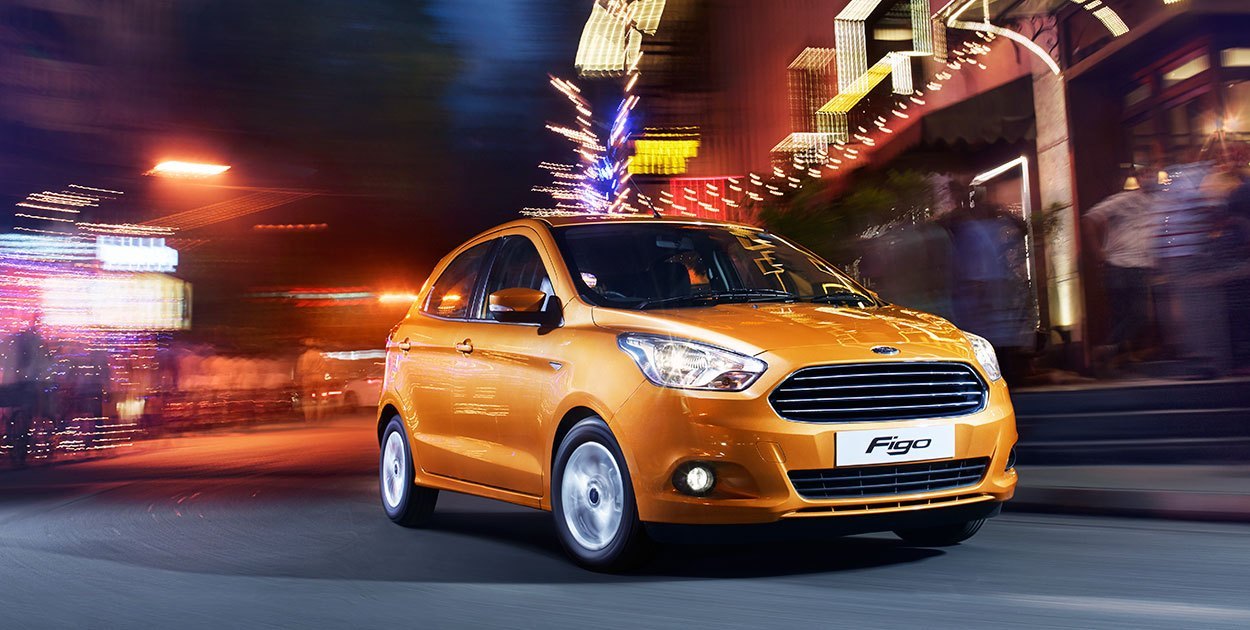
    The 2019 Ford Figo facelift is all set to go on sale in India on March 15, 2019. The car is set to receive an update over three years later and the facelifted Figo will come with a bunch of cosmetic changes, sharing most of its cues with the Aspire facelift, along with some new and updated features. In fact, a production-spec unit of the 2019 Ford Figo facelift has already been spotted testing in India. Furthermore, the updated Figo is also likely to come with powertrain options, which will also come from the updated Ford Aspire subcompact sedan.

    The revised engine options are likely to include the new 1.2-litre, three-cylinder petrol engine from the Dragon family that was first introduced with the Ford Freestyle. The motor is capable of producing 95 bhp and develops 120 Nm of peak torque while mated to a 5-speed manual gearbox. The 2019 Figo is also expected to get the bigger 1.5-litre three-cylinder unit that was introduced with the EcoSport facelift, which makes 123 bhp and 150 Nm of torque, with the new 6-speed torque converter.

    Of course, Ford will continue to offer the tried and tested 1.5-litre four-cylinder diesel engine, which continues to be the most popular choice among these models. The motor is tuned to churn out a maximum output of 99 bhp and 215 Nm of peak torque, and it comes paired with the same 5-speed manual gearbox as standard.

    Visually, the Figo facelift comes with a new honeycomb-pattern grille with chrome surrounds, the tweaked headlamps, with halogen units, and a new front bumper with the large end-to-end horns-like black element, with round foglamps and a wide airdam. The spy images also revealed that the car will come with new, sporty black alloy wheels, revised taillamps and similar black element as on the tailgate.

    The cabin design, on the other hand, is also likely to be identical to the new Aspire, but we do expect to see an all-black theme instead of the beige interior on the latter. Also, the car is likely to feature a new infotainment system, a floating unit that will support Ford’s in-car connectivity system SYNC3 in addition to Apple CarPlay and Android Auto. The car also comes with new air con vents along with illuminated USB sockets, auto climate control and a start-stop button.

  • Alibaba Announces Smart Mobility Initiatives with Partners

    Alibaba Announces Smart Mobility Initiatives with Partners

    Alibaba Group Holding Limited announced a series of smart mobility initiatives in partnership with auto brands and technology service providers. The announcement was made during The Computing Conference, the company’s largest technology showcase, held over four days in Hangzhou, Alibaba’s home base.

    Partnering with Bosch on Automated Valet Parking

    Alibaba Cloud, the cloud-computing arm of Alibaba Group, and Bosch, a leading global supplier of technology services, announced plans to introduce Automated Valet Parking (AVP) solutions in China. Both parties will work together to enable the infrastructure-based, driverless parking solution. The technology is powered by software in a cloud and it will offer a fully automated valet parking service in the near future.

    As part of the cooperation, Bosch will provide its AVP technology, its experience in systems engineering and its IoT competencies. Alibaba Cloud, meanwhile, will share its technologies and its experience in cloud computing, data analysis and smart mobility. Both parties intend to explore building showcase sites to demonstrate next-generation AVP technology throughout China.The two companies are also committed to exploring future opportunities in connected mobility in China and abroad.

    AVP is an ideal accompaniment to smart cities, an area in which both Bosch and Alibaba aim to become significant players. AVP is also an important milestone on the road to autonomous driving.

    Partnering with Volvo Cars for Car-to-Home AI services

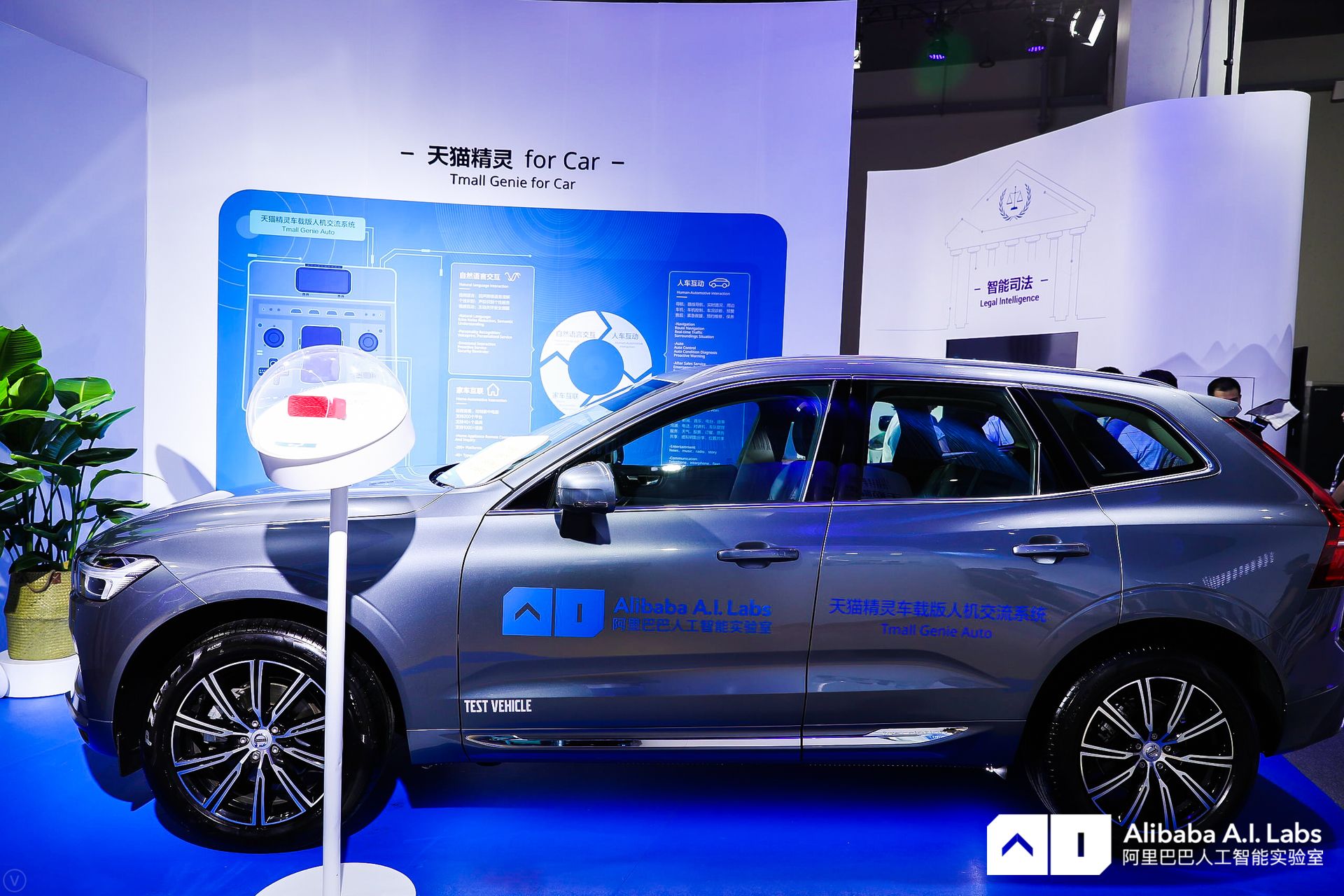
    Alibaba A.I. Labs, the department leading consumer AI product development at Alibaba, announced it is upgrading its auto Artificial Intelligence solution, Tmall Genie Auto, by partnering with Volvo Cars and adding car-to-home AI services. Tmall Genie is an AI-powered smart assistant developed by the Labs. Through the upgraded solution, Volvo Cars drivers with a Tmall Genie-compatible device will be able to monitor and control their smart-home devices from their cars, starting next year. Some of the newly added services include:

    · Running a status check on humidity, temperature, light and air conditioning at home, as well as the on and off status of smart home appliances;

    · Controlling appliance functions, including turning on the heater, air conditioning, door lock and air purifier;

    · Turning on the “home model” when drivers are 10 minutes away from home, which readies smart appliances for your arrival while you’re still in the car.

    Over 90 appliance brands are already in the Tmall Genie ecosystem, enabling over 600 smart home appliances to be easily connected for car-to-home AI services.

    Last June, Alibaba A.I. Labs partnered with Daimler, Audi and Volvo Cars to offer home-tocar AI services through Tmall Genie Auto. The Labs also rolled out in-car AI services by integrating the speech-interaction and Natural Language Processing features of AliGenie, the AI platform behind Tmall Genie. This technology supports voice commands for different tasks, such as identifying nearby attractions and restaurants, booking hotels and movie tickets and ordering to-go boxes by activating the cars’ navigation and infotainment systems.

    Partnering with Ford for New Internet Car

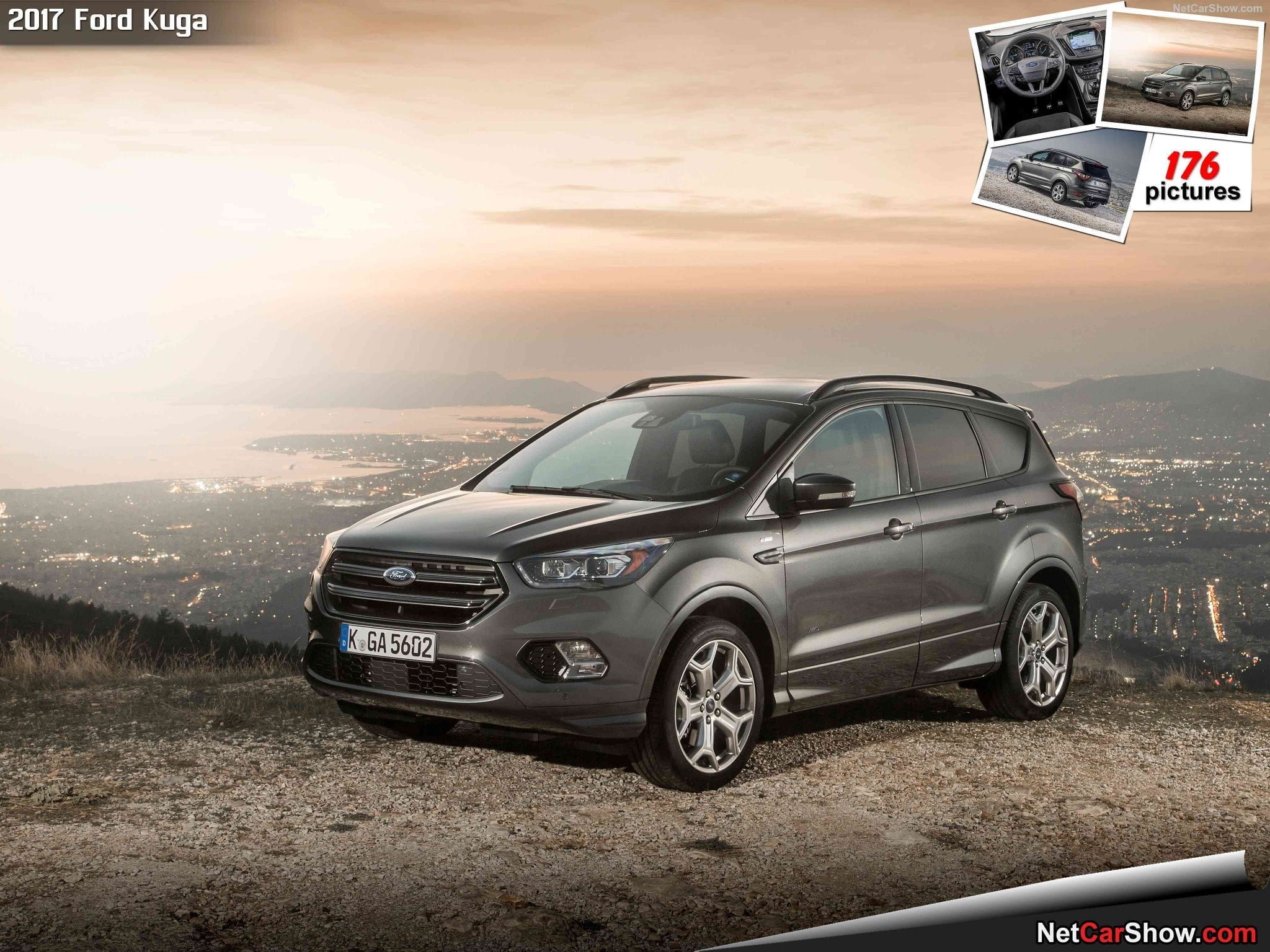
    As part of the strategic cooperation inked last December between Alibaba Group and Ford, the auto brand today confirmed that Ford Kuga SUV customers will be able to order the car which has a 10.4-inch center screen and software powered by AliOS later this year. The debut of this technology in the Kuga marks another milestone in strengthening ties between the two leaders in their respective fields, and highlights the rapid growth of internetconnected cars in China. As of today, there are over 500,000 AliOS – equipped Internet vehicles on the road in China.

  • High-powered Mustang marks a Thai first for Ford

    High-powered Mustang marks a Thai first for Ford

    Ford has officially launched the Mustang sports car in Thailand with prices ranging from Bt3.599 million for the 2.3-litre EcoBoost Coupe to Bt4.799 million for the 5.0-litre V8 GT.

    The iconic Mustang, imported from the US, is the first high-powered model offered by the American automaker in Thailand. Other models offered in the Thai market include the Fiesta, Focus, Ecosport, Ranger pickup and Everest PPV (Pickup Passenger Vehicle).

    The Mustang takes on the form of a fastback and is available in four exterior colour choices along with different wheel options. For the 2018 model, the 5.0-litre V8 engine with Ford’s new dual-fuel, high-pressure direct injection and low-pressure port fuel injection for better low-end torque, has been beefed up to 460hp and 556Nm. Acceleration from 0-100km/h is claimed at 4.3 seconds.

    The turbocharged 2.3-litre motor develops 300hp and 440Nm and features overboost function. Both are equipped with a newly developed 10-speed automatic that Ford claims has been tested over a distance of more than 10 million kilometres. Last month the American automaker was ordered by a Thai court to pay compensation worth Bt23 million to 296 customers of the Ford Fiesta, Focus and Ecosport for its defective Powershift dual-clutch transmission.

    As for the Mustang, Ford engineers highlighted the various settings available for each drive mode, saying that the new gearbox allows the engine to maintain peak power and torque while upshifting, resulting in faster acceleration and seamless shifts. Both models also get the electronic line lock system that brakes the front wheels so drivers can burn the rear tires in order to achieve optimal temperature for quick standing starts.

    The drag strip mode also optimises all systems for each of the many driving modes, while the exhaust volume can also be adjusted (to keep the neighbours happy).

    The 2018 model gets suspension improvements for better grip and handling, including thicker anti-roll bars. Inside there’s a 12-inch digital instrument cluster and a pulsating red engine start button, gearshift paddles behind the multi-function steering wheel, along with aluminium finish and soft touch materials on the door panel. There’s also a full driver assistance package and infotainment system compatible to both Android and iOS.

    The Mustang is available at only 19 selected Ford dealerships in the country. The cars come with Ford Premium Care package that includes five-year/100,000km warranty, five complimentary service checks in 60 months/75,000km, and 24-hour roadside assistance for five years.

  • Ford Vietnam recalls over 2,500 Thai-made vehicles for gearshift problem

    Ford Vietnam recalls over 2,500 Thai-made vehicles for gearshift problem

    Ford has recalled all 2015 Thai-made Ranger pick-up trucks sold in Vietnam because of a gearshift problem.

    The US company, which has sold more than 2,500 of these vehicles, said faulty gearshift cables could make the gear shift hard, leading to the driver losing control.

    It has advised customers to take their vehicles to the nearest dealership to fix the problem for free, saying it would only take about two hours.

    It is reported that Ford will introduce the Ranger 2.0 by the end of this year, but in limited numbers.

    Ford is one of many car brands that have suffered a drop in sales after a new government decree this year set tough conditions for imports.

    However, June auto imports saw a 45.6 percent surge, dominated by Thailand, after Vietnam’s quality control regulations were met.

    Ford, which also assembles vehicles in this country, had a 6 percent share of the market as of June 2018.

  • Ford says no plans to hike China prices despite new tariffs

    Ford says no plans to hike China prices despite new tariffs

    Ford Motor Co said on Thursday that for now, it will not hike prices of imported Ford and higher-margin luxury Lincoln models in China, thus absorbing the additional cost of tariffs on U.S.-made vehicles due to be applied starting on Friday.

    The U.S. carmaker, which has faced sluggish sales in the world’s largest auto market, said in a statement that “it has no current plans to increase the manufacturer’s suggested retail price (MSRP) on its import line-up in China.”

    Ford’s move, which would reduce the profit margins on its cars imported to China, makes it the first foreign automaker to address pricing issues ahead of the new tariffs that will affect around $34 billion of U.S. imports, from soybeans and cars to lobsters.

    German automaker Daimler AG said last month that its 2018 pre-tax profits would fall versus last year because new import tariffs on cars exported from the United States to China would hurt sales of high-margin Mercedes-Benz sports utility vehicles.

    Ford has much to lose if rising trade tensions between China and Republican U.S. President Donald Trump escalate into a full-blown tariff war. Last year, it shipped about 80,000 vehicles to China from North America, more than half of them its upper-end Lincolns – including the Lincoln Continental sedan and the Lincoln MKX crossover SUV.

    China, which just days ago cut tariffs on all imported automobiles, plans to slap an additional 25 percent levy on 545 American products, including U.S.-made cars, should Trump’s administration proceed with plans to implement tariffs on $34 billion of Chinese imports beginning on Friday.

    Ford encouraged the United States and China to resolve their dispute, and said it would “monitor the situation as it evolves.”

    Most of the vehicles Ford sells in China are made locally with its joint venture partners.

    All Lincoln vehicles that Ford sells in China are imported from North America. The brand last year sold 54,124 vehicles in China, up 66 percent from 2016. It is unclear how long it will take for any impact on profit margins at Ford, as the automaker will likely have a couple of months’ supply of imported vehicles already on the ground in China.

    Ford and Lincoln both cut prices on imported models in May after China announced steep tariff cuts for automobiles and car parts that took effect on July 1.

    Trade-related issues are cropping up for Ford at a time when it is suffering from a big sales slump in China caused by a lack of new models in its line-up. Last year, its sales fell 6 percent even as overall vehicle sales in China rose 3 percent.

    Other firms that export U.S.-made cars to China include BMW, Daimler’s Mercedes and Tesla. Those automakers did not immediately respond to requests for comment.

    China is General Motors’s largest market. A GM spokesman said that aside from a very small number of Chevrolet Camaro cars, virtually all of its vehicles and parts sold in China are made there. The automaker is still assessing what to do about that small number of imported vehicles, the spokesman said.

    Fiat Chrysler Automobiles NV (FCA) produces the bulk of the vehicles it sells in China locally, but exports the Jeep Wrangler, Jeep Grand Cherokee and Chrysler Pacifica minivan to China.


  • Ex-Ford exec Nair named president of Canadian racing firm

    Ex-Ford exec Nair named president of Canadian racing firm

    Raj Nair, the Ford Motor Co. executive ousted earlier this year over unspecified “inappropriate behavior,” has been named president and COO of Multimatic Inc., the Canadian supplier, on Friday. The appointment was effective May 7.

    Multimatic works extensively with Ford, building the GT supercar — which was created while Nair was Ford’s head of product development — near Toronto.

    “Raj brings an extensive amount of experience in the auto industry both in product development and manufacturing,” Michael Guttilla, the company’s head of sales and marketing, said in an interview. “He is a real good fit for extending what Multimatic’s purpose is.”

    Nair will split time between Canada and the company’s offices in Southfield, Mich., among its other global locations, Guttilla said. He’ll be responsible for each of the company’s business units, including manufacturing and engineering.

    Nair, 53, abruptly left Ford in February after an internal investigation found that “certain behavior by Nair was inconsistent with the company’s code of conduct,” the automaker said.

    Ford has not divulged the nature of the complaint, which a spokesman said was submitted anonymously through a 24-hour company hotline. Ford said it had not previously received any such allegations against Nair.

    “The situation was thoroughly vetted,” Guttilla said. “Multimatic has the highest standards for all of our employees. We expect everybody to live up to and honor those high ethical standards. We have no concern that it will be an issue.”

    Before being named head of North America in May 2017, Nair was Ford’s head of product development and chief technical officer. In addition to the GT in 2016, he oversaw the launch of the the aluminum-bodied F-150, the 50th-anniversary Mustang and a plethora of other prominent vehicles. Nair took delivery of his own GT less than two weeks before leaving Ford.

    Nair started at Ford in 1987 as a body and assembly operations launch engineer and held various positions on more than 11 vehicle programs in 13 assembly plants, according to Ford’s media website. He also worked on assignments in Europe, South America and Asia Pacific.

  • GM sees flat 2018 earnings, with pickups picking up in 2019

    GM sees flat 2018 earnings, with pickups picking up in 2019

    General Motors Co shares rose on Tuesday after the company said 2018 earnings will be largely flat compared with 2017 and forecast higher profits in 2019 when its revamped line of high-margin pickup trucks hits the U.S. market.

    The 2018 earnings outlook was above market expectations, sending GM shares up about 2 percent in midday trading.

    GM forecast 2017 earnings per share at the high end of its previously forecast range of $6 to $6.50. The company expects earnings for 2018 to be roughly the same as in 2017. Analysts have predicted full-year 2017 earnings per share of $6.30, and $5.98 a share in 2018.

    “If the guidance is as positive as we interpret it, this could be the positive catalyst that we expected, and sets up a solid ’18,” Barclays analyst Brian Johnson wrote in a client note.

    The company and its Detroit rivals, Ford Motor Co and Fiat Chrysler Automobiles NV, are bringing on new trucks at a time when overall U.S. new vehicle sales have been falling, but truck sales continue to grow as consumers abandon passenger cars in favor of pickups, SUVs and crossovers.

    President Dan Ammann said GM’s new line of pickups should generate improved profit from increased production of higher-priced, four-door crew cab trucks, and expanded sales of luxury truck models.

    GM said in a presentation on Tuesday its Denali line of luxury pickups has average transaction prices of about $55,600, higher than the average for Daimler AG’s (DAIGn.DE) Mercedes-Benz brand, or GM’s own Cadillac luxury brand.

    Chief Executive Mary Barra said during a meeting with reporters the automaker will boost investment in electric vehicles, but declined to say by how much. Rival automakers have used the Detroit auto show to tout multi-billion dollar investments in electrification.

    GM said it expects capital expenditure in 2018 of around $8.5 billion, about $1 billion of which will go toward self-driving car technology. In future years, Chief Financial Officer Chuck Stevens said total capital spending should decrease.

    Last week, the company said it was seeking U.S. government approval for a fully autonomous car – one without a steering wheel, brake pedal or accelerator pedal – to join GM’s first commercial ride-sharing fleet in 2019.

    Barra also said GM will not follow other companies that have given employees special bonuses tied to tax cuts by the administration of U.S. President Donald Trump, which slashed the top U.S. corporate tax rate.

    Instead, Barra said if GM has higher profits because of lower U.S. taxes, GM employees, including union-represented U.S. factory workers, should see larger bonuses or profit-sharing checks based on existing pay formulas.

    In a client note, Buckingham Research Group analyst Joseph Amaturo wrote that GM’s 2018 earnings outlook includes a “lower statutory corporate tax rate, so on an apples-to-apples basis, this appears to be an effective EPS guide down.”

    “We believe the stock will fade after investors understand that the implied EPS guide is for a year-on-year decline, as we and consensus are forecasting,” Amaturo wrote.

    GM faces challenges in 2018 from the costs of launching the new large pickup trucks, rising interest rates in the United States and a likely decline in overall U.S. vehicle sales, Stevens said.

    However, Stevens said wage growth could offset the impact of higher interest rates for consumers buying vehicles.

    Barra, Ammann and Stevens declined to say when investments in self-driving vehicle services and electrification will return profits. They pointed to the potential for new trucks and SUVs, a new, low-cost car for international markets, and the Cadillac luxury brand, to improve future earnings.

    Cadillac profits should double from current levels by 2021, GM said, riding growing sales in China and new products planned for the United States to replace a current crop of slow-selling sedans. Stevens did not disclose current profit figures for Cadillac.

    GM said on Tuesday that while it retools a factory in Ft. Wayne, Indiana, to make the new pickup trucks, it will shift some production to an Oshawa, Ontario, plant in order to build up to 60,000 vehicles and avoid missing sales.

    The No. 1 U.S. automaker said it will record a $7 billion non-cash charge for its fourth-quarter 2017 earnings related to deferred tax assets that will lose their value because of the lower U.S. corporate tax rate.

    GM shares rose 2.2 percent to $45.04 in noon trading.reu
  • Ford India sales up 27% in December 2017

    Ford India sales up 27% in December 2017

    Ford India’s combined domestic wholesales and exports in December recorded 29,795 vehicles, compared to 23,470 vehicles in the same month last year, registering a growth of 27%.

    The company sold 5,087 vehicles in domestic wholesales, compared to 5,566 vehicles the corresponding month last year. Exports in December stood at 24,708 vehicles, against 17,904 vehicles a year ago.

    Ending the year with sustained growth, the combined domestic wholesales and exports in CY 2017 stood at 262,784 vehicles, compared to 238,098 units in CY 2016 – recording its highest production and wholesale volume ever.

    “The year 2017 saw the Indian automotive industry overcome challenges precipitated by the implementation of GST, increased inflation, after-effects of demonetization, rising crude prices and volatile regulatory environment to register growth,” said Anurag Mehrotra, president & managing director, Ford India.

    “At Ford, we remain committed to India as one of our most important markets, and are focused on the strategic pillars like strong brand, right products, competitive cost and effective scale, to build a profitable business.”

    Ford’s efforts on delivering differentiated customer experience and surprisingly affordable service cost continue to win customers. The introduction of several industry-first service initiatives such as service price promise and parts price promise are enabling Ford customers to know the exact costs of routine repairs, parts, and maintenance, even before they walk into a dealership.

    With two of its world-class plants, Ford continues to deliver on the Make in India promise with the commencement of KA+ exports to mature markets like Europe and New Ford EcoSport to North America.

  • Ford Partners With Alibaba to sell Cars In China

    Ford Partners With Alibaba to sell Cars In China

    Online retail giant Alibaba has signed a deal to sell Ford’s electric vehicles in China using gigantic vending machines. Shoppers scan the vehicle they’re interested in  purchasing, using Alibaba’s Taobao app. They then pick a color and other customized options. Next, they snap a selfie that is used to match them with their order. The system then arranges for a test drive of the car, using facial recognition as a way to unlock access to the vending machine.

    The multi-floor vending machine rotates the cars in stock until the one the customer selected is found.  Alibaba customers pay a deposit and are given three days to test the vehicle to determine whether they want to purchase it. Once they decide, they can use the smartphone app to pay for the car or to return it and arrange another test drive.

    Customers are limited to five test periods every two months. They also must qualify as Alibaba Super Members, and have reached a certain level on the company’s credit scoring service.

    Alibaba plans to open two facilities in January 2018 in Shanghai and Nanjing, followed by dozens more across China next year if the concept proves a success.