Retail News CRM

Tag: Indonesia

  • Indonesia to promote diving tourism to Japan tourists

    Indonesia to promote diving tourism to Japan tourists

    Indonesia will promote its world-class diving sites to Japanese tourists during a tourism promotion event entitled “Diving Sales Mission”, to be held in Japan on October 8 and 9, 2015.

    The promotion is to be held following a successful similar event, carried out in Beijing on Sept. 9, I Gde Pitana, the deputy for international marketing development of the tourism ministry, said here on Saturday.

    The government anticipates that revenues from diving tourism could be increased four times from the current amount, according to Pitana.

    The promotion event is part of the tourism ministrys tourism marketing strategies, which include branding, advertising and selling (BAS), that was launched by Tourism Minister Arief Yahya.

    “The sale event is an effort of the tourism ministry to attract 529 thousand Japanese tourists,” he noted.

    In line with presidential regulation No. 69 Year 2015, the Indonesian government now offers visa free entry to Japanese citizens visiting Indonesia.

    “The tourism ministry has set a target of attracting some 10 million foreign tourists in 2015,” he remarked.

    Indonesia has a large potential for diving tourism, with excellent diving spots spreading from Weh Island in the countrys western most province of Aceh to Raja Ampat isles located in the countrys eastern most province of West Papua.

    Between these two tourist destinations, there are other exotic diving sites located in Banda Island (Maluku), Bunaken (North Sulawesi), Wakatobi (Southeast Sulawesi), Lembeh Strait, Alor Isle, TogeBetwan, Gili Air, Komodo Island (East Nusa Tenggara), and Cendrawasih Bay.

    Among the worlds best diving spots to be found in Indonesia are those in Raja Ampat, Komodo Isle, Derawan, Togean, Wakatobi, Gilir Air and Bunaken.

    Deputy Assistant for Asia and the Pacific Market Development of the tourism ministry Vinsensius Jemadu said some 35 percent of the total earnings from the tourism industry comes from maritime tourism.

    Further, an estimated 35 percent of Japanese tourists visiting Indonesia were engaged in maritime-related activities, such as diving.

    At least seven representatives selling tourism packages will join the Diving Sale Mission to Japan.

    According to a Japanese travel agent, Travelco, Bali is one of the top ten tourism destinations for Japanese tourists.

    Indonesia is in the fifth most popular destination for the Japanese, after Seoul (South Korea), Guam, Taipei (Taiwan), and Honolulu (Hawaii).

  • Dairy Farm closes more Indonesia stores

    Dairy Farm closes more Indonesia stores

    Dairy Farm International says it has now closed 74 stores in Indonesia – and more will follow before the year ends.

    Dairy Farm is the majority owner of the PT Hero retail network which includes supermarkets, Guardian pharmacies and Starmart convenience stores, which at the beginning of this year numbered 715.

    In July the company said it had shuttered 39 of its 75 stores bearing the Starmart brand. Last week it issued new figures showing 74 stores have now closed, including 22 Guardian pharmacies.

    “We are closing stores every year and every semester. We believe that we need that to change our portfolio,” said finance director, Xafier Thiry, adding that while more would close in the latter part of this year, the pace of the cull would slow.

    Dairy Farm’s network has been hit hard by the Indonesian government’s ban on convenience stores selling alcohol which took effect in April. A general economic slowdown has not helped sales of other goods. In July Dairy Farm said it was reviewing the future of the Starmart business.

    The other stores closed so far this year were 10 Ekspres and Hero stores and three Ekstra stores.

  • Vromtu Offers Jakarta-Bandung Shuttle Bus Information Service for Windows Phone Users

    Vromtu Offers Jakarta-Bandung Shuttle Bus Information Service for Windows Phone Users

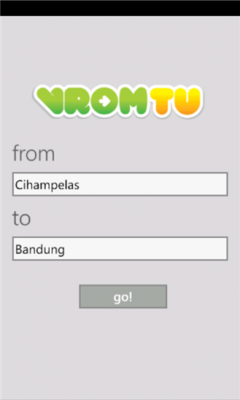
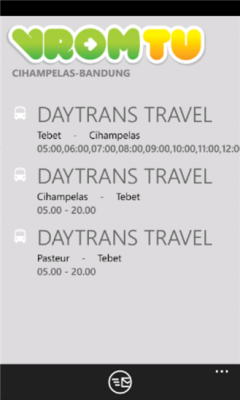
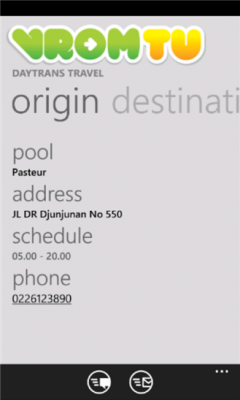
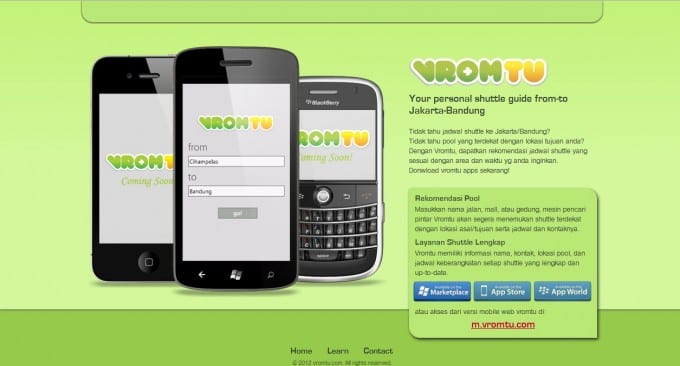
    Unlike most app developers these days, who prioritize building apps on iOS or Android, Vromtu chose to build its app on Windows Phone (WP). The app offers information on shuttle bus services in Jakarta and Bandung, including routes, departure schedules, contact numbers, and addresses, and was officially launched on Saturday.

    Vromtu is a simple service. You just need to type in the departure and arrival points, and then the app will search online and give you a list of available routes and shuttle buses. At the moment, Vromtu has data from nine shuttle bus companies which collectively account for more than a hundred bus pools.

    Aloysius Adrian, the founder of Vromtu, believes that the Windows Phone platform is on the rise both globally and locally with the arrival of the revamped WP8 and the upcoming 7.8 update. The startup’s team members are all WP users, and that’s a big part of why they built their app first for WP rather than the more mainstream platforms. The team hopes to launch an iOS version this year, while Blackberry users might need to wait a bit longer for Vromtu.

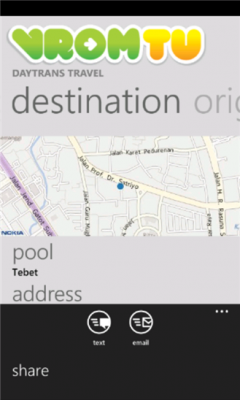
    Aloysius said that they will be focusing on fine-tuning search results and developing better shuttle directories in the near future. They are all still open to feedback. My suggestion would be to make the app available offline in its first big update, as mobile coverage can be patchy. Also, I was a bit confused as to why there are features for texting and emailing within the app when the shuttle bus companies receive orders only via telephone. Aloysius told me that the feature is built to help users share their transportation details with their friends, and not to book shuttle buses.

    Windows Phone users can download the app here, or you can use Vromtu through its mobile site m.vromtu.com.

  • Indonesia 3rd World Coffee Producer, Under Brazil

    Indonesia 3rd World Coffee Producer, Under Brazil

    Indonesia is still below Brazil and Vietnam in coffee crop productivity with 741 kg of beans per hectare per year for robusta and 808 kg for arabica.

    “The level of productivity of Indonesian coffee farmers still less than Brazil, which reached around 2,000 kg per hectare per year and Vietnam with 1,500 kg per hectare per year,” said Industry Minister Saleh Husin in Jakarta on Thursday, October 1.

    The minister promised to cooperate with relevant associations in order to increase productivity up to two-fold, or at least equal to the productivity of Vietnam.

    This effort will be taken by providing training and guidance on how to plant and coffee to get higher yield with the best quality.

    Indonesia produce coffee beans 685 thousand tons in 2014, or 8.9 percent of world coffee production with a composition of 76.7 percent and 23.3 percent Robusta and Arabica coffee respectively.

    Indonesia has various kinds of specialty coffee known around the world, such as Gayo, Mandailings, Lampung, Java, Kintamani, Toraja, Bajawa, Wamena and civet coffee.

    The export value of processed coffee products in 2014 reached 332.24 million US dollars, up 9.9 percent from 2013. Exports dominated by instant coffee, extracts, essences and concentrates of coffee generally sold in the Philippines, Malaysia, Thailand, Singapore, China and the United Arab Emirates.

  • Indonesia AirAsia Will be No More

    Indonesia AirAsia Will be No More

    Indonesia AirAsia airline will end its operation in Indonesia as it will be merged with Indonesia AirAsia X. Suprasetyo, director general for air transportation at the Transportation Ministry, said this merger is to improve Indonesia AirAsia’s financial condition.

    According to Suprasetyo, the merger is to save Indonesia AirAsia from having its operating license revoked because by merging with AirAsia X, Indonesia AirAsia’s equity will not be negative. “Indonesia AirAsia X’s equity is not negative because it hasn’t been audited and its operation is still less than a year,” he said on Wednesday.

    Therefore, said Suprasetyo, after the merger, there will be no more Indonesia AirAsia. All AirAsia’s operations in Indonesia are under Indonesia AirAsia X that serves medium and long-distance flights. For that, Indonesia AirAsia X will submit new business plans and process route permits again so that they can use Indonesia AirAsia’s routes. “Indonesia AirAsia is no more,” he said.

    Indonesia AirAsia is one of 13 airlines that have negative equities, based on the Transportation Ministry’s inspection in July 2015. The ministry threatened to revoke their operating licenses if their equities were not positive until September 30.

    Indonesia AirAisa president director Sunu Widiyatmoko gave no answer when asked for confirmation, while PT Indonesia AirAsia X chief executive officer Dendy Kurniawan did not comment much and chose to wait for an official announcement from the ministry.

  • Finance plan for Indonesia 7-Eleven

    Finance plan for Indonesia 7-Eleven

    Modern Internasional, the master franchisee for Indonesia 7-Eleven, has partnered with Credit Saison of Japan to create a fund to help finance new franchisees.

    The two companies have created a joint venture called PT Saison Modern Finance (SMF) in Indonesia. MI will take a 30 per cent stake in the business, which will have a paid-up share capital of Rp100 billion.

    The JV will support the expansion of Indonesia 7-Eleven franchise business. In the initial phase of the business, it will provide finance leases at an attractive cost for equipment installed at 7-Eleven stores, particularly for the new sub-franchisees to be secured in the future.

    “MI believes that this will reduce cost of capital for a new store opening and hence enhance the attraction of its 7-Eleven sub-franchising model. The JV also aims to develop payment products such as pre-paid cards for the customers of 7-Eleven by leveraging on CS’ strength as the third largest credit card issuer in Japan,” the companies said in a statement.

    The JV is committed to provide attractive IDR denominated leasing terms.

    “MI expects the JV will contribute positively to the development of the 7-Eleven sub-franchising business as well as improvement in 7-Eleven’s customer relationship management through its prepaid card and loyalty programs.”

    In Japan, CS has a joint venture with 7-Eleven global brand parent Seven & I Holdings for the issuance of Saison Card. The finance company also operates overseas offices in China, Vietnam and Singapore, and is seeking to further expand its business in the rapidly-growing Asian market.

  • Telin and iBasis Connect via Multiservice IPX for LTE Roaming

    Telin and iBasis Connect via Multiservice IPX for LTE Roaming

    iBasis, a KPN company, and Telekomunikasi Indonesia International (“Telin”), a subsidiary of PT Telekomunikasi Indonesia Tbk (“Telkom”), today signed a multiservice IPX interconnection for LTE Roaming that will enable mobile operator customers of both companies to provide a consistent, high-quality LTE roaming experience for their subscribers across a global footprint. The agreement also includes GRX, Signaling, SMS and Voice services.

    The global IP interconnection between both companies provides mobile subscribers using Telin and iBasis networks the flexibility to seamlessly transit between 3G and 4G services, guaranteeing high quality of experience while roaming between non-LTE and LTE networks.

    The strategic connection between both global networks over IPX enables multi-service continuity in the transition to all-IP and the provision of LTE Roaming for data and voice services alike. Both companies are committed to bringing to market innovative interconnect services and to rapidly expanding their respective footprint. Telin will leverage iBasis’ global reach of more than 300 LTE destinations.

    “We are pleased to be the IPX network partner of Telin and to work together on providing integrated LTE interworking and interoperability solutions to ensure global mobile user quality of experience,” said iBasis CEO Willem Offerhaus.

    “The collaboration with iBasis means access to an advanced global infrastructure and reach. Selecting a partner with the same focus on global reach and quality, enables Telin to generate new revenues through new roaming service offerings now and in the future,” said Syarif Syarial Ahmad, President Director of Telin.

    The iBasis LTE Roaming Solution
    iBasis offers mobile operators the shortest route to securing LTE roaming revenues and achieving a global LTE roaming footprint. A single point of access provides operators entry to iBasis’ live 4G (LTE) signaling network with Diameter Routing Agents on all continents for maximum service quality and a growing global footprint that includes all active LTE and GSM mobile operators. iBasis provides a full portfolio of LTE signaling, data and voice capabilities combined with the InVision advanced monitoring and reporting tool. The iBasis LTE Roaming solution uses the iBasis multiservice IPX for guaranteed and differentiated quality for all services. iBasis also offers a robust trial environment for testing LTE roaming scenarios and VoLTE.

  • Chinese millennials: the new big spenders

    Chinese millennials: the new big spenders

    Chinese millennials – China’s new rich – are looking to spend double the Asia-Pacific average on luxury items in the next year.

    The millennials – those aged 18 to 29 – are already China’s biggest spenders on luxury goods in Asia Pacific, followed by those in South Korea and Hong Kong.

    According to research from MasterCard, the most popular luxury items are high-end tech gadgets, with 25 per cent of millennials in Asia Pacific planning to buy an item such as a smartphone or tablet computer in the next year. This is followed by designer clothes and leather goods (17 per cent) and jewellery (17 per cent).

    Overall, most millennials in the region take approximately a month to consider and research their luxury purchases. More millennials in Asia Pacific (a quarter) buy on impulse than those aged over 30 (a fifth).

    Meanwhile, over a third of millennials in the region prefer Western brands over regional or local, however there is a marked difference across the region. While more than half of millennial shoppers in China, Vietnam, South Korea and Hong Kong prefer Western brands, the majority in India and Indonesia would rather buy local. The top three reasons for preferring Western brands were reliability of quality, followed by value for money and brand loyalty.

    When choosing where to buy luxury goods from, the majority of millennials still prefer purchasing from local brick and mortar stores (64 per cent), instead of local eCommerce sites (nine per cent). Meanwhile a fifth prefer to buy luxury items in-store when travelling overseas, this is especially true of Chinese millennials, 51 per cent of whom are most likely to buy a luxury item in-store while travelling.

    The results are based on interviews that took place between May and June 2015 with 2272 millennials across 14 Asia Pacific markets.

    More findings:

    • Millennials from China intend to spend on average US$4362 on luxury goods over the next year, nearly double that of the Asia Pacific average of US$2584. South Korea (US$2638) and Hong Kong (US$2584) round off the top three.
    • Overall, the majority of millennials in the region will take under a month to research and consider a luxury item before buying it (44 per cent), led by those in India (64 per cent), China (51 per cent), South Korea (48 per cent) and Taiwan (48 per cent).
    • Thai (60 per cent) and Indonesian (50 per cent) millennials are the most impulsive shoppers in the region with at least half buying luxury goods on impulse, above the regional average of 26 per cent.
    • The most careful millennial shoppers are from Vietnam – the majority will only buy a luxury item after two to six months of extensive research (45 per cent), more than the regional average of 20 per cent.
    • Over one-third of millennials across the region prefer western brands to local and Asian brands. More than one in two millennials in China (66 per cent), Vietnam (60 per cent), South Korea (59 per cent) and Hong Kong (52 per cent) would pick a western luxury brand over a local or Asian luxury brand. However, in Indonesia (61 per cent) and India (50 per cent), a large majority of millennials would rather buy luxury goods from a local brand.
    • Most millennials in the region purchase luxury goods in-store rather than online – this is especially so when they are on sale locally (43 per cent) compared to when they are at full price (23 per cent). Only a small percentage of millennials in the region shop for luxury goods on local (nine per cent) and overseas sites (four per cent).
    • Chinese millennials are the most likely to buy luxury goods in-store when travelling overseas (51 per cent), whereas the majority of consumers in India (81 per cent) and Indonesia (50 per cent) buy luxury goods locally in-store at full price.
    • Millennials in Indonesia are the most likely to spend more on luxury goods in the next year than the year before (47 per cent). Across Asia Pacific, most consumers (40 per cent) intend to spend the same amount as they did the year before, 22 per cent plan to spend less while 19 per cent plan to spend more.
  • Indonesia to Overtake Vietnam as Asia’s Largest Cement Producer

    Indonesia to Overtake Vietnam as Asia’s Largest Cement Producer

    The Indonesian Cement Association is optimistic that Indonesia could grow into Asia’s largest cement producer by 2017, as eight new production plants with a combined capacity of 24 million tonnes are set to begin operations in the next two years.

    After meeting with President Joko Widodo, the Chairman of the Indonesian Cement Association, Widodo Santoso, explained that sales of cement is expected to grow by two percent to 61,08 million tonnes in 2015 – up from 2014 sales figures that stood at 59,9 million tonnes.

    “I am sure that demand will continue to rise as many of the government’s large-scale infrastructure projects are set to commence in February next year – as such, a five percent increase is easily within reach,” said Santoso at the President’s Office on Monday, September 28.

    Santoso said that the growth in demand is accompanied by the increase of Indonesia’s national production output – it is known that Indonesia currently produces around 65 million tonnes of cement annually. In 2015, four new production plants are slated to commence their operations, while four others are set to begin churning out cement in 2016. Combined, all eight plants could produce an additional 24 million tonnes of cement per year.

    “By 2017, we are set to become Asia’s largest cement producer. Previously, the industry was dominated by Vietnam and Thailand – by next year, we should be able to cement Indonesia’s position as an industry leader,” said Santoso.

    The four plants that will begin operations in 2015 are owned by Bosowa Cement, Holcim, Merah Putih Cement, and Pan Asia Cement – all of these plants combined will add some 11-12 million tonnes of cement per year to the market.

    “This additional capacity will allow us to export a minimum of five million tonnes – quite a significant addition that could help Indonesia boost its’ trade balance,” said Santoso.

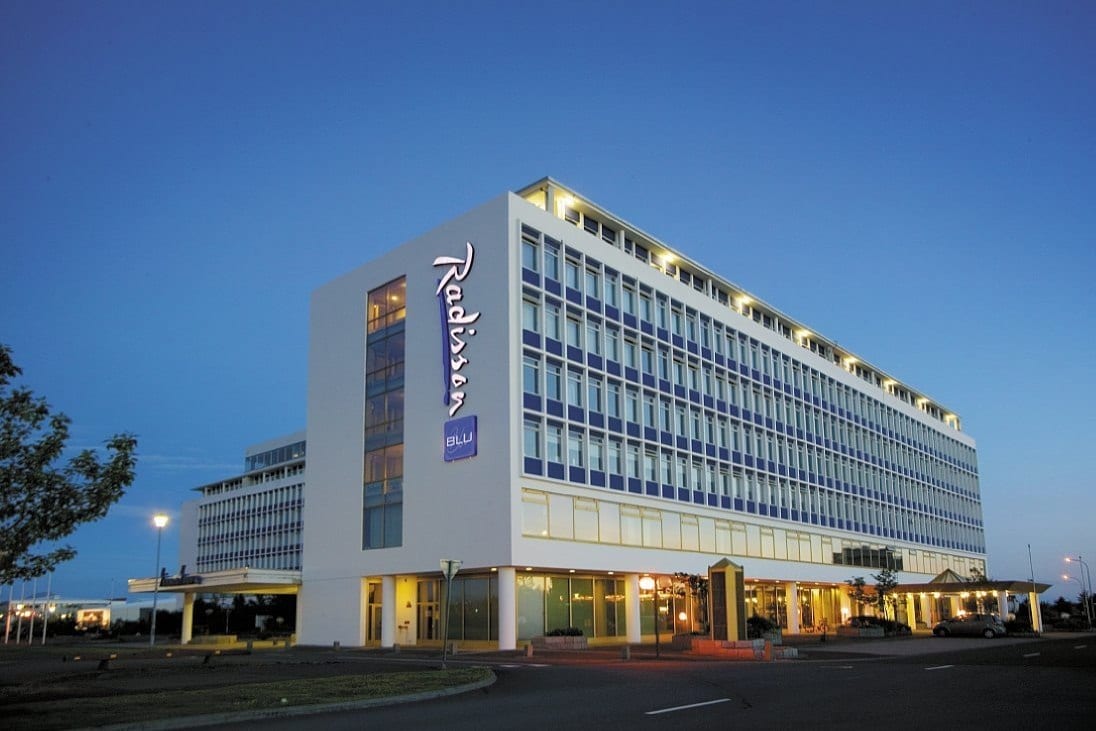
  • Radisson Medan set to open in Indonesia

    Radisson Medan set to open in Indonesia

    Radisson Medan will be the fifth Carlson Rezidor hotel scheduled to open in Indonesia after Radisson Blu Bali Uluwatu, Radisson Golf & Convention Center Batam, Park Inn by Radisson Lampung and Radisson Jakarta Cengkareng.

    Medan is the fourth largest city in Indonesia, and within a one-hour flight radius of Singapore, Kuala Lumpur and Penang. Given its status as the gateway to the Lake Toba tourism region, which the Ministry of Tourism in Indonesia is focused on developing, Medan is also growing as a tourist destination.

    Radisson Medan is a 219-room hotel located in the heart of downtown Medan, next to the Medan clock tower, along the major thoroughfare of Jl. H. Adam Malik. The hotel offers convenient access to the airport, which is the second largest in Indonesia and is well connected to key domestic markets, acting as a hub for the main Indonesian carriers. Radisson Medan is also close to major shopping malls and golf courses, as well as tourist attractions including the Great Mosque, the Sultan’s Palace and historical buildings. Conference and meetings facilities at Radisson Medan will include meeting rooms and a ballroom and the hotel’s recreational facilities include a swimming pool and a gym. Food and beverage options will include an all-day dining restaurant and a lobby bar.

    “We are proud to be planting the Radisson flag in Medan. As the economic and commercial hub of northern Indonesia, Medan is an important destination for domestic business travelers,” said Thorsten Kirschke, president, Asia Pacific, Carlson Rezidor Hotel Group. “Radisson Medan is a great addition to our portfolio in Indonesia where we are continuing to grow with our long-term strategic partner, Panorama Group,” he added.

    In 2013, Carlson Rezidor signed a strategic partnership with Panorama Group, an integrated group of companies focusing on tourism, transportation, hospitality and related businesses in Indonesia,to develop Carlson Rezidor hotels in attractive tourist destinations and top-tier Indonesian cities including Bali, Jakarta and Surabaya, as well as emerging destinations such as Bandung, Bintan, Lombok, Makassar and Palembang.

    Radisson Medan is owned by VIGOUR Group, a diversified family business that has interests in agribusiness, hotels, consumer goods and alcoholic beverages. “This is a part of VIGOUR Group’s strategy to enhance our hotel portfolio. Radisson is a globally recognized brand and we are confident that the rebranding, coupled with Carlson Rezidor’s management expertise, will drive hotel performance and deliver a strong return on our investment,” said Philander Jong, member of the family, Commissioner of VIGOUR Group and Director of the group’s hotel arm PT. Aiho Indah.

    Radisson is one of the world’s leading global hotel brands. It delivers vibrant, contemporary and engaging hospitality that is characterized by its unique Yes I Can! service philosophy. Radisson hotels offer an upscale stay experience, backed by its 100% Guest Satisfaction Guarantee and a range of World of Radisson services and amenities, which have been created specifically to be empathetic to the challenges of modern travel.

    In Asia Pacific, there are currently 13 Radisson hotels in operation and 21 more in the pipeline.

  • Partnership with Garuda Indonesia Virtual

    Partnership with Garuda Indonesia Virtual

    Today we are happy to announce that we have established partnership with Garuda Indonesia Virtual (GIV).

    GIV is a VA base in Jakarta, Indonesia providing great simulation experience as one of the biggest VAs within South East Asia Region. The partnership allows VA in Asia to connect more closely and promote flight simulation in Asia by providing more possibilities and activities to our pilots.

    We are all looking forward to having GIV to join our future event.

  • Garuda Grows despite Plummeting Rupiah

    Garuda Grows despite Plummeting Rupiah

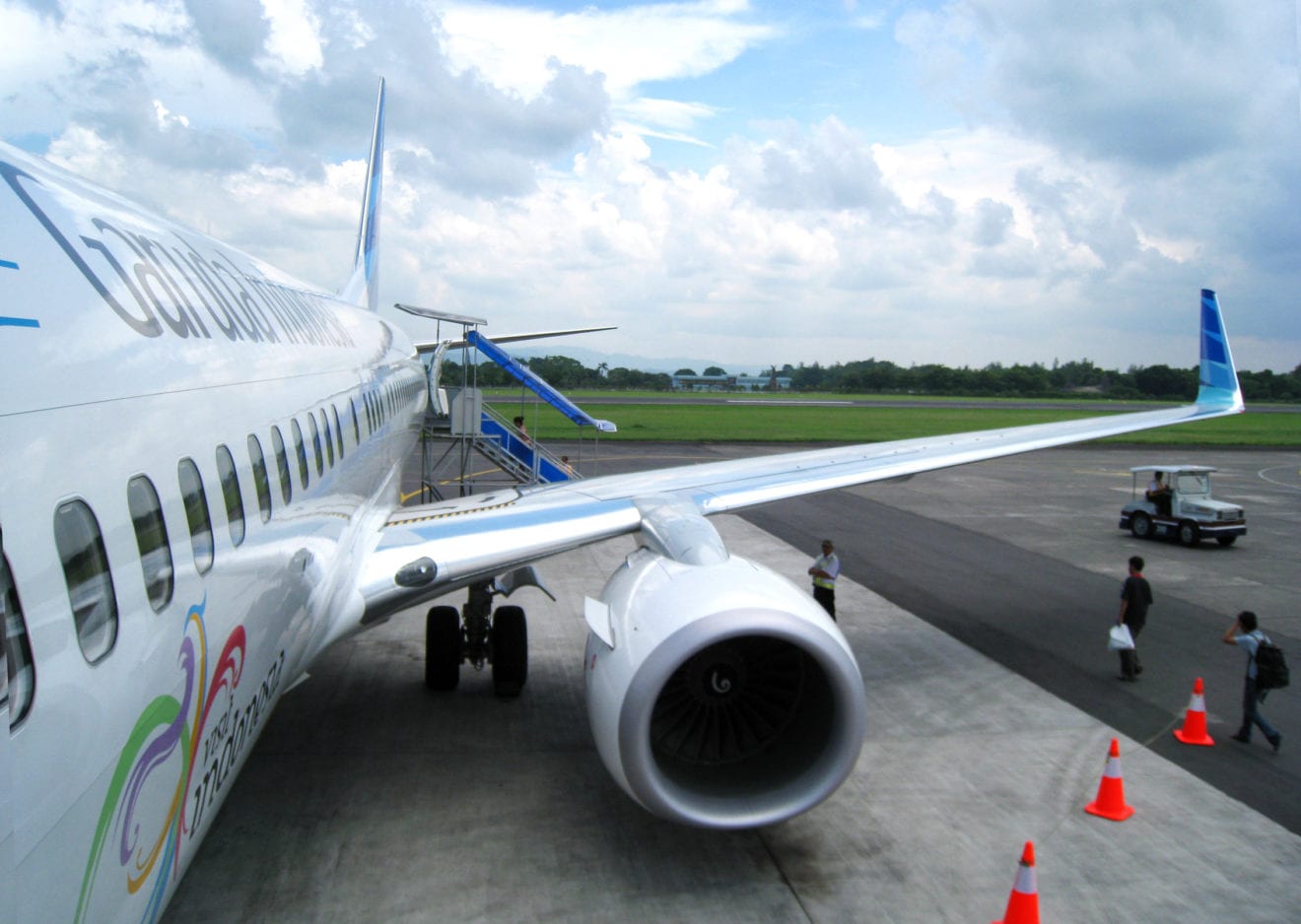
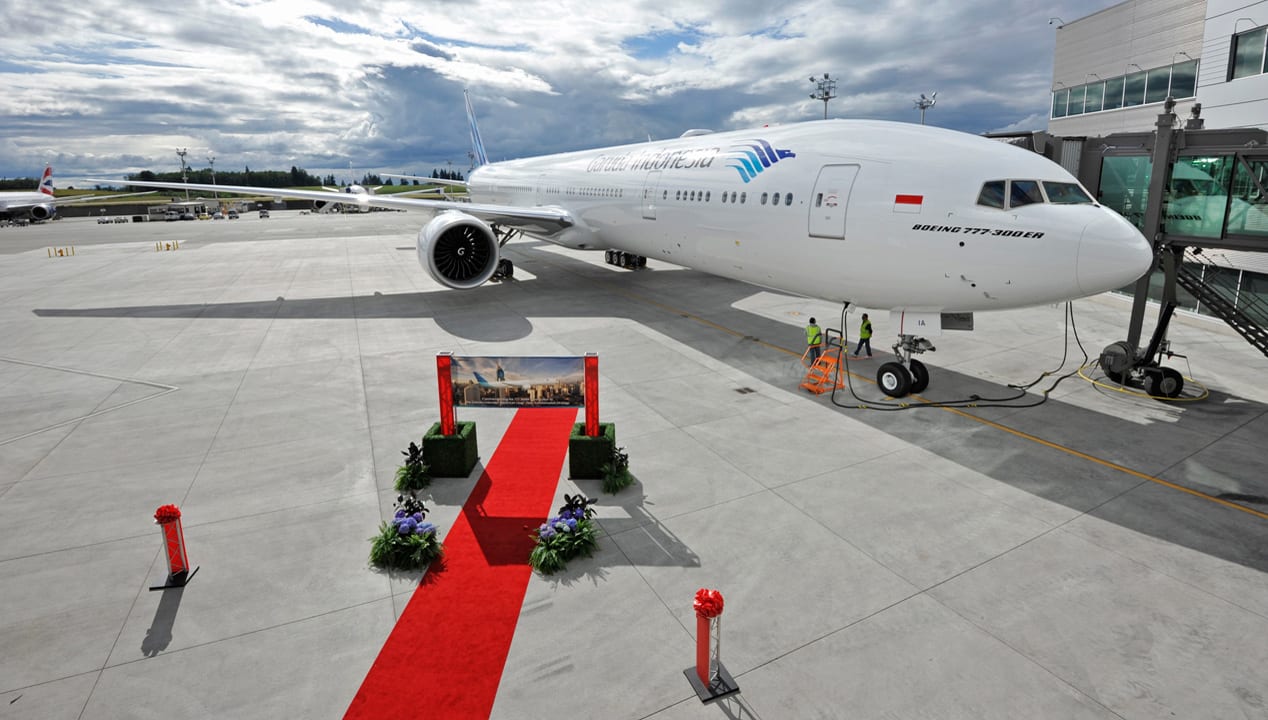
    The flight traffic of state airliner PT Garuda Indonesia Tbk grows after having declined due to the rupiah correction against the US dollar. President director Arif Wibowo said that the carrier notes an increasing number of passengers.

    “The number of our domestic passengers grew 15.4 percent while passengers of international flights rose by 11.3 percent,” Arif said after opening the Garuda Indonesia Travel Fair on Friday, September 25.

    Arif said that the greenback’s gain against the rupiah has affected domestic and international flights. However, he remains confident that the condition will not discourage customers from traveling.

    Next year, said Arif, Garuda plans to add 15 aircraft to its fleet.

    “Five Airbuses, a Boeing 777, and nine ATR 72600s,” he said.

    Additionally, he said that Garuda will also add the number of flights from Shanghai to Denpasar. In the future, Ari hopes that Garuda could extend its wings further and fly to more international cities, especially in Japan, China, and Australia.

    One of the strategies Garuda has taken to address the weak economy is holding a Garuda Indonesia Travel Fair. From this event, Garuda expects to book Rp242 billion in sales in 15 cities.

    “For Jakarta, our sales target is Rp138 billion,” he said.

  • Best Western Unveils First Hotel in Surabaya, Indonesia

    Best Western Unveils First Hotel in Surabaya, Indonesia

    Best Western International has unveiled its first hotel in Indonesia’s second largest city, Surabaya.

    The new BEST WESTERN Papilio Hotel is a modern midscale hotel conveniently located just 20 minutes’ drive from Juanda International Airport and close to popular attractions including Suroboyo Carnival Night Market and the MAS Mosque.

    Set in an eye-catching glass and steel building, the hotel offers a choice of spacious guest rooms, all of which come equipped with amenities designed to help guests unwind and stay productive. These include comfortable beds, ergonomic work desks, 32-inch LED TVs and complimentary Wi-Fi.

    Guests can take a cooling dip in the outdoor swimming pool, indulge in a sumptuous massage at the spa, or work up a sweat in the fitness center, while kids can make splash in the children’s pool.

    BEST WESTERN Papilio Hotel also serves up excellent local and international cuisine at the Mariposa Restaurant, and whatever the time of day, guests can relax and enjoy a drink in the lobby lounge and bar.

    And meeting planners will be able to choose from a variety of flexible function spaces, all equipped with the latest audio-visual equipment and served by a dedicated events team.

    “As Indonesia’s second largest city, Surabaya was the logical next step for Best Western International’s Indonesian expansion,” said Ron Pohl, Best Western International’s Senior Vice President of Brand Management.

    “BEST WESTERN Papilio Hotel will be an excellent addition to our rapidly growing portfolio in Indonesia, bringing modern midscale comfort to the rising number of domestic and international travelers Surabaya is now attracting,” he added.

    Olivier Berrivin, Best Western International’s Managing Director of International Operations – Asia, commented; “With its ideal location close to Surabaya’s main business district and attractions, yet away from the worst of the city’s traffic, BEST WESTERN Papilio Hotel truly offers the best of both worlds.

    “In addition to this, the hotel’s vast array of amenities exceeds its midscale status, offering guests an elevated experience at a reasonable price point. I am confident this exceptional hotel will become a firm favorite among travelers to Surabaya,” Mr. Berrivin concluded.

    The launch of BEST WESTERN Papilio Hotel increases Best Western International’s Indonesian portfolio to 15 hotels, spread across eight popular destinations.

    Best Western Unveils First Hotel in Surabaya, Indonesia

    Best Western Unveils First Hotel in Surabaya, Indonesia

    Best Western Unveils First Hotel in Surabaya, IndonesiaBest Western Unveils First Hotel in Surabaya, Indonesia

    Best Western Unveils First Hotel in Surabaya, Indonesia
  • Indonesia’s Stockbit gets seed funding from Ideosource

    Indonesia’s Stockbit gets seed funding from Ideosource

    Stockbit is a financial analytics platform that helps Indonesian traders understand and share information about the local stock

    market in real-time. Earlier today it announced a seed investment of an undisclosed amount from local VC firm Ideosource.

    The startup was founded in 2012 by Wellson Lo, who previously worked for consulting firm KPMG Singapore and as a trader, and Johny Susanto, a full-stack engineer. Stockbit started out as a social network that attempted to bundle the discussion about Indoneisa’s stocks into one place. “Previously, it was scattered all across Twitter, forums, and blogs,” Wellson explains.

    At the end of 2013, Stockbit added analytics features. The data comes from public sources like the Indonesian Stock Exchange (IDX). The problem with the available data, Wellson says, is that it’s not standardized. Stockbit aggregates this data and makes access to it quicker and more reliable.

    At the same time, Stockbit started to monetize through a freemium subscription model. The price for a one-month subscription is IDR 200,000 (US$13.59). In comparison, professional tools like the Bloomberg Terminal cost US$2,000 per month, the firm says.

    Stockbit’s goal is to make life easier for independent or retail investors by giving them access to high-quality financial data and sophisticated analytics tools at an affordable price. The idea is to create a more level playing field between newcomers and institutional investors, including traders from banks, insurance companies, and pension funds.

    “I found that the information gap between retail investors and institutional investors is very big,” says Wellson. “It’s never going to reach the point where it’s really level, but with better tools to analyze and better collaboration, retail investors can make better trading decisions.”

    To date, Stockbit has 15,000 registered users, while paid subscribers are still in the hundreds. According to Wellson, the figures are a result of the small size of the addressable market.

    “In Indonesia there are only 400,000 registered investors, probably of those [only] 100,000 are retail investors,” he says. “That means more than 10 percent of the addressable market is already using Stockbit.”

    Stockbit targets a narrow market, and that’s the big reason founders faced difficulties raising funds until now. Ideosource’s decision to back the venture is based on a commitment by the Indonesian Financial Services Authority to increase the number of retail investors to five million by 2017.

    Wellson says there are government outreach programs that work with schools and companies that encourage more people to consider investing in the capital market.

    Stockbit has several competitors in Indonesia, including Idsaham, Indonesia-Investments, and Infovesta. However, those sites merely aggregate stock information and don’t yet offer analytics tools. Bareksa can be seen as a possible contender, as it offers a variety of financial analytics tools and also aggregates information about the IDX, among other functions. It also recently opened up its online platform for trading mutual funds.

    The Stockbit team plans to spend the fresh capital on building out the product, which includes making mobile apps for Android and iOS, as well as recruitment and marketing.

  • Mid-flight theft increases in Asia

    Mid-flight theft increases in Asia

    Mid-flight theft-related offences on board airplanes have become more common in several Asian countries over the past two years, including in Indonesia.

    According to daily newspaper Kompas, the latest incident occurred on a Qatar Airways flight from Doha, Qatar, to Jakarta on Sunday evening, around three hours after the airplane took off.

    When the cabin lights were switched off and most of the passengers were asleep, offenders allegedly opened the overhead compartments, removed several bags and began searching through them back at their seats or in the plane’s main aisle. When the Qatar Airways plane landed, four bags were found to have been moved, allegedly by two different people.

    It was reported by tribunnews.com that four Chinese citizens, who were allegedly members of a theft syndicate, were being questioned by the Soekarno-Hatta International Airport Police on Monday.

    “We are still developing our investigation,” said head of airport police Iptu Waluyo.

    According to aviation analyst Gerry Soejatman, airlines are responsible for handling theft cases that occur during their flights.

    “Regarding the case involving Qatar Airways, it would be better if the police were joined by Qatar Embassy officials during questioning. Then the suspects could be extradited to Qatar to face legal proceedings there,” said Gerry.

    Separately, Qatar Airways corporate communications official Koh Wei Ling said that there was no official statement yet regarding the case.

    “We are still waiting for our head office in Doha to issue the official statement,” said Ling.

    Meanwhile, national flag carrier Garuda Indonesia has called on passengers to keep their belongings safe.

    “We always tell the crew to be alert when checking on the cabin, especially when passengers are asleep,” said Garuda Indonesia corporate communications vice president Benny S Butarbutar.

    State-owned airport operator Angkasa Pura (AP) II’s president director Budi Karya Sumadi said that theft-related offences on board airplanes were under the airline’s jurisdiction. But airport security are available to support them in bringing the alleged offenders to airport police.

    In a press release on Tuesday, Garuda Indonesia informed that these offenders usually checked-in without any luggage, stayed for only one day in their destination, owned passports and tickets issued outside Indonesia and allegedly were part of a criminal syndicate. The theft itself usually occurred during the night when passengers were asleep or at the lavatory.

    Currently Garuda is cooperating with other airlines through the Association of Asia Pacific Airlines (AAPA) to share information and conduct preventive actions, including conducting passenger profiling, issuing policies for assist air crew to prevent such incidents and providing security officers in destination cities.