Retail News CRM

Tag: ios

  • Michael Kors launches improved Sofie Heart Rate smartwatch

    Michael Kors launches improved Sofie Heart Rate smartwatch

    Michael Kors is expanding its smartwatch offering with an improved version of Sofie, a wearable device that was launched two years ago. The new model, weirdly named Sofie Heart Rate, packs a few new features that the original model lacked, but keeps a similar price.

    The Sofie Heart Rate is available in five colors – Pave Rose Gold, Rose Gold, Silver, Pave Two-Tone, and Gold, for as low as $325. Officially unveiled early this year, Michael Kors’ new smartwatch runs Wear OS and is fully compatible with iPhone and Android phones.

    Unlike the original model, the new Sofie Heart Rate features built-in GPS, NFC (Near Field Communication) payment technology, heart rate tracking, and swimproof technology (water resistant up to 30m). Also, it comes with an AMOLED display, 4GB internal storage, and a 300 mAh battery.

    Design-wise, the smartwatch is made of stainless steel and features interchangeable straps. According to Michael Kors, in addition to the three classic stainless steel platings and the two-tone glitz version models, the Sofie Heart Rate will also be offered in alligator-stamped silicone. Moreover, brown and plum stainless steel platings, along with grey silicone, will be made available this fall.

  • Google Pay update brings Gmail integration

    Google Pay update brings Gmail integration

    Google is trying to build an entire ecosystem that will allow users to access any important information from just about every Google app. Gmail has been integrated with many other Google apps, but other developers noticed the benefits and added integration with the email app.

    The newest app that benefits from Gmail integration is Google Pay, which doesn’t come as a surprise since the changes were spotted a few months ago. Now Google Pay has been updated with Gmail importing, which means that the mobile payment app will browse through your emails and add the relevant information to its system.

    For example, whenever you receive loyalty cards, movie tickets, and boarding passes in the Gmail inbox, they will be automatically added in Google Pay. Keep in mind though that if you delete the email containing the information, it will disappear from Google Pay as well.

    The improvement makes it easier to access loyalty cards, tickets, and more without having to go through your emails every time you want to know something about them. It’s also easier to find coupons and boarding passes that are being sent to your Gmail inbox and make use of them.

    It’s worth mentioning that the new Gmail import feature is disabled by default, so you’ll have to enable it in Google Pay by heading to Settings / General / Gmail Imports and using the toggle available after the latest update.

  • Tinder beats Netflix to become the top-grossing non-game app

    Tinder beats Netflix to become the top-grossing non-game app

    Dating app Tinder has beaten Netflix and it is now the top-grossing non-game app on the iOS App Store, according to intelligence firm Sensor Tower.

    Tinder’s revenue soared by 40% in the first quarter of 2019 to reach $260.7 million, up from $183 million from the same period last year, while Netflix’s numbers went down from $255.7 million to $216.3 million.

    But there is a reason for that: Netflix itself stopped paying the so-called “Apple tax”, a 15% cut on all in-app purchases that go through Apple’s systems, and since December of 2018, all new Netflix subscriptions are handled outside of iOS. Apple traditionally charges companies a 30% cut of their subscription revenue for the first year and then drops that number to 15%, but Netflix is said to have had a special deal with the 15% rate available on day 1. Even those 15%, however, workout to a massive amount when you look at the numbers. At an estimated annual revenue of around $850 million, 15% would amount to around $130 million.

    Netflix pulling out of the App Store subscription program (it had already pulled out of a similar program on Android earlier) is basically a reaction to those huge amounts of money that it had to pay to Apple, which provided only the platform. And of course, this move has allowed Netflix to keep more of its revenue to itself.

    At the same time Tinder’s popularity has continued growing and the company has managed to overcome Netflix as the top grossing app.

    Interestingly, if you look at the general picture of things, you see that the majority of the top grossing, non-game apps in this first quarter of 2019 all had something to do with streaming, either for music or for video. Those apps include Tencent Video (a video streaming service popular in Asia), YouTube, Pandora and YouKu (Chinese YouTube alternative).

    And if you look at just the top downloads, you see that messengers at among the most popular ones: WhatsApp, Messenger, TikTok, Facebook, Instagram, and others.

    Considering these numbers it really is no surprise to see Apple shift to a portfolio of streaming services of its own. The newly announced Apple TV+ is coming this fall and will open a new world of Apple-original movies and shows headlined by an Oprah show and a bunch of Hollywood honchos, plus it will offer streaming from services such as HBO or Showtime. And then you have Apple Arcade, a brand new gaming service focused on quality releases that do not have pay-to-win written all over them.

  • Netflix removes key feature from its iOS app

    Netflix removes key feature from its iOS app

    AirPlay is a feature found on iOS and Mac devices that allows users to send audio, video, photographs, screenshots and more between Apple devices sharing a similar network. Using Bluetooth and Wi-Fi, AirPlay will let a home with multiple HomePod speakers in different rooms, share the same song throughout the house. And with several smart TV manufacturers adding support for the feature, content from an iOS or Mac device can be viewable on certain large-screen smart TVs.

    There have been a number of complaints from iPhone and iPad users stating that AirPlay was no longer working with Netflix. That was unusual because the iOS version of the streaming video app has supported AirPlay since 2013. The complaints from iOS users state that when they tried to use AirPlay in the Netflix app, a pop-up error message appeared that said, “Cannot play title. Please try again later.”

    But there is a reason why AirPlay no longer works with Netflix. As a result of what it is calling “technical limitations,” Netflix has pulled AirPlay support from its iOS app. This is actually noted by the video streamer on its support page. Considering that this was an iOS feature that Netflix had supported for over five years, it is strange that AirPlay would all of a sudden no longer work with Netflix. The company has not divulged the details of the “technical limitations” that have forced it to stop offering AirPlay support (more on that later).

    This isn’t the end of the world for Netflix subscribers used to employing AirPlay. After all, the Netflix app can be installed or is already installed on a number of smart television sets. But using AirPlay does make it easier for iOS users with Netflix to stream content from their own account to a smart TV that does not have their Netflix login information.

    “We want to make sure our members have a great Netflix experience on any device they use. With AirPlay support rolling out to third-party devices, there isn’t a way for us to distinguish between devices (what is an Apple TV vs. what isn’t) or certify these experiences. Therefore, we have decided to discontinue Netflix AirPlay support to ensure our standard of quality for viewing is being met. Members can continue to access Netflix on the built-in app across Apple TV and other devices.”-Netflix< The Netflix support page lists some other options that iOS users can try in order to cast Netflix from their phone or tablet to a compatible television. With the Netflix 2nd Screen option, subscribers open the Netflix app on their iOS device and television, signing into the same account on both devices. The mobile device and the TV must share the same Wi-Fi network. On the mobile device, the user needs to tap on "Cast" found in the upper or lower right of the screen, and select the television that he/she wants to view Netflix on. After deciding which show or movie to watch, the user hits play and the selected content will appear on the TV. Another option, found on Philips, Polaroid, Sharp, Skyworth, Soniq, Sony, Toshiba, and Vizio TVs, will allow you to Chromecast Netflix from your iOS device to your television. Simply open the Netflix app on your iOS device, and tap on the "Cast" icon in the upper or lower right hand side of the screen. Select the device you want to watch Netflix on, choose a television show or movie, and hit play. Last month, Apple became a Netflix competitor by unveiling Apple TV+. This is a video streaming service that will be available this fall on iOS devices along with certain smart TVs. There will be new, original programming from Apple along with content from HBO, Showtime and others. Could this new rivalry be behind the "technical limitations" that forced Netflix to stop supporting AirPlay? After all, it does seem strange that Netflix was able to support AirPlay for from 2013 until now, just when Apple introduces a service that will compete with it. Netflix, of course, will never admit to this. And regardless what the true reasons are, the bottom line is that iOS users will have to resort to the aforementioned alternatives if they want to cast any streaming Netflix content from their iPhone or iPad to their smart TV.

  • Fitbit partners with Snapchat to make Apple Watch owners jealous

    Fitbit partners with Snapchat to make Apple Watch owners jealous

    Fitbit may have joined the “true” smartwatch game a bit late compared to Samsung or Apple, but after a somewhat slow start in this potential-brimming market, the Versa seems to have put the company on the right track. The world’s second-largest smartwatch vendor took quite a risk by developing its wearable software from scratch rather than adopting Google’s Wear OS, but this proprietary platform continues to grow at a healthy pace in terms of capabilities and ease of use.

    Of course, everyone needs high-profile partners to boost the appeal and trendiness of today’s wearable devices, and Fitbit’s newest ally in its fight against Apple and Samsung is as high-profile as they come. We’re talking about Snap, the company behind one of the world’s most popular social networks.

    Snapchat users who just so happen to own a Fitbit Versa, Versa Lite, or Ionic as well can now connect their Bitmoji account to their smartwatch to display their “personal emoji” on their wrist. For those unfamiliar with the Bitmoji app, we should probably mention the experience is very similar to what Apple offers with Memoji and Animoji on iPhones and Samsung’s own AR Emoji experiments for recent high-end Galaxy handsets.

    Obviously, the main difference is you can have fun with Bitmoji on both Android and iOS, as well as on Fitbit devices starting today. Your cartoon avatar will show up on the “first-ever” Bitmoji clock face (once you download it from the Fitbit App Gallery, that is), aiming to motivate you to be more active, help you create healthier habits, and celebrate personal achievements.

    While unlikely to be as expressive as its smartphone counterpart, your wrist Bitmoji promises to support more than 50 fun clock face variations, changing throughout your day to reflect your activity and progress towards your fitness goals. For instance, your personal emoji will wave hello to start your day, dance with your alarm clock to annoy help you wake up in a better mood, throw confetti after you hit your daily step objective, meditate when you’re totally relaxed and zen, carry an umbrella if there’s a chance of rain, and much more.

    That definitely sounds like something Apple Watch and Samsung Galaxy Watch owners could also appreciate, but for the time being, all we can do is wait and see if there are any Memoji or AR Emoji expansions planned for the near future.

  • OneDrive for iOS update brings deeper functionality

    OneDrive for iOS update brings deeper functionality

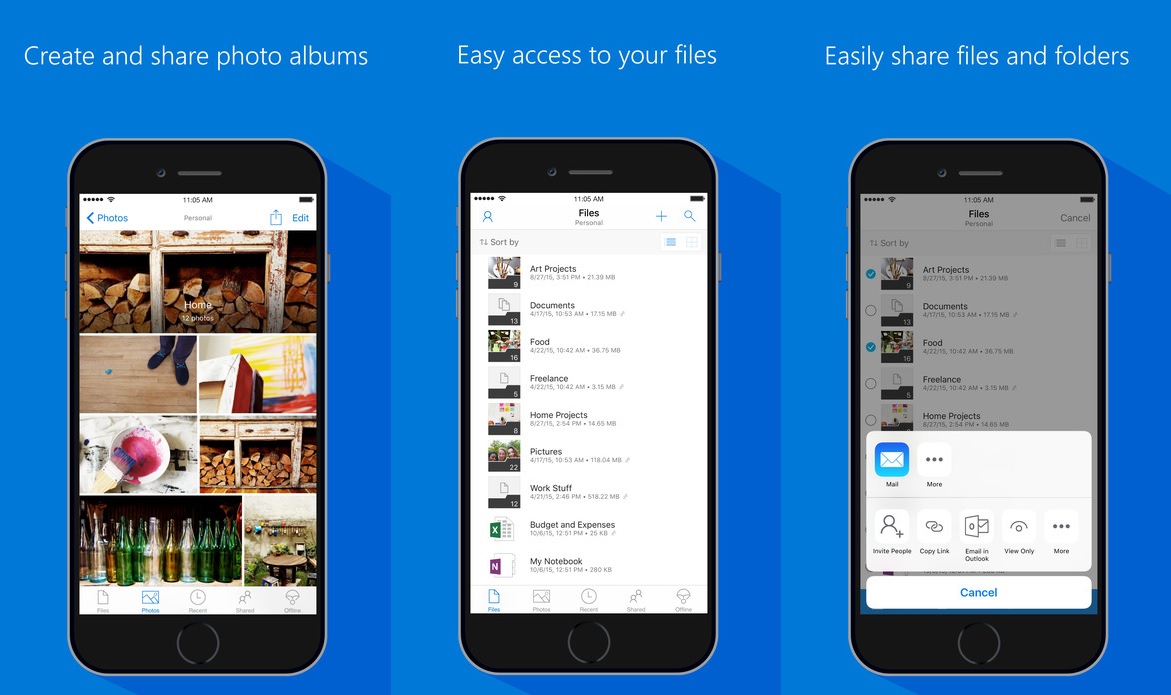
    In between bug squashing and adding new features, OneDrive benefits from a steady flow of updates meant to enhance user experience. The latest update brings support for specific features aimed at iPhone users like Siri Shortcuts. You can turn on shortcuts by heading to Settings / Siri & Search, which will allow you to use your voice for various tasks.

    For example, you can say “Hey Siri, scan a business card” and the app should do it for you. Of course, you can scan anything from a document or photo to a whiteboard if the need arises. But Siri Shortcuts is not the only new addition to this OneDrive build.

    The official changelog mentions that the VoiceOver experience in the Shared paged has been fine-tuned, which means it should now behave a little more human and more accessible. Also, a minor issue in the iMessage where the app’s icons were showing up pixelated has been addressed.

    The final change introduced in the update targets business users, but something rather minor. The name of the Sites view has been changed to Libraries, but that’s about all there is, the feature should work the same.

  • Google Maps update brings Nokia’s classic Snake Game

    Google Maps update brings Nokia’s classic Snake Game

    The classic Snake game that made its debut on Nokia phones back in 2007 and achieved popularity not long after, is now available to all Google Map users. Well, let’s say that a very improved version of that game can now be played by Android and iOS users directly in Google Maps.

    Apparently, Google continues the tradition of celebrating April Fools with a long-lasting gag that will be available to those using some of its services on mobile and desktop. This year Google has decided to make Maps the main platform of its gag.

    All Android and iOS users will be able to play Snake on their phones and achieve high scores by picking up as many passengers and visiting as many iconic locations as possible. You’ll be able to play in different locations across the world, such as Cairo, London, San Francisco, Sao Paolo, Sydney, and Tokyo, or simply choose to play in the World.

    In order to start playing Snake, you’ll have to open the Google Maps app, tap on the menu icon on the top left corner, then select “Play Snake” to start playing directly in the app.

    Depending on what city you chose to play in, you’ll have to gather passengers with your ever-growing train and visit important locations around the world, including Big Ben, the Great Sphinx of Giza, and the Eiffel Tower.

    The Snake game is now rolling out worldwide on Android and iOS and will be available from within the Google Maps app for about a week.

  • Apple Music for Android update brings a slight redesign

    Apple Music for Android update brings a slight redesign

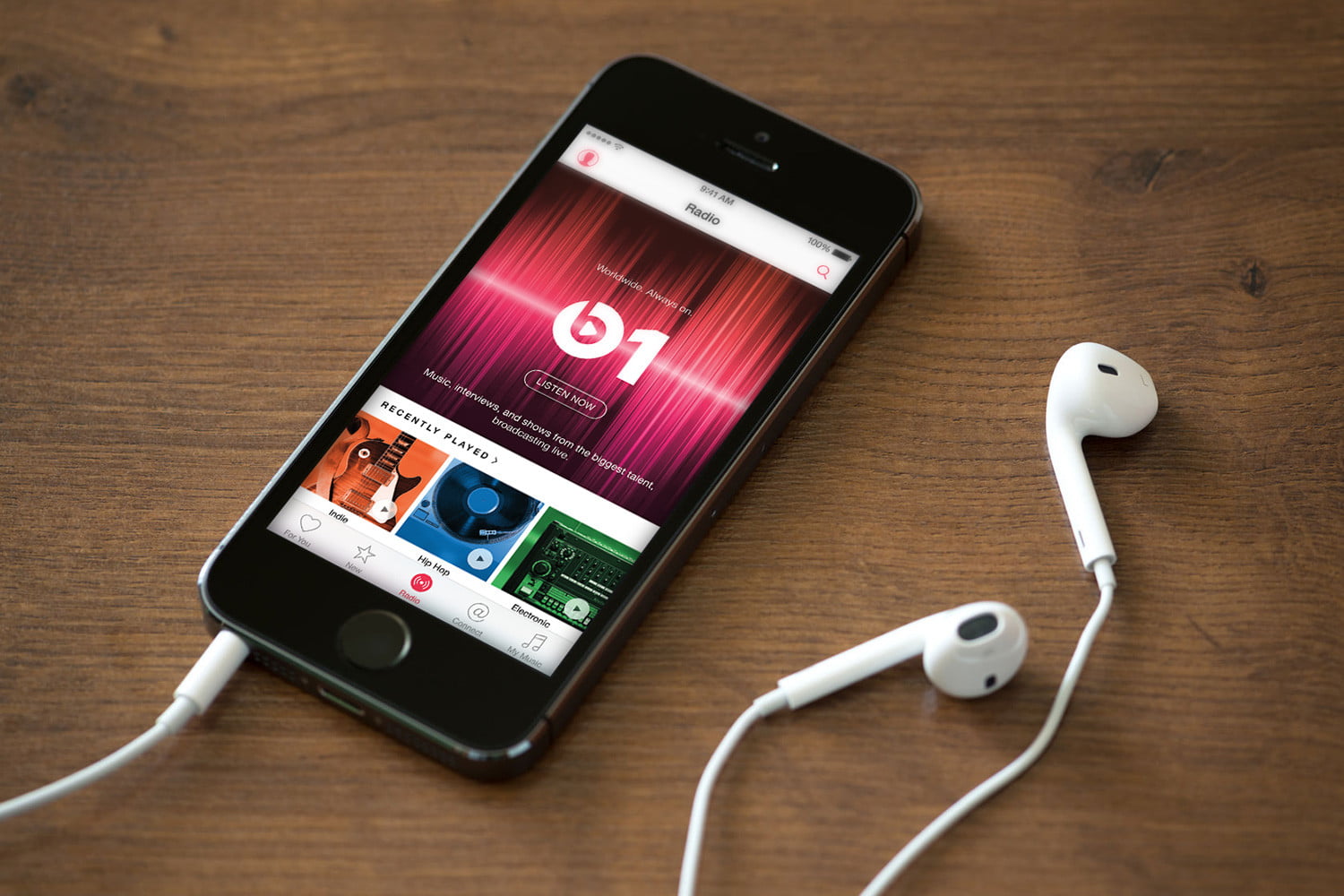
    Judging by the reviews left by Android users on Apple Music’s page in the Google Play Store, the app isn’t on par with the iOS version. However, it looks like Apple is making efforts to make the users experience as satisfying as possible.

    The latest update released today brings a slight redesign of the Browse tab and support for more devices. The update adds a new Browse tab that was initially made available on the iOS version of Apple Music.

    The Browse tab contains more editorial highlights which are supposed to make it easier for Apple Music users to find playlists and new music they might like. With the new tab, starting to play music becomes a breeze as it removes a few clicks previously needed.

    The second major change included in the update is support for Chromebooks. If you own one, you’ll now be able to access Apple Music from Chrome OS. Last but not least, Apple mentions that it squashed some bugs as well, so expect fewer issues with the app after you download the update.

  • AR version of Angry Birds comes to iOS this spring

    AR version of Angry Birds comes to iOS this spring

    Remember when Angry Birds was the most popular mobile game around? Many of you who played religiously ended up moving on to more graphically complex games. Maybe Rovio’s characters, which the company once said would make it the next Disney, suffered from overexposure with licensing deals. The fowl foul had their faces plastered all over the place from Band Aids to board games to underwear.

    You can’t say that Rovio hasn’t tried to keep up with the times. VR versions of Angry Birds are available for Oculus Rift and Vive, and an AR variant of the game can be played on the Magic Leap headset. And today, the company has announced that Angry Birds AR: Isle of Pigs will soon be available for certain Apple iPhone and Apple iPod models. Using Apple’s ARKit, a flat surface like a coffee table is overlaid with different stages while the phone itself becomes the slingshot.

    Players can walk around each stage, looking for hidden items and areas where the pigs might be most vulnerable to attack. Rovio is offering the game for free in partnership with Resolution Games, although we are pretty sure that there will be some in-app purchasers that players can make.

    “We’re delighted to bring the beloved physics-based gameplay of Angry Birds to life through augmented reality. It’s an especially timely moment to bring our avian friends to mobile AR for the first time, as this year marks the tenth anniversary since the release of the first Angry Birds game.”-Kati Levoranta, CEO, Rovio Entertainment

    “This game evokes the core of what makes AR gameplay truly AR. With its engaging characters, classic Angry Birds slingshot gameplay and ability to move around the structures, it utilizes the unique elements of Apple’s ARKit and showcases what AR gameplay is capable of, which is pretty amazing when you see it come to life.”- Tommy Palm, Resolution Games.

    Angry Birds AR: Isle of Pigs is available today to pre-order from iTunes and it will be released in the late spring of 2019. Don’t expect to see an AR version of Angry Birds for Android anytime soon since the phone version of the new AR Angry Birds game is an Apple exclusive for now.

    For those familiar with the old Angry Birds games, the rules are the same. You try to knock down as many pigs as possible by using a slingshot to propel one of the Angry Birds toward the swine. One difference is that now you see the slingshot from a first-person perspective. Fling back on your phone to send the Angry Bird flying toward its target. Originally, there will be as many as 40 different levels in the game.

    Angry Birds AR: Isle of Pigs is compatible with all iPhone models dating back to the iPhone 6s, all iPad Pro models, iPad fifth and sixth generation, and the new iPad Air and iPad Mini tablets introduced yesterday.

  • Smartphone Sales Will Drop for Second Straight Year, IDC Predicts

    Smartphone Sales Will Drop for Second Straight Year, IDC Predicts

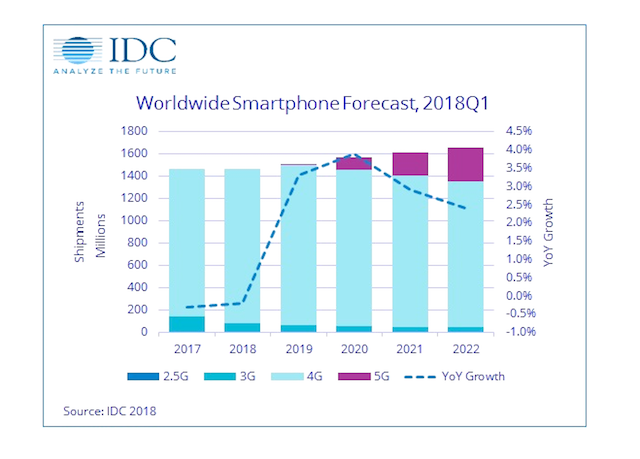
    Global smartphone sales are expected to fall for the second year running this year, before  returning to growth next year, according to analysis by the International Data Corporation (IDC).

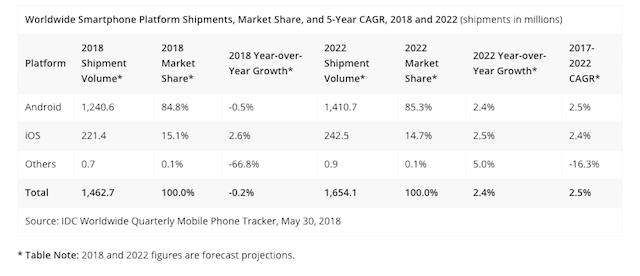
    In the research house’s Worldwide Quarterly Mobile Phone Tracker, smartphone shipments are forecast to drop 0.2 per cent this year to 1.462 billion units, after a 0.3 per cent decline last year. Looking further out, IDC expects the market is to grow roughly 3 per cent annually from next year onwards, with worldwide shipments reaching 1.654 billion in 2022 and a five-year compound annual growth rate (CAGR) of 2.5 per cent.
    The biggest driver of last year’s decline was China, where smartphone sales declined 4.9 per cent year-on-year. And the IDC expects sales in China to decline a further 7.1 per cent this year before flattening out next year.

    The biggest growth market in Asia Pacific continues to be India, with volumes expected to grow 14 per cent and 16 per cent this year and next.

    “Chinese OEMs will continue their strategy of selling large volumes of low-end devices by shifting their focus from China to India,” says IDC. “So far, most have been able to get around the recently introduced Indian import tariffs by doing final device assembly at local India manufacturing plants. As for components, almost everything is still being sourced from China.”

    “With 2017 now behind us a lot of interesting market dynamics are unfolding,” says Ryan Reith, program VP with IDC’s Worldwide Quarterly Mobile Device Trackers. “Even though it declined 5 per cent last year, China remains the focal point for many given that it consumes roughly 30 per cent of the world’s smartphones.

    “But plenty of pockets of growth can be found beyond China. India is now grabbing headlines and the market itself is going through some rapid transformation. Local Indian manufacturing continues to ramp up, despite still having a heavy dependence on China for components. The boom in India is likely to continue in the years to come, but the move toward building up local production has certainly caught the eye of many in the industry.”
    Outside of Asia Pacific, the biggest regions for growth will be the Middle East, Africa, and Latin America. All three regions have relatively low penetration rates and plenty of upsides, says IDC. Economic challenges have been the main inhibitor over the past two years, but IDC expects consumer spending to rise throughout the forecast and smartphones to be a big benefactor.

    5G opportunity

    The other catalyst to watch will be the introduction of 5G smartphones. IDC predicts the first commercially ready 5G smartphones will appear in the second half of next year with a ramp up across most regions happening in 2020. IDC projects 5G smartphone volumes to account for roughly 7 per cent of all global smartphone sales in 2020 or 212 million in total. The share of 5G devices should grow to 18 per cent of total volumes by 2022.

    “Although overall smartphone shipments will decline slightly this year, the average selling price (ASP) of a smartphone will reach US$345, up 10.3 per cent from the $313 of last year,” said Anthony Scarsella, research manager with IDC’s Worldwide Quarterly Mobile Phone Tracker.

    “This year will continue to focus on the ultra-high-end segment of the market as we expect a surge of premium flagship devices to launch in developed markets. Devices featuring large Amoled bezel-less displays, advanced camera functions, and an overall increase in speed and performance will be the driving factor in the increase of ASPs. Moving forward, we can expect this trend to continue as the ASP for a smartphone will continue to grow throughout the forecast period. In 2022, the final year of our forecast period, the average selling price for a smartphone will be $362, resulting in a five-year CAGR of 2.9 per cent.”

    Android vs Apple

    Android’s share of t sales is expected to remain relatively stable at 85 per cent of total global smartphone sales. Volumes are expected to grow at a five-year CAGR of 2.5 per cent, with shipments totaling 1.41 billion by 2022.

    “There is no question that Android is the OS of choice for the mass market and nothing leads us to believe this will change,” says IDC. “Given the large number of Chinese OEMs dependent on Google’s OS, as well as components from other US companies like Qualcomm, it will be interesting to see how things develop with all the discussion about a US-China trade war. Android OEMs continue to drive down the cost of new technology features at a rapid pace. IDC estimates that 98 per cent of Android phones will ship with screens larger than five inches by 2022, with 36 per cent being six inches or larger. While some of these will remain premium flagship models, the aggregate ASP of Android phones with a six-inch screen or greater by 2022 is projected to be $414.

    Meanwhile, iPhone volumes are expected to grow 2.6 per cent this year to 221 million. IDC is forecasting iPhones to grow at a five-year CAGR of 2.4 per cent, reaching volumes of 242 million by 2022. With rumors of some upcoming larger screen iOS smartphones, IDC has changed its screen size forecast for Apple by introducing volumes greater than six inches. Products are likely to begin shipping in the fourth quarter of 2018, with volumes ramping up and accounting for 36 per cent of all iPhones shipped by 2022.

  • Xiaomi Malaysia picks Kuala Lumpur to open its 2nd store

    Xiaomi Malaysia picks Kuala Lumpur to open its 2nd store

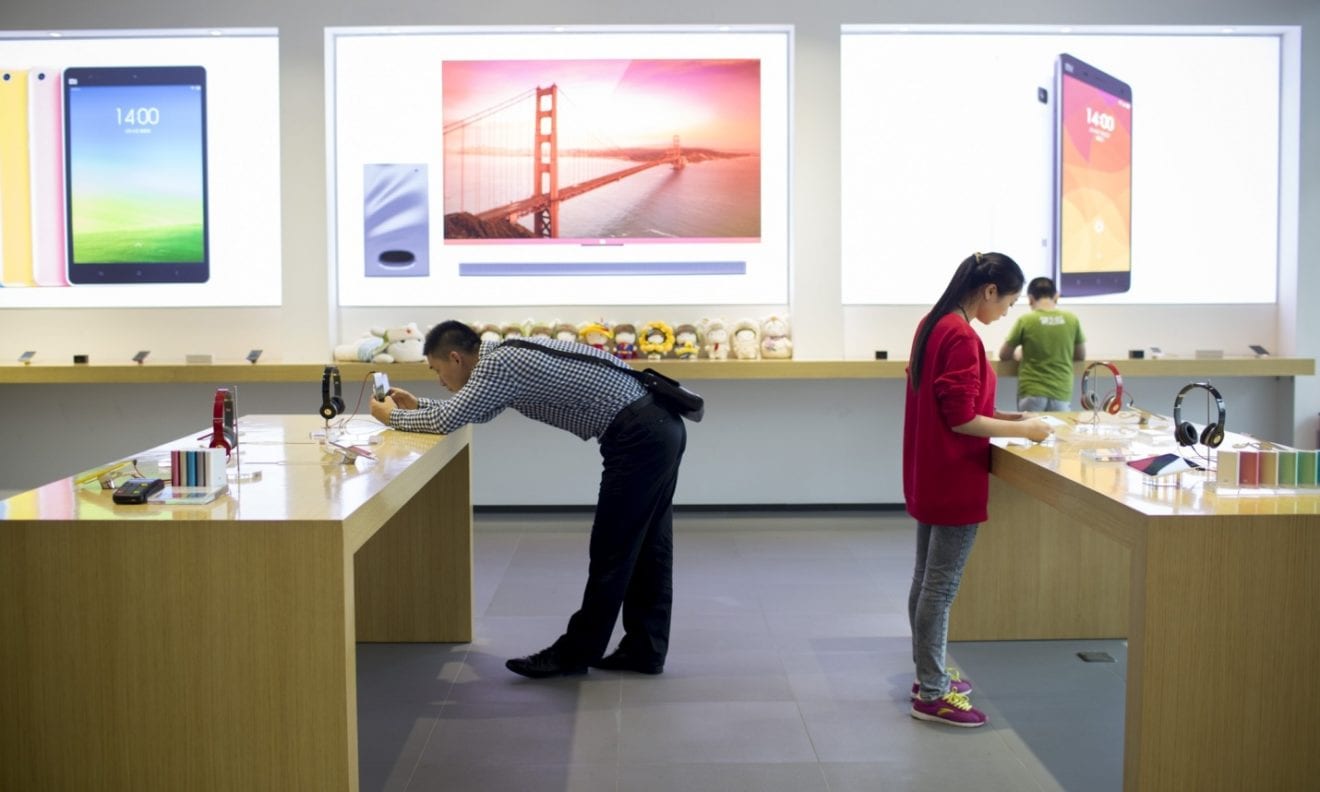
    Xiaomi Malaysia has opened its second retail store, offering Kuala Lumpur shoppers greater access to its Mi Ecosystem products.

    Originally the Chinese electronics company had sold its smartphones and other products exclusively online, but in its home territory has been introducing its Mi Home stores.

    At 940sqft (90sqm), its second authorised Mi Store is smaller than the debut store in Penang.  Xiaomi South Pacific head Steven Shi says the opening of a second store indicates the brand’s “great expectations” for growth in Malaysia.

    Two new smartphone models were released to coincide with the store’s opening, and Shi says Xiaomi will soon expand its Mi Ecosystem of products in Malaysia. These include IoT-ready products such as a smart rice cooker that can be pre-programmed for different recipes, a smart luggage bag than can be unlocked by phone, plus routers, TVs and drones.

    Meanwhile, Xiaomi is expanding across Southeast Asia, and has opened 15 Mi Stores and a factory in Indonesia. Xiaomi also has two Mi Stores in Singapore and one in Thailand. Its network in Malaysia is run by CG Computers.

    Its second concept phone, released with the KL store opening, was designed by Philippe Starck and features a curved ceramic back that that transitions to an aluminium frame. It will be available for pre-order on Saturday through online and offline channels including Lazada and authorised Mi Stores.

    Also showcased in the new store is the Redmi 5A Prime, the first Xiaomi phone that pairs a selfie light with a 16-megapixel front-facing camera. It has a fingerprint sensor on its back.

  • Meitu’s Hong Kong IPO to value China photo app maker at up to $4.5 billion

    Meitu’s Hong Kong IPO to value China photo app maker at up to $4.5 billion

    Chinese photo app and mobile phone maker Meitu Inc is set to launch an up to $735 million initial public offering in Hong Kong, IFR reported on Monday, citing people close to the deal. Meitu, better known for its apps that let users retouch and beautify selfies and other photos, is offering shares in an indicative range of HK$8.50 to HK$9.60 ($1.10-$1.24) each, added IFR, a Thomson Reuters publication. The IPO is slated to be priced on Dec 8.

    Meitu did not immediately reply to a Reuters request for comment on the IPO terms. The deal will value Meitu, which counts venture capital investors Qiming Venture Partners, IDG-Accel China and Tiger Global among its backers, at up to $4.5 billion, IFR said.

    The IPO will be a rare technology sector IPO in Hong Kong. Between one-quarter to one-third of the shares will be sold to cornerstone investors, IFR said. That would be much lower than some of the large new listings in the city, including the $7.6 billion IPO of Postal Savings Bank of China (PSBC) in September that had 77 percent of its deal bought by cornerstones.

    Large investments by cornerstone investors hurt liquidity for IPOs once the shares start trading, as the stock is locked up for a minimum of six months. The cornerstone money can also pressure the stock as the expiration of the lock-up period nears. China Merchants Securities, Credit Suisse and Morgan Stanley were hired as sponsors of the IPO.

  • China becomes top iOS App Store market in Q3

    China becomes top iOS App Store market in Q3

    China set new record in the third quarter for the highest iOS App Store revenue to date for any country, according to App Annie’s Market Index Report for the period.

    With total revenues of $1.7 billion, China overtook the United States by over 15% and its growth is projected to climb further by 2020.

    The Q3 2016 Market Index Report also showed that China maintained its spot as No. 1 for Games category as it accounted for the majority of the generated revenue.

    Other prominent categories making strides are Entertainment and Social Networking, which have more than tripled in the past year. Video streaming apps (like iQIYI, Tencent Video and Youku) in China have had a major impact on the Entertainment category as a whole.

    Pokemon Go was cited as the stand-out app of the year, racking up $600 million in customer spend faster than any app to date. It also outpaced the extremely successful Clash of Clans by more than 6.2 times in under three months.

    Pokemon Go has also converted a massive amount of a user’s non-mobile time to mobile time as its innovative AO gameplay and iconic IP were compelling enough to convince users to spend more time overall on their mobile devices. It has altered the playing field as it introduced augmented reality to the masses and paved the way for future AR and VR opportunities in the app stores.

    The revenue of Entertainment apps strengthened in the third quarter and it has grown substantially in both iOS App Store and Google Play. This is largely due to the popularization of in-app subscriptions as a monetization method driven by video streaming.

    With revenue more than tripling since the third quarter of 2014, people are not only using their mobile devices to stream content but also as a common form of payment.

    This represents a significant shift from traditional broadcasting and television structures where users typically enter into a contract with a cable provider.

  • Lenovo launches transit app in China

    Lenovo launches transit app in China

    Lenovo has commercially launched its transit application in China with the electronic payment and settlement service provider BMAC (Beijing Municipal Administration and Communications Card).

    The service is supported  on Lenovo X3 smartphones driven by the eSE PEARL by OT (Oberthur Technologies).

    Thanks to OT’s NFC embedded Secure Element, end-users can now use their Lenovo X3 smartphone to install the Beijing Municipal Administration Traffic Card in their Lenovo Transit application and commute simply by waving their phone in front of contactless transit terminals.

    PEARL by OT is described as  the most advanced embedded Secure Element on the market, offering a yet unattained level of security and the largest memory on the market. It allows easy deployment of secure mobile contactless payment, transit, governmental and automotive applications, as well as secure access to online services for enterprise and consumer markets.

    In addition to its eSE, OT provides its Key Management System to Lenovo to manage security domains on the eSE in which partners can securely load, install and run their applications.

    Via its China Secure Hub, a platform used to connect handset makers and their partners in different cities in China, OT also securely ensures the connectivity between Lenovo and BMAC’s TSM provider, Beijing eNFC science and technology.

    “China is often at the forefront of new technologies and we are happy to offer Lenovo users with a convenient, secure and easy-to-use way of commuting with the BMAC application” said Viken Gazarian, deputy managing director of the connected device makers business at OT.

    “PEARL by OT is the best eSE on the market to address the fragmented market of transport systems throughout the world and is the sole component to support international as well as Chinese transit technologies,” said Gazarian.

  • Apple Pay, Android Pay purchases may hit $8b by 2018

    Apple Pay, Android Pay purchases may hit $8b by 2018

    In-app purchases and website retail payments are projected to drive annual spend via Apple Pay and Android Pay up to $8 billion in 2018, up from $540 million this year, Juniper Research reveals.

    The company also projects that the value of digital and physical goods purchased through mobile ‘OS-Pay’ platforms will increase by fifteen times in the next two years.

    Meanwhile, despite the continued contraction of the consumer tablet market, more than 85% of remote goods payments are forecast to be made using mobile devices in 2021.

    The new study, “Mobile & Online Remote Payments for Digital & Physical Goods: Opportunities & Forecasts 2016-2021,” found that the integration of OS-Pay into apps will be standard for developers looking to reduce buyer friction, where password entry on smartphones remains cumbersome.

    “It is clear that even in markets where PCs and laptops have a high installed base, the smartphone is playing an increasingly important role where remote goods purchases are concerned,” noted research author Steffen Sorrell. “For merchants, this means that the buyer experience must be made as frictionless as possible – from product search and discovery to purchase.”

    Apple has recently signalled its intent to offer Apple Pay to online merchants by the end of 2016, offering a similar payment mechanism to PayPal. Juniper anticipates that this move will be welcomed by most merchants as long as integration into their storefronts is made simple and rates are competitive.

    The research firm also expects the entry of Android Pay into this space as it expands to more countries. This will no doubt boost the market further in terms of merchants who may have been undecided where Apple Pay is concerned.

    Juniper believes that these OS-Pay solutions are likely to pose a threat to PayPal’s Western dominance, although it said it does not anticipate that combined sales via Apple Pay and Android Pay will approach those via PayPal within the next five years at least.