Retail News CRM

Tag: Lazada

  • Converse starts selling online on Lazada

    Converse starts selling online on Lazada

    Lazada has launched the first official Converse online store in Singapore and Malaysia.

    The two companies say they have created “a curated brand experience” which showcases a diverse product offering.
    The store opened on Friday and will expand later this year into Indonesia, Thailand, the Philippines and Vietnam.

    “We look forward to providing Southeast Asian consumers with the broadest selection of Converse products and an elevated shopping experience via our Converse Official Store,” said Dan Brausch, VP of global partner markets with Converse.

    Robin Mah, chief business officer with Lazada Group, said the store allows local fans of the brand to browse and purchase hundreds of styles for men and women.

    Popular Converse ranges including the Chuck Taylor All Star, One Star and Chuck 70’s are all available in assorted colours, patterns and materials.

  • Lazada comes with idea to simplify selling system

    Lazada comes with idea to simplify selling system

    To help Southeast Asian entrepreneurs ride the e-commerce boom, Lazada has rolled out measures to make doing business online easier, faster and more financially rewarding.

    Already in effect, the moves benefit new sellers and about 135,000 merchants already on Lazada’s platform.

    One of the highlights is Seller Rewards, a powerful framework that recognises sellers for outstanding performance. The higher the ratings, the more rewards or benefits the seller enjoys such as:

    ● Higher visibility of products when users search and browse the site
    ● Access to shipping services and price subsidies extended by Lazada
    ● Access to promotional campaigns spearheaded by Lazada
    ● Access to preferred sellers programs; or premium seller program in Malaysia and Seller Prioritas program in Indonesia.

    Customers can rate sellers based on how they apply best practices to deliver a positive customer experience, such as quality checks on products sold, using recommended packing materials to avoid damage, and preventing purchase cancellations through third-party negligence.

    As another plus, sellers will no longer be financially penalised for policy breaches. However,  errant sellers may be delisted by Lazada.

    Instead of three to four days for anyone to start their business on Lazada, the process can now be completed in mere minutes. The simplified sign-up form requires registrants to provide just their email address, telephone number and address. They can start logging up sales 15 minutes after creating an account.

    Lazada group chief operations officer Aimone Ripa di Meana says the seller-friendly initiatives are part of the company’s efforts to empower entrepreneurs to grow their business online. “By incentivising sellers and giving them more leeway to sell efficiently and effectively, we want to ensure Lazada’s marketplace is the best place for sellers to reach out to more consumers.”

    Launched in 2012, Lazada is present in Indonesia, Malaysia, the Philippines, Singapore, Thailand and Vietnam. It helps more than 135,000 local and international sellers as well as 3000 brands serving 560 million consumers. Lazada Group is majority owned by Alibaba Group Holding.

  • Alibaba to thank New Retail for Its record sales

    Alibaba to thank New Retail for Its record sales

    Continuing momentum in Alibaba Group’s New Retail business helped drive a 56 per cent year-on-year growth in sales for the quarter to December 31.

    The performance of the New Retail category – which combines its online (non-marketplace) and fast-growing offline retail businesses, including investments in Sun Art Retail and other established businesses – was a core highlight of the quarter, according to CEO Daniel Zhang.

    “Alibaba had another great quarter driven by the continued strength of the Chinese consumer and the wide and innovative range of services we provide for merchants and consumers,” he said.

    “We are excited by the continued momentum in New Retail, which came to life during another record-breaking 11.11 Global Shopping Festival. We expanded the scale and footprint of our New Retail initiatives with the vision of delivering true convergence of the online and offline consumer experience through mobile and enterprise technology.”

    Maggie Wu, CFO, said the group’s core business generated significant free cash flow of US$7.1 billion during the quarter, “enabling us to invest in New Retail, cloud computing, digital entertainment and globalisation”.

    Revenue from core online commerce (marketplace) activities rose 57 per cent to US$11.257 billion and from cloud computing by 104 per cent to $553 million. Digital media and entertainment sales rose 33 per cent to $832 million.

    The number of annual active consumers on Alibaba Group’s China retail marketplaces reached 515 million, an increase of 27 million from the year to September 30.

    Net income was $3.586 billion with operating margin was 31 per cent and adjusted EBITA margin for the core e-commerce business 53 per cent.

    Group highlights

    Alibaba summarised group highlights in its earnings statement, including:

    Taobao: Artificial Intelligence (AI) drove user engagement, with the Taobao app’s intelligent personal recommendations and innovative content formats continuing to drive strong growth in user engagement, conversion and annual active consumers. “We continue to invest in machine learning technologies which we apply to use cases that match consumer intent and product selection to deliver the best consumer experience.”

    Tmall: Tmall recorded 43 per cent year-on-year growth in physical goods GMV during the quarter, reflecting robust growth across all major categories including apparel and accessories, consumer electronics (mobile phones) and FMCG. “Tmall continues to be the platform of choice for the world’s top brands, with Givenchy, Giorgio Armani Beauty and Volvo establishing Tmall flagship stores and Longines, Hennessy, Dom Perignon and Baccarat joining our Luxury Pavilion in this quarter.”

    11.11: Last year’s annual November 11 Global Shopping Festival exceeded the previous year’s records, with GMV settled through Alipay on Alibaba’s marketplaces up 39 per cent year-on-year to $25.9 billion. “The continuous success of this record-breaking event is enabled by our resilient and scalable technology, as well as payments and logistics infrastructure that is capable of operating at massive scale.”

    New Retail: Rapid expansion through partnerships and innovative technologies included the opening of five new Hema fresh grocery stores in Shanghai, Beijing, Ningbo and Suzhou, taking the network to 25 at year end. “Hema exemplifies the convergence of online and offline retail by leveraging our in-store proprietary technology, digitised supply chain system, consumer insights and mobile ecosystem to provide a seamless experience for consumers.”

    In November, Alibaba formed a strategic alliance with Sun Art Group, the leading hypermarket and supermarket chain by revenue in China with over 440 stores nationwide. “Through this partnership, we aim to equip traditional retailers with our proprietary technology and know-how in online offline convergence to implement their digital transformation. In addition, the partnership with Sun Art will also enable us to accelerate the expansion of our New Retail offerings with national scale.

    International:  Alibaba’s cross-border and international retail businesses continue to show strong growth. Revenue from international commerce retail business reached $727 million in the, representing 93 per cent year-on-year growth, driven by its Southeast Asian platform Lazada and its global retail marketplace AliExpress. “While the markets for Southeast Asia and cross-border commerce remain very competitive, they are in the early innings of the game. We are optimistic about the long-term secular growth prospects of our international markets and will therefore continue to make significant investments for market share growth and focusing on the best customer experience.”

    Cainiao Network: Alibaba’s logistics division, Cainiao Network, processed 812 million orders during the 11.11 event. Cainiao Network operates an electronic shipping label system that standardises shipping data into structured formats, which enables efficient pick-and-pack operations for merchants and sorting and routing operations for delivery partners. “The advantages of this system have resulted in broad adoption by merchants and logistics service providers, both on and off our platforms, putting us in position to serve the growing consumption economy in China and roll out our New Retail strategy.”

    Cloud Computing:  Cloud computing revenue grew 104 per cent year-over-year to $553 million, driven by both robust growth in paying customers and revenue mix toward higher value-add product.  “In the December quarter, Alibaba Cloud launched 396 new products and features and continued to introduce proprietary AI technologies to tackle real-world challenges, such as traffic planning and optimising efficiency in manufacturing and airport operations. Alibaba Cloud continues to expand its customer base across a variety of industries.”

    Alibaba Cloud customers include Watsons China, carmaker Geely, and Beijing Capital International Airport.

    Digital Media and Entertainment: During the quarter, Youku video’s daily average subscribers more than doubled year-on-year, driven by several original drama series and shows that became popular hits with users.

    AI and innovation: Alibaba says its AI-powered voice assistant, Tmall Genie, surpassed 1 million unit sales since its official launch in July and the end of the year. “Tmall Genie is supported by a growing collection of sales and services and is an effective vehicle for offering a comprehensive set of every-day living applications within the Alibaba ecosystem,” the company said.

    In January, Alibaba’s Institute of Data Science Technologies (iDST), its AI research arm, developed a deep-learning neural network for natural language processing that scored higher than humans on a Stanford reading-comprehension test, the first time a machine has outperformed humans on such a test. “This development underscores Alibaba’s commitment to technology research which we believe builds the foundation for our growth in the long run.”

    Ant Financial: Alibaba Group agreed to take a 33 per cent equity stake in Ant Financial that will strengthen its strategic relationship pursuant to the series of agreements reached with Ant Financial in 2014. “We believe deepening our relationship through an equity stake in Ant Financial will bring key strategic benefits to us, including advancing our New Retail strategy with mobile payments, increasing user acquisition and retention through collaboration with the Alipay digital wallet (Alipay Wallet), and enhancing the execution of our international expansion.”

    The number of Alipay Wallet’s daily active users more than doubled during the quarter on a year-on-year basis.


  • Innisfree Vietnam to set footprint in online presence

    Innisfree Vietnam to set footprint in online presence

    Innisfree Vietnam today launches its first official online store, on Lazada.

    The South Korean cosmetics brand is offering its full range of products on the site, including bodycare, make-up tools, skincare and men’s categories.

    Online customers will be offered frequent promotions as well as gifts for bulk orders, says Innisfree.

    In its two years, Innisfree Vietnam has opened three stores in Vietnam, all in Ho Chi Minh City.

  • CapitaLand Mall Trust remain stable despite challenges as retail sector stalls

    CapitaLand Mall Trust remain stable despite challenges as retail sector stalls

    Despite challenges in the retail sector, CapitaLand Mall Trust (CMT) maintained stability in its fourth quarter.

    “This points to the underlying strength of our well-located malls, and the management’s continuous focus on enhancing their offering as well as improving efficiency,” says CMT management company CMTML chairman Professor Richard Magnus.

    CMT achieved net property income (NPI) of S$119.3 million (US$90.6 million) for the period, to the end of December, up 2.6 per cent from the final quarter the previous year.

    With Singapore’s GDP growth expected to be stable this year, competition in the retail sector will remain intense, with new retail space coming onstream, says Magnus. “To stay at the forefront of a dynamic retail landscape, CMT will continue to push the boundaries and explore new ways to future-enable its malls.”

    CMT’s malls had an occupancy rate of 99.2 per cent at December 31, says CMTML CEO Tony Tan.

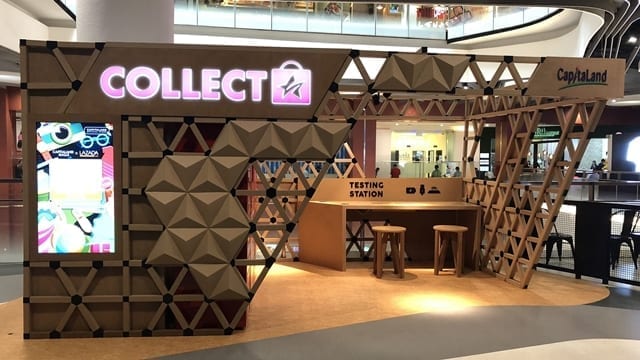
    “As part of our ongoing effort to enhance the offline and online shopping experience in our malls, we introduced seven click-and-collect lounges under CapitaLand’s partnership with e-commerce player Lazada. They are in Bedok Mall, Bugis+, IMM Building, JCube, Plaza Singapura, Tampines Mall and Westgate.”

    He says construction for Funan is progressing well. “With less than two years to target opening, Funan has received strong leasing interest for its retail and office components.”

    For its fourth quarter, CMT recorded growth of 1.8 and 2.6 per cent in gross revenue and NPI respectively year on year. The increase was mainly because of higher occupancy for Bugis Junction and The Atrium@Orchard, partially offset by lower gross revenue from Bedok Mall because of lower rental rates and reduced occupancy.

    For the full year, CMT recorded S$682.4 million in gross revenue, down 1.1 per cent. This was mainly because of the closure of Funan mall for redevelopment, lower rental rates and the lower occupancy at Bedok Mall. This was partially offset by higher rental from IMM Building, JCube and Clarke Quay.

  • Online sales bring cheers to online retailers

    Online sales bring cheers to online retailers

    To technology, retailers have and are moving out from brick-and-mortar stores to join the cyber world. As a result, street retail sales are accelerating on the Internet, offering shoppers better deals because they do not have to worry about the overhead expenses which traditional stores have to deal with.

    Christy Ng Sdn Bhd founder Christy Ng, who started her business in her mother’s living room years back, now owns five brick-and-mortar stores that delivers to 30 different countries.

    She decided to open her own physical store after her loyal customers, who rather try out the shoes before buying them, nudged her into it.

    “During the recent MyCybersale blow-out frenzy which ran from Oct 9 to 13 last year, we achieved 10-fold more sales than our physical stores,” she said.

    “We also witnessed a 35% increase in sales, specifically during the Alibaba Single’s Day 11.11 and 12.12 mega sale bash.”

    She added that 60% of her customer base comes from the online store, whereas the remaining 40% of customer base are from our physical outlets.

    MyCybersale is a five-day online sales festival organised by the National ICT Association of Malaysia along with the Malaysia Digital Economy Corp.

    MyCybersale 2017 managed to rack in a gross merchandise value (GMV) of RM311 million, exceeding the RM300 million target set for the year.

    RM39 million of the RM311 million GMV were derived from international shoppers which surpassed the export revenue target of RM20 million.

    It was a phenomenal growth of over 254% from the 2016 export revenue of RM11 million.

    Bagman Corp Sdn Bhd group CEO Datuk Liew said his online retail business also witnessed some positive numbers during the online mega sale frenzy.

    “Bagman didn’t do all that well during last year’s MyCybersale. However, during the 11.11 and 12.12 deals, we saw a 20%-30% increase in sales.

    “It is an improvement from the previous year and I believe online retail is the future,” Liew said.

    Liew, who used to sell his designed bags in major marketplaces, however, added that it is hard to do branding on those marketplaces since shoppers mainly go on these sites to search for “affordable” things.

    Previously reported that ShopBack Malaysia country GM Alvin Gill revealed the average spending per customer surged more than threefold during the recent the 12.12 online shopping celebration compared to the Single’s Day 11.11.

    “The average spending per customer during the 12.12 was RM485, whereas for 11.11 it was US$76 (RM302.04).

    “This is due to the increase in travel bookings made for the year-end holidays along with Christmas gift purchases, as well as apparels purchases for the New Year,” said Gill.

    ShopBack Malaysia collaborated with more than 30 online partners during 12.12, among them were Lazada, Zalora, 11street as well as Booking.com.

  • E-commerce players feel the heat as bargain hunters call shots

    E-commerce players feel the heat as bargain hunters call shots

    Buyers have become more price sensitive and less loyal to the online platforms in a trend that has prompted an intense “pricing game”, the event heard. Consumers are switching over to the e-commerce operators that offer better promotions and prices.

    The seminar also heard that so-called social commerce (s-commerce) has become another competitor, under a model where sellers and buyers can make shopping transactions directly.

    Pawoot Pongvitayapanu, founder and managing director of Tarad.com, said the platform was launched about 10 years ago as the first e-marketplace in Thailand.

    “Today, we are adjusting the positioning of Tarad.com to cope with more intense competition in the e-marketplace model. Without the new positioning, we would not be able to compete against other marketplaces,” he said.

    Speaking at the e-marketplace forum held on Sunday at Thailand e-Commerce Week 2017, Pawoot said that nowadays competition in the e-marketplace has become more of a pricing game. Consumers have become more price sensitive and have less loyalty as they follow the bargains.

    “Today, the actual competitors in the e-marketplaces are not other e-marketplace players, but s-commerce operators, such as Facebook and Instagram, where sellers and buyers can make their own transactions directly,” said Pawoot.

    Thanida Suiwatana, chief financial officer – Thailand, Lazada Group, said that that Thai consumers have become more confident about online purchases.

    “We spent a lot of money in doing marketing campaigns. both offline and online, to generate traffic,” said Thanida, adding that Lazada is now a top 10 e-marketplace in Thailand in terms of traffic.

    “Having good traffic is one of the most important factors for both bricks and mortar stores and online marketplaces. Any online platforms that can generate good traffic will have more chances to sell products.”

    Nuttawit Pholwattanasuk, managing director and co-founder of LnwShop, said that the platform serves individual vendors, enabling them to have their own website and space. It is similar to the idea of a developer of a market or shophouse allowing individual merchants or retailers to do business within their own retail space.

    Eric Bui, head of operation, Shopee Thailand, said that online marketplaces now go beyond the transactional, with a focus on the engagement between buyers and sellers as part of an ongoing relationship.

    “The way we do our listings and provide services to the sellers, everything is free, with no commissions or listing fees,” he said. “The shipping fee has been subsidised by Shopee. There is no reason why the listings on Shopee should not be the cheapest in the country.”

    Haejin Pyun, general manager, marketing strategy, 11street Thailand, said the company started the Thai operation in February.

    “We consider sellers and buyers alike to be very important. While other e-commerce players care about the buyers only, we care about the sellers sometimes more than the buyers,” said Pyun.

    “In Thailand, more than 50 per cent of the transactions come cash on delivery. At 11street, more than 70 per cent of the transactions come from credit cards. We see a big potential to grow in the Thai e-commerce.

    “However, to grow the e-commerce business in Thailand, the payment method is very important. In South Korea, credit card penetration is more than 90 per cent, compared to only 10 per cent in Thailand. Even though they have credit cards, Thai shoppers are still hesitant to put their credit card numbers on an e-commerce site.”

    Thananan Arunragtichai, assistant director of Ascend Commerce, said that the company has operated the weloveshopping.com for 15 years as a store front. For its website, the e-marketplace model was introduced three to four years ago.

    “Today, Thai consumers have greater expectation for marketplace services, such as cheap prices and high quality, as well as good after-sales service. As an e-marketplace operator, we need to manage their expectations properly,” he said.

  • Apple launches on Lazada

    Apple launches on Lazada

    Apple fans around South East Asia can now get new iPhones, iPads, and Macbooks from an official store on Lazada.

    Apple’s Lazada store opens in Indonesia, Thailand, the Philippines, Singapore, and Malaysia. Vietnam too will participate at an unconfirmed date.

    Alibaba-owned Lazada will get stock directly from Apple, after forming an agreement with the Cupertino company. That makes it the only official online seller of Apple’s baubles in the region. Beats by Dr. Dre headphones and other accessories are also available.

    Apple has a store in only one Southeast Asian nation: Singapore. That has created a niche for grey-marketeers to sell Apple’s gadgets – particularly iPhones – at inflated prices, with the ever-present risk of shoppers getting a counterfeit item.

    The opening is a boost to Lazada’s efforts to get more major brands to set up storefronts on its site. It already has 3,000 brands, mixed in with 135,000 smaller merchants.

    Earlier this year, when Retail in Asia met Duri Graziol, Director of Lazada Indonesia, and our discussion was about very well established brands and their way of targeting South East Asia.

    Typically, brands explore different options, among others,  creating their own .com., or going with a market place such as Lazada or Alibaba.

    Duri’s views on those options were the following :

    Creating your own .com

    Iis more ambitious and it requires huge investments, which go beyond building the website. Brands can easily build an e-commerce website, but how to bring people to the website, this is the challenge.

    Unless, you are selling something specific, which customers cannot find elsewhere, you are a small shop next to a shopping mall. Either people know your shop, or you will be basically just one in the thousands shops in the city, so on the internet.

    When people look for products without having any preference or idea, they go to a mall, and if you are not in there, you will miss your chance. In an online environment, those people go to market places and search per category.

    Going with a market place

    Customers who go to Lazada for instance, do not search per brand, they search for category, and if you are not there, it is very hard to target those customers.

    Additionally, a brand, which decides to open its own website will have to deal with high marketing costs to bring traffic to the website, with Lazada, those marketing costs are reduced as we work as a group. This is a massive advantage.

    In the countries we serve, infrastructures are a huge obstacle. Indonesia, for instance, has thousands of islands, as well as Philippines, and you need to deal with that, 50% of our orders are done ourselves.

    Another advantage of going with Lazada is the customer service management, which is internal for us makes it easier to reply to all questions regarding products, delivery, and logistics issues.

    Furthermore, payment, in countries like Indonesia, present some difficulties. Credit card and online banking penetration are still low or COD remains the lion’s share of payment methods and this it has pushed us to develop a business model for it.

    Cash on delivery is the solution for markets, in which trust is hard to build, and other payment services are not very well established.

    Concisely, Lazada is not only a market place, Lazada means experience in managing the customer journey and the different stakeholders involved in it.

    Apple is always looked at as a role model, so we are looking forward to the next giant brand to join Lazada.

  • Is e-commerce taking over sales in Indonesia?

    Is e-commerce taking over sales in Indonesia?

    The growth rate for retail stores is now at single-digit levels, falling from above 10% in recent years. Online shopping is shouldering part of the blame, but the main culprit is a slowdown in overall consumer spending — long the driver of Indonesia’s economy — due to sluggish wage growth.

    Since the busy Ramadan shopping season ended in the summer, Indonesian consumers apparently have tucked away their wallets, at least at brick-and-mortar establishments. Retail store sales in October 2017 grew by an anemic 1.3% from a year earlier, according to preliminary data released by Bank Indonesia, the country’s central bank.

    This is causing store closures across the country, where the modern retail business model had entrenched itself over the years. At the end of June, all Indonesian 7-Eleven convenience stores closed their doors. In September 2017, Matahari Department Store, the nation’s largest department store chain, shuttered two southern Jakarta stores.

    Same-store sales of the chain over the first nine months of the year fell 2.7% from the same period last year.

    The recent lack of foot traffic at a major Jakarta department store typified the trend. As some 40 clerks stood idly chatting away, a nearby supermarket swarmed with shoppers.

    Many of the vacant store fronts in the country’s commercial centers are due to the increase in e-commerce. According to one survey, online sales surged 22% in 2017 from the previous year to around $7 billion.

    A bevy of powerful e-commerce sites — among them Tokopedia, one of Indonesia’s largest online marketplaces, and Alibaba Group Holding’s Lazada — are siphoning shoppers away from stores, a trend that shows no sign of abating. Online sales are projected to keep climbing at a brisk annual rate of around 20% for the foreseeable future.

    The growth in smartphone usage has also spurred online shopping, especially in rural areas where modern retail shops are still few and far between.

    But the rise in online shopping tells only part of the story. The main reason for tepid consumer spending is weak wage growth. The minimum wage growth rate will slow to 8.71% in 2018, the lowest in recent years, according to the government, noting that relatively low-income earners will be hit particularly hard.

    As recently as 2013, minimum wages had soared more than 40%, fueling the country’s free-spending ways. Now, consumers are being forced to cut back in order to save for future outlays, such as on housing and education. This has put a crimp on spending for even daily products.

    With a population of over 250 million, Indonesia is the largest consumer market in Southeast Asia. Many economists say the country’s consumption will continue to rise over the long term.

    There is little doubt, however, that Indonesian’s retail industry is facing a crisis of sorts, and the government is not helping with the situation.

    If this trend continues, the ensuing shock waves may hit other sectors of the economy, possibly dampening foreign direct investment in the country’s consumer market.

  • Lazada to offer Apple products to Southeast Asia customers

    Lazada to offer Apple products to Southeast Asia customers

    Fans of Apple can soon buy their favourite Apple products on Lazada, Southeast Asia’s leading eCommerce company.  As an authorised online reseller, Lazada’s customers will be able to choose from a wide range of Apple products including iPhone, MacBook, MacBook Pro, iPad, iPad Pro, Apple TV, Beats by Dr. Dre, and other accessories.

    Start shopping this holiday season

    Consumers can start browsing this holiday season when the Apple ‘Shop-in-Shop’ on Lazada officially launches today (8th December) in the PhilippinesIndonesiaThailand and Singapore. This will be followed by Malaysia on 11th December, and then in Vietnam.

    By shopping on Lazada, customers can choose to pay for their Apple devices through Lazada’s 0% financing instalment plans[1]. Exciting surprises also await Lazada customers looking to score savings from deals offered during the finale of Lazada’s Online Revolution shopping event, the 12.12 Final Sale. More details will be announced later.

    The “preferred choice” for global brands

    Lazada Group Chief Executive Officer Max Bittner said the Apple ‘Shop-in-Shop’ concept is a testament to Lazada’s reputation as the undisputed and trusted online shopping and selling platform in Southeast Asia. “Lazada is the preferred choice for global brands who, like us, want to drive the explosive growth of eCommerce in Southeast Asia,” said Mr. Bittner, adding: “It also underscores our commitment to give consumers better and convenient access to the world’s best brands and products, especially those from Apple.”

  • Danone-Lazada plans its strategic partnership

    Danone-Lazada plans its strategic partnership

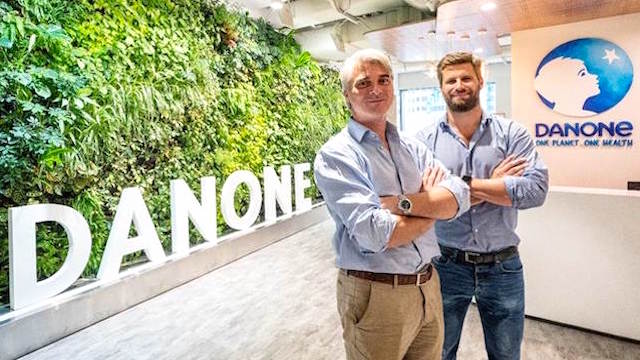
    French FMCG company Danone has teamed with Lazada Group to create a series of online stores for Southeast Asia, starting with Thailand in December.

    The Danone-Lazada strategic regional partnership covers Thailand, Indonesia, Malaysia and Singapore. The two companies say they will create “a superior online shopping experience for key product categories, combining their expertise on shopper needs and behaviours, and bringing convenience and compelling content to the ever-growing number of online consumers across the region”.

    The alliance will begin with Danone’s Early Life Nutrition category, which features a portfolio of brands for families with young children. Danone’s Early Life businesses are already working together in Indonesia, Thailand and Singapore – participating in Lazada mega-campaigns such as Online Revolution on 11.11 and 12.12.

    The joint venture will stretch beyond simple e-commerce by offering parents advice and information on the growth, development and nutritional needs of children. Lazada’s digital platforms will provide convenient ordering solutions, personalised service and exclusive content and events developed with Danone.

    “We have been working with Lazada for more than a year, and accelerating our partnership in the last six months,” says Eric van der Hoeven, VP of growth through engagement at Danone Early Life Nutrition. “We want to support all parents in their journey, and wherever we can, to help them make well-informed feeding decisions for their children at the critical moments in their growth and development. I am very pleased that our constructive collaboration so far will now be taken further in this strategic regional partnership.”

    Lazada CEO Max Bittner says young parents live increasingly busy lives and are often confronted with information overload.

    “Teaming up with a trusted brand like Danone reinforces Lazada’s position as a source of quality products and enables us to serve the best, most relevant content, service and support for parents on their journey.”

    The partnership will come into force by end of November, beginning with workshops bringing together the Danone and Lazada teams in the local countries in sharing insights and planning. The first visible consumer features jointly developed will be implemented on the Lazada websites in Thailand in December.

  • Lazada Online Revolution offering 210 million items

    Lazada Online Revolution offering 210 million items

    In its sixth year, the Lazada Online Revolution mega-sale will be the biggest yet when it takes off on November 11 across six countries – Indonesia, Malaysia, the Philippines, Singapore, Thailand and Vietnam.

    Themed “Shop the Universe”, the sale will offer 210 million products, up sevenfold from last year, and has expanded its product categories to include fashion, luxury cosmetics, groceries, pet supplies and digital goods such as e-vouchers and prepaid mobile-phone top-ups. International brands include Huawei, Laneige, Levi’s, Mac, Ray-Ban, Shiseido and Triumph.

    There will be about 26 million deals offering discounts of up to 90 per cent, including items from the Taobao Collection, which offers kitchenware, furnishings, fashion apparel and accessories.

    Shoppers in Southeast Asia ordered about two million items within the first 24 hours of last year’s Online Revolution 2016. Among the top sellers were VR glasses, smartphones, shower gels and mascaras.

    As well as its own 130 delivery centres across the six countries, Lazada will work with more than 80 delivery companies to handle demand during the sale.

  • Lazada’s logistics battle to win Southeast Asia

    Lazada’s logistics battle to win Southeast Asia

    Southeast Asia is on the verge of a logistics “boom” thanks to e-commerce, but will require huge investment in cities and last-mile networks to cope, says Pierre Poignant, the man behind the systems that keep Alibaba-owned Lazada moving.

    Mr Poignant, chief operating officer, said the Singapore-based marketplace, for its part, would continue to bet on delivery and other partnerships as demand grows. It already works with more than 100 companies in delivery and cross-border logistics, from Ninjavan in Singapore to ride-hailing start-up Go-Jek in Jakarta.

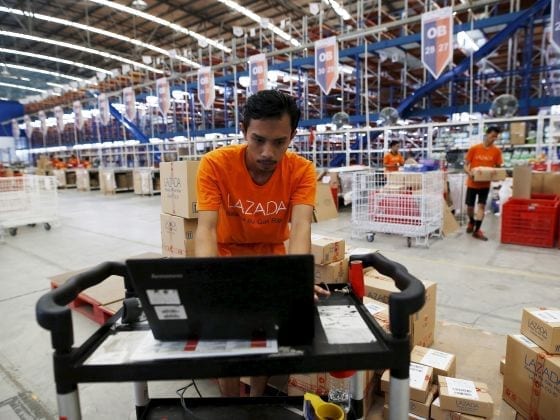
    But it will expand its footprint to cut costs and improve services, with smaller local hubs closer to customers, as well as a major warehouse it can use in Malaysia for goods that move less often. Lazada, with 130,000 merchants on its platform, has 14 warehouses and over 2 million square feet of space — and plans to open another five to six warehouses next year. It also has 130 smaller distribution centres.

    “Logistics in Southeast Asia is going to look very different from the rest of the world. It is hard to believe one player can do everything,” Mr Poignant said in an interview.

    “The distance from Aceh to Papua [in Indonesia] is bigger than the distance from Miami to Seattle. People don’t realise.”

    Already the world’s fourth-largest internet market, Southeast Asia is expanding at a rate of almost 4 million users a month, making it the fastest-growing e-commerce market globally, according to a 2016 report co-authored by Google.

    But while there are key growth engines — a young population of active mobile users and a patchy local retail network — there are also major challenges, as companies like Lazada try to conquer a region made up of thousands of islands, with poor roads and traffic-clogged cities.

    Some regions have no formal system for home addresses, Mr Poignant said, complicating deliveries, returns and even payment — more than half of transactions are still settled in cash.

    That leads to experiments, combining online purchases with offline pick-up in malls, as in Singapore — or in Indonesia, where Lazada handles a bulk of the last-mile delivery itself, using three-wheeled electric vehicles for bigger parcels. Cars and vans are too slow in traffic, Mr Poignant said.

    Taking the lead

    Amazon and others, including local players, have not failed to notice the region’s potential: Amazon is using Singapore as its beachhead, while China’s second largest e-commerce company JD.com is making Thailand its point of departure, partnering with the country’s largest retailer, Central Group.

    But Mr Poignant argues Lazada’s experience is hard to beat.

    “When it comes to logistics we are developing a distinct competitive advantage. We are the only ones to have this open network approach — combining our own infrastructure and partners,” Mr Poignant said.

    “Setting up a logistics network is a complex, long process.”

    Critical to keeping the advantage is also data, and Lazada is linking up with fast-moving goods producers like Unilever, to turn knowledge into target sales.

    Alibaba bought into Lazada last year in an effort to seek growth outside China. The $1-billion deal in April 2016 was Alibaba’s largest overseas deal and it raised its stake to over 80% this year.

    Last November, Lazada bought Singapore online grocer Redmart, a purchase that it hopes will help it crack cold storage and expand groceries into the rest of the region, though there is no concrete plan yet, Mr Poignant said.

    “One of the reasons why we acquired RedMart is that groceries is a very specific set of skills that you need to develop,” Mr Poignant said. “We have the ambition to develop this category across the region.”

  • CapitaLand links with Alibaba, Lazada Singapore

    CapitaLand links with Alibaba, Lazada Singapore

    CapitaLand is advancing its omni-channel strategy by forging an alliance with Lazada Singapore, and has also signed an agreement to manage Alibaba Shanghai Center, comprising four office towers and a retail podium.

    Its China project is the start of a strategic collaboration between the Singapore-based real estate group and Alibaba Group, Asia’s largest e-commerce company, to reinvent modern retail through the seamless integration of offline and online (O&O) channels.

    CapitaLand’s Singapore deal involves an agreement to launch an exclusive online mall on Lazada Singapore, which is part of Lazada Group, Southeast Asia’s largest e-commerce platform, now essentially controlled by Alibaba. The shop-in-shop on Lazada.sg will position CapitaLand as Singapore’s first omni-channel retail landlord connecting retailers to shoppers both offline and online, complemented by a world-first in-mall collection service for shoppers.

    “Even as new technologies disrupt traditional business models, real estate remains an important part of a holistic customer journey, as affirmed by leading digital players who are seeking to gain a foothold in the physical space,” says CapitaLand president/group CEO Lim Ming Yan.

    He says he foresees win-win outcomes for all parties as strategic alliances are forged to future-enable properties and support retailers in embracing an omni-channel business model.

    “The key to unlocking the next stage of growth lies in blending physical and digital channels to create a seamless O&O experience for the customer.

    “We will continue to leverage digital tools and partner disruptors to strengthen our customer engagement, embrace smart building technologies to uplift the quality of our built environment, and harness data to enhance customer experience at our properties.”

    Supports Smart Nation

    The Lazada deal supports the Smart Nation push to reinvent retail. CapitaLand will launch a shop-in-shop aggregating the offerings of retailers in its Singapore malls on Lazada.sg by the end of the year.

    Shoppers at the CapitaLand official store on Lazada.sg will have the option to collect their purchases in CapitaLand malls, and in so doing so will be rewarded with membership points in the CapitaStar loyalty program.

    Initially CapitaLand will roll out two unmanned click-and-collect lounges at Plaza Singapura and Bugis+ for shoppers to collect purchases or make returns. As well as collection lockers, the lounges will have fitting rooms and a product-testing bench.

    “As the owner and manager of Singapore’s largest network of shopping malls, we have embarked on creating a digital channel that supports our mall tenants in tapping the growth potential of e-commerce,” says CapitaLand Mall Asia CEO Jason Leow.

    By enabling shoppers to collect online purchases in its malls, last-mile delivery costs for retailers will be reduced in the long run.

    “Also, our retailers will enjoy comprehensive marketing support in the physical and digital space and get a leg-up in their e-commerce business.”

    Shoppers will not only have the option of click-and-collect, but benefit from free delivery and have 14 days to make returns, says Lazada Singapore CEO Alexis Lanternier.

    “This partnership is an important step for Lazada to expand our network of partners as we evolve the e-commerce ecosystem in Singapore.”

    Both CapitaLand and Lazada will help onboard retailers and promote the platform to shoppers, with the intention of rapidly scaling up the initiative in the next two years.

    ‘Bricks and clicks’

    Under its contract with Alibaba, CapitaLand will oversee the pre-opening and management of the shopping podium and one of the four office towers in Alibaba Shanghai Center, which has a total gross floor area (GFA), excluding car park, of about 80,000 sqm. The four-storey shopping podium – three levels above ground and one basement level – takes up about 20,000 sqm.

    Alibaba Shanghai Center is strategically located in the northern core of Shanghai’s Hongqiao CBD, less than 2km from Hongqiao Transportation Hub. Scheduled to open next year, the retail component serves working professionals and residents of the mid- and high-end housing zones nearby.

    Leow says the company and Alibaba will jointly explore the possibilities of combining “bricks with clicks”, starting with Alibaba Shanghai Center, and creating O&O experiences.

    Alibaba Group’s head of intelligent building, Wang Tao, says Shanghai is an important platform and the group’s headquarters there will serve as a strategic nerve centre for rolling out Alibaba’s New Retail strategy.

    “We believe our collaboration will chart new frontiers in integrating online, offline, logistics and data across a single value chain to meet the needs of consumers.”

  • Saha, Lazada unite for e-commerce expansion

    Saha, Lazada unite for e-commerce expansion

    Saha Group Fair is anticipated to attract over 1 million visitors, contributing more than 300 million baht in transactions. The fair runs until Sunday at the Queen Sirikit National Convention Center.

    Saha Pattana Inter-Holding Co, an investment company of Saha Group, has entered into a partnership with Lazada Thailand Co, aiming to use the e-commerce channel to explore its business at home and abroad.

    Saha Group chairman Boonsithi Chokwatana said the cooperation will fully take place this year after both parties started working together in 2014 to improve their selling platforms, warehouse systems, logistics management, payment methods and customer service centres.

    The companies have since signed a memorandum of understanding (MoU) enabling the Thai group to explore markets abroad, with Asean countries and China being targeted in particular.

    brands from Saha Group are now available via Lazada in various categories, including health and beauty products, lingerie and sport wears. More product categories will be added, including home and living products and groceries.

    Mr Boonsithi said Lazada is the leader in the Southeast Asian e-commerce market and seventh in terms of overall website popularity. It has a strong business base in Indonesia, Malaysia and other Asean market as well as China, the hometown of Alibaba, which is the parent company of Lazada.

    “This will help increase opportunities for our products to expand into the Asian market, particularly China, where customers are familiar with online shopping,” he said.

    Lazada expanded its online business into Asean five years ago in the Philippines, Malaysia, Indonesia, Vietnam, Singapore and Thailand.

    “One strong trend being seen among Thai consumers that is very positive for e-commerce is the higher penetration of mobiles,” said Alessandro Piscini, chief executive of Lazada Thailand.

    A lot of people access the internet for the first time through a mobile device and they are spending more time online for entertainment and various other content, he said.

    “E-commerce is not just about a website, but also the sub-businesses that complete the user experience i.e. payments or logistics,” said Mr Piscini, adding that Lazada will continue to invest in strengthening this ecosystem through its facilities to be put in the Eastern Economic Corridor.

    Lazada offers more than 10 million items in Thailand and 100 million items across Southeast Asia. The company plans to add two to three product categories including groceries.

    Saha Group has engaged in online business for a decade but sales remain sluggish, accounting for only 1% of Saha Group’s total.

    After partnering with Lazada, the group forecasts the sales contribution from online channels will rise to 10% in the next three years.

    The 75-year old group, which is Thailand’s leading consumer product conglomerate, has annual sales revenue of more than 200 billion baht from a variety of products, including food and drinks, household goods, clothes, leather goods, shoes, cosmetics and sports gear.

    “The cooperation with Lazada opens a new business chapter for our group,” said Mr Boonsithi.

    To support the online channel, Saha Group’s subsidiaries Tiger Distribution and Logistic Co yesterday signed a MoU with Paltac Corporation of Japan to strengthen its logistics businesses.

    Tiger Distribution is spending 1.8 billion baht to develop Tiger Suvarnnabhumi DC Project, a large scale warehouse building in Lat Krabang, Bangkok. It is expected to open this distribution centre in June next year.