Retail News CRM

Tag: lifestyle

  • Maybank Debuts Wealth Offering in Philippines

    Maybank Debuts Wealth Offering in Philippines

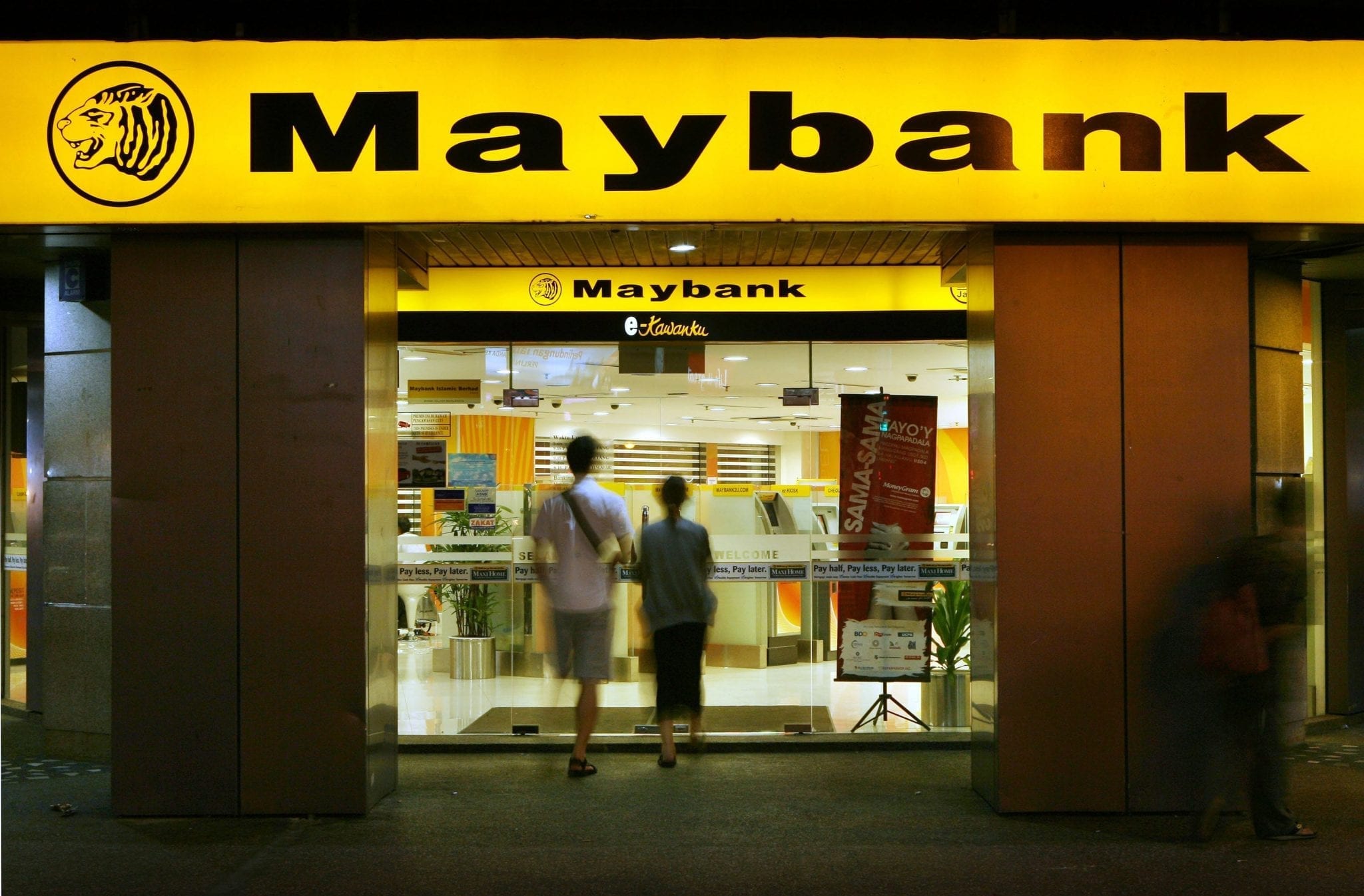
    Maybank launches its first a private wealth management arm in the Philippines, in the midst of trending interest from financial institutions to tap into the nation’s business potential. The bank will open the branch in Makati City in Manilla, which will add to the 67 centers it has in the ASEAN (Association of Southeast Asian Nations) bloc. The «Maybank Premier» brand will be deployed to target high net worth individuals with wealth advisory solutions.

    The bank is projecting continued growth in the region and expects its clients to benefit from the bank’s robust ASEAN connectivity according to its group chief strategy officer and chief executive of the international business Michael Foong.

    The Philippines has been in the spotlight in recent times due to growing interest from others to tap into its market for its financial sector potential across various segments.

    Earlier this week, Pru Life UK was reportedly expected to launch a standalone asset management firm in the country. And also in the same week, the nation completed its first blockchain-based remittance from Singapore’s OCBC.

    This wealth management launch is in line with the bank’s focus to continue to develop our group wealth management franchise to capitalize on the region’s growth trajectory, and the Philippines is one of the fastest-growing economies in the Association of Southeast Asian Nations (ASEAN) with a burgeoning middle class, said John Chong, group chief executive of Maybank.
  • LVMH sales up despite global tensions

    LVMH sales up despite global tensions

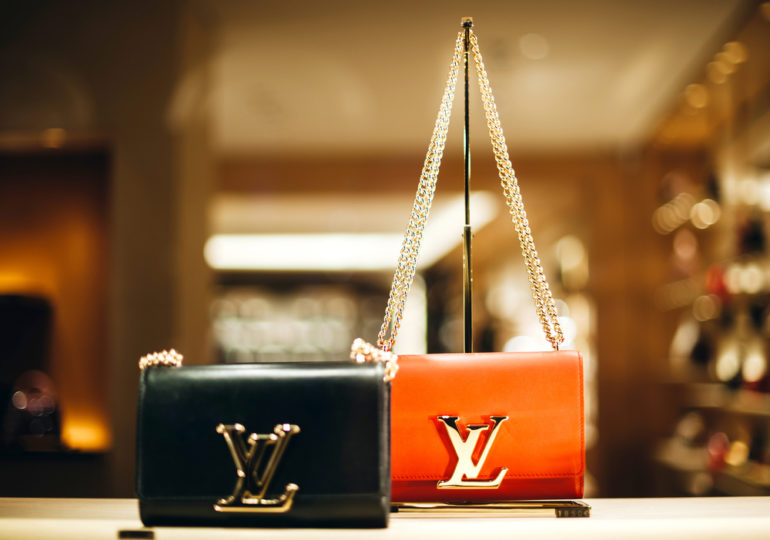
    Luxury brand owner LVMH has reported a solid 15 percent increase in sales in the first half of this year, shrugging off gloomy consumer sentiment in many markets.

    The parent of Louis Vuitton, Christian Dior, Bulgari, Sephora, DFS, Moet and a raft of other brands recorded sales of €25.1 billion. Organic growth was 12 percent ahead of the same period a year earlier.

    Second-quarter growth was also up by 15 percent of the beginning of the year, with the US, Asia and Europe all showing good growth and an obvious rebound in France in the second quarter.

    While the company noted a slowdown in demand in Hong Kong and Macau over the past few months, its DFS department-store subsidiary recorded “good” performance during the first half of the year.

    Profit from recurring operations was €5.295 billion for the first half, up by 14 percent, with operating margin reaching 21.1 percent – about the same as last year.

    “These results once again illustrate the effectiveness of our strategy and the exceptional desirability of our Maisons, whose products transcend time,” said chairman and CEO Bernard Arnault.

    “Their constant demand for quality and their consistently refreshed creativity are key to LVMH’s success, always guided by a long-term vision, combining exemplarity and responsibility in all the company’s actions. Despite buoyant demand, we will continue to manage costs and remain vigilant into the second half of the year. We are therefore entering the second half of the year with confidence and count on the talent of our teams and their shared entrepreneurial passion to further increase, once again in 2019, our leadership in the world of high-quality products.”

    The company’s fashion and leather goods business group recorded organic sales growth of 18 percent and profit from recurring operations was up 17 percent. The Louis Vuitton brand business achieved growth in all businesses and regions. Christian Dior had “a remarkable performance during the first half,” the company said, with its new 30 Montaigne line a standout.

    The selective retailing business group achieved organic revenue growth of 8 percent, with profit from recurring operations up 17 percent. Within that group, Sephora recorded strong revenue growth and gained market share in all of its locations, LVMH reported.

  • Starbucks China launches world-first Starbucks Now store

    Starbucks China launches world-first Starbucks Now store

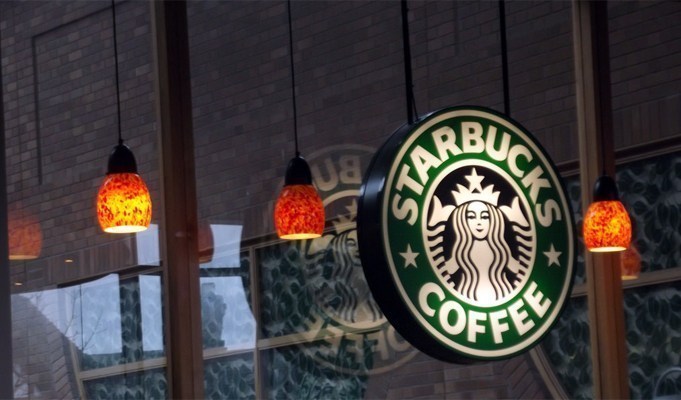
    Starbucks China has opened its first Starbucks Now store – an express retail experience that integrates Starbucks physical and digital customer touch points.

    Centered in Beijing’s financial district, the Starbucks Now store is the company’s first express-retail format location. The service combines the signature Starbucks cafe environment with mobile order and pay and Starbucks Delivers customer experiences.

    “The Starbucks Now store is a testament to our unwavering commitment to delivering innovative customer experiences through new retail formats,” said Starbucks China Retail president and COO Leo Tsoi. “This new retail format and design approach provides us with a platform to offer customers a fast and convenient retail experience to suit their on-the-go lifestyle.”

    Customers entering the store are greeted by a Starbucks barista at an elevated concierge counter to assist with ordering or order pickup. They can choose from a menu of handcrafted beverage options tailored for the on-the-go customer along with an assortment of popular food items. Limited seating is available for customers who choose to stay and relax with their favorite food and beverages in the store.

    For delivery riders, a dedicated area for Starbucks Delivers orders enables fast pickup supported by baristas. Fulfilled Starbucks Now and Starbucks Delivers online orders will be placed in a secure in-wall system with a designated pickup portal associated with each order.

    The store will also have the ability to serve as a centralised dispatch centre for delivery orders within a certain radius, so Starbucks baristas at neighbouring cafes can focus on delivering service to in-store customers at those locations. During peak times, Starbucks Delivers beverage orders will be prepared by baristas from a central kitchen that is part of the Starbucks Now store.

    The company plans to open new Starbucks Now stores across high-traffic areas including business and transportation hubs as well as to new cities in China.

  • Luk Fook sales drop 10 per cent as trade war bites

    Luk Fook sales drop 10 per cent as trade war bites

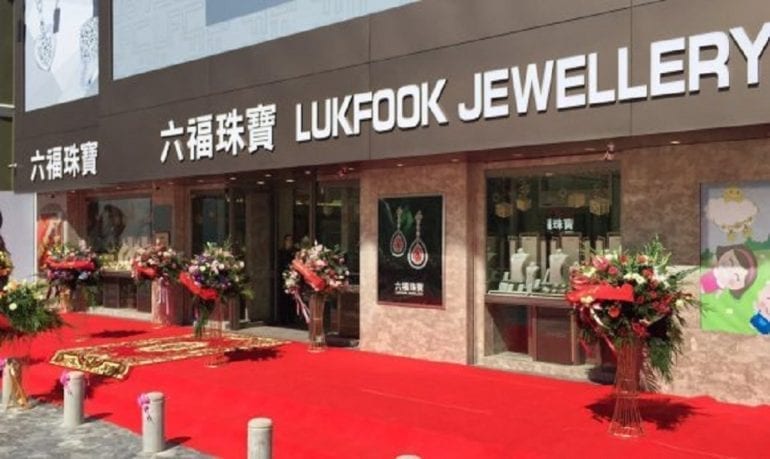
    The trade war between the US and China has been partially blamed for a 10 per cent fall in Luk Fook sales.

    In a quarterly sales update, the Hong Kong-listed jewellery retailer said a relatively higher base in the comparable period also contributed to the decline.

    First-quarter same-store Luk Fook sales were down 10 per cent with the overall same-store sales of gold products down 19 per cent. Gem-set jewellery sales rose 4 per cent.

    In Hong Kong and Macau, sales of gold products fell by 20 per cent while gem-set jewellery sales rose 6 per cent.

    “The favourable sales performance of lower-value items resulted in a double-digit drop in the average selling price of gem-set jewellery products,” said chairman and CEO Wai Sheung Wong. “However, due to the remarkable increase in sales volume, the same-store sales of gem-set jewellery products still recorded positive growth given a high base.”

    Sales on the mainland fell 7 per cent, with gold products down by 4 per cent and gem-set jewellery down by 7 per cent. However, mainland licensed shops recorded a low single-digit same store sales growth.

    Luk Fook added a net 35 new Lukfook stores in the mainland during the quarter. As at June 30, the company operated 1861 worldwide, 1790 of those on the mainland.

  • Visa takes stake in startup Go-Jek

    Visa takes stake in startup Go-Jek

    Digital-payments company Visa has invested an undisclosed amount into Southeast Asian ride-sharing and services startup Go-Jek giving it a foothold in the company’s payments platform.

    The two companies say they will work together to provide greater options for cashless payments and more seamless experiences for consumers across Indonesia and Southeast Asia.

    Indonesian-based Go-Jek, which has since launched in Vietnam and Thailand, has created Go-Pay which is one of the leading digital-payment providers in Indonesia and established itself as a regional rival to GrabPay

    “The partnership will see Go-Jek and Visa collaborating on innovative payment solutions for digital-first consumers and Southeast Asia’s unbanked and underserved population,” the two companies said in a statement.

    “Financial inclusion in Southeast Asia continues to be an urgent and important issue. The vast majority of Indonesia’s transactions are still cash-based and the adoption of digital payment services is as low as one-in-four users in markets like Vietnam. Addressing this opportunity could increase Gross Domestic Product levels by between 9 per cent and 14 per cent, even in relatively large Southeast Asian economies,” the statement said.

    Visa regional president Asia Pacific, Chris Clark said Visa and Go-Jek share common objectives. “We both want to make everyday life more convenient, whether it’s how people move around town in Southeast Asia’s fast-growing urban areas, or making it easier for people to pay and be paid all over the world. We also have a shared goal to bring formal financial services to the unbanked and underserved, including micro, small and medium businesses. Through this partnership, we will explore ways to leverage the power of Go-Jek and Visa’s networks to expand financial access in Southeast Asia.”

    Go-Jek president Andre Soelistyo said Visa’s investment in the company is an endorsement of its business model.

  • Harley-Davidson LiveWire Electric Motorcycle Unveiled

    Harley-Davidson LiveWire Electric Motorcycle Unveiled

    Harley-Davidson has unveiled the production version of its first electric cruiser and it is expected to go on sale in 2020. The Harley-Davidson LiveWire made its debut as a concept at the EICMA 2018 motorcycle show and at the Consumer Electronic Show (CES) 2019, the American motorcycle maker had announced that it will take pre-orders for its first electric model. Harley-Davidson intends to work on a complete range of electric motorcycles and the LiveWire will kick things off for the company in the electric mobility space. The bike maker has also revealed the pricing on the Livewire that costs $30,000 in the US (around ₹ 20.56 lakh).

    The LiveWire is powered by a new electric motor which Harley-Davidson calls the “Revelation” drivetrain. The new drivetrain uses a belt drive to power the motorcycle forward. The electric bike also comes with a number of advanced features like a telematics system called H-D Connect which gives data about the motorcycle’s battery charge and service reminders to the owner via Harley’s connected app. Harley-Davidson aims to make LiveWire the first cellular-connected electric motorcycle.

    The company has already revealed the specifications and details about the performance of the LiveWire and claims that it can clock triple digit speed in just 3.5 seconds along with a top speed of 177 km on a single charge. The manufacturer claims a range of 235 km on a single charge. Ride assist features on the LiveWire include traction control and anti-lock braking system (ABS) which will be assisted by an inertial measurement unit (IMU). Moreover, it also features a signature Harley-Davidson sound as it accelerates.’ Additionally, the LiveWire gets rear-set pegs, Brembo calipers and a steel trellis frame with inverted Showa forks and a monoshock at the rear. It is also packed with equipment like multiple rider modes, Bluetooth connectivity and a full-colour TFT instrument console.

  • Courts opens first IoT store at Funan mall, Singapore

    Courts opens first IoT store at Funan mall, Singapore

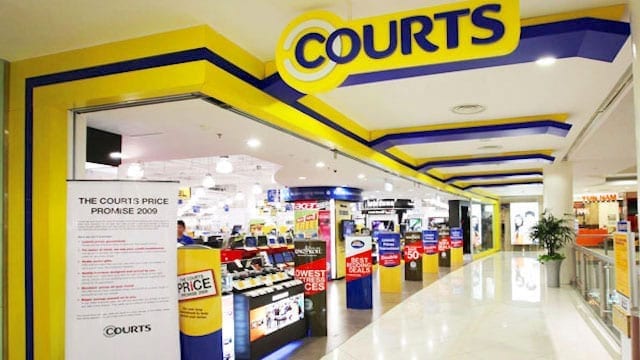
    Courts Singapore has opened its first Internet of Things store at Funan mall.

    The 12,000sqft store houses Google’s first experience zone in Asia and another from Samsung.

    Consumers can try Google’s entire range of products in Singapore, from smartphones to the recently launched Nest Hub smart display, which is similar to a smart speaker but with a screen.

    Ben Tan, Courts Singapore country CEO, shared with The Straits Times that 80 per cent of the products on sale are compatible with smart-home platforms such as the one anchored by Google Assistant, Google’s artificial intelligence-powered voice-assistant software.

    “The number of smart products available here that work with Google Assistant has increased by 200 per cent this year on year,” Tan said.

    At the Samsung experiential zone at the Courts Singapore Funan mall store, consumers can try out an integrated smart home.

    They can open a door using a digital lock, see notifications from a security camera on a smart Samsung television and issue voice commands to smart home appliances such as washing machines and fridges.

    According to Tan, Courts will offer more services to go along with smart home, such as setting up the devices and educating users on how to control their smart gadgets.

  • Fred Segal looking for Asian expansion

    Fred Segal looking for Asian expansion

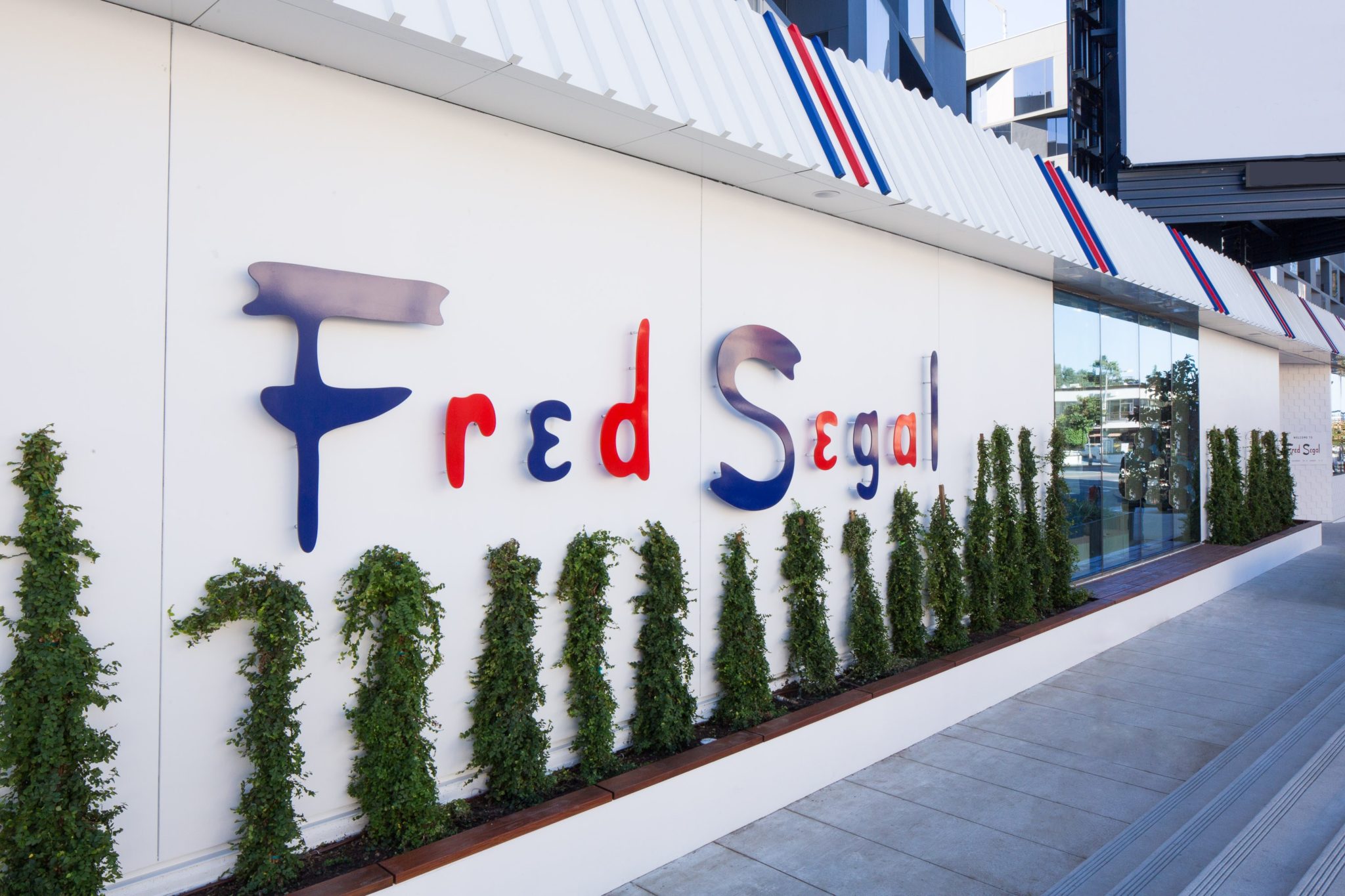
    US West Coast fashion and lifestyle retailer Fred Segal is eyeing expansion into China as its new owner Global Icons seeks to revive the 57-year-old brand. In an interview, Fred Segal president John Frierson said the European and Asian markets are big focuses for the company, singling out the growing spending power of Chinese Gen Z and millennial consumers.

    He said the company will be announcing “significant” plans for physical retail within Asia within the next few weeks, led by “big partners” in the region.

    Jeff Lotman, CEO of Global Icons and Fred Segal chairman, said the company was in final discussions with multibillion-dollar trading companies in China, South Korea and Japan. Stores in those markets would follow debuts in Taiwan and Malaysia last year under the company’s previous ownership.

    Global Icons has offices in Hong Kong and the company has secured licensing deals with brands as diverse as Hostess and Lamborghini.

    Fred Segal, a tailor, founded his retail brand in 1961. It peaked in the 1990s and early 2000s when it became the first to sell Kate Spade and Juicy Couture, and was shopped by celebrities including Paris Hilton and the Olsen twins.

    The company operates through licensees in international markets and has already announced plans to open at least 20 stores this year.

    “To really have next-level success means going out and creating our own line of products, and selling the Los Angeles lifestyle to the world,” Lotman said. “We can no longer just be US-centric.”

    He said he wants the international stores to retain Fred Segal’s retail signatures, including multiple brands, emerging designers, events and a restaurant.

    Added Frierson: “We’re lucky in that we’re not trying to harvest the value of the brand, but we’re trying to grow it. And we have a tremendous amount of growth to do in the next 10 years.”

  • Watsons Singapore launches store-in-store Retail concept

    Watsons Singapore launches store-in-store Retail concept

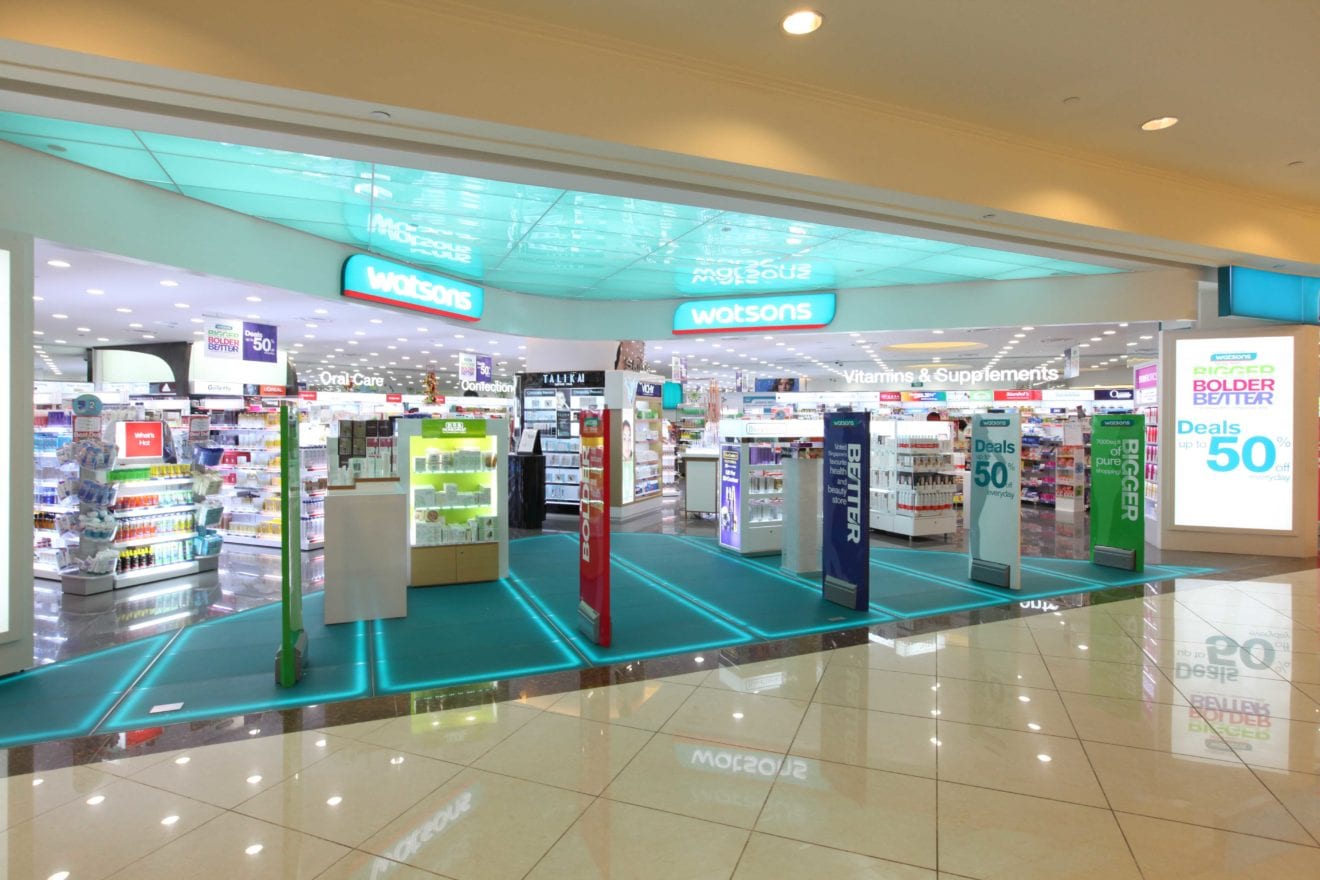
    Watsons Singapore has launched a premium store concept at Takashimaya. The 7000sqft store hosts distinct zones encompassing skincare, hair care, health and personal care, with new brands such as Milani, Pony Effect, and Utena.

    “To keep pace with the innovative, trendy brand image that Watsons is known for, we are very excited to refresh and make a statement with our Watsons Takashimaya store in a new generation premium store format which offers more experiential zones and shopability,” said Irene Lau, Watsons Singapore GM.

    “The expanse of the store allows us to offer more exciting and exclusive brands across skincare, cosmetics, health and wellness for our discerning consumers. In addition, as we continue to evolve in this digital age, we have incorporated smart technologies and gadgets to enhance the shopping experience and increase engagement with our consumers.”

    The refreshed Watsons store also hosts store-in-store (SIS) concepts at its cosmetics, skincare and health zones.

    The L’Oreal Paris SIS offers a comprehensive range of cosmetics, from foundations, eye make-up colours to lipsticks. Maybelline’s SIS offers the Alice+Olivia Maybelline collection, the first-ever fashion make-up collaboration from the company, that is exclusively sold at Watsons Singapore.

    In support of Small Medium Enterprises (SMEs) in Singapore, Watsons is introducing two independent homegrown brands, Botanica Culture and Hush Candle, that focus on wellness.

    A seven-metre length Mask Bay allows consumers to find a mask or two that cater to their skin type, beauty concerns or daily needs across 22 brands.

    The Real Techniques wall contains make-up tools and accessories, including performance brushes and expert sponges.

    The new Watsons store will have four full-time pharmacists, led by principal clinical pharmacist, Chung Wing Lam, who was named 2018 Excellence Service SuperStar by Singapore Retailers Association.

    Watsons Singapore’s membership will be automatically upgraded to “Watsons One Pass” which allows members to enjoy benefits when they shop at Watsons stores in China, Hong Kong, Indonesia, Malaysia, Taiwan and Thailand.

  • Edmund Hillary Brands kicks off $3m capital raise

    Edmund Hillary Brands kicks off $3m capital raise

    A luxury outdoor fashion brand inspired by Sir Edmund Hillary is looking to raise $3 million to expand overseas and fund a women’s range.

    Edmund Hillary Brands, which was co-founded with the Hillary family in 2018, launched an equity crowdfunding campaign on UK crowdfunding platform Crowdcube on Monday.

    Co-founder and CEO Mike Hall-Taylor said the brand aims to build on the momentum it has experienced since debuting its first collection last year.

    “We’ve received an overwhelming response to our first collection since launch last year and we want to maintain the momentum and capitalise on immediate opportunities in the UK, US, China and Australia as well as meet the demand from consumers for a women’s range,” Hall-Taylor said in a statement.

    While the brand expects to attract a number of larger investors, the minimum investment was deliberately kept at $23 to be accessible to New Zealanders who are interested.

    At the time of this writing, Edmund Hillary Brands had raised £82,728, or roughly $160,000, from 53 investors, bringing it 16 per cent of the way to its target. The campaign ends on July 24.

    Edmund Hillary Brands has enjoyed some early successes since launching in 2018, including a global debut at New Zealand Fashion Week, the opening of a standalone store at Queenstown airport, a global e-commerce site and partnerships with two supporting retailers.

    The brand has also formed a distribution partnership with a major e-commerce platform in China, where it will launch in September, ahead of the 2022 Beijing Winter Olympics.

    The brand’s debut collection was inspired by the classic styles worn by Sir Edmund Hillary and the expedition team. Designers poured over more than 2000 images of the 1953 expedition when developing the range.

    In addition to the brand’s connection with Sir Edmund Hillary’s style, a percentage of every sale goes to support Himalayan communities and outdoor education.

    “Apart from being an exciting financial investment, it also represents the opportunity to be part of continuing my father’s legacy with a portion of every sale going to the causes close to Ed’s heart – supporting Himalayan communities and outdoor education in our key markets,” Peter Hillary, co-founder of the brand, said in a statement.

  • Lagerfeld’s legacy: double-digit growth and €10 billion

    Lagerfeld’s legacy: double-digit growth and €10 billion

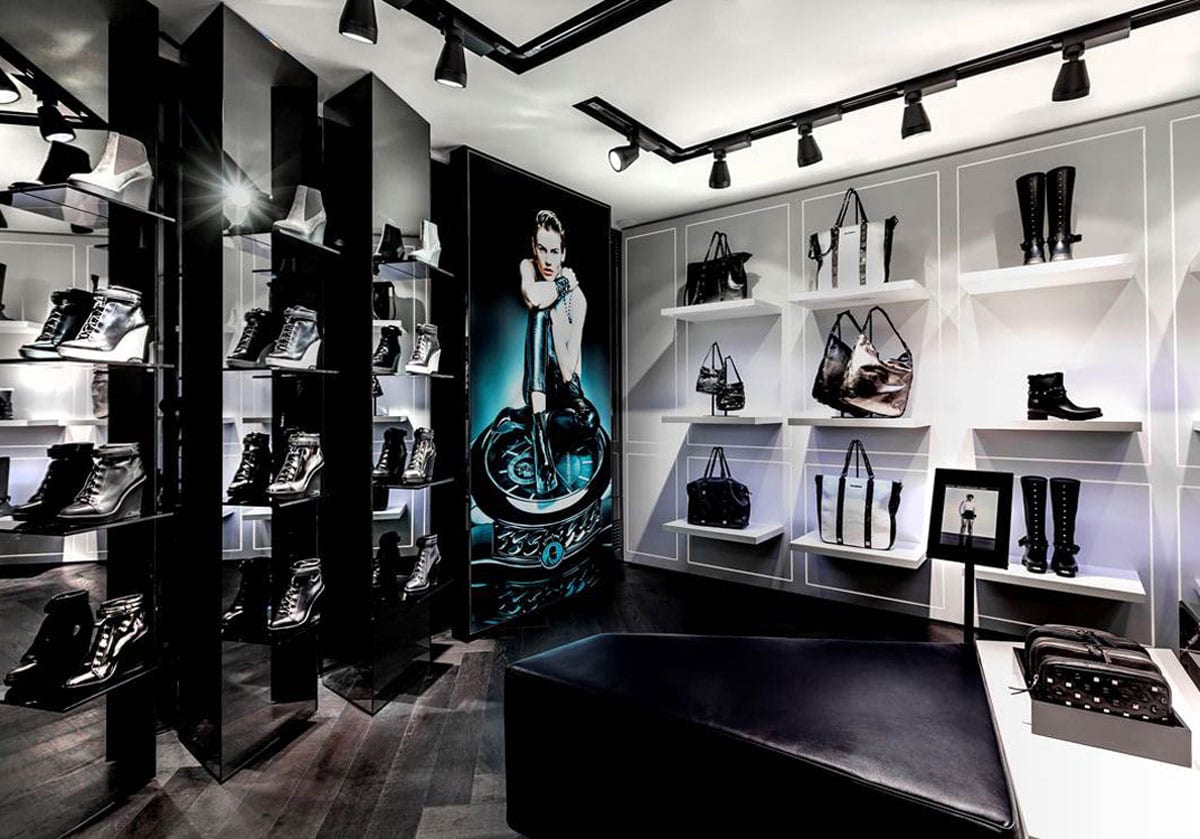
    Fashion icon Karl Lagerfeld delivered French maison Chanel a stunning legacy in the final year of his life. Chanel, privately owned, has revealed financial information only twice in its 109-year history. But yesterday, finance chief Philippe Blondiaux took the extraordinary step of announcing the brand had achieved global sales of almost €10 billion last year, in an apparent tribute to the designer, who died in February, aged 85. Profit exceeded €3 billion.

    The company also achieved double-digit sales growth “with great performances in leather goods and ready-to-wear”. But that was all the notoriously secretive company revealed, other than to reassert the company was not for sale, thus dashing any interpretation the details were released to pique the interest of prospective bidders.

    Chanel is owned by the Wertheimer family. Geneva-based Gerard Paul Philippe Wertheimer, 69, controls the business in partnership with his brother, Alain, 70. The former has an estimated worth of US$15.3 billion, with the pair ranking fourth and fifth on France’s rich list and among the 40 wealthiest people on the planet.

    Lagerfeld died of cancer, but reportedly worked until the end, such was his passion for his craft.

    Analysts estimate Chanel to be worth in the vicinity of $20 billion, making it one of the world’s most valuable fashion brands, and certainly one of the largest still in private ownership.

    In turnover, it is catching archrival Louis Vuitton, whose sales exceeded $10 billion last year.

    Far from resting on its laurels, Chanel invested an estimated $1 billion in digital innovation last year, embracing online, social media and seamless online/offline integration and in-store technology.

  • Whittard of Chelsea launched in Taiwan

    Whittard of Chelsea launched in Taiwan

    Fine beverages retailer Whittard of Chelsea has partnered with Ruentex Group to launch its first stores in Taiwan. The new venues, located in Breeze Nanshan department store and Mitsui Mall in Taichung, are early steps in the firm’s emerging international expansion. The firm chose Taiwan following considerable interest in the brand among Taiwanese tourists in the UK.

    Three more outlets are expected to open in the territory later this year.

    “After seeing evidence of the appeal of our brand to the Taiwanese consumer in our home market, we became very excited by the opportunity to introduce the brand to Taiwan and started looking for the right partner,” said Whittard of Chelsea’s CEO Mark Dunhill.

    “We are delighted to have secured a partnership with Ruentex Group; they have an excellent record in bringing international brands to Taiwan and we share the same passion and ambition for Whittard. Together with my colleagues in England, I look forward to working closely with them to build a successful business in the years to come.”

    Whittard recently opened on China’s Tmall platform and has also made entries into Japan and Southeast Asia.

  • New Piaggio Ape City Plus 3-Wheeler Launch Date Announced

    New Piaggio Ape City Plus 3-Wheeler Launch Date Announced

    Piaggio India has officially announced the launch date for its upcoming new three-wheeler, the Ape City Plus. Slated to be launched on June 14, 2019, the new Piaggio Ape City+ auto rickshaw will be the newest addition to the mid-body segment three-wheelers. Piaggio claims that with the new Ape City+, the company will address its customers’ needs perfectly in the last mile segment, suitable for both cities as well as the rural markets.

    Currently, in the people carrier space, Piaggio India offers three models – the Ape City, the Ape Auto+, and the Ape City HT. The existing Ape City comes in two engine choices – petrol and diesel, and the former comes with three fuel options – petrol, CNG and LPG. The petrol version is powered by a 197 cc that is tuned to churn out about 10 bhp and 17.6 Nm of peak torque, along with a fuel efficiency of 29.43 km.

    The same motor in the CNG version makes 9.6 bhp and 15.3 Nm of peak torque, with a mileage of 27.36 km/g, and in the LPG version, it makes 10.46 bhp and 16.7 Nm torque with a fuel efficiency of 22.7 km/g. The diesel model comes powered by a 435 cc oil burner that is tuned to churn out around 8 bhp and develops 21 Nm of peak torque. The motor offers a fuel efficiency of 32.32 km. We expect the new Ape City+ to come with the same engine options.

    In the invite sent by Piaggio, the company has also confirmed that at the launch, it will talk about upcoming technology in Piaggio products and its future plans for the Indian market. So, we expect the automaker to reveal its plans for the Bharat Stage VI / BS6 transitions and maybe even electrification.

  • BSH opens Asia’s first UnserHaus

    BSH opens Asia’s first UnserHaus

    BSH Home Appliances has opened Singapore’s first UnserHaus Customer Care Centre and a UnserHaus Experience Centre.

    Meaning “our house” in German, the UnserHaus centre is a lifestyle concept featuring Bosch and Gaggenau appliances in a home-like environment.

    “UnserHaus is an exciting new proposition that gives BSH’s home appliance brands, business partners and collaborators a chance to flourish,” said Hendrik Kretzer, CEO and head of BSH Home Appliances Asia Pacific Region.

    “Our philosophy and core ethos are focused on building long lasting trust with all of our customers and partners. We provide a platform to learn and experience unique ideas, future thinking, and real passion and understanding of the products that could benefit the way we live.”

    Located next to the Bosch building, the 1350sqft UnserHaus Customer Care Centre resembles a modern-day home, with a repair room that allows customers to watch technicians through a glass divide.

    While waiting for their appliances to be repaired, customers can visit either the dining room, which provides a hands-on experience with built-in appliances like dishwashers, coffee machines and ovens; or the living room, where they can sit down, unwind and relax with music or a wide-screen television. There is a children’s playing space as well.

    All products at UnserHaus come tagged with a QR code that allows visitors to purchase and pay for them online.

    UnserHaus Experience Centre

    Previously known as the Bosch Experience Centre, the UnserHaus Experience Centre is a functional open-concept home that allows customers to experience the latest Bosch and Gaggenau appliances.

    Located in the Bosch Building, the centre is divided into adjacent Bosch and Gaggenau brand zones. Visitors can try and choose Bosch- or Gaggenau-themed kitchens for their own kitchen planning. Hands-on experiences are available for appliances from six product categories: laundry, dishcare, cooking and baking, refrigeration, food preparation and indoor cleaning.

    Customers can also join cooking classes, held with partner chefs in live kitchens.

  • Australian brand house Gazal bought by PVH

    Australian brand house Gazal bought by PVH

    PVH has finalised the acquisition of Gazal Corporation, the Calvin Klein and Tommy Hilfiger-owner’s long-term partner in Australia, showing an increased commitment to the region.

    The acquisition gives PVH ownership of the Calvin Klein, Van Heusen, Nancy Ganz, Pierre Cardin, Fred Bracks, and Paramount brands in the region, and supports the group’s strategy to have a more direct hand in the direction of its brands in the Asia-pacific region – having recently re-purchased the licence in Hong Kong, Macau, Singapore, Malaysia and Taiwan.

    “Our decision to acquire Gazal is aligned with PVH’s strategic priority to expand our worldwide reach by assuming more direct control over our brands’ regional licensed businesses,” PVH chairman and chief executive Emanual Chirico said in a statement.

    “By joining forces now, we believe we’re well positioned to capture the significant growth in the Australia and New Zealand markets.

    “We are pleased to welcome Gazal into our PVH family and continue driving our business forward together.”

    As part of the acquisition, four key members of Gazal’s executive team are expected to remain in their respective roles for at least two years, having entered new employment agreements.

    According to Tommy Hilfiger global chief executive Daniel Grieder, this strategy will allow the brand to introduce a wider range of product lines, as well as offer an elevated and more immersive brand experience.

    “Building on our strong existing regional foundation, we plan to accelerate the growth of the Tommy Hilfiger business and invest further in driving the expansion of the brand,” Grieder previously said.

    Calvin Klein has also been expanding its focus in Australia, opening its first multi-brand store in Queensland’s Sunshine Plaza – the brand’s 32nd in Australia – as well as a more directed digital strategy.

    Steven Shiffman, chief executive officer at Calvin Klein, recently unveiled a number of initiatives meant to push the brand forward, while tailoring it to changing consumer wants and needs.

    One of these initiatives is a dedicated, regional e-commerce strategy, as well as the potential for as many as 100 stores opened across Australia and New Zealand.

    This decision was made in order to minimise the brands’ reliance on the Australian department store sector.