Retail News CRM

Tag: Lotte

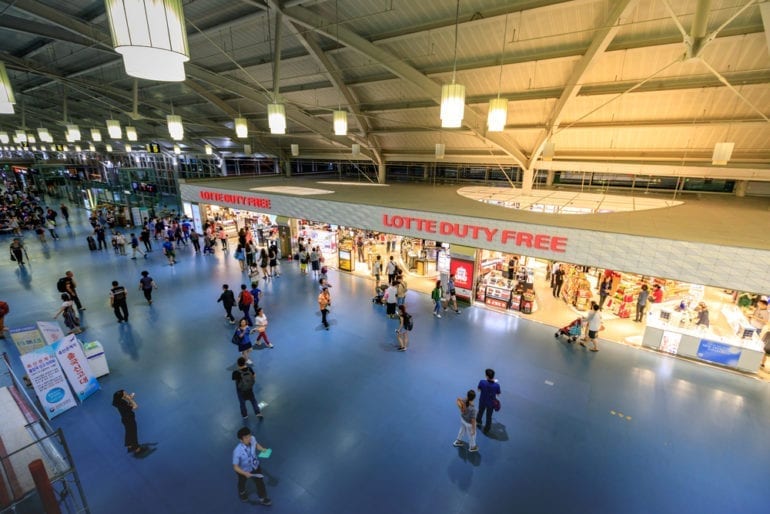
  • Lotte Duty Free files complaint against airport

    Lotte Duty Free files complaint against airport

    Lotte Duty Free submitted a report to the Fair Trade Commission regarding its rent feud with Incheon International Airport, according to the leading duty-free operator.

    Korea’s largest duty-free operator and airport have gone through four unsuccessful discussions on the matter since mid-September, but this is the first time one of them has called in state officials.

    Lotte’s assertion is that Incheon International Airport violated the Monopoly Regulation and Fair Trade Act by setting up contract conditions that were unfavorable to the duty-free operator. If the request goes through, the FTC will embark on an investigation of its own or set up a definite deadline for the two to reach an agreement.

    In 2015, the two signed a five-year rent contract for Lotte’s operation there worth 4.1 trillion won (US$3.68 billion). The deal ran from September 2015 to August 2020.

    The company pinpointed two terms in the contract that they thought were “unfair.” One is a clause that prohibited any adjustments to the rent or security deposit due to changing management conditions or a drop in sales.

    “In nature, duty free businesses are vulnerable to international affairs and government policy changes,” said Lotte Duty Free in a statement. “The clause ignores the industry’s particular characteristic and rules out any possibility of renegotiation from situations that may be prompted from this.”

    The second disputed term states that the operator cannot pull out of the deal before half of the contract period has passed. Even if Lotte requests a revocation after this halfway point, it has to continue operations for four months from the withdrawal date.

    After the fourth discussion ended fruitlessly, Lotte discussed the possibility of closing down its operation in Incheon International Airport, which takes up about half the space allocated to duty free stores and generates 60 percent of the airport’s entire rent earnings from duty free.

    The number of Chinese tourists in Korea plummeted since March after tensions rose over Korea’s deployment of a U.S.-led antimissile system. Lotte says this left a huge void of customers – the company used to generate 70 percent of its annual sales from Chinese consumers.

    Under the current contract, Lotte Duty Free can pay a designated portion of its operating sales as rent. But there is also a minimum amount that the operator has to pay even if the sales figure falls below that threshold.

    As Lotte’s sales are lower, the sales figure does not reach the minimum amount. Lotte says that it cannot afford to pay the minimum amount due to unfavorable market conditions.

    Its counterpart Incheon International Airport rebutted the claims and remains firm that it will not alter the original contract conditions. The airport said the contract with Lotte was based on a mutual agreement that the market situation may change in the future.

    “The contract was already screened by the FTC so we’re not expecting any problems based on relevant laws,” it said in a statement.
  • Double opening for Lotte Duty Free

    Double opening for Lotte Duty Free

    Following a soft opening in May, Lotte Duty Free has expanded its presence at Da Nang International Airport in Vietnam, with an official opening today.

    As the first Korean travel retailer to tap Vietnam, Lotte now has two stores at the airport, one of 974sqm and the other 117sqm. The opening was timed so the stores are trading before the 24th APEC Summit in Da Nang, which starts on Monday.

    Trading as Phu Khanh Duty Free, the main store had its soft opening in the new terminal in May as a JV between Lotte Duty Free (60 per cent) and a local partner, Phu Khanh Duty Free Trading Company. The store offers 115 brands, including 14 Korean labels, across such categories as tobacco, cosmetics, watches, accessories, eyewear and toys.

    Lotte Duty Free CEO Jang Sun-wook says Vietnam is expected to become a bridgehead for the company in Southeast Asia as a new market with soaring foreign tourism.

    He says the company is also considering opening an extra store in downtown Da Nang.

    Already the company is projecting sales of more than KW30 billion (US26.7 million) in the airport stores’ first full year of trading, and says it is seeking other travel-retail opportunities in Vietnam including Hanoi, Ho Chi Minh City and Nha Trang.

    Da Nang is expecting foreign tourist numbers to grow by 30 per cent this year to 2.1 million, the company says.

  • Lotte sells Burger King Japan to Affinity Equity

    Lotte sells Burger King Japan to Affinity Equity

    Affinity Equity Partners of Hong Kong has bought Burger King’s Japanese business from South Korea’s Lotte Group for an undisclosed sum.

    A new entity set up by Affinity, Burger King Japan Holdings, is expected to take over the roughly 100 fast-food outlets next month, reports Nikkei Asian Review.

    The US burger chain had pulled out of Japan in 2001 following poor earnings, but re-entered the market in 2007 when Lotte and Japan-based Revamp bought the franchise and ran it as Burger King Japan. Three years later the business was transferred to Lotte subsidiary Lotteria.

    Meanwhile, rival McDonald’s has maintained leadership in the market despite a slowdown and store closures in the past few years, pushing Burger King to seek a new approach.

    Affinity bought the Burger King South Korean franchise last year from VIG Partners for US$170 million. Meanwhile, Affinity is raising $5 billion for its fifth fund, which exceeds its $3.8 billion fund in 2013.

  • Lacoste opens a store at Lotte duty free World Tower

    Lacoste opens a store at Lotte duty free World Tower

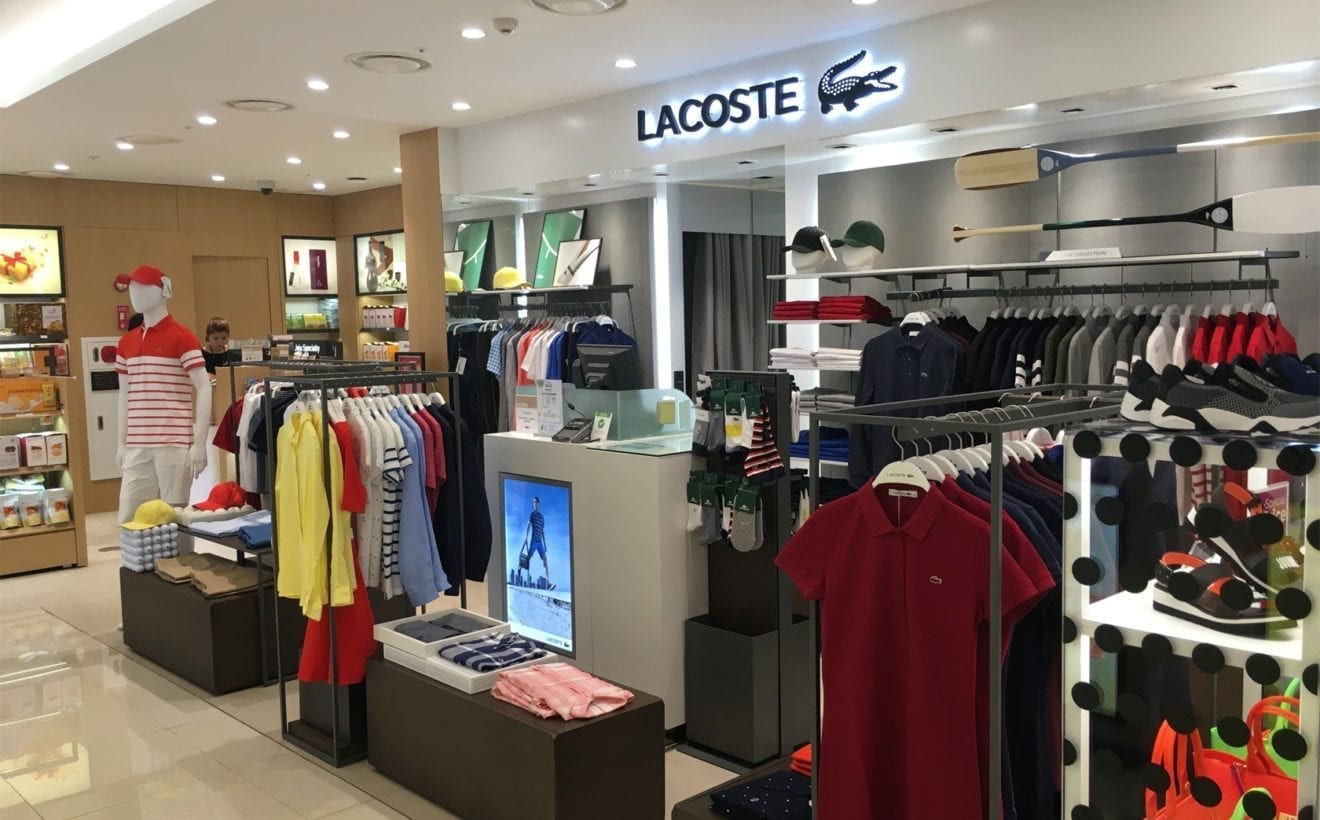
    Lacoste has bolstered its Asia Pacific presence with the opening of a 38 square meters store at Lotte Duty Free World Tower in Seoul.

    The new store reinforces Lacoste’s aim to strengthen and expand its presence in new geographical areas and find new ways of connecting with consumers before, during and after their trips.

    Lacoste CEO Asia Pacific & Global Travel Retail Jean-Louis Delamarre said: “We are thrilled to open this store in Lotte Duty Free World Tower.

    This opening in partnership with Lotte will allow us to further enhance our presence in Asia.”

    France’s premium casual brand Lacoste has been launching a ‘Life is a beautiful sport’ campaign based on the three values of authenticity, joy and elegance in the branding industry since 2014.

    Also in May, Novak Djokovic, world-renowned tennis player, was chosen as a brand new face to represent the brand. Lacoste selected Novak Djokovic as the new face of the brand to inherit the strength and fair play spirit that the brand has pursued since its founding.

    The comfortable elegance that Novak Djokovic shows and his unique play fit perfectly with the DNA of the brand, and it is raising expectations.Novak Djokovic has signed a five-year contract with Lacoste and will be active in and out of the court as an icon representing Lacoste’s brand.

    Lacoste was created by René Lacoste in 1933, a tennis legend. Rena Lacoste, famous for his persistent and robust play, has had the nickname of a crocodile, which symbolizes his brand. Meanwhile, as reported, Lotte Duty Free partially reopened the store on 15 January, 193 days after it was forced to close on 26 June 2016, following its unsuccessful 2015 bid to retain its licence.

    The 17,334 square meters store is the second-biggest in Asia and the world’s third-largest. The new space is +52 percent bigger than the original 14,011sq m shop. The integrated retail offer connects the new World Tower space with the existing adjacent store in the Avenuel building.

  • ‘Customer-centric’ Giorgio Armani counter opens at Lotte Hotel

    ‘Customer-centric’ Giorgio Armani counter opens at Lotte Hotel

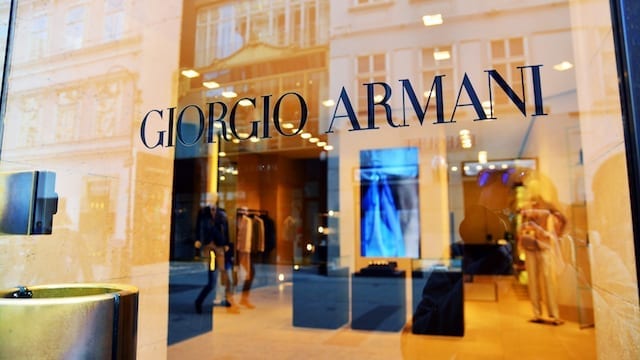
    L’Oréal Travel Retail has partnered with Lotte Duty Free to open a 23sq m counter at the Lotte Hotel in Seoul.

    The counter, based on Armani’s “from fashion dress code to beauty dress code” concept, is the first in travel retail to showcase the brand’s new retail expression. The space, which features curved lines and an open feel, allows customers to try the brand’s products and services.

    From fashion dress code to beauty dress code: The counter features splashes of red, inspired by the iconic lipstick colour Rouge #400.

    The counter enables customers to discover a complete beauty dress code through make-up and skincare (dress code for lips, dress code for face) and perfumes (fragrances dress code). Giorgio Armani Face Designers also offer customers tailor-made advice.

    Lotte Duty Free Merchandising Innovation Team Merchandising Director Jeffrey Davis said: “We are very pleased to open the very first Giorgio Armani Cosmetics beauty concept counter at Lotte Duty free. It breaks the rules of retail standards in travel retail as it is fully customer-centric enabling each customer to play with the products and indulge in the full universe of Armani.

    “The revolutionary design sets itself apart from all of the other beauty counters with its signature red and black design and fabric swatches above the foundation bar that ties back to Armani’s runway fashions. Sales have already improved since opening and you can see the smiles and joy from customers that love the new look and freedom to navigate in a more playful manner.”

  • Lotte Duty Free to take measures facing China tourism crisis

    Lotte Duty Free to take measures facing China tourism crisis

    Lotte Duty Free is implementing a number of measures to combat the crisis situation caused by China’s ban on tourists visiting South Korea.

    Over 40 executives will return 10% of their salary in a bid to alleviate some of the pressure on the company as a result of the lost business. The senior executives have more than 15 years of experience on average, Lotte said, and are all tax-exempt veterans.

    Lotte Duty Free CEO Jang Seon-wook: “The decline in sales is a shock that has been unprecedented since the founding of Lotte Duty Free in 2003, except for the SARS crisis.”

    As reported, South Korea’s decision to deploy the US defence system infuriated the Chinese government and led to a massive backlash against Korean companies. The tourism and travel retail sectors, heavily dependent on Chinese visitors, have been among the worst-affected.

    Lotte Duty Free discussed various methods of encouraging individual Chinese travellers and tourists from other countries in Southeast Asia to visit South Korea at a recent management strategy meeting.

    The meeting focused on how to revitalise sales and reduce costs, the retailer said, as it feared the Chinese ban could be a prolonged one. The company also noted the impact of fierce competition among duty free retailers in South Korea, which it said was “overheating”.

    “The THAAD situation is likely to be prolonged,” wrote CEO Jang Seon-wook in a letter to employees. “The decline in sales is a shock that has been unprecedented since the founding of Lotte Duty Free in 2003, except for the SARS crisis.”

    He said the company’s experience would see it through the crisis, and that it should focus on internal matters that it had control over. Zhang cited the loss and re-acquisition of the World Tower duty free licence as an example of overcoming a difficult situation.

    “If we can trust each other and cope with each other, we will become the cornerstone of growing Lotte Duty Free as a global number one company,” he told staff. “Everyone in the company will gather wisdom and enthusiasm.”

    Lotte Duty Free noted a survey conducted by the Korea Tourism Organization (KTO) in 2016 which showed that foreign tourists decided to visit South Korea 2.7 months before they travel on average. The retailer said this means that even if the THAAD dispute was solved immediately, there would still be a long delay in returning to ‘normal’ and that “long-term difficulties seem inevitable”.

  • Lotte Duty Free taps Vietnam with new airport outlet

    Lotte Duty Free taps Vietnam with new airport outlet

    Lotte Duty Free, South Korea’s top duty-free operator, said it has set up a new outlet at a Vietnamese airport, making a foray into the Southeast Asian market.

    Lotte clinched a joint venture deal with a Vietnamese counterpart to co-run Phu Khanh Duty Free at the Da Nang International Airport, it said in a statement. The South Korean firm owns a 60-percent stake in the airport duty free. The official opening is slated for August, with only part of the shop currently operational. It sells perfume, cosmetics, food & beverage and liquor.

    Da Nang is one of the most popular holiday destinations among South Koreans. PHU KHANH Duty Free shop is located in the new Danang airport, which has been newly expanded due to the recent increase in visitors, and the international flights are on the way to accommodate 4 million passengers per year.

    Korea’s duty-free marketis suffering from a 30-40% decrease in sales due to the due largely to a void in Chinese visitors following Beijing’s trip restriction. Last month, the number of foreign visitors to Korea’s duty-free shop reached a record low this year, falling below 1 million. The number of foreigners who visited Korea’s duty-free shop in April dropped by 40 percent from 1,682,223 in January to 99,806.

    The launch of its Vietnamese duty-free shop underscores Lotte’s push to expand its overseas foothold. Lotte is the third-largest duty-free operator in the world, after Swiss-based Dufry A.G. and DFS of the United States.

    It is the first Korean duty-free operator to have tapped Vietnam.
    Lotte Duty Free said it is planning to open another city branch in Bangkok this month. It currently runs airport stores in Indonesia, Japan and Guam.

  • Lotte Liquor launches Fitz, a lighter beer for summer

    Lotte Liquor launches Fitz, a lighter beer for summer

    Lotte Liquor will launch its second beer brand Fitz Super Clear on June 1, the company said. Fitz Super Clear is a lager containing a relatively low 4.5 percent alcohol content. The company said Fitz is designed to serve as a light but refreshing alcoholic drink for the summer.

    “Fitz was developed with a focus to resolve a reputation that Korean beer is tasteless and bland,” the company said. “We tried to eliminate the unnecessary taste that is generated when the temperature and ingredients aren’t kept stable during the brewing process.”

    The beer uses the same “original gravity” method as Kloud products, which don’t add water in the brewing process. It also used the self-developed Super Yeast and enhanced the fermentation rate to 90 percent for a cleaner taste.

    The company launched Kloud in 2014. Kloud has 5 percent alcohol content and has a flavour similar to imported beers from European countries. It’s sometimes criticised for not being suitable for Korea’s somaek drinking culture, which mixes soju with beer.

    Fitz’s target customers are in their 20s and 30s. Kloud is for those who enjoy drinking alcohol while Fitz is for general gatherings because it is lighter and contains less alcohol content.

    Lotte Liquor invested 700 billion won (US$622.6 million) for a second beer manufacturing plant, which is scheduled to open in July. Once it opens, it will be able to produce up to 200,000 kiloliters (55.8 million gallons) of Fitz per year.

    The company aims to generate 90 billion won in sales for Kloud and 70 billion won for Fitz this year.

    The beer costs 1,147 won for a 500-millileter bottle.

  • Lotte World Tower becomes tourist hotspot in Korea

    Lotte World Tower becomes tourist hotspot in Korea

    Lotte World Tower has drawn 126,000 daily visitors on average in April, becoming Korea’s newest tourist hotspot.

    The number is set to grow faster this month, as Lotte holds various events around the nation’s tallest skyscraper in Jamsil, southeastern Seoul, during the “golden week” holiday. According to Lotte Corporation, Monday, 3.16 million people have visited Lotte World Tower and its neighboring Lotte World Mall since the tower’s April 3 opening. About 102,000 people per day visited the site on weekdays, while 203,000 per day visited there on weekends.

    In particular, Seoul Sky, the nation’s highest observation deck located between the 117th and 123rd floors of the tower, was visited by 120,000 people ─ about 4,800 a day enjoyed the city view from the 500-meter-high deck.

    Lotte, which has suffered a decreasing number of Chinese tourists over a missile dispute, now expects to achieve its goal of attracting 60 million tourists a year. The growing number of visitors positively affected sales revenue of facilities there as well. The aquarium, cinema, shopping mall, department store, discount store and electronics shop in the mall respectively had 33.6, 48.5, 15.8, 10.6, 19 and 61.5 percent more sales in April than a month earlier.

    The duty free shop alone suffered a 40 percent sales decrease, due to the Chinese government’s de facto travel ban on group tours to Korea.

    As more tourists are expected to visit the tower this week, Lotte has begun to hold various events. Until next Monday, visitors can enjoy the Sweet Swan public art project at Seokchon Lake. Lotte expects the massive swan family sculptures will boost sales of the nearby shops, as the 2014 Rubber Duck project and 2016 Super Moon project did.

    Families with children may enjoy a LEGO festival at a park in front of the tower. Four million LEGO parts will be available to visitors during the festival, so they can participate in making an eight- meter-wide and 12-meter-high flower which will be displayed at the park. Lotte World Tower is also holding exhibitions and classical concerts during the holidays.

  • Lotte refashions outlet to target families and kids

    Lotte refashions outlet to target families and kids

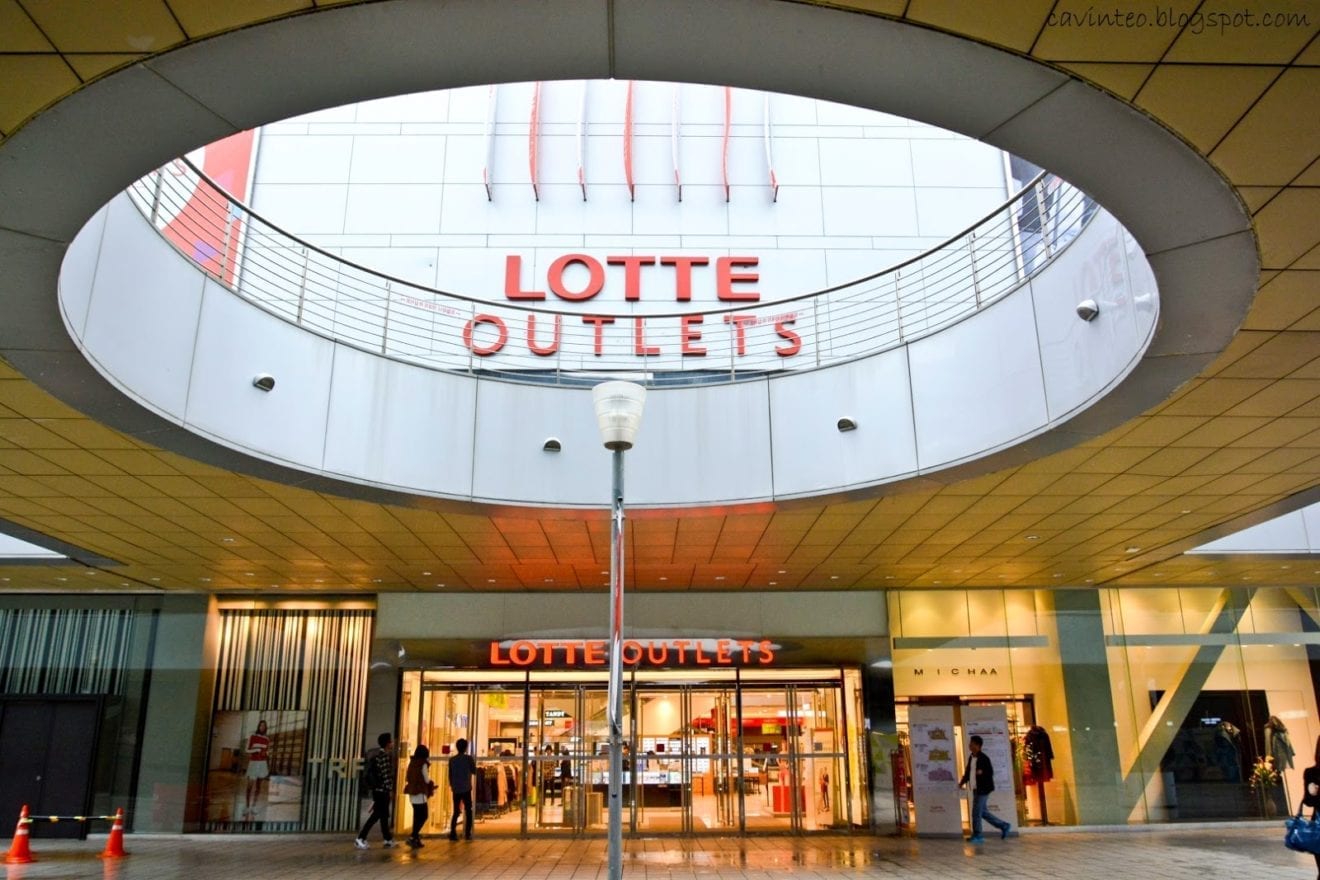
    The renovated branch of Lotte Premium Outlets in this suburban city about 30 miles south of Seoul looks more like an amusement park than a shopping mall for bargain hunting.

    At its Incheon outlet location, Lotte has opened a three-story complex catering to families with children. There are cafes with ball pits and slides, job experience zones where kids can pretend to be doctors and firefighters, and a large Toys ”R” Us store that anchors it all. The Incheon branch is not just for shopping but also for outdoor activities for families.

    Since opening the location in 2013, Lotte found that 75 percent of visitors were in their 30s and 40s. That’s 6 percentage points higher than the share of people who visit other outlet branches outside Seoul. The company figured that more shops and facilities for family visitors, especially kids, be better for customers.

    Another factor was the growing popularity of children’s products in Korea. Between 2012 and 2016, the industry’s revenue expanded from 27 trillion won (US$24 billion) to 39 trillion won. A good portion of the outlet’s new building is dedicated to play. On the third floor, a job experience zone lets kids experience diverse occupations, from veterinarian to firefighter and even urban planner. There is a fee – 22,000 won for kids between 5 and 13 and an extra 4,000 won for an accompanying adult – but there is no limit on time.

    In another play space, called Doctor Balance, children can test their physical strength, including muscle endurance and responsiveness, on playground sets that resemble gym equipment. Next to the job experience zone is a Toys “R” Us. Lotte is the Korean operator of the U.S.-based toy store, but so far, it’s only installed stores in its supermarket chain Lotte Mart.

    The location in the Incheon outlet is the first time Lotte is running a Toys “R” Us outside the mart. An outlet spokesman said the toy store will have about 6,000 products. The building’s second floor has more shopping areas, but even they’re dedicated to kids. Outdoor brands Nepa and Blackyak, for instance, are selling swimsuits and backpacks for children. Out of 47 brands in the new space, 32 are specifically kids’ brands.

    There’s something for the parents, too. Various fast fashion brands, including Uniqlo and Topten, have set up shop, and automaker BMW has opened one of its Motorrad cafes where car aficionados can enjoy coffee while browsing BMW-themed apparel.

    Lotte Premium Outlets’ Incheon location holds the title of biggest outlet in Asia with a floor space of 53,000 square meters (570,000 square feet). An average 15,000 people visit daily, and it has generated 1.2 trillion won in revenue since opening. The company expects the new Fashion & Kids Mall building to boost the number of visitors by 20 percent.

  • China still on radar for Lotte Group

    China still on radar for Lotte Group

    A Lotte Group executive says the retail giant will continue to invest in its China business despite diplomatic tensions.

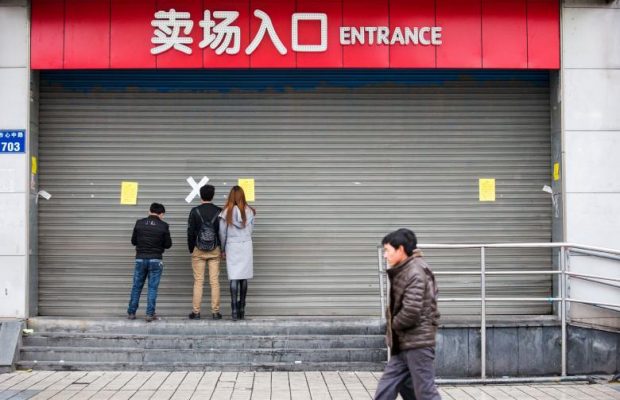
    Chinese authorities last month closed dozens of Lotte stores following inspections, ramping up pressure on South Korea’s fifth-largest family-run conglomerate after it agreed to provide land for the US Terminal High Altitude Area Defence (THAAD) missile system outside Seoul.

    South Korea and the US say the system is designed to thwart North Korea’s nuclear missile threat, but Beijing says the system’s radar can also reach far into China. This led to Chinese state media calling for a boycott of Lotte businesses.

    “We plan to continue to invest in our China business and continue to strengthen it,” executive Hwang Kag-gyu says. He is the head of Lotte Corporate Innovation Office and is regarded as the second-highest executive next to chairman Shin Dong-bin.

    “It has been 20 years since Lotte entered the China market. We believe the China business is still in an investment period,” he says.

    Out of 99 Lotte hypermarkets in China, 75 have been closed by Chinese authorities. Hwang says the company is working to fix the problems raised by Chinese regulators.

    China is Lotte’s biggest overseas market, generating more than 3 trillion won (US$2.7 billion) in annual revenue in 2015. It is also one of four strategic markets along with Indonesia, Russia and Vietnam that Lotte has been focussing on.

  • Shinsegae Department Store uses AI in marketing push

    Shinsegae Department Store uses AI in marketing push

    Shinsegae Department Store has become the first South Korean retailer to deploy a marketing strategy using AI technology.

    A wave of artificial intelligence (AI) is sweeping the nation’s retail industry, as major department stores and online shopping malls rush to adopt the latest technology to attract consumers.

    From this week, Shinsegae Department Store is introducing a personalisation service called “S Mind”, which will analyse each customer’s brand preferences and come up with product suggestions.

    Using a database of some 5 million existing customers, S Mind will take into consideration around 100 factors including the purchase history, gender, age, and location.

    The results, which will include suggested brands and related shopping information, will be sent to customers through Shinsegae’s mobile application.

    AI Korea

    Shinsegae predicts its latest move will generate additional sales revenue of 100 billion won annually.

    The new system, established solely with South Korean developers and data analysts, was four years in the making before its completion.

    Shinsegae Department Store’s rival, Lotte Department Store, teamed up with IBM Korea last December to develop a new mobile app AI feature that is expected to be released by the end of this year.

    Lotte’s new ‘Recommendation Bot’ will work as a shopping advisor to make suggestions through voice messages or texts, and will give app users information on the latest trends and celebrity fashion news.

    Kim Myeong-gu, who is responsible for omni-channel marketing at Lotte, said, “With the overload of information today, many customers find it tiresome to make a choice.

    “Our new AI-based recommendation feature will differentiate our marketing strategy with that of our competitors,” he added.

    As the major retail chains are beginning to embrace AI technology that will redraw the landscape of how we shop, the industry as a whole and the government are also backing the trend.

    A new alliance was formed yesterday which will see the retail and distribution industry work closely with IT and manufacturing companies to adopt the fourth industrial revolution.

    Dubbed the “Retail Industry Convergence Alliance,” the cross-industry coalition will help spread the use of new technologies in various fields including research and development.

    The fourth industrial revolution, typified by advanced technology such as AI, IoT, robots, augmented reality and virtual reality is rapidly being incorporated into the retail and distribution industry around the world.

    An official from the Korean Ministry of Industry said: “For our retail industry to be acknowledged as a global platform, it’s important to emphasise having the right business environment for innovation and cooperation.

    “The government will help with subsidies to make sure the collective effort between various industries leads to new business opportunities and markets.”

  • Takashimaya Duty Free Shop opening soon

    Takashimaya Duty Free Shop opening soon

    Takashimaya Duty Free Shop, Tokyo’s latest downtown duty-free store, will open late next month.

    The 2800 sqm retail outlet is a JV between department store company Takashimaya, travel retailer ANA Trading and Hotel Shilla. It will be on the 11th floor of the new Takashimaya Times Square development, in the Shinjuku area.

    Other major downtown duty-free projects scheduled to open in Tokyo include Japan Duty Free Ginza and Lotte Duty Free Tokyo Ginza.

    Takashimaya Duty Free Shop is directly connected to Shinjuku Station and to Shinjuku Expressway Bus Terminal, allowing easy access to Tokyo’s airports.

    A spokesperson for The Shilla Duty Free says Japanese cosmetics will be a key focus of the store. There will also be a tax-free zone for Japanese brands including cosmetics, food/confectionery, souvenirs, fashion and electronics.

    Goods bought at downtown duty-free stores must be collected at Narita or Haneda airport, while tax-free Japanese-made items can be collected in the stores.
    Chinese group tours will be a target audience, with Takashimaya Duty Free establishing infrastructure such as bus parking spaces, and developing offers to appeal to such visitors.

    A&S Takashimaya Duty Free Company was established last June, with Takashimaya holding a 60 per cent stake, with ANA Trading and Shilla each holding 20 per cent.

    Takashimaya Times Square includes a Takashimaya department store, brands like Nitori, Tokyo Hands and Uniqlo, as well as restaurants and a spa avenue.

  • Lotte affiliate to raise 360 bln won to cope with THAAD fallout

    Lotte affiliate to raise 360 bln won to cope with THAAD fallout

    A unit of Lotte Group, a South Korean retail giant currently receiving the brunt of China’s apparent economic retaliation in protest over Seoul’s deployment of a U.S. missile defense scheme, said Friday that it plans to raise a total of 360 billion won (US$320 million) via stock sales and loans.

    In a regulatory filing, Lotte Mart, the operator of the group’s hypermarket chain, said its board of directors has decided on the proposal to sell stocks and borrow money.

    The proceeds from the stock offering and loans will be used to cover the costs of buying products and giving wages to its employees in China, according to company officials.

    The China-based retail outlet unit has been teetering on the brink of collapse as protracted business suspension by Chinese authorities is leaving the firm with snowballing losses.

    China has ratcheted up pressure against Lotte, South Korea’s fifth-largest family-controlled firm, since it handed over one of its properties to the Korean military so it can be used as a site for a U.S. Terminal High Altitude Area Defense (THAAD) battery.

    Seoul’s deployment of the THAAD on its soil has angered Beijing, who claims that it will be used to monitor its own military.

    According to Lotte, 90 Lotte Mart stores operating in China, Lotte’s hypermarket chain, have been placed under suspension or on voluntary suspension as some Chinese consumers continued to stage anti-Korea protests near the stores.

    That represents nearly 90 percent of 99 Lotte Mart outlets in China that have been forced to close down temporarily. Lotte has some 120 retail outlets operating in the neighboring country, including five department stores.

    Lotte is predicted to suffer some 116.1 billion in losses in its Lotte Mart revenue if the shutdown continues for a month. Last year, sales from China-based Lotte Marts reached 1.13 trillion won, or 94 billion won on a monthly basis, according to the firm.

    The profitability of Lotte’s retail outlet business has been expected to further worsen since it is required to pay full wages to local employees for the first month of the suspension.

    The suspension means a serious blow to Lotte, since its China-based business has long been running a deficit even though it has been in the world’s second-largest economy for some 10 years.

    In 2016, Lotte recorded a combined 207 billion won deficit in its department store and outlet divisions, of which about 80-90 percent came from its Chinese units.

    Industry watchers voiced concerns that Lotte may have to consider a pullout given that losses from the shutdowns are growing too fast for the firm to withstand.

    But, in an interview with foreign news media, Shin Dong-bin, chairman of Lotte Group, flatly denied such speculation saying that the company has no intention of pulling out of China.

  • Indonesia’s Lippo & Korea’s Lotte form e-commerce JV

    Indonesia’s Lippo & Korea’s Lotte form e-commerce JV

    Indonesia’s Salim Group is planning a major foray into e-commerce this year in partnership with South Korea’s Lotte.

    Indo Lotte Makmur, a 50-50 JV by the two conglomerates, will launch the iLotte online shopping platform as soon as July, putting US$88 million into the project initially. The service will be geared primarily toward women in their 20s and 30s, and feature name-brand cosmetics sold in South Korea as well as offerings from Lotte’s online mall.

    A robust infrastructure built up over the course of years will let Salim achieve economies of scale for the e-commerce business, says Indo Lotte CFO Dani Sumarsono, who is overseeing online business at Indonesia’s largest conglomerate.

    “E-commerce is not only about digital technology but about moving physical products,” he says. “We have been investing in infrastructure for a long time.”

    Indo Lotte president, a former executive at Lotte’s e-commerce business in South Korea, says Salim has a lot of infrastructure, while Lotte can bring know-how and technology.

    Indonesia’s e-commerce market is expected to grow to $46 billion in 2025 from just $1.7 billion a decade earlier, according to research by Google and Singapore’s Temasek Holdings. Under this scenario, Indonesia would make up more than half of the total Southeast Asian e-commerce market and would follow China and India as the third-largest national market in Asia, excluding Japan. A doubling of internet users, from 92 million to 215 million, is seen as the driver of this expansion.

    Expensive market

    With chronic congestion of its major cities and a lack of basic infrastructure on its islands, Indonesia is an expensive market to service. Logistics costs are 27 per cent of GDP, compared with 20 per cent in Thailand and 13 per cent in Malaysia, according to the World Bank.

    However, Salim’s 13,000-plus Indomaret convenience stores across Indonesia can be used as places to pay for and pick up goods ordered online. Meanwhile, a shipping unit that delivers instant noodles made by group member Indofood Sukses Makmur to more than 30,000 small towns nationwide can help bolster efficiency.

    Salim has also created a JV with Tokyo-based startup Liquid to explore payments using fingerprint authentication, with credit-card ownership of less than one in every 10 adults in Indonesia. Liquid’s system allowing pre-registered shoppers to pay via fingerprint scanner has been deployed at Japanese convenience stores. The JV will test the system for 500,000 Salim employees initially and targets commercial application within the year.

    Meanwhile, another Indonesian conglomerate, Lippo Group, is developing an electronic payment service for use on MatahariMall.com, which Lippo launched in 2015.