Retail News CRM

Tag: Mall

  • Indian retailers in mall revolting

    Indian retailers in mall revolting

    Indian retailers with stores in shopping malls are threatening to close shop if landlords do not meet demands for waivers and new rental agreements.

    Retailers representing 350 brands are seeking relief from tough rental commitments in the likely face of 12 months of low business driven by the Covid-19 crisis, proposing new arrangements such as revenue-sharing models. The brands have sent an ultimatum to malls including DLF, Ambience, Nexus, Pacific, Phoenix Group, Oberoi, and Mantri following the failure of some retailers to revise rental agreements.

    “We cannot survive without collaboration,” said Future Retail MD Rakesh Biyani in a Times of India report. “If not, there will be further job losses in the sector.”

    Of all Indian retailers, those that could be hardest hit by continuing patterns of buying this year are likely to be apparel and fashion.

    “Retailers and brands have to additionally deal with massive accumulation of inventories, unprecedented disruption in manufacturing and supply chain, and the huge shift of customers to e-commerce, among other things,” read the retailers’ ultimatum.

    Indian mall footfall is expected by some industry observers to continue to be affected by the Covid-19 pandemic well after the outbreak resolves, with consumer behavior potentially permanently gravitating towards online shopping.
  • Lotte Shopping gearing up store-exit plan

    Lotte Shopping gearing up store-exit plan

    South Korean retail group Lotte Shopping will sell off 121 stores this year in an attempt to recover from the impact of the coronavirus pandemic on sales.

    The company says it will close five department stores, 16 discount stores, 75 supermarkets and 25 physical stores linked to its online mall LOHB within this year.

    The move accelerates Lotte’s existing plans to sell roughly 200 stores to refocus on e-commerce.

    A spokesperson from the firm indicated Lotte would move to quickly shake off its less-profitable assets in the interests of improving its financial health. Lotte Shopping’s first-quarter results, at a loss of US$35 million, represented a massive drop from the $88.2 million profit it achieved during the same period last year.

    Lotte Shopping has around 700 department stores, discount stores, and supermarkets.

  • Robinsons Jem mall store in Singapore about to close

    Robinsons Jem mall store in Singapore about to close

    Singapore department store Robinsons is to close its store in Jem mall in what it terms an “amicable exit” after negotiations with landlord, Lendlease.

    The Robinsons Jem store will close by the end of August, leaving the Al-Futtaim Group-owned retailer with just two remaining stores in the city-state, at The Heeren on Orchard Road and Raffles City.

    In a statement, Robinsons said it had been discussing its future at Jem since November and “the timing of the exit has been scheduled on a mutually agreed basis”.

    The company offered no further explanation or comment on the closure, although it did indicate it sees its future appealing to “a new generation of shoppers which includes customers both online and offline”.

    “Robinsons is an iconic brand, and the management is committed to ensuring viable and successful operations in Singapore. They are grateful for the ongoing support received from their Jem store customers over the years, and look forward to serving them at their other locations,” said the statement.

    The retailer plans to revamp its online presence, adding additional solutions for buying products and services and last month it opened a store on LazMall.

  • South Koreans move from malls to markets in Covid-19’s wake

    South Koreans move from malls to markets in Covid-19’s wake

    Offline retailers in South Korea, once on the verge of a crisis after consumers flocked to e-commerce vendors following the coronavirus outbreak, are now seeing a chance to make a comeback.

    As people remain indoors for extended periods due to work-from-home policies and delays to the school year resumes, a growing number of South Koreans are going to local supermarkets and stores to do their shopping.

    Local discount retailers and large-sized malls saw sales increases of 1 to 5 percent after South Korea raised the public health alert to its highest level.

    After the World Health Organization declared Covid-19 a pandemic, local supermarket sales jumped by more than 14 percent between March 8 and 21, while large-sized malls and discount retailers saw their sales drop.

    “As the coronavirus outbreak dies down, more people are choosing to go to local supermarkets or convenience stores that are close by, rather than going to large malls that tend to be located further away,” said Hwang Hee-yeong, CEO of Opensurvey, a local pollster.

    In other words, South Korea has seen an initial surge in demand at large distributors fragment into demand for products offered at smaller distributors.

    Experts argue that this trend may continue even after the coronavirus outbreak is over.

    “As the coronavirus is expected to be around for a long time, people are choosing to go to local supermarkets instead of large-size malls and discount retailers. More people are also visiting local stores that sell side-dishes,” said Hwang.

    “The coronavirus outbreak has set up a basis for localized consumption, a trend commonly observed among advanced nations.”

  • South Korean malls remain calm despite panic buying worldwide

    South Korean malls remain calm despite panic buying worldwide

    Panic buying is spreading like wildfire among a number of countries as fear of the coronavirus deepens.

    But large shopping malls in South Korea, however, are as peaceful as in the pre-coronavirus era.

    Experts argue that prior experiences in dealing with various epidemics, such as Severe Acute Respiratory Syndrome (Sars) in 2003 and Middle East Respiratory Syndrome (Mers) in 2015, has allowed retailers to maintain a stable supply of everyday necessities at shopping malls.

    Rapid technological advancement in online delivery and distribution systems thanks to the fierce competition among retailers has also helped maintain supply despite the surge in demand, some argue.

    “Despite the coronavirus outbreak, we are maintaining a delivery speed of half a day or one day at the latest. This is top class even on global standards,” said a source familiar with the e-commerce industry.

  • Malls in India seek government aid during shutdown

    Malls in India seek government aid during shutdown

    Malls in India affected by the coronavirus outbreak are seeking a bailout from the government to compensate for losses incurred during a mandatory shut down period through to March 31.

    The decision has affected both retailers and developers in the various states that have implemented the ban on trading during the affected period in a bid to slow the spread of the virus.

    “A shut down like this effectively means that there are all kinds of expenses to be borne by everybody; malls may not get rent and would not be able to service loans they have taken for creation of the mall, capital expenditure, etc,” said Retailers Association of India CEO Kumar Rajagopalan in a report. “It’s all going to be a big loss. The government needs to look into this and support these entities to save lakhs of jobs”.

    A representative body for malls in India is seeking a lending window, a moratorium on loan repayments or to allow banks to reschedule debt, as well as a potential waiver of property tax and electricity charges.

    Industry experts have expressed skepticism that footfalls will return to normal within the next few months no matter how brief the shutdown period may be, which is likely to impact rental negotiations for retailers, as well as the deferment of new mall openings.

    Observers of the situation have commented that any five-day halt to business will erase the month’s profits for retailers.

    “Mall operators stand to lose 20 to 25 percent of their annual revenue assuming that a rent-free period is given to retailers,” read an ICICI Securities report. “In our view, the most likely scenario is that mall operators and retailers may share the losses given that malls have now become a relationship-based business with the same retailer having presence across malls.”

  • Versace launches on Lotte Premium Mall

    Versace launches on Lotte Premium Mall

    Italian luxury fashion brand Versace opened a store on e-commerce site Lotte Premium Mall in South Korea on Monday.

    Lotte Department Store says the store is a collaboration with the official importer Versace Korea and the online mall.

    Forty lines of Versace products, including ready-to-wear and accessories including wallets, belts, clutches and jewelry is showcased on the fashion mall site.

    Local media reports suggest online customers will be able to exchange purchases in Versace’s brick-and-mortar boutiques, including at Avenuel Main, Avenuel World Tower and Suwon.

    Myeong-gu Kim, head of the online division of Lotte Department Store said that in the future, Lotte Premium Mall plans to strengthen collaboration with international luxury brands to make their online entry into South Korea.

    Versace is a luxury brand created in 1978 by Gianni Versace and his sister Donatella Versace.

  • Robinsons Retail down last month

    Robinsons Retail down last month

    Robinsons Retail has reported a 25-per-cent profit drop to US$75.2 million (PHP3.83 billion) last year and $18.8 million in the fourth quarter.

    However, net sales rose 22.8 percent to $3.2 billion for the full year driven by same-store sales growth of 3.4 percent. It was the first full year including the consolidation of Rustan Supercenters.

    The company blamed the profit decline on the effect of the new accounting standard PFRS16 which resulted in a net impact of $6.2 million in the fourth quarter and $19.6 million for the full year.

    Core net income excluding the PFRS16 adjustment rose by 9.5 percent to $31.4 million in the fourth quarter and 2.1 percent to $100.3 million for the full year.

    Net income post-PFRS16 was $78.7 million.

    “We have bolstered our strategic focus on data and digitalization, with our investments in Data Analytics Ventures Inc and e-commerce platforms BeautyMNL and Growsari, Inc,” said RRHI president Robina Y Gokongwei-Pe.

    “We remain optimistic because we approach technology as a means for our brands, loyalty programs, and marketing campaigns to become even more customer-centric and engaging in this new digital market.”

    Meanwhile, net sales for the fourth quarter went up by 14.4 percent to $921 million, primarily driven by the company’s drugstore network, up 7.4 percent, convenience stores up 5 percent, department stores up 4.7 percent and supermarkets at 4 percent.

  • Parkson to exit MyTown Shopping Centre in February

    Parkson to exit MyTown Shopping Centre in February

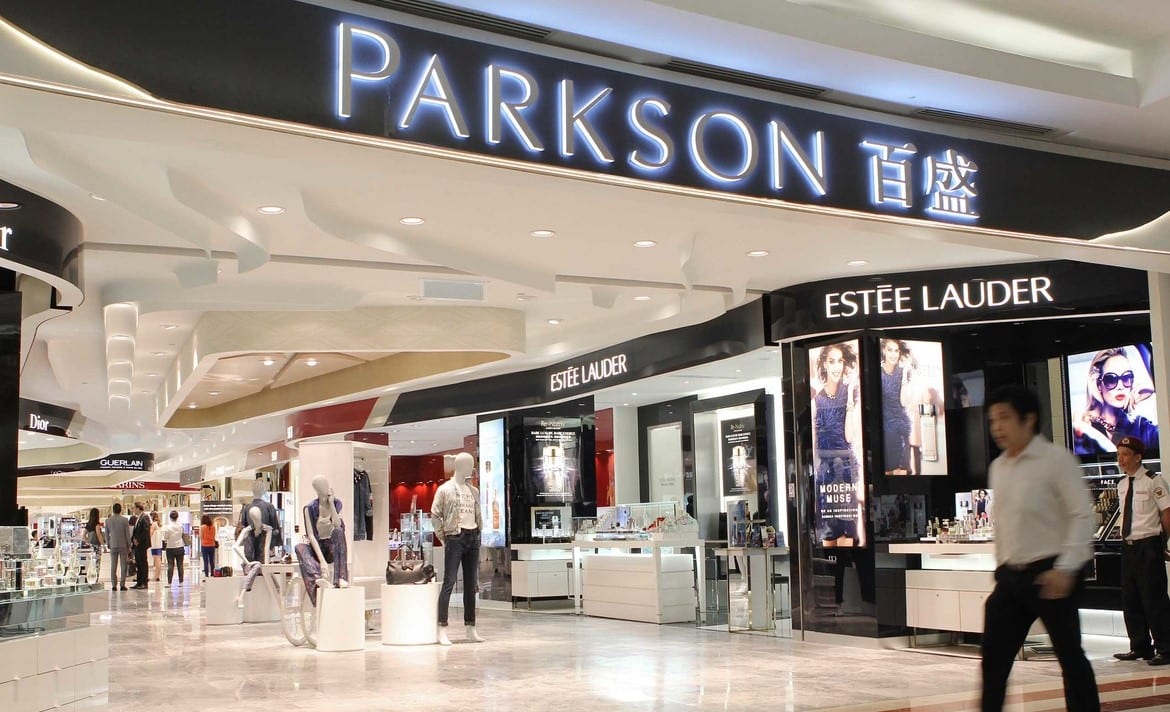
    Malaysian department store chain Parkson will close its outlet in MyTown Shopping Centre, Cheras next month.

    The closure will come fast on the heels of recent shut-downs of Parkson stores at Suria KLCC and M Square Mall in Puchong, and occurs less than three years after the 150,000sqft store started trading.

    “The retail market is very dynamic,” said a Parkson spokesperson in a statement to The Edge Markets. “Store opening and closing is part and parcel of doing business. In Malaysia, shopping malls are mushrooming everywhere and the demographics are ever changing.

    “The retail scene is increasingly competitive; when sales do not meet expectations, we have to cut losses and move on. Similarly, shopper demographics are constantly evolving.”

    The chain has closed several stores over the past two years within its Malaysian market, including stores at Megamall Kuantan, Melaka Mall, Maju Junction and Sungei Wang. It has also closed most of its Vietnam stores.

  • Central Group launches Porto de Phuket lifestyle mall

    Central Group launches Porto de Phuket lifestyle mall

    Thailand’s Central Group has launched a new shopping mall, Porto de Phuket, in Phuket.

    Located at Thalang District, the 40,000sqm development is divided into seven highlighted zones, featuring a wide range of stores and Michelin-starred restaurants.

    The Central Food Hall provides service in standalone formats outside for the first time, offering a variety of products and the first Cheese Room in Phuket.

    Restaurant and cafe zone, The Fame, brings together famous restaurants and cafes for hipsters and the chilled, including Suay, serving a fusion of Thai and western food by the iron chef, Russian restaurant Spice House, Wine Connection and French style cafe Lady Coco.

    The third zone, Multi Design House, presents home decoration where individual styles can be found. Visitors can also find vintage furniture and furnishings from Soul of Asia, artwork from local art celebrity Sunthorn Papan at Napas Art Gallery. A Jim Thompson pop-up store will be opened in this zone, featuring ready-to-wear silk men’s and womenswear, bags and wraps. There is also a B2S store, and a Run Lab created by Supersports, which analyses customers’ walking traits and running mannerisms to find the most appropriate style and shape of footwear.

    Healthy Heaven is a zone of relaxation and health, offering different spas such as Let’s Relax, with the first Spa Gallery in the world and wax salon The Strip, which has 10 branches worldwide including New York, London and Singapore. The project also has beauty outlets from Phuket such as Devadiva and Villa Aura.

    Beside Kid Learning Space, Porto de Phuket also opens a Pet Friendly Zone with facilities provided by Phuket International Petcare (PIPC).

    Decorated under the concept of a Tin Mining Factory which recreates the atmosphere of an old tin mine with Sino-Portuguese architecture, food station The Mercado will open early this year.

    Movie theatre, fitness gym, indoor playground, edutainment and an Art Home and Decorative zone are expected to be completed by the end of this year.

  • NWP Retail to buy five Indonesian malls

    NWP Retail to buy five Indonesian malls

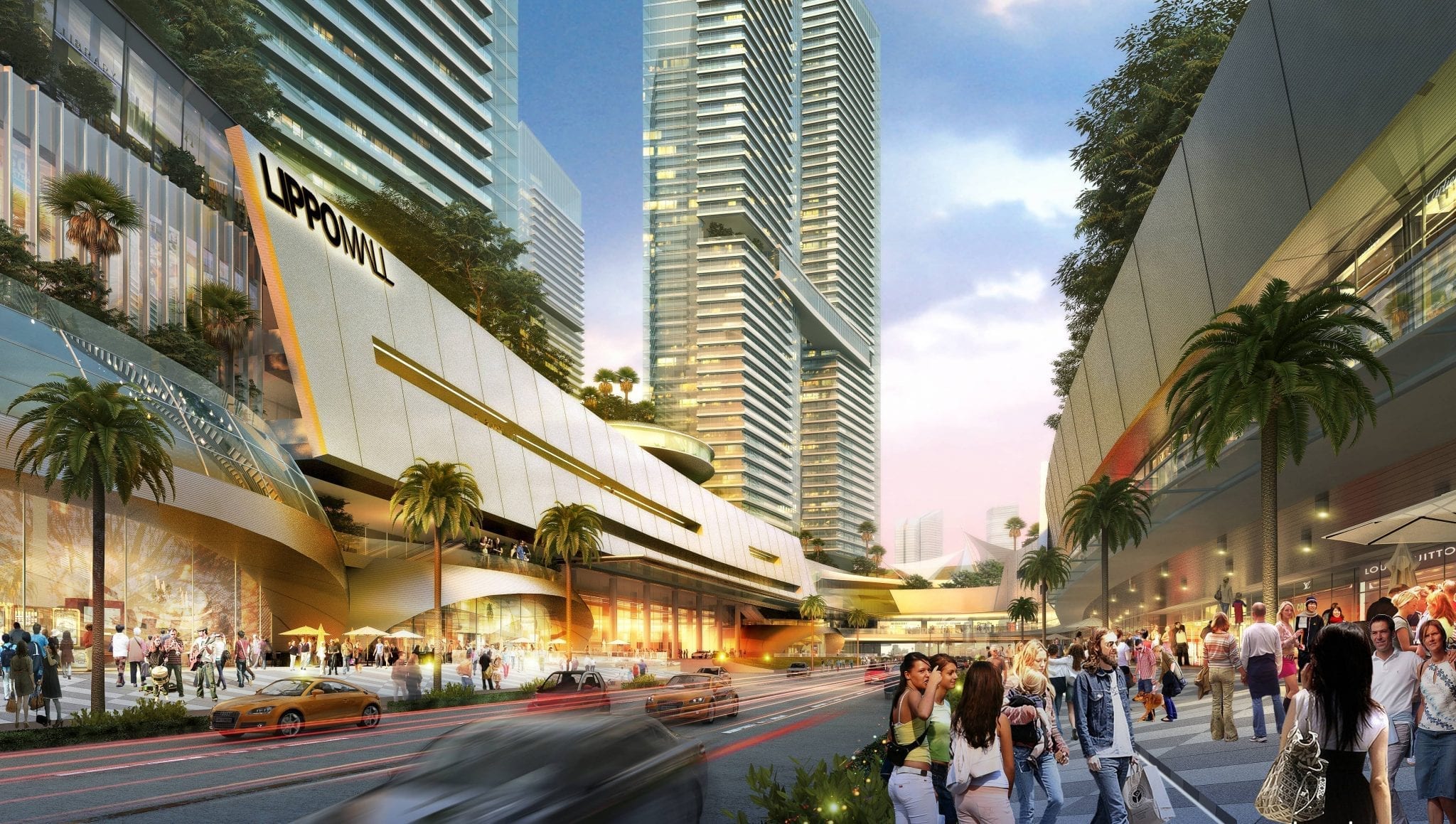
    Indonesian retail shopping mall platform NWP Retail is set to acquire five shopping malls, two owned by local subsidiaries of Singapore-listed Lippo Malls Indonesia Retail Trust.

    The two Lippo Malls will be purchased for a total price of IDR1.30 trillion (US$92 million), while the other three mall purchases total approximately IDR440 billion (US$31.5 million). The Lippo malls are located in Pejaten Village just out of Jakarta, and Binjai – a satellite city of Medan. The remaining three malls are in Bandar Lampung, Denpasar, and Depok.

    “This acquisition represents a milestone in NWP Retail’s rapid expansion,” said NWP Retail president director and CEO Timothy Daly. “It will strengthen the company’s presence across key markets in Tier-1 and Tier-2 cities in Indonesia and further expand its market leading position as Indonesia’s largest independent retail shopping mall platform.”

    NWP has expanded from four seed assets in 2015 to more than 40 today.

    “NWP Retail has executed a clear and consistent strategy since its founding, pillared on Indonesia’s strong consumption growth story,” added Daly. “Our unique strength lies in the ability to create value through a scalable and well-managed platform and to generate synergies across different retail asset classes. The company continues to seek high-potential, attractively priced retail acquisitions and development opportunities across key markets in Indonesia.”

    Earlier this year, NWP raised nearly US$200 million in its latest round of equity fundraising, one of the largest ever for a private real estate company in Indonesia.

  • Aeon opens second mall in Hanoi, Vietnam

    Aeon opens second mall in Hanoi, Vietnam

    Located in Hanoi’s southwestern district of Ha Dong, the three-story mall occupies a 22,700sqm area, featuring 221 retail tenants covering food, fashion, household goods and entertainment. The new mall brings more than 40 brands new to the city including Koi tea, The, Dune London, Idoome, Jack & Jones, Kipling and Typo.

    Before the opening ceremony, the general director of Aeon Vietnam, Nishitohge Yasuo, said the Vietnam retail market is changing and becoming increasingly competitive. He said Aeon Mall wants to bring new experiences to customers, not only for shopping but also for fun, entertainment and family connection.

    A spokesperson for the Japanese Embassy in Vietnam said he hoped Ha Dong Aeon Mall will become a place to provide information about Japanese culture. “And I hope more people in Hanoi come to Aeon Mall Ha Dong to be able to feel a very ‘Japanese’ atmosphere in Hanoi’s heart”.

    The first Aeon mall in Hanoi was opened in 2015. The Japanese group has expanded its network with three others in Binh Duong province and Ho Chi Minh City. Another Aeon shopping mall is under construction in the port city of Hai Phong.

  • SM Prime to open lifestyle mall in Zambales

    SM Prime to open lifestyle mall in Zambales

    SM Prime Holdings is launching a new lifestyle mall in Zambales, the Philippines.

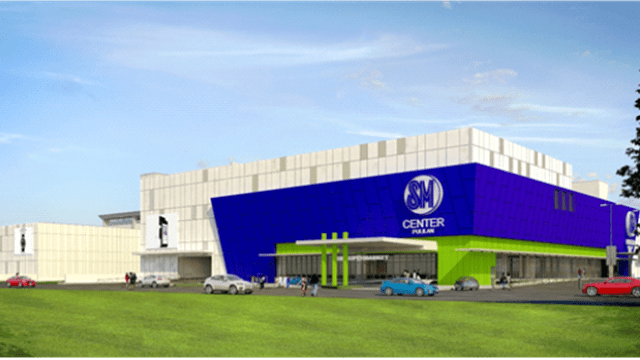
    The firm’s 73rd shopping mall in the territory, a 72,000sqm four-story complex, will open in Olongapo city’s CBD with 85 percent tenant occupancy confirmed so far. It is SM Prime’s second lifestyle mall in Olongapo.

    “Olongapo City remains one of the fastest-growing cities in Central Luzon creating a wonderful synergy on economical and sustainable development,” said SM Prime president Jeffrey Lim. “SM City Olongapo Central will not only enhance the beauty of this thriving city and its province but will also create more jobs and business opportunities to locals who aspire to grow with our company.”

    The mall will feature a food hall, cyber zone, and wellness zone along with six digital cinemas and a convention center, as well as a sports and entertainment venue.

    “SM Prime remains committed to its role as a catalyst for economic growth, delivering innovative and sustainable lifestyle cities, thereby enriching the quality of life of millions of people,” read a statement by the firm.

  • Shopping malls in the Philippines popularity on the rise

    Shopping malls in the Philippines popularity on the rise

    Shopping malls in the Philippines are bucking international trends and are trading stronger than ever, says retail technology expert Nikki Baird.

    Their secret, she says, is that they offer a wider range of experiences to customers.

    “Shopping malls in the Philippines are all-in-one destinations that not only provide shopping, dining, and entertainment but also offer community events, access to government and utility services, and even places of worship,” Baird told the recent National Retail Conference and Expo in Manila.

    But, she warned, neither mall operators or their retail tenants in the Philippines can afford to be complacent because the industry is constantly changing.

    “The rise of e-commerce, evolving consumer tastes, dynamic competition, and other developments in the global retail landscape challenge Philippine retailers to pursue innovations in both brick-and-mortar and digital stores.”

    Baird, VP of retail innovation at Aptos, a retail technology solutions provider, said global store-innovation trends are showing how retailers are responding to consumers’ emerging needs and demands.

    “The global shift in consumer behavior puts pressure on retailers around the world to rethink their customers’ journey and experience in their online and offline stores,” said Baird. “In response to this, brands are embracing digital and behavioral innovations to deepen customer relationships, provide in-store services, use stores as fulfillment centers, harness rich customer data, host in-store events, and offer store-only exclusives.”

    With retail sales forecast to almost double in Southeast Asia to US$1.38 trillion in 2025 from $720 billion last year, the importance of connecting digital — where consumer shopping begins — to the retail store will only increase in the Philippines. To prepare for this growth, retailers are investing in in-store innovations and technologies to ensure each store offers optimal customer service and the right inventory to meet the personalized tastes and needs of every shopper.

    “Filipino retailers need to increasingly merge their brick-and-mortar and digital touchpoints to ensure the most seamless experience for the consumer and the most productive and profitable use of inventory across their network,” added Zaki Hassan, regional VP for Asia Pacific at Aptos.

    Aptos works with more than 1000 retail brands across 65 countries.

  • Locations announced for new Lego stores in Queensland, Australia

    Locations announced for new Lego stores in Queensland, Australia

    Alceon Group has announced the locations of two new Lego stores opening in Queensland this year.

    The investment firm, which holds the distribution rights for Lego in Australia and New Zealand, will open stores in QIC’s Robina Town Centre on the Gold Coast and Westfield’s Chermside shopping center in Brisbane.

    The stores, measuring 188sqm and 236sqm respectively, will incorporate many of the custom-built design features seen in the Sydney store, such as brick-built mosaics and 3D models of local icons.

    “We are confident that brick fans of all ages will enjoy these new world-class retail experiences, with signature features that are a tribute to creativity and innovation,” Richard Facioni, executive director of Alceon Group, said in a statement.

    The Queensland store openings are part of a broader expansion of Lego’s bricks-and-mortar presence in Australia and New Zealand, following the opening of the first certified Lego store in the region at Westfield Bondi Junction in March.

    Alceon last month revealed plans to open additional stores in New South Wales, Victoria and Queensland this year, with more to follow in South Australia and Western Australia in 2020. A store is also set to open in Westfield’s Newmarket shopping center in Auckland this year.

    Facioni said in July that the brand has benefited from the popularity of the top-rated Lego Masters reality show; the stores will aim to capitalize on that momentum.

    “Our two landmark Lego certified stores in Queensland will attract both local and international visitors as we unveil fun and inspiring retail environments that showcase the creative potential of the world-famous Lego brick,” he said in a statement.

    Alceon has become one of the biggest investors in the retail sector, after it acquired the Specialty Fashion Group brands Katies, Millers, Autograph, Crossroads and Rivers in 2018. The company has a controlling stake in Noni B and ethical designer fashion brand Ginger and Smart, and owns Ezibuy, SurfStitch, and Pumpkin Patch, among other retail assets.

    The company this week reported a 136 percent increase in sales at Noni B Group, which includes the womenswear chain and five former SFG brands, to $881.9 million, though net profit was down 52 percent to $8.2 million due to restructuring costs associated with the acquisition.