Retail News CRM

Tag: McDonald

  • McDonald’s Malaysia Opens 20 More Restaurants

    McDonald’s Malaysia Opens 20 More Restaurants

    McDonald’s Malaysia will launch 20 new McDonald’s Drive-Thru restaurants before the end of the year.

    “Drive-Thru window sales have contributed almost 50 per cent of total sales at 167 restaurants,” said regional MD and local operating partner Azmir Jaafar. “On top of this, we’ve seen an average 10 per cent year-on-year growth in drive-thru sales in the first quarter of 2019.”

    McDonald’s Malaysia opened its first Drive-Thru in Titiwangsa in 1988. The franchise now plans to include a drive-through facility in nearly three quarters of its restaurants by 2021, anticipating a 10–15 per cent increase in vehicle count.

    A Drive-Thru Weekend Challenge held from April 26–28 saw 473,860 cars stopping at a McDonald’s Drive-Thru nationwide for a meal, earning the franchise a spot in the Malaysia Book of Records.

  • McDonald’s buys tech firm

    McDonald’s buys tech firm

    McDonald’s is set to purchase US/Israeli personalisation vendor Dynamic Yield in an attempt to boost drive-thru sales.

    The deal, reportedly worth more than US$300 million, will help the fast food vendor personalise outdoor digital drive-thru menu displays. The tech will analyse a range of variables in order to determine the most persuasive additional items to suggest to customers placing orders.

    “With this acquisition, we’re expanding both our ability to increase the role technology and data will play in our future and the speed with which we’ll be able to implement our vision of creating more personalised experiences for our customers,” said McDonald’s president and CEO Steve Easterbrook.

    Dynamic Yield has served multiple online retailers, including LVMH-owned cosmetics retailer Sephora and furniture giant Ikea. It has more than 300 clients worldwide.

    The technology will be rolled out in drive thrus at US restaurants this year before expanding to other leading international markets.

  • International sales bolster McDonald’s results

    International sales bolster McDonald’s results

    Strong international sales ensured respectable McDonald’s results in the latest quarter as the fast-food giant encountered challenges in its core US market. Global sales slipped 3 per cent in the three months to December, to US$5.16 billion, although this was largely due to currency translations, without which sales would have been flat.

    While the company did not break out Asian performance, it said international same-store revenue rose 5.2 per cent.

    Same-store sales in the US rose 2.3 per cent, primarily due to increased prices, given foot traffic in stores fell by 2.2 per cent. Global visitor numbers crept up by a mere 0.2 per cent.

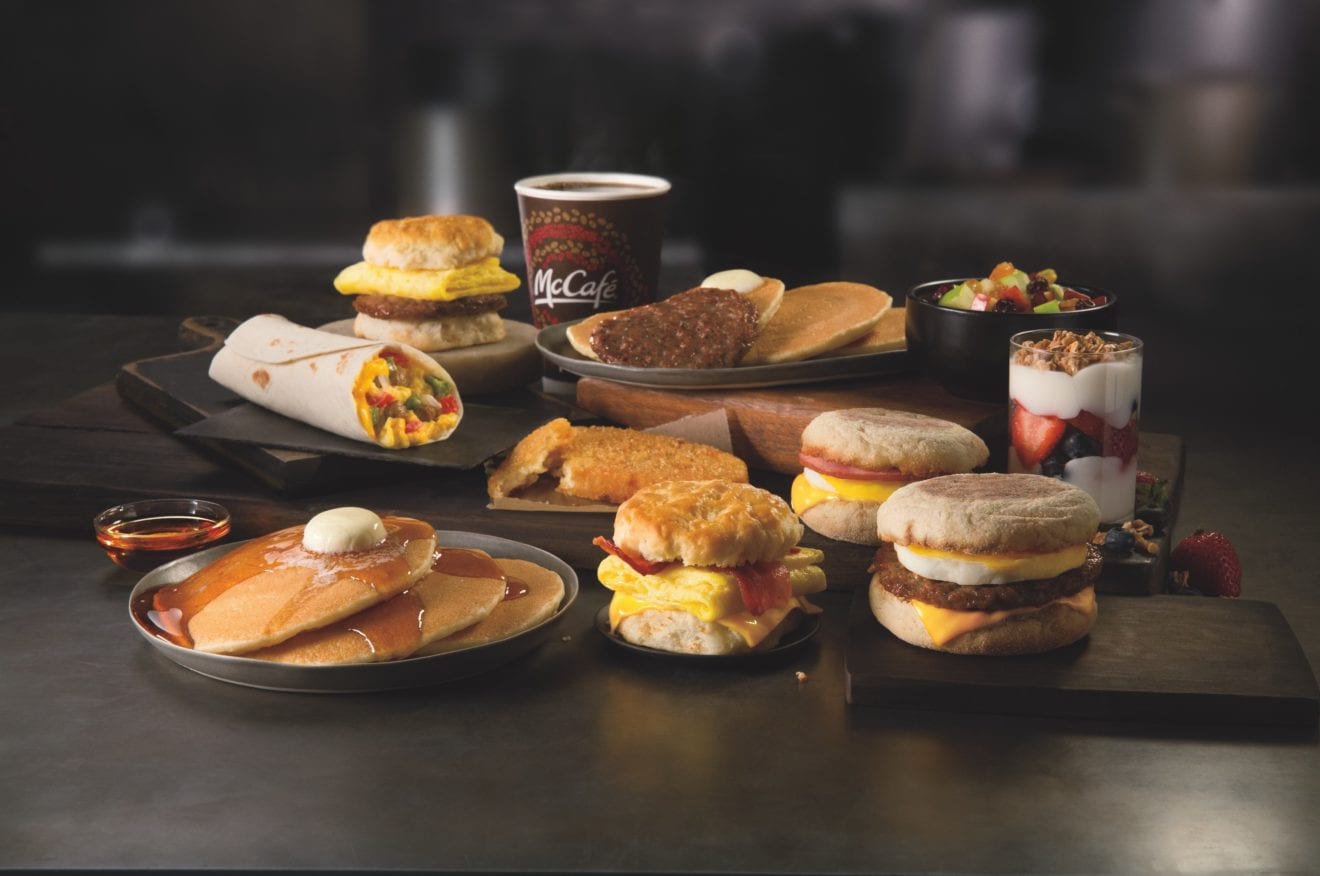
    Breakfast remains its most challenging category, with the chain struggling to attract diners in the mornings. While that mealtime accounts for about a quarter of its total sales, the breakfast market is experiencing fierce competition among rival chains.

    “We’re doing well with average check growth but we really want the customer to come back and more often,” CEO Steve Easterbrook said in an investor presentation about the McDonald’s results.

    He said McDonald’s is trying to recover breakfast customers by trialling different price promotions, launching localised advertising campaigns and improving the drive-through service.

    More stores, more kiosks

    Globally, McDonald’s plans to open a net 750 new stores this year. It will also speed up the rollout of its digital touchscreen ordering systems. Easterbrook says stores with self-ordering kiosks were achieving higher sales than those without.

    Commenting on the McDonald’s results, Neil Saunders, MD of GlobalData Retail, said the kiosks and order-by-app services need to be rolled out faster.

    “This isn’t just a case of installing and implementing the technology, it is about getting customers to actually use it. Consumers need to be given more incentives to use the new ways of ordering, especially mobile, as many still shun the technology,” said Saunders.

    “Longer term, more automation in the kitchen is also critical – something that will be particularly beneficial now McDonald’s menu options are more varied and complex.”

    Saunders described the latest McDonald’s results as “reasonable”. But he said a 6.7 per cent decline in operating income suggests that McDonald’s is having to work harder for much slimmer rewards.

    “In our view, this does not sit well with the increasing complexity and higher levels of capital expenditure the company is introducing into the business.”

    Saunders believes McDonald’s is on the right track. “However, this year will be a more challenging year than last and it will be a balancing act between keeping both customers and franchisees happy.”

  • McDonald’s Starts Reducing Plastic

    McDonald’s Starts Reducing Plastic

    As part of McDonald’s initiative to use its scale to contribute to positive changes in the communities where it operatesArcos Dorados – McDonald’s franchisee in Latin America and the Caribbean- will cease to offer plastic straws in its 2,100 restaurants across the region, from October 31. Straws will be provided only for those customers who expressly request them. For now, straws will still be available at the drive-thru.

    This step is part of a global assessment within McDonald’s to transition to packaging alternatives that are 100% renewable, recyclable or from certified sources towards 2025; to reduce its impact in the environment and take action on one of the most important challenges of society. This path aims to reduce plastic consumption and is the first move to more sustainable alternatives to plastic straws.

    The initiative has been tested in Latin American countries such as Colombia and Uruguay, and many other countries around the world. Arcos Dorados aims to avoid the consumption of close to 300 tons of plastic, based on the results of the test conducted in Colombia, where 6 out of 10 consumers preferred not to use the straw in their beverage.

    “We are looking for ways to use our scale to make a positive impact in society and the environment, as part of our ‘Scale for Good’ goals. The initiatives we have announced recently regarding our commitment to youth opportunities and employment, kid’s nutrition, sustainable packaging and actions to curb climate change; allow us to effectively contribute to the change of consumer’s habits and behaviors so we all can live in a better world” said Woods Staton, Executive Chairman of Arcos Dorados.

    McDonald’s goal is to recycle packaging used in 100% of its restaurants towards 2025, considering local infrastructure for recycling, legislation and consumer behavior in the different cities in which the brand operates; aiming to become part of the solution and to influence this critical change.

    Globally, the company has been creating awareness about the collection and recycling of its packaging at restaurants, and now is working on finding more sustainable alternatives to plastic straws. In fact, McDonald’s is currently testing different solutions to more sustainable packaging through tests in different countries.

    Recently, the Company announced a partnership with Starbucks and Closed Loop Partners, a group of investors in sustainable goods, to launch the “NextGen Cup Consortium and Challenge” with the goal promote innovation of the cups that are currently used in the industry, to make them completely recyclable and environmentally friendly”.

  • McDonald’s Renewed Focus Reflects in New Restaurants

    McDonald’s Renewed Focus Reflects in New Restaurants

    International menu items will feature at a special McDonald’s restaurant highlighting the company’s ‘glocal’ philosophy.

    The restaurant made its debut today in the new McDonald’s global headquarters which is scheduled to open later this year. It serves such offerings as Canada’s Mighty Angus Burger, the McSpicy Chicken Sandwich from Hong Kong, and the Cheese & Bacon Loaded Fries from Australia (pictured). As well as the rotating menu of international favourites, there will be classic menu items such as the Big Mac, Quarter Pounder with Cheese, Chicken McNuggets and Our World Famous Fries. There will also be a Latin American-style dessert centre, while an Australian McCafe area will serve up coffee brewed by trained baristas.

    ‘Glocal’ is used to describe McDonald’s strategy of being a global corporation with a local focus, delivering food to suit the tastes of consumers wherever it has restaurants.

    “As part of our new headquarters, we want to provide our customers with an exciting way to experience our global menu,” says McDonalds president/CEO Steve Easterbrook.

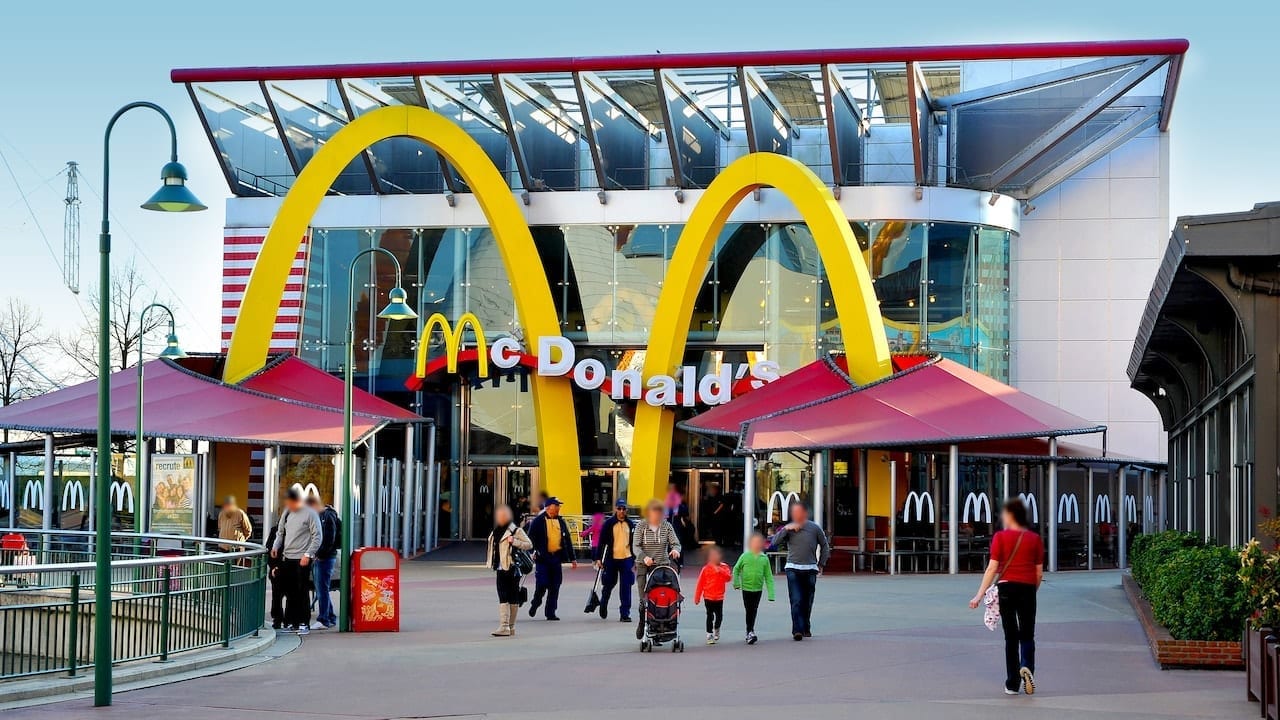
    Covering more than 6000sqft, the outlet is part of of McDonald’s Experience of the Future (EOTF) restaurants with global-inspired interiors, an ever-changing wall map with golden arches that light up when an item from a specific country is featured on the menu, outdoor seating, table service, mobile orders and payments and McDelivery with Uber Eats.

    The group’s nine-storey headquarters will house its corporate offices and Hamburger University, one of seven worldwide locations that provides training for the company’s future leaders and employees.

  • Vietnam’s communist heart Hanoi gets its first McDonald’s

    Vietnam’s communist heart Hanoi gets its first McDonald’s

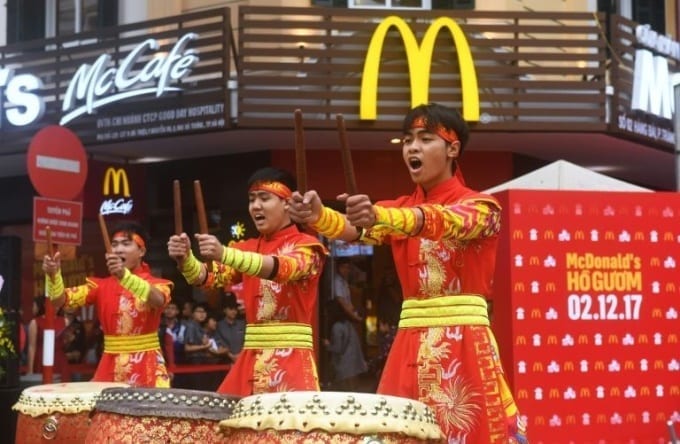
    Global burger behemoth McDonald’s opened its first branch on Saturday (Dec 2) in the historic heart of communist Hanoi, a conservative city renowned for its traditional – and cheap – Vietnamese staples beloved by food-obsessed locals.

    Hungry customers lined up for Big Macs and Chicken McNuggets at the Vietnamese capital’s first location overlooking the tree-lined Hoan Kiem lake, which draws millions of tourists annually to see French-era colonial buildings and sample street-food favourites like pho noodle soup and banh mi sandwiches.

    The restaurant is the first outside of the southern commercial hub Ho Chi Minh City, where 16 branches have opened since McDonald’s first came to Vietnam in 2014 to much fanfare, especially among the rapidly-growing middle class and American-obsessed youth.

    The global fast food chain received a similarly warm welcome in Hanoi on Saturday, as hungry diners crammed into the two-storey eatery for a first taste of the Golden Arches.

    For 84-year-old Tran Dinh Luyen, who fought against the US in the Vietnam War, the restaurant was a sign of warming ties with a former enemy.

    “I am happy that McDonald’s has opened a restaurant in Hanoi. It’s a very famous American brand, so it shows how far US-Vietnam relations have come,” he told after mowing down on a Big Mac with his daughter and granddaughter.

    But not everyone agreed.

    “It’s a rip-off… this fast food is for kids only, it’s not good at all,” 90-year-old Ta Xuan Huong said, espousing his love for traditional cuisine.

    Some curious tourists stopped to see what all the fuss was about, perplexed that a brand ubiquitous in the West would draw so much attention.

    “It’s kind of random to see McDonald’s opening… it’s an interesting cultural experience to see how important it is that the store is opening here,” American Dan Moore told AFP, after his wife remarked she might not have expected to find one of the most salient symbols of capitalism in the communist country.

    The one-party state has seen dizzying economic growth in recent years as it has opened its doors to foreign investment – which has included an influx of Western chains like Starbucks, KFC and Burger King.

    Growth in the fast food sector has been buoyed by rapidly rising incomes – annual per capita income has more than doubled in the past decade to about US$2,100 (S$2,692) today – especially among under-30s, who make up half of Vietnam’s population of 93 million people.

    The fast food industry in Vietnam has seen double-digit growth annually for the past five years, and the country has the highest 2017 growth in Asia-Pacific for fast food chains, according to market research firm Euromonitor International.

    Though meals can cost as much as three times the local fare, customers are still showing strong appetite.

    “Young people like to hang out in fast food restaurants as they are seen as a cool and nice place… and these customers also like the taste of the food,” Euromonitor analyst Samuel Huynh told.

  • McDonald’s Malaysia denies any connection to Israel

    McDonald’s Malaysia denies any connection to Israel

    The Malaysian franchise of McDonald’s Corp said it was “disappointed” with calls on social media to boycott the fast-food restaurant chain in apparent retaliation against the US’ recognition of Jerusalem as the capital of Israel.

    Social media users in the Muslim-majority country have called on people to boycott various American companies following United States President Donald Trump’s decision to relocate the US Embassy in Israel to Jerusalem.

    One Twitter user, who goes by the name, TheUsopIbrahim, stated without citing sources that US-headquartered McDonald’s “channelled funds to Israel”.

    McDonald’s Malaysia said in a statement on Facebook on Saturday that the chain does not support or engage in any political or religious conflicts.

    Mr Azmir Jaafar, managing director and operating partner of franchisee Gerbang Alaf Restaurants, said: “The claim that McDonald’s channels funds to Israel is a false accusation, a lie, fake and slanderous.”

    He added that Gerbang’s largest shareholder is Muslim.

    The Malaysian and Singaporean franchise rights were bought by Saudi Arabia’s Lionhorn a year ago, as part of the US parent’s strategy of moving away from direct ownership in Asia.

  • McDonald’s to screen World Cup 2018 matches

    McDonald’s to screen World Cup 2018 matches

    After news of three local broadcasters bringing World Cup 2018 to Singapore, local organisations have also started revealing their plans to screen the matches with SAFRA and McDonald’s among those committing to do so.

    SAFRA, for instance, told Channel NewsAsia on Thursday (Apr 26) that it will be screening the football matches at all its clubs. Its members can also receive a “fun pack and enjoy exclusive premier members seating” during the live screening of the matches, SAFRA said.

    It will not screen all matches though, it later clarified.

    SAFRA had screened matches at four of its clubs the last time the international football competition was held in 2014.

    SAFRA also said food and beverage (F&B) vendors will offer “special treats and promotions” during these screenings. It will be organising football clinics at selected clubs during the same period for parents and children to pick up some skills, it added.

    Meanwhile, the People’s Association (PA), when asked of its plans, said in an email: “We are exploring with the telcos and will keep you updated.”

    It had screened the football matches live and for free at 30 Community Clubs in the previous edition.

    As for F&B establishments that regularly broadcast sports, they are also firming up their plans for the upcoming World Cup, which is being held in Russia from Jun 14 to Jul 15.

    McDonald’s told Channel NewsAsia: “In the spirit of our global FIFA World Cup sponsorship, we will be screening selected World Cup matches in 22 of our restaurants across Singapore.”

    Harry’s is another that intends to screen the football matches this year.

    Ms Hannah Teo, senior manager for sales and marketing at Harry’s International, said it will screen all 64 matches, but some of its outlets may not show the 2am games.

    “It also depends on the broadcasting commercial fees which have yet to be announced,” she added.

    Brewerkz, too, shared that it intends to show the matches at selected outlets, but most likely not all the matches. “We have not made a final decision at the moment,” a spokesperson said in an email.

    She added that they are still waiting for the pricing to be revealed.

    Mediacorp, which is broadcasting the matches on its Toggle platform, said the package price for corporates start from S$2,876.16 but this depends on screen size and when they sign up. It is the standard pricing for all broadcasters.

    For those signing up for the Toggle 2018 FIFA World Cup Russia Pass for Standard Screen (up to 50 inches), the early bird pricing is S$2,876.16 for the first screen and S$2,020.16 for each subsequent screen, the local broadcaster said. The early bird promotion will be until May 22, similar to the deadline for consumers.

    Those looking to sign up for the pass for larger screens of 51 inches to 99 inches, the early bird price is S$5,016.16 for the first screen and S$3,090.16 for each subsequent one, it added.

    Once the early sign-up period ends, prices for the Standard Screen is S$3,090.16 for the first screen and S$2,020.16 for each subsequent screen. Similarly, it is S$5,230.16 for the first screen and S$3,090.16 for each one after for those with 51 inches to 99 inches television sets.

    As for the package for Indoor Public Screens, for screen size of 100 inches and above, the fee is S$5,230.16 per screen with no early-bird promotion pricing.
  • China boost for McDonald’s appetite

    China boost for McDonald’s appetite

    A strong performance in China, partly offset by continued challenges in South Korea, helped build first-quarter momentum for McDonald’s Corporation.

    President/CEO Steve Easterbrook says the restaurant group has had 11 consecutive quarters of positive comparable sales and a fifth consecutive quarter of positive guest counts.

    Highlights for the first quarter, to the end of March, included a 5.5 per cent rise in global comparable sales and 0.8 per cent in global comparable guest counts.

    A strategic refranchising initiative resulted in consolidated revenues dropping 9 per cent (15 per cent in constant currencies).

    Systemwide sales increased 7 per cent in constant currencies, while consolidated operating income increased 5 per cent (flat in constant currencies) because of growth in franchised margin dollars, offset by the impact of the refranchising initiative

    Comparable sales for the international lead segment increased 7.8 per cent for the quarter, reflecting positive results across all markets. The segment’s operating income grew 21 per cent (9 per cent in constant currencies), fuelled by sales-driven improvements in franchised margin dollars.

  • McDonald’s takes action on plastic straws

    McDonald’s takes action on plastic straws

    Soon, diners will have to request a straw if they want one. And it might be paper.

    It is rare that we have happy news from the fast food sector, but McDonald’s has made a pleasing new promise to tackle plastic waste. It appears the company is taking a two-pronged approach.

    First, two test locations in London, England, will be phasing out plastic straws entirely. Starting in May this year, the straws in these two restaurants will be replaced by paper versions made with recycled content.

    Second, and arguably much more importantly, all 1,300 McDonald’s restaurants in the United Kingdom will start handing out straws only upon request. Paul Pomroy, head of McDonald’s UK, told:

    “Customers have told us that they don’t want to just be given a straw, they want to have to ask for one, because straws [are] one of those things that people feel passionately about, and rightly so. We’re now moving those straws behind the front counter, so if you come into McDonalds going forward, starting next month, you’re going to be asked if you want a straw.”

    It might seem like a minuscule change, but the act of having to ask for a straw will force people to think, even for just a few seconds, about whether or not they really need such a product, and that’s likely to make a dent in consumption.

    Pomroy also pointed out that the fast food chain has been working toward fully-recyclable packaging. So far it’s at 80 percent, and dealing with the straw issue will help address the remaining gap. No more foam or polystyrene boxes are handed out.

    That being said, I wish McDonald’s would rethink the contents of its Happy Meals and those infernal plastic toys that either break quickly or lack imagination and end up kicking around the house for years — or, as fellow writer Sami pointed out to me, the dreaded balloons. And what about the plastic sachets of condiments? We know those are an enormous source of waste in Asian countries, particularly, so surely there’s a better way to package them (or, rather, not package them). As I reported last fall:

    “The most common trash item found on the beach was sachets, the little plastic-and-aluminum packets that are widely used in poverty-stricken areas of the world (particularly Asia) to sell food items, condiments, personal care products and toiletries, even drinking water. The minimal packaging makes items cheaper, but sachets are not recyclable. “

    McDonald’s isn’t the only fast food chain trying to distance itself from single-use plastics. The co-founder of UK chain Leon was so horrified by trash on the Great Barrier Reef in Australia that he “vowed to come back and make a dramatic contribution to end this madness.” Grocery store Iceland has stopped selling straws, and Pizza Express and Wetherspoon have plans to phase them out.

    Wouldn’t it be wonderful for our grandchildren to grow up in a world where straws don’t exist? It’s starting to look like it might be that way.

  • McDonald’s Marks 30 Years Since Opening its Doors in Korea

    McDonald’s Marks 30 Years Since Opening its Doors in Korea

    n March 29, 1988, the McDonald’s franchise opened its first location in South Korea in Apgujeong-dong in the southern part of Seoul.

    The country was already awash in Olympic fever with the summer games set to open later that year in September as hundreds lined up for their first taste of McDonald’s on the peninsula.

    Since that time, over 1.9 billion people have walked through McDonald’s doors in Korea – or about five people each second.

    Over the course of its three decades in the country, the global fast-food giant has introduced several items tailored to local tastes such as the “Bulgogi Burger” and the “1955 Burger”.

    In another nod to local tastes, Korea is also one of the few countries that doesn’t sell the Filet o’ Fish – which was replaced several years back with a shrimp burger. A move which prompted one person to form a Facebook group calling for its return.

    Knowing Korean’s love for spicy cuisine, the company also launched the “McSpicy Shanghai” chicken burger.

    It is interesting to note that McDonald’s branded their spicy Korean offering “Shanghai” – likely a wise move to maintain that international food feel of the franchise despite it being an adaption to local tastes.

    Last year in Singapore, McDonald’s rolled out the “Seoul Spicy Chicken Burger” and “Seoul Spicy Beef” burger, along with the “Kimchi Shaker Fries.” None of which are available in the Korean market.

    Riding the popularity of K-pop and Korean dramas in Southeast Asia, Singapore Mickey D’s even rolled out a mock Korean drama ad campaign with a love triangle featuring the Seoul Spicy in the middle of it all.

    Brand troubles in Korea

    While McDonald’s remains a very strong brand in the South Korean market, there are signs of it slowing down. The company currently has 448 stores across the country, but the pace of growth has slowed in recent years, increasing by 13 stores in the past two years.

  • Resurgent McDonald’s plans 200 openings in Japan’s burger battle

    Resurgent McDonald’s plans 200 openings in Japan’s burger battle

    Fast-food chains in Japan are launching the biggest expansion wave in decades and adopting strategies that would have been unthinkable in the early 2000s, when hamburgers were a prime symbol of deflation.

    McDonald’s Holdings (Japan), the biggest player, is emerging from a prolonged slump and on Tuesday announced it is planning the first net store increase in a decade this year. Burger King, the world’s second-largest hamburger chain, aims to triple its Japanese locations to 300 by 2022, spending 5 billion yen ($45.5 million) in the process.

    McDonald’s saw a 4.5-fold increase in group net profit for the fiscal year through December, logging a record 24 billion yen. It aims to open 150 to 200 new locations in the next three years. Factoring in closings, it expects a net increase of around 100.

    “Over the last several years, we were focusing on optimizing our existing store portfolio,” President Sarah Casanova told reporters. “Now, it’s time to look to opportunities to grow with new restaurants.”

    The number of McDonald’s locations in Japan peaked in 2002 and has been decreasing since. The chain now has 2,900 restaurants after a net decrease of about 1,000.

    Opening new restaurants might seem like an odd move in a country where the birthrate is falling and consumers are holding back on dining out. The hamburger business, however, is one of the few bright spots in an otherwise bleak restaurant industry.

    It helps that chains like Burger King and McDonald’s are globally recognized. Japan is welcoming record numbers of tourists — 28.6 million last year — giving the restaurants a steady stream of fresh customers looking for familiar flavors in an unfamiliar land.

    Burger King Japan, the U.S. chain’s local operation, will open most of its 200 new restaurants in large cities like Tokyo, Osaka and Nagoya. Target locations include shopping center food courts and suburban spots with room for drive-thrus. Open-kitchen interiors will allow customers to see their Whoppers being cooked.

    Burger King also intends to offer a home delivery service, countering McDonald’s Japan’s move to expand deliveries in partnership with Uber Eats last year.

    This is Burger King’s second crack at the Japanese market. The chain left the country in 2001, after a slump. It returned in 2007 with support from such companies as Lotte, but its store count remains far behind McDonald’s Japan’s 2,900.

  • McDonald’s Hong Kong uses Elton John classic to celebrate ‘Little Big Moments’

    McDonald’s Hong Kong uses Elton John classic to celebrate ‘Little Big Moments’

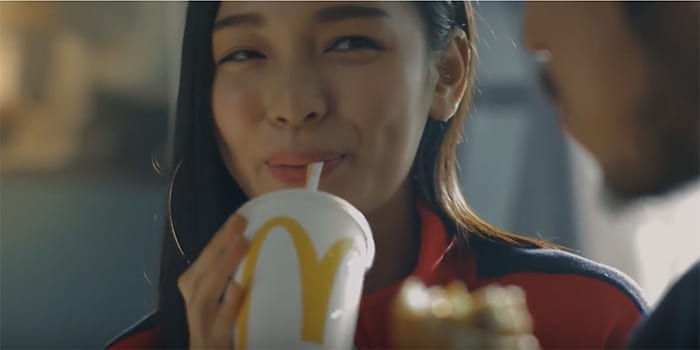
    Scenarios portrayed include a friends’ rooftop dinner, an expectant mother with her partner and a young man visiting his ailing relative.

    Created by DDB Group Hong Kong, the #LittleBigMoments video has been viewed more than a million times on YouTube, and another million elsewhere on social media, since its release last week.

    “As a brand, we understand that life is not just one big thing, but the accumulation of a million little things, a million little moments. And in the end, it is these little moments that make life big,” said Randy Lai, chief executive officer of McDonald’s Hong Kong.

    The use of pop classics is not an unfamiliar tactic used by DDB’s for McDonald’s in Hong Kong. In 2014, American fast food brand used the Billy Joel song ‘Just the way you are’ to promote its cheaper prices.

    In addition to the 60-second TVC, DDB also created three 15 second stories – each focusing a specific McDonald’s product with ‘You Song’ playing in the background.

  • Hanoi finally gets its first McDonald’s

    Hanoi finally gets its first McDonald’s

    Global burger behemoth McDonald’s opened its first branch on Saturday in the historic heart of communist Hanoi, a conservative city renowned for its traditional – and cheap – Vietnamese staples beloved by food-obsessed locals.

    Hungry customers lined up for Big Macs and Chicken McNuggets at the Vietnamese capital’s first McDonald’s outlet. It overlooks the tree-lined Hoan Kiem lake, which draws millions of tourists annually to see French-era colonial buildings and sample street-food favourites like pho noodle soup and banh mi sandwiches.

    The restaurant is the first outside of the southern commercial hub Ho Chi Minh City, where 16 branches have opened since McDonald’s first came to Vietnam in 2014 to much fanfare, especially among the rapidly-growing middle class and American-obsessed youth.

    The global fast food chain received a similarly warm welcome in Hanoi on Saturday, as hungry diners crammed into the two-storey eatery for a first taste of the Golden Arches.

    For 84-year-old Tran Dinh Luyen, who fought against the US in the Vietnam War, the restaurant was a sign of warming ties with a former enemy.

    “I am happy that McDonald’s has opened a restaurant in Hanoi. It’s a very famous American brand, so it shows how far US-Vietnam relations have come,” he told after mowing down on a Big Mac with his daughter and granddaughter.

    Some curious tourists stopped to see what all the fuss was about, perplexed that a brand ubiquitous in the West would draw so much attention.

    “It’s kind of random to see McDonald’s opening … it’s an interesting cultural experience to see how important it is that the store is opening here,” American Dan Moore told AFP, after his wife remarked she might not have expected to find one of the most salient symbols of capitalism in the communist country.

    The one-party state has seen dizzying economic growth in recent years as it has opened its doors to foreign investment, which has included an influx of western chains like Starbucks, KFC and Burger King.

    Growth in the fast food sector has been buoyed by rapidly rising incomes – annual per capita income has more than doubled in the past decade to about US$2,100 today – especially among under-30s, who make up half of Vietnam’s population of 93 million people.

    The fast food industry in Vietnam has seen double-digit growth annually for the past five years, and the country has the highest 2017 growth in Asia-Pacific for fast food chains, according to market research firm Euromonitor International.

    Though meals can cost as much as three times the local fare, customers are still showing strong appetite.

    “Young people like to hang out in fast food restaurants as they are seen as a cool and nice place … and these customers also like the taste of the food,” Euromonitor analyst Samuel Huynh told.

  • McDonald’s Singapore is turning Japanese

    McDonald’s Singapore is turning Japanese

    McDonald’s Singapore is turning Japanese, launching a Ninja Burger and reviving its Samurai Burger. To promote the two offerings, it has launched an “Honour Your Appetite” marketing campaign.

    Senior director of marketing, menu and digital innovation Agatha Yap says the Ninja Burger expands the brand’s variety of Japan-inspired promotional flavours, which kicked off with the Samurai Burger for a short while only in the late 1990s.

    To promote the return of the Samurai Burger, McDonald’s released a commercial featuring a fight between two samurais in a forest.

    Meanwhile, McDonald’s Singapore has started using UberEats so customers can order home delivery, which MD Kenneth Chan says will complement the fast-food chain’s 24-hour McDelivery platform.