Retail News CRM

Tag: Mercedes

  • Volkswagen woos BMW, Mercedes buyers in new upmarket push

    Volkswagen woos BMW, Mercedes buyers in new upmarket push

    Volkswagen’s troubled mass-market brand is pushing upmarket again with a new flagship model a year after ceasing the flopped Phaeton luxury saloon in a bid to lift margins and revive its post-dieselgate image.

    Volkswagen (VW), traditionally known for its range of practical saloons, hatchbacks and sport-utility vehicles (SUVs), on Wednesday unveiled the new Arteon fastback to woo customers who like upscale cars like BMW’s 4-Series Gran Coupe or Mercedes-Benz’s CLS coupe but at lower prices.

    The four-door Arteon will go on sale in German showrooms next month starting at 34,800 euros ($39,111).

    The world’s largest automaker needs higher-margin models to help fund a strategic shift to electric and self-driving cars as it grapples with billions of euros in costs for its emissions scandal.

    The Arteon, featuring adaptive cruise control and enhanced emergency braking and steering functions, resembles VW luxury brand Audi’s A5 Sportback with its long wheelbase, extended hood and lowered roofline.

    “Cars like this have until now been the domain of premium carmakers,” VW brand chief executive Herbert Diess told reporters. “With the Arteon we are trying to gain a foothold in this business.”

    It’s not the first time the VW brand has pushed upmarket. In 2002, it launched the executive Phaeton saloon which was axed last March after never meeting VW’s original sales target of 20,000 cars per year.

    VW aims to sell up to 40,000 Arteons a year worldwide, Diess said, about the same as the predecessor CC saloon which ceased production last October.

    The Arteon is the latest example of a post-dieselgate product overhaul at the VW brand to revive profitability which has been lagging rivals such as PSA Peugeot Citroen and Toyota.

    VW will present redesigned versions of the Polo subcompact, one of its all-time bestsellers, in June and the flagship Touareg SUV in September, after it launched an overhauled Tiguan compact SUV last year.

    Research firm IHS Markit expects the German brand’s new top-of-the-line model to beat sales expectations easily.

    Deliveries of Arteons in core markets of Europe, China and North America may more than double to 81,172 cars by 2025 from 39,265 next year, IHS said.

    By comparison, IHS expects sales of BMW’s 4-Series Gran Coupe to plunge 16 percent to 40,562 models by 2025 while it sees sales of the Mercedes CLS jumping 10 percent to 23,856 cars.

    IHS says China will account for about half of global sales of the Arteon, which will be built in VW’s biggest market and at a factory in Emden, Germany.
  • Daimler acquires 15% stake in Hong Kong’s Lei Shing Hong to expand its dealer network

    Daimler acquires 15% stake in Hong Kong’s Lei Shing Hong to expand its dealer network

    German automaker Daimler has acquired 15% stake in Hong Kong based Lei Shing Hong (LSG) strengthing their longstanding cooperation with an investment by Daimler in LSH.

    The partnership is responsible for the Mercedes-Benz retail business of Lei Shing Hong Group. The transaction has been concluded after approval of the relevant antitrust authorities.

    ”With this transaction we affirm our long and successful cooperation with Lei Shing Hong. At the same time, we strengthen our Mercedes-Benz dealer network and meet the challenges in the coming years together with Lei Shing Hong,” said Bodo Uebber, Member of the Board of Management of Daimler AG responsible for Finance & Controlling and Daimler Financial Services.

    Lei Shing Hong Group is one of the world’s biggest dealer groups for Mercedes-Benz cars, Daimler said in a media release. The decade long partnership with Mercedes-Benz has eventually lead to about 200 sales and services centers with focus in Asia and Australia. Since 2015, LSH has expanded its international presence and now is also present in Europe with facilities in Germany and Great Britain.

    K S Gan, Group Managing Director of Lei Shing Hong: “Lei Shing Hong Group welcomes Daimler’s investment in LSH. We both share a common vision and passion. This investment by Daimler brings the existing relationship and cooperation to a new height. LSH, as an international group, will continue with its tradition of excelling in customer services and business management practices in its Mercedes-Benz business.”

    Daimler’s investment is a strategically important step for both parties, with the aim of bringing one of the world’s biggest dealer groups for Mercedes-Benz cars to a new era and to other markets.

    Till Conrad, who heads the sales department in the Overseas region at Mercedes-Benz so far, will assume the responsibility for the business as CEO at LSH from August 2017.

  • Mercedes-Benz ditches E220d in favour of E350e in Thailand

    Mercedes-Benz ditches E220d in favour of E350e in Thailand

    Sales of the diesel-powered executive saloon cease as the German automaker wants plug-in hybrids to account for 30% of total annual sales.

    Mercedes-Benz (Thailand) has launched its fourth plug-in hybrid vehicle: the E350e which follows the C350e, S500e and GLE500e.

    Like the C350e, the E350e uses a 2.0-litre petrol-turbo engine in conjunction with an electric motor, whose power from the lithium-ion battery can also be revitalised from the wall socket. The S500e and GLE500e employ a bigger 3.0-litre V6 petrol motor.

    Combined outputs in the E350e are rated at 286hp and 550Nm, while the maximum all-electric driving range is claimed at 33km. As the E350e spews out 44g/km of CO2 on the combined cycle, it is eligible for the new 5% excise tax imposed on locally made plug-in hybrids producing no more than 50g/km.

    There are three trims for the E350e: Avantgarde 3.49 million baht, Exclusive 3.79 million baht and AMG Dynamic 4.09 million baht.

    The similarly priced E220d has been dropped from the Thai E-class model lineup as Mercedes-Benz wants to promote plug-in hybrids in the country.

    Mercedes-Benz hopes that plug-in hybrids will account for 30% of total annual sales which is why diesel versions and other pure petrol derivatives aren’t available anymore. The same has happened in the C, S and GLE model ranges.

    BMW, meanwhile, is gearing up to launch the 530e in Thailand at the end of this year to rival the E350e. Volvo is also said to be preparing the introduction of the S90 T8.

    Unlike Mercedes-Benz, BMW is still selling diesel versions of the X5, 3 and 7-series as it wants to offer Thai customers with two distinct types of propulsion. BMW hopes that plug-in hybrids will account for 15% of annual sales this year.

  • 2017 Mercedes-Benz S-Class facelift includes new engines

    2017 Mercedes-Benz S-Class facelift includes new engines

    Flagship saloon receives mandatory mid-life design tweaks and new inline-six and eight-cylinder engines.  The Mercedes-Benz S-class you see here in official pictures is a mid-life refresh of the current generation that’s currently making its debut at the Shanghai motor show.

    Stuttgart’s flagship saloon gets a more prominent face thanks to more accentuated air vents in the bumper. The interior has also been updated with new materials and sportier-looking steering wheel for AMG-trimmed models.

    Mercedes-Benz usually showcases its latest technologies in the S-class before letting them filter down into other models. And while the S-class can already do many things in a semi-autonomous manners, it has raised the bar of its so-called Distronic Active Proximity Control and Active Steering Assist systems.

    Apart from being able to automatically accelerate and brake within speed limits, the S-class can also self-steer for half-a-minute. These features are probably the most advanced driver-assist technologies available so far in a production-ready vehicle.

    After using V6 engines for many years, Mercedes-Benz has returned with a straight-six petrol and diesel engines. These 3.0-litre motors are said to be developments of the existing 2.0-litre four-pot motors and are hooked up to 48V electrical motor and compressor systems and lithium-ion batteries to help enhance performance, as well as reducing fuel consumption and CO2 emissions.

    There are two outputs for the diesel head including 286hp for the S350d and 340hp for S400d. The petrol version gets plug-in ability to allow for 50km of pure electric driving. This particular model is called S560e and replaces the S500e, which had 3.0-litre V6 petrol-electric hybrid.

    On the high performance front, the 455hp 5.5-litre twin-turbo V8 seen in the S500 has been superseded by a smaller 468hp 4.0-litre bi-turbo V8, now called S560.

    As the Thai government is now trying to lure carmakers in bringing EV technology to Thailand, Mercedes-Benz (Thailand) will continue to focus purely on plug-in hybrid for the revised S-class when sales start toward the end of this year.

    As reported earlier, this particular hybrid drivetrain will also appear in a performance-oriented version of the E-class Coupe. The rumoured Mercedes-AMG E50 is said to develop over 400hp when petrol power is combined with electricity.

  • Valmet to build new Mercedes-Benz compact cars

    Valmet to build new Mercedes-Benz compact cars

    Finland’s Valmet Automotive said on Wednesday it had signed a new contract to build future Mercedes-Benz compact cars for Daimler AG.

    The company said it would hire about 1,000 staff to help with its existing contract under which it manufactures Mercedes-Benz passenger cars and SUVs. The plant currently has 2,300 employees.

    The facility is one of the bright spots in the Finnish economy which is slowly recovering from a decade of stagnation.

    In January, Chinese battery maker Contemporary Amperex Technology Ltd bought a 22 percent stake in Valmet Automotive.

  • Daimler to recall one million Mercedes globally after 51 fires

    Daimler to recall one million Mercedes globally after 51 fires

    Daimler AG said it will recall one million newer-model Mercedes-Benz vehicles worldwide due to the risk of fire, after 51 fires were reported.

    The German company said no injuries or deaths were reported relating to the vehicles that it will begin recalling in the U.S. market in July when parts become available.

    A fix has been implemented in the production of new vehicles and vehicles on dealers lots will be fixed before they are sold, the company said. The issue relates to a potentially faulty fuse.

    “Any affected vehicles in inventory will not be sold until they can be outfitted with the additional fuse,” said a Mercedes-Benz spokesman.

    Of the million vehicles to be recalled, 307,629 are in the United States, which is 40,000 units less than Mercedes-Benz reported to U.S. regulators.

    The company did not immediately have a breakdown of where vehicles will be recalled outside of the United States.

    The United States is among the three biggest markets for Mercedes-Benz, the others being China and Germany.

    Of the 51 fires, 30 were reported in the U.S. market, a Mercedes-Benz U.S. spokesman said.

    The recall affects newer models, including those from the 2017 model year.

    Mercedes-Benz and Daimler said it would begin to notify its U.S. customers late in March. It didn’t say when owners in other markets would be notified.

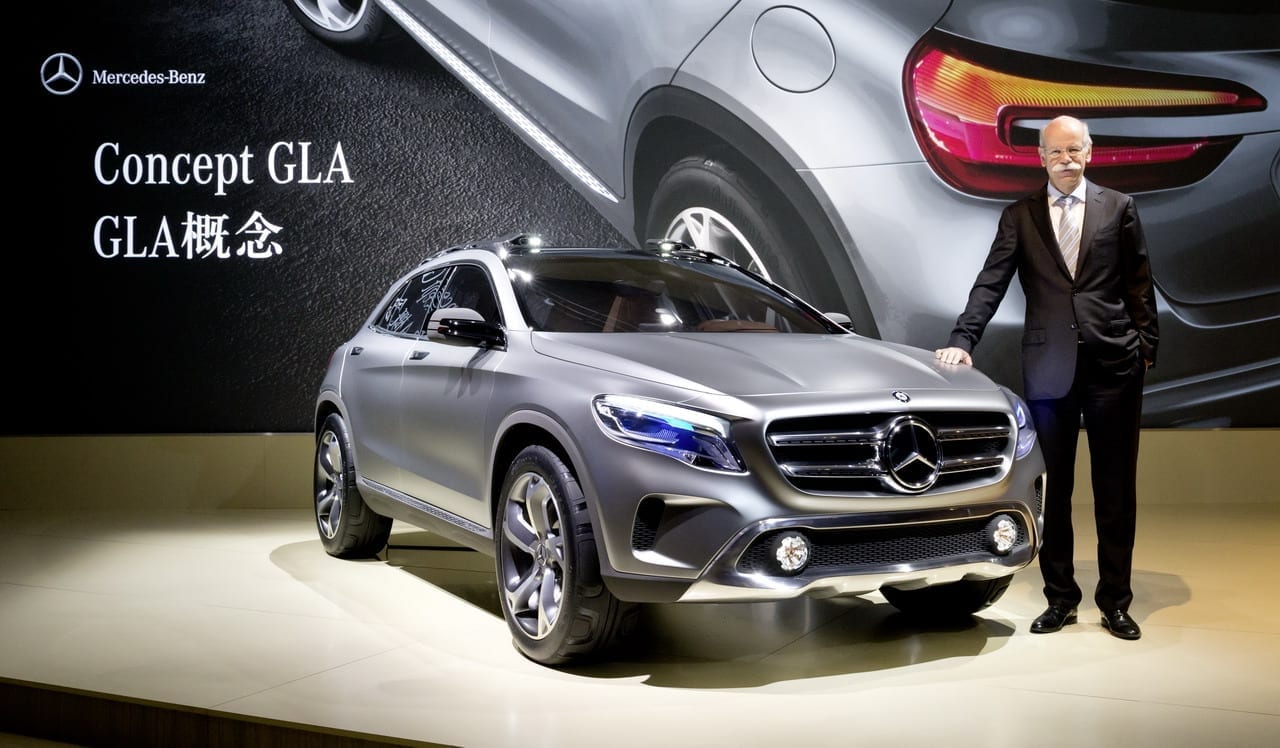
  • Mercedes-Benz plant starts production of the new GLA

    Mercedes-Benz plant starts production of the new GLA

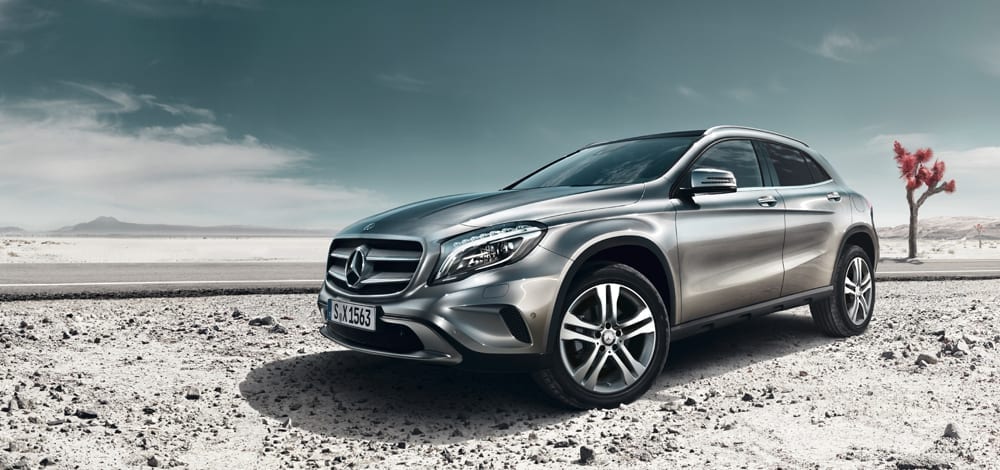
    German car manufacturer Mercedes-Benz has commenced the production of its compact SUV Mercedes-Benz GLA at its Rastatt plant in Germany.

    “The ramp-up of the GLA is further proof of the diversity, competitiveness and efficiency of our production operations at the Rastatt plant. Within a very short space of time, our team mastered another ramp-up in ongoing series-production, while the location operates at full capacity and the preparations for the next generation of compact cars are running at full steam”, says Thomas Geier, Location Manager Mercedes-Benz Rastatt plant.

    The new GLA enters its current model year with an expanded range of engines and a visual upgrade of the interior and exterior design as well as updated equipment variants. Mercedes-Benz GLA made its global debut in 2013 and has been an important product in the company’s product portfolio.

    Mercedes-Benz Rastatt plant in Germany is the biggest employer in the region, with a workforce of around 6.500 employees. Within the global Mercedes-Benz production network, the Rastatt plant is the lead plant for the production of compact cars worldwide. The A-Class, B-Class and B-Class Electric Drive, as well as the compact SUV GLA are manufactured at the location.

    In 2016, more than 300,000 vehicles rolled off its production lines.

  • Mercedes-Benz begins local assembly of CKD E-Class

    Mercedes-Benz begins local assembly of CKD E-Class

    Mercedes-Benz Distribution Indonesia (MDI), the local distribution arm of German car manufacturer Daimler AG, launched on Tuesday the fifth generation of its mid-size luxury sedan E-Class.

    The sedan is assembled from the completely knocked-down (CKD) version in its Wanaherang plant, following an earlier move to introduce the completely built-up (CBU) version last August.

    MDI president director Roelof Lamberts said the local production of the E-Class was expected to help boost sales of the model in Indonesia.

    “The E-Class contributed to a quarter of our sales last year. We hope with the new generation, this contribution can be increased to a third of total sales this year,” he said during the launch ceremony.

    MDI last year saw its sales rise slightly by 3 percent to 3,371 vehicles.

    The pricing of the new model will be listed at the upcoming auto show in April, Lamberts added.

    Currently, the CBU version of the E-Class is sold for Rp 1.3 billion (US$97,600) per vehicle.

    There are two types of CKD E-Class vehicles that will be introduced into the domestic market, namely the luxury E-250 Avantgarde and the sportier E-300.

  • Mercedes-Benz to overtake BMW as largest premium carmaker

    Mercedes-Benz to overtake BMW as largest premium carmaker

    Mercedes-Benz is expected to reach its goal of becoming the largest premium carmaker four years early – a feat achieved, ironically, only after it stopped chasing market share and focused on making stylish high-tech cars loved by consumers.

    Introducing an elegant, sporty design and establishing itself as a pioneer in new technologies like autonomous driving has helped revive the Mercedes brand which analysts say will help keep the Stuttgart-based carmaker ahead of the pack.

    The achievement is a coup for Daimler Chief Executive Dieter Zetsche, who struggled to revive the company following a messy divorce from mass market brand Chrysler in 2007. Less than four years ago Zetsche faced restive shareholders, worried that the automaker was lagging behind rivals BMW and Volkswagen AG’s Audi brand.

    “We had some deficits, cost and quality problems. Design was not top-notch. And with Chrysler we were no longer a pure premium carmaker,” Zetsche told Reuters in an interview held late in 2016 in his office at Daimler’s headquarters in Stuttgart, Germany.

    On Sunday, Daimler said it had sold 2.08 million Mercedes-Benz branded passenger cars in 2016, a lead that BMW, which has held the premium sales crown since 2005 and is due to release annual sales figures on Monday, is not expected to beat.

    Including sales of the Smart brand, Daimler sold 2.23 million passenger cars last year, the company said.

    Zetsche has presided over a renaissance in the design and technology of Mercedes vehicles, refocused the company on technological superiority instead of short-term sales goals, and adapted the entrepreneurial mindset of Silicon Valley to the traditionally risk averse culture of Stuttgart.

    Daimler is also preparing for a new era when the auto industry’s business model moves beyond manufacturing and selling cars, to lure customers interested in pay-per-minute transport solutions provided by autonomous cars.

    Zetsche set the goal of making Mercedes the best-selling luxury carmaker by 2020 at the company’s 125th anniversary in 2011, a year when even Audi sales overtook those of Mercedes, pushing it into third place.

    “Since then we worked hard and today we are leading or among the leaders when it comes to innovation, quality, design and security,” Zetsche said.

    Daimler traditionalists were shocked by the volume target, fearing that selling too many vehicles may dilute the exclusivity of their cars and reduce the appeal of the Mercedes brand in the long run.

    But consumer electronics companies like Apple had already proven that the pull of their brand did not suffer with increased volume sales so long as they offered the best customer experience.

    Audi was gaining traction with customers thanks to cool designs, so Zetsche appointed a young designer, Gorden Wagener to head up Mercedes design. He introduced an elegant and sporty style to spruce up Stuttgart’s Teutonic limousines. Mercedes cars were also equipped with state-of-the-art digital display technology, luring smartphone savvy customers.

    It was a change for Mercedes where engineers always believed they were producing the best cars in the world, but measured quality mainly using technical or engineering criteria, a strategy which often led to powerful cars with expensive and complex technical innovations.

    Today, Mercedes-Benz follows its motto “the best or nothing” by thinking about whether customers would notice or benefit from a new technological innovation, and by benchmarking the brand against competitors, Zetsche said.

    The company’s renaissance began in earnest in May 2013 with the launch of a new flagship S-class. To burnish its credentials as a technology leader, Mercedes developed a prototype version which drove around 100 kilometres (62 miles) autonomously the same year.

    Rather than designing a limousine which appealed mainly to rear seat passengers, the new S-Class featured large digital display screens on the dashboard, a deliberate attempt to appeal to a younger, driver-focused audience.

    The same youthful design approach was used for the new C-Class and E-class designs, which are now the company’s volume sellers.

    Mercedes also revived the Maybach brand, a marque targeting the ultra-luxury sector which the company had stopped making after the prior bespoke design failed to gain traction, leading the car to sell only 200 times in its final year of production.

    Since Maybach’s latest revival in February 2015, Daimler has sold 15,000 cars.

    “The rewards we are reaping today are the logical consequence of careful preparation,” Zetsche said.

  • BMW November sales up 5.9 percent, Mercedes poised to overtake

    BMW November sales up 5.9 percent, Mercedes poised to overtake

    Daimler’s Mercedes-Benz is on track to overtake rival BMW to take the title of the world’s biggest luxury carmaker, sales figures for November released on Monday showed.

    November sales of BMW branded luxury cars were up 5.9 percent to 177,740 taking year-to-date sales to 1,824,490. By contrast Mercedes-Benz passenger car sales were up 12.7 percent to 182,602 increasing year-to-date sales to 1,893,619.

    Sales of BMW’s core brand reached 1.91 million in 2015 on strong demand for sports utility vehicles like the X5, the 11th year in a row the Munich-based carmaker clinched the title in 2005.

    Mercedes sold to 1.87 million cars in 2015, compared with 1.80 million luxury vehicles sold by Volkswagen’s Audi

  • Mercedes bets on SUV next year

    Mercedes bets on SUV next year

    In a sluggish automobile market, German automaker Mercedes-Benz aims to push up sales of sports utility vehicles (SUVs) in 2017, which may see strong demand from young and successful people.

    SUVs accounted for 35 percent of Mercedes’ total sales of 2,724 cars in the first 10 months of this year, almost unchanged from the same period last year. Sixty five percent of the company’s sales derived from sedans and other models.

    The contribution of SUV sales surged by 7 percent as of October, up from only 28 percent last year, Kariyanto Hardjosoemarto, deputy director of sales operations and product management at Mercedes-Benz Indonesia (MBI), said on Wednesday.

    “According to market trends, SUV sales will increase higher than sedans next year,” he said on the sidelines of the 2016 Mercedes-Benz Star Expo.

    Many customers preferred buying SUVs due to poor road conditions in the country, triggered by a number of ongoing infrastructure projects, while some also considered the risk of flood, Kariyanto said.

    Despite the continuing domination of multi-purpose vehicles (MPVs) in Indonesia, the SUV market is expanding rapidly as seen by tighter competition among car manufacturers.

    Major automakers like Toyota and Honda rolled out new models to tap into this potential market throughout this year.

    In the premium SUV market, Mercedes has made a similar play, introducing its GLC model, along with its rival BMW, which launched the X3.

    Although he declined to specify the firm’s sales target for next year, Kariyanto said Mercedes’ top-selling SUV models so far were the GLC, with prices ranging from Rp 899 million (US$66,494) to Rp 1.23 billion, and the GLE, sold for between Rp 1.09 billion and Rp 1.56 billion.

    Behind the growth of Mercedes’ SUV segment are female customers, who apparently choose the model for reasons of safety combined with the comfort that resembles a sedan, according to MBI deputy director of marketing communication Hari Arifianto.

    “Women accounted for 20 percent of our SUV buyers,” he told.

    Amid a persistent economic slowdown that has squeezed people’s purchasing power, the domestic automotive market has gone through a bleak few years of late.

    Car sales, an indicator of consumption in Southeast Asia’s largest economy, only rose by 2.55 percent to 874,847 cars in the January-October period from last year, according to data from the Indonesian Automotive Manufacturers Association (Gaikindo). Sales in October alone went up by just 3.8 percent to 91,846 cars.

    Citing data from Gaikindo, Kariyanto said premium car sales had increased by 0.3 percent year-to-date.

    Despite the flat growth, the firm is optimistic that the luxury car market will recover next year on the back of Indonesia’s demographic bonus, which is marked by a large pool of productive people.

    This outlook underpins the company’s plan to focus on selling cars to young and successful people.

    “CEOs of online marketplaces or owners of app-based startups are all our targets,” Hari said.

    The company hopes that the so-called new generation compact cars, which consist of the A-Class, the CLA and the GLA, will attract younger buyers.

    Comprising sedans and SUVs, the cars are sold at more affordable prices, starting from around Rp 600 million.

    Mercedes launched more than 10 product line-ups this year. On Wednesday, the company unveiled its two latest models, namely the Mercedes-Benz AMG S 63 Coupe and the Mercedes-Benz SL 400, sold for around Rp 6 billion and Rp 2 billion, respectively.

  • Mercedes puts up fight in China

    Mercedes puts up fight in China


    BMW and Mercedes — China’s No. 2 and No. 3 luxury brands — were virtually dead-even in that market last month, selling roughly 35,000 vehicles apiece.

    But Mercedes sales jumped 32 percent year on year, while BMW deliveries fell more than 7 percent. Audi, China’s top-selling luxury brand, boosted sales 9 percent to 49,576 vehicles.

    Mercedes has been on a tear in China since 2013, when it shook up management and consolidated its two warring distribution channels.

    BMW is feeling the heat. In April, the company replaced its China sales chief, and now it’s hustling to introduce new models. BMW is introducing a long-wheelbase X1 in China to compete with the Audi Q3 and Mercedes GLA.

    Those three models are battling for share in China’s red-hot market for compact crossovers.

    For the first four months, Audi remained on top, with sales of 189,611 vehicles, while BMW delivered 162,221 units. Mercedes is still No. 3, with sales of 142,266, but it is steadily closing the gap.

    We suspect BMW realizes that objects in its rearview mirror are closer than they appear.

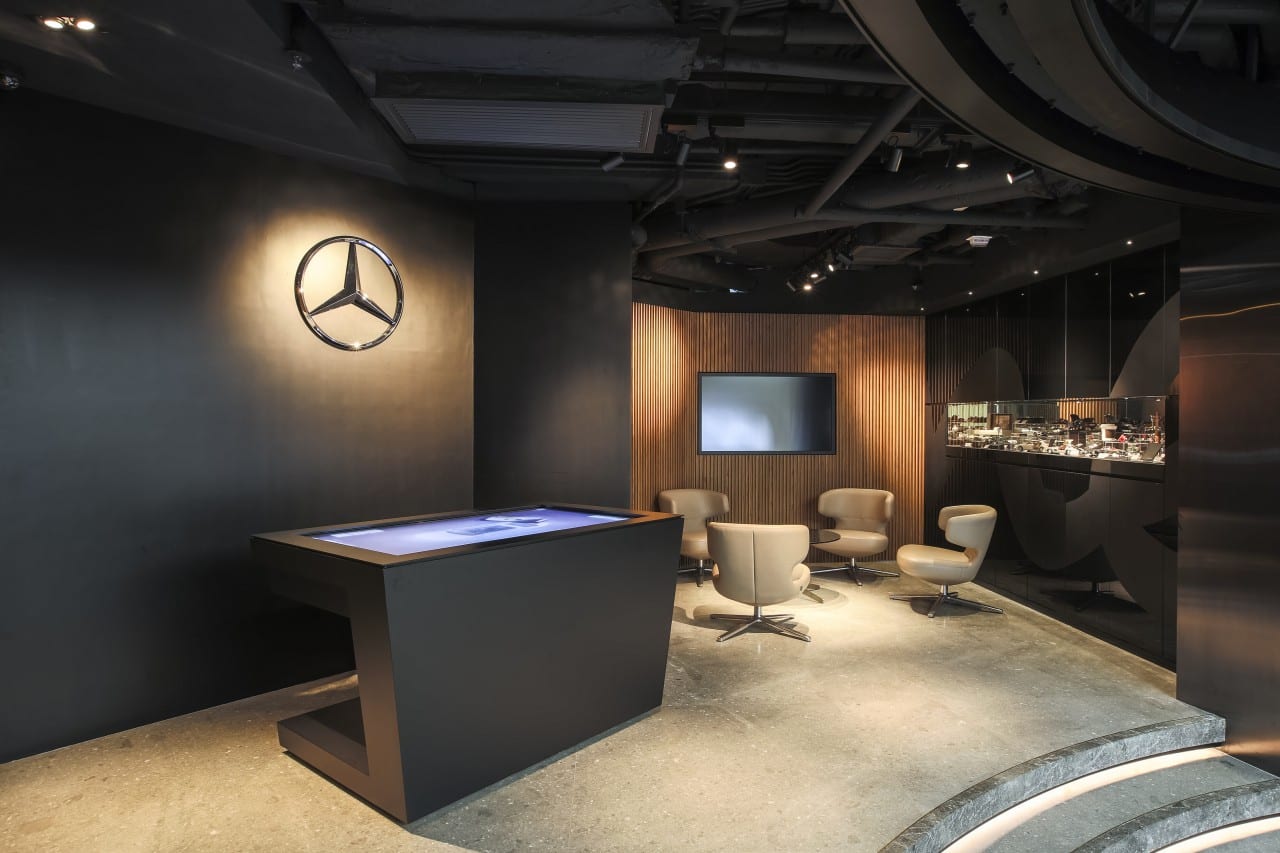
  • Mercedes restaurant opens in Hong Kong

    Mercedes restaurant opens in Hong Kong

    German car maker Mercedes-Benz has opened a new retail and dining concept in the heart of Central.

    The Mercedes restaurant, called Mercedes Me, “is about creating the ultimate personalised experience, developed organically around you and the products that you love,” the company explains.

    “Here, you can keep up to date with the latest news and events not only from the Mercedes-Benz world, but also the worlds you want to know about, such as fashion shows and Formula 1 live broadcasts. Share with us the things you love, and we will share in your passions.”

    The 480 sqm store opened last weekend in the Entertainment Building, 30 Queen’s Rd, with a glitzy cocktail function to which special guests were chauffeured in a fleet of classic and new model Mercedes-Benz cars. There was a fashion show featuring the latest range of Hugo Boss apparel and a presentation on Formula 1, currently dominated by the marque.

    Mercedes restaurant, Central Hong Kong

    Mercedes has created a destination lifestyle concept, a place to chill, a place to enjoy gourmet food, wines and cocktails, and somewhere to engage in cars, motor racing, design, art and fashion.

    It was created in partnership with Hong Kong restaurant group Maximal Concepts.

    The decor invites comparison with the interior of some of the brand’s cars: dark blue upholstered seats, polished timber and a collection of black and white photos of some of Mercedes-Benz’s greatest models from through the ages, all housed in a polished concrete shell.

    Oh, and you can take a look at the latest model cars from the brand as well.

    Mercedes Me is open for dinner from 5:30pm until 10:30pm daily. Breakfast and lunch will follow.