Retail News CRM

Tag: Philippines

  • Shake Shack openening second store in Philippines soon

    Shake Shack openening second store in Philippines soon

    Shake Shack is launching its second Philippines outlet at the Mega Fashion Hall at SM Megamall.

    The restaurant is expected to open before the end of the year, with construction on the new venue already underway following a board up made by artist Kris Abrigo, which features a “reimagined Ortigas skyline showcasing gradient colours as day shifts into night, and a multi-faceted community through textures and geometric shapes,” according to reporting in the Manila Standard.

    Brand enthusiasts are invited to interact with sliding panels in the board to reveal “surprises” during the lead-up period to the store’s opening.

  • Caps from the Philippines crosses borders

    Caps from the Philippines crosses borders

    A Philippine ad agency has created a streetwear brand to test its digital marketing strategies – and now it has gone global.

    What? Caps, developed by Eggshell Worldwide, led by Mark Wesley Pahate now ships to 220 countries worldwide, in partnership with FedEx, and after its early success, the company is now looking at adding streetwear staples such as hoodies, socks, and shoes, with the vision to grow into a full-blown lifestyle brand.

    “Since I’m a fan of streetwear, we decided to go with fitted caps,” says Pahate.

    “Internationally, it is a really big market, valued around US$300 billion and growing. Young people drawn to streetwear comprise a vibrant community and an evolving hub of creativity. You will be surprised by a lot of independent streetwear brands we have here in the Philippines, and how popular they are in the international market.”

    Featuring street style, What? Cap has generated a buzz among youth who want to express themselves through fashion. Neighbouring streetwear hubs Taiwan and Singapore are the biggest target markets for the company.

    “Our products appeal to the two markets we identified for What? Caps: Streetwear fans and cap collectors.” Pahate says. “We connect with customers through social media. From there, we lead them to our website where they can shop.”

    For any brand, it is a badge of success to cross borders. After steadily gaining traction in Southeast Asia and the Middle East, Pahate says they are now beginning to penetrate the US. This increase in demand and destinations, he says, was made possible by their logistics provider, FedEx which has integrated its delivery system into What? Caps’ website, even though it is still a fledgling business.

  • Shiseido Philippines JV launched

    Shiseido Philippines JV launched

    Beauty-products retailer Shiseido has commenced operations in the Philippines through the newly-established Shiseido Philippines Corporation, a joint venture in partnership with Luxasia Partners.

    Shiseido is Japan’s largest beauty company with a presence in over 120 countries, including the Philippines, which is Southeast Asia’s third-largest cosmetics market representing close to US$3 billion in annual sales.

    This expansion opens new distribution channels in the Philippines and enables Shiseido to expand its current brand and product range in the market. In addition to trusted Shiseido and Shiseido Men skincare products, Shiseido Philippines will officially launch other key brands from its Prestige, Fragrance and Cosmetics & Personal Care portfolios – such as Nars and Laura Mercier; a line-up of fragrances such as Dolce & Gabbana, Issey Miyake, and Narciso Rodriguez; and Senka facial cleansers, which have already established a strong following in Asian markets.

    “We are proud of what we have accomplished with the brand to date and are extremely delighted to move our business forward with the launch of the Shiseido Philippines in partnership with Luxasia,” said Shiseido Philippines MD Koji Nakata. “We remain committed to our customers and I look forward to engaging with our customers in the Philippines as we bring them limitless beauty with our expanded line-up of high-quality cosmetics and skincare products.”

    “The Philippines is an important and strategic market for Shiseido in Southeast Asia, and it is an exciting time to be a part of the country’s booming beauty industry,” said Shiseido Asia Pacific president & CEO Jean-Philippe Charrier. “I hope that Shiseido’s entry to the Philippines will enable more Filipinos to have access to a wider range of beauty brands and products – with the uncompromising quality, innovation and spirit of omotenashi, or Japanese hospitality – that only Shiseido can provide.”

  • Metro Retail Stores Group shares vision for sustainable shopping

    Metro Retail Stores Group shares vision for sustainable shopping

    Philippines retailer Metro Retail Stores Group Inc (MRSGI) is planning to open up more opportunities for sustainable shopping.

    Speaking at the recent Regional Forum on the Promotion of Sustainable Consumption in the Association of Southeast Asian Nations (Asean), MRSGI VP for corporate affairs Anna Marie Periquet shared that “as engines of economic growth and shapers of consumer taste, retailers can make a difference in the world.”

    Organized by Asean and the Department of Trade and Industry (DTI), the forum brought together delegates from Asean member states, representatives from relevant government bodies, and non-governmental organizations as well as regional and international experts.

    Periquet added that social responsibility is “part of MRSGI’s corporate DNA”. The company works alongside the Vicsal Foundation to create programs that holistically take on the challenge of providing sustainable solutions for society’s most pressing needs. Vicsal Foundation is the corporate social responsibility arm of Vicsal Development Corporation, which owns and operates MRSGI.

    “Together with Vicsal Foundation and our other CSR partners, we are able to actively pursue programs that support the United Nations’ 17 Sustainable Development Goals,” said Periquet. “We focus on helping eradicate poverty, provide quality education, ensure decent work and foster economic growth, and build stronger partnerships.”

    Among MRSGI’s programs are initiatives that promote inclusive business for local farmers, fisher folk and weavers. The company also helps consumer mindsets by providing them with socially-responsible and high-quality products.

    “The socially responsible goods on our shelves are not pity purchases,” emphasized Periquet. “They have passed strict tests on consumer safety, health, sanitation, and are government-registered.”

    Among the CSR brands mentioned were Caritas Margins, an organisation that works with micro-entrepreneurs from marginalised communities to create various products like food, artwork, home decor and accessories; St Arnold Janssen Kalinga Center, which provides care and livelihood for people experiencing homelessness; and the Bureau of Jail Management and Penology, which facilitates the sale of fashion and homeware products made by persons deprived of liberty.

  • Cebu Pacific launches new inflight menu

    Cebu Pacific launches new inflight menu

    Cebu Pacific is launching a new selection of inflight meals for purchase starting October this year.

    The new meals include a Singaporean dish (Hainanese Chicken Rice shown above), Filipino cuisine, and a vegetarian option.

    “As every Cebu Pacific flight is a journey to or from home, we have designed this refreshed inflight menu to bring a feeling of comfort in the form of simple meals and familiar tastes,” said JB Bueno, director for inflight catering and sales at Cebu Pacific.

    Below are some of the meals passengers traveling with the airline can buy starting next month:

    Roasted Chicken Sandwich (toasted panini bread with roasted chicken, sautéed spinach, and grated cheddar cheese with a garlic aioli spread).

    Lechon Paksiw (slices of roasted suckling pig stewed in a blend of vinegar, sugar, and spices, served with white rice).

    Other meals include the following:

    • Pinoy Spaghetti
    • Beef Salpicao
    • Chicken Yakisoba
    • Crab Salad Sandwich

    In addition to being available for purchase on flight, passengers can also pre-order the meals before the flight, according to Cebu Pacific. The carrier also added that the meals come with information on nutrition to cater to health-conscious travelers flying with Cebu Pacific.

  • Cebu Pacific holding ‘9.9’ promo fare sale

    Cebu Pacific holding ‘9.9’ promo fare sale

    Cebu Pacific is holding another seat sale from Sept. 9 to 10. The airline did not specify fares but said new destinations will become available every 8 hours starting midnight Sept. 9.

    From 12 a.m. to 8 a.m. all local destinations except Batanes and Marinduque will be on offer.

    From 8 a.m. to 4 p.m. Cebu Pacific will offer promo fares to Japan, Korea, China, Taiwan, Hong Kong and Macau.

    Promo fares to ASEAN destinations, Dubai and Australia will be offered from 4 p.m. to 12 a.m.

    The fares will be valid for travel from April 1 to Aug. 31 next year.

  • Watsons Philippines adding more stores this year

    Watsons Philippines adding more stores this year

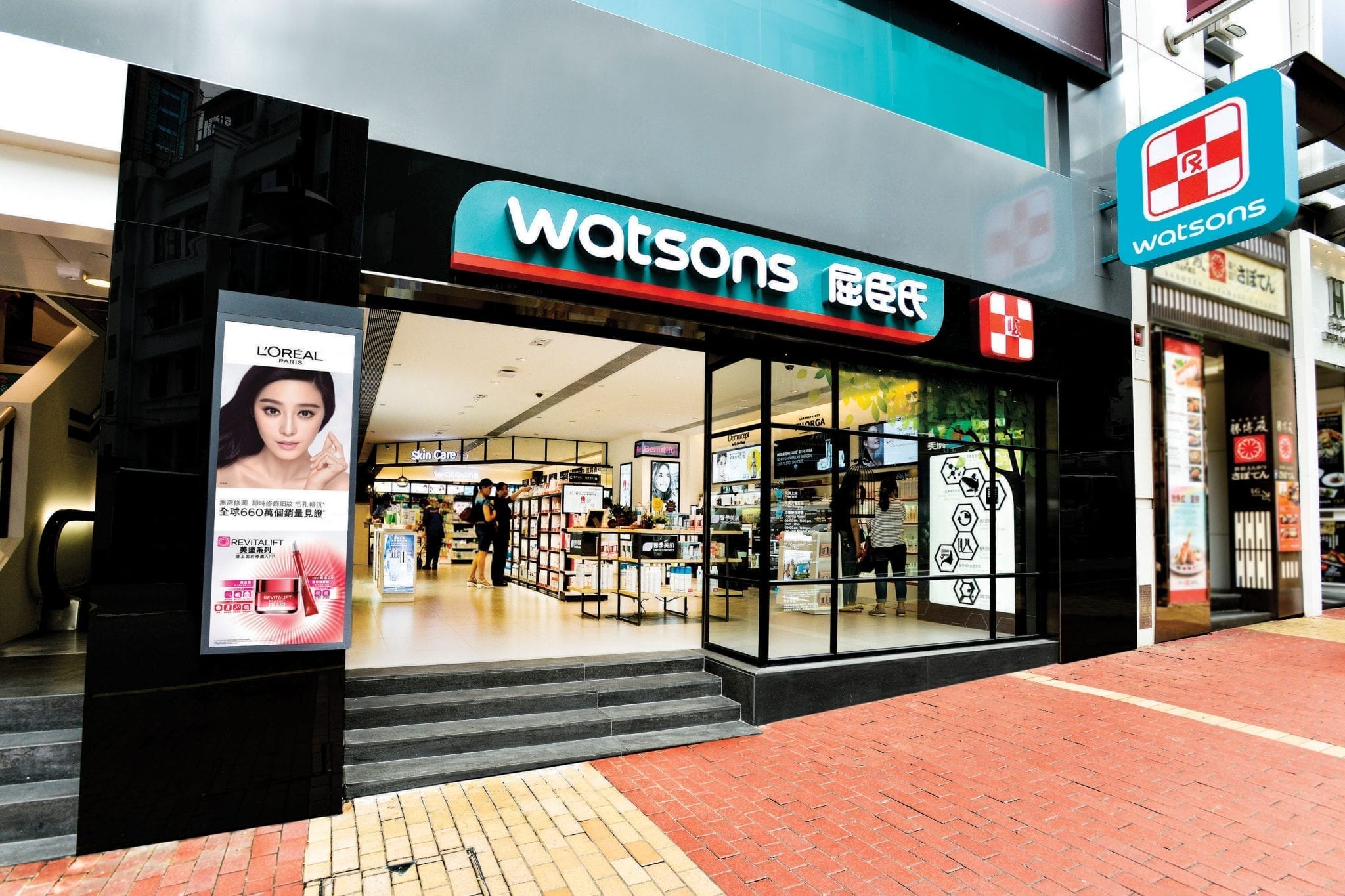
    Watsons Philippines plans to open another 50 stores this year, adding to the 781 branches it already operates.

    Parent AS Watson, the health-and-beauty retailer headquartered in Hong Kong, has more than 15,200 stores worldwide. It launched the Watsons brand in the Philippines in 2002 after partnering with SM Prime Holdings, opening its first store at the SM Megamall.

    Rafael Lim, director of trade and health at Watsons Philippines, told The Mindanao Times last week the new outlets will follow the format of existing stores and the company plans to continue to roll out its click-and-collect, omnichannel strategy in the market.

    In some parts of Southeast Asia, click-and-collect – where customers order online and pick up in a store they choose – leads to incremental purchases by as many as 70 per cent of customers when they are collecting.

    “We always seek and understand the needs of our customers,” said Lim.

  • Philippines Approved for Yuan Clearing Service

    Philippines Approved for Yuan Clearing Service

    The People’s Bank of China authorized the Bank of China Manila branch for yuan clearing, making the Philippines the latest market to join the path towards the internationalization of the renminbi.

    BOC’s Manila branch has established the yuan clearance system and already helped the local government issue and bonds in China’s interbank market with a total value of nearly $4 billion.

    The Philippines joins other yuan clearing centers including Hong Kong, Macau, Taiwan, U.S., Japan, South Africa and more.

    The yuan is currently the eighth most traded currency with a turnover of $284 billion in April, according to a Bank of International Settlement report, and ranks top amongst emerging market currencies.

  • SM Prime to open lifestyle mall in Zambales

    SM Prime to open lifestyle mall in Zambales

    SM Prime Holdings is launching a new lifestyle mall in Zambales, the Philippines.

    The firm’s 73rd shopping mall in the territory, a 72,000sqm four-story complex, will open in Olongapo city’s CBD with 85 percent tenant occupancy confirmed so far. It is SM Prime’s second lifestyle mall in Olongapo.

    “Olongapo City remains one of the fastest-growing cities in Central Luzon creating a wonderful synergy on economical and sustainable development,” said SM Prime president Jeffrey Lim. “SM City Olongapo Central will not only enhance the beauty of this thriving city and its province but will also create more jobs and business opportunities to locals who aspire to grow with our company.”

    The mall will feature a food hall, cyber zone, and wellness zone along with six digital cinemas and a convention center, as well as a sports and entertainment venue.

    “SM Prime remains committed to its role as a catalyst for economic growth, delivering innovative and sustainable lifestyle cities, thereby enriching the quality of life of millions of people,” read a statement by the firm.

  • Cebu Pacific Air Cargo continues digital transformation with SmartKargo

    Cebu Pacific Air Cargo continues digital transformation with SmartKargo

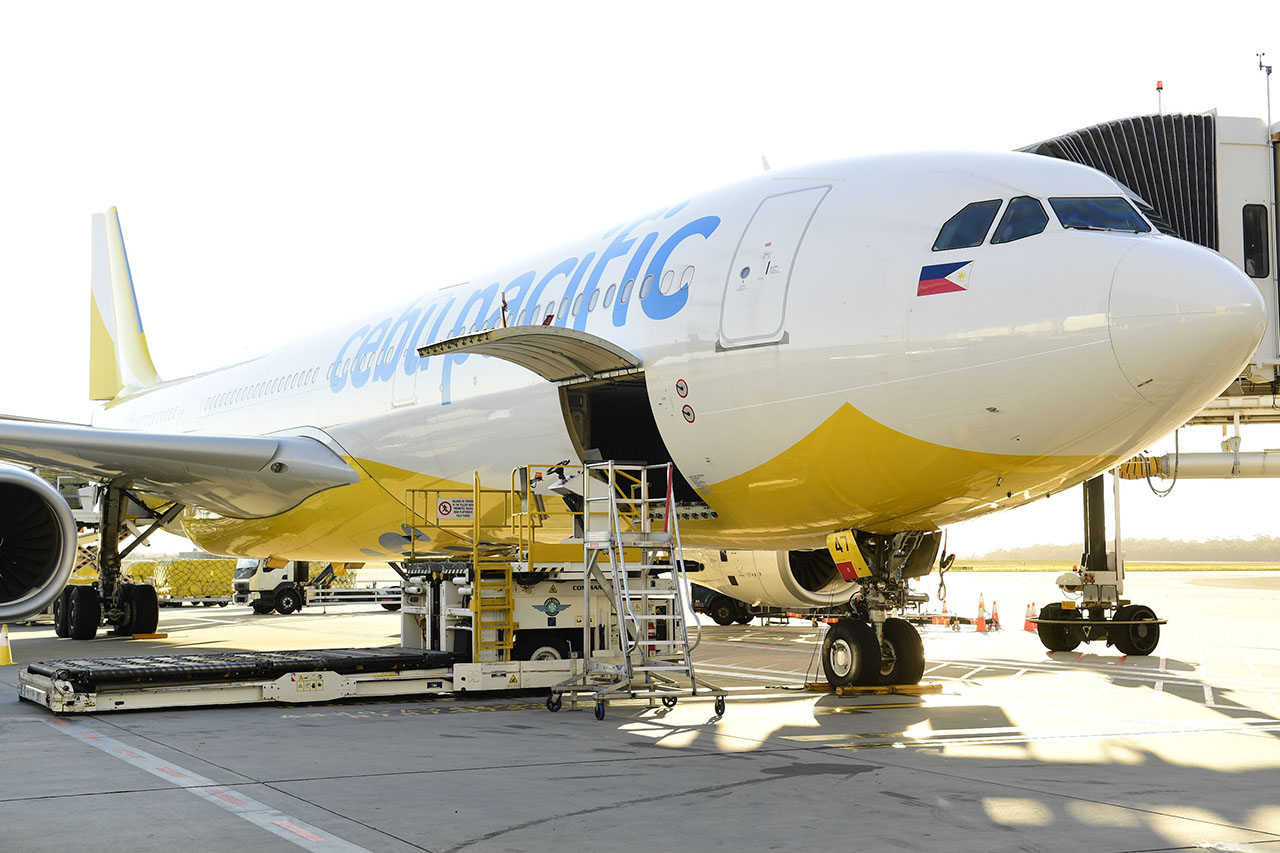
    Cebu Pacific Air has renewed its contract with QuantumID Technologies to ramp up SmartKargo for CEB Cargo. The partnership will continue the cloud-based real-time management of CEB’s air cargo business using the advanced SmartKargo operating system.

    The largest Philippine carrier has utilized the innovative Software as a Service (SaaS) solution to empower customers with real-time shipment information and advanced tools such as mobile apps that streamline customer experience via kiosks at the warehouse.

    The mobile app has also allowed CEB Cargo to enable its clients to manage their shipments end-to-end, from booking to destination. In addition, SmartKargo has helped CEB manage and integrate new dedicated cargo capacity into its fleet.

    “The SmartKargo Cloud solution has equipped CEB Cargo with the advanced digital tools to run our business,” said Alex Reyes, Cebu Pacific Vice President for Commercial. “We are very pleased to continue the partnership, and look forward to sustained growth that SmartKargo has enabled.”

    Enhanced capabilities of SmartKargo allowed CEB Cargo to provide paperless Airway Bills (e-AWBs), and ease of booking for CEB Cargo agents and customers by allowing single-screen data entries. In addition, the solution provides simplified pricing and rate-making capabilities; real-time capacity management; user-configurable business Intelligence and reporting; and integrated Cargo Revenue accounting.

    The platform supports streamlined participation with partners doing e-commerce—facilitating B2B or B2C door-to-door operations via mobile applications as well as third party integration.

    “We at SmartKargo look forward to continuing providing CEB Cargo with solutions and tools to grow their business,” said Jay Shelat, Executive Vice President at QuantumID Technologies. “We are happy and grateful to be working with an outstanding team of cargo professionals and excellent leadership.”

    Cebu Pacific was the first Asian carrier to adopt the SmartKargo Cloud platform in 2013.

  • Cebu Pacific’s New In-Flight Meals Will Make You Look Forward To Eating During Your Flight

    Cebu Pacific’s New In-Flight Meals Will Make You Look Forward To Eating During Your Flight

    Traveling is a double-edged sword. You’re both excited and stressed, even before you get to the airport. One of the things I’ve been taught to do is to eat a full meal before I even leave the house because airport food is too expensive and airplane food is bad. Barely edible, they say!

    Cebu Pacific is here to silence the haters! They recently introduced a new inflight menu that’s all about your favorite Pinoy comfort foods. Described as “homey,” their selection includes Beef Salpicao, Lechon Paksiw, and even Pinoy Spaghetti!

    I know I’m always craving Singaporean food so I was elated to also see Hainanese Chicken Rice on the menu.

    If, however, you don’t feel like having anything heavy, opt for their new sandwiches instead: the Roasted Chicken Sandwich and the Crab Salad Sandwich.

    Vegetarians need not worry: Cebu Pacific didn’t forget about you! Enjoy their Veggie Pesto Sandwich, which consists of tomato, lettuce and mozzarella, and ciabatta bread.

    All of these and more are available for pre-order once you’ve booked a flight with Cebu Pacific. Director for Inflight Catering and Sales JB Bueno shared in a press release, “Our meals being on pre-order also helps us guarantee less food wastage, and is in line with efforts towards more sustainable practices and operations.”

  • Shopping malls in the Philippines popularity on the rise

    Shopping malls in the Philippines popularity on the rise

    Shopping malls in the Philippines are bucking international trends and are trading stronger than ever, says retail technology expert Nikki Baird.

    Their secret, she says, is that they offer a wider range of experiences to customers.

    “Shopping malls in the Philippines are all-in-one destinations that not only provide shopping, dining, and entertainment but also offer community events, access to government and utility services, and even places of worship,” Baird told the recent National Retail Conference and Expo in Manila.

    But, she warned, neither mall operators or their retail tenants in the Philippines can afford to be complacent because the industry is constantly changing.

    “The rise of e-commerce, evolving consumer tastes, dynamic competition, and other developments in the global retail landscape challenge Philippine retailers to pursue innovations in both brick-and-mortar and digital stores.”

    Baird, VP of retail innovation at Aptos, a retail technology solutions provider, said global store-innovation trends are showing how retailers are responding to consumers’ emerging needs and demands.

    “The global shift in consumer behavior puts pressure on retailers around the world to rethink their customers’ journey and experience in their online and offline stores,” said Baird. “In response to this, brands are embracing digital and behavioral innovations to deepen customer relationships, provide in-store services, use stores as fulfillment centers, harness rich customer data, host in-store events, and offer store-only exclusives.”

    With retail sales forecast to almost double in Southeast Asia to US$1.38 trillion in 2025 from $720 billion last year, the importance of connecting digital — where consumer shopping begins — to the retail store will only increase in the Philippines. To prepare for this growth, retailers are investing in in-store innovations and technologies to ensure each store offers optimal customer service and the right inventory to meet the personalized tastes and needs of every shopper.

    “Filipino retailers need to increasingly merge their brick-and-mortar and digital touchpoints to ensure the most seamless experience for the consumer and the most productive and profitable use of inventory across their network,” added Zaki Hassan, regional VP for Asia Pacific at Aptos.

    Aptos works with more than 1000 retail brands across 65 countries.

  • Large police raid in the Philippines: Cebu POGO Operations employees arrested

    Large police raid in the Philippines: Cebu POGO Operations employees arrested

    The POGO (Philippines Offshore Gaming Operations) have been in quite a lot of trouble in their respective country in the last few years. There has been an insurmountable amount of pressure from the local government to somehow reduce their business power in the long term, by either planning crippling regulation updates or simply implying that they will support the industry.

    This was the case when the country’s president Rodrigo Duterte announced not too long ago that there are no plans to classify POGO as illegal business methods in the country, but the recent police raid on Cebu is a direct contradiction to that announcement.

    What happened?

    On the 7th of September, the Philippines police raided Cebu operations of Xing Huang Jin Cheng Co in the capital.

    According to the reports from the Philippine National Police-Criminal Investigation and Detection Group-Central Visayas, they arrested as many as 181 Chinese nationals that were legally employed in the company, alongside several locals, South Korean and Thai citizens.

    The number of employees arrested was so large that they had to be transported in a nearby gym to “keep them under control”.

    The charges being pressed against Cebu are based on suspicion of them lacking a license to conduct offshore gambling operations from the Philippines, but the lawyers of the company have something very different to say.

    What do the lawyers say?

    According to Jeff David, the lawyer representative of Cebu, the government is challenging the company for missing a POGO license but does not consider the fact that the BPO (business processing outsourcing) license is present.

    Furthermore, David mentions that the company has all of the legal documentation well undercover for their operations in offshore jurisdictions and that this is nothing but a hit against the company for not complying with the local police’s corrupt ways.

    Furthermore, David mentions the inhumane treatment of Chinese employees and the exploitation by the police of their severe lack of the English language. According to David, these employees had very little to defend themselves against the accusations or the demands that the police were making the moment they broke into the building.

    This could be plausible as Chinese nationals comprise a large majority of gaming companies based in South-East Asia or Oceania, and there have been recorded cases of local police keeping a much closer eye on these individuals specifically.

    In fact, according to Kathy Pena, an HR representative from Playamo AU, this is also the case in some Australian live casinos that offer blackjack and roulette games:

    “Our company mostly focuses on offshore jurisdictions as the primary source of customers. Therefore we have to have a large staff of people who understand these languages, or know how to structure our platform to better suit these audiences.

    Furthermore, we tend to employ Chinese nationals and bring them over to Australia with a working visa and no strings attached. We give them a stable job and it’s up to them to find a place to live here.

    We’ve had several altercations so to say with the local police, who more or less wanted to know why there were so many Chinese nationals working in an Australian company.

    The answer is quite simple. Once we find it hard to find skilled labor locally, we broaden our perspective to nearby jurisdictions, and so far, Chinese nationals have met our criteria to an A+.

    I fully understand the situation Cebu representatives may be in right now, as we’ve experienced a similar issue multiple times, but not at that scale and not so extreme. Hopefully, it all works out well for everybody involved.”

    What will be the next steps?

    It is likely that Cebu lawyers will start an investigation on whether or not this raid was warranted, and if it was nothing but a political move gains POGO companies in the Philippines.

    Both the lawyers and the company owners understand the aversion that the government has towards them, as gaming isn’t necessarily the most moral of businesses. But as long as the law allows it, there is absolutely no leverage the police can have against these individuals.

    Should the investigation prove that Cebu had both a POGO and a BPO license, the company would have some leverage over the government to compensate for inflicted damage. But should there be actual evidence of the license missing, multiple executives could find themselves in the Philippines jail or paying a humongous fine.


  • Cebu Pacific wants more flights to tense Hong Kong

    Cebu Pacific wants more flights to tense Hong Kong

    The Philippines’ largest budget airline is seeking additional flights to Hong Kong despite ongoing anti-government demonstrations.

    In a filing before the Civil Aeronautics Board, Cebu Pacific said it was seeking added flight entitlements to Hong Kong-based on a provision under the Philippines-Hong Kong Air Services agreement that covers flights from Manila. The CAB has set a hearing on Sept. 16.

    Cebu Pacific has 24 weekly flights between Manila and Hong Kong. It also operates 14 weekly flights from Clark International Airport, two weekly flights from Iloilo and nine weekly flights via Mactan Cebu International Airport.

    This comes despite protests that have, at times, grounded all operations at the Hong Kong International Airport, which the Airports Council International said was the 8th busiest in the world in terms of passenger volume.

    The protests were initially aimed at a bill, eventually shelved by the Hong Kong government, that would have allowed the extradition of fugitives to mainland China. Massive demonstrations, which began in June, show no signs of dissipating.

    Cebu Pacific is ramping up expansion as it takes delivery of new planes.

  • AirAsia eyes flights to Guam by 2020

    AirAsia eyes flights to Guam by 2020

    AirAsia Philippines is planning flights to Guam by 2020 as rival budget airline Cebu Pacific pulls out.

    AirAsia Philippines’ newly appointed CEO Ricardo Islas said the airline would seek a permit to fly to the United States territory once it had secured regulatory approval to be designated an official carrier to the United States.

    “Upon receipt of designation, AirAsia will be ready to apply for an operating permit to operate flights specifically to Guam,” Isla said in a text message.

    “With a fleet of 24 Airbus A320 aircraft, AirAsia is capable of launching flights as soon as permits are ready,” he added.

    AirAsia Philippines earlier filed a petition before the Civil Aeronautics Board (CAB) for designation and allocation of entitlements to the United States currently held by Air Philippines, an affiliate of Philippine Airlines. A CAB hearing on the matter has been set on Sept. 10 this year.

    “We are hopeful the Civil Aeronautics Board will grant our petition,” Isla said.

    Guam, about three and a half hours away from the Philippines, has a population of more than 160,000 people—a quarter of which are Filipinos. This made it attractive for Cebu Pacific, which launched flights between Manila and Guam on March 2016.

    “It was a good market but it’s more of us concentrating efforts on North Asia and Southeast Asia,” Cebu Pacific vice president Alexander Lao said in a recent interview. Lao said the carrier would end Manila-to-Guam flights by Dec. 8 this year.

    AirAsia Philippines earlier announced plans to aggressively expand its fleet and add more destinations. Cebu Pacific, the country’s biggest budget airline, is also on expansion mode.

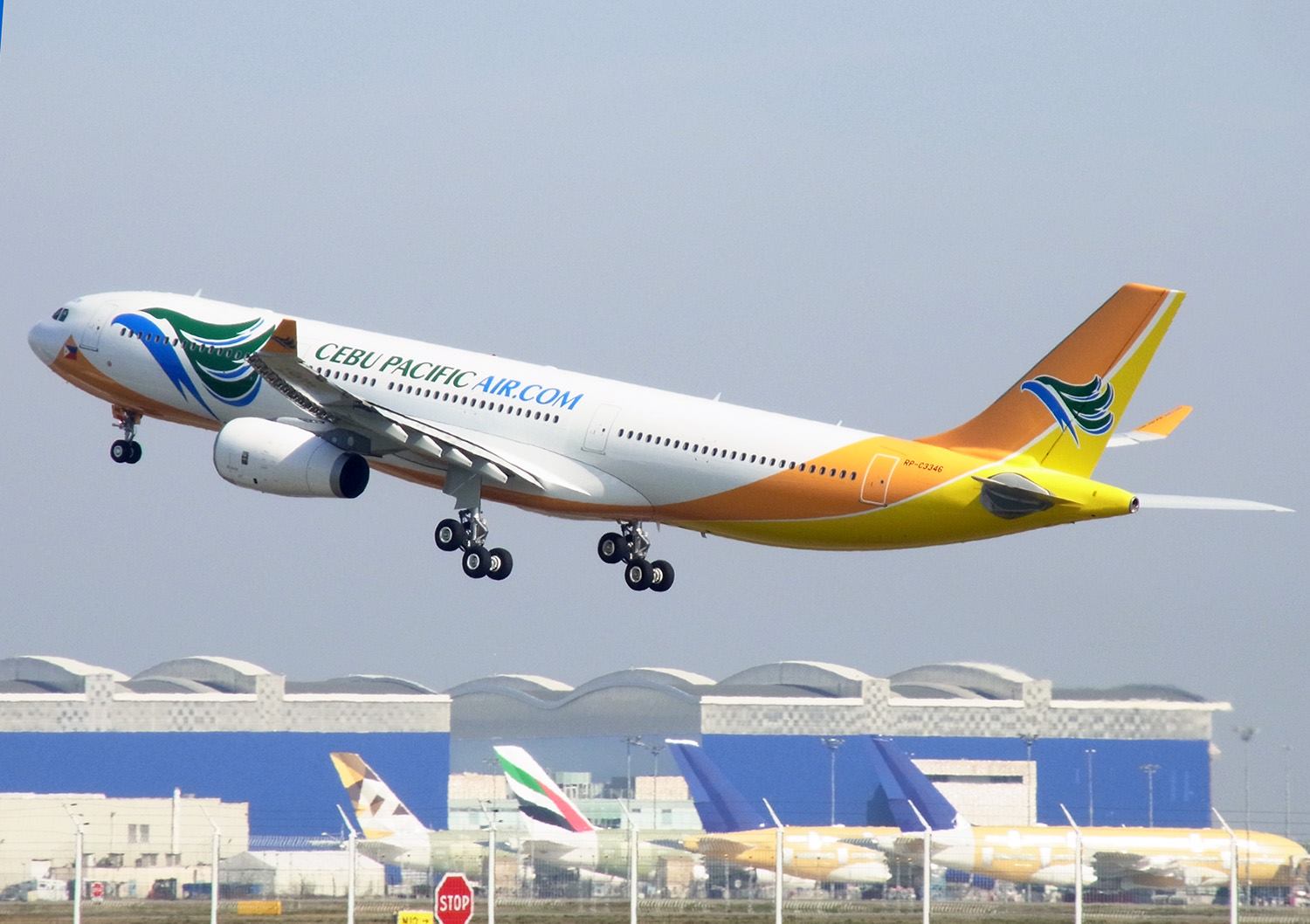
    Cebu Pacific expects to receive more than 60 aircraft in the next eight years. This will include new orders from the Paris Air Show in June for 31 new planes, comprised of 16 Airbus A330neos, 10 A321XLRs, and five A320neos. The new aircraft has a list price of $6.8 billion.