Retail News CRM

Tag: Philippines

  • Philippines’ first microsatellite lifts off

    Philippines’ first microsatellite lifts off

    The Philippines’ first microsatellite, Diwata-1, was launched into space last week from the National Aeronautics and Space Administration in Camp Canaveral, Florida.

    Department of Science and Technology (DOST) Secretary Mario G. Montejo said that Diwata-1’s launch into space would enable the government to generate real-time data that will help the country improve its disaster response mechanisms.

    “The satellite will also aid the rest of the country in terms of agriculture and tourism, with the satellite giving data that will help farmers decide what crops to plant and where, while also capturing the country’s natural wonders,” Montejo said.

    A 50-kg imaging satellite,Diwata-1 was assembled by nine young Filipino engineers stationed in Tohoku and Hokkaido University over the last 14 months. IT has four specialized cameras for imaging weather patterns, agricultural productivity, and land and water resources.

    Diwata-1 is expected to be in orbit for approximately 20 months, taking images twice daily. And while it is still in orbit, its sister Diwata-2 will be launched late 2017 or early 2018.

    Diwatas 1 and 2, and the ground station called the Philippine Earth Data Resources Observation (PEDRO) are part of a three-year, 40.82-million peso ($18.1 million) microsat program.

    In 2014, the Philippine government through the DOST embarked on a research program to develop the necessary local expertise in space technology and allied emerging fields in science and engineering.

    The flagship project of this program is the PhilMicrosat Program handled by several departments at the University of the Philippines and DOST’s Advanced Science and Technology Institute. The program also has two partner universities in Japan where the Diwata engineers are taking their higher studies.

    Along with the microsatellite development is the installation of the satellite ground receiving station in Subic, Zambales that is tasked to receive DIiwata-1 imagery, including other images from selected commercial satellites.

    Another space-related facility under construction is the UP Diliman Microsatellite Research and Instructional facility which will be the hub of training for future space technology research and development activities.

  • SM Mall of Asia to build museum

    SM Mall of Asia to build museum

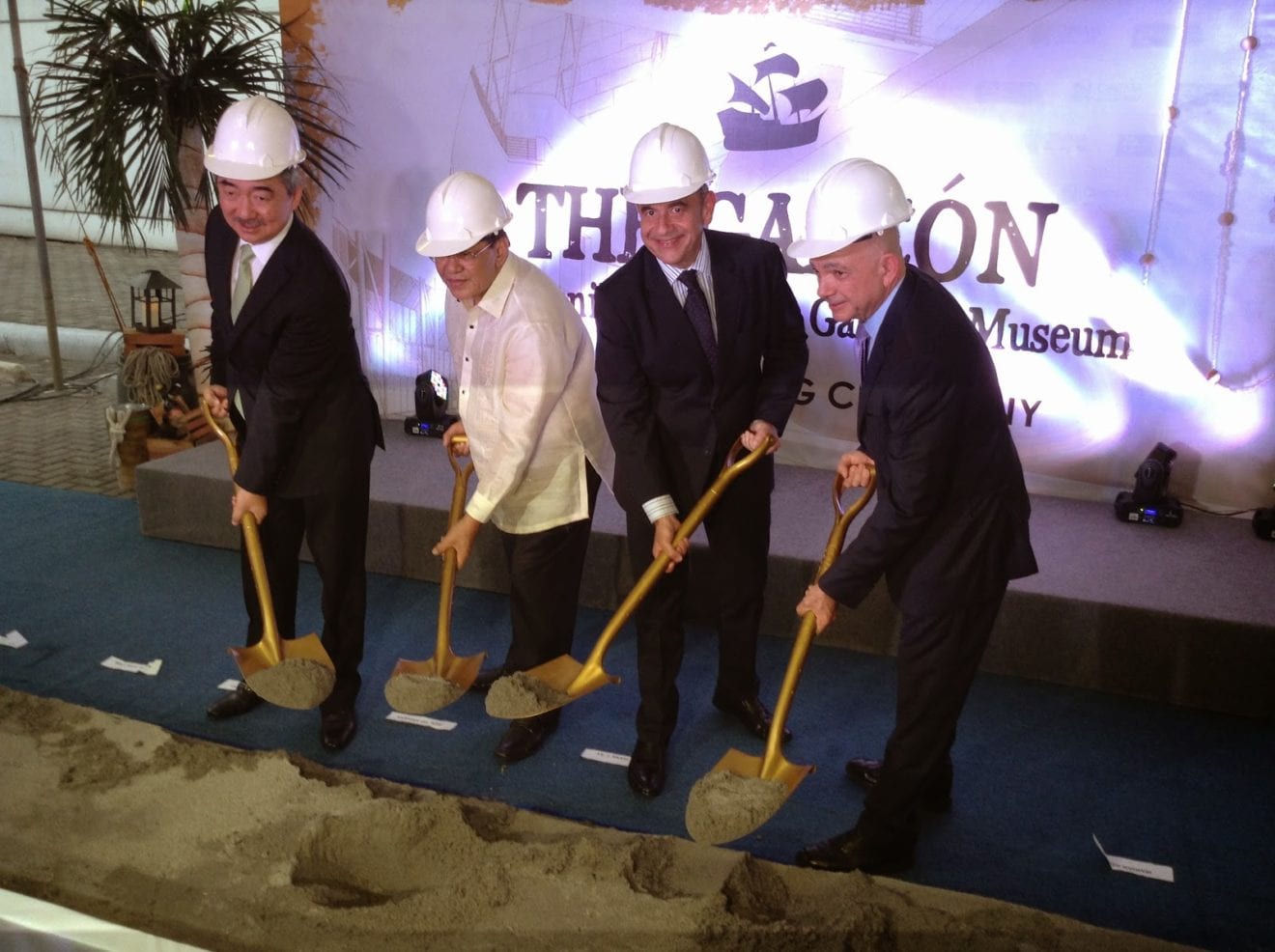
    The SM Mall of Asia and Museo del Galeon are set to launch the Manila-Acapulco Galleon Museum in Pasay City in the third quarter of 2016.

    The dome-shaped museum will feature the history of the 250-year old global trade route where the Philippines and Mexico played major roles. Its main feature is a replica of the galleon ships used for trade.

    “The new museum will be a game changer as we see this significantly contributing to education and tourism. We are very excited to take part in bringing back to life this importance piece of our trade heritage and history,” Edgar Tejerero, president at SM Lifestyle Entertainment, the entertainment solutions company of SM Prime Holdings.

    SM Mall of Asia museum 1

    The museum will highlight the galleon trade’s impact on today’s commerce, banking, travel, and cultural exchange. The dome will showcase the actual process of building a galleon, while exhibiting relics such as porcelain, gold and other goods that were traded in the Spanish era.

    SM Mall of Asia’s ongoing redevelopment, which includes the museum, will expand its floor space from the current 406,962 sqm to a gross floor area of around 700,000 sqm. Upon completion in 2017, SM Mall of Asia will regain its status of being the largest mall in the Philippines, a status currently enjoyed by SM North EDSA which has a GFA of 497,912 sqm.

    Museo del Galeón Inc is a non-stock non-profit corporation tasked to preserve historical artifacts pertaining to the galleon trade.

  • Gokongwei retires as chair of Robinsons Retail

    Gokongwei retires as chair of Robinsons Retail

    Taipan John Gokongwei Jr., the country’s second richest man according to Forbes,  has stepped down as chairman and CEO of Robinsons Retail Holdings Inc. (RRHI), which is in charge of the family’s retail business which include supermarkets and household brands Toys “R” Us, True Value, and Mini Stop.

    His only son Lance Gokongwei, 49, took his place on March 18, while his brother James Go remains as vice chairman.  Go is the chairman and CEO of JG Summit Holdings as of March 21.

    Gokongwei, who will turn 90 years old on Aug. 11, has promised to retire when he reaches 90 and just focus on his philantrophic work.

    In a rare chat with reporters in December last year, Gokongwei said Lance was doing a good job running the family-owned business empire.

    The elder Gokongwei, however, will remain chairman of the Gokongwei Brothers Foundation, which was launched in 1992 with his three brothers. It has helped schools such as Ateneo, La Salle and soon the University of the Philippines.

    Gokongwei, who was born in China to Filipino parents,  arrived in Cebu as a one year old toddler. He then built his multi-billion dollar empire in Cebu by trading goods off on a bicycle and on board a small boat off the pier of the province.

    For someone turning 90, Gokongwei said the only thing he could ask for himself is good health.

    RRHI reported a net income of P3.12 billion in the first nine months of 2015, up 18.8 percent year on year as net sales rose 12.7 percent to P63.3 billion.

    As of the end of September last year, RRHI had a total of 1,466 stores with the addition of  208 new stores. This translated to a 10.7 percent increase in gross floor area to approximately 939,00 square meters over a year ago.

  • Third Manila NBA Store opens

    Third Manila NBA Store opens

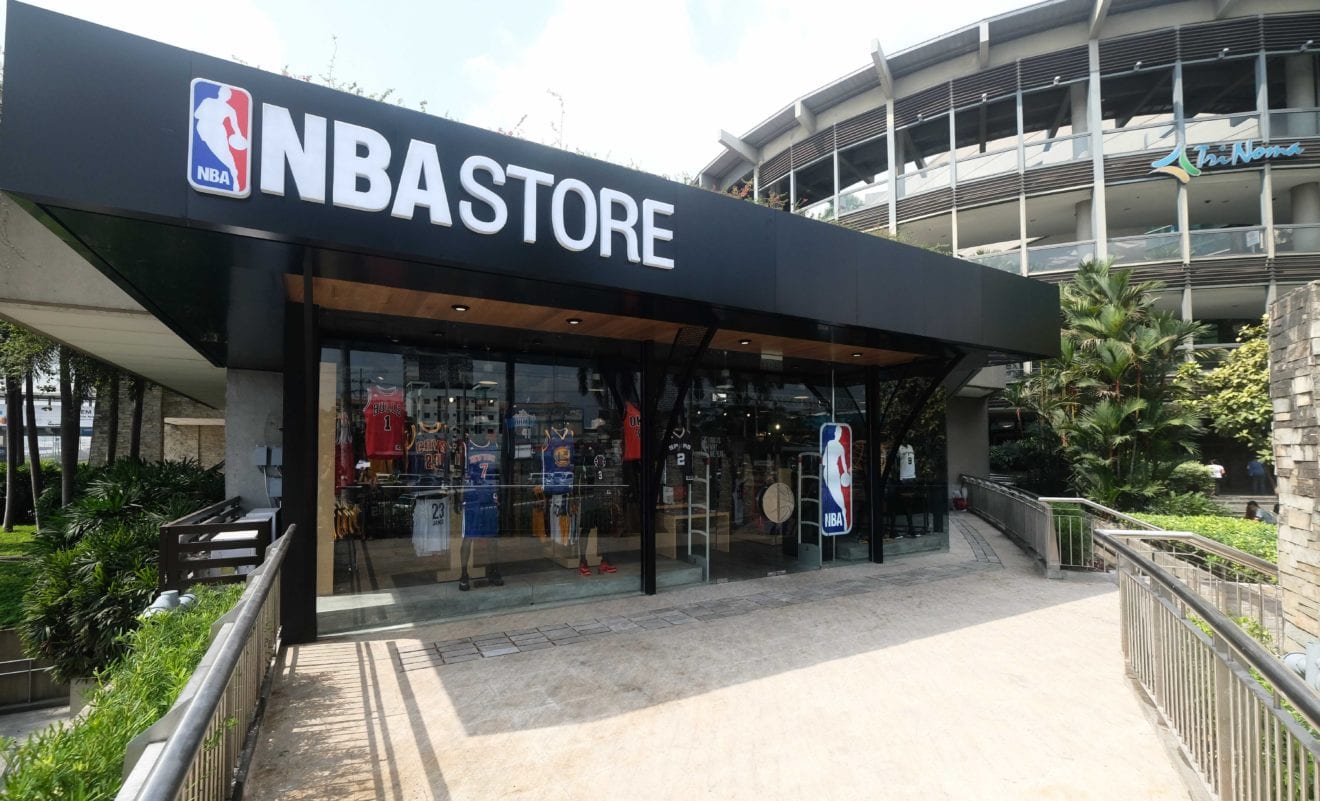
    The National Basketball Association (NBA) has opened the third Manila NBA Store.

    “[The new branch] has the most complete assortment of [NBA] products and merchandise in the Philippines,” said NBA Philippines MD Carlo Singson during a press conference.

    NBA store Philippines, Quezon cityThe International Athletic Trading Company (AITC) is managing the new branch in Trinoma Mall, Quezon City (right picture). It also oversees the NBA’s flagship store in Glorietta 3 in Makati City, and its second store in Mega Fashion Hall at SM Megamall in Mandaluyong City.

    IATC president and CEO Melvin Lloyd Lim said he is bullish about their new Quezon City presence, observing that the North Edsa area is “always packed with people” due to the presence of two (soon to be three) large commercial malls.

    “Based on my experience with retailing, this mall is one of the most successful Ayala malls,” Lim pointed out.

    All 30 NBA teams are represented in the merchandise at the NBA Store’s 280 sqm space including official jerseys, footwear, performance gear, lifestyle apparel, basketballs and collectibles.

    The stores feature assorted NBA products and other brands such as Adidas, Nike, Under Armour, New Era, Panini, Spalding, Stance and 2K Sports.

    In October 2015, the flagship NBA Store in the Philippines received the 2015 Asia Sports Industry Gold Award for the “Best Sports Retail Campaign” in recognition of its industry leading standards.

  • Globe upgrading GCash to support bulk payments

    Globe upgrading GCash to support bulk payments

    The Philippines’ Globe Telecom is upgrading its GCash mobile money service to allow it to support expanded services such as bulk payment services for salaries.

    The operator’s dedicated G-Xchange Inc (GXI) subsidiary will deploy the latest version of Amdocs’ Mobile Financial Services (MFS) suite, which has been powering the GCash money service since 2004.

    By conducting the upgrade GXI aims to be able to deliver services faster ad more efficiency and to be able to scale up the service to bulk transactions when needed.

    Amdocs will also provide end-to-end delivery services including development, deployment, testing and support as part of the contract.

    “GCash has come a long way in solving financial inclusion challenges in the Philippines,” GXI CEO Albert Tinio said.

    “This key system enhancement will enable us to realize new revenue streams with new services targeting new segments, while boosting GCash’s ability to deliver a highly scalable and efficient mobile financial services solution for consumers, merchants and organizations, meeting the business need of the evolving marketplace.”

  • Globe launches Mobile Connect in Philippines

    Globe launches Mobile Connect in Philippines

    The Philippines’ Globe Telecom has launched Global Connect, the GSMA-led platform that seeks to protect users from the risk of online fraud and scams.

    GSMA’s Mobile Connect aims to securely authenticate, authorize and identify subscribers accessing content by using the mobile device owned and carried by the end-user.

    Customers can create and manage a digital universal identity using a single sign-in system. Users can digitally confirm their identity and credentials to access mobile and digital services including e-commerce, banking and health via their mobile phones.

    The user’s unique mobile number, combined with a unique PIN, is used for this authentication process.

    “As the mobile ecosystem rapidly expands, consumers are increasingly demanding robust privacy safeguards and personal data protection. With Mobile Connect, Globe is adopting a globally-accepted standard to protect the digital identities of customers from the various cases of cybercrimes via a safe and secure platform,” Globe VP for digital media Glenn Estrella said.

    “In today’s digital world, this initiative will definitely bring about sustainable and long-lasting impact to the global economy, and we at Globe are very happy to bring this innovation to Filipinos to ease them away from the worries of online fraud.”

  • Philippines’ mobile wallet providers announce interoperability

    Philippines’ mobile wallet providers announce interoperability

    Mobile money interoperability in the Philippines took a step forward with the successful integration of the digital payments mobile app of PLDT and Smart Communications’ Paymaya Philippines with Globe Telecom’s mobile money service GCash.

    The interoperability agreement is part of an initiative of the GSM Association (GSMA) and the Philippine Central Bank in making mobile money services more inclusive and accessible to more people in the country.

    With the interoperability in place, users of the PayMaya app can soon send funds to users of other mobile money systems, including GCash, and vice-versa. This move is seen to boost the growth of mobile money usage in the country, and in turn, expand the local digital commerce ecosystem.

    “This development comes on the heels of the launch of the National Retail Payment System (NRPS) Framework in December led by the BSP and fully supported by the industry, which aims to create a “safe, efficient, reliable, and affordable electronic retail payment system that is interconnected and interoperable,” said Bangko Sentral ng Pilipinas (BSP) Deputy Governor Nestor A. Espenilla Jr. in a statement.

    Aside from domestic remittances, GCash and PayMaya are also expected to collaborate on merchant payments, bulk payments, government-to-person payments (G2P), and person-to-government payments (P2G), among others.

    “We are confident that more consumers would be more open to adopt mobile money services if they can send cash to anybody regardless of what mobile provider they are using especially if this means more efficient services and lower prices,” John Rubio, President and CEO of Mynt, a fully-owned financial services subsidiary of Globe, said in a media statement.  Mynt is also the mother company of G-Xchange, Inc. which operates GCash.

    Through Paymaya and GCash, customers no longer need to own a credit card or even have a bank account to make financial and e-commerce transactions.

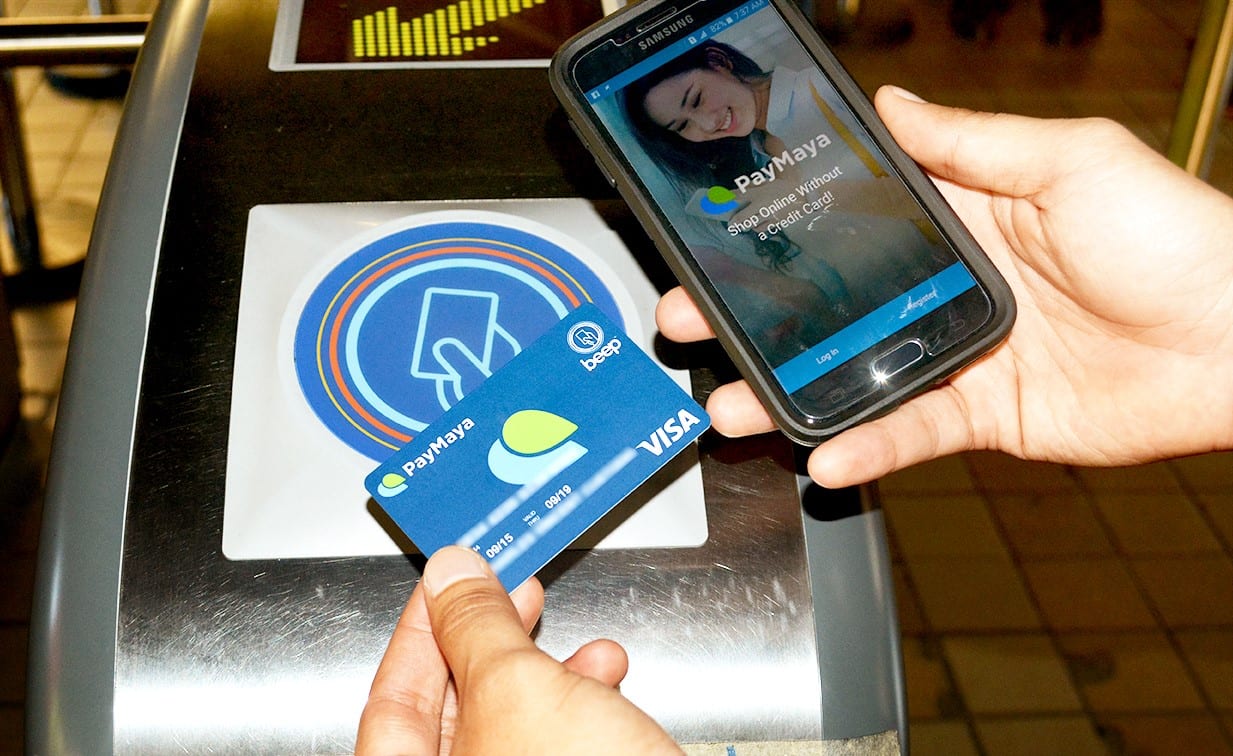
    Paymaya was launched in August 2015 as a virtual Visa card that resides in a mobile app, allowing people to purchase online, send money, send telco airtime load. Soon, it envisions to allow users to pay bills online and do other types of transactions. A physical card can be linked to the virtual card for use for purchases in physical stores and pay for train rides.

    GCash, on the other hand, was launched in 2004 as a micropayment service of millions of Globe subscribers. It transforms a mobile phone into a virtual wallet for safe, secure, and hassle-free mobile money transactions such as the purchase of prepaid load, bills payment, money remittance, donations, online shopping, among others.

    “This is a step toward advancing the future our digital economy. Interoperability is but a natural progression in the ongoing evolution of financial technology services in the country,” said Orlando B. Vea, President and CEO of PayMaya Philippines.

    BSP Governor Amando Tetangco Jr. cited in an earlier speech that studies have shown that shifting from paper to electronic–based payment system could generate annual savings up to one percent of the country’s gross domestic product (GDP).

    At present, there are 10 GSMA active operators with strong money deployments, three of which – Sri Lanka, Pakistan, and Tanzania, are already practicing interoperability since 2014.

    Committed markets, on the other hand, include the Philippines, Paraguay, and Myanmar while Rwanda, Madagascar, Thailand, and Jordan already made a pilot launch last year.

    The fifth annual ‘State of the Industry Report on Mobile Money’ released by GSMA during the Mobile World Congress in Barcelona, Spain showed that there are more than one billion mobile money transactions in December 2015.

    The report noted that mobile money is available in 85 percent of countries where most of the population lack access to formal financial institutions. Moreover, there were 29 cross-border mobile money initiatives connecting 19 countries in 2015, with cross-border remittances growing 52 percent, by volume, over the last year.

    “Mobile money is driving social and economic impact for millions of people in emerging markets,” said John Giusti, Chief Regulatory Officer, GSMA. “Over the last decade, mobile money has done more to extend the reach of financial services than traditional bricks and mortar banking were able to do over the last century. With 411 million mobile money accounts today, mobile is an increasingly critical platform for expanding financial inclusion globally.”

  • Philippine retail sales surge

    Philippine retail sales surge

    Philippine retail sales soared 6.3 per cent in the last quarter of 2015 – more than three times faster than the same period a year earlier.

    According to data from the Philippine Statistics Authority, the retail trade growth was more than three times the rate of the same period of 2014, when sales rose 1.9 per cent.

    Thus, the retail sector has significantly contributed to the growth of overall trade in the country.

    Wholesale trade also accelerated to 9.0 per cent compared with the 8.9 per cent growth a year ago.

    The industry group that includes wholesale and retail trade accelerated to 7.0 per cent growth in the fourth quarter of 2015 from the 3.4 per cent posted in 2014.

  • Suzuki spreading its wings in Bulacan

    Suzuki spreading its wings in Bulacan

    Suzuki Philippines, the only integrated automobile and motorcycle company in the country, recorded one of the biggest sales growths in the industry last year with its massive 52% year-on-year growth and 10,000 retail sales, and aims to repeat this 2015 performance by carrying out successive dealership openings in 2016.

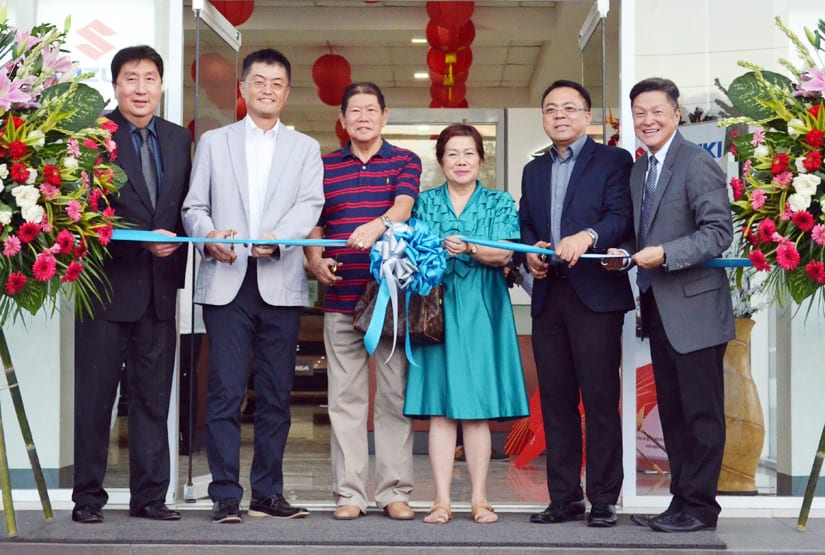
    Last February 24, the pioneer manufacturer of compact cars and one of the top automotivebrands in the Philippines inaugurated one 3S dealership and two satellite branches—the SuzukiAuto Pulilan, the Suzuki Auto Malolos satellite, and the Suzuki Auto Quezon Avenue.

    This was the second set of auto shop launches in February, and the ribbon cutting ceremonies were ledby Suzuki Philippines Managing Director and Treasurer Mojica, General Manager forAutomobiles Shuzo Hoshikura, Mt. Sinai Motors Corporation, and ETNA Motors Inc.Development in Pulilan and Malolos, BulacanPulilan City currently experiences robust commercialization and industrialization, with a growingnumber of manufacturing companies establishing their presence here. Recognizing itsdevelopment potential, SPH brings a 3S outlet in the area to offer existing and new customersthe same high-quality vehicles, repairs and parts which Suzuki patrons enjoy all over the country. Suzuki Auto Pulilan, owned and managed by Mt. Sinai Motors Corporation, startedsales operations in June 2015.

    It is strategically located along Doña Remedios TrinidadHighway and is the first dealership in Bulacan that offers sales, spare parts and services.Bulaceños can now equally have easy access to Suzuki products via the Malolos branch. Alsooperated by Mt. Sinai Motors, Suzuki Auto Malolos serves as the satellite branch of Suzuki AutoPulilan. It started selling in November 2013 and established its satellite showroom in October2015.

    The satellite branch can be visited at Central Point Plaza, McArthur Highway, Bgy. Dakila,Malolos City, Bulacan.Branching out in Quezon Avenue Serving as the second satellite shop of Suzuki Auto Commonwealth, Suzuki Auto QuezonAvenue likewise held its official launching last February. To increase the market coverage of the brand, SPH and ETNA Motors Inc.–owner and manager of the Commonwealthdealership– again collaborated to cater to the automotive needs of motorists with the easy-to-access location at Quezon Ave. cor. Cordillera St., Sta. Mesa Heights, Quezon City. The back-to-back dealership inaugurations are part of the Japanese car maker’s game plan toonce again achieve high sales volume this year, as well as to expand and increase thecompany’s reach to its clients nationwide. SPH strives to make this a great and historic yearstarting off with the sequent dealership expansions and introduction of its first sedan, the all-newCiaz.SPH General Manager for Automobile, Shuzo Hoshikura remarked, “Our dedication andcommitment to reaching out to a wider Suzuki market is no more evident than with theinauguration of these three new networks.

    I am confident that these three newly-inauguratedoutlets will perform excellently and help us achieve greater sales figures this year.” Hoshikura added, “We at Suzuki Philippines are taking every possible opportunity to sharethe Suzuki Way of Life through the continuous expansion of the Suzuki Automobile DealerNetwork nationwide. We are determined to make more customers experience the difference,and make a positive mark in the industry.”

  • Czech CEO boosts Filipino spending

    Czech CEO boosts Filipino spending

    David Minol, who grew up in the Czech Republic, describes the Philippines as a hot country, not only because of its tropical climate but also in terms of its rapidly growing economy.

    His company, Home Credit Philippines, is taking advantage of the large Filipino population and their growing penchant for appliances, electronics, mobile devices, computers and other gadgets.

    Home Credit Philippines lends to ‘unbanked’ people aiming to buy appliances, electronics or furniture on an installment basis.  Two and a half years after it set up its shop in the country, the company lent nearly P2 billion to 200,000 borrowers and recruited 1,700 Filipinos mostly for its salesforce.

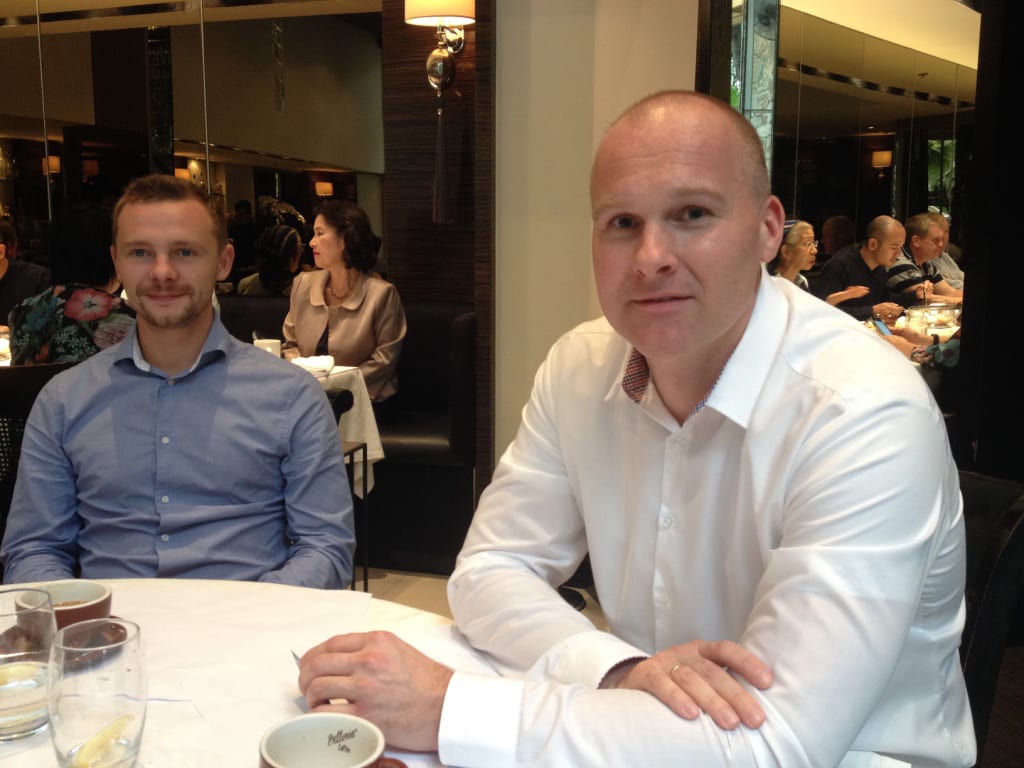
    “We call it consumer finance, which means we are in financial services, but in retail business.  Our customers are in our mind.  Our company is a customer-centric organization, focused on the retail,” Minol says in an interview at a restaurant in Makati City.

    “Our customers are unbanked.  Typically, they do not have the bank account, they do not have access to the traditional banking system.  We are the ones that are giving them the first-time experience in financial services.  We try to support the financial literacy program here,” he says.

    Minol says Home Credit Philippines is a non-banking financial institution, accredited by the Securities and Exchange Commission. “Having the experience from other countries, the application process and obtaining the license from SEC was one of the quickest in the Asian market.  We really had very professional experience from the SEC,” he says.

    Home Credit, the parent company based in the Czech Republic, infused P2 billion worth of equity capital in the Philippine unit, which has offices in Ortigas and Cubao.  Minol, who first arrived in the Philippines in July 2013, now lives in Dasmariñas Village, Makati City, along with his wife and two children. His daughter, the youngest, was born in the country.

    “We operate in mostly emerging markets.  First, typically a significant proportion of the population is unbanked.  There is a strong demand for financial services by the middle and lower-middle class.

    This is actually the spot, and the market segment that we are looking at.  We are serving the people who are not served by traditional banking organizations,” says Minol.

    “If they go to the shop of SM Appliances, Automatic Centre and other big retailers, instead of paying cash or using the credit card, they can buy the goods and enjoy an affordable installment plan from Home Credit. This is our operation.  We have our own people in the shop.  We help customers in application process, within 30 minutes.  It is really easy, simple and fast procedure for the customer to get a loan, and he can leave the shop already with the electronic or mobile phone for example in his hand.  That is our value proposition,” he says.

    Minol says borrowers prefer to pay in installment because they want to keep their cash.  “We recently ran some marketing research about that.  It is really about the available cash.  For some of the customers, they prefer to keep their cash for other purposes. They would rather pay the downpayment, and pay in installment.  For some of them, it is about upgrade.  Instead of buying cheap feature phones, they prefer smartphones, with Internet functions, that they can use to find jobs.  So they would use the money for the downpayment or upgrade … We can really see a rich demand from mass and sub-mass population for installment financing,” he says.

    The company, encouraged by the rapid pace of growth in the Philippines, now plans to introduce more financial products and even apply for a quasi-banking license with Bangko Sentral ng Pilipinas.

    Minol says the mass market comprises Home Credit’s customers.  “It is the people who have income, either employed or self-employed or recipients of remittances from abroad, and who typically do not have credit cards,” he says.

    He says Home Credit also teaches financial literacy among customers.  While customers ventilate their grievances in the Internet over the alleged aggressive collection tactics by Home Credit collectors, Minol says it is important for the company to exercise risk management.

    “That is the cornerstone of our business.  We manage the risk to make it a value proposition for the client,” he says.

    Home Credit provided its first loan in the Philippines in October 2013, making the country its youngest market in Asia.  It provides loans ranging from P2,000 to P60,000, with an average size of P8,000. Average tenor is 12 months, although it could range from six months to 18 months, depending on the commodity and the preference of customers.

    “We are growing.  We already have 200,000 customers. Our average loan is P8,000.  If you do the calculation, we will be already lending P2 billion in the first two and a half years of operation.  We have invested significantly in the technology and the people.  We are looking for profitability in the coming years,” he says.

    Minol, a chartered certified accountant and who has a Master’s degree in finance from the University of Economics, Prague, has worked with Home Credit since 2006, acting as deputy to the CEO and later chief financial officer for Home Credit China.  He served as chief financial officer for Asia from 2011 to 2013, before he was tapped to form the Philippine unit in July 2013.

    Borrowers can apply for in-store financing to purchase consumer durable goods by presenting at least two valid IDs, completing an application form and paying the downpayment. Applications are processed within 30 minutes, says Minol.

    Minol says Home Credit is now present in nearly 1,000 stores nationwide.  Among its merchant partners are Acer, Automatic Centre, Lenovo, Memo Xpress, MyPhone, Oppo, Samsung, Silicon Valley, SM Appliance and Robinsons Appliances.

    “Our people are physically present in those shops.  If you go to the Automatic Centre, for example, you can see Home Credit employees wearing the red uniform. You can immediately apply for a loan from Home Credit.  Instead of paying cash, you will get the gadget and pay in installment,” he says.

    Monthly installments are settled at BDO, RCBC, Malayan Bank, SM Stores, Bayad Center, LBC, Villarica Pawnshop, Prime Asia Pawnshop, Cebuana Lhuillier, 7-Eleven and various payments centers.

    The company is on an expansion mode and began operating outside Metro Manila, including Cavite, Pampanga, Cebu and recently Isabela.

    Home Credit started in 1997 in a village near Brno, the second biggest city in the Czech Republic. Its parent company is PPF (První privatizační fond), which is owned by billionaire Petr Kellner, the richest person in the Czech Republic.  “Having a strong leadership and capital for expansion, he is one of the elements behind the Home Credit expansion as well,” Minol says.

    “After a couple of years, we expanded to Russia.  It is still one of the biggest markets for us.  Then we went to ex-Soviet Union countries.  We have business for years already in Kazakhstan, Belarus and in 2006, we started operating in Asia.  It is the first wave of Asian expansion, which had China and Vietnam,” he says.

    “I went in 2006 to China.  Three or four years ago, we started looking at other opportunities in Asia. So we opened in India, Indonesia and the Philippines.  So the Philippines is the youngest market.  Now, the last country that we are going to open in is the US.  We have already signed a joint venture agreement.  We will be opening our US operation in a month’s time,” he says.

    “We can see that the business is strictly diversified.  It is in Europe, Russia, Asia and now the US.  We are finally becoming a global company.  We started in Czech Republic 20 years ago,” Minol says.

    On what makes Home Credit different, Minol says “the essence of the business is risk management.”

    “We believe that over the years, we have developed a unique know-how for the emerging market.  If you look at most of our countries, they are emerging countries.  We develop a set of procedures and train the people on how we do the risk management,” he says.

    Minol says Home Credit now has a significant operation in terms of the number of people.  “Here in the Philippines today, we have 1,700 employees, which is after two and a half years of operation.  That is a significant number. We keep hiring 100 to 200 people every month.  In the horizon of next two to three years, we should be aiming at 5,000 people.  Majority of the employees are in the sales force,” he says.

    Home Credit has emerged as the biggest employer among Czech companies in the Philippines.  “In April, we will be opening our 1,000th shop.  Today, that number is 960 something, so we will have 1,000 shops operating.  And we will keep growing.  We still see the potential, as the customer demand is much bigger than 1,000 shops. So we will continue with the expansion to bring our services to the broader population,” says Minol.

    “As of today, we have 200,000 customers.  It is really the beginning. We have to be careful.  We are looking for a significant number in terms of customers,” he says.

    Minol says the Philippines is an interesting market, because it has a long history of consumer finance that began in the 1960s.

    He says interest rates on Home Credit products range from 4 percent to 5 percent, depending on the commodity and maturity of the loan.  “We now have selective producers and retailers with zero interest campaign, where customers do not pay any interest. We also have this campaign that if you pay all the installment on time, the last month is a gift from us.  Instead of paying the 12th month installment, and you paid all the 11 months on time, the 12th month is for you and it is a gift. So it is a combination of different products.  On average, I would say the interest is about 4 percent to 5 percent, monthly,” he says.

    Minol says Home Credit is in the Philippines for the long term, with a target to have 1 million customers in the coming years. “We don’t do this business for the short term.  It is for the long term.  The point here is to be in the Philippines basically forever.  That’s why we don’t like the short cut.  We want to build the business from the beginning,” he says.

  • New Skycrapers from Megaworld

    New Skycrapers from Megaworld

    Philippine property developer Megaworld Corp and its subsidiaries have earmarked P55 billion (US$1.172 billion) for capital spending in 2016 to boost commercial assets.

    Real estate tycoon Andrew Tan’s flagship property arm and subsidiaries Global-Estate Resorts (GERI), Empire East Holdings and Suntrust Properties have announced plans to aggressively expand a group-wide rental portfolio.

    The company said 75 per cent of the budget will be used for development projects, particularly for the construction of new malls, commercial centers, office buildings and residential projects in townships. The remaining 25 per cent will be used for land acquisition and investment properties.

    “This year, we would start developing our new townships in Pasig City, Bacolod and Pampanga while ramping up our office and mall developments across our existing townships. We are bullish on the office and retail sectors because we see a remarkable growth in these businesses,” Megaworld senior VP Jericho Go said in a press statement.

    The spending budget this year matches the same level earmarked for 2015.

  • Henry Sy, Lazada team up for Philippine online retail business

    Henry Sy, Lazada team up for Philippine online retail business

    Billionaire Henry Sy, owner of the largest Philippine builder and retailer, has partnered with an online retailer backed by Germany’s Rocket Internet SE to target the rising number of consumers in the Southeast Asian nation who shop using the Internet.

    SM Investments Corp, Sy’s holding company, has reached an agreement to use the platform of the Philippine unit of Rocket Internet’s Lazada to sell online merchandise from toys to clothes, Teresita Sy-Coson, a daughter of the billionaire owner and vice chairwoman of the company, said in an interview. SM will initially sell light-to-carry non-food items through Lazada that eventually could include home furnishings and appliances, she said.

    “This strategic alliance with Lazada will further enhance our online store,” Sy-Coson said. “It’s a very good match: Lazada has its expertise and we also have our own expertise.”

    SM Investments, operator of the country’s biggest chain of retail stores and owner of the nation’s largest shopping mall builder, faces intensifying competition as rivals from Robinsons Retail Holdings to Puregold Price Club expand their network. Internet access and the use of smartphones have also been rising, encouraging EBay Inc, Alibaba Group Holdings and Amazon.com to tap local online shoppers.

    More Filipinos are accessing the Internet, including on mobile devices. About 40% of the Philippine’s population of more than 100mn were Internet users in 2012, up from 5.2% in 2004, according to the World Bank. The Philippines had about 118mn mobile phone subscribers at end-2015.

    SM Investments’ alliance with Lazada comes two years after Sy-Coson said in a Bloomberg interview in February 2014 that the group has been testing e-commerce websites and targets a full-scale online operation by 2016. The SM Group currently has websites that sell toys and home appliances as well as vouchers that give customers as much as 50% discount in purchasing selected merchandise from its department stores and supermarkets.

    The Philippine e-commerce market is forecast to grow at a compounded annual growth rate of 101.4% from 2013 through to 2018, according to a 2014 report by Ken Research. The online retail market, a component of e-commerce, is projected to rise 189.2% over the same period, it said.

    Lazada, which began its Philippine operations in 2012, led Internet retailing in the country in 2015 with a 20% market share as it met rising Filipino interests for gadgets and electronic appliances from smartphones, tablets to home theatre systems at prices that were a “huge” discount, according to a Euromonitor International January 2016 report.

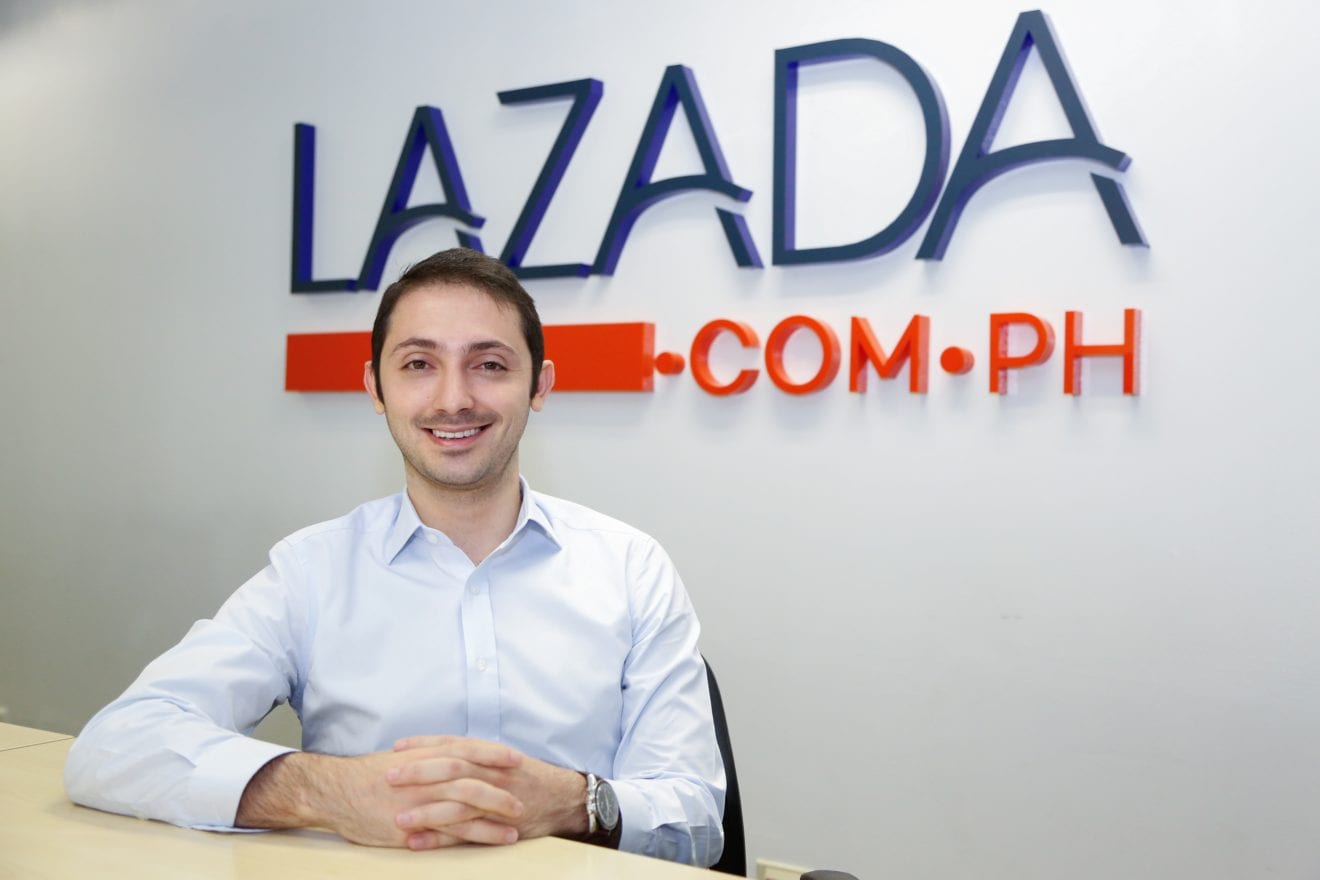
    Lazada.com.ph, which has 7,000 merchants, is the country’s sixth most popular website and ranks 14th globally among online merchant websites, according to Inanc Balci, chief executive at Lazada’s Philippine operations. He said the Filipino shopping pattern has evolved with 60% of their customers buying goods through mobile Internet.

    Lazada Group is a privately owned e-commerce company founded in 2011 by Rocket Internet with the goal of building Southeast Asia’s Amazon.com. Aside from the Philippines, it operates sites in Indonesia, Malaysia, Singapore, Thailand and Vietnam. Singapore’s Temasek Holdings is among its large shareholders, according to Rocket Internet’s website.

    SM Investments’ retail operations, which include department stores, grocers, supermarkets and convenience stores, posted a 17% growth in profit to 6.8bn pesos last year on a 7% increase in sales. SM Prime Holdings, its shopping mall venture, had a 14% increase in recurring profit to 20.9bn pesos.

    “The retail business is evolving,” Sy-Coson said. “It is important for a retailer to go online and it’s the right move to go with Lazada.”

  • Lazada Philippines Celebrates 4th Anniversary

    Lazada Philippines Celebrates 4th Anniversary

    Lazada, the leading online shopping and selling destination in Southeast Asia is celebrating its 4th anniversary with a 4-day Birthday Sale from March 15-18.

    The Birthday Sale will treat shoppers to a range of deals of up to 90% across a wide selection of categories featuring Home and Living, Travel and Luggage, and Consumer Electronics.  Well-known brand partners including Samsung, Microsoft, Tosot, Unilever, Nestle, and Belo will also participate in the sale offering special promotions throughout the celebration.

     image002 

    Birthday blowout highlights include:

    ·         Hourly Flash Deals

    ·         Php 4 Sale

    ·         Jackpot games for additional discounts

    ·         Facebook & Instagram games where customers have a chance to win a TV and smart phones

    ·         A chance to win a trip to Dubai for two with every Cherry Mobile purchase  

    Brand ambassadors LA Aguinaldo and Kelsey Merritt, who personify Lazada’s fun and effortless vibe, will join the country’s largest online party.  

    Birthday Milestones  

    Where Customers go, Lazada goes

    Since its launch in 2012, Lazada PH has experienced rapid growth. “We delight in witnessing how Filipinos’ shopping habits have evolved, as we commit to give customers more options to make the most out of their busy lifestyles. 60% of Lazada customers already shop via mobile – a clear indication of how Lazada has successfully adapted to modern Filipino digital habits. We collaborate closely with the biggest brands to offer the best assortment and prices, which has made Lazada a primary destination for every shopper,” said Lazada PH CEO Inanc Balci.  

    Empowering a growing SME segment

    Balci stressed Lazada’s commitment to helping SMEs tap wider markets. “In our four years of operations in the Philippines we have seen tremendous opportunity for SME’s in the e-commerce industry. We currently have 7,000 merchants onboard, and continue to make enhancements in our sellers’ platform to encourage more entrepreneurs to sell online. We commit to provide logistics capabilities to make selling more effortless for our merchants.”  

    More products, more places, more birthdays to come

    “Looking ahead, Lazada Philippines will continue to focus on increasing our product assortment, expand our logistics infrastructure and introduce payment solutions to further enhance the effortless shopping experience for our customers,” Inanc added.

    Future Plans

    Lazada PH has recently unveiled the new site 30-sqm Fulfillment Center in Cabuyao, Laguna which will for be completed by end-year.  The center, which is double the capacity of the current warehouse, will have automated features for inventory, selection, parcel movement and dimensional weight measurement.

    Lazada Express, the in-house delivery arm is and modernizing the Sortation Center and opening 20 hubs throughout the country to increase delivery footprint and reach.

    And as part of Lazada’s commitment to make shopping more effortless for everyone, an express delivery option will be launched in Metro areas for rush deliveries.

  • Philippines SMEs urged to pursue eCommerce

    Philippines SMEs urged to pursue eCommerce

    Philippines SMEs and micro-businesses are being urged to pursue eCommerce in a government initiative.

    Micro, small and medium enterprises (MSME) should benefit from global trade opportunities through eCommerce, says the Philippine government.

    The Department of Trade and Industry (DTI) targets to reach out to 100,000 MSMEs, 11 per cent of total MSMEs doing local eCommerce – by 2020.

    “We are focusing our promotion activities on eCommerce not only within the East Asia sub region but [also in the Philippines], to help MSMEs to engage in borderless trade, ” said Prudencio Reyes, Trade and Industry Undersecretary for Special Concerns.

    This will help MSMEs engage in borderless trade, given East Asia’s huge market for eCommerce, said Reyes during the recent Brunei Darussalam-Indonesia-Malaysia-Philippines East ASEAN Growth Area press conference in Davao, in the south of the Philippines.

    With aid from faster internet connection and increased number of internet users, an eCommerce roadshow for entrepreneurs will focus on e-business models, e-payments, eCommerce website development, eCommerce platforms and eCommerce marketing.

    ASEAN already has 143 million internet users; 44.2 million of them from the Philippines.

    The Philippine eCommerce Roadmap 2016-2020 is a product of private, academic and government discussions, launched in February.

    On March 9-11, 2016, the DTI will join the Asian Development Bank’s Workshop on Cross-Border eCommerce: Towards Seamless Connectivity event in Bangkok.

  • Philippines online grocery service launched

    Philippines online grocery service launched

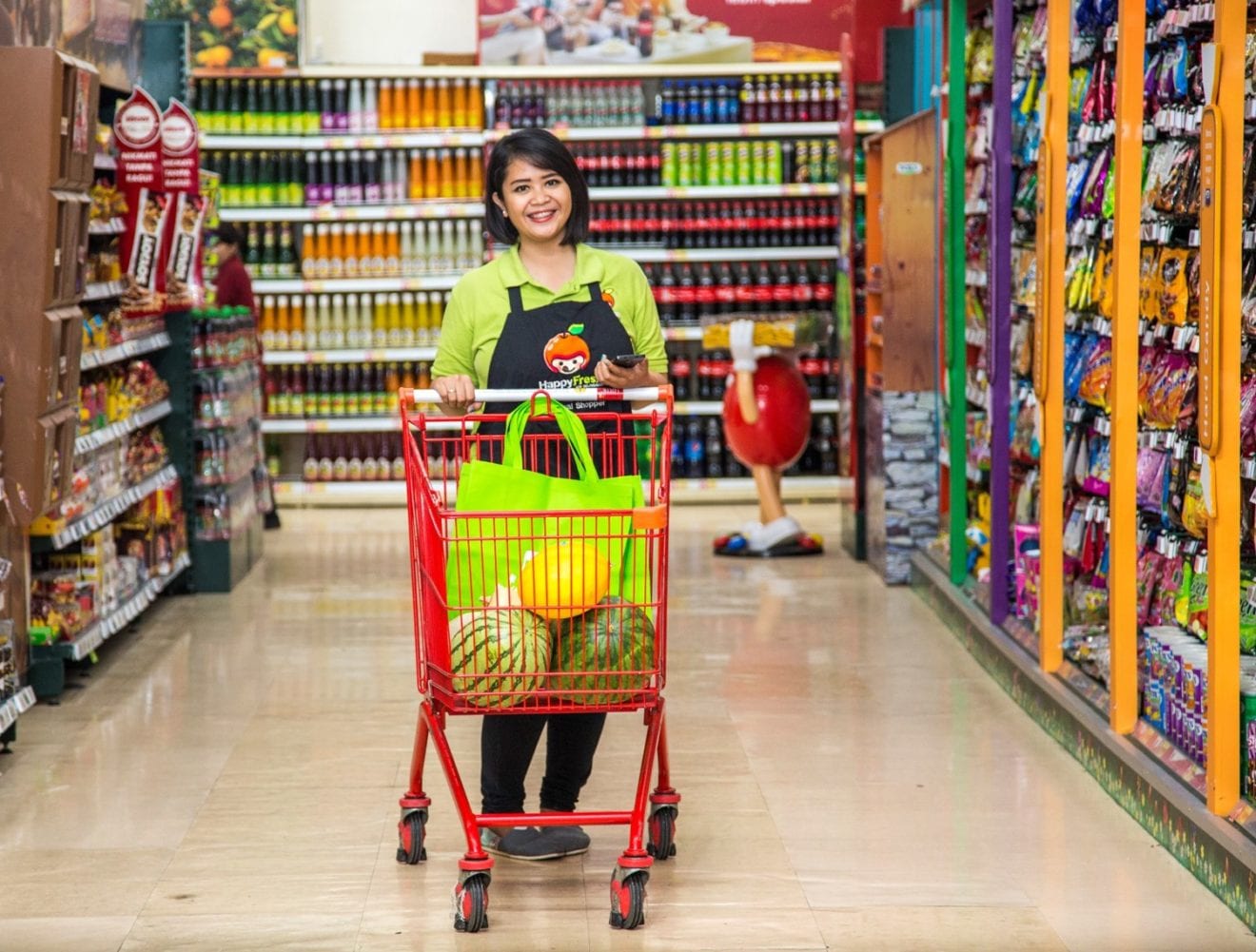
    Jakarta-based HappyFresh is bringing its operations to the Philippine market by the second quarter of 2016.

    Manila is the online grocer’s fifth market in Asia, following  Indonesia, Malaysia, Thailand and Taiwan. Isabel ‘Pao’ Barientos, former chief operating officer of online marketplace theshop.ph, will lead the Manila office as MD. Barientos has also previously worked for deal sites Ensogo and the Lazada Group.

    The Philippines online grocery shopping app will target the growing urban workforce, especially working mothers, who are in need of personal shoppers to deliver goods amid the city’s notorious traffic congestion.

    “The Philippines is an exciting market because the population’s wealth is expanding and consumer spending growth will accelerate through to 2030,” said HappyFresh CEO and co-founder Markus Bihler in a statement.

    In Bangkok, HappyFresh competes with supermarket chain Tesco Lotus, which has been offering a delivery service for several years already. In Jakarta, the competitor is startup Back Garlic, a meal-kit delivery service sends pre-packaged, portioned and labeled groceries in a box.

    Bihler said the market for online grocery shopping in Asian countries could see double-digit growth in market turnover by 2020 to reach S$19 billion (US$13 billion) by 2020. He said the rise of a young, working-class population in urban areas is driving the market.

    Working mothers outnumber all other HappyFresh customers, with dairy products such as milk and eggs among the top purchases. They are followed by young professionals and expatriates who mainly buy tomatoes, spaghetti and chicken breast.

    Securing $12 million in funding as a start-up last year, led by Singapore’s Vertex Venture and Sinar Mas Digital Venture, HappyFresh partners with supermarket retailers, “particularly small and medium-sized enterprises that do not have the capacity or ability to invest in technology and reach out to new set of customers,” said Bihler.