Retail News CRM

Tag: Philippines

  • Jollibee swallows up Mang Inasal Philippines

    Jollibee swallows up Mang Inasal Philippines

    Jollibee Foods Corp (JFC) has fully acquired its subsidiary Mang Inasal Philippines for $43 million (P2 billion).

    JFC, Asia’s largest quick-service restaurant company, bought the 30 per cent share remaining from the 70 per bought in 2010 for P3 billion.

    “JFC shall pay for the shares in cash. There will be no changes in the business conduct and direction of Mang Inasal resulting from this acquisition except that the Board of Directors of Mang Inasal will, completely henceforth, be composed of representatives of JFC,” the company said.

    Jollibee has been no.1 in Asia and no.10 worldwide in terms of market capitalisation among publicly listed quick-service restaurants.

    Mang Inasal is a Filipino brand known for its chicken inasal (roasted chicken) and unlimited rice. It has over 450 stores nationwide.

    Jollibee announced its goal of joining the world’s top 10 fast-food brands. Its aggressive buying overseas are priced up to $100 million. It has 3023 outlets worldwide, 2393 of which are in the Philippines.

    It also operates Philippine brands Red Ribbon bakery chain, Greenwich pizza parlours and Chowking Chinese restaurants.

    Overseas, JFC’s subsidiaries and affiliates develop and operate international brands, such as Yonghe King, Hong Zhuang Yuan and San Pin Wang brands under the SuperFoods Group, and 12 Hotpot.

  • Generika Drugstore eyes aggressive local, overseas expansion

    Generika Drugstore eyes aggressive local, overseas expansion

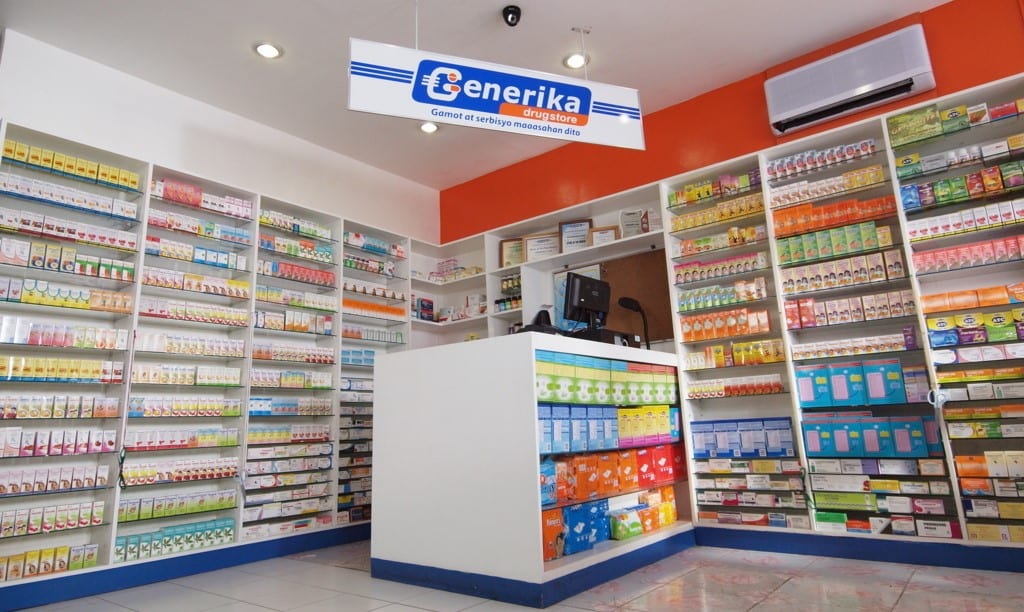
    Generika Drugstore is eying aggressive expansion in the country’s far-flung areas – and possibly abroad into Southeast Asia.

    Generika is country’s third-largest player, half-owned by retail giant Ayala. In 2015 the Ayala group, through its Ayala Healthcare Holdings Inc., acquired 50 per cent of the pharmacy business from cofounder, Frenchman Julien Bello.

    Teodoro Ferrer, president of Generika, said the company plans to boost its 600 stores with 152 more in 2016, and an average of 100 stores annually over the next few years.

    “We need to grow further to more than 1000 stores in less than five years. We also need to focus the product line to include food supplements and also focus on healthcare and wellness, and not just on medicines,” Ferrer said.

    He said the aggressive strategy for a company the size of Generika, founded 12 years ago, could not be compared with opening a branch of a convenience store that sold mostly food and grocery items.

    “You need to have approvals from the local government, from the FDA [Food and Drug Administration]; hire a licensed pharmacist; and then look for the right franchise owner that will take care of your store.”

    Ferrer said the company will put branches in far-flung areas of the country where he believes its services are needed.

    Generika now owns about 42 per cent of its network, since previously it didn’t have the capital to own stores, which cost about P1.2 million to P1.5 million to build. The rest of the stores are operated as franchises.

    “Now that our profit is increasing and Ayala group has come in, we can now expand company-owned stores.”

  • Yellow Cab Singapore debut nears

    Yellow Cab Singapore debut nears

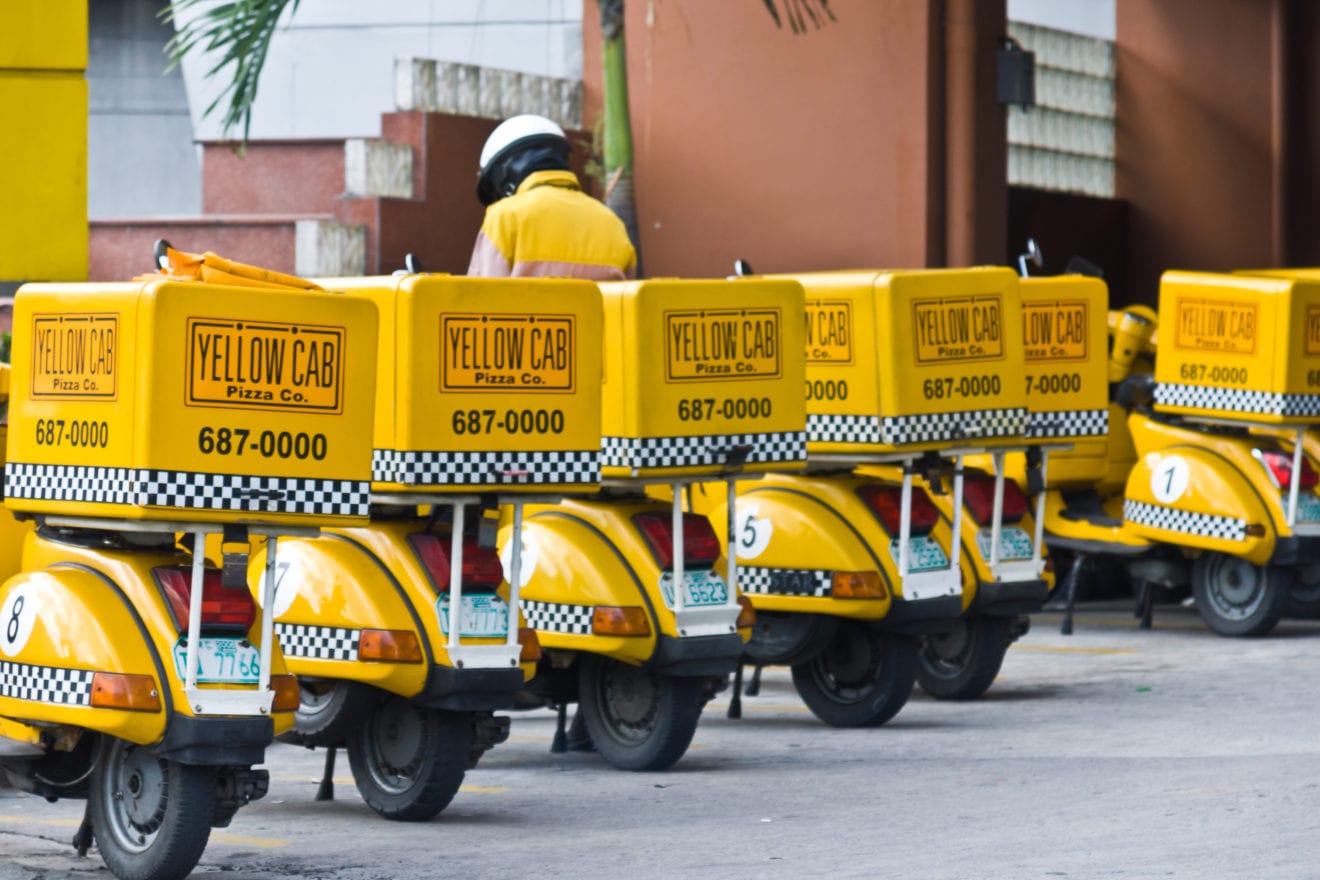
    Yellow Cab Singapore is to open soon as a Philippine group sets out to take the pizza chain into the Little Red Dot.

    Max’s Group Inc (MGI), the leading casual restaurant operator in the Philippines,

    signed a deal with a family-owned company, Pagh Pte Ltd, to build at least five Yellow Cab stores in Singapore.

    “We are thrilled with the opportunity to bring Yellow Cab Pizza in a highly strategic market such as Singapore. We are confident that our mainstream offerings and value proposition will allow us to stay competitive alongside some of the biggest global food names,” said MGI president and CEO Robert Trota.

    Yellow Cab marks MGI’s fourth brand development deal inked this year. By 2020, the company hopes to have 200 international stores.

    pizza

    “We found the right partner in Pagh Pte Ltd for this venture. We can rely on their focus and determination to deliver best quality products and genuine service to Singaporeans,” Trota added.

    “We recognize that Yellow Cab Pizza offers a different, more exciting experience than the brands currently offered in Singapore. Singaporeans are discerning in their food experience. We are therefore confident that Yellow Cab Pizza will be the Singaporeans’ place of choice for American Italian casual dining,” said Pagh director Tiara Chopra.

    Pagh was set up to invest in the casual dining business.

  • Philippine brand Rusty Lopez heads to Indonesia

    Philippine brand Rusty Lopez heads to Indonesia

    Indonesia has welcomed Rusty Lopez into the market – and wants more Philippine fashion brands to follow.

    The shoe brand from Marikina City has opened its first overseas outlet in Jakarta’s Seibu Department Store in Grand Indonesia Mall.

    Other Philippine fashion brands that have established their names in Indonesia include Gingersnaps, Periwinkle, Penshoppe, and Karimadon.

    “The AEC [Association of Southeast Asian Nations Economic Community] is an exciting opportunity for Philippine companies to introduce established brands in Asean and beyond. We are optimistic that our local fashion brands can compete in the region because we are strong in design and we aim for the best quality,” said Philippine commercial representative to Indonesia Alma Argayoso.

    Rusty Lopez, known for high-quality footwear, took its classic and contemporary designs to the Indonesian market with a wide range of products from sandals to pumps.

    “We have carefully selected the best styles suited to the Indonesian market because we understand that fashionistas in Indonesia want more shoe styles that are fun, colorful, chic and fashionable,” said  PT Cruzzini Sejahtera president and director Sanny Cruz, who also serves as Rusty Lopez managing partner in Indonesia.

    Cruz said the company plans to open more stores this year.

    The Philippine Trade and Investment Center in Jakarta said it supports Philippine brands through trade shows and business development activities.

  • Why Gautier brought French furniture to PH

    Why Gautier brought French furniture to PH

    French furniture maker Gautier has recently opened its first store in the Philippines, the second in Asia after South Korea, bringing in modern pieces for the upscale Filipino market.

    Blims Lifestyle Group, a leading furniture distributor in the country, tapped the French company to provide the local market modern and contemporary trends in the furniture industry.

    Gautier Philippines general manager Katrina Samantha Lim says it took BLG a year to get the French furniture maker to decide on Philippine expansion.

    “This is our first time to venture into the high-end market. BLG has a defined customer base and we are very confident that this new concept will have its own following soon,” she says.
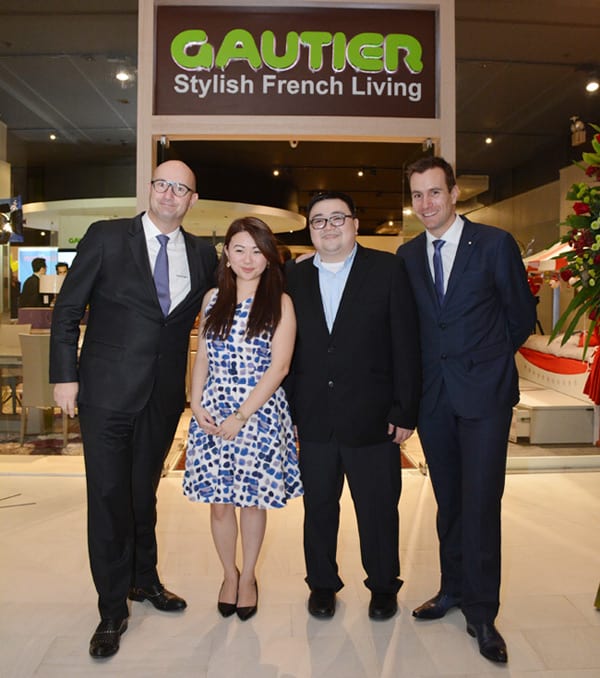
    Gautier Philippines opens its first store at Shangri-La Hotel in Bonifacio Global City.  Shown during the store opening are (from left) Gautier France chief executive David Soulard, Gautier Philippines general manager Katrina Lim, Blims Lifestyle Group president Sam Frederick Lim and Gautier France export manager Hervé Soulard.

    The youngest in a brood of six and the only female, Lim was entrusted the responsibility to look after the high-end venture of BLG.  She is a daughter of BLG chairman Samie Lim.

    The talented young entrepreneur, who exudes feminine flair and artistic sensibility, felt that Gautier’s fine pieces would fit well into the lifestyle of Filipinos.

    She noticed that more Filipino families now start to move up to the upper segment of the market, given their rising income and better opportunities in an economy that is constantly expanding.

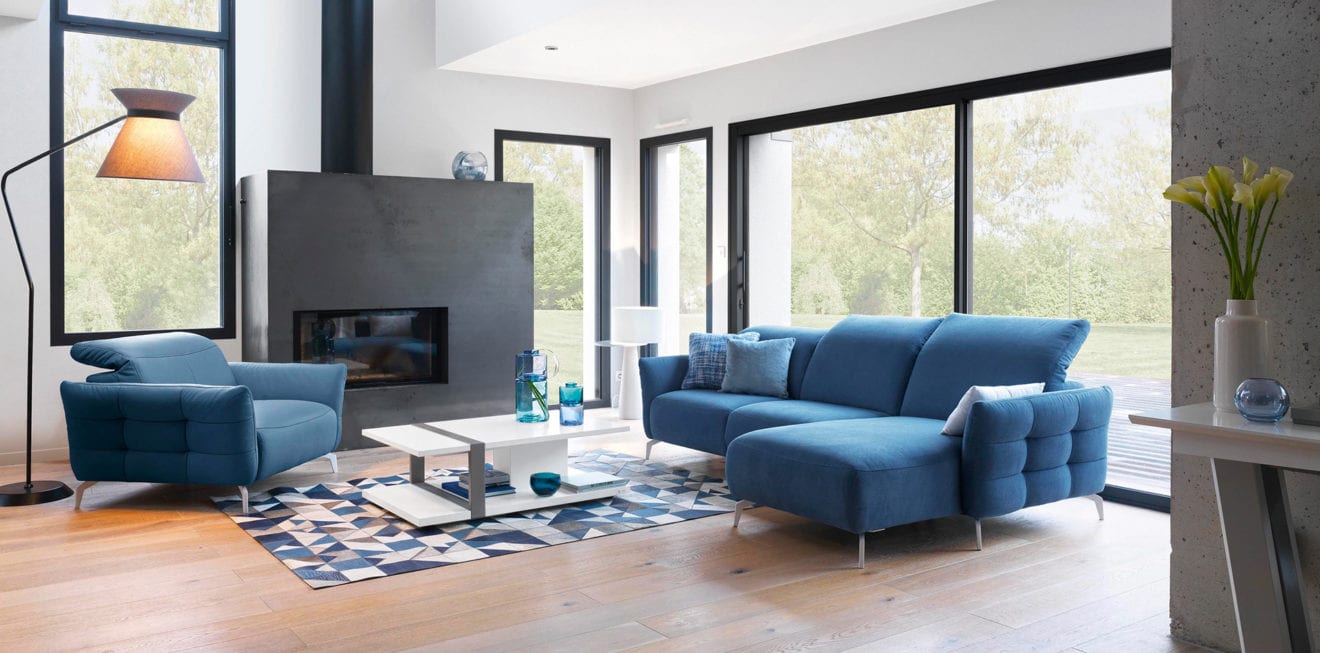
    Housed inside the newly-opened Shangri-La Hotel at Bonifacio Global City in Taguig, the Gautier showroom boasts of a wide selection of finely-crafted furniture suited for modern Filipino homes.

    From very stylish yet utilitarian living room ensemble to sophisticated dining sets and even down to office staples, Gautier has the perfect piece for every corner in every room, she says.

    What is remarkable, Lim says, is that Gautier comes up with the perfect combination of simplicity and elegance.

    All Gautier furniture are guaranteed for 10 years except sofas, soft materials and bedding.  All products also comply with European standards.

    Gautier started as a manufacturer of children’s furniture—a sector where safety and quality are paramount and compromise is unthinkable.

    It was the first French furniture manufacturer to have obtained triple QSE (quality safety and environment) certification. The company limits the future products environmental impact with eco-design approach wherein 98 percent of waste is recycled.

    Gautier is the fifth of Blims’ concept store. Other concepts are the ready-to-use and ready-to-deliver furniture, now industry standards in convenience and practicality.

    Gautier export manager Herve Soulard says the Philippines is a rising market—one with the promise of people moving up and families affording the finest products.

    “The Philippines is also the first country in Southeast Asia where we have presence. We believe that the Philippines will be a big market for us soon,” he says.

    After the Philippines, Gautier is set to expand to Singapore and Indonesia, according to Soulard. Guatier France chief executive David Soulard also attended the opening of the Fort Bonifacio branch.

    In 2015, the French firm spent 10 million euros to acquire new machineries for wood processing. It uses 100 percent Pine wood harvested from Pine tree forest for all its furniture.

    Gautier manufactures its furniture in three production sites in France— La Boupere, Chantonnay and Saint Prouant- all  using cutting edge machineries and equipment.

    With support from local small and medium enterprises, Gautier has become the European leader in contemporary furniture. It employs more than 950 employees across all manufacturing sites.

    It trains its own in-house designers and constantly joins trade shows to keep updated. It has also teamed up with trend watchers in 30 countries.

    With the partnership, Blims is looking at P60 million in annual sales from the Gautier concept in the first year of operations in the Philippines.

    The company is currently looking for more sites in the country, especially upscale retail places and hotels.

    Over 95 percent of the furniture sold in Gautier stores are manufactured in their French factories while the rest are produced in neighboring European countries.

    Lim says the partnership with Gautier is a part of Blims’ raison d’etre or goal to upgrade the living standards of Filipinos.

    Lim says Gautier is not just for chic and classy shoppers.  “It is for today’s socially minded consumers who value the intangibles,” she says.

     

  • Acer brings first PC phone to Philippines

    Acer brings first PC phone to Philippines

    Taiwan-based technology giant Acer has brought its latest flagship product, the world’s first personal computer phone, to the Philippines aimed at providing a new kind of platform and improved productivity for local consumers.

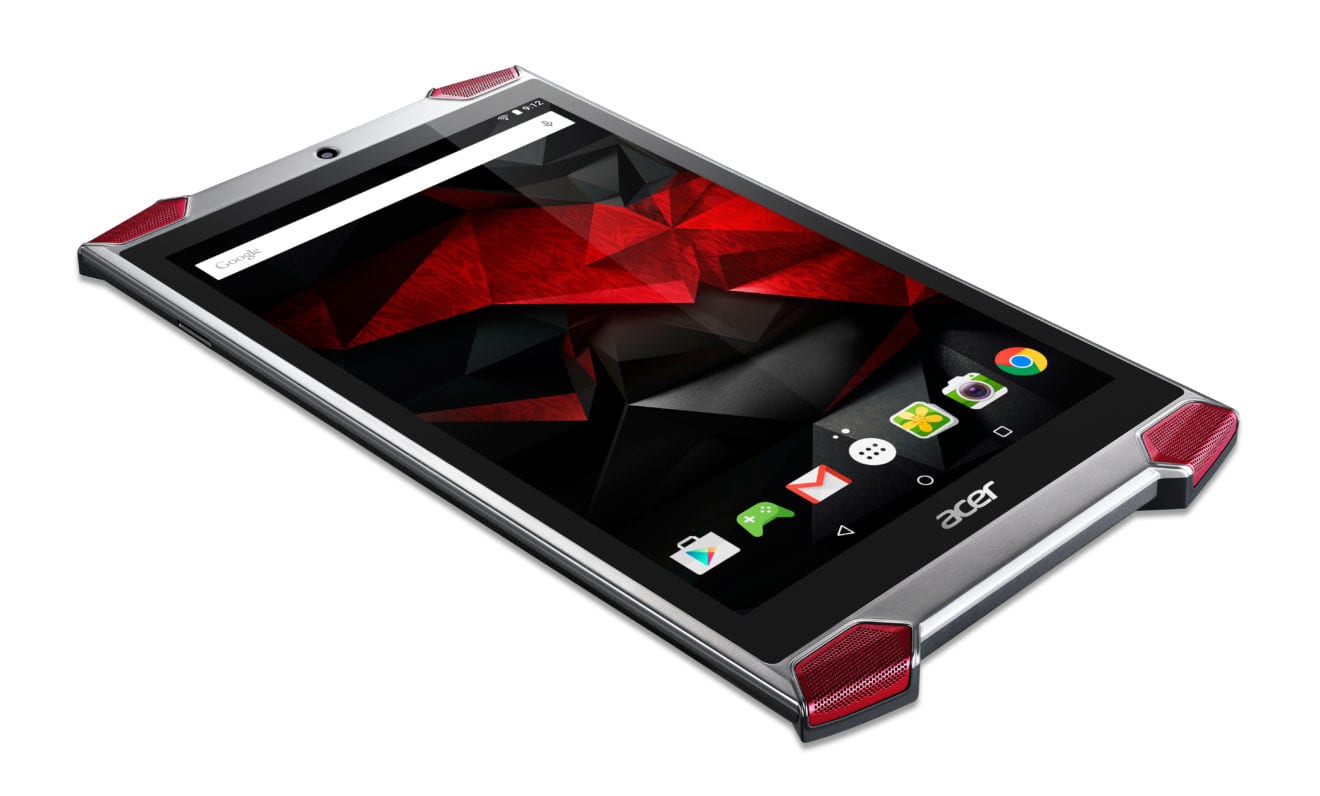
    The Liquid Jade Primo, the first PC phone, has a Windows 10 operating system and brings productivity to the next level with a Continuum compatible smartphone that doubles as a PC.

    In an earlier interview, Acer chief executive officer Jason Chen said he is confident the first PC phone would be warmly received in the Philippine market as the company continues to bank  on user excitement and innovation.

    “Excitement will become either hype then disappear or it becomes useful, create an ecosystem and then become a true business or industry segment,” he said.

    Acer targets commercial users, business travelers and millennials who want the convenience of carrying a single device but with the components of the normal computer set-up.

    “This 2016, we are centered on innovation and optimal and real end-goal solution. We want to come up with something that people will feel great but the most important thing is we want to enhance everything so consumers will enjoy the content,” Chen said.

    The Liquid Jade Primo, which would retail at P28,990, has an AMOLED 5.5-inch full high-definition display, 21-megapixel main and eight-megapixel front cameras, and zero air gap technology for better visual experience.

    It has an ultra-tough gorilla glass that strengthens the phone’s structure and protects displays and a storage memory of 32 gigabytes, expandable up to 128 gigabytes.

    Acer also boasts of its advanced cooling system consisting of metal piping that dissipates heat more effectively and BitLocker technology that allows for full encryption of all user data stored internally, protecting the device from offline hardware-level attacks.

    It also comes with a suite of accessories comprised of a dock, keyboard and wireless mouse, and can be connected to any screen and charge high definition multimedia interface (HDMI) output.

    In the local market, Acer has maintained its No. 1 position in the notebook computer category for 10 consecutive years.  It accounts for a 30 percent share of the Philippine computer industry.

    Acer entered the Philippine market in 2003.

  • Warburg Pincus takes Reiss stake

    Warburg Pincus takes Reiss stake

    A majority stake in UK luxury fashion retailer Reiss has been bought by private equity company Warburg Pincus.

    The transaction values the brand, which started out as a menswear store in 1971, at £230 million.

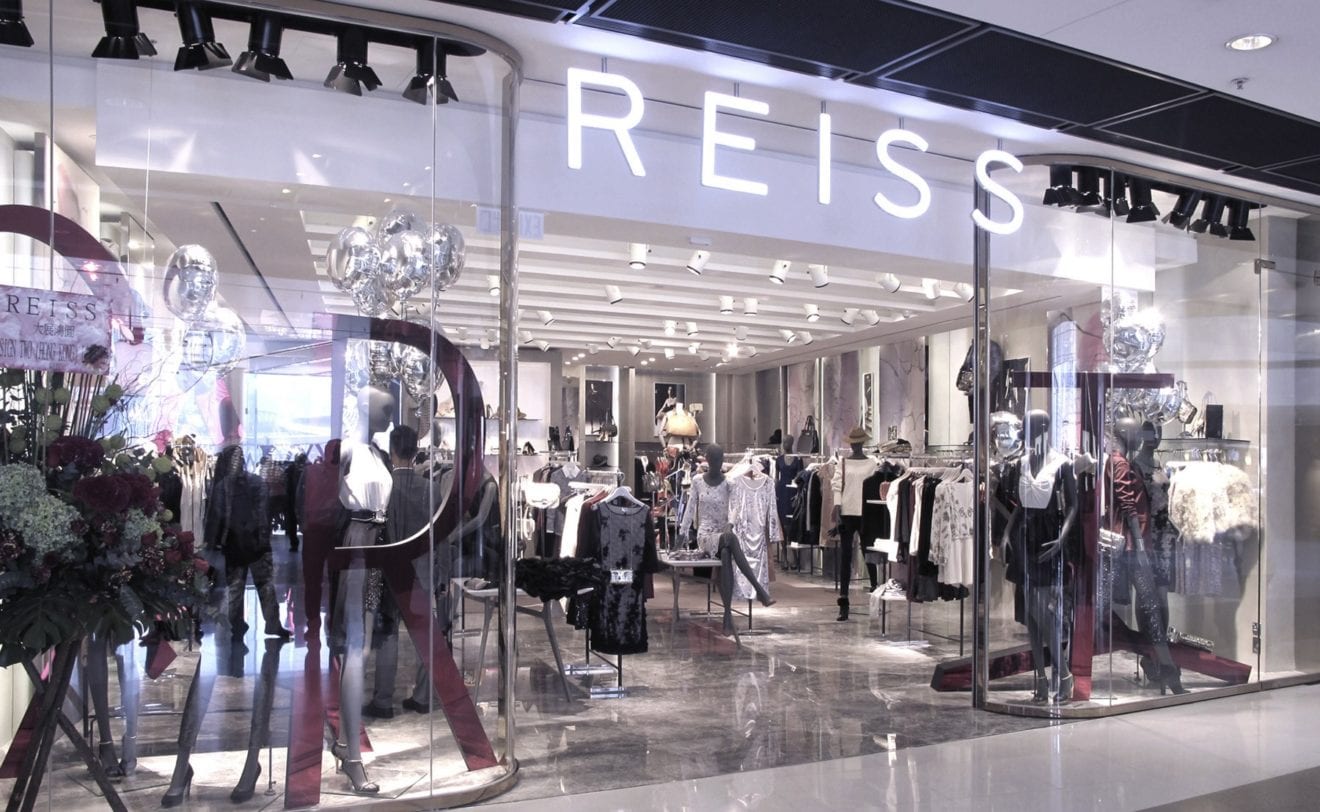
    Reiss has two stores in Hong Kong and four in Manila, Philippines; its only stores to date in Asia. The Hong Kong stores are located in IFC Mall and Ocean terminal, Harbour City. It also sells online, on its own website and on Asos. It has 160 stores globally.

    The sale ends more than six months of talks between founder David Reiss and several potential investors, one of whom was revealed as Permira, which is the private equity investor in Dr Martens.

    According to UK media, Reiss achieved total sales of £146 million in the year to January 31, up substantially from the £111 million of the previous year. Pre-tax profits soared from £3.6 million in 2013 to £10 million during 2014.

    Warburg Pincus MD Paul Best says he plans to expand the brand’s presence internationally.

    “The business has built an enviable position in its core UK market, with a broad and loyal customer base. We believe there is significant opportunity to build on this success,” he said in a statement.

    Reiss, who will remain as chairman and CEO, says the deal will allow the business to grow into a “truly global fashion brand”.

    “We have built a great business providing our customers with timeless luxury at affordable prices.”

    Reiss and Best said the company’s expansion strategy would be focused on the US, Canada, Asia and Australia.

  • Tenant Manila is a cafe and a surfwear shop in one

    Tenant Manila is a cafe and a surfwear shop in one

    On the ground floor of Solace Hotel in Makati, there is a coffee shop, and just above it, a lifestyle boutique specializing in surfwear. It’s an unfamiliar, if welcome, amalgamation of the laid-back vibe of a neighborhood cafe, the stylish urbanity of the city, and the anything-goes attitude associated with going out to the water to catch some waves. How, then, has such a place come to exist?

    tumblr_o37d6py7wa1qf32sfo1_1280

    Nearly 20 years ago, the designers Anton Lopez and John Esguerra met while working at Diesel in Italy before eventually going on different paths. “When John moved to Hawaii to surf and design, I moved to Hong Kong to work for Nike,” Lopez explains. “We stayed in touch and always spoke about the potential of developing our own brand and retail concept.” Despite their Filipino heritage, neither Lopez nor Esguerra grew up in the Philippines. This led them, Lopez says, to be “fascinated with the idea of coming ‘home’ and developing a unique brand that was based in Manila [and] had strong influences and inspiration from all the places we’ve lived.”

    Tenant Edit.jpgQuality Peoples statement tee. Photos by PATRICK DIOKNO.

    Out of that fascination came Tenant Manila, a cafe-boutique opened in February that is, according to Lopez, “rooted in surf and beach culture,” something they felt was “a natural and authentic fit for a brand developed in the Philippines.” The coffee shop serves an array of drinks (aside from the caffeinated kind, they have tea, juices, and alcoholic beverages), snacks, and meals. Meanwhile, the second-floor shop sells everything from men’s apparel and accessories to surfboards and even books. “The idea behind merging a cafe and a retail shop was to blur the lines of what a retail experience is meant to be,” Lopez says. It’s a concept that they believe appeals to everyone: “We wanted to create a space where you can shop, design, meet, have a drink — multipurpose without any pretenses.”

    Tenant 4.jpgMollusk windbreaker, Saturdays NYC tee and H&M trousers. Photos by PATRICK DIOKNO.

    Lopez believes that Tenant is distinct in its branding. “We believe we distinguish ourselves first by our unique brand partners,” he says. “Most of [them] decided to launch first with us in the Philippines.” The shop carries products by Saturdays NYC, Converse, Kapital, Mandala (making its retail debut), Mollusk, and Esguerra’s own Quality Peoples, to name a few. In addition, they are expanding the shop’s offerings within the year with new menu items, new brands, and events relating to art, music, and film.

    The largest project will involve the development of an in-house brand with its own products this summer. “[It] will encompass Tenant culture,” Lopez says. “Good quality, attention to detail, relaxed and authentic clothing and accessories.”

    tumblr_o3cqsvmJH21qf32sfo1_1280

    Lopez and Esguerra believe that what they’ve built really connects to the modern Filipino lifestyle. “I think we are, in essence, a modern concept and creative brand,” Lopez shares. “And with that alone, I think we fit into anyone’s lifestyle. We hope to connect with Filipinos based on our honest and thoughtful approach through all aspects of the Tenant brand.” He adds: “Our hope is that Tenant is recognized as a creative environment for everyone, a space with beautiful and well-curated apparel and goods. Somewhere to have a great cup of coffee and good conversation with your friends.”

    Tenant 5.jpgSaturdays NYC knit pullover (left) and Saturdays NYC bonnet. Photos by PATRICK DIOKNO.

    ***

    Styled by David Milan
    Grooming by Gery Penaso for MAC Cosmetics
    Modeled by Javi Marcalain
    Shot on location at Tenant Manila


  • Globe’s GCash adapted for tax payment

    Globe’s GCash adapted for tax payment

    The Philippines’ Bureau of Internal Revenue (BIR) has teamed up with Globe Telecom to improve tax collection via the GCash mobile money service.

    Under the partnership, Globe’s GCash and the BIR have relaunched the Philippines’ first electronic tax filing and payment system.

    Together with the USAID Facilitating Public Investment Project and the USAID E-PESO Activity, Globe relaunched the electronic filing and payment system on Tuesday with more enhanced features.

    The goals of the project are to improve tax collection and administration, curb corruption, and strengthen the business climate in the country.

    “The continuous payment of right taxes will continue and sustain the growth of the Philippines,” said BIR Commissioner Kim Henares in a statement. “The bureau aims to increase funding contribution for the country’s growing needs for basic infrastructure and social programs necessary to reduce poverty, thus, the government continues to push for the growth of the country’s fiscal space.”

    GCash was first introduced for national tax payments in 2005 when BIR’s thrust was to expand the provision of electronic services, most notably with the release of eBIRForms v6, an improved e-filing software that can serve all taxpayers.

    The use of GCash has now been expanded to allow payments for all types of taxes and also works with local and national government agencies to increase public’s awareness through the e-Bayad campaigns and enable usage of electronic payments in government transactions.

    GCash President Albert Tinio said GCash also helps the government utilize mobile money for collections and disbursements of social welfare benefits, government fees, and taxes. By limiting face-to-face transactions, the service is able to increase access to government services and reduce potential leakages especially in hard to reach areas.

    With the partnership in place, all Philippine taxpayers can use their mobile phone to pay for all types of taxes instead of going to BIR regional district offices or authorized agent banks with their cash or check.

    The Gcash mobile app can be downloaded from the Google Play Store for Android. Users need to register for the service and fund their Gcash account in any partner outlet.

  • Uniqlo Philippines to open six new stores

    Uniqlo Philippines to open six new stores

    Japanese fashion brand Uniqlo is opening six stores in the Philippines by June 2016.

    “We are thrilled to announce that Uniqlo will open four new stores in Luzon by May and two new stores in the Visayas by June, as we continue to bring high-quality and innovative clothing to Filipinos,” said Katsumi Kubota, COO of Uniqlo Philippines.

    The Luzon branches of Uniqlo Philippines will be in UP Town Center in Quezon City; Solenad 3 in Nuvali, Laguna; Evia Center Vista City in Daang Hari Rd, Cavite City; and SM City Cabanatuan in Nueva Ecija.

    The Visayas stores will be in Iloilo City and Bacolod City, adding to the existing outlets in SM City Cebu and SM Seaside City Cebu.

    Uniqlo is a brand of Japanese global retail holding company Fast Retailing, which designs, manufactures and sells clothing under seven main brands: Uniqlo, GU, Comptoir des Cotonniers, GU, Helmut Lang, J Brand, Princessetam.tam and Theory. It has global sales of about US$13.88 billion.

    There are more than 1700 Uniqlo stores in 17 markets, including Australia, China, Hong Kong, Indonesia, Malaysia, Philippines, South Korea, Taiwan and Thailand.

  • Asian retail leaders in Forbes most powerful businesswomen

    Asian retail leaders in Forbes most powerful businesswomen

    Two Asian retail leaders have been added to Forbes magazine’s annual list of 50 most powerful businesswomen in Asia – in The Philippines and Vietnam.

    They are Robina Gokongwei-Pe, the president and COO of Robinsons Retail Holdings, the second-largest multi-format retailer in The Philippines, and chairman/general director Cao Thi Ngoc Dung of Vietnam’s largest jewellery brand, PNJ, which she founded in 1998.

    Robinsons started as a department store in Manila in 1980, expanding into the supermarket business five years later. It entered the DIY business in 1994, the convenience store and specialty store businesses in 2000, and the drug store business in 2012.

    There are six business segments: supermarkets (Robinsons Supermarket and its two new subformats, Robinsons Easymart and Robinsons Selections); department stores (Robinsons Department Store); DIY stores (Handyman Do it Best, True Value, True Home by True Value, and the newly acquired big-box hardware subformat A.M. Builders’ Depot); convenience stores (Ministop); drugstores (South Star Drug and Manson Drug); and specialty stores (from consumer electronics and appliance retailer Robinsons Appliances and Savers Appliances to toys retailer Toys ’R’ Us, one-price-point retailer Daiso Japan, coffee chain Costa Coffee and international fashion brands such as Dorothy Perkins, Topman and Topshop, and international cosmetics brands such as Shiseido).

    Robina Gokongwei-Pe is also a director of Cebu Air, JG Summit Holdings, Robinsons Bank Corporation and Robinsons Land Corporation. She is a trustee of the Gokongwei Brothers Foundation, Immaculate Conception Academy Scholarship Fund and the Ramon Magsaysay Awards Foundation, and is also a member of the University of the Philippines Centennial Commission.

    After attending the University of the Philippines-Diliman, she obtained a Bachelor of Arts degree, majoring in journalism, from New York University in 1984. Pe joined the Robinsons group in 1984 as a management trainee. She is the daughter of the chairman and CEO of the company, John L Gokongwei Jr.

    Cao Thi Ngoc Dung founded PNJ as a store in 1998, and now has a 17 per cent stake of the company, which has more than 3000 employees in 200 stores. The group grossed $350 million in revenue and made a profit of $23 million in its latest trading year.

    Based in Ho Chi Minh City, PNJ opened its own jewellery factory in October 2012. A VND120 billion (US$ 5.38 million) investment, the factory has the capacity to produce 4 million items a year. PNJ’s national expansion started in 1994 with the establishment of a branch in Hanoi.

    This year’s Asia’s Power Businesswomen list represented 14 countries, with China and Hong Kong dominating (14 women), followed by India (8), Thailand (5) and Japan (4). Australia, Indonesia, Singapore and Vietnam each had three, while South Korea and The Philippines each had two. Macau, New Zealand and Taiwan had one each. There were 27 newcomers, about a quarter of them from the tech sector.

  • Philippine eCommerce to grow 101 per cent by 2018

    Philippine eCommerce to grow 101 per cent by 2018

    The Philippine eCommerce industry is expected to grow by 101.4 per cent by 2018 from $1.15 billion in 2013, according to the Philippine eCommerce Outlook.

    Prudencio Reyes Jr, undersecretary of the Department of Trade and Industry said

    eCommerce will help “connect domestic industry with the global economy.”

    The DTI said the country’s internet-connected population has grown by around 530 per cent over the past five years.

    Of the country’s 101.1 million population, 44 per cent are active internet users, 42 per cent are active social media users, 113 per cent have mobile connections, and 36 per cent are active mobile users.

    Philippine eCommerce sales reached P79 billion in 2012, equivalent to 0.6 per cent of the country’s total income during the year. More than 76.2 per cent or P60.17 billion came from the services sector, especially transport and storage, administrative and support service activities, and wholesale and retail trade.

    The DTI is encouraging micro, small and medium enterprises (MSMEs) to expand locally and globally by venturing into eCommerce.

  • Smart starts deployment of LTE-Advanced

    Smart starts deployment of LTE-Advanced

    The Philippines’ PLDT, through wireless subsidiary Smart, has commenced the rollout of LTE-Advanced carrier aggregation.

    The operator has initially deployed the technology in the popular tourist destination of Boracay, marking the first implementation of the technology in the Philippines.

    Smart said the Boracay LTE-A network has posted speeds of up to 250Mbps. The company started testing the technology in Boracay and other locations in 2013, and has commenced the rollout now commercial devices that support LTE-A are available.

    “Combined with our other network improvement initiatives for both our mobile and fixed line networks, the introduction of LTE-A will help boost internet services in the country and enable more Filipinos to enjoy and benefit from the fast-growing range of digital services that PLDT and Smart offer,” PLDT and Smart CTO and information adviser Joachim Horn said.

    These initiatives include a program to integrate the networks of PLDT mobile brands Smart and Sun to improve network quality for subscribers of both. This is expected to improve the effective coverage for subscribers by anywhere from 50% to 100% depending on service area.

    Horn said particular attention is being paid to enhancing 3G coverage because 90% of Smart and Sun’s mobile internet users have 3G handsets.

    “We are also planning ahead, in anticipation of future advances in technology. Our current investments in network facilities are already being done in a way that will enable us to be ready for 5G when it arrives sometime in 2020. For this purpose, we are working closely with NTT DoCoMo, which is one of the global pace-setters in the development of 5G,” Horn added.

  • Filipino Business Community in Indonesia Launches Business Club

    Filipino Business Community in Indonesia Launches Business Club

    The Filipino business community in Indonesia has launched the Philippine Business Club Indonesia (PBCI), a business association representing private sector interests to promote and strengthen business, economic, and socio-cultural ties between the Philippines and Indonesia.

    “I am very optimistic about the potential of this business association, and we look forward to the activities and projects that the PBCI will undertake this year and in the coming years to ensure that its members can take advantage of new avenues for trade, investment, and economic cooperation between the Philippines and Indonesia,” Deputy Chief of Mission of the Philippine Embassy in Jakarta Robert Manalo stated at the launch here recently.

    The initiative signals the Filipino communitys greater commitment to building a stronger and strategic relationship with Indonesia.

    “Indonesia is the largest market in the ASEAN, representing almost half of its population. With the implementation of the ASEAN Economic Community, we are facing a historic opportunity to support a vital and growing Philippine private sector, one whose expanding interests show a more global outlook amid the economic integration in the region,” remarked Antonio Capati, chairman of the PBCI.

    The PBCI will endeavor to promote, strengthen, and foster cooperation and collaboration among its members in pursuing the commercial and social interactions of companies, individuals, and organizations dedicated to the development of trade, investments, and people-to-people cooperation between the Philippines and Indonesia.

    The PBCI will work closely with the Philippine Embassy and the Philippine Trade and Investment Center in Jakarta, business chambers, respective public and private sectors, and other key stakeholders in the Philippines and Indonesia to realize its objectives. The club will host seminars, conferences, trade & investment briefings, trade missions, matchmaking, and networking events.

    Additionally, the club will undertake special projects to contribute to business and social development in the Philippines and the ASEAN.

  • Philippine 7-Eleven profits surpass 1 billion pesos

    Philippine 7-Eleven profits surpass 1 billion pesos

    The Philippine 7-Eleven network of convenience stores recorded record profits in  2015, fuelled by new store openings.

    Parent, listed company Philippine Seven, says it surpassed 1 billion pesos (US$22 million) in profits for 2015.

    The 15.4 per cent year-over-year profit rise came on the back of an increase in stores from 1282 in 2014 to 1602 stores in 2015.

    Philippine Seven said retail sales of all stores rose by 25.3 per cent  to P25.8 billion from P20.6 billion compared with prior year.

    The company has been expanding its logistics infrastructure to support its

    unprecedented expansion in Visayas and Mindanao.

    “The rest of the country is relatively uncontested in comparison. We are virtually the only competitor with the critical mass to build out proper supply chains in areas logistically unreachable from GMA,” said Jose Victor Paterno, president and CEO.

    The expansion is  expected to support profitability in the medium term, through cashing in on underutilized warehouses and achieving dominant position in new markets.

    For 2016, the company plans to increase  capital expenditures budget to P3.5 billion to support its accelerated store expansion strategy. The bulk of this amount will fund new store openings, store renovations and equipment acquisition.

    Philippine Seven Corporation operates the largest convenience store network in the country. It acquired the master franchise licence from Southland Corporation (now Seven Eleven) of Dallas, Texas, in December 1982 and was listed in the Philippine Stock Exchange in February, 1998.