Retail News CRM

Tag: Production

  • Apple iPhone production is set to resume in China on February 10th

    Apple iPhone production is set to resume in China on February 10th

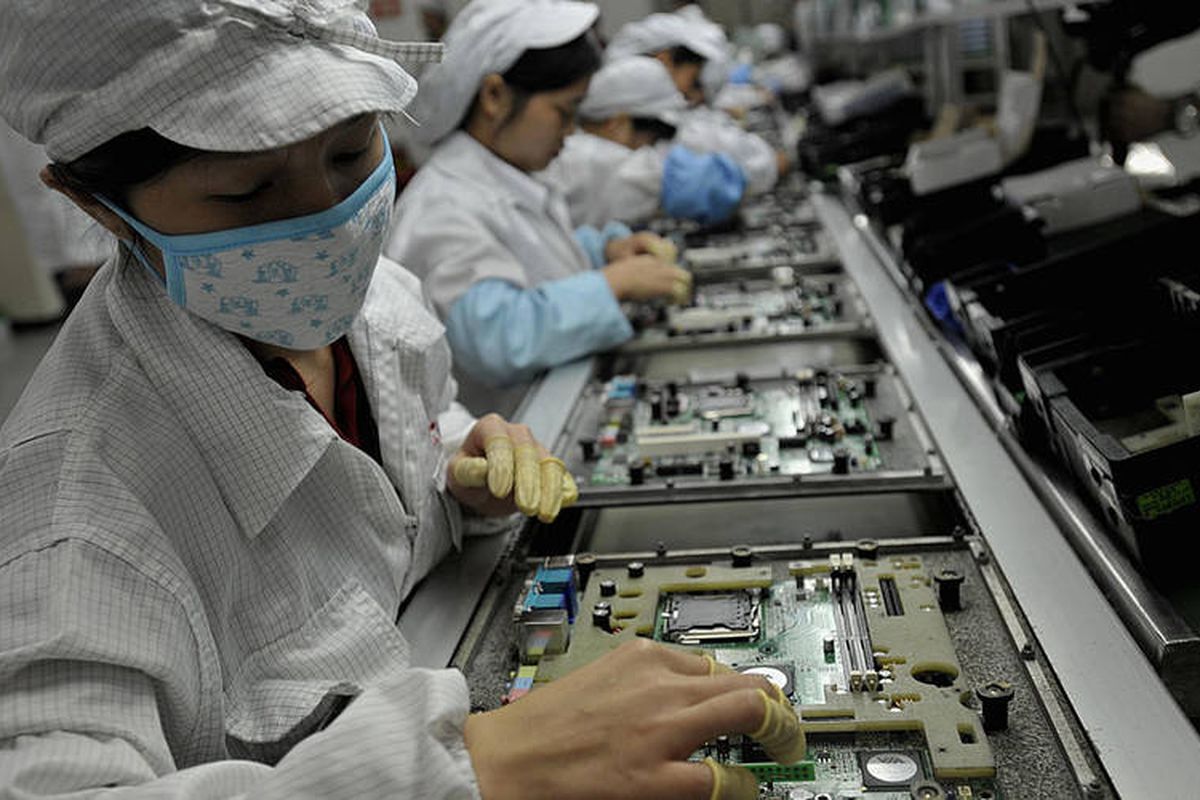
    With the coronavirus claiming the life of 490 people and infecting 24,324 at last count, a number of businesses in China have cut back their operations or have closed altogether. This hits Apple right in the solar plexus since the company depends on contract manufacturers located in China to produce many of its products including the iPhone. The virus also impacted some of Apple’s China-based supply chain.

    Bloomberg reports that the Chinese manufacturer that Apple relies on the most, Foxconn (aka Hon Hai Precision Industry Co.) will resume production on February 10th. Other companies like Quanta Computer Inc., Inventec Corp., and LG Display Co. will also go back to work next week. TF International analyst Ming-Chi Kuo recently cut his estimate of iPhone shipments for the current quarter by 10%. For the calendar first-quarter (Apple’s fiscal second-quarter), Kuo now sees the company delivering 36 million to 40 million iPhones. Apple no longer releases the number of phones it ships during its quarterly reports, but the analyst believes that the manufacturer delivered 38 million during last year’s calendar first-quarter. So for the three months from January through March, he sees iPhone shipments declining as much as 5.3% or rising by as much as that same percentage.

    The February 10th date when production is supposed to ramp up again at Foxconn isn’t exactly written in stone. Some workers are living in municipal lockdowns and transportation of people and materials has slowed down tremendously. The facility where Foxconn builds most of its iPhones is located in Zhengzhou and the factory used by assembler Pegatron to build the device is in Shanghai. Both are more than 311 miles away from Wuhan, the city in China considered to be ground zero for the coronavirus.

    Earlier this week, Apple said that it would shut its stores, corporate offices and consumer centers through February 9th due to an “abundance of caution and based on the latest advice from leading health experts.” Apple is still able to ship orders throughout the country, so those looking to pick up a new iPhone in China won’t be blocked because of the virus.

    Meanwhile, GF Securities analyst Jeff Pu says that companies in the supply chain are seriously concerned about a lack of employees. He notes that “The main variable is whether the government will push back the time for resuming production, though it is not very likely given the complexities of organizing transportation for the returning migrant workers.” Apple has more than 10,000 direct workers in China including those working in the Apple Stores. The firms that make up Apple’s contract manufacturers and supply chain in China have over 1 million people producing parts and assembling Apple’s products.

    While it was feared a week ago that the virus could delay the launch of the iPhone 9, Foxconn now says that it has a backup plan that will allow the next new iPhone model to be released on schedule. As we told you during the waning days of January, trial production of the phone has already started. The iPhone 9 will look like the iPhone 8 down to the 4.7-inch LCD display. But unlike the iPhone 8 which is powered by the 10nm A11 Bionic chipset, the iPhone 9 will be equipped with the same 7nm A13 Bionic SoC found in the 2019 iPhone models. The new device will also be the beneficiary of a 50% hike in memory from 2GB of RAM to 3GB. We could see the iPhone 11’s 12MP Wide camera on the back along with a 1,821mAh battery. The iPhone 9 is expected to start at $399 and could be unveiled next month.


  • Audi To Increase Engine Production In Hungary

    Audi To Increase Engine Production In Hungary

    German carmaker Audi will increase the production of engines at its Hungarian factory to 2.25 million units next year, Hungarian Foreign Minister Peter Szijjarto said on Monday.

    An Audi representative at the premium carmaker’s Ingolstadt headquarters in Germany declined to comment on internal planning.

    “They plan to manufacture 2.25 million engines next year, and so far 2 million has been the annual record,” Szijjarto told a news conference when asked about a report that Audi planned to cut jobs at its Hungarian plant.

    Audi’s Hungarian division said in April that it planned to boost the production of engines at its factory significantly in 2019 from the 1.95 million it made there in 2018, though it didn’t give a figure.

    It also said in July that it would expand the manufacture of engines for electric cars at the factory, which is in the western town of Gyor. It said then that its e-transformation project would create 250 jobs.

    The carmaker, which is controlled by Volkswagen, has been making engines in Hungary since 1994. Out of the 1.95 engines produced in 2018, 9,453 were electric axle drive units, according to the company’s website.

  • Harley-Davidson LiveWire Production Begins After Charging Issue

    Harley-Davidson LiveWire Production Begins After Charging Issue

    Harley-Davidson has resumed the production of the all-electric LiveWire motorcycle after determining that an issue with charging was limited to a single motorcycle. The company has now said that Harley-Davidson LiveWire owners can now resume charging their motorcycles at home. Harley-Davidson had previously advised customers to the only charge at dealerships until the charging issue was resolved. The issue has still not been specified, but Harley-Davidson claims that the issue was found only on one motorcycle after “rigorous analysis”. The first all-electric Harley-Davidson received a serious setback last week when production was halted due to a problem with the bike’s charging system

    The LiveWire has a cast aluminum frame and Showa suspension with the Revelation electric powertrain mounted low on the bike

    After the issue was reported, Harley-Davidson did not recall any of the LiveWire motorcycles already on the road, but the company did stop production and deliveries and also began simultaneous testing and analysis. Nevertheless, the issue will be a speed breaker to Harley-Davidson’s plans to garner some positive publicity for its electric motorcycle program. The company has now released a statement, which, while not going into the specifics of the problem, mentions that it was actually limited to just one motorcycle.

    “Temporarily stopping LiveWire production allowed us to confirm that the non-standard condition identified on one motorcycle was a singular occurrence,” the statement said, adding, “after completing rigorous analysis this week, we have resumed LiveWire production and deliveries.”

    The issue did, however, affect Harley-Davidson’s image after the company’s first foray into electrification just weeks after deliveries of the LiveWire began. The LiveWire is meant to complement Harley-Davidson’s traditional v-twin internal combustion engines, and not replace them, and went into production in 2019. Deliveries to dealers in Europe and the US began in September 2019. The LiveWire has also been showcased in India, but so far, there have been no definitive plans of launching the electric Harley commercially in India.

  • Steel production and their Basic Methods

    Steel production and their Basic Methods

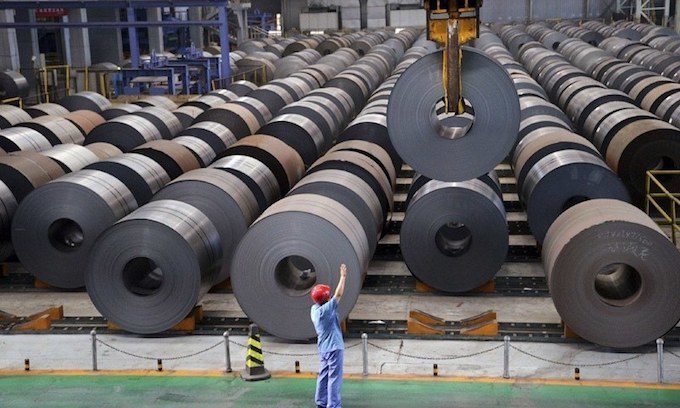
    Steel is a durable material and the main structural material for engineering.  It represents an alloy of iron with carbon, the content of which in its structure contains 0.01–2.14%.  The composition also includes insignificant amounts of silicon, manganese and sulfur. This material has exceptional mechanical properties: hardness and malleability, thanks to which it is considered the main structural material in mechanical engineering.  It is difficult to imagine what could replace the steel. A wide variety of products are made of steel – from paper clips to the beds of multi-ton presses and construction pieces of ships. Let’s consider main methods of steel production to understand the process better.

    •       Open-hearth process  (Siemens-Martin process)

    This method is used for the production of high quality steels used in especially important parts of machines and precise mechanisms. At one time this method replaced the labor-intensive and inefficient crucible and pulping melts used before. The loading capacity of a single reflective furnace used in this method reaches 500 tons.  The peculiarity of the open-hearth method is the possibility of remelting not only pig iron, but also metallurgical wastes and scrap metal. The heating temperature of the liquid steel reaches 2 thousand degrees. The melting process takes 4 to 12 hours. In order to accelerate the melting process, the volume of injected oxygen exceeds demand, which increases the melting capacity by 20–30%.

    •       Bessemer converter method

     When it comes to this method, smelted steel is good for the production of automotive sheet, tool steel, welded structures and other steel billets.  By quality, it is inferior to an open-hearth method, and is used for the manufacture of less demanding products. It contains more impurities than in the open-hearth manufacture.  Due to the high volume of loading of one furnace up to 900 tons, the method is considered the most productive, therefore, it became widespread.

    The processing is transient and lasts up to 20 minutes.  During this time, the oxidation of carbon, silicon and manganese contained in the raw materials, happens, and they are further removed from the bath with the molten slag. The converter is a retort-shaped (pear-shaped) vessel, consisting of steel sheets with lining from the inside.  One hole is used for casting iron and producing finished steel; it also loads iron and scrap.

    •       Oxygen converter process (Linz–Donawitz-steelmaking)

    Steel production today is carried out mainly this way.  (You can buy steel for sale) The share of oxygen-converter production quite recently accounted for up to 60% of world steel production. However, this percentage is reduced due to the appearance of electric arc furnaces (EAF).  The furnaces are purged with pure oxygen (99.5%) under high pressure.

    •       Electric steelmaking method

    The production of steel by electric smelting has a number of undeniable advantages.  This method is considered to be the main one in the smelting of high-quality alloy steels.  High quality is achieved by the practical absence of phosphorus, sulfur and oxygen in the steels.  This method is also used for the production of a wide range of building steels.


  • Vietnam’s Vingroup new factory to produce 125m smartphones

    Vietnam’s Vingroup new factory to produce 125m smartphones

    Vingroup JSC, Vietnam’s biggest listed firm by market value, said on Monday it has started work on a second smartphone factory with a capacity to produce 125 million units a year.

    The new factory in the capital, Hanoi, will vastly increase Vingroup’s current capacity of five million units at its facility in the northern city of Haiphong, the conglomerate said in a statement.

    Construction is expected to be completed by early 2020 and the jump in capacity will help the company meet orders from Europe and the United States, Vingroup CEO Nguyen Viet Quang said in the statement.

    “After a period of deploying and participating in the smartphone manufacturing industry, our products have been positively received by the market,” Quang said.

    “We received many processing orders from major partners in Europe and the United States. That’s why we have invested in a factory with 25 times the capacity of our current factory in Haiphong, to meet with domestic and international demand,” he added.

    A company spokesman declined to provide the names of the European and US partners.

    Vingroup launched its smartphone brand, Vsmart, in December last year, seeking to win market share from popular brands Samsung and Apple in Vietnam, which has a population of 95 million people.

    Vsmart phones use chips from Qualcomm and run Google’s Android operating system, and went on sale at a price of 3.39 million dong ($145) to 6.59 million dong ($282).

    In March, the company began selling Vsmart phones in Spain and planned to expand into other European markets. Its phones went on sale in regional neighbour Myanmar last month.

    It is part of a diversification strategy that has seen Vingroup, once focused on real estate and retail, become Vietnam’s first fully-fledged domestic carmaker in 2018.

    Electronics is a vital part of Vietnam’s economy as firms such as Japan’s Sony Corp and South Korea’s LG Electronics and Samsung Electronics reorganise production in the face of slumping global demand.

    Samsung said in December it will close one of its mobile phone plants in China as it focuses on low-cost countries like Vietnam, where it is the largest single foreign investor.

    In April, LG Electronics said it would stop making smartphones in South Korea and move production to Vietnam.

    South Korean chips-to-energy conglomerate SK Group said last month that it had agreed to buy 6.1% of Vingroup for $1 billion as it expands its investments in Vietnam.

  • Maruti Suzuki Cut Production By 18% In May

    Maruti Suzuki Cut Production By 18% In May

    Maruti Suzuki India had cut cut its production by 9.6 per cent to 147,669 units in April this year from 163,368 in April 2018.The company has now announced a further cut in vehicle production by over 18 percent in May, according to a regulatory filing. It is the company’s fourth consecutive month of taking a production cut

    Barring Super Carry, the company reduced production of all other segments, including that of its big selling compact and mini cars last month. MSI slashed production of passenger vehicles, including Alto, Swift and Dzire, by 18.88 percent to 1,48,095 as compared to 1,82,571 units in May 2018.

    The company cut production of mini segment vehicles by 42.29 percent to 23,874 units last month as against 41,373 units in the year-ago period. MSI also slashed production of compact segment cars by 9.54 percent to 84,705 units in May from 93,641 units in corresponding month of last year. Production of utility vehicles also witnessed a decline of 3.21 percent to 24,748 units, as against 25,571 units in May last year.

    Overall passenger vehicle sales in India dropped over 17 percent in April, the worst monthly fall in nearly eight years, as subdued sentiment and the ongoing liquidity crunch hit car sales.

  • Michelin’s Airless Wheel Which Does Not Puncture To Enter Production By 2024

    Michelin’s Airless Wheel Which Does Not Puncture To Enter Production By 2024

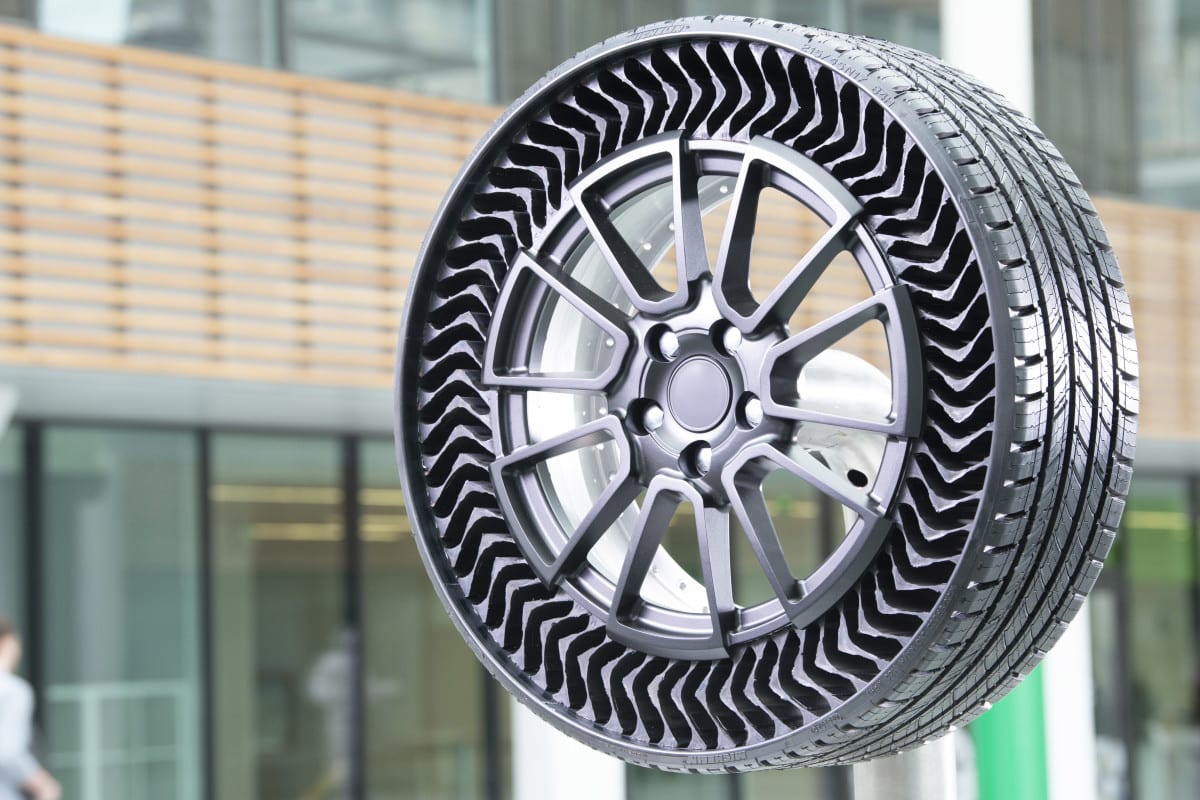
    Michelin and General Motors presented a new generation of airless wheel technology for passenger vehicles. It’s called the Uptis Prototype (or “Unique Punctureproof Tyre System”) – at the Movin’On Summit for sustainable mobility. The joint research agreement will see both the companies validate the Uptis Prototype with the goal of introducing the Uptis on passenger models as early as 2024. Michelin and GM are testing the Uptis Prototype, beginning with vehicles like the Chevrolet Bolt EV. Later this year, the companies will initiate real-world testing of Uptis on a test fleet of Bolt EV vehicles in Michigan.

    Michelin has been working at making airless tyres for the past five years now. The company showcased the Tweel concept in 2014 and an investment of $50 million has gone into the new plant for making it ready for commercial usage. The Uptis is a version of this and is airless. It completely eliminates the risk of flat tyres and blowouts.

    Florent Menegaux, chief executive officer for Michelin Group said, “Uptis demonstrates that Michelin’s vision for a future of sustainable mobility is clearly an achievable dream. Through work with strategic partners like GM, who share our ambitions for transforming mobility, we can seize the future today.”

    The Uptis Prototype is re-engineered for today’s passenger vehicles, and it is also well suited to emerging forms of mobility. The vehicles and fleets of tomorrow – whether autonomous, all electric, shared service or other applications – will demand near-zero maintenance from the tire to maximize their operating capabilities.

    The Uptis features a different architecture and composite materials, which enables the tyre to bear the car’s weight at road-going speeds. Approximately 200 million tyres worldwide are scrapped prematurely every year as a result of punctures, damage from road hazards or improper air pressure that causes uneven wear. These advancements through the Uptis Prototype demonstrate Michelin’s and GM’s shared commitment to delivering safer, more sustainable mobility solutions. Of course these tyres will be pricey but we wait to see how these tyres fair on production cars.

  • Samsung cuts production in China as local struggles continue

    Samsung cuts production in China as local struggles continue

    Samsung has been struggling in the Chinese smartphone market for quite some time. In fact, around six months ago the company shut down one of its factories in the region. Now, suggesting things have improved little, Samsung has confirmed that its scaling back production at its only remaining Chinese manufacturing plant.

    At its peak back in 2013, Samsung accounted for an impressive 20% of all smartphone shipments in China. But as local rivals with thinner profit margins became more competitive, the company’s sales quickly began to decline. Over the course of the past year, Samsung has struggled to retain a 1% market share and, while the Galaxy S10 has certainly boosted performance, it seems sales still aren’t at the required level.

    The company’s plants in China previously served both local and international markets, but over the past few years Samsung has shifted a big portion of its production over to countries such as India, leaving Chinese factories to cover local demand only. As such, any cuts suggest the company’s revival strategy isn’t going as smoothly as hoped.

    The South Korean-based brand hasn’t yet revealed the exact extent of these latest production cuts, so the adjustments could potentially be minimal. But it’s reported that Samsung is offering voluntary layoffs with compensation to interested employees until the 14th of June.
  • Huawei insists global smartphone production levels are as Expected

    Huawei insists global smartphone production levels are as Expected

    There’s been much ado about Huawei’s tough road ahead as key US partners and major parts suppliers are prepared to turn their backs on the world’s second-largest smartphone vendor at the end of a 90-day reprieve granted shortly after President Trump’s announcement of a potentially business-ending ban.

    But although it’s pretty obvious the political tensions are already negatively impacting the Chinese company’s sales and brand image in the Western Hemisphere, Huawei reps and executives continue to insist the situation is not as bad as certain reports make it out to be. After essentially suggesting the White House didn’t do the tech giant any favors by giving it the aforementioned “stay of execution”, Huawei is adamantly denying a fresh rumor regarding current smartphone production.

    In a short statement issued to Cnet and a number of other international news outlets, the company specifically and explicitly refuted the claims made in a Chinese media report about a Foxconn manufacturing shutdown of Huawei mobile devices. Apparently, “global production levels are normal, with no notable adjustments in either direction.”

    At first glance, that may seem reassuring, but clearly, these are extremely volatile circumstances, with lots of moving parts and unpredictable future developments. Just because Huawei might be going about its business like nothing has happened or is about to happen, that doesn’t mean a production halt or at least a downgrade are not in the pipeline. If the embargo on collaborations with US companies stands, market researchers expect a significant slowdown of the Chinese tech giant’s incredible recent growth.

    For the time being, it looks like Huawei is working on the assumption the US-China trade war will somehow cool down in the next couple of months, allowing it to continue selling hundreds of millions of Android phones around the world.

  • Honda Confirms Closure of UK Car Plant

    Honda Confirms Closure of UK Car Plant

    Honda has confirmed its western England car factory, which employs 3,500 people, will close in 2021. The Japanese carmaker announced Monday that the Swindon plant will shut in two years, “at the end of the current model’s production life cycle.” Honda makes its popular Civic model at the factory, 70 miles (115 kms) west of London.

    Reports of the closure first emerged in February, heightening concerns about the impact of Brexit-related uncertainty on the U.K. economy. Honda said the closure is not Brexit-driven but “is part of Honda’s broader global strategy in response to changes to the automotive industry.”

    The British government and union consultants, but “no viable alternatives to the proposed closure of the Swindon plant have been identified.”

  • LG Aledgly stopping flagship smartphone production in Korea

    LG Aledgly stopping flagship smartphone production in Korea

    LG’s smartphone business has been struggling for quite some time, but the company is still hopeful of turning a profit. At this point, a sudden uptake in smartphone sales seems unlikely so LG has recently focused on cost-cutting measures, one of which seems to be suspending smartphone production in its home country.

    LG is planning to shift its current Korean smartphone production over to a plant in Vietnam with the objective of helping “turn around the money-losing smartphones division.”

    Currently, LG’s smartphone production plan in South Korea focuses primarily on the production of flagship smartphones. It’s unclear if mid-range and low-end smartphones are also made at the plant, but the production output currently accounts for between 10% and 20% of LG’s total smartphone production.

    LG still has production bases in Brazil, China, India, and Vietnam so this latest development certainly doesn’t mean it’s the end of the road for the South Korean brand. Nevertheless, the company continues to experience declining sales and could soon lose its third-place position in the US to Motorola. And as history has shown us with Sony, it’s almost impossible to achieve profitability without some sort of growth, not matter how much effort is put into cost-cutting.

  • Maruti Suzuki Cuts Vehicle Production By Around Half

    Maruti Suzuki Cuts Vehicle Production By Around Half

    The country’s largest car maker Maruti Suzuki India (MSI) cut vehicle production by around 21 per cent across its factories in March due to subdued demand. The auto major produced a total of 1,36,201 units in March, including Super Carry LCV, down 20.9 per cent from 1,72,195 units in the year-ago period, it said in a regulatory filing. The production of passenger vehicles, including Alto, Swift, Dzire and Vitara Brezza, declined by 20.6 per cent to 1,35,236 units as compared with 1,70,328 units in March 2018.

    The compact segment saw 7.5 per cent decline in production to 81,163 units, while utility vehicle witnessed a drop of 26.4 per cent to 17,719 units in March.

    However, production of vans rose by 6 per cent to 15,710 units last month as compared with 14,822 units in March 2018.

    When contacted, MSI declined to comment on the reason for decrease in production.

    In February, MSI had cut production by over 8 per cent to 1,48,959 units from 1,62,524 units produced in the year-ago period.

    In January, the company had reported a total production of 1,83,064 units, up 15.6 per cent from 1,58,396 units produced in January 2018.

    MSI’s installed manufacturing capacity at its two plants in Gurgaon and Manesar stands at 15.5 lakh units per annum. Besides, the Suzuki-owned Hansalpur (Gujarat) plant also has an installed capacity of 2.5 lakh units from the first line.

    The second production line has been commissioned at the plant, but is yet to reach its peak capacity of 2.5 lakh units per annum.

  • Pakistan To Start Proton Car Production

    Pakistan To Start Proton Car Production

    A joint venture between Malaysia’s Proton Motors and Pakistan’s Al-Haj group will begin producing cars from June, officials said on Friday at a ceremony in Islamabad unveiling a series of business accords between the two countries.

    The Proton joint venture, first agreed last year, was the centerpiece of a series of agreements signed during a visit of Malaysian Prime Minister Mahathir Mohamad. Pakistani officials said the deals would total around $800-900 million.

    “These partnerships are just the beginning and I look forward to more and more partnerships,” Board of Investment chairman Haroon Sharif said at the signing ceremony, at which Mahathir presented Pakistani Prime Minister Imran Khan with a symbolic car key.

    The Proton plant, near the southern port city of Karachi, is the latest in a series of assembly deals set up in Pakistan by international auto makers including Volkswagen AG and Hyundai Motors.

    “We were told that the first Proton which will be assembled here will be on the roads next June in Pakistan,” Sharif said.

    The deals come as Pakistan steps up efforts to attract foreign investment. The country is struggling with a ballooning current account deficit and a balance of payments squeeze that has forced it into bailout talks with the International Monetary Fund.

    In recent months, it has signed multibillion dollar credit and investment deals with countries including Saudi Arabia and the United Arab Emirates. It is also a central part of China’s vast Belt and Road Initiative through the $60 billion China Pakistan Economic Corridor.

    As well as the Proton accord, Malaysia’s Edotco Group signed agreements in the telecoms sector with local units of China Mobile and Telenor, as well as local mobile group Jazz.

    Other deals included a halal meat agreement signed by the foods unit of Pakistan’s Fauji Foundation conglomerate and a $20 million venture capital agreement between Pakistan’s Fatima Ventures and Gobi Partners of Malaysia.

  • Malaysia to double palm oil used in transport biodiesel to 20%: Minister

    Malaysia to double palm oil used in transport biodiesel to 20%: Minister

    Malaysia aims to double the palm oil content in biodiesel used for the transport sector to 20% next year, as Southeast Asia’s third-largest economy looks to cut record stockpiles and boost prices, a government minister said. The government will also raise the palm oil content in biofuel for the industrial sector to 10% next year from a 7% quota being rolled out this July, Primary Industries Minister Teresa Kok said, speaking at a conference.

    Malaysia’s palm oil inventories fell to 3.001 million tonnes in January on increasing demand and falling production, but that was still near the two-decade high of 3.22 million tonnes recorded a month earlier.

    The increases in the amount of palm oil mandated for biodiesel – known as B20 for transport and B10 for industrial use – should lift use of the vegetable oil in biofuels to 1.3 million tonnes annually, the minister said.

    Kok said her ministry has submitted a proposal to the cabinet to set up a biofuel stabilisation fund to manage the price of biofuels, a similar mechanism to the export levy fund imposed by fellow palm oil producer Indonesia.

    “What if the palm oil price is high and the diesel price has gone up a lot? That would be costly for the public to use biodiesel, so we need to stabilise the price so biofuel will be more attractive to consumers,“ Kok said.

    “I have suggested (a stabilisation fund) in cabinet meeting before but we still need to have deeper discussion with other ministries.”

    Top palm producer and exporter Indonesia began collecting levies from palm exporters in 2015 to help finance the development of its palm-based biodiesel programme, as well as funding other palm oil agenda, such as replanting.

    However, Indonesia’s government temporarily removed the levy in November after a sharp drop in prices hit farmers.

  • Korea automobile production falls for 3rd year in 2018

    Korea automobile production falls for 3rd year in 2018

    Korea’s auto production tumbled for a third consecutive year in 2018 amid weaker domestic and global demand, data showed Sunday. According to the data by the Korea Automobile Manufacturers Association (KAMA), Korea produced 4.03 million vehicles last year, down 2.1 percent from the previous year. The figure has been decreasing over the past three years from 4.56 million in 2015 to 4.23 million in 2016 and 4.12 in 2017.

    The 2018 figure put Korea as the seventh-largest car manufacturing country in the world, down one notch from the previous year, according to the association.

    Korea became the world’s fifth-largest maker of cars in 2005 and retained the ranking until 2015. But India edged out Korea to stand at the world’s sixth in 2016 and 2017. Last year, Korea fell behind Mexico.

    China was found to produce the largest number of vehicles in 2018, with 27.81 million followed by the United States, Japan, Germany and India.

    Korea’s total car exports also fell to 2.45 million vehicles last year from the previous year’s 2.53 million, the KAMA said, adding that the country accounted for 4.1 percent of the world’s car production in 2018, down 0.1 percentage point from a year earlier.

    “Contentious labor-management relations, as well as stiff labor market conditions, among others, appear to negatively affect local carmakers’ competitiveness,” the association said in a release, calling for state support and business innovation.