Retail News CRM

Tag: skincare

  • Indonesian beauty brand Natasha Skincare to launch in Malaysia

    Indonesian beauty brand Natasha Skincare to launch in Malaysia

    Indonesian beauty brand Natasha Skincare to launch in Malaysia

    Indonesian beauty brand Natasha Skincare is to launch in Malaysia after forming a local joint venture with JCG Investment.

    The new company, Natasha Beverly, will launch this month in Kuala Lumpur’s trendy Bangsar, opening a four-story facility housing a medical aesthetic clinic, medi-spa, chiropractor and physiotherapy services. It will be the sole distributor for Natasha products in Malaysia and Singapore.

    Currently, among the leading beauty brands in Indonesia, where it has more than 100 outlets, Natasha Beverly will sell natural science beauty treatments and products for teenagers, men and women. It is known in its home market for its Halal-certified products.

    JCG’s executive director and CEO Ang Kok Huan says bringing the brand to Malaysia is part of a strategy to grow and expand its existing medical aesthetics, cosmetic surgery, healthcare and wellness businesses.

    “We have been proactively looking for strategic partners and business opportunities to further deepen our group’s core businesses and expand our geographical reach,” he said. “Last year we welcomed Malaysia-based Beverly Wilshire Medical Group led by its executive chairman Dato Francis Ng; and now we have inked our relationship with Natasha – the leading beauty brand in Indonesia.

    “We look forward to working with more like-minded partners to build our Group into a leading medical aesthetics, cosmetic surgery, healthcare and wellness brand in the region.”

    In the long term, doctors and operators working for the business will hold 10 per cent of the company’s shares.

  • Watsons Singapore launches store-in-store Retail concept

    Watsons Singapore launches store-in-store Retail concept

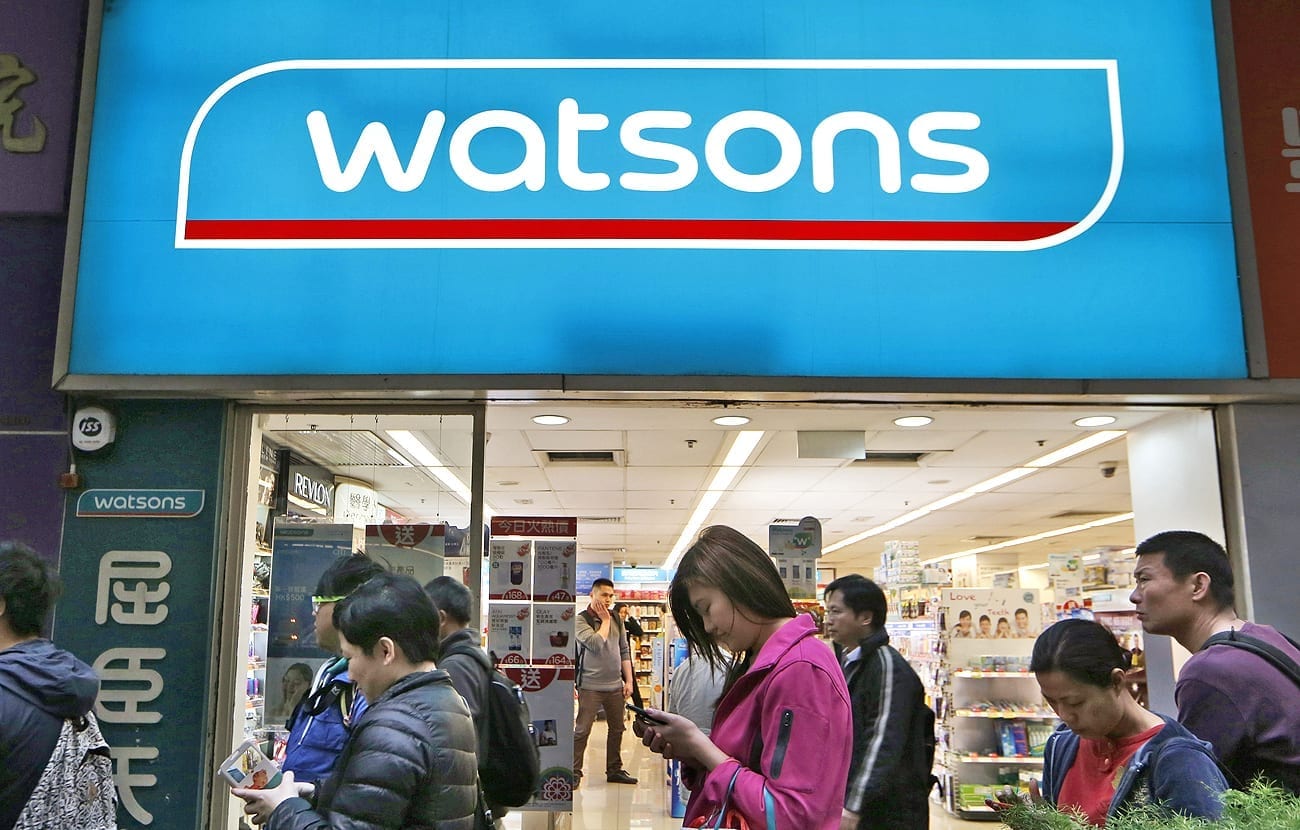
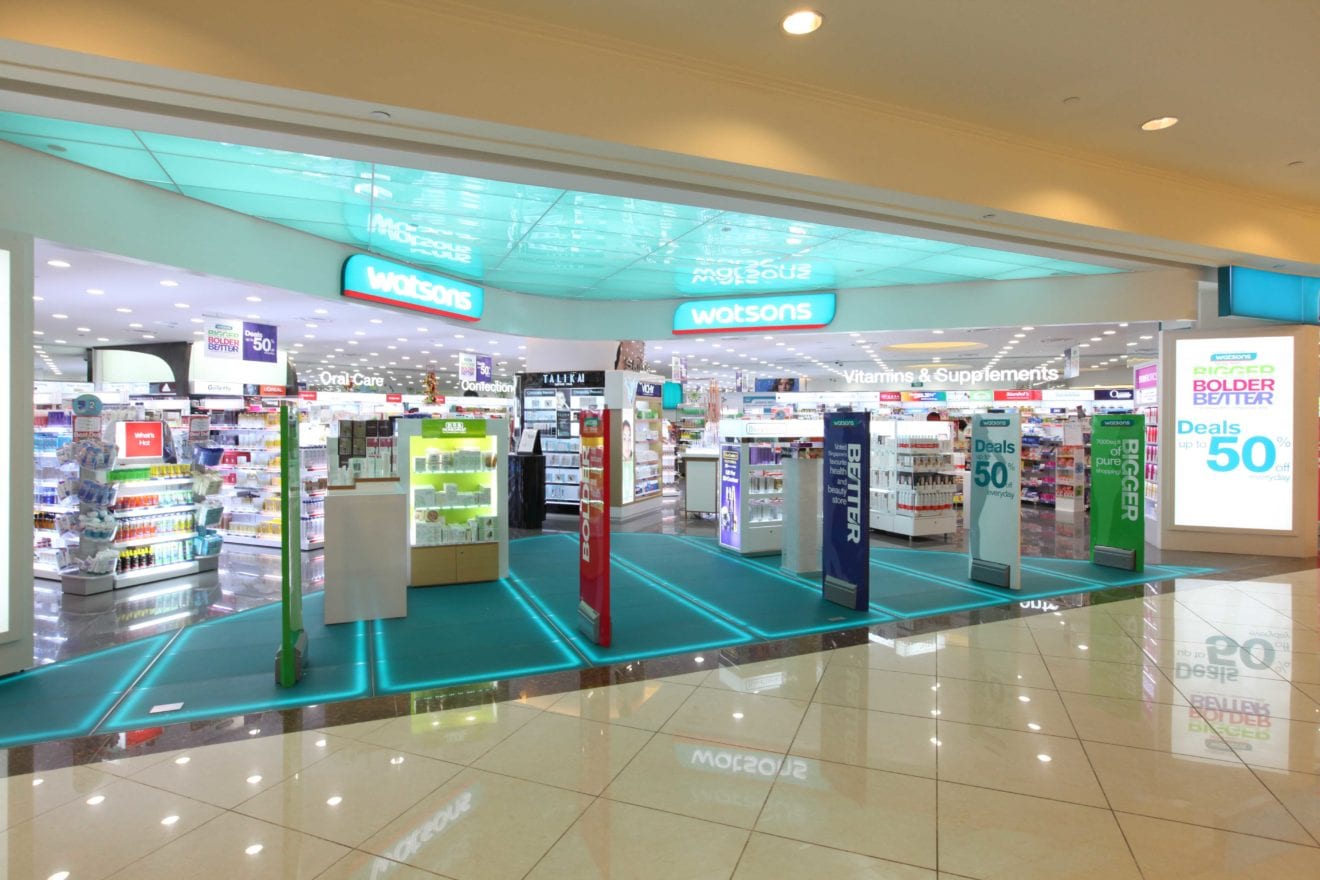
    Watsons Singapore has launched a premium store concept at Takashimaya. The 7000sqft store hosts distinct zones encompassing skincare, hair care, health and personal care, with new brands such as Milani, Pony Effect, and Utena.

    “To keep pace with the innovative, trendy brand image that Watsons is known for, we are very excited to refresh and make a statement with our Watsons Takashimaya store in a new generation premium store format which offers more experiential zones and shopability,” said Irene Lau, Watsons Singapore GM.

    “The expanse of the store allows us to offer more exciting and exclusive brands across skincare, cosmetics, health and wellness for our discerning consumers. In addition, as we continue to evolve in this digital age, we have incorporated smart technologies and gadgets to enhance the shopping experience and increase engagement with our consumers.”

    The refreshed Watsons store also hosts store-in-store (SIS) concepts at its cosmetics, skincare and health zones.

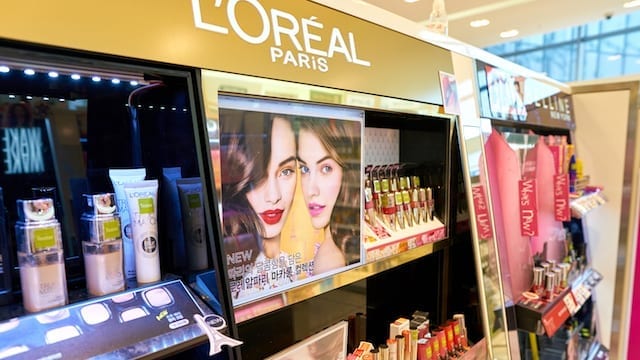
    The L’Oreal Paris SIS offers a comprehensive range of cosmetics, from foundations, eye make-up colours to lipsticks. Maybelline’s SIS offers the Alice+Olivia Maybelline collection, the first-ever fashion make-up collaboration from the company, that is exclusively sold at Watsons Singapore.

    In support of Small Medium Enterprises (SMEs) in Singapore, Watsons is introducing two independent homegrown brands, Botanica Culture and Hush Candle, that focus on wellness.

    A seven-metre length Mask Bay allows consumers to find a mask or two that cater to their skin type, beauty concerns or daily needs across 22 brands.

    The Real Techniques wall contains make-up tools and accessories, including performance brushes and expert sponges.

    The new Watsons store will have four full-time pharmacists, led by principal clinical pharmacist, Chung Wing Lam, who was named 2018 Excellence Service SuperStar by Singapore Retailers Association.

    Watsons Singapore’s membership will be automatically upgraded to “Watsons One Pass” which allows members to enjoy benefits when they shop at Watsons stores in China, Hong Kong, Indonesia, Malaysia, Taiwan and Thailand.

  • Skin-care scammers fined $40,000 for online bait advertising

    Skin-care scammers fined $40,000 for online bait advertising

    A skin care product supplier was fined HK$40,000 yesterday at Kowloon City Magistrates’ Courts after being convicted of online bait advertising, in contravention of the Trade Descriptions Ordinance (TDO).

    Hong Kong Customs had earlier received information alleging the unnamed skin-care product supplier launched an advertisement via the internet and leaflet distribution that a skin care product will be offered at a discounted price on a designated date. However, when a customer visited the store on the same day, she was told the product had already been sold out.

    Investigations revealed that the store had offered just one set of the skin care product for sale on that day.

    Customs said the fine should serve as a reminder to traders to comply with the requirements of the TDO and consumers to procure products at reputable shops.

    Under the TDO, any trader who engages in online bait advertising by claiming to supply products at a specified price but failing to offer those products for supply at that price for a reasonable period and in reasonable quantities, commits an offence. The maximum penalty upon conviction is a fine of $500,000 and imprisonment for five years.

  • Elizabeth Arden signs Ning Chang as first Asian Skincare ambassador

    Elizabeth Arden signs Ning Chang as first Asian Skincare ambassador

    Elizabeth Arden has signed Ning Chang as the brand’s first Asia ambassador for its Skincare category.

    An actress and philanthropist, Chang is also multilingual, speaking Mandarin, Taiwanese, English, and German (her birth country). She is a law graduate of the National Central University. In her new role with Elizabeth Arden, Chang will have a strong presence on social channels across the region, raising awareness of the brand’s skincare labels through advertising campaigns, with a strong focus on Elizabeth Arden’s digital strategy and engagement in Asia.

    “I am very proud to be a part of the Elizabeth Arden family,” said Chang. “I have been using the products for many years, which makes this partnership that much more special. I have the utmost assurance in the brand’s high-quality products and I happily recommend them to all of my friends. I am excited to work as a partner with the Elizabeth Arden team to share the creative innovations and history of the brand with women near and far.”

    Ava Huang, global GM at Elizabeth Arden, said Chang possesses an effortless, heartfelt personality.

    “There is a quiet yet strong elegance in her, a type of beauty that resonates well with women around the world, and particularly with women in Asia,” she said. “Her sincere attitude exemplifies the ideals of our founder. Like Elizabeth Arden, Ning’s attitude towards strong leadership, determination and spirit makes her the perfect woman to represent the brand and engage with our Asian consumers.

    “We believe this partnership will connect the brand’s commitment to innovation and quality of life while inspiring Asian women on the relentless pursuit of beauty and betterment, which Elizabeth Arden once said is the birthright of every woman.”

  • SK-II brings Future X Smart Store to Singapore

    SK-II brings Future X Smart Store to Singapore

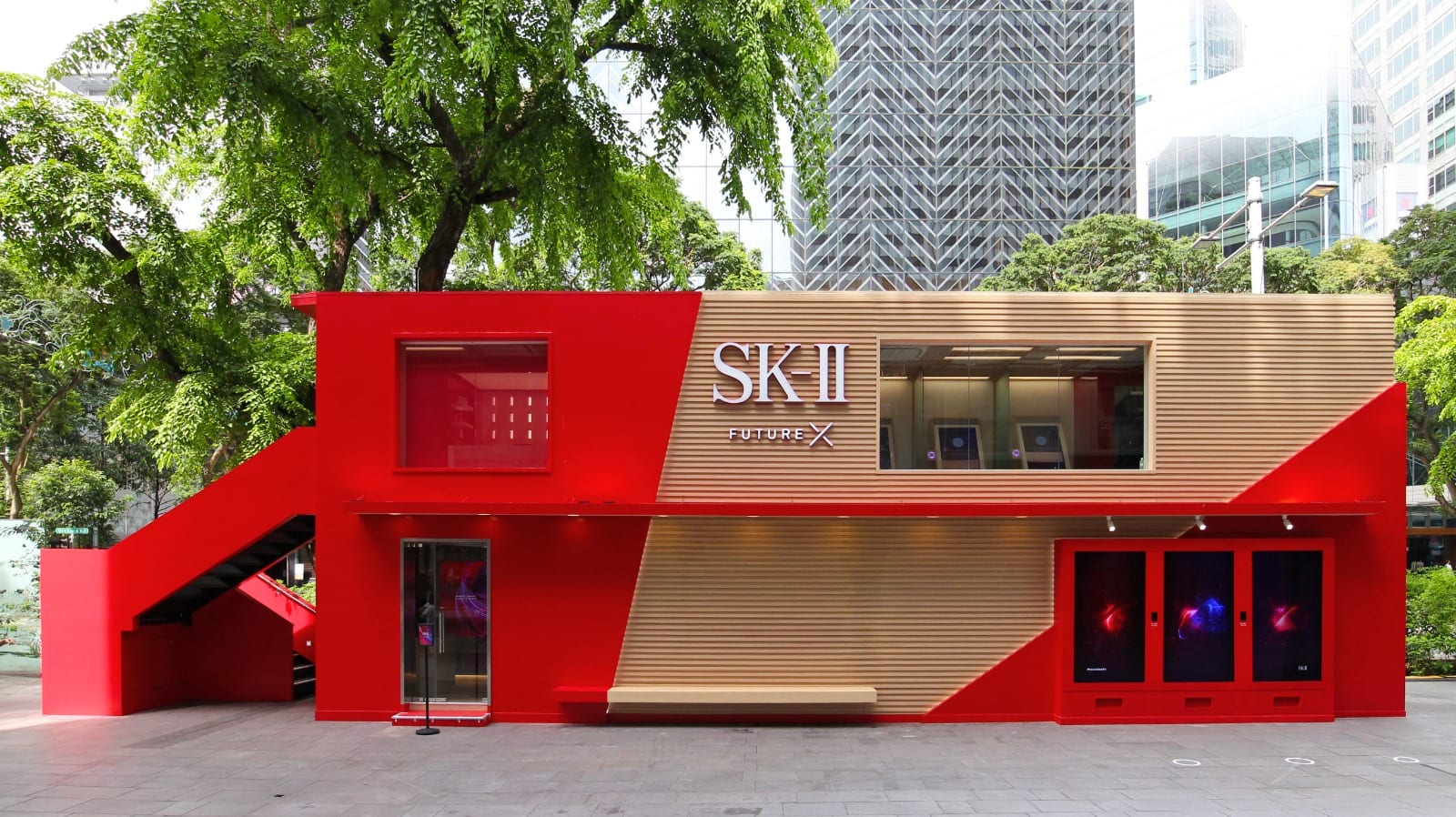
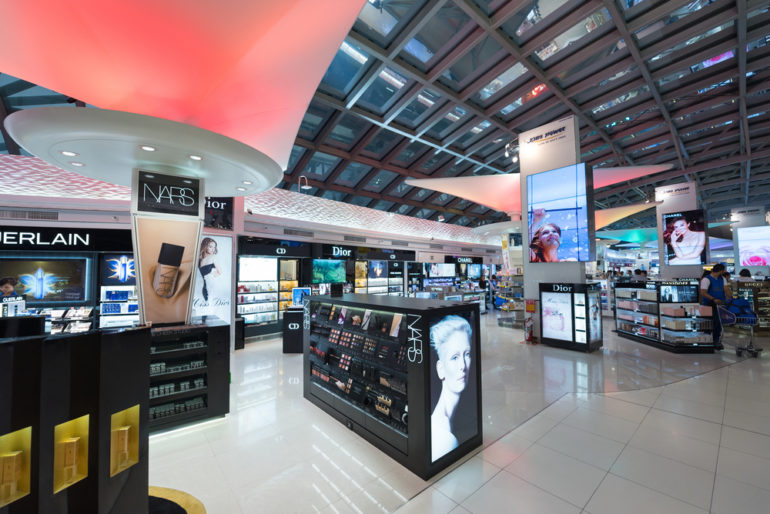
    Japanese beauty brand SK-II has partnered with The Shilla Duty-Free to bring Future X Smart Store to Changi airport. According to SK-II, the smart store merges the latest digital technology with in-store experience to deliver “a convenient and pressure-free shopping experience”.

    “Travellers from all over the world now have the chance to experience the brand’s unique physical retail concept, merging the latest digital technologies with in-store elements to provide travelers with a convenient and pressure-free way to shop for skincare,” the brand said in a statement.

    The store consists of physical features such as the Discovery Bar, smart product scan and ‘Skincare GPS’ that help time-conscious travelers locate, learn about and buy SK-II products in the shortest time possible.

    At the Discovery Bar, consumers will learn more about SK-II’s range of skincare products at the touch of a button.

    The smart product scan tool uses advanced image-recognition technology to help customers locate products quickly. By scanning the SK-II product images they download to their mobile devices, travelers will be directed to the location of their desired product.

    The Skincare GPS facility lights up the location of the product on the store shelf to make it quicker and easier for shoppers to find items.

    The smart store is a part of SK-II’s foray into retail innovation “and the start of a global transformation to connect with a new generation of consumers who are yearning for more meaningful experiences with the brands”, the company said.

    SK-II has launched Future X Smart Stores in Tokyo, Shanghai, and Singapore.

  • Coty sales, profit best estimates despite supply chain woes

    Coty sales, profit best estimates despite supply chain woes

    Coty Inc announced  its second-quarter results for fiscal 2019, confirming it expects to make in a net profit for the period, despite overall sales taking a dive and supply chain issues. The New York-based cosmetic and luxury fragrance company said net revenues for the second quarter came in at $2,511.2 million, for a decrease of 4.8%, while like-for-like revenues grew 0.7%.

    The company said it was helped by higher sales in its luxury segment, with strong holiday demand for the Gucci, Marc Jacobs and Burberry brands.

    That said, the maker of luxury perfumes recorded a net loss of $960.6 million compared to $109.2 million in the prior-year.

    Adjusted net income was $181.9 million, a decline of 23%, “driven by the lower adjusted operating income and the $41.8 million positive foreign tax settlement in the prior year,” said Coty in press release.

    Excluding certain items, the company earned 24 cents per share, topping expectations of 22 cents, and sending its shares up 20%

    “I must stress that while we are confident that we can return Coty to a path of sustainable growth, we are also realistic that it will take time to achieve this outcome,” Coty’s recently appointed Chief Executive Officer Pierre Laubies, said in a statement.

    Revenues in Asia, Latin American, the Middle East and Africa (ALMEA) totalled $567.4 million, to make up 23% of total revenues. Coty said the region showed solid growth despite impacts from supply chain disruptions. Revenues decreased 5% as reported, but grew 4% LFL, fuelled by strong growth in Luxury and Professional Beauty.

    However, Coty’s consumer beauty Max Factor declined in China.

    North America revenues were unchanged at $742.2 million, or approximately 29% of total net revenues, while Europe remained Coty’s largest market, accounting for close to half of company revenues at $1,201.6 million, down just 1% on last year.

  • Avon 2018 sales dip, culls sales reps globally

    Avon 2018 sales dip, culls sales reps globally

    Avon reported its fiscal 2018 results earlier in the month, saying revenues declined as the beauty giant continued to cull it sales representatives across the globe. The London-headquartered company said total revenue decreased 2% for the twelve months, while like-for-like revenues decreased 3% in constant dollars. The number of Active Representatives declined 5% with decreases reported in all segments, said Avon, with Ending Representatives declining 8% with decreases reported in all segments.

    On a positive note, Avon’s average order increased 10%, while on a like-for-like basis, average orders increased 2%, primarily driven by increases in South Latin America, North Latin America and Asia Pacific, said Avon in a press release.

    Avon reinforced the positives of its “Open Up Avon” strategic plans, addressing falling levels of its representatives.

    “We are in the initial stages of our turn-around plan with fourth-quarter results showing sequential improvement in revenue trends in 4 of our top 5 markets, as well as some early signs of progress against our core strategies,” said Avon’s CEO, Jan Zijderveld.

    “As we look over the course of 2018, we are seeing tangible signs of increased productivity by our Representatives, with sequential increases in Average Representative Sales, Net Price Per Unit and e-commerce.”

    Avon made several cost-reducing decisions in 2018, including the announced sale of its China manufacturing facility. The cosmetic giant more recently announced its intention to reduce the global workforce by an additional 10% in 2019, on top of its already completed 8% reduction in 2018.

    “We have begun to identify repeatable business models in training and recruiting, while reducing our cost structure and taking steps to simplify our business infrastructure,” added Zijderveld.

    Avon reported a diluted loss per share of $0.10. Like-for-like diluted earnings per share was $0.01, compared with $0.06 for 2017.

  • Korean wave fuel 25% growth in Korean e-commerce exports

    Korean wave fuel 25% growth in Korean e-commerce exports

    South Korea’s online exports surged 25 percent in 2018 from a year ago on the back of growing demand for K-beauty and K-pop related items such as album records and stationery supplies, government data showed. According to Korea Customs Service, Korea’s electronic commerce (e-commerce) exports or reverse overseas direct purchase volume reached US$3.25 billion last year, up 25 percent from a year earlier. The total number of online export cases also jumped 36 percent to 9.61 million during the same period.

    E-commerce growth is staggering when compared to the modest 5 percent annual growth in total Korean exports last year.

    The customs agency said that the rapid growth of online exports comes amid growing demand for Korean items on the back of hallyu or Korean Wave, as well as simplified retail procedure, and aggressive overseas marketing integrated with offline stores.

    By item, apparels and cosmetics accounted for 69 percent of total online export. In particular, the number of export cases for clothing surged a whopping 162 percent last year from a year ago, becoming the top pick after beating out cosmetics. Online exports of cosmetics jumped 43 percent last year from a year ago, recovering to average level after falling in 2017 as a result of diplomatic tension between Korea and China over Seoul’s deployment of U.S. anti-missile system.

    The customs agency said that exports of K-pop related items such as albums and stationery items surged significantly last year amid hallyu or Korean Wave overseas. In particular, sales of items related to K-pop icon BTS rose sharply.

    Data from Korea Customs Service, meanwhile, showed that overseas direct purchases of foreign goods amounted to US$2.75 billion last year, up 31 percent from a year ago. There were a total 32.25 million purchases last year, up 37 percent from a year ago.

    By region, the United States accounted for the largest 50.5 percent of Koreans’ direct purchases, followed by China with 26.2 percent, European Union with 12.5 percent, and Japan with 8 percent. The U.S. share fell from the previous year’s 56.4 percent while that of China jumped almost 10 percentage points from the previous year’s 17.3 percent.

  • Amorepacific facing painful dilemma

    Amorepacific facing painful dilemma

    For Amorepacific, the last year has been painful in terms of both sales and brand development. The cosmetics giant saw its operating profit halve to 549 billion won (US$491 million) in 2018, just two years after it joined the “1 trillion-won sales club” in 2016 for the first time as a cosmetics maker. With its glory falling to the past, Amorepacific has been outpaced by rival LG Household & Healthcare. LG Group’s cosmetics arm became the newest member of the 1 trillion-won sales club last year, cementing its No. 1 status in terms of market capitalization, which totaled 23.1 trillion won as of June last year.

    In the fourth quarter of 2018, Amorepacific’s operating profit came to 16.4 billion won, down 82 percent on-year.

    The company had many reasons to blame for its profit decline, including a rise in the minimum wage, weak performance of its budget cosmetics brand with the advent of numerous competitors at health and beauty stores, e-commerce and even home shopping channels.

    This has put the brakes on Amorepacific’s drive to construct a beauty industrial complex in Yongin, Gyeonggi Province. In 2017, the cosmetics giant had unveiled its plan worth 163 billion won for the complex to develop cosmetics and beauty products.

    But the company announced last month that it would scrap its complex project due to dwindling profits as well as fierce opposition from local residents.

    Market watchers voice concerns that this year will be a make-or-break period for the group, as a continued sales downfall will make it harder for the company to recover from its ongoing slump.

    “Profit recovery from the domestic beauty market as well as pulling up sales among Chinese customers will be the major points for Amorepacific to overcome this year,” said Na Eun-chae, a researcher from Korea Investment and Securities.

    Sulwhasoo vs. History of Whoo

    Although South Korea-China ties started mending last year after the detrimental diplomatic and economic fallout from the deployment here of the US Terminal High Altitude Area Defense missile system in 2017, the China comeback is still not so evident.

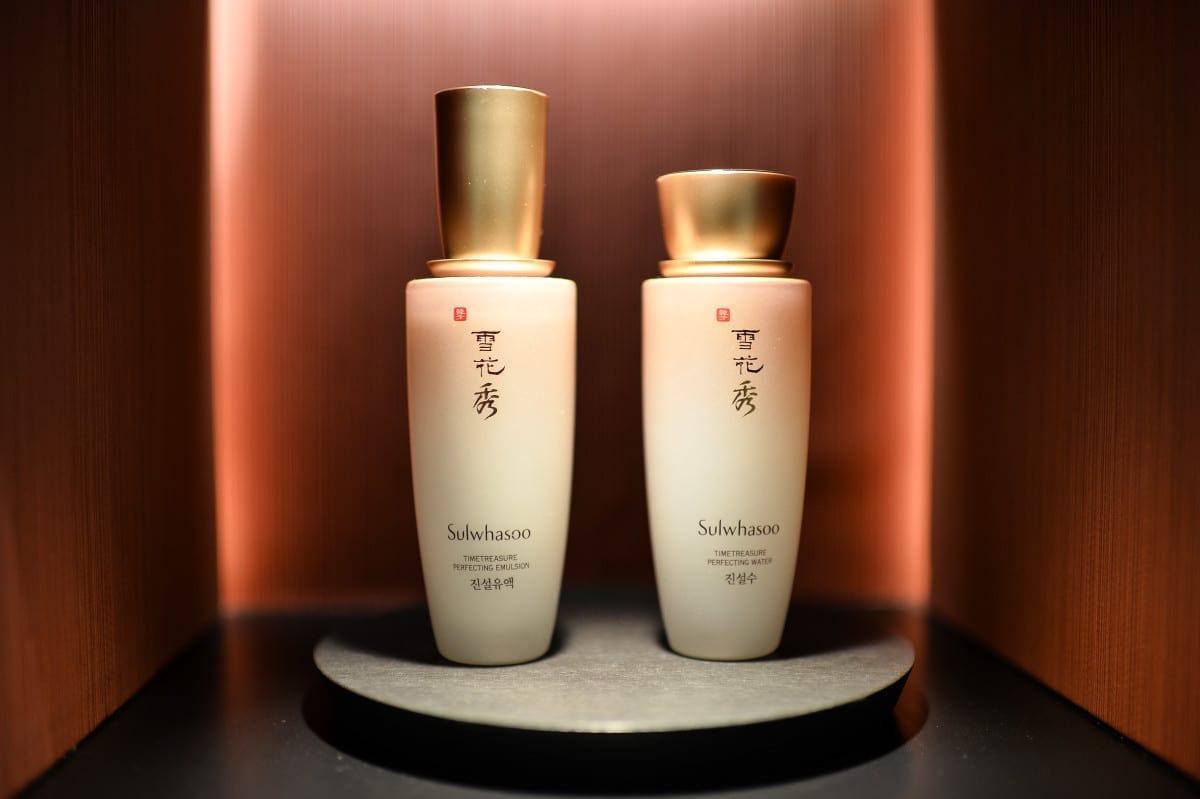
    Amorepacific’s Sulwhasoo, the company’s flagship luxury skin care brand, had been the most favored brand among Chinese tourists in the past few years. Market data showed that mainland China accounted for at least 10 percent of Sulwhasoo’s total sales, followed by Hong Kong at 6 percent and Taiwan with 0.5 percent as of 2018.

    But The History of Whoo, the latecomer in herbal cosmetics, has now taken the limelight.

    Whoo, a luxury skin care brand by LG Household & Healthcare, posted high sales at duty-free shops largely backed by Chinese consumers. This led Sulwhasoo to hire actress Song Hye-kyo as its global brand ambassador, seeking a breakthrough. It was Sulwhasoo’s first-ever attempt to have a celebrity promote its products.

    In terms of sales, Whoo has outpaced Sulwhasoo by recording 2 trillion won of sales last year. Whoo has also made a 40.8 percent on-year increase. Sales of Sulwhasoo had been around 1 trillion won since it peaked in 2015.

    “It is not an exaggeration that Sulwhasoo is the only, but very strong, cash cow of Amorepacific Group. It is the most important department in the entire company. Employees, especially in that department, feel grave responsibility and pressure about having to pull up the sales,” an insider said.

    According to the group, around 55 percent of the company’s sales come from its luxury cosmetics brands. Of them, Sulwhasoo is responsible for 36 percent.

    Market insiders said budget cosmetics brands are also enduring fierce competition in the “red ocean” market, with more consumers looking for luxury, premium brands as the beauty trend now centers on anti-aging efforts.

    Industry experts see the causes of Sulwhasoo’s lackluster performance as coming from its brand positioning and sales strategy at duty-free stores.

    “In the luxury cosmetics market, Sulwhasoo has only focused on its simple, basic skin care products, whereas Whoo diversified its luxury product lineup and upgraded all the products of the brand,” said an industry insider surnamed Jung, who has been in charge of overseas sales for a cosmetics brand for 30 years.

    Amorepacific also restricted Chinese shoppers, or “daigou,” from purchasing in bulk at duty-free stores, he added.

    “As a result, Amorepacific could not stabilize its supply chain in China. But LG, unlike Amorepacific, rolled out flexible rules for daigou and increased their demand,” Jung added.

    Others added it may simply be the product design and brand concept that work better for Chinese customers, who prefer gold, royal and fancy images.

    “To Korean customers, design and concept of Whoo may be regarded as ‘too much.’ But Whoo wisely focused in the concept that can appeal to Chinese customers. Hiring Lee Young-ae as its main model was also very clever, because Hallyu stars like her are still very influential in the Chinese market,” said an industry insider who is very familiar to exporting cosmetics to China.

    Is overseas sales expansion only way?

    To overcome the situation, Amorepacific plans to once again focus on strengthening its luxury brand lineup, including cosmetics brand Amorepacific, which is a luxury skin care brand named after the company.

    The brand rolled out only 2,000 limited edition facial creams last year, priced at 750,000 won per bottle.

    The reason is largely due to weak sales of budget cosmetics brands such as Innisfree and Etude in the domestic market, as well as in China.

    In 2012, the company launched budget cosmetics brand Innisfree in China. It now operates 512 stores in cities like Hangzhou and Shanghai. As of last year, 50 percent of sales of Amorepacific’s Chinese corporation came from Innisfree.

    But sales had been on a decline amid competition with local players that launched brands like One-leaf with similar concepts — natural and clean.

    “There are already too many budget cosmetics in China. That’s why Chinese tourists coming to Korea are now looking for luxury, premium cosmetics that they cannot find in their market,” said a market insider, adding that the trend is especially evident among Asian countries.

    The company said it will renew the Innisfree brand and debut Primera to China this year, aiming for 601 billion won in operating profit by the end of the year. It will also accelerate Sulwhasoo store openings in additional Chinese cities, and expand touch points in online retail in major e-commerce sites such as VIP.com and JD.com.

    Earlier this year, the cosmetics giant announced the business goal of securing a 10 percent increase in sales and a 24 percent increase in operating profit this year. The group said it would focus on investing in innovative beauty sectors such as customized cosmetics or overnight beauty items based on developing the customer experience.

    “The company believes in the value of traditional Korean beauty. It is also Chairman Suh Kyung-bae’s business philosophy to create beauty products that can instill Korean beauty, products with value that can last for a century,” said a company insider.

    Overseas expansion actually did pay off for Amorepacific last year. Despite its increased investment in overseas markets, both sales and operating profits inched up by 8 percent to 1.9 trillion won and 6 percent to 2.6 trillion won, respectively.

    But some say it is time for Amorepacific to bring in a new cash cow for practicality, referring to LG Healthcare & Household’s budget brand The Face Shop that bought Avon’s manufacturing facility in China last year.

    “It is time for Amorepacific to make the bold move and seriously consider active M&A ideas. M&A can offer positive opportunities in terms of global market expansion and investment for future. Especially when global beauty companies like Loreal and Unilever are buying Korean beauty brands, it is important for the company to take a strategic position to diversify brand portfolio for global competition,” said a researcher at Euromonitor International.

    Seo Yong-koo, a professor of business at Sookmyung Women’s University, said Amorepacific should not put all its risk in the Chinese market.

    Seo said since Amorepacific saw aggravating sales following its downfall in the Chinese market, the company experienced that its market portfolio is important. He added the group should also take the Muslim market into consideration, which will add up to 1.8 billion customers.
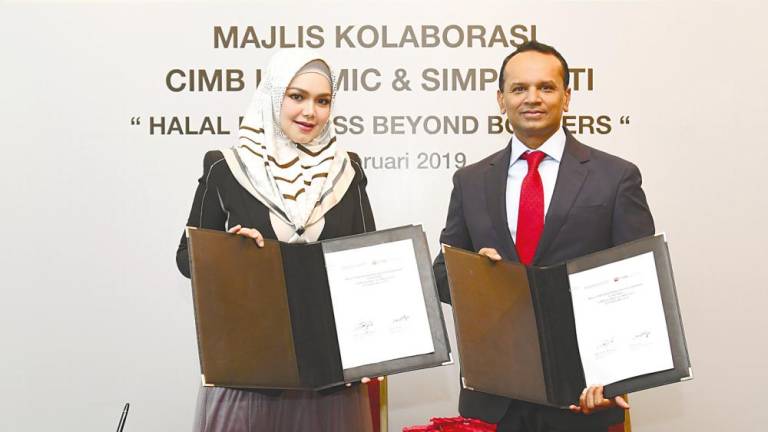
  • CIMB partners SimplySiti on halal beauty biz

    CIMB partners SimplySiti on halal beauty biz

    CIMB Islamic Bank Bhd and local beauty brand SimplySiti have announced a collaboration that will see CIMB Islamic enabling SimplySiti to expand its halal beauty care business beyond Malaysian borders. The homegrown brand will also leverage the end-to-end support of the CIMB-Asean Halal Corridor and CIMB’s strong regional network, to meet the demand for quality halal beauty, cosmetics and skincare products across the region.

    CIMB Group Islamic banking CEO Rafe Haneef said for any homegrown business and SME, opportunities for growth are aplenty but the challenge is always on how to scale up.

    “This is where CIMB Islamic’s expertise, the CIMB-Asean Halal Corridor and CIMB’s regional network provide a strong value proposition to our customers. Through this collaboration, we are excited to facilitate SimplySiti’s move into its next growth phase by reaping the vast halal business opportunities within Asean,” he said.

    The CIMB-Asean Halal Corridor is an enhanced trade network linking halal businesses with trade infrastructure and ecosystems across Asean to take advantage of increasing demand for halal products in the region and beyond.

  • Nest Fragrances opens flagship store in New York City

    Nest Fragrances opens flagship store in New York City

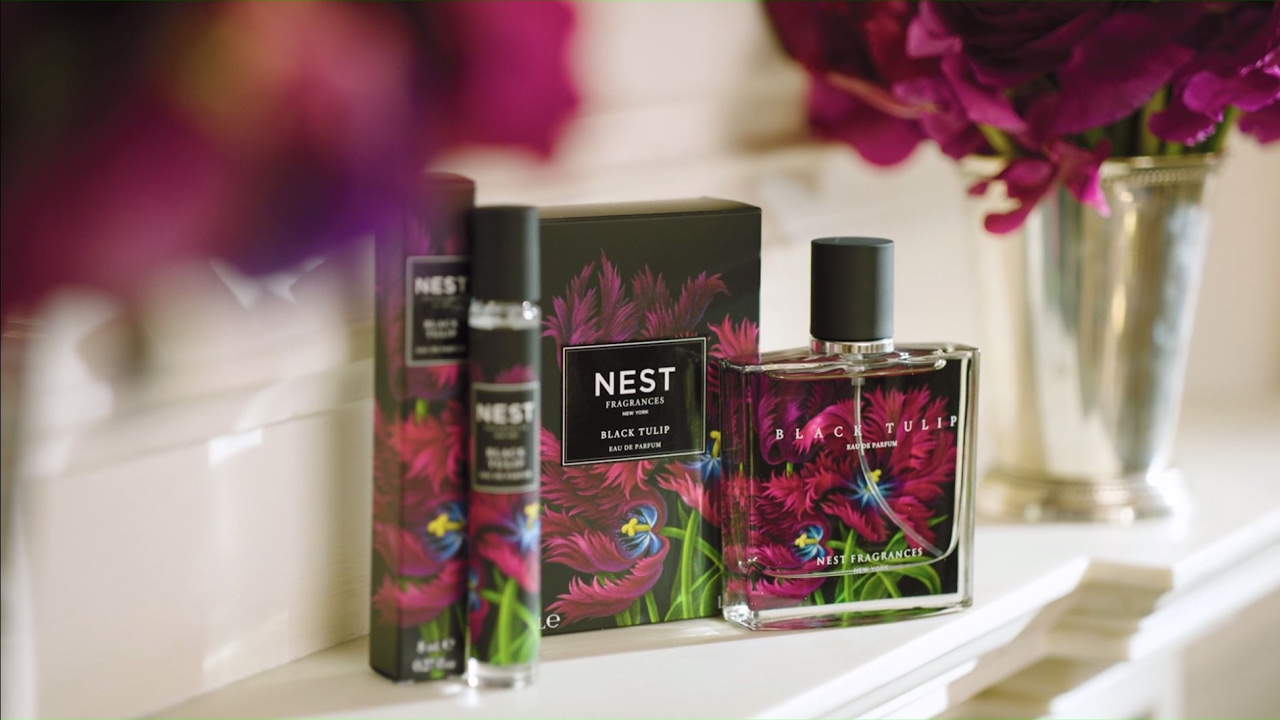
    Luxury-lifestyle brand Nest Fragrances has opened its first retail store in the NoLita neighborhood of Lower Manhattan. For the first time anywhere, the new Nest Fragrances flagship store unites the brand’s entire product portfolio in one retail location, which company founder Laura Slatkin describes as “an enchanted, fragranced garden”.

    “The theme of our first retail store reflects – and was inspired by – our desire to showcase the Nest Fragrances brand in a harmonious and holistic fashion in an environment that, like our fragrances, is artful, sophisticated, and approachable,” said Slatkin. “For the very first time, our new flagship store brings together under one roof our Home and Fine Fragrance collections and our newly launched Lifestyle Bodycare collection.”

    Nest Fragrances partnered with New York-based interior design firm R. Douglas Gellenbeck Studio to conceptualise and build its first retail store. MJ Atelier, an art studio based in Los Angeles, was commissioned to create a hand-painted, sculpted wall covering for the store inspired by early 20th-Century French interior designer Armand-Albert Rateau’s bath design, which he created for the Duchess of Alba.

    “Our brand’s mission is to create exceptional fragrances that shape moods, transport people, and transform spaces,” continued Slatkin. “Since 2008, when I founded Nest Fragrances, I have drawn inspiration from art, fashion, destinations, and literary works combined with the beauty of nature and its natural elements to create fragrances and products to achieve that mission. Now, 10 years later, I am thrilled that we have come full circle by successfully applying that same approach and fragrance-forward philosophy to achieve our mission in our very first retail store. Consumers will see a lot more of it as we continue to expand our footprint at retail in the coming years.”

    The 1140sqft store sells more than 215 SKUs across the brand’s three core product categories. It will also offer limited-edition products and specialty gift sets across its three core product categories – as well as year-round specialty gift sets, the option to create custom-made gift sets, candle accessories, and a concierge delivery service in New York.

  • Men make-up driving K-beauty boom

    Men make-up driving K-beauty boom

    Men wearing makeup – once a practice unique to TV stars and celebrities – is becoming a part of popular culture in South Korea. As an increasing number of South Korean men are purchasing clothes, cosmetics, and other beauty products to take care of their looks, cosmetics goods for men are expanding both in terms of variety and sales. Olive Young, a major South Korean cosmetics store, said sales of cosmetics for men increased by 30 per cent last year compared to the year before.

    Cosmetics for men are going beyond BB creams and cushions to include coloured lip balms, eyebrow products, concealers and eyebrow-hair scissors.

    A coloured lip balm for men, for instance, has seen sales skyrocket 16-fold over the last two years, according to Olive Young. Sales of makeup cushions and BB creams have increased by 30 per cent as the number of men wearing make-up burgeons.

    Drawing eyebrows, once a practice unique to women, is now spreading among men, as seen by the fact that sales of eyebrow products for men have increased by 25 per cent over the last two years.

    An increasing number of eyebrow-hair scissors, nipple bands, and body hair removers are being developed for men as well.

    “Makeup is now becoming a tool to express one’s confidence, leading to increased demand for various cosmetic products for men,” said Olive Young.

  • L’Oréal, KÉRASTASE open their flagship store in Hong Kong

    L’Oréal, KÉRASTASE open their flagship store in Hong Kong

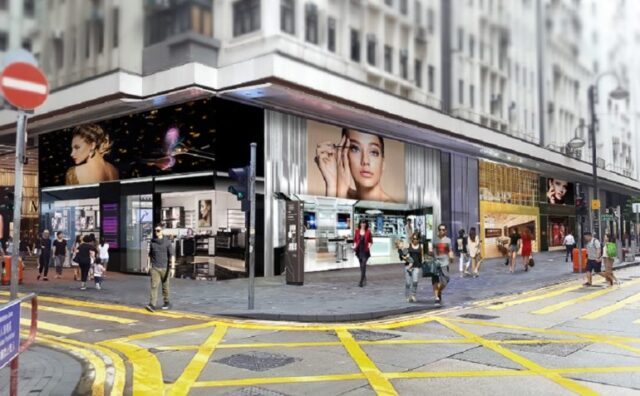
    Hong Kong’s stylish hotspot Fashion Walk proudly announces the arrival of SkinCeuticals and KÉRASTASE – two of L’Oréal Hong Kong’s leading beauty brands, introducing a unique all-in-one beauty ritual that tends to your retail, cosmetic and haircare needs. With SkinCeuticals’ global first one-stop skincare flagship store and KÉRASTASE’s haircare concept store, Fashion Walk launches the beauty hub – a cosmetics mecca that is set to transform fashionistas’ beauty experience.

    Ms. Bella Chhoa, Director of Leasing & Management of Hang Lung Properties, describes the addition of SkinCeuticals and KÉRASTASE as the birth of a “Beauty Revolution”.

    “It is a real pleasure to have SkinCeuticals and KÉRASTASE – the two top beauty brands of L’Oréal Hong Kong – join us in Fashion Walk. Causeway Bay is a magnet for trendsetters, yet we all know how scarce retail spaces are right here. At its prime location in the area, Fashion Walk is obviously the hub of international fashion labels. Last year, we extended our partnerships with a number of cosmetics brands. This year, we’ll keep up with the strategic effort. Our brand new beauty hub promises to bring an unprecedented beauty experience to all stylish minds in town.”

    Ms. Eva Yu, President & Managing Director of L’Oréal Hong Kong, also envisions a new chapter in the cosmetics industry prompted by SkinCeuticals’ one-stop skincare flagship store and KÉRASTASE’s haircare concept store at beauty hub.

    “L’Oréal Hong Kong endlessly looks for retail spaces of development potential. The two stores in Fashion Walk feature an exclusive studio for customers to try out every stroke, swipe and dab, which guarantees a one-of-a-kind experience. We’ll put down a remodeling budget of almost ten million dollars to ensure that our customers will revel in the brand new stores.”

    Located in the heart of Causeway Bay, Fashion Walk boasts an occupancy rate of over 95%, housing the flagship stores and concept stores of an impressive array of international chic labels, including the two beauty trailblazers.

    Founded in the USA, SkinCeuticals is guided by its unparalleled Integrated Skincare philosophy that aims to promote and improve skin health. Its first-ever flagship store in Fashion Walk also pledges to provide customers with a range of skin health restoration plans that combine the most trusted dermatological innovations and cosmetological aids.

    French hair and scalp care expert KÉRASTASE has earned its recognition in the field thanks to its commitment to hair care since its founding in 1964. Its concept store in Fashion Walk not only offers a wide selection of cutting-edge products, but also an original mode of retail with hair treatment services in a soothing environment. The professional guidance of KÉRASTASE haircare consultants and bespoke treatments will surely satisfy customers’ desire for exceptional hair.

  • The personal care company start using refillable containers

    The personal care company start using refillable containers

    On a trip to Thailand in 2017, serial entrepreneur Brian Bushell went diving for the first time and expected that the water would be pristine. Instead, it was filled with trash. “We were about to dive off the back of the boat, and all of the sudden we’re surrounded by junk plastic containers,” he says. That night, he went back to his hotel room and looked at the products he had sitting on the bathroom counter. “I realized that I was part of the problem.”

    Bushell, who had recently left Baked by Melissa, the chain of successful New York City-area cupcake bakeries he co-founded, started researching the challenge of plastic waste.

    “We learned that a third of all the single-use plastic products in landfills are personal care products,” he says. “So we decided that personal care was really an important nut to crack.”

    With co-founder Joshua Goodman, he started working on By Humankind, a new line of personal care products that launched today. Each product eliminates single-use packaging.

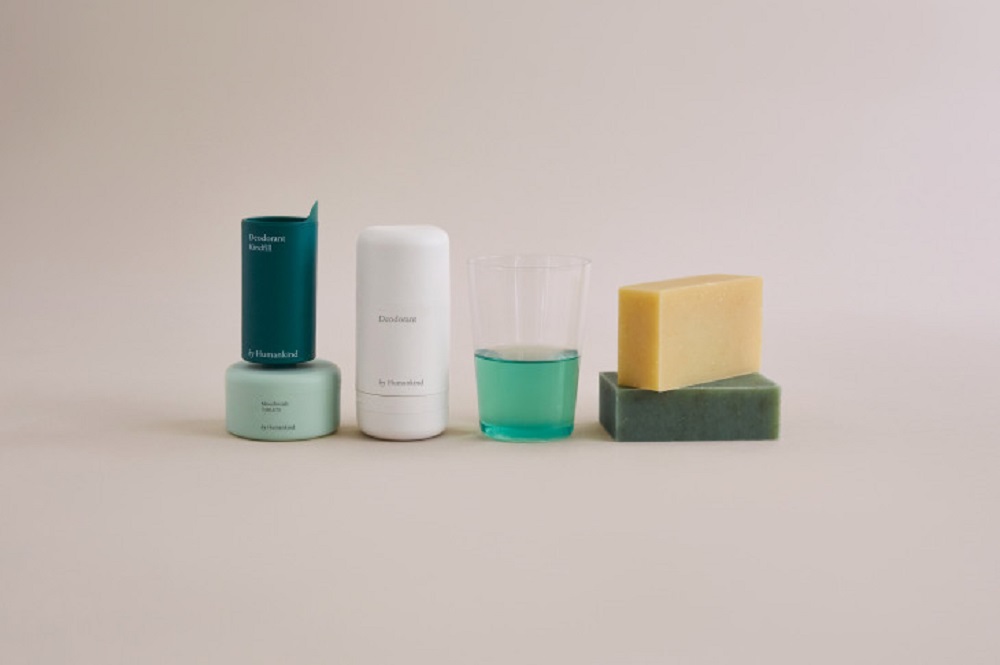
    A new type of deodorant, made from natural ingredients that the company says are formulated to kill bacteria more quickly than other natural products, comes in a reusable container the first time you order. (The reusable container is plastic; the founders say they believe that plastic is not inherently bad, but it needs to be designed in a way that it doesn’t immediately land in the trash.)

    In the next order, the product shows up in a paper pod that pops into the original package and then twists out like a typical deodorant. The company’s mouthwash comes in tablets that customers drop in water, eliminating the need for a plastic bottle. Its shampoo comes in a bar form wrapped in paper instead of liquid in a bottle.

    Unlike Loop, a new experiment from major brands that will sell products like deodorant in packaging that is sent back to manufacturers for reuse, the startup thought that it made more sense to make packaging that consumers would keep and reuse themselves.

    “We didn’t think that customers were going to want to do the work to send it back,” Bushell says. “And there’s also an additional cost in that reverse or return logistics.”

    With the first three products, available online, the startup has calculated that in a year, an average American consumer can keep five pounds of plastic out of the environment. The company will also donate $1 for ocean plastic cleanup for each first purchase of a product. It plans to continue adding new personal care products.

    “Our whole thesis is, what if you could help save the world from single-use plastic just by getting ready in the morning?” he says. “And so anything that’s within that morning routine is within our target.”

  • AS Watson to start selling Amorepacific

    AS Watson to start selling Amorepacific

    South Korean beauty group Amorepacific and AS Watson have expanded their partnership to cover Asia and Europe. The partnership will enable Amorepacific to increase its product presence through Watsons-owned stores and online. Before this, the two had already partnered to launch Amorepacific’s botanical skincare brand Mamonde, haircare brands RYO and Mise-En-Scene across Asia.

    “AS Watson and Amorepacific are both leading players in serving beauty customers. Our customers love Korean beauty products that bring not only innovation but also quality. This is what Amorepacific can provide,” said Malina Ngai, AS Watson Group COO.

    “Through this partnership, we are both passionate and committed to combining our knowledge and capabilities to bring the best products and shopping experience to our customers.”

    Saehong Ahn, president of Amorepacific Corporation and Malina Ngai, group COO of AS Watson Group sign the strategic partnership.

    President of Amorepacific Saehong Ahn said the group “looks forward to developing concrete plans that create synergy and is a win for both companies”.

    “Amorepacific will continue our efforts to expand accessibility for customers globally, and create novel experience for customers this year.”

    AS Watson Group has a store network of more than 14,900 stores under 12 retail brands in 25 markets. Included in that are about 6800 Watsons health and beauty stores in 12 markets in Asia and Europe.

    Core customer groups are relatively young, and K-beauty is experiencing 56 per cent compound sales growth since 2015, and gaining traction in Europe with last year’s growth at 122 per cent.

    Amorepacific is the leading beauty company in South Korea, with more than 70 years of experience in beauty and a wide brand portfolio.